



Fulani hairstyles represent some of the most intricate, culturally significant, and visually stunning braiding traditions in Africa. These styles have been passed down through generations, each one telling a story of heritage, identity, and artistry. The Fulani people, spread across West Africa with communities in countries like Mali, Senegal, Burkina Faso, Niger, and Nigeria, have developed a distinctive aesthetic that goes far beyond mere decoration—these hairstyles communicate marital status, social rank, age, and clan affiliation.
What makes Fulani braids so remarkable is the combination of technical precision and creative expression woven into each style. The intricate patterns, often adorned with gold, amber, beads, or cowrie shells, require not just skill but an understanding of the cultural narratives embedded in the designs. A skilled braider can spend hours—sometimes entire days—creating a single hairstyle, carefully sectioning the hair, incorporating decorative elements, and sculpting the braids into their intended form. This isn’t rushed work; it’s a meditative practice that strengthens family bonds and cultural continuity.
Whether you’re drawn to Fulani hairstyles for their undeniable beauty, their cultural significance, or because you’re exploring protective styling options with deep roots in African tradition, this guide will walk you through twelve of the most iconic and beautiful styles. You’ll learn what makes each one distinctive, how they’re typically worn, and what they might mean within Fulani culture. These aren’t just hairstyles—they’re wearable art forms that celebrate centuries of creative genius.
1. The Lopo Hairstyle
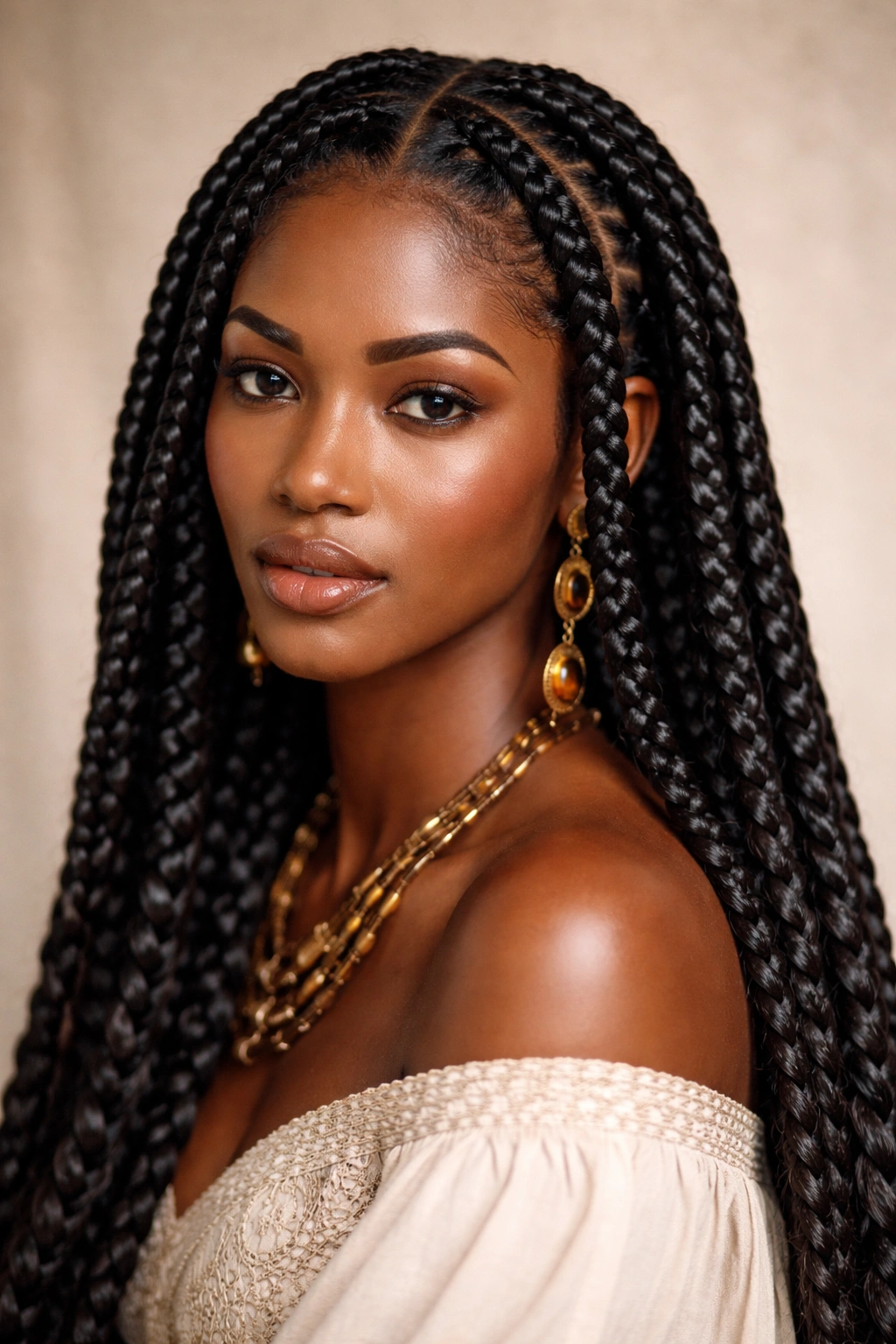
The Lopo is perhaps the most recognizable and iconic Fulani hairstyle, instantly identifiable by its thick, glossy braids that frame the face and fall down the back. The style features a distinctive parting pattern that creates several thick sections of hair, which are then braided with incredible precision. What sets the Lopo apart is how the braids are coated with a special mixture—traditionally a blend of plant oils, shea butter, and sometimes tar or dark dye—giving them a smooth, lustrous appearance that can be quite striking.
The Cultural Significance and Aesthetic
The Lopo represents grace and femininity in Fulani culture, often worn by married women or those of marriageable age. The thickness and length of the braids, along with the quality of their shine, can indicate social status and family wealth. The style demands meticulous maintenance, which signals time, resources, and dedication to one’s appearance—all valued characteristics in many traditional societies. The braids frame the face beautifully, drawing attention to the features and creating an elegant, dignified presentation.
Creating and Maintaining the Look
Getting a Lopo typically takes six to eight hours, depending on the thickness of the braids and the amount of hair being worked with. The process involves sectioning the hair into thick portions, then braiding each section tightly from the roots to the ends. After braiding, the stylist applies the glossy coating, which not only enhances the visual appeal but also protects the hair and helps the braids last longer. Maintaining the style requires regular oiling, careful washing, and protective wrapping at night to preserve the braids’ shape and shine for weeks at a time.
2. The Nubian Knots Fulani Style
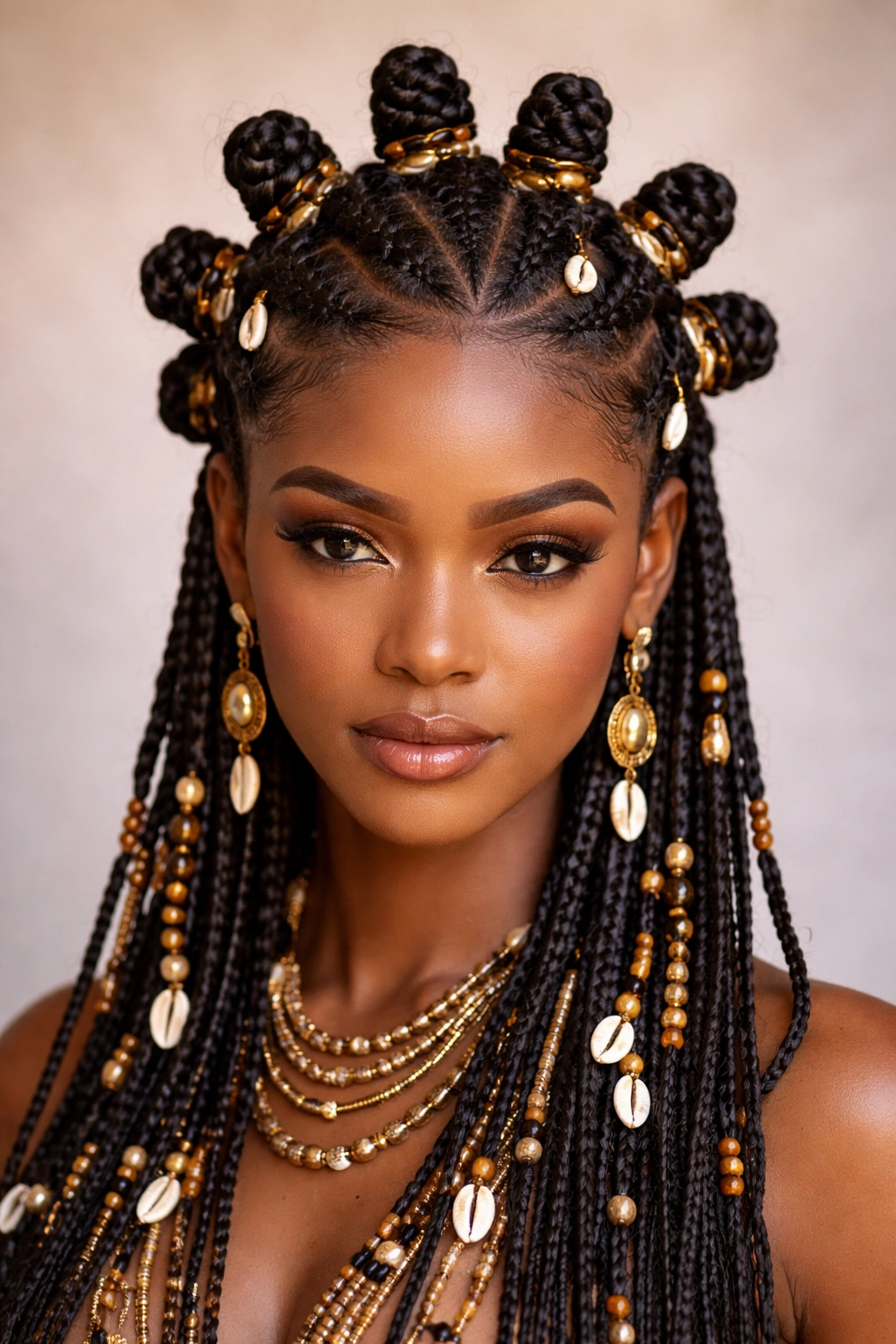
Nubian knots take on a distinctly Fulani character when incorporated with beads, cowrie shells, and gold accessories. This style features twisted sections of hair arranged in intricate patterns around the head, often with the knots standing upright or arranged in geometric formations. The Fulani adaptation of Nubian knots tends to be more elaborate, with each knot carefully positioned and adorned with cultural jewelry and ornaments that reflect personal or family identity.
How This Style Celebrates Identity
In Fulani culture, the specific arrangement and ornamentation of Nubian knots can indicate which sub-group or clan someone belongs to. The choice of beads—their colors, materials, and patterns—carries meaning. Some beads represent fertility, prosperity, or protection, while others might indicate a person’s achievements or family lineage. This transforms a hairstyle into a visual language, allowing someone’s hair to tell their personal and cultural story to those who understand the symbols.
The Braiding Technique and Durability
Creating this style involves sectioning the hair into smaller portions than the Lopo, then twisting each section tightly to create the knots. The twists are often reinforced with thread or yarn to ensure they hold their shape, and beads are woven in during the twisting process or added afterward. The finished style can last three to four weeks with proper care, making it an excellent protective styling choice that also celebrates cultural heritage. The maintenance involves keeping the scalp moisturized and occasionally tightening any knots that begin to loosen.
3. The Fulani Cornrows with Beads
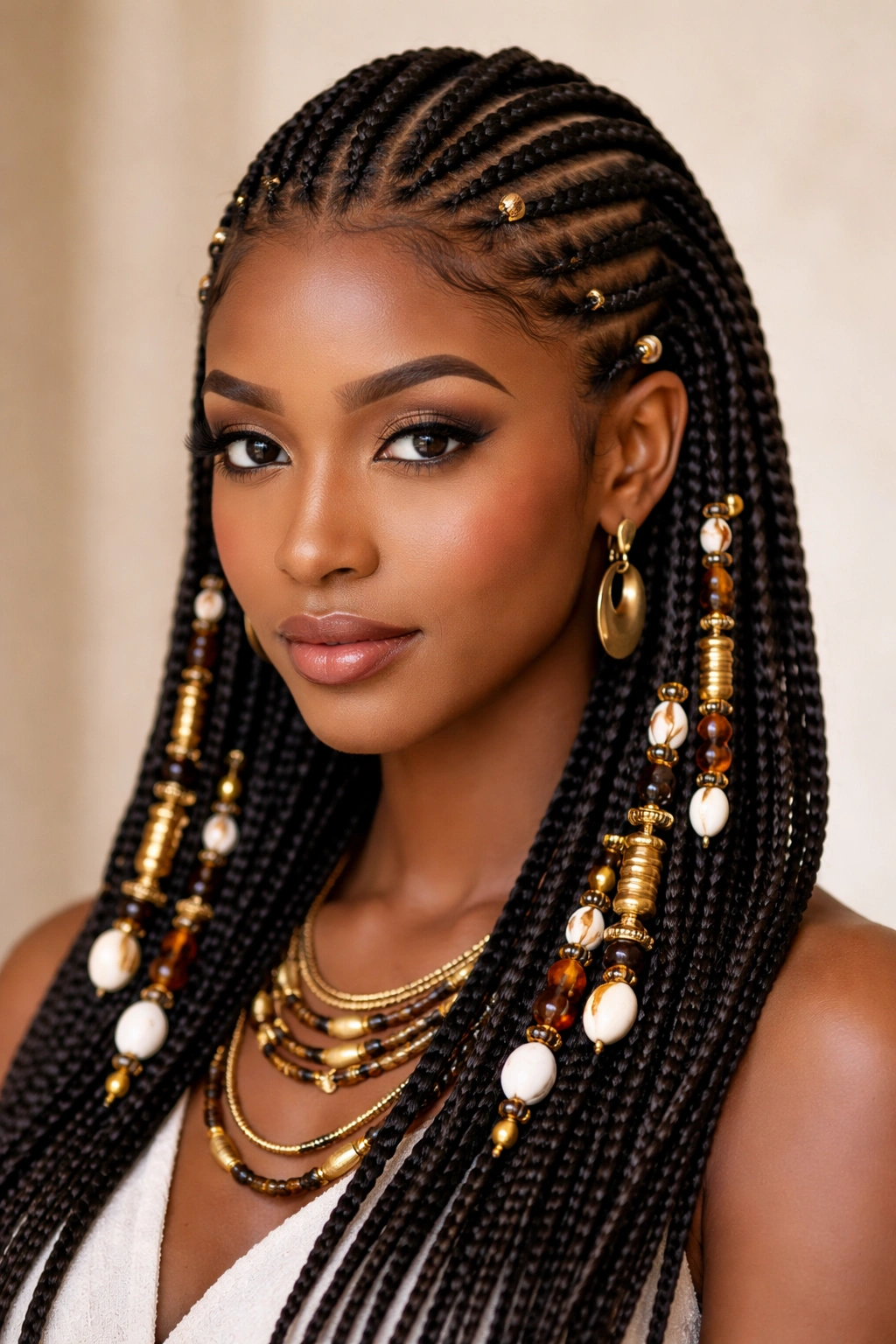
Cornrows represent the foundation of many protective hairstyles, and the Fulani have elevated this technique into an art form. These braids run parallel to the scalp in intricate patterns, often incorporating gold foil, beads, or shells directly into the braiding process. What distinguishes Fulani cornrows from other versions is the meticulous patterning—the braids often create geometric designs or even figurative patterns, showcasing the braider’s skill and the wearer’s aesthetic preferences.
The Symbolism of Bead Placement
Each bead placement in Fulani cornrows isn’t arbitrary; it follows patterns that can indicate social information or simply express individual creativity. Traditionally, certain colors or materials were associated with specific meanings—gold for wealth and importance, amber for warmth and protection, blue for spirituality or peace. Modern interpretations allow for more personal expression while maintaining respect for the cultural roots. The beads serve both aesthetic and practical purposes, adding weight to the braids and helping them maintain their shape.
Installation and Long-Term Wear
Fulani cornrows with beads typically take four to six hours to install, depending on the complexity of the pattern and the number of beads incorporated. The braids themselves are tight enough to protect the hair underneath but not so tight as to cause tension headaches or scalp damage. Many women wear these styles for six to eight weeks, making them an excellent choice for those seeking both protective styling and cultural connection. The key to long-term wear is keeping the scalp clean and moisturized, using products that don’t accumulate buildup or cause itching.
4. The Fulani Braids with Gold and Shells
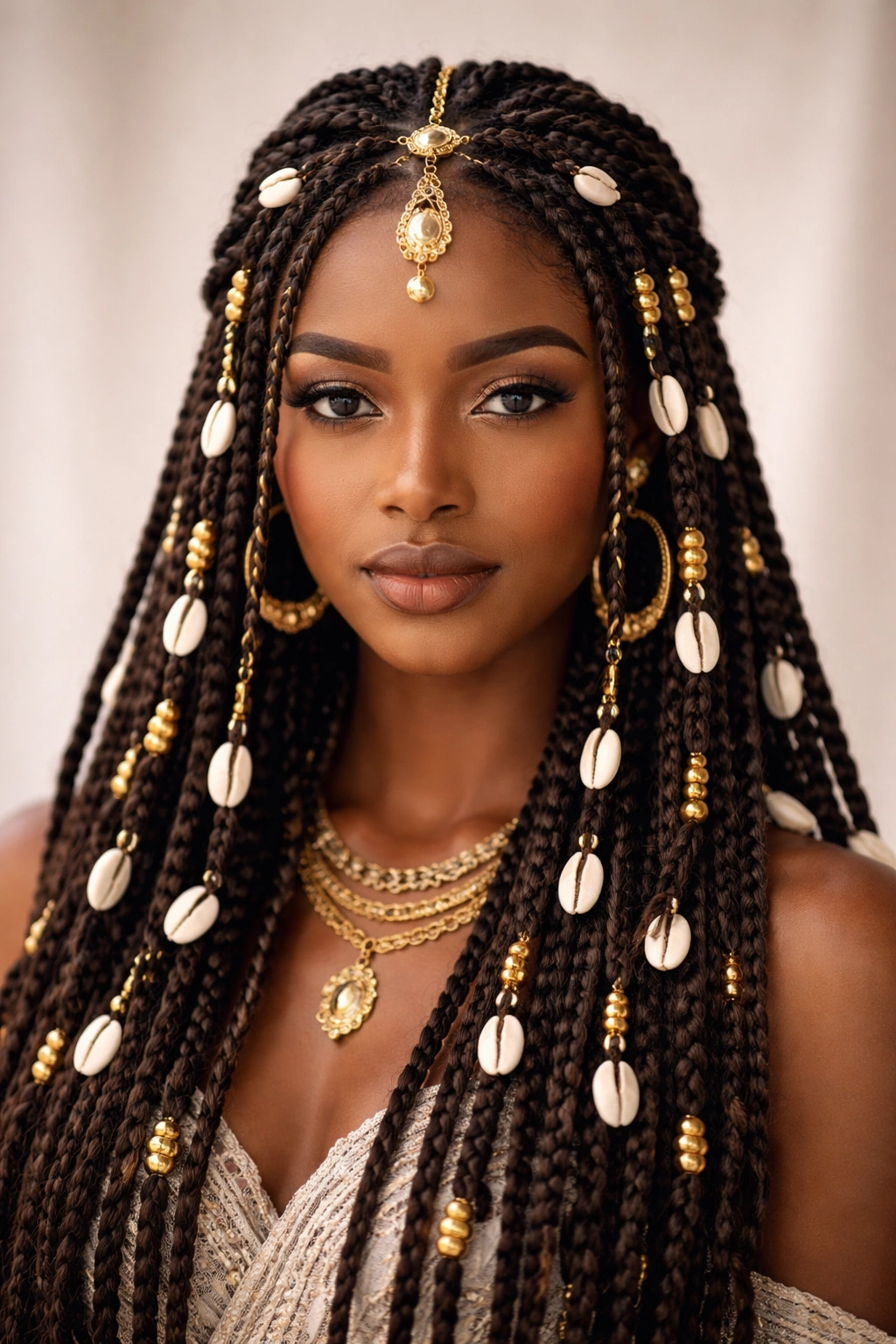
This style combines the basic structure of Fulani braids—usually medium to thick sections—with elaborate gold accessories and cowrie shells woven throughout. The shells, which hold sacred significance in many African cultures, catch the light and create movement and dimension. Gold foil, wire, or charms are carefully threaded through the braids, creating a look that’s simultaneously regal and celebratory. This style is often reserved for special occasions, celebrations, or by women of higher social standing.
The Spiritual and Aesthetic Dimensions
Cowrie shells have been used in African adornment for thousands of years, originally serving as currency and later becoming symbols of fertility, prosperity, and protection. When incorporated into Fulani hairstyles, they carry these meanings forward, connecting the wearer to ancestral traditions. The gold additions represent wealth, success, and brightness—literally adding luminosity to the appearance. Together, shells and gold create a hairstyle that serves as both personal adornment and spiritual statement.
Customization and Personalization
The beauty of this style lies in how customizable it is. Women can choose which shells to incorporate, where to place the gold accents, and how many beads or ornaments to add. Some prefer a subtle, refined look with a few well-placed gold pieces, while others embrace a more elaborate, statement-making approach. The style can be adapted for any occasion, from everyday wear to weddings or significant cultural celebrations. Each woman’s interpretation reflects her personal taste, her family’s traditions, and her individual sense of style.
5. The Fulani Crown Braids
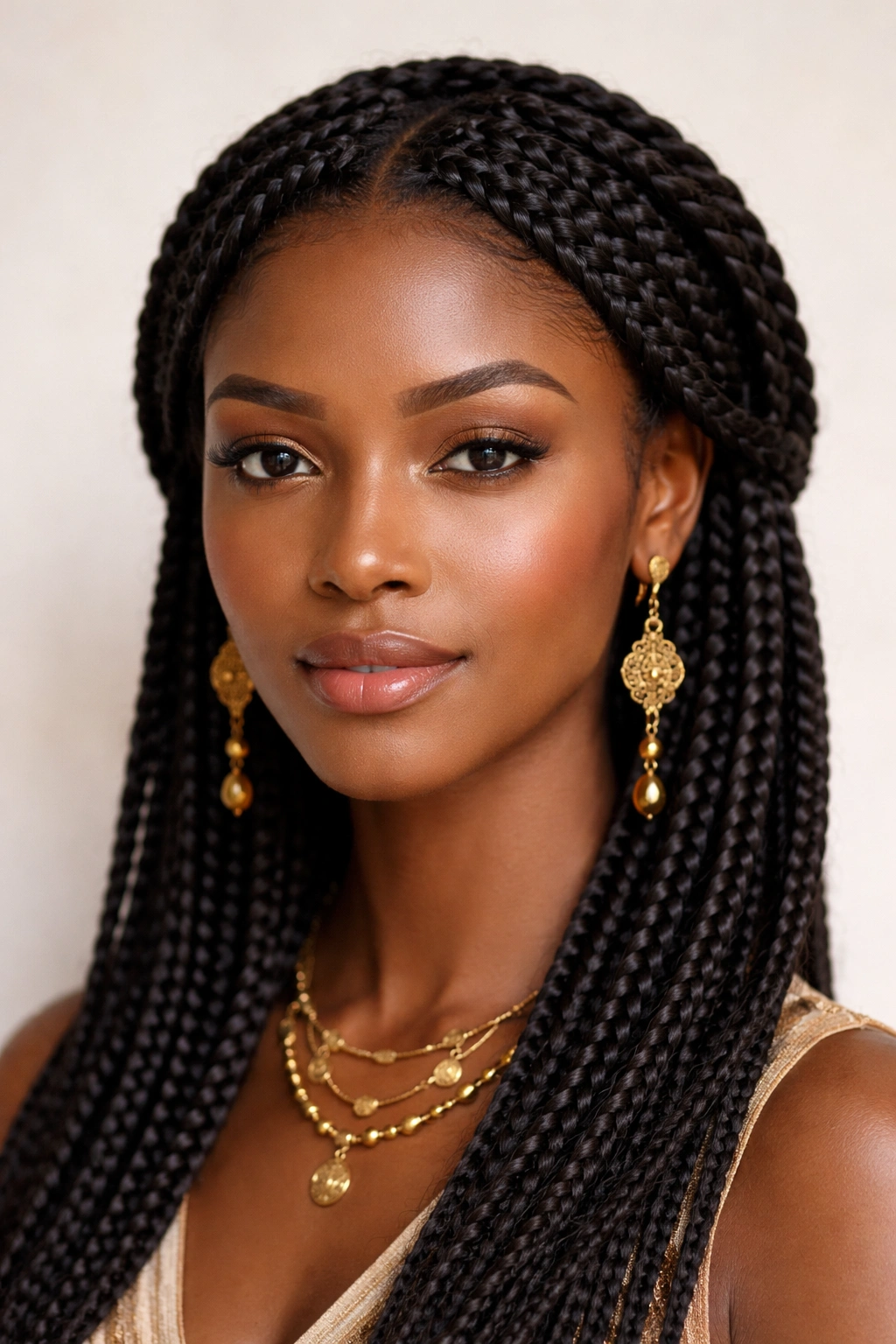
Crown braids represent an absolutely stunning protective style that frames the face and head like a literal crown. These braids typically start at one temple, wrap around the head in a continuous or segmented pattern, and can end at the opposite temple or continue down the back of the head. The braids are usually medium in thickness and may be combined with loose curls or additional braids cascading down the back, creating an effect that’s both elegant and intricate.
Design and Aesthetic Appeal
The crown braid arrangement is particularly flattering for most face shapes, as it draws the eye upward and creates a lengthening effect. The style can be worn sleek and sophisticated or with softer textures for a more romantic appearance. Many Fulani women choose to create crown braids that follow natural or sculpted parts, creating geometric patterns that enhance the overall aesthetic. The adaptability of this style means it works equally well for everyday wear or special events.
Installation Process and Longevity
Creating crown braids requires a skilled braider who understands proportion and pattern. The process typically takes three to five hours, depending on the thickness of the braids and the complexity of the crown pattern. The braids are usually finished with small bands, beads, or by incorporating them into the style in a way that looks intentional and complete. With proper care and maintenance, crown braids can last six to eight weeks, making them a practical choice for those seeking a versatile protective style with cultural significance.
6. The Fulani Shuku Braids
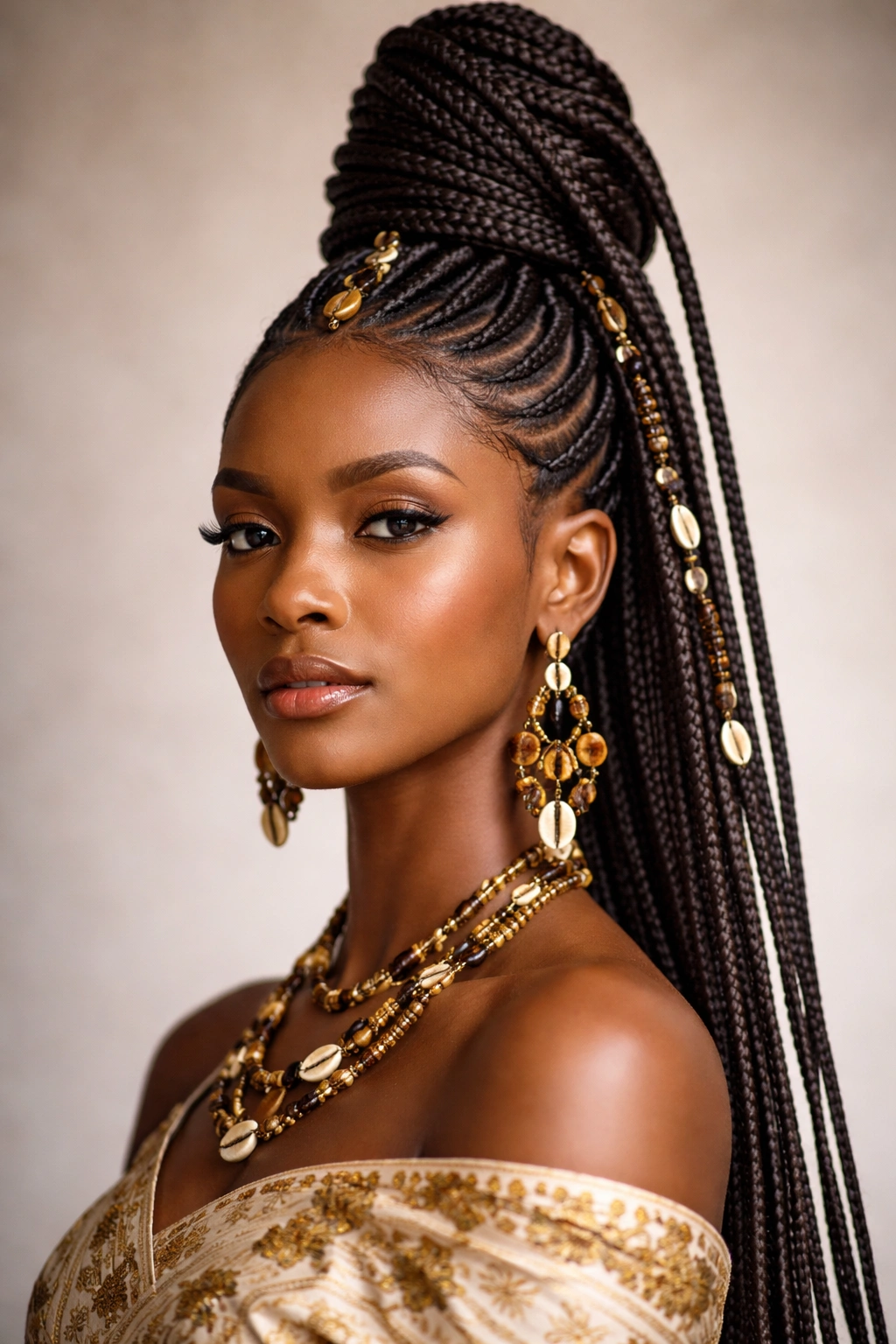
Shuku is a Yoruba term that’s become associated with various upswept hairstyles, but the Fulani version has its own distinct character. This style features all or most of the hair gathered upward and sculpted into a towering arrangement of braids, twists, or a combination of both. The shuku can be extremely tall and dramatic or moderately sized, depending on the wearer’s preferences and the occasion. The braids often spiral upward, creating movement and visual interest that’s impossible to ignore.
The Confidence and Presence of the Style
Wearing a Fulani shuku requires confidence—this is a statement hairstyle that announces the wearer’s presence in a room. The style showcases the full beauty of the face while demonstrating commitment to hair care and cultural pride. Historically, the height and complexity of a woman’s shuku could indicate her status, age, or achievements within her community. Today, women choose this style both to honor that tradition and to express their own boldness and individuality.
Technical Execution and Styling Variations
A proper Fulani shuku requires careful sectioning and strategic placement of braids or twists to achieve the height and structure desired. Soft padding or thread is sometimes used to help support the style, especially for very tall versions. The base of the style needs to be secured well to prevent tension and discomfort over the weeks of wear. Variations include leaving face-framing braids loose, incorporating beads at different intervals, or mixing braids with twists for textural variety. The style typically lasts four to six weeks depending on how well the base is maintained.
7. The Fulani Goddess Braids
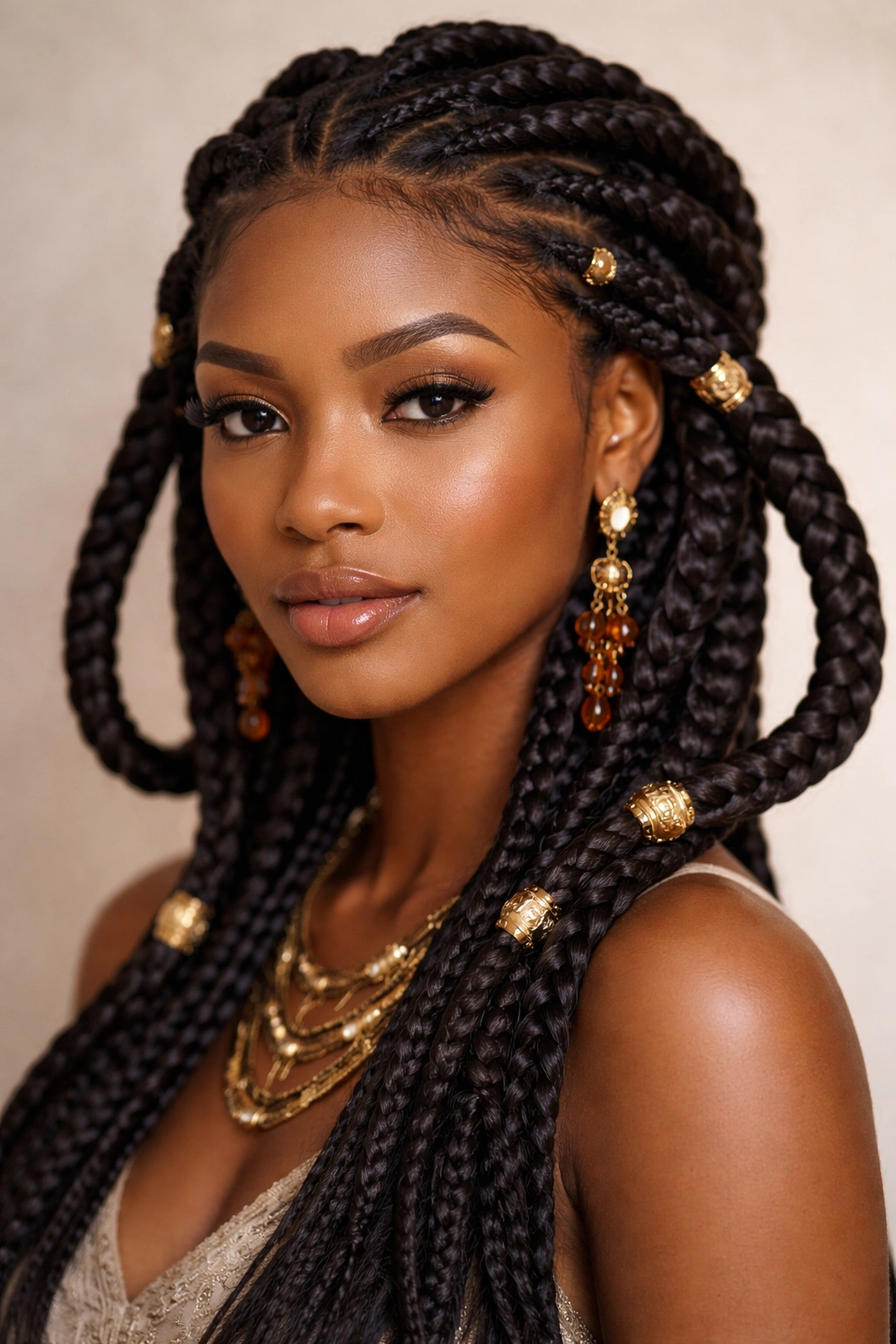
Goddess braids represent a more modern interpretation of traditional Fulani braiding, featuring larger, looser, and more sculptural braids than some classic styles. These braids are thicker than traditional cornrows but often have a softer, more flowing quality. They’re frequently arranged in patterns that emphasize the natural contours of the head and face, sometimes with sections pulled to the side, curved around the ears, or gathered into loops and knots. The style bridges traditional technique with contemporary aesthetics.
Blending Tradition with Modern Sensibilities
The goddess braid style has gained popularity globally because it honors traditional African braiding techniques while feeling accessible to modern styling preferences. Fulani women have embraced this style as a way to maintain cultural connection while embracing contemporary fashion. The braids can be worn with added hair for extra volume and drama, or using only natural hair for a more understated look. Either way, they celebrate the artistry of intricate braiding while offering flexibility in expression.
Care and Styling Versatility
Goddess braids are relatively forgiving in terms of maintenance because the slightly looser structure means they don’t require as much tension to maintain their appearance. They typically last six to eight weeks, and many women style them in different ways during that time—some days worn loose, other times gathered into a high ponytail or bun. The braids can be paired with various accessories, from simple bands to elaborate jewelry, making them extremely versatile for both everyday wear and special occasions.
8. The Fulani Box Braids with Gold Cuffs
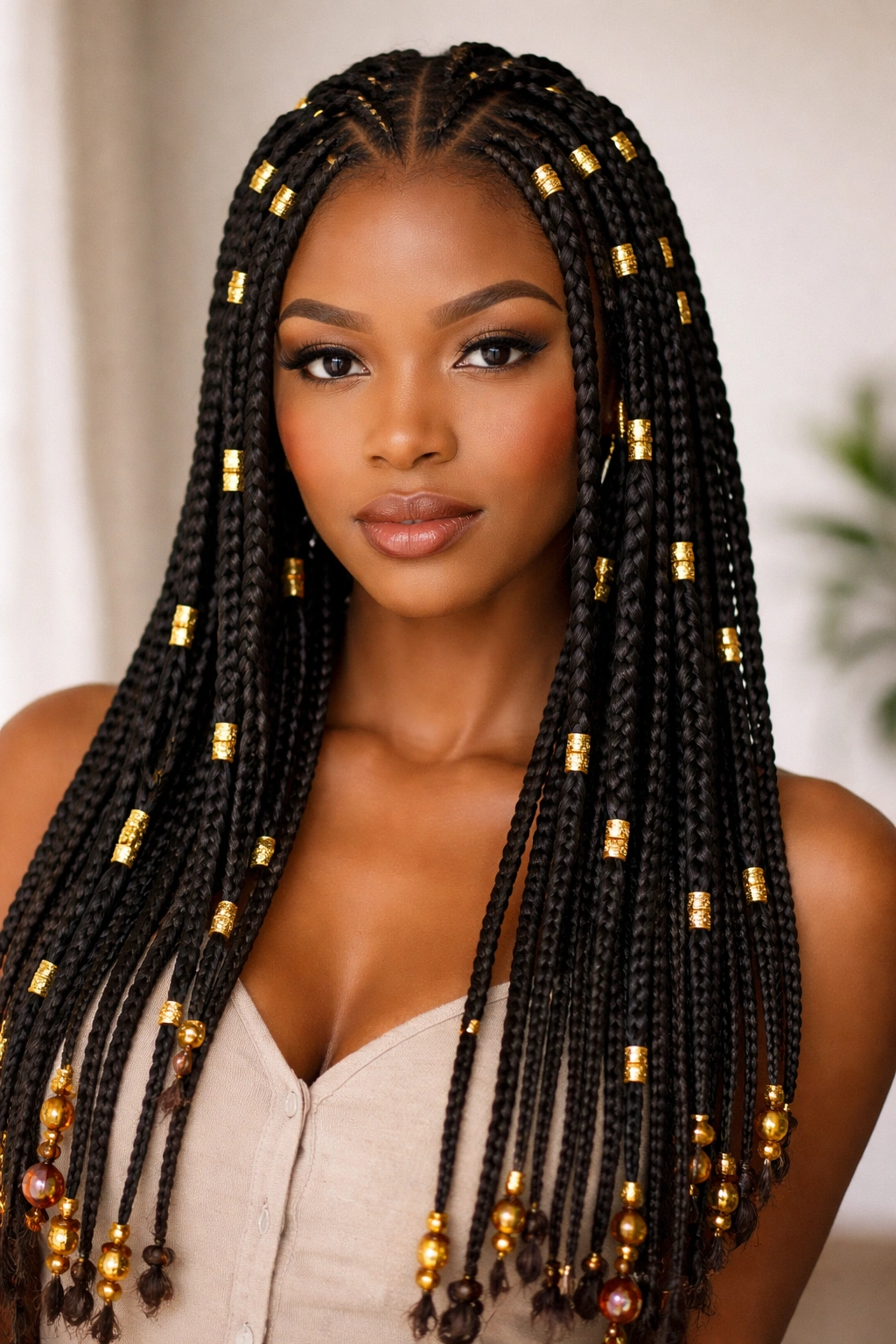
Box braids represent a universally recognized protective style, but the Fulani versions often incorporate distinctive elements that set them apart. These braids are medium-sized, evenly spaced, and individually separated—creating a boxy grid pattern on the scalp. What makes the Fulani interpretation special is the meticulous attention to the gold cuffs or wraps placed at intervals along the braids, sometimes combined with beads or shells. The gold catches light as the wearer moves, creating constant visual interest.
Why Box Braids Are Practical and Protective
Box braids protect natural hair by minimizing manipulation and breakage while allowing the scalp and strands to retain moisture. The individual braids can be styled in countless ways—high ponytails, low buns, half-up styles, or left loose. This versatility means the style can transition from casual daywear to special event styling without being redone. The medium thickness balances practical durability with a refined aesthetic that works in professional and creative settings alike.
Installation and Maintenance Logistics
Installing box braids typically takes six to eight hours, depending on the size of the braids and the length of the hair. Adding gold cuffs is a detail that requires precision but is absolutely worth the extra effort for the elevated aesthetic it provides. Box braids can last eight to twelve weeks with proper care, including regular scalp cleansing and moisturizing. Many women find this style represents the sweet spot between low maintenance and high impact, offering professional appearance with minimal daily styling requirements.
9. The Fulani Two-Tone Braids
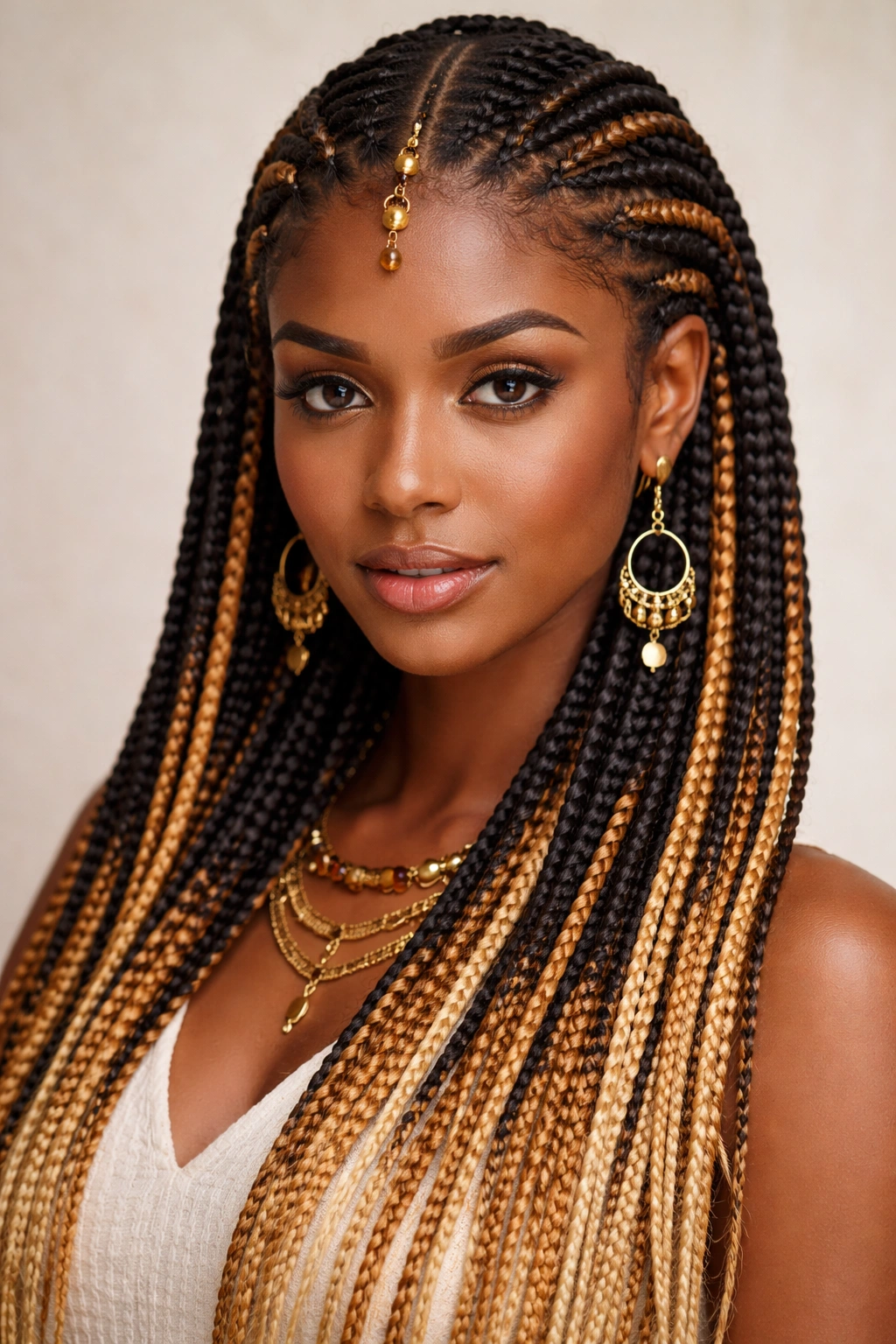
Two-tone braids involve incorporating two different colored extension materials into the braiding process, creating a striking visual effect that highlights the braider’s skill and the wearer’s personal style. Traditional color combinations might be black and gold, black and burgundy, or brown and blonde—but the possibilities are endless. The colors can be distributed equally throughout the braid or arranged so that certain sections of the braid are primarily one color, creating an ombré or striped effect.
Artistic Expression Through Color
The choice of colors in two-tone braids allows for significant personal expression within the framework of traditional braiding techniques. Some women choose colors that reflect their heritage or cultural pride, while others select combinations based on personal aesthetic preferences or upcoming events. The two-tone effect can make the braids appear thicker and more dimensional than single-color versions, adding visual impact and sophistication. This style celebrates both the technical skill required to execute it and the artist’s (and wearer’s) creative vision.
Creating the Striped or Ombré Effect
Two-tone braids can be created by simply alternating which color extension is fed into the braid at different points, or by layering the colors in a more complex pattern. Some braiders create a gradient effect where one color gradually transitions to another, while others prefer clear, distinct stripes. The technique requires careful planning and skillful execution, making this a choice for experienced braiders. The result is a hairstyle that stands out and communicates the wearer’s appreciation for artistic detail.
10. The Fulani Locs with Ornaments
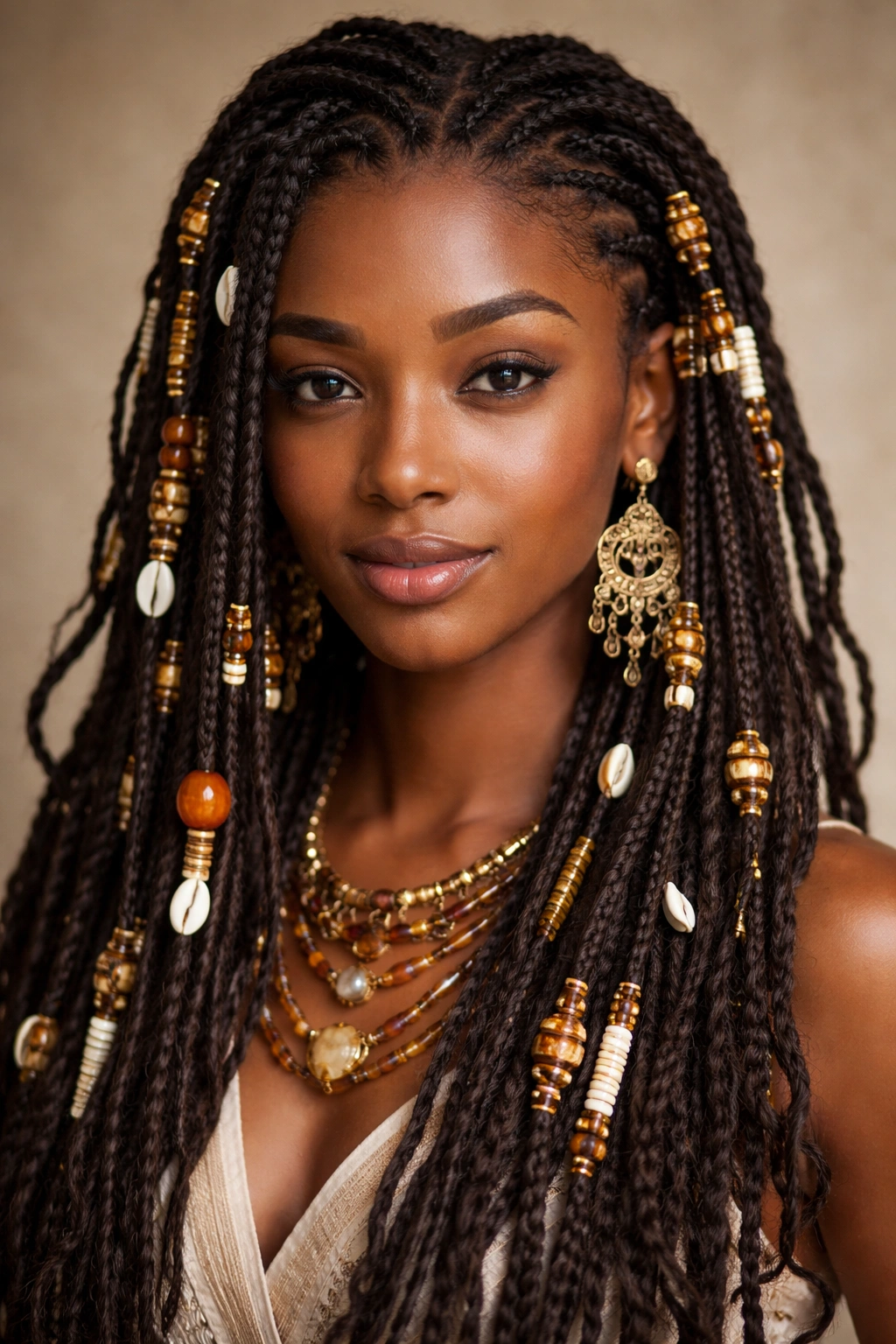
Fulani locs represent a commitment to a hairstyle that honors both protective styling and long-term natural hair care. These aren’t the thick, heavy locs common in some other cultural traditions—Fulani locs tend to be medium to thin, starting from a base of braids, twists, or coils and gradually locking into their own individual strands. They’re adorned with beads, gold cuffs, shells, and sometimes thread wrapping in patterns that reflect the wearer’s personal style and cultural affiliations.
The Journey and Spiritual Significance
Growing and maintaining Fulani locs is a long-term commitment that many women experience as a spiritual practice. The process of tending to the locs—separating them, caring for the scalp, adding ornaments—becomes a regular ritual. The locs themselves develop character and personality over time, with some becoming thicker, others staying fine, creating a natural variation that’s uniquely beautiful. Many women report that wearing locs feels like a physical manifestation of their commitment to their heritage and their own personal growth.
Creating Ornamental Patterns
The real artistry of Fulani locs emerges through the ornament placement. Women often develop patterns or arrangements that hold personal meaning—perhaps incorporating family colors, spiritual symbols, or simply creating aesthetically pleasing designs. The ornaments can be changed seasonally or for special occasions, allowing the locs themselves to remain stable while the overall aesthetic shifts. This combination of permanence (the locs) and change (the ornaments) creates a dynamic, evolving hairstyle that grows with the wearer over years.
11. The Fulani Triangular Box Braids
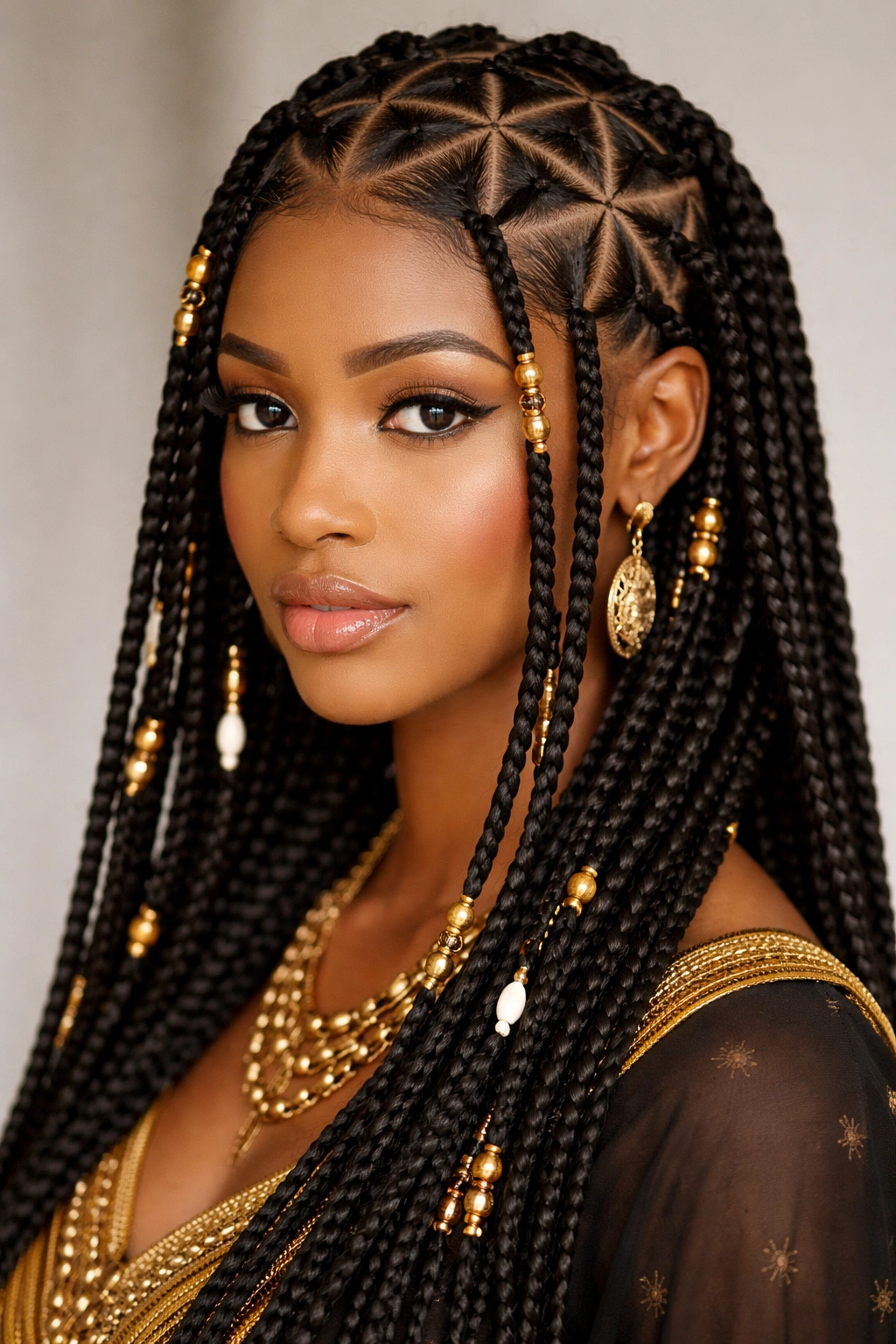
Triangular box braids refer to a specific sectioning pattern that creates triangular parts on the scalp, with individual box braids sprouting from each triangular section. This technique creates a different visual effect than traditional square or rectangular box braiding—the triangles can create diamond-shaped or hexagonal patterns depending on how they’re arranged and interpreted. The braids themselves may be thin, medium, or thick, but the distinctive aspect is the geometric pattern created by the sectioning on the scalp.
Geometric Precision and Visual Impact
The triangular sectioning pattern is sometimes called “geometric braiding” and represents an evolution of traditional braiding techniques that demonstrates technical skill and artistic vision. The pattern can flow across the scalp in orderly rows or create more complex, interlocking arrangements. Some braiders use the geometric pattern as a foundation for storytelling designs—incorporating beads, shells, or color variations to create larger images or patterns that become apparent when viewing the head from above. This style celebrates mathematics and art in equal measure.
Styling Possibilities and Duration
Triangular box braids can last eight to twelve weeks with proper maintenance, and the geometric base actually helps keep individual braids separated and prevents them from trying to merge together. The style can be worn loose and flowing or gathered up into various updos. Some women find that the geometric precision of the style appeals to them practically and aesthetically—it feels intentional and controlled. The pattern also shows less frizz and breakage along the parts as time goes on, because the sectioning has been thoughtfully executed.
12. The Fulani Senegalese Twists
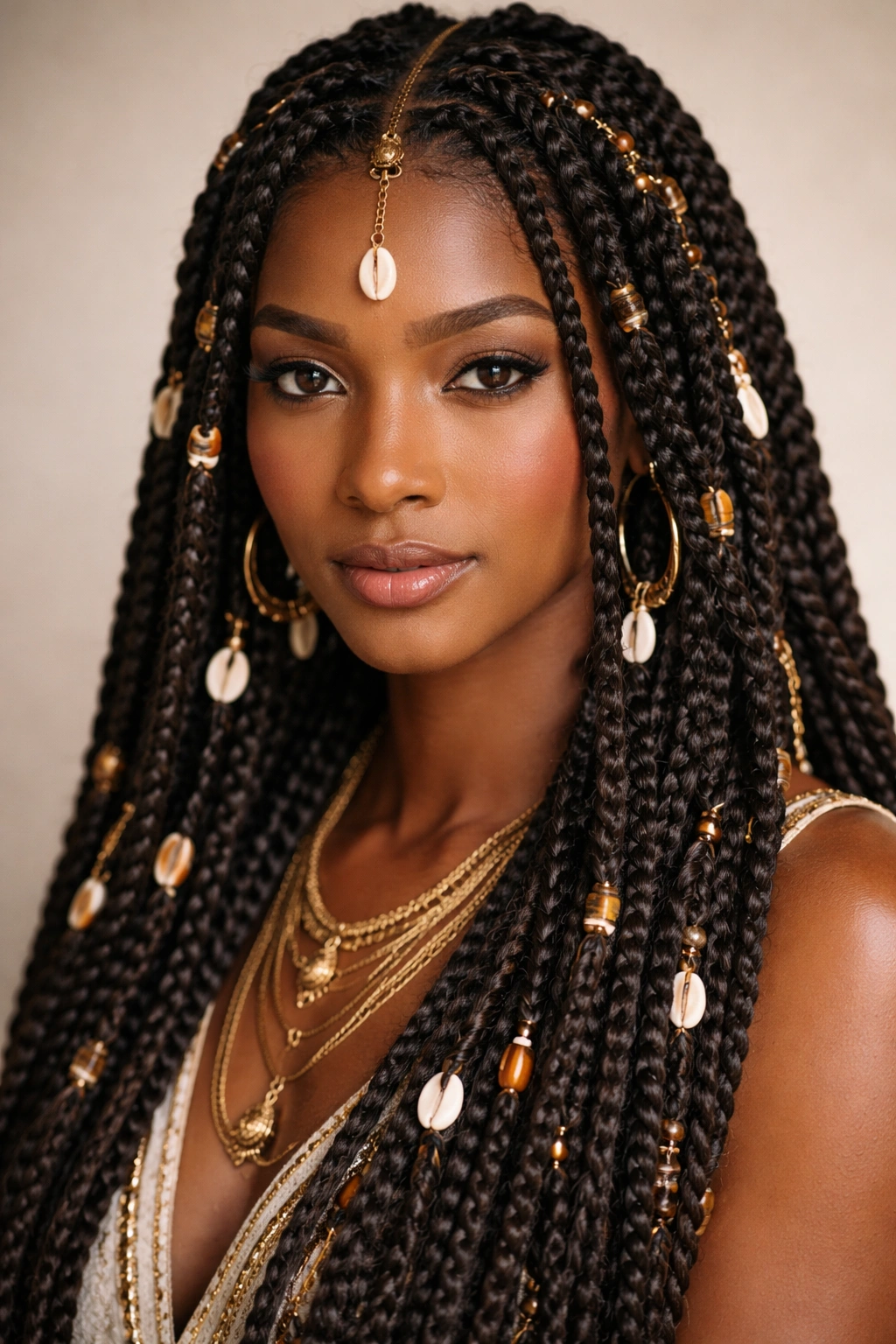
Senegalese twists, while sometimes associated with other cultures, have a distinct Fulani interpretation that incorporates traditional elements and aesthetic preferences. These twists are created by twining two strands of hair (natural or extended) together to create a rope-like effect that’s softer and more fluid than braids. Fulani versions often feature beads woven directly into the twists, gold thread wrapped around sections, or cowrie shells attached at intervals. The twists can be thin, creating a delicate effect, or thicker for a bolder aesthetic.
The Fluid Elegance of Twisted Styles
Twists offer a different texture and flow compared to braids—they tend to be slightly softer and often have more movement and bounce. This can be particularly flattering for women who prefer a less structured, more relaxed aesthetic while still maintaining a protective style. The twists can be styled in ponytails, half-up styles, or worn completely loose, and they often hold their shape beautifully without looking rigid. Many women appreciate that twists feel lighter on the head than braids and can sometimes be more comfortable for sleeping and longer wear.
Creative Variations and Personalization
Fulani Senegalese twists can be customized extensively—incorporating different colors, varying the thickness, adding ornaments at strategic points, or even mixing twisted and braided sections. Some women create reverse twists (where the twist spirals the opposite direction) to create visual patterns. The style can be worn as a protective option for six to eight weeks, though individual twists may need tightening at the roots as new growth emerges. The versatility and elegance of Senegalese twists make them a beloved choice for women seeking a protective style with visual softness.
Final Thoughts
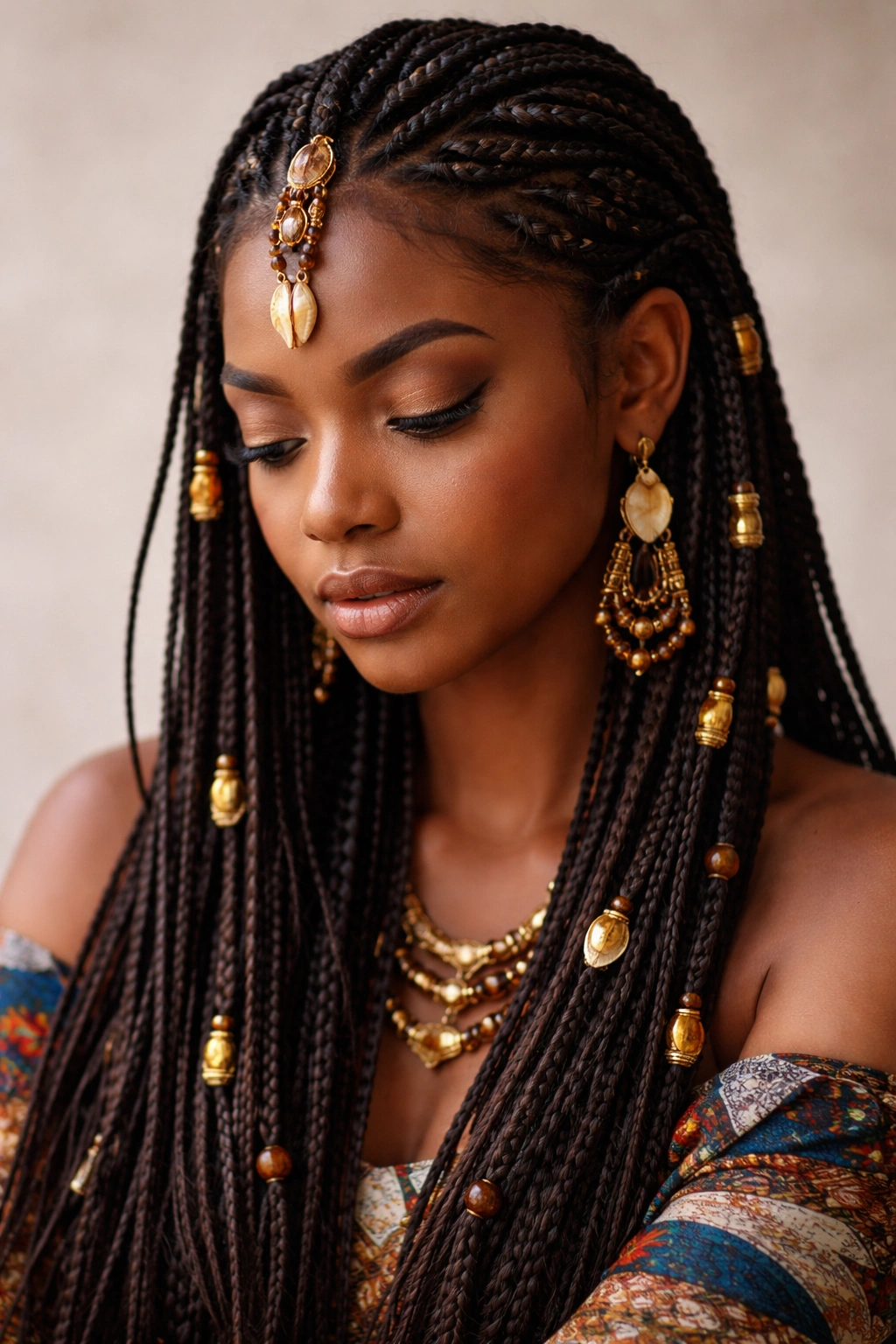
Fulani hairstyles are far more than aesthetic choices—they’re embodiments of cultural pride, artistic mastery, and personal identity. Each of these twelve styles represents centuries of refinement in braiding technique, combined with individual creativity and cultural significance. Whether you’re exploring these styles for their undeniable beauty, their protective benefits for natural hair, or because you’re honoring your own heritage, there’s something powerful in understanding the stories and skills behind each design.
The most important thing to remember is that these hairstyles deserve respect for their origins and cultural significance. If you’re wearing a Fulani hairstyle and you don’t have Fulani heritage, approach it as a genuine appreciation and education—learn the names, understand the traditions, and acknowledge the creative genius of the people who developed and perfected these techniques over generations. A skilled braider is an artist, and getting your hair done is an investment in time, skill, and cultural preservation.
Whatever style calls to you, whether it’s the iconic Lopo’s glossy elegance or the geometric precision of triangular braids, know that you’re wearing a piece of African artistry. These hairstyles have survived, evolved, and been celebrated not just because they’re beautiful—though they absolutely are—but because they represent resilience, creativity, and the ongoing celebration of cultural identity that remains vital and vibrant.
