



When you’re looking to elevate your natural hair game, few styles command as much attention and cultural pride as Fulani braids. These intricate, decorative braids have deep roots in West African tradition, particularly among the Fulani people, and they’ve become a go-to choice for anyone wanting to combine stunning aesthetics with practical, protective styling. The beauty of Fulani braids lies in their versatility — you can wear them sleek and minimal, embellish them with beads and gold cuffs, style them into elegant updos, or let them cascade down your back in a bold statement.
What makes Fulani braids such a perfect fit for natural hair is that they protect your strands while giving you endless creative freedom. Whether your hair is thick and coily, fine and wavy, or textured in any way, there’s a Fulani braid variation that’ll work beautifully. The style sits somewhere between cornrows and regular box braids, typically featuring thinner braids that allow for decorative elements woven throughout, a signature center braid that often frames the face, and the option to add beads, rings, or metallic accents that make the style unmistakably yours.
The versatility doesn’t stop at appearance, either. You can rock these braids for weeks, refresh them as they loosen, style them into different shapes each day, and transition from a casual weekend look to an elevated evening style without taking everything down. If you’ve been curious about trying Fulani braids but weren’t sure which variation would suit your face shape, hair texture, or lifestyle, this guide walks you through 15 stunning options — from minimalist interpretations to fully embellished showstoppers — so you can find the perfect style to express your natural beauty.
1. Classic Center-Parted Fulani Braids
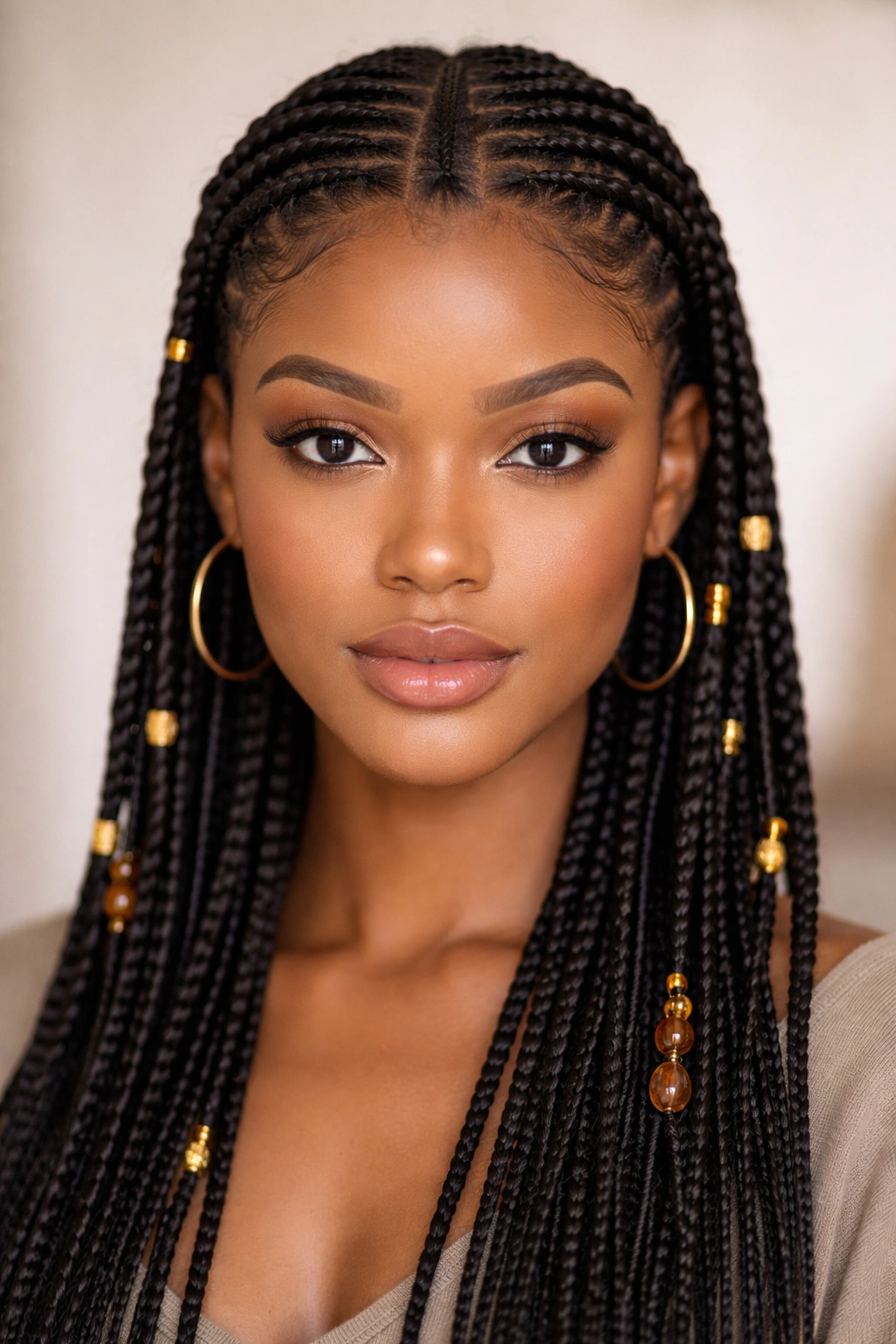
The most recognizable Fulani braid style features a clean center part running from your hairline straight down the back of your head, with smaller braids flanking both sides and a slightly thicker braid running down the middle. This classic iteration is where most people start because it’s genuinely flattering on every face shape and works whether your hair is shoulder-length or past waist-length. The symmetry creates a naturally polished look that feels intentional and put-together without requiring excessive styling time once you’re past the initial installation.
Why This Style Works for Everyone
The center-parted Fulani is the goldilocks of braid styles — bold enough to make a statement, but structured enough that it reads as timeless rather than trendy. The geometric precision of the center part creates an optical effect that elongates the face, making it especially flattering for rounder face shapes, while the balanced distribution of braids on either side prevents the style from feeling lopsided or heavy on one side. This symmetry is also deeply calming visually, which is partly why this style has remained popular across generations.
Getting It Right
- Ask your braider to keep the center braid slightly thicker (about 1.5 times the width of the side braids) so it frames your face intentionally
- Ensure the side braids are consistent in size so the overall effect feels balanced and deliberate
- Start the braids at your natural hairline rather than pulled back, which keeps the style more comfortable for daily wear
- Consider how you’ll be styling the ends — whether you want them to flow loose, twisted into a bun, or tucked into themselves
Pro tip: This style photographs beautifully in natural light and is perfect if you want a Fulani look that reads more understated and professional, making it ideal for workplace environments or family events where you want cultural pride with professional polish.
2. Fulani Braids with Gold Cuffs and Beads
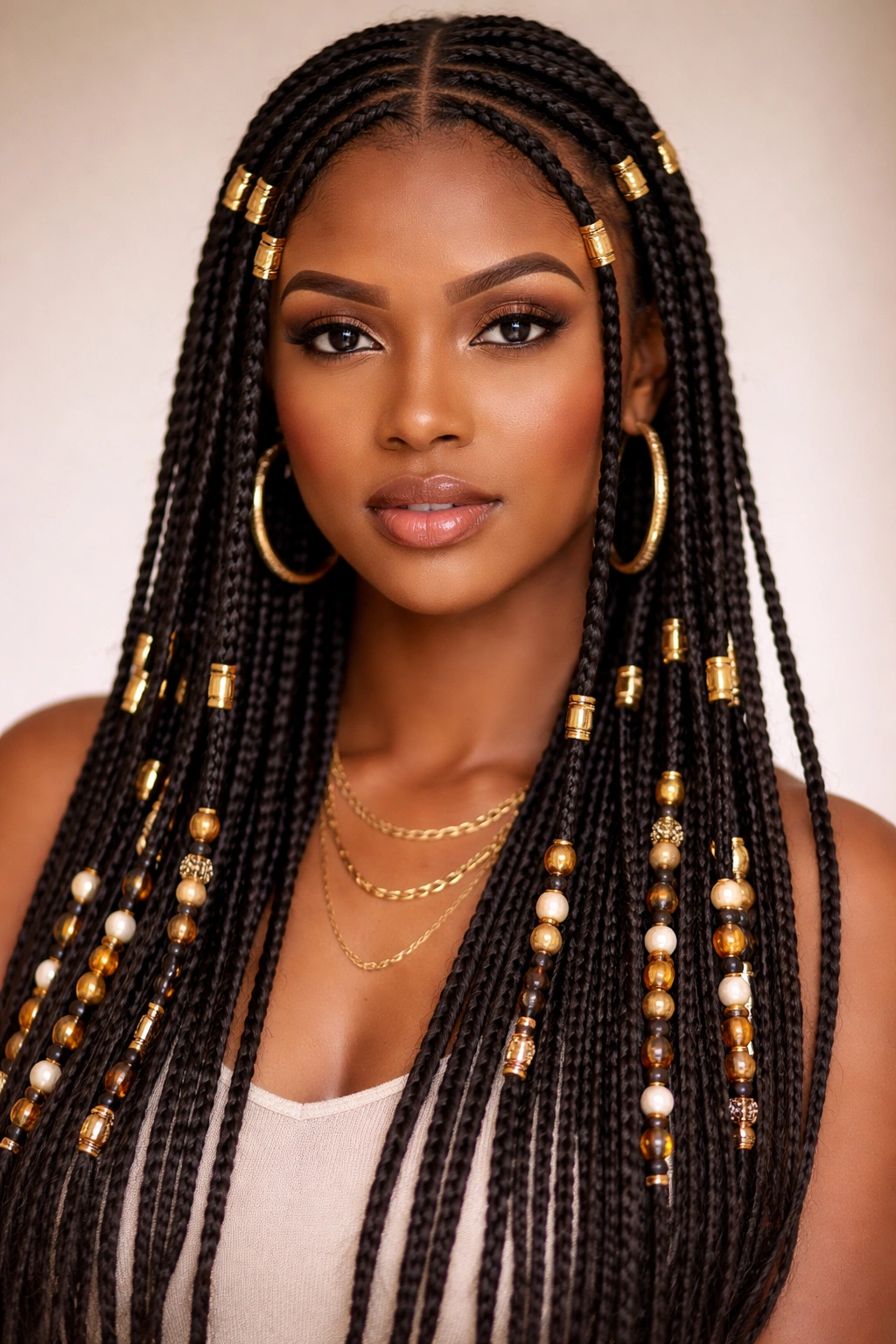
Once you’ve nailed the basic technique, adding metallic cuffs and decorative beads transforms the style from classic to ceremonial. Gold cuffs (sometimes called hair rings or tubes) slide onto your braids at strategic intervals, typically clustered near the roots where they catch light and draw attention to your face, or distributed evenly throughout for a maximalist approach. Wooden beads, crystal beads, or pearl-finish beads add dimension and texture, while the metal cuffs bring glamour and intentionality to every braid.
Elevating the Look with Adornments
The placement of cuffs and beads is where your personal style really shines through. Some people prefer a heavily embellished look with 4-5 cuffs per braid and beads interspersed throughout, while others opt for subtle placement — just 2-3 cuffs scattered through the style. The key is intentionality; every cuff should feel like a choice, not an afterthought. Heavier gold cuffs work best on thicker braids where they won’t slip, while lighter beads can be woven into thinner braids without causing sagging or discomfort.
Adornment Selection Guide
- Gold cuffs: Best for adding luxury and catching light; heavier weight suits thick braids better
- Wooden beads: Add warmth and texture; excellent for creating a bohemian or earthy aesthetic
- Crystal or glass beads: Catch light like precious stones; perfect for evening styles or special occasions
- Pearl-finish beads: Create a softer, more elegant look that reads less dramatic than metallics
- Mixed metals: Combining gold, silver, and copper adds complexity and modern edge
Pro tip: Have your braider leave the first inch of each braid (closest to your scalp) bare of cuffs and beads — this prevents weight from pulling directly on your hairline and keeps the style comfortable for longer wear.
3. Fulani Braids into a High Bun
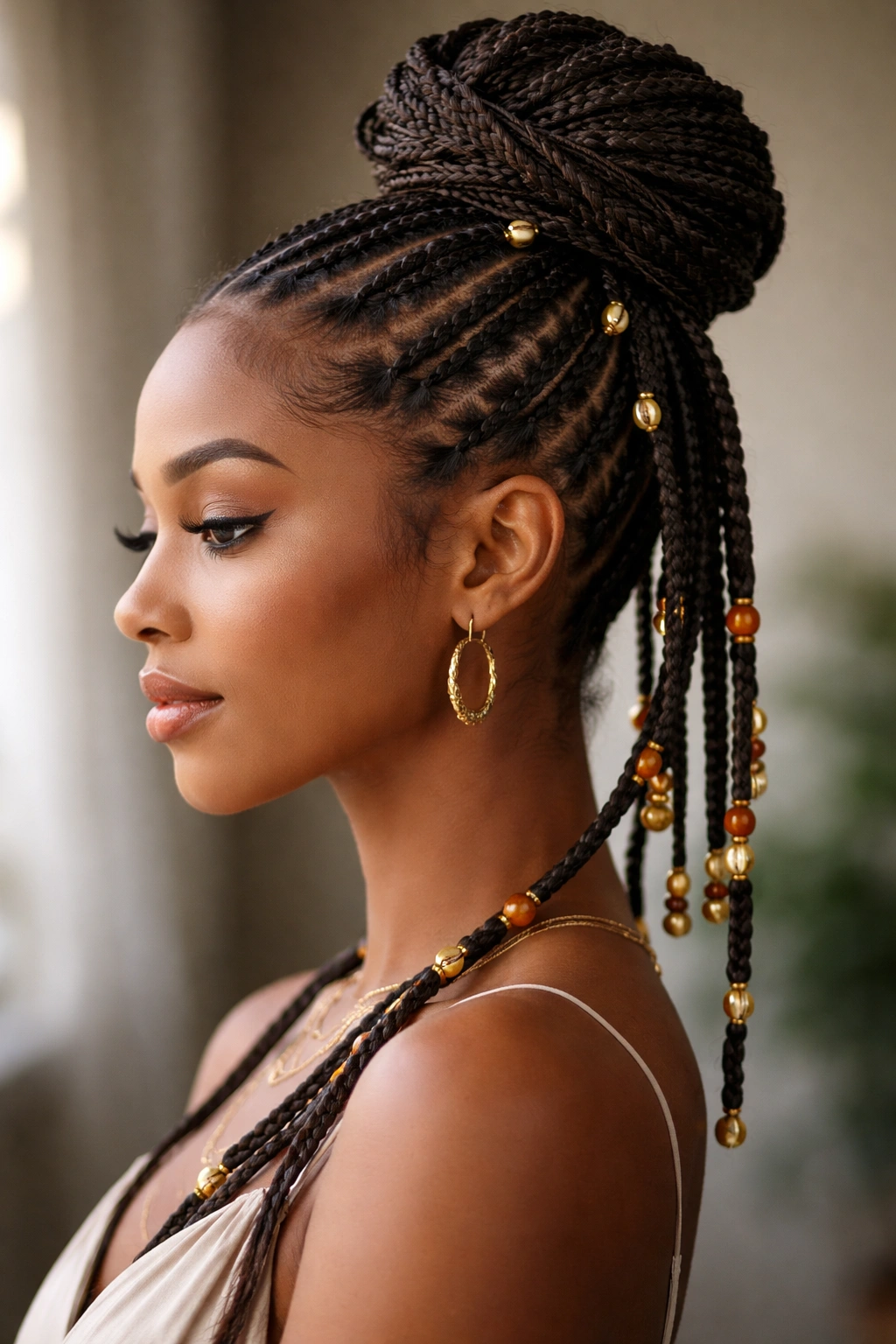
Taking your Fulani braids and styling them into a high bun creates an elevated, dancer-ready look that’s perfect for everything from workouts to date nights. This style gathers all the braids at the crown of your head and twists them together into a secure bun, creating a clean silhouette that keeps all your hair tucked away while still showing off the detailed braid work and any beads or cuffs you’ve added. The high placement is energizing and opens up your face, making it feel youthful and dynamic.
Creating the Updo
Starting with fully installed Fulani braids makes this transformation super straightforward — you’re essentially just gathering the ends and securing them into a knot. Use a silk or satin hair tie (never elastic that can snag) and gather the braids at the highest point on your head where they still feel secure against your scalp. Twist the gathered braids around the base of your ponytail to form the bun, then tuck the ends underneath and secure with bobby pins placed horizontally (not vertically) for better grip. The bun doesn’t need to be perfectly round or perfectly neat; a slightly textured, organic bun looks more modern and intentional than something overly polished.
Styling Variations
- High crown bun: Positioned directly at the top of your head for maximum face-opening and youthful energy
- Side bun: Shifted to one side for asymmetrical elegance; especially flattering if you’re wearing the style to one side
- Double bun: Split your Fulani braids in half and create two buns at the crown for a playful, editorial look
- Bun with loose face-framing braids: Leave 2-3 thin braids loose around your face for softness
Worth knowing: This style is perfect for hot weather or workouts because it keeps everything completely off your neck and face, plus it extends the life of your install by rotating the tension and preventing constant stress on the same sections of hair.
4. Fulani Braids with Beaded Crown Detail
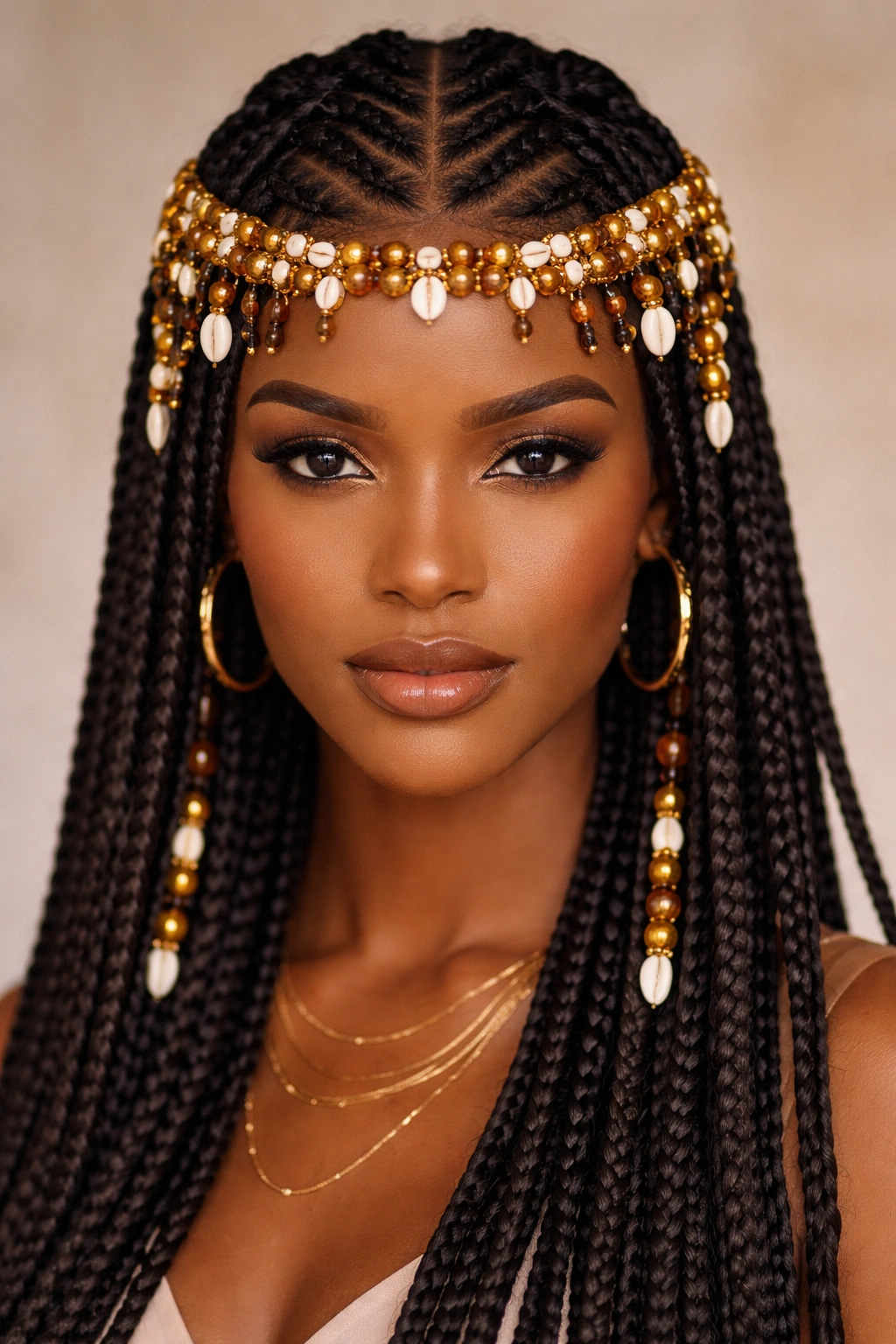
If you want maximum visual impact with minimal styling effort, a beaded crown detail takes your Fulani braids from beautiful to extraordinary. This technique involves selecting 4-6 braids from around the front and crown area of your head and wrapping them with matching beads in a concentrated pattern, creating a crown effect across your hairline. The beads should be progressively larger as they move toward the back crown (or all the same size if you prefer symmetry), and the overall effect is regal, celebratory, and undeniably stunning.
Creating the Crown Effect
The magic of this style is in the placement and density of the beading. Work with your braider to identify which braids frame your face most flatteringly, then concentrate beads specifically on those sections. Typically, you’d start with 2-3 braids on one side of your face, several braids across your top/crown area, and 2-3 on the other side, creating a literal crown of beads that sits roughly where a tiara would. The beads catch light as you move, making this style especially stunning in photos and when you’re moving through natural light.
Bead Selection for Crown Details
- Matching sets: Using the same bead type (all gold, all pearl, all crystal) across the crown creates visual cohesion
- Ombré effect: Transitioning from larger beads at the front to smaller ones at the back creates sophisticated depth
- Two-tone combinations: Alternating between two bead colors adds visual interest without feeling chaotic
- Geometric placement: Spacing beads evenly vs. clustering them densely creates different moods
- Mixed sizes: Varying bead sizes throughout the crown adds texture and catches light from multiple angles
Pro tip: If you want extra-defined beading, ask your braider to wrap each bead with matching thread rather than just sliding them onto the braids — this prevents them from sliding around as you wear and sweat in the style, and it keeps everything looking crisp throughout your install.
5. Fulani Braids with Rhinestone Embellishments
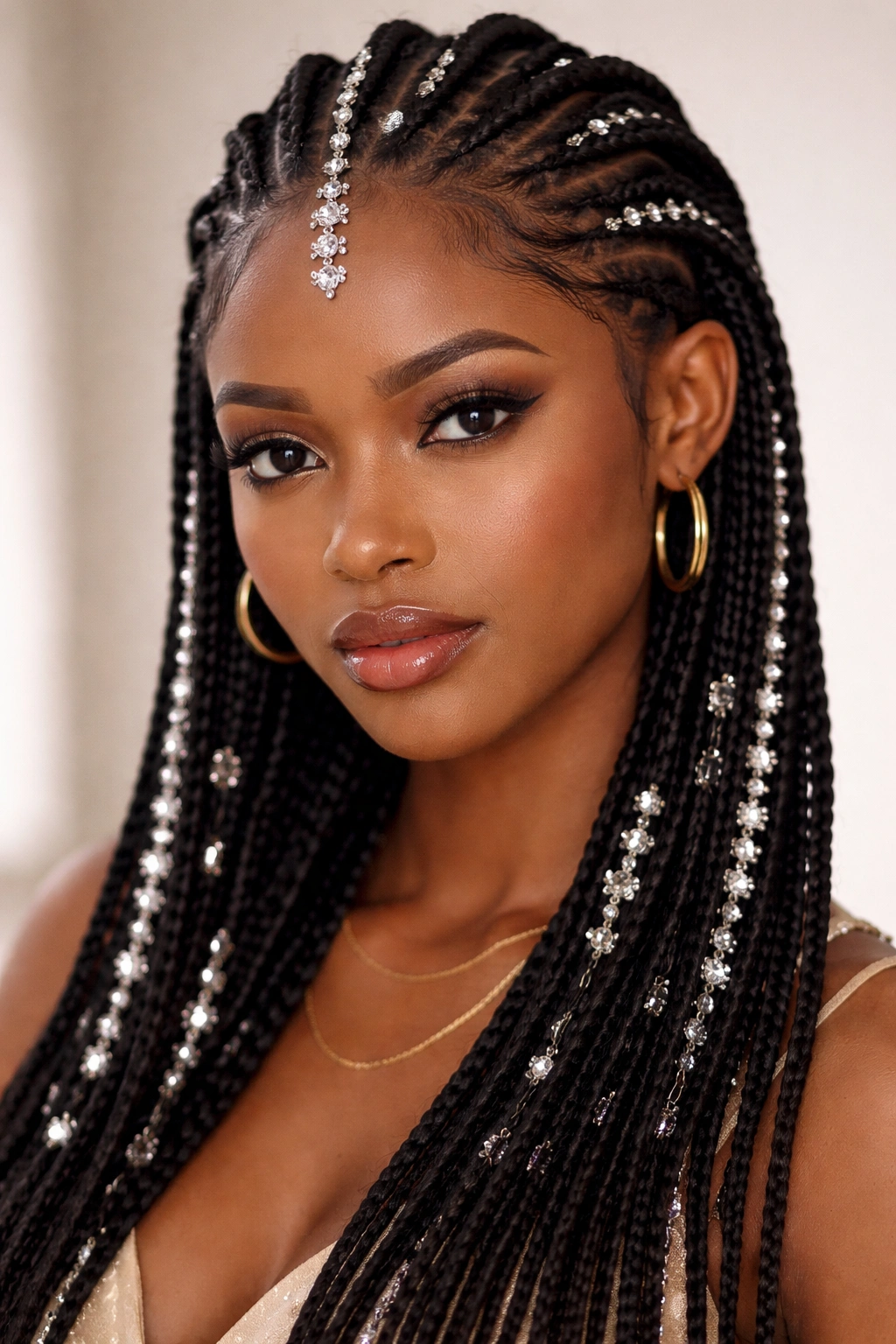
For special occasions, celebrations, or when you’re simply feeling like expressing your full power, rhinestone-encrusted Fulani braids take the style into full glam territory. This works best when you work with a braider who has experience applying rhinestones (they use special adhesive and small jeweler’s tools to place them), and you should typically reserve this look for specific events rather than everyday wear since the stones require careful maintenance. The payoff, though, is absolutely worth it — rhinestones catch light dramatically and create an almost otherworldly shimmer that photographs like a dream.
Designing Your Rhinestone Pattern
The placement of rhinestones should feel intentional and coordinated with your overall look. Some people choose to heavily embellish just the crown section, creating a concentrated moment of sparkle that draws focus upward. Others prefer a scattered approach where rhinestones are distributed throughout all the braids, creating a softer, more diffused shimmer. The color of the rhinestones matters tremendously — clear/diamond stones work with any aesthetic, while colored rhinestones (deep purple, sapphire blue, rose gold) can be chosen to match your outfit or the occasion.
Placement and Design Ideas
- Crown concentration: Heavy rhinestone placement across the top and front braids for maximum drama
- Scattered sparkle: Distributing rhinestones throughout all braids at intervals for a softer effect
- Gradient effect: Placing larger stones near your face and graduating to smaller ones as they move back
- Single-braid detail: Choosing one statement braid and completely covering it with rhinestones
- Cluster placement: Grouping multiple stones together rather than spacing them evenly for bold moments of shine
Worth knowing: Rhinestones require regular touch-ups as they inevitably catch on pillows and clothing. Plan to have your braider refresh the stones every 2-3 weeks if you’re wearing the style full-time, or keep them for special occasions only if maintenance feels overwhelming.
6. Minimalist Fulani Braids with Gold Bar Accents
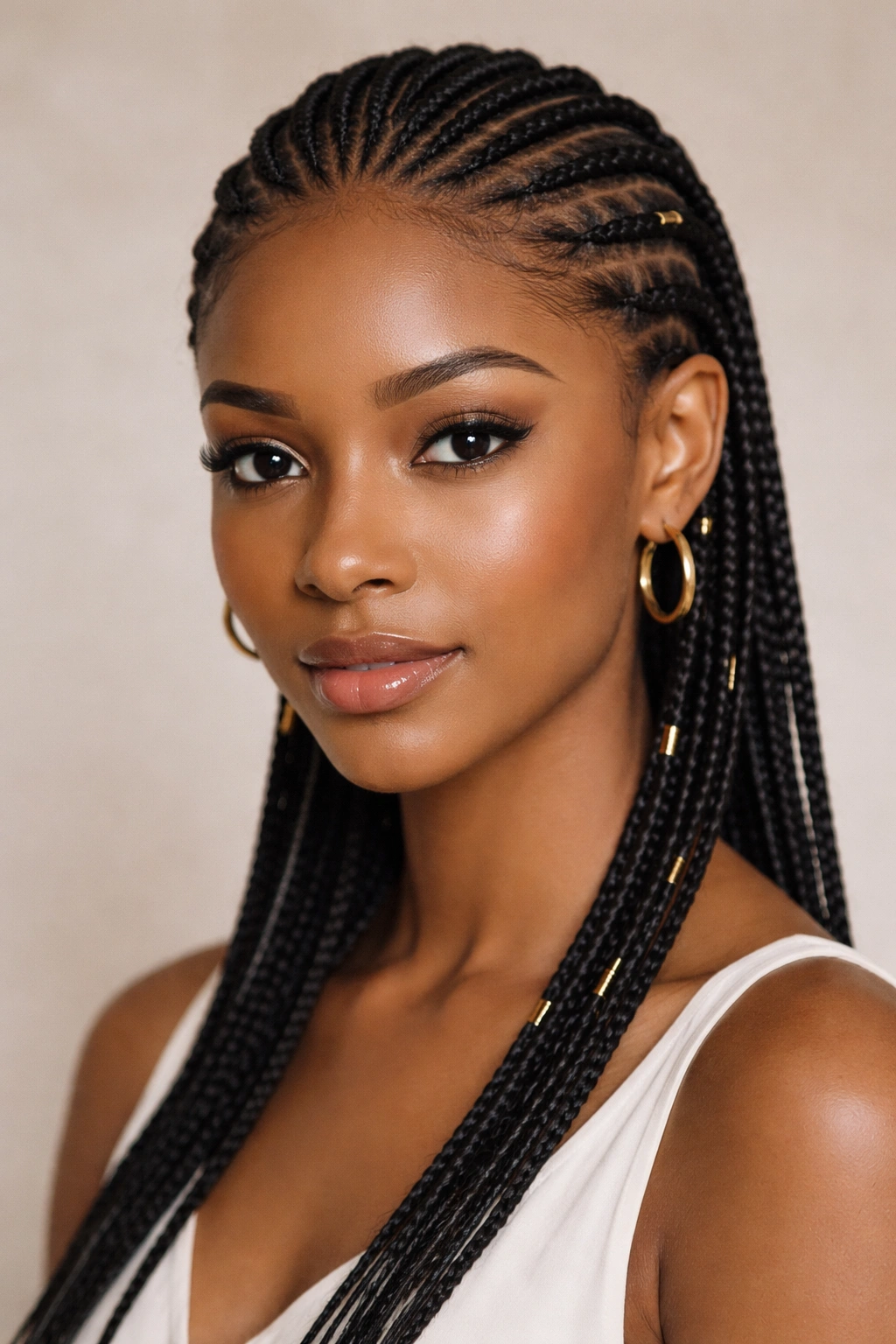
If you love the Fulani aesthetic but prefer a cleaner, more understated approach, minimalist Fulani braids deliver elegance without excess. This version features thinner braids (sometimes just 5-7 total rather than a full head of micro-braids) and keeps embellishments to gold bars or sleek cuffs placed strategically rather than densely. The braids are kept neatly pulled back but not aggressively tight, and the overall effect is modern, professional, and effortlessly cool.
The Beauty of Subtlety
Minimalist Fulani braids work especially well if you’re transitioning into the style for the first time or if you have a workplace where you need styling to feel polished rather than bold. The thinness of the braids and the restraint in embellishment mean the style reads as refined rather than eye-catching, but it’s unmistakably a Fulani interpretation because of the signature center braid and the intentional placement of beads or cuffs. This is also a fantastic option if you have fine or lower-density natural hair, since fewer, thinner braids won’t create excessive tension on your edges.
Minimalist Design Principles
- Fewer braids overall: 5-8 total braids rather than a full head of braiding
- Thin braid thickness: Each individual braid should be pencil-thin to create delicate elegance
- Strategic metallic accents: 1-2 gold bars per braid placed near the roots or ends
- Clean parting: A precise, intentional center part that’s easy to refresh as your hair grows
- No additional beads: Keeping embellishments to just metal cuffs or bars for maximum sophistication
Pro tip: This style actually requires more precision from your braider than heavily embellished versions because every element is visible — there’s nowhere to hide imperfect braiding. Find a braider experienced in creating clean, tight, even braids, and you’ll have a style that looks expensive and intentional.
7. Fulani Braids with Cowrie Shell Accents
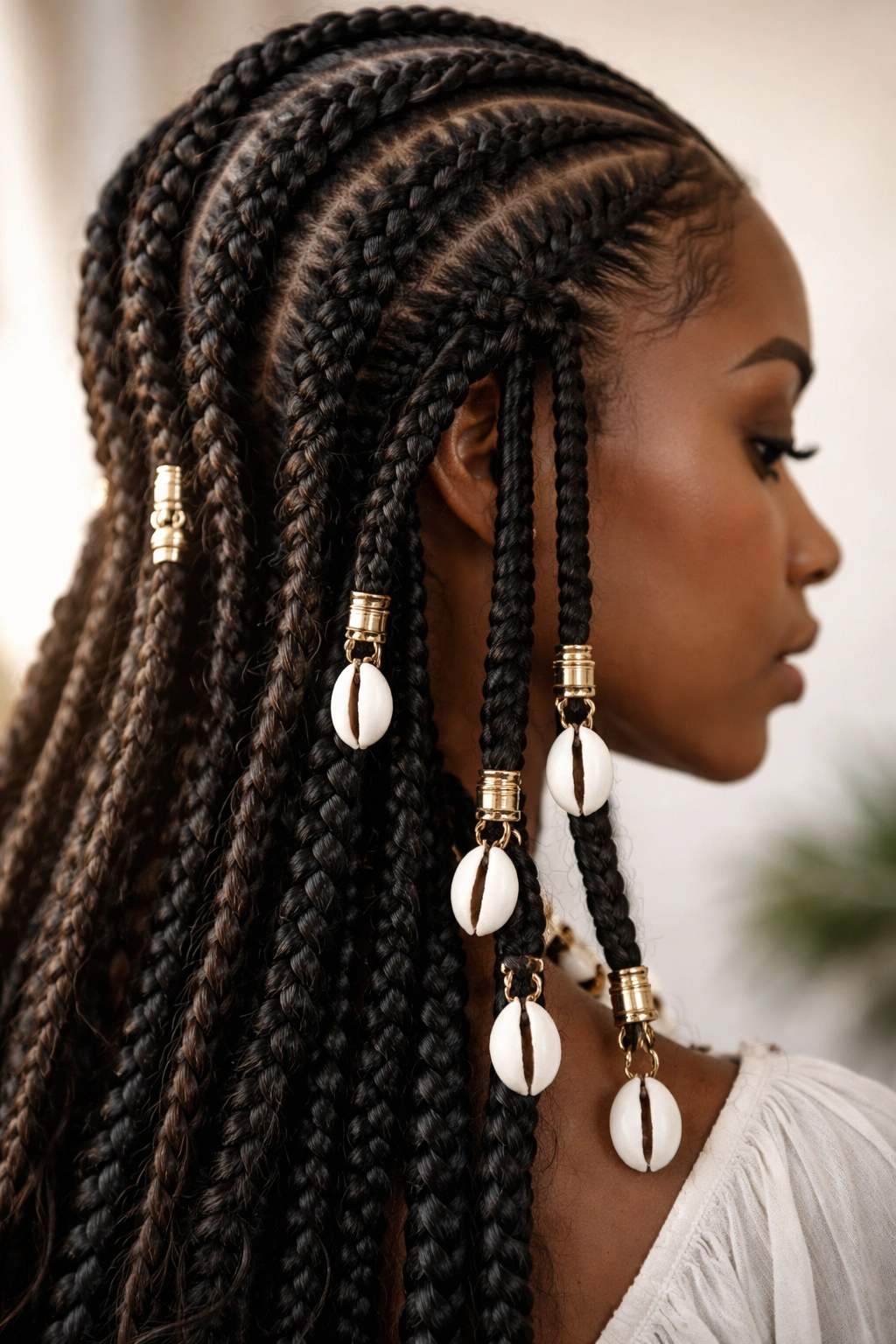
Cowrie shells hold deep cultural significance in many African traditions, and incorporating them into your Fulani braids connects you to that heritage while creating an absolutely gorgeous aesthetic. Shells can be strung onto braids (threaded with matching thread), hot-glued at strategic points, or attached to the ends of individual braids. The shells catch light differently than beads or metal, creating an organic, earthy shimmer that feels both bohemian and ceremonial depending on how you style everything else.
Working with Cowrie Shells
Cowrie shells are beautiful but heavier than beads, so they work best on thicker braids or when you’re concentrating them in fewer sections of your hair. If you’re putting shells on thin braids distributed throughout your head, the weight can create sagging over time. The best approach is typically to use thicker braids (box-braid thickness) and place shells selectively rather than on every braid. The shells can be naturally colored (creating a warm, earthy vibe) or gilded with gold paint for extra glamour.
Placement and Styling Ideas
- End-of-braid shells: Attaching one shell to the very end of each braid for weight and visual interest
- Clustered shells: Grouping multiple shells on a few thicker braids near your face or crown
- Mixed shells and beads: Alternating cowrie shells with metallic beads throughout for textural variety
- Full-coverage approach: Using thicker braids and covering multiple braids densely with shells
- Asymmetrical placement: Concentrating shells on one side of your head for creative, modern balance
Worth knowing: Shells can get caught in pillows and clothing more easily than beads or cuffs, so this style requires slightly more careful sleeping (consider a silk pillowcase or bonnet). The shells are durable and won’t degrade, but the thread holding them may need refreshing periodically.
8. Fulani Braids into Two-Strand Twists
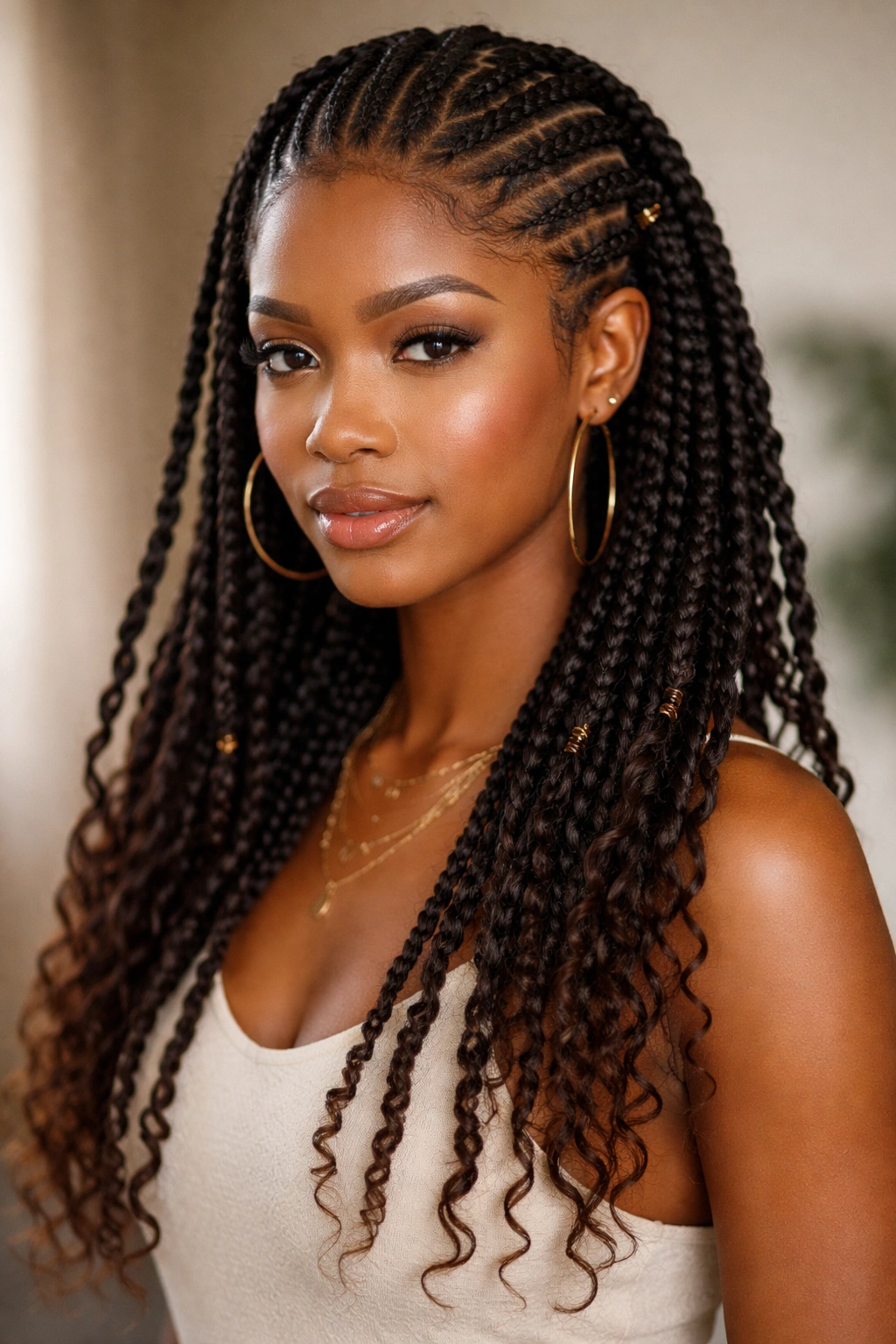
For a style that feels fresh and offers a completely different texture, consider installing Fulani braids but styling just the ends into two-strand twists rather than leaving them as braids. This hybrid approach gives you the polished, cultural significance of Fulani braiding on top while introducing the bohemian, organic feel of twists at the ends. It’s a gorgeous way to add dimension and break up the visual pattern of straight braids running all the way down.
Creating the Twist Transition
The transition happens naturally as your braider approaches the ends of each braid. Rather than completing the full braid all the way to the tip, they can transition to two-strand twisting about 4-6 inches from the end of each braid. This creates a visual break where the neatly braided section meets the slightly softer, textured twist section. You can then style the twists however you like — leave them loose, wrap them around each other, spiral them up toward your head, or pin them into an updo.
Styling the Twisted Ends
- Loose twists: Leaving the twisted ends completely free for maximum movement and bohemian energy
- Curled twists: Wrapping the twist ends around your finger to create spiral curls for extra texture
- Pinned twists: Gathering all the twisted ends and pinning them into a bun or side-swept style
- Stacked twists: Creating a sculptural look by wrapping twisted sections around the base of your braids
- Highlighted twists: Styling the twists into spirals or waves to showcase beads or shells woven into them
Pro tip: Ask your braider to keep the transitional section between braids and twists slightly looser than the rest of the style — this prevents an abrupt, rigid look and allows the twists to flow more naturally from the braids.
9. Fulani Braids with Colored Thread Wrapping
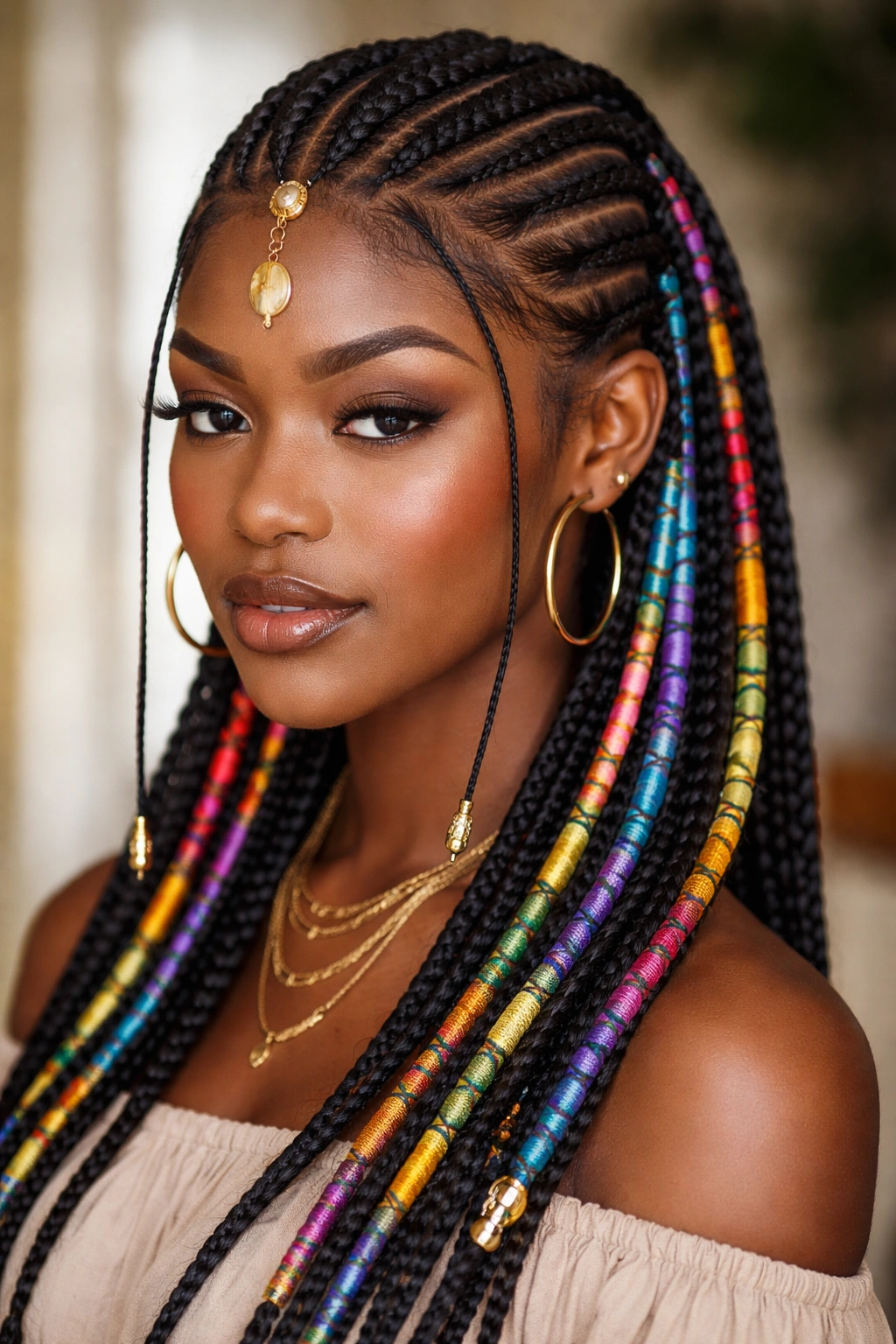
Adding colored thread wrapping throughout your Fulani braids is a way to customize the style to match your aesthetic, favorite colors, or a specific occasion. Your braider can wrap sections of thread around the base of braids, spiral it around entire braids, or use it to bind sections together. The thread can be thin and subtle or thick and bold, depending on your vision — this gives you complete creative control over how statement-making your style feels.
Thread Selection and Application
The thread colors you choose set the entire mood of the style. Jewel tones (emerald, sapphire, ruby) feel luxurious and ceremonial; pastels (blush, sage, lavender) feel soft and romantic; metallics (gold, silver, copper) feel glamorous; and earth tones (rust, ochre, terracotta) feel grounded and natural. Your braider can use thread in complementary colors (matching your skin tone, outfit, or birthstone) or contrasting colors (creating visual pop and energy). The thread is typically applied using a wrapping technique where it’s bound tightly around braids to prevent unraveling.
Color Combination Ideas
- Monochromatic wrapping: Using one color thread throughout for cohesive sophistication
- Rainbow gradient: Transitioning through multiple colors as braids move from front to back
- Accent wrapping: Using thread on just the center braid and face-framing braids for focused detail
- Two-tone combinations: Alternating between two complementary colors throughout the braids
- Ombre effect: Transitioning from lighter to darker shades of the same color family
Worth knowing: Thread wrapping is sustainable and removable — if you want to change the color later, your braider can simply unwrap the old thread and wrap new thread without disturbing the braids themselves. This makes it a great option if you want to refresh your look without reinstalling everything.
10. Fulani Braids with Hair Chalk Accents
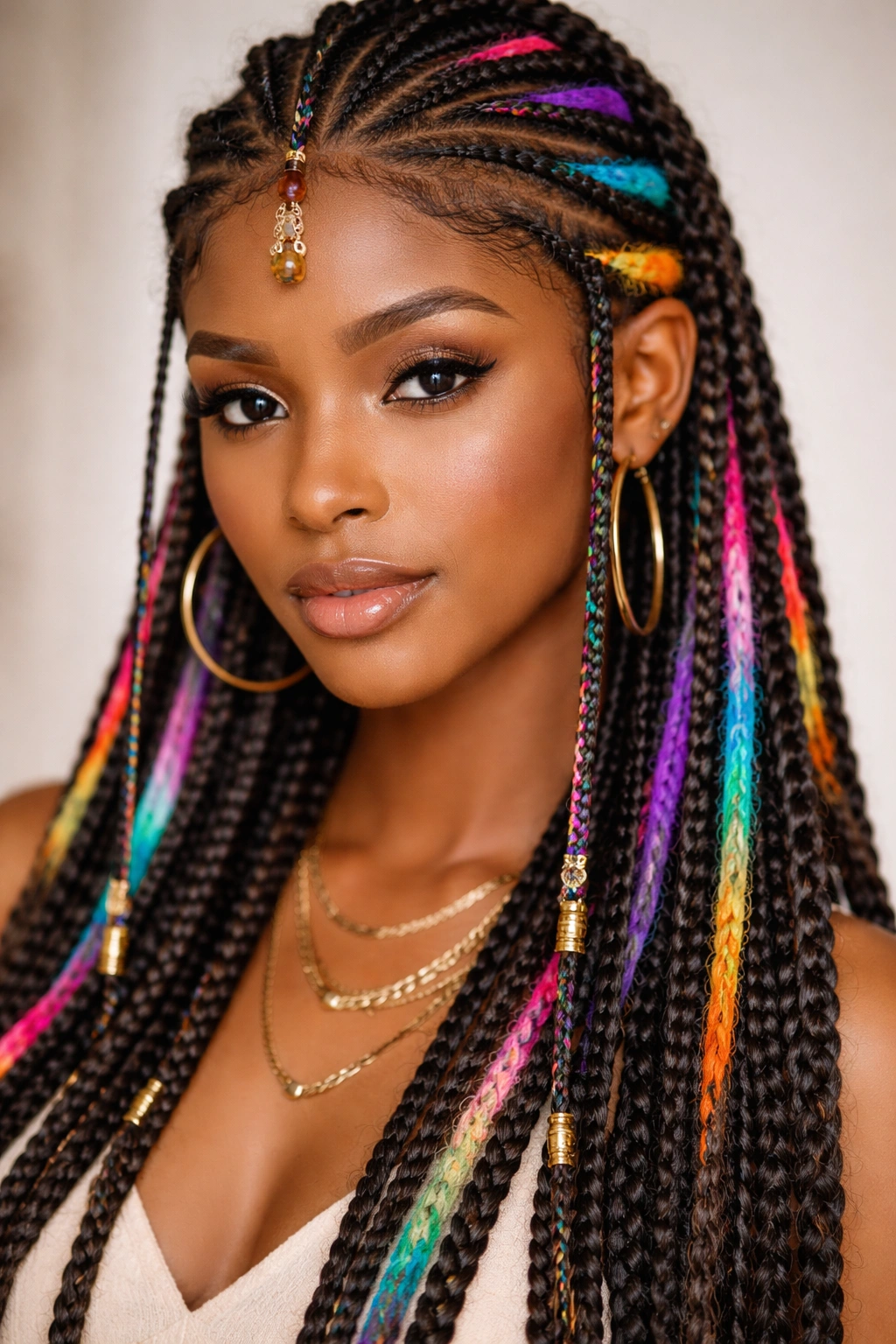
For temporary color and playful creativity without committing to dyed hair, adding hair chalk to your Fulani braids is a game-changer. Hair chalk comes in an enormous range of colors and washes out after a few shampoos, making it perfect for experimenting. You can chalk just the ends of your braids, create ombre effects, highlight specific sections, or go fully multicolored. This approach is particularly popular for music festivals, parties, or any time you want to feel extra expressive.
Application and Safety
Hair chalk is applied to damp or dry hair using a stick or brush, and it adheres to your strands temporarily. The key to making it look intentional (rather than accidentally messy) is to apply it smoothly in one direction and focus on one section at a time. Light-colored hair picks up chalk more vividly than darker hair, but there are now chalk colors formulated to show up on darker strands. Once applied, you can style your braids normally — the chalk will stay put for several days, especially if you’re not washing constantly, and it will gradually fade with each washing.
Creative Chalk Ideas
- Ombre ends: Gradually transitioning from your natural hair color to a bright chalk color at the tips
- Two-tone braids: Coating one side of your head with one chalk color and the other side with another
- Geometric patterns: Applying chalk to alternating braids for visual rhythm
- Highlights: Coloring just 5-7 specific braids with chalk for dimension without overwhelming your head
- Colorful tips: Focusing all the chalk on just the bottom 2-3 inches of each braid for a subtle effect
Pro tip: Apply chalk when your hair is very slightly damp (use a spray bottle) rather than completely wet or completely dry — damp hair helps the chalk adhere better and creates more vivid color payoff.
11. Fulani Braids Styled as a Side Sweep
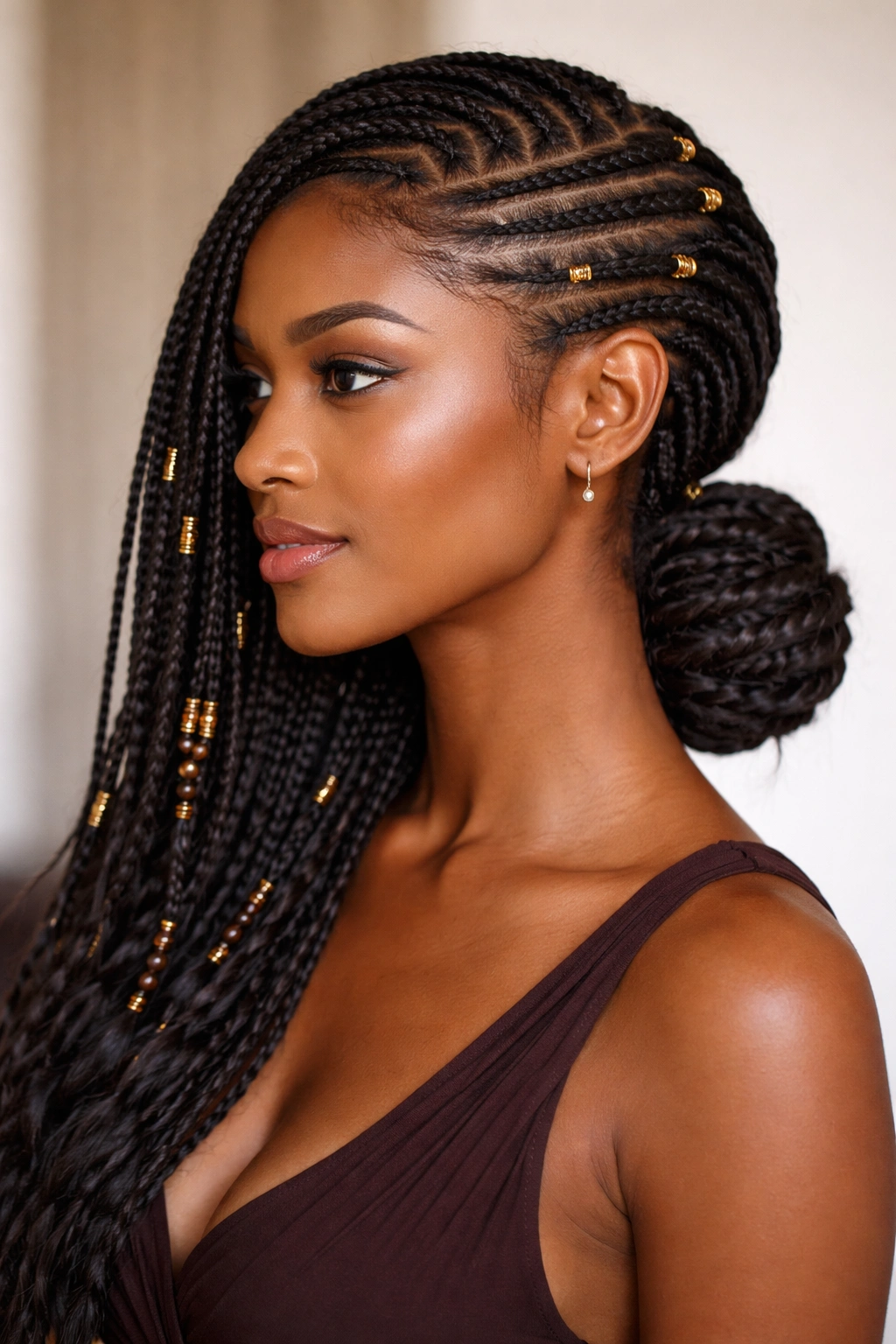
Creating an asymmetrical, side-swept version of Fulani braids takes the style from centered and formal to modern and fashion-forward. This approach pulls most of your braids to one side of your head, gathering them into a low side bun, side ponytail, or simply allowing them to cascade down one shoulder while the other side shows more of your scalp and face. The asymmetry feels edgy and intentional, making this style perfect if you want Fulani braids to feel less traditional and more contemporary.
Creating the Side Sweep
Work with your braider to adjust the parting pattern — instead of a center part, request that they create a deep side part, moving most of your hair toward one side. They can either braid fewer braids on the bare side (creating actual scalp exposure) or braid fewer, thinner braids there to keep the overall aesthetic lighter on that side. The braids on the fuller side can be left loose to cascade down, or gathered into a side bun or ponytail depending on how dramatic you want the asymmetry to feel.
Side Sweep Variations
- Extreme side parting: Braiding most of your hair and moving it completely to one side, leaving the other side almost bare
- Loose side cascade: Sweeping all braids to one side and allowing them to flow down your back and shoulder
- Side-swept bun: Gathering all the braids at the base of your neck on one side and creating a bun there
- Half-up side sweep: Pulling the top half of your braids to one side while leaving the bottom half loose
- Diagonal part: Using a diagonal rather than horizontal part line for a more edgy, abstract feel
Worth knowing: This style can actually be more comfortable if you’re a side sleeper, since you’re naturally positioning your braids to one side. It’s also a great way to extend the life of your style if you notice one side starting to loosen before the other — you can shift and restyle to redistribute the tension.
12. Fulani Braids with Wire Wrapping and Dangles
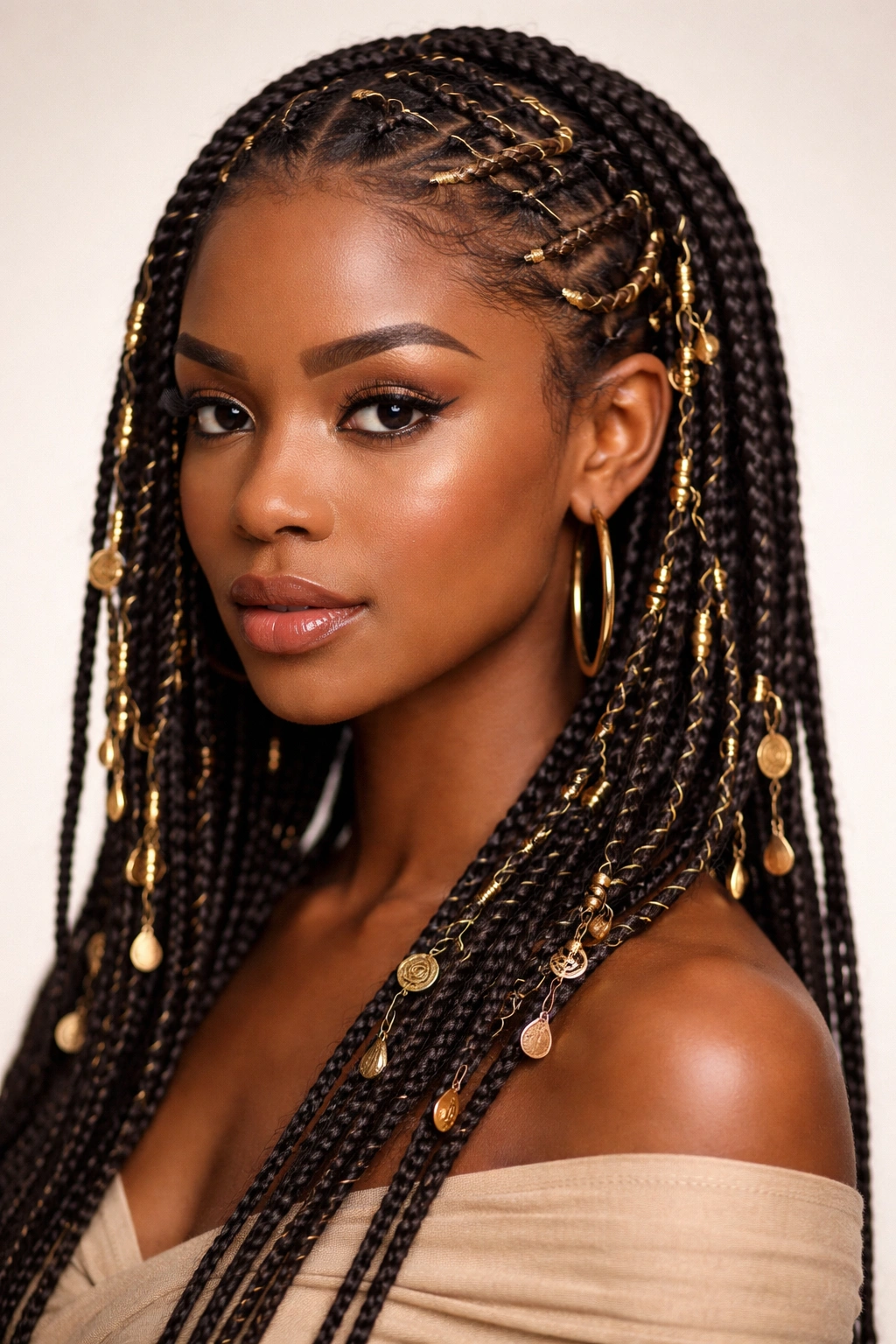
For a style that feels ceremonial and art-forward, incorporating decorative wire wrapping with hanging elements transforms your Fulani braids into wearable sculpture. Fine gold or copper wire can be wrapped around braids in patterns or spirals, and you can attach hanging elements to these wires — small charms, shells, bells, or gemstones on delicate chains. This approach creates movement and sound (if you include bells), making it perfect for celebrations, performances, or any time you want your styling to feel intentional and expressive.
Wire Wrapping Techniques
Wire wrapping is a delicate process that requires a skilled braider or someone experienced in jewelry-making techniques. The wire is typically wrapped tightly around braids in geometric patterns — spirals, grid patterns, or waves — and then sealed so it won’t come loose. Hanging elements are attached using jump rings or wire loops, allowing them to dangle freely. The overall effect is sculptural and eye-catching, making this style better suited for special occasions than daily wear, since the elements can get caught on clothing or pillows.
Design Ideas for Wired Styles
- Geometric wire patterns: Spiraling wire around braids in precise, repeating patterns
- Mixed metals: Combining gold and copper wire for visual interest and complexity
- Hanging charms: Attaching small brass charms, shells, or gemstones to wire wraps
- Bell elements: Incorporating small bells that create soft tinkling sounds as you move
- Chain dangles: Hanging delicate chains with small stones or symbols from wire attachment points
Pro tip: If you’re getting wire wrapping done, confirm with your braider that they’re using materials that won’t corrode, tarnish, or irritate your scalp. Ask about the specific wire gauge and coating to ensure longevity.
13. Fulani Braids with Woven Fabric Ribbons
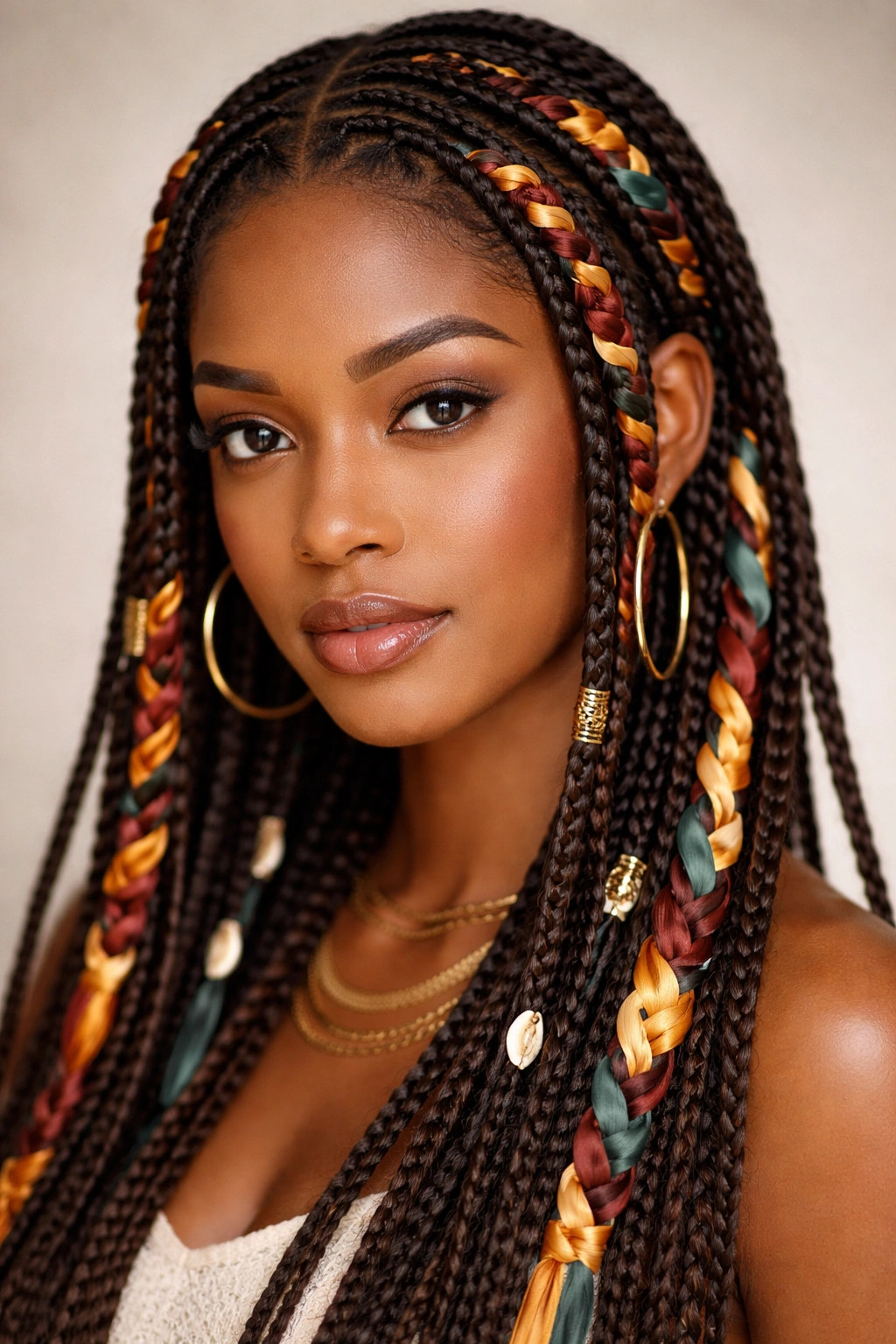
For a style that combines elegance with playfulness, weaving fabric ribbons through your Fulani braids adds color, texture, and dimension without the weight of beads or cuffs. Ribbons can be woven throughout the braiding process itself (your braider literally incorporates them as they braid) or they can be threaded through finished braids afterward. Silk ribbons, satin ribbons, or even patterned fabric strips work beautifully, and the ribbons can match your skin tone for subtle elegance or contrast dramatically for bold visual interest.
Ribbon Integration Methods
Ribbons can be woven in different ways depending on the effect you want. The most traditional method is incorporating them as your braider works, creating ribbons that follow the same path as the hair strands. Alternatively, ribbons can be woven through braids after they’re complete, creating a woven pattern on top of the braid. You can use single ribbons per braid, double ribbons, or vary the ribbons across different braids for a more eclectic look. The width of the ribbon matters — wider ribbons create bolder statements, while thin ribbons feel more delicate.
Ribbon Selection and Styling
- Silk ribbons: Add luxury and shine; drape beautifully and feel soft against skin
- Satin ribbons: Create glossy elegance; work well in jewel tones or metallics
- Patterned fabric: Introduces prints (paisley, geometric, floral) for personality
- Ombré ribbons: Transitioning through color gradients create visual sophistication
- Metallic ribbons: Adding shimmer and glamour without the weight of metal cuffs
Worth knowing: Ribbons can shift and come loose over time as you wear and sleep in the style, so choose ribbons with finished (sewn) edges rather than cut edges, which unravel more easily. You can also ask your braider to tack the ribbon ends down with thread to prevent them from slipping out.
14. Fulani Braids with Gold Leaf Details
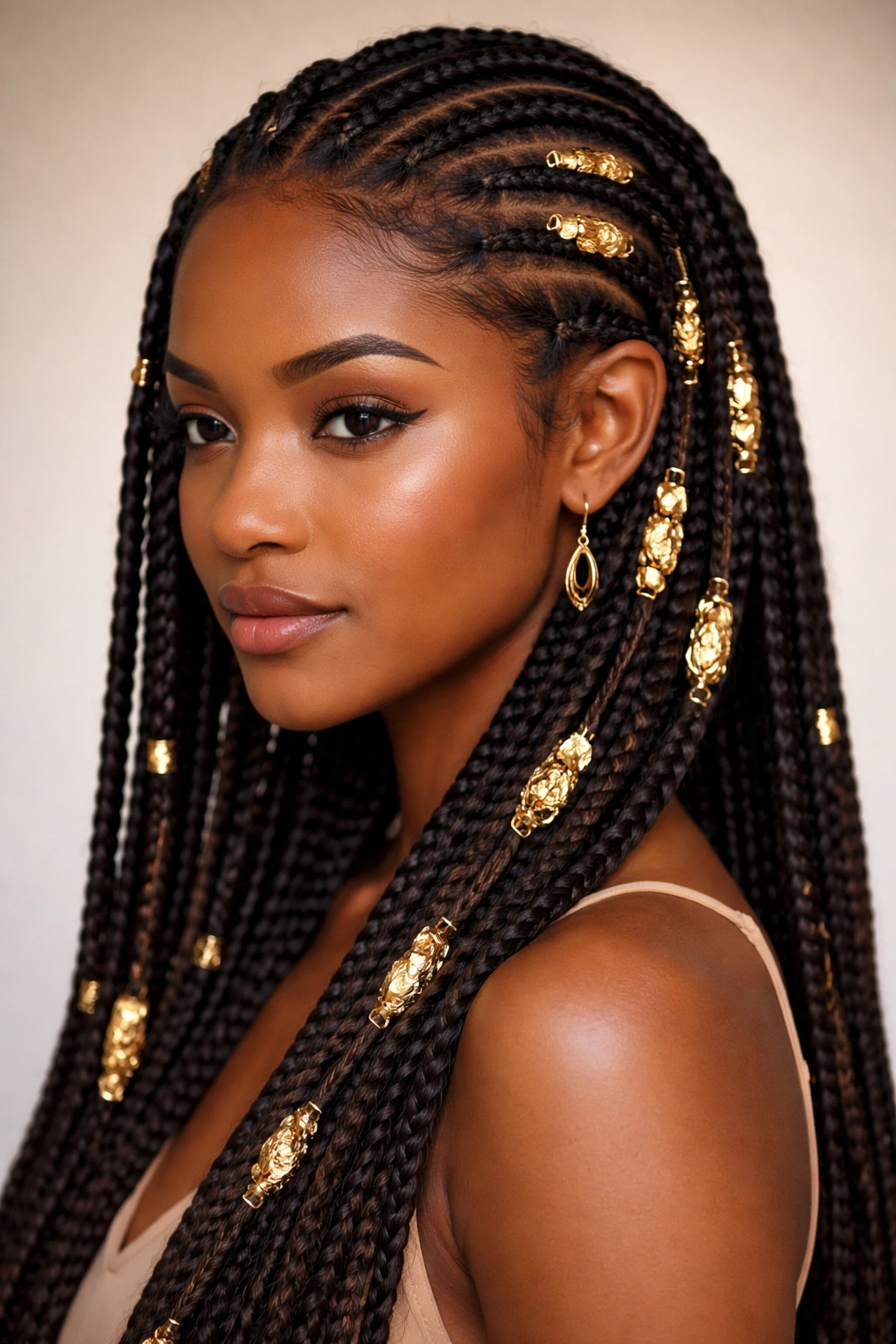
For a style that feels absolutely luxurious and artistic, incorporating actual gold leaf into your Fulani braids creates an elevated, high-fashion look that photographs like a dream. Gold leaf is applied using special adhesive to small sections of hair throughout the braids, creating unexpected moments of shimmer. This is a specialized technique that requires an experienced braider or someone who works with gold leaf (sometimes makeup artists offer this service), but the payoff is stunning and memorable.
Applying Gold Leaf Safely
Gold leaf application requires careful prep to ensure the adhesive won’t irritate your scalp and that the gold leaf will adhere properly. Your stylist will typically apply a thin layer of specialized adhesive to dry hair, wait for it to become tacky, and then carefully apply the delicate gold leaf. The leaf is pressed gently into place and sealed with a light coating of clear spray to keep it from flaking off. Because gold leaf is so delicate, this style is typically saved for special occasions rather than daily wear.
Gold Leaf Placement Ideas
- Face-framing highlight: Applying gold leaf to just the braids that frame your face for maximum visibility
- Crown concentration: Focusing gold leaf across the crown area for a regal effect
- Scattered moments: Distributing gold leaf throughout several braids at irregular intervals
- End emphasis: Applying gold leaf only to the bottom inch of each braid for a subtle effect
- Full-coverage glamour: Applying gold leaf more densely throughout the style for maximum drama
Pro tip: Gold leaf details are stunning in photos but can look subtle in person, so this style is particularly perfect for events where you’ll be photographed — weddings, red carpets, performances, or professional headshots.
15. Fulani Braids with Copper and Bronze Accents
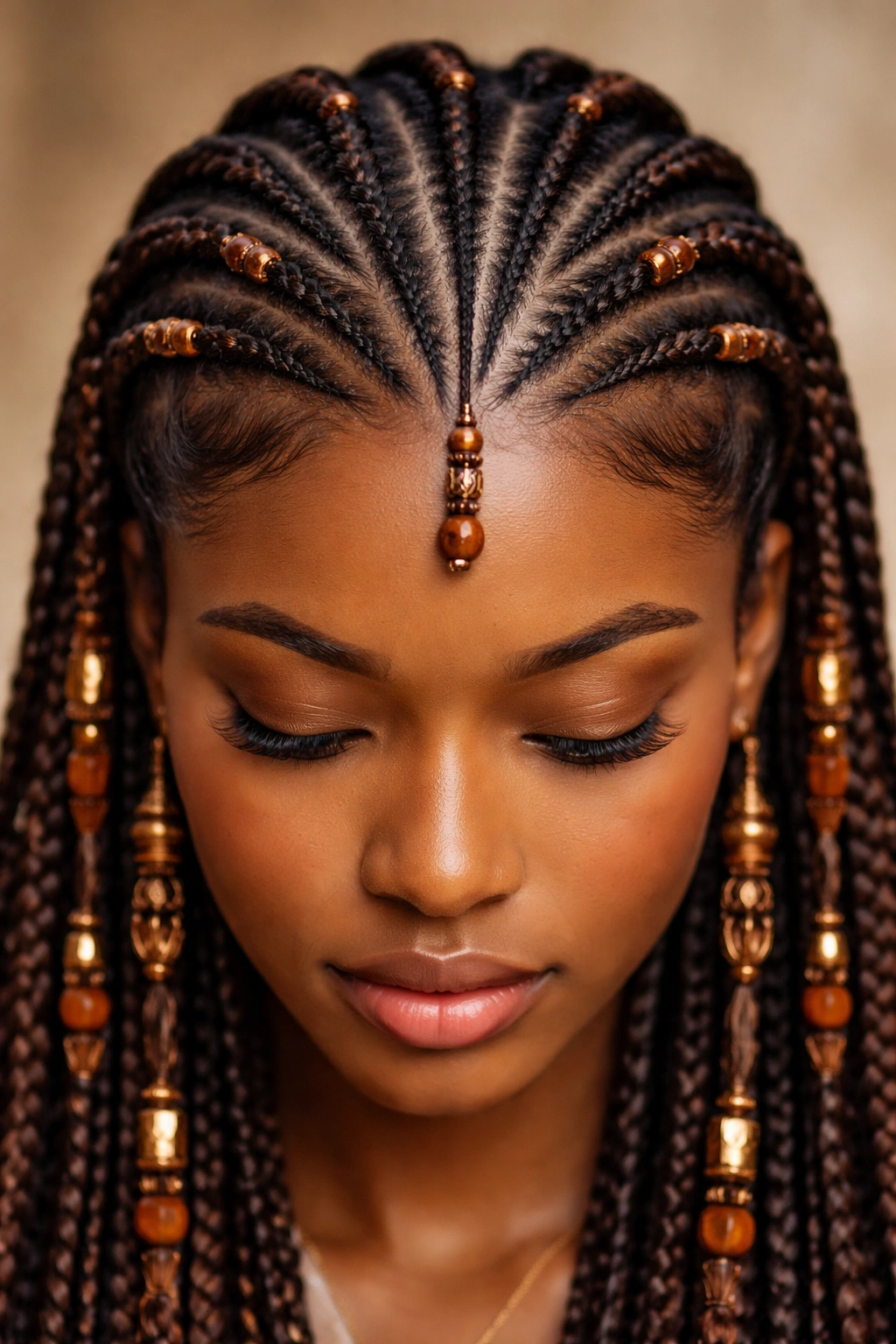
For a warmer, earthy alternative to traditional gold, copper and bronze accents in your Fulani braids create an absolutely stunning aesthetic that’s particularly flattering for warm skin tones but works beautifully across the spectrum. Copper cuffs, bronze beads, and warm-toned metallics create a rich, luxurious feel that feels slightly less expected than gold while maintaining that intentional, carefully curated appearance. This approach is especially gorgeous combined with earthy bead colors like amber, carnelian, or wooden beads.
Choosing Warm Metallics
Copper and bronze metallics offer different undertones than gold or silver, creating a completely different mood and energy. Copper is brighter and more vibrant, catching light with an energetic shimmer, while bronze is deeper and more subdued, creating sophisticated elegance. Both work beautifully with a wider range of bead colors than gold does — copper looks stunning with warm gemstones, while bronze pairs beautifully with jewel tones. You can mix both warm metallics together for visual complexity or keep them separate for cohesive sophistication.
Copper and Bronze Styling Ideas
- Pure copper aesthetic: Using only copper cuffs and warm-toned beads for consistent warmth
- Copper and amber combination: Pairing copper metallics with amber or carnelian beads
- Bronze and jewel tones: Combining bronze cuffs with deep purple, emerald, or sapphire beads
- Mixed warm metallics: Combining copper, bronze, and rose gold for complexity
- Matte and polished mix: Using both matte and shiny finishes of the same metal for texture
Worth knowing: Copper can oxidize over time and may leave slight discoloration on your skin if you’re not careful, so look for sealed copper cuffs or choose bronze, which is more stable. Keep your braids dry when possible and store copper cuffs in a dry place if you’re not wearing them regularly.
Final Thoughts
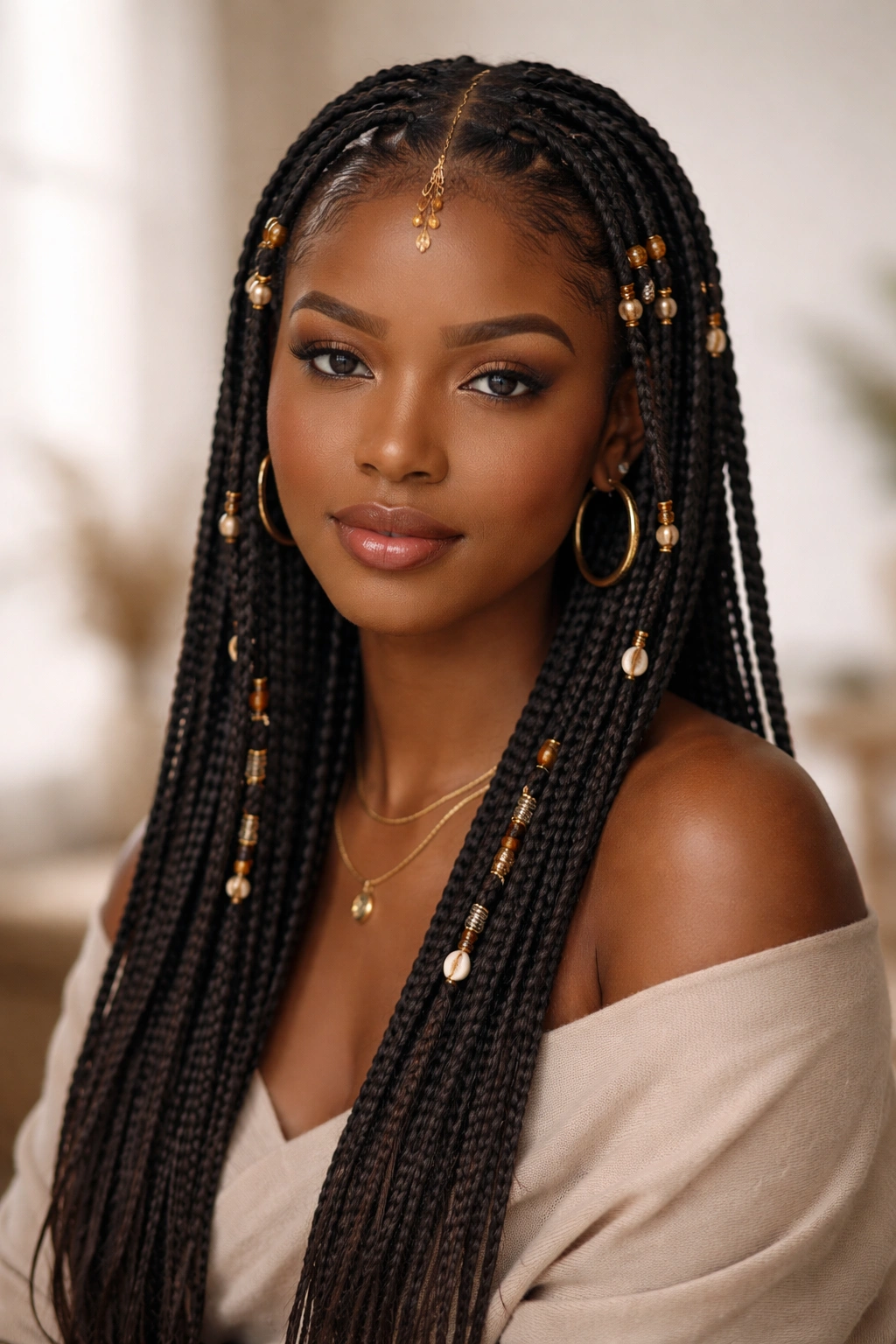
Fulani braids are so much more than a hairstyle — they’re a connection to cultural heritage, a canvas for creativity, and a protective style that lets your natural hair thrive while you express yourself boldly. Whether you’re drawn to the minimalist elegance of a simple center part with just a few gold accents, the full-glam drama of rhinestones and elaborate beading, or something in between, there’s genuinely a Fulani braid variation here that aligns with your personality and lifestyle.
The most important thing to remember is that Fulani braids work best when they feel intentional and personally meaningful. Take time choosing your braider (someone experienced with this specific technique and respectful of its cultural origins), discuss exactly what you’re envisioning, and don’t be afraid to ask questions about how to maintain your style, how long you can realistically wear it, and what refresh appointments might look like. Your braids are an investment of both time and money, so working with someone who understands your vision and has the skill to execute it makes all the difference.
As you’re wearing your Fulani braids, pay attention to what feels good, what catches you in the mirror, and what makes you feel like the most authentic version of yourself. Maybe that’s an understated, professional style that turns heads because of its precision and intentionality. Maybe it’s full-glam embellishment that makes you feel like royalty. Maybe it’s something that shifts and evolves throughout your installation, getting refreshed or restyled as your needs and mood change. All of those versions are valid, beautiful, and absolutely worth celebrating.
