



Fulani braids represent one of the most beautifully distinctive hairstyles rooted in West African tradition, characterized by their thin, intricate patterns and iconic gold decorative elements. These braids hold deep cultural significance, originally worn by the Fulani people as a symbol of identity, status, and heritage. What makes them particularly appealing right now is their incredible versatility—they work beautifully on short natural hair textures, offering protection while maintaining a polished, intentional aesthetic that stands out.
Short hair doesn’t limit your ability to rock Fulani braids; it actually transforms them into something fresher and more manageable. When you work with shorter lengths, the braids sit closer to your scalp, create elegant geometric patterns, and feel lighter than longer versions while still delivering that signature sophisticated look. The key is choosing a style variation that complements your specific hair length, density, and lifestyle.
Whether you’re new to Fulani braids or looking to refresh your protective styling rotation, understanding the range of adaptations available for short natural hair ensures you can find something that truly works for your texture, face shape, and personal style. These styles bridge cultural authenticity with modern practicality—honoring the tradition while meeting the real needs of today’s natural hair journey.
1. Classic Gold-Adorned Fulani Braids for Short Hair
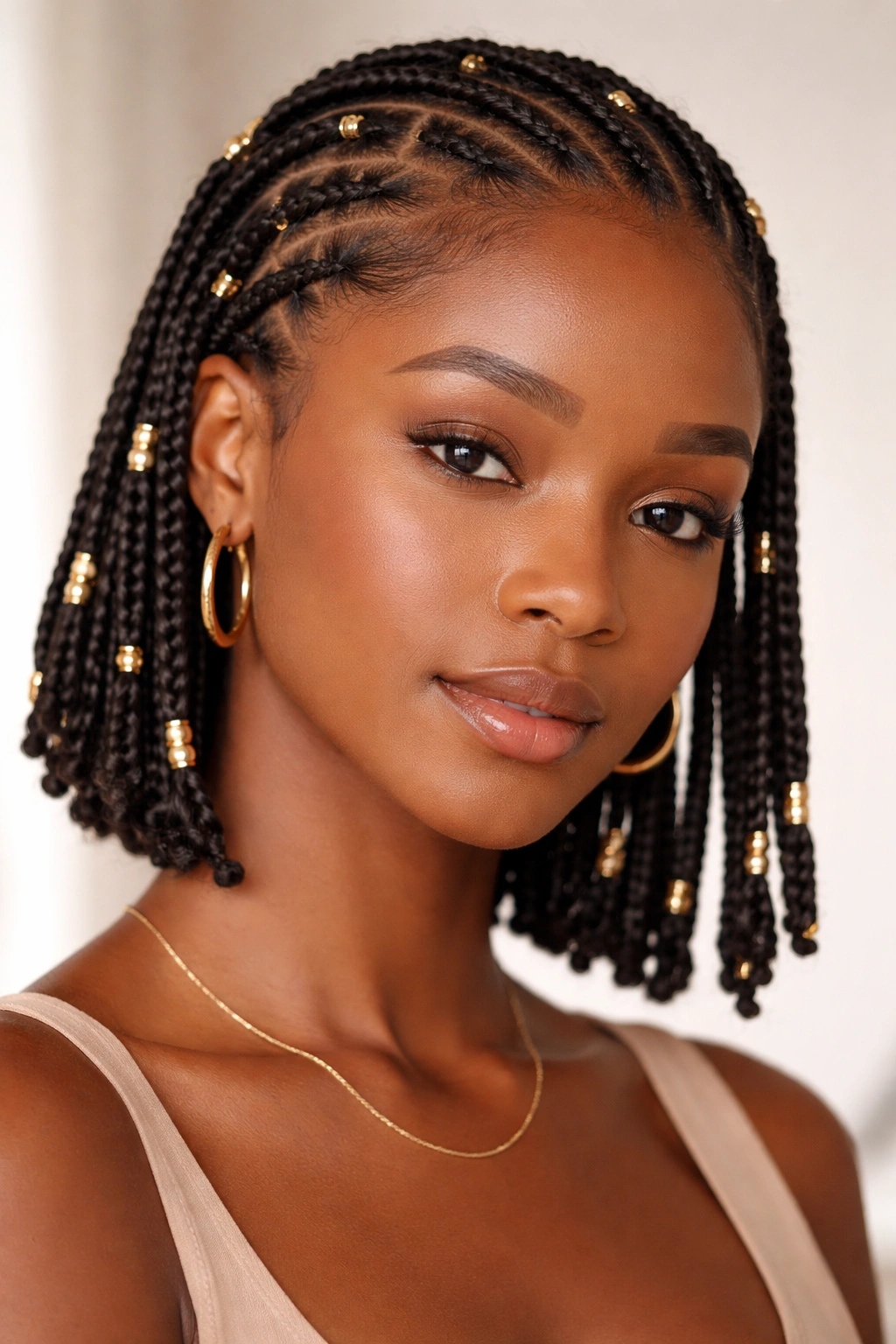
The traditional approach remains timeless for good reason. Classic gold-adorned Fulani braids on short hair feature thin, uniform plaits that start at the scalp and incorporate delicate gold cuffs, rings, or beads spaced strategically throughout. This version respects the original aesthetic while being perfectly suited to shorter lengths, which actually makes the gold accents stand out more prominently against your natural texture.
Why This Style Works for Short Hair
Short lengths allow the gold accessories to become focal points rather than feeling lost in length. The braids sit closer to your head, creating cleaner definition and a more sculptural appearance. Gold against natural hair creates stunning visual contrast—whether your hair is midnight black or rich brown, the warm tones of gold jewelry elevate the entire style from simple braids to statement-making artistry. The weight distribution feels balanced on shorter hair, reducing tension on your edges while maintaining that luxurious, intentional look.
How to Get the Best Results
- Gold selection matters: Choose pieces that feel substantial enough to be visible but not so heavy they pull on your braids. Thin cuffs work beautifully; chunky pieces can overwhelm short hair
- Placement strategy: Space gold accents every third or fourth braid rather than every single one—this creates visual rhythm without looking cluttered
- Maintenance: Gold accessories don’t require special care, but your braids do. Moisturize scalp between braids with a lightweight oil or water-based spray
- Styling duration: Classic Fulani braids typically last 4-6 weeks on short hair before you’ll want to take them down and give your hair a break
Pro tip: Request your braider start the gold accessories about an inch or two from your scalp rather than immediately at the roots. This protects your edges and makes taking down the style easier when you’re ready.
2. Two-Tone Fulani Braids with Creative Twists
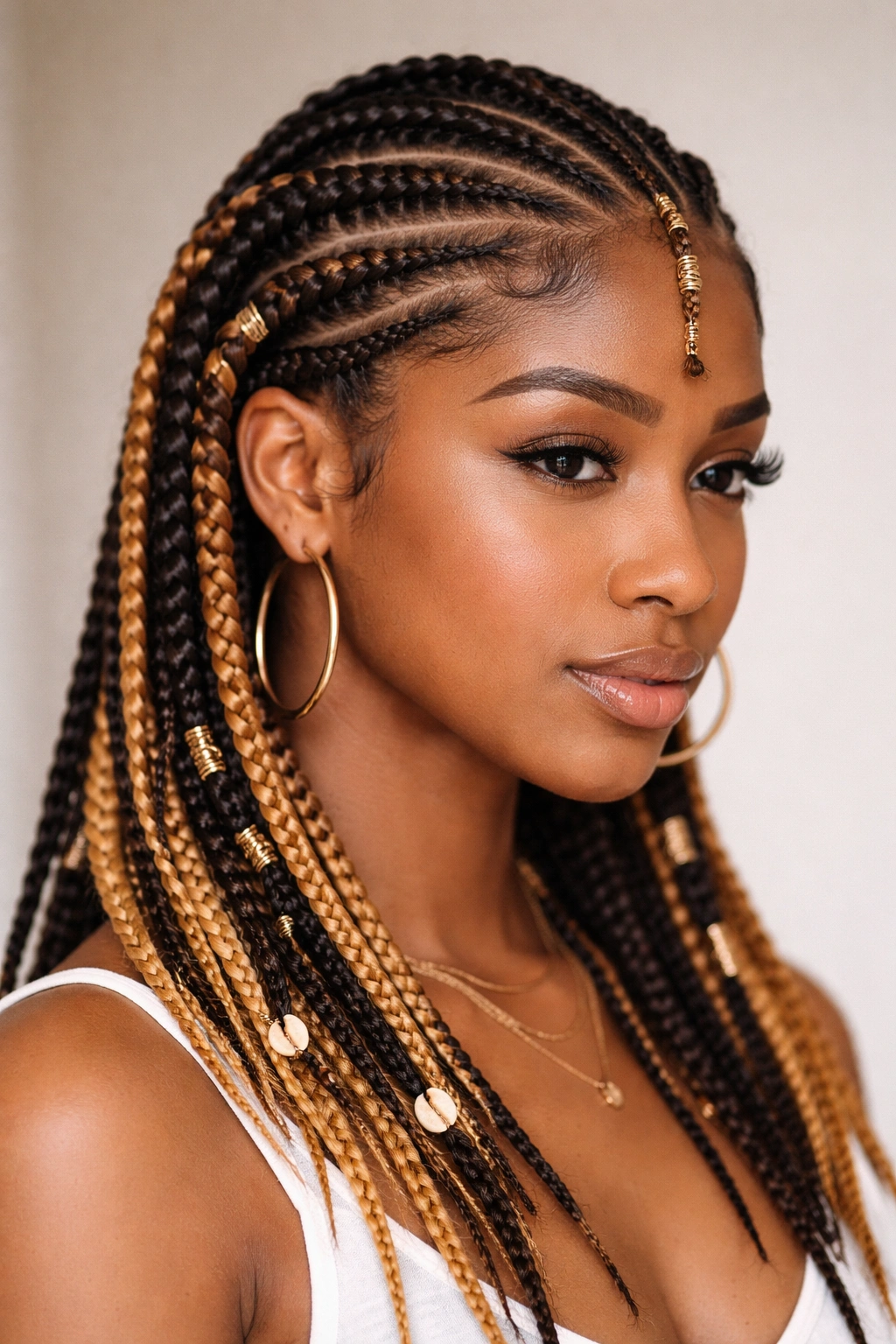
Adding colored extensions transforms Fulani braids into a more contemporary statement. Two-tone variations feature your natural hair braided with contrasting colored extensions—think deep black natural hair paired with honey-blonde extensions, or rich brown hair with burgundy, copper, or even jewel tones. This approach modernizes the traditional style while maintaining its core essence.
The Visual Impact of Color Contrasts
Two-tone braids create immediate depth and dimension that catches light beautifully, especially if you’re adding metallic or warm-toned extensions. The contrast makes each individual braid more visible and defined, which is particularly striking on short hair where every detail becomes more prominent. Color doesn’t have to be extreme—even a subtle shift from your natural tone to a slightly lighter or warmer shade creates enough contrast to make the style feel elevated and intentional.
Extension Selection and Installation
- Quality matters: Invest in quality kanekalon or human hair extensions. Cheap synthetic fibers look flat and can tangle easily
- Texture matching: Choose extensions that roughly match your natural hair texture. If you have tight coils, super straight extensions will look incongruous
- Sizing: For short hair, you don’t need long extensions. Usually 8-12 inches is perfect—enough to add fullness and visual interest without excess weight
- Braiding technique: A skilled braider will incorporate extensions smoothly so they blend seamlessly with your natural hair at the roots
3. Fulani Braids with Minimal Styling (Beginner-Friendly)
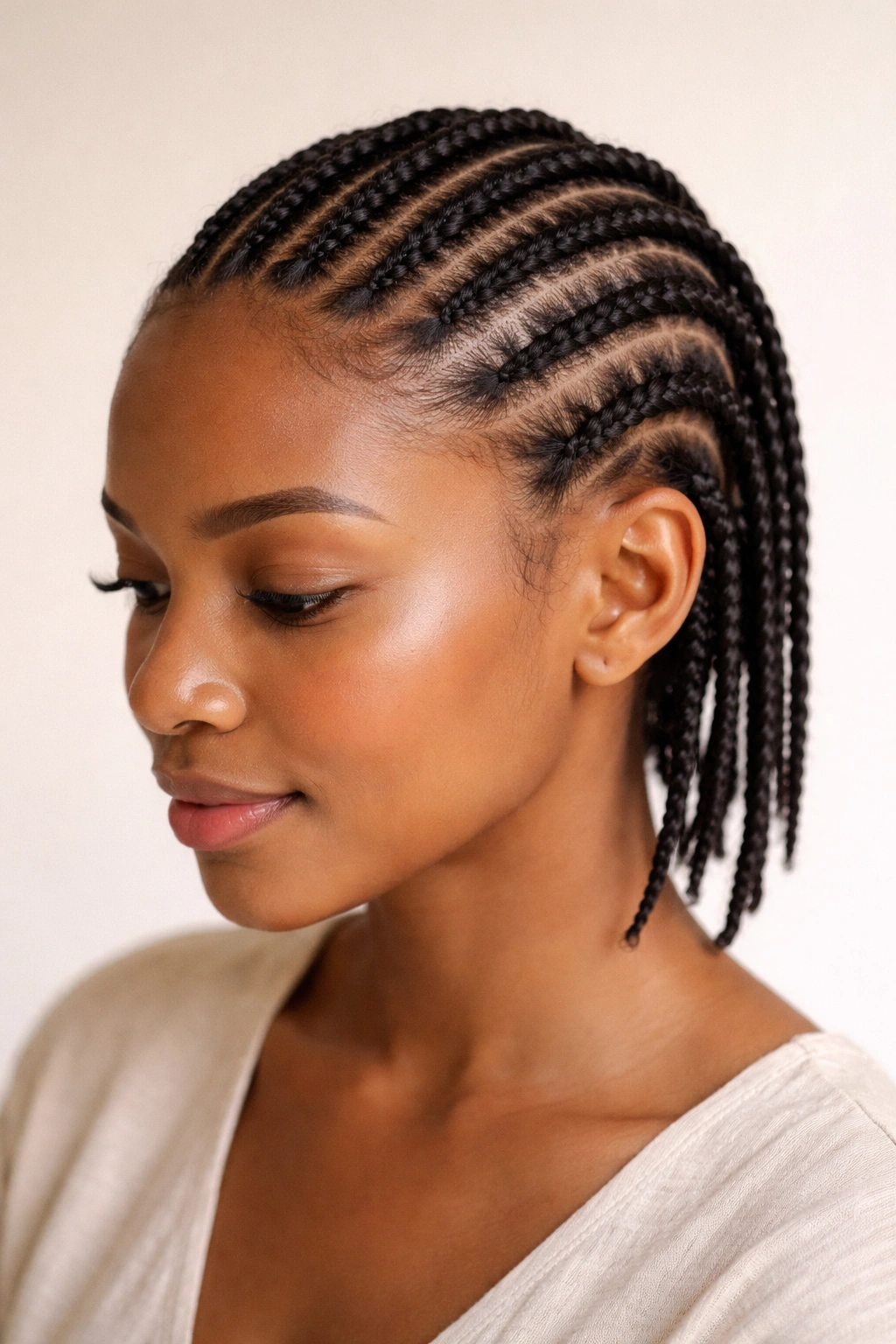
Not every Fulani braid iteration needs to be elaborate. The beginner-friendly version strips the style back to its essential elements: clean, well-placed braids with minimal accessories, if any. This works exceptionally well for short hair because the simplicity actually emphasizes the braiding skill and pattern rather than relying on gold or extensions to carry the look.
Why Simplicity Is Sophisticated
Minimal Fulani braids prove that the style’s beauty lies in its core structure. Clean braids with precise partings and even tension create inherent visual interest—you don’t need elaborate additions to make them work. This version requires less time to install (usually 2-3 hours rather than 4-6), costs less because you’re skipping accessories and extensions, and places minimal stress on your edges and scalp. It’s genuinely protective styling in its purest form.
Getting the Technique Right
- Parting: The strength of minimal Fulani braids rests entirely on clean, even partings. Ask your braider to take time getting these right
- Tension: Consistent, not-too-tight tension throughout each braid creates the polished look. Uneven tension shows immediately in shorter styles
- Scalp care: Without the distraction of gold or color, focus on scalp health. Prep your hair well before installation and moisturize regularly during wear
- Styling options: Even plain Fulani braids can be dressed up with a scarf, wrapped into a low bun, or pinned into different configurations as you wear them
4. Half-Up Fulani Braids for Short Hair
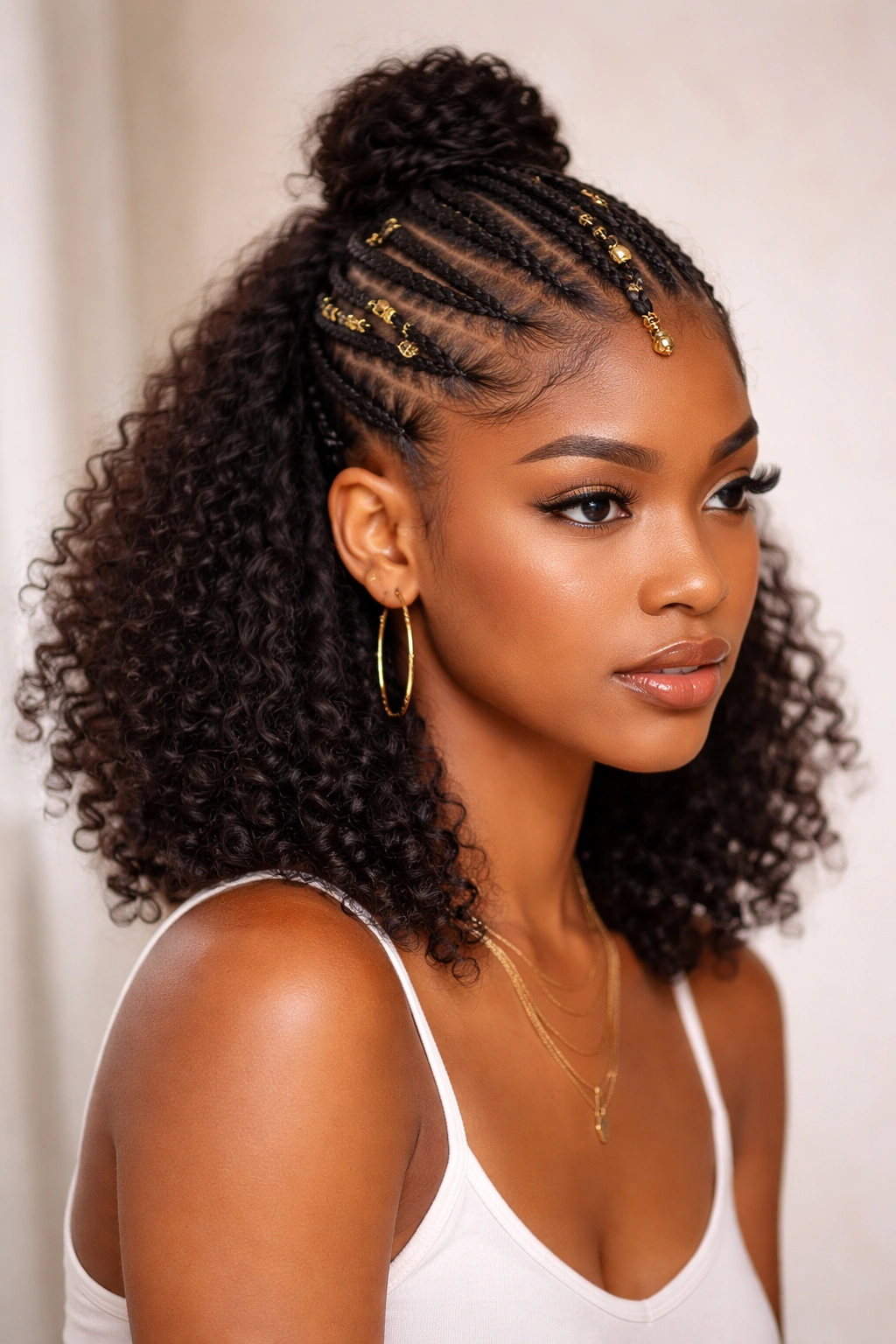
The half-up variation takes Fulani braids and combines them with loose texture, creating a hybrid style that offers versatility and movement. The upper section features braids (often with gold accents) while the lower portion remains in your natural loose texture—usually defined curls, coils, or soft waves. This works beautifully on short hair because it balances the protective elements of braiding with the visual fullness of loose hair.
Why Half-Up Works on Shorter Lengths
Short hair naturally limits how you can part and style. The half-up approach solves this by creating visual dimension in a compressed space. The braided portion provides that intentional, curated aesthetic while the loose lower section maintains movement and demonstrates your natural texture health. This combination feels modern and less formal than fully braided styles, making it perfect for everyday wear or professional settings where you want something polished but not overly styled.
How to Style and Maintain
- Upper section braiding: Work with your braider to determine where the parting line should fall—typically around mid-crown for shorter hair
- Protective manipulation: The loose section still receives some protection from the braided upper portion, but you’ll need to be gentler with it than you would with fully protected braids
- Styling the loose hair: Define your loose curls with curl cream or leave-in before installation. Refresh the loose section every 2-3 days with a water-based spray and light oil
- Taking it down: You can wear this style for 3-4 weeks; however, the loose section may require more attention as it grows out
Worth knowing: Half-up Fulani braids actually work better on hair that’s about 3-4 inches long. If your hair is very short (under 2 inches), the loose section might not have enough length to showcase meaningful texture.
5. Fulani Braids with Beads and Shells
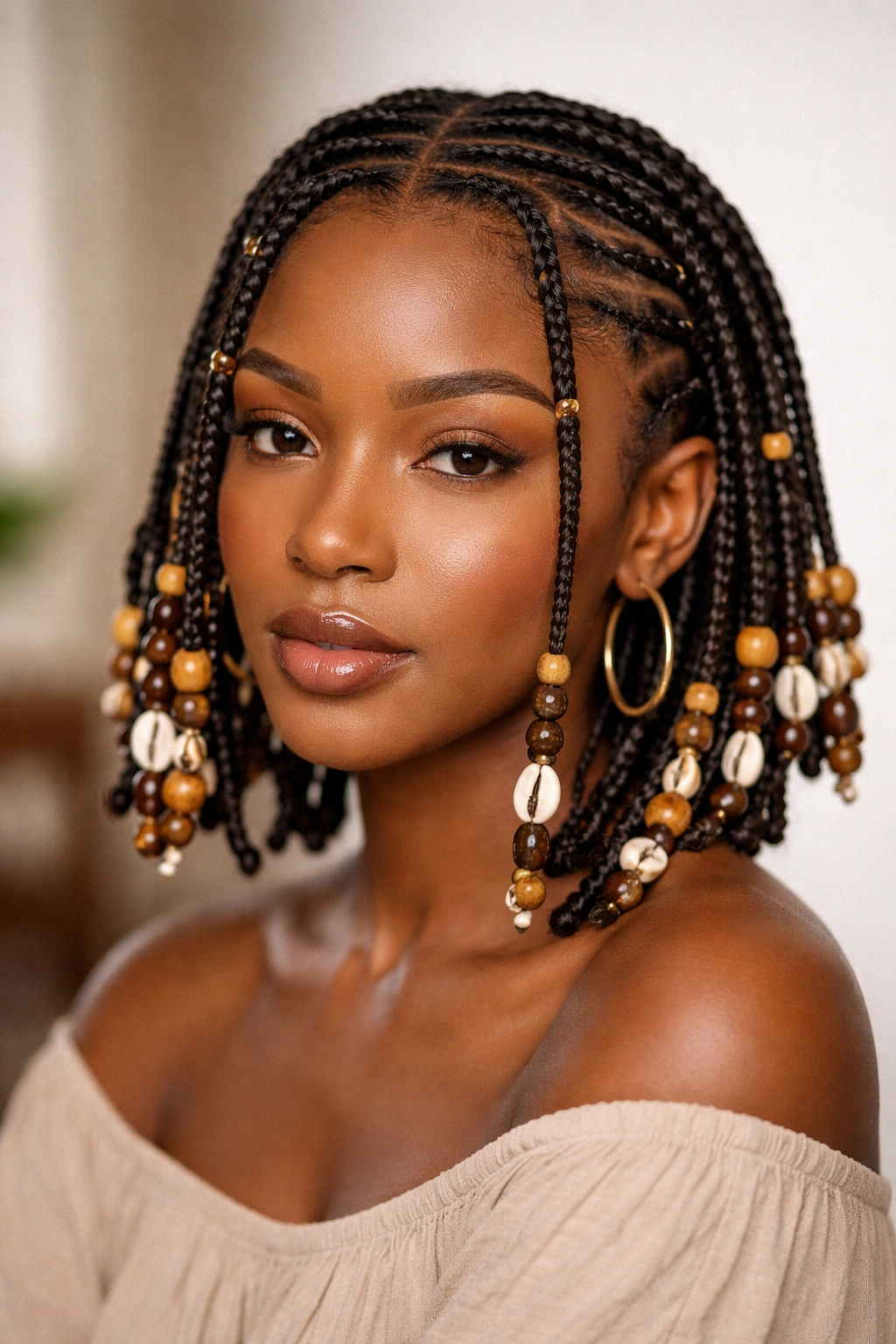
Incorporating beads and decorative shells elevates Fulani braids into wearable art. Rather than (or in addition to) gold metal cuffs, your braids are adorned with wooden beads, cowrie shells, colorful clay beads, or bone beads—each with its own cultural significance and aesthetic. This variation feels especially dynamic on short hair because beads create movement and catch light as you move.
The Cultural and Aesthetic Significance
Beads and shells in Fulani tradition carry meaning—different colors and materials represent different things. Gold symbolizes prosperity, coral represents protection, and shells connect to water and ancestral wisdom. Whether or not you’re wearing beads for their traditional significance, they add texture, sound (a subtle clicking as you move), and visual interest that makes short Fulani braids genuinely striking. The tactile quality of beads also adds dimension that photographs beautifully.
Selecting and Positioning Your Beads
- Material choices: Wooden beads are lighter and gentler on edges; metal beads create more visual impact but add weight. Mix materials for visual interest
- Size proportions: Smaller beads (8-10mm) work better on short hair and thin braids. Oversized beads can overwhelm
- Spacing strategy: Try alternating beaded braids with plain braids for visual balance, or cluster beads in specific sections
- Securing beads: Make sure your braider uses a method that won’t slip (usually small knots tied at the base of each bead)
6. Sleek Fulani Braids with Center Parting
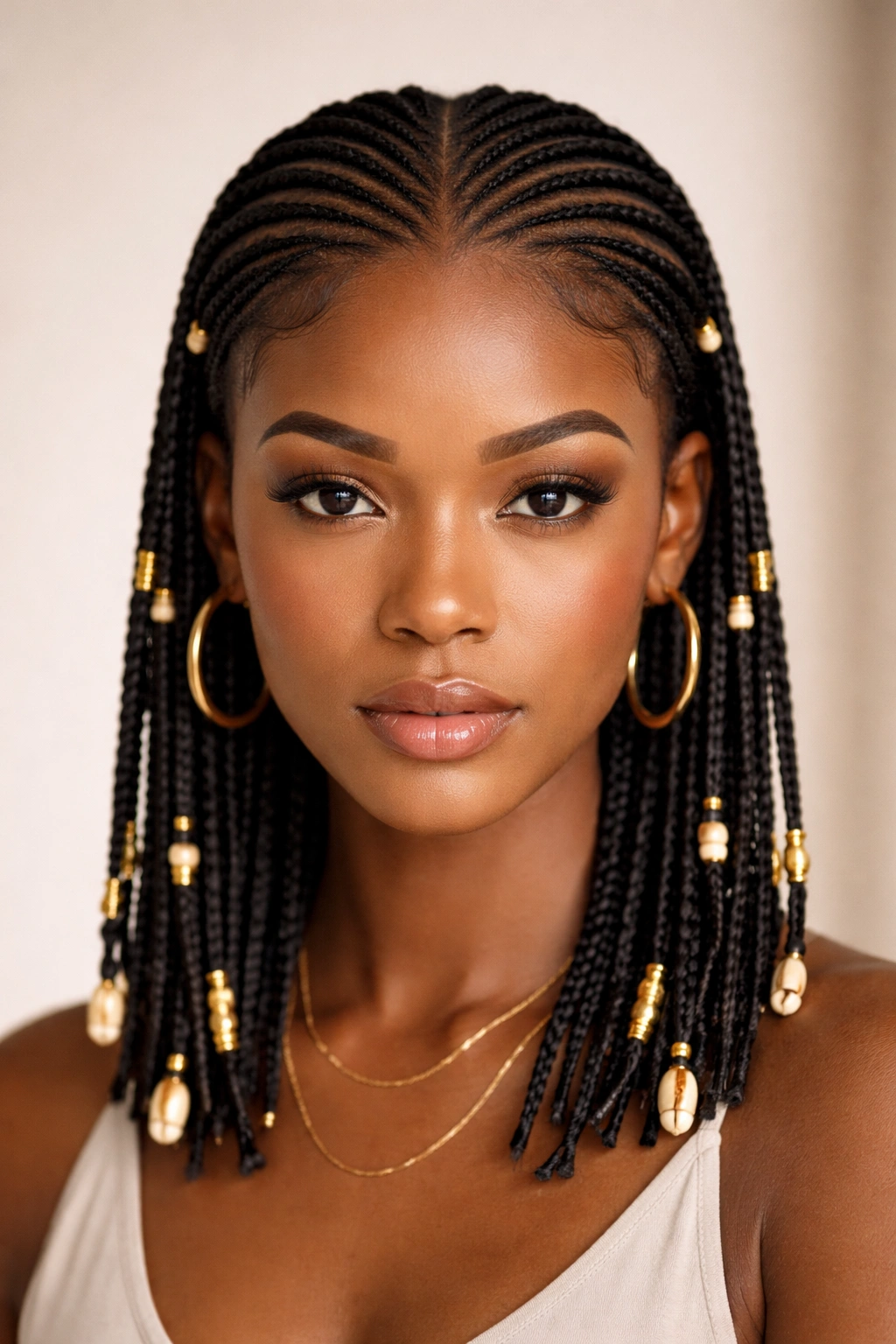
A center part creates perfect symmetry and emphasizes the geometric precision of Fulani braids. This classic parting approach divides your hair down the middle, with braids arranged on both sides of the part. The result is inherently balanced and flattering for most face shapes, especially on shorter hair where the symmetry becomes even more noticeable.
Why Center Parting Enhances Fulani Braids
The geometric nature of Fulani braids finds its perfect complement in a center part. Your face becomes framed by symmetrical patterns, creating an almost architectural aesthetic. Shorter hair makes this even more striking because the braids sit closer to your scalp, and you can actually see the full pattern from every angle. A center part also distributes tension evenly across your scalp, making it genuinely protective for your edges and hairline.
Installation and Styling Tips
- Part precision: A truly center part requires accuracy. Use a rattail comb to create the straightest line possible down your scalp
- Braid distribution: Usually your braider will create 4-8 braids on each side, depending on your hair density and desired fullness
- Edge protection: Center parts can stress edges if braids are pulled too tightly. Ensure your braider creates tension in the braid itself but not at the scalp
- Accessory placement: Gold cuffs or beads can follow the braid lines outward from the center, creating a fan or radiating effect
7. Fulani Braids with Faux Locs Integration
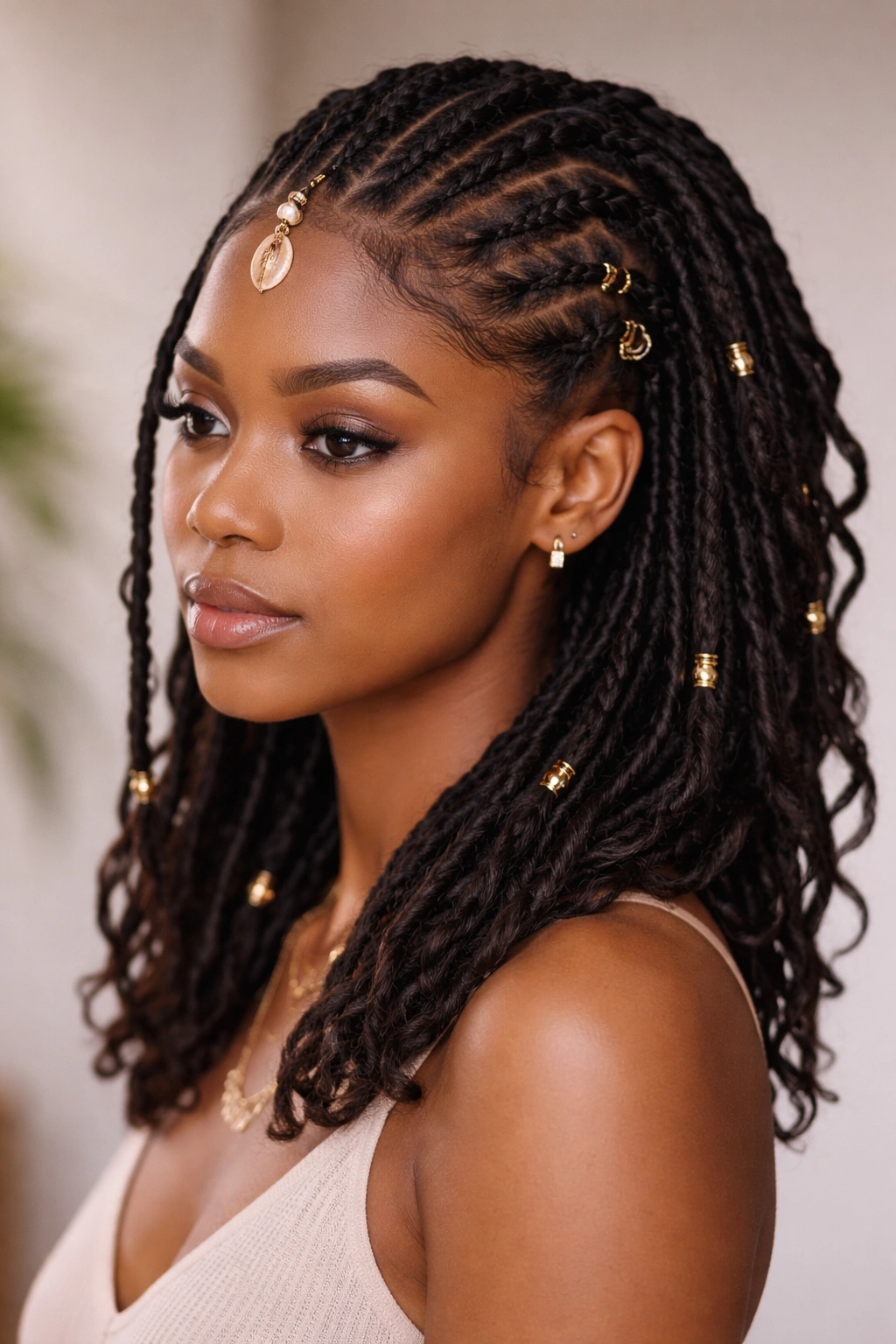
Combining traditional Fulani braids with faux locs creates a hybrid protective style that’s visually dramatic and genuinely unique. The upper portion features classic Fulani braids while faux locs are woven into the lower section or integrated throughout, creating a flowing, textured aesthetic. This works beautifully on short hair because you can control the proportions—the braids provide structure while the locs add movement and visual interest.
The Visual and Protective Benefits
Faux locs add volume and length without requiring you to grow your hair out. The combination of thin braids and thicker locs creates visual contrast and texture that’s genuinely striking. From a protective standpoint, this style covers all your bases: the braided portions protect delicate strands while the faux locs distribute weight evenly across your head. The result feels bohemian, artistic, and undeniably intentional.
Integration Techniques
- Placement options: Braids can frame your face and crown while locs create fullness in the back, or braids can form a pattern throughout with locs accent-placed
- Loc sizing: For short hair, 0.5-1 inch diameter locs work best. Thicker locs can overwhelm shorter lengths
- Extension quality: Just like with braiding extensions, quality matters. Invest in soft, quality synthetic locs that won’t tangle or fray
- Installation time: Expect this style to take 5-7 hours because it involves both braiding and loc installation
- Wear duration: This style typically lasts 6-8 weeks but requires consistent scalp care and moisturizing
8. Low-Maintenance Fulani Braids for Active Lifestyles
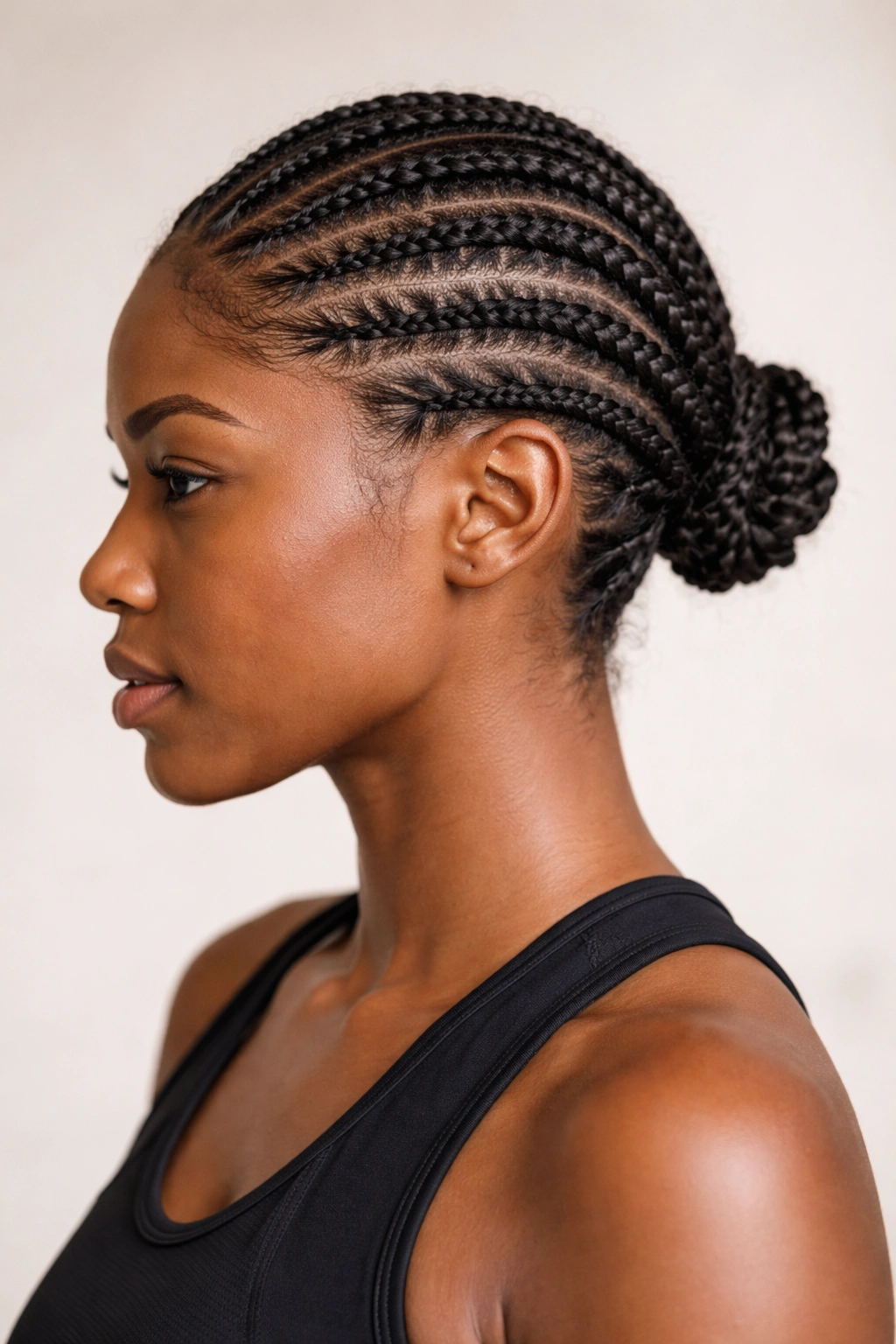
Some versions of Fulani braids are specifically designed for people who lead active lives—athletes, parents, or anyone who values ease alongside style. These streamlined braids skip elaborate accessories and focus on security, clean installation, and minimal daily styling requirements. The braids are tight enough to stay put during workouts but not so tight they stress your edges.
Practical Advantages for Active People
If you’re moving, sweating, or simply don’t have time for daily styling, simplified Fulani braids become genuinely practical protective styling. No loose ends, no beads to worry about, no intricate patterns requiring constant adjustment. The style maintains its appearance through workouts, swimming, and everyday activities. Short hair makes this even easier because you have less length to manage and fewer areas where loose pieces can escape.
Choosing Styles Built for Activity
- Braiding tightness: Firm, consistent tension without causing scalp discomfort—this is the sweet spot
- Accessibility: Braids should allow you to safely put your hair in a ponytail or bun if needed (sometimes you just want it out of your face)
- Sweat and moisture: Your braids will encounter sweat and pool water. Plan to rinse and dry your hair thoroughly after workouts and swimming
- Scalp care: Even low-maintenance styles require regular moisture. Aim to hydrate your scalp every 3-4 days with a lightweight oil or hydrating spray
- Timeline expectations: These styles typically last 4-5 weeks comfortably before needing removal and a break
9. Fulani Braids with Colored Accents
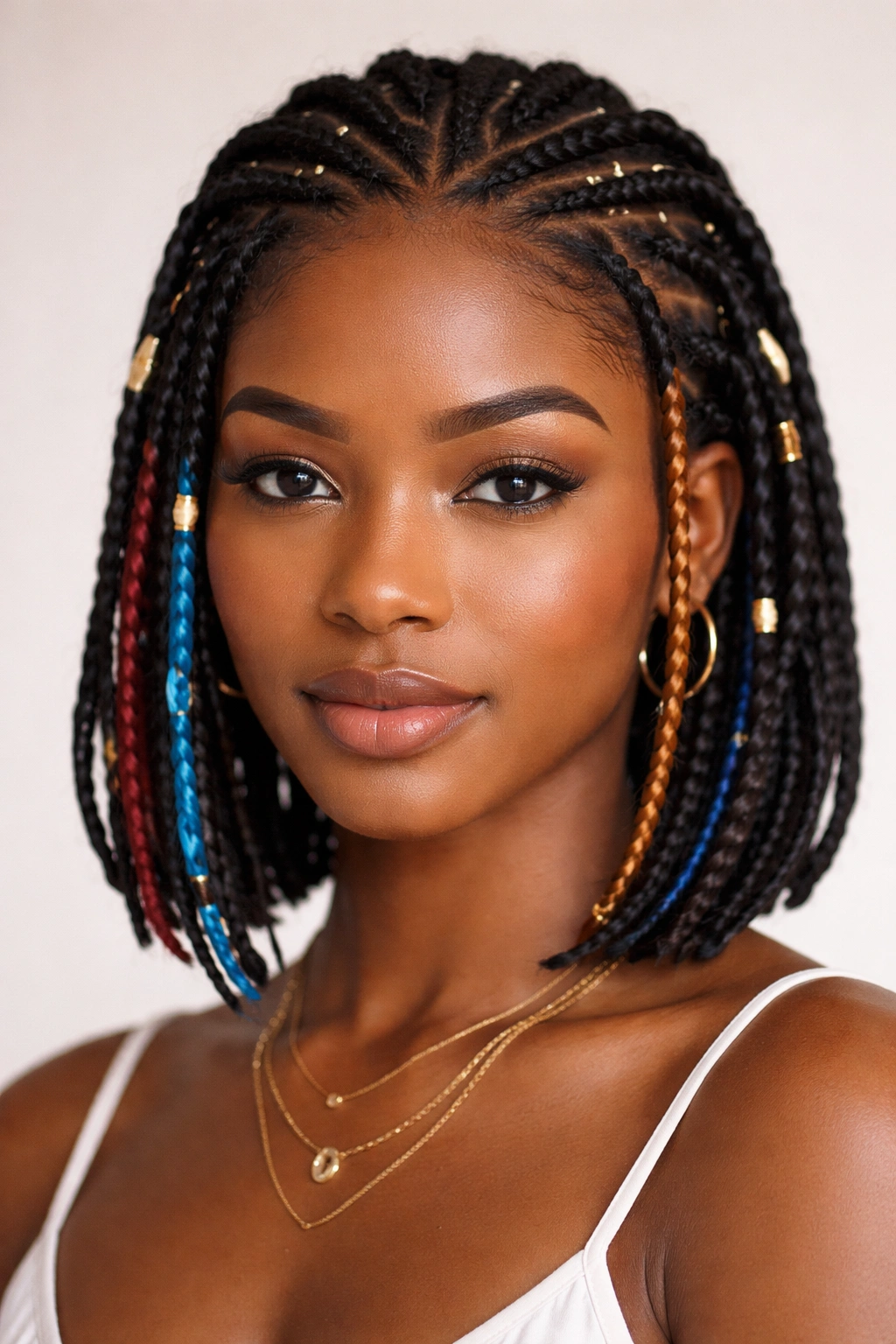
A more subtle alternative to two-tone braids, colored accents involve adding bursts of color to specific braids rather than mixing color throughout. Perhaps every fifth or sixth braid incorporates a jewel tone, or you add color only to the braids framing your face, or a single section gets full color treatment. This approach lets you experiment with color while maintaining the integrity of the traditional style.
Strategic Color Placement
Colored accents create visual interest without overwhelming your look. The intermittent color draws the eye and adds personality—these braids feel distinctly yours. On short hair, strategic color placement can emphasize your face shape. Colored braids around your face tend to draw attention upward; color concentrated in the back creates visual fullness.
Color Selection and Longevity
- Extension quality: Colored kanekalon holds bright tones beautifully; colored human hair extensions offer a more natural blend but cost more
- Complementary shades: Choose colors that coordinate with your skin tone. Warm yellows, oranges, and reds complement warm undertones; cool blues, purples, and silvers flatter cool undertones
- Color intensity: Brighter colors fade with washing and sun exposure. If you want long-lasting vibrancy, choose darker jewel tones
- Maintenance washing: Gently rinse your braids in cool water to preserve color intensity. Avoid hot water and harsh shampoos
- Style duration: Colored braids typically last 4-6 weeks before fading noticeably
10. Protective Fulani Braids for Hair Growth
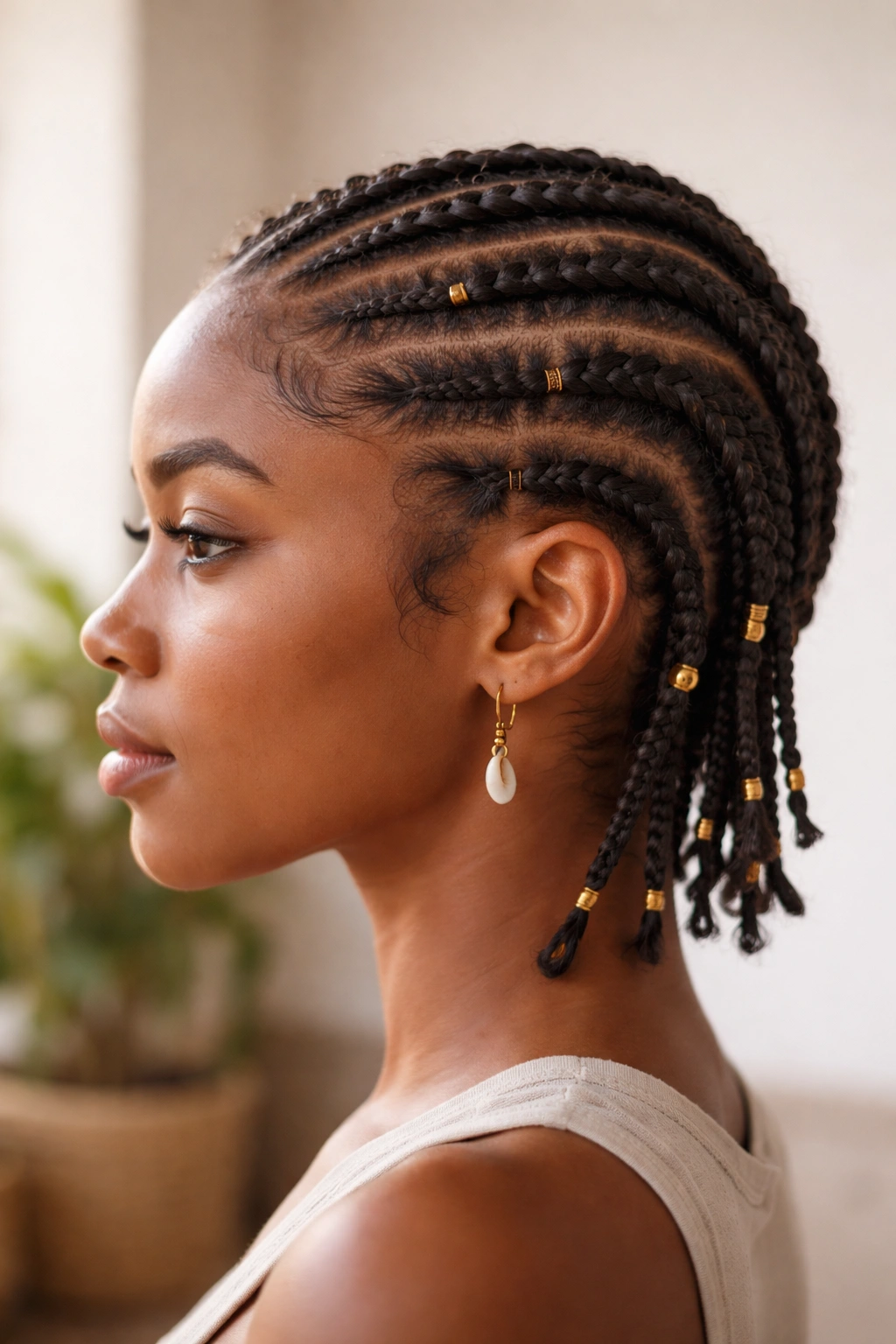
If your primary goal is protecting your hair for growth and health, Fulani braids can be optimized specifically for this purpose. Growth-focused braids prioritize hair health over elaborate styling—loose enough to prevent tension alopecia, securely installed to prevent daily manipulation, and designed with scalp care accessibility in mind. Short hair actually accelerates this protective benefit because there’s less weight on your follicles and less room for breakage.
How Braids Actually Protect Hair Growth
Protective braids work by minimizing daily manipulation and environmental stressors. When your hair is braided, you’re not detangling, combing, or exposure-styling it. This dramatically reduces breakage and split ends. The braiding process itself temporarily stretches and organizes your curl pattern, reducing daily shrinkage and frizz. For short hair, protective braiding can be the catalyst for retaining every bit of new growth your scalp produces.
Installation Specifically for Growth
- Tension assessment: Ask your braider to create braids with tension that’s secure but not painful. If your scalp aches after installation, it’s too tight
- Size considerations: Thicker braids distribute weight better than thin, delicate braids. For growth protection, thicker is actually better
- Frequency: You can wear protective Fulani braids for 6-8 weeks and repeat the cycle several times per year
- Scalp health: Growth actually requires a healthy scalp. Moisturize weekly with a lightweight oil or hydrating spray
- Break periods: Every 8-12 weeks, take a 1-2 week break from braids to allow your hair and scalp to reset
- Low-stress styling: Even while in braids, minimize additional manipulation. Avoid tight ponytails or buns that stress the same edges
Worth knowing: The most successful growth journey using protective styling involves combining braids with consistent moisturizing and scalp care. Braids are one tool; proper hydration and minimal manipulation are equally important.
Final Thoughts
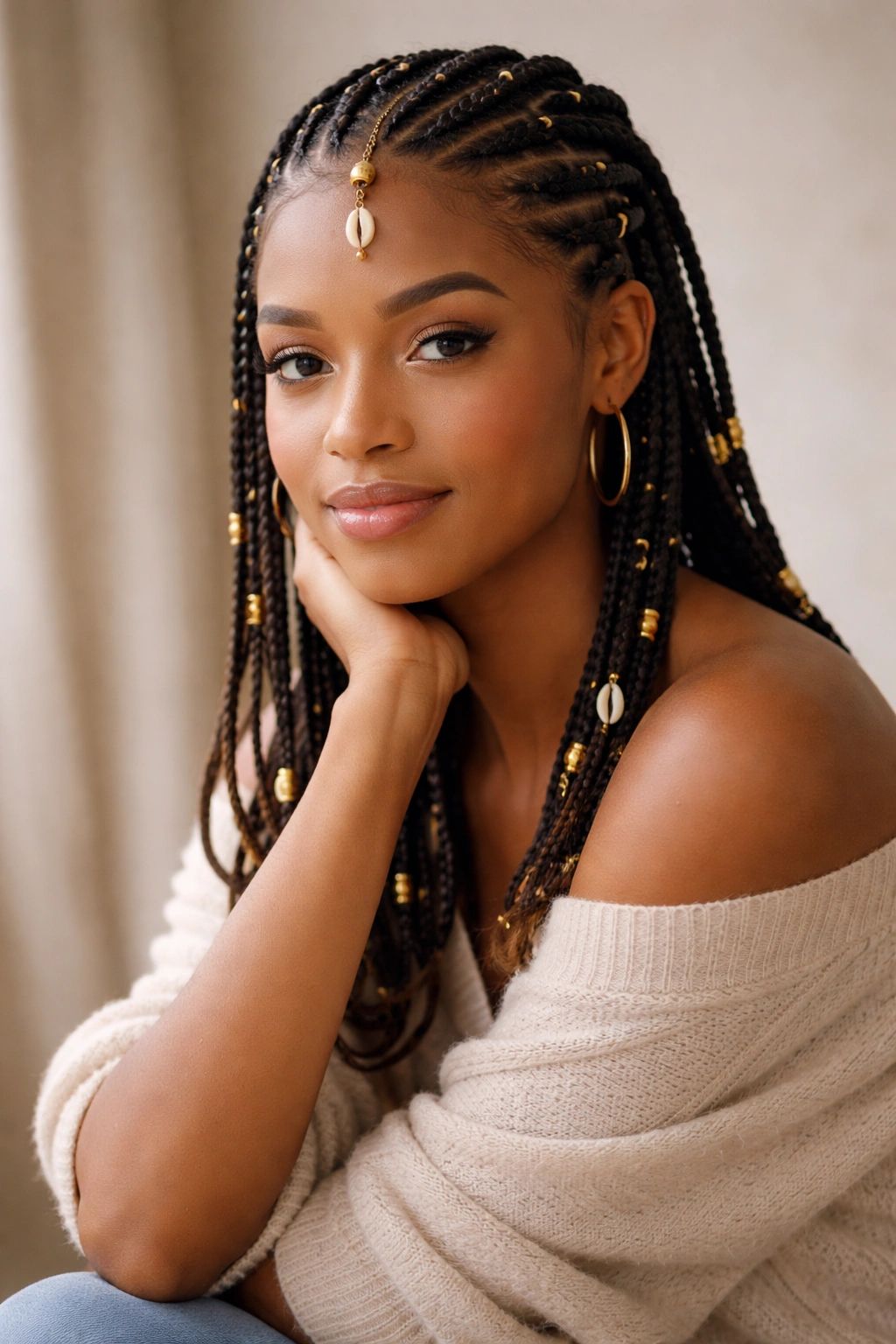
Fulani braids on short natural hair represent a beautiful fusion of cultural tradition and practical versatility. Whether you choose classic gold-adorned styles, minimal aesthetic, colored variations, or growth-focused protection, these braids work for you—not the other way around. The key is selecting a variation that aligns with your lifestyle, hair goals, and personal aesthetic.
Start by being honest about what you actually want from your protective styling. Are you protecting hair for growth? Expressing cultural identity? Wanting a low-maintenance style that still feels intentional and beautiful? Once you identify your priority, you can choose the specific Fulani braid variation that truly serves you. Your braider also matters tremendously—seek someone with specific experience installing Fulani braids on short hair, and don’t hesitate to show reference images and have detailed conversations about tension, timing, and maintenance.
Short natural hair is genuinely beautiful, and Fulani braids prove you don’t need length to rock a striking, meaningful style. These braids honor heritage, protect your hair, and let you express yourself with confidence and intention.
