



Fulani twists are a stunning protective style that celebrates natural texture while honoring the rich heritage of West African beauty traditions. Named after the Fulani people, known for their intricate braiding and adornment practices, these twists have become a go-to style for people with natural hair who want something that looks intentional, polished, and beautiful without sacrificing their hair’s health. Unlike loose twists that unravel easily, Fulani twists are tighter, more structured, and typically adorned with beads, cuffs, shells, or metallic accents that catch the light and add personality to the style.
What makes Fulani twists different from regular two-strand twists is their purpose-driven construction and cultural significance. They’re not just a casual protective style — they’re a statement piece that works equally well for everyday wear, special occasions, or as a confidence boost when you want your natural hair to feel elevated. The versatility is real, too. Whether you prefer minimal embellishments or full glam, thick twists or delicate micro versions, there’s a Fulani twist approach that fits your lifestyle, hair texture, and personal aesthetic.
The beauty of this style lies in how it works with your natural hair’s texture rather than against it. Fulani twists create definition, reduce frizz, and allow your curls to rest while looking intentionally styled. And the best part? Once you understand the fundamentals, you can adapt them endlessly — swapping out accessories, changing the placement, adjusting the thickness, or mixing in complementary braids. Let’s explore ten ways to wear Fulani twists so you can find the version that feels most authentically you.
1. Classic Fulani Twists with Beads
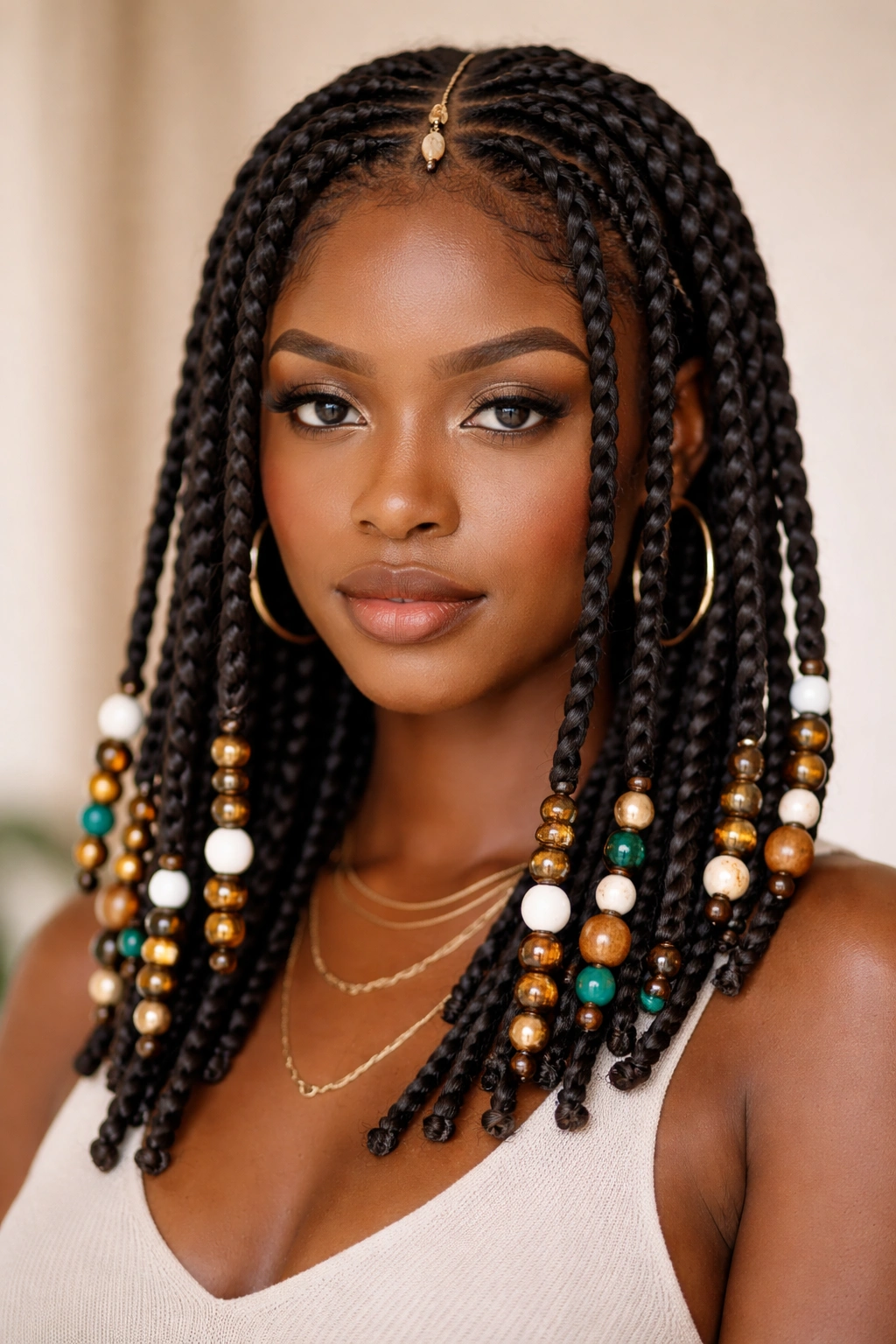
The traditional Fulani twist is instantly recognizable: two-strand twists that sit close to the scalp, typically starting from a center or side part, with colorful beads threaded onto the twists themselves. This version is timeless because it works for everyone, regardless of hair texture, length, or personal style. The beads serve multiple purposes — they look beautiful, they help secure the twist at the end, and they add that signature cultural element that makes the style unmistakably Fulani.
How to Create the Classic Look
Start with freshly washed, conditioned, and completely dry natural hair. Use a fine-tooth comb or detangling brush to section your hair into even, manageable pieces — the thickness depends on your preference, but classic Fulani twists are typically medium to thick. Apply a lightweight twisting cream or gel to each section, then twist two strands together, pulling slightly as you go to keep tension consistent. Once you reach the end, thread a bead onto the twisted section. You can use multiple beads per twist or just one at the bottom — there’s no wrong choice here.
Beads to Consider
- Wooden beads: Lightweight, natural-looking, and come in every color imaginable — they’re affordable and gentle on hair
- Metal beads: Gold, silver, or copper beads add a luxe feel and photograph beautifully; they’re slightly heavier but durable
- Acrylic beads: Vibrant, affordable, and available in endless designs — mix colors for visual interest
- Brass and gold-plated beads: These deliver authenticity and timeless elegance without the full investment of solid gold
- Pearl or opal finishes: Subtle, sophisticated, and perfect if you prefer understated embellishment
Pro tip: Thread beads onto twists while the hair is still slightly damp — they slide on easier, and the moisture helps hair grip the bead so it doesn’t slide around once dry.
2. Fulani Twists with Gold Accents
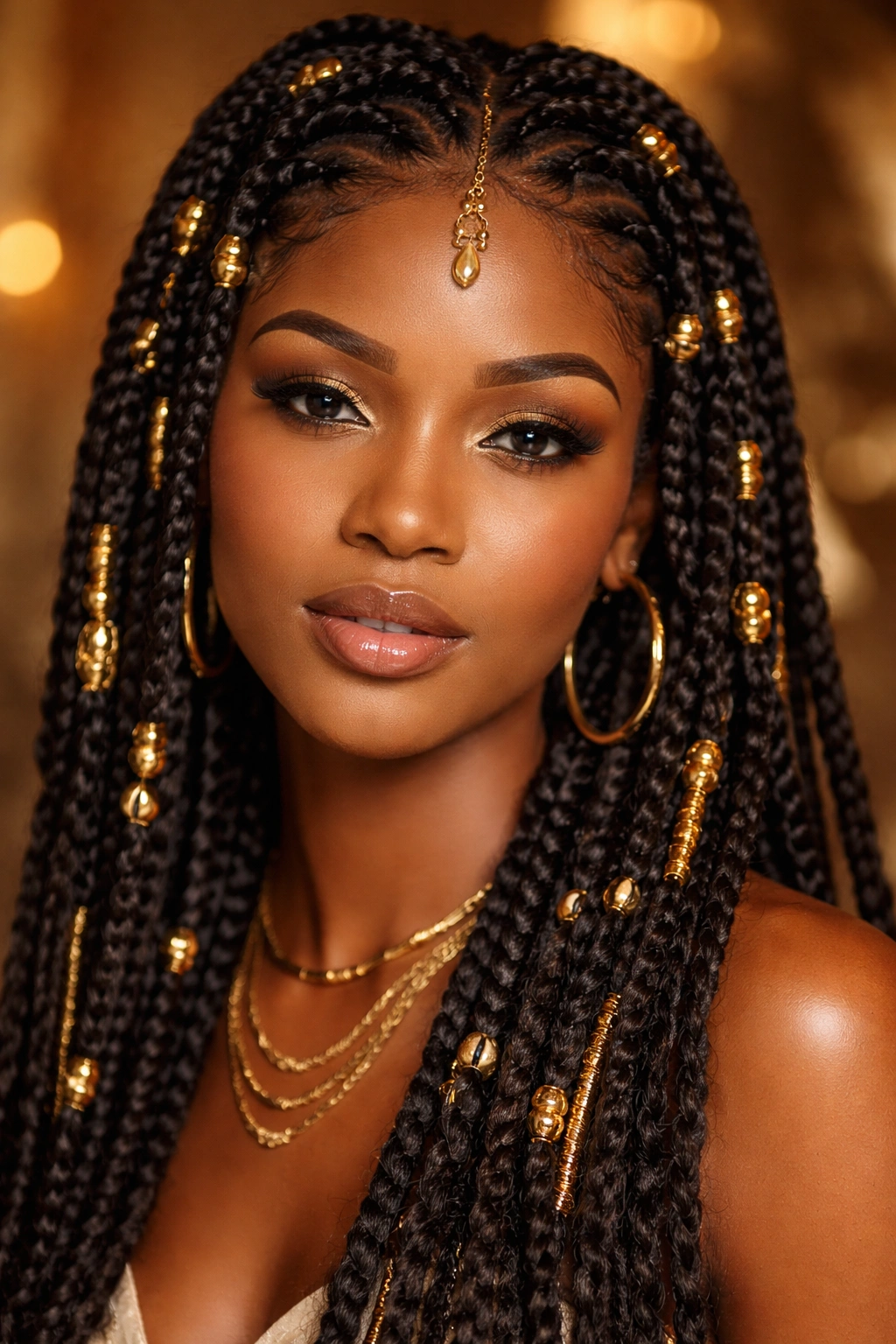
When you want to upgrade your Fulani twists from everyday to event-ready, incorporating gold accents transforms the entire vibe. Gold metallic thread, gold leaf, gold spray, or gold-plated beads elevate the style from casual to luxurious. This version works beautifully for weddings, date nights, celebrations, or simply because you want to feel like the most elevated version of yourself.
Gold Styling Approaches
Start with your classic twists, then choose your gold method. Gold thread integration means wrapping a thin strand of metallic gold thread around each twist as you create it — it catches light with every movement. Gold leaf application involves pressing actual gold leaf onto the outside of finished twists using a light oils as adhesive. Gold spray works on dry twists and creates a metallic shimmer without much prep. Gold beads are the easiest option — simply thread them on like you would any bead.
Styling for Maximum Impact
- Place gold-accented twists strategically at your face or crown where light hits them
- Mix gold beads with clear or translucent beads to let light filter through
- Combine thick gold-wrapped twists with thinner unadorned twists for contrast and depth
- Style your twists into an updo, high pony, or crown style to showcase the gold detailing
- Use a hydrating shine spray over the finished style to make the gold gleam without weighing hair down
Worth knowing: Gold accents photograph incredibly well, making this the perfect choice if you’re taking photos or want your style to feel special and intentional.
3. Two-Toned Fulani Twists
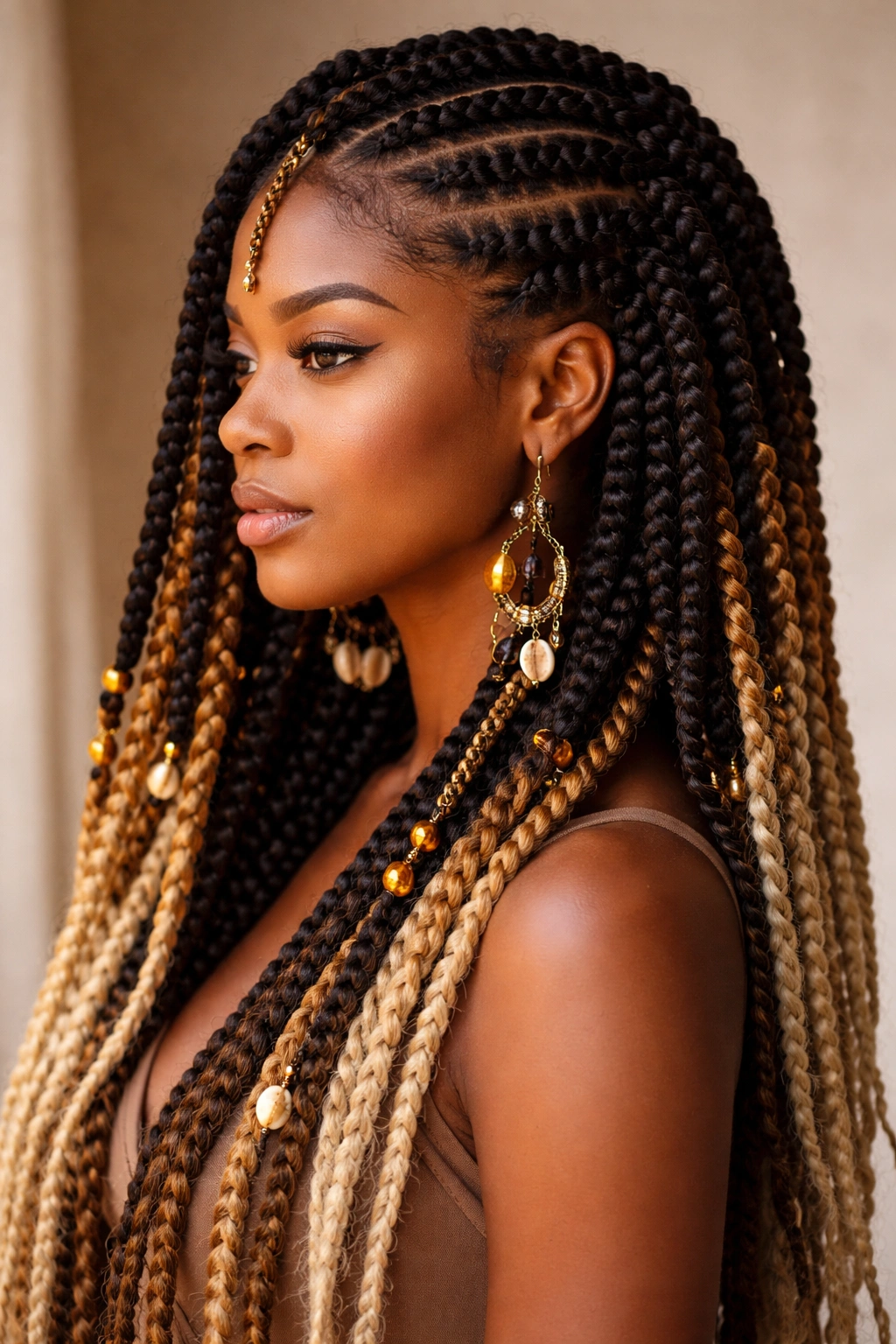
Two-toned Fulani twists use contrasting bead colors or hair extensions in different shades to create visual depth and movement. This approach is fun, unexpected, and shows off color in a way that feels purposeful rather than matchy-matchy. You might pair jewel tones with metallics, pastels with earth tones, or create a gradient effect by shifting colors as you move down your head.
Color Combinations That Work
- Deep emerald and rose gold: Luxe, balanced, and works on multiple skin tones
- Burgundy and cream: Rich and striking while remaining sophisticated
- Black and cobalt blue: Bold, modern, and creates beautiful contrast
- Burnt orange and bronze: Warm, autumn-inspired, and deeply complementary to deeper skin tones
- Lavender and silver: Trendy, calming, and feels almost otherworldly
- Navy and gold: Classic, powerful, and endlessly elegant
How to Execute This Look
Plan your color placement before you start twisting — decide which beads go where. You can alternate colors bead-by-bead, create color blocks where sections of twists feature one color, or incorporate a gradient that shifts gradually. If you’re using two-toned synthetic hair extensions in your twists, wrap the colors deliberately so they appear intentional. The key is commitment — hesitant color mixing looks accidental, but deliberate color blocking looks curated.
Insider note: Two-toned designs look more sophisticated when the two colors have clear contrast rather than similar tones. The eye needs to see the difference to appreciate the design.
4. Fulani Twists with Cowrie Shells
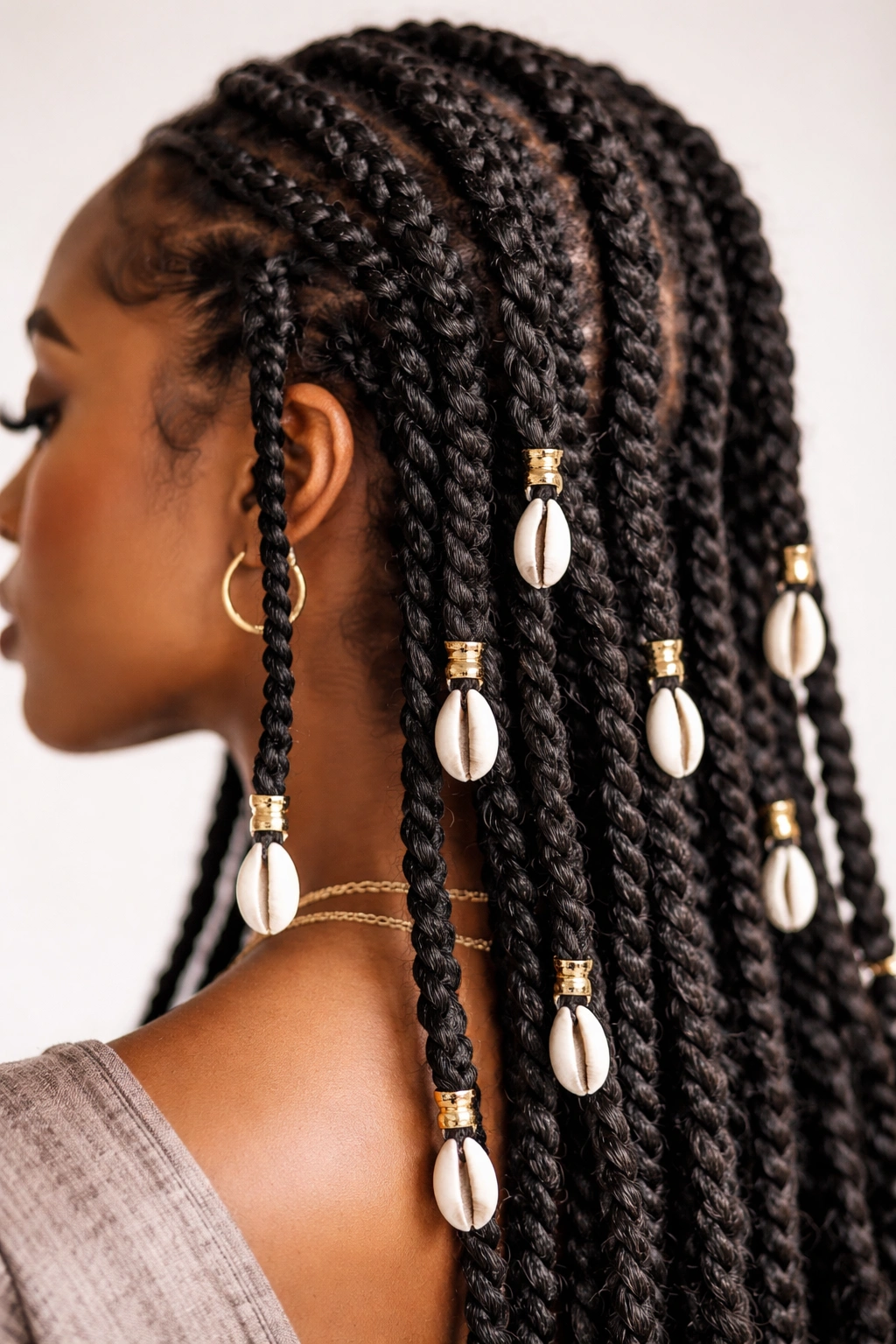
Cowrie shells represent heritage, elegance, and a direct connection to African beauty traditions. Incorporating them into Fulani twists honors the historical significance of the style while adding tactile, three-dimensional texture that regular beads can’t match. Cowrie shells catch the light differently, create gentle clinking sounds as you move, and add an undeniable luxe factor.
Sourcing Authentic Cowrie Shells
Look for genuine cowrie shells from reputable African beauty suppliers rather than generic craft stores. Authentic shells have natural variations, real weight, and a quality that inferior imitations lack. You’ll often find them sold with threading holes already created, making them easy to add to twists. Many come pre-strung or available in bulk so you can customize placement.
Styling with Cowries
Thread cowrie shells onto selected twists — you don’t need them on every twist, and spacing them strategically creates visual interest. Mix cowries with complementary beads to add variety without overwhelming the look. Cowries work especially well on thicker Fulani twists where the shell sits prominently. Style twists into crown braids, high buns, or side sweeps to highlight the shells’ placement.
Care Considerations
- Cowrie shells don’t absorb moisture, so they won’t damage your twists during hydrating routines
- They add weight to your twists, which helps them last longer and prevents unraveling at the ends
- The white interior of cowries creates luminous contrast against darker beads or hair
- Periodically check the threading to ensure shells stay secure
Quick tip: Cowries sound beautiful when incorporated into twists worn in a style that creates movement. They’re perfect if you love the auditory aspect of your accessories.
5. Micro Fulani Twists
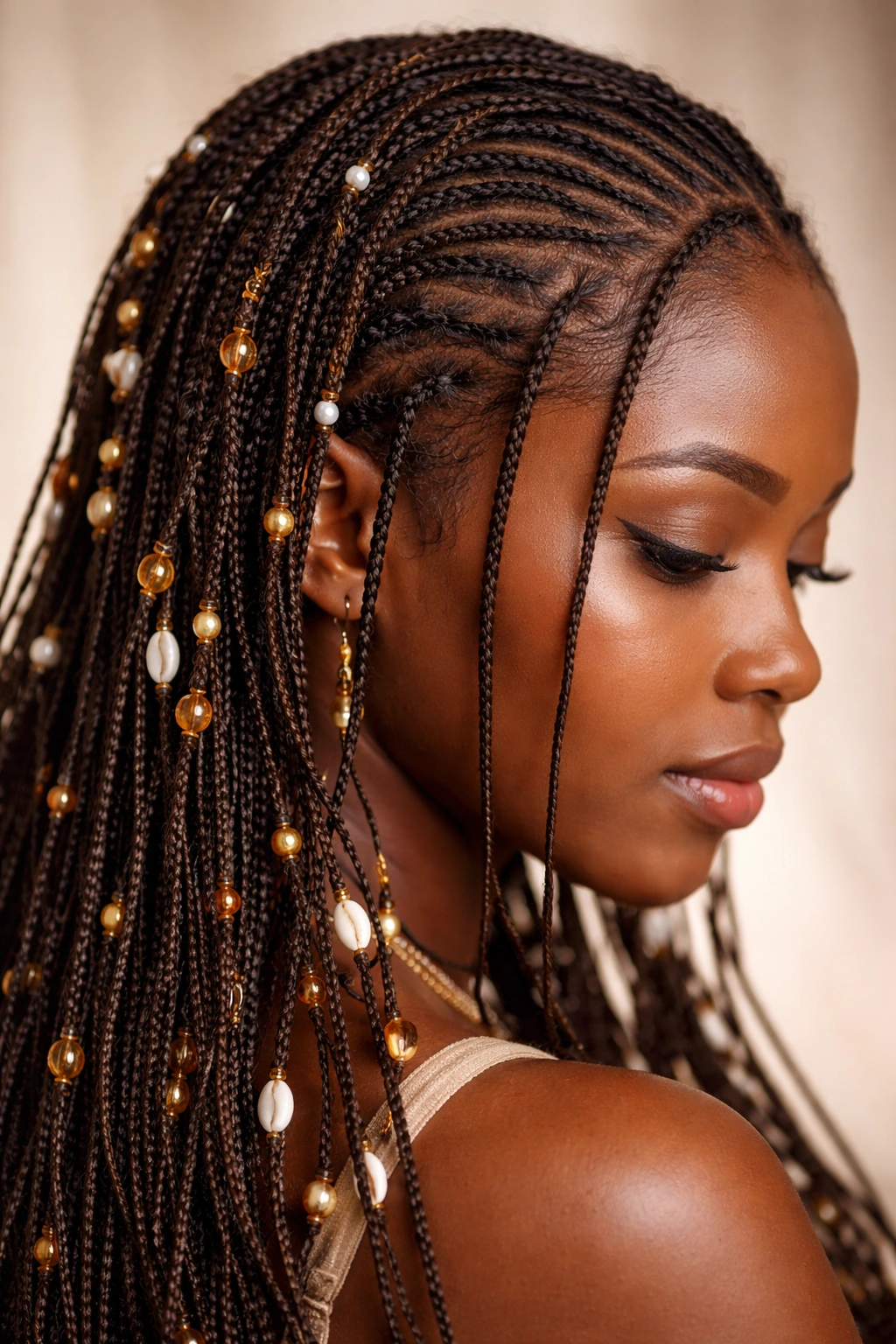
Micro Fulani twists offer maximum versatility and detail. These thinner twists require more time to install but create an intricate, almost lacey appearance when adorned. They work especially well for people with medium to high hair density and those who want a delicate, detailed aesthetic rather than a bold, chunky look.
The Micro Advantage
Thinner twists create more twists overall, which means more room for bead placement and more opportunities for detailed color work or pattern creation. Micro Fulani twists also blend beautifully into protective styles — you can wrap them into updos, tuck them into braids, or pin them into patterns that wouldn’t work with thicker twists. They also tend to last longer because each individual twist has less weight and stress on the root.
Installation and Maintenance
Micro twists require patience — plan for 4-6 hours of installation depending on hair length and density. Use a light twisting cream to reduce frizz on these thinner strands. Section hair into very small pieces, perhaps using the corner of your comb to create precise, uniform sections. Apply minimal product to keep twists defined without buildup.
Styling Micro Twists
- Create intricate patterns with bead colors — the small scale makes detailed designs possible
- Twist micro Fulani twists into updo styles that showcase the detail you’ve invested in
- Layer them with other braided styles for dimension
- Wrap them around each other to create thicker texture when you want more visual weight
- Style them sleek and close to the scalp for a refined look, or partially unravel them for a softer, more romantic effect
What to know: Micro Fulani twists require consistent moisture because thinner hair strands dry faster. Deep condition regularly and keep a hydrating spray handy.
6. Fulani Twists with Thin Braids Mixed In
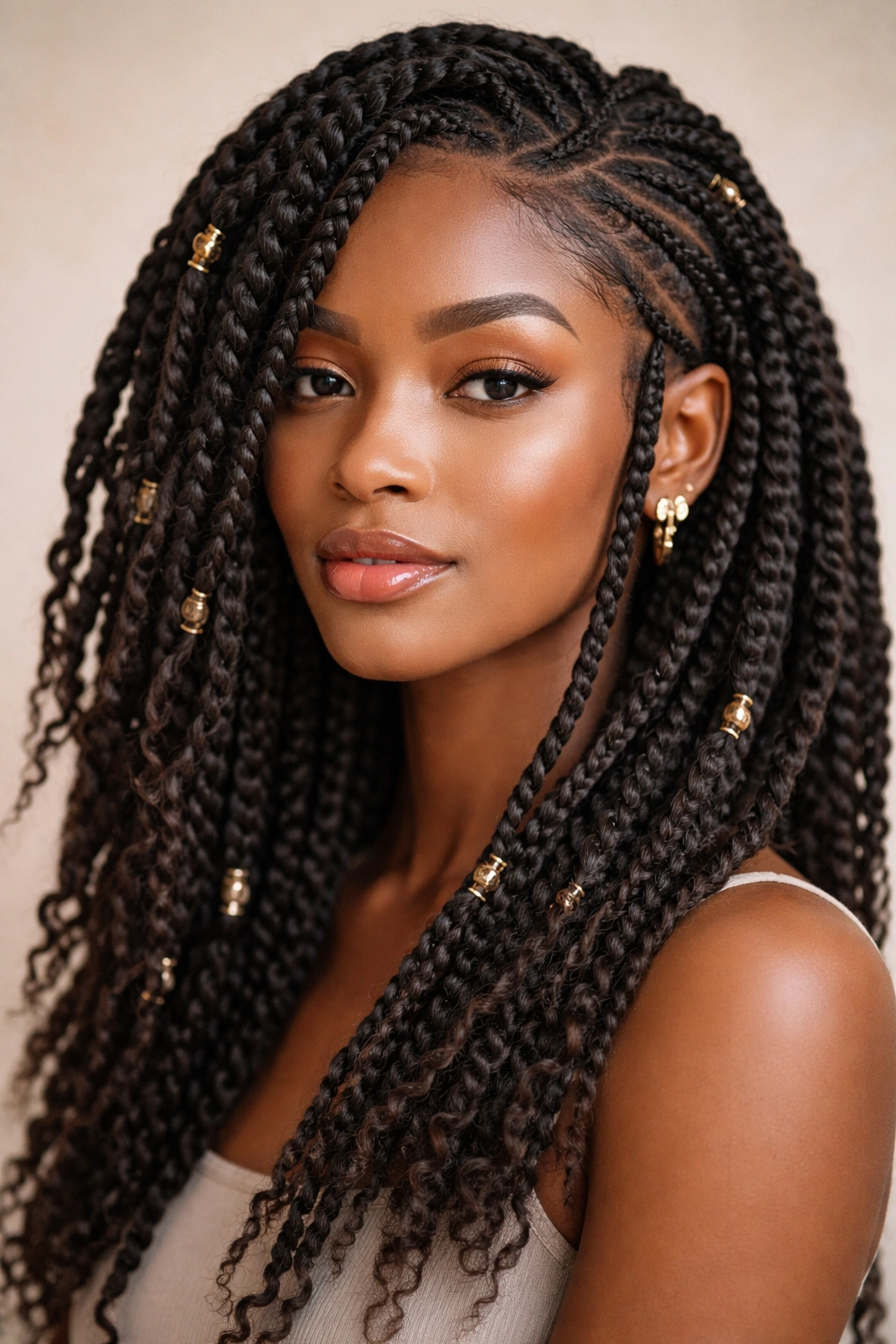
Combining Fulani twists with thin braids creates visual texture and breaks up monotony if you’re wearing your style long-term. This hybrid approach gives you the sculptural quality of twists with the precision and detailed handiwork of braids. The contrast between twisted sections and braided sections feels intentional and artistic.
How to Mix the Textures
Begin with your base twists as usual, but incorporate thin three-strand braids between them or weave braids throughout the design. You might create a pattern where every other section is a braid, or scatter braids organically throughout. Thin braids work well because they create visual interest without competing with the twists — they complement rather than overwhelm.
Braid Placement Ideas
- Framing the face: Create thin braids on either side of your face with twists filling the rest of your head
- Center part with braids: Use a center part and braid the sections at your roots, transitioning to twists at the ends
- Crown design: Create a crown of thin braids at the top with Fulani twists falling below
- Random scattering: Weave braids throughout the twist design for an organic, asymmetrical look
- Alternating pattern: Create a predictable rhythm of braid, twist, braid, twist for structured visual balance
Bead and Accessory Strategy
Use different beads on your twists versus your braids to make the distinction obvious. Or keep beads consistent and let the texture difference do the visual work. Thin braids can accommodate smaller beads or just simple thread wraps without looking cluttered.
Pro tip: If your hair is prone to frizz, combine twists and braids strategically — use braids where you tend to frizz most since they hold definition better than twists over time.
7. Fulani Twists Half-Up Style
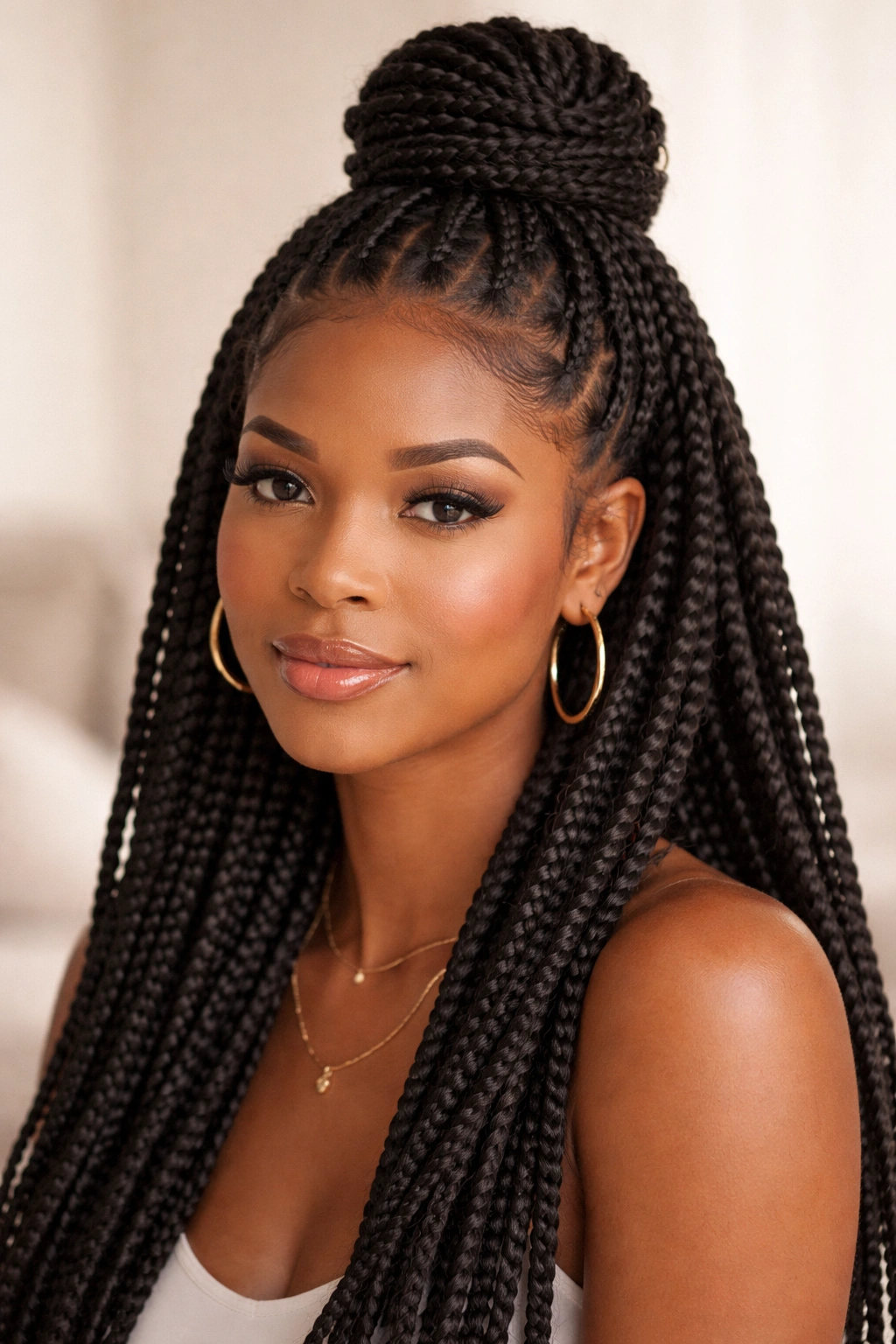
The half-up Fulani twist is a fresh take on the classic style that offers practicality with aesthetic appeal. The top sections are twists pulled partially upward into a ponytail, crown braid, or bun, while the bottom sections flow down your back. This creates visual interest, keeps hair partially off your face without requiring a full updo, and works beautifully for any occasion.
Creating the Half-Up Structure
Divide your hair into a top section (from your temples around to the back of your ears) and a bottom section (everything else). Twist the top section as you normally would, creating your Fulani twists. Once complete, gather these top twists and secure them into your desired half-up shape — a centered pony, a side ponytail, a loose crown braid, or a twisted bun. Leave the bottom section as full Fulani twists that flow down your back.
Half-Up Design Variations
- Top twists into a high bun: Polished and professional; works for work settings or elegant events
- Side sweep half-up: Romantic and asymmetrical; showcases your face while keeping hair manageable
- Crown braid using top twists: The ultimate fusion style combining braids and twists in one updo
- Twisted half-up pony: Gather top twists and wrap them around the base of a lower pony for texture and detail
- Loose, flowing half-up: Secure top twists gently so they still feel relaxed and unconstrained
Bead Placement for Half-Ups
Put all your decorative beads on the bottom section that flows loose — this draws the eye down and creates a focal point. Keep the half-up section clean and minimal, or match the bead colors between sections for cohesion. The asymmetry of a half-up style means bead distribution doesn’t need to be perfectly even.
Worth knowing: Half-up Fulani twists photograph beautifully from the front, making this perfect if you love how you look in photos or plan to take lots of pictures while wearing the style.
8. Long Fulani Twists with Wraps
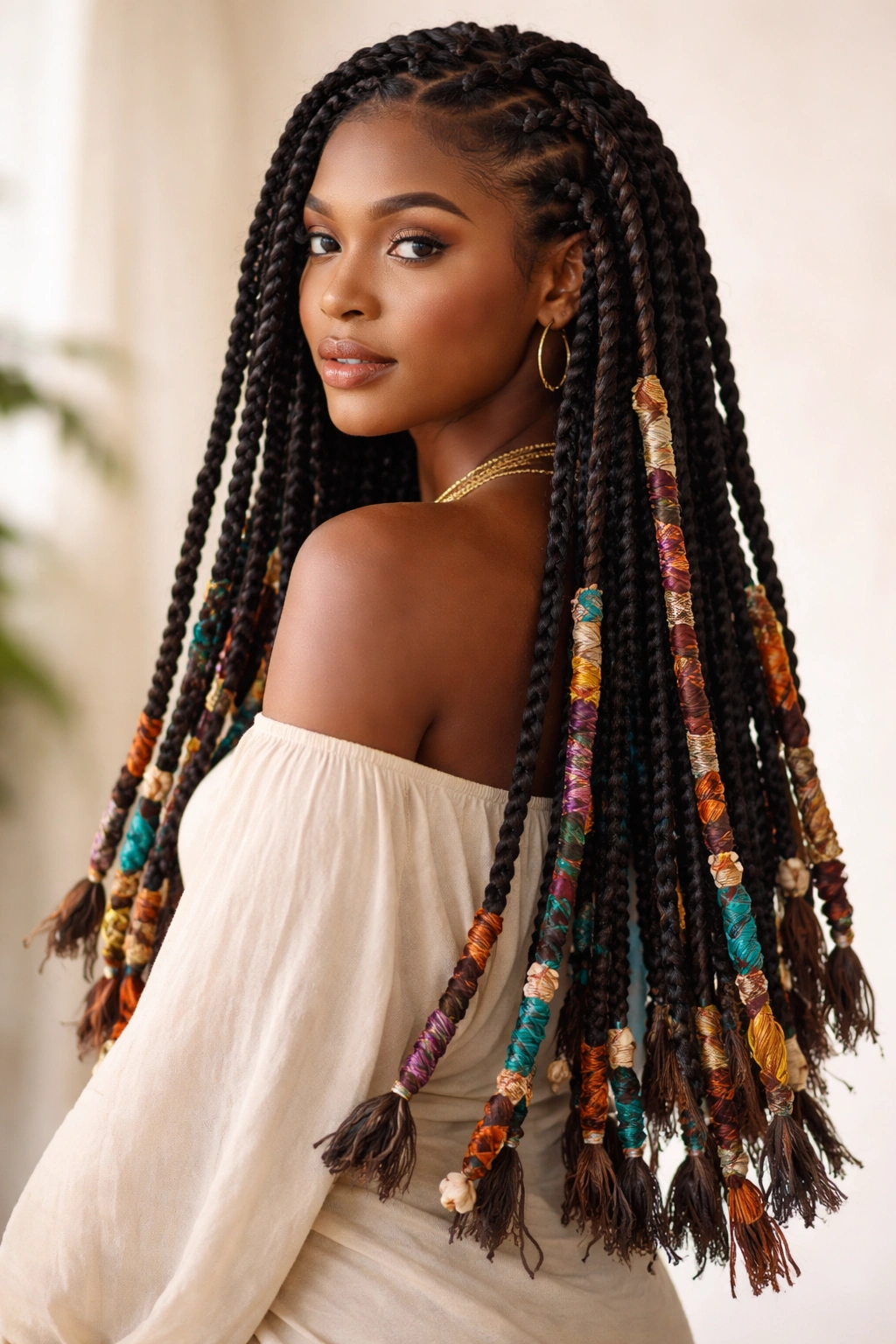
Adding fabric wraps to the ends or throughout your Fulani twists extends the style, adds color in a different dimension, and creates a luxe, bohemian-inspired look. Fabric wraps can be subtle thread wraps or bold colorful fabric strips, depending on your preference and the occasion.
Wrapping Techniques
Thread wrapping involves wrapping thin, colored thread tightly around the last 2-3 inches of each twist, creating a neat, tapered finish. Fabric wrapping uses colorful strips of cloth, kente cloth, mud cloth, or coordinating fabric wrapped around twist sections. Beaded wraps combine thread or thin fabric with beads for added embellishment. Metallic wraps use shiny gold, silver, or copper thread for subtle glamour.
Wrap Placement Strategy
Wrap the very bottom of each twist for a polished, finished look. Or wrap strategically throughout — perhaps wrapping every other twist or creating a gradient where wrapping becomes more frequent as you move down. Some people wrap only face-framing twists, leaving the back open and textured. There’s no rule; it depends on your aesthetic.
Choosing Wrap Materials
- Cotton embroidery thread: Affordable, available in countless colors, and creates a neat, tight wrap
- Metallic thread: Adds shine and catches light beautifully
- Kente cloth strips: Authentic, colorful, and honor African textile traditions
- Fabric with meaning: Use fabric that matches your cultural background or personal aesthetic
- Linen or canvas strips: Matte, natural-looking, and create soft, organic wraps
Quick fact: Wraps at the very bottom of twists help prevent unraveling if you’re wearing the style long-term, making them both beautiful and functional.
9. Fulani Twists with Hair Cuffs
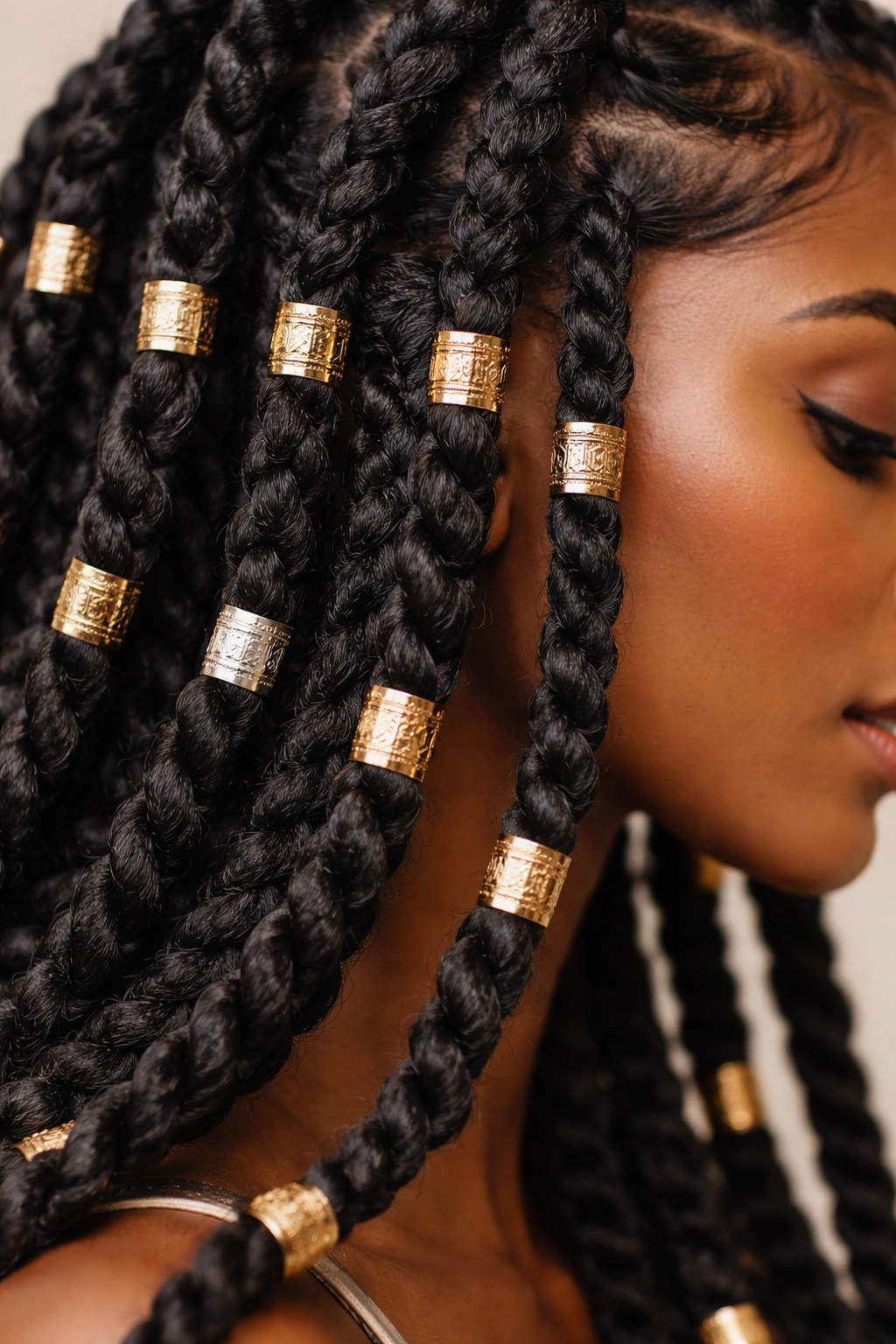
Hair cuffs are metal or decorative sleeves that slide onto twists, creating a sculptural, high-fashion element. Unlike beads threaded through the hair, cuffs sit around the outside of the twist, making them easy to adjust or remove and giving you a bold, edgy aesthetic. They work particularly well on thicker Fulani twists where the cuff sits prominently.
Types of Hair Cuffs
- Metallic cuffs: Gold, silver, or copper cuffs deliver instant luxury and catch the light
- Ornamental cuffs: Decorative designs with patterns, gems, or sculptural shapes for artistic flair
- Minimalist bands: Simple, sleek cuffs in neutral metals for understated sophistication
- Gemstone cuffs: Cuffs embedded with crystals or stones for sparkle and glamour
- Textured cuffs: Etched, hammered, or patterned surfaces for tactile, interesting detail
Cuff Placement and Styling
Slide cuffs onto twists once you’ve completed them — they work on finished twists and move freely. Place cuffs near the roots for a bold, grooming-forward look, at mid-length for balanced visual interest, or toward the ends for a softer effect. Mix cuff finishes and colors for an intentional, curated aesthetic. You can wear one cuff per twist or leave some twists bare for contrast.
Cuff Advantages
- No threading needed: Unlike beads, cuffs simply slide on and off, making adjustments easy
- Versatile styling: Wear the same twists with different cuff placements throughout the week
- Reusable: Invest in quality cuffs that work with multiple twist installations
- Bold aesthetic: Cuffs create a more dramatic, fashion-forward look than beads alone
Pro tip: Cuffs add weight to your twists, which helps them hold their shape and last longer without frizzing out.
10. Fulani Twists with Baby Hair Design
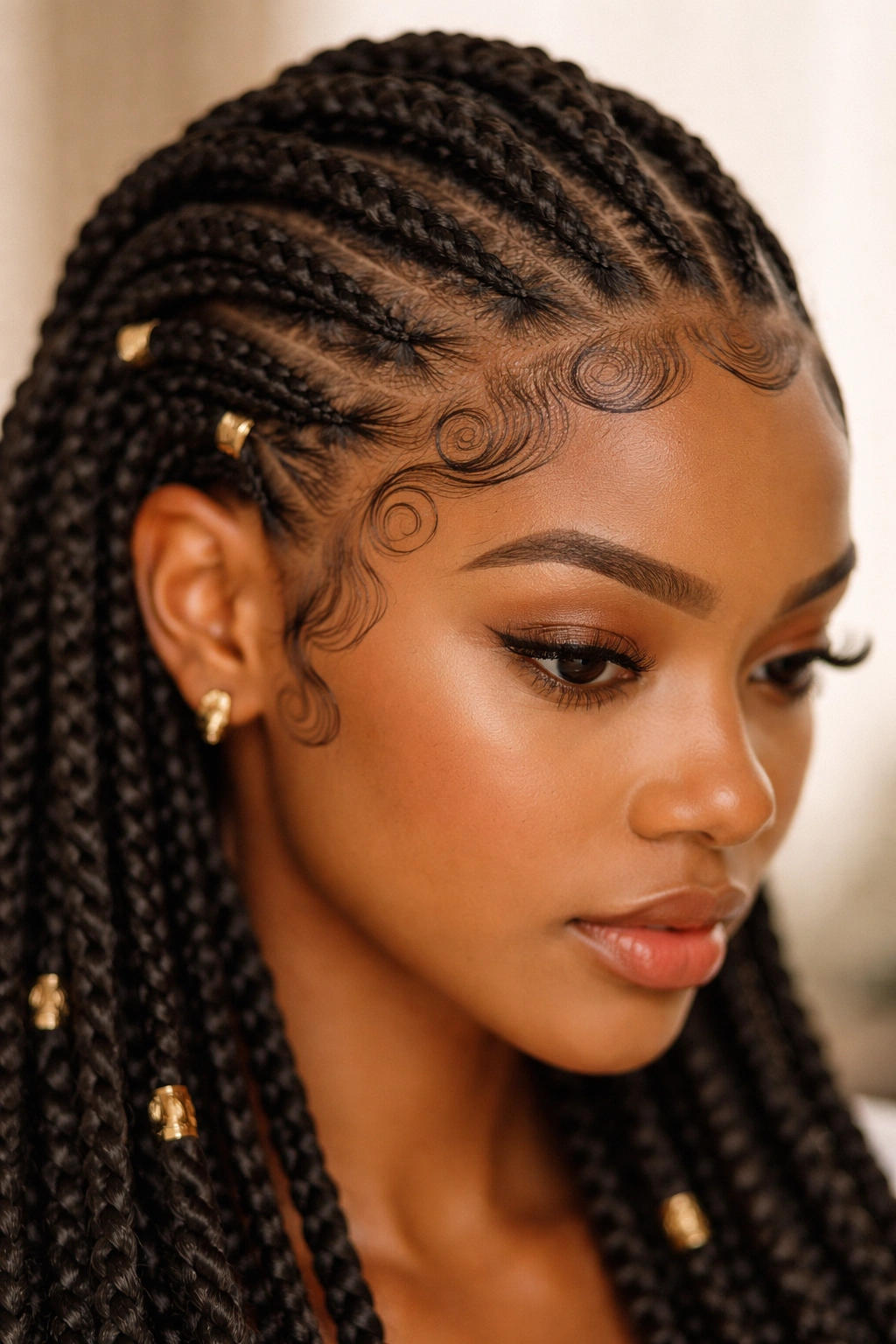
Fulani twists take on an extra polished dimension when you incorporate intentional baby hair designs along your hairline. Using baby hairs or gel, create swirls, waves, intricate patterns, or geometric designs that frame your face and add an artisanal touch. This approach shows off styling skill and creates a cohesive, high-fashion appearance.
Baby Hair Design Techniques
Smooth waves use a toothbrush and gel to create flowing S-curves along your hairline. Swirls involve spiraling baby hairs into defined, sculptural shapes. Geometric patterns use precision gel application to create triangles, diamonds, or angular designs. Braided details incorporate tiny braids into your baby hair design for texture. Colored gel adds a pop of color to your design work for artistic expression.
Design Placement
Focus baby hair designs at your edges — along your hairline, temples, and the sides of your face where they frame and accent your features. Create symmetrical designs on both sides for a polished look, or go asymmetrical for a bolder statement. Use your baby hair to create a cohesive visual connection between your scalp and your twists.
Creating Clean, Intentional Designs
Use a fine-tooth brush, edge control gel, and patience. Work with one small section at a time. Let gel dry completely between design elements to prevent smudging. Reapply gel every few days to maintain sharp, defined designs. Use a spray bottle with water to reactivate gel if designs start to lose definition.
Design Ideas
- Simple swirls: Classic, elegant, and takes 10-15 minutes per side
- Geometric triangles: Modern, bold, and requires more precision and time
- Multi-wave patterns: Soft, flowing, and romantic
- Braided swirls: Textured and intricate; combines braiding skill with gel work
- Thin line designs: Minimalist patterns created with thin gel lines for understated detail
What to know: Baby hair designs look fresh for about 3-5 days before they need refreshing. Plan to touch them up a couple times per week to maintain the polished effect.
Final Thoughts
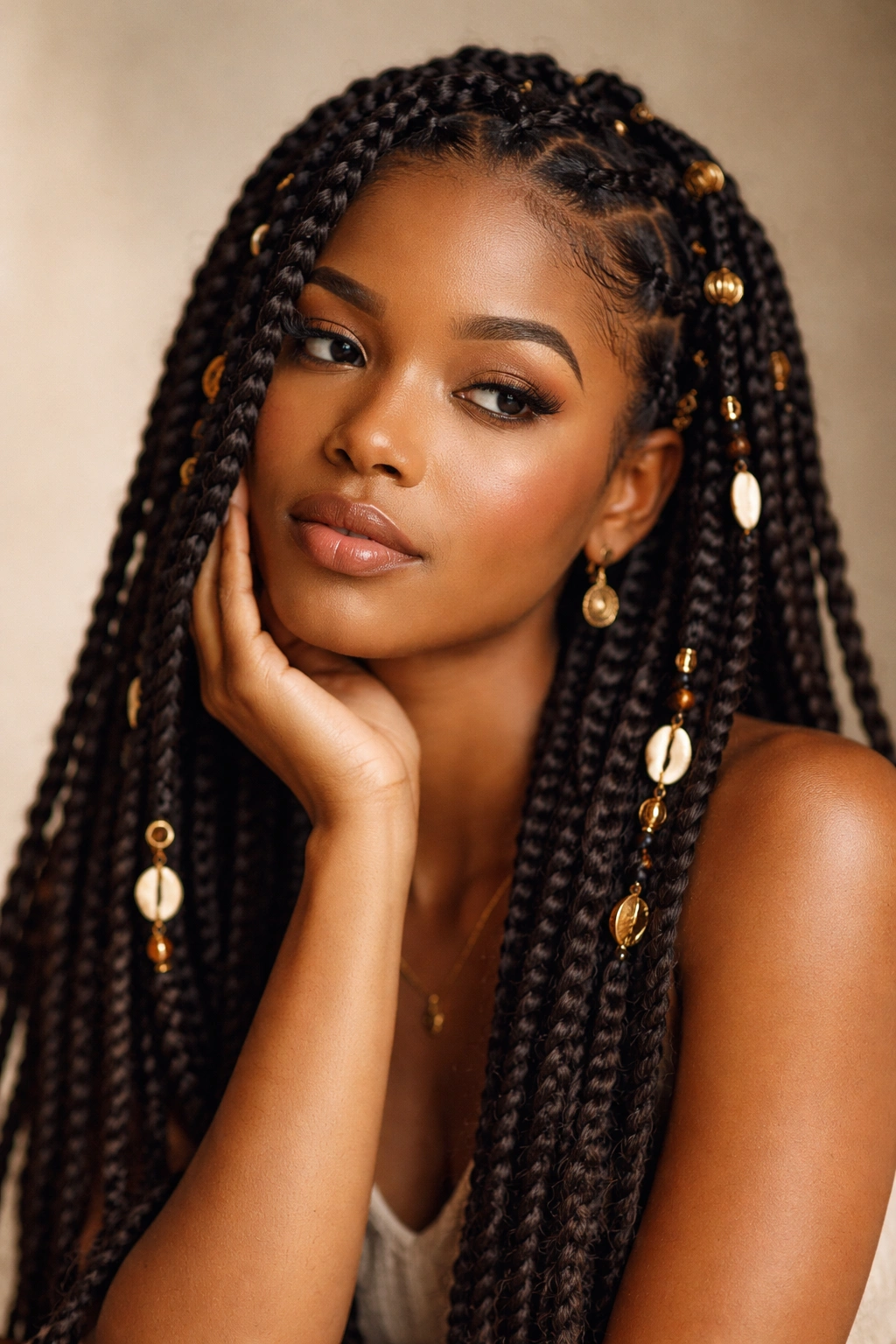
Fulani twists are more than just a protective style — they’re a celebration of natural hair texture, cultural heritage, and creative self-expression. Whether you choose classic beaded twists, incorporate gold accents, play with color combinations, add cowrie shells, go micro, mix in braids, pull half of them up, wrap them with fabric, add sculptural cuffs, or design intentional baby hair patterns, you’re engaging in a tradition that’s centuries old while making it entirely your own.
The most important thing about wearing Fulani twists is choosing the version that makes you feel confident and beautiful. That might mean starting simple with classic beads and gradually experimenting with more embellishment, or it might mean going all-in with multiple elements from day one. Your natural hair is versatile enough to support any of these approaches, and your personal aesthetic is valid regardless of which direction you choose.
Fulani twists typically last 4-8 weeks depending on how you care for them, giving you time to enjoy your investment before your next style. Use that time to experiment, take photos, refine what works, and discover which version feels most authentically you. Your twists aren’t just a hairstyle — they’re your crown, your statement, and your art.
