



Yoruba hairstyling traditions represent one of Africa’s most sophisticated and enduring approaches to grooming and self-expression. These styles aren’t simply aesthetic choices—they’re deeply rooted in cultural identity, age, social status, and spiritual significance within Yoruba communities across West Africa and the diaspora. What makes Yoruba hair practices so distinctive is the combination of technical precision, artistic vision, and cultural meaning woven into every braided strand and sculpted line.
For men, traditional Yoruba hairstyles offer far more than routine maintenance. They communicate heritage, demonstrate craftsmanship, and celebrate a connection to ancestral practices that continue to evolve and inspire new generations. Whether you’re exploring your cultural roots, appreciating the artistry of traditional styling, or seeking a meaningful way to express your identity, understanding these eight foundational Yoruba men’s hairstyles opens a conversation about beauty standards, cultural preservation, and personal empowerment.
What you’ll discover in these styles is a complete system of hair design that works beautifully with natural hair texture and can be adapted to personal preference while maintaining cultural authenticity. Each style showcases the incredible range possible within traditional Yoruba aesthetics—from towering crown constructions to intricate geometric patterns to elegant simplicity.
1. Shuku
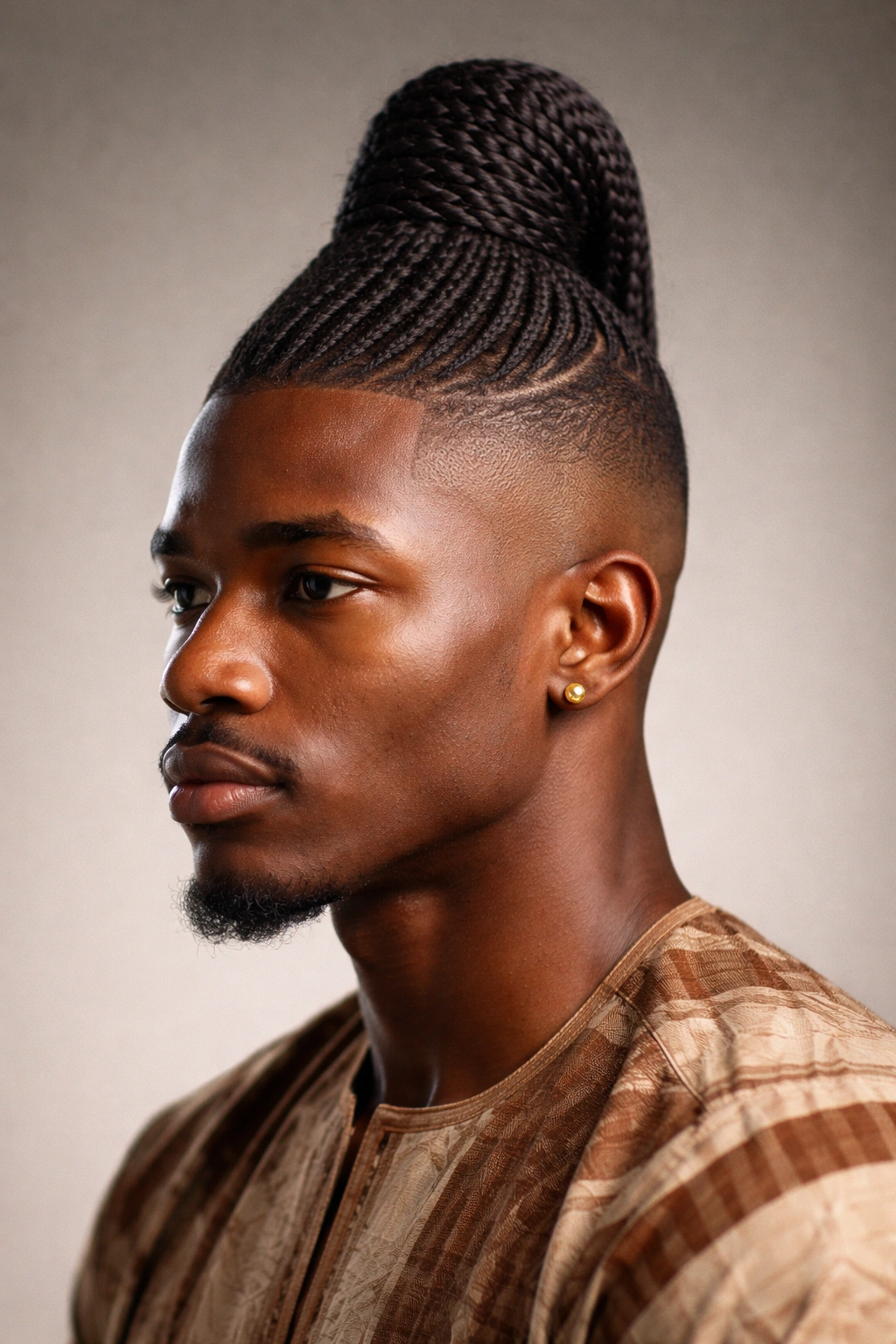
The Shuku stands as perhaps the most iconic Yoruba men’s hairstyle, instantly recognizable for its striking vertical height and sculptural presence. This style involves gathering hair at the top of the head and building it upward into a pronounced crown that can reach several inches above the scalp. The sides and back are typically kept close to the head or completely shaved, creating sharp contrast with the towering top section. What makes Shuku particularly powerful is how it commands attention and immediately signals cultural awareness and pride.
Cultural Significance and Historical Context
The Shuku has deep historical roots in Yoruba society, where it traditionally indicated adulthood, spiritual achievement, or high social standing. Warriors, priests, and respected elders wore variations of this style as a mark of authority and accomplishment. The height of the crown sometimes corresponded to social position—taller constructions often belonged to those with greater influence. Even today, wearing Shuku represents a deliberate choice to honor tradition and claim space within your community, making it far more than a simple hairstyle choice.
How to Build and Maintain Your Shuku
- Start with hair that’s at least 2-3 months into its natural growing cycle or use extensions woven into the base for added height and structure
- Brush the hair firmly upward and gather it into a tight, centered bundle at the crown
- Use a combination of gel, pomade, and sometimes thread or cord to secure the gathered hair and define its shape
- Keep the sides shaved clean every 2-4 weeks for maximum contrast and visual impact
- Apply light oil or shea butter to the crown section every few days to keep hair healthy and maintain definition
- Pro tip: The tighter you gather the crown section, the more dramatic and structured your Shuku will appear—but ensure it’s not so tight that it causes tension or discomfort to the scalp.
2. Irun Gele (Crown Braids)
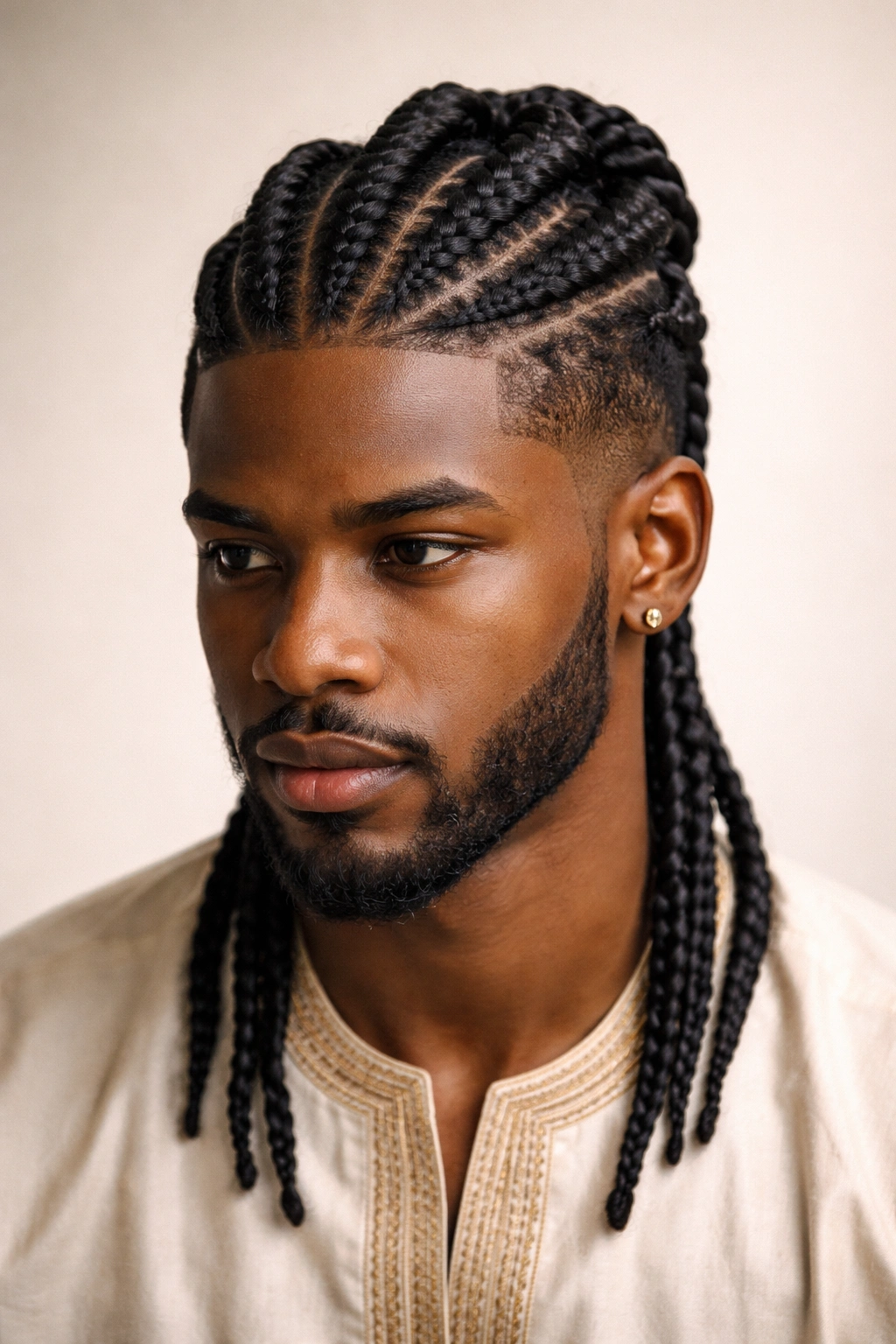
Irun Gele features multiple thick braids that rise vertically from the scalp and meet at the crown, creating what resembles a natural crown or tiara. The braids typically number between 3-7, arranged symmetrically, and they can be finished with natural hair, extensions, or cowrie shells at the tips. This style combines the structural elegance of Shuku with more flexible braiding work, making it accessible to men at various stages of their natural hair journey. The result is refined and deliberately artistic—more ornamental than everyday wear, though many men maintain this style as their signature look.
The Art of Symmetrical Braiding
Achieving perfect Irun Gele requires precision in how you section the hair and consistency in braid thickness and tightness. Each braid should be precisely the same width, and they should rise at the same angle from the scalp. The spacing between braids matters as much as the braids themselves—even gaps create the visual flow that makes this style work. Many practitioners work with a stylist who specializes in this technique, as the technical skill required is substantial. The meditative quality of the braiding process itself is part of the cultural practice, often creating spaces for conversation and connection between stylist and wearer.
Styling and Finishing Options
- With natural hair tips: Allow the braids to reach full length for a free-flowing finish that shows hair health and maturity
- With extension beads: Wrap extensions around the bottom portion of each braid, securing them with small beads in gold, silver, or decorative wood
- With cowrie shells: Attach authentic cowrie shells to the braid tips as a spiritual and aesthetic choice—cowries hold significant meaning in Yoruba cosmology
- With leather or cord: Wrap thin leather strips or decorative cord around the final 2-3 inches of each braid for texture contrast
- Maintenance schedule: Refresh braids every 6-8 weeks, adding new extensions or beads as needed to maintain the structured appearance
3. Locs (Dreadlocks) with Traditional Care
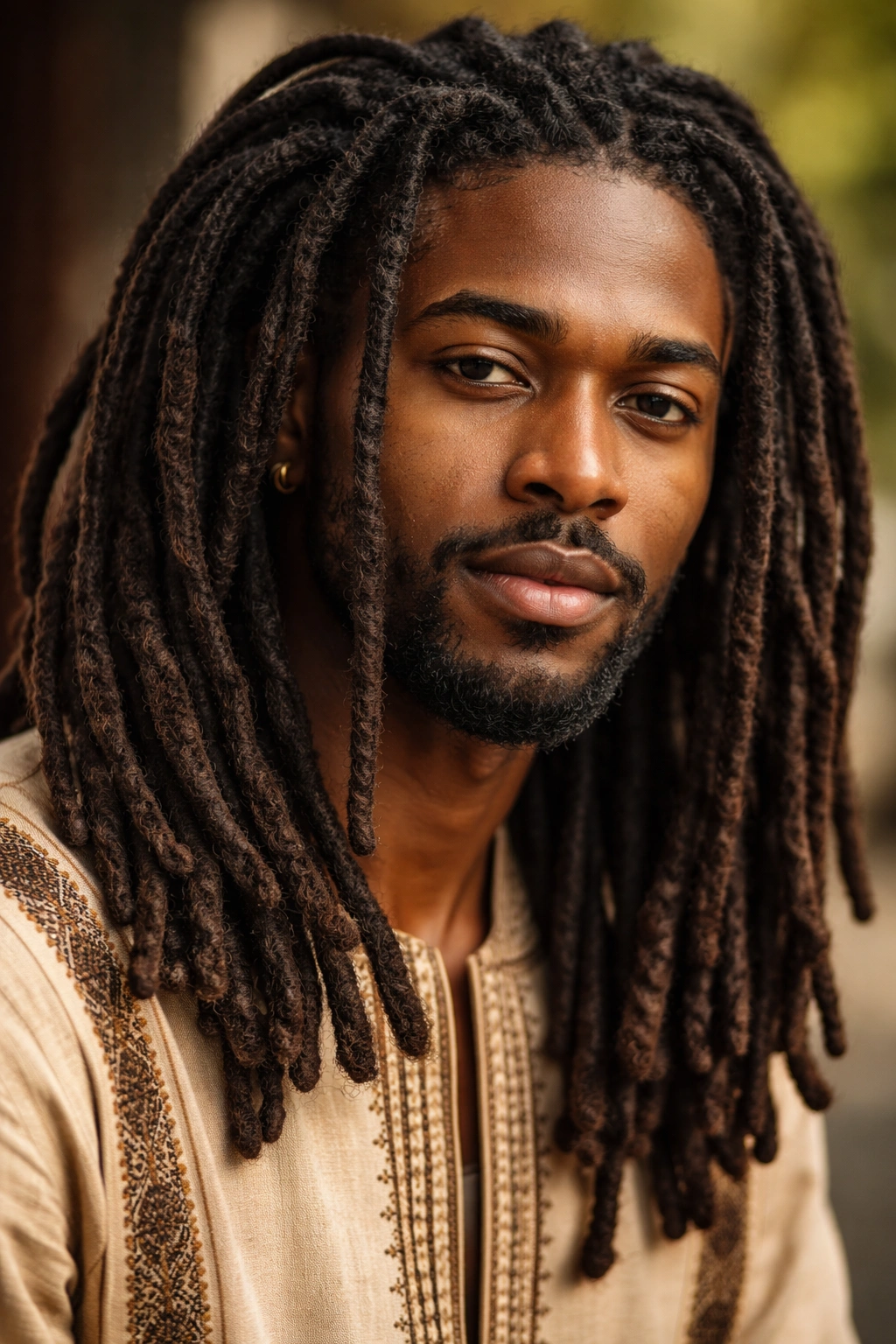
Yoruba men’s locs represent a natural evolution of traditional hair practices combined with contemporary wellness awareness. Rather than the Western rebranding of this style, locs have always been part of African hair culture, worn by Yoruba spiritual practitioners, warriors, and philosophers throughout history. Building locs involves intentionally allowing hair to lock naturally or palm-rolling it into location before the locking process begins. The result is thick, ropy sections of hair that can be maintained for years or decades, creating a living record of personal journey and spiritual connection.
The Spiritual and Practical Dimensions
In Yoruba tradition, growing locs often connects to spiritual practice, personal transformation, or deliberate rejection of colonial beauty standards. Priests and practitioners of traditional religion frequently maintain locs as part of their spiritual identity. Beyond spiritual significance, locs require less daily styling manipulation than other natural hair approaches, reducing stress on the hair and scalp. For men balancing busy lives with cultural pride, locs offer a practical solution that simultaneously serves as a powerful cultural statement. The maintenance regimen—while minimal compared to styled hair—still requires intentional care and attention.
Starting and Maintaining Healthy Locs
- Initial method: Begin with clean, dry hair sectioned into uniform squares; palm-roll each section or allow it to naturally lock over 3-6 months
- Extension option: Install locs using human hair or synthetic locks wrapped around your natural hair base, giving you length and thickness immediately
- Washing schedule: Cleanse locs every 1-2 weeks with locking shampoo or diluted castile soap, ensuring you thoroughly dry them to prevent mildew
- Retwisting frequency: Every 4-8 weeks, retwist the roots to maintain neat appearance and prevent unraveling
- Oil and moisture: Apply light oil or shea butter to locs weekly, focusing on the roots and scalp rather than saturating the entire loc
4. Shuku with Geometric Patterns
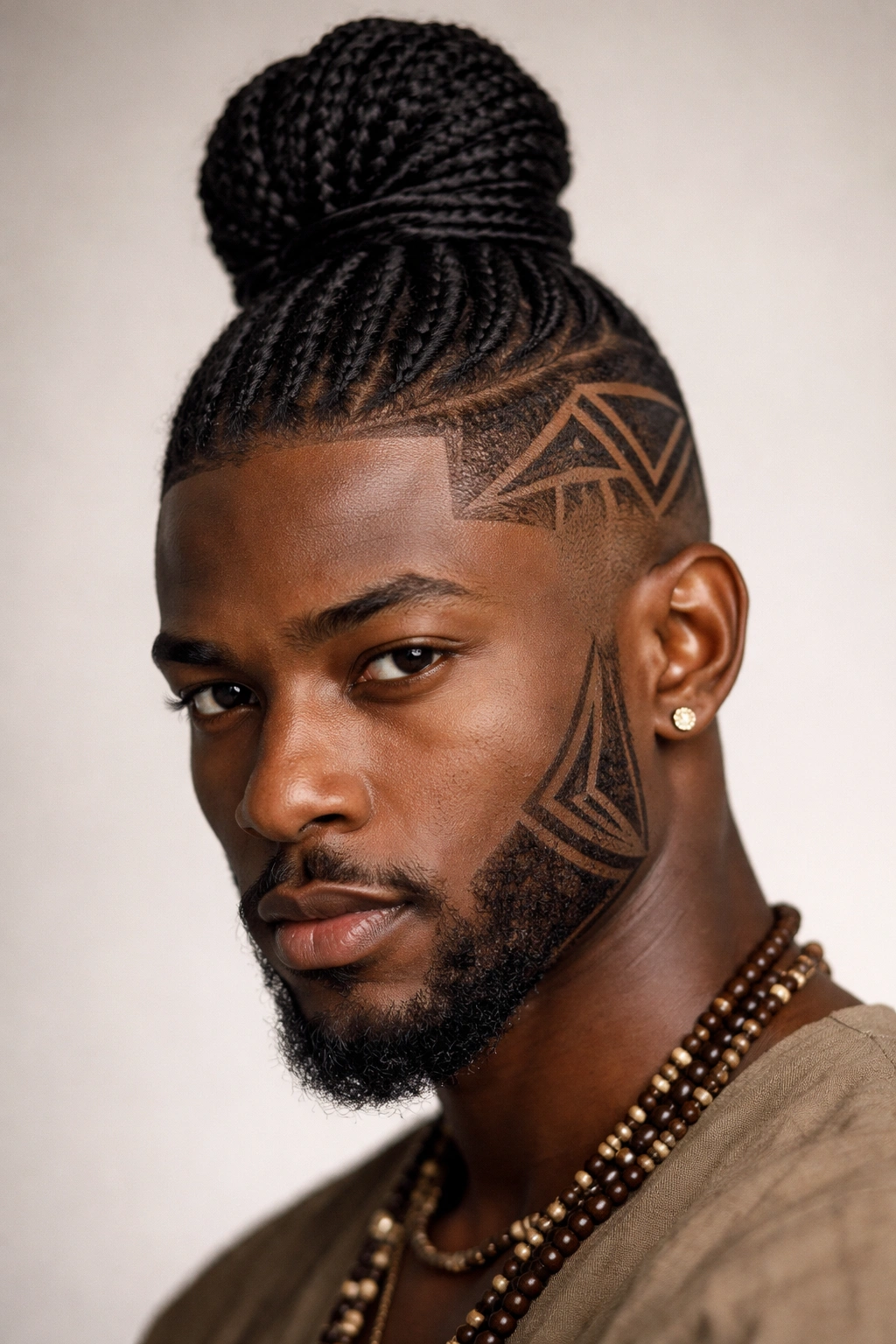
This elevated variation of the classic Shuku incorporates deliberate design elements into the shaved portions of the head. Rather than simply shaving the sides and back clean, a stylist uses clippers to create precise geometric patterns—lines, shapes, triangles, or elaborate designs that complement the vertical crown. These patterns might be purely decorative or hold personal or cultural meaning. The combination of soaring vertical height with intentional ground-level artistry creates a cohesive, highly intentional look that demonstrates both artistic vision and technical precision.
Designing Your Personal Pattern
The beauty of geometric Shuku lies in customization—your pattern should reflect something meaningful to you, whether that’s a personal symbol, a family crest reference, or pure geometric aesthetics that you love to see. Working with a skilled barber or stylist who understands both technical clipper work and artistic vision is essential. Patterns might include concentric circles at the nape, lightning bolt lines along the sides, triangular arrays, or complex geometric arrangements. The key is ensuring the pattern complements rather than competes with your crown, creating visual balance between upper and lower sections. Some men incorporate lines that reference scarification traditions or family symbols, deepening the cultural meaning of their personal style.
Maintenance and Pattern Refreshing
- Shave clean every 7-10 days to keep patterns sharp and visible before they begin growing out
- Use high-quality clippers with guard attachments that allow precision work without accidentally cutting too short
- Schedule pattern maintenance every 2-3 weeks with the same stylist to ensure consistency
- Photograph your pattern design so you can show your stylist exactly what you’re envisioning during each refresh
- Pro tip: Take photos under different lighting to see how your pattern appears in natural light, indoor lighting, and direct sunlight—this affects how dramatic the design appears
5. Koroso (Braided Crown with Shaved Sides)
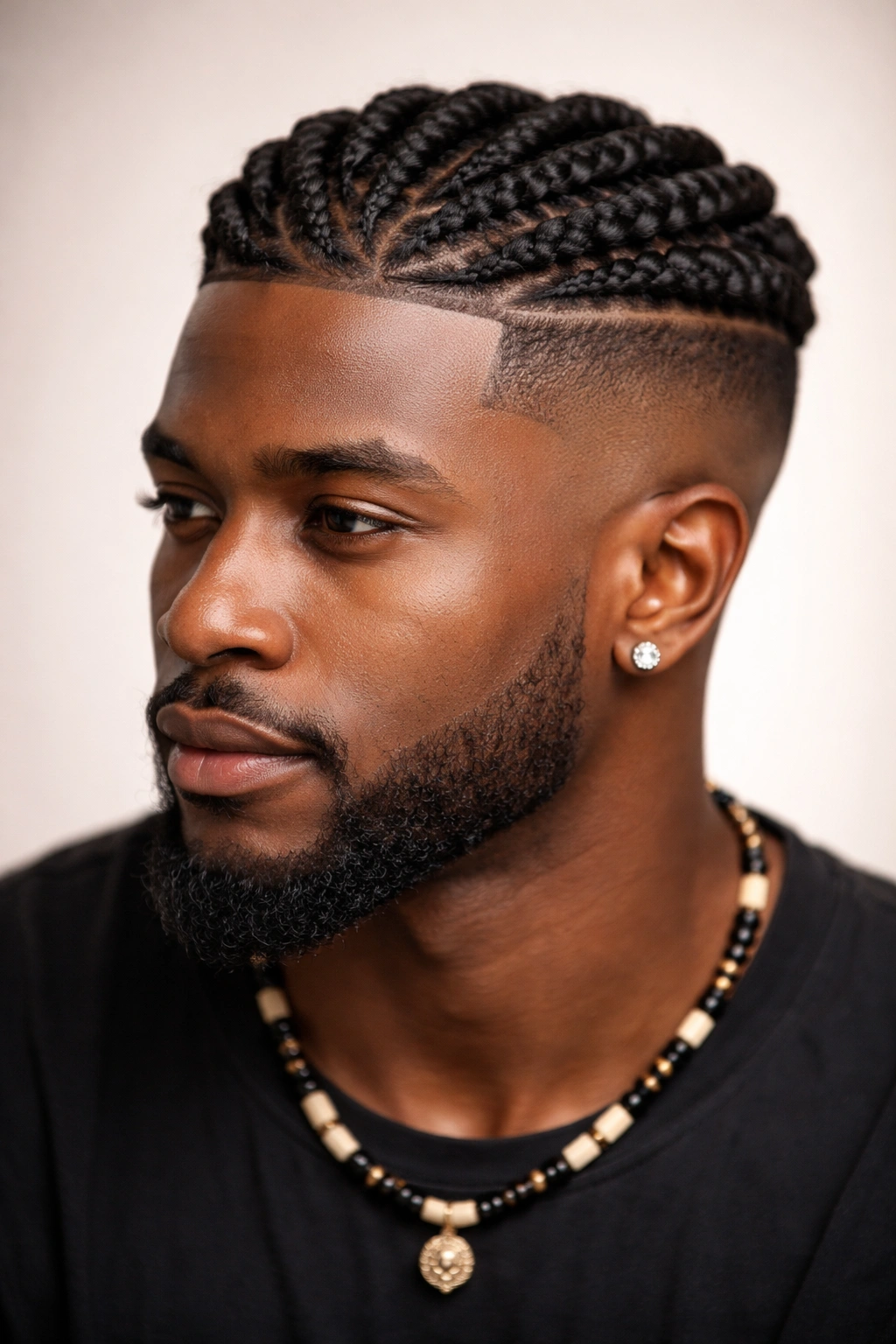
Koroso represents a sophisticated blend of braiding and clean design work. This style typically features thick, well-defined braids arranged in a crown formation across the top and back of the head, while the sides are shaved completely clean or carved with subtle patterns. The braids might be styled to create geometric formations when viewed from above, or arranged in flowing curves that complement the natural head shape. What distinguishes Koroso from other braided styles is the emphasis on negative space—the contrast between the substantial braids and the empty, sculpted areas around them creates powerful visual impact.
Creating the Optimal Braiding Structure
Building a striking Koroso requires careful planning of braid placement and size. Braids that are too thin risk looking delicate or sparse; braids that are too thick can overwhelm the head. The ideal thickness typically falls between a marker and a pencil’s diameter, creating substantial presence without appearing cartoonish. The number of braids varies—some men wear 4-6 major braids arranged in parallel lines, while others prefer circular arrangements that wrap around the head. Each stylist develops their own signature approach, so finding someone whose aesthetic speaks to you matters more than following a specific formula.
Styling Variations and Personal Adaptation
- Pure braids: Keep natural hair throughout for a clean, authentic appearance that shows hair health
- With beads: Weave glass beads, wooden beads, or decorative elements through the braids at intervals
- With extensions: Add synthetic or human hair to extend braid length beyond your natural hair length
- Side patterns: Work with your stylist to design complementary patterns in the shaved sections
- Wrap styling: Tie the base of your braids with thread or cord in contrasting colors for added visual detail
6. Flat Twists with Directional Pattern
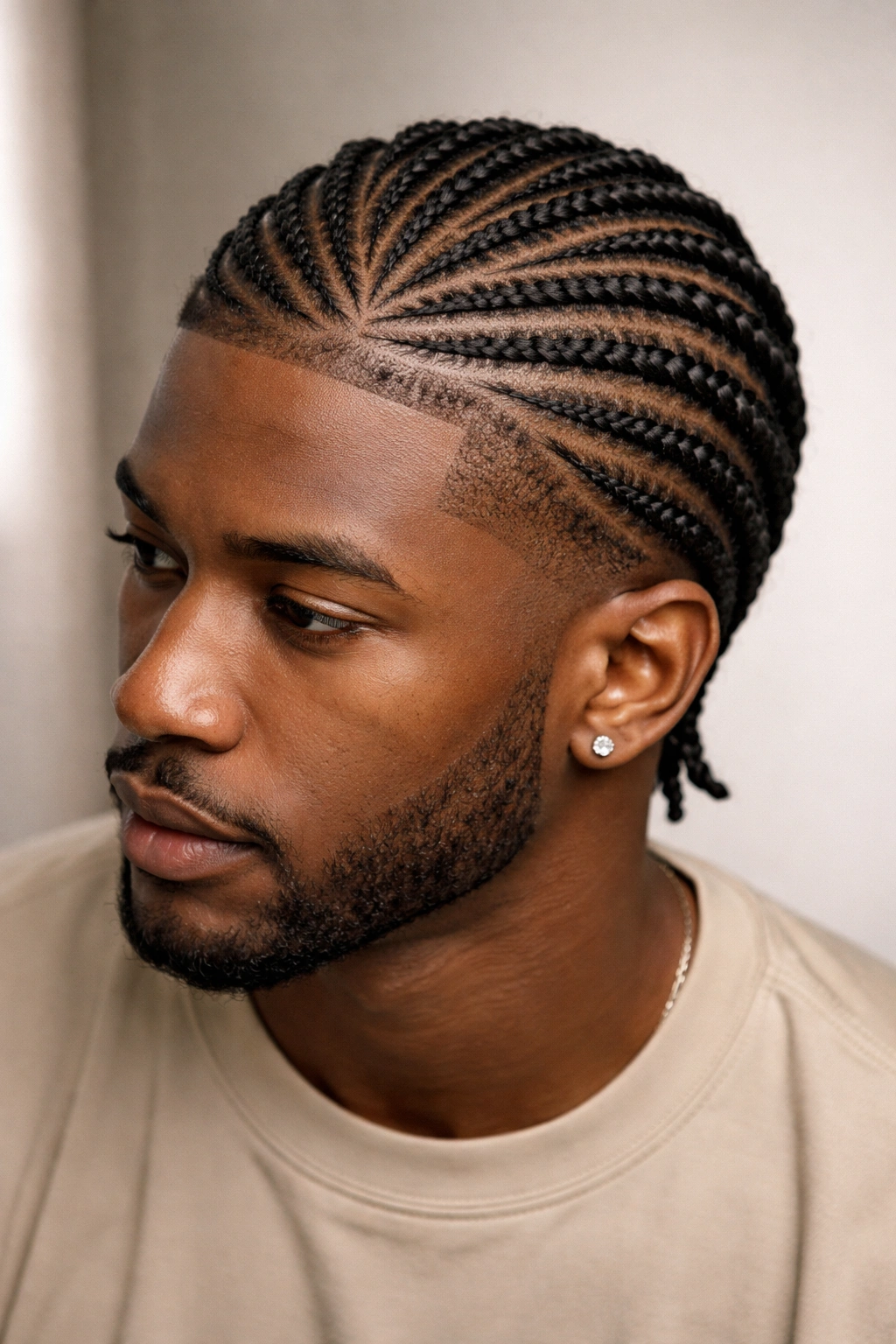
Flat twists offer a refined, artistic approach to hair styling that sits between braiding and natural texture display. Using two-strand twists held close to the scalp, a stylist creates patterns that flow across the head—these might follow wave patterns, circular formations, or linear arrangements. The twists sit flat against the scalp, allowing the individual sections between twists to remain visible and showcasing your natural hair texture. This style works particularly well for men with healthy, well-maintained natural hair who want a look that’s polished without feeling overly constructed.
The Technical Precision of Flat Twisting
Executing flat twists requires significant skill and patience from both stylist and client. Each twist must be made tight enough to hold shape for extended periods but not so tight that it creates tension on the scalp. The pattern itself requires planning—a stylist typically sketches the desired design before beginning work. Popular patterns include concentric circles emanating from the crown, radiating lines that follow the natural curves of the head, or wave patterns that flow from front to back. The spacing between twists matters enormously; consistent spacing creates visual harmony, while intentional variation creates movement and visual interest.
Maintenance and Longevity
- Flat twists typically last 3-4 weeks before requiring retightening or refreshing
- Sleep with a satin bonnet or scarf to prevent the twists from unraveling overnight
- Refresh twists every 5-7 days by gently retwisting sections that have loosened
- Apply light oil or twist cream to twists every other day to maintain shine and definition
- Wash twists gently in the direction they flow, using minimal manipulation to prevent loosening
- Worth knowing: The longer you maintain flat twists, the more refined they appear—they look best in weeks 2-4 of wear rather than immediately after installation
7. Shuku with Decorated Top Section
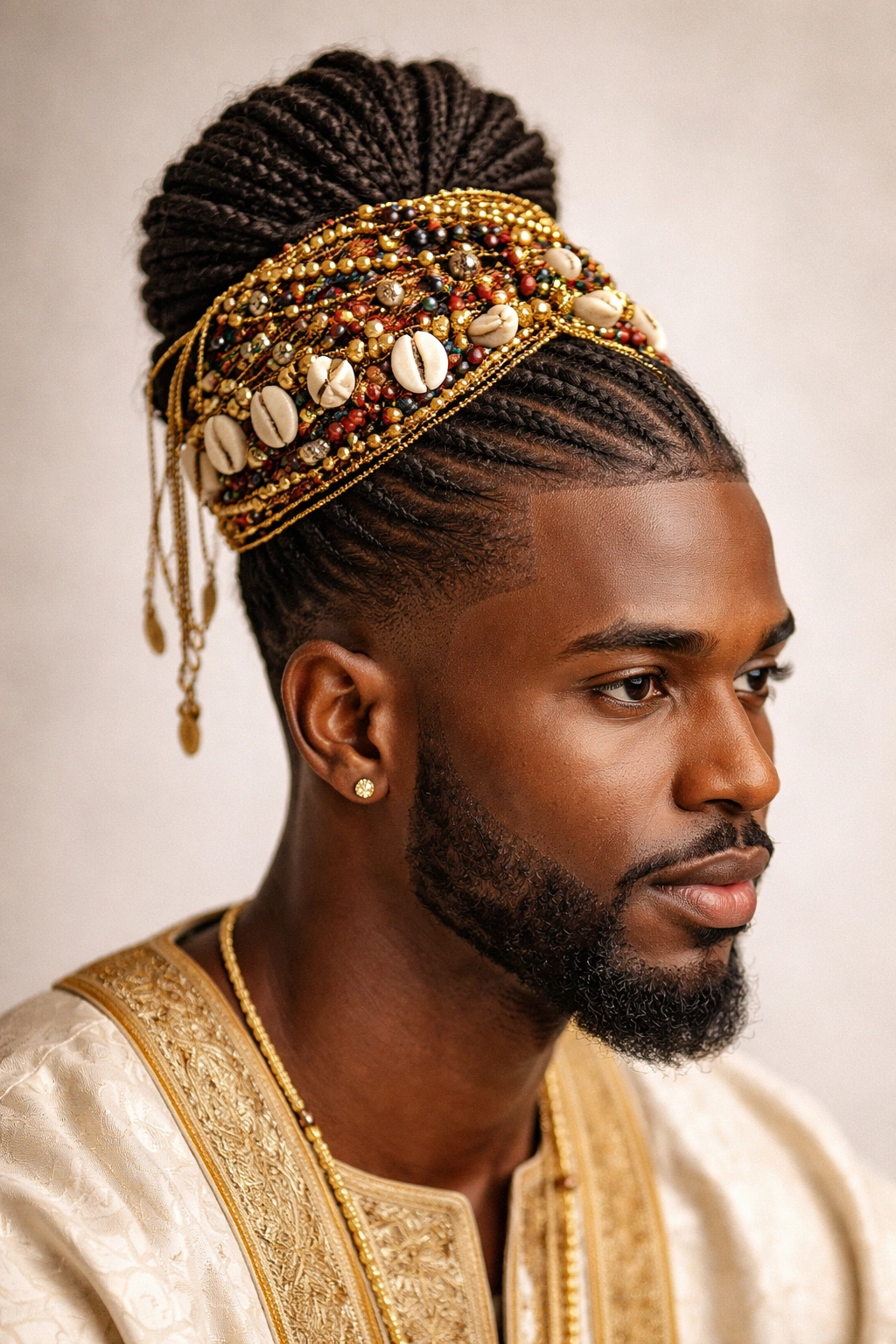
This variation transforms the basic Shuku by adding decorative elements to the crown itself. Rather than simply styling hair upward and securing it, adornments are incorporated directly into the crown structure. These might include beads worked throughout the gathered hair, metallic threads woven in, shells attached at specific points, or fabric elements integrated into the style. The effect is more ceremonial than everyday wear—think of this as the Yoruba men’s equivalent of crown jewelry, reserved for special occasions or worn as a statement piece by those who want their style to announce something significant.
Choosing and Incorporating Decorative Elements
The choice of adornments should reflect personal meaning rather than random decoration. Shells might reference ancestral connection to coastal communities, metals might honor warrior traditions, while beads in specific colors can carry personal or spiritual significance. Many men work with artisans who create custom pieces specifically designed to integrate into their hairstyle. The weight of decorations matters—they should be substantial enough to look intentional but not so heavy that they cause discomfort or tension on the scalp. Some practitioners learn to create their own decorative elements, turning the entire process into a meditative practice that honors ancestral craft traditions.
Installation and Care Considerations
- Secure beads using strong thread, passing through braid sections or wrapping around gathered hair
- Use lightweight materials if decorating an area that sits directly on the crown—weight distribution affects comfort
- Have decorative elements professionally attached rather than attempting this yourself unless you have experience
- Protect decorations when sleeping by wrapping the entire crown section loosely in cloth
- Plan for regular maintenance, as decorative elements may shift or loosen over time
- Pro tip: Photograph your completed look immediately after installation so you capture the fresh, pristine appearance before any natural loosening occurs
8. Cornrows with Contemporary Design
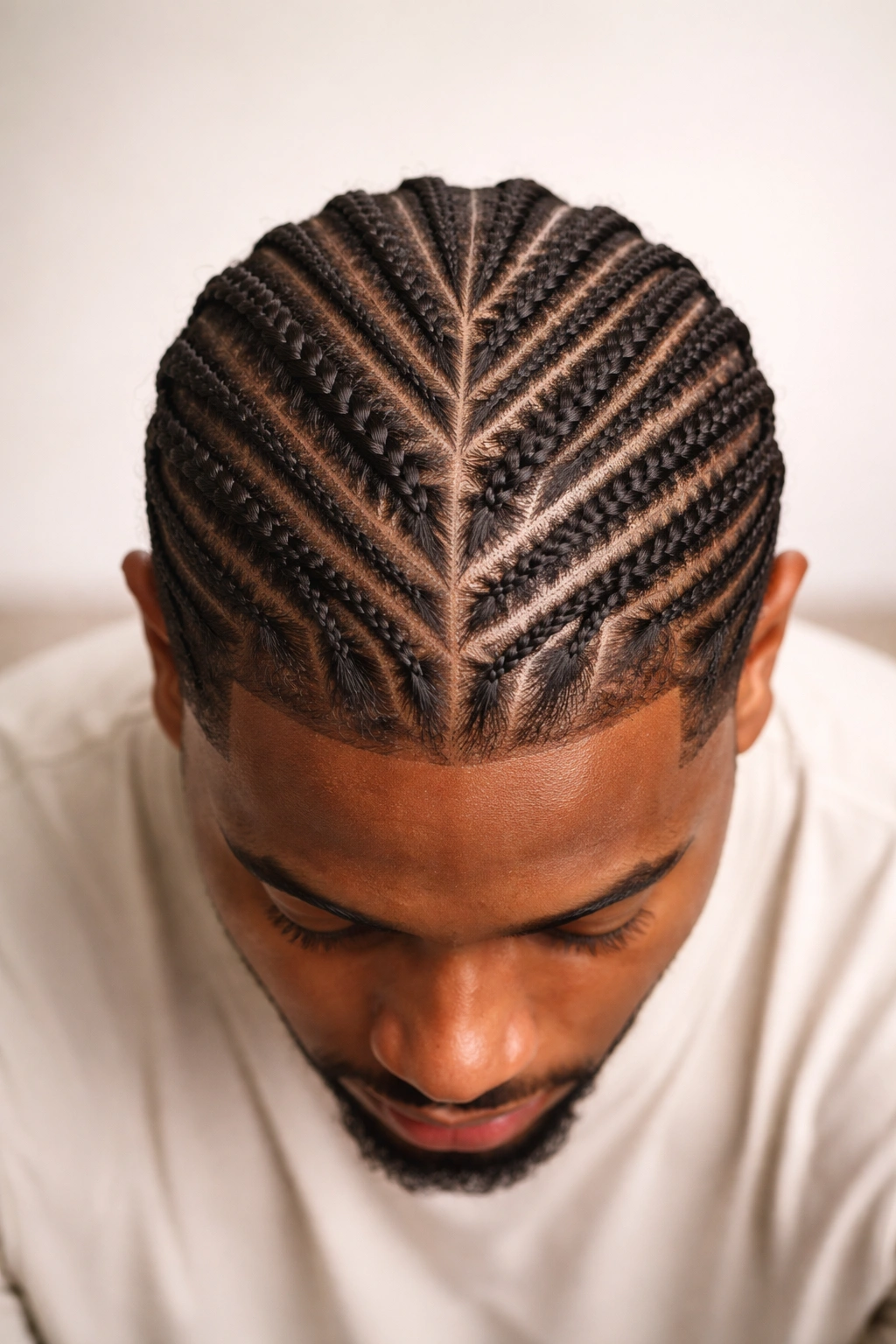
Cornrows—tight rows of braids that follow the scalp contours—represent perhaps the most versatile and accessible of traditional Yoruba hair practices. For men, cornrows are often worn in geometric patterns that cover the entire head, creating elaborate designs when viewed from above. A single pattern might incorporate 8-15 individual rows, each perfectly parallel or arranged in flowing curves, circles, or angular formations. What makes cornrows distinctly powerful for men is the combination of symmetry and artistry—a well-executed cornrow pattern demonstrates technical mastery while serving as a walking piece of visual art.
Planning and Executing Your Cornrow Design
Before installation, work with your stylist to plan your exact design. Some men bring reference photos or drawings; others collaborate with their stylist to create something entirely new. The challenge lies in translating 2D design concepts into 3D scalp reality—curves that look smooth in a drawing might need adjustment when applied to a round head. Skilled cornrow artists develop an intuitive sense for how designs will appear and can adapt on the fly. The time investment varies dramatically by design complexity—simple parallel rows might take 2-3 hours, while intricate geometric patterns can require 4-6 hours or more.
Design Options and Styling Variations
- Parallel straight rows: Classic design with rows running from front to back or side to side, timeless and always appropriate
- Curved waves: Rows that flow in smooth curves across the head, more artistic and visually dynamic
- Circular or spiral patterns: Rows radiating from the center crown outward, creating hypnotic geometric effect
- Angular geometric designs: Triangular, diamond, or abstract patterns that showcase pure artistic vision
- Mixed thickness: Combine thick braids with thinner lines to create depth and visual complexity
- Bead integration: Add beads strategically throughout the cornrows for color, texture, and personalized meaning
- Longevity: Well-done cornrows last 4-6 weeks before requiring refreshing, during which time the design remains striking and structured
Final Thoughts
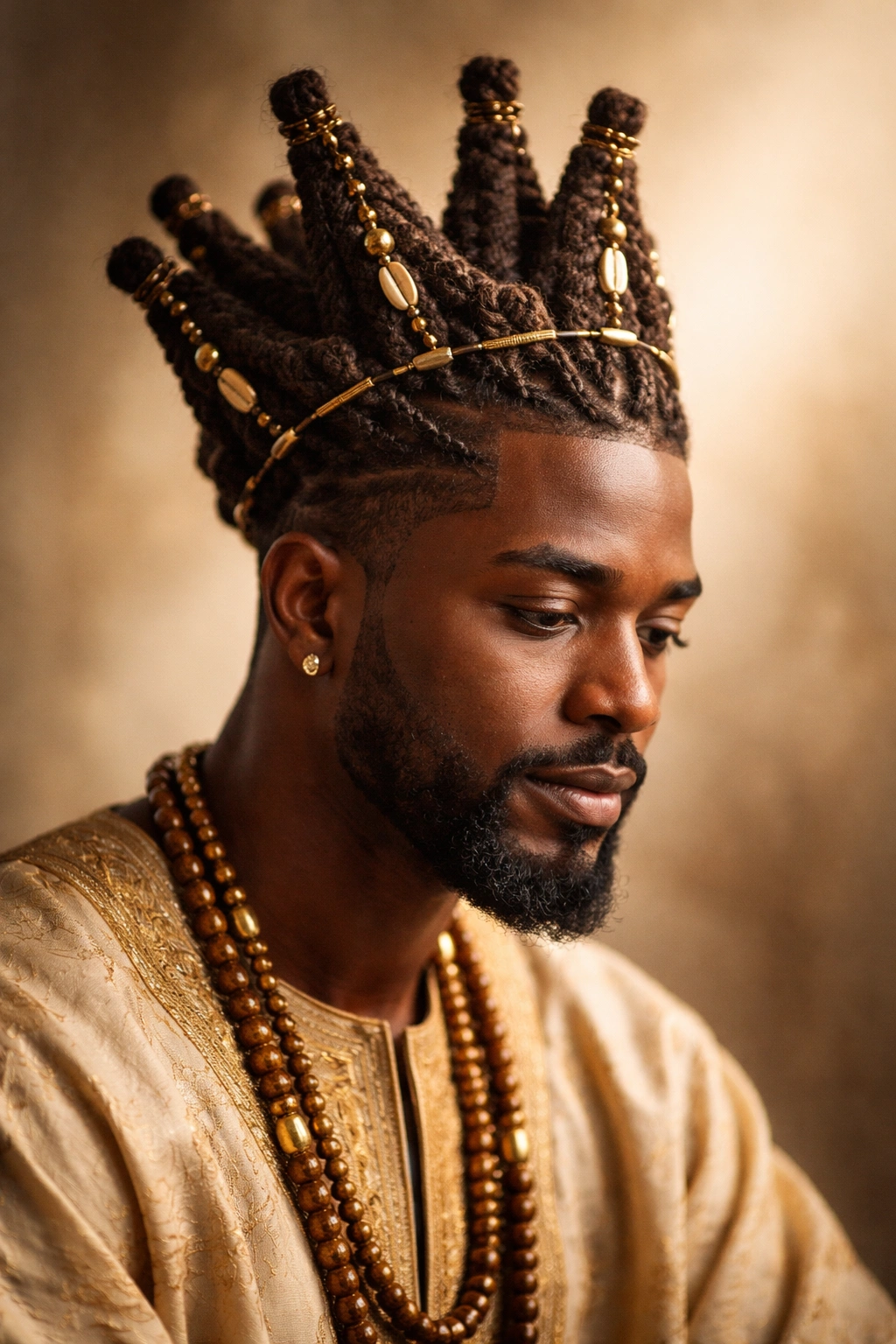
These eight traditional Yoruba hairstyles represent more than grooming choices—they’re acts of cultural continuity and personal self-determination. Each style carries histories, meanings, and artistic traditions that extend back generations while remaining completely contemporary. The decision to wear your hair in one of these styles is ultimately a choice about who you are, what you value, and how you want to move through the world.
What ties all these styles together is the principle of intentionality. Yoruba hair practices have never been about convenience or accident; they’ve always demanded active engagement, artistic vision, and connection to something larger than simple personal preference. When you choose to wear Shuku, Irun Gele, locs, or cornrows, you’re participating in a living tradition that honors both individual creativity and collective cultural identity.
Finding a stylist who genuinely understands these traditions makes an enormous difference. Look for practitioners who can discuss the cultural context, explain the technical approaches, and collaborate with you to create something that feels authentically yours. Your hair is your crown—treat the process of styling it with the same care and intention that traditional Yoruba cultures have always brought to this essential practice.
