



Fulani twists have long been celebrated as a versatile, protective style that works beautifully on textured hair, and 4C hair specifically has the perfect density and curl pattern to showcase these intricate braids with real elegance. The tight coils of 4C hair create natural dimension and texture that makes even simple twists look sophisticated and dimensional—no added filler needed. Unlike looser curl patterns, 4C hair grips the twist without slipping, which means your style stays crisp and defined for weeks.
What makes Fulani twists so appealing is the endless room for personalization. Whether you prefer thin delicate twists or thick statement braids, whether you want minimal accents or full decorative styling, there’s a version that matches your vibe. The style also sits somewhere between a protective style and a statement look—it protects your hair while letting you express creativity through placement, thickness, accessories, and overall silhouette.
The challenge, though, is knowing which specific approach actually flatters your hair texture, face shape, and lifestyle. Thin twists require different maintenance than thick ones. Some placements suit certain face shapes better. Some versions work for active lifestyles while others shine for special occasions. Understanding the practical differences between these variations is what separates a Fulani twist style that gets compliments from one that just feels flat or requires constant touch-ups.
1. Classic Thick Fulani Twists with Gold Cuffs
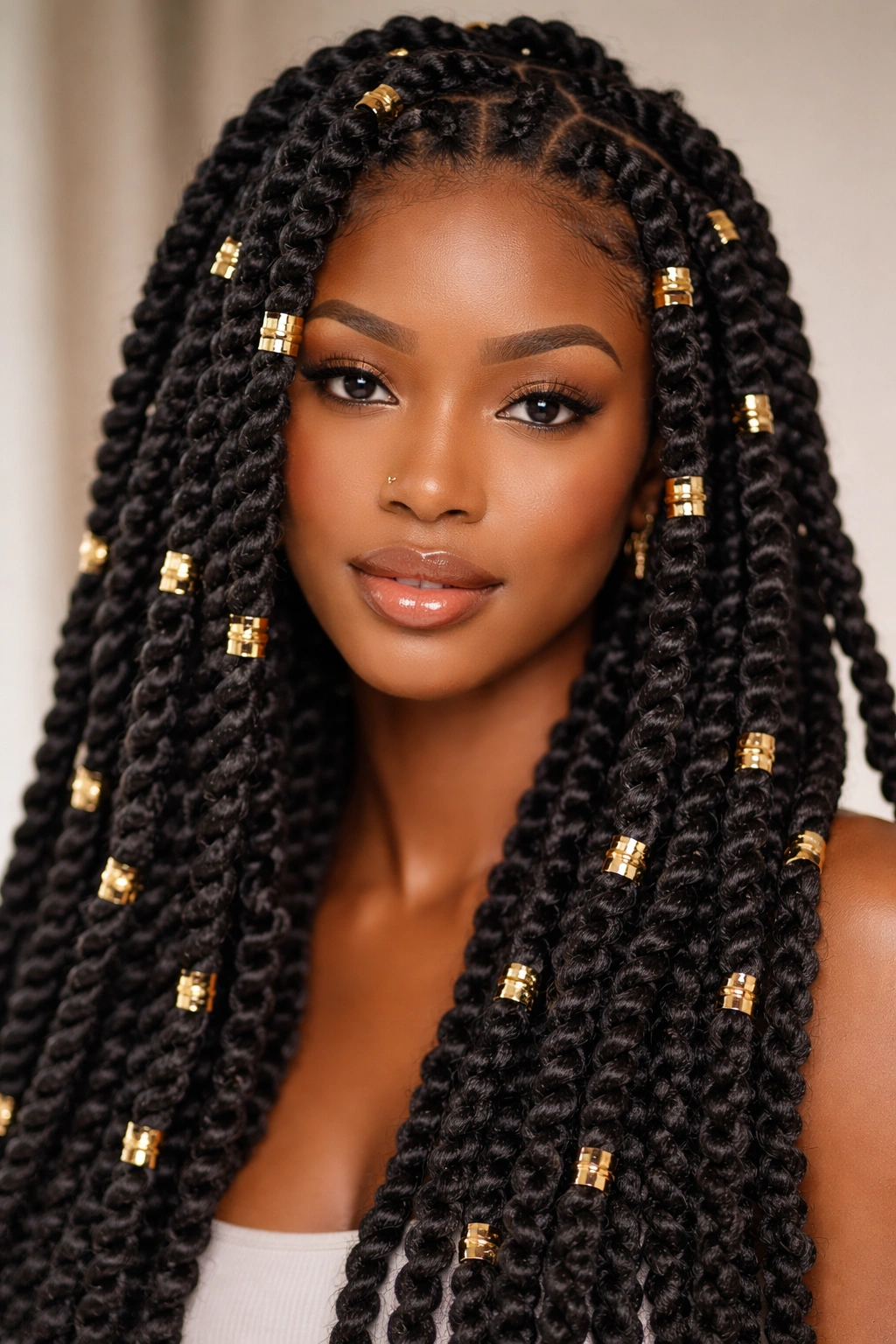
Thick Fulani twists are the bold statement version of this style—they’re chunky, they’re visible from across the room, and they make an immediate impression. On 4C hair, thick twists look particularly voluminous and lush because the natural curl creates a fuller appearance than you’d get on straighter hair. Most stylists recommend between 8 and 15 thick twists depending on how much coverage you want and how thick each individual twist is.
Why This Style Commands Attention
The thickness of these twists creates architectural presence. Each twist is substantial enough to catch light and shadow, which gives the style depth and dimension. Gold cuffs amplify that impact by adding a metal gleam that complements deeper skin tones beautifully. The warmth of gold doesn’t compete with your hair—it enhances it. Beyond aesthetics, thick twists are genuinely practical: they hold their shape longer than thinner versions, they require less frequent washing and retwisting, and they’re faster to install because there are fewer individual sections to manage.
Styling and Maintenance Fundamentals
- This style typically lasts 4 to 6 weeks with proper care before you’ll notice frizz at the roots and ends starting to unravel
- Wash your twists every 7 to 10 days using a lightweight, sulfate-free shampoo and focusing on the scalp—don’t over-manipulate the twists themselves
- Gold cuffs slide on easily once your twists are complete; aluminum or stainless steel options work too if you prefer something hypoallergenic
- At night, tie your twists loosely with a silk scarf or sleep on a silk or satin pillowcase to minimize frizz and preserve definition
- A light oil or moisturizing spray on the surface of your twists between washes keeps them looking fresh without weighing them down
Pro tip: Ask your stylist to create the twists with slightly less tension than box braids—twists actually look better when they’re not pulled aggressively tight because the natural curl of 4C hair does the gripping work for you.
2. Thin Fulani Twists with Beaded Accents
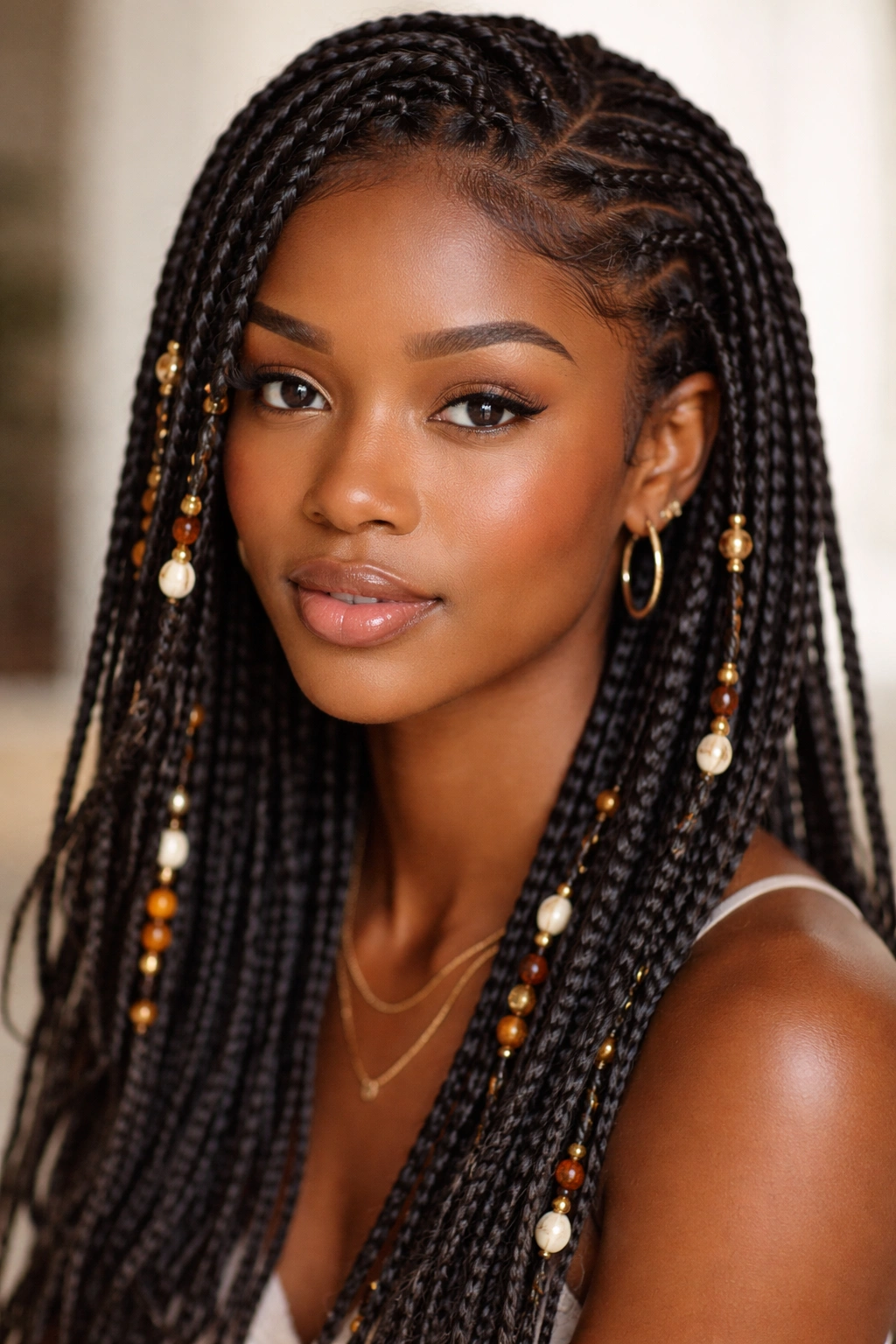
Thin twists create an entirely different energy: they’re delicate, intricate, and feel almost jewelry-like, especially when paired with wooden or glass beads. On 4C hair, thin twists still maintain beautiful definition without looking wispy because the curl pattern is dense enough to fill space. Most people who go thin typically get 30 to 50 twists depending on their head size and desired look.
The Appeal of Fine Detail Work
Thin twists allow for more creative placement and more visible scalp design if you want that element. They’re easier to style into updos and ponytails because you have more flexibility with smaller sections. Beads add visual interest and can be distributed strategically—some people bead every other twist for a scattered look, while others create patterns. Wooden beads pair naturally with protective styling, while metallic beads feel more glam and intentional.
Making Thin Twists Last
- These require slightly more attention because the ends can unravel more easily than thick twists; expect a 3 to 5 week lifespan before maintenance becomes noticeable
- When you bead your twists, leave a small section of unbeaded hair at the end of each twist to prevent the ends from opening up
- Beads can be threaded onto already-completed twists, so you can add, remove, or change them without redoing your whole style
- Night care is essential with thin twists: a silk bonnet or head scarf is non-negotiable because thin twists lose definition faster from friction
- Check your ends weekly and tighten any that are starting to fray by untwisting the last half-inch and retwisting tightly
Worth knowing: Thin twists actually show off the texture of 4C hair better than any other version because you can see the individual curl pattern within each twist. It’s technically a protective style but visually it’s all about celebrating your natural texture.
3. Fulani Twists with Shell Cowrie Details
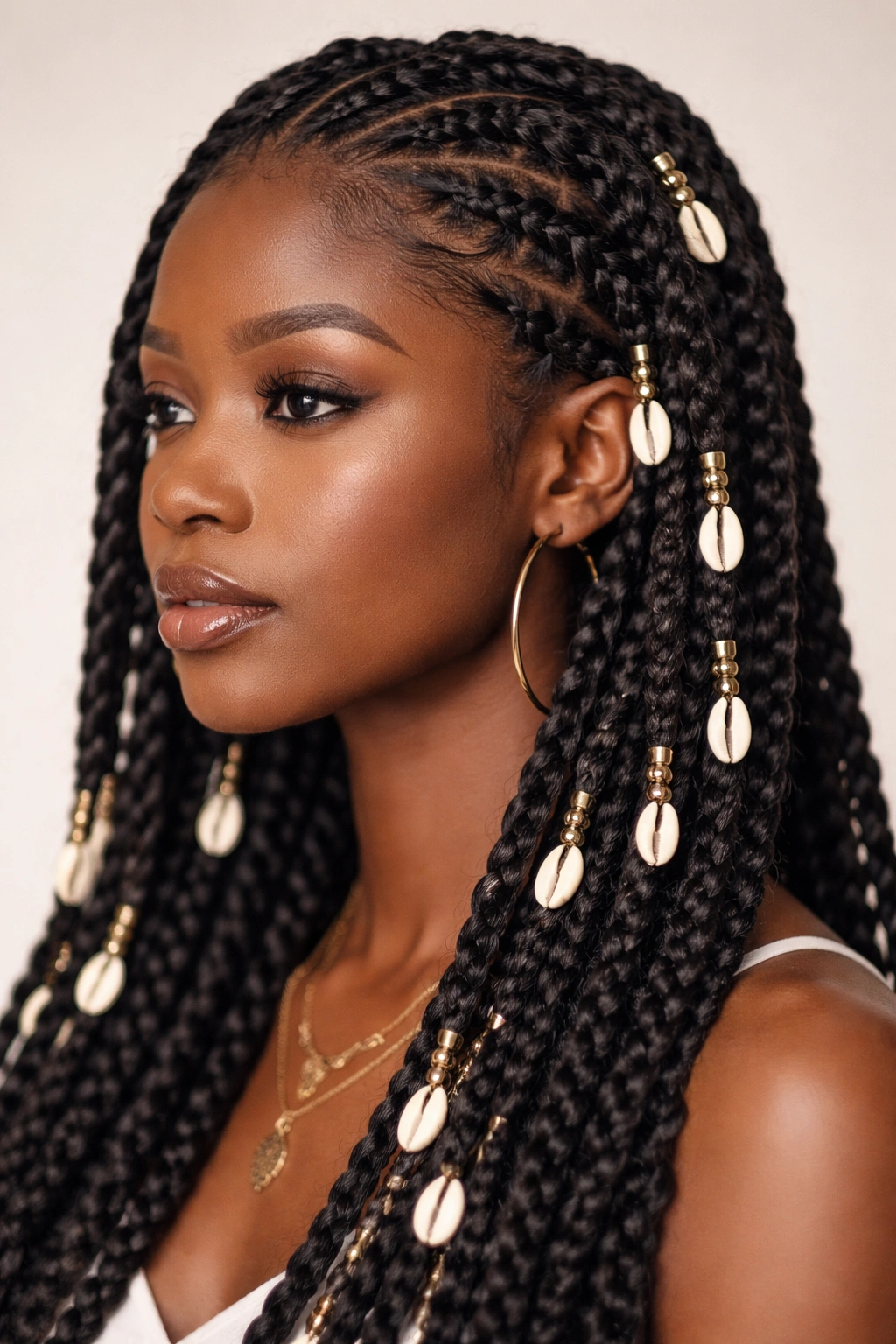
Shell accents take Fulani twists into heritage territory—cowrie shells have deep cultural significance in many African traditions, and wearing them in your hair is both a style statement and a cultural acknowledgment. Shells can be attached along the twists using strong thread, thin string, or special shell holders that clamp onto the braid. On 4C hair, the natural curl holds the shells securely without them sliding or rotating constantly.
Choosing and Placing Shells
Real shells add weight and authenticity but can be pricey—resin shells or cowrie-inspired charms offer the same visual impact at lower cost. Most people place shells clustered together rather than scattered, creating a focal point (like along one side of the head or gathered around a ponytail). The placement depends on your vision—some people create a vertical line of shells down the center, while others keep them contained to one section for asymmetrical styling.
Practical Considerations
- Shells add actual weight to your twists, which is fine as long as you’re not pulling your hair back too tightly—this style works better with twists that start a bit loose at the roots
- Salt water and chlorine can dull shells, so be cautious in beach or pool environments; a protective rinse before and after helps
- Shells can snag on clothing when you dress, so consider your neckline and fabric choices
- Washing shells requires gentle care—use a soft cloth and avoid harsh scrubbing, which can scratch them
- This style usually calls for thicker or medium-thickness twists to properly support the weight of the shells
Real talk: This is more of a special-occasion or weekend style rather than an everyday protective style, mainly because the shells require extra care and the added weight can cause tension headaches if worn daily. Save it for when you’re looking to make an intentional statement.
4. Two-Tone Fulani Twists (Color Blend)
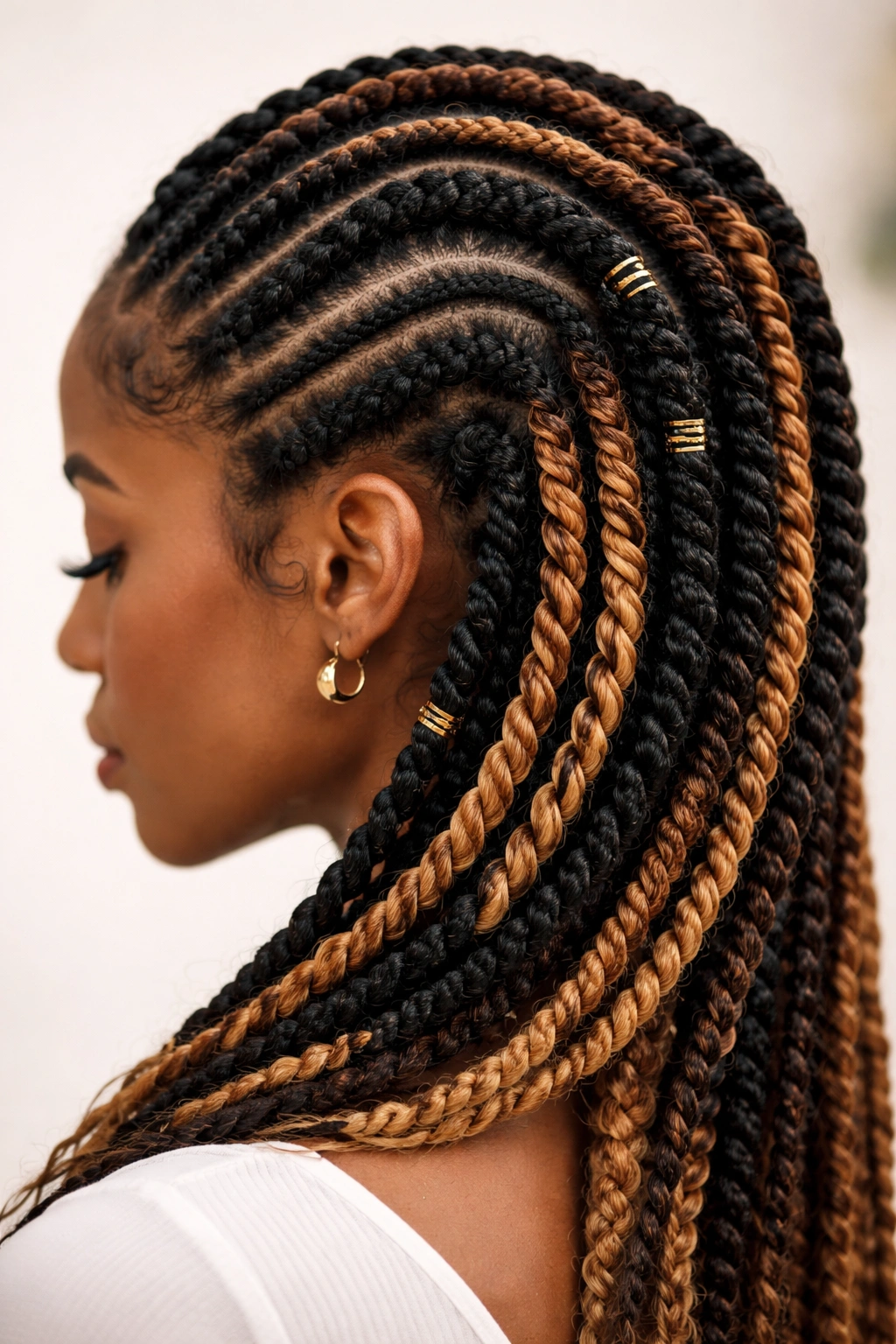
Two-tone twists happen when you use two different colored hair extensions while creating the twists—typically your natural 4C hair as one color, plus a contrasting extension color twisted together. The effect is striped, dimensional, and visually striking. Popular color combinations include black with blonde, black with burgundy, or natural with rose gold. On 4C hair, the contrast shows beautifully because the curl pattern naturally separates the two colors slightly, creating definition.
Creating the Two-Tone Effect
Your stylist will alternate between sections of your hair and sections of the contrasting extension color while twisting, so each completed twist displays both colors in stripes. The ratio of your hair to extensions determines how much of each color shows—50/50 creates equal stripes, while 60/40 skews the look toward one color. The color you place closer to your scalp affects how you perceive the overall effect (more of your color visible = more natural looking; more extension color visible = bolder statement).
Maintenance and Longevity
- Two-tone twists work best with medium to thick twist sizes; thin twists with two colors can look muddy or less defined
- Color-treated extensions fade over time and with washing, so if you want the color contrast to stay sharp, plan on this style lasting 4 to 5 weeks before washing dulls the brightness
- Wash every 8 to 10 days using cool water to preserve the color in the extensions
- Between washes, use a color-safe, lightweight spray-on moisturizer to keep both colors vibrant
- The contrast can sometimes make individual strands look drier or lighter—this is partly visual (the color contrast creates that illusion) and partly real, so deep conditioning the night before getting this style helps
Key detail: The skill of the stylist matters more with two-tone twists than with single-color versions because uneven color placement or sloppy alternation makes the whole style look amateur. Find someone comfortable with color technique.
5. Fulani Twists with Baby Hair Patterns
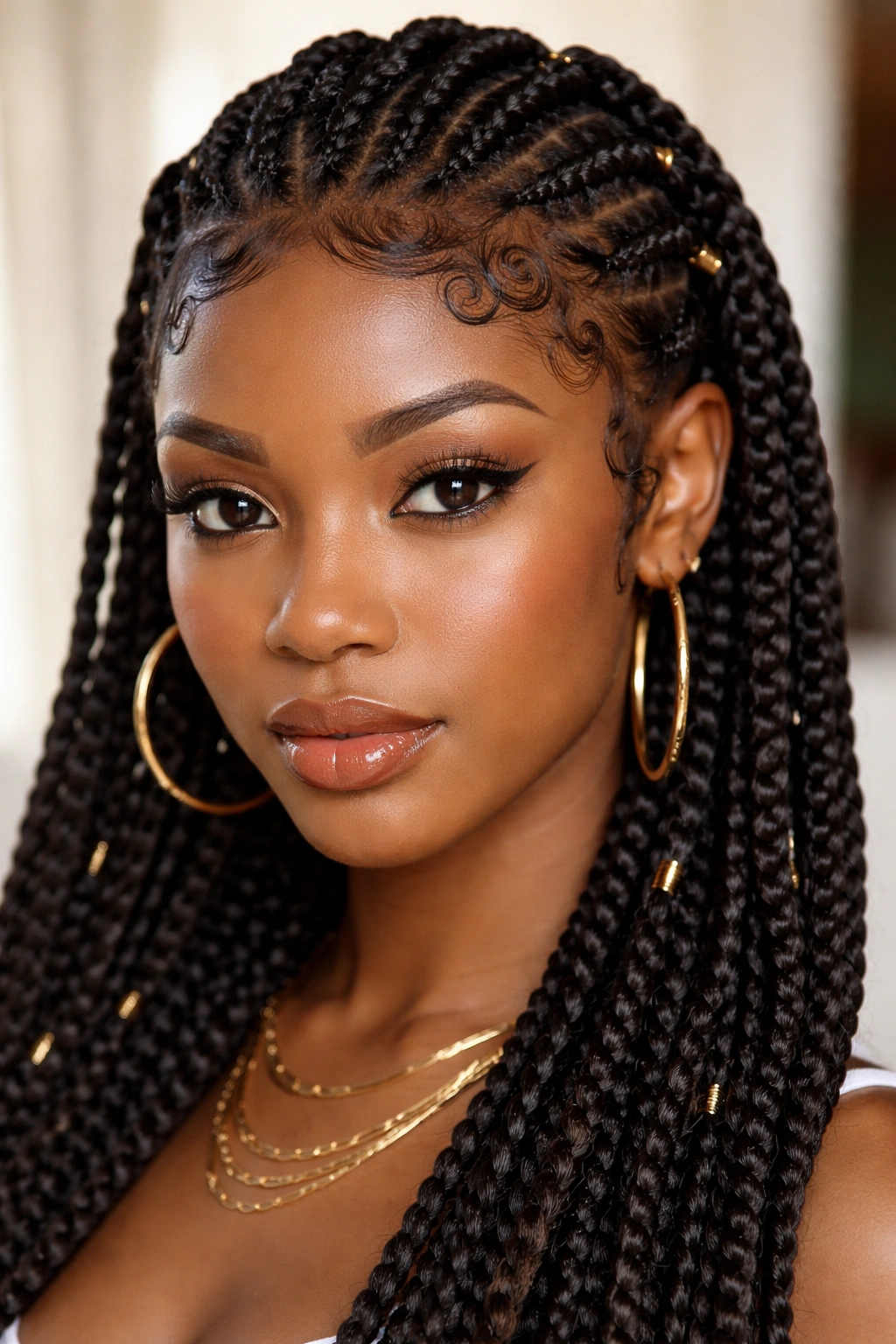
Baby hair refers to the small, fine hairs along your hairline and temples. Styling these deliberately—sweeping them into patterns, swirls, or defined edges using gel—transforms the entire look of your twists from casual to intentional. On 4C hair, baby hair can be coarser and more visible than on other hair types, which means clear, sculpted patterns actually look sharper and more refined. This style works beautifully with almost any twist thickness.
Designing Your Baby Hair Pattern
Common patterns include spirals on both temples, a triangular shape pointing down the center, or sculpted waves that follow your natural hairline. The key is using a strong-hold gel (not so much that it looks shiny and heavy, but enough that the pattern stays) and taking time with application. Some people create their pattern while their twists are being installed, while others add the pattern later once the twists are done. Adding baby hair work to an existing twist style is called “styling on top” and takes about 30 minutes.
Preserving Your Baby Hair Edge Work
- Baby hair gels work best when applied to clean, slightly damp hair—damp enough that the gel spreads smoothly but not wet enough that it drips
- Use a fine-tooth comb or an edge brush to sculpt and smooth
- Your pattern will last longest if you apply just enough gel and then let it air-dry rather than using heat
- If you sweat during workouts or have an active lifestyle, your pattern will last 5 to 7 days before needing re-application; less active = potentially 2 to 3 weeks
- Avoid touching or running your hands through your hairline during the day—friction breaks down the pattern fastest
- When you wash your twists, protect your edges by wrapping them with a scarf or avoiding direct water spray on your hairline
Insider note: Baby hair styling elevates even the simplest Fulani twists. It’s the difference between “I have twists” and “I have a styled look.” The time investment is small but the impact is huge.
6. Fulani Twists in a High Puff
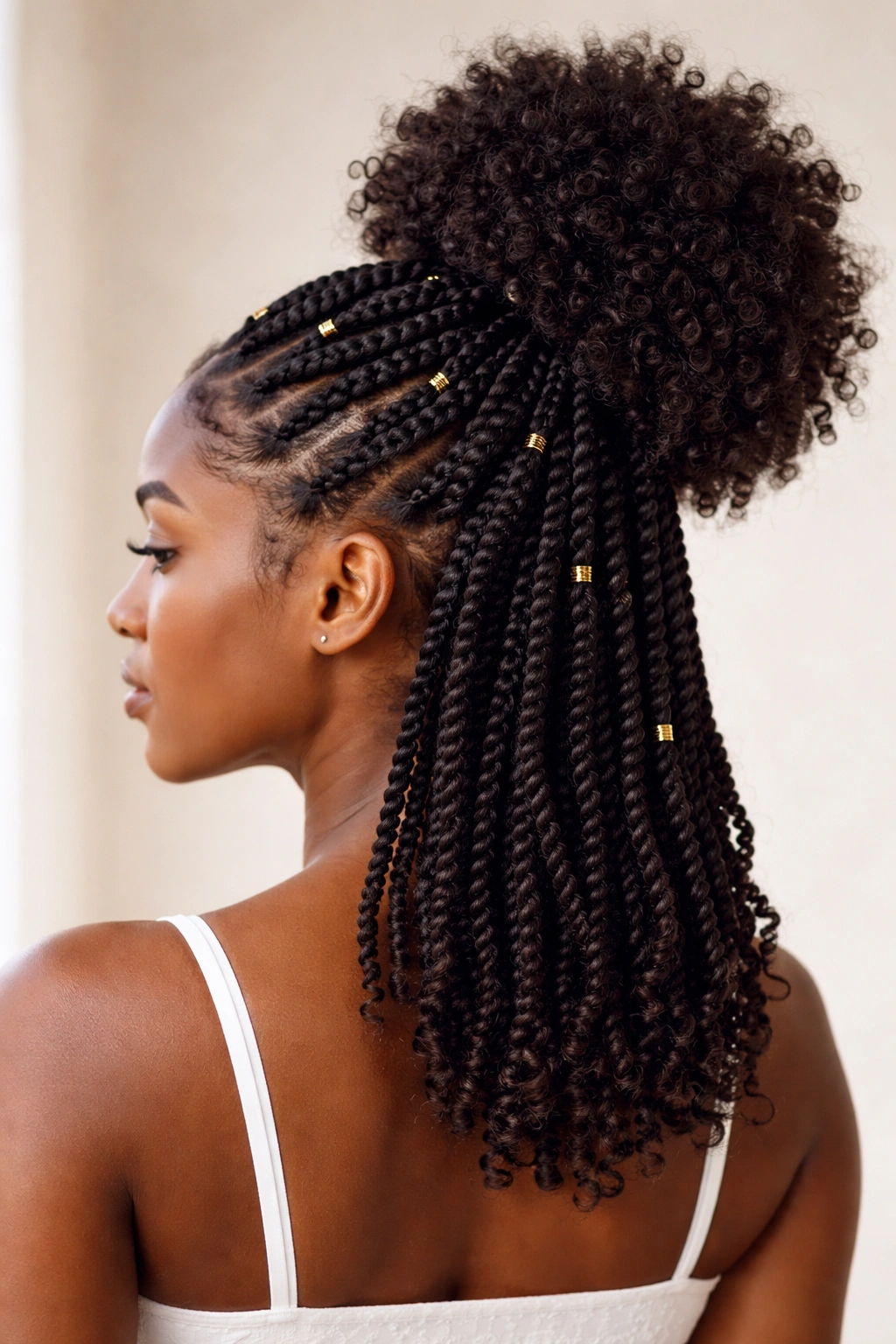
Taking your Fulani twists up into a high puff (ponytail) creates a totally different silhouette—it’s playful, active, and shows off both your twisted pattern and the back of your neck and sides. On 4C hair, a twist puff looks fuller and more voluminous than a straight-hair puff would, especially if you use all of your twists and gather them at the crown rather than creating a skinny ponytail. This is an excellent style option for people who want protective styling but also want daily style versatility.
Building a Puff That Stays Put
The key to a long-lasting puff is creating a secure base without pulling too tightly at the roots. Use a strong elastic or a hair tie designed for thick, textured hair rather than thin rubber bands (which snap and cause breakage). Gather all your twists at your desired height and secure them, then gently fluff the puff by loosening it slightly from the elastic and arranging the twists so they radiate outward. Some people add filler hair (matching colored yarn or hair extensions) inside the puff to create more fullness, while others rely on the natural volume of their twists.
Puff Sustainability
- This style works best with medium to thick twists because thin twists create a puff that looks sparse and small
- Your puff lasts as long as your twists hold (3 to 6 weeks), but the base where you gather the elastic might loosen after 2 to 3 weeks; retightening with a new elastic is an easy refresh
- Sleep with your puff loosely wrapped or in a silk bonnet to preserve the fluffiness
- You can take your puff down at night to let your scalp breathe and reduce tension, then gather it back up the next day—the twists don’t unravel just from being released
- This is genuinely a protective style with bonus versatility because you can wear your twists down on some days and puffed on others
Pro tip: A puff looks fuller and more intentional if you section off a thin piece of hair at the front of your head and leave it down, creating a face-framing element. It softens the look and adds sophistication.
7. Fulani Twists with Wrap Around Style
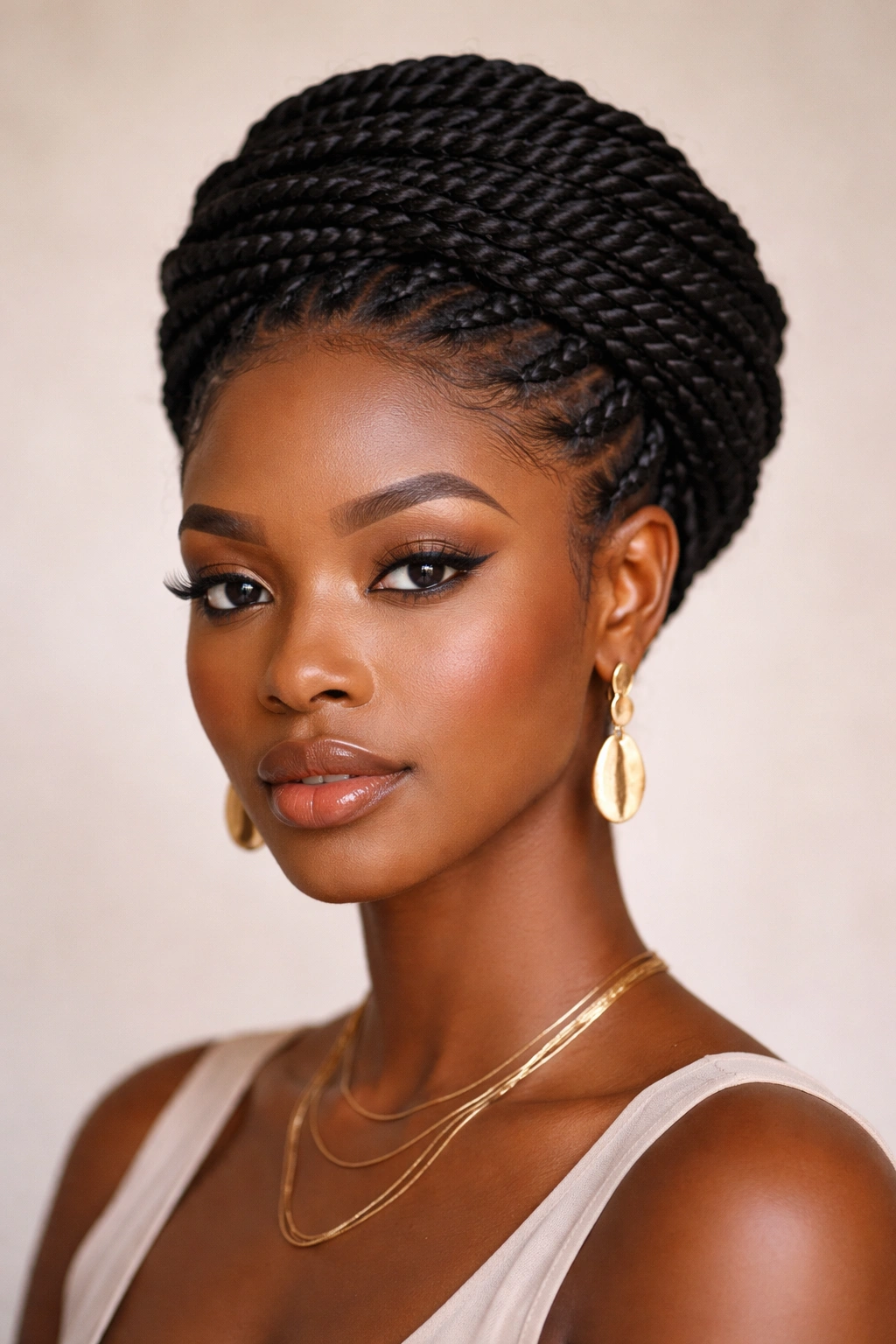
The wrap-around style involves taking your twists and literally wrapping them around your head like a crown or halo. The twists start at one section (usually behind one ear) and wrap clockwise or counterclockwise around the entire head, pinning the ends underneath or tucking them into the wrapped sections. On 4C hair, twists grip securely when wrapped because the curl pattern naturally holds them in place without them slipping or unraveling.
Creating the Wrap Effect
This requires longer twists—shorter twists won’t reach far enough to wrap completely around. Your stylist can either create extra-long twists with this wrap style in mind, or you can wrap existing twists (if they’re long enough) after they’re done. The wrapping takes about 15 to 20 minutes but transforms the whole aesthetic from “twists down” to “twists styled as an updo.” You can wrap all your twists or just a section—some people wrap twists from the front and leave the back down for a half-up look.
Making the Wrap Last
- Use bobby pins designed for textured hair (thicker, grippier pins) to secure the wrapped sections; regular pins slip out easily
- The wrap creates slight tension that’s usually fine for a few days, but if you experience any scalp discomfort, that’s your signal to take it down and rewrap more loosely
- This style tends to last 2 to 3 weeks before the wrapped sections start slipping and need repositioning
- Sleeping with a wrap-around style works better with a silk bonnet than with a scarf because the bonnet keeps everything contained
- Taking the wrap down and rewrapping is easy and takes just a few minutes, so you can alternate between wrapped and unwrapped versions throughout your twists’ lifespan
Worth knowing: This style photographs incredibly well and looks polished for any occasion—professional settings, date night, events. It elevates your twists from everyday to special without needing to start over.
8. Fulani Twists with Side Part and Geometry
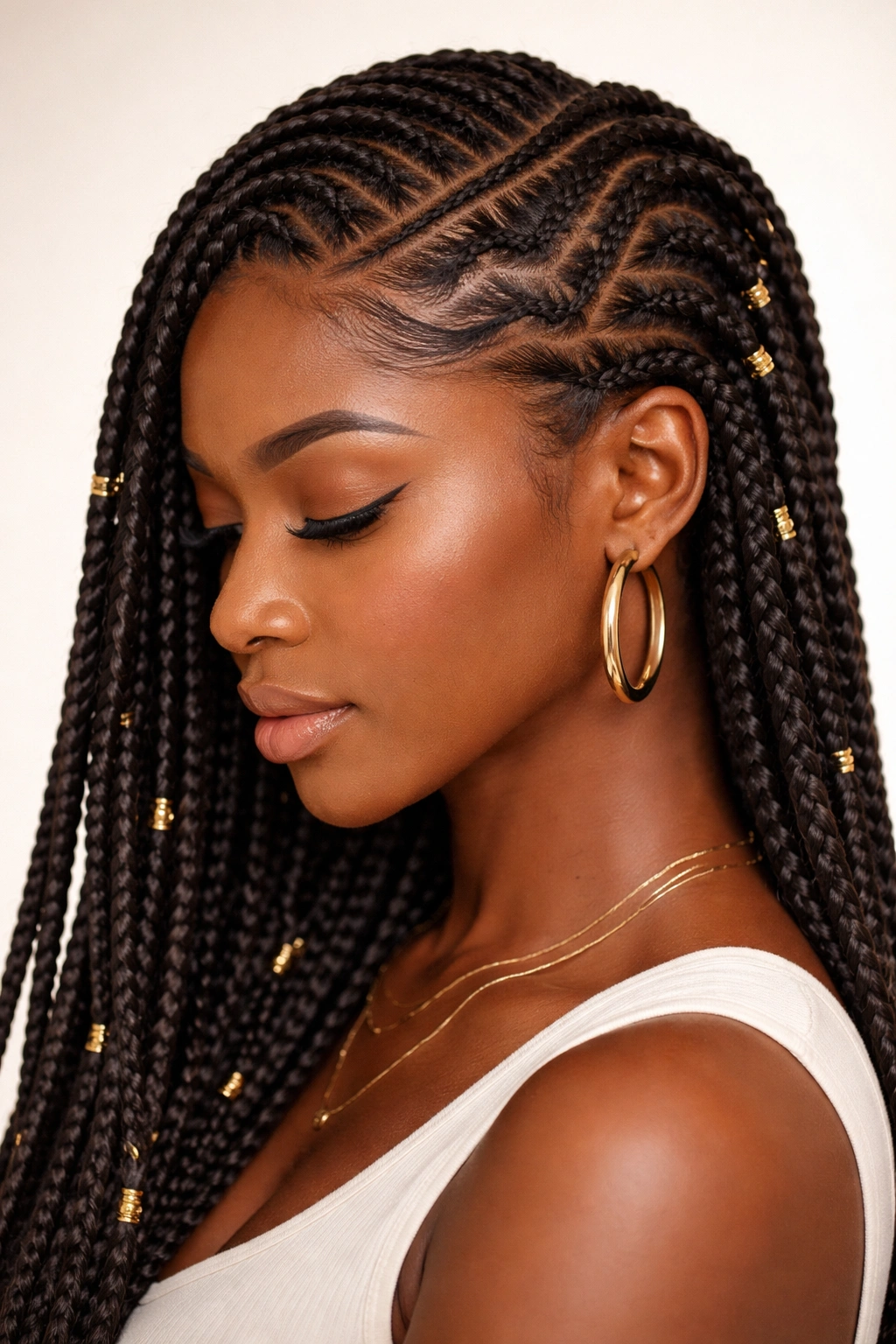
A geometric or intentional side part combined with Fulani twists creates a sharp, modern look. Instead of a center part (the default), you create a dramatic side part, and you can make that part line geometric rather than straight—curved lines, angles, or zig-zags. On 4C hair, the contrast of sculpted partlines against the defined texture of your twists creates striking visual geometry. This pairs especially well with medium to thin twists because the partlines show up clearer.
Designing Your Part Geometry
The simplest geometric part is just a sharp diagonal line instead of a straight vertical one. More complex designs include zig-zag parts, curved lines, or stair-step patterns. Your stylist creates these with a fine-tooth comb and mousse or edge control during installation, sculpting the exposed scalp into the shape you want. The design becomes more visible over time as the twists mature and compress slightly. Some people add cornrows along the parting lines for extra dimension and to accentuate the geometric design.
Longevity and Maintenance
- Geometric parts stay crisp for about 2 to 3 weeks before the twists’ natural settling slightly obscures the sharp lines
- Once the lines soften, you can either restyle by re-parting, or you can let them blur intentionally for a more casual, lived-in look
- Tight partlines can occasionally cause tension headaches; if you notice that, ask your stylist to create slightly wider partlines on your next install
- Sleep on a satin or silk pillowcase to preserve the partline crispness as long as possible
- You can enhance fading partlines by gently combing the exposed scalp to lift away any frizz and revealing the line again
Key insight: Geometric parts turn a standard protective style into a creative statement. It’s a detail that most people notice subconsciously, registering your look as “intentional” and “styled.”
9. Fulani Twists with Middle Part and Shoulder-Length
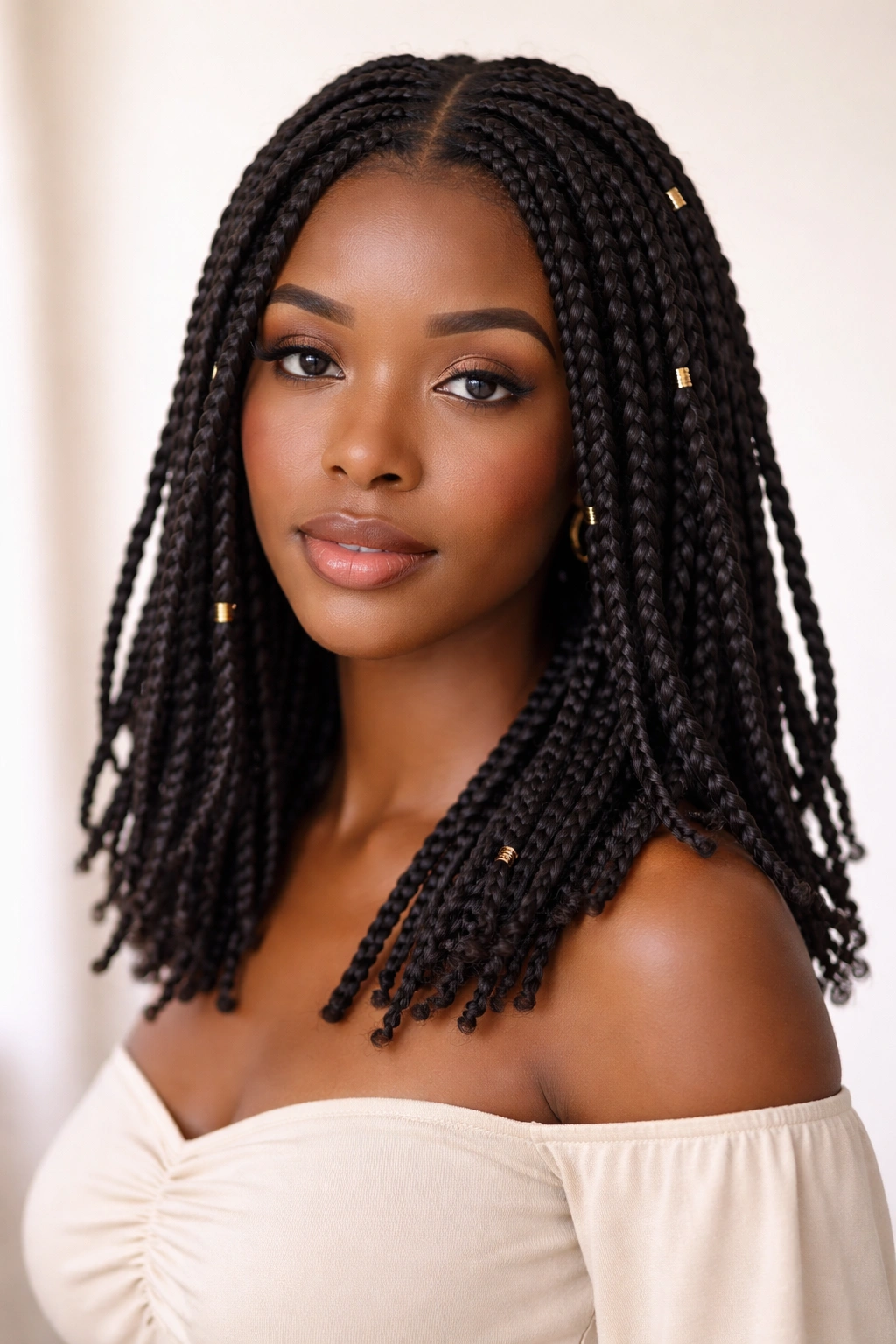
Middle-parted Fulani twists have a balanced, classic feel—the center part draws the eye straight down the middle, and shoulder-length twists (as opposed to longer lengths) feel more wearable for everyday life. Twists that end around collarbone or shoulder length create movement when you walk or turn your head, but they’re short enough that they won’t get caught in jacket zippers or backpack straps. On 4C hair, shoulder-length twists give you the protective-style benefits while still feeling manageable and lightweight.
Deciding on Length and Thickness
For shoulder-length twists to feel proportional, medium to thick twists work better than very thin ones (thin twists at shoulder length can feel wispy). Most people opt for 12 to 20 twists at this length and thickness level to ensure good scalp coverage without overwhelming density. The middle part naturally reads as more formal or polished than other parting options—it works for professional settings, events, and anytime you want that balanced, intentional appearance.
Styling Flexibility at This Length
- Shoulder-length twists can be worn completely down and loose, which shows off the fullest silhouette of your twists
- They can be partially pinned back with a clip or claw for a half-up look
- They can be gathered into a low ponytail if you need them off your neck
- They can be styled into a side-swept look by misting lightly with water and smoothing to one side, then pinning
- For sleeping, most people find it comfortable to just tie a bonnet loosely; shoulder-length twists don’t put as much pressure on your hairline as longer twists
Real detail: This is genuinely the most low-maintenance Fulani twist option because the length is short enough to be practical for active lifestyles, professional settings, and daily life, but still long enough to look intentional and styled rather than casual. It’s the sweet spot length.
Final Thoughts
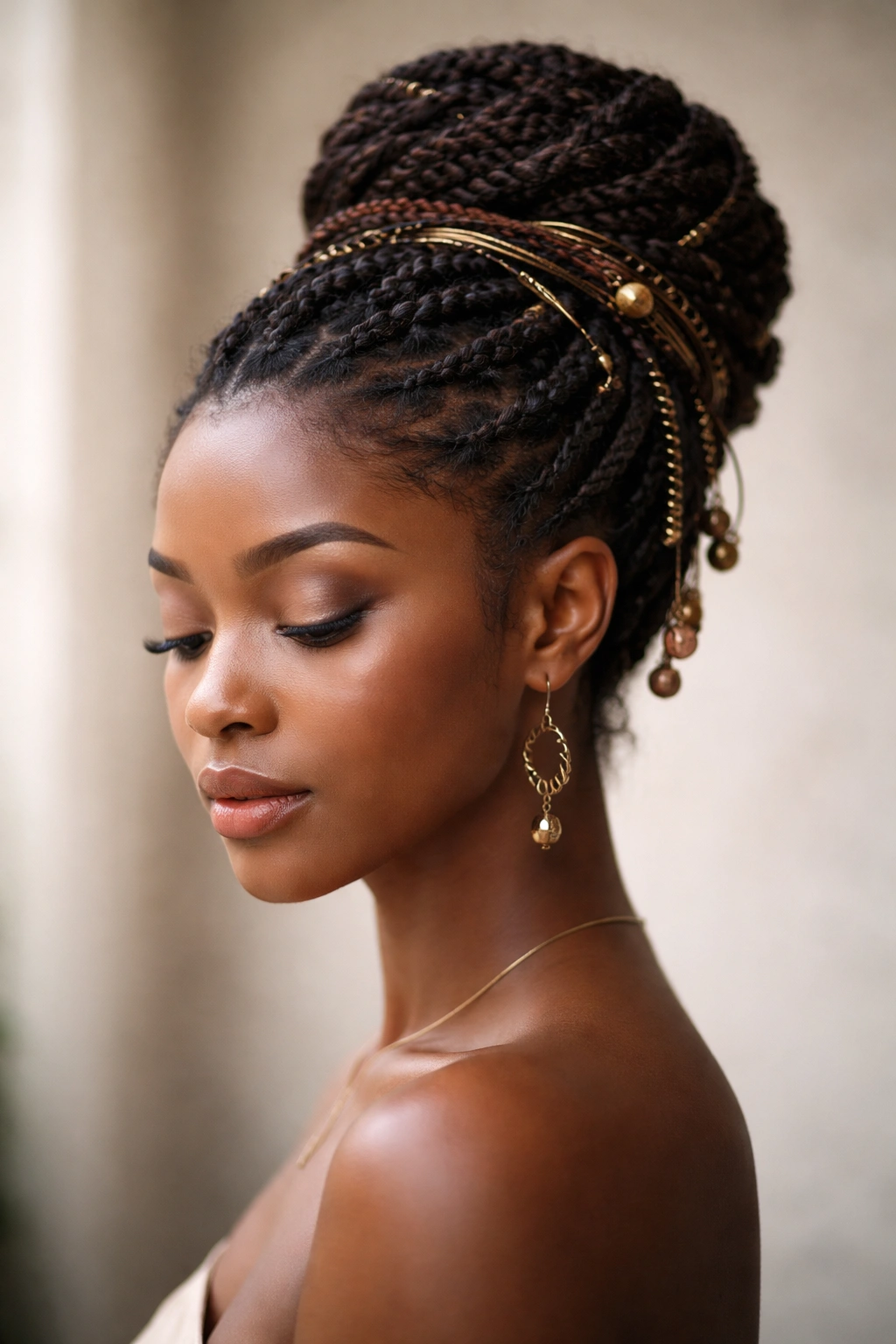
Fulani twists on 4C hair are remarkable because your hair texture actually makes the style look better—the curl density creates natural volume and definition that looser hair textures require extensions or special technique to achieve. The real choice isn’t whether Fulani twists look good on your hair; it’s which version matches your lifestyle, your aesthetic, and what you want to communicate with your style.
The thick-twist versions with gold cuffs make bold statements and require minimal maintenance. The thin-twist versions with beads allow for delicate, jewelry-like detail work. Styling elements like baby hair patterns, wraps, and geometric parts turn your twists from a simple protective style into something intentional and creative. The different placement options—puffed, wrapped, or down—give you daily versatility even while you’re wearing the same twists for weeks.
The most important thing isn’t choosing the “perfect” version; it’s choosing one that you’ll actually wear confidently. Book a consultation with a stylist who specializes in Fulani twists and bring reference photos of styles that make you feel amazing. Trust that on 4C hair, the foundation is already there—your curl pattern will do the heavy lifting, and every version of Fulani twists will showcase that texture beautifully.
