



Thin hair doesn’t mean you have to skip the stunning elegance of Fulani braids. In fact, when styled strategically, these braids can actually look fuller and more voluminous on fine or thin hair than on thicker textures — all it takes is understanding which techniques and variations work best for your hair type.
Fulani braids have deep cultural roots in West African beauty traditions, and they’ve become a global style statement. The classic design features thin braids swept to the side with decorative elements like beads, rings, or cuffs woven throughout. But here’s what many people miss: the exact way you braid, what you braid with, and where you place those braids makes an enormous difference in how full and lush your hair looks, especially when you’re working with a finer texture.
The trick isn’t adding volume where there isn’t any — it’s strategically arranging what you have and using visual techniques that create the illusion of density. Thicker individual braids can actually look less full on thin hair because they’re more sparse. Smaller, more numerous braids create a fuller appearance. Adding extensions strategically, using certain decorative elements, and styling the braids in specific ways can transform thin hair into a stunning, head-turning look that holds up beautifully for weeks.
Let me walk you through eight proven Fulani braid styles that genuinely work for thin hair — styles that won’t leave bare patches visible, won’t strain your edges unnecessarily, and will keep you looking polished and full from day one through the final week of wear.
1. Fulani Braids with Beads and Gold Cuffs
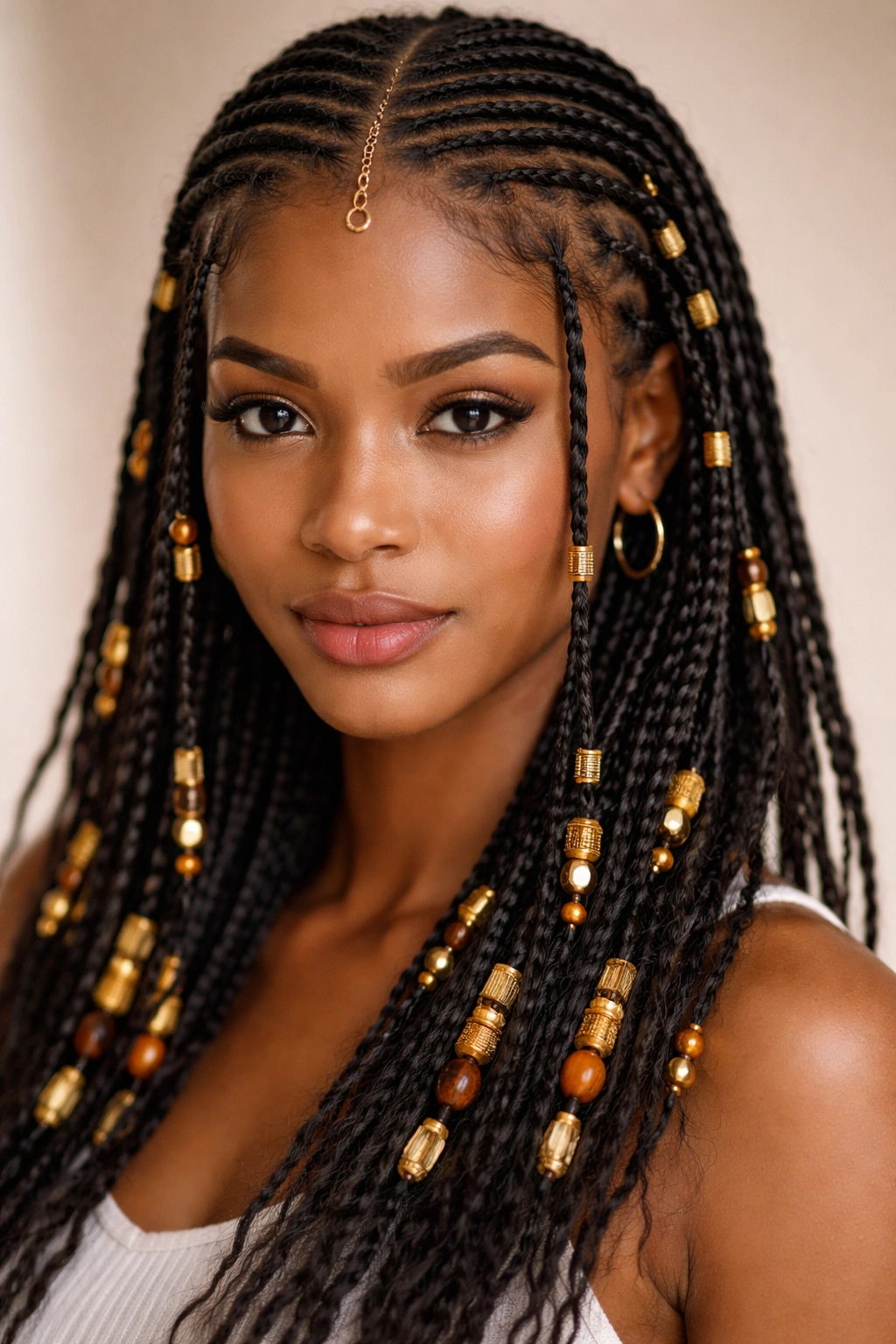
This is the classic Fulani style, and it works exceptionally well for thin hair when you use a few specific tricks. The beads themselves add visual weight and texture, which breaks up the appearance of spacing between braids and makes the overall style look denser. The gold cuffs catch light and draw the eye, further enhancing the fullness illusion.
For thin hair, ask your braider to create the braids at a medium thickness — not too chunky, not too thin. Aim for braids about the diameter of a pencil or slightly thinner. You want enough braids that they create visual density without being so many that each individual braid is paper-thin and breakable.
Why This Works for Thin Hair
The beads and cuffs create visual interruption along the length of the braids. Instead of your eye traveling down a single thin braid and noticing the sparse space between braids, the beads act like tiny checkpoints that make each braid appear fuller. Gold or bronze metals particularly enhance this effect because they reflect light, adding dimension.
Styling Tips for Maximum Fullness
- Request slightly smaller braids than you might normally get — this creates more of them, which looks fuller overall
- Space the beads strategically closer together at the crown and progressively further apart as you move down the braid
- Use larger statement beads at the front pieces and smaller beads throughout the rest of the style
- Create a soft, flowing part that shows off the scalp styling cleanly rather than overstuffing braids in one area
- Sleep with your braids in a loose pineapple or with a silk scarf to maintain their shape and prevent frizz
Pro tip: Choose metallic cuffs over plastic ones — the light reflection genuinely makes individual braids look thicker and fuller than they are.
2. Side-Swept Fulani Braids with Volume at the Crown
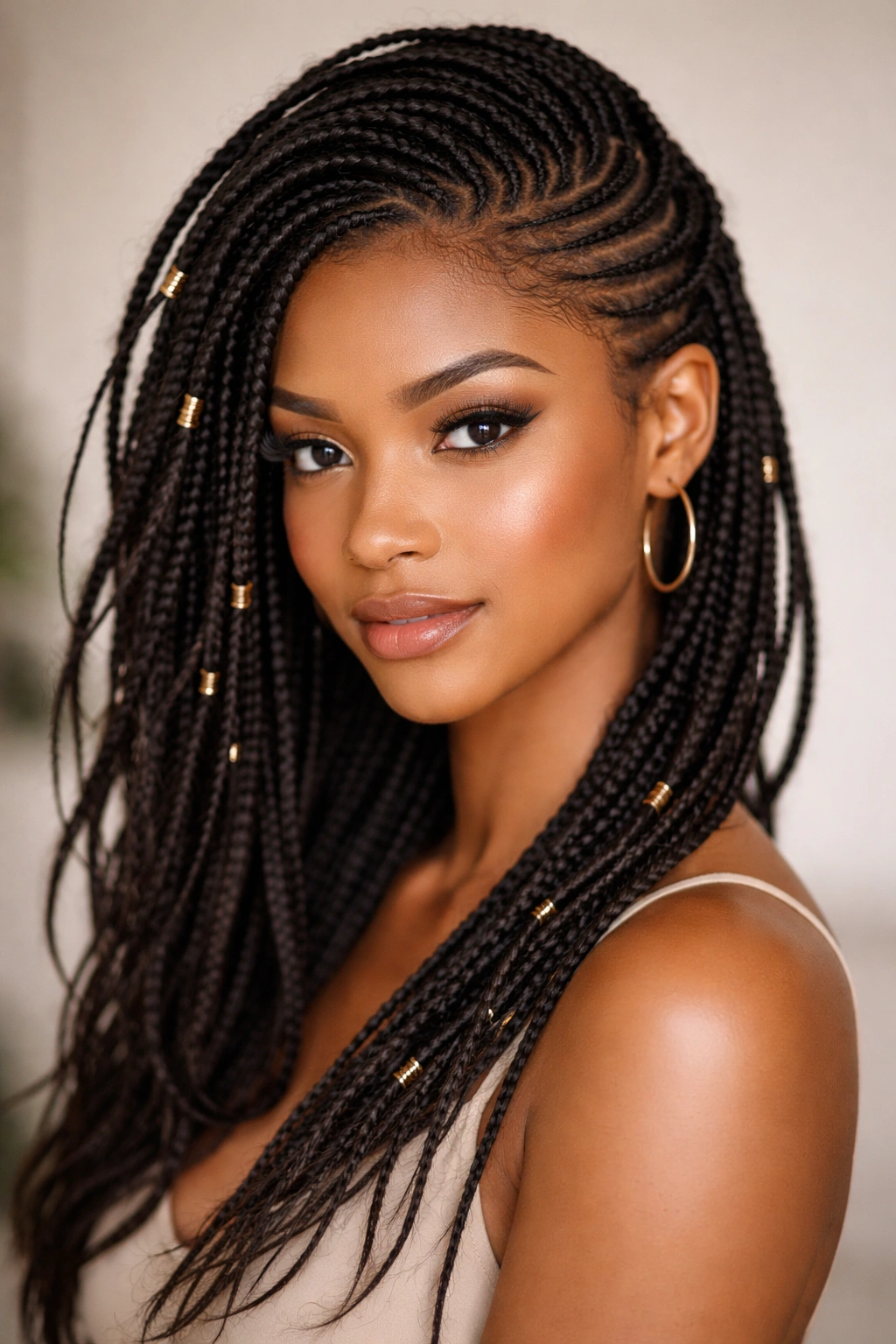
This style strategically piles more braids toward one side and sweeps them across, creating an asymmetrical look that’s both visually interesting and incredibly flattering for thin hair. The concentrated density on one side tricks the eye into perceiving overall fullness.
The key is placement. Instead of evenly distributing braids all across the head, you’re creating a dense section on one side (typically the right side), and that concentration of braids creates dramatic fullness even when individual braids are relatively thin.
Why Asymmetry Works
An even distribution of thin braids can sometimes look sparse because your eye has nowhere to focus. A side-swept style with strategic density concentration gives the eye an anchor point. All that fullness gathered on one side reads as “this is a lush, full style” rather than “these braids are spread too thin.”
How to Achieve This Look
- Ask your braider to braid about 60-70% of your braids on the dominant side (usually the right)
- Use slightly larger accent braids on the sweeping side mixed with thinner supporting braids
- Leave 3-4 thinner braids loose on the less-braided side to frame your face
- Have the heavy braid section start at the temple or crown, not the nape
- Create some braid texture variation — a few cornrows mixed with individual braids — for added visual dimension
- Add beads and cuffs primarily to the dense side to enhance that focal point
Worth knowing: This style works beautifully with an undercut or tapered side, as the contrast between the braided fullness and close-cut hair emphasizes the style’s drama.
3. Fulani Braids with Synthetic Hair Extensions
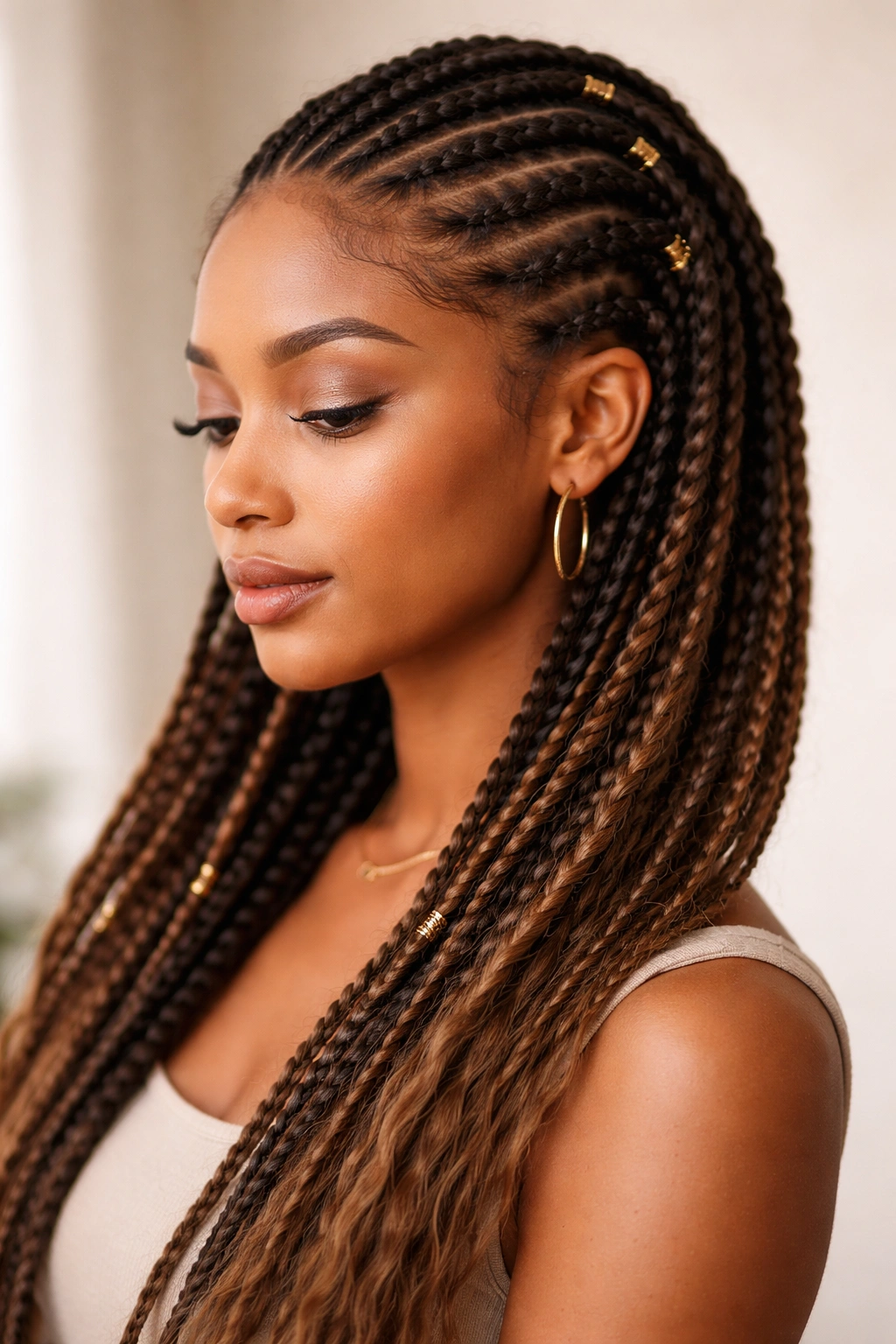
This is where thin hair truly shines. Strategic use of synthetic hair (kanekalon or similar) can completely transform the appearance of your natural braids without requiring your own hair to be thick. The extensions add volume without adding weight, which is crucial for thin hair that bruises easily under too much tension.
The trick here isn’t to braid thick extensions throughout — it’s to blend thin extensions with your natural hair in specific ways. You might braid the first inch or so with just your natural hair, then introduce the extension gradually, creating a braid that appears fuller as it moves down the head. This technique, called “ghosting” the extension, looks seamless and natural.
Why Extensions Work Better Than You’d Think
Thin hair isn’t necessarily weak hair — it’s just finer in diameter. Adding lightweight extensions alongside your natural hair creates volume without requiring you to part your hair into huge sections. A thin braid becomes a medium braid overnight, and suddenly your entire style looks fuller.
Extension Strategy for Maximum Effect
- Use lightweight extensions, not heavy or thick ones
- Choose colors that match your natural hair for a seamless blend
- Ask your braider to fade the extensions in gradually rather than all at once — this looks more natural and feels lighter on your scalp
- Mix braids with extensions and braids without, creating texture variation across your head
- Use extensions primarily in the front-facing braids where they’ll be most visible
- Keep individual braids slightly thinner than you would with just natural hair — the extensions will add enough volume
Insider note: Human hair braiding extensions work beautifully for Fulani braids on thin hair because they’re lighter weight than most synthetics, though they’re pricier.
4. Zigzag Pattern Fulani Braids
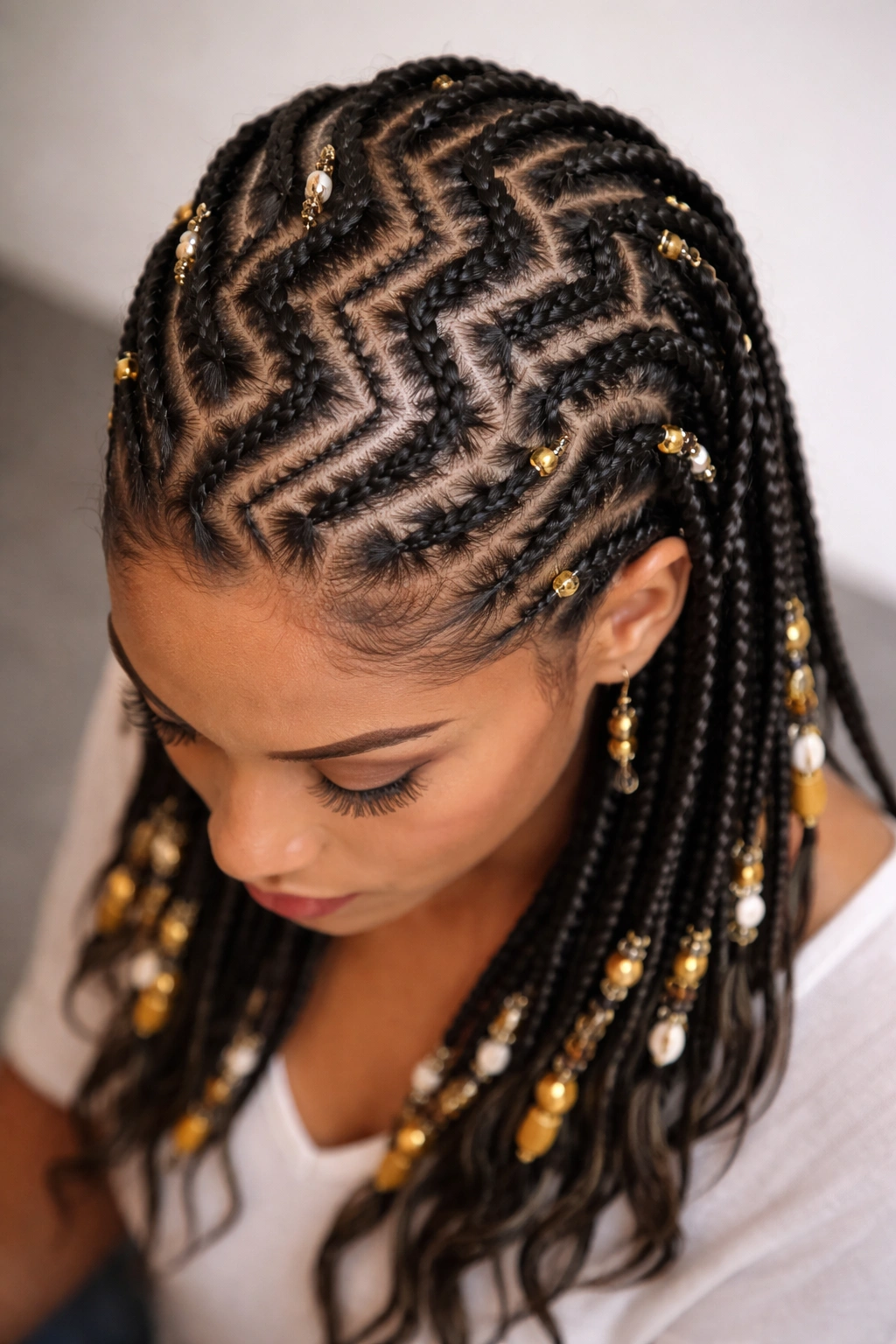
This style uses a geometric zigzag pattern for the parting and braid placement rather than traditional straight parts. The visual effect of the zigzag pattern creates an illusion of movement and density — the eye follows the geometric pattern and perceives more texture and fullness than you actually have.
The braids themselves might be thin, but the intentional pattern draws attention to the artistry of the style, shifting perception away from whether there’s “enough” hair and toward admiration of the design itself.
The Visual Psychology of Zigzag Patterns
Geometric patterns inherently create visual interest and sophistication. A zigzag creates multiple focal points across the head rather than one unified view, which breaks up any appearance of sparseness. The pattern itself becomes the “fullness” — it’s not about hair density but about style complexity.
Creating the Zigzag Effect
- Work with your braider to create a diagonal zigzag part from temple to nape on one or both sides
- Braid along the zigzag pattern, following the geometric lines
- Create additional braids that flow perpendicular or at angles to the main zigzag
- Use the same bead-and-cuff strategy along the zigzag for visual interruption
- Keep braids relatively thin and numerous — the pattern creates fullness, not braid thickness
Quick fact: This style photos incredibly well because the geometric pattern is visually striking, making it ideal if you plan to share your look on social media or want something that turns heads IRL.
5. Fulani Braids with Metallic Threads
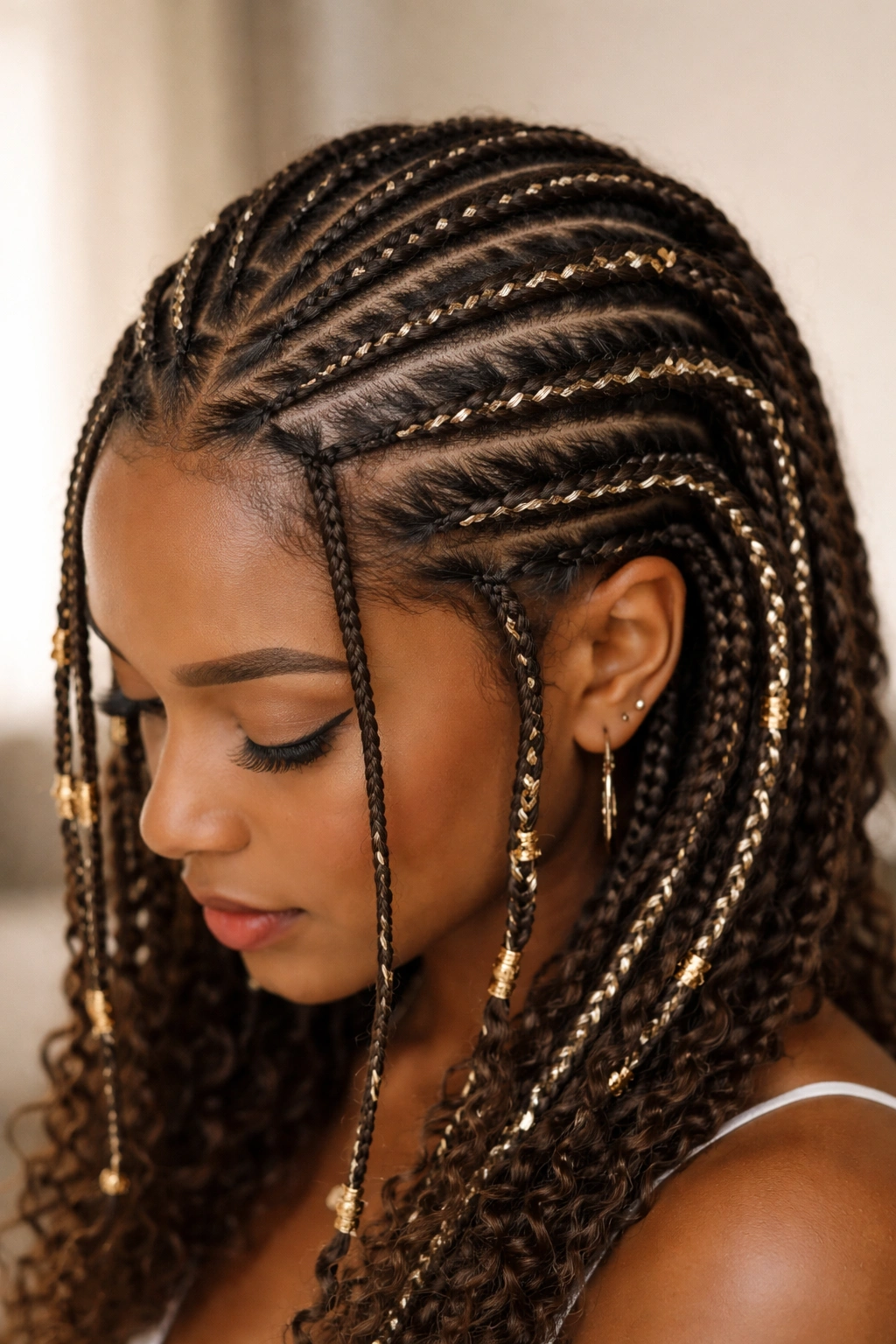
Weaving metallic, shimmery, or contrasting-color threads directly into your braids adds immediate visual fullness without adding actual hair. The threads catch light and create dimensional texture that makes individual braids appear thicker and the overall style appear more complex and full.
This technique works whether you’re using thin braids or medium braids — the threads essentially create a “fourth dimension” that prevents the eye from perceiving sparseness. Gold, silver, rose gold, or even contrasting color threads all work beautifully.
How Metallic Threads Create Fullness
A thin braid is a thin braid until you add visual elements to it. Metallic threads intertwined throughout catch light from multiple angles, breaking up the solid texture of a single braid into multiple visual layers. This layering effect creates depth and perceived volume.
Application Techniques for Thin Hair
- Choose lightweight metallic threads, not heavy beaded ones
- Have your braider weave threads through every braid or in alternating braids
- Use complementary metals — gold with warm skin tones, silver with cool tones, rose gold as a universal option
- Mix metallic threads with colored threads (burgundy, deep purple, bronze) for added visual interest
- Request thinner threads woven through multiple times rather than thick single threads
- Keep your braids medium-thickness when using metallic threads — they’ll appear fuller than they are
Pro tip: Metallic threads add a luxe, intentional touch that signals style sophistication, making the braids feel like a finished design choice rather than a hair necessity.
6. Half-Up Fulani Braids for Extra Fullness
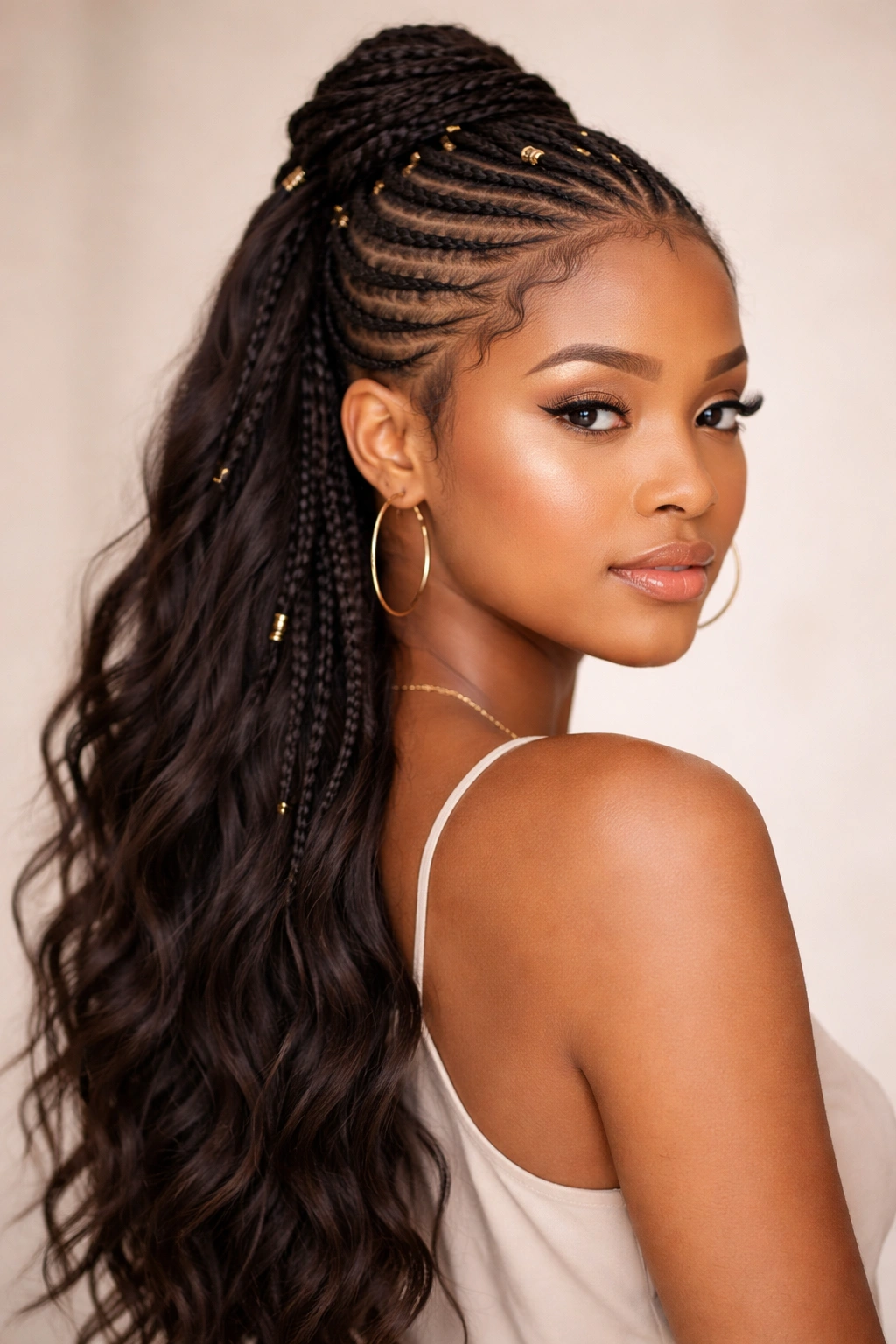
This variation takes the Fulani braid concept but only braids a section of your hair — typically the upper half or crown section — while leaving the lower half down in natural texture or loose waves. The braided section creates concentrated fullness where you most notice it (at face and crown level), while the loose hair below adds movement and volume.
This hybrid approach is ideal for thin hair because you’re not trying to make your entire head of thin hair look thick. Instead, you’re creating a dramatic focal point at the top while using loose texture for additional dimension below.
Why the Half-Up Approach Works
Full-head braids require every section of hair to look full. Half-up braids allow you to create that full, lush appearance in just the top half, while the loose texture below provides volume and movement without needing to be particularly thick. You get the Fulani aesthetic with significantly less demand on your hair.
Styling the Half-Up Version
- Create a partial crown of Fulani braids — you can do a full crown or just a sweeping side section
- Leave the lower half of your hair completely down for volume and movement
- Create soft waves or curls in the loose section to add texture
- Blend the transition between braids and loose hair seamlessly
- Add beads and cuffs to the braided crown section
- Consider curling the loose hair away from your face for a soft, romantic aesthetic
Worth knowing: This style works beautifully if you’re transitioning to natural hair, recovering from scalp damage, or simply don’t want the commitment of full-head braids.
7. Curly-Textured Fulani Braids
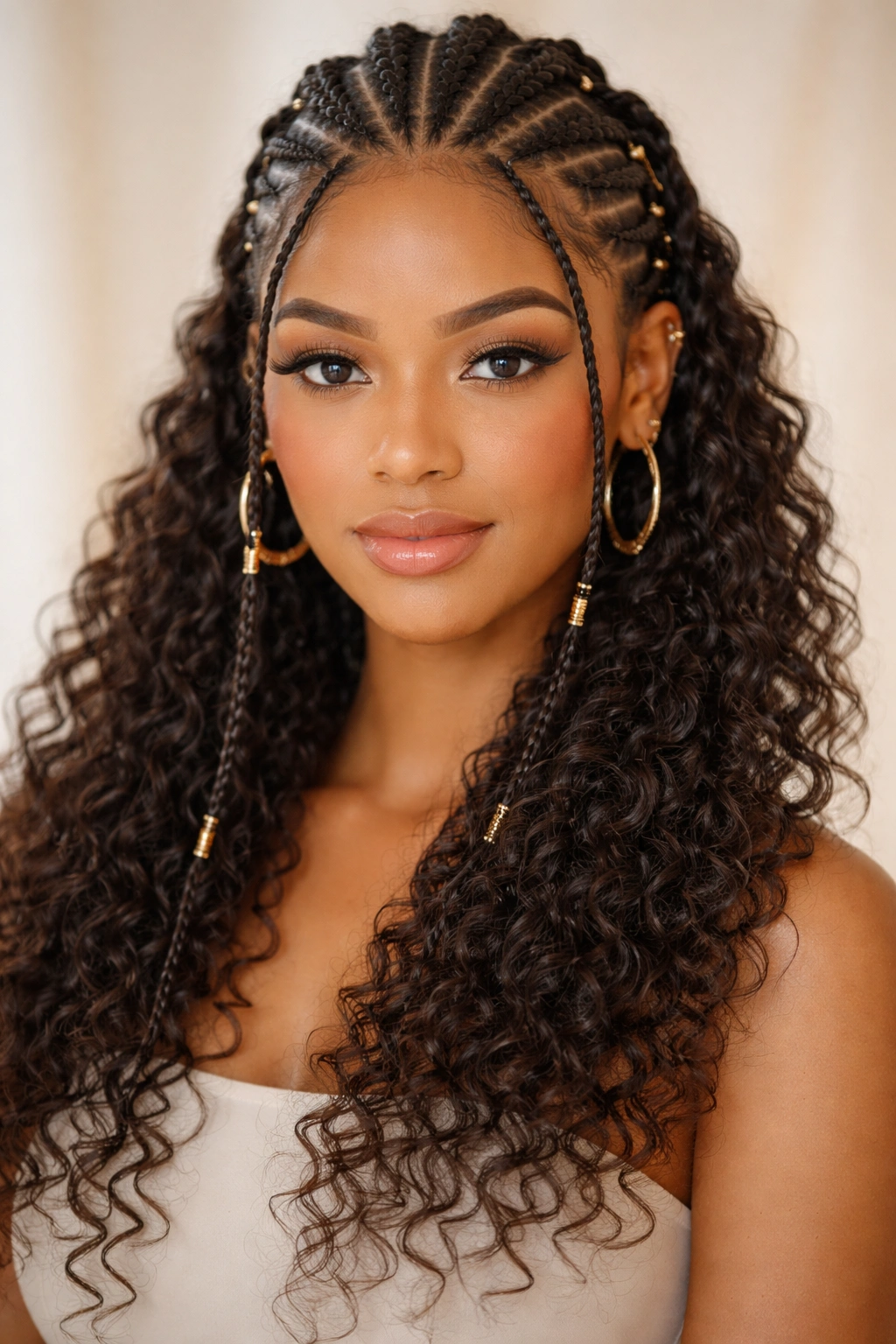
This style incorporates curly texture directly into the Fulani braids themselves, creating a hybrid look that’s part Fulani and part curly. You achieve this by braiding with curly extensions (like pre-curled kanekalon or human hair) mixed with your natural hair, or by creating braids and then deliberately loosening and fluffing them to create texture.
The curly texture adds immediate visual fullness because curls take up more space than straight braids. A thin curly braid appears significantly fuller than a thin straight braid, and the overall style looks bouncy and voluminous.
Why Curly Texture Adds Perceived Volume
A straight braid is linear and compact. A curly braid is three-dimensional and expansive. The curls create air pockets and visual texture that make individual braids appear much thicker than they are. This is why curly styles always look fuller than their straight counterparts.
Creating the Curly Fulani Look
- Use pre-curled extensions if available, or add curls to straight extensions before braiding
- Braid with the curly extensions throughout, letting the curls show
- Alternatively, braid with straight extensions and then loosely unravel and fluff the braids to create texture
- The loosened texture should be intentional and artistic, not sloppy — think textured rather than unraveled
- Add beads at intervals to keep some structure while allowing curly texture to shine
- Keep individual braids medium-thickness or slightly thinner since the curls add volume
Quick fact: Curly Fulani braids also hold their style longer because the curls prevent the braids from looking sleek and flat as they age.
8. Thin Fulani Braids with Strategic Placement
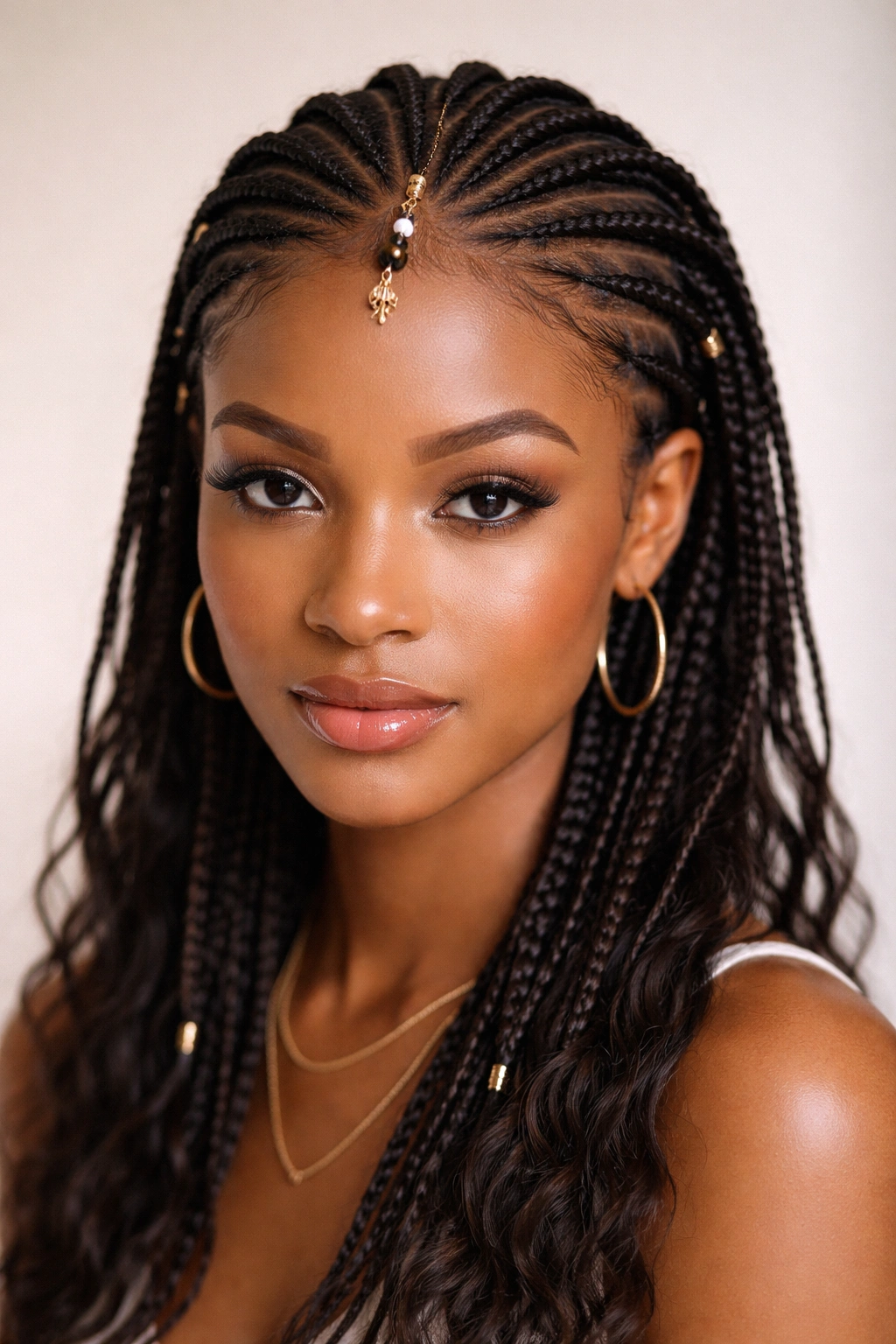
Sometimes the solution isn’t fancy variations or extensions — it’s simply smart placement. By strategically positioning braids in specific sections of your head and leaving other areas with looser cornrows, twist-outs, or natural texture, you create a cohesive style that maximizes the appearance of fullness without demanding that thin hair do something it can’t.
This approach works beautifully if you have some areas with thicker hair and some thinner areas — you braid densely in the thicker sections and use looser styling in the thinner sections, creating an overall balanced, full appearance.
Strategic Placement Principles
The crown and temples are where people look first, so prioritize fullness there. You can afford to have sparser styling at the nape or sides. Create concentration points of density separated by transitions rather than uniform density throughout. This creates visual interest and prevents the style from looking thin overall.
How to Map Your Placement
- Identify your thickest hair sections and plan your densest braids there
- Create a crown of braids that draws attention upward
- Use looser, softer braiding or twists at the back or sides
- Leave some face-framing pieces completely out of braids for softness
- Create visual interruption through varied braid sizes and styles
- Use beads and metallic elements in strategic focal points
Insider note: This approach is also the most forgiving when it comes to hair health because you’re not creating tension or density in your thinnest areas.
Final Thoughts
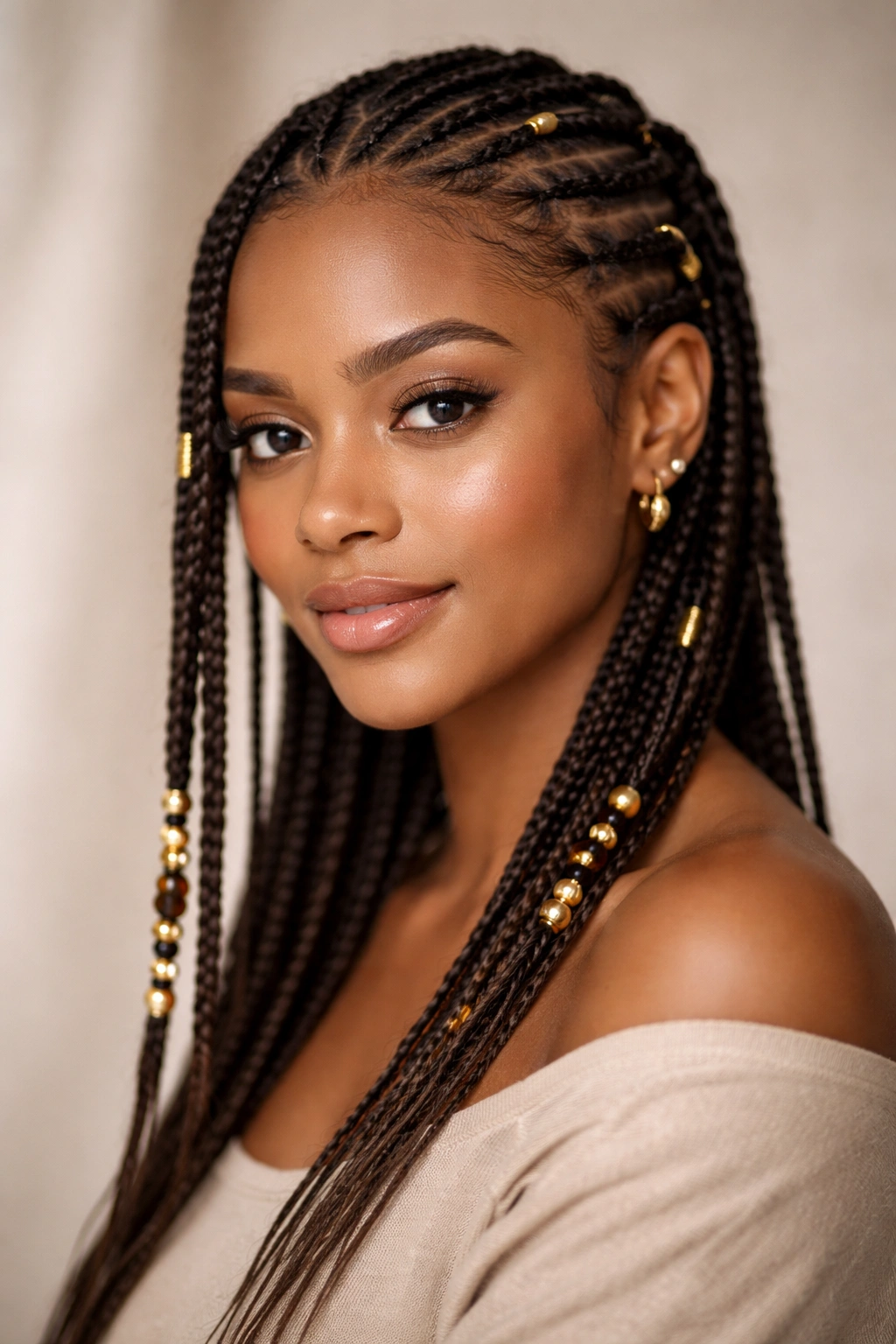
The beautiful truth about Fulani braids for thin hair is that they work — you just need to approach them strategically rather than simply copying a style you see. The most successful styles combine several elements: slightly smaller braids for perceived density, intentional use of beads or metallic elements for visual fullness, strategic placement in your thickest sections, and sometimes lightweight extensions for dramatic volume without weight.
Your hair texture is not a limitation; it’s actually an advantage in certain Fulani styles. Thin hair shows detail and artistry beautifully. The beads, cuffs, and design elements become more visible and striking on a finer canvas. The key is working with your braider before you sit down to discuss which specific approach will work best for your particular hair texture, density, and growth pattern.
Choose a style based on what you actually love, not just what you think will work. When you love the way you look, you’ll wear it with the confidence that makes any style shine. Thin hair styled intentionally and beautifully absolutely can look full, striking, and absolutely worth the time and care you put into it.
