



Fulani braids have become one of the most iconic and versatile protective hairstyles in recent years, and there’s a good reason why. This traditional West African style carries deep cultural significance while offering a modern, stunning aesthetic that works for virtually any occasion. The straight-back variation gives the look an especially polished, elongated silhouette that flatters most face shapes and creates an undeniably elegant appearance.
What makes Fulani braids with straight-back styling so appealing is their combination of practicality and artistry. Unlike styles that require frequent adjustments or constant maintenance, straight-back Fulani braids sit neatly along the scalp and can last for several weeks with proper care. The style also gives you tremendous creative freedom — you can add gold cuffs, incorporate beads, use multiple hair colors, or keep it minimalist and understated depending on your mood and the occasion.
The straight-back approach differs from other Fulani braid variations that might sweep to the sides or fan outward. When braids run straight down the back of your head, they create clean lines, maximize the visual impact of any embellishments you choose, and give your overall look a sense of structure and intention. Whether you’re looking for something bold and statement-making or quiet and refined, there’s a straight-back Fulani braid version that fits your style.
1. Classic Fulani Braids With Gold Cuffs
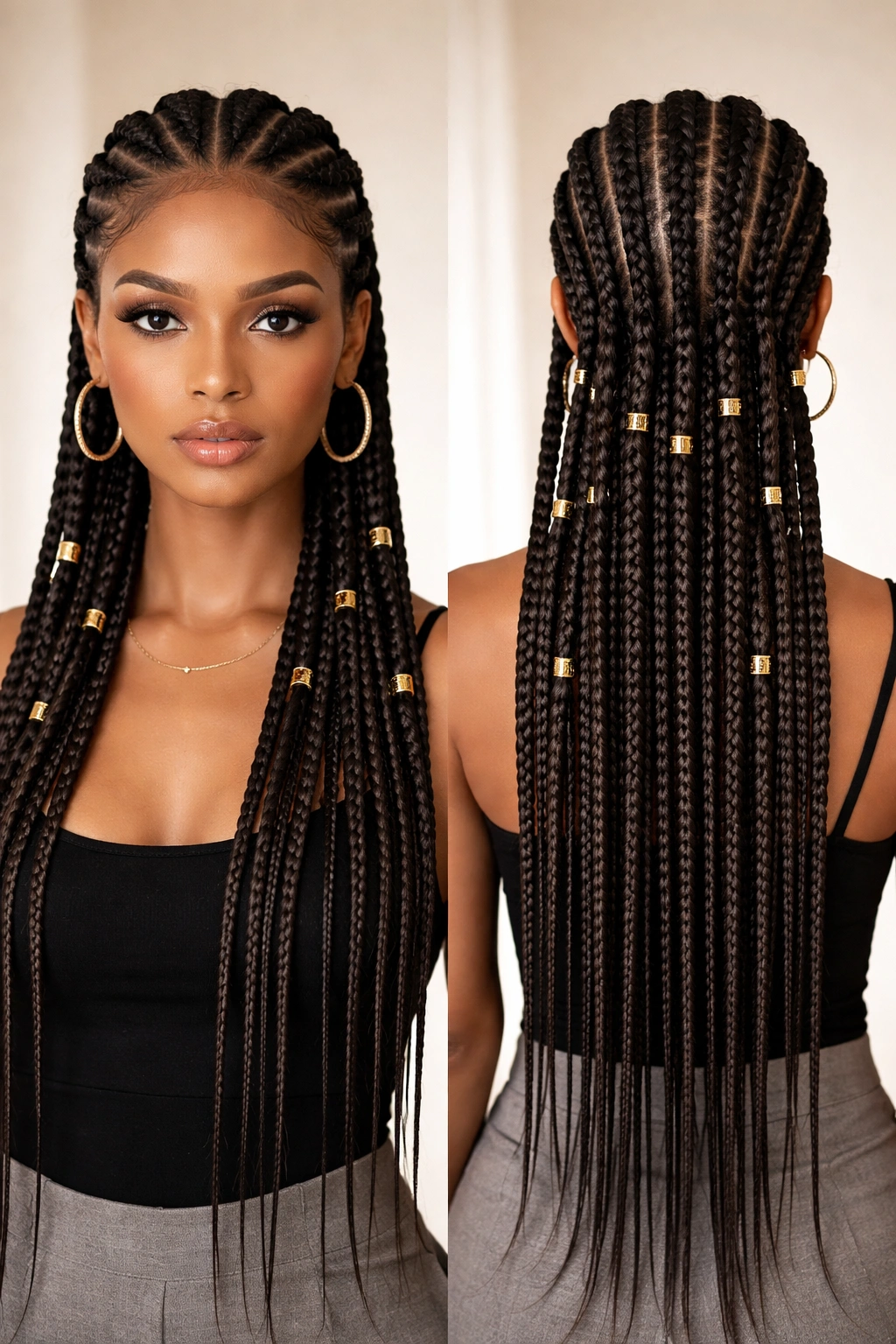
This is the version most people picture when they think of Fulani braids — clean, centered braids running straight down the back with gleaming metallic cuffs placed throughout. The simplicity is actually what makes this style so powerful. You typically see between 4 to 8 braids depending on your preferred thickness and the fullness of your natural hair. The gold cuffs catch light beautifully and add a touch of luxury without requiring any additional accessories or complicated styling.
Why This Style Never Goes Out of Fashion
The classic version works because it honors the traditional Fulani aesthetic while remaining effortlessly wearable in professional settings, casual environments, and formal events. The gold cuffs can range from delicate thin rings to chunky statement pieces, giving you control over how bold or understated your look feels. There’s also something deeply grounding about this version — the straight-back placement combined with the regular placement of cuffs creates a visual rhythm that feels intentional and refined.
Essential Details for This Look
- Braid thickness: Medium-thickness braids work best for this style; thin braids can look delicate but offer less surface for cuff placement, while thick braids look dramatic but fewer in number
- Cuff placement: Space cuffs roughly 2 to 3 inches apart starting from about 2 inches below the hairline; this creates visual balance and prevents the cuffs from looking crowded
- Hair length: Works beautifully from mid-shoulder length all the way to hip-length; longer hair creates more impact with the trailing braids
- Maintenance frequency: Touch up the roots every 6 to 8 weeks if you want to maintain the look; the style itself can last 8 to 10 weeks with proper nightly care
Pro tip: Use real or high-quality plated gold cuffs rather than cheap costume metal — the plating won’t tarnish or discolor your hair, and quality cuffs look exponentially better in photos.
2. Double-Stranded Fulani Braids Down the Middle
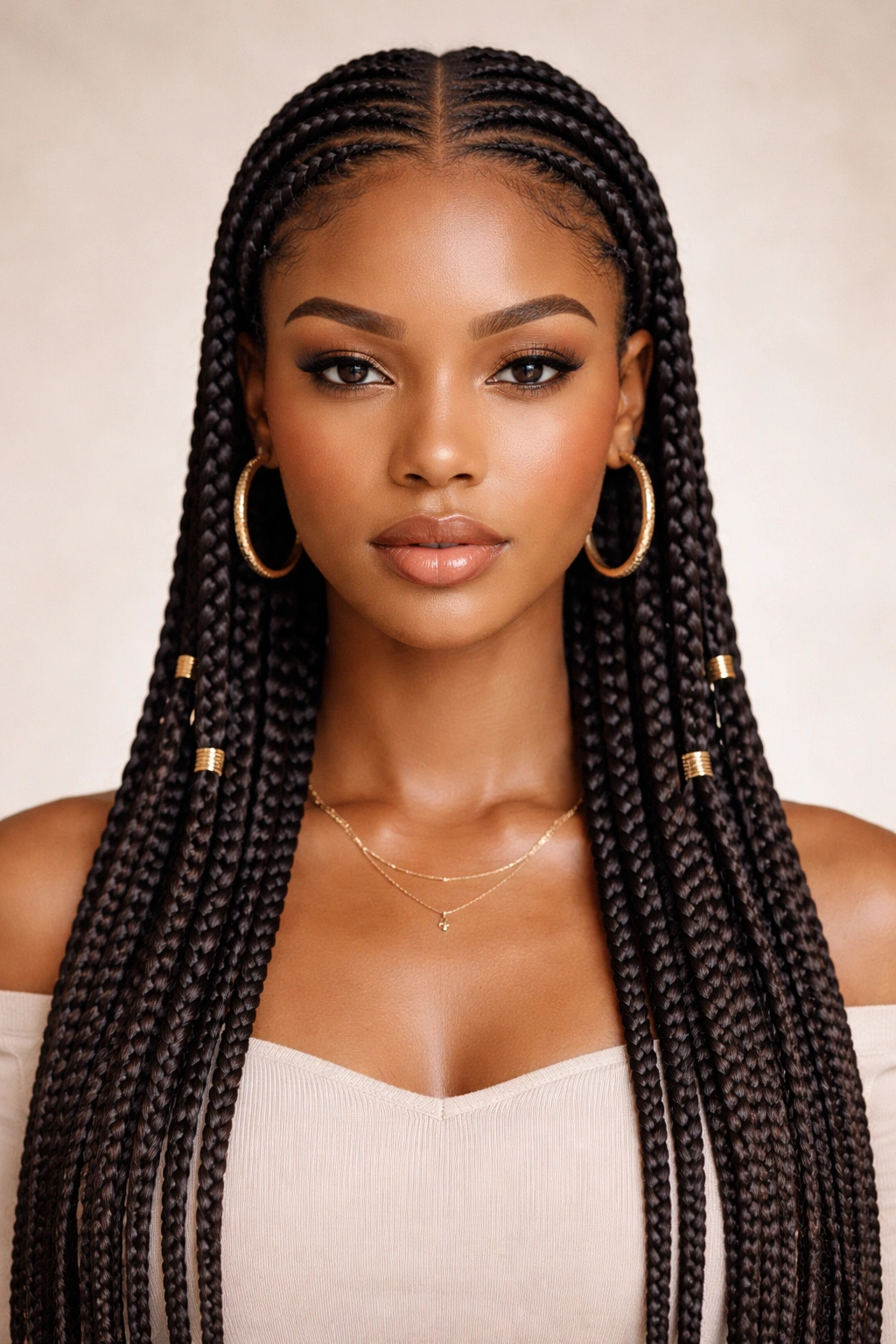
This variation takes the traditional center-parted straight-back approach and doubles the impact by creating two distinct sections of braids down the middle of your head. Imagine a clean center part running from your forehead to the nape of your neck, with braids on either side of that line. This creates a striking symmetrical look that emphasizes facial features and feels incredibly intentional. The effect is more modern than the single-column classic style, and it photographs beautifully from every angle.
What Makes the Double-Column Approach Special
The psychology of symmetry makes this style particularly appealing. Your eye naturally follows the two parallel lines of braids, which actually makes your face appear more balanced and draws attention upward. This version also allows for more creative flexibility — you can style the two columns identically for a balanced look, or introduce slight variations in embellishments between the left and right side for something more playful and personal.
How to Execute This Style Successfully
- Center part precision: Use a rattail comb to create a perfectly straight line from your hairline to your nape; uneven parts completely disrupt the visual impact
- Braid number per side: Aim for 3 to 5 braids on each side depending on your hair thickness; this creates proportion and prevents the center part from looking too sparse
- Mirror placement: Whatever you place on the left braid should appear in roughly the same position on the right braid; this symmetry is what makes the style work visually
- Styling duration: Plan for 4 to 6 hours of installation time; the precision required means rushing through this look shows in the final result
Worth knowing: This style works especially well if you have a naturally rounded or wide face shape — the dual columns create vertical lines that elongate your overall appearance.
3. Fulani Braids With Tribal Beads and Shells
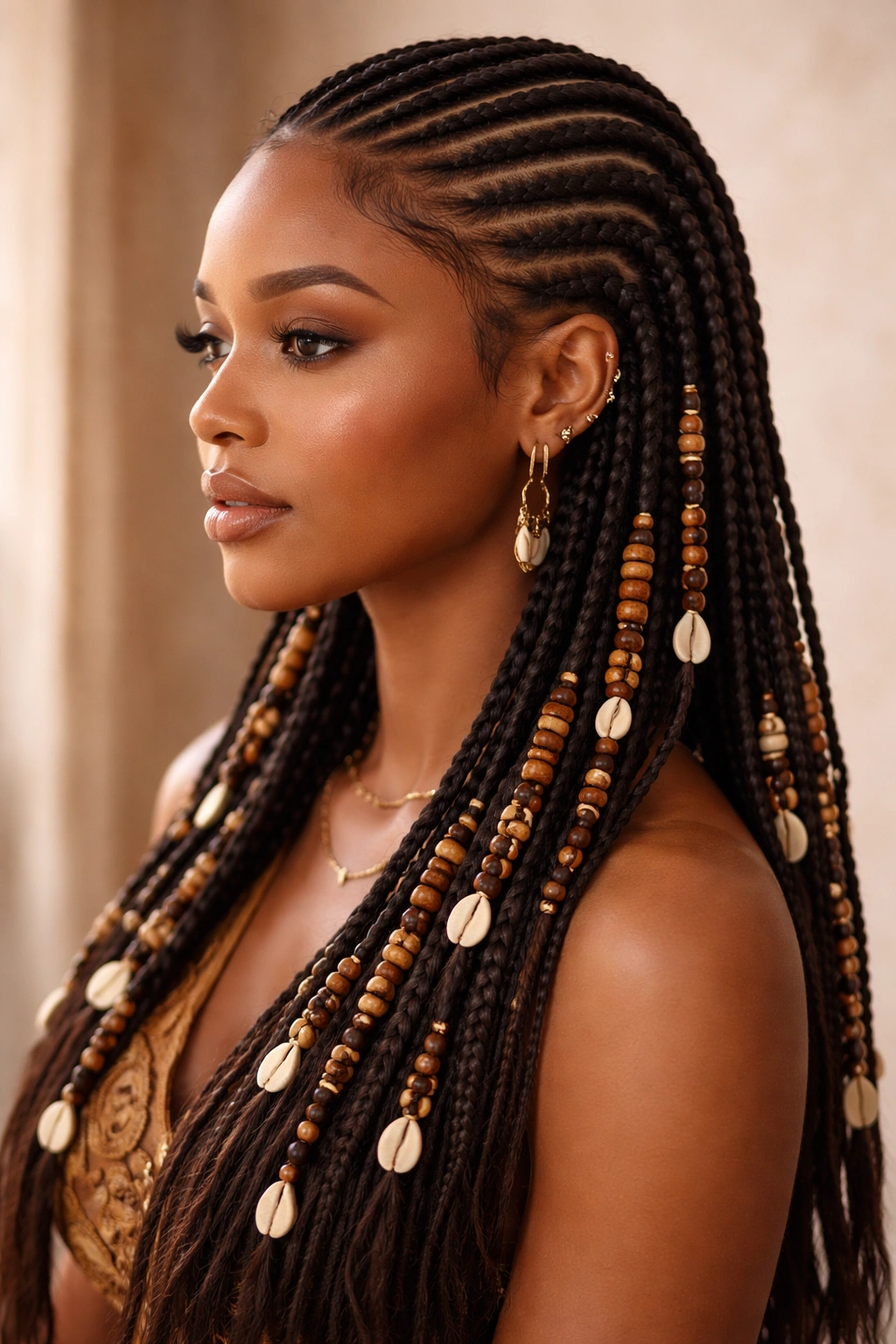
For those seeking a more culturally grounded and visually textured version, tribal beads and shells transform straight-back Fulani braids into a statement of cultural pride and artistic expression. Rather than relying solely on metal cuffs, this style incorporates wooden beads, small shells, and brass pieces that slide directly onto the braids. The result feels earthy, intentional, and deeply connected to the Fulani heritage from which this hairstyle originates.
The Cultural and Aesthetic Significance
Fulani women traditionally incorporated natural elements into their braids as both adornment and status markers. Using authentic beads and shells doesn’t just look beautiful — it honors that tradition and creates a style that feels purposeful rather than purely decorative. The variety of textures and the slight imperfection of natural materials actually adds visual interest that polished metal cuffs sometimes lack.
Sourcing and Placing Tribal Beads and Shells
- Where to source materials: Look for authentic African beads from specialty suppliers; the quality and authenticity matter more than the cost
- Bead size variation: Mix bead sizes from small accent pieces to larger focal beads; this creates visual rhythm and prevents a monotonous look
- Placement strategy: Cluster 2 to 3 smaller beads together, then leave space before your next cluster; avoid covering every inch of your braids
- Shell selection: Choose real cowrie shells or bone pieces; they age beautifully and develop character over time
Pro tip: Seal wooden beads with a clear matte finish before placing them in your hair — this protects them from moisture damage and extends their lifespan significantly.
4. Geometric Pattern Fulani Braids
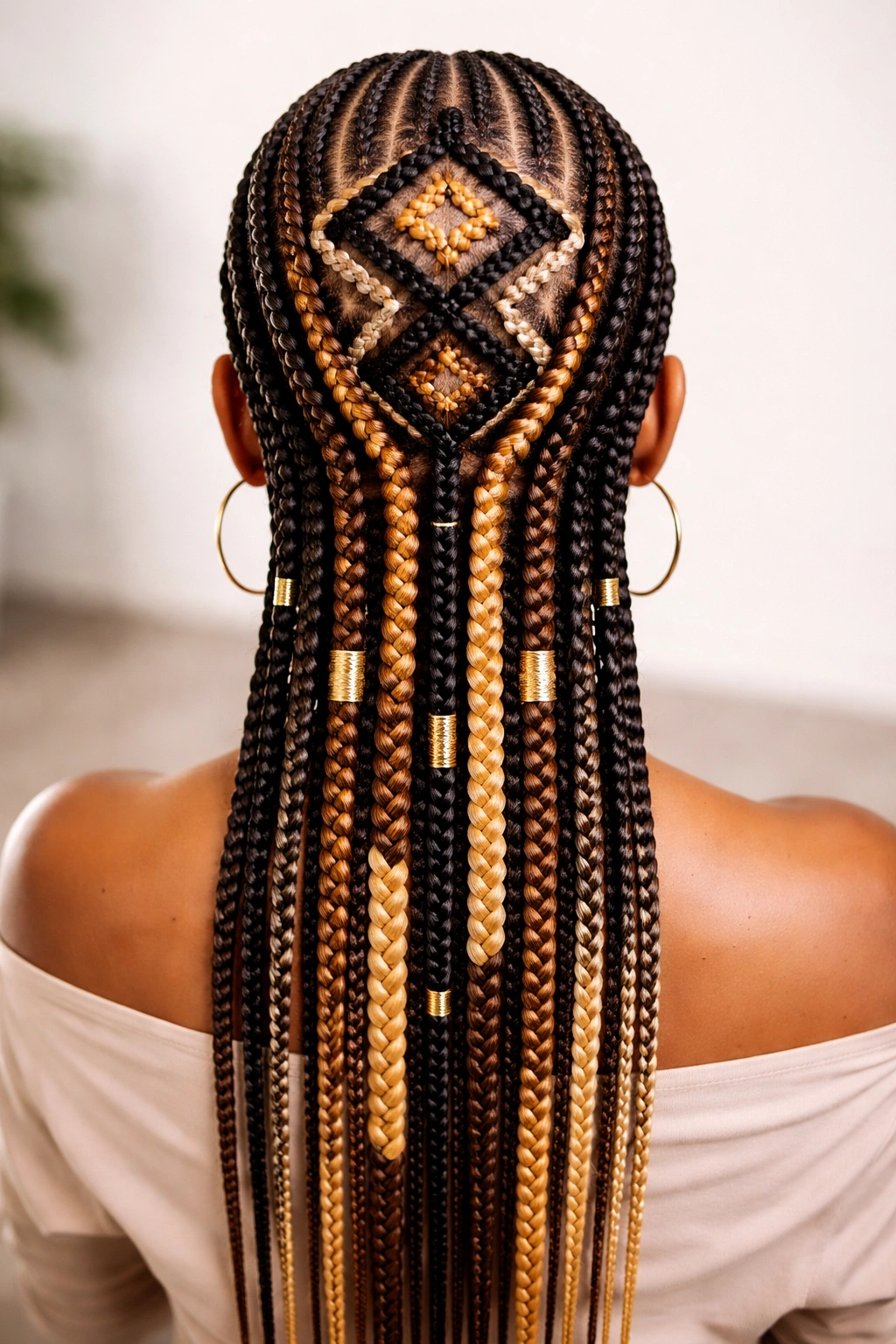
This modern interpretation creates geometric patterns within and between the braids themselves using different hair colors or by varying the thickness and tightness of adjacent braids. You might create a pattern where thicker braids alternate with thin ones, or use contrasting hair colors (like blonde, burgundy, and black) to create lines and shapes that extend down your back. From above, your braids literally become a canvas for geometric art.
How Geometry Transforms a Traditional Style
Geometric patterns appeal to our brain’s natural inclination toward order and structure. When you introduce intentional patterns into your Fulani braids, the style transcends “just a hairstyle” and becomes a visual art form. The patterns are especially striking in photos, on video, and when you’re moving — the geometry creates an almost hypnotic visual effect.
Creating Distinct Geometric Patterns
- Color blocking: Divide your braids into sections where each section features a different color; change color every 3 to 4 braids
- Thickness variation: Alternate between thick braids and ultra-thin braids in a deliberate repeating pattern
- Tight versus loose: Vary the tension of adjacent braids so some appear slightly puffed while others lay flat; this creates visual depth
- Hybrid approach: Combine color, thickness, and tension variations for maximum impact
Insider note: This style requires more planning during installation than other variations — discuss the exact pattern with your stylist beforehand and bring reference photos so you’re aligned on the vision.
5. Side-Swept Fulani Braids
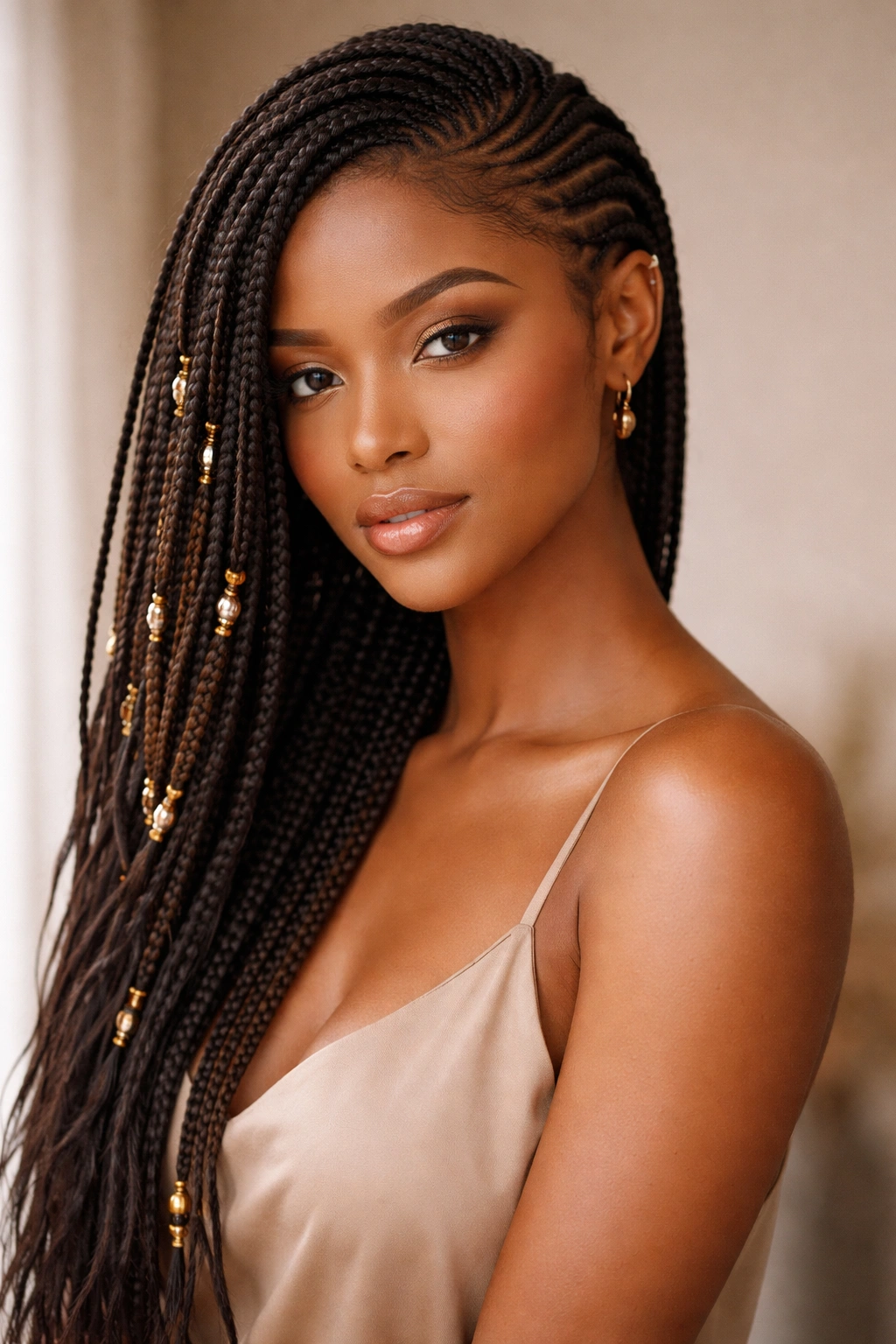
While most Fulani braids run straight down the center or back, this variation sweeps to one side in a graceful, asymmetrical arrangement. Rather than a center part, you create a deep side part and allow the braids to flow toward one shoulder. The straight-back foundation remains, but the braids curve slightly as they descend, creating an elegant, softer aesthetic compared to perfectly centered options.
The Flattering Quality of Asymmetry
Side-swept styling naturally creates a slimming effect and works beautifully for highlighting one side of your face or showing off an ear and neck. This version feels slightly more romantic and less formal than center-parted Fulani braids, making it perfect for social events, dates, or casual occasions where you want to look intentional but not overly structured.
Executing the Side-Sweep
- Part placement: Create your side part at least 2 inches from your natural part line for a dramatic sweep; closer to center creates a subtle side-part look
- Braid direction: Rather than fighting against the natural sweep, let your braids follow the curve that gravity naturally creates
- Uneven braid numbers: You’ll have more braids on the heavier side of your head (the side with more hair); work with this rather than trying to force exact symmetry
- Balance with accessories: Place heavier embellishments on the side with fewer braids to create visual balance
Worth knowing: This style requires slightly more maintenance than centered versions because the braids sit directly against your scalp on one side, which can cause friction and breakage if not managed carefully.
6. Fulani Braids With Cornrows Foundation
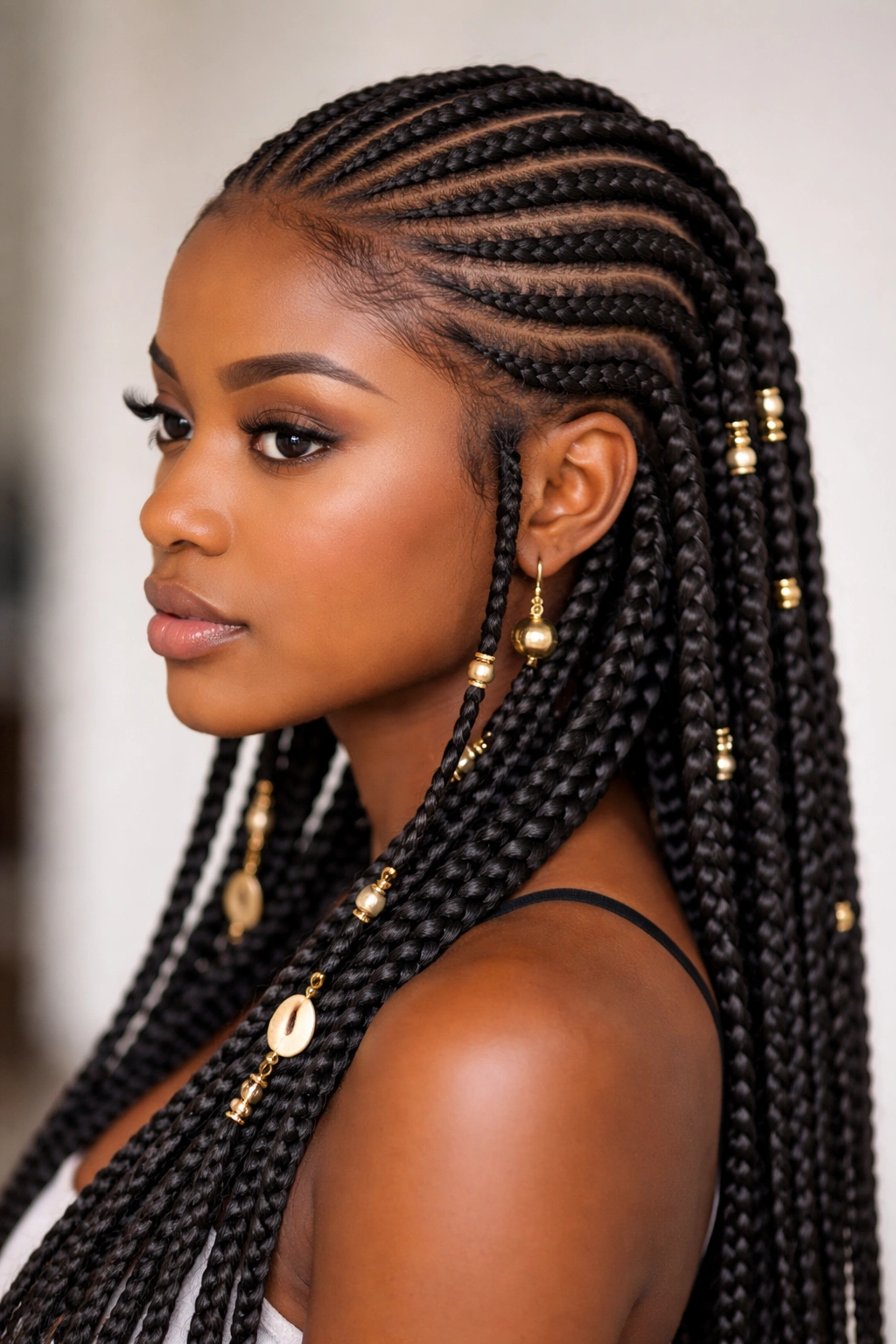
This hybrid style creates a foundation of thin cornrows (braids that sit flush against the scalp) running straight back, then builds fuller Fulani braids on top of or alongside these cornrow foundations. The cornrows create structure, help distribute tension more evenly across your scalp, and allow you to create more of a 3D effect with your final Fulani braids. The end result looks incredibly polished and intentional.
Why the Cornrow Foundation Changes Everything
Adding cornrows first serves multiple purposes. Structurally, they distribute the weight and tension of your braids more evenly, reducing stress on your hairline and natural hair. Aesthetically, they create clean lines and a sense of architecture that elevates the overall look. You can also use cornrows to create patterns — alternating lines of cornrows and Fulani braids, for example, or cornrows that branch out in different directions.
Technical Considerations for Layered Braids
- Cornrow spacing: Create cornrows roughly 1 to 1.5 inches apart; this leaves adequate space for your Fulani braids while maintaining visual structure
- Braid thickness relationship: Make your Fulani braids thicker than your cornrows so the layering is visually apparent and not muddled
- Installation time: Expect this to take 5 to 7 hours because you’re essentially doing two full braid installations
- Longevity: The dual structure actually makes this style more durable — expect 10 to 12 weeks of good wear
Pro tip: Have your stylist use different colored braiding hair for the cornrows versus the Fulani braids; even subtle color variation makes the layering pop visually.
7. Thin Delicate Fulani Braids
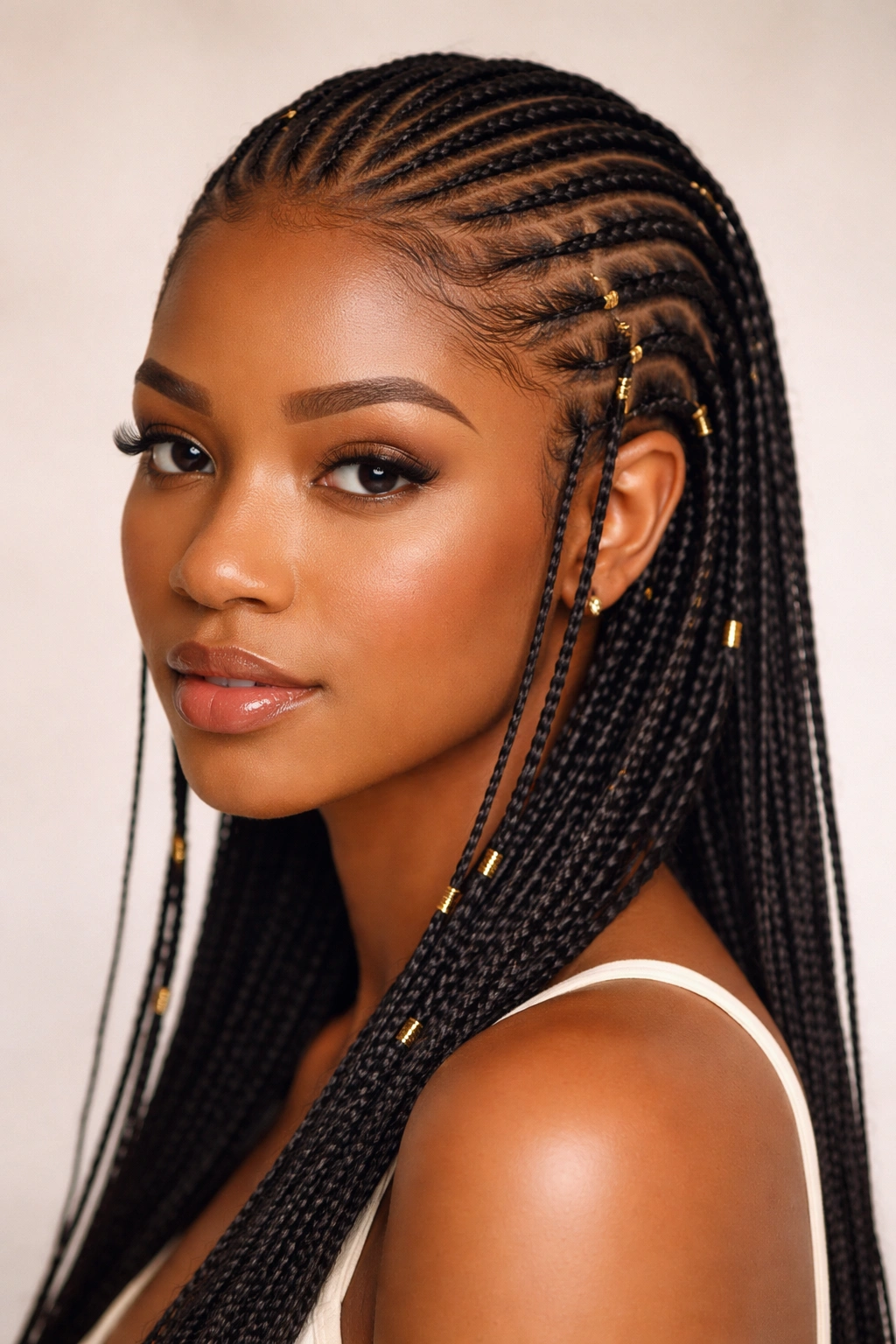
For those who prefer a more understated, refined aesthetic, thin Fulani braids offer elegance through subtlety. This version uses many more, narrower braids that create a fuller, almost lace-like effect when viewed as a whole. The individual braids are gossamer-thin, and when you add delicate gold string, tiny beads, or minimal cuffs, the overall look feels sophisticated rather than bold.
The Minimalist Appeal of Thin Braids
Thin braids distribute volume more evenly and create a fuller appearance at the crown and throughout the length of your hair. This version also works beautifully for those with finer natural hair textures, as it doesn’t require adding as much weight to individual braids. The refined quality makes this style especially appropriate for professional settings or situations where you want to look polished but not overtly styled.
Styling Thin Braids Successfully
- Braid count: You’ll typically have 12 to 20 thin braids versus 4 to 8 thicker ones; more braids create the fullness
- Cuff strategy: Skip traditional thick cuffs in favor of gold string wrapped tightly or tiny clip-on beads
- Hair weight: Use less braiding hair per braid to maintain the delicate appearance; this also feels lighter on your scalp
- Styling time: Thin braids take longer to install (6 to 8 hours) because of the sheer number, but they photograph beautifully
Insider note: This style actually lasts longer than thicker versions because there’s less weight pulling on each individual braid, meaning less stress on your natural hair.
8. Fulani Braids With Hair Jewelry
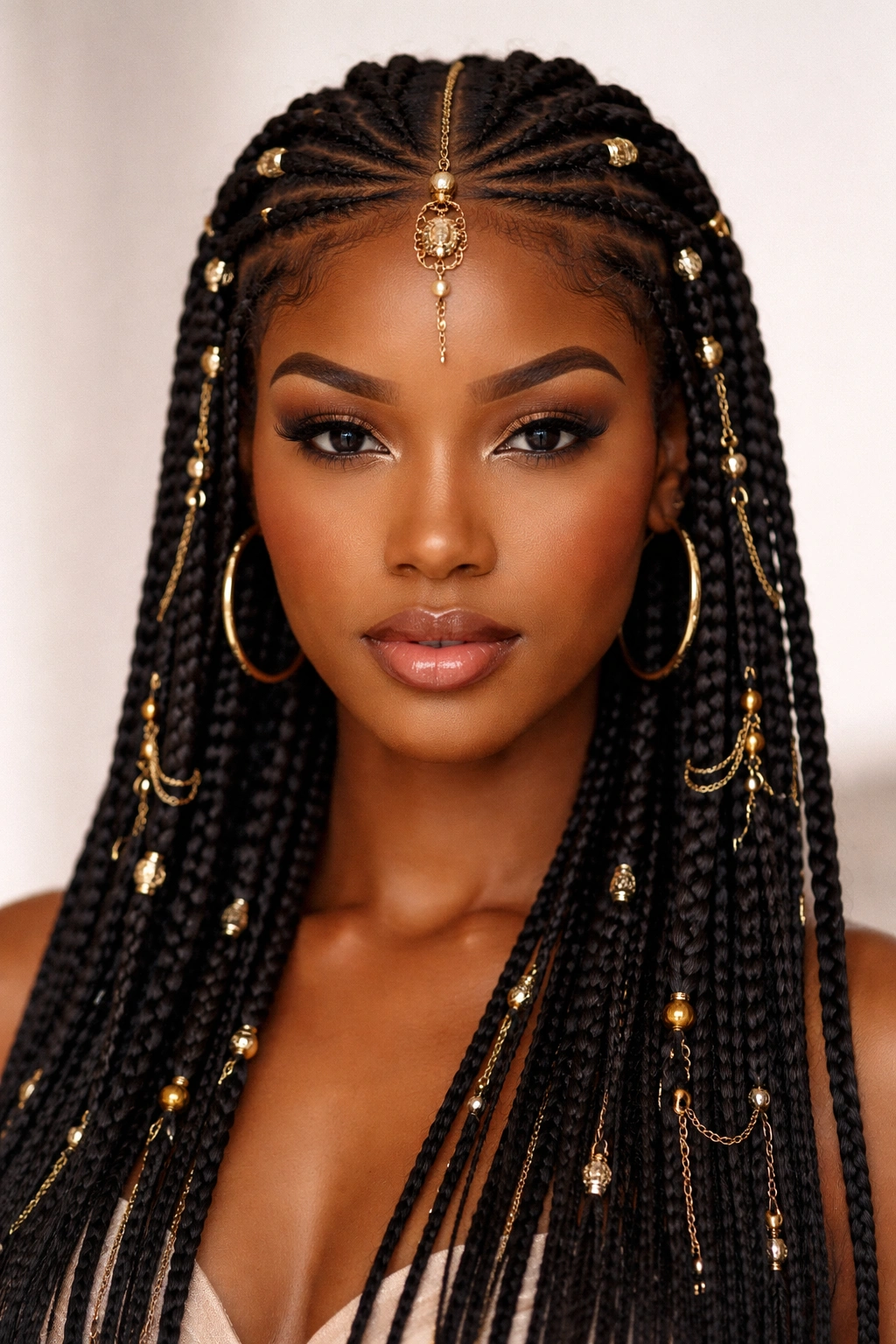
Hair jewelry — from delicate chains to decorative hair cuffs, rings, and intricate fasteners — elevates Fulani braids into jewelry territory. Rather than simply adding cuffs, you’re incorporating pieces that feel like actual accessories your hair is wearing. Chains might connect one braid to another, ornamental rings might be stacked in layers, or decorative pieces might dangle from certain braids, creating movement and catching light.
Turning Hair Into a Jewelry Showcase
Hair jewelry transforms braids from a hairstyle into a fashion statement. The pieces you choose tell a story about your personal style — whether you prefer delicate and dainty, bold and chunky, or eclectic and mixed-metal. This version works especially well for special occasions, events, or any time you want your hair to be the focal point of your entire look.
Selecting and Placing Hair Jewelry
- Metal type: Mix metals intentionally (gold with silver, rose gold with bronze) or commit to one metal family; mixed metals feel modern, monochromatic feels classic
- Weight distribution: Place heavier pieces toward the lower half of your braids where the weight is less noticeable
- Spacing and rhythm: Don’t place jewelry on every braid; leave some braids bare for visual breathing room
- Connection details: Use thin chains to connect jewelry pieces between braids, creating movement and visual interest
Pro tip: Invest in quality pieces that won’t tarnish or break; inexpensive jewelry often snags hair or leaves marks on your braids.
9. Multi-Colored Fulani Braids
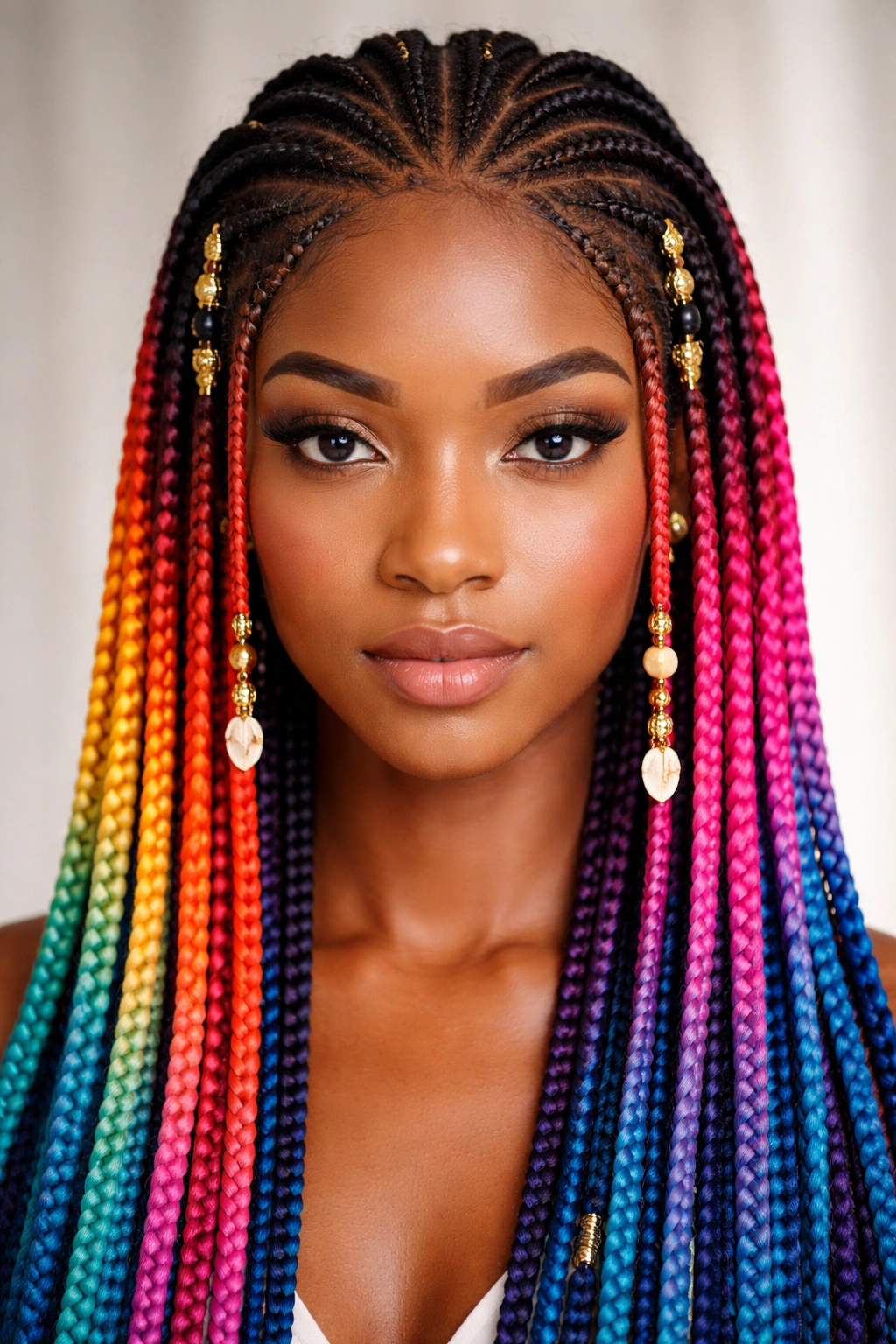
This bold variation uses two, three, or even four different colors of braiding hair mixed throughout your Fulani braids. You might alternate colors braid by braid (black, blonde, black, blonde), or create color blocks where certain sections feature one color combination and other sections feature different ones. The result is a vibrant, eye-catching style that works especially well for those with confident personal style.
Making Multi-Color Transitions Seamless
The key to pulling off multi-colored braids is intentionality. Rather than looking accidental or chaotic, your color placement should feel purposeful. This might mean organizing colors by heat (warm and cool separated) or creating an ombré effect where colors gradually transition from dark to light as braids descend.
Color Coordination Strategies
- Complementary colors: Pair colors that sit opposite each other on the color wheel (purple and yellow, blue and orange) for maximum visual pop
- Tonal variations: Use different shades of the same color (light blonde, medium blonde, dark blonde) for a sophisticated gradient effect
- Braid placement by color: Put all of one color down the center and frame with other colors, or scatter colors throughout for a more balanced appearance
- Skin tone consideration: Warmer colors (reds, golds, warm browns) complement deeper skin tones beautifully, while cooler colors (silvers, cool-toned purples) harmonize with lighter complexions
Worth knowing: Multi-colored braids photograph differently in natural light versus artificial light — what looks stunning outdoors might look entirely different under indoor lighting, so test in various lighting conditions.
10. Fulani Braids With Wrap Details
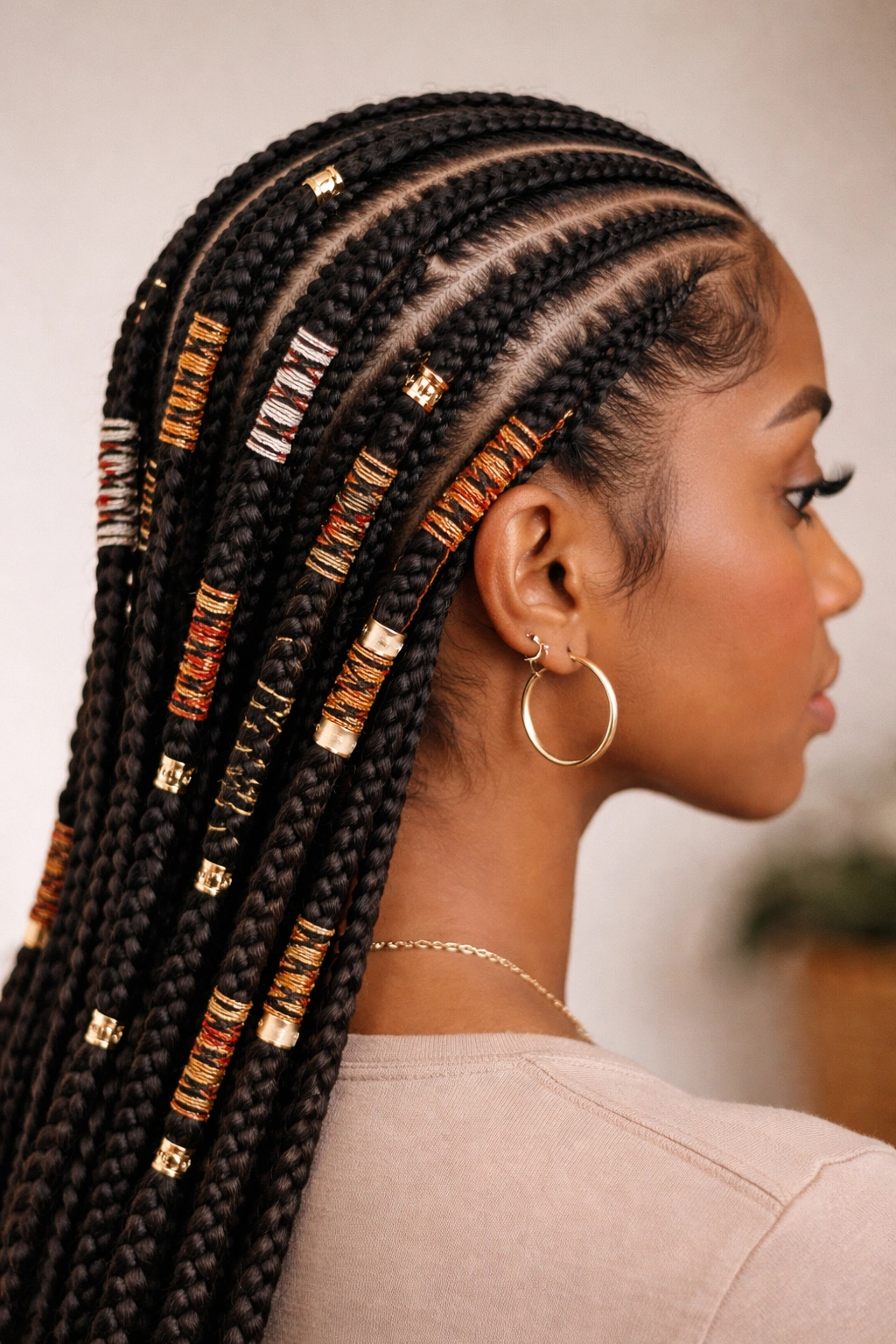
This refined variation incorporates decorative wrapping — usually using thin threads, ribbons, or strings in contrasting colors — wound around sections of your braids. Instead of adding standalone cuffs or beads, the wrapping becomes an integral part of the braid structure itself. You might wrap certain sections entirely or create stripes and patterns through selective wrapping. The effect is intricate, artistic, and deeply customizable.
The Artistry of Wrapped Details
Wrapping allows for unlimited creative possibilities. You can create geometric patterns with your wrapping, incorporate colors that complement your complexion, or use metallic threads that catch light dramatically. This version feels handmade and intentional in a way that mass-produced cuffs sometimes don’t — each wrap is applied by hand, making your style truly one-of-a-kind.
Creating Beautiful Wrap Patterns
- Thread selection: Use embroidery thread, silk thread, or specialized hair wrap thread; avoid thin cheap string that breaks easily
- Wrap width: Vary wrap widths from thin accent lines to broader sections for visual interest
- Pattern options: Create spiraling wraps, block wraps, or scattered individual wraps depending on your vision
- Color contrast: Choose wrap colors that contrast with both your natural hair and your braiding hair for maximum visibility
- Wrap placement: Start wraps about 2 inches from your scalp so they’re not competing with root visibility, and extend them down to roughly mid-braid length
Insider note: This style requires slightly more maintenance because if wrapping comes loose, it’s more visible than a slipped cuff. Regular maintenance appointments help keep wraps crisp and secure.
Final Thoughts
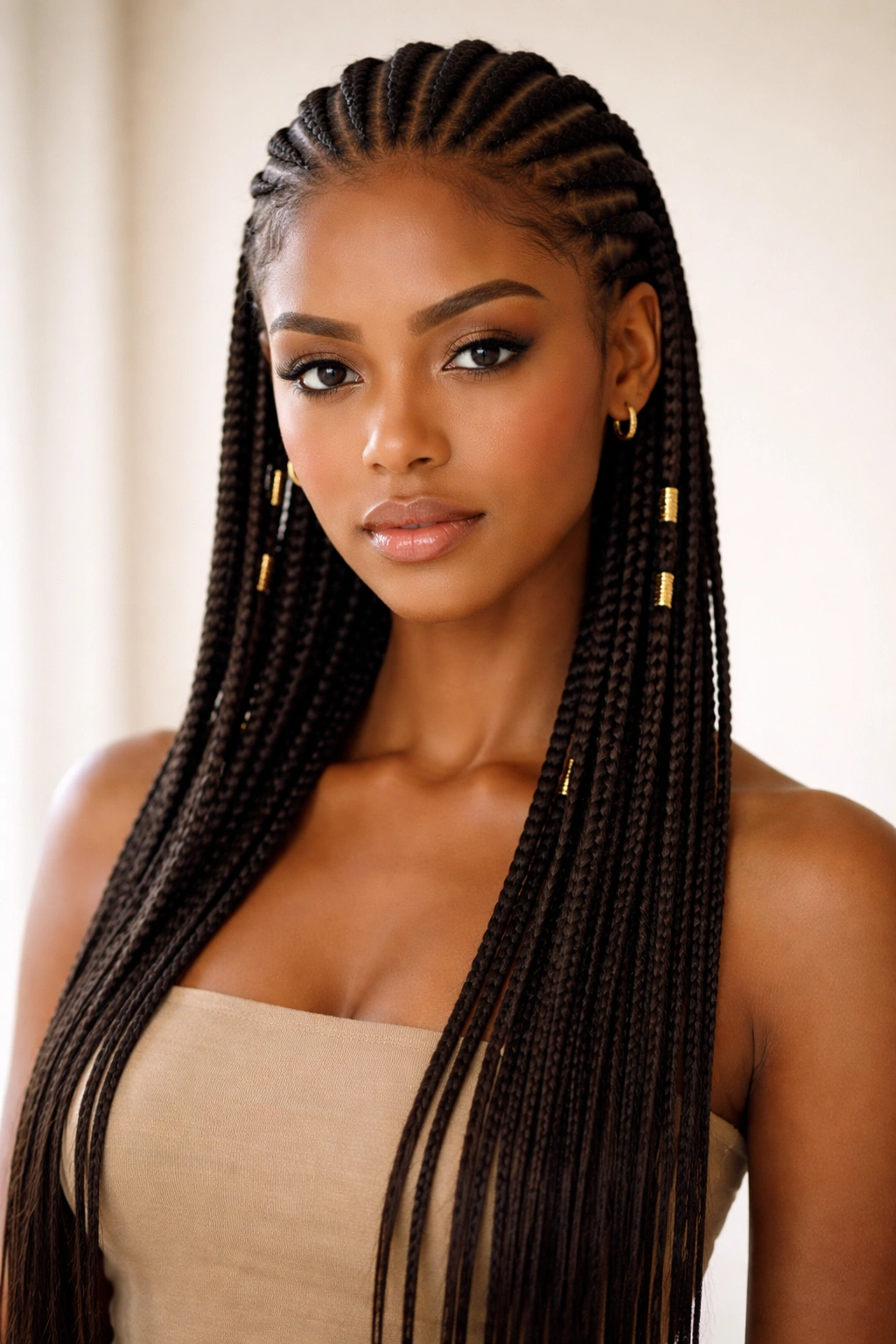
Fulani braids with straight-back styling offer a perfect blend of cultural significance, practical wearability, and artistic potential. Whether you choose the timeless elegance of classic gold cuffs, the modern edge of geometric patterns, or the artistic expression of wrapped details, this hairstyle adapts to your personal aesthetic while maintaining its inherent beauty.
The straight-back approach specifically creates an elongated, intentional look that works across face shapes, hair types, and personal styles. These braids can last several weeks with proper care, making them an excellent protective option that doesn’t sacrifice style for practicality. The key to pulling off any version is choosing the variation that genuinely resonates with your personal taste rather than simply following trends.
Remember that installation quality matters tremendously with Fulani braids. Taking time to find a skilled stylist who understands the style’s cultural roots and can execute your specific vision is worth the investment. Your braids will look better, feel more comfortable, and last longer when they’re installed with precision and care.
