

Fulani braids have become one of the most striking and versatile protective styles in modern hair culture, yet they’re often assumed to work best only on longer hair. That’s a misconception that could be holding you back from one of the most sophisticated, elegant braiding techniques out there. Medium-length hair is actually the perfect canvas for Fulani braids—it has enough length to showcase the intricate detail and movement of the style while being more manageable than waist-length hair, faster to install, and significantly easier to maintain through daily life.
The beauty of Fulani braids lies in their distinctive structure: thin, precise cornrows that are typically decorated with beads, cowrie shells, or metal rings, often featuring a center parting that creates that iconic crown-like effect. Originally worn by the Fulani people of West Africa, this style has evolved into countless variations that work beautifully on medium-length hair specifically. The reduced length actually makes the braids sit differently—they tend to have more volume and presence against your head, and they frame your face in ways that longer versions sometimes can’t achieve as dramatically.
What makes Fulani braids perfect for medium lengths is the balance they strike. You get enough hair to create substantial, visually interesting braids without the commitment, cost, and installation time required for longer protective styles. The style works equally well whether your natural hair texture is coily, kinky, wavy, or straight—though the installation process and final aesthetic will vary based on your starting texture. Understanding how to adapt the classic Fulani style to medium-length hair opens up a world of creative possibilities that go far beyond the standard long-hair versions you see most often.
1. Classic Fulani Crown with Center Part
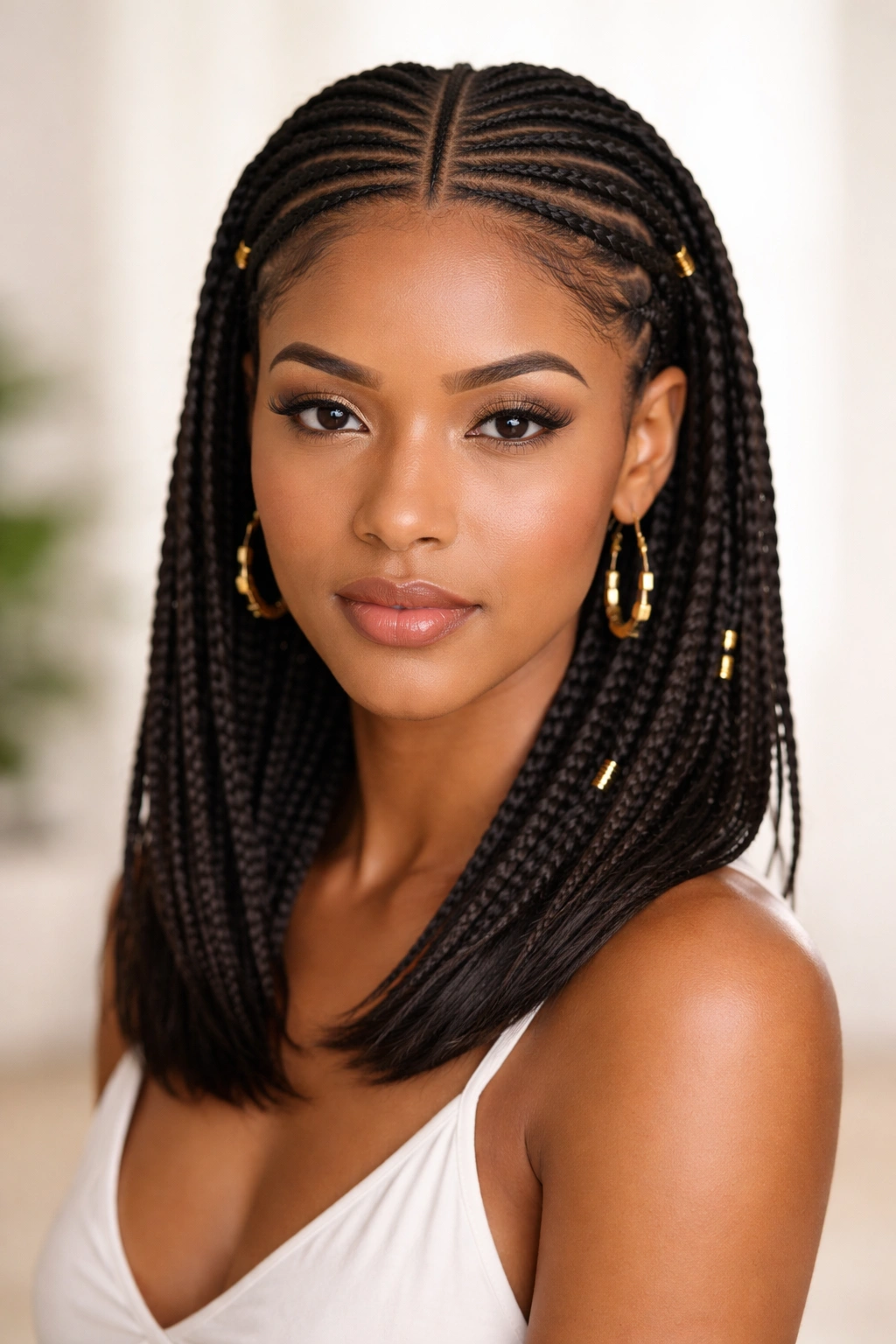
This is the foundational Fulani braid style that defines the entire aesthetic, and it translates beautifully to medium lengths. The look features a clean, precise center part running from your forehead straight back, with thin cornrows braided on either side that follow the natural contours of your head before meeting at the back. With medium-length hair, the braids typically fall to mid-back or just past your shoulders, creating an elegant line rather than a dramatic flow, but the visual impact is arguably more refined.
Why This Works for Medium Hair
The center-parted crown design actually looks more intentional and structured on medium-length hair because the braids have less weight pulling them down and more visual presence against your head and face. The style frames your facial features beautifully, and the proportions feel balanced—not stretched thin like it sometimes appears on very short hair, and not overwhelmed by excessive volume like it can on very long hair. Medium lengths hit the sweet spot where the braids maintain their shape throughout wear without requiring constant re-setting.
Installation and Styling Details
- Start with freshly washed, detangled, and blow-dried or air-dried hair for the cleanest parting
- Use a rattail comb to create your center part, working from your hairline straight back to your crown
- Braid sections should be thin and uniform—typically ¼ to ½ inch wide depending on how many total braids you want
- Plan for 20-30 braids total if you want a fuller look, or 12-16 if you prefer a more open, spacious appearance
- Add beads or rings strategically along 2-3 of the braids on each side for that signature Fulani aesthetic without overwhelming the look
- The entire installation typically takes 4-6 hours depending on braid count and bead placement
Pro tip: On medium hair, you can get away with slightly thicker individual braids than you might on longer hair, which actually speeds up installation and makes the style less hair-intensive overall.
2. Side-Swept Fulani Braids with Curved Parting
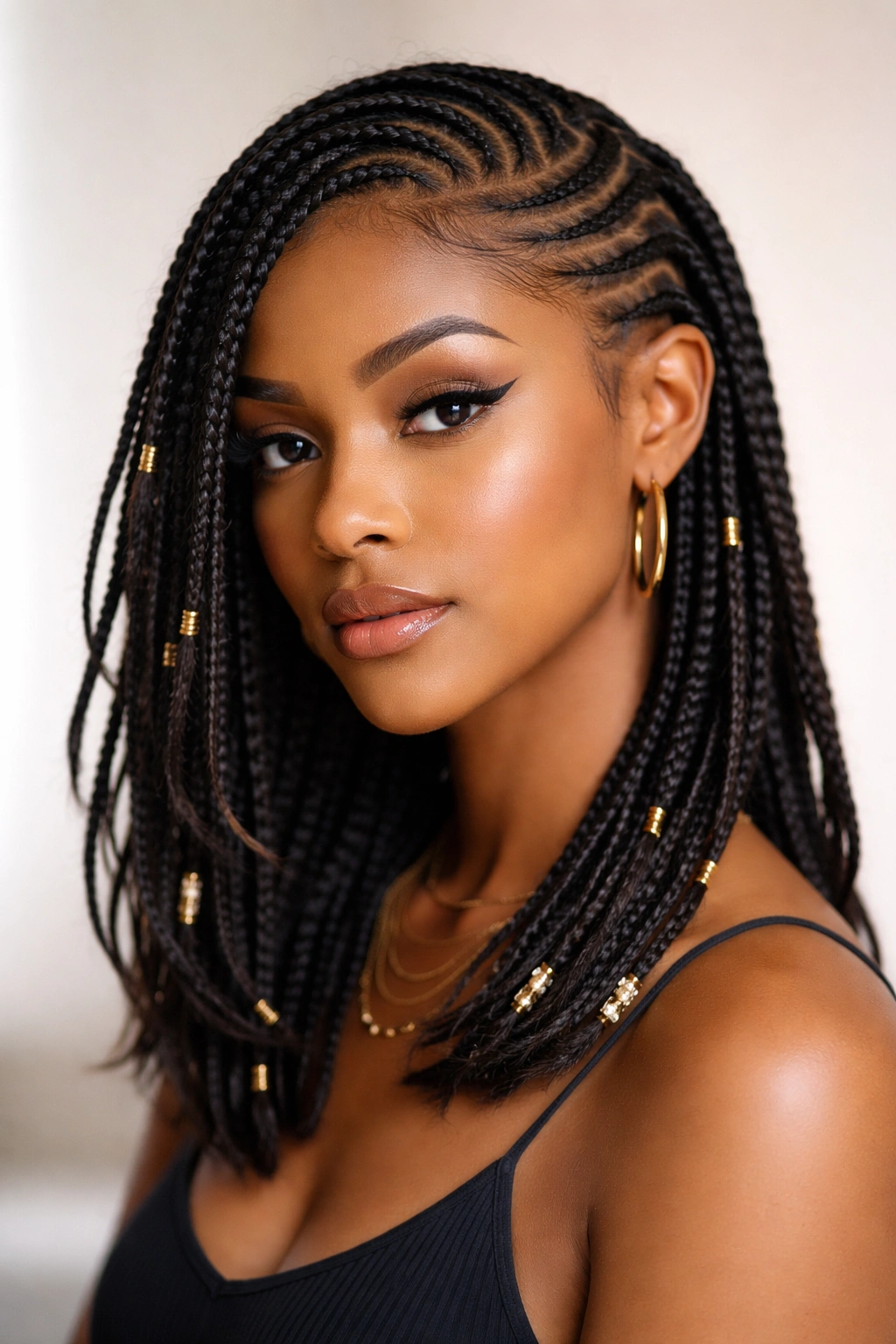
Instead of a traditional center part, this variation features an asymmetrical parting that sweeps from one side of your head toward the opposite ear, with cornrows following the curved line of the part. The braids then flow toward the lower side of the style, creating movement and a more dynamic, fashion-forward look. On medium-length hair, this creates an almost sculptural effect where the braids become a key design element rather than just a protective style.
What Makes This Version Special
The curved parting immediately reads as more modern and intentional than a traditional straight part—it’s still distinctly Fulani in structure, but the asymmetry makes it feel contemporary and editorial. Medium-length hair shows off this curved line beautifully because it’s not obscured by excessive length, and the braids have enough substance to frame one side of your face in a flattering way. This variation is ideal if you want something that feels elevated and polished rather than traditional.
How to Achieve the Look
- Decide which side you want your braids to sweep toward—typically the direction you naturally favor on one side
- Create your curved parting using a rattail comb, starting from your hairline and gently curving back toward the opposite ear
- Braid sections following the natural curve—this may feel less intuitive than straight braids, but it creates the signature movement
- Because of the asymmetrical design, you’ll have a smaller section on one side of the parting and a larger section on the other
- Beads work especially well placed along the longer side where they can catch light and draw attention to the curved braid pattern
Worth knowing: The curved parting is easier to maintain on medium hair because there’s less overall length to manage when touching up your part line between wash days.
3. Fulani Braids with Layered Lengths
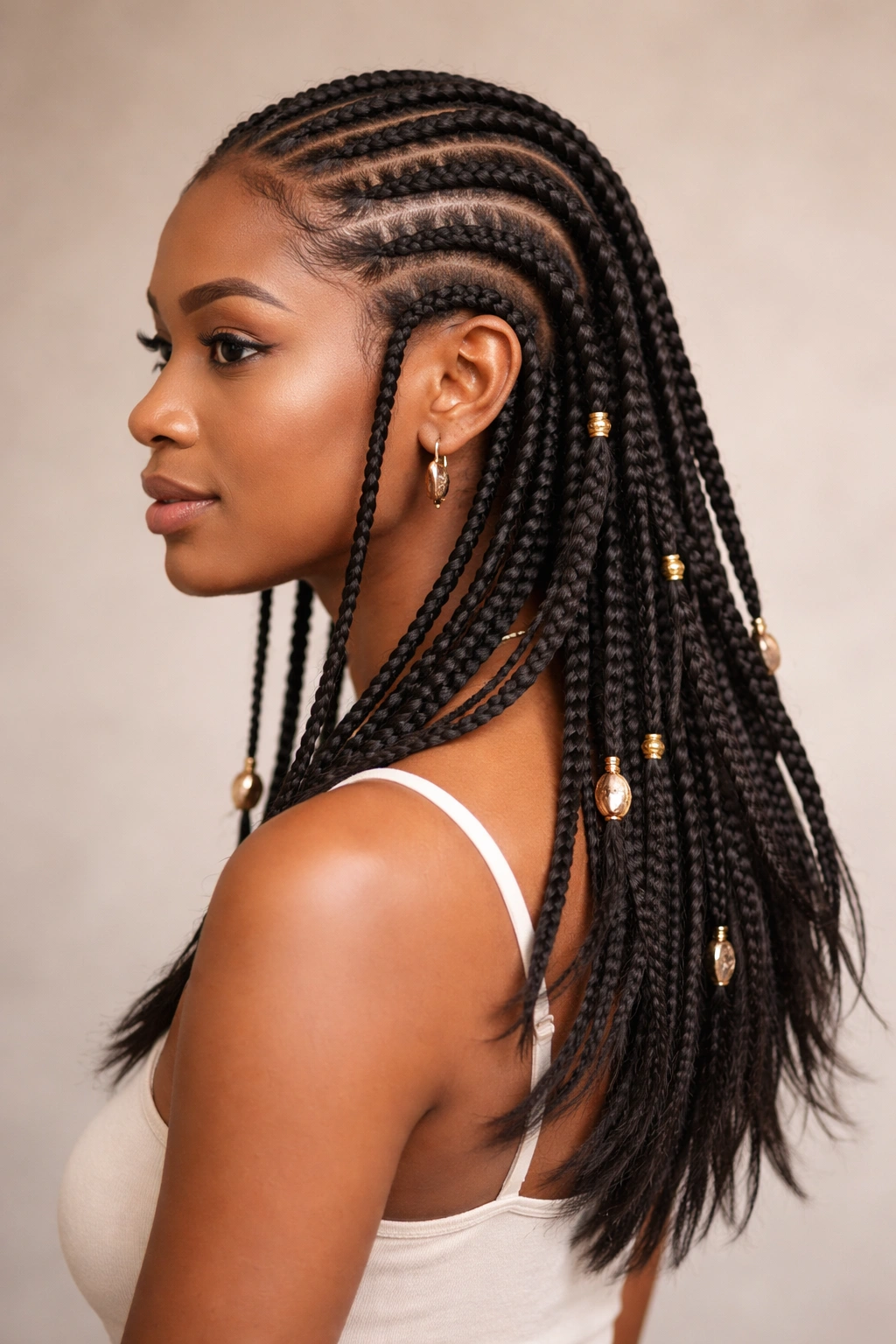
This style uses a staggered approach where not all of your braids are the same length—the braids closest to your hairline are slightly shorter, mid-section braids are medium length, and the braids at the back of your head are the longest. It creates a graduated, tiered effect that’s unexpected and visually dynamic. On medium-length hair, this approach actually works better than on extremely long hair because the length variation creates more distinct visual layers rather than blending into one continuous length.
The Visual Impact
Layered-length Fulani braids create dimension and movement that single-length styles sometimes lack. Your braids literally flow at different heights, which means they’re constantly catching light differently and moving independently of each other as you turn your head. This variation also gives you options for how you style the braids—you can pull the longer back sections into a low pony or bun while leaving the shorter front and side sections loose, or wear them all down for a more flowing appearance.
Installing Layered Fulani Braids
- Plan your length strategy before you start braiding—decide how much shorter the front braids should be (typically 1-3 inches shorter than your natural medium-length hair)
- Braid in your normal cornrow pattern, but intentionally cut or tie off your braids at graduated points
- If you’re adding extensions for length, you can cut the extensions at different points rather than trimming your natural hair
- The back braids should be your full medium length, mid-section braids perhaps 2 inches shorter, and front braids another 2 inches shorter than that
- Use beads to mark the visual transitions between different length sections, placing them at the points where the length changes
Insider note: Layered-length braids actually feel lighter and take less time to install because you’re working with less total hair volume, especially if you’re not using extensions.
4. Fulani Braids with Shaved or Fade Sides
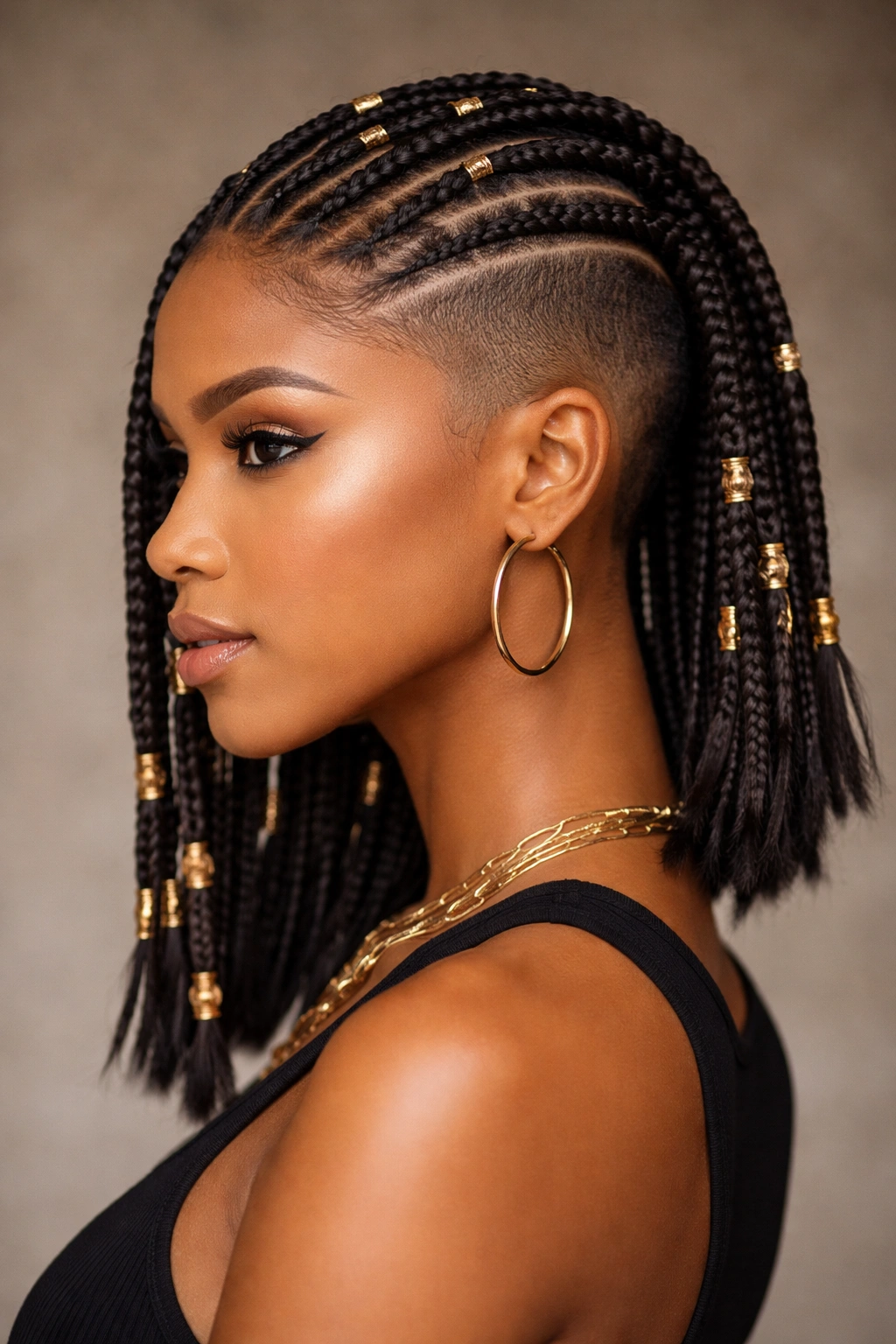
This bold variation pairs the traditional Fulani braids with shaved or faded sides, creating extreme contrast between the intricately braided sections and the bare or closely-cropped scalp. It’s a striking, fashion-forward take that reads as intentional and edgy. On medium-length hair, the shaved sides actually make the braids appear longer and more substantial because they have nothing competing for visual attention.
Why This Works as a Statement Style
The shaved-sides approach transforms Fulani braids from a classic protective style into a high-fashion statement. The clean lines of the fade or shave emphasize the precision of your cornrow braiding, and the contrast creates a sculptural quality that’s genuinely artistic. This variation particularly suits medium-length hair because the braids themselves become the entire focus—there’s no long hair obscuring the sides or distracting from the design you’ve created.
Execution and Maintenance
- Work with a barber or experienced stylist for the fade or shave to ensure clean lines that complement your parting
- Consider which parting style you want before shaving—a center part with shaved sides is classic, but a curved or asymmetrical part is equally striking
- The shaved area typically follows your natural hairline and extends about ½ to 1 inch back from the side of your head
- Plan to have your fade or shave touched up every 3-4 weeks if you want to maintain the sharp definition
- The braided section itself remains your full medium length, and the contrast makes them appear even longer
- This style requires more commitment than traditional Fulani braids because of the ongoing maintenance of the faded section
Important to know: Shaved-sides Fulani braids are definitely more of a fashion statement than a low-key protective style—wear this version if you’re looking to make a visual impact and don’t mind regular stylist visits.
5. Fulani Braids with Beaded Ends
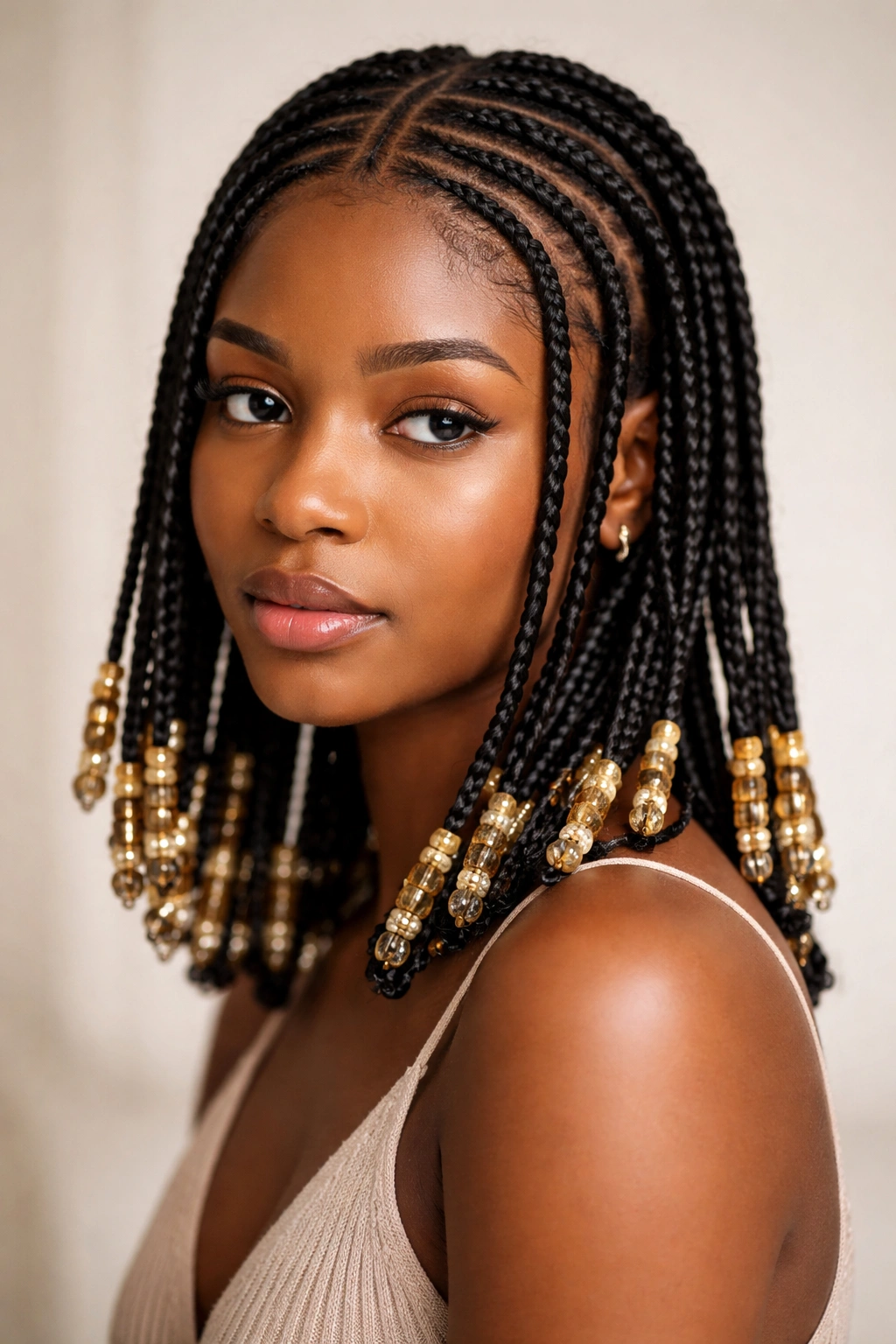
While most Fulani variations feature beads throughout the braids, this specific style emphasizes concentrated beading at the very ends of each braid, sometimes creating a beaded “cuff” effect rather than distributing beads evenly throughout. The result is braids that feel lighter and less weighed down for most of their length, but with visual interest and movement concentrated at the tips. On medium-length hair, this creates a particularly elegant look because the beaded ends have room to move and catch light.
The Aesthetic and Feel
Beaded-ends Fulani braids have a sophisticated, almost jewelry-like quality—your braids become an accessory as much as a protective style. The concentrated weight at the tips means the braids have more movement and swing slightly when you turn your head or move, which is particularly noticeable on medium lengths. The beads can be metal rings, traditional glass beads, or even acrylic options depending on your aesthetic preference, and mixing different bead styles creates even more visual interest.
Selecting and Placing Beads
- Choose beads that complement your skin tone and personal style—gold tones read as warm and luxe, silver as cool and modern, and natural materials as bohemian and earthy
- Standard bead size is typically ¼ to ½ inch in diameter, which works well on braids of normal thickness
- Slide 3-6 beads onto each braid tip depending on how much weight you want and how thick your braids are
- Secure beads with a small elastic band or by carefully melting synthetic thread with a lighter (have a professional do this if you’re unsure)
- Mix and match bead colors and finishes for a more personalized, curated look
- On medium-length braids, 4-5 beads per braid is usually the sweet spot for visual impact without excessive weight
Pro tip: Place beads only on alternating braids if you want a subtler look, or on every third braid for an interesting pattern rather than uniform beading.
6. Half-Up, Half-Down Fulani Braids
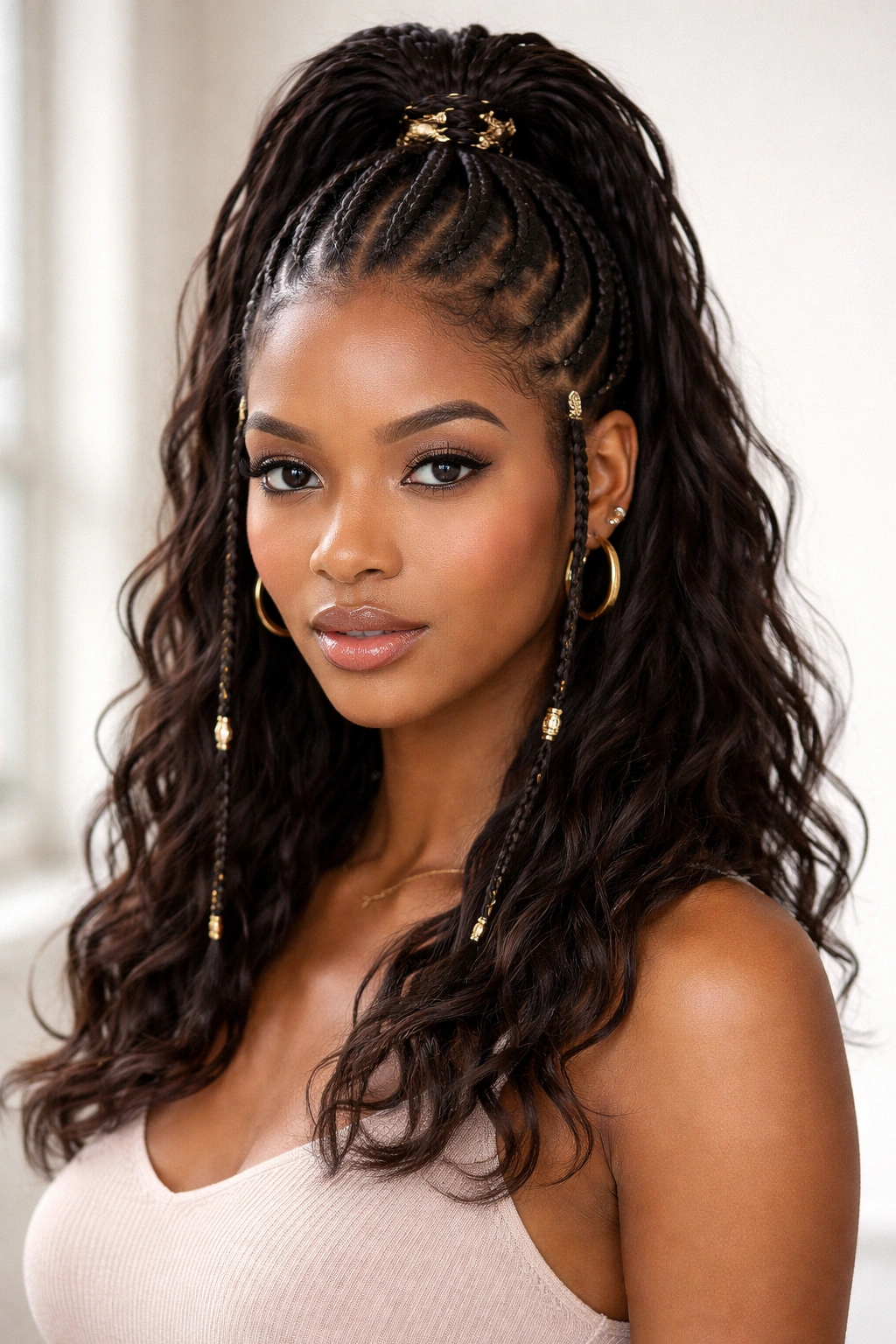
This versatile variation keeps your braids in place but incorporates your natural unbraided hair by pulling the upper portion of your braids into a high pony, bun, or braid-out style while leaving the lower section loose. It’s a hybrid style that gives you the protective benefits of Fulani braids while showcasing your natural texture or allowing for styling variety. On medium-length hair, the half-up approach is particularly flattering because it frames your face while keeping hair off your shoulders.
Styling Flexibility
The half-up, half-down method transforms your Fulani braids from a static style into something dynamic and changeable. You can wear it fully down one day, half-up the next, fully up the day after that—all without reinstalling your braids. The unbraided lower section can be textured, left smooth, curled, or even styled into a second set of braids or twists. On medium lengths, this versatility is genuinely valuable because you’re not locked into one look for the entire duration you wear the style.
Creating the Half-Up Effect
- Install your Fulani braids normally with a center or side part
- Decide where you want your half-up section to begin—typically at the crown or slightly above
- Gather the upper braids together and secure them into a pony using a hair tie that matches your braid color
- Style the gathered section however you like—leave it as braids, wrap it into a bun, or unravel the braids into a voluminous braid-out
- The lower unbraided section hangs freely and can be finger-combed for a loose, textured look
- Add a decorative hair cuff or wrap where the ponytail sits to make it feel intentional and finished
Worth knowing: If your natural hair is textured, the half-down section will likely look fuller and more voluminous than the braided section—this contrast can actually be really striking and beautiful.
7. Fulani Braids with Decorative Hair Cuffs and Wraps
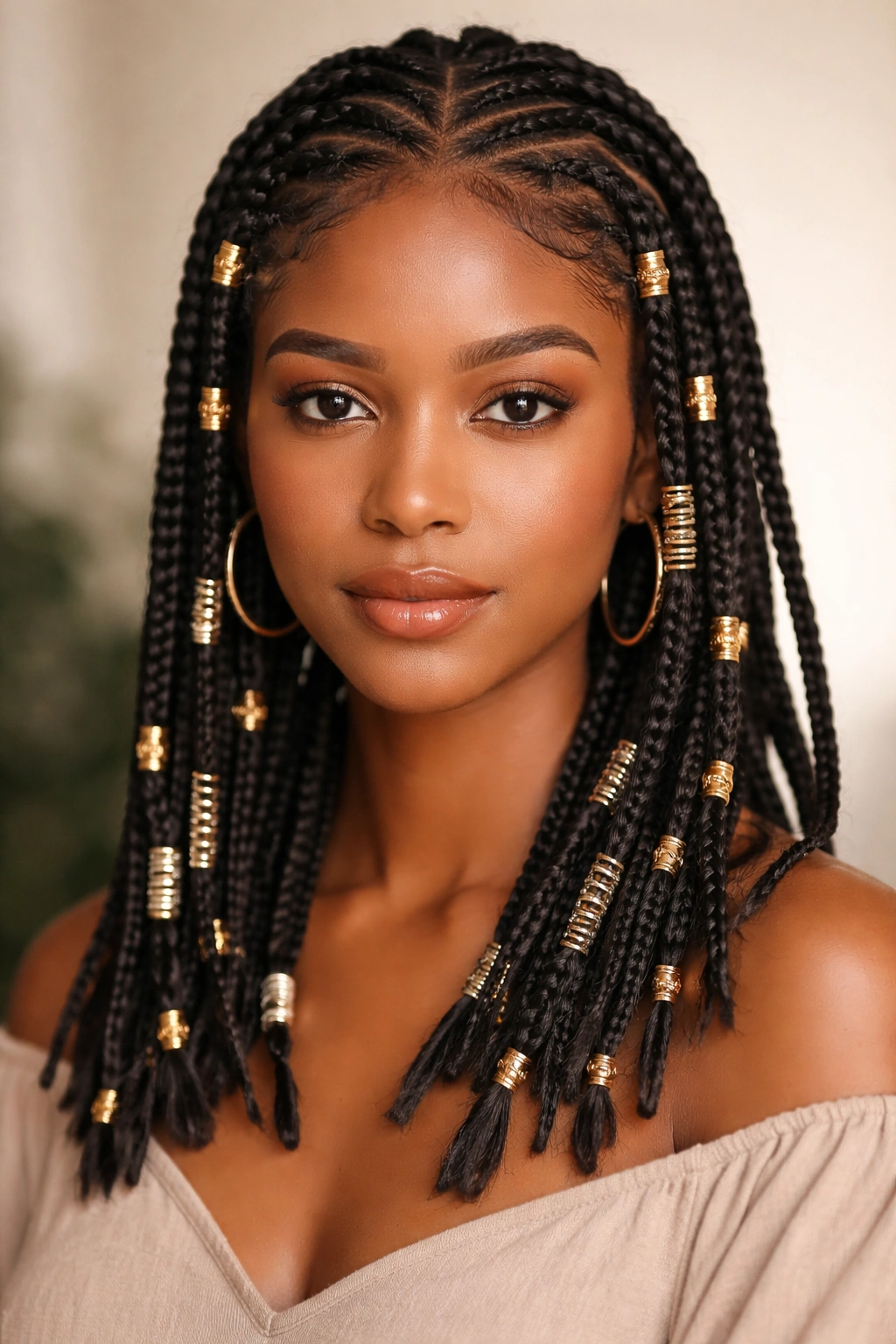
Beyond traditional beads, this style uses metallic hair cuffs, decorative wraps, or even thin strips of fabric wound around sections of your braids. The cuffs and wraps add substantial visual interest and can be mixed and matched to create custom color combinations. On medium-length hair, decorative cuffs work beautifully because they’re spaced along the length of your braids and create clear visual markers without overwhelming the style.
Material and Design Options
Hair cuffs come in endless varieties: thin gold or silver metal rings, adjustable clamp-style cuffs, embellished cuffs with gemstones or pearls, or simple threaded wraps in contrasting colors. You can layer multiple cuffs on a single braid, create a pattern by placing cuffs on every other braid, or use different colored wraps on different sections. On medium-length braids, spacing is key—typically placing cuffs every 2-3 inches along the braid creates visual rhythm without looking cluttered.
Installation Process
- Have your braids in place before adding cuffs (some cuffs slip onto braids post-installation, others may require assistance during braiding)
- If using clamp-style cuffs, position them where you want them and gently close them—not so tight that they crimp or damage your braids
- For threaded or wrapped cuffs, wind the material smoothly around the braid section, keeping tension even to avoid bulging or gaps
- Consider your color palette—metallic cuffs with beads, or monochromatic wraps with one color throughout, or a rainbow gradient down your braids
- Mix matte and shiny finishes for more sophisticated visual interest
- On medium lengths, you’ll typically have 4-6 cuff placements per braid depending on braid length and how bold you want the look
Pro tip: Use clear or nude hair cuffs along with beads for a more subtle, refined aesthetic, or go bold with contrasting colors and mixed metals for a fashion-forward vibe.
8. Fulani Braids with Incorpor ated Accessories (Rings, Clips, Charms)
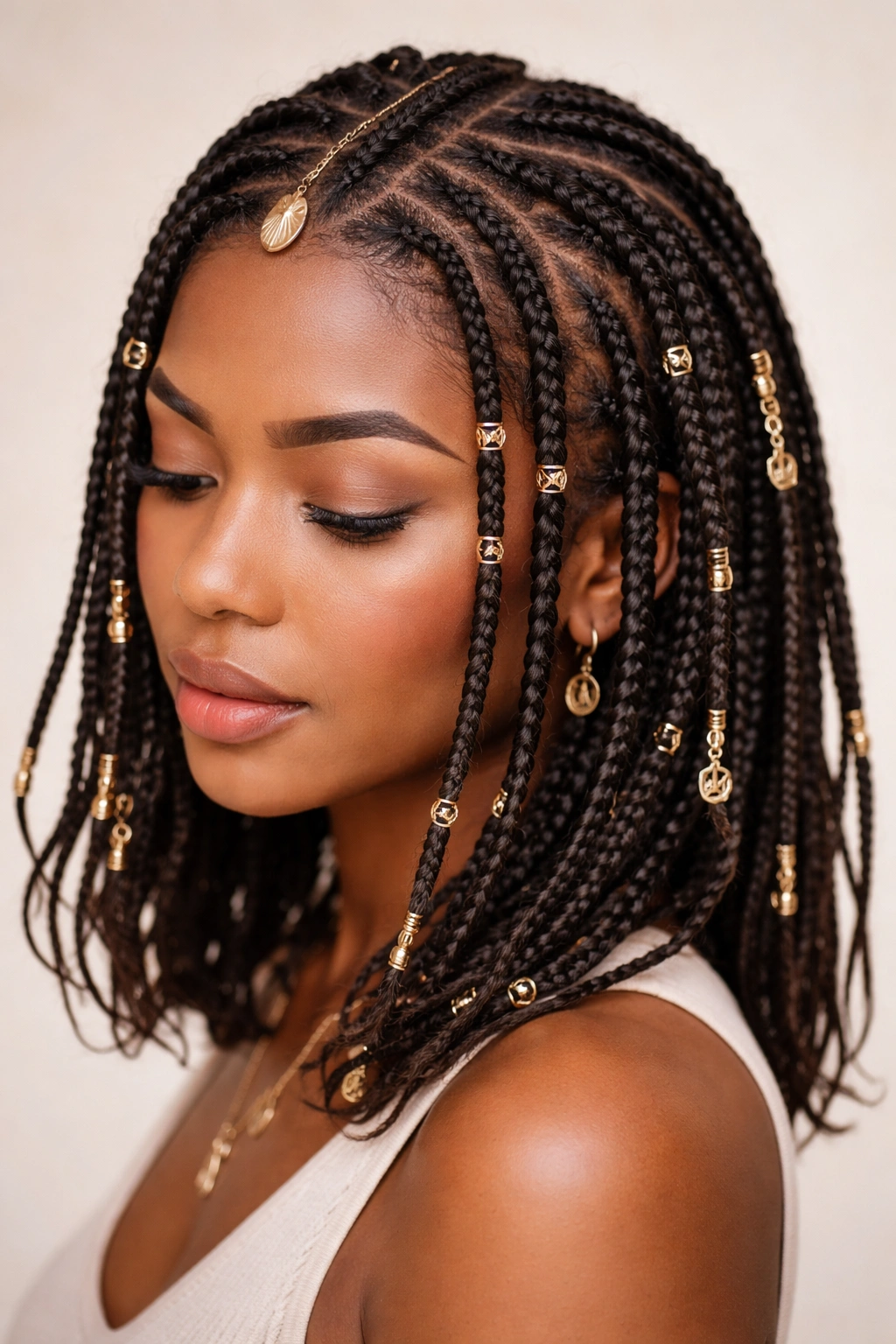
This creative spin incorporates small accessories like delicate gold rings slipped over your braids, hair clips attached to sections, hanging charms or tassels, or even small pendants worked into the braid design. It transforms your Fulani braids into a wearable art piece. On medium-length hair, these accessories have enough space to hang and move without getting tangled, and they create an almost personalized, curated aesthetic.
Types of Accessories to Consider
- Delicate rings in gold, silver, or rose gold can be slipped directly onto braids
- Small hair clips or claws can be attached to braids or to the bead placement areas
- Hanging charms, small bells, or tassels can be attached with thin thread or wire
- Decorative string or yarn can be woven into braids for extra texture and color
- Small gemstone or pearl pieces can be incorporated into beading sections
- Custom name charms or personalized pieces make the style uniquely yours
Making It Cohesive
- Choose a consistent color palette—all warm metals, all cool metals, or intentional color blocking
- Decide whether you want accessories throughout your braids or concentrated in specific sections
- Balance is key—too many different types of accessories can look chaotic, while strategic placement feels intentional and editorial
- On medium-length braids, spacing accessories every 2-3 inches prevents visual overwhelm
- Mix textures—combining shiny beads with matte rings or combining multiple charm styles actually looks more curated than using just one type throughout
Insider note: This style works especially well if you want something that feels completely personal and unique—your accessories tell a story about what matters to you.
9. Fulani Braids with Gradient Bead Effect
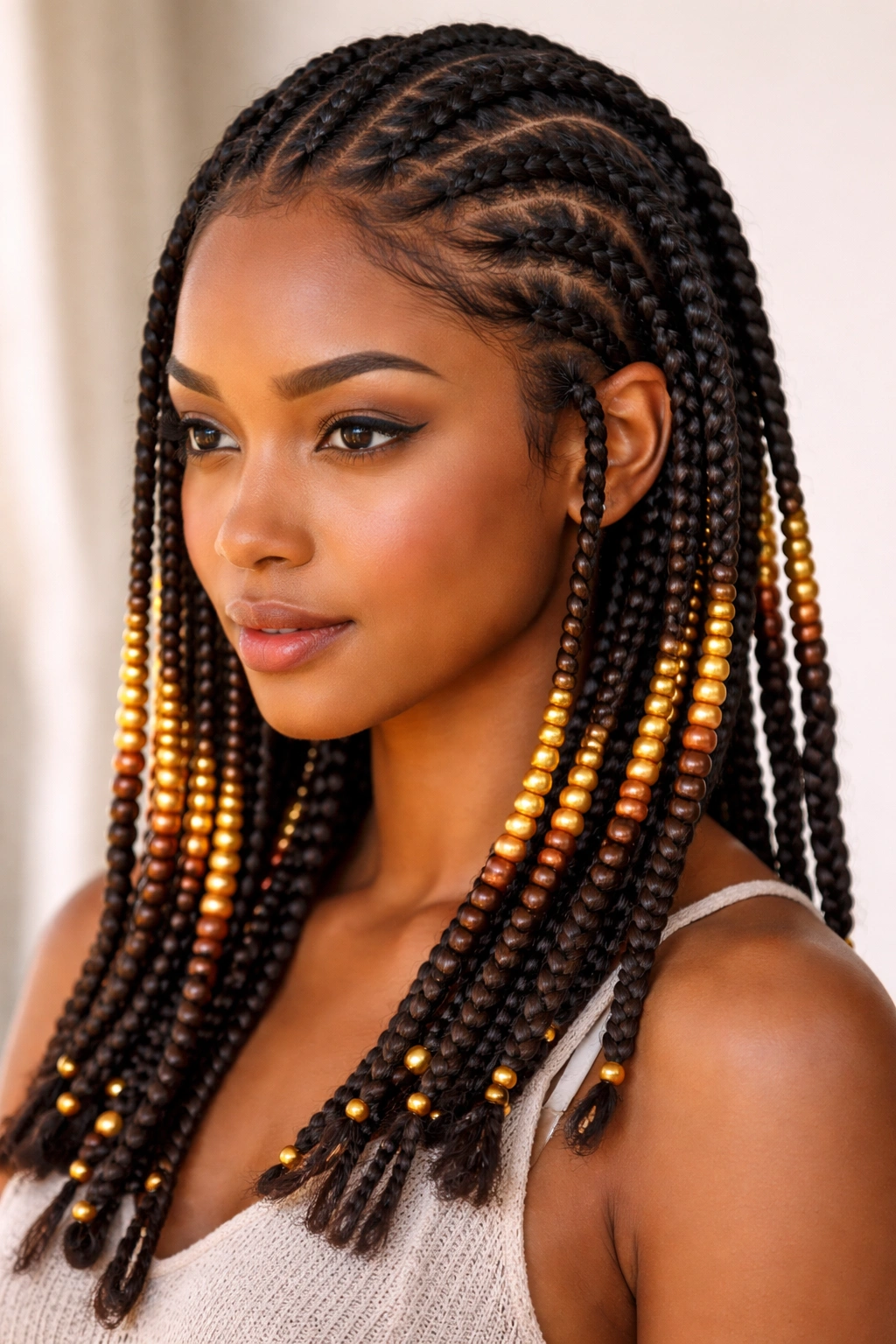
This sophisticated variation uses beads in a color gradient—typically starting with one color at the roots and gradually transitioning to a different color by the tips. The effect is subtle but gorgeous, creating depth and visual flow. On medium-length hair, a gradient effect is particularly striking because it’s visible throughout the entire length of your braids without requiring excessive beading.
Creating Your Color Gradient
- Choose two colors that contrast with each other but feel harmonious—gold to bronze, silver to rose gold, light to dark, or even contrasting colors like blue to purple
- Plan your transition—you can change colors every few beads for a gradual shift, or change every 1-2 beads for a more dramatic gradient
- Start with your lighter or brighter color near the roots and shift toward darker or muted tones as you move down
- Alternatively, concentrate color at the tips and use a neutral tone closer to the roots for a reverse gradient effect
- On medium-length braids, you’ll have room for a complete gradient without looking sparse
Execution Tips
- Lay out all your beads before you start beading to visualize your gradient and make sure you have enough of each color
- Work methodically, sliding beads onto each braid in your predetermined color order
- Secure beads with clear thread or tiny elastics so colors stay in place
- Consider using all the same bead material (all metal, all glass, or all acrylic) while varying colors for a cohesive look
- Step back and look at your gradient from a distance to make sure the color transition reads clearly
Worth knowing: Gradient beading takes more time than single-color beading, but the visual payoff is significant—it adds sophistication and intentionality to your style.
10. Fulani Braids with Minimal Ornamentation (Clean and Sleek)
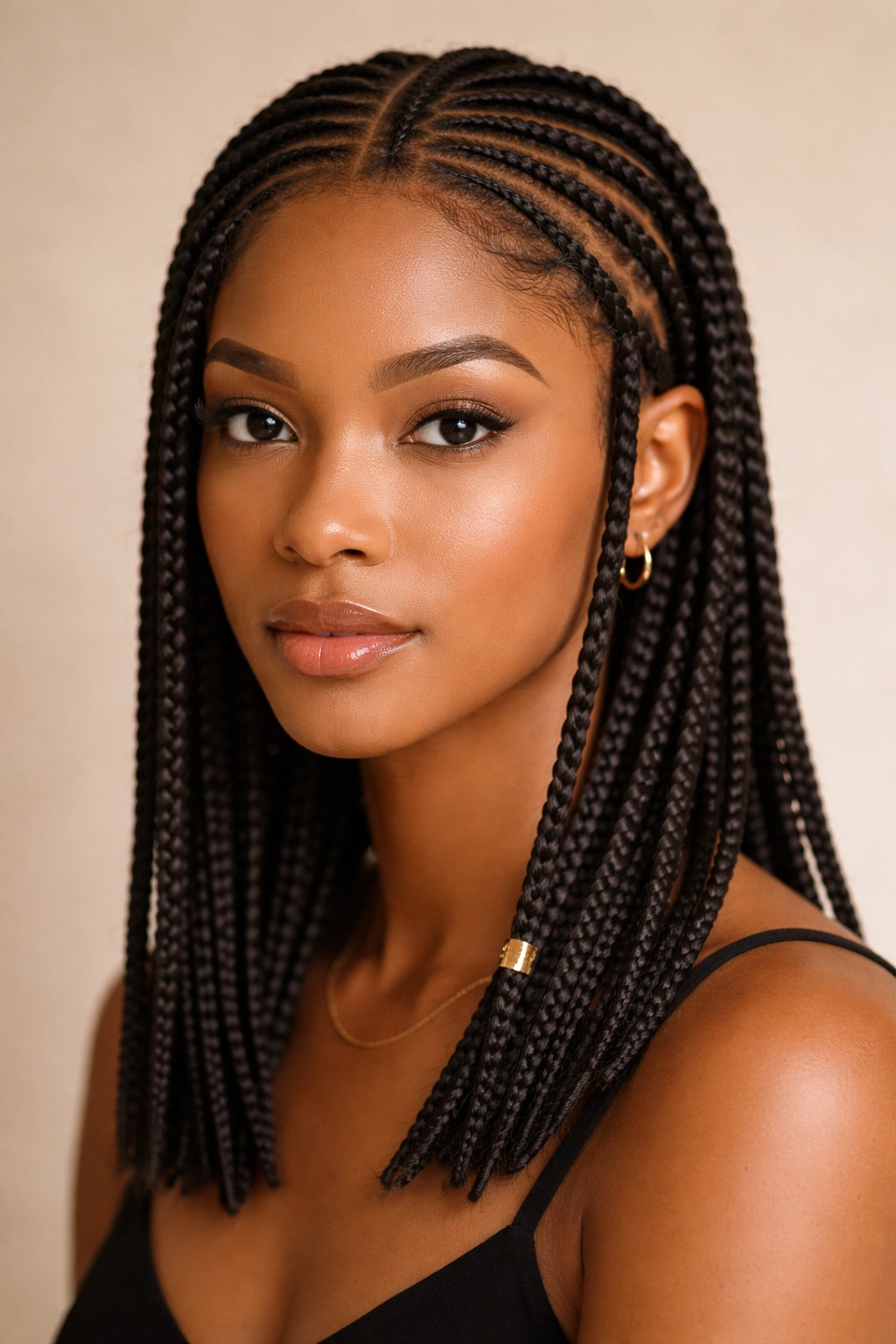
Not every Fulani braid style needs extensive beading or accessories. This minimal interpretation features clean, precise cornrows with little to no ornamentation—maybe just a simple bead or ring on a single braid, or no beads at all. It’s understated, elegant, and allows the actual braiding technique and texture of your hair to be the star. On medium-length hair, this clean aesthetic is particularly striking because it emphasizes the skill of the braiding and the precision of the parting.
The Appeal of Minimalism
A clean, unadorned Fulani braid style reads as sophisticated and intentional rather than simple. It’s perfect if you prefer a more subtle protective style that works in professional or conservative settings, or if you want the focus to be on the artistry of the braiding itself. The simplicity also means faster installation, easier maintenance, and no worry about beads falling off or accessories breaking. On medium lengths, minimal ornamentation actually makes your braids appear neater and more refined.
Styling Without Ornamentation
- Focus on perfect parting and uniform braid thickness for a polished look
- Keep your braids tightly and consistently twisted to emphasize the clean aesthetic
- Consider a single accent bead placed strategically on one or two braids as your only decoration
- Use moisturizing products to keep your braids looking fresh and your natural hair at the roots healthy and defined
- The style relies on precision, so take extra time during installation to ensure even tension and straight lines
- Style your unbraided hair or roots with a small amount of edge control for a groomed appearance
Pro tip: This minimal version is ideal for medium-length hair because your braids have enough substance to look intentional and designed without needing heavy ornamentation.
Final Thoughts
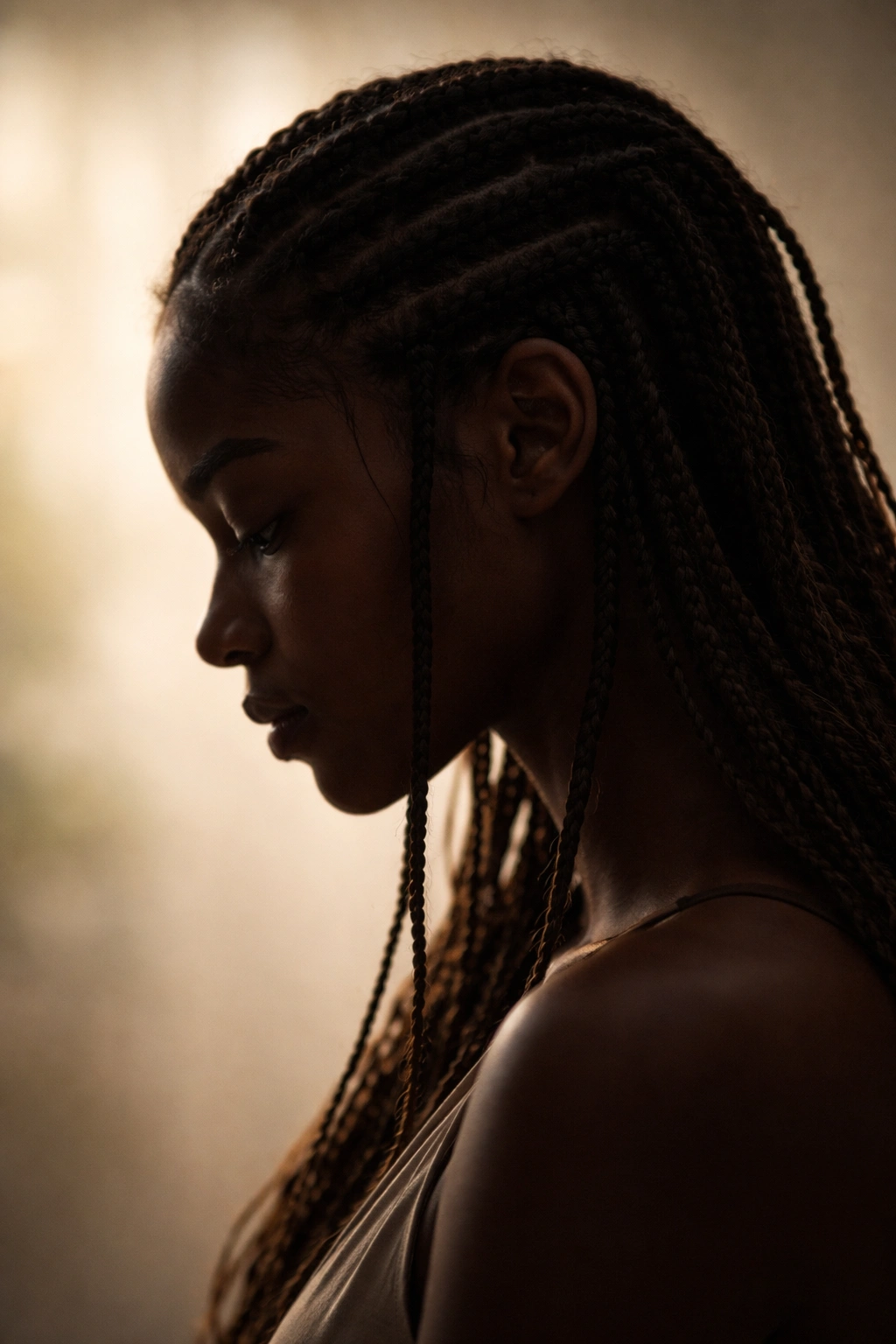
Fulani braids on medium-length hair offer a sweet spot of styling possibilities—they’re substantial enough to feel like a true protective style, yet manageable enough not to require an all-day installation or significant investment in extensions. The key is understanding that medium length isn’t a limitation for Fulani braids; it’s actually an opportunity to showcase variations that longer hair sometimes overwhelms visually. Whether you gravitate toward the classic center-parted crown, experimental asymmetrical designs, or minimal-ornamentation elegance, medium-length hair gives you the perfect canvas for getting the look right.
The real magic of Fulani braids on medium lengths is the balance they strike between styling drama and everyday wearability. Your braids will frame your face beautifully, require less frequent salon touch-ups than longer styles, and cost less to install and maintain. You can change your look frequently without sacrificing the protective benefits—wear your braids down one day, half-up the next, or even experiment with updos that feel fresh and interesting. The style works across hair textures, skin tones, and personal aesthetics, which means there’s genuinely a Fulani braid variation here that fits your specific life and preferences.
What matters most is choosing a skilled stylist who understands how to customize Fulani braids specifically for medium lengths rather than simply scaling down a long-hair version. The parting should be precise, the braid tension should be comfortable (never tight enough to cause damage), and the overall design should feel intentional and flattering to your face shape. Once you find that stylist and settle on your preferred variation, you’ll have a protective style that looks polished, feels comfortable, and gives your natural hair the break it needs to thrive.