



Igbo women have long mastered the art of using hair as a canvas for cultural expression, celebration, and personal artistry. Whether you’re attending a wedding, festival, naming ceremony, or other special gathering, traditional Igbo hairstyles offer a striking way to honor heritage while making a bold visual statement. These styles range from intricate braids adorned with beads and jewelry to elaborate updos that showcase craftsmanship and take hours to perfect. What makes Igbo hairstyling so compelling is that it’s never just about aesthetics—each style carries meaning, tells a story, and connects the wearer to generations of tradition and cultural pride.
The beauty of exploring these hairstyles isn’t limited to those with Igbo heritage. These designs have influenced contemporary fashion globally, and understanding their origins and techniques deepens appreciation for this rich artistic tradition. Many of these styles integrate seamlessly with modern fashion sensibilities while maintaining their cultural authenticity. Whether you’re preparing for a major event, exploring protective styling options, or simply wanting to celebrate and understand African hair artistry, traditional Igbo hairstyles offer practical elegance alongside deep cultural significance.
Event styling within Igbo culture goes beyond simply looking good—it’s about presenting yourself with intention, respect, and connection to your community. The right hairstyle can elevate an entire outfit, coordinate with ceremonial dress codes, and demonstrate knowledge of and respect for cultural traditions. Let’s explore fifteen traditional Igbo hairstyles that remain popular and stunning for events.
1. Igba Mgbada (Igbo Crown Braids)
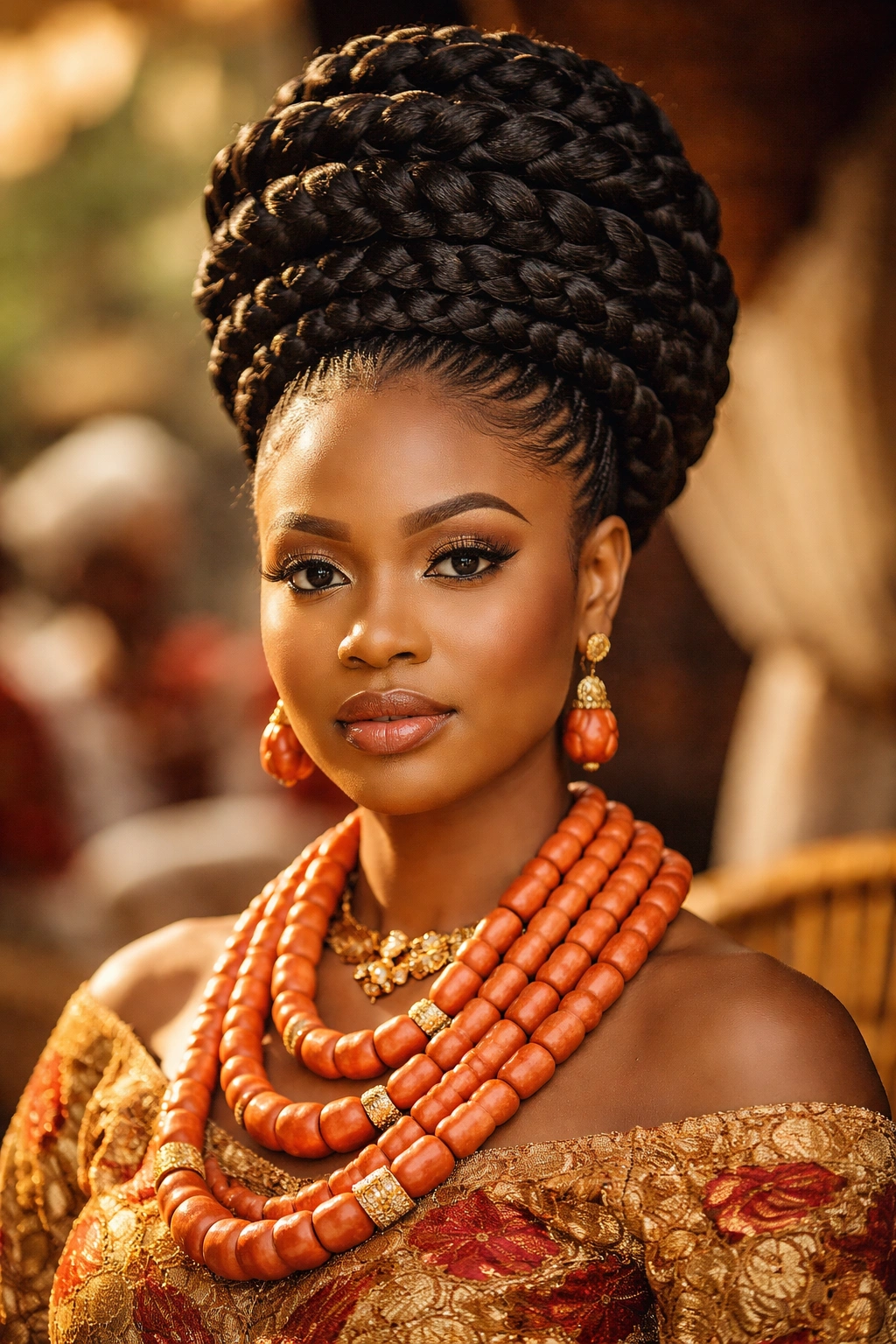
Igba Mgbada represents one of the most regal and immediately recognizable Igbo hairstyles, featuring tall, stacked braids arranged in a crown-like formation around the crown of the head. The style creates an imposing, majestic silhouette that commands attention at any gathering. This hairstyle works beautifully with traditional Igbo attire, particularly the wrapper and blouse combinations worn at weddings, naming ceremonies, and cultural celebrations. The height and structure of Igba Mgbada make it instantly photogenic and unmistakably tied to Igbo cultural identity.
Why This Style Makes Such an Impact at Events
The vertical lines of Igba Mgbada create an elongating effect that flatters most face shapes, while the structured crown formation adds an automatic sense of occasion and formality. This hairstyle was historically worn by women of status and achievement, so wearing it signals respect for the event and those celebrating it. The intricate braiding pattern requires significant skill and patience, which means choosing this style demonstrates serious commitment to your event presentation. Many event attendees will recognize this style immediately as connected to Igbo heritage, making it an excellent choice for cultural celebrations.
Essential Details for Getting This Style Right
- Braiding pattern: Multiple cornrows or box braids are arranged vertically from the front to the back, stacked in tiers to create height and dimension rather than lying flat against the scalp
- Typical height: The crown section rises 3-6 inches above the natural hairline, creating dramatic vertical presence
- Adornments: Beads, threads, and jewelry are typically woven throughout the braids, with heavier pieces concentrating at the crown for visual impact
- Prep time: Plan for 4-6 hours of styling, depending on hair length and the complexity of your chosen bead or jewelry placement
- Best paired with: High-necked blouses, traditional wrappers, and large collar statements that complement rather than compete with the dramatic crown
Pro tip: Ask your stylist to slightly lean the crown braids toward the back rather than perfectly centered—this creates more elegant proportions when viewed from the side profile in photos.
2. Afikpo Braids with Coral Beads
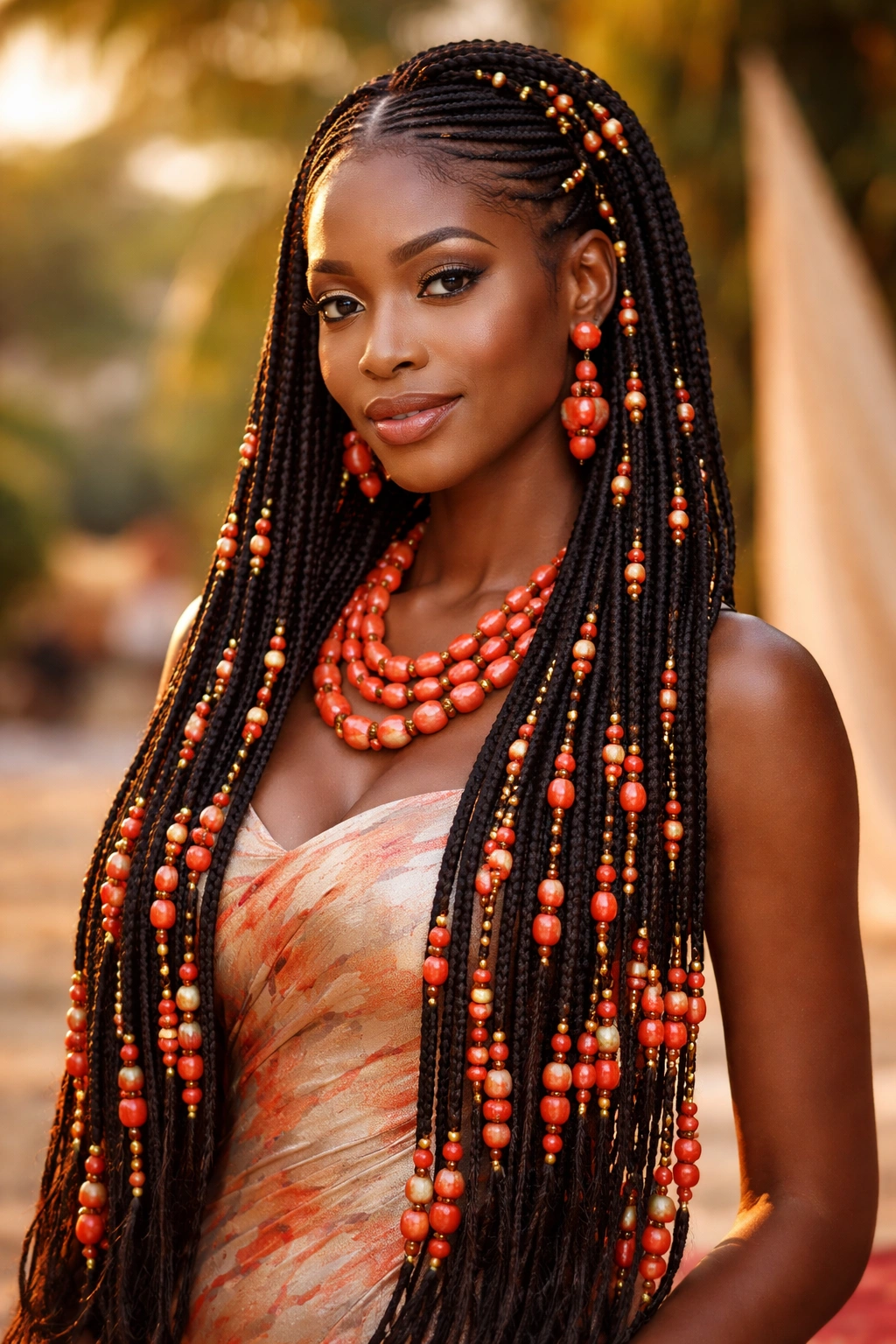
Afikpo braids originated in the Afikpo region of Igboland and feature long, thin cornrows or smaller box braids that extend the full length of the hair, typically adorned with coral, amber, or glass beads throughout. The beads create a rhythmic visual pattern that makes this style instantly recognizable and strikingly beautiful when the hair moves. This hairstyle works particularly well for celebrations where you’ll be moving around—at receptions, dancing, or mingling—because the movement of the beads catches light and draws attention to the artistry of your styling. The combination of the braids themselves and the carefully selected beads creates an heirloom quality, as if the style has been passed down through generations.
The Cultural Significance of Coral and Bead Selection
Coral and amber beads hold deep cultural meaning in Igbo tradition, historically associated with wealth, status, and spiritual significance. The specific color and type of beads you choose can communicate something about the occasion and your connection to the celebration. Red and coral beads are particularly favored for weddings and festive occasions, while earth tones work beautifully for more solemn ceremonies. The process of selecting, arranging, and securing each bead is labor-intensive, which means the finished style represents genuine investment and attention to detail. Many stylists create custom bead arrangements that match your specific outfit or honor particular family traditions.
What Makes This Style Work Best
- Braid size and count: Typically 30-60 individual braids depending on natural hair density, with beads distributed throughout rather than only at the ends
- Bead weight distribution: Heavier beads should be positioned lower in the braids to prevent scalp tension and discomfort during long event days
- Length consideration: This style shines with hair at least 12 inches long, as shorter hair makes the bead-to-braid ratio look unbalanced
- Maintenance during the event: The beads may shift slightly as you move and interact—plan for a few touch-ups or accept this natural settling as part of the style’s charm
- Removal process: Unlike some braided styles, beaded braids require careful, patient removal to protect your natural hair underneath
Worth knowing: Coral beads can be delicate, so ask your stylist about bead quality before committing—cheaper alternatives may crack or lose their finish throughout the event.
3. Ibo Knot with Multiple Buns
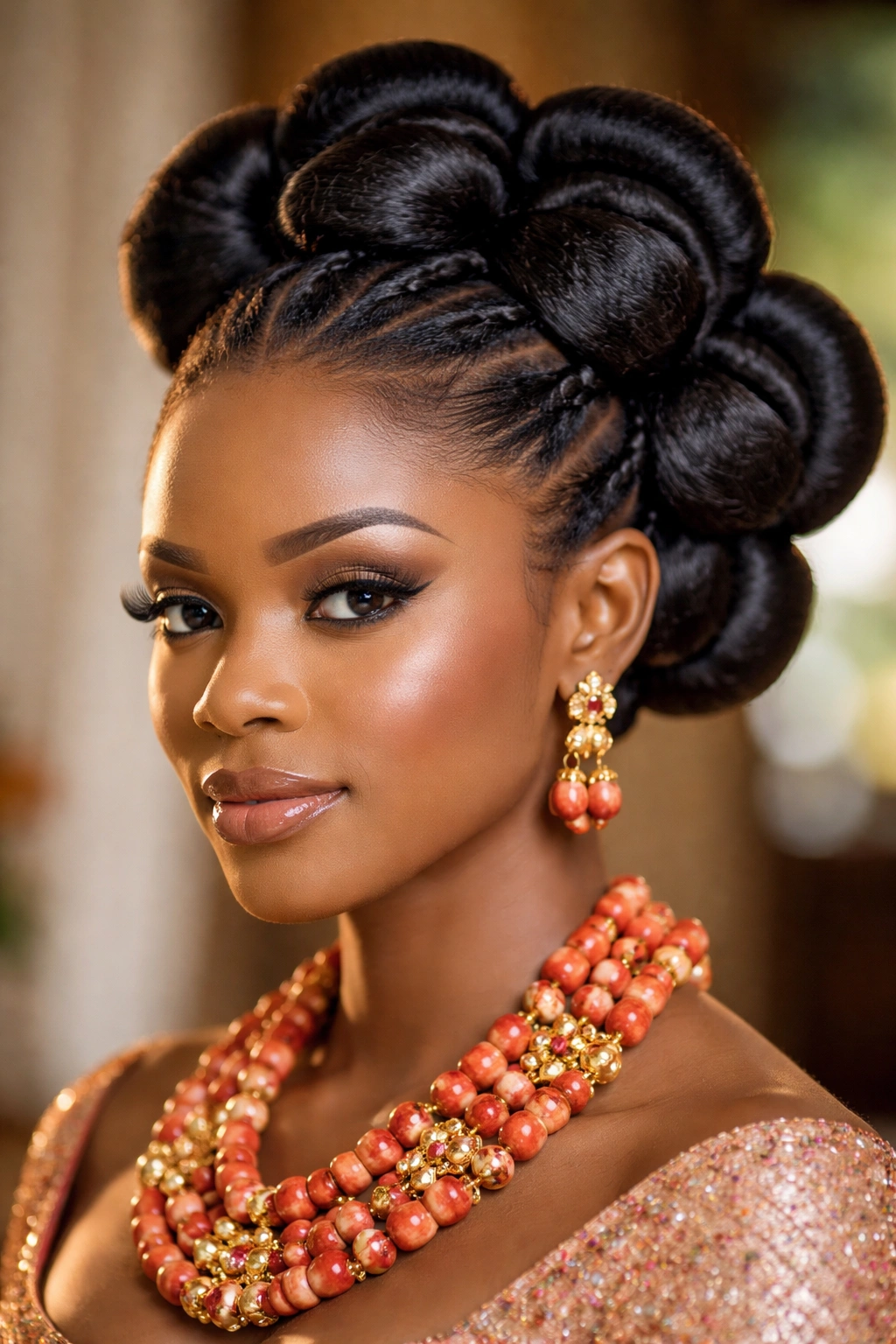
This sophisticated style features hair gathered into multiple intricate knots or buns positioned strategically around the crown and sides of the head, creating a layered, textural appearance. Each knot is meticulously twisted and secured, often incorporating thread or thin braids for additional definition and hold. The Ibo Knot with Multiple Buns offers a beautiful balance between controlled structure and creative artistry, making it ideal for formal events where you want to look polished without appearing overly rigid. This style particularly suits women who prefer more enclosed hair (compared to flowing styles), as it keeps hair completely off the face and neck while remaining visually striking.
Why Multiple Buns Create Visual Depth
Rather than a single, predictable bun, multiple knots create dimension and movement on the head. From the front, you see structured elegance, but as you move or if someone views you from above or the side, new layers of artistry become visible. This multi-directional visual interest means the style looks sophisticated in photographs taken from any angle. The positioning of each knot requires careful consideration of your head shape, hair type, and the neckline of your outfit, so a skilled stylist will adjust placement to flatter your individual features. The overall effect communicates polish and intentionality—this isn’t a casual style but one that was carefully planned.
Technical Execution and Styling Considerations
- Number of knots: Typically 3-6 knots depending on hair length and desired visual density—more knots create busier, more dramatic impact
- Positioning strategy: Usually arranged in a triangular or symmetrical pattern to balance facial features and head shape
- Thread incorporation: Decorative thread, yarn, or thin ribbon woven through the knots adds color, texture, and visual interest
- Bun height and tightness: Knots should be secure enough to last through an entire event but not so tight that they cause scalp discomfort or hair breakage
- Adorning options: Beads, gold thread, or jewelry can be incorporated into each knot for added formality and sparkle
Pro tip: This style benefits from a light texture or wave in the hair before styling—completely straight hair can look slick and less dimensional, while natural texture adds visual interest to each knot.
4. Oloko Braids (Long Straight Back Braids)
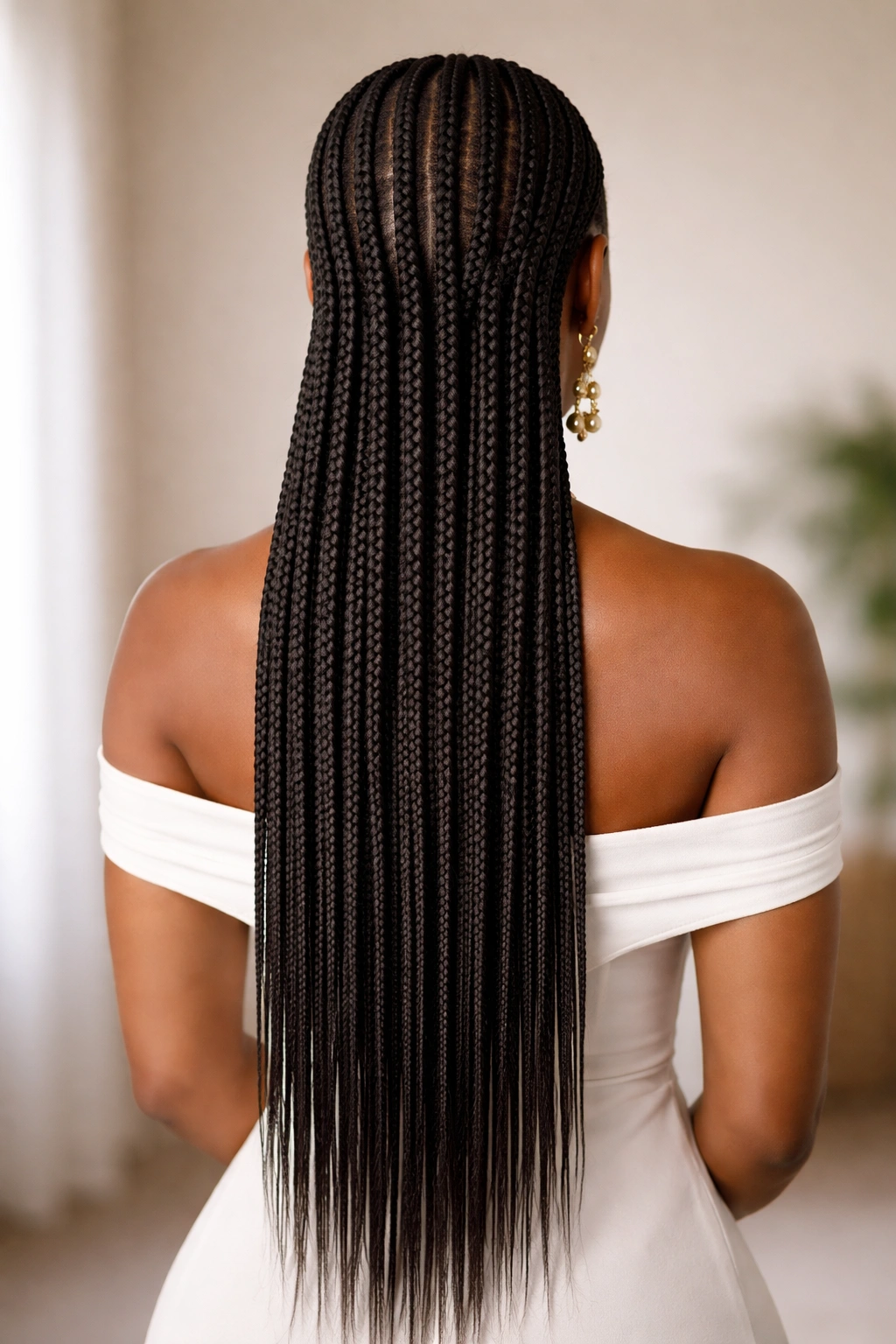
Oloko braids represent the classic long-line braids that flow straight down the back, typically in thick sections that showcase the length and health of the hair. These substantial braids—usually 8-16 in total depending on hair density—create a clean, linear aesthetic that reads as both modern and traditionally grounded. The simplicity of Oloko braids is deceptive; while this style can appear minimal compared to more elaborate options, the execution requires precision and a masterful understanding of tension, symmetry, and line. This style works beautifully at any event and transitions smoothly from the ceremony to the celebration afterward.
The Elegant Simplicity of Straight-Back Braids
Sometimes the most powerful styling choices are the most understated ones. Oloko braids draw attention to your face, your shoulders, and your overall posture rather than competing with elaborate adornments. This makes the style ideal for events where you’ll be photographed formally or where you want to pair the hairstyle with a striking outfit rather than having the hair be the focal point. The clean lines of Oloko braids also make them exceptionally versatile—you can dress them up with jewelry and elaborate beadwork or keep them minimal for a refined, intentional look. Many women find that this style grows more beautiful as it settles and softens over the event day.
Creating Balance and Proportion with This Style
- Braid thickness: Thicker braids (starting at least ½ inch wide) photograph better and age more gracefully throughout the event than very thin microbraids
- Starting point: Braids should begin from a clean, defined parting line at the crown and travel straight back without deviating—any curve or asymmetry disrupts the elegant simplicity
- Braid finish: The ends can be sealed with thread, beads, or left natural depending on the overall formality level and your personal aesthetic preference
- Scalp visibility: Unlike styles that cover the parting line with additional braids, Oloko shows clean partings, so the contrast between the partings and the braids should be intentional and visible
- Movement during the event: These braids will sway and shift slightly during the event—this is natural and adds to the style’s living quality rather than detracting from it
Insider note: Ask your stylist to slightly curve the braids inward at the very bottom rather than leaving them completely straight—this prevents the ends from looking too sharp or severe.
5. Afo Ogene (Gele-Inspired Braided Wrap)
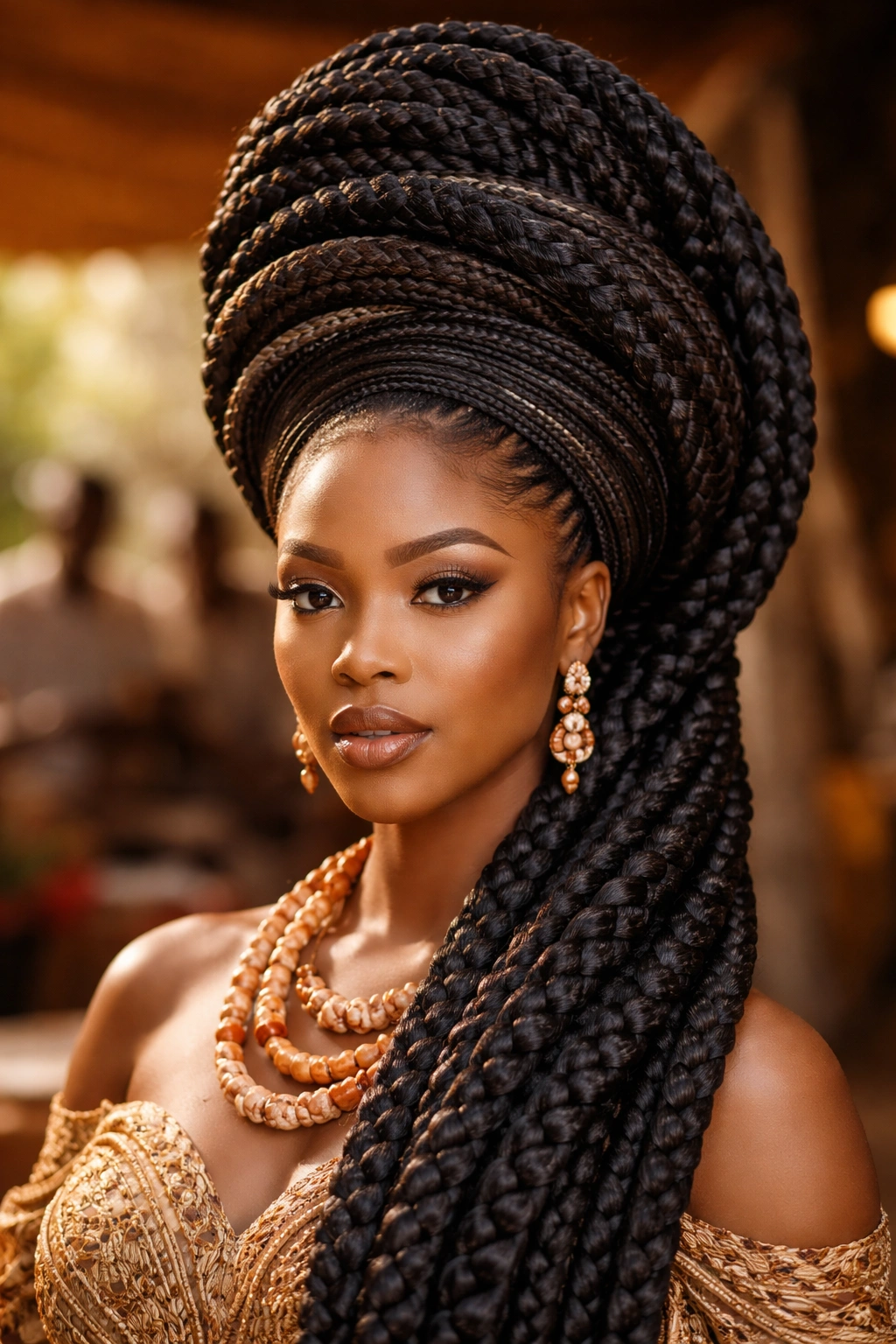
This elaborate style combines long braids with a wrapped, structured headpiece that creates the appearance of a gele (traditional fabric wrap) while incorporating braids within and around the wrapping. The Afo Ogene represents a sophisticated fusion of braiding and wrapping traditions, creating a look that reads as both contemporary and deeply rooted in tradition. The style creates dramatic height and presence, making it ideal for major celebrations like weddings where you want to make a significant visual statement. The wrapped component means the style works beautifully with traditional formal wear and elevates even simple outfits through the sheer architectural presence of the headpiece.
How Braiding and Wrapping Create Unified Visual Impact
The beauty of Afo Ogene lies in how the two techniques—braiding and wrapping—work together to create something more complex than either would achieve alone. The braids provide the structural foundation and flexibility, while the wrap creates defined shape, height, and a finished appearance. This combination allows for tremendous creative flexibility in terms of fabric choice, bead placement, and color coordination. The finished look is inherently formal and celebratory, making it perfect for events where you want to honor the occasion through your appearance. The three-dimensional structure means this style photographs exceptionally well and creates visual drama whether you’re standing, sitting, or mingling.
Key Components and Styling Elements
- Base braiding pattern: Usually 4-8 thick braids arranged to create a foundation that the wrap can anchor into and flow from
- Wrapping technique: Lightweight to medium-weight fabric (typically a traditional wrapper or coordinating cloth) is wrapped around the braided base, creating height and defined shape
- Structural support: Some versions incorporate a wire or flexible structure underneath the wrap to maintain the shape throughout the event
- Bead or jewelry integration: Decorative elements can be sewn into the wrapping fabric or incorporated into the braids themselves for added dimension
- Balance considerations: The wrapped portion should be proportional to your face shape—very large structures can overwhelm smaller frames, while subtle wraps may look underwhelming on taller women
Worth knowing: If you choose a fabric wrap component, make sure the fabric is secured extremely well, as loose wraps can shift throughout an event and require adjustment.
6. Igba Nchu (Basket Braids with Wrapped Crown)
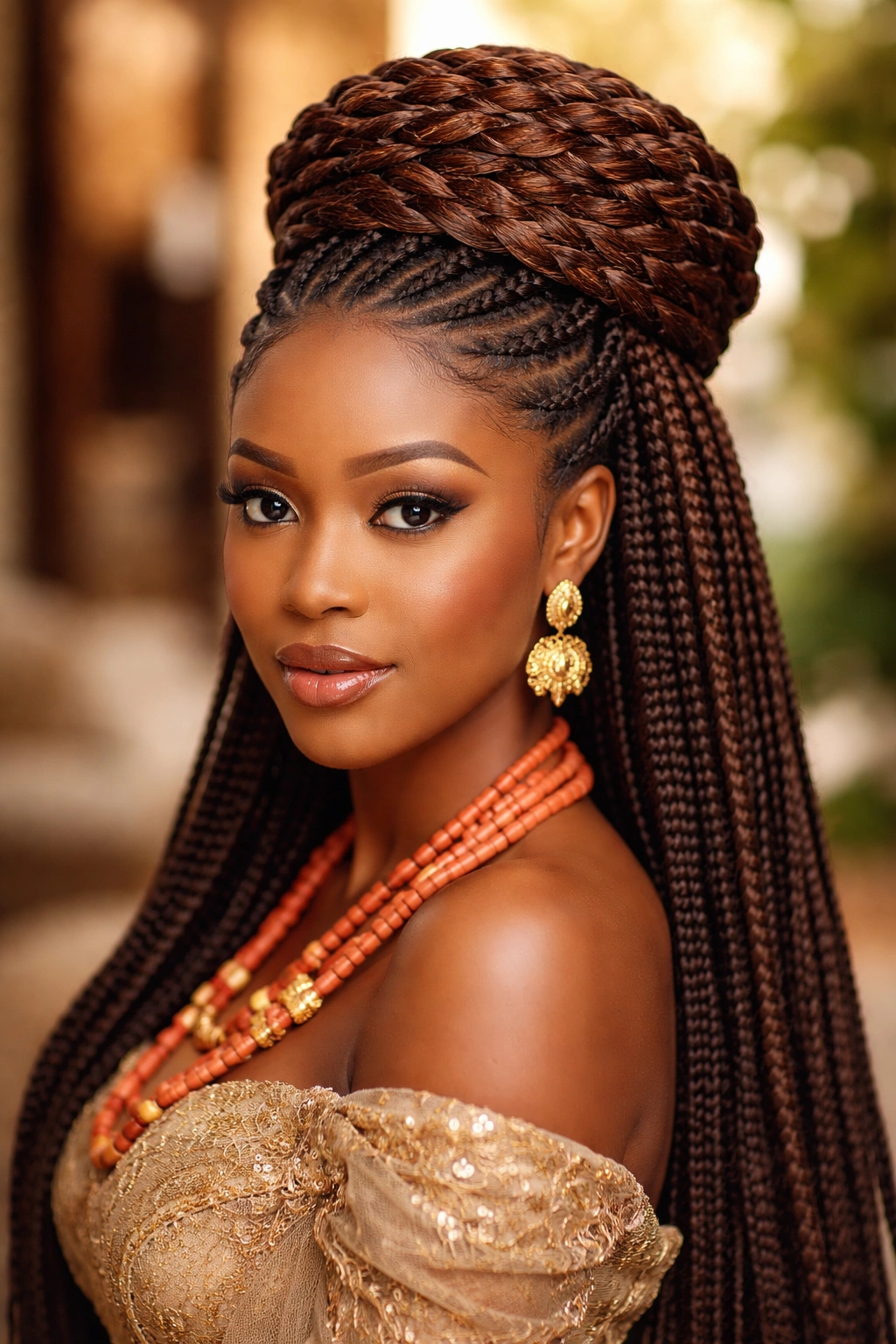
Igba Nchu features intricately woven braids that create a basket-like pattern on the crown of the head, with the remaining hair incorporated into lengths braids that flow down the back and sides. The basket pattern at the crown is the distinctive element—it creates the illusion of a woven basket through careful, deliberate placements of the braids. This hairstyle brilliantly combines a sculptural, three-dimensional crown element with practical, wearable length below. The Igba Nchu works beautifully for events where you’ll be moving around and interacting, because the crown structure is self-contained while the flowing braids move naturally and create visual interest throughout the event.
The Artistry Behind the Basket-Weave Pattern
The basket-weave pattern isn’t simply decorative—it represents genuine technical skill and understanding of how braids interact with one another to create dimension and visual complexity. This pattern has been part of Igbo braiding traditions for generations, and executing it well requires a stylist who understands both the technical mechanics and the aesthetic goals. The finished crown should look almost sculptural, with clear definition between the individual braided sections that create the basket effect. When light hits the crown at different angles, the depth and dimensionality of the pattern become even more apparent, making this style look different and beautiful throughout the day and evening.
Technical and Aesthetic Considerations
- Crown height and size: The basket pattern typically covers the top 4-6 inches of the crown, creating noticeable but not overwhelming height
- Number of braids in the pattern: Usually 6-12 individual braids are woven together to create the basket effect—fewer braids create a simpler pattern, while more create denser, more intricate visual complexity
- Braids flowing from the crown: Usually 8-16 longer braids extend from the basket portion down the back and sides, creating visual continuity and practical length
- Bead placement strategy: Beads can be concentrated in the basket crown section for drama or distributed throughout all the braids for unified visual impact
- Hair texture requirements: Hair should have enough density and length (at least 14 inches) for the basket pattern to read clearly and the flowing braids to hang beautifully
Pro tip: Schedule your styling appointment with plenty of time—this style typically takes 5-7 hours due to the complexity of the basket-weave pattern, and rushing the execution shows in the final result.
7. Nda Braids (Side-Swept Dramatic Braids)
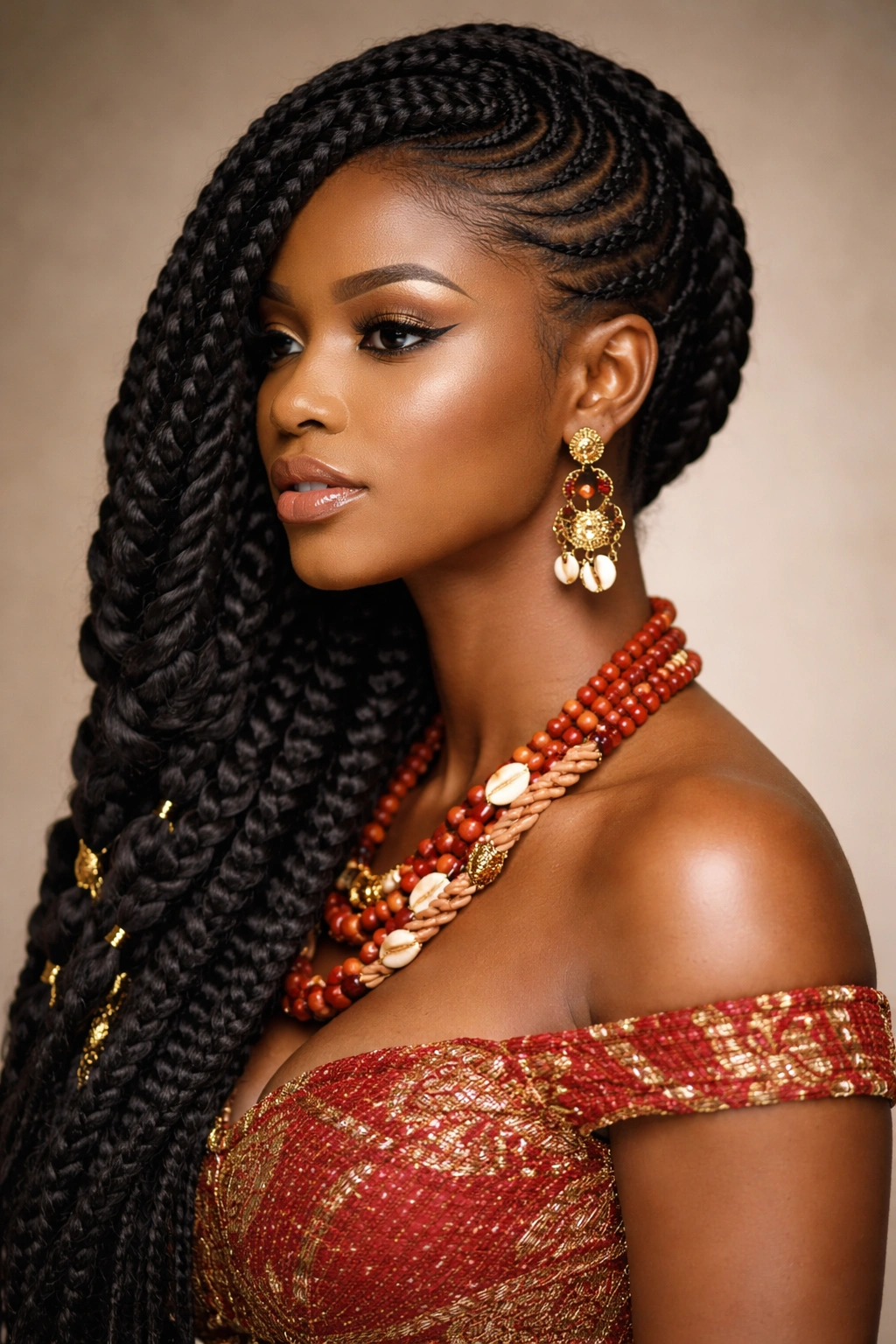
Nda braids feature thick, dramatic braids that sweep dramatically from one side of the head to the other, creating an asymmetrical, swept aesthetic that’s both modern and traditionally rooted. Rather than styles that distribute braids symmetrically across the entire head, Nda braids concentrate visual weight on one side, which creates immediate, striking impact. This hairstyle works particularly well for women who want something eye-catching without the full-head intensity of some other styles. The side-swept arrangement means one side of your face and neck remains visible and unencumbered, which many women find flattering and practical during long events.
Why Asymmetry Creates Visual Sophistication
Asymmetrical styling has a built-in visual sophistication that symmetrical styling, while balanced, sometimes lacks. By concentrating the braids to one side, you create a focal point and direct viewer attention in a specific direction. This can be particularly flattering if you have a favorite side of your face or want to showcase the side of your neck and shoulders. The asymmetry also creates an inherent sense of movement and dynamism—the style feels more contemporary and current while remaining deeply rooted in Igbo braiding traditions. Photographically, asymmetrical styling creates visual interest and breaks the visual monotony of perfectly symmetrical arrangements.
Styling Specifications and Variations
- Number of braids: Usually 4-8 thick braids that collectively create the swept effect, though thinner braids can also work for a more delicate aesthetic
- Starting point: Braids typically begin at the crown on one side and sweep diagonally across to the opposite side, creating a crescent-like pattern
- Anchoring method: The swept braids are typically secured with thread, beads, or small clamps at the point where they rest to prevent them from shifting throughout the event
- Remaining hair treatment: Hair on the less-braided side can be left loose for a romantic, flowing effect or incorporated into a low twist or knot for a more controlled appearance
- Adornment placement: Beads, threads, and jewelry work beautifully concentrated along the swept braid section for unified visual impact
Insider note: This style photographs beautifully from the side where the braids are concentrated—ask your photographer or videographer to take advantage of this angle to really showcase the style’s drama.
8. Igbo Goddess Locs with Beaded Crown
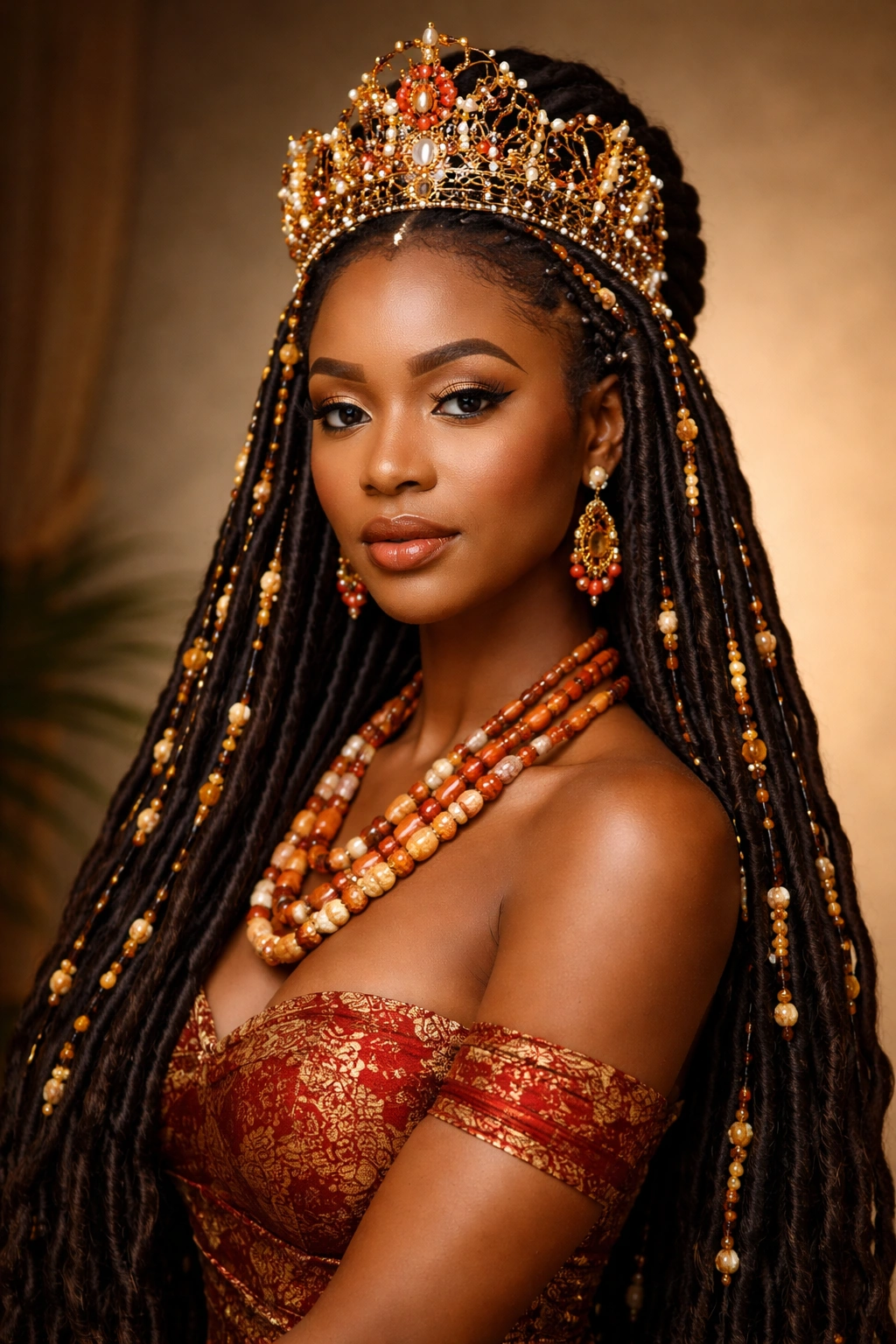
This modern interpretation features long, elegant locs adorned with beads, threads, and jewelry, arranged with special focus and decoration at the crown to create a goddess-like, regal aesthetic. While locs represent a more contemporary styling choice compared to some traditional braiding styles, the beading, ornamentation, and crown emphasis clearly tie this look to Igbo adornment traditions and aesthetic values. The Igbo Goddess Locs style works beautifully for women who prefer wearing their hair in locs as a protective style, allowing them to celebrate their locs with deliberate, formal adornment. This hairstyle demonstrates how traditional Igbo styling aesthetics translate beautifully into contemporary hair practices.
Balancing Contemporary Practice with Traditional Aesthetics
Locs represent a distinct hair practice from braiding, with their own benefits, maintenance requirements, and aesthetic qualities. When adorned with beads and arranged in intentional patterns, locs become a vehicle for expressing the same values and aesthetics that traditional Igbo braiding styles convey. The beading process—selecting specific colors and types of beads, placing them with intention, securing them carefully—follows the same traditional logic as beading braids. The goddess-like aesthetic comes from the combination of the elegant length and flow of the locs with the regal, intentional crown adornment that draws the eye upward. For events, this style reads as modern, polished, and deeply connected to cultural identity.
Key Elements and Styling Considerations
- Loc size and length: Thicker locs (1½–2 inches in diameter) read more clearly at a distance and age more gracefully throughout an event than very fine locs, though both can be beautiful when well-adorned
- Beading density and placement: Heavy beading throughout can feel overwhelming and create scalp tension; concentrate beading at the crown and scattered throughout for visual balance
- Crown styling method: The locs at the crown can be pinned, clipped, or styled into an updo-like arrangement to create height and presence, or left to flow for a more relaxed, flowing goddess aesthetic
- Bead material choices: Quality beads (glass, semi-precious stones, or traditional materials like coral) photograph better and feel more luxurious than plastic alternatives
- Hair health maintenance: Locs require consistent moisturizing and care to look healthy and vibrant, so schedule this style well and make sure your locs are in great condition before any event
Pro tip: If your locs are relatively new, ask your stylist to focus the beading and adornment on the crown and upper portions, where the locs are typically more settled and less likely to shift from the added weight.
9. Afro-Textured Crown Twists with Highlights
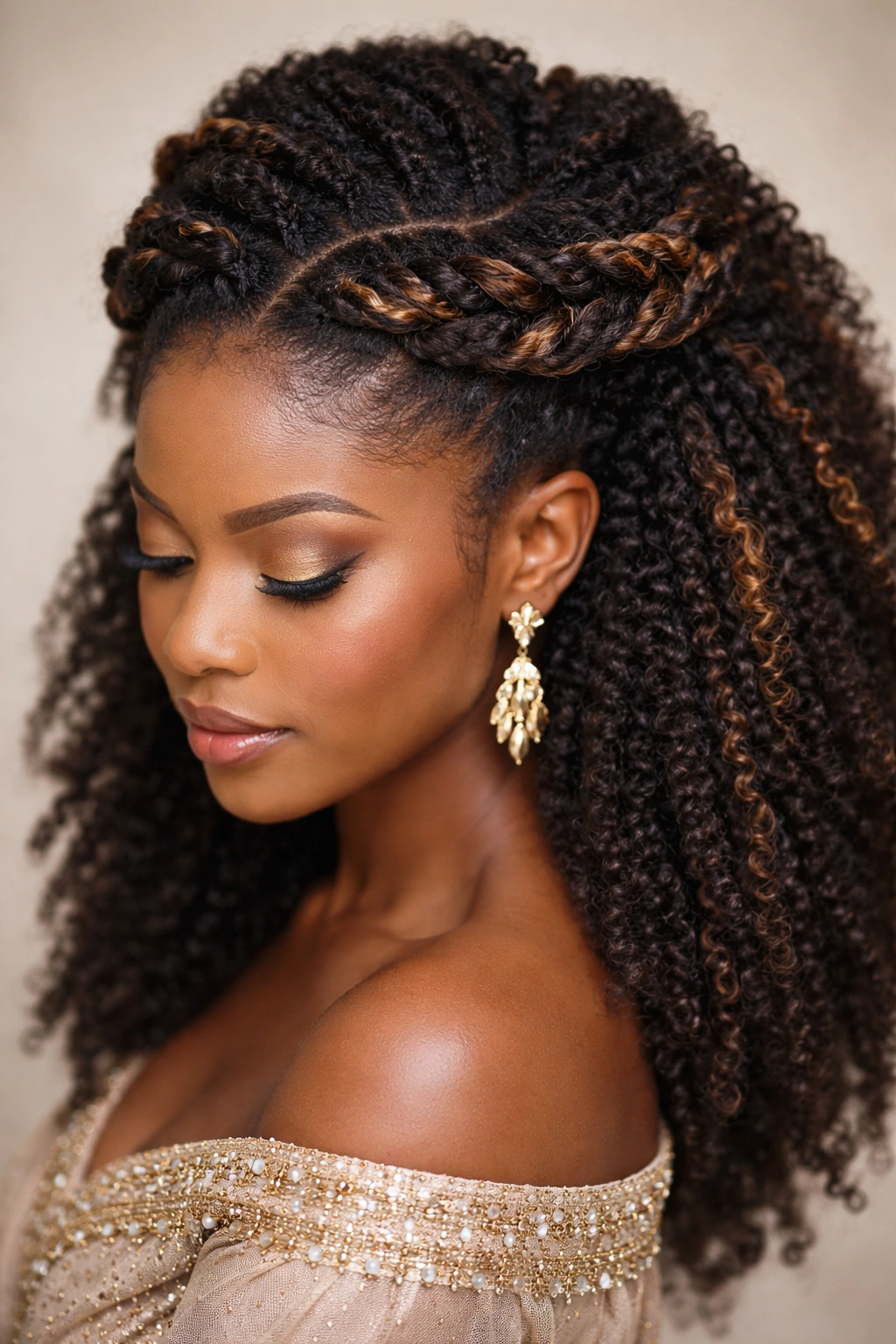
This stunning style features the natural or blow-dried afro texture of the hair, with strategic sections twisted and arranged around the crown to create a defined, sculptural crown while allowing the hair to flow freely below. The crown twists can be adorned with thread, beads, or left natural, depending on the desired formality level and your personal aesthetic. The beauty of this style lies in how it honors and celebrates the natural texture and volume of afro-textured hair while adding intentional structure through the twisted crown elements. This hairstyle works beautifully for events where you want to showcase your natural hair texture rather than altering it through braiding or locs.
The Power of Working With Natural Texture
Natural afro texture offers volume, movement, and visual drama that can be difficult to achieve with manipulated styles. By creating a crown frame with twists while letting the rest of the hair maintain its natural form, you achieve sophistication and ceremony without compromising the integrity and beauty of your natural texture. The crown element reads as intentional and formal—enough to honor the occasion—while the natural hair below feels authentic and powerful. This approach has become increasingly popular as more women celebrate and prioritize the health and appearance of their natural hair. The finished style photographs beautifully and translates well across different lighting conditions and settings.
Creating Balance and Visual Impact
- Twist placement and pattern: Usually 4-8 twists are positioned to create a complete or partial crown effect, depending on whether you want a full circle crown or a front-and-sides crown
- Twist size and texture: Thicker twists create bolder visual impact, while finer twists create a more delicate, refined appearance—both work beautifully depending on your hair density and desired aesthetic
- Adornment options: Gold jewelry, beads, or thread can be woven into the twists, or the twists can be left natural for a minimalist, elegant look
- Texture preparation: Whether your hair is in its natural state or blow-dried, making sure the texture is healthy, defined, and visually interesting before styling creates a better foundation
- Styling duration: This style is relatively quick to create (1-2 hours) compared to extensive braiding, making it excellent for events with shorter notice
Worth knowing: This style works beautifully for events of any temperature, as it keeps the crown area controlled and defined while allowing airflow around the nape of the neck—important for comfort during long, warm-weather celebrations.
10. Comb Coils with Gold Thread Integration
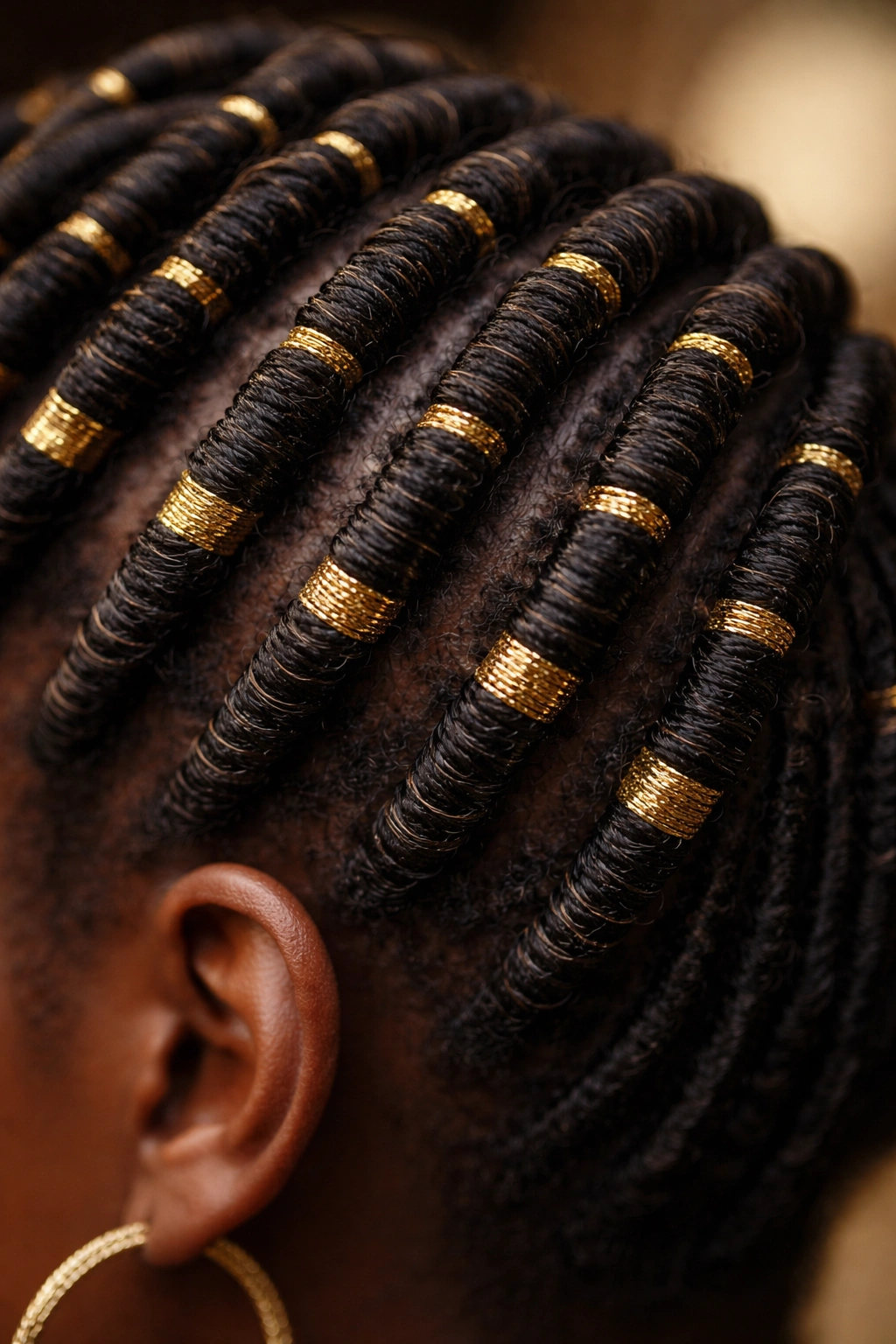
Comb coils represent a beautiful, lightweight protective style where small sections of hair are coiled around a comb to create defined, spiral-shaped curls throughout the hair. When gold thread or metallic yarn is woven through and around the coils, the style becomes formally celebratory and catches light beautifully. The Comb Coils with Gold Thread Integration style creates an elegant, textured appearance that’s less heavy than braids but more formally adorned than loose natural hair. This hairstyle works wonderfully for events where you’ll be moving around—the coils create visual interest as they move naturally with your head, and the gold thread catches light and draws attention to the artistry of the styling.
Why Metallic Elements Elevate the Occasion
Gold, silver, or copper thread integrated into coils creates an immediate sense of formality and celebration without requiring heavy beads or elaborate crown structures. The metallic shimmer reads instantly as intentional and event-appropriate, while the lightness of the thread means the style remains comfortable to wear for extended periods. From a visual perspective, the metallic elements create focal points throughout the coil pattern—as you move and light conditions change, different sections of metallic thread become more or less visible, creating dynamic visual interest. This style particularly suits events where you’ll be photographed in different lighting conditions, as metallic elements photograph beautifully across various settings.
Technical Details and Styling Specifications
- Comb size and material: Traditional metal combs create defined, consistent coil shapes; the comb size determines coil diameter (smaller combs = finer coils, larger combs = chunkier coils)
- Coil density and coverage: Typically 20-40 coils depending on hair density and desired visual fullness—more coils create busier, more textured appearance, while fewer coils create more open, spacious aesthetic
- Gold thread quality and application: Higher-quality metallic thread resists tarnishing and maintains its shine throughout the event; the thread should be secured at the base of each coil to prevent slipping
- Coil height and shape: Coils typically extend 2-4 inches from the roots, creating dimension and volume while keeping the hair manageable and comfortable
- Styling combination: Coils can be arranged loosely around the head for romantic effect or gathered into high or low arrangements for more controlled, formal presentation
Insider note: Ask your stylist to vary the direction of the gold thread—some coils with metallic thread spiraling clockwise and others counterclockwise—to create visual variation and richness throughout the style.
11. Igbo Royal Braids with Extended Lengths
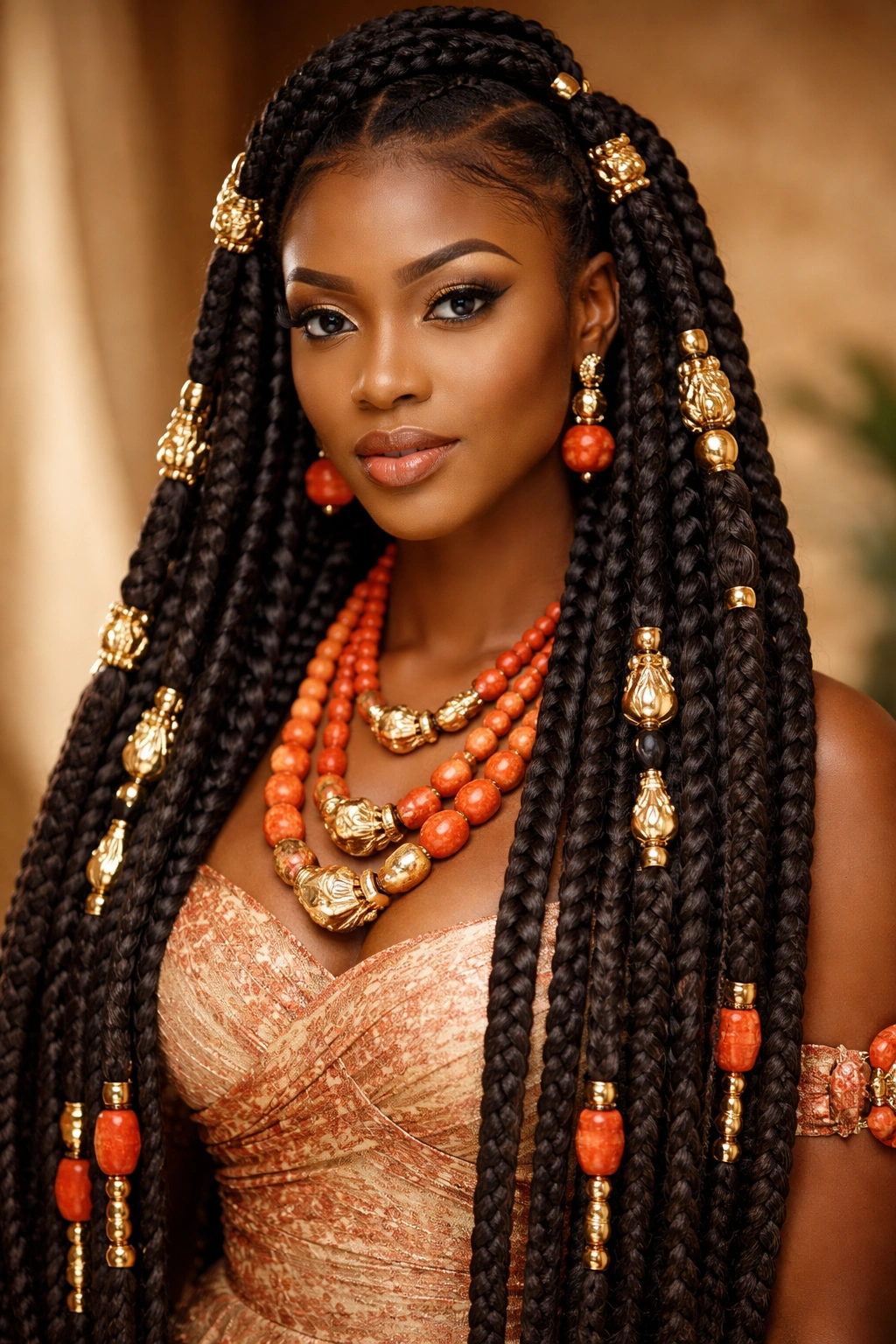
This regal style features substantial, thick braids that extend the full length of the hair, often reaching past shoulder length or to the middle of the back, adorned with beads, metallic elements, and sometimes decorative threads or charms. The “Royal” designation comes from the sheer presence and formality of the style—the length and thickness of the braids, combined with intentional adornment, create an unmistakably ceremonial appearance. This hairstyle was historically associated with women of importance and status within Igbo communities, and wearing it signals respect for the occasion and those gathering to celebrate. The extended length and weight of the braids means this style requires strong, healthy hair, which the style itself protects and allows to grow.
The Statement-Making Power of Extended, Substantial Braids
There’s an undeniable presence to long, thick braids that carry length through their extensions. Unlike styles that create height and structure primarily at the crown, this style creates visual impact through sheer length and substance. The braids draw the eye downward, creating a line from the crown through the full length of the torso, which can be incredibly flattering and creates a sense of elegance and groundedness. The practical weight of the braids also means they remain stable and beautiful throughout the event—they won’t shift or require adjustment the way some lighter styles might. The extended length also provides practical benefits, as protective braids allow natural hair beneath to rest and grow without manipulation or manipulation-related breakage.
Specifications for Long, Formal Braids
- Braid number and thickness: Usually 6-12 thick braids, depending on hair density and desired visual density—fewer, thicker braids create cleaner lines and read more formally than many thinner braids
- Braid length: Extensions are typically added to natural hair to create lengths of 20+ inches, with the longest point reaching the middle of the back or beyond
- Bead and adornment distribution: Beads can be concentrated at the ends, distributed throughout, or arranged in patterns that complement the braid number and color—the most impactful arrangements distribute beads so every angle shows adornment
- Extension material and color: Extensions should match or complement your natural hair color while creating visual interest; quality human hair extensions wear better and photograph more beautifully than synthetic alternatives
- Scalp and neck care: The weight of extended braids requires careful tension balance to avoid scalp discomfort or tension-related hair loss; your stylist should discuss tension levels during the braiding process
Pro tip: If you’re concerned about the weight of very long braids, ask your stylist about creating a lower pony or pinned updo with the braids for certain parts of the event—this relieves scalp tension while maintaining the style’s visual impact.
12. Afo Mkpu (Concentric Circle Braids)
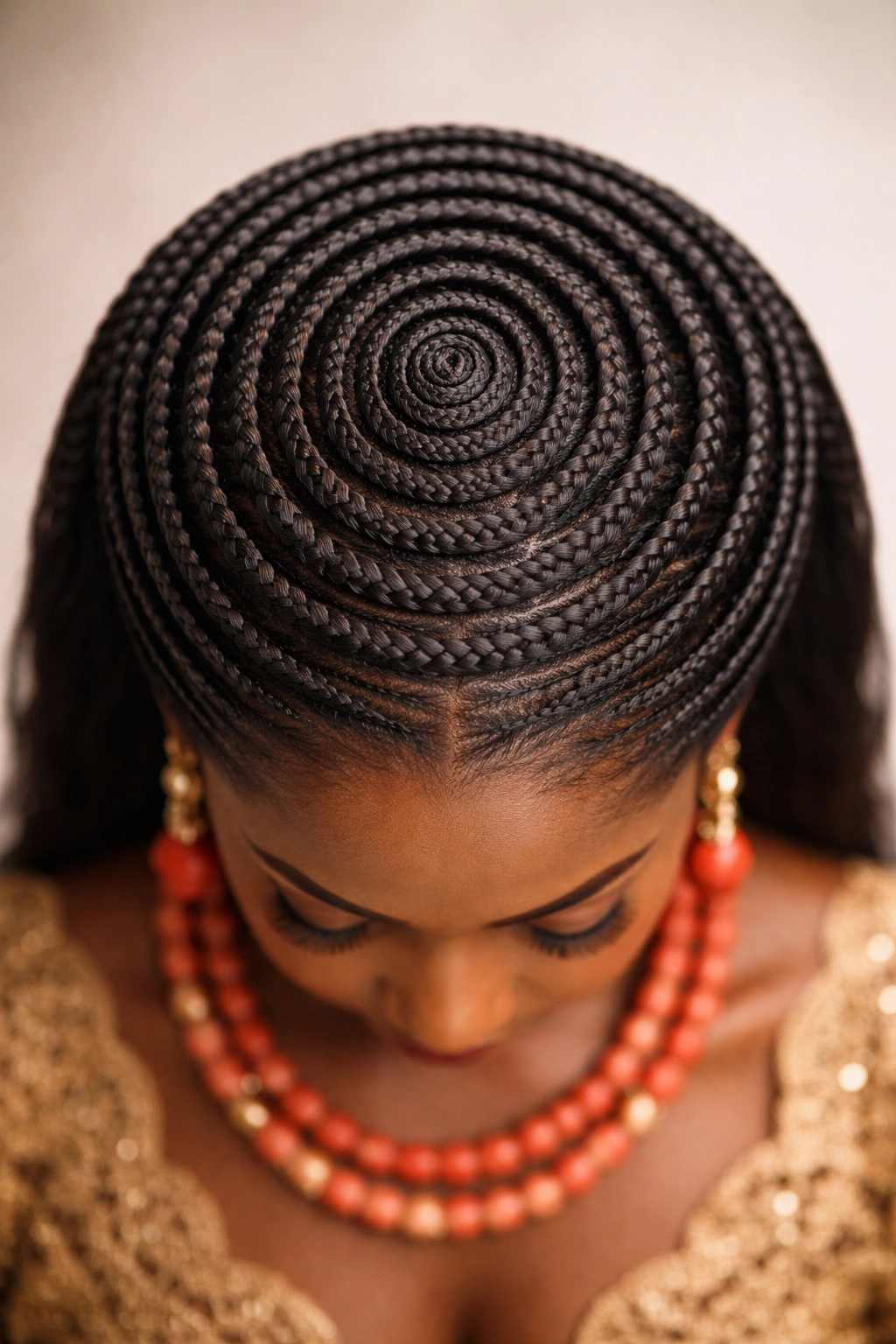
Afo Mkpu features braids arranged in concentric circles around the crown, creating a spiral or circular pattern that radiates outward from the center point. The braids follow this circular path, creating visual rhythm and geometric precision that’s both mathematically interesting and aesthetically beautiful. This style requires exceptional skill from the stylist, as each braid must follow the exact curve needed to create the concentric circles without interruption or asymmetry. The Afo Mkpu is unmistakably formal and ceremonial, perfect for major events like weddings or significant cultural celebrations where you want to honor tradition through sophisticated, technically demanding styling.
The Geometric Precision and Visual Harmony of Concentric Circles
The human eye responds positively to circular, spiral patterns—they feel natural and harmonious while simultaneously feeling intentional and designed. By arranging braids in concentric circles, the stylist creates a pattern that’s both mathematically precise and visually appealing. The concentric pattern draws the eye to the center crown and creates a sense of unity and completion across the entire crown area. When beads or metallic elements are incorporated into this pattern, the visual impact multiplies—the circular pattern becomes even more defined and eye-catching. From above or in overhead photographs, this style creates a complete, mandala-like visual impact that reads as ceremonial and impressive.
Creating Perfect Circular Patterns
- Braid path and direction: Each braid must curve consistently to follow its concentric circle position without deviating into adjacent circles; the smallest center circle is typically 3-4 inches in diameter
- Spacing and symmetry: The distance between successive circles should be consistent and visually balanced; typically each circle is ½ to 1 inch apart
- Total circle count: Usually 3-5 concentric circles depending on hair density and crown size—more circles create busier patterns, while fewer circles create cleaner, more minimal visual impact
- Braid size consistency: All braids should be approximately the same thickness to create visual harmony and proportional circles
- Adornment arrangement: Beads can be integrated at regular intervals along each circle, at the junctions between circles, or reserved for every other circle to create visual rhythm without overwhelming the pattern
Worth knowing: This style demands a stylist with genuine skill and experience—attempting this pattern with an inexperienced stylist often results in uneven circles or asymmetrical patterns that undermine the style’s impact.
13. Igbo Long Twists with Fabric Wrapping
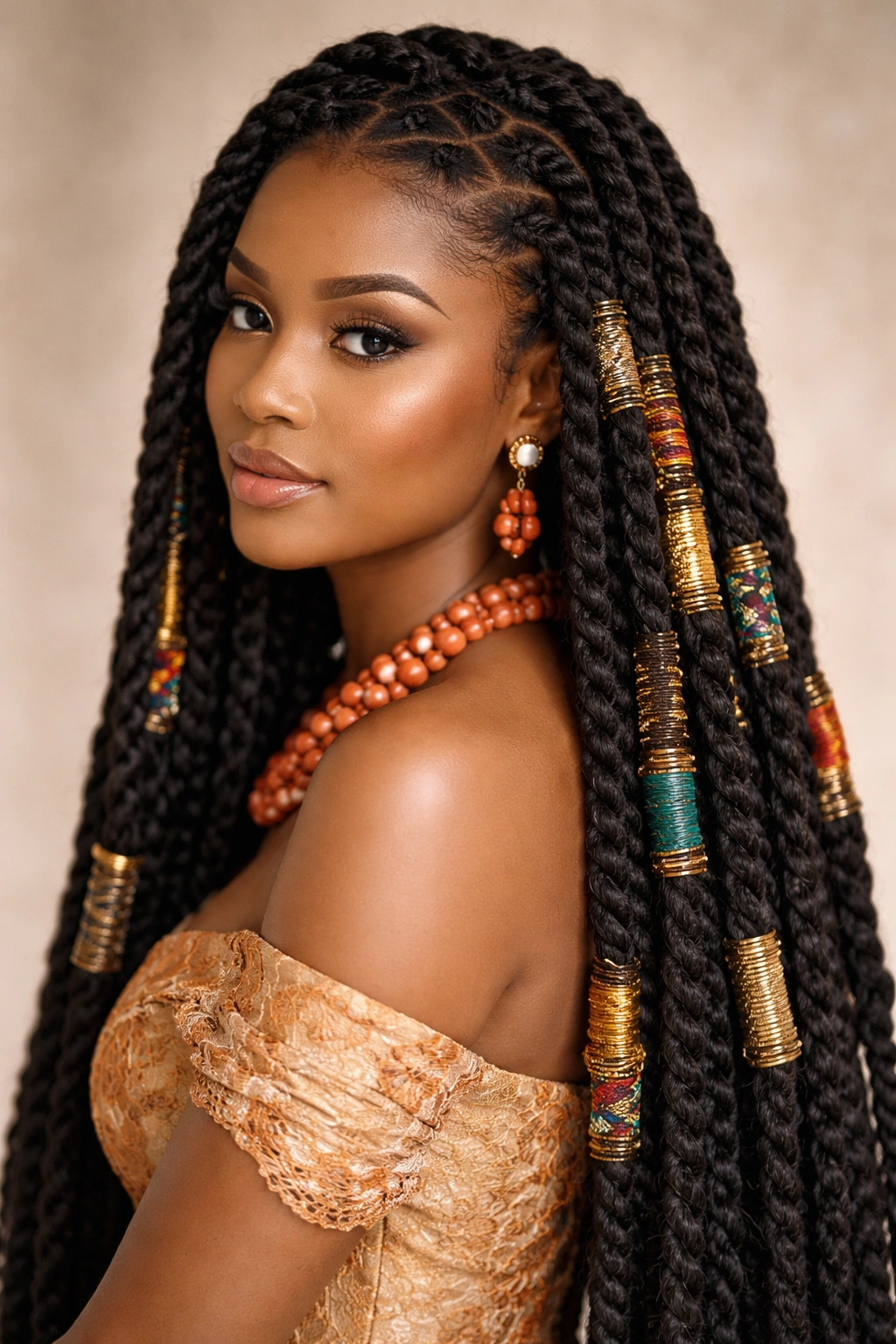
This elegant style features long, substantial twists that extend the full length of the hair, with sections of the twists wrapped in decorative fabric, thread, or metallic materials to create visual variation and formality. The combination of the twists themselves with wrapped sections creates texture, color variation, and intentional ornamentation. This hairstyle works beautifully for events where you want the practical benefits of twists (protective styling, manageable weight, natural movement) with the formality and visual interest of intentional adornment. The Igbo Long Twists style bridges contemporary protective styling practices with traditional Igbo ornamentation aesthetics.
Combining Protective Styling with Formal Adornment
Twists represent a valid protective styling choice that protects natural hair while remaining attractive and versatile. By adding fabric wrapping and intentional adornment, twists become appropriate formal styling rather than casual or everyday. The wrapped sections create visual interest and break up what might otherwise feel like repetitive twisted texture throughout. The fabric wrapping options are endless—you can coordinate with your outfit colors, use traditional wrapper fabric, or choose complementary solid colors for a more modern interpretation. The finished style reads as intentional and formal while remaining practical and wearable for extended event periods.
Technical Elements and Design Choices
- Twist size and quantity: Usually 8-16 substantial twists depending on natural hair density; thicker twists create bolder visual impact and age more gracefully throughout the event
- Twist length: Typically created at the roots and twisted to full hair length, often with extensions added for dramatic length reaching mid-back or beyond
- Fabric wrapping pattern: Fabric can wrap entire sections of twists, every other twist, or selected individual twists to create visual pattern and rhythm
- Fabric material and color: Lightweight fabrics like silk or cotton coordinate well and photograph beautifully; colors should either closely match the twist color for cohesion or provide intentional contrast
- Securing method: Wrapped fabric should be stitched, pinned, or secured with small clamps to prevent shifting throughout the event
- Additional adornment: Beads, charms, or metallic elements can be sewn into the fabric wrapping or attached at the base of each twist for additional visual interest
Pro tip: If you choose to add fabric wrapping, ask your stylist to wrap sections at varied heights rather than all at the same level—this creates visual rhythm and prevents the style from looking too uniform or structured.
14. Olugbogodo (Wrapped and Pinned Updo)
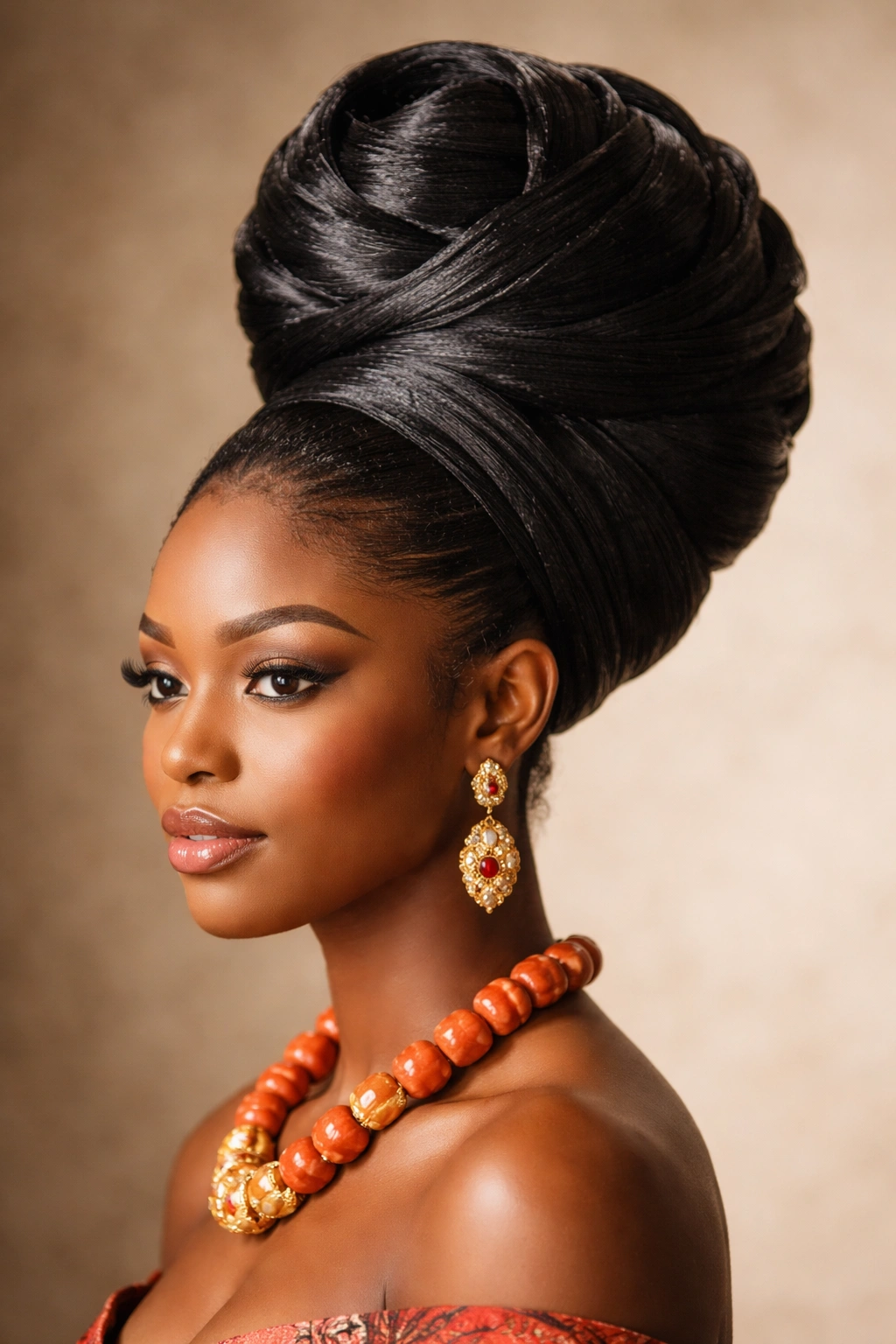
This sophisticated formal style features the hair gathered, twisted, and pinned into an updo that’s then wrapped with fabric or thread to create a defined, sculptural crown-like structure. The Olugbogodo represents the ultimate in formal, ceremonial styling—it’s intricate, structured, and communicates serious intentionality about the occasion. The updo can incorporate multiple twists, buns, or woven elements, all unified through the wrapping that creates a cohesive, finished appearance. This hairstyle works beautifully for major celebrations like weddings or ceremonies where you want your styling to equal or exceed the formality of your outfit.
The Formality and Completed Appearance of Wrapped Updos
An updo inherently reads as more formal than hair worn down or in loose lengths, and the addition of wrapping elevates formality even further. By completely wrapping and enclosing the updo structure, you create a sense of completion, intention, and unity. The wrapped style has a regal, polished quality that photographs beautifully and photographs as intentional and formal from any angle. Unlike some styles that are photographed from specific angles to show their best side, a well-executed wrapped updo reads as beautiful and intentional from all angles—front, back, and side profiles all showcase the skill and intention of the styling.
Structural Components and Design Elements
- Base structure: The updo typically incorporates multiple twists or braided sections gathered and pinned into position, creating a stable foundation
- Volume and height: The updo should create noticeable height and dimension on the crown rather than lying flat—typically 3-5 inches of height creates balanced proportion
- Wrapping material and color: Fabric, thread, or yarn is wrapped around and throughout the updo to create visual definition and coordinate with your outfit
- Wrapping tension and tightness: The wrap should be secure and defined but not so tight that it creates scalp discomfort during long events
- Face-framing consideration: Whether the updo includes face-framing twists or sits completely back should be considered relative to your face shape and personal preference
- Adornment placement: Jewelry, beads, or decorative elements can be pinned into the updo at strategic points or sewn into the wrapping fabric itself
Insider note: This style photographs exceptionally well for formal event photography—the structured crown and intentional wrapping create beautiful visual impact in professional photos and in all lighting conditions.
15. Contemporary Igbo Fusion Braids
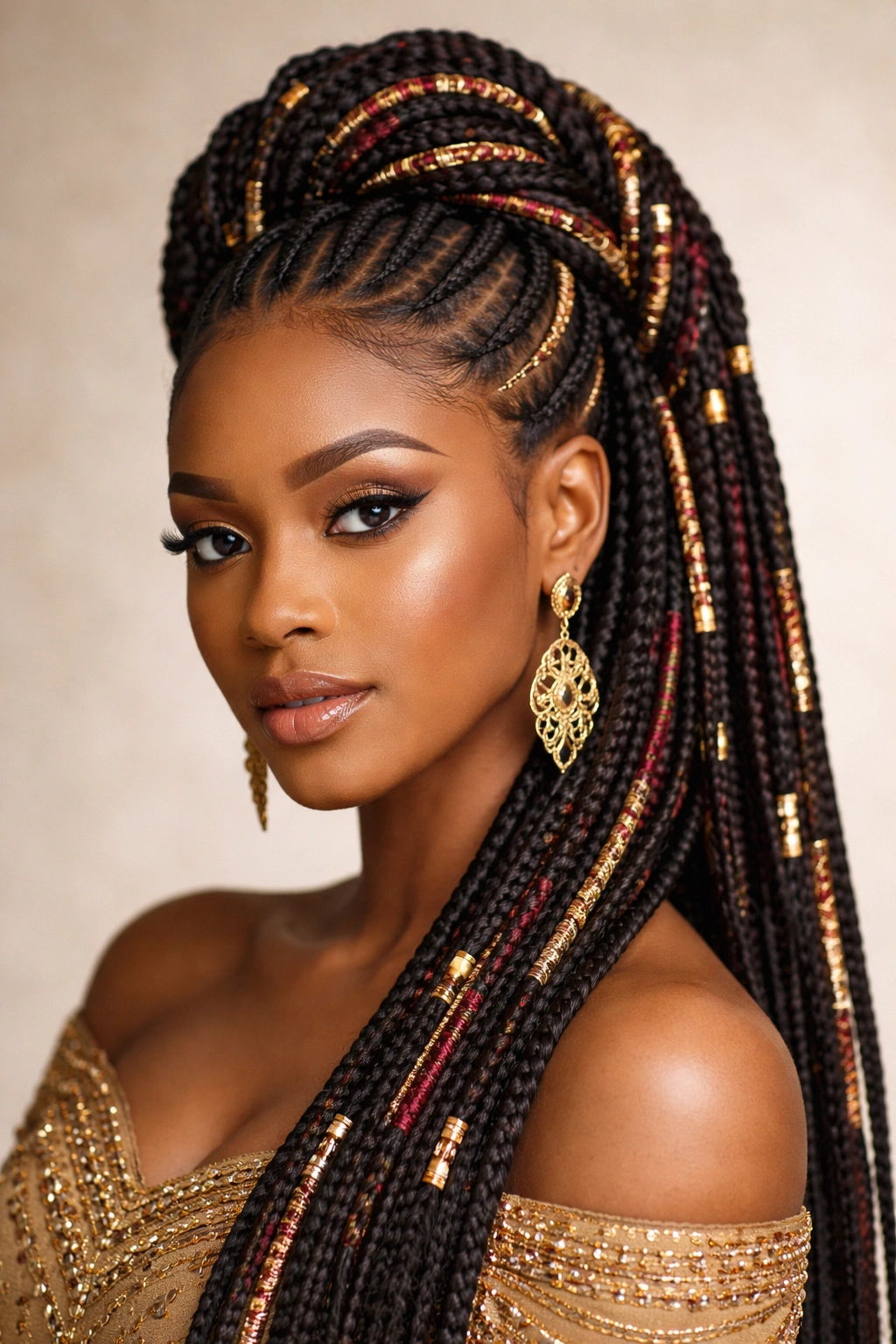
This modern interpretation honors Igbo braiding traditions while incorporating contemporary techniques, color elements, or style structures that appeal to modern aesthetics. Contemporary Igbo Fusion Braids might include subtle color additions through thread or extensions, mixed braid sizes for textural interest, or combinations of traditional patterns with modern styling elements like sleek baby hairs or styled edges. This approach to Igbo braiding allows you to honor cultural heritage while expressing individual style and contemporary preferences. The fusion style has become increasingly popular among women who feel connected to Igbo heritage while wanting their styling to reflect their individual aesthetic and contemporary context.
Honoring Tradition While Expressing Individual Style
Traditions remain alive and relevant through evolution and contemporary reinterpretation. By taking traditional Igbo braiding aesthetics and mixing them with contemporary styling preferences, you honor the foundational artistry and cultural significance while making the style authentically yours. This might mean adding subtle highlights through colored thread, incorporating both box braids and cornrows in a single style, or mixing traditional beading with modern jewelry elements. The key is ensuring that the contemporary elements you add don’t undermine or overshadow the traditional foundation—the style should still read as clearly connected to Igbo heritage while feeling current and personally expressive.
Elements You Can Adapt and Personalize
- Color and thread materials: While traditional styles often use natural or muted tones, subtle additions of metallic, jewel-toned, or accent-color threads can add contemporary flair
- Mixed braid styles and sizes: Combining different braid styles (cornrows, box braids, twists) in a single style creates textural variety and modern visual interest
- Placement of adornment: Rather than uniformly distributing beads, contemporary versions might concentrate beads in specific areas for asymmetrical, modern impact
- Edge styling: Clean, styled edges (baby hairs) are a contemporary element that can be incorporated with traditional braided styles for polished, current appearance
- Length and extension choices: Contemporary versions might use extensions in matched tones for length without heavy visual weight, or in contrasting colors for bold statements
- Finishing elements: Modern jewelry, hair jewelry, or contemporary accessories can update traditional styling while maintaining its cultural foundation
Worth knowing: If you choose to add contemporary elements to traditional styling, make sure the additions feel intentional and balanced rather than like afterthoughts—the style should feel cohesive rather than mismatched or contradictory.
Final Thoughts
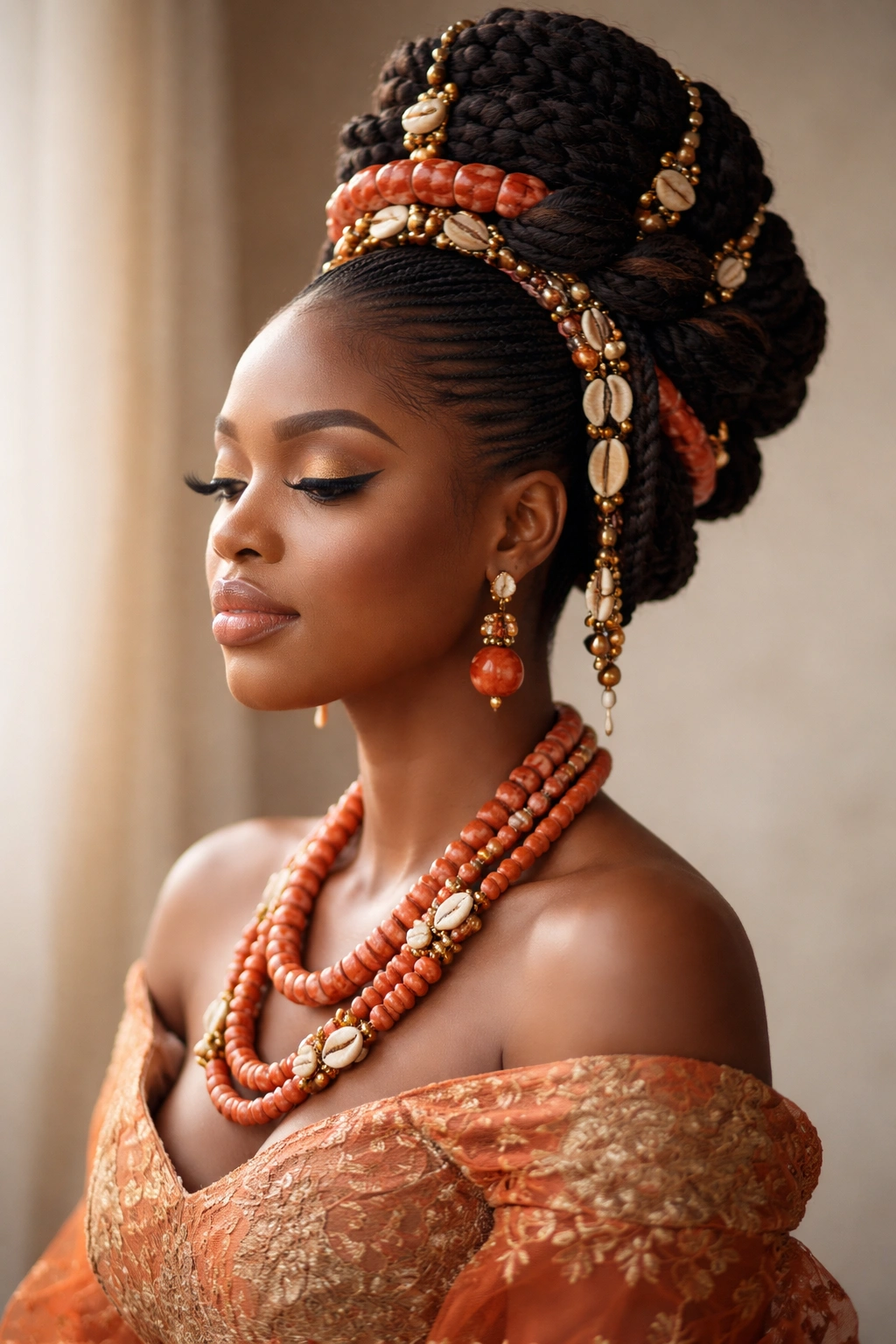
Traditional Igbo hairstyles represent far more than aesthetic choices—they embody cultural heritage, technical artistry, and the values of intentionality and celebration that define Igbo traditions. Whether you choose an elaborate crown style like Igba Mgbada, long flowing extensions like Igbo Royal Braids, or a contemporary fusion that honors tradition while reflecting your personal style, your choice communicates respect for the occasion and connection to cultural identity.
The real beauty of these fifteen styles lies in their versatility. Each works for different events, different hair types and lengths, different personal aesthetic preferences, and different comfort levels regarding time investment and styling complexity. A woman attending her first Igbo cultural event might choose the relative simplicity and timelessness of Oloko braids, while a bride honoring her heritage might select the dramatic formality of Igba Mgbada or Afo Ogene. Neither choice is more “correct”—both represent genuine engagement with these traditions.
When selecting your hairstyle for an upcoming event, consider the occasion’s formality level, the amount of time you can dedicate to styling, your hair’s length and health status, and which style makes you feel most confident and connected to your heritage. Work with a stylist who understands and respects Igbo traditions, asks thoughtful questions about your preferences and comfort, and prioritizes both your hair health and your visual goals. Ask about timeline, aftercare, and realistic expectations about how the style will settle and feel throughout your event.
These hairstyles have been perfected over generations because they work. They photograph beautifully, they last through long events, they protect and allow natural hair to thrive, and they communicate to everyone around you that you understand and honor your heritage. Wearing a traditional Igbo hairstyle at an event is never just about appearance—it’s a celebration, a connection, and a statement of cultural pride that goes far deeper than styling alone.
