



Fulani braids are experiencing a major moment right now, and if you’ve got naturally wavy or textured hair, you’re sitting on serious styling potential. These long, thin plaits adorned with gold beads have roots in West African culture and represent a beautiful blend of heritage and modern style. What makes them particularly stunning on wavy hair is the way the natural texture peeks through and interacts with the braids, creating depth and movement that straighter hair sometimes can’t capture quite as dramatically.
The beauty of Fulani braids with wavy hair is that you get the best of both worlds—the defined structure of the plaits combined with the organic flow of your natural wave pattern. The waves add volume at the scalp and create a softer, more romantic finish than you’d get with fully straightened hair. Plus, your hair is already partially textured, which means you may need less prep work and your braids tend to hold up longer because they’ve got something to grip onto.
Whether you’re looking for a protective style that keeps your hair safe while growing it out, or you just want something that looks stunning for a special event or everyday wear, Fulani braids adapted for wavy hair offer endless possibilities. The styles range from understated and wearable to bold and statement-making. What matters most is understanding which variation suits your face shape, lifestyle, and hair type—and we’re about to break down ten of the most beautiful options available to you.
1. Classic Fulani Braids With Center Part
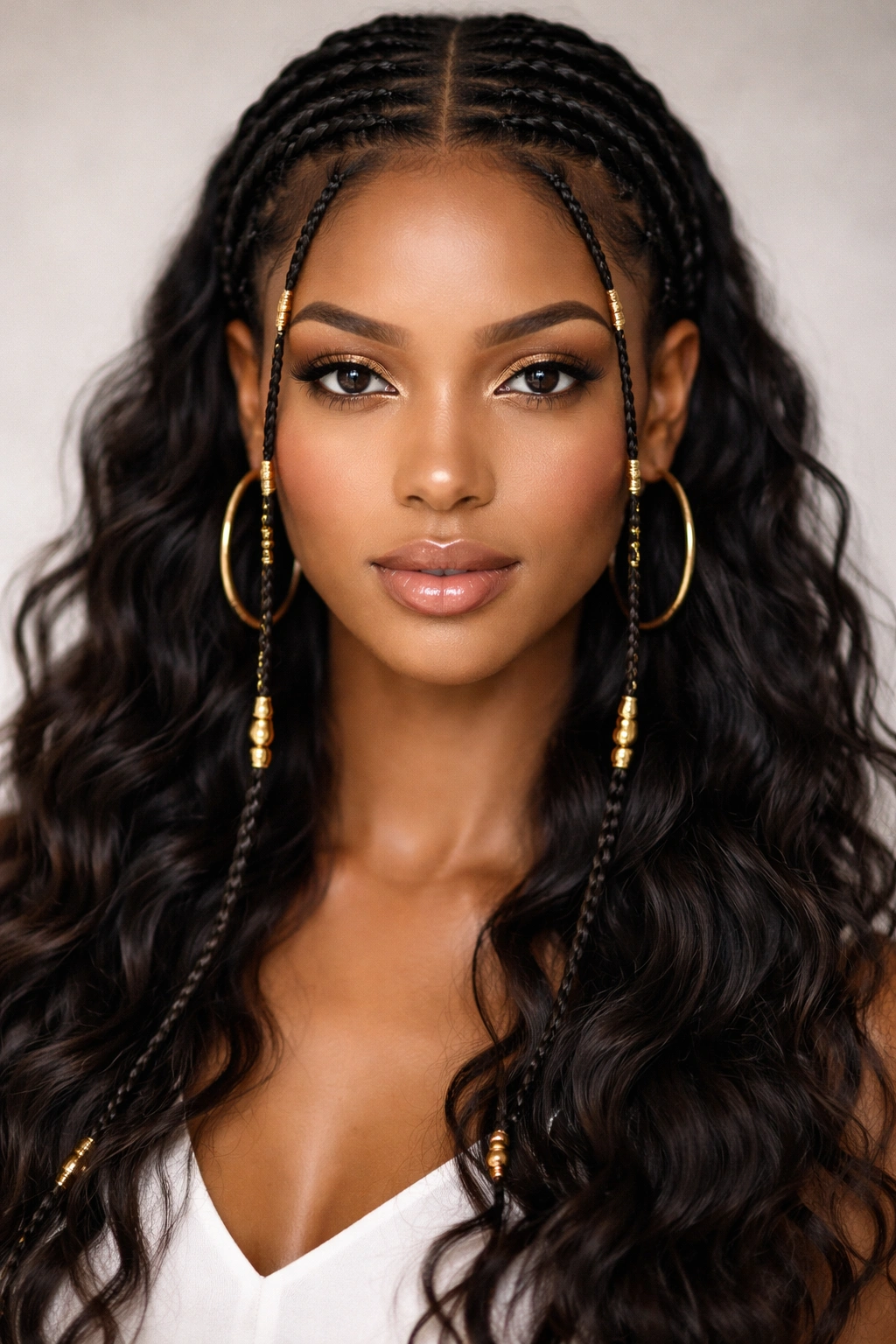
The center-parted Fulani braid is the foundation style that launched a thousand looks. You’re essentially creating two sections of thin plaits that frame your face, usually adorned with gold beads that catch the light as you move. With wavy hair, this style becomes even more striking because the waves create a feathered effect around your face and soften the overall aesthetic in a way that’s incredibly flattering.
Why This Style Works for Wavy Hair
When you center-part wavy hair and braid it into Fulani plaits, the natural wave pattern adds texture and prevents the style from feeling too slick or severe. The waves catch light differently depending on how you move, so your braids look fuller and more dimensional than they would on straight hair. This added texture also means your braids have something to hold onto at the scalp, making them less likely to slip or loosen quickly.
Application Tips and Styling Ideas
- Start by deep-conditioning your hair 24-48 hours before braiding to ensure the waves are hydrated and pliable
- Use a leave-in conditioner on damp hair, then allow your natural waves to air-dry or diffuse before braiding—this sets the wave pattern
- Braid the sections snugly enough to last several weeks, but not so tight that you’re creating tension at the roots
- Add gold beads, cuffs, or rings to the braids at varying intervals rather than clustering them all at the bottom for a more modern look
- Pro tip: The longer you let the braids sit in place before first washing them, the more they’ll blend with your natural waves and look intentional rather than freshly done.
2. Fulani Braids With Wavy Undercut
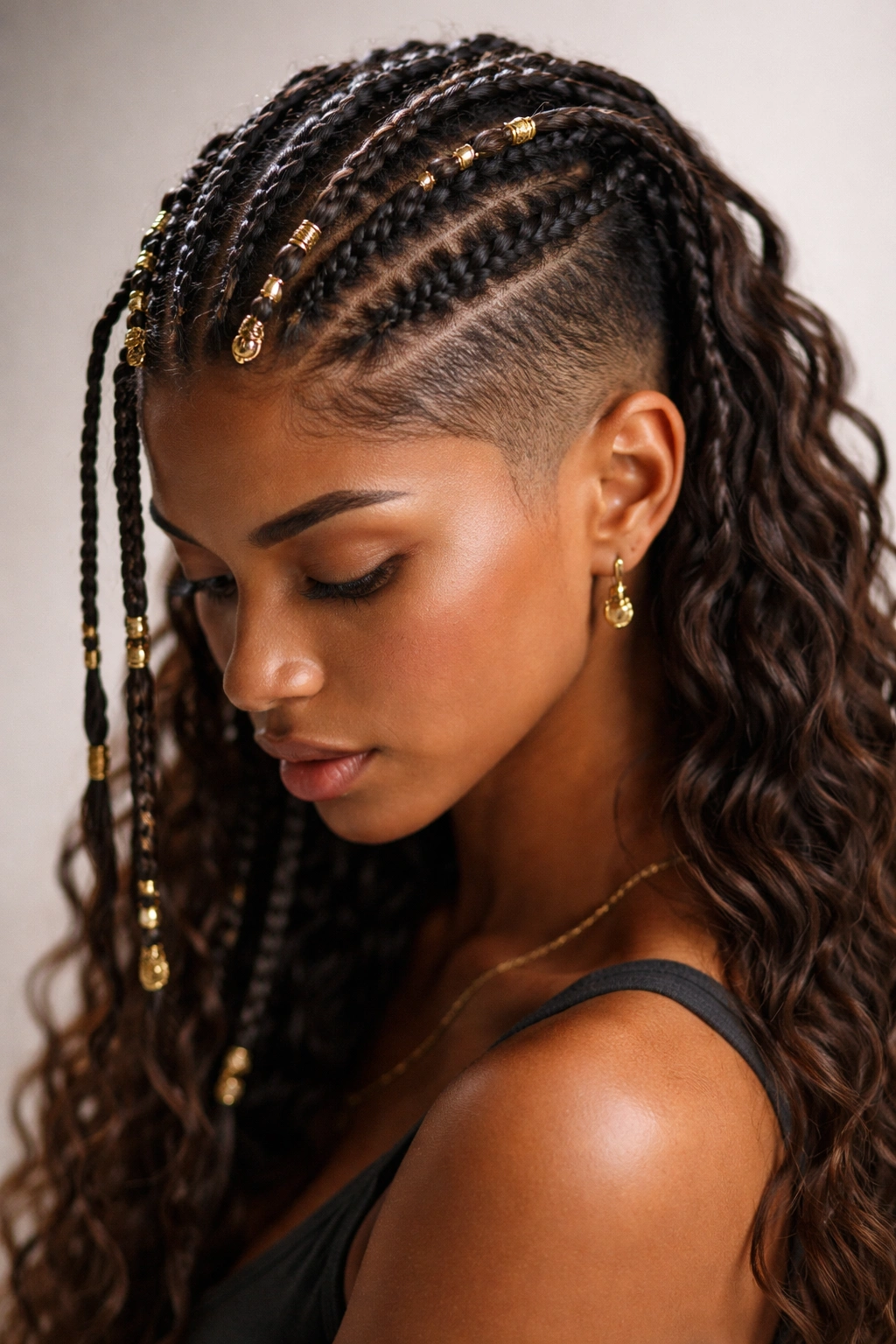
An undercut adds serious edge to Fulani braids. You’re keeping the braids on the crown and sides while shaving or fading the underneath sections down to the skin. When you have wavy hair and rock this style, the contrast between the braided top and the clean-shaved underside is absolutely striking, and it gives you the flexibility to show off your hair or cover it up depending on how you style it.
How the Undercut Changes Everything
The psychological impact of an undercut with Fulani braids can’t be overstated. It makes the braids appear fuller because they’re the only thing visible from the top, and it creates a sculptural quality to your head shape. With wavy hair specifically, this contrast prevents the overall look from feeling too “done up”—the undercut adds an edge that balances the romantic softness of wavy braids. The fade or shave also gives your scalp space to breathe, which matters when you’re wearing your hair in a protective style for weeks at a time.
Maintenance and Growth Considerations
- Schedule fade touch-ups every two to three weeks if you like a sharp line; if you prefer a softer grow-out, you can go longer between appointments
- The undercut section requires regular moisturizing since it’s exposed skin, not just hair
- Your braids will last longer on an undercut because the weight is distributed across fewer sections
- When you’re ready to transition away from this style, your undercut will grow out and blend back with your regular hair texture over several months
3. Side-Swept Fulani Braids
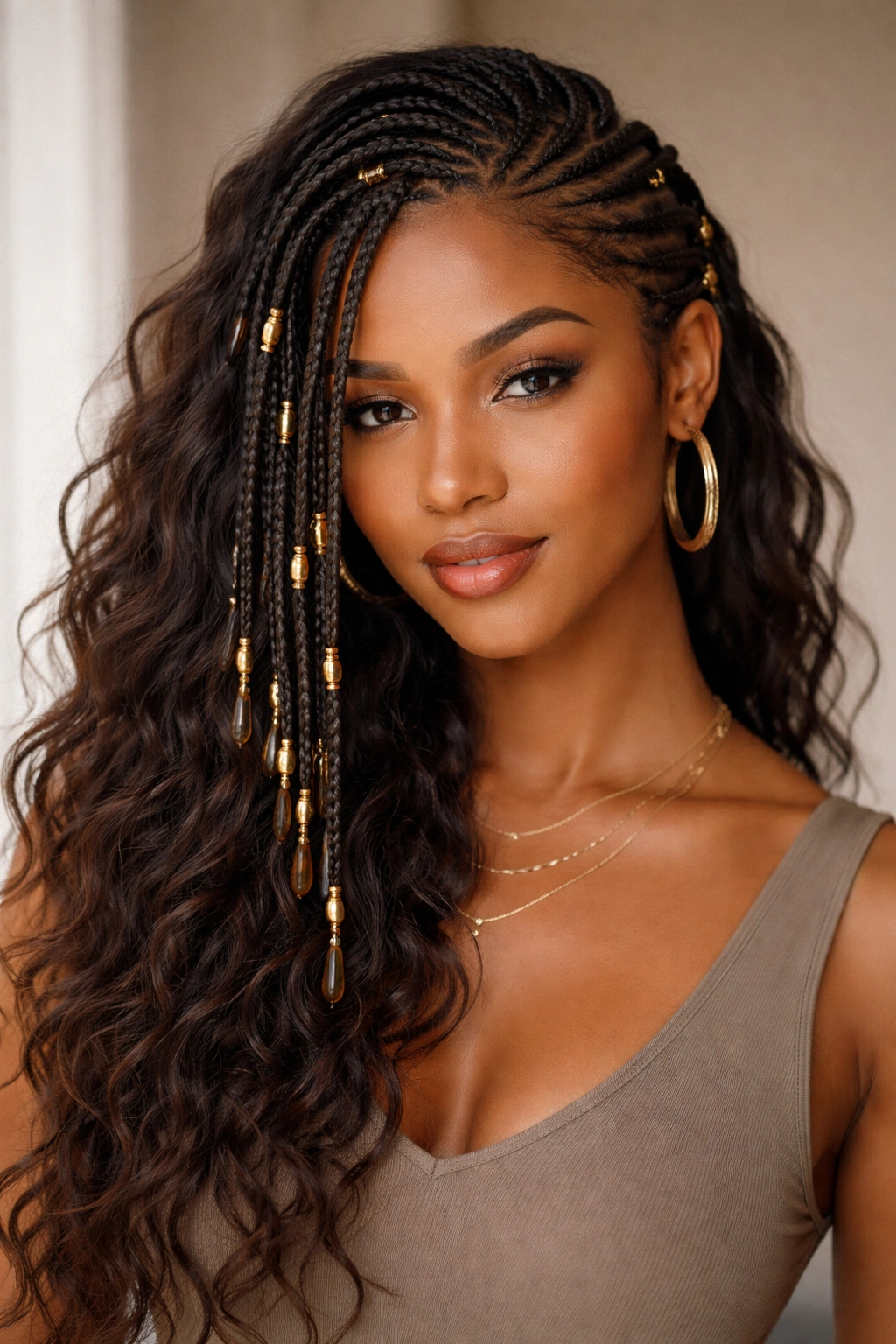
Side-swept Fulani braids create an asymmetrical, almost romantic vibe—exactly the kind of hairstyle that makes people stop and ask where you got it done. Instead of a center part, you’re parting your hair deeply on one side, creating most of the braids on one half of your head while the other side stays relatively undone. This works especially well with wavy hair because the undone portion shows off your natural texture in a way that feels intentional and styled.
Why Asymmetry Suits Wavy Hair
An asymmetrical style plays to the natural strength of wavy hair: its movement and dimension. When you put all your braids on one side and leave the other with loose waves, you’re creating a visual flow that guides the eye and tells a specific story about your style. It’s less formal than a full head of braids, which means it can work for more occasions—everything from a day at the office to an evening out.
Styling and Securing Your Braids
- Create your side part using a rat-tail comb and set it with a light hold product so it stays put throughout the day
- Braid only the section where your part leads; the opposite side should remain in your natural wavy texture
- Use smaller bobbies or a silk or satin headband to secure any pieces that fall during the day—never elastic bands that tug and cause breakage
- Refresh the waves on the unstyled side daily with a wave cream or curl defining product to keep them looking intentional
- Pro tip: This style works brilliantly for people with face shapes that benefit from asymmetry, like heart-shaped or square faces, because it draws attention to one side while balancing your features.
4. Fulani Braids With Gold Chains Through the Waves
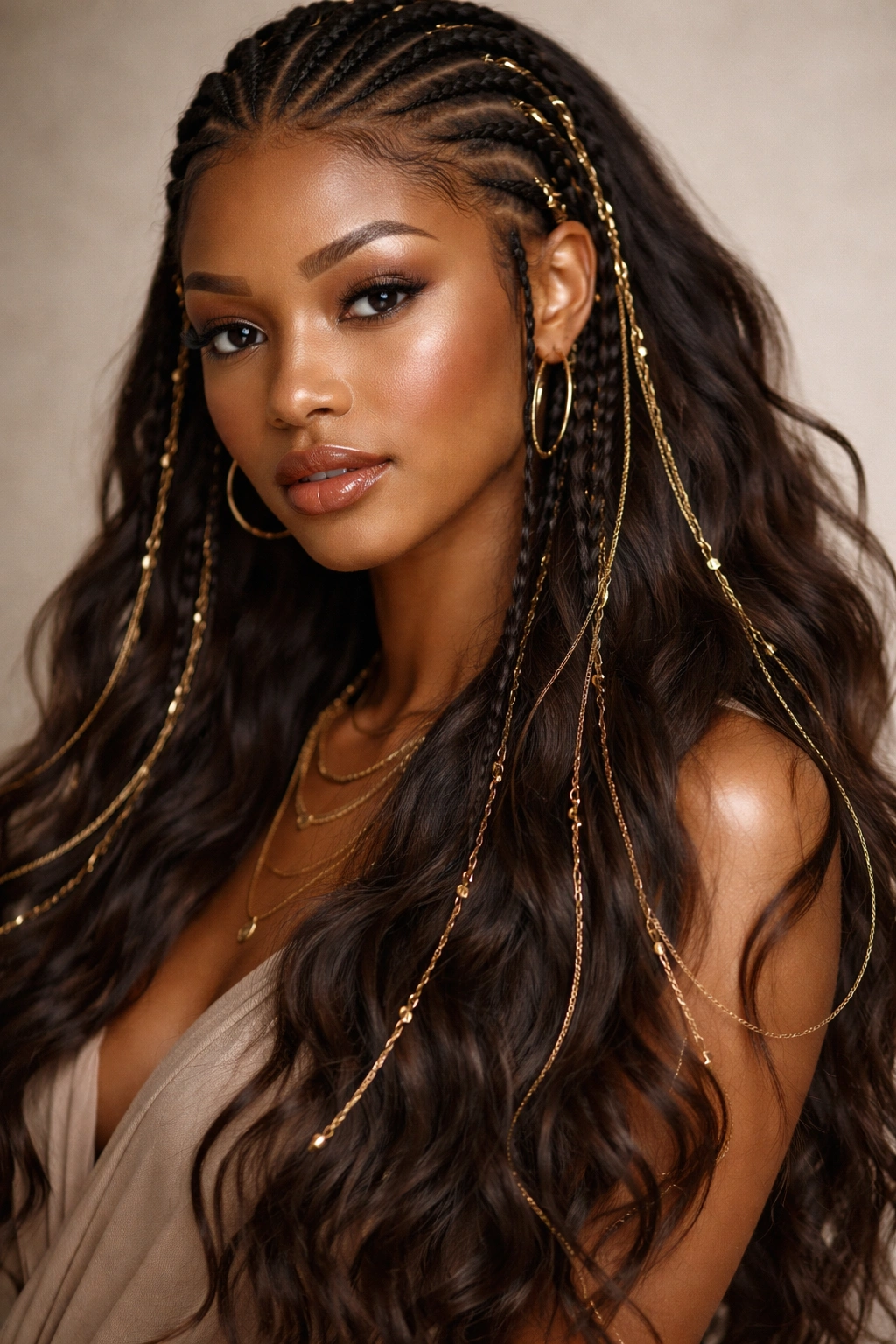
This is where Fulani braids meet high-fashion styling. Instead of (or in addition to) beads on the braids themselves, you’re threading delicate gold chains through the sections where your braids meet your natural waves. The chains catch the light, add visual interest, and create a luxe aesthetic that feels both cultural and contemporary. With wavy hair, the chains nestle naturally into your texture, looking like they belong there rather than sitting on top of your hair.
Creating the Drape and Flow
The magic of this look is in how you position the chains. They shouldn’t be pulled so tight that they strain your hair, but they should have enough tension that they showcase your waves rather than disappearing into them. The key is threading chains of varying lengths—some ending at shoulder length, others going longer—so that the styling feels layered and intentional. Each time you move, the chains move with you, which adds an element of movement and luxury to the overall style.
Material and Placement Strategy
- Use solid gold or gold-plated chains rather than costume jewelry, which can tarnish or irritate your scalp
- Thread chains through at least three to five different sections of your braids and waves for visual balance
- Consider mixing chain thicknesses—a delicate thin chain paired with a slightly chunkier one creates visual contrast
- Secure chains at the back of your head using small hook-and-eye closures or bobby pins so they stay in place but can be removed without damaging your braids
- The chains should sit about half an inch from your scalp to avoid tension on your hair and discomfort on your skin
5. Fulani Braids Into a High Bun
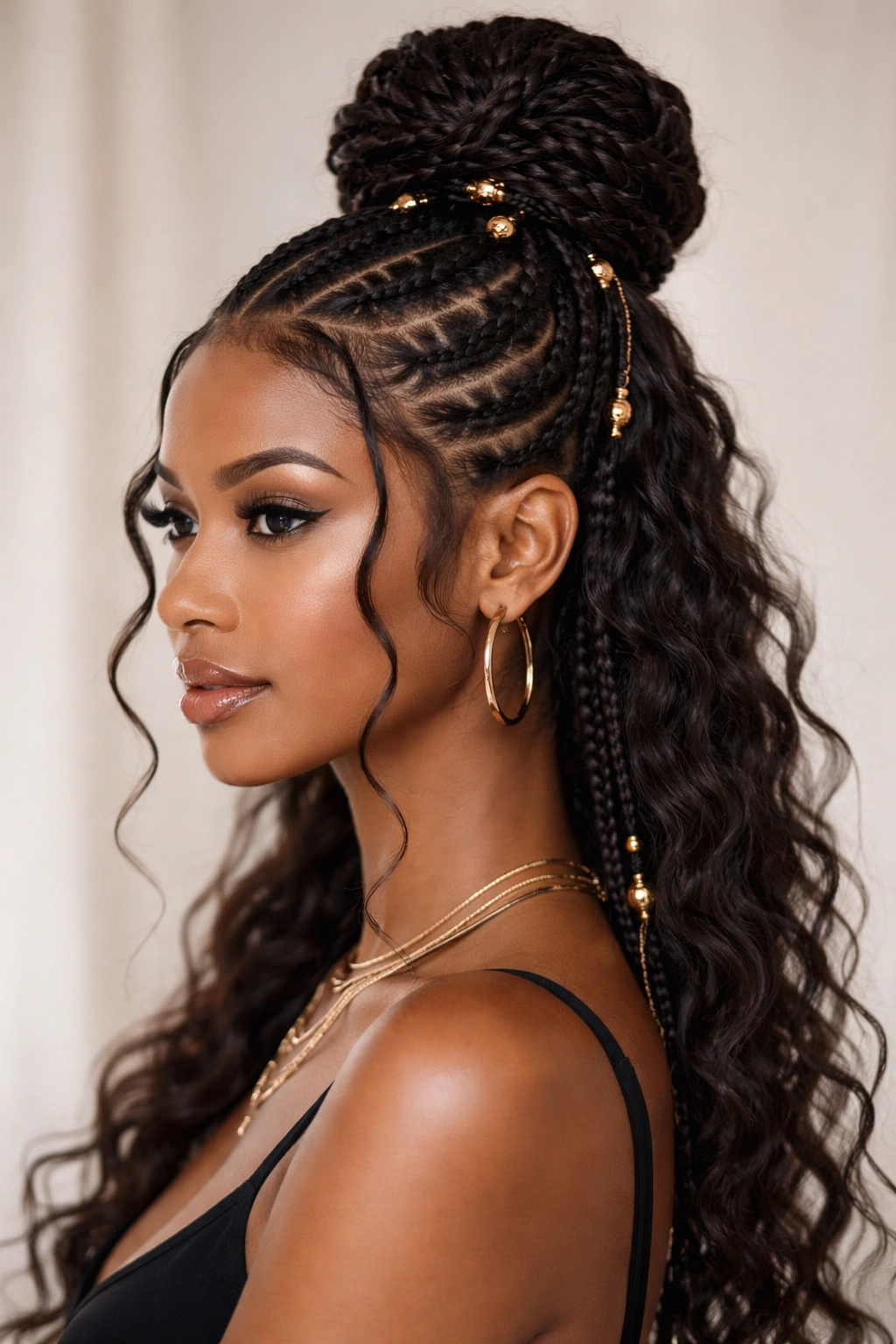
Taking your Fulani braids and sweeping them up into a high bun creates a polished, almost regal look that works for everything from family gatherings to professional settings. The magic happens when your natural waves escape the bun slightly, creating softness around your face and at the nape of your neck. It’s the kind of style that looks effortless but took actual effort to create, which is always the goal.
Constructing a Bun That Actually Holds
With wavy hair, creating a bun that lasts all day requires understanding how your texture behaves. Your waves actually work in your favor here—they grip each other and create friction that helps the bun stay put without excessive bobby pins or elastic tension. Start by sectioning your braids into two groups: one that forms the main body of the bun, and side sections that frame your face. Twist or coil the main section into a bun, then wrap the smaller sections around the base to secure it.
Face-Framing and Longevity
- Leave a few small braids or wavy pieces loose on either side of your face to soften the overall look
- Use a satin or silk scarf to wrap around the base of your bun for both security and protection of your hair
- Secure everything with bobby pins twisted and inserted so they don’t slide out, but distribute the pins so no single area bears all the weight
- A light-hold gel or edge control on the frame pieces keeps them smooth without making the style look overly done
- This style typically lasts two to three days before you need to refresh it, making it perfect for work weeks or event-heavy days
6. Fulani Braids With Colorful Beads and Natural Waves
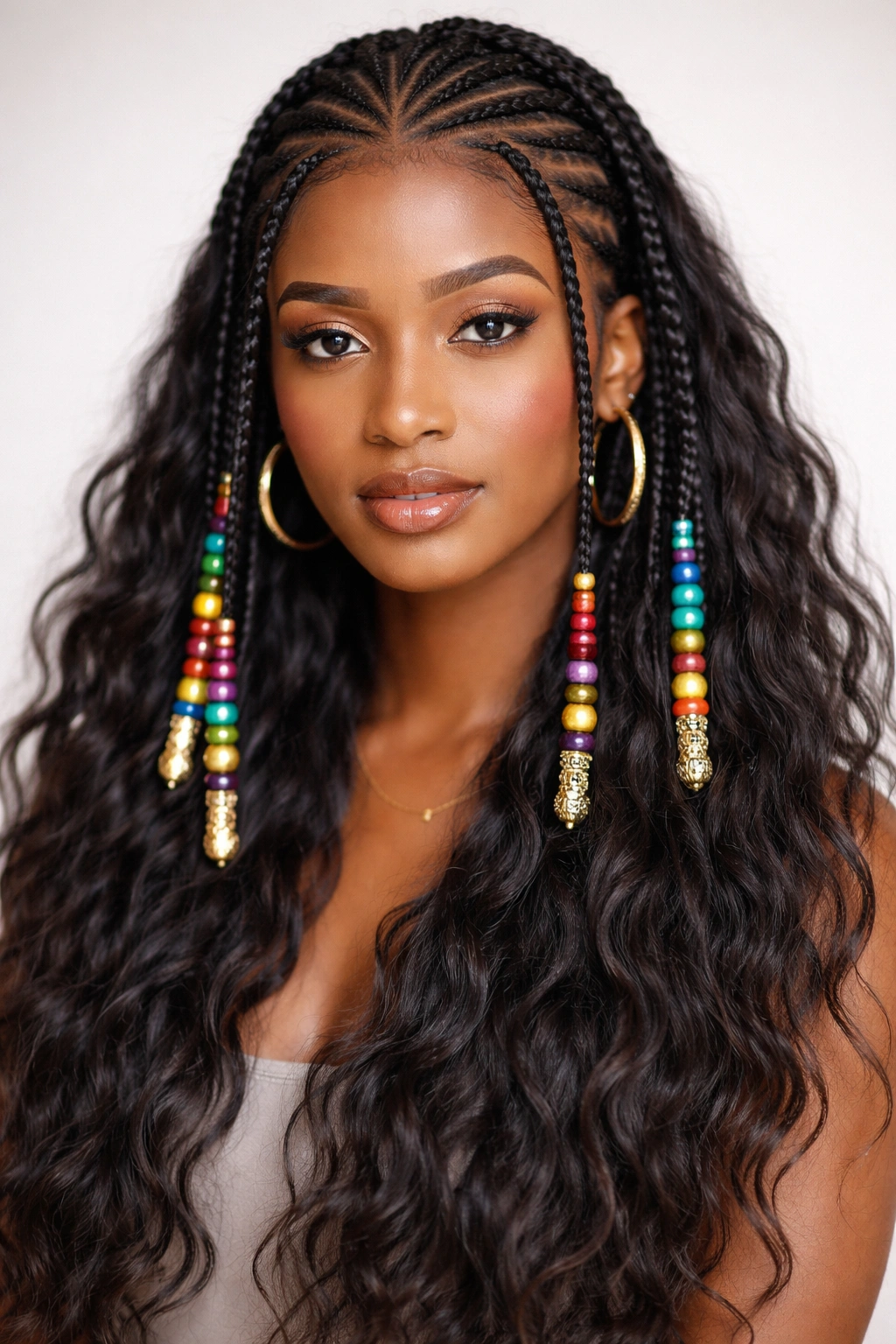
Adding colorful beads to your Fulani braids—especially when you’re showing off wavy hair—is where personality really comes through. Instead of sticking with traditional gold, you could go with turquoise, coral, emerald, or even a mix of colors. The beads sit against your skin and braids, and the natural waves of your hair frame them beautifully. When you choose bead colors that complement your skin tone, the overall effect is sophisticated and intentional rather than costume-y.
Choosing Beads That Actually Complement You
The right bead color depends on your skin tone and the vibe you’re going for. Warm skin tones often shine with gold, bronze, coral, or terracotta beads. Cool skin tones glow with silver, turquoise, emerald, or sapphire. If you’re unsure, hold a few different bead colors up to your face in natural light and notice which ones make your eyes appear brighter and your skin appear clearer. That’s your signal. You can mix and match bead colors throughout your braids—putting a certain color on one side and a different color on the other, or alternating colors every few beads for visual movement.
Threading Beads While Preserving Your Waves
- Thread beads while your hair is braided but before you’ve set the wave pattern, or they may not sit correctly against your waves
- Don’t push beads all the way to the scalp; leave a quarter-inch of space so they rest against your waves without pulling at your roots
- Consider using bead spirals (beads pre-strung on a coil) rather than threading individual beads—they’re faster and create a consistent look
- Mix bead styles: some glossy, some matte, some with texture—this prevents the braids from looking uniform and boring
- Beads should move along your braids slightly rather than being locked in place; this adds movement and allows your waves to breathe
7. Crown-Style Fulani Braids
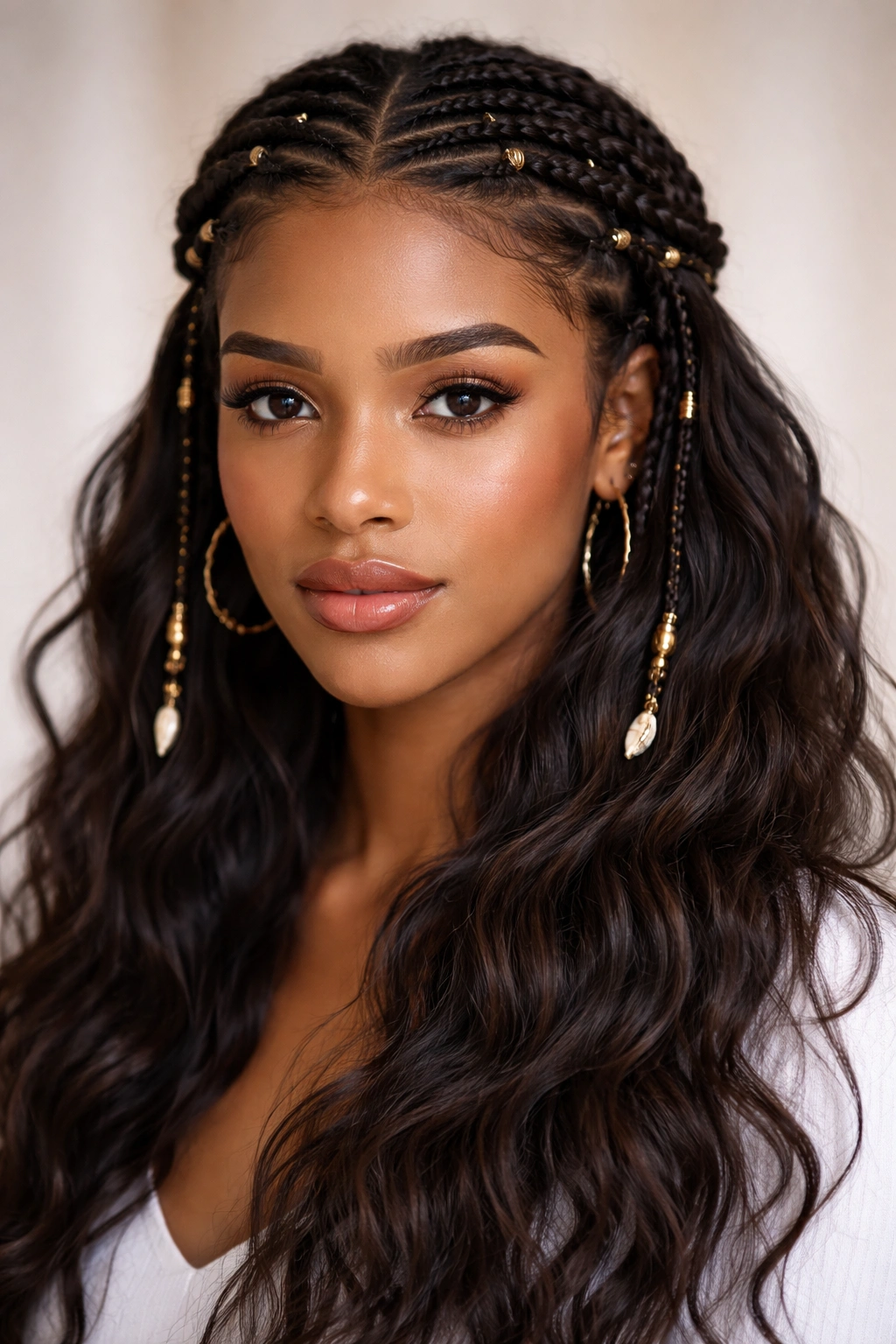
Taking your Fulani braids and wrapping them around your head in a crown or halo style is pure artistry. You’re creating braids along the sides and back of your head while leaving the crown area loose so your natural waves can showcase all their texture and volume. It’s the kind of style that makes people think you spent three hours at a salon when you might have actually done it yourself. The effect is romantic, bohemian, and completely wearable for dates, celebrations, or even bridal looks.
Mapping Out Your Crown Design
Start by deciding how much of your crown you want loose versus braided. Some people do braids starting at the ears and meeting at the back, leaving just the very top loose. Others braid the entire perimeter and leave the crown completely open. With wavy hair, you want enough loose texture at the crown to create height and movement—this is what catches the eye and makes the style feel alive. The braids act as an anchor, and your natural waves become the focal point.
Creating Height and Visual Interest
- Use a volumizing mousse or root-lift spray on your crown before creating this style to maximize natural texture
- Braid sections slightly looser than you normally would so they create a softer frame rather than a tight, structured one
- Pull a few wavy pieces from the “loose” crown section and pin them into the braids to add dimension and prevent the two parts from looking too separate
- Add small gold or silver cuffs to the braids where they wrap around rather than beads, which can catch on the loose waves
- The crown section will look best if you style it with a curl or wave cream and let it air-dry or diffuse before creating the braids
8. Fulani Braids With Shaved Sides and Wavy Top
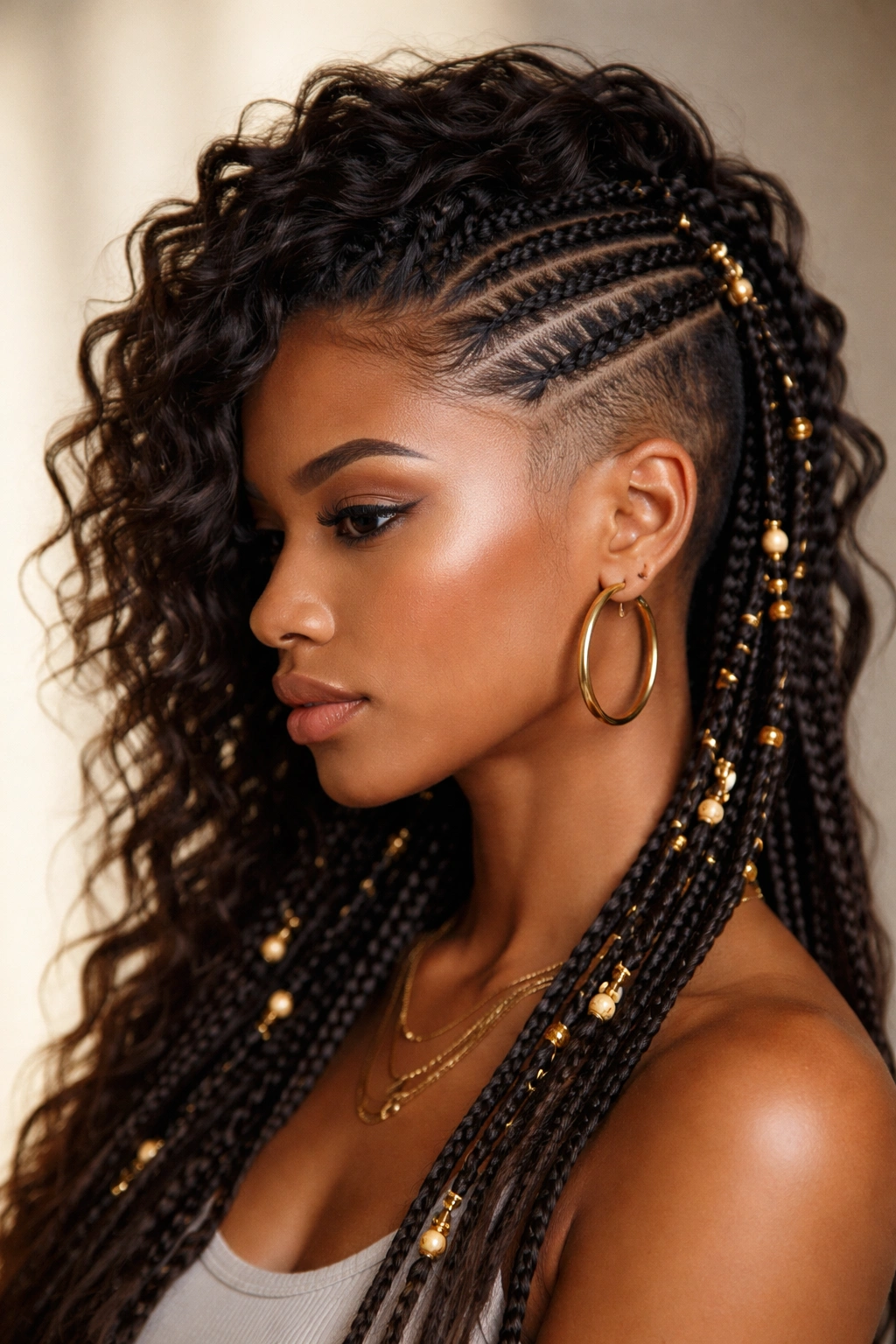
This style is a variation on the undercut theme, but with added drama. You’re shaving only the sides of your head (from about ear level down) while keeping the braids on top and in the back. Your natural waves are fully visible on the crown and back, creating a cascading effect of texture that looks absolutely stunning when the sides are clean and shaved. It’s bold, it’s modern, and it completely transforms how your face appears.
The Confidence Factor
This style requires owning your look completely. The shaved sides create stark contrast, which means your face is more exposed and your features are more prominent. But that’s actually the strength of this style—it draws all attention upward to your eyes, your bone structure, and the beautiful waves and braids on top of your head. People tend to make stronger statements about their style when they choose this look, and it absolutely works if you’re someone who embraces bold hair choices.
Styling Variations Within the Style
- You can braid your entire back section into Fulani braids while leaving the crown loose, or braid the crown as well for a different effect
- Add designs or patterns to your shaved sides if you want the maximum statement—lines, geometric shapes, or even shaved art
- Keep your shaved sides moisturized daily; they’ll show every bit of dryness or irritation, so invest in a good oil or body lotion for that area
- Refreshing the shave every one to two weeks is necessary for this style to maintain its impact
- The contrast between braids and shaved sides makes even small, delicate braids appear bold and prominent
9. Fulani Braids Mixed With Loose Wavy Sections
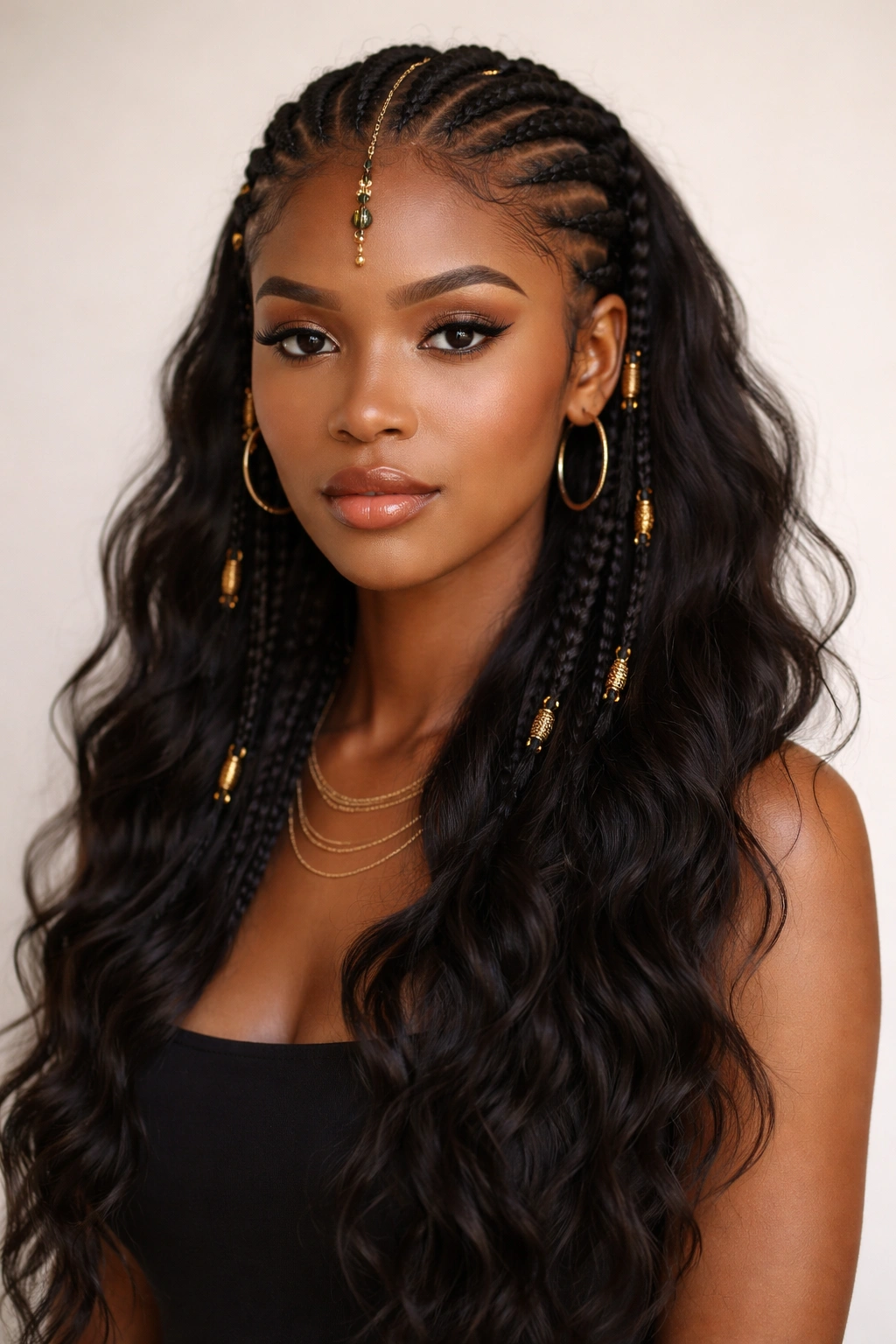
Instead of choosing between braids or waves, what if you did both intentionally? This style involves creating braids in some sections—particularly around your face and along your hairline—while leaving other sections completely loose and wavy. You might braid a section on each side of your face, then leave the back open. Or braid the front and back while the middle-top stays loose. The effect is stylish, undone, and perfect for people who want protection without committing to a full head of braids.
The Balance Between Structure and Texture
The key to making this work is ensuring that your braided sections and loose wavy sections feel intentional rather than accidental. They should be clearly delineated—don’t try to blend them together or it’ll look like you couldn’t decide. Use a styling product to enhance the definition between the two: more hold product on the braided areas and a cream product on the waves to emphasize their softness and movement. When these two textures sit next to each other intentionally, they complement rather than compete.
Which Sections to Braid Versus Leave Loose
- Braiding the front sections frame your face while leaving the back loose gives you protection where you need it while showing off your waves
- Braiding a top section into a crown while leaving the back full and wavy creates height and movement simultaneously
- Side braids with a loose middle section is flattering for round face shapes because it adds length and definition
- This mixed approach typically lasts longer than full braids because the loose sections can be refreshed more easily without disturbing the braided sections
- You can change which sections you braid each time you refresh the style, keeping the look fresh without starting completely over
10. Tribal-Inspired Fulani Braids With Elaborate Cuffs
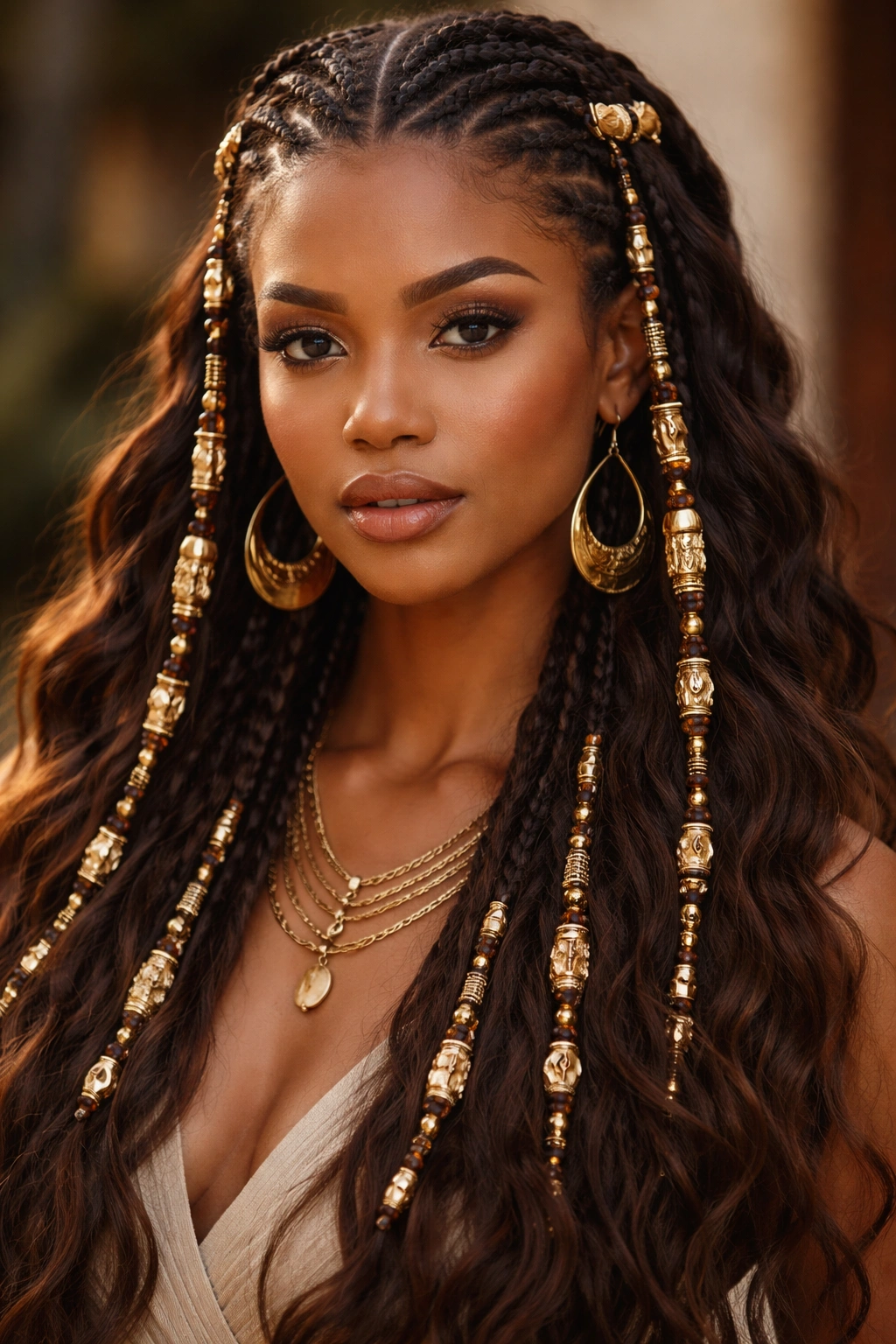
Taking Fulani braids to a more elaborate, artistic place means focusing on the accessories and adornments rather than (or in addition to) beads. Gold cuffs, rings, and larger statement pieces placed strategically throughout your braids create a look that’s rooted in traditional West African styling while feeling completely current. With wavy hair, these accessories rest against your natural texture beautifully, and the waves provide a soft backdrop that lets the gold really shine.
Selecting Cuffs and Accessories That Resonate
Tribal-inspired styling is about honoring cultural heritage while making it your own. Look for cuffs and pieces that resonate with you personally—whether that’s pieces from African artisans, jewelry that references your own heritage, or modern interpretations of traditional designs. The pieces should feel meaningful, not like a costume. Placement matters: larger statement cuffs work best at the base of braids or clustered in a few sections rather than scattered randomly throughout.
The Styling Statement
- Mix metals if it speaks to you—gold with silver, or copper with gold creates visual interest and prevents the look from feeling too matchy-matchy
- Use cuffs of varying widths and designs for dimensionality; three identical large cuffs looks less intentional than a mix of sizes
- Position heavier pieces lower on your braids so they’re not creating tension at your scalp
- Leave some braids completely accessory-free for visual breathing room; the contrast between adorned and plain braids looks more sophisticated
- This is the style to choose if you’re attending an event where you want to make a clear statement about your heritage, creativity, and sense of style
- Pro tip: Invest in quality cuffs that won’t tarnish or irritate your scalp; you might be wearing this style for several weeks, so comfort and durability matter.
Final Thoughts
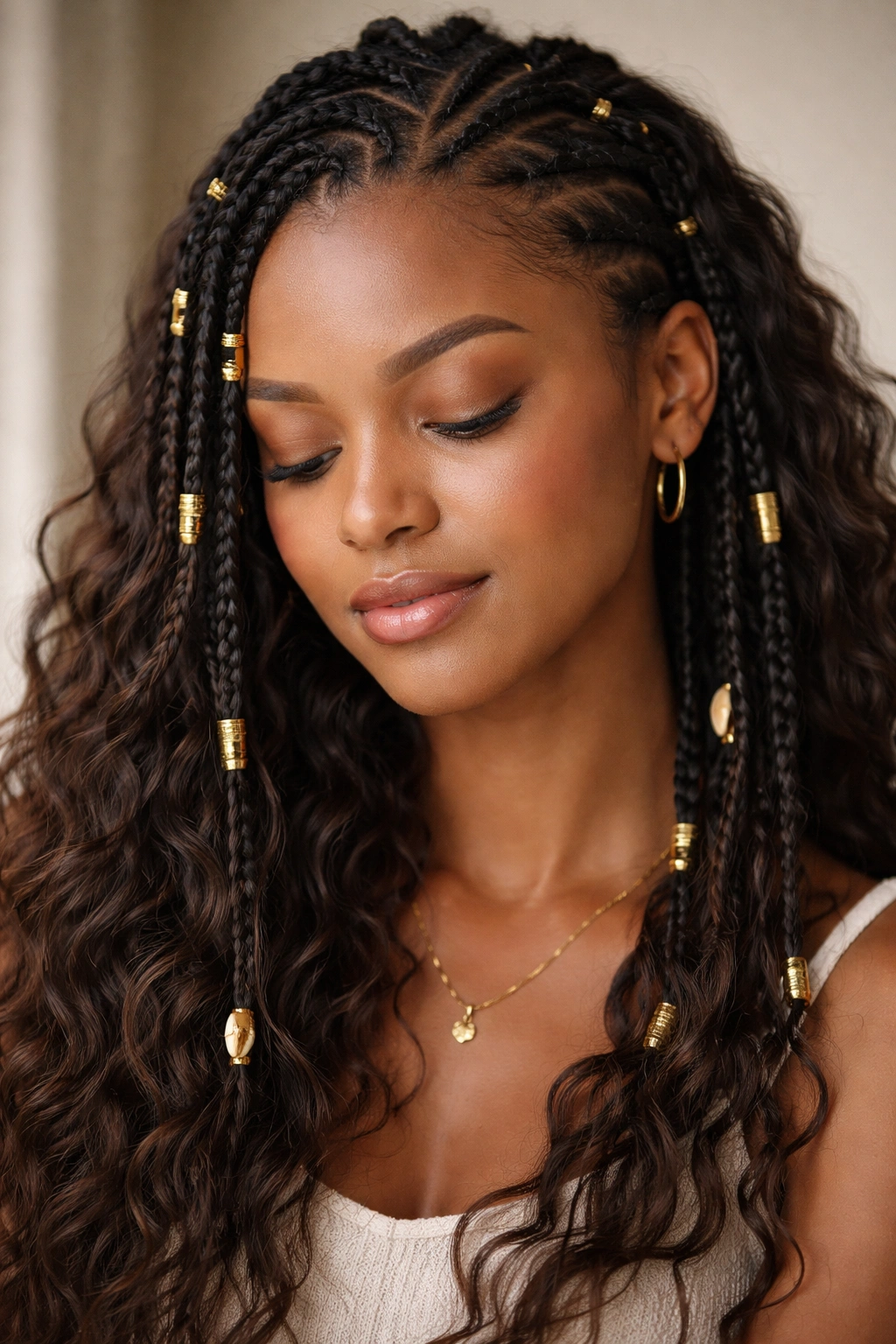
Fulani braids with wavy hair is a styling combination that honors cultural tradition while celebrating the unique texture you were born with. The beauty of these styles is that there’s something for everyone—whether you want understated elegance, bold artistic expression, or a balance of both. Your wavy hair isn’t a limitation when it comes to Fulani braids; it’s actually an advantage that adds dimension, movement, and visual interest that perfectly complements these classic plaits.
The key to making any of these styles work is understanding your specific wave pattern, taking time to prepare and protect your hair properly, and choosing a style that aligns with your lifestyle and personal aesthetic. Some of these looks demand attention and make a clear statement; others are quieter and more everyday-wearable. Some take hours to create; others come together relatively quickly if you have experience with braiding.
Whatever style you choose, remember that Fulani braids have been a form of cultural expression and artistic self-representation for centuries. When you wear them, you’re participating in a legacy of beauty, creativity, and intentional style that extends far beyond trends. Your wavy hair makes that statement uniquely yours.
