



The artistry woven into Hausa Fulani hairstyles represents centuries of cultural expression, identity, and pride passed down through generations. These intricate, breathtaking styles aren’t just about hair—they’re declarations of heritage, markers of social status, and celebrations of feminine beauty that command attention and respect. Whether you’re attending a wedding, a naming ceremony, a market gathering, or simply going about your daily life, Hausa Fulani hairstyles offer elegant, versatile options that work for virtually any setting.
What makes these hairstyles so captivating is the deliberate combination of precision braiding, strategic bead placement, and architectural structure that transforms hair into wearable art. Many styles take hours to create, requiring the skilled hands of experienced braiders who understand the intricate patterns, tension control, and finishing techniques that distinguish authentic Hausa Fulani work from casual braiding. The styles often incorporate gold, silver, or brass beads, cowrie shells, strings, and wrapping that add dimension, shimmer, and personal flair to each look.
The beauty of exploring these hairstyles is discovering which ones resonate with your personal aesthetic and lifestyle. Some are more formal and dramatic—perfect for weddings and celebrations. Others offer everyday wearability with enough sophistication to elevate your appearance for special occasions. Understanding the characteristics, styling requirements, and best contexts for each style helps you make confident choices that honor the tradition while expressing your individual style.
1. Diadoro
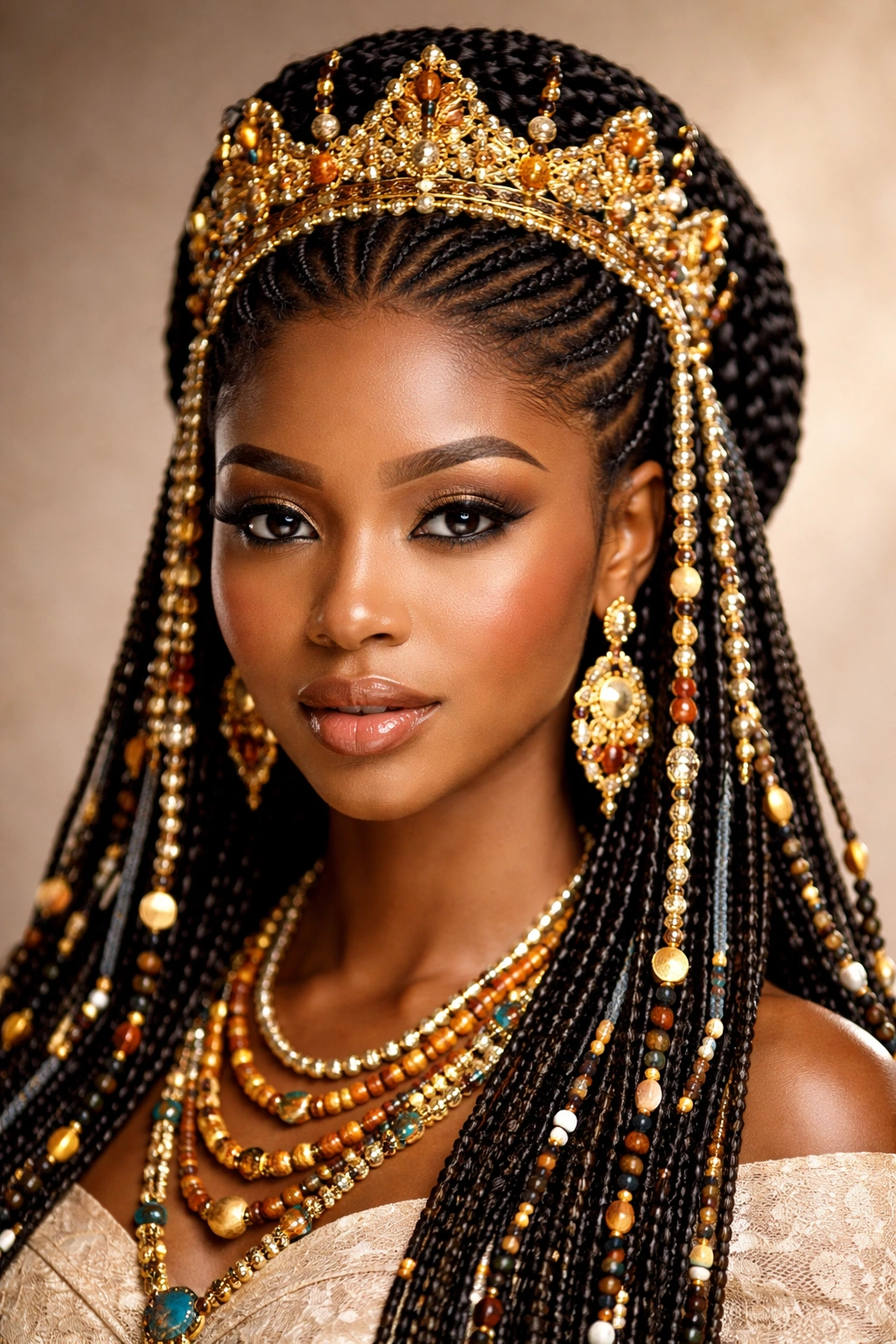
Diadoro is one of the most regal and striking Hausa Fulani hairstyles, characterized by an elaborate beaded crown that sits majestically atop the head. The style features multiple rows of tightly braided hair that form a structured base, upon which layers of golden, silver, or colorful beads are meticulously arranged. The beads often cascade down in strands or create geometric patterns that frame the face and shoulders, making this style an absolute showstopper.
The Crown That Commands Presence
Diadoro translates to a celebration of elegance and sophistication. The braided foundation requires exceptional skill—each braid must be perfectly even and secure enough to support the weight of extensive beading. Braiders typically create the base using cornrows or thick plaits that radiate from the crown, forming a stable structure. The beads are then threaded onto strings and attached strategically to create symmetry and visual balance. A single Diadoro styling session can take 8-12 hours, depending on the complexity and amount of beading involved.
Perfect Occasions for Diadoro
- Weddings and marriage ceremonies where you want to look absolutely unforgettable
- Naming ceremonies and major family celebrations requiring formal, elaborate styling
- Festival celebrations and cultural events that honor tradition
- Professional events where you want to make a powerful, confident statement
- Photography sessions and special portraits
Pro tip: Diadoro works best with a full face and longer hair length (at least 12-14 inches) that can support the extensive beading without discomfort. The weight distribution matters—ensure your braider positions beads evenly to avoid tension headaches.
2. Zabiya
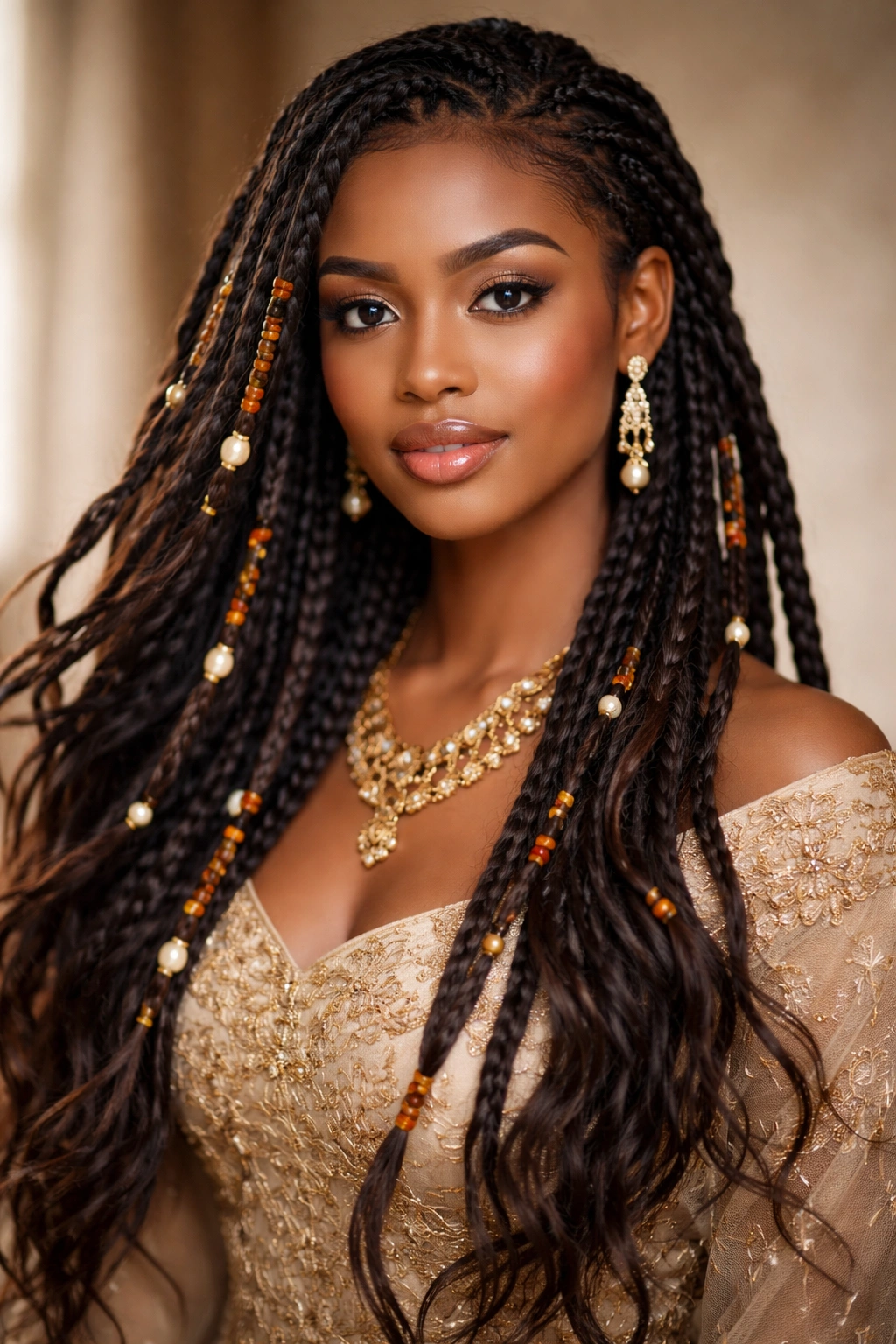
Zabiya represents a more relaxed yet equally beautiful approach to Hausa Fulani hairstyling, featuring loose, flowing braids that typically fall past the shoulders. This style embraces movement and texture, with thick braids adorned with beads placed at intervals along the length. Unlike the rigid structure of Diadoro, Zabiya allows hair to move naturally while maintaining elegant sophistication.
Flowing Elegance with Movement
What distinguishes Zabiya is the balance between structure and freedom. Braiders typically create thick, medium-sized braids—usually between 6-12 main braids depending on hair thickness and personal preference. Beads are woven throughout at varying heights, creating a cascading effect that catches light as you move. Some variations include wrapping the braids with thread or string in contrasting colors, adding another layer of visual interest. This style looks beautiful both when hair is loose and when portions are gathered up.
Styling Versatility and Comfort
- Wear Zabiya loose and flowing for casual settings, market visits, and everyday activities
- Gather portions up with decorative pins for a semi-formal appearance
- Wrap the braids around the crown of your head for an elevated evening look
- Style with lightweight beads for all-day comfort or statement beads for special occasions
- Add colorful thread wrapping to coordinate with specific outfits
The time investment for Zabiya typically ranges from 5-8 hours depending on braid thickness and bead placement. Many people choose this style because it’s lighter than heavily beaded options, making it more comfortable for extended wear.
3. Gara or Gaduro
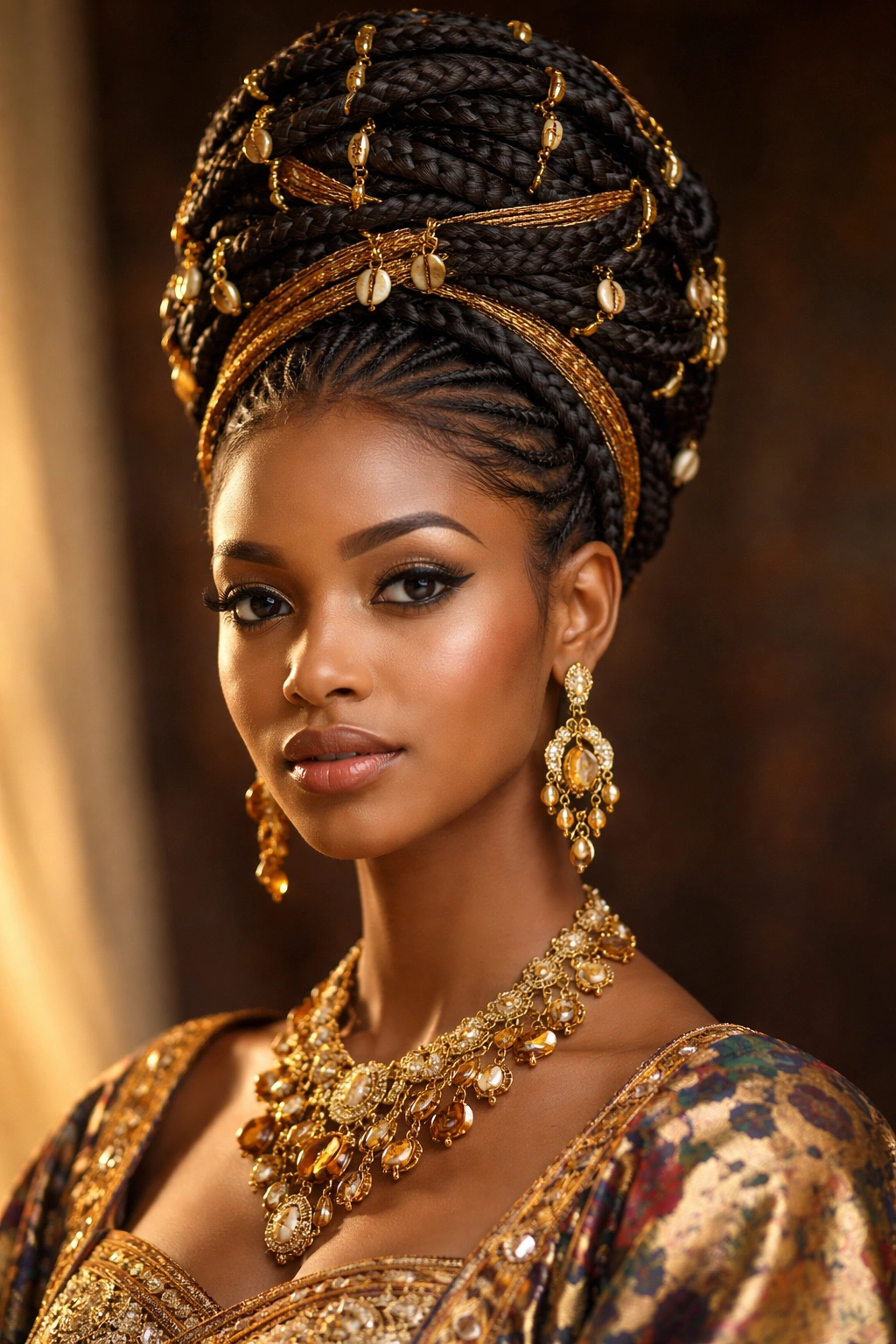
Gara, also known as Gaduro, is an architectural masterpiece featuring hair woven into a tight, elevated bun or crown formation. The braids are intricately interlocked and folded to create height and dimension, often forming a sculptural shape that sits prominently on top of the head. This style is particularly favored for formal occasions and represents refined elegance and sophistication.
The Sculptural Crown
Gara requires exceptional precision and technical skill from the braider. Rather than braids falling loose, each section is carefully woven back and secured, creating a three-dimensional structure that can reach several inches in height. The formation often resembles a crown or throne—hence its association with nobility and special occasions. Some variations include wrapping the woven sections with gold thread or beads embedded directly into the structure. The result is a hairstyle that commands attention and conveys both beauty and status.
When to Wear Gara
- Wedding ceremonies where formal elegance is essential
- Religious celebrations and special prayer events
- Family gatherings and important social occasions
- Formal photography sessions
- Celebrations where cultural tradition is central
The creation of a true Gara style typically requires 6-10 hours of meticulous braiding and weaving. The weight is distributed across the entire scalp, making it surprisingly comfortable once completed, though it does require careful sleeping positions to maintain the structure.
4. Sankaranda
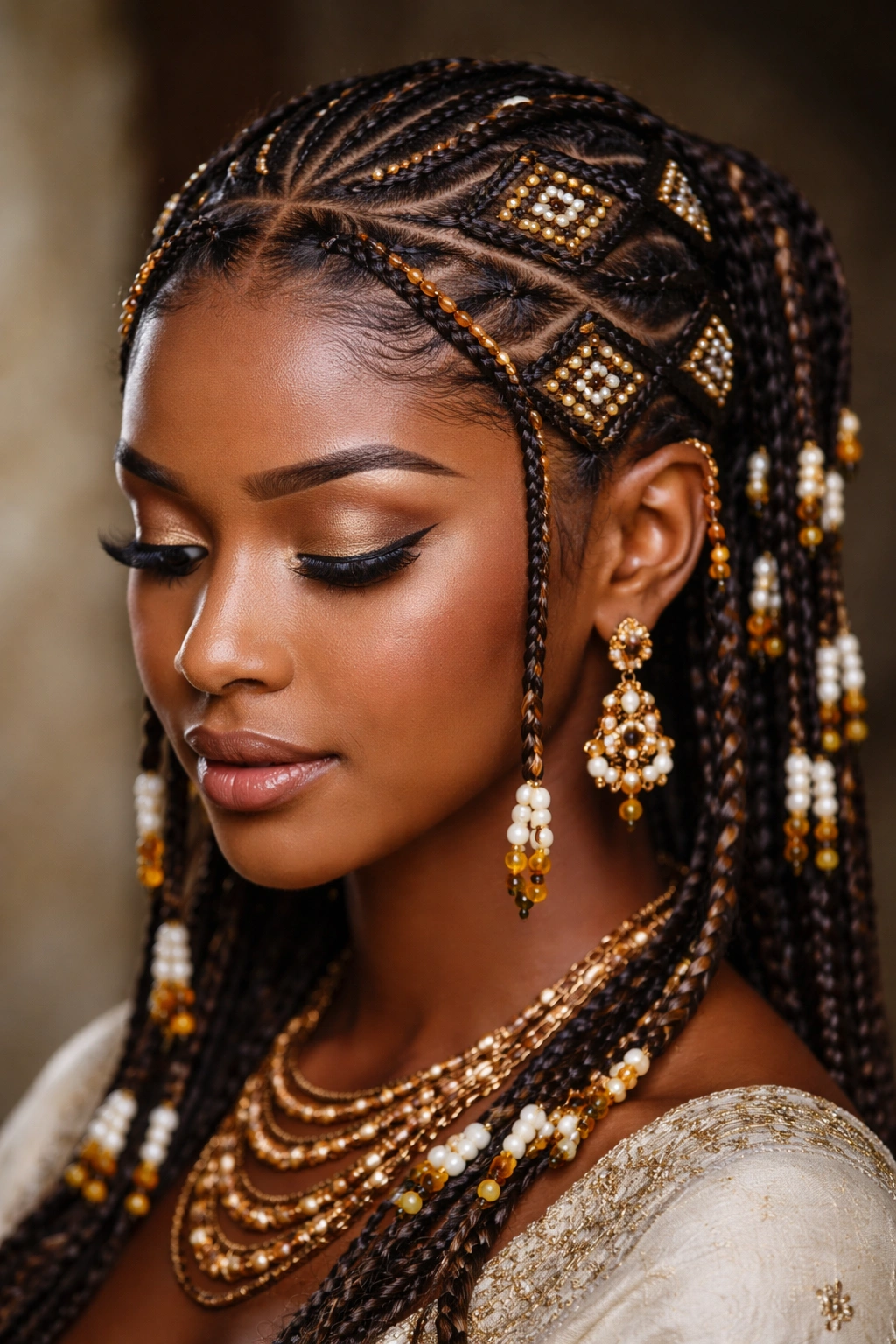
Sankaranda is a variation of cornrow braiding that showcases creative pattern-making and geometric design across the entire head. This style features multiple thin to medium-sized cornrows that follow specific patterns—sometimes straight, sometimes curved, sometimes creating diamond shapes or other geometric formations. Beads are typically placed at the ends or woven throughout the braids for added embellishment.
Geometric Artistry on the Scalp
What makes Sankaranda distinctive is the intentional pattern design. Rather than random braid placement, experienced braiders create deliberate formations that tell a story or represent cultural symbols. Some patterns are traditional with specific regional significance; others are contemporary interpretations that blend tradition with modern aesthetics. The cornrows can be tight and close to the scalp or slightly looser depending on preference and hair type. Bead placement becomes part of the overall design, with color coordination creating additional visual rhythm.
Design Possibilities and Applications
- Create intricate geometric patterns that showcase your personal aesthetic
- Mix thin and thick braids in alternating patterns for visual interest
- Combine different colored beads to enhance the geometric design
- Use Sankaranda for both casual and formal occasions depending on bead choice
- Style with additional accessories like gold cuffs or decorative hair jewelry
Sankaranda styling typically takes 4-8 hours depending on pattern complexity. The beauty of this style is its versatility—you can wear it as-is for casual occasions or elevate it with statement beads and jewelry for formal events.
5. Bulala
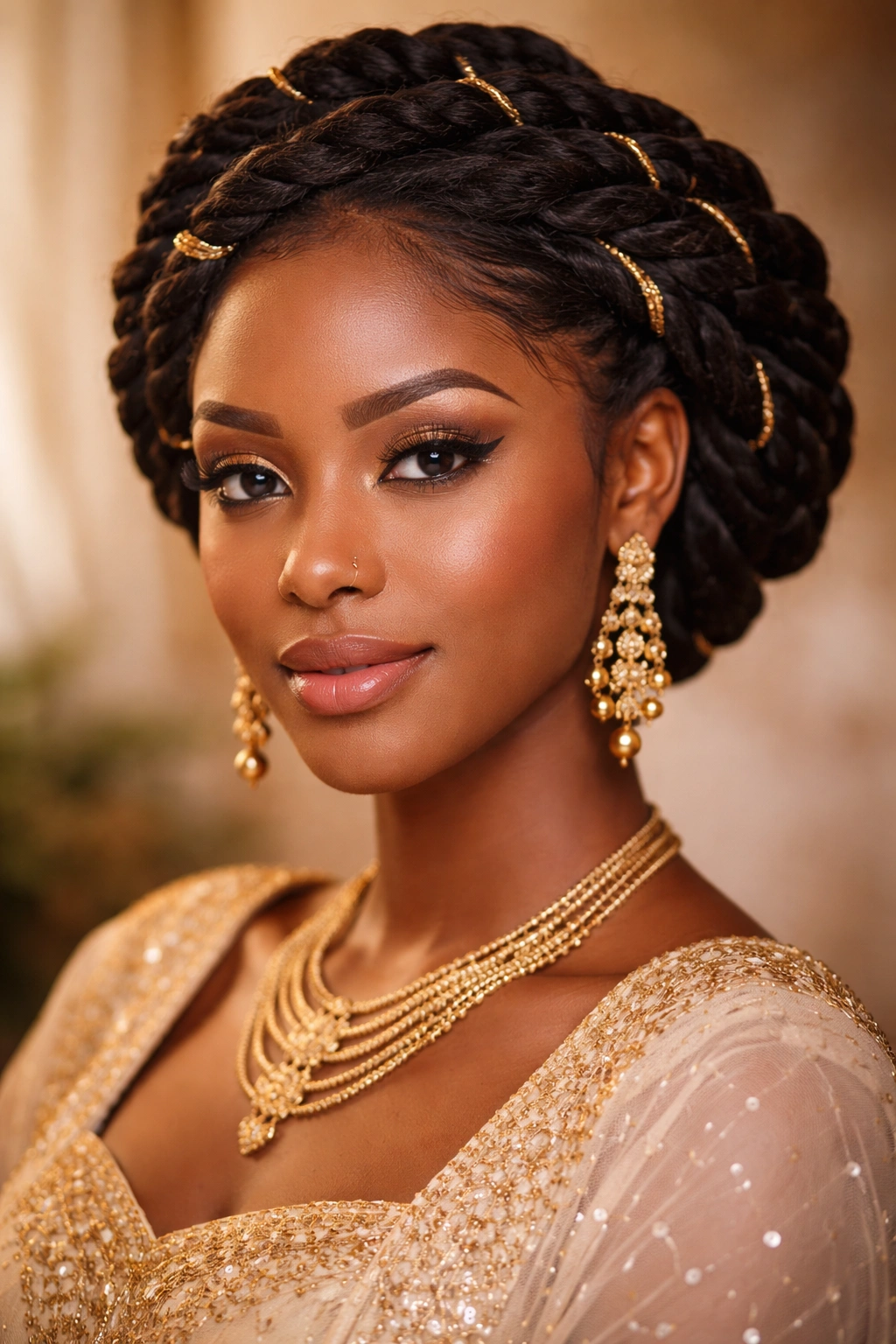
Bulala is a twisted crown style that features hair twisted rather than braided, creating a softer, more fluid aesthetic while maintaining structure and elegance. Multiple twists originate from different parts of the scalp and are arranged to form a crown-like formation, often with the twists coiling or wrapping around the head. This style sits between the structured formality of Gara and the casual flow of Zabiya.
Soft Twists Creating Regal Presence
Twisting requires different technical skills than braiding—the hair is divided into two sections and twisted together rather than three sections being braided. This creates a rounder, softer edge compared to braids while still maintaining strength and structure. Bulala styles often incorporate wrapping with gold or colored thread, which adds definition to the twists and coordinates with beading. The twists can be thick or thin, creating different visual effects—thicker twists appear bolder and more architectural, while thinner twists create delicate, intricate patterns.
Occasions Where Bulala Shines
- Casual family gatherings where you want polished elegance without formality
- Daytime events and social occasions
- Professional settings where you want to express cultural pride with sophistication
- Everyday styling when you want something more special than casual hair
- Relaxed celebrations and community events
A Bulala style typically requires 4-7 hours to complete, depending on the number of twists and amount of wrapping. Many people find twisted styles slightly more comfortable for sleeping than heavily braided options because the twists are rounder and less structurally rigid.
6. Zana
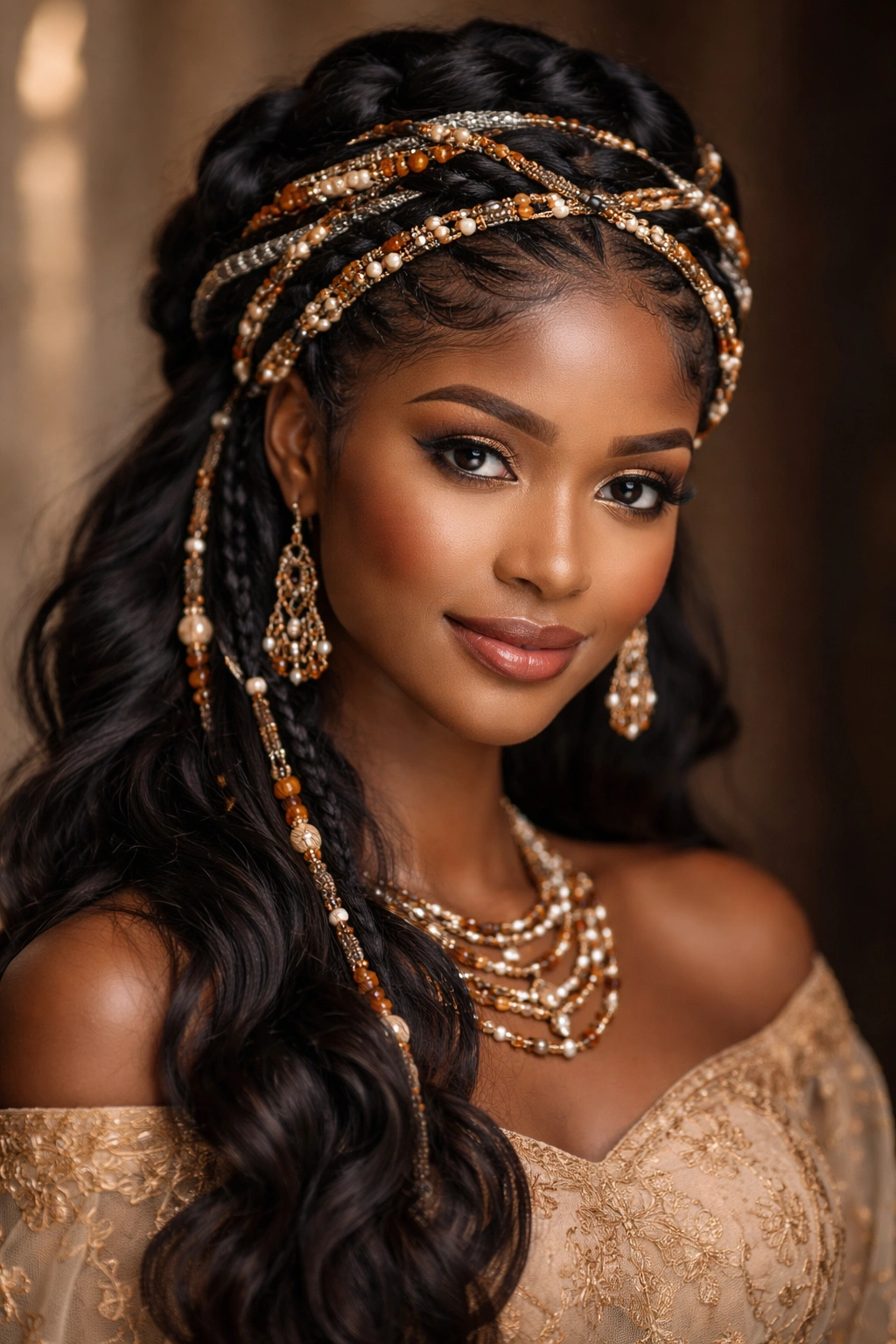
Zana is an elegant style that embraces looser, more flowing hair while maintaining the traditional aesthetic through strategic wrapping and beading. Rather than tight braiding, Zana features hair that’s partially braided or twisted near the crown, with the remainder left loose or very loosely braided, then wrapped with colorful thread, strings, and beads. This style is perfect for people who prefer comfort and versatility without sacrificing beauty.
Wrapped Elegance with Comfort
The defining characteristic of Zana is the extensive wrapping that gives structure to otherwise loose hair. Wide sections of hair are wrapped tightly with gold, silver, or colorful thread, creating segmented patterns down the length. Beads are typically placed at the base of wraps or interspersed throughout, catching light and adding visual interest. The wrapping can be plain or create intricate patterns—some braiders wrap in diagonal directions or alternating colors to create artistic designs. This style allows maximum air circulation to the scalp compared to tightly braided options.
Styling Flexibility and Day-to-Day Wearability
- Wear Zana loose and flowing for casual occasions
- Gather sections up for a more formal appearance
- Restyle the loose portions throughout the day for different looks
- Sleep comfortably with less risk of disrupting the overall style
- Maintain the style for 2-3 weeks with minimal touch-ups
The time investment for Zana ranges from 3-6 hours depending on wrapping complexity and bead placement. This style is particularly popular for people who want cultural authenticity without the full commitment of heavily braided styles.
7. Tsadawa
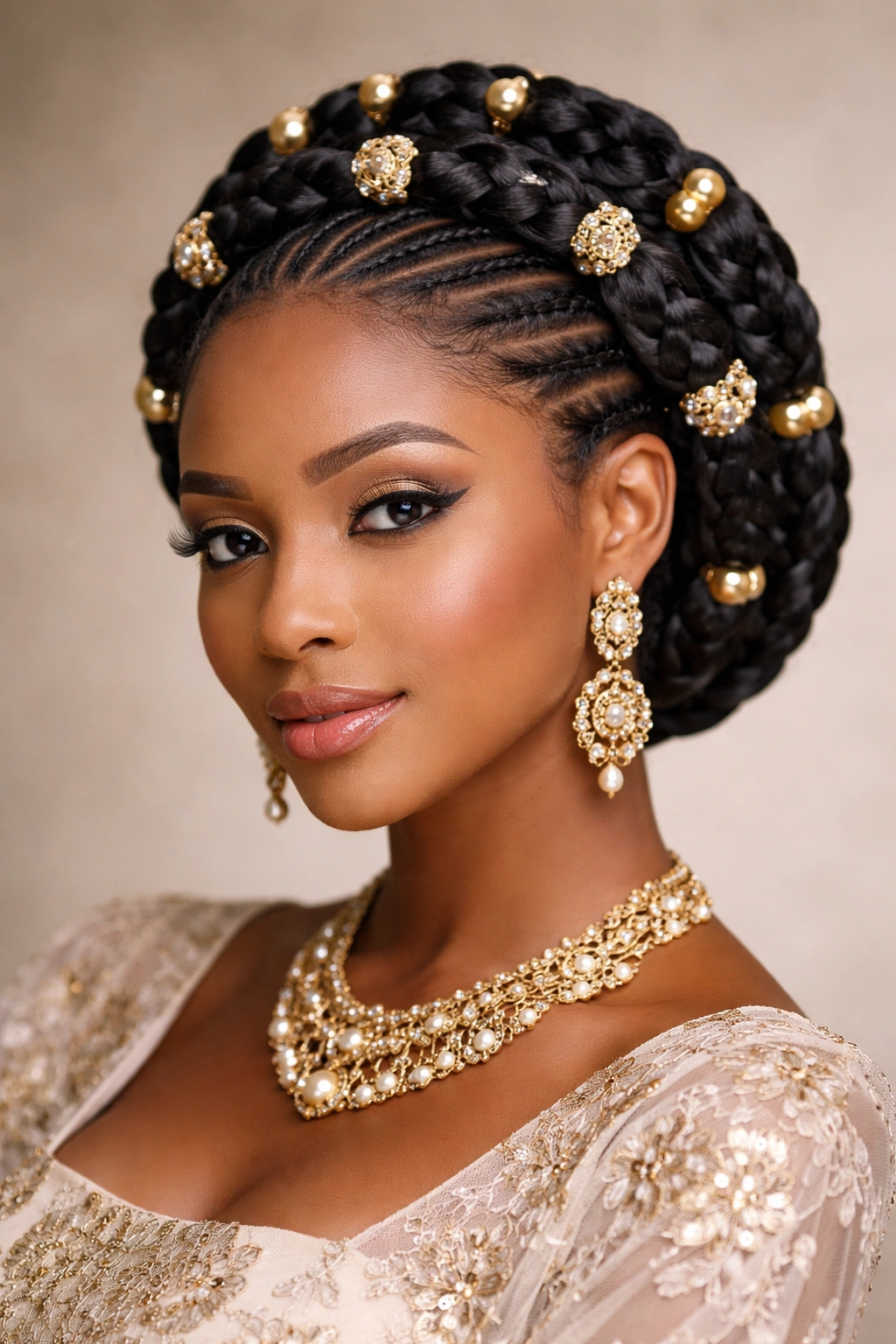
Tsadawa is a sophisticated braided crown style that emphasizes elegant simplicity and refined beauty. This style features braids arranged in a crown formation around the head, typically 4-8 main braids that are thick and prominently displayed. Beads are placed strategically along the braids and crown, and the overall effect is one of polished sophistication without excessive ornamentation.
The Understated Crown
Tsadawa appeals to people who appreciate classic elegance over dramatic embellishment. The braids are typically medium to thick in size, allowing the hair texture and quality to show through rather than being hidden under excessive beading. The crown arrangement creates a halo effect that’s flattering on most face shapes. The beads used in Tsadawa are typically larger, creating visual impact while maintaining visual clarity—you see the beads as accent pieces rather than as a covering. Many traditional Tsadawa styles incorporate minimal color variation, using gold or silver beads exclusively.
Perfect for Refined Occasions
- Professional environments where you want cultural expression with polish
- Formal daytime events and business gatherings
- Religious services and spiritual celebrations
- Photographs where you want clarity and classic beauty
- Everyday styling when you want understated elegance
Tsadawa typically requires 4-6 hours to complete. The maintenance is straightforward compared to heavily beaded styles—you can easily clean around the braids and beads without worry about tangling or breakage.
8. Kurdin Jari
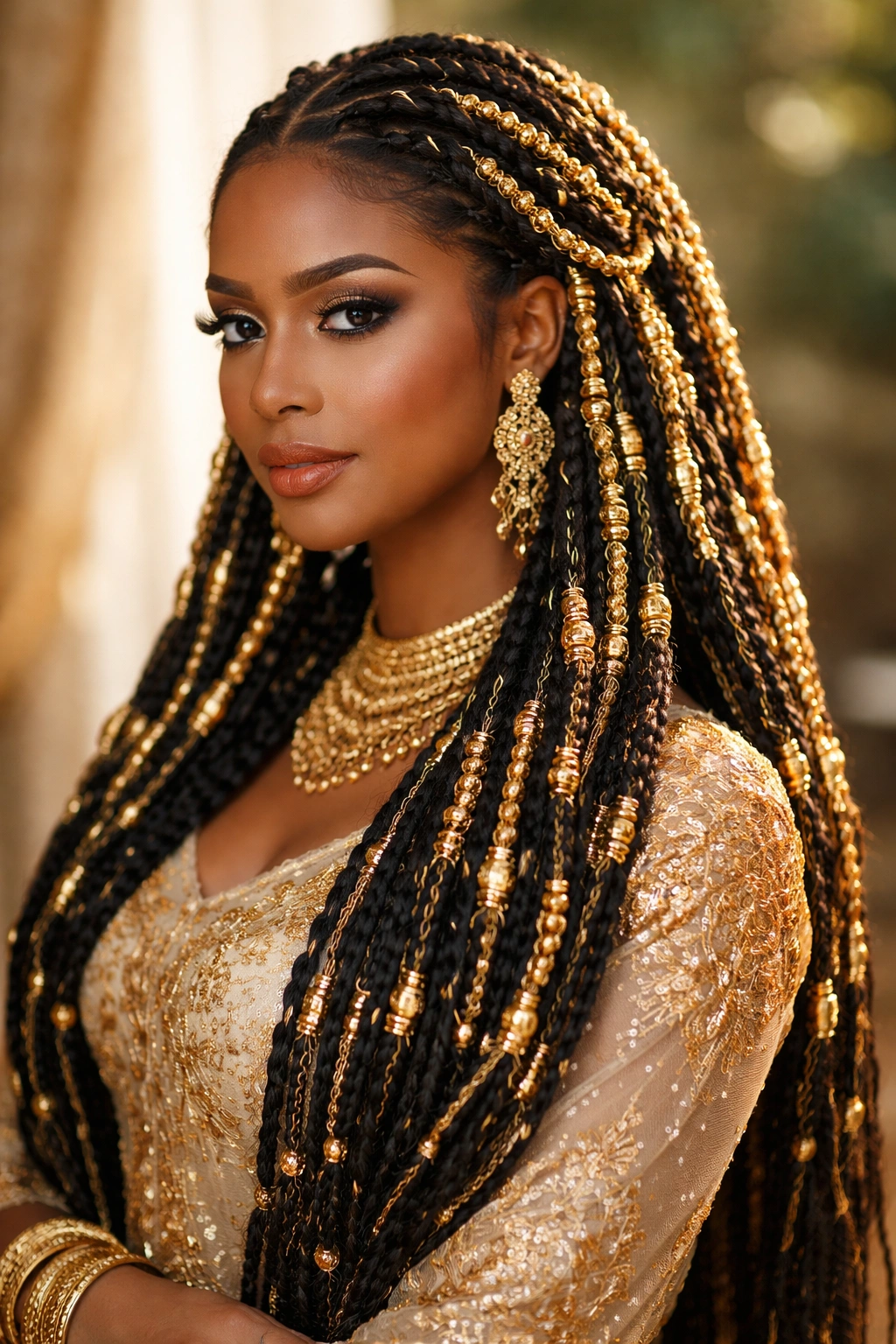
Kurdin Jari translates to “golden braids,” and this style lives up to its name with extensive gold bead work that creates a glittering, luminous effect throughout the hair. This style features multiple braids adorned with gold beads placed so densely that the gold becomes a defining feature of the overall look. The braids themselves might be medium-thick, but the gold threading and beading makes them appear bold and statement-making.
Golden Radiance and Celebration
The hallmark of Kurdin Jari is the deliberate, generous use of gold beads and gold-colored threading that creates visual richness and warmth. The gold catches light beautifully, creating a glittering effect that’s particularly striking in natural daylight and at evening events. This style celebrates abundance, joy, and special occasions. The braids are typically arranged either loose and flowing or partially gathered, but always positioned to maximize the visual impact of the gold work. Some variations include mixing gold with complementary colors like deep reds or rich jewel tones.
Occasions That Call for Golden Beauty
- Weddings and marriage ceremonies where celebration is paramount
- Festivals and major cultural celebrations
- Evening events and formal gatherings
- Family milestones and important ceremonies
- Photo sessions where you want maximum visual impact
Creating a full Kurdin Jari style can take 8-12 hours depending on the density of gold work. The investment in materials is also significant due to the quantity of quality beads used. However, the effect is absolutely transformative and unforgettable.
9. Adire or Adara
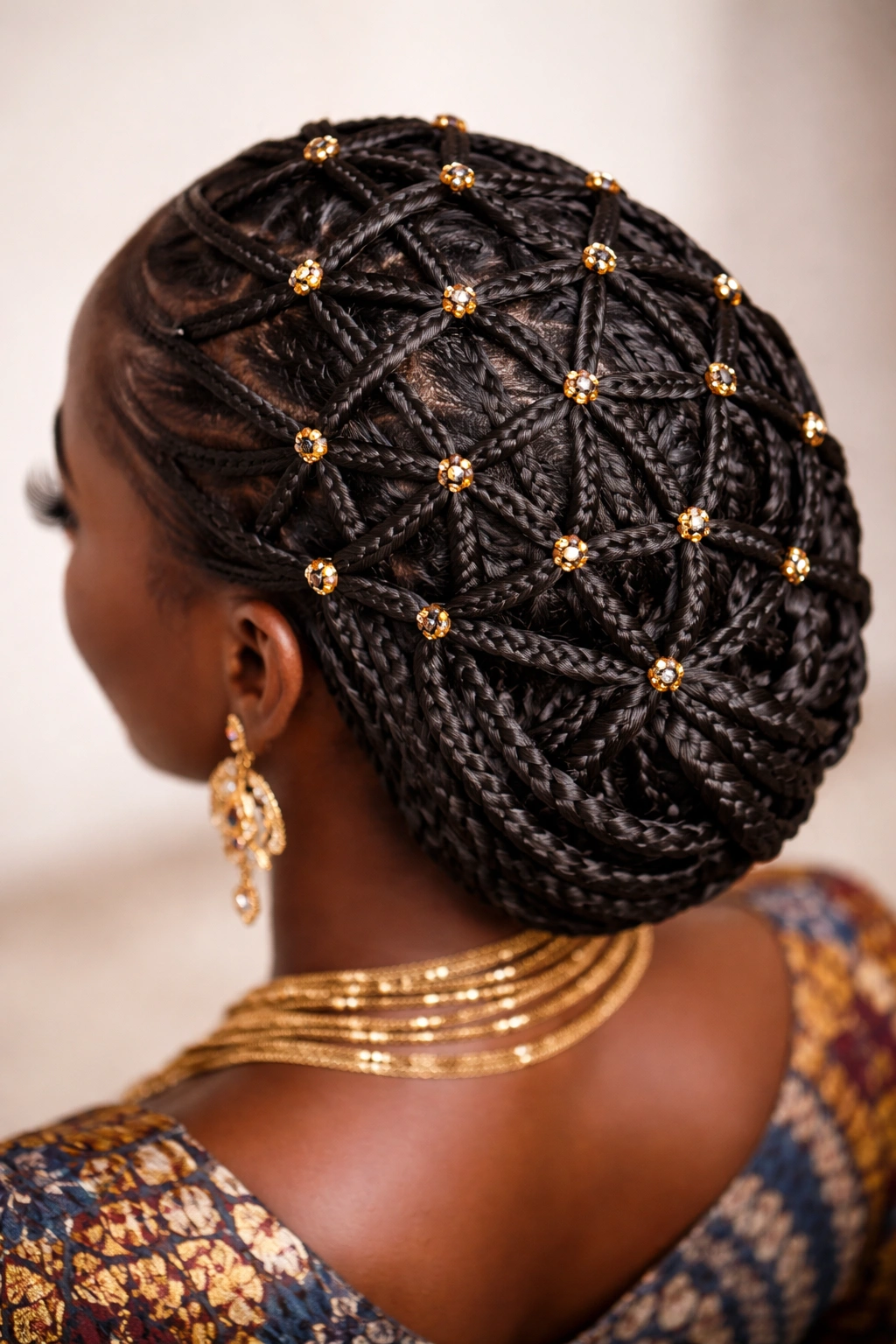
Adire, also called Adara, features interlocking braids that create a complex, interwoven pattern across the head. Rather than braids running straight or in simple patterns, Adire braids cross over and under each other, creating a three-dimensional lattice effect that’s visually striking. This style requires exceptional technical skill and spatial planning from the braider to execute properly.
Complex Interlocking Patterns
Adire showcases the highest levels of braiding artistry. Multiple braids originate from different sections of the scalp and are deliberately woven together, creating sections where braids interact and overlap. This isn’t random crossover—it’s calculated and intentional, creating symmetrical or geometric patterns. The visual effect is almost architectural, resembling detailed metalwork or textile patterns. Beads are often placed at intersection points, further emphasizing the geometric design. Some Adire styles incorporate color variation in the thread wrapping to enhance the pattern visibility.
When Interlocking Artistry Is Appropriate
- Weddings and major celebrations where artistry is celebrated
- Cultural events and festivals that honor traditional skills
- Photography sessions where you want to showcase intricate detail
- Formal occasions where you want everyone to notice the incredible craftsmanship
- Personal milestones where you want to commemorate with beauty
An authentic Adire style typically requires 10-14 hours of meticulous braiding. The scalp requires complete visibility, so this style works best on people with healthy scalp conditions. The visual payoff is extraordinary—this is a style that people stop and stare at in appreciation.
10. Gara da Wajen
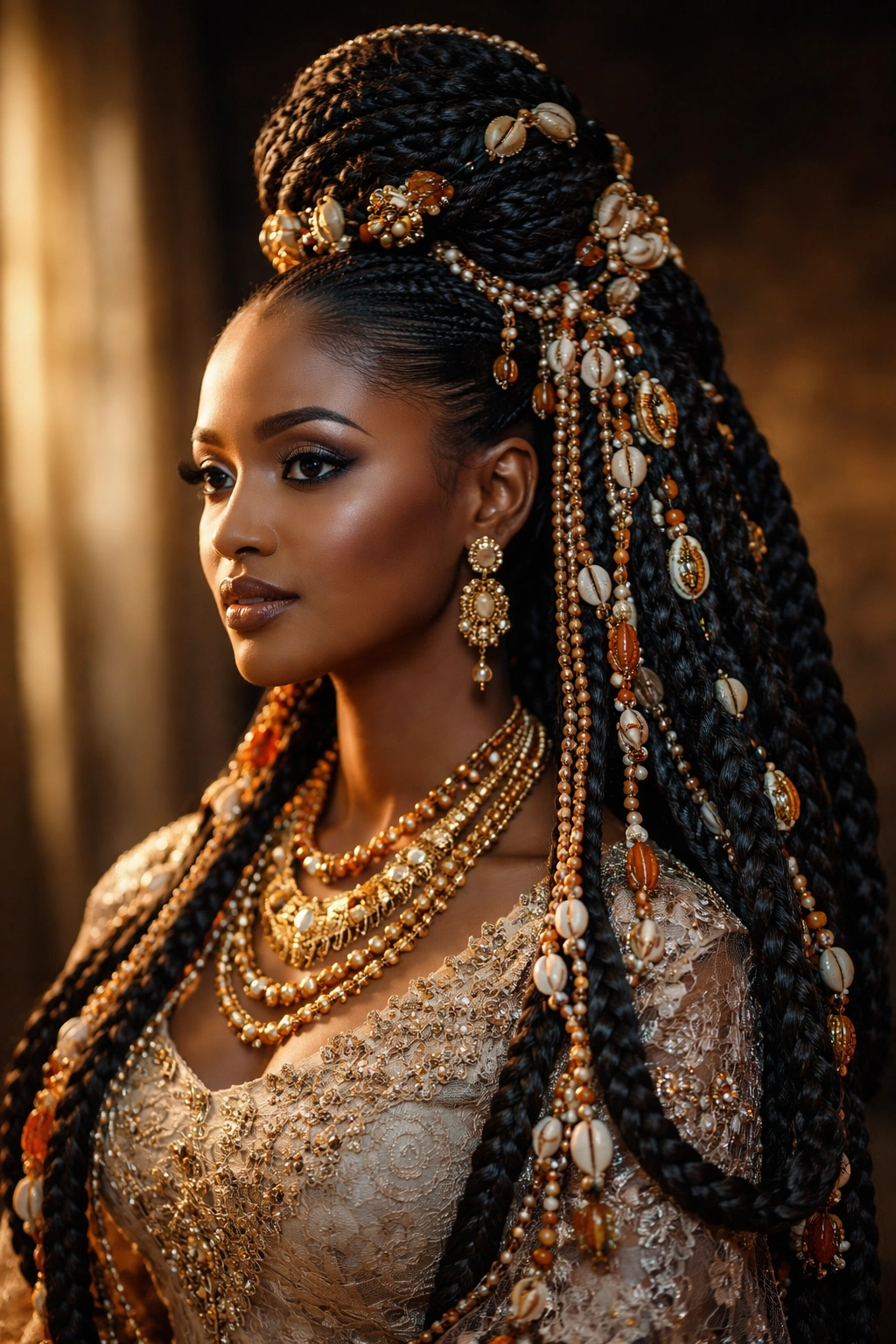
Gara da Wajen represents the pinnacle of elaborate hairstyling, combining multiple techniques into one magnificent creation. This style typically features an elevated, sculptural bun or crown formation at the top of the head, with elaborate braiding and beading throughout. The “wajen” portion often refers to decorative elements like beads, strings, and wrapping that cascade down the sides or create additional embellishment. This is the style of choice for the most important occasions and celebrations.
The Ultimate Expression of Elegance
Gara da Wajen is truly a statement piece—it’s ambitious, beautiful, and unmistakably a labor of love and artistry. The braiding technique combines multiple approaches, the architectural structure is complex, and the beading is extensive. Every element—from the color of the beads to the direction of the braids to the placement of wrapping—is intentional and contributes to the overall visual impact. This style can take 12-16 hours or even longer to complete, and requires a braider with significant experience and artistic vision. The scalp must be thoroughly prepared, and the person wearing it must be comfortable with significant weight and commitment.
Occasions Worth the Investment
- Wedding days, where this is often the style of choice for the bride
- Major cultural celebrations and festivals
- Important family ceremonies and rites of passage
- Religious celebrations of significant spiritual importance
- Professional photography and portraiture that will be treasured
The true beauty of Gara da Wajen is that it can be customized infinitely. Each braider brings their own artistic interpretation, incorporating their preferred bead colors, pattern styles, and structural approaches. No two Gara da Wajen styles are exactly identical, making each one a unique work of art.
Final Thoughts
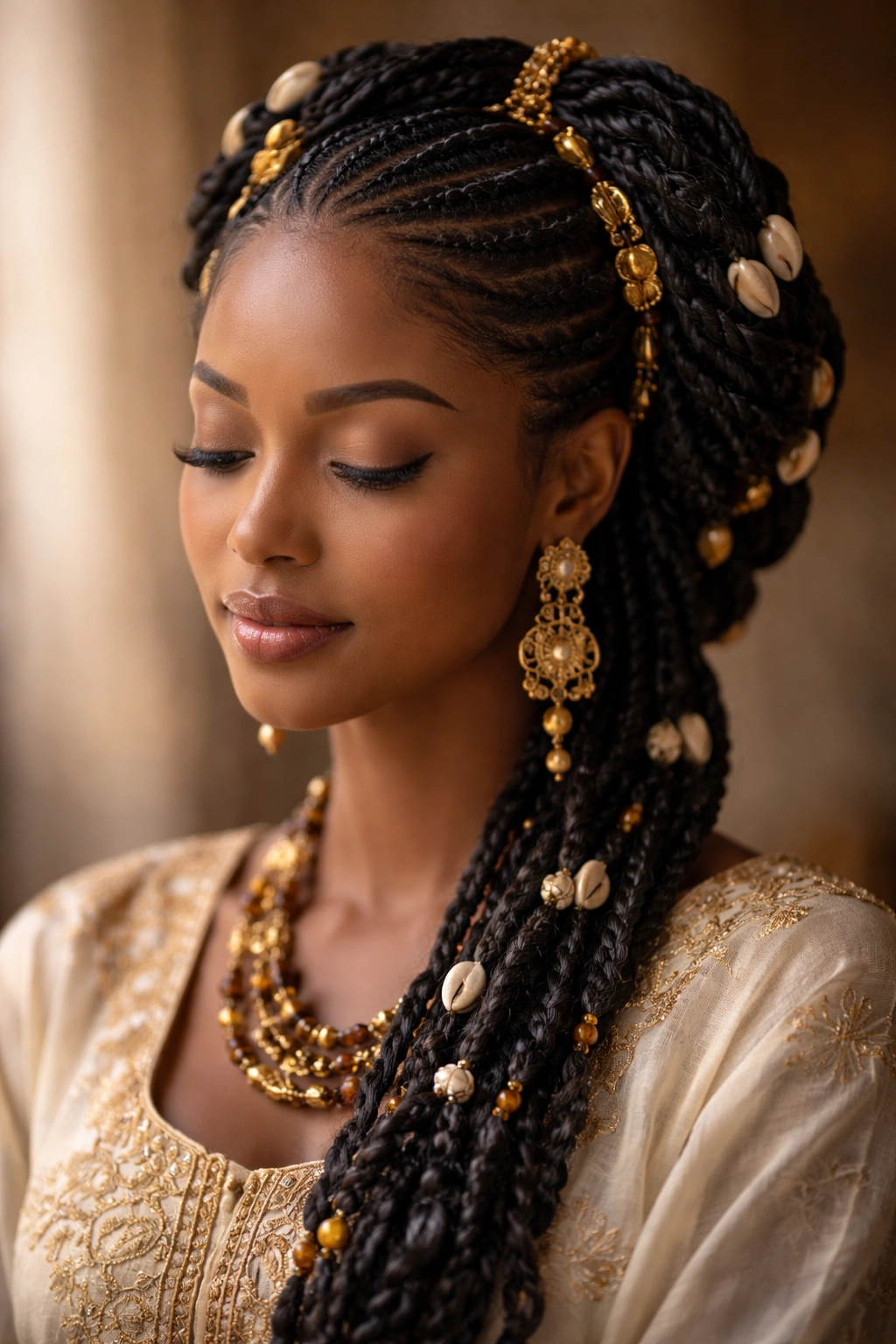
Choosing a Hausa Fulani hairstyle is about far more than aesthetics—it’s about honoring a cultural tradition that spans generations while expressing your individual identity and celebrating your beauty. Whether you select the understated elegance of Tsadawa, the flowing grace of Zabiya, or the elaborate artistry of Gara da Wajen, you’re participating in a living tradition of creativity and pride.
The investment of time and resources in these styles pays dividends in confidence, cultural connection, and sheer visual impact. When you wear one of these hairstyles, you’re carrying forward knowledge and artistry that’s been refined and perfected over centuries. You’re making a statement about who you are and what you value, and you’re supporting skilled artisans who dedicate their lives to mastering their craft.
As you explore these styles, remember that the best choice is one that resonates with you personally and suits the specific occasion. Don’t hesitate to discuss your vision with your braider—experienced professionals can offer suggestions based on your face shape, hair type, comfort level, and the occasion itself. The magic of Hausa Fulani hairstyles is that there’s truly something for everyone, whether you’re seeking everyday elegance or once-in-a-lifetime beauty.
