



Medium-length wavy hairstyles offer the perfect balance between manageability and versatility—they’re long enough to show off texture and movement, yet short enough to avoid the daily maintenance demands of longer styles. In black hair, waves have a natural richness that catches light and creates dimension without needing highlights or bleaching. Whether you’re working with naturally wavy texture or creating waves through styling, the medium length hits a sweet spot: it frames the face beautifully, can be worn down for elegance or pulled back for practicality, and works across different face shapes and hair densities.
Black hair carries waves with a stunning depth that other colors simply can’t replicate. The dark pigment makes even subtle texture visible, so even soft, loose waves read as intentional and polished rather than flat or undefined. Medium wavy styles sit right at the collarbone or just past it, which creates a flattering silhouette for most people while keeping styling time reasonable. You’re not fighting against gravity the way you do with longer hair, and you’re getting way more styling flexibility than a short cut provides.
What makes these styles so appealing is their adaptability. The same haircut can look sleek and straightened for work, tousled and textured for weekends, or styled into specific patterns depending on your mood and the occasion. Black hair’s natural shine means waves read as intentional texture rather than accidental frizz, which gives you more freedom to play with movement and volume.
If you’ve been considering a change or looking for fresh inspiration within the medium range, these 15 styles showcase the range of possibilities for wavy black hair.
1. Shoulder-Grazing Textured Waves
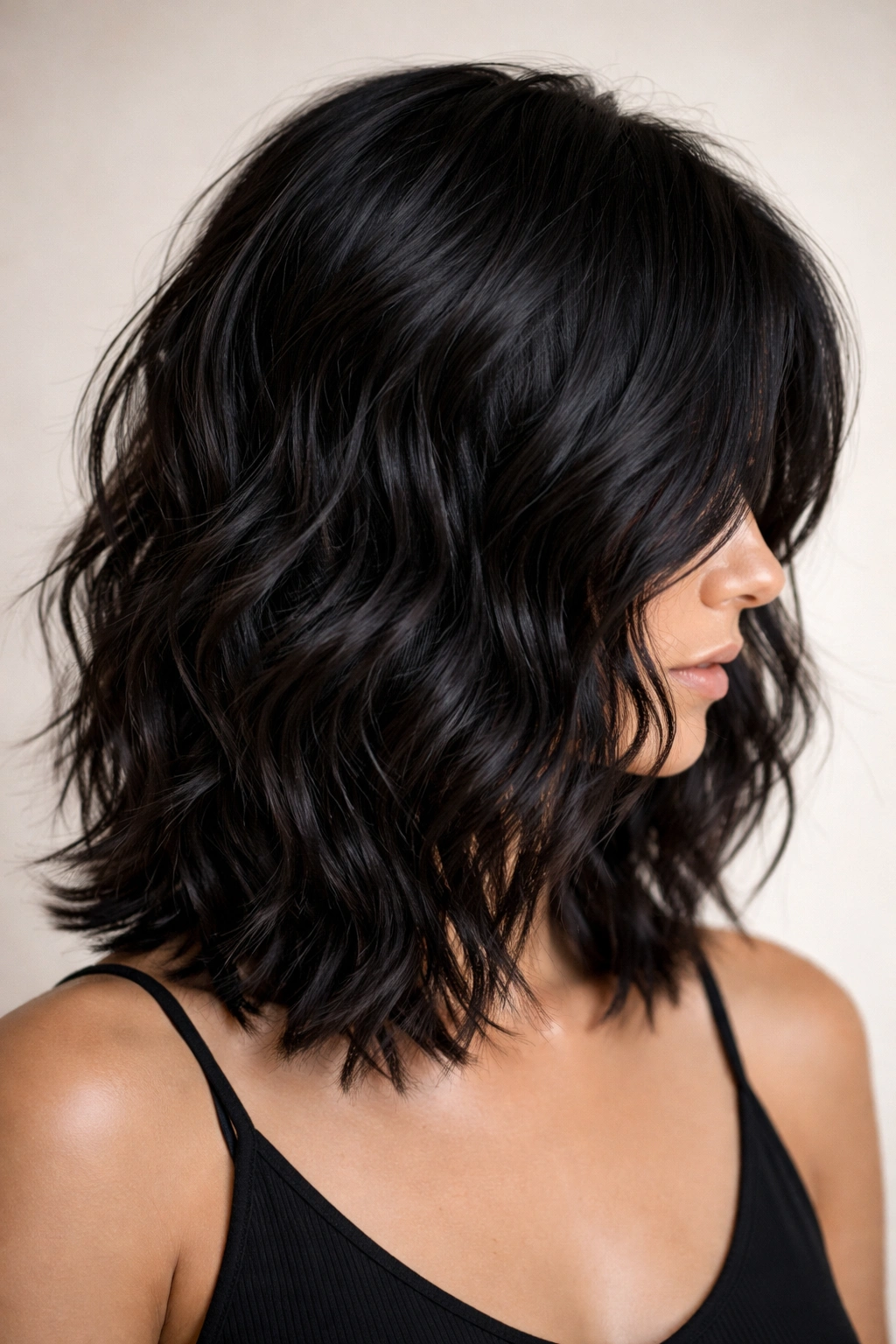
This style cuts the hair to land right at the shoulder, with choppy layers throughout that encourage natural wave formation and add tons of dimension. The layers are cut at different lengths—some shorter pieces at the crown for lift, longer sections underneath—which creates an organic, undone texture that looks effortlessly cool. The waves aren’t uniform; they have that tousled, lived-in quality that suggests you’ve been outside or just rolled out of bed looking that good.
Why This Works for Black Hair
Black hair’s density means that textured layers create real visual interest and movement rather than just looking scraggly. The choppy cut adds personality and edge while keeping the overall length manageable.
What Makes This Style Stand Out
- Layers at varying lengths catch light differently, creating dimension even without color
- The cut works with your hair’s natural wave pattern rather than fighting it
- Easy to style by applying a curl cream or mousse and diffusing, or air-drying for a more relaxed texture
- Looks polished enough for professional settings but casual enough for everyday wear
- Works beautifully for both fine and thick hair textures
Pro tip: This style actually looks better when your waves aren’t perfectly uniform—that’s the whole point. Apply product to damp hair, scrunch gently, and let your natural texture do the work.
2. Soft Beach Waves with Face-Framing Pieces
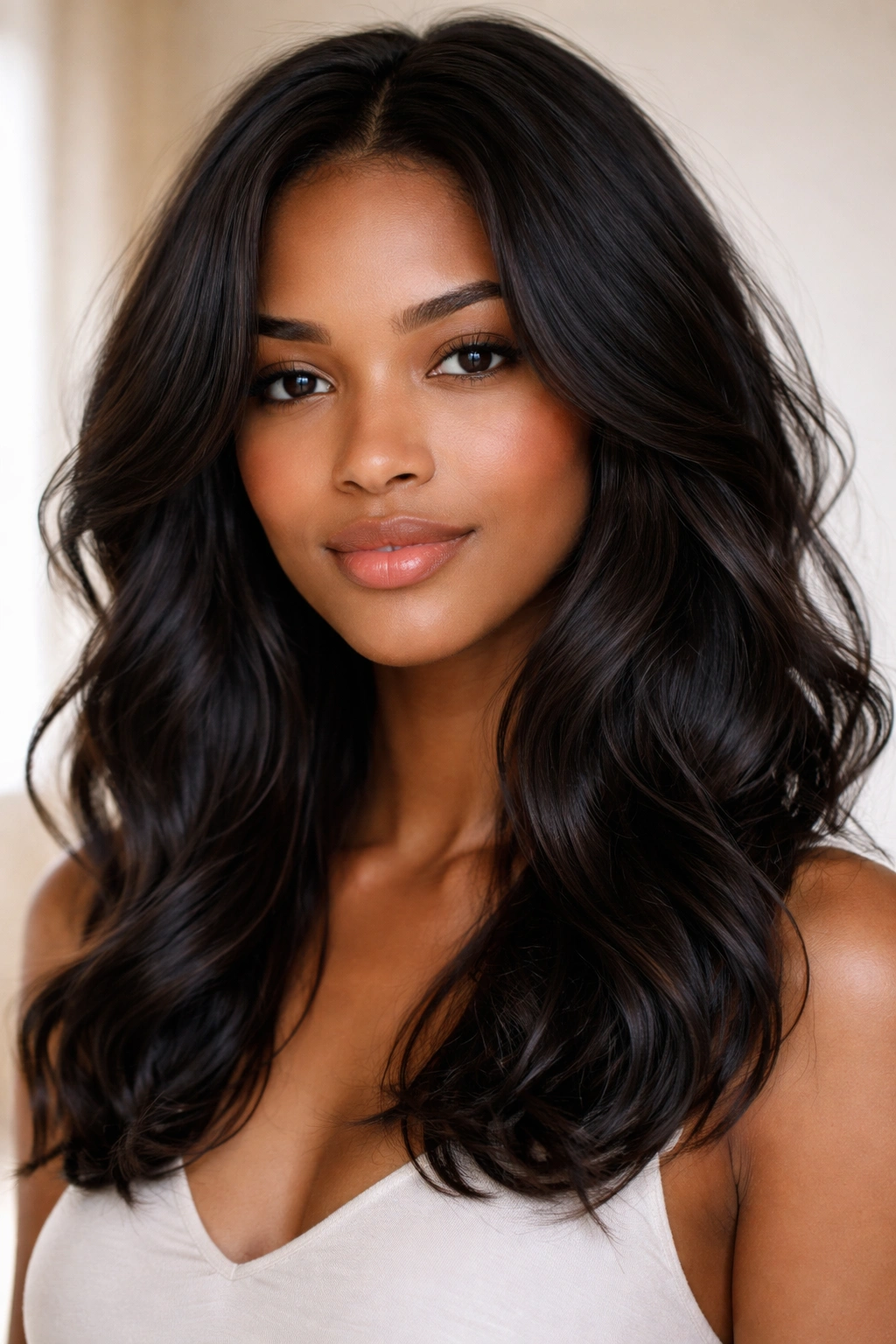
This is the effortlessly chic version of medium waves—think sun-kissed and relaxed, even though your hair is a rich black. The layers are longer and less choppy than the textured version, creating soft, flowing waves that frame the face with intentional pieces slightly shorter than the rest. The waves have that beachy, slightly tousled quality, with enough variation that they never look uniform or stiff.
The Science Behind the Softness
Soft waves rely on gentle layering and strategic placement rather than aggressive choppy cuts. The face-framing pieces are cut shorter by maybe two inches, which keeps them from blending into the rest of the style and ensures they actually frame instead of disappear.
Why This Style Flatters
- Face-framing pieces draw attention to your features without being extreme or high-maintenance
- The soft wave pattern is less defined than tighter curls, so it reads as relaxed and sophisticated
- Works with 2a-4c wave patterns and can be achieved with styling even if your hair isn’t naturally wavy
- Black hair carries these waves with a natural elegance that lighter colors can’t quite match
- Versatile enough to air-dry, blow-dry straight, or deliberately style into waves
Worth knowing: This style is one of the easiest to maintain if you’re willing to touch up the layers every 6-8 weeks. The soft waves actually look fresher with a slight dusting of the scissors.
3. Blunt-Cut Medium Waves with Bangs
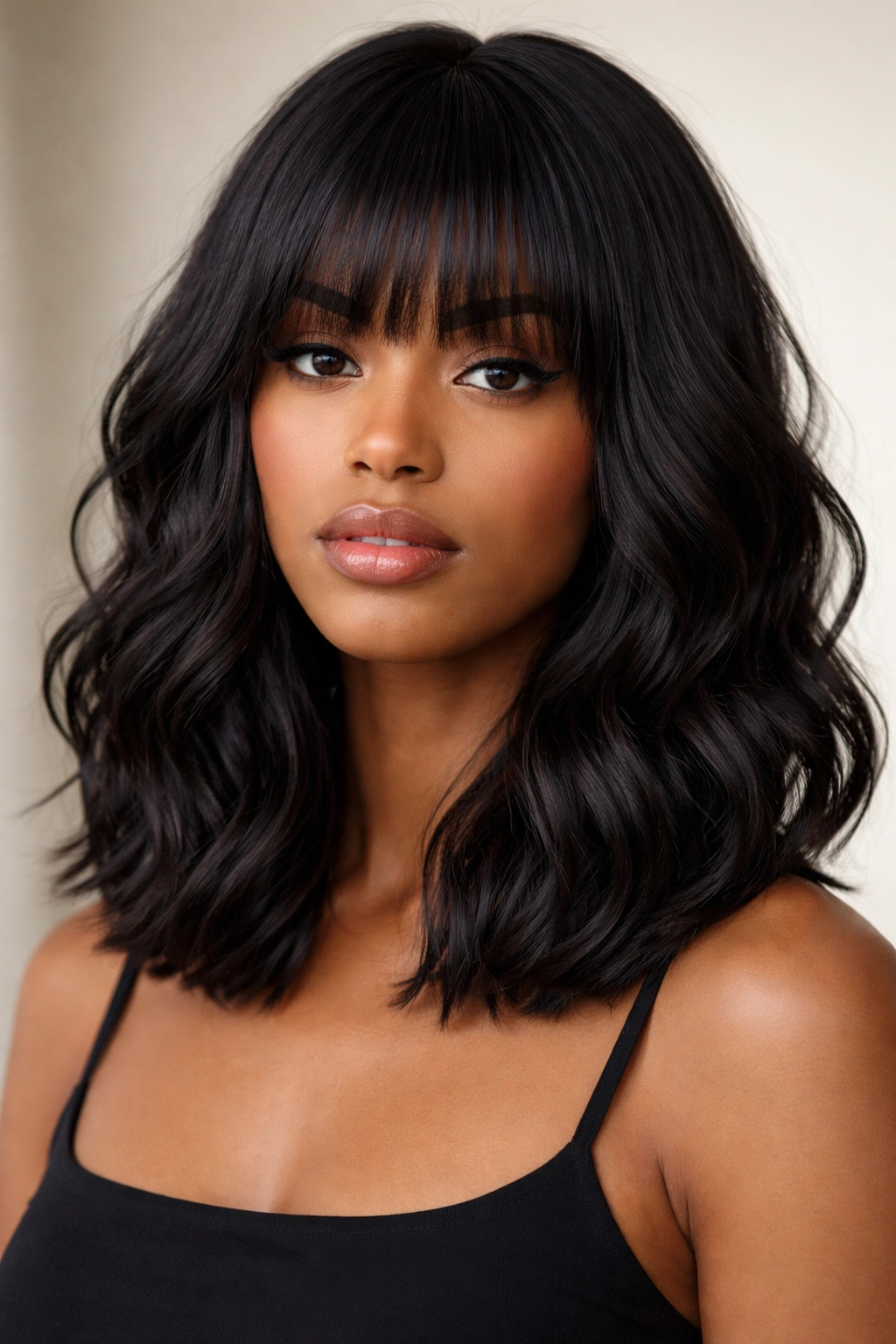
A blunt cut with an even hemline at the shoulder, paired with soft waves and deliberate bangs, creates a sophisticated, editorial look that feels intentional and polished. The bluntness of the cut contrasts beautifully with the organic texture of the waves, and the bangs add a fashion-forward element without being overly trendy. This works best when the bangs are longer than traditional styles—hitting around the eyebrows rather than the middle of the forehead.
Why Blunt Edges Work Here
The contrast between the sharp, clean line of the blunt cut and the soft, organic wave texture is what makes this style visually striking. It’s graphic and modern without looking stiff or severe.
The Details That Matter
- Bangs should be blunt but not super thick—aim for about a third of your hair thickness so they still move and wave with the rest of your hair
- The overall shape is geometric (that blunt line), but the waves keep it from feeling rigid or overly structured
- Works especially well for people with good hair density, since the blunt line shows off the thickness
- Requires a stylist who understands how to cut blunt lines on textured hair—precision matters here
- Waves can be enhanced with styling products or left more natural depending on your preference
Pro tip: The styling here is simple—let your natural waves develop, or use a sea salt spray and diffuser if you’re going for more pronounced texture. The blunt line looks sharper when waves are softer and less uniform.
4. Shaggy Waves with Lots of Layers
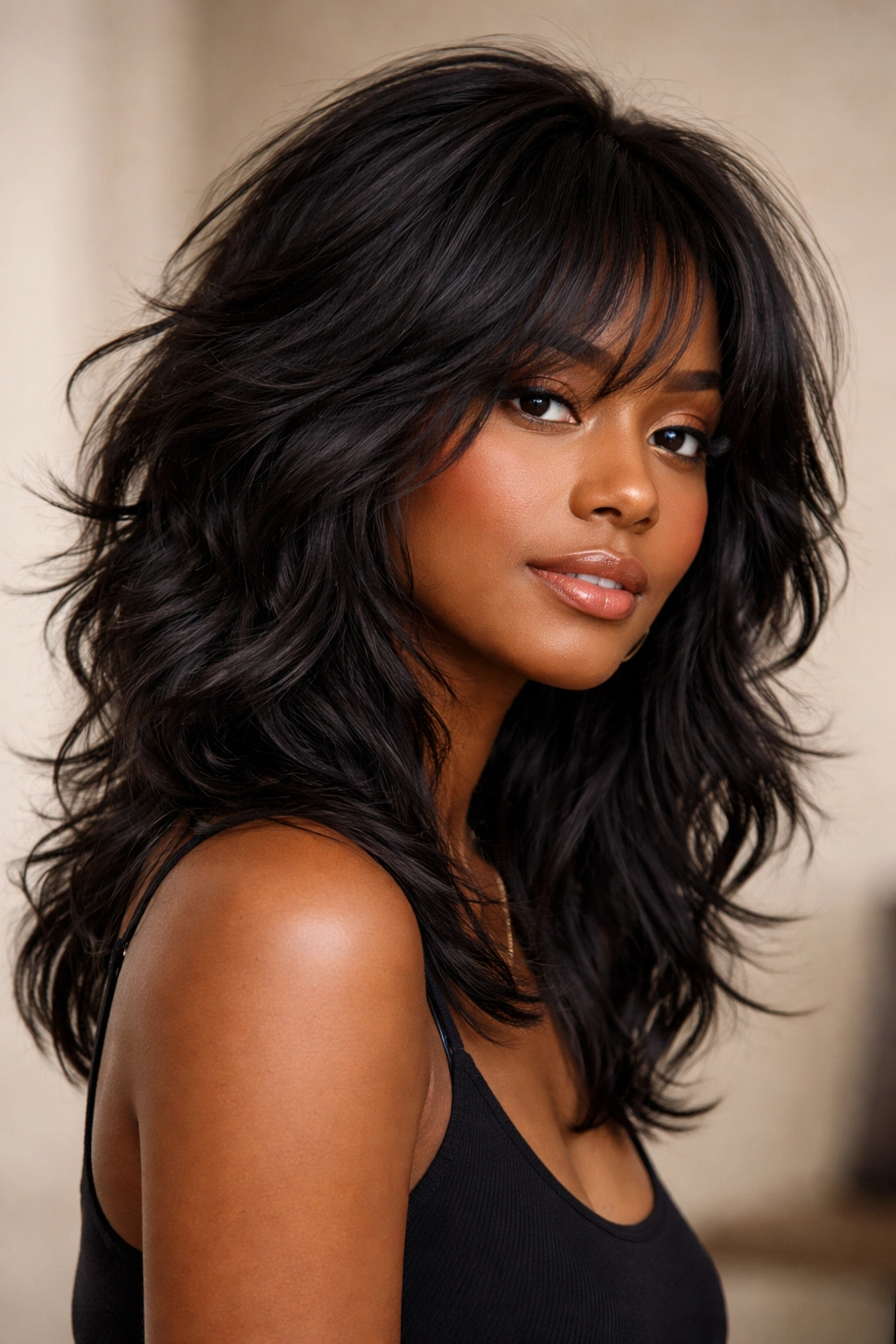
This style channels the iconic shag energy—lots of choppy layers at different lengths throughout, creating a tousled, voluminous silhouette that’s pure texture and movement. Unlike a traditional shag, this version is medium-length and sits closer to the head at the crown, with more movement toward the ends. The layers are cut into the hair (not just at the perimeter) so that even when you have your hair down, you see texture from multiple angles.
The Modern Shag Appeal
Shags are having a moment because they’re inherently interesting—they look cool and slightly rebellious while being genuinely practical and easy to work with. On black hair, a shag looks fresh and intentional rather than dated.
Key Features of This Cut
- Layers are choppy but not so extreme that you look like you have ten different hair lengths fighting each other
- Crown area is slightly shorter to create lift and volume without needing lots of styling
- Longer pieces underneath add movement and create that signature shag sway
- Works beautifully with natural wave patterns—the layers actually enhance texture rather than create bulk
- The overall shape is slightly shorter in the back than the front, following classic shag proportions
Worth knowing: A shag actually benefits from your hair not being perfectly styled. That tousled, piece-y look is the entire point. Apply a lightweight mousse to damp hair, diffuse or air-dry, and that’s genuinely it.
5. Curtain-Bangs Medium Waves
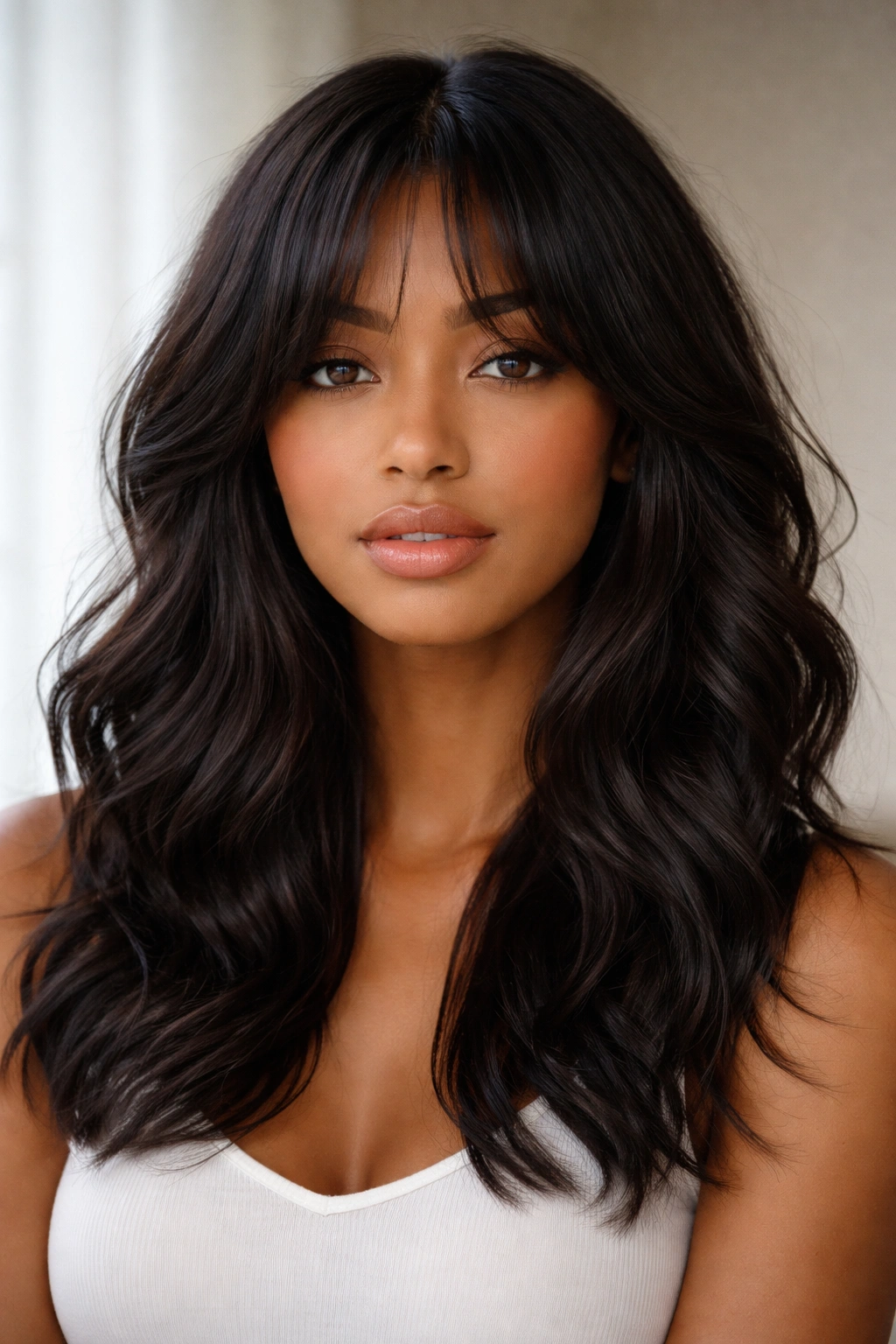
This is the universally flattering style—medium-length wavy hair with longer bangs that split down the middle and frame both sides of the face. The bangs are longer than traditional styles (hitting closer to the cheekbones) and curve away from the face naturally as they dry or wave. The rest of the hair is cut in layers that encourage waves and flow, with the overall shape slightly longer in the front and progressively shorter toward the back.
Why Curtains Work for Everyone
Curtain bangs work because they frame the face without covering it. They add softness and movement without being a dramatic statement, and they suit virtually every face shape.
The Styling Breakdown
- The bangs separate naturally down the middle, whether your hair parts there naturally or you style them that way
- Bangs curve away from the face, creating an opening rather than a wall of hair
- Layers underneath support the wave pattern and prevent you from needing a ton of product or styling time
- The length allows the bangs to be worn down or clipped back, so you have styling flexibility
- Black hair makes the bangs look crisp and intentional, not washed out
Pro tip: These bangs actually look better when they’re slightly longer rather than too short. If you’re worried about them being in your face, they need to hit at least cheekbone length to curve away naturally.
6. Wavy Bob with Stacked Layers
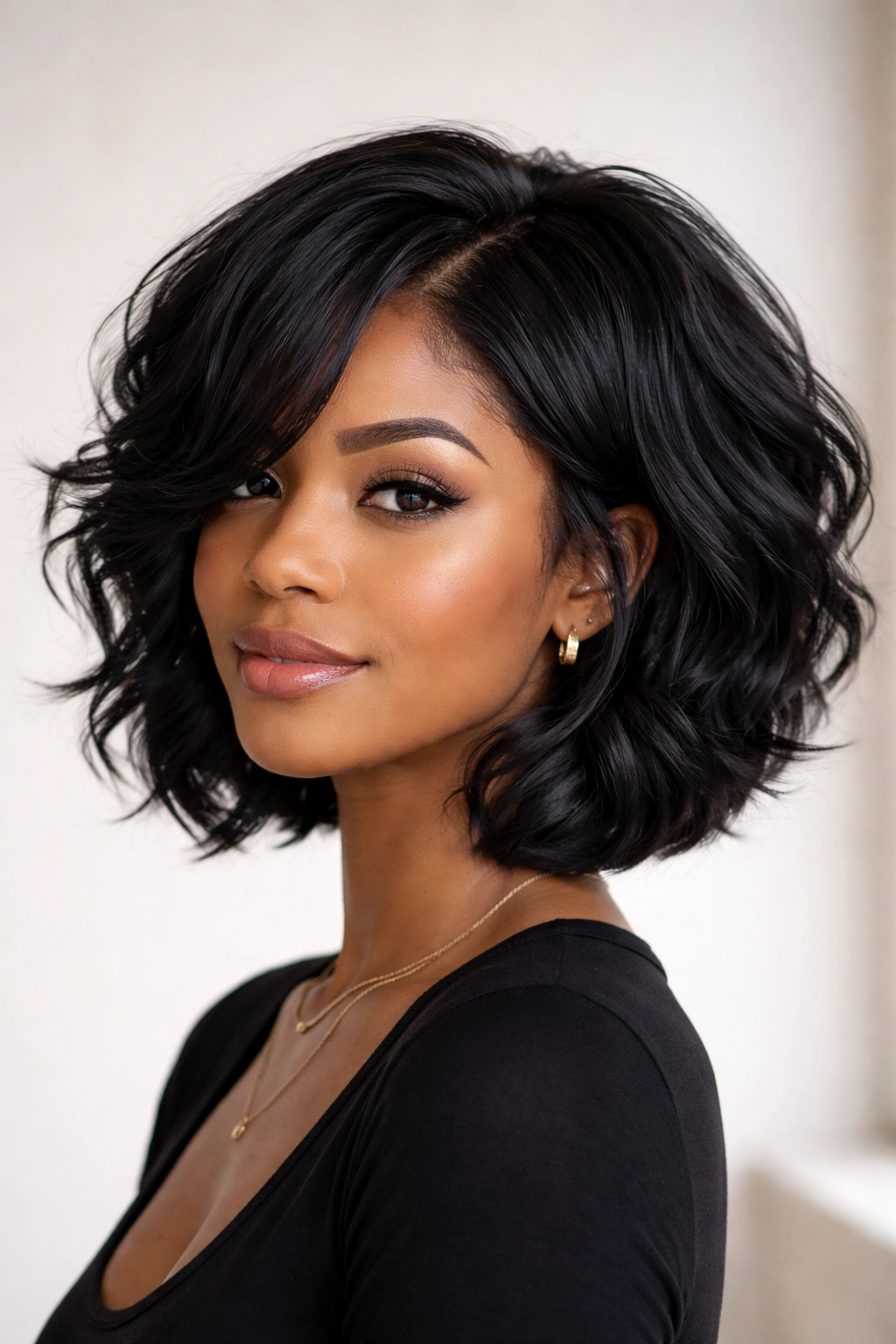
A modern bob with intentional stacked layers creates volume at the crown and slightly shorter back, while the front pieces are longer and frame the face. The waves are enhanced by the staggered layers, which catch light and create movement. This isn’t a blunt bob—it’s softer and more textured, with subtle variation in length that creates flow rather than weight.
Why Stacked Layers Matter
Layers create the illusion of movement and prevent the style from feeling heavy or blunt. Stacking shorter layers on top of longer ones gives the crown lift without needing tight curls.
What Makes This Cut Special
- The back is slightly shorter and fuller, creating subtle volume without looking pouffy
- Front pieces that frame the face are longer, preventing the style from feeling too short or severe
- Layers are cut with enough variation that you see texture everywhere, not just at the ends
- Works beautifully on people with thicker hair who want shape without looking like a poodle
- Can be styled sleek and straight or textured and wavy depending on the occasion
Worth knowing: This cut is more precise than it looks. The layer placement has to be strategic—it’s worth finding a stylist who understands how layers work with waves rather than against them.
7. Beachy Waves with Longer Layers
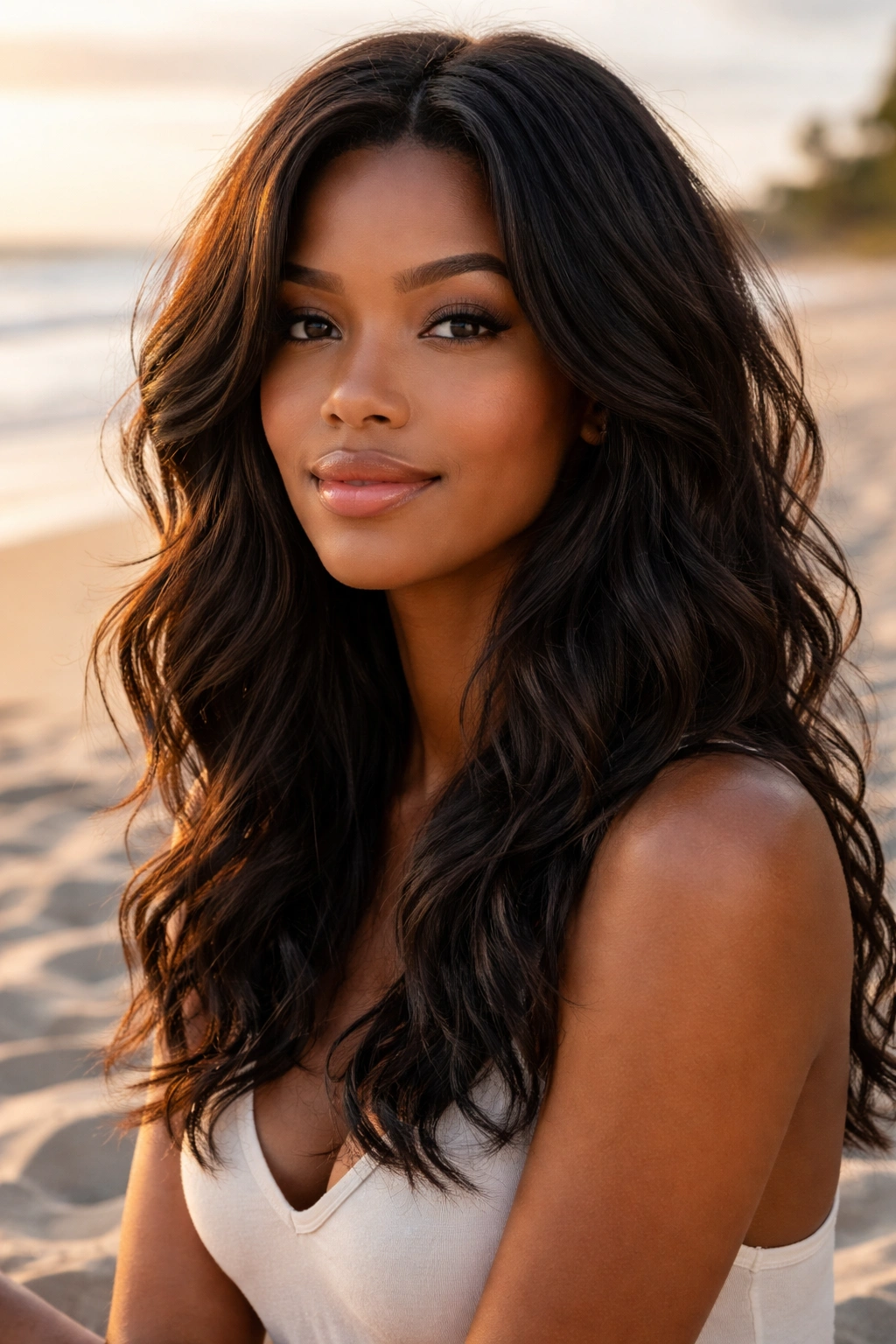
This style keeps most of the length but adds longer, more subtle layers that encourage gentle waves rather than creating choppy texture. The overall vibe is relaxed and beachy, like you just got out of the ocean. Pieces are slightly longer in the front, gradually shorter toward the back, with the layers positioned to guide the natural wave pattern rather than fight it.
The Art of Long-Layer Placement
Longer layers need to be positioned strategically. Layers placed too close together create too much texture; too far apart and they don’t add enough movement. The sweet spot is layers every 1.5-2 inches through the mid-length, graduating as you get closer to the ends.
Why This Works
- The longer length gives you options—you can wear waves down, pull it back, or even style it straighter on days you want that look
- Black hair carries longer waves beautifully without looking stringy or flat
- Layers encourage waves naturally without requiring as much styling product or technique
- This length works for most people, including those with finer hair who worry that layers create too much texture
- The style reads as effortless and polished simultaneously
Pro tip: This style is incredibly easy to maintain between stylist visits because longer layers blend naturally as your hair grows. You can often go 10-12 weeks between cuts.
8. Textured Waves with Undercut Details
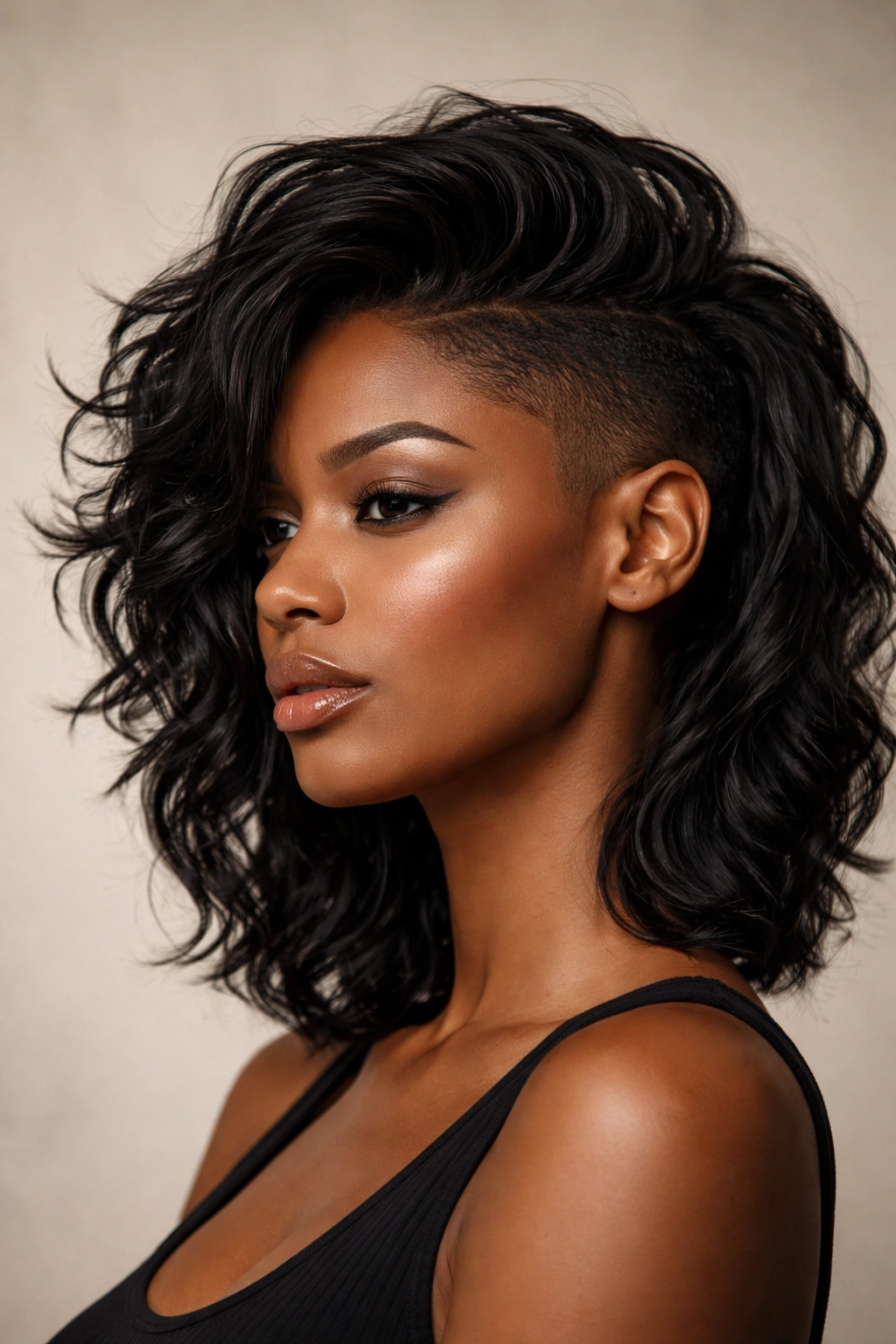
This edgy style features medium waves on top with subtle undercut details on the sides or a hidden undercut beneath longer layers. The undercut adds an unexpected element of surprise and edge—people see the waves at first glance, then notice the shaved or very short sides. This works especially well with black hair because the contrast is stark and graphic.
The Undercut Factor
An undercut doesn’t mean you have to have super short, visible sides. A hidden undercut (where the short part is underneath and hidden) gives you the edgy vibe without the high-maintenance styling or commitment to super short hair.
The Details Worth Knowing
- Undercuts on black hair are striking because of the contrast between thick hair and shaved skin
- A hidden undercut means you get the edge without wearing it all the time—you can cover it up if you need to
- The top layers can be longer, creating a beautiful silhouette where the waves frame your face and the shaved sides create shape
- This style says “intentional” and “fashion-forward”—it’s not subtle
- Requires more maintenance than a basic wavy cut (the undercut needs touchups every 3-4 weeks)
Worth knowing: An undercut actually makes styling the top layers easier because you’re not fighting bulk and weight from hair on the sides. You can achieve more dramatic waves with less product.
9. Textured Lob with Subtle Waves
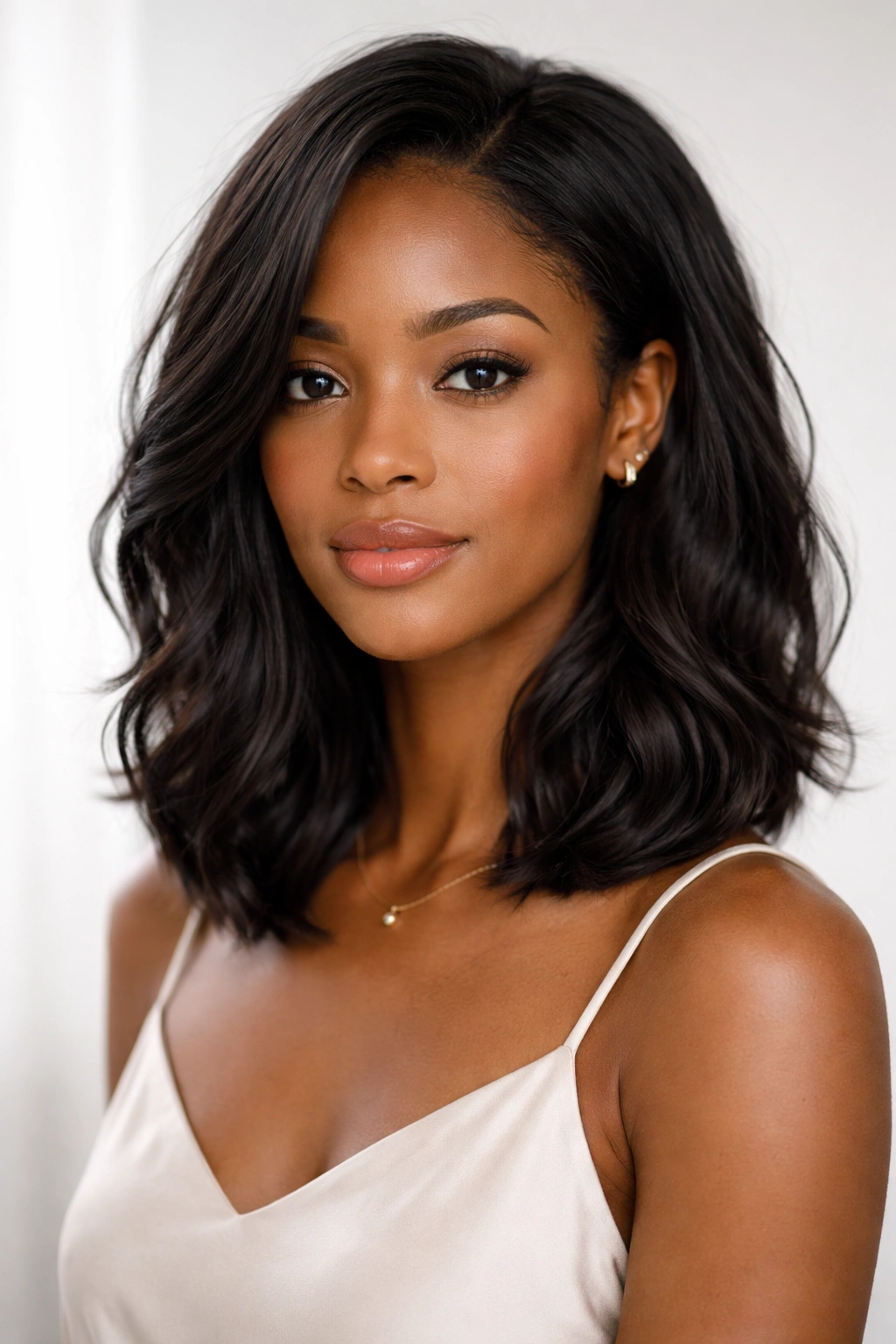
A lob (long bob) that hits around collarbone length with subtle, barely-there waves creates an elegant, understated look that reads as effortless sophistication. This isn’t about super defined waves—it’s about gentle texture that suggests movement without being dramatic. The cut is nearly blunt with just enough layers to encourage the natural wave pattern.
The Elegance of Subtlety
Sometimes the most striking look is the most subtle. A lob with barely-there waves works for professional settings, date nights, and everyday wear without feeling like you’re trying too hard.
Why This Style Works
- The length is right at that magic spot where it balances short-hair practicality with long-hair elegance
- Black hair with subtle waves reads as polished and intentional—not undone or sloppy
- Waves are enhanced through styling rather than dramatic cutting, so you maintain length and have options
- Works for all hair types and textures, including fine hair that can look thin with heavy layering
- Super easy to maintain—a light trim every 8-10 weeks keeps it fresh
Pro tip: The key to this style is keeping the waves subtle. Use a light sea salt spray and a blow dryer with a diffuser, or let your natural waves develop without being forced. The less you manipulate it, the better it looks.
10. Choppy Pixie-to-Shoulder Transition
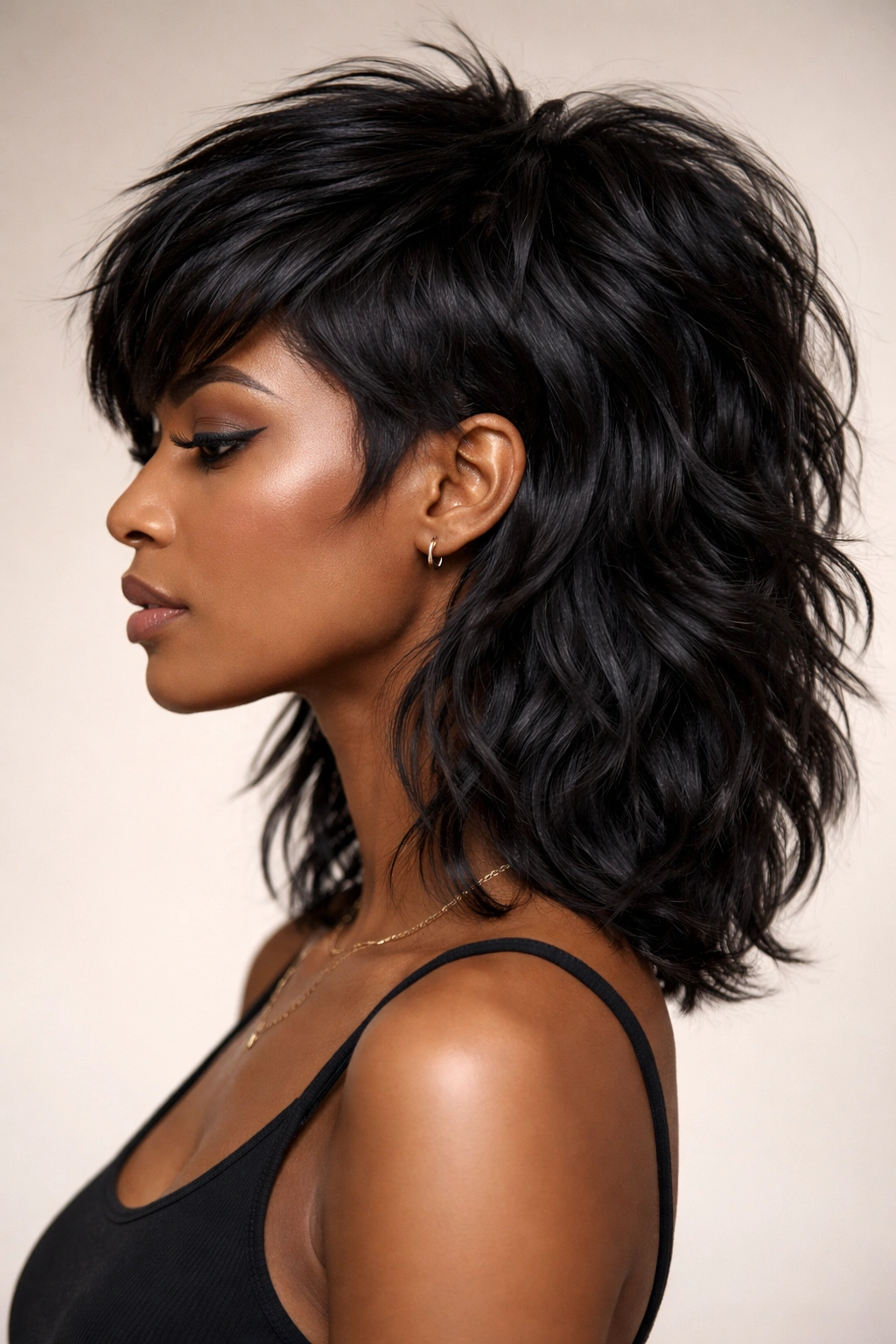
This dramatic style has short, choppy layers at the crown and sides (pixie-length or slightly longer), then gradually transitions into longer pieces that reach the shoulder. It’s an undercut-adjacent style that’s less severe than a full undercut but way more textured than a standard wavy cut. This works for people who want to make a statement and don’t mind a bit of edge.
The Transition Effect
The gradual transition from very short to medium length creates a graphic silhouette and prevents the style from feeling matchy-matchy or boring. Your hair literally changes dramatically from one angle to the next.
What Makes This Bold
- The contrast between short and longer creates instant visual interest and movement
- Black hair’s density actually benefits from this style—the short sections prevent it from looking too heavy
- You get pixie-cut styling ease at the crown with longer-style versatility at the shoulders
- This isn’t a style to choose if you want to blend in—it’s definitely a statement
- Waves are more pronounced because the shorter layers catch light and create texture
Worth knowing: This style is high-maintenance in terms of styling precision. You need a stylist who understands how to create smooth transitions, and you’ll need touchups every 4-6 weeks as the hair grows and the gradient shifts.
11. Asymmetrical Waves with Side-Swept Length
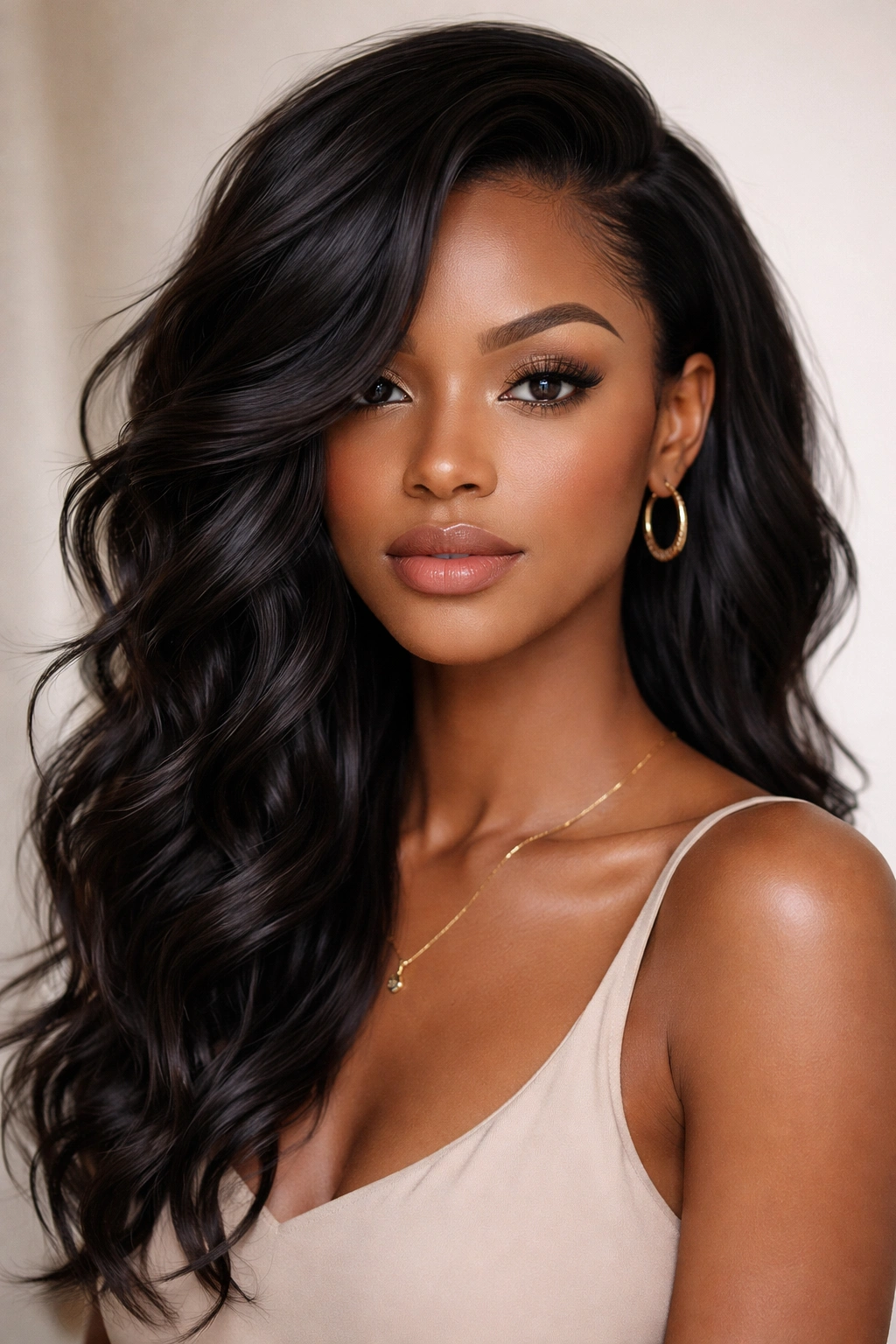
One side is noticeably longer than the other (sometimes several inches longer), creating an asymmetrical silhouette that’s modern and slightly edgy. The waves on both sides follow the natural pattern, but the length difference creates visual interest and movement. This style has serious fashion-forward energy and works beautifully for black hair.
The Asymmetrical Appeal
Asymmetrical cuts make a statement without being extreme. They work for people who want something different but might not be ready for an undercut or shag-style drama.
Why This Style Stands Out
- The length difference creates an automatic focus point—usually on the longer side or swept around the face
- Waves enhance the asymmetry by moving differently on each side
- Black hair’s thickness makes asymmetrical styles look intentional rather than like you had a bad cut
- This works especially well if you have a strong side profile and want to show it off
- Styling-wise, you can emphasize the asymmetry or downplay it depending on how you want to wear it
Pro tip: Asymmetrical styles look best when the waves are distinct enough that you can see the difference between the two sides. Use a styling product that creates some texture and definition rather than something that smooths everything flat.
12. Wavy Medium With Feathered Layers
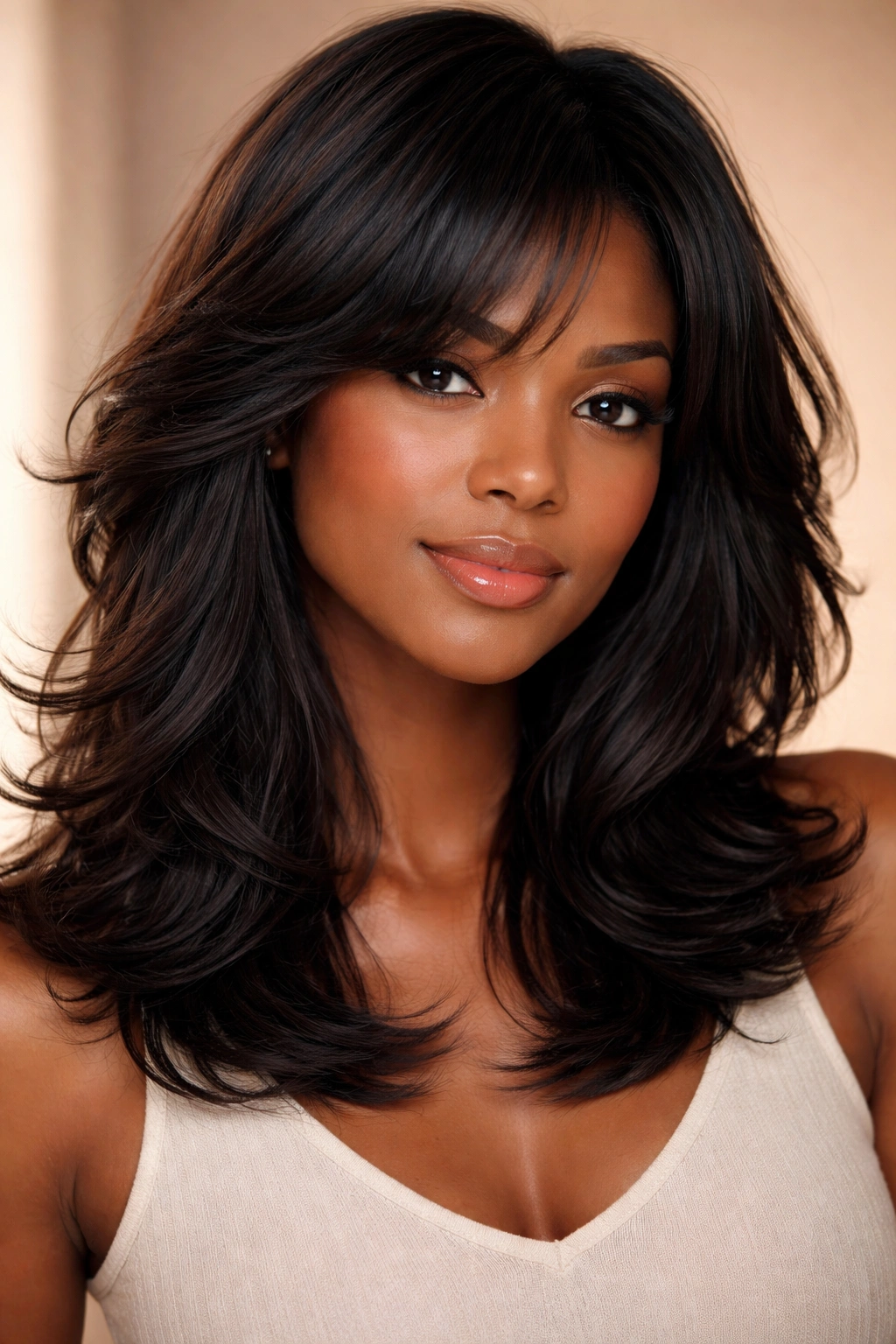
Feathered layers create soft, flowing texture without the choppy, piece-y look of modern layers. The layers are cut in a way that they flip outward slightly, creating a frame around the face and a subtle flip at the ends. This style has a bit of retro energy but feels modern and wearable on medium-length black hair.
The Feather Technique
Feathered layers are cut at an angle that encourages the hair to flip away from the face rather than lie flat against it. It’s all about the cutting technique—the styling is nearly effortless.
Details That Define This Style
- Layers start around cheekbone length or slightly longer, then graduate throughout the rest of the hair
- The flip at the ends is subtle, not extreme—you’re not aiming for 1980s volume
- Black hair carries feathered layers beautifully, showing off the movement without looking thin or sparse
- This style works for people with wavy or curly textures because it works with the natural pattern rather than against it
- Low-maintenance styling—often just air-dry or use a light mousse and a diffuser
Worth knowing: Feathered layers need precision cutting. They’re actually more difficult to cut well than choppy modern layers, so make sure you have a stylist who specifically knows this technique.
13. Wavy Wolf Cut with Modern Edge
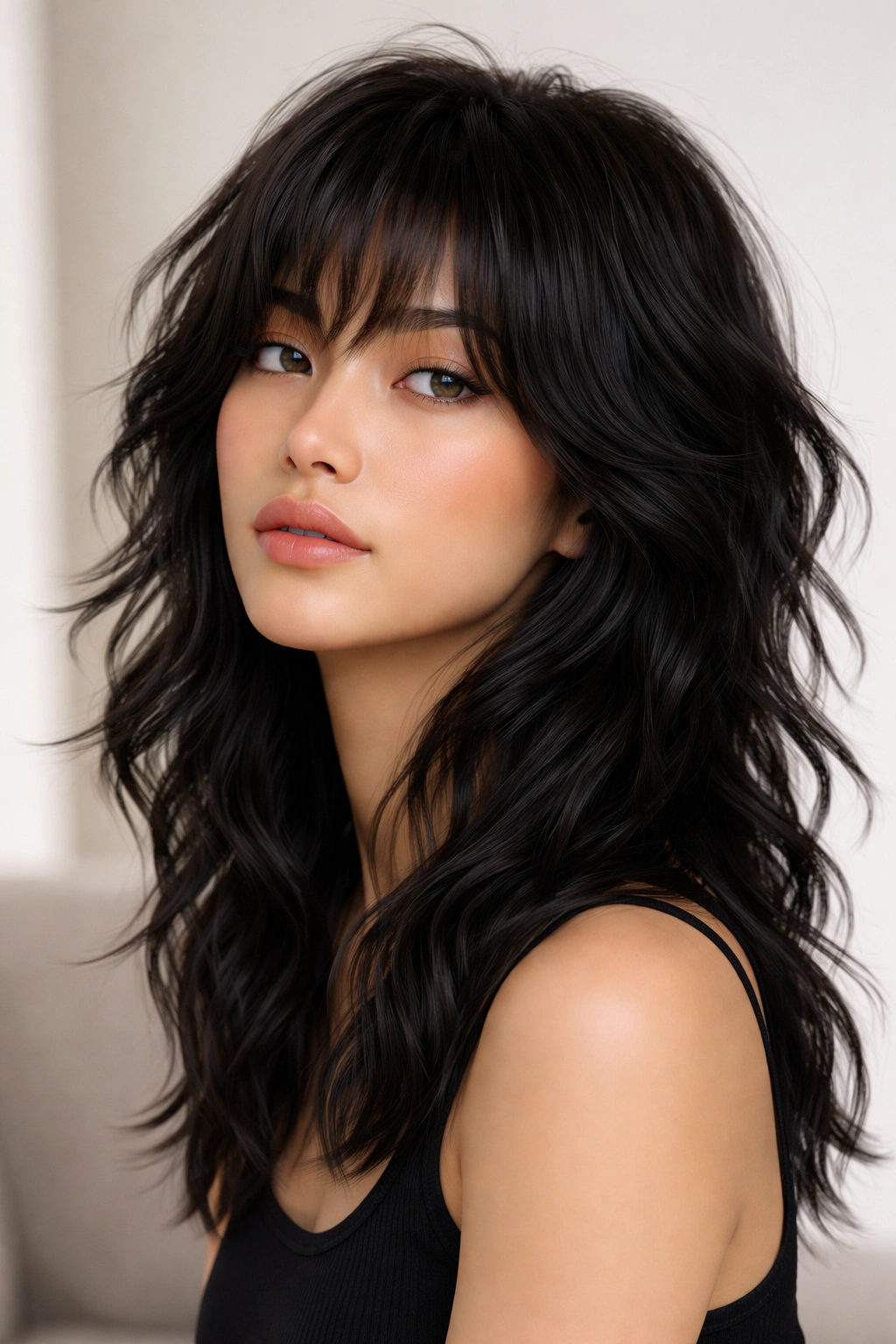
The wolf cut is a hybrid between a shag and a modern layered cut—it has the voluminous, heavily layered texture of a shag but with a more controlled, defined shape. Medium-length wolf cuts on black hair read as effortlessly cool with plenty of movement and dimension. The crown is shorter and fuller, with longer pieces underneath that create that signature wolf-cut sway.
Why Wolf Cuts Are Having a Moment
Wolf cuts work because they’re interesting—they have visual complexity and movement without looking sloppy or outdated. They’re fun to style and even more fun to wear.
The Wolf Cut Structure
- Lots of choppy layers throughout, but not quite as extreme or piece-y as a traditional shag
- Shorter crown area creates lift and volume
- Longer underneath pieces maintain length while the layers create movement
- This style benefits from texture and waves—they’re kind of the point
- Works on virtually any hair type, including fine hair, because the layers are strategic
Pro tip: Wolf cuts actually look better when they’re slightly undone. Apply product to damp hair, scrunch, and let it air-dry or diffuse. That tousled, textured look is exactly what you’re going for.
14. Sleek Waves with Clean Layers
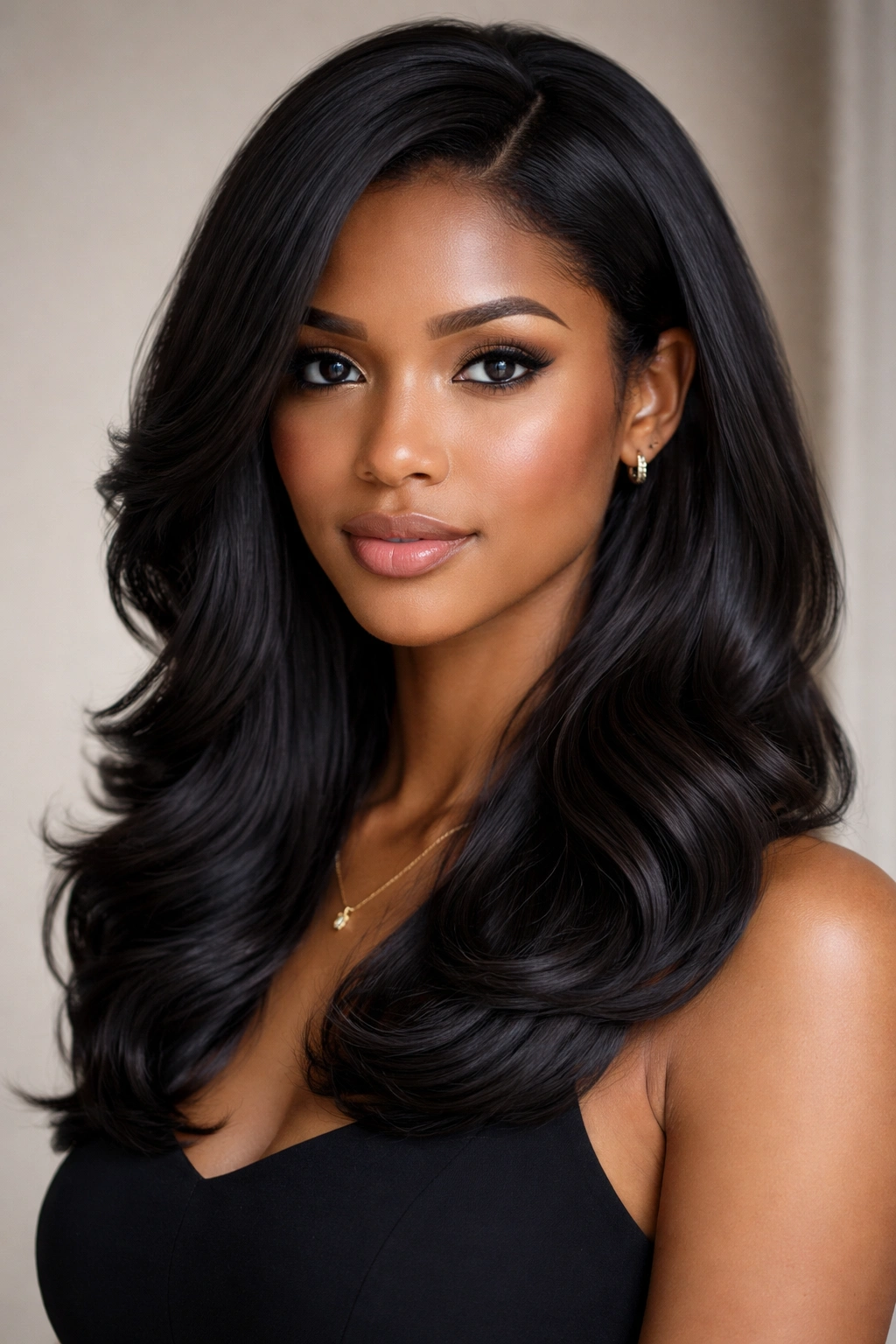
This is the polished cousin of the beach-wave styles—medium-length hair with intentional waves that look deliberately styled rather than effortlessly tousled. The layers are clean and precise, cut to enhance the wave pattern without creating chaos. This works beautifully for people who want waves but also want to look put-together and polished.
The Polished Wavy Aesthetic
There’s a difference between undone waves and deliberately styled waves, and this cut leans into the deliberately styled side. That doesn’t mean high-maintenance—it means intentional.
What Makes This Polished
- Layers are used to guide the wave pattern, creating smooth, defined waves rather than choppy texture
- The overall shape is clean and geometric, even though the texture is soft and wavy
- Black hair makes these waves read as intentional and elegant rather than flat or undefined
- This works for professional settings, formal events, and sophisticated casual wear
- Styling involves a styling cream or mousse, heat tool, and 10-15 minutes of work
Worth knowing: This style looks best when you’re willing to style it rather than air-dry. If you want truly low-maintenance waves, go for something shaggier and more textured.
15. Flowing Waves with Minimal Layers
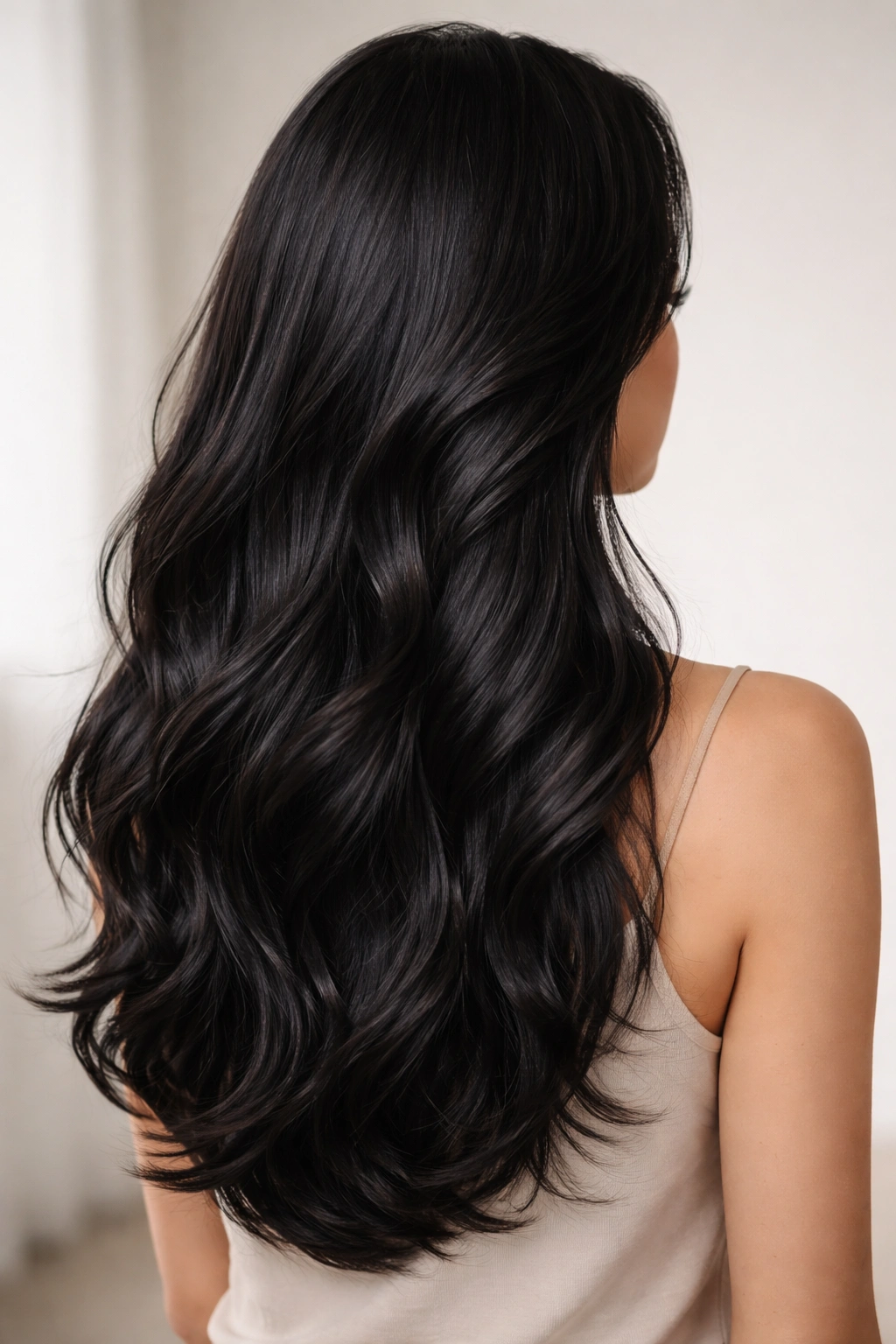
The last style keeps maximum length while adding just enough layers to encourage waves and prevent the style from feeling like a blunt sheet of hair. This is for people who love length but want movement and texture. The layers are subtle—there’s no dramatic change in length, just strategic cuts that guide the wave pattern.
Less Is More Approach
Sometimes the best style is the simplest one—just long enough hair with the right amount of layering to let your waves shine. This works beautifully for black hair with natural wave patterns.
Why Minimal Layering Works
- You maintain maximum length while getting wave-friendly cuts
- Black hair carries waves with such richness that you don’t need aggressive layering to show movement
- This works beautifully for people with naturally wavy or curly hair who want to embrace their texture
- Styling is simple—apply a cream or gel to damp hair and let it air-dry, or use a diffuser
- The style looks effortlessly beautiful without requiring precision styling
Pro tip: With minimal layers, your natural wave pattern matters more. If you have naturally wavy hair, let it dry naturally and see what happens. If you’re creating waves through styling, use a curling tool or diffuser to enhance your pattern.
Final Thoughts
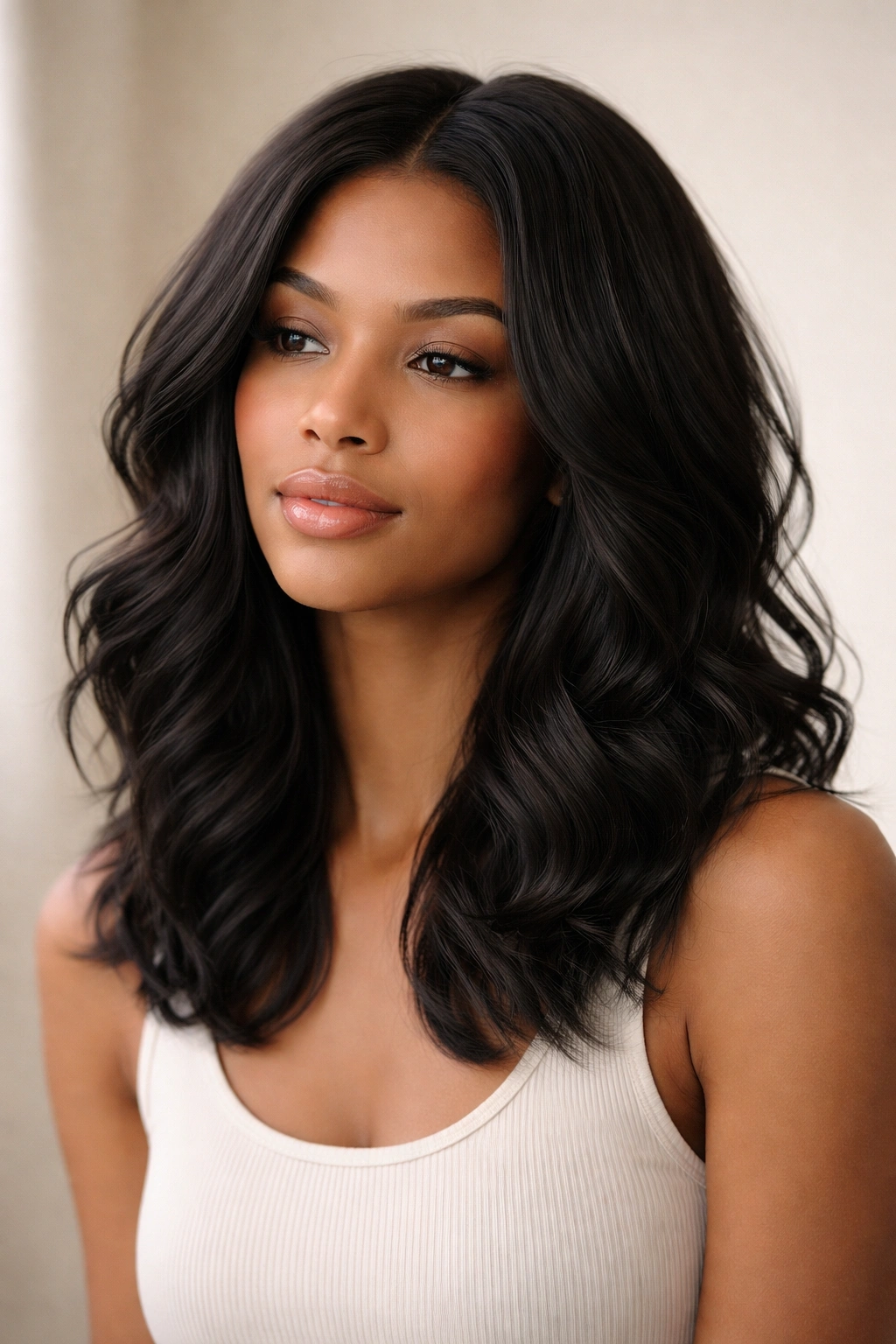
Medium wavy hairstyles in black hair offer a beautiful range of options from edgy and dramatic to polished and elegant. The key to finding your perfect style is considering your lifestyle, how much styling you’re willing to do, and what kind of statement you want to make. Black hair naturally carries waves with richness and depth—choose a cut that works with your hair’s natural tendencies rather than against them.
The styles that tend to work best are ones that have clear purpose in their layering or shape—whether that’s choppy modern layers, strategic undercuts, or minimal layering to enhance natural texture. Avoid cuts that are too uniform or too safe, because those tend to look flat on black hair. Instead, go for styles with intention and dimension.
Consider your face shape, hair density, and styling commitment when making your choice. A textured shag is stunning but needs more maintenance than a simple lob. An asymmetrical style makes a bold statement while a soft beach wave is universally flattering. There’s genuinely a medium wavy style for everyone—the trick is finding the one that matches your personality and your practical reality.
