



Wavy blonde hair already has a head start—the natural texture is inherently eye-catching and forgiving in ways that straight hair can struggle with. But add bangs into the equation, and suddenly you’ve unlocked something even more striking: dimension, framing, and a level of personality that feels intentional and polished rather than accidental.
Short hair with bangs can feel daunting if you’ve never gone there before. The combination of length and facial framing means the cut matters more than it does with longer styles—there’s nowhere to hide if the proportions are off. But here’s what most people don’t realize: wavy texture actually helps you here. Those natural waves and movement soften harsh lines, add volume where you might otherwise have flatness, and work with bangs to create depth that straight hair requires careful styling to achieve.
The blonde element changes the game entirely. Lighter hair reflects light differently, which means bangs read as more dramatic and dimensional. The interplay between blonde lengths and the shadows created by layering becomes more visually complex and interesting. Whether you’re working with sunny highlights, platinum tones, or warm honey shades, the way blonde interacts with a short cut and bangs is something truly worth exploring.
1. Textured Pixie Cut with Wispy Bangs
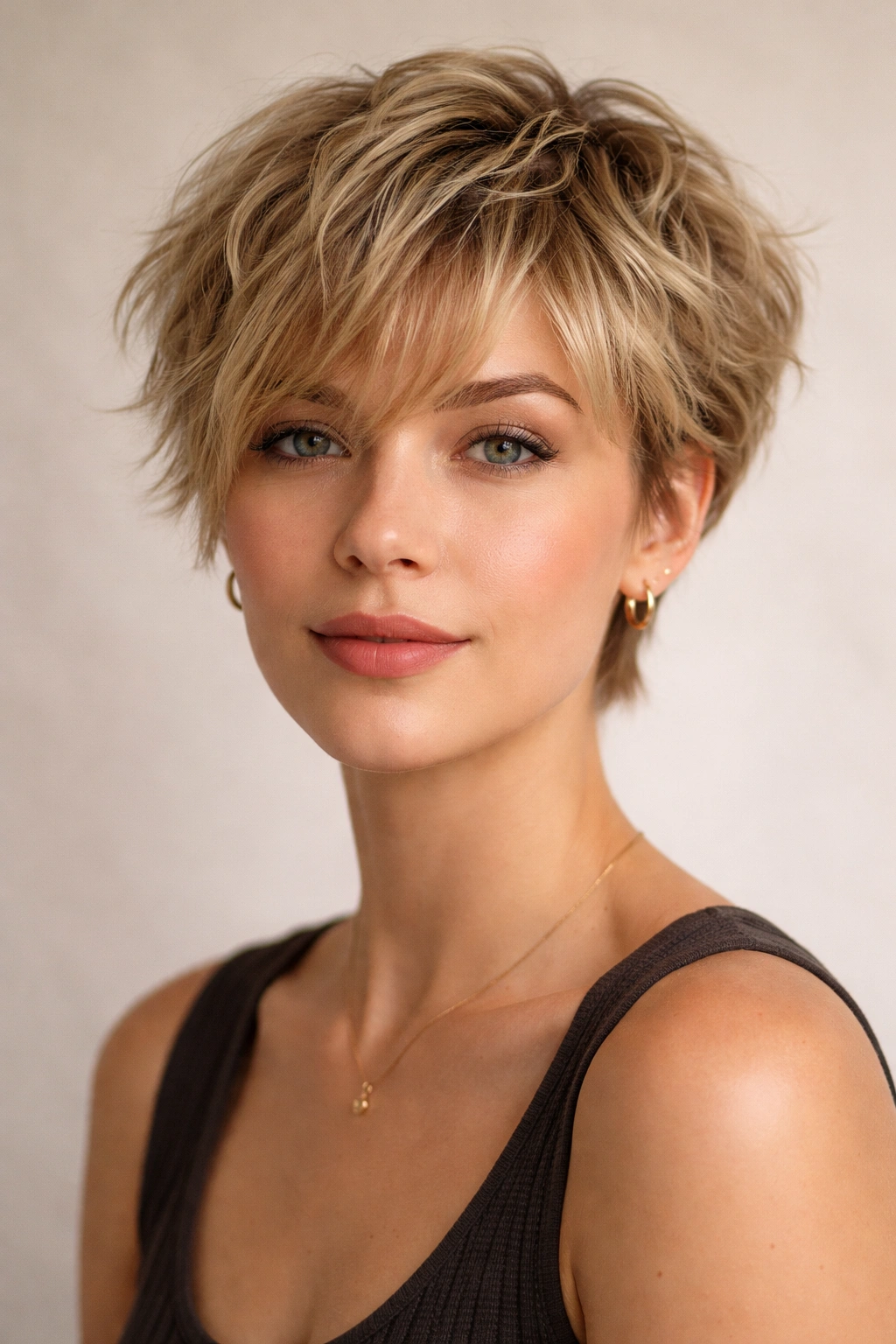
A textured pixie isn’t your grandmother’s short crop—it’s a style built entirely on movement and dimension. The sides are kept quite short, usually tapered to the ear, while the crown gets enough length to work texture into. Wispy bangs (short, choppy, slightly longer in the center) soften the entire look and prevent that severe aesthetic that sometimes comes with pixies. On wavy blonde hair, this combination reads as effortlessly cool rather than severe.
Why This Works for Wavy Hair
Wavy texture is the textured pixie’s secret weapon. Those natural waves give the short layers genuine movement instead of requiring you to style them constantly. The bangs can catch some of that wave pattern, creating a face-framing effect that feels intentional and modern. Because nothing is perfectly straight or blunt, the whole style has a lived-in quality that takes pressure off perfectly executed styling.
Key Features to Discuss with Your Stylist
- Ask for significant layering throughout, especially in the crown and around your bangs—this amplifies your wave pattern
- Keep the back slightly shorter than the front to add shape and prevent the style from looking too hedgehog-like
- Wispy bangs should be cut at an angle, longest in the center and gradually shorter toward the sides
- Blonde enhances the texture—the lighter tones show off each individual layer more dramatically than darker shades would
- Maintenance: Plan for trims every 4-6 weeks; pixies grow out quickly and lose their shape without regular attention
Pro tip: This style pairs beautifully with a slightly tousled texture rather than ultra-polished waves. Rough-dry your hair or use a texturizing spray to emphasize the movement throughout.
2. Shag with Layered Bangs
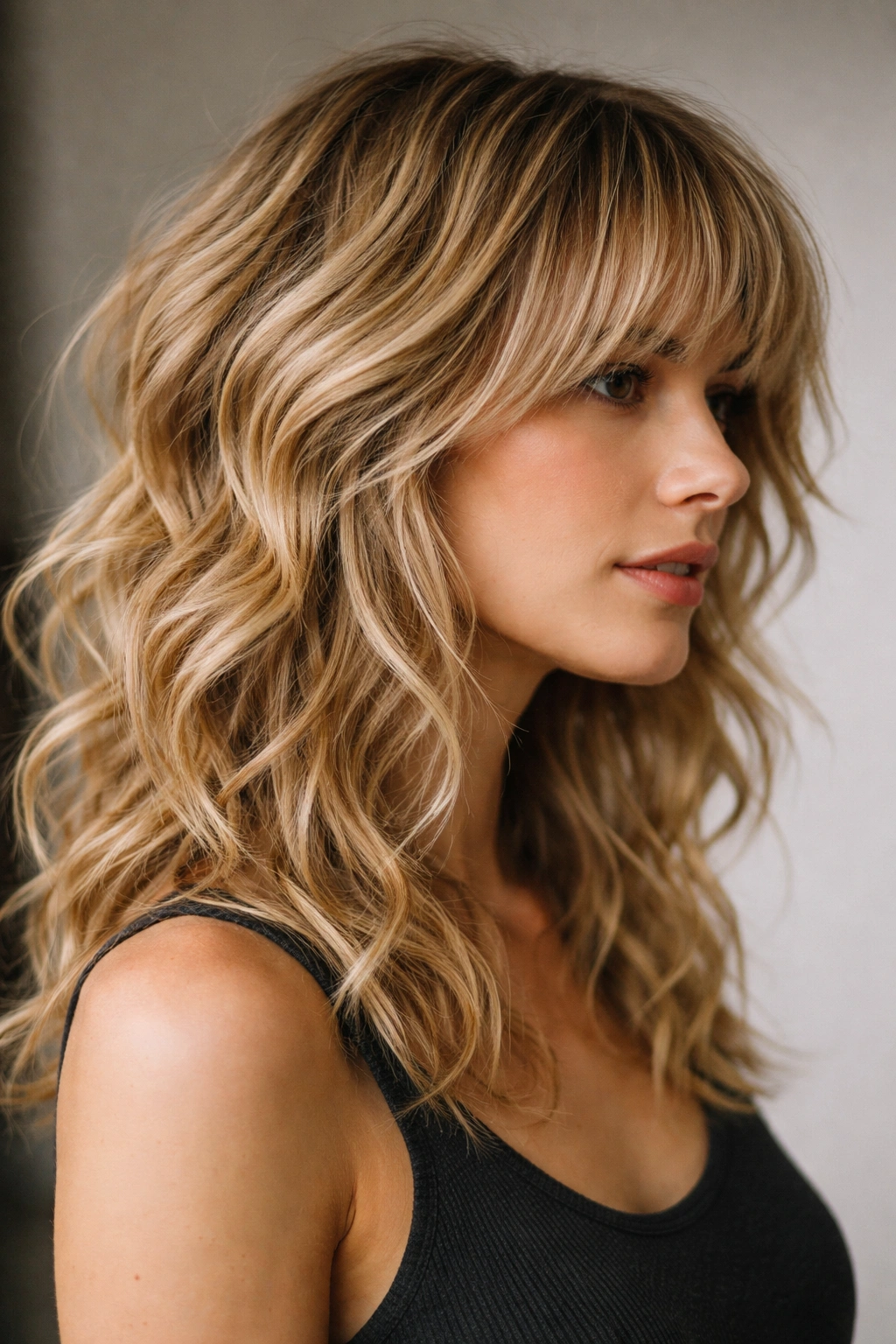
The shag has made a genuine comeback, and it’s probably nothing like the shag you’re picturing from the 70s. Modern shags are softer, more intentionally layered, and far more flattering on different face shapes. Layered bangs—bangs cut with internal layers so they move and flip rather than sitting as a solid block—work perfectly with the shag’s entire aesthetic of movement and texture.
Why This Works for Wavy Hair
This might be the most naturally flattering style on wavy hair that exists. A shag is built for texture. The layers encourage your waves to do what they want to do anyway, and layered bangs work with those waves rather than against them. Blonde hair shows off those layers in vivid detail—each section catches light differently, creating a sense of depth and dimension that’s genuinely hard to achieve on darker hair.
Key Features to Discuss with Your Stylist
- Layering should start at the crown and gradually build through the length—no blunt lines, everything should blend and flow
- Bangs should be cut with textured layers inside them, so they move and separate rather than appearing as one solid piece
- Ask for longer side-swept pieces that blend into the rest of the cut—this prevents the bangs from looking detached from the overall style
- Request layers that encourage your natural wave pattern; show your stylist photos of your hair texture specifically
- The blonde element: lighter hair makes layers visible, so ask your stylist to cut with your wave pattern in mind to maximize visual interest
Pro tip: Apply products to damp hair (a leave-in conditioner or mousse) and let it air-dry or diffuse-dry to let the layers and bangs fall naturally. This style looks better slightly undone than perfectly blow-dried.
3. Choppy Bob with Blunt Bangs
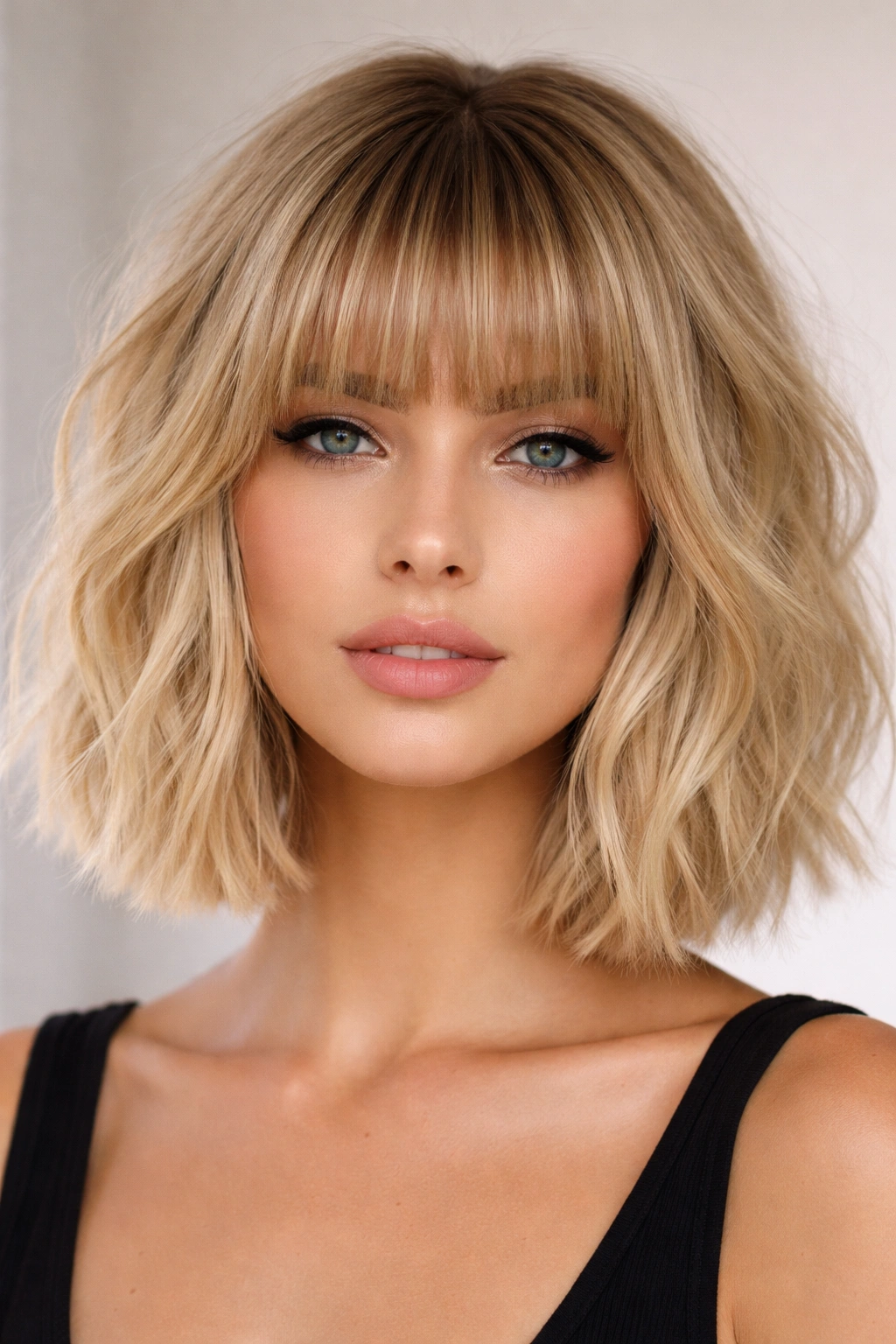
This is the confidence move. A choppy bob features dramatically layered sections throughout—some pieces significantly shorter, others longer—creating a deliberately uneven, textured silhouette. Blunt bangs (truly blunt, not wispy or layered) create visual contrast against all that choppy texture. It’s modern, sharp, and absolutely stunning when the proportions are right.
Why This Works for Wavy Hair
Wavy hair naturally breaks up the hard lines that a blunt bang can sometimes create, softening the overall effect without losing that bold statement. The choppy layers work with your wave pattern instead of fighting it, and the blonde amplifies every individual choppy section. This style reads as intentional, editorial, and fashion-forward on wavy blonde hair in ways that it might feel too severe on straight hair.
Key Features to Discuss with Your Stylist
- Choppy layering should be concentrated more in the back and crown; longer layers in the front prevent the style from looking too short through the face
- Blunt bangs work best landing right at the eyebrow or just slightly longer—not too short, or the effect becomes almost costume-like
- The transition between the blunt bangs and the choppy layers should be seamless; the bangs shouldn’t look separate from the rest of the cut
- Layers should be cut in a way that encourages your natural wave to enhance the choppiness, not flatten it
- Blonde hair shows choppiness most dramatically, so be clear about how sharp vs. blended you want the transitions between layers
Pro tip: This style can look striking with a slight texture and separation. Use a dry texturizing spray or salt spray through damp hair and let it air-dry for maximum impact.
4. Waves with Side-Swept Bangs
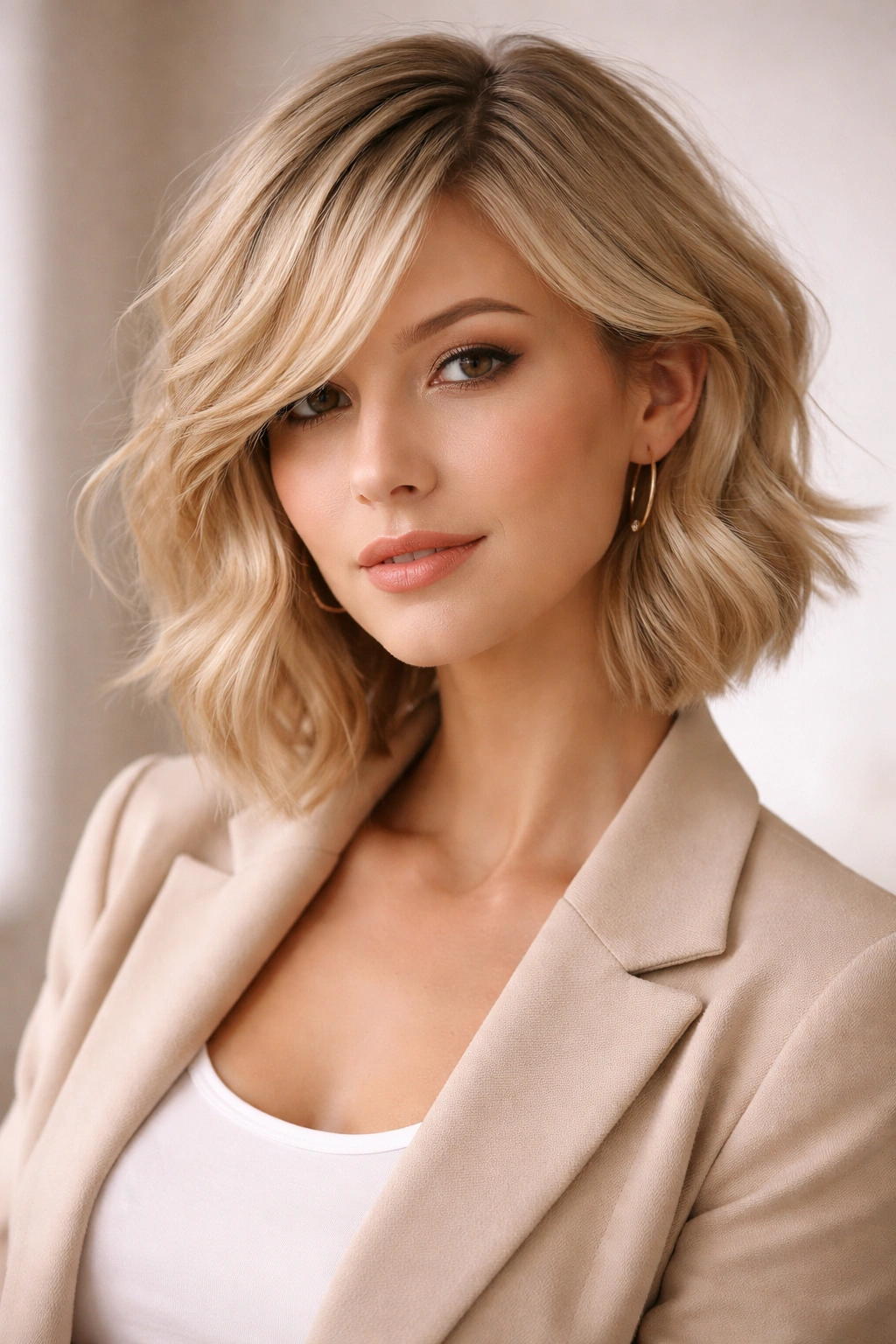
Sometimes you don’t need a dramatic, trendy cut—you just need the right proportions and the right bang placement. A short cut built on side-swept bangs (longer on one side, gradually shorter as they sweep toward the other side) paired with gentle, intentional waves creates something genuinely elegant. This is the style that looks polished in professional settings and casual on weekends, depending on how you style it.
Why This Works for Wavy Hair
Side-swept bangs have a built-in advantage: they work with your wave pattern rather than demanding a specific direction. The asymmetry of side-swept bangs pairs beautifully with the natural asymmetry of wavy texture. Blonde hair with side-swept bangs catches light in subtle ways—the bangs create shadows and dimension that make the whole face appear more sculpted and intentional.
Key Features to Discuss with Your Stylist
- Side-swept bangs should be cut longer on one side (at or slightly below the cheekbone on the longer side) and sweep gradually shorter
- The rest of the cut should be blended, with shorter layers throughout to encourage your natural wave pattern
- Ask your stylist which side suits your face shape best for the longer bang length—this makes a genuine difference in how flattering the style is
- Keep the back slightly shorter than the front for shape and movement
- Blonde reads as softer and more romantic with side-swept bangs, especially if you have warmer tones in your hair
Pro tip: This style works beautifully with both textured and smooth waves. On days you want polish, blow-dry gently to create defined waves. On casual days, let it air-dry for a tousled effect.
5. Faux Hawk with Textured Bangs
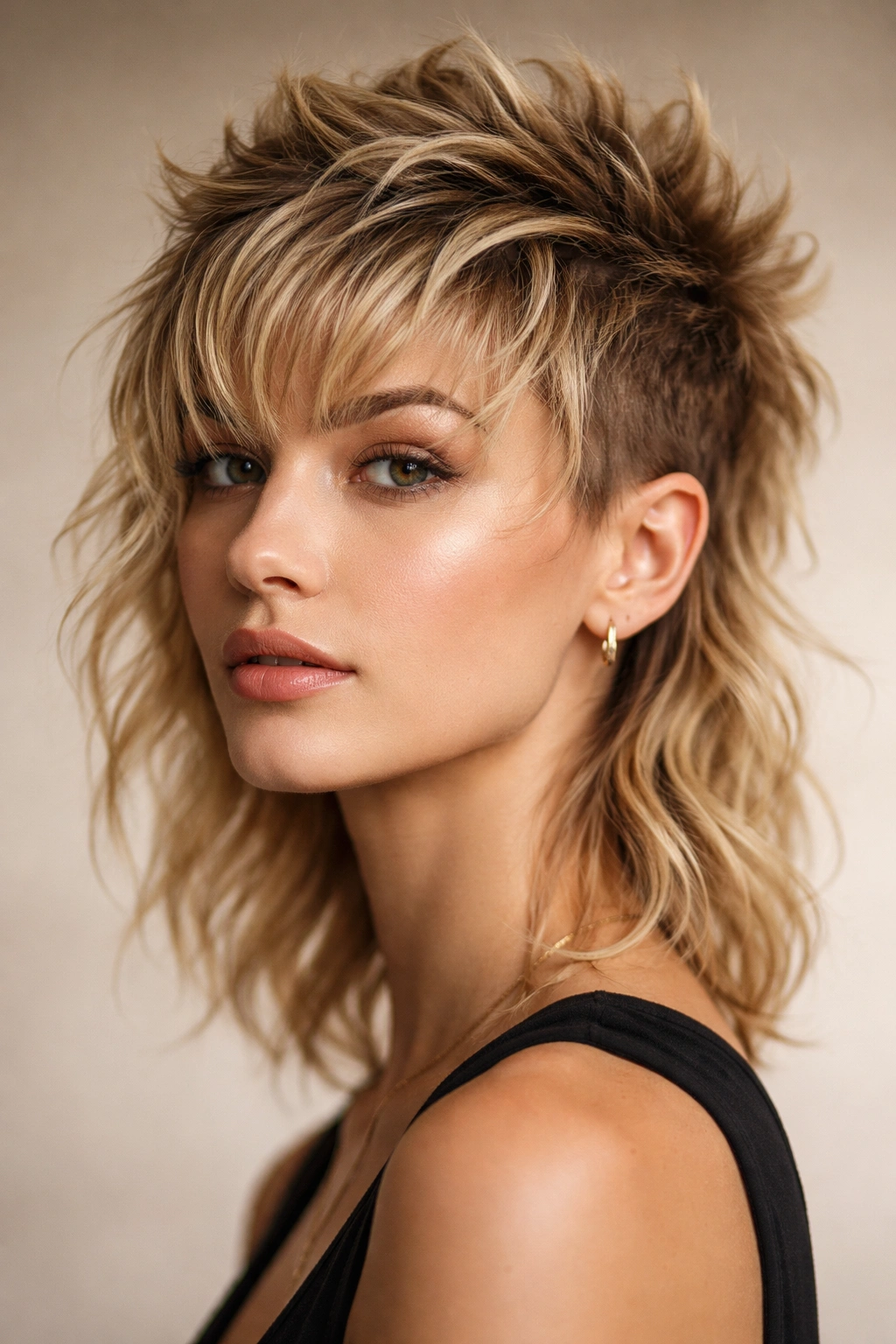
A faux hawk isn’t as extreme as it sounds. The concept is simple: the crown is fuller and taller through the very top, while the sides are tapered shorter. Textured bangs—cut short with choppy layers—reinforce the edgy vibe without the commitment of an actual undercut. On wavy blonde hair, this combination reads as playful rather than aggressive.
Why This Works for Wavy Hair
Wavy hair naturally creates the texture a faux hawk is trying to achieve, which means you’re not fighting your hair’s natural pattern. The crown volume comes partly from your wave pattern, partly from the cut, and partly from styling choices. Textured bangs work beautifully with the overall movement; nothing about this style looks rigid or requires constant maintenance. Blonde amplifies the edge factor—lighter hair reads as more modern and fashion-forward than darker shades with the same cut.
Key Features to Discuss with Your Stylist
- The crown should be significantly longer than the tapered sides—sometimes 2-3 inches difference, depending on how dramatic you want to go
- Textured bangs should be quite short (usually 1-2 inches) with internal choppy layers
- The transition from the tapered sides to the longer crown should be blended, not harsh and obvious
- Ask your stylist to cut in a way that encourages your natural wave to work with the style, not against it
- This style needs regular shape maintenance (every 4-5 weeks), so ask about easy-to-maintain cutting patterns
Pro tip: On days you want maximum volume, apply mousse to damp hair and blow-dry using fingers or a diffuser, directing the crown upward. The natural wave will do most of the work.
6. Tousled Layered Cut with Curtain Bangs
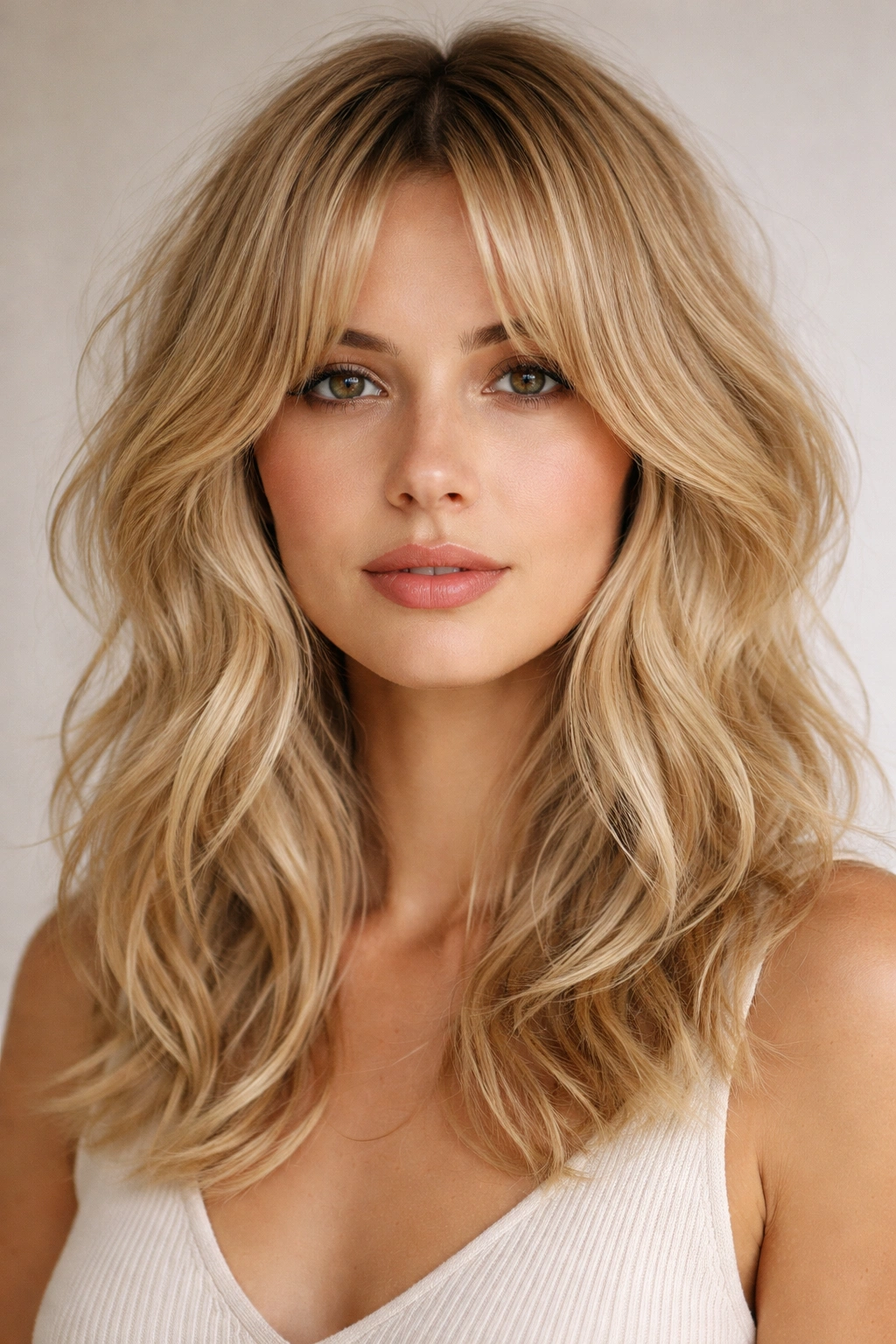
Curtain bangs part down the center and fall on either side of the face, creating a frame that’s flattering on nearly every face shape. Combined with a short, heavily layered cut throughout, this creates something that looks effortlessly cool—like you just threw it together without thinking, even though the cut was carefully planned. Wavy blonde hair makes this combination feel genuinely romantic rather than casual.
Why This Works for Wavy Hair
Curtain bangs are perhaps the most naturally compatible bang style with wavy hair. They work with the way your hair wants to fall and move. The internal layers of a curtain bang encourage separation and movement, which wavy texture provides naturally. A heavily layered cut underneath means every wave reads distinctly, creating visual interest that doesn’t require intense styling. Blonde hair with curtain bangs has an almost ethereal quality—the way light moves through the layers feels intentional and thoughtfully designed.
Key Features to Discuss with Your Stylist
- Curtain bangs should be parted slightly off-center for a more modern feel; dead-center can read slightly dated
- Layers throughout the cut should be substantial enough to encourage your wave pattern; ask your stylist to cut with your specific wave texture in mind
- The longest layers should hit around chin length or slightly shorter; this prevents the overall style from looking too long
- Internal layering within the bangs themselves is crucial—the bangs should separate and move, not sit as a solid block
- Blonde works beautifully with this style because the layers are so visible; the color naturally shows off the cut’s dimension
Pro tip: This style air-dries beautifully. Apply a leave-in conditioner to damp hair, scrunch gently, and let it dry naturally for the most authentic tousled effect.
7. Undercut Bob with Angular Bangs
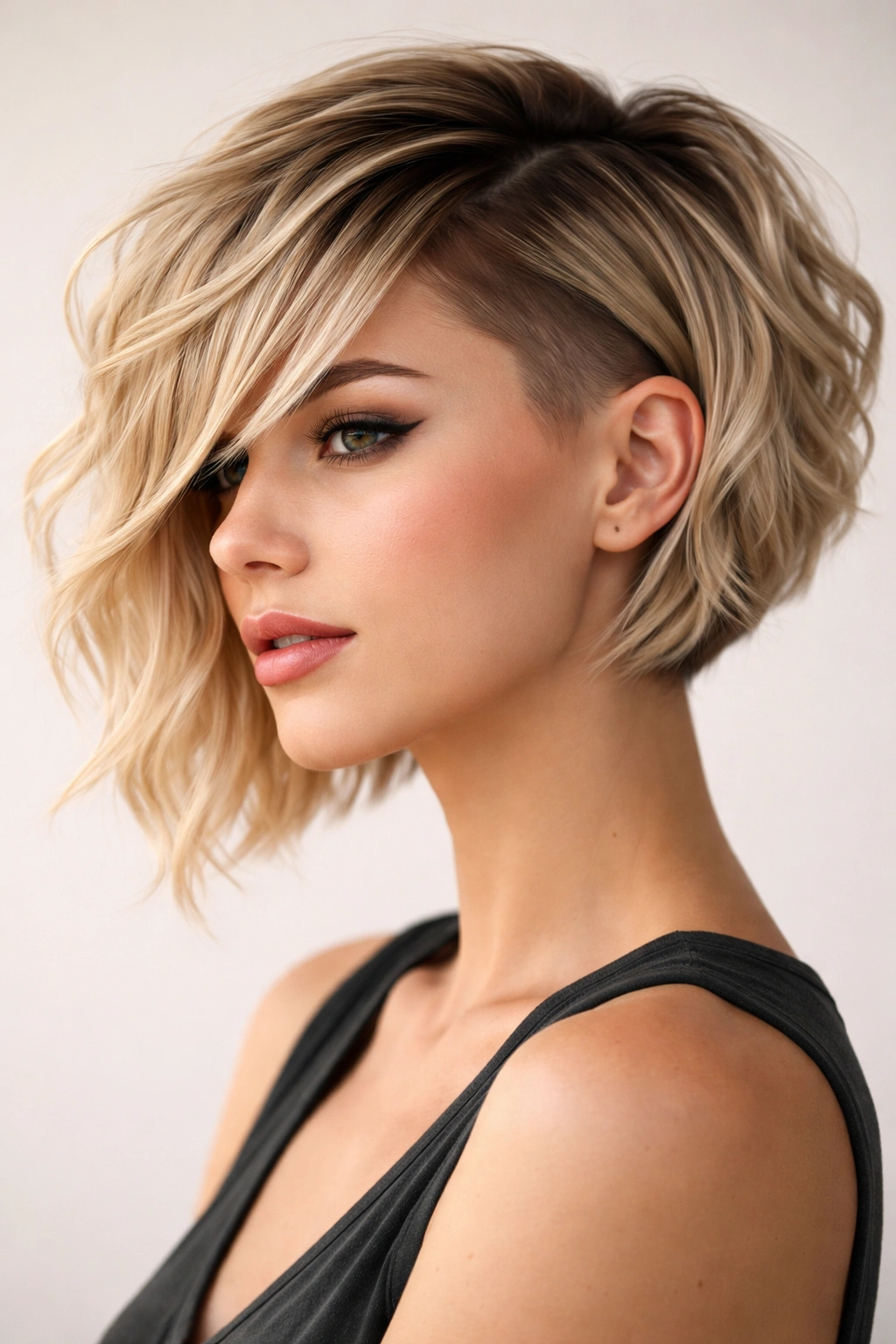
An undercut bob features shorter hair on the back and sides with slightly longer front pieces, creating obvious visual contrast and shape. Angular bangs (cut at a sharp diagonal line) play into this sense of intentional, defined geometry. The combination is undeniably bold and modern. On wavy blonde hair, the undercut sections show movement and lightness, while the angular bangs create a striking frame.
Why This Works for Wavy Hair
Wavy texture softens the geometric boldness of this cut, preventing it from reading as too severe or architectural. The undercut section (usually the back and sides) allows your waves to move and breathe, while the longer front and angular bangs create dimension and face-framing. Blonde hair emphasizes the contrast between the shorter undercut sections and the longer pieces; the color difference between the undercut and the top creates additional visual interest.
Key Features to Discuss with Your Stylist
- The undercut should expose skin (or mostly skin) on the sides and back—this is what makes the cut work. Usually around 1-2 inches of length at the shortest point
- Angular bangs should be cut at a 45-degree angle, typically longer on one side of the face and shorter on the other
- Front pieces should blend smoothly from the undercut into the longer lengths; no harsh demarcation lines
- Ask your stylist how short is realistic given your wave pattern; some waves can make undercuts look fuller than intended
- The blonde element: lighter hair shows the undercut more dramatically, so make sure you’re prepared for that visual impact
Pro tip: This style requires occasional maintenance (every 3-4 weeks) to keep the undercut section sharp. Invest in a good styling product that gives texture and definition to the longer pieces.
8. Tousled Lob with Feathered Bangs
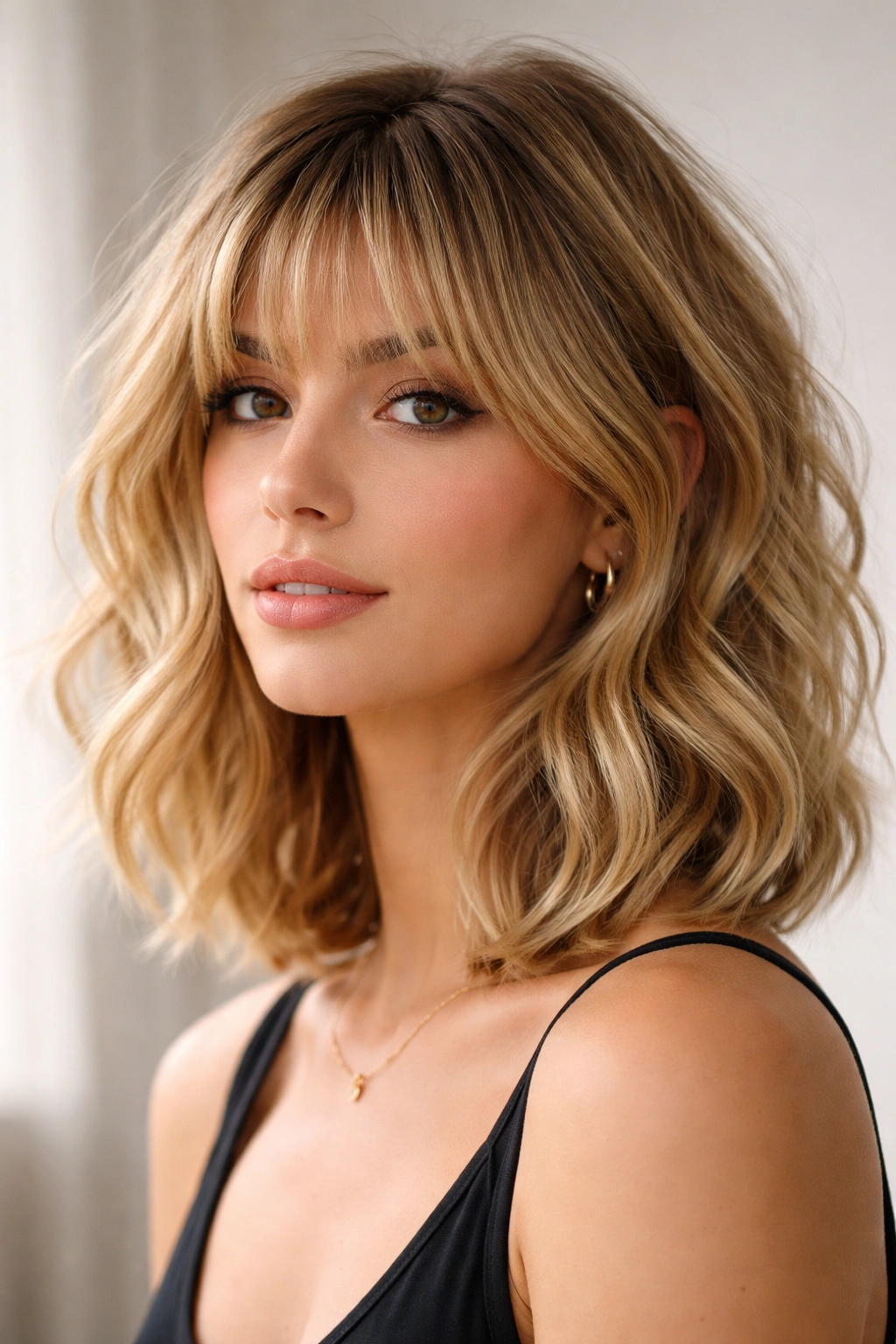
A lob (long bob) hitting around chin length or slightly longer pairs beautifully with feathered bangs—bangs with internal layers and a curved, feathered shape that looks soft and movement-oriented rather than blunt. Together, they create a style that feels both intentional and relaxed. On wavy blonde hair, this combination reads as sophisticated without trying too hard.
Why This Works for Wavy Hair
Wavy texture creates natural feathering throughout a lob, which means your hair is already doing what the cut is designed to encourage. Feathered bangs work with that natural movement rather than against it. A lob gives you enough length for your waves to show genuine shape and dimension while still feeling short and contemporary. Blonde hair glows with this combination—the length allows light to move through the waves in subtle, sophisticated ways.
Key Features to Discuss with Your Stylist
- Feathered bangs should be cut with curves and layers inside them, so they flip and move; ask to avoid anything blunt or heavy
- Layers throughout the lob should encourage rather than fight your wave pattern
- The front pieces should be longer than the back, creating a subtle shape that frames the face
- Internal layers should be concentrated around the crown and near the face, with longer lengths toward the ends for shape
- Blonde works beautifully with this style because feathering is so visible in lighter hair; the dimension becomes a real feature of the cut
Pro tip: Feathered bangs and a tousled lob look best with some texture and movement. Use a curl-enhancing cream or mousse on damp hair and diffuse-dry or air-dry for the most authentic effect.
9. Messy Waves with French Bangs
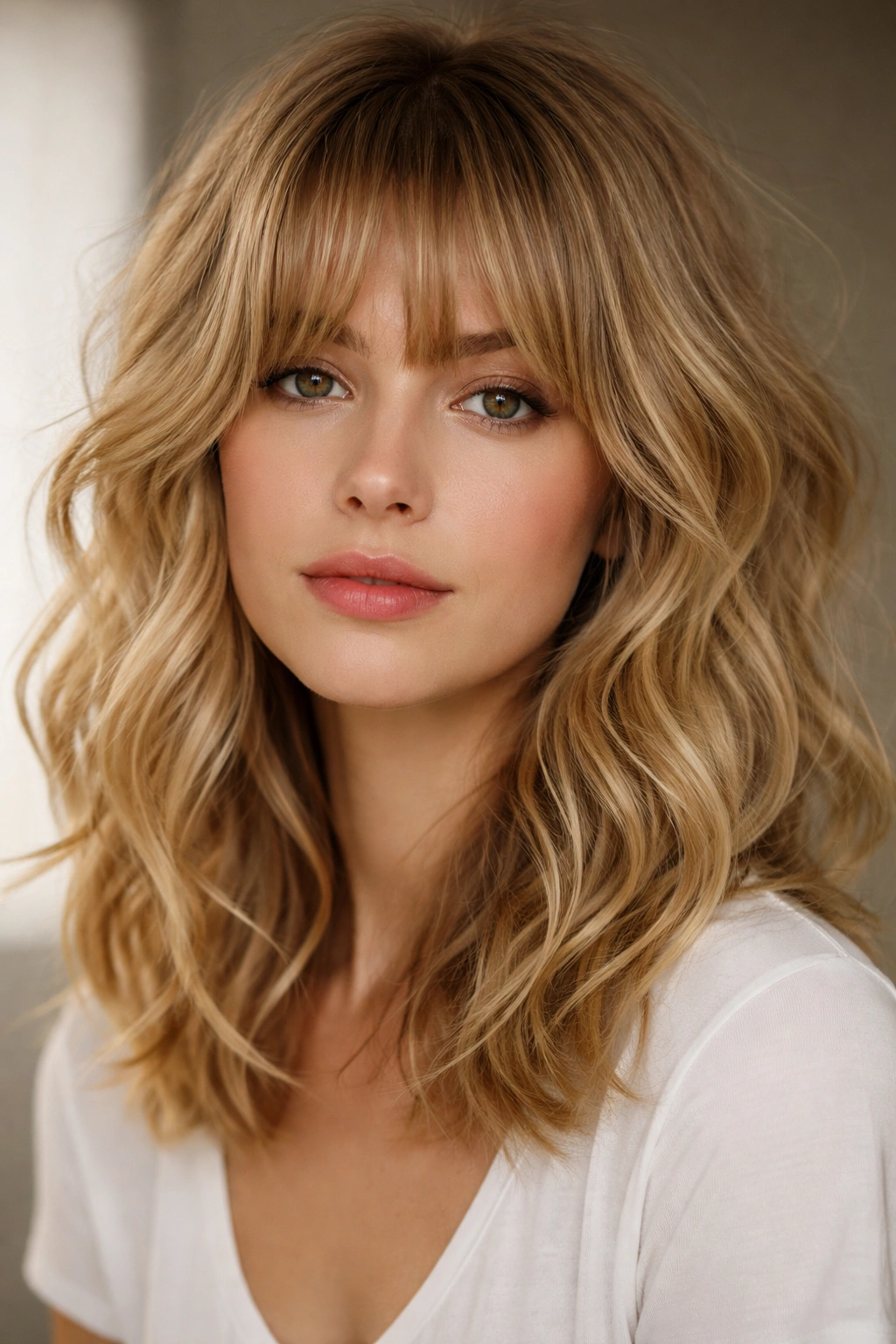
French bangs are fuller and slightly longer than typical bangs, falling somewhere between true bangs and a longer swept piece. They have a distinctly chic, intentionally undone quality—very Parisian minimalism. Paired with genuinely messy, tousled waves throughout, this creates a style that looks effortlessly elegant. It’s the kind of cut that looks cool partially through styling choices, not just the cut itself.
Why This Works for Wavy Hair
French bangs are cut specifically to work with texture and movement, which means wavy hair is their ideal canvas. The fuller coverage and longer length mean these bangs integrate seamlessly with wavy styling. Messy waves paired with French bangs create visual interest without requiring tight, controlled styling. Blonde hair with this combination has an undeniable chic factor—it reads as intentionally styled while looking like you didn’t try very hard, which is the essence of French approach to hair.
Key Features to Discuss with Your Stylist
- French bangs should land somewhere between the eyebrow and mid-forehead, fuller than wispy bangs but not so long they feel like regular hair
- They should have internal layers that encourage movement and separation, not sit as a solid block
- Layers throughout the cut should be designed specifically to enhance your natural wave pattern
- Ask your stylist to cut in a way that makes air-drying and finger-styling the optimal approach (rather than requiring extensive blow-drying)
- The blonde element: lighter hair shows texture and movement beautifully, so emphasis on creating visual interest through the waves themselves
Pro tip: The messy waves look is achieved through styling choices as much as the cut. Apply a texturizing product to damp hair, scrunch and tousle, then let it air-dry. The “messy” effect should read as intentional and chic, not actually unkempt.
10. Short Crop with Longer Bangs
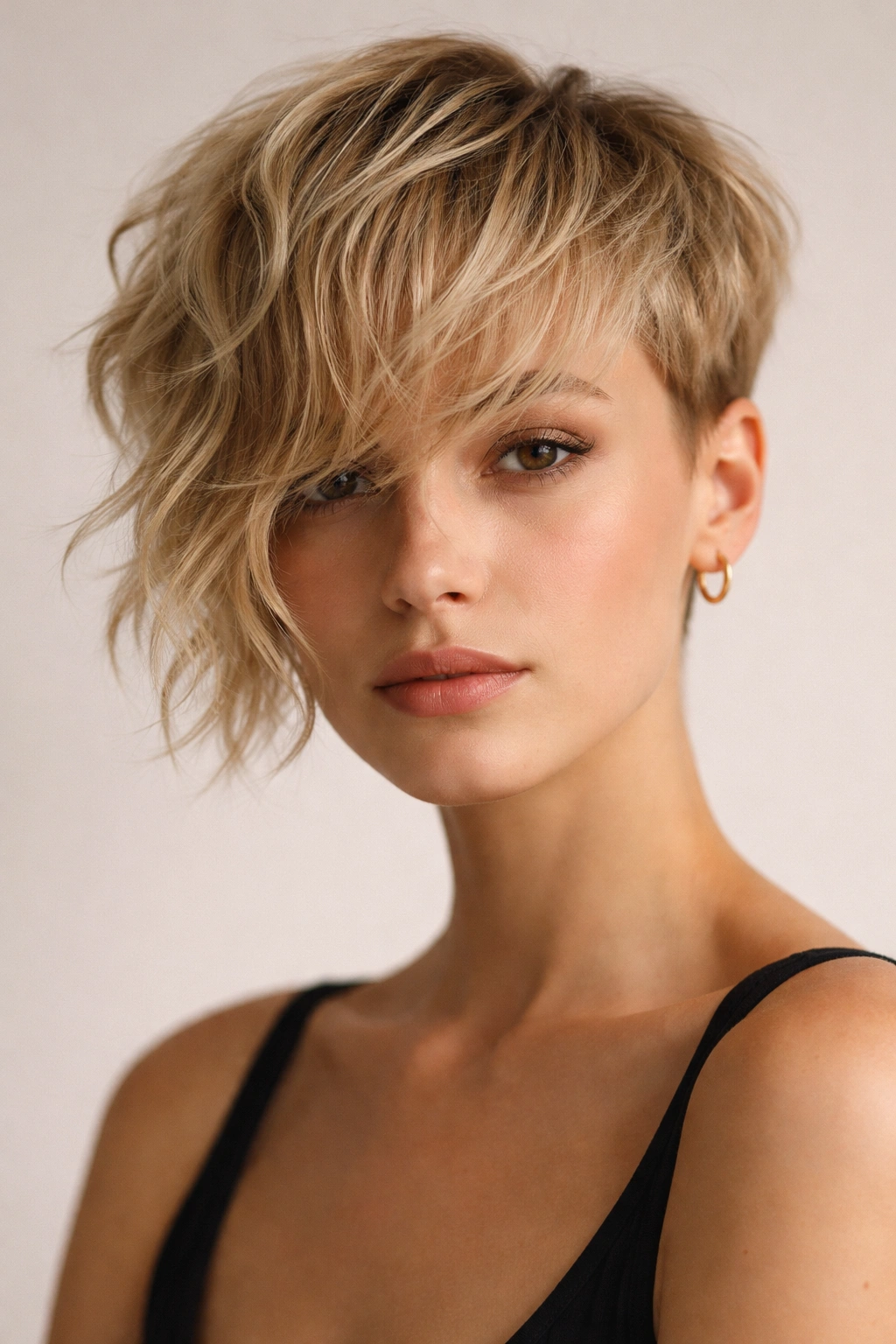
A short crop cuts everything quite short—usually only 1-2 inches throughout—creating a close, cropped silhouette. Longer bangs (hitting at the cheekbone or below) create drama and visual interest against all that close-cropped texture. The contrast between the very short back and sides and the significantly longer bangs creates a striking, contemporary look. On wavy blonde hair, this combination is genuinely eye-catching.
Why This Works for Wavy Hair
Wavy texture shows beautifully in a very short crop; each wave reads distinctly and the style has genuine movement. Longer bangs over short cropped hair create immediate face-framing and visual interest. The contrast between the cropped sections and the longer bangs is more dramatic and modern-looking on wavy hair than on straight hair. Blonde hair amplifies this contrast—the longer bangs appear more dramatic and defined against the closely cropped sides and back.
Key Features to Discuss with Your Stylist
- The overall crop should be 1-2 inches throughout, with very clean, sharp lines
- Longer bangs should be significantly longer than the rest of the hair—at least 2-3 inches longer, usually hitting cheekbone length or below
- The transition from the cropped sections into the longer bangs should be blended, not obviously demarcated
- Ask your stylist to cut with your wave pattern in mind; some waves can make a crop look fuller or wider than others
- This style requires regular maintenance (every 3-4 weeks) to keep the crop sharp and the bangs proportionally longer
Pro tip: The longer bangs can be styled multiple ways—swept to one side, parted, or worn straight down. This flexibility makes the style more versatile than the cropped dimensions alone might suggest.
11. Wavy Mullet with Side Bangs
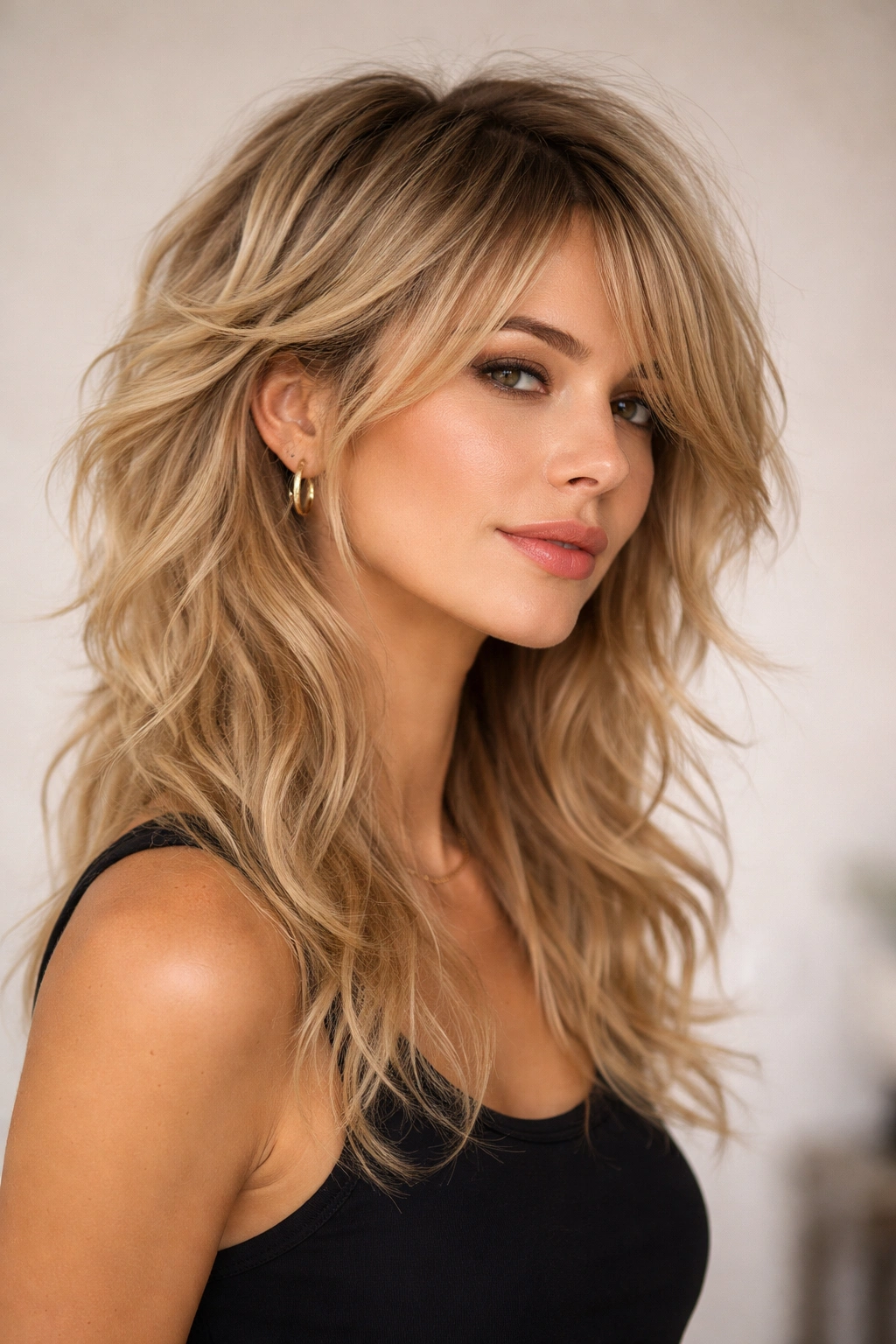
A modern mullet (shorter in the front and crown, longer in the back) paired with side bangs creates something that’s genuinely contemporary rather than referencing the 1980s. The shorter front gives you face-framing and shape, while the longer back provides movement and visual interest. Side bangs work with the asymmetry of a mullet rather than against it. On wavy blonde hair, this combination is bold and fashion-forward without feeling costume-like.
Why This Works for Wavy Hair
A wavy mullet actually looks better on wavy hair than on straight hair—the texture creates natural dimension and the longer back section has genuine movement. Side bangs work beautifully with the asymmetry of the cut. Wavy texture prevents the mullet from reading as too severe or too retro; the movement makes it feel contemporary and intentional. Blonde hair with a wavy mullet reads as fashion-forward; the lighter tones emphasize the cut’s modern proportions.
Key Features to Discuss with Your Stylist
- The front and crown should be quite a bit shorter (usually 2-3 inches), creating clear visual distinction from the longer back
- The back length can vary based on your comfort level; some people do shoulder-length, others go longer
- Side bangs should be cut on one side, longer on one side of the face and shorter on the other, creating asymmetry that matches the mullet’s vibe
- Layers throughout should work with your wave pattern; ask your stylist to cut in a way that enhances movement
- This is a statement cut that requires commitment, but maintenance is actually manageable—just regular shape maintenance on the front and sides
Pro tip: This style can be styled multiple ways. Texture the front section for a modern, tousled look, or smooth it down for something more polished. The back works beautifully with natural waves.
12. Tousled Pixie Bob with Bangs
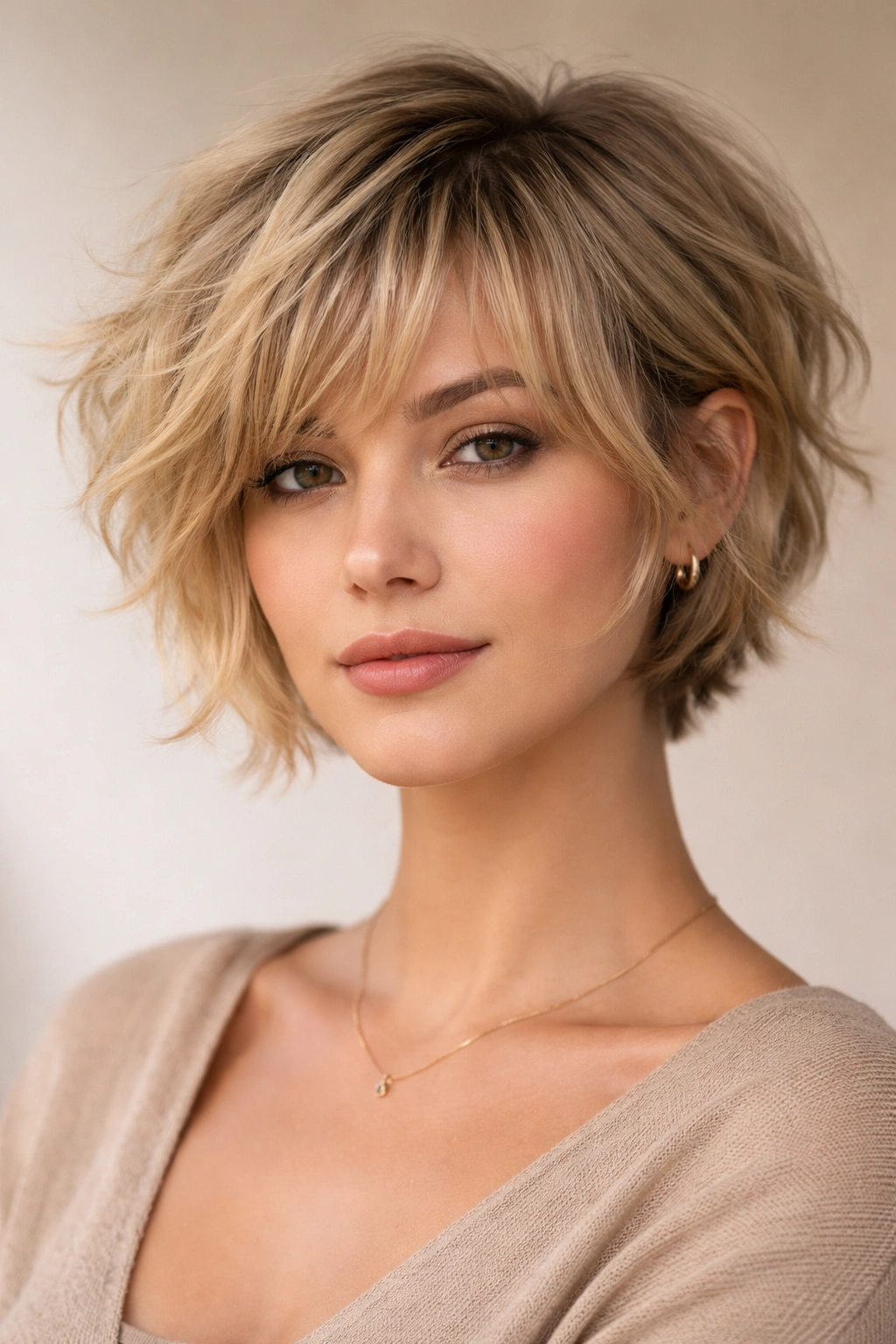
A pixie bob splits the difference between a pixie and a bob—longer than a pixie, shorter than a traditional bob, with enough length throughout to work waves into. Bangs (which can be wispy, layered, or textured based on your preference) create facial framing and softness. The result is a style that feels modern and fashion-forward without being as extreme as a true pixie. On wavy blonde hair, this is genuinely flattering and easy to manage.
Why This Works for Wavy Hair
This is perhaps the most versatile length on wavy hair. You have enough length for your waves to show genuine shape and dimension, but it’s short enough to feel contemporary and require minimal styling. Bangs provide face-framing and can be styled in multiple ways depending on your mood. Wavy texture actually makes this length easier to manage than straight hair would be. Blonde hair with a pixie bob reads as polished and intentional; the length shows off color dimension beautifully.
Key Features to Discuss with Your Stylist
- The overall length should be short but with enough dimension that you can see and feel your wave pattern
- Layers should be built in throughout to encourage movement and prevent the style from looking too blunt or heavy
- Bangs can be customized based on your preference—wispy for soft, layered for texture, or blunt for drama
- Ask your stylist to cut in a way that makes air-drying and finger-styling the easiest approach
- Regular trims (every 5-6 weeks) keep the shape fresh, but maintenance is less intensive than a true pixie
- Blonde works beautifully with this length; you see all the dimension and color movement throughout the cut
Pro tip: This style air-dries beautifully. Apply a leave-in conditioner or mousse to damp hair, scrunch gently, and let it dry naturally for a tousled, textured effect that shows off both the cut and your natural wave pattern.
Final Thoughts
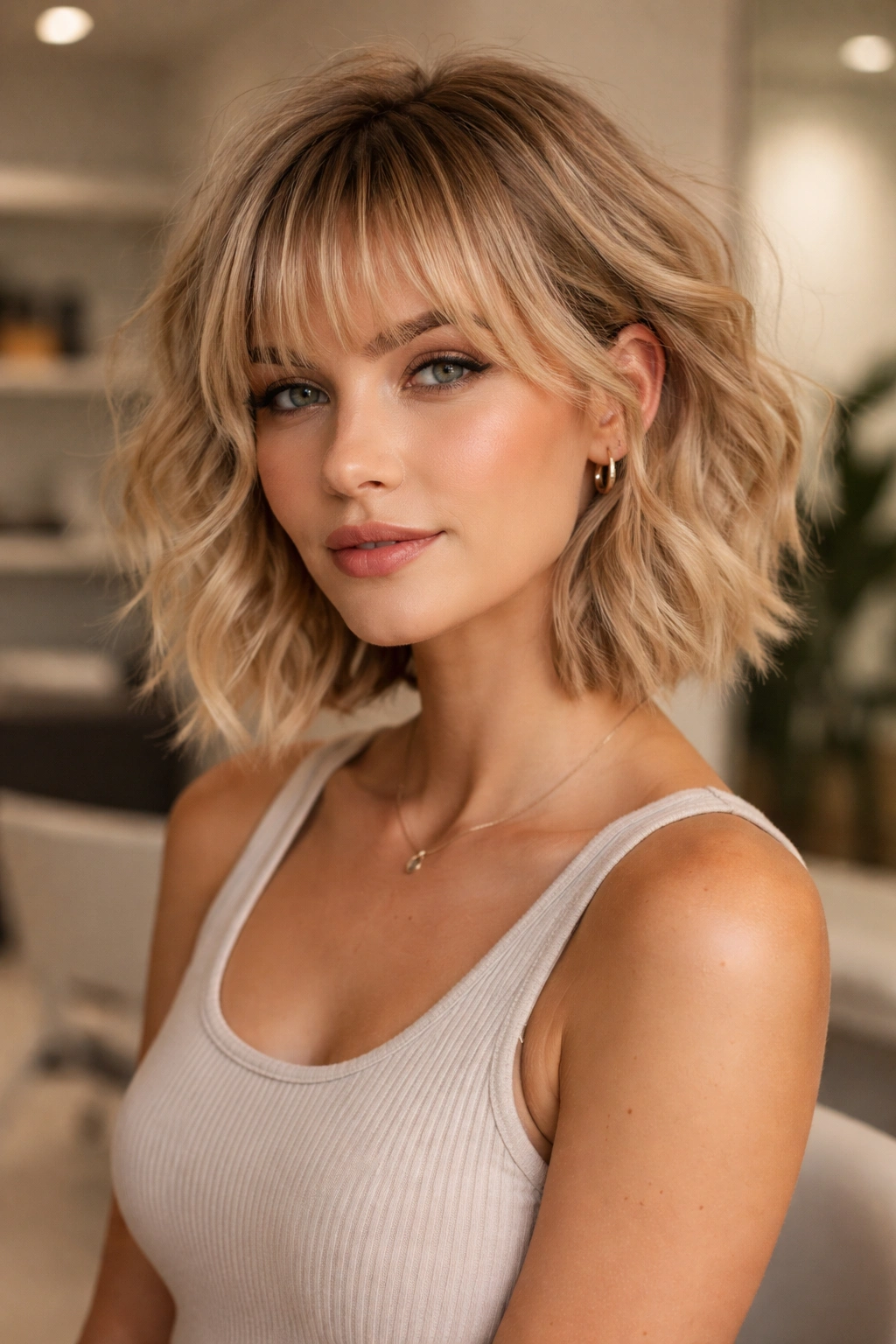
Finding the right short style with bangs comes down to understanding how your specific wave pattern, face shape, and blonde tone interact with a given cut. The 12 styles here offer genuine variety—from the subtle sophistication of side-swept bangs to the bold statement of an undercut bob—so there’s something that aligns with different comfort levels and aesthetic preferences.
What makes short hair with bangs work beautifully on wavy blonde hair is how the texture and color amplify the cut’s dimension. Your waves add movement and softness that prevent bangs from looking harsh, and your blonde shows off every layer and internal texture detail. The key is communicating clearly with your stylist about your wave pattern—show photos of your hair texture specifically, talk through your styling preferences, and be honest about how much styling maintenance you’re willing to do on a daily basis.
The right cut will work with your hair rather than against it. That’s what separates a style that feels effortless and gorgeous from one that requires you to fight your hair’s natural texture every single day. With wavy blonde hair and the right bangs, you’re already starting from a place of genuine advantage.
