



If you’ve been thinking about a fresh cut but worry that shag haircuts won’t work with your naturally wavy texture, think again. The truth is that wavy hair and shag haircuts are practically made for each other — the movement in your hair enhances the choppy layers and texture that define this style, while the cut itself amplifies your waves without requiring heat-styling to achieve that effortless, lived-in look everyone’s after.
A shag works beautifully on wavy hair because the layers already exist in the cut’s DNA. Instead of fighting your natural texture, a great shag stylist works with it, designing layers that follow your wave pattern and maximize volume exactly where your hair wants to go. The result is a style that genuinely feels easier to manage than the heavy, blunt cuts that fight against your natural wave structure.
The thing about shag haircuts is that they’re not one-size-fits-all. The best version for your hair depends on your hair length, the intensity of your waves, your face shape, and how much styling effort you’re willing to invest. Some shags are intentionally short and punk-edged, others flow long and romantic. Some feature dramatic choppy layers, while others use subtle layering for a more refined look. The versatility is part of what makes this cut so appealing right now — there’s genuinely a shag variation that fits nearly every person and aesthetic.
Let’s walk through sixteen distinct shag interpretations that work particularly well on wavy hair, each bringing its own attitude and wearability to this modern classic.
1. Modern Textured Shag
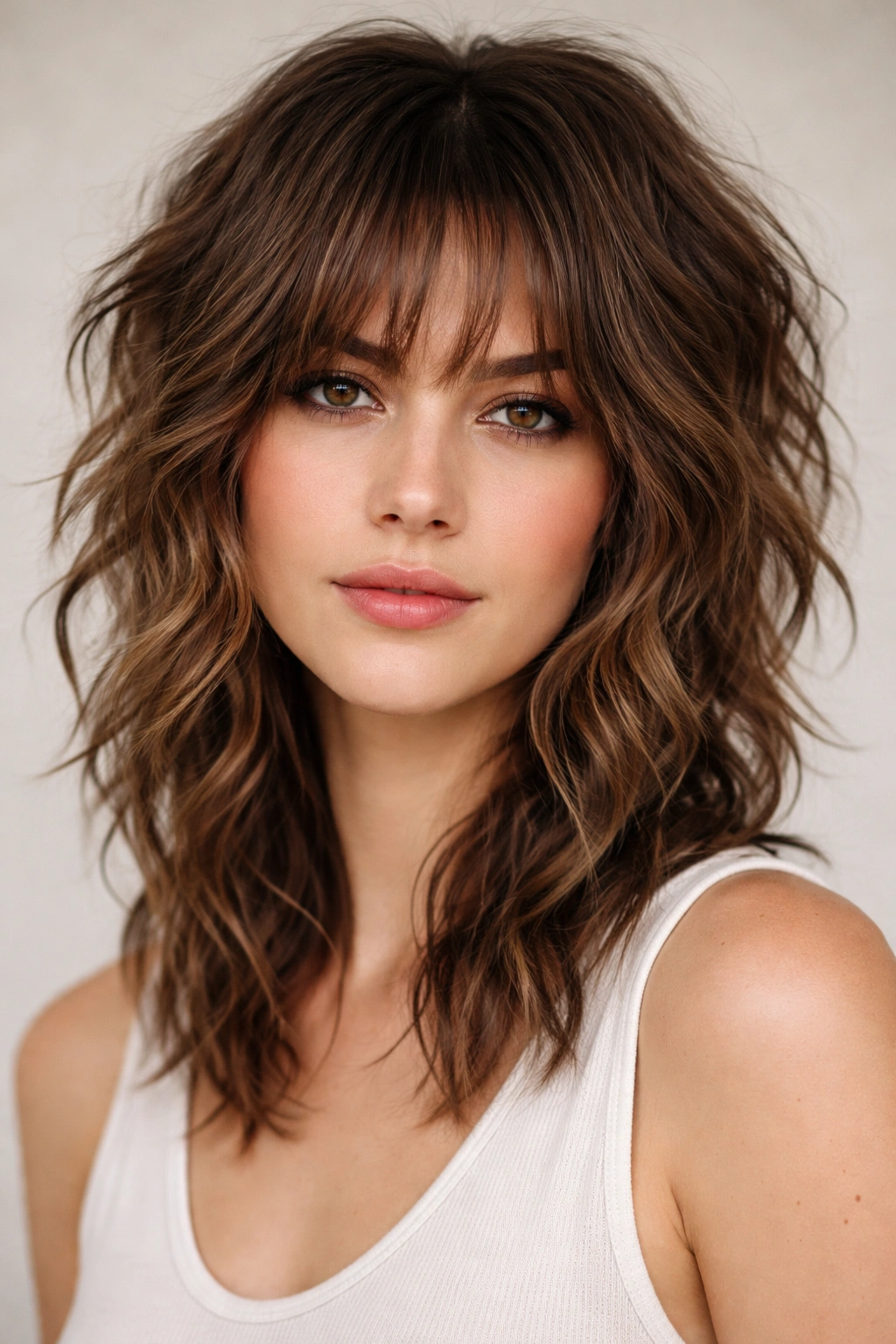
The modern textured shag strips away any heavy nostalgia and reimagines the style as a deliberately choppy, piece-y cut that celebrates individual texture over uniformity. This version features shorter, more intentionally jagged layers throughout, with the ends left blunt rather than feathered, creating a contemporary edginess that feels current rather than retro.
Why This Works for Wavy Hair
Wavy hair naturally wants to separate into pieces and strands. A textured shag leans into that impulse rather than fighting it. The choppy, blunt-edged layers you’d get with this cut actually emphasize your waves by creating visual breaks every few inches, making your wave pattern more pronounced and the overall movement more dynamic. The texture in the cut essentially amplifies the texture already in your hair.
How to Style and Maintain It
- Apply a lightweight sea salt spray or texturizing product to damp hair for that intentional piece-y look
- Rough dry your hair with your fingers or a diffuser to encourage natural waves
- No blow dryer needed for wavy hair — your texture does most of the heavy lifting
- Refresh the choppy texture with regular trims every 6-8 weeks to keep those blunt ends sharp and defined
- This style works best when you lean into the tousled aesthetic rather than trying to smooth it into uniformity
2. Long Layered Shag
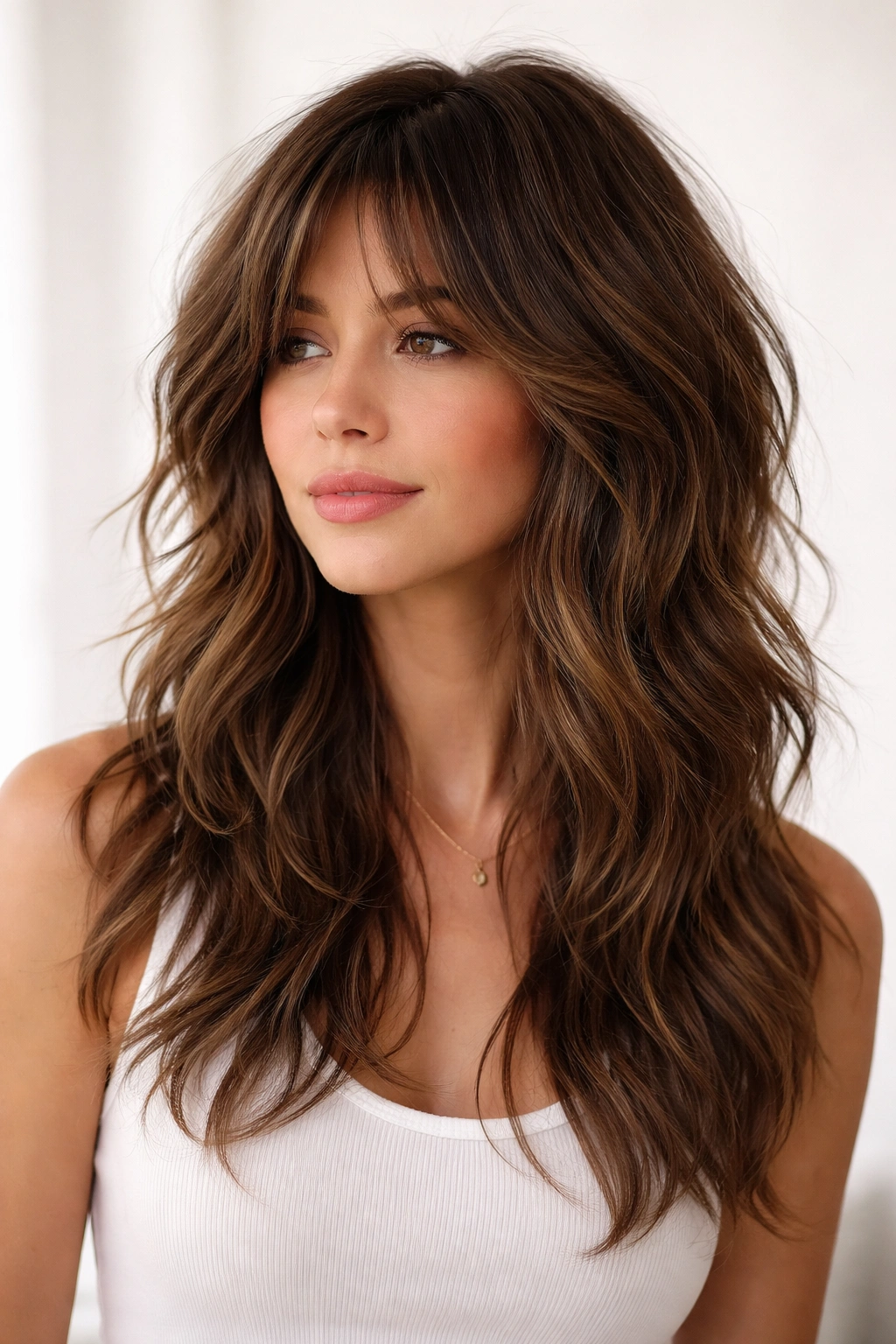
If you’re not ready to commit to a short cut but want that classic shag movement and dimension, a long layered shag lets you keep significant length while still getting all the visual payoff of choppy, strategic layers. This version typically falls between chin-length and mid-back, with layers that become progressively longer as they move toward the face, creating a flattering shape that frames your features.
The Visual Impact of Long Shag Layers
Long shag layers create a pyramid-like silhouette where the hair is fullest at the crown and gradually tapers outward and downward. This shape is incredibly flattering on most face shapes because it adds height and volume at the crown (where you want it) and angles in toward the face with those longer, face-framing pieces. On wavy hair, those face-framing layers fall in the most romantic way, catching light and creating movement that shorter cuts sometimes can’t achieve.
Styling Tips for Maximum Dimension
- Use a lightweight curl-enhancing cream on damp hair before air drying
- A diffuser on low heat speed is your friend — it sets your waves without frizz
- Sleep on a silk pillowcase to minimize disruption to your wave pattern overnight
- Use a wide-tooth comb only on soaking wet hair to avoid breaking your wave structure
- Refresh waves on non-wash days with a light spritz of hydrating mist and finger-scrunching
3. Choppy Face-Framing Shag
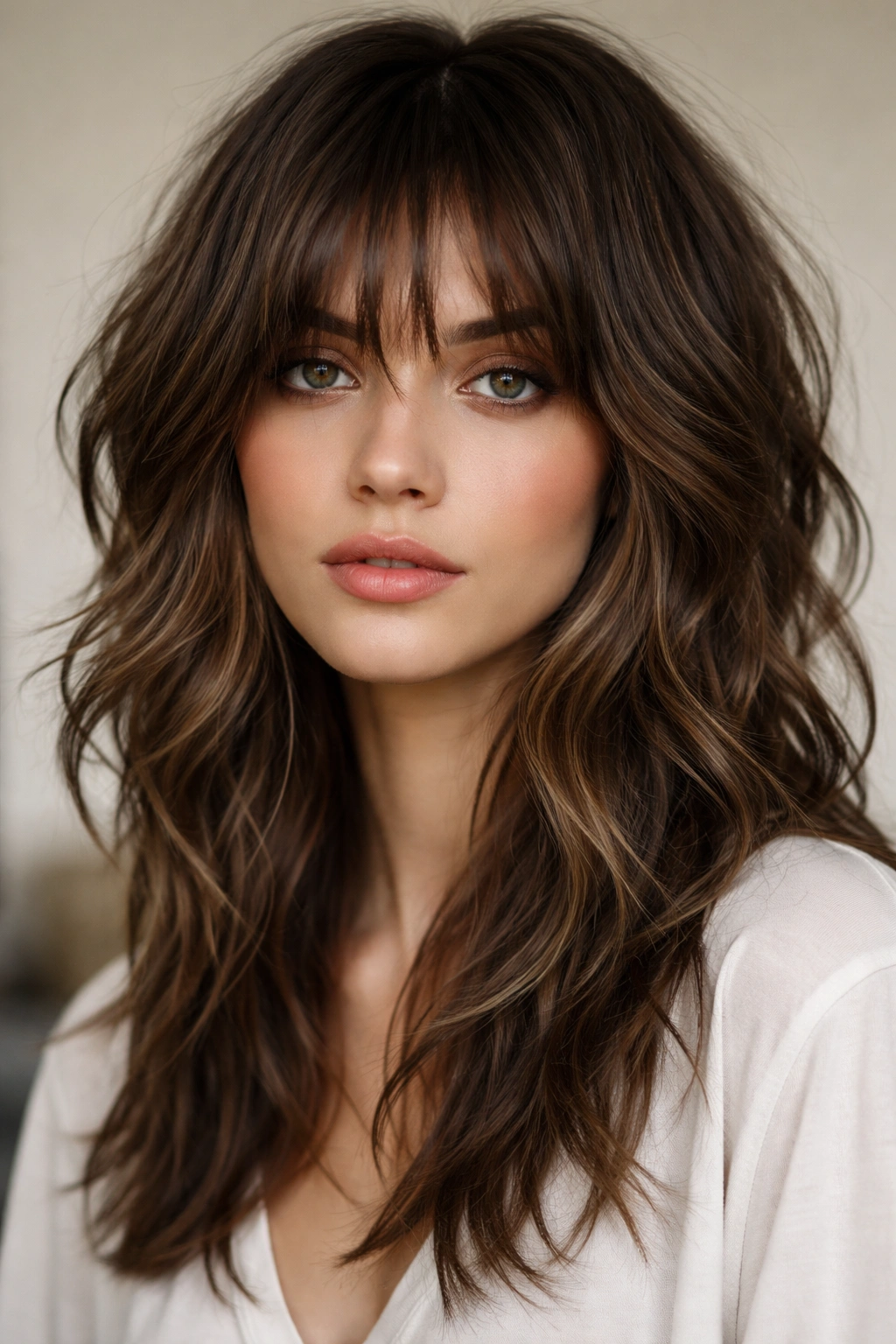
This variation emphasizes the power of face-framing layers by making them dramatically shorter and choppier than the rest of the cut. The rest of your hair maintains length, but the pieces that fall around your face are noticeably jagged and textured, creating an immediate visual focal point that draws attention to your eyes and cheekbones. It’s a shag that commits to drama in a very specific, flattering way.
Why Face-Framing Works on Wavy Hair
Shorter layers around the face tend to hold curl and wave definition better than longer hair does, because they’re closer to the source of moisture at your scalp. Those choppy face-framing pieces will show off your waves beautifully, and they create visual texture exactly where you want people looking — at your face. The contrast between the longer hair below and the choppy pieces up top also makes your face appear more sculpted and defined.
Real-World Maintenance Reality
- These shorter pieces dry faster and may wave slightly differently than your longer hair
- You might need to lightly diffuse or air dry to blend the different lengths seamlessly
- Trims every 5-6 weeks keep those face-framing layers from becoming too blunt and losing their piece-y quality
- This cut reads edgier and requires slightly more intentional styling than some other shag variations
- Perfect if you want your styling routine to be a form of creative expression rather than pure convenience
4. Feathered Shag with Bangs
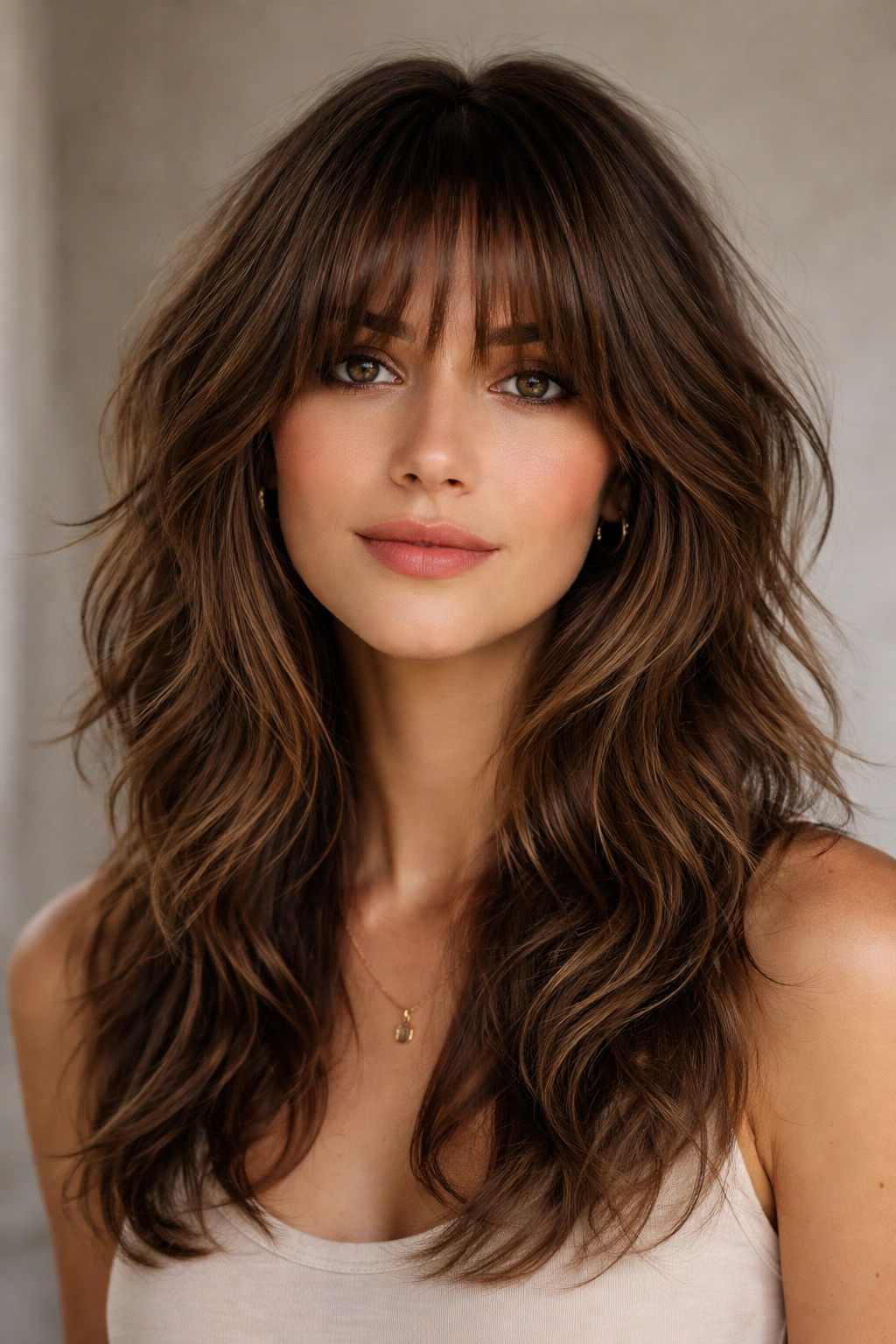
Feathering — that technique where the ends of each layer are sliced at an angle rather than cut blunt — gives a shag a softer, more romantic quality that can feel less rock-and-roll and more effortlessly chic. Adding bangs (whether full, wispy, or curtained) to a feathered shag creates a complete, intentional silhouette that looks polished even when it’s technically undone.
The Softness Bangs Bring to a Shag
Bangs automatically draw the eye upward and make any face shape feel more balanced and harmonious. Paired with a feathered shag, bangs create a complete frame around your face that makes even a somewhat choppy, textured cut feel cohesive. The feathering softens the bluntness that textured shags can sometimes have, creating a style that’s edgy enough to feel current but romantic enough to feel timeless.
Styling Feathered Shag Bangs on Wavy Hair
- Your bangs will wave too — that’s actually beautiful, not a problem to fix
- Apply styling product to your bangs first while hair is damp, then the rest of the cut
- A light touch with a brush on damp hair prevents creating unwanted frizz in bangs
- Bangs need trimming every 4-5 weeks to maintain their shape and placement
- Feathered ends create a softer look, meaning this style forgives slightly longer trims better than blunt-ended styles
5. Blunt Textured Shag
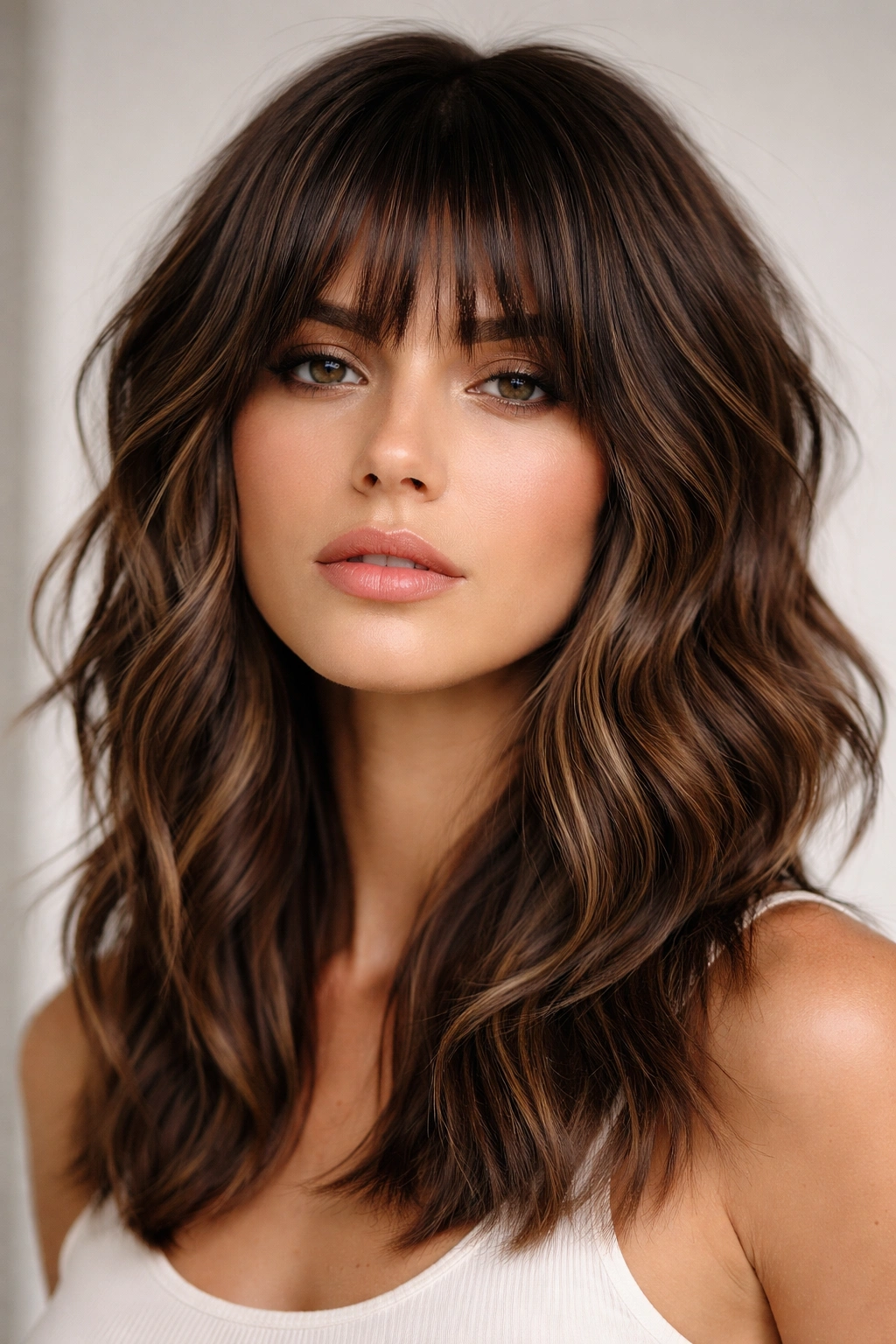
Where feathered shags soften, a blunt textured shag leans hard into architectural precision. Every layer is cut with a blunt edge rather than feathered, emphasizing geometric shapes and creating sharp lines that contrast dramatically with your natural wave texture. This approach is almost sculptural — it’s intentional, modern, and creates more visual drama than a feathered version.
Why Blunt Edges Amplify Wave Pattern
Blunt, sharp edges on each layer make the separations between your waves more visible. Instead of soft transitions between layers, you get defined lines where one layer ends and another begins. On wavy hair, this creates an almost optical illusion where your natural waves appear more defined and dramatic than they might otherwise. The cut itself becomes part of the style’s architecture rather than just a supporting player.
Commitment Level and Maintenance
- This style requires more frequent trims (every 5-6 weeks) to keep those blunt edges sharp
- A flat iron or straightening brush can emphasize the blunt edges if you want a sleeker look occasionally
- Air-drying into your natural waves creates a textured, undone aesthetic that contrasts beautifully with the precise cut
- Blunt edges show products more clearly, so this style benefits from lightweight formulas that won’t create a heavy, product-coated appearance
- This is the version to choose if you want your cut to look intentional and architectural rather than effortlessly undone
6. Shoulder-Length Shag
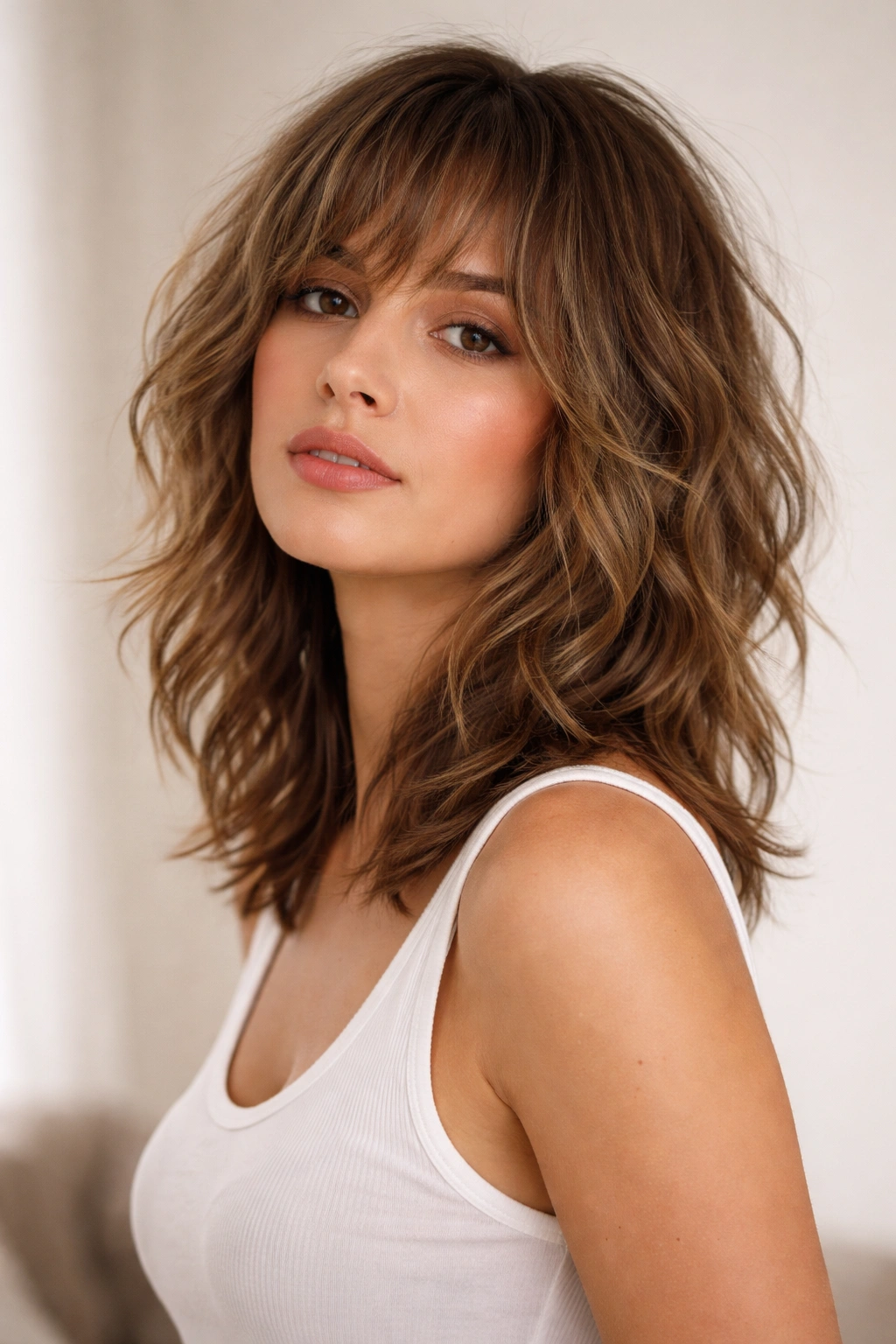
The shoulder-length version of a shag is perhaps the most universally wearable interpretation — it’s short enough to feel like a genuine change and create that textured, lived-in movement, but long enough to maintain versatility in how you can style it. This length typically grazes your shoulders, with layers that create volume at the crown and gradually taper toward the ends.
The Sweet Spot of Shoulder-Length
Shoulder-length hair has a natural advantage when it comes to showing off texture and waves. It’s long enough that your waves have space to develop and create beautiful movement, but short enough that it doesn’t get weighed down by its own length. The proportions are also inherently flattering — it frames most face shapes beautifully without feeling too severe or too long.
Daily Styling and Versatility
- Air dry for an effortless wave, or diffuse for more defined curl
- You can wear it down and wavy, or throw it in a ponytail or bun on days you want to change things up
- Works equally well with minimal styling as it does with intentional styling
- Shoulder-length is the ideal length for showing off color or highlights, since the length gives enough space to see dimension
- This length tends to age well with your appearance — not too young, not too matronly, just right
7. Shaggy Pixie Shag
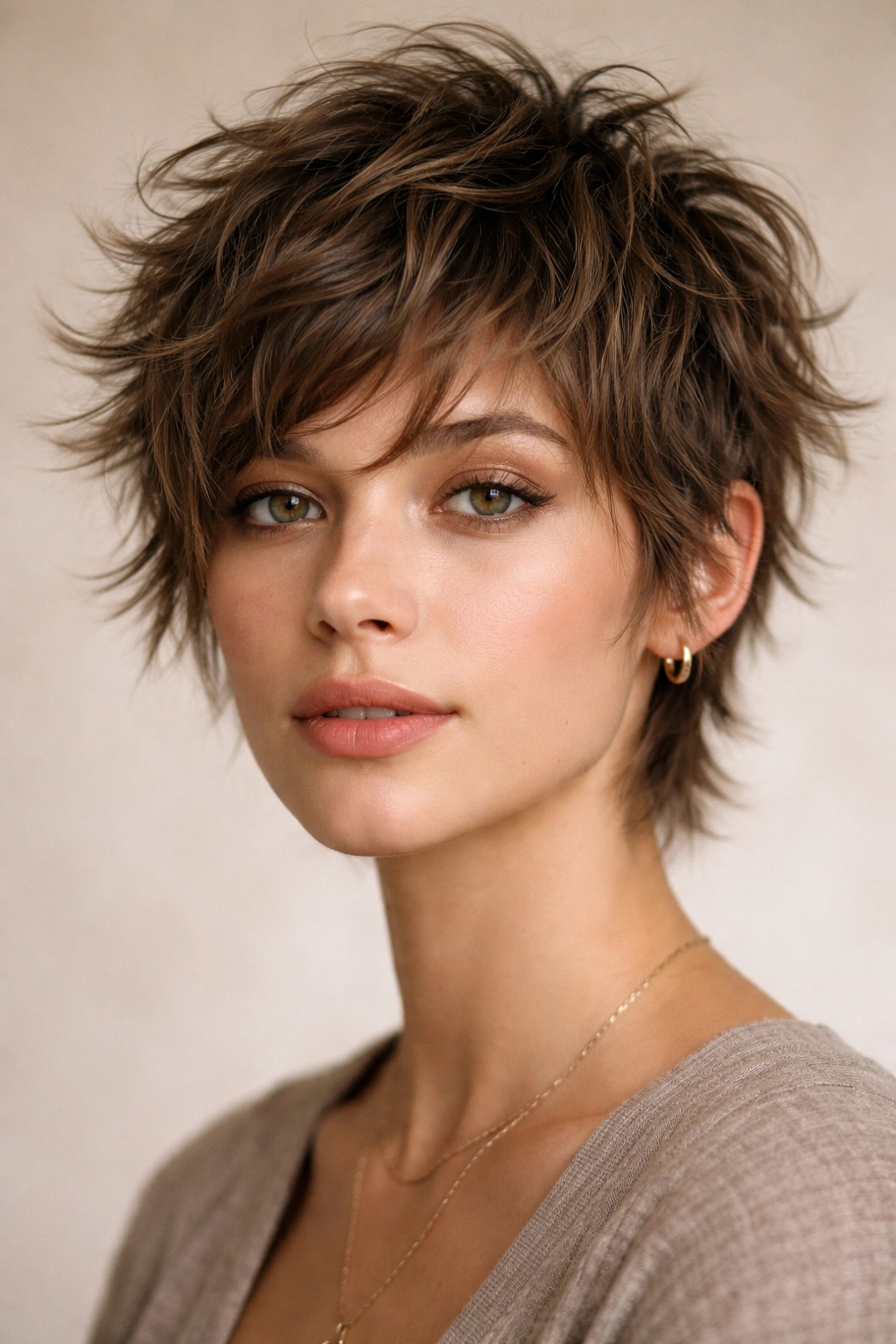
Don’t assume all shags are long. A shaggy pixie shag takes the playful, short energy of a pixie cut and adds the texture and layers of a shag, creating something that’s bold, sculptural, and surprisingly easy to manage. This version is typically 2-4 inches on top with slightly shorter sides, layered throughout to create movement and texture.
Why Short + Shag Can Actually Work
Short, wavy hair dries incredibly fast and often looks better with a bit of intentional texture than it does smooth. A pixie shag gives you shape and personality without requiring much styling effort. The layers prevent that sometimes blunt, blocky look that a simple short cut can create. Instead, you get movement, dimension, and an inherent sense of style that comes from the cut itself rather than your styling technique.
Styling a Super Short Shag
- Literally no blow dryer required — just air dry or rough dry with fingers
- Apply a lightweight gel or texturizing product to damp hair for definition
- This cut works beautifully with silver hair, brightly colored hair, or any shade because it doesn’t rely on length to show color dimension
- Trims needed every 4-5 weeks to maintain that intentional shaggy texture
- This is the ultimate “wash and go” version of a shag — minimal styling, maximum impact
8. Beachy Waves Shag
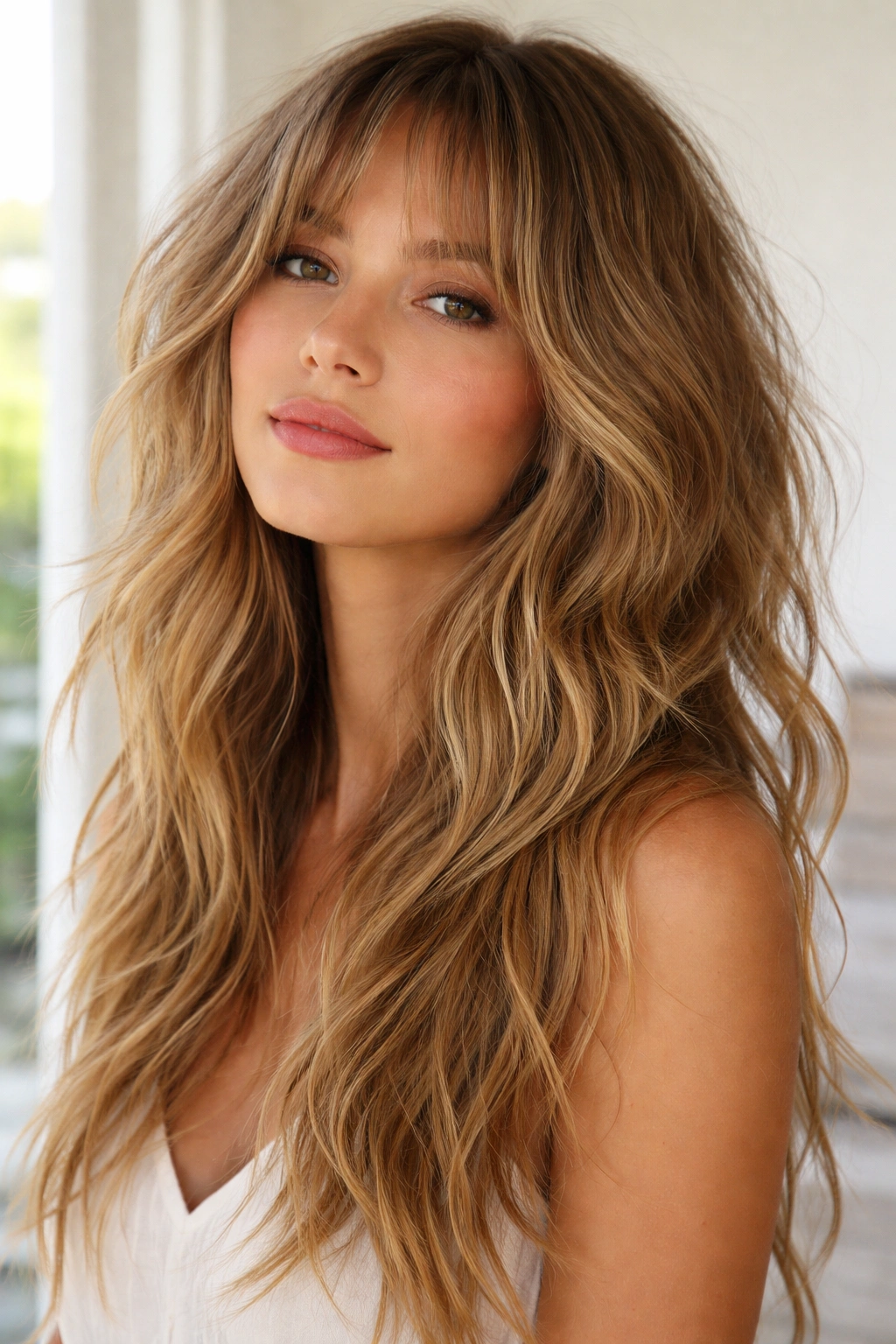
This version emphasizes the romantic, wave-forward aesthetic of a shag by pairing it with intentionally loose, undone waves that look like you just walked away from the ocean. The cut itself features long, flowing layers that encourage movement, and the styling approach is deliberately relaxed rather than precision-focused.
Creating That Effortlessly Beachy Vibe
Beachy waves shags work particularly well on wavy hair because your natural texture is already doing half the work. The key is not overworking your hair with too much product or too much heat. Sea salt sprays, lightweight waves creams, and air drying with maybe a touch of diffuser heat create that perfectly imperfect, “I wasn’t even trying” look that’s so appealing.
Products and Techniques for Beach Vibes
- Apply sea salt spray or texturizing spray to damp hair for grip and definition
- Scrunch your hair as it air dries to encourage waves and add volume
- Avoid brushing or combing once your hair is dry — this breaks up the wave pattern
- A bit of lightweight oil on the ends adds shine without weighing down your waves
- This aesthetic actually looks better when your hair is a touch undone, so embrace imperfection
9. Two-Tone Shag
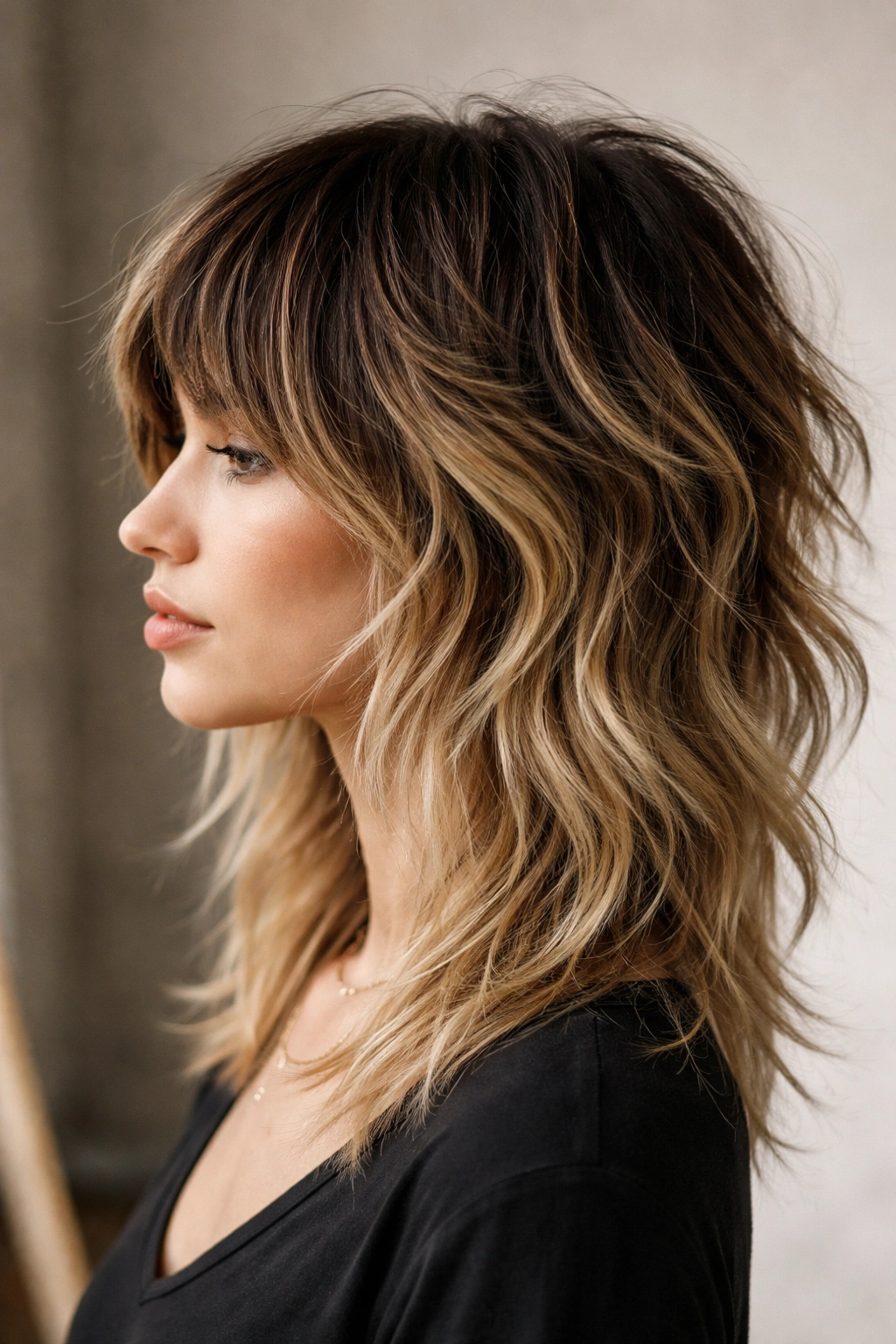
Color and cut work together beautifully in a shag, especially when you use color contrast to emphasize the layers. A two-tone shag pairs the cut with strategic color placement — perhaps darker roots with lighter ends, or contrasting colors on different layers — so that the chop and texture become even more visually apparent.
How Color Emphasizes the Cut
When your darker and lighter shades are positioned on different layers, every time your hair moves, you get a flash of color contrast that emphasizes the texture and dimension. The lighter pieces catch more light, making those face-framing layers pop visually. Color contrast essentially adds an extra dimension to the cut’s architecture, making the layers more apparent even from a distance.
Color Maintenance with a Shag
- Plan your color strategy with your stylist when you get the cut — they can shape it to show off your color placement
- Root touch-ups might be needed more frequently with a dark-and-light combination
- Wavy hair can show color variations even with subtle color work, so embrace that — it adds visual interest
- Glossing treatments every 4-6 weeks keep both colors looking vibrant and intentional
- This approach works beautifully with balayage, highlights, or intentional two-tone blocking
10. Asymmetrical Shag
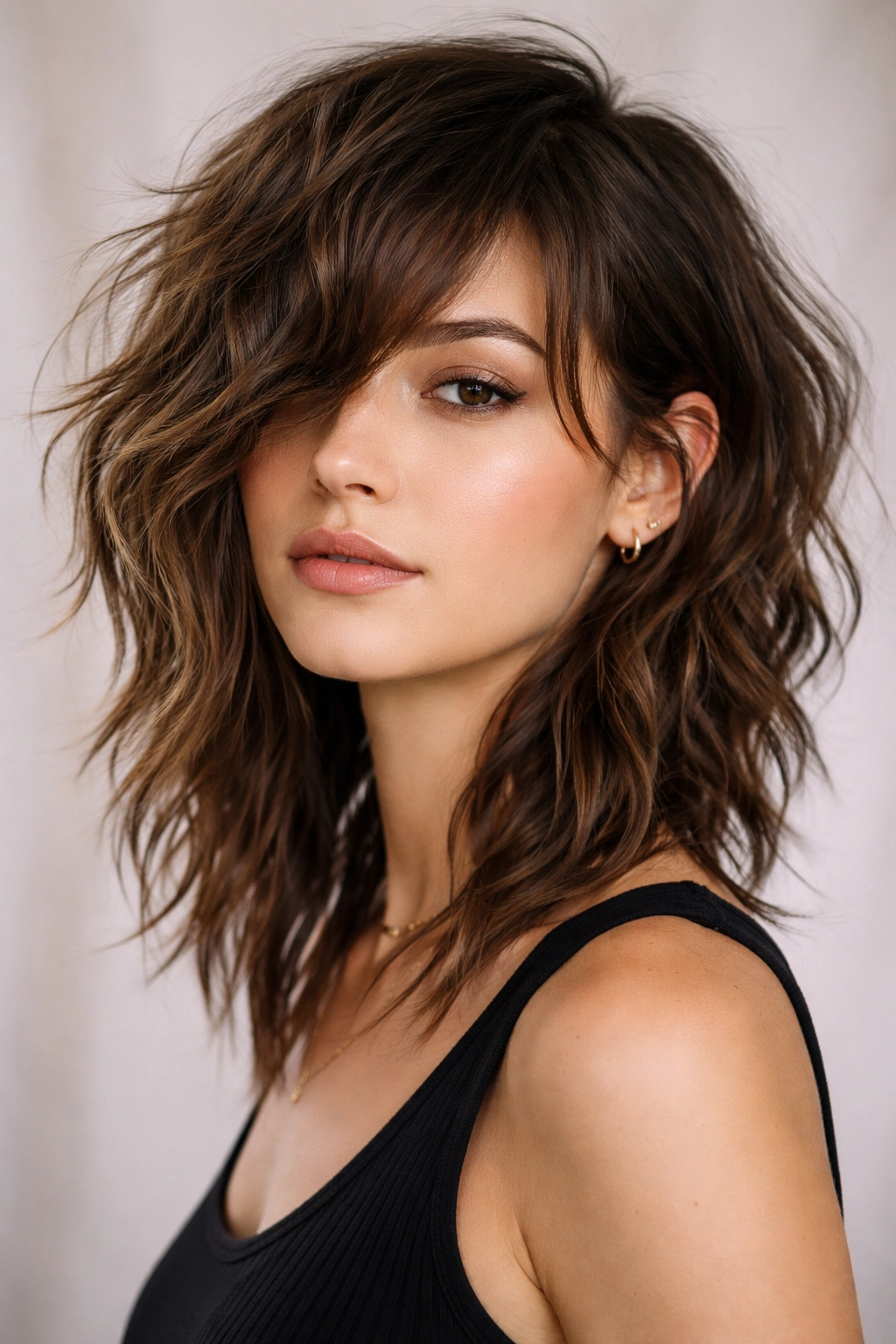
An asymmetrical shag deliberately makes one side noticeably shorter or more layered than the other, creating a bold, modern silhouette that’s unquestionably intentional and artistic. This version requires confidence and a stylist who truly understands how asymmetry works with your specific hair texture and face shape.
The Impact of Asymmetry on Wavy Hair
Asymmetry draws the eye and creates movement and drama in a way that symmetry can’t quite match. On wavy hair, an asymmetrical cut can be especially striking because the waves on the shorter side might look tighter and more defined, while the waves on the longer side create a different movement altogether. The contrast is visually engaging and creates a sense of artistic intention.
Styling an Asymmetrical Cut
- This cut needs to be styled with intention — it’s harder to make look polished without any effort
- The shorter side might need slightly more product to hold its shape
- Side-parting or deep-parting is usually essential to make the asymmetry readable
- This is not a “wash and go” cut — it requires daily styling to look its best
- Perfect for people who genuinely love styling their hair and want their cut to be a statement piece
11. Shorter Tapered Shag
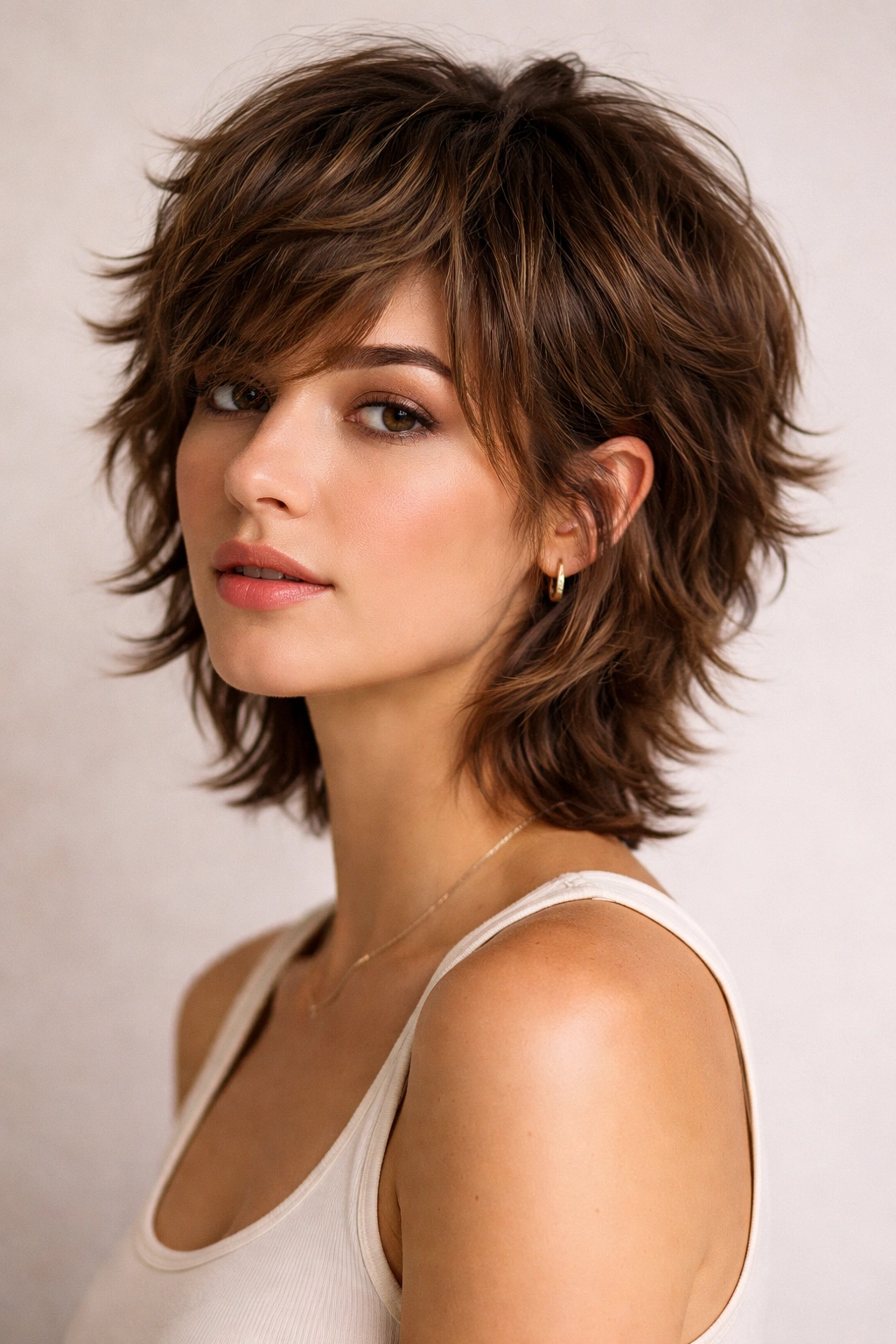
A tapered shag shortens up the overall length significantly while still maintaining that layered, textured shag personality. The hair is typically shortest at the nape and crown, gradually lengthening toward the face, creating a shape that tapers in rather than flares out. This version is more tailored and controlled than some other shag interpretations.
Structure and Shaping of a Tapered Shag
The tapered silhouette is flattering because it adds volume where it’s most flattering (at the crown and face level) while keeping the sides and back slightly shorter so they don’t overwhelm your features. On wavy hair, the tapered shape means your waves are encouraged to move inward rather than outward, creating a flattering frame around your face.
Styling Shorter Tapers
- This length dries fairly quickly, making it low-maintenance
- Scrunching your hair as it dries creates the most flattering wave shape
- You can diffuse on low heat without too much concern about frizz, since the shorter length is easier to control
- Styling product should be applied to damp hair for best distribution
- This style reads more polished and put-together than longer shag versions while still maintaining texture
12. Voluminous Layered Shag
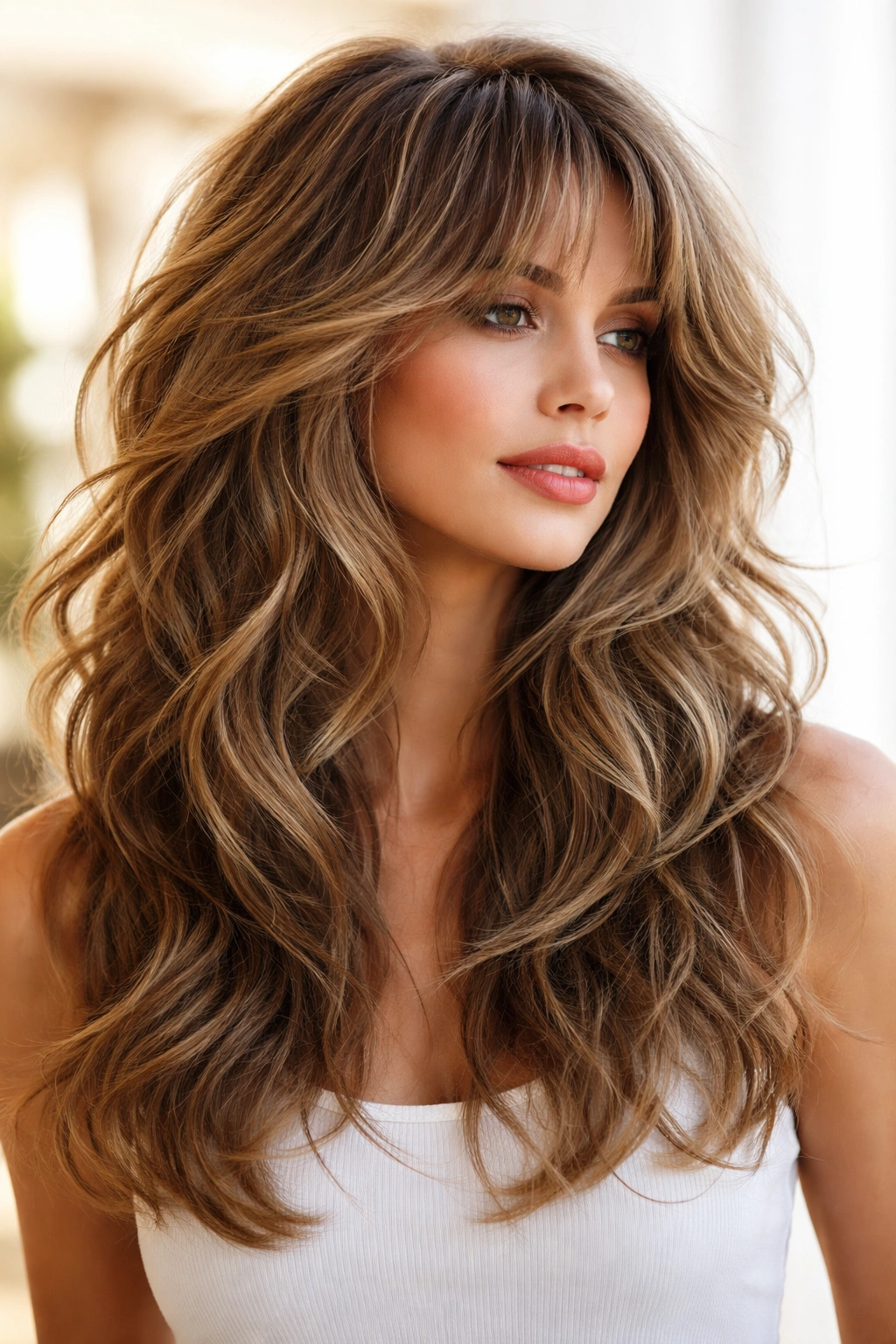
Some people have naturally flat waves or thinner hair, and a voluminous layered shag is specifically designed to maximize fullness and dimension. This version uses dramatic layering throughout to remove weight and create the optical illusion of far more volume than your natural hair actually possesses, even if you have fine, thin, or lightly wavy hair.
How Layers Create Volume on Thinner Hair
Every layer removes weight, allowing hair to lift away from the scalp more easily. More air between the strands means more light can pass through, making your hair appear fuller and denser than it actually is. On wavy hair, those layers work with your texture to create genuine movement and bounce, which adds to the volume effect.
Making Fine or Thin Wavy Hair Look Fuller
- Ask your stylist to focus layering heavily from mid-length to ends, with less aggressive layering at the very crown
- Root-lifting products applied to damp hair at the scalp create more height at the crown
- A diffuser on medium heat works wonders for fine wavy hair — it encourages waves without creating frizz or breakage
- Avoid heavy serums or oils that weigh down fine hair; stick to lightweight mists and sprays instead
- A texturizing spray on day-two hair actually improves grip and makes waves look more intentional
13. Shag with Undercut
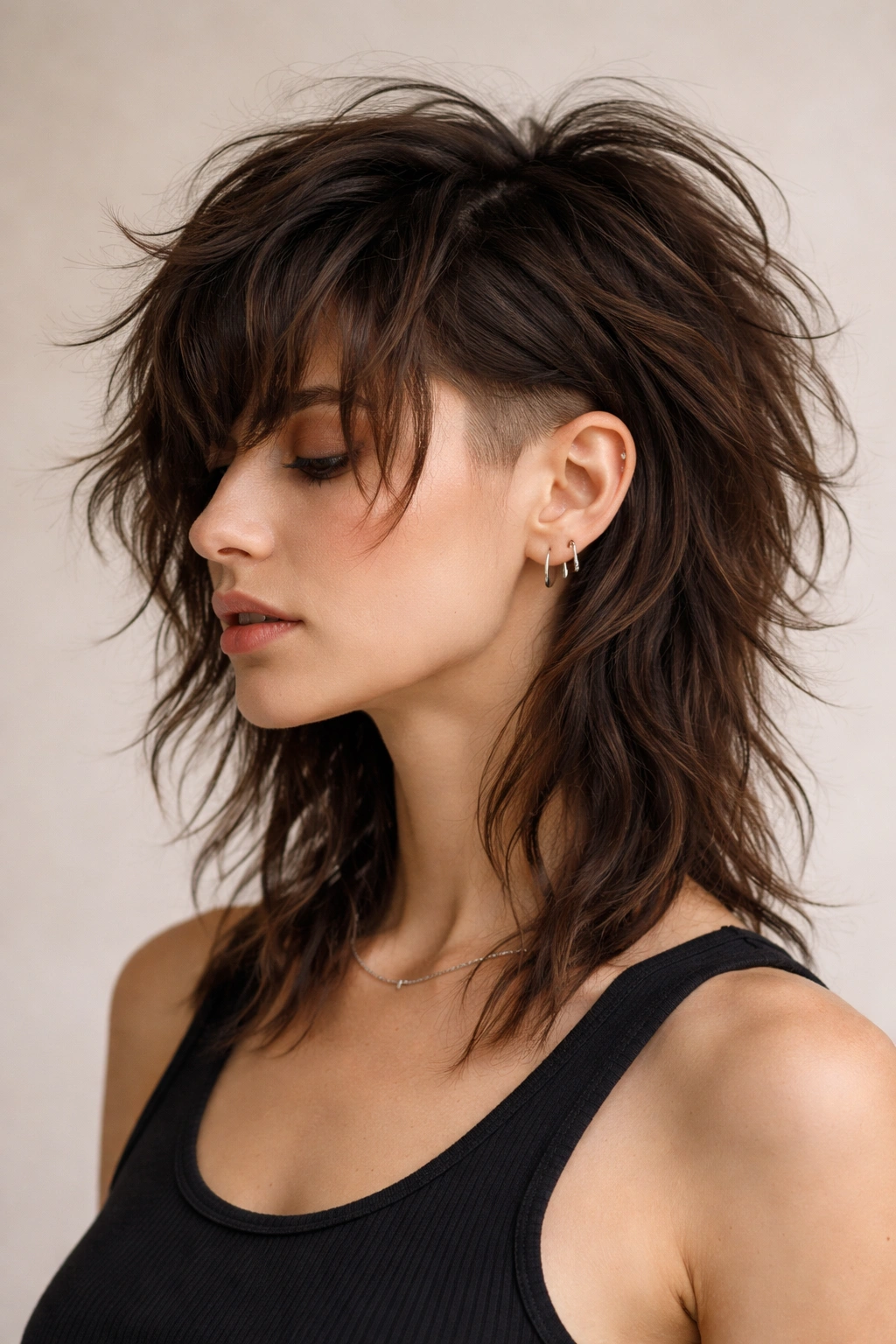
For people who want serious edge and don’t mind visible, dramatic undercuts, a shag with an undercut pairs longer, textured layers on top with significantly shorter hair underneath (on the sides or back). When you style with your hair down, the undercut is hidden, but it creates volume and movement that’s visually stunning.
The Practical and Aesthetic Appeal of Undercuts
An undercut in a shag does something clever — it removes weight from areas where hair tends to get heavy and flat, while keeping length and texture where you see it most (on top and around your face). You get the visual punch of a shag on top with the practical benefits of shorter hair underneath that won’t tangle or create bulk at your neck.
Styling and Showing Off the Undercut
- Style with hair down for an effortless everyday look
- Pin up the top layers to show off the undercut design for a bold, artistic vibe
- This style benefits from crisp, intentional cutting rather than soft, feathered edges
- Undercuts require trims every 4-6 weeks to maintain clean lines
- This is a high-commitment style that says “I’m intentional about my aesthetic”
14. Curly Shag
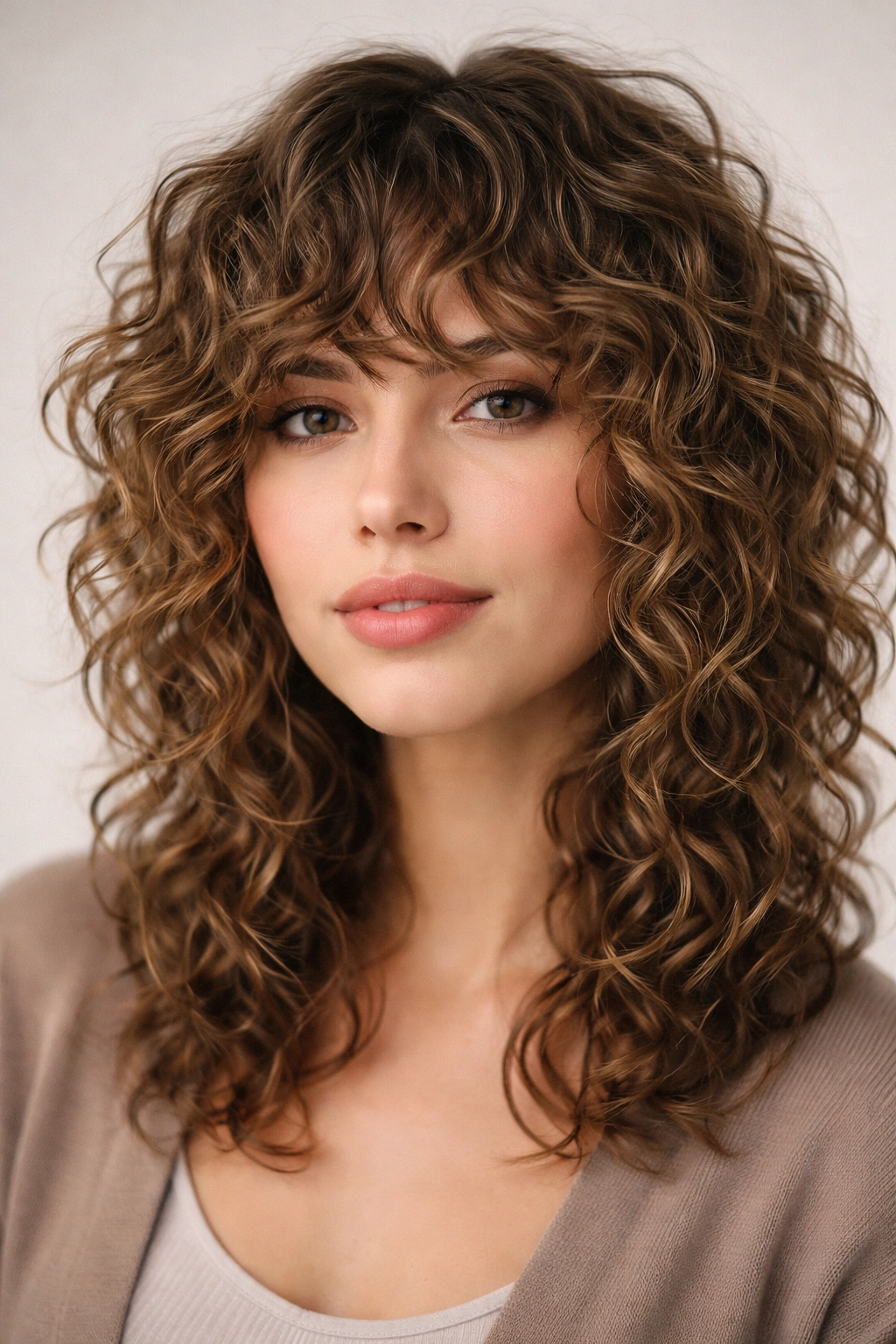
If your wavy hair is more on the curly side, a curly shag is specifically designed to work with pronounced curl rather than loose wave. This version uses strategic layering that encourages your curls to spring and separate rather than clump together, creating a voluminous, textured style that celebrates your natural curl pattern.
Layering Strategy for Curly Hair
Curly hair benefits from layers because each layer allows curls to sit independently rather than stacking on top of each other and creating a triangular, overly voluminous shape. A well-designed curly shag uses texturizing and layering to distribute curl throughout rather than letting it all come from one focal point. The result is balanced, intentional volume rather than wild fluffiness.
Styling Curly Shags
- Apply curl cream or gel to soaking wet hair, then diffuse or air dry
- Don’t touch your hair once it’s dry — let curls set completely before moving them
- A refresh spray on day-two or day-three curls activates existing curl without needing to re-wet and re-style
- Curly shags often look better with a bit of shine — a light oil or serum on the ends adds polish
- This cut genuinely improves with age; curls often look better on day three than day one
15. Multitextured Shag
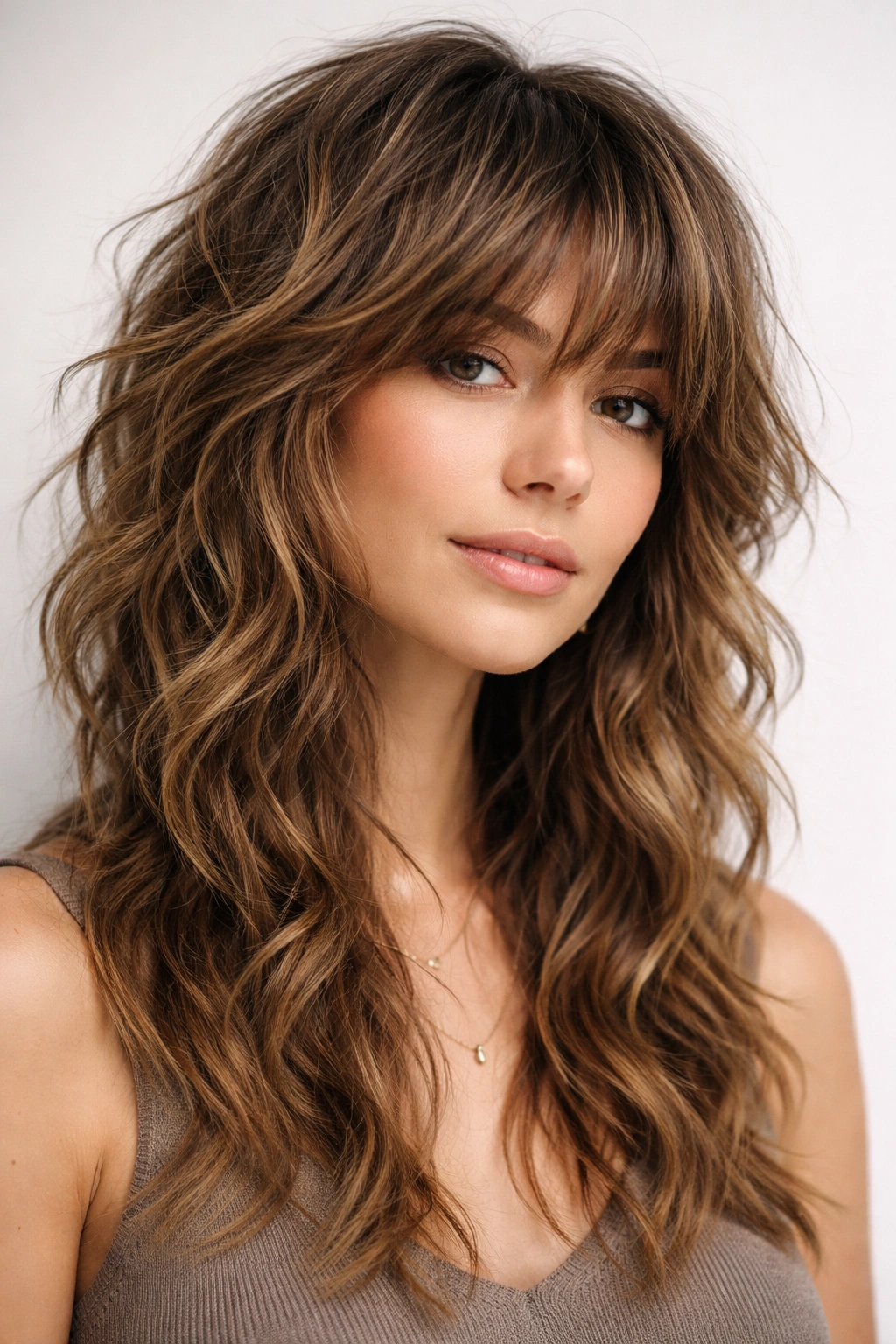
A multitextured shag intentionally uses varied layering lengths and angles to create pockets of different textures throughout your hair. Rather than uniform, consistent layers, this version has some shorter, choppier sections mixed with longer, more flowing pieces, creating visual complexity and constant texture variation.
Creating Visual Complexity with Varied Texture
Multitextured approaches prevent your hair from looking too uniform or predictable. The varied layer lengths catch light differently, create movement in different directions, and keep your eye moving around the style. On wavy hair, this variation enhances your natural texture by adding layers that work with your waves at different angles.
Styling Multitextured Cuts
- The varied texture actually forgives imperfect styling — slight unevenness is part of the aesthetic
- Apply styling product to emphasize different textures rather than blend them together
- This style looks good messy, intentional, or anywhere in between
- Less frequent trims are needed compared to styles with uniform blunt edges
- This approach works beautifully if you like your style to have an artistic, intentionally undone quality
16. Retro Inspired Shag
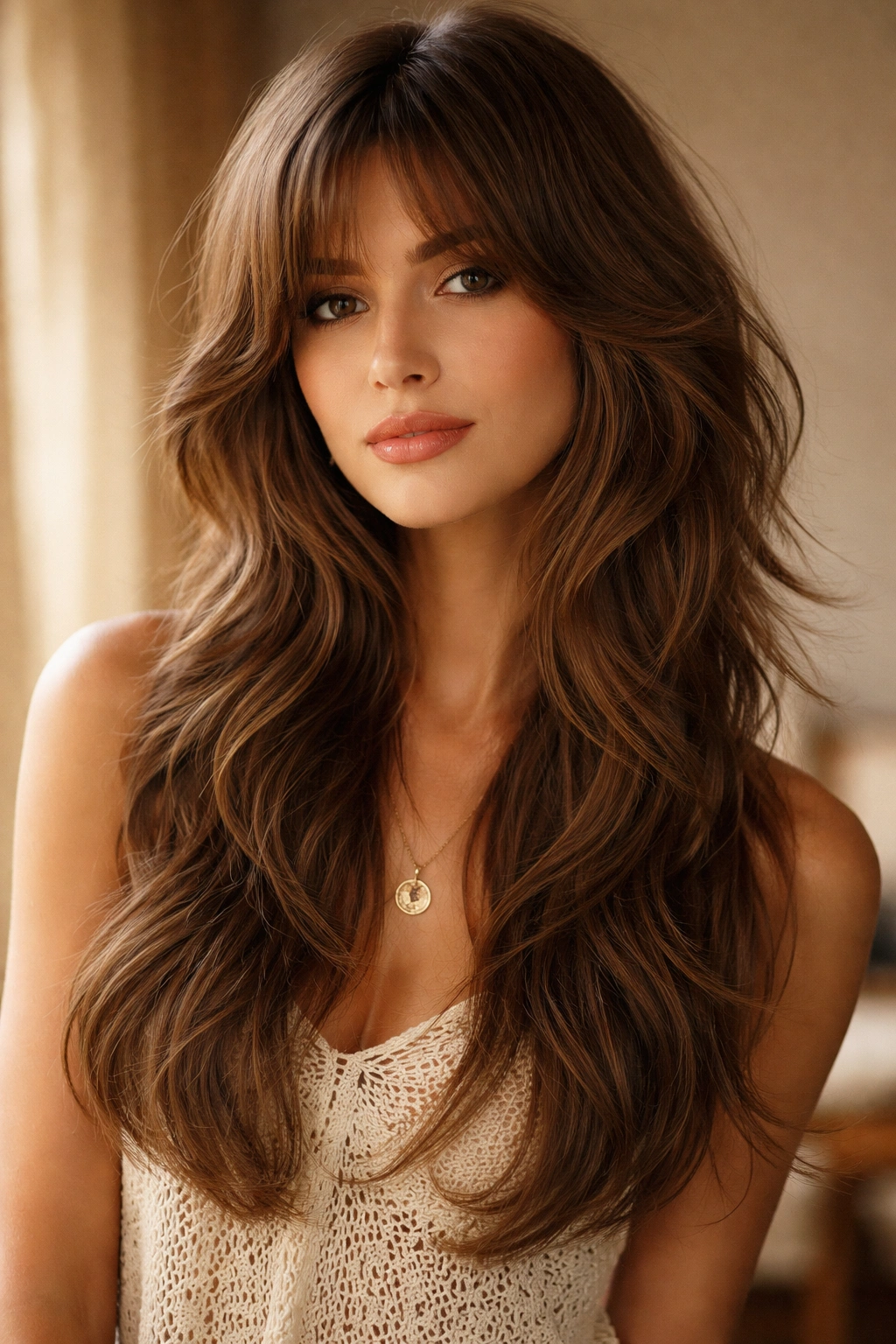
For those who genuinely love the 70s aesthetic and want to lean into the shag’s actual origins, a retro-inspired shag brings back that unapologetically nostalgic vibe with longer lengths, softly feathered layers, and that deliberately undone texture that made shags iconic decades ago. This version doesn’t try to modernize — it embraces the retro fully.
The Authenticity of Retro Design
Retro shags were designed around feathering, soft waves, and romantic movement. They emphasized texture without angularity, and they worked beautifully on the wavy and curly hair textures that natural hair comes in. A truly retro shag on modern wavy hair actually captures the original intention better than many contemporary interpretations that strip away the softness.
Achieving That Authentic 70s Vibe
- Longer length is essential — typically mid-back or longer with extensive feathering throughout
- Air drying or using a round brush to create soft waves is the styling approach
- A light texture spray or even a light hairspray keeps waves in place without looking stiff
- This style embraces shine, so luminous products are actually appropriate here
- Retro shags look better fuller and rounder rather than sleek, so don’t try to smooth them into submission
Final Thoughts
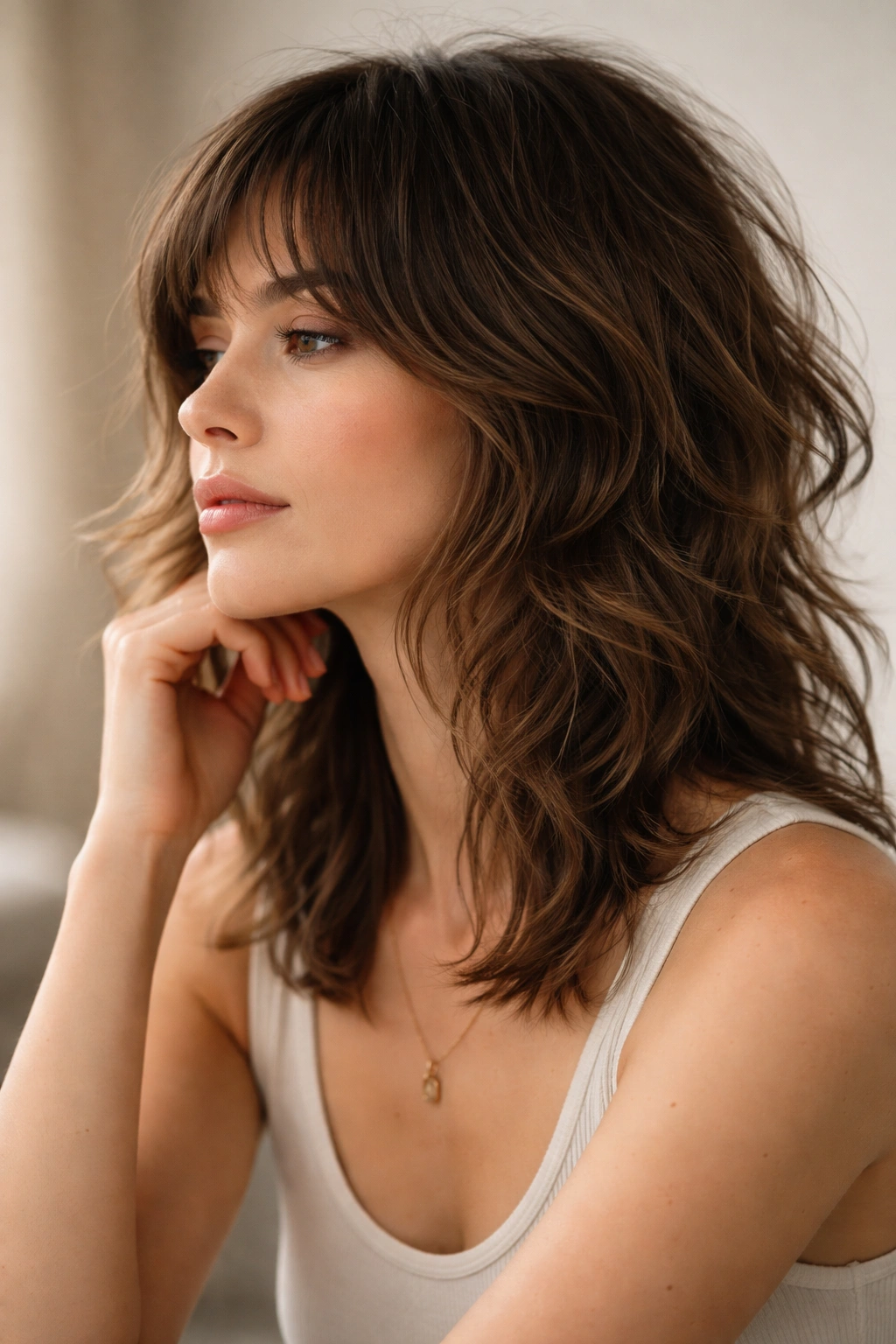
The beauty of shag haircuts on wavy hair is that the style meets your texture halfway — you’re not fighting against your natural wave or trying to create texture where none exists. Instead, you’re working with what you’ve got and amplifying it through strategic cutting.
The right shag for you depends on your lifestyle, how much styling you enjoy, your face shape, and the overall vibe you want to project. A pixie shag is genuinely low-maintenance and striking. A long layered shag gives you versatility and romance. A choppy face-framing shag creates drama with precision. An asymmetrical or undercut version signals that you’re genuinely committed to your aesthetic.
The most important step is finding a stylist who actually understands how wavy hair behaves and how to cut a shag that works with your texture rather than against it. Someone who gets that your waves are a feature, not a bug. Once you’ve got the cut right, maintaining it with regular trims every 6-8 weeks keeps the layers sharp and the texture intentional. After that, you’ve got a style that looks good, feels authentic to who you are, and actually makes getting ready in the morning feel easier rather than harder.
