



Long wavy hair in rich brown tones has an undeniable appeal — it’s romantic, versatile, and surprisingly forgiving once you get the right cut. But here’s what most people don’t realize: a truly stunning long wavy style lives or dies by the layering. Without strategic layers, long waves tend to look heavy and shapeless, especially in thicker hair. With the right layers, the same hair becomes dimensional, movement-rich, and genuinely transformative.
Brown is the ideal canvas for this kind of work. Whether you’re working with dark chocolate, warm caramel, cool ash brown, or something in between, brown hair shows off the texture and movement of layered cuts in ways that other colors sometimes struggle to capture. The depth that brown provides means you don’t need dramatic highlights to make your layers visible — the cut itself does the talking.
The challenge is knowing which layered cut matches your hair type, face shape, lifestyle, and what you actually want to achieve. A bouncy beachy wave requires different layering than a sleek, polished wave. A heart-shaped face benefits from different placement than a round one. Someone who blow-dries daily needs something different from someone who air-dries and goes. That’s where understanding these ten specific cuts comes in — each one solves a different problem or creates a different vibe, all within the long wavy brown hair realm.
1. The Textured Shag With Choppy Ends
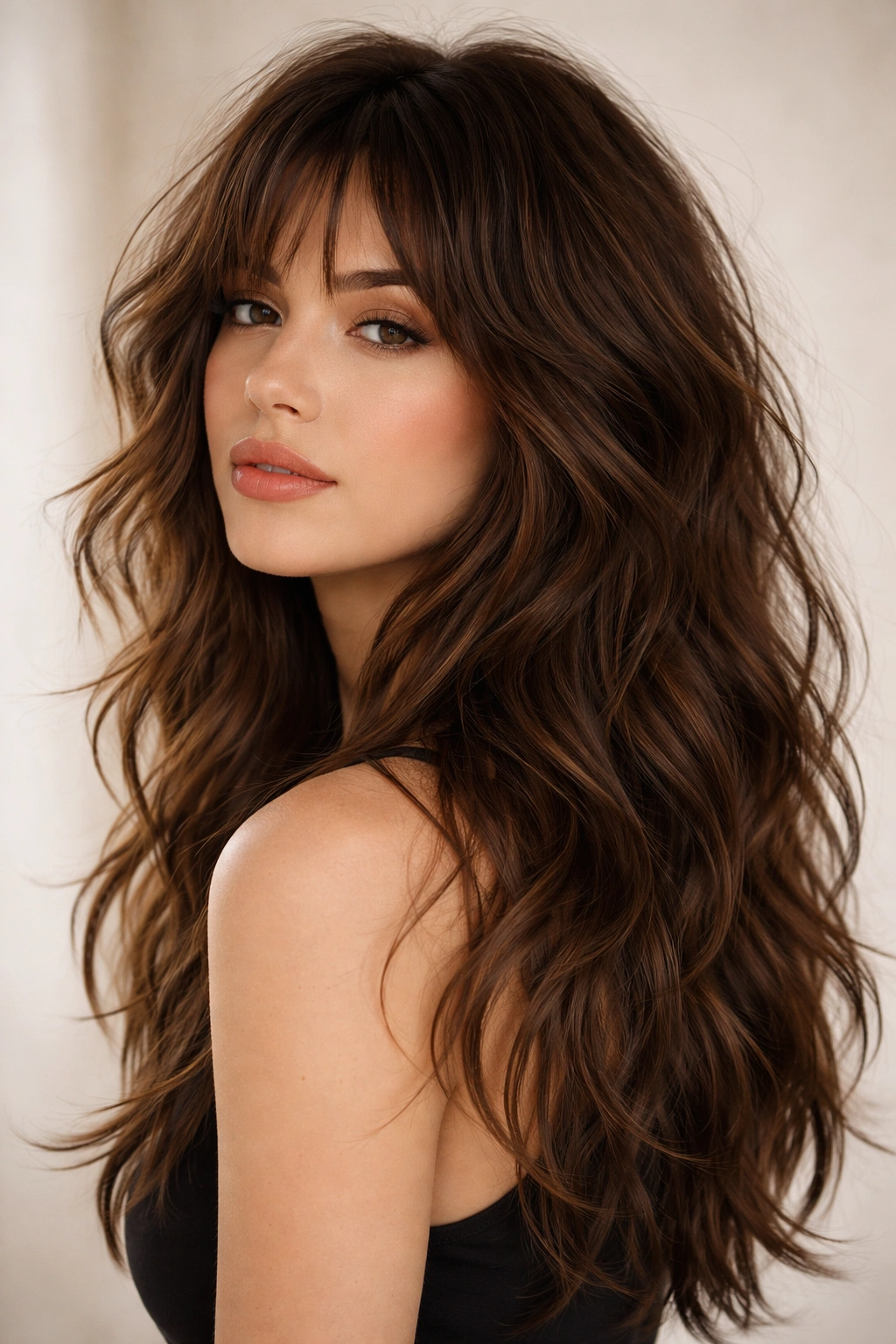
This cut is bold, modern, and deeply textured throughout. Rather than traditional even layers, a textured shag uses shorter pieces at the crown that gradually blend into longer lengths, with intentionally choppy, piece-y ends that break up any heaviness. The brown color adds maturity and sophistication to what could otherwise feel punk or rebellious.
Why This Cut Transforms Brown Waves
A textured shag thrives on movement, which wavy hair naturally provides. Brown tones let you see every individual piece and texture shift, creating visual interest without needing to add highlights. The choppy ends catch light differently than blunt ends, making the waves appear more pronounced and defined. This cut actively embraces texture rather than trying to smooth it out.
What You Need to Know Before Committing
- Requires styling commitment — air-drying won’t give you the best result; you’ll need a blow dryer and likely a diffuser attachment
- Maintenance trims every 6-8 weeks keep the choppy ends from looking ragged
- Works beautifully on waves that are naturally wavy to curly; very straight hair will need help holding the shape
- Best for oval, heart, or rectangular face shapes; the shorter crown creates lift that flatters longer faces
- Styling product matters — a lightweight texturizing spray or sea salt spray activates the piece-y effect
Insider tip: Use a round brush and blow-dry against your natural wave pattern first to create a smooth base, then flip your head and rough-dry for texture. This two-step approach gives you the best of both worlds.
2. The Feathered Long Layer
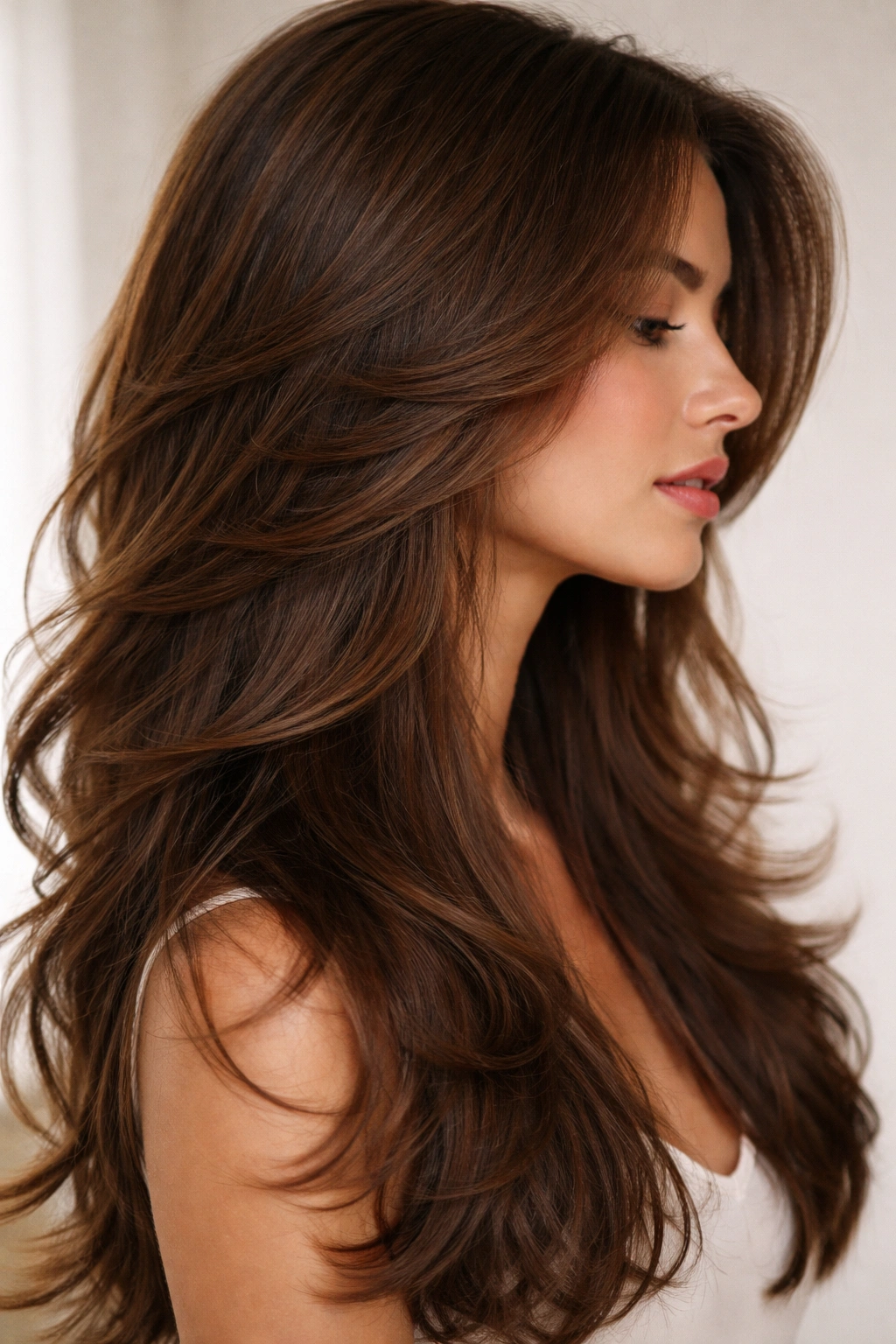
Feathering is a classic technique where each layer is cut at an angle that creates pointed, feather-like ends. In long hair, feathered layers start deeper into the hair (often around chin length or lower) rather than throughout, which preserves length while adding movement exactly where you need it. Brown hair makes these subtle directional shifts incredibly visible.
Why This Cut Never Goes Out of Style
Feathered layers work because they follow the natural contours of how hair falls. Instead of fighting the weight and density of long hair, feathering works with it, encouraging the weight to taper gradually toward the ends. This creates shape without shortness. The technique is timeless because it’s geometrically sound, not trend-dependent.
The Practical Reality of Maintaining Feathered Layers
- Touch-ups every 8-10 weeks prevent the feathering from looking blunt and grown-out
- Styling can be as simple as air-drying if your waves are cooperating, but a flat iron or wand helps create the intended feathered shape
- Feathered layers look slightly tighter when dry; don’t be shocked if they appear less dramatic than when your stylist finishes with a blow-dryer
- Face shapes that benefit most: oval, oblong, and diamond shapes where softening cheekbones is the goal
- Fine or thin hair gets a huge volume boost from well-placed feathering; thick hair needs feathering to avoid bulk
Quick note: Feathered layers in brown hair show off the individual strands beautifully, so hair health is noticeable. Deep conditioning treatments every week become non-negotiable.
3. The Curtain Layers With Face-Framing
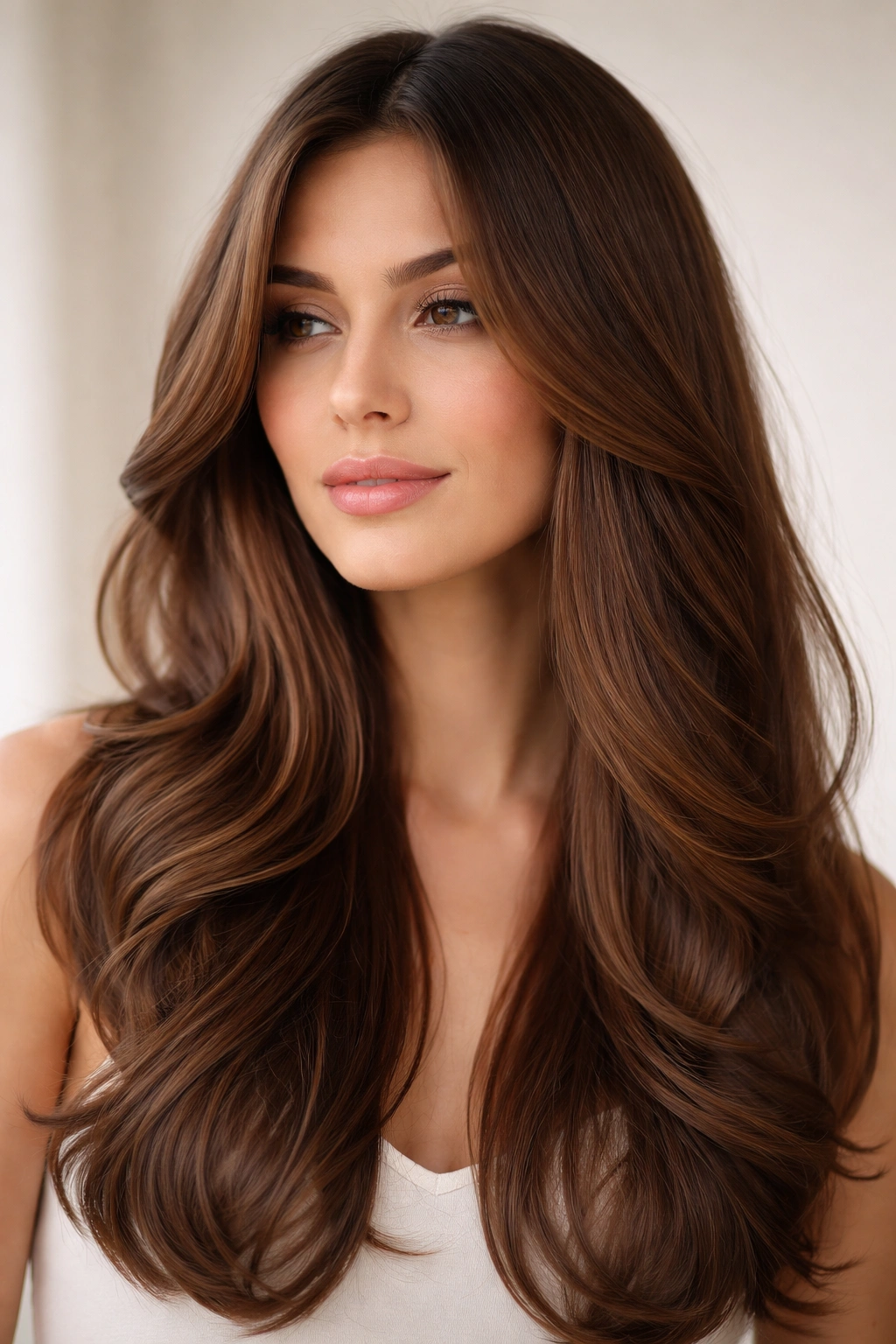
Curtain layers are longer, more subtle layers that frame the face and create movement without shortening the overall length dramatically. Imagine the hair parting down the middle with slightly shorter pieces on either side — that’s the essence. When combined with face-framing layers that blend into the longer lengths, this creates a soft, romantic silhouette that’s been favored for decades and shows no sign of disappearing.
What Makes This Cut Universally Flattering
Curtain layers work on virtually every face shape because the layers frame rather than shorten. They disguise a wide face, elongate a round one, and soften sharp angles. The gentle inward movement of the layers as they fall creates natural contouring. Brown tones in this style feel effortlessly elegant — sophisticated without trying too hard.
Realistic Expectations for Styling and Maintenance
- Can be styled multiple ways: parted in the middle for the classic curtain effect, parted to one side for an off-center look, or swept back with a headband
- Air-drying works reasonably well since the shape is created through layers rather than blow-dry technique
- Feathering the ends keeps them from looking blunt as they grow; plan for trims every 10-12 weeks to maintain the shape
- Works on all hair types, but works especially well on naturally wavy or curly hair where the layers have something to grip
- Brown makes the dimension of the layers visible even without highlights; the natural depth of the color shows off the cut itself
Pro tip: Use a large barrel curling iron or wand to gently curl the face-framing pieces away from your face when you style — this enhances the intended shape of the cut and looks polished without appearing overly done.
4. The Long Choppy Layers With Heavy Bangs
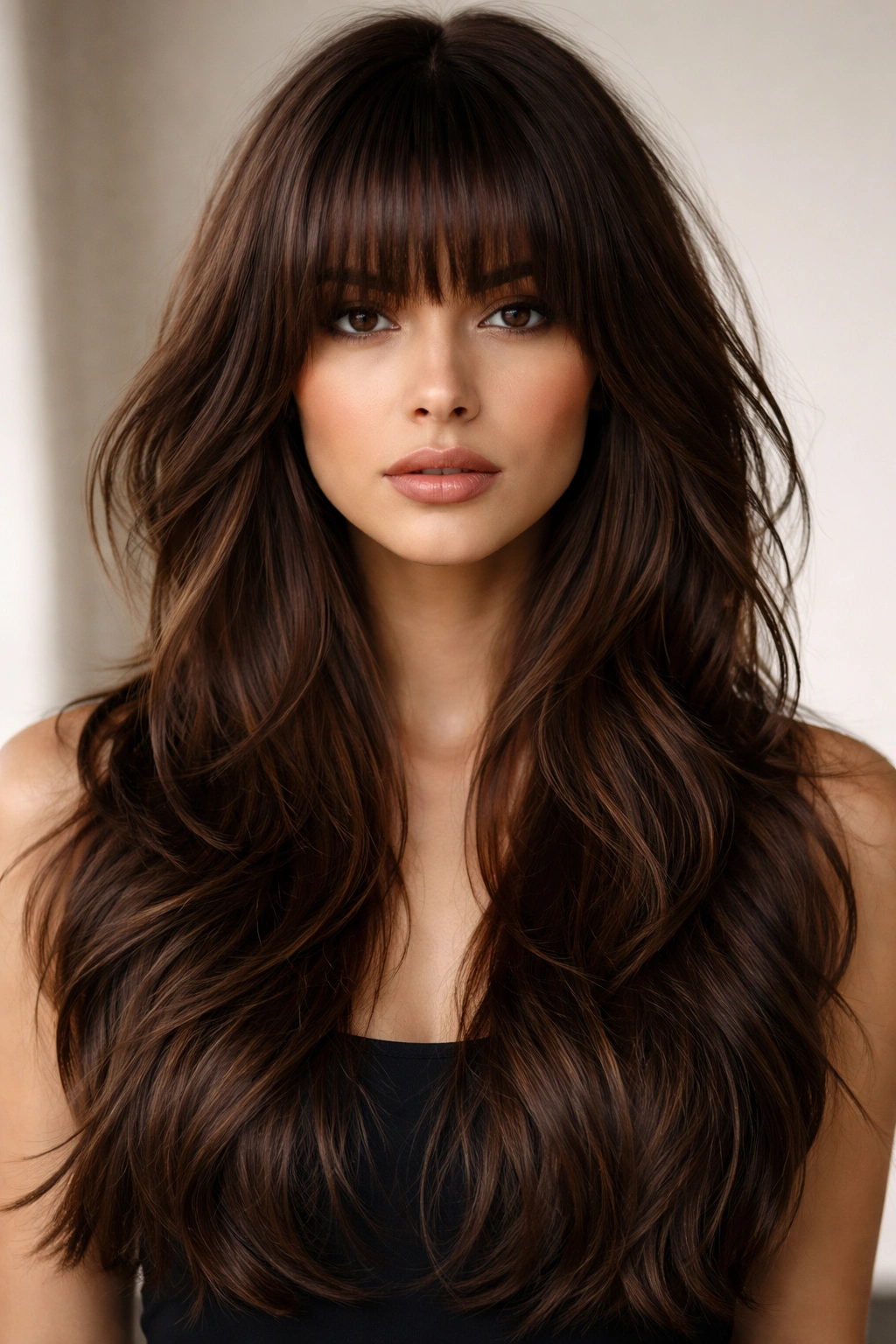
This is a more contemporary take on layering: instead of gradual feathering, you get distinct, choppier sections that create obvious texture and movement. Heavy bangs that fall just below the eyebrows add a bold, fashion-forward element. In brown hair, this combination reads as intentional and artistic rather than chaotic.
Why This Edgy Style Works in Brown
Heavy bangs can feel costume-y in lighter colors, but brown tones ground them, making them feel wearable and sophisticated. The choppy layers throughout the rest of the hair complement the blunt, decisive nature of the bangs rather than fighting them. Brown is also forgiving with bangs as they grow out — you don’t see regrowth the same way you would in blonde or black.
The Non-Negotiable Reality Check
- Styling is essential; these bangs need to be blow-dried to look intentional rather than disheveled
- Bangs require trims every 3-4 weeks to maintain the shape and prevent overgrowth into your eyes
- If you’re not willing to style your hair most days, this isn’t the cut for you
- Face shape considerations: works best on longer, more angular faces where the bangs don’t overwhelm the proportions
- Not ideal for very thick hair unless you’re comfortable with a styled, intentional appearance; thin hair works better here
Important consideration: Heavy bangs require hair that cooperates somewhat. If your hair is very straight and won’t hold the layered shape of the bangs, or if it’s very curly and bangs turn into a poof, this cut becomes frustrating. Be honest about your hair type before committing.
5. The Subtle Face-Framing With Long Underlayers
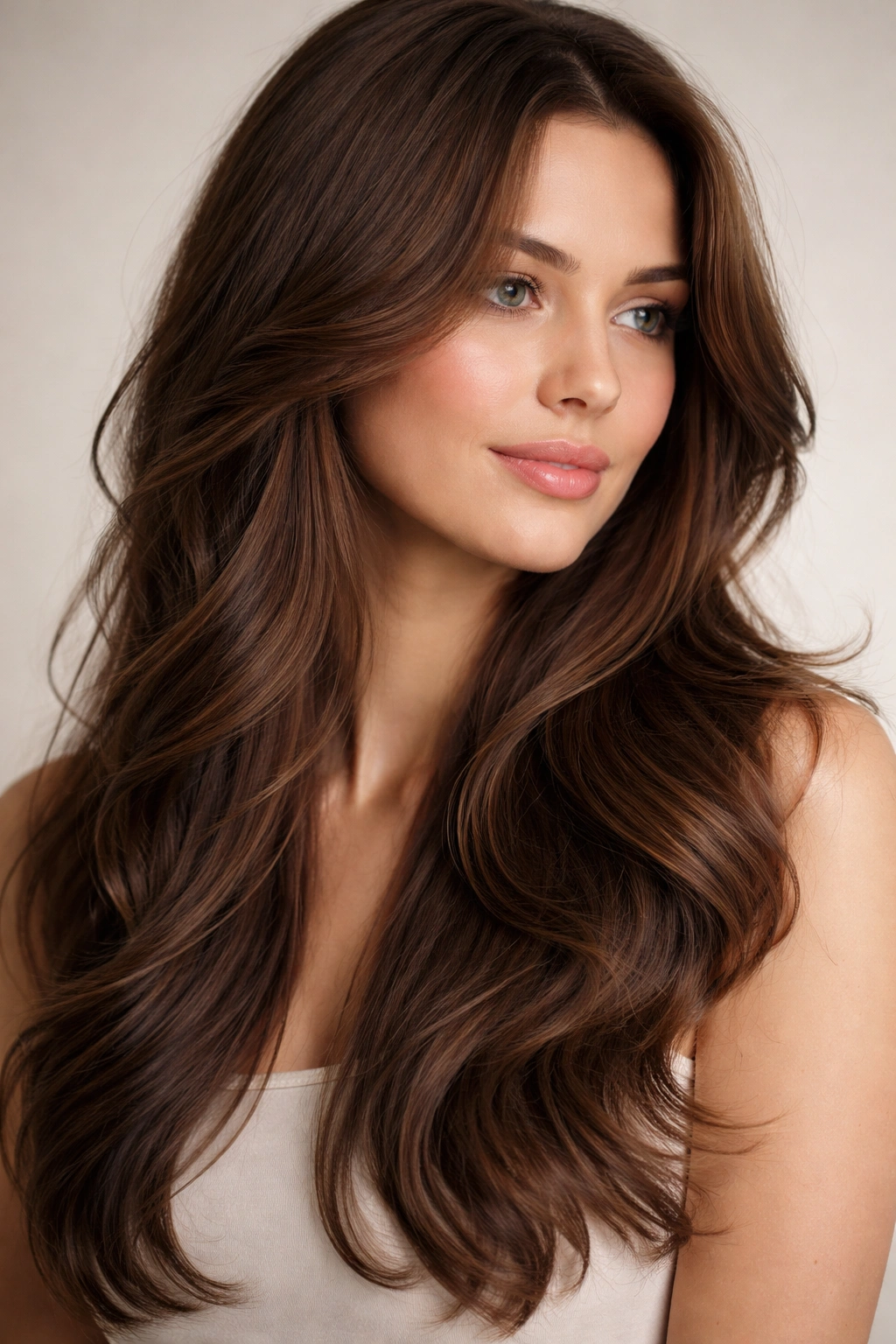
This is the “barely there” approach to layering — the face-framing is delicate and minimal, creating softness without obvious chop. The genius of this cut is that the shorter layers are hidden underneath, visible only when you move or flip your head. This creates a deceptively simple silhouette that actually has considerable dimension and movement beneath the surface.
Why This Cut Is Secretly Strategic
This approach gives you movement and texture while maintaining an impressively long, flowing appearance. From the front and sides, the hair looks almost blunt (if you want it to), but when you turn your head or the light hits it, the layering becomes obvious. Brown hair especially shows off this hidden architecture because the color provides contrast without you needing to do anything special.
How to Work With This Understated Layering
- Can be styled multiple ways depending on your mood: straighter for a sleek look, or waved up for movement
- Maintenance is straightforward; trims every 12 weeks keep the longer pieces pristine
- This approach works beautifully on fine or thin hair that would look stringy with heavy layers
- Best for people who want the benefits of layers (movement, texture, shape) without the obvious “layered haircut” appearance
- Face shapes that benefit: diamond, heart, and oblong, where you want softness without shortness
Styling secret: Blow-dry with a large barrel brush to create a gentle wave, or use a flat iron with a slight twist at the ends. The hidden underlayers will catch and enhance this movement, making your waves look fuller and more dynamic than they actually are.
6. The Asymmetrical Long Layers
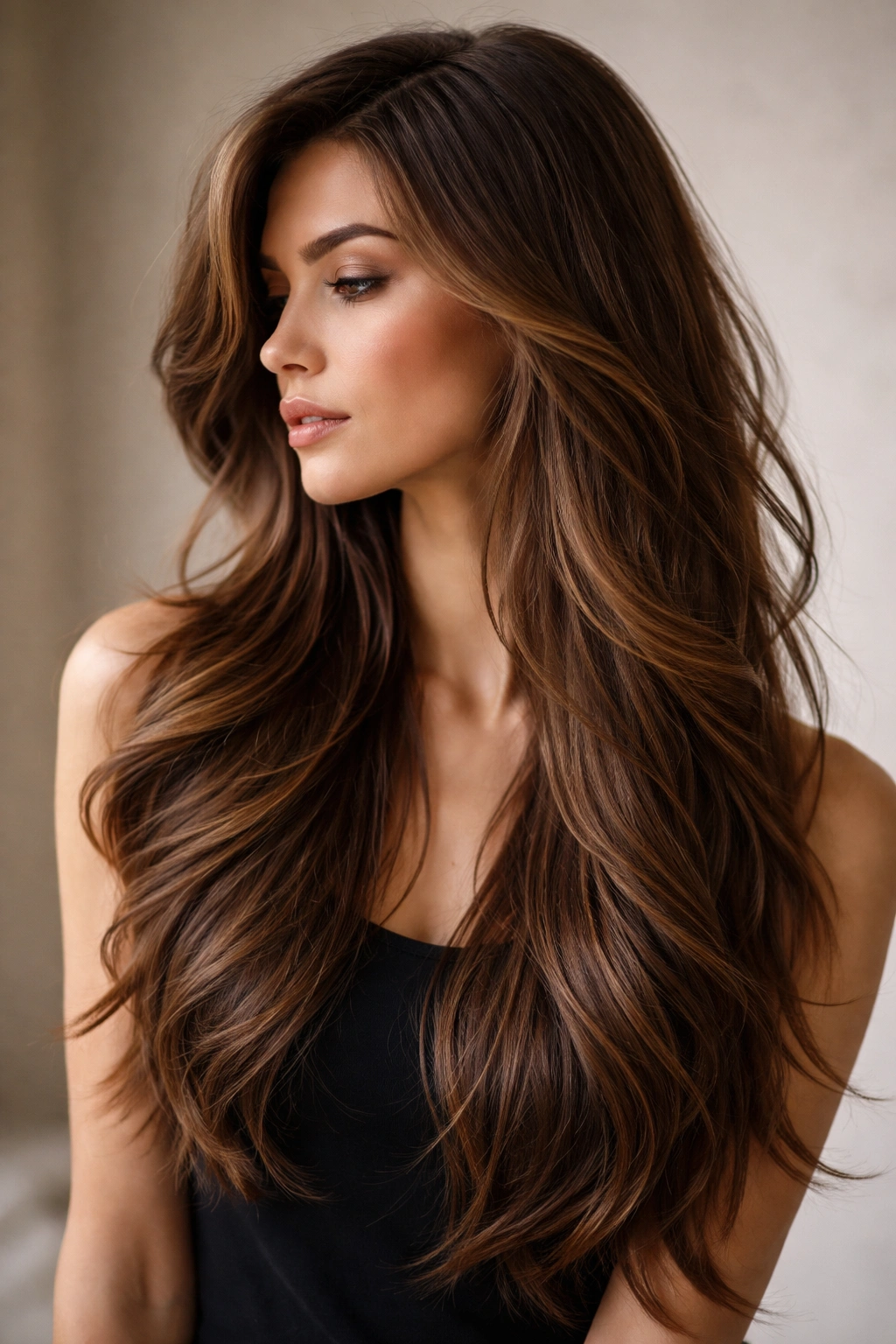
Asymmetrical layering means one side is noticeably shorter than the other, creating visual movement and modern edge. This might mean one side reaches hip-length while the other reaches waist-length, or the difference could be more subtle. In brown, asymmetry reads as intentional and artistic rather than accidental.
The Appeal of Asymmetrical Movement
Because of the length difference, the hair naturally encourages movement toward the longer side, creating a flowing dynamic quality. This is especially effective in wavy hair, where the movement of the waves becomes part of the design rather than something to tame. Brown tones make the asymmetry feel balanced and deliberate.
Styling Reality for Asymmetrical Cuts
- Requires intentional styling to look polished; the asymmetry can read as messy if not maintained well
- Works best with waves or curls that have enough texture to show off the movement inherent in the cut
- Maintenance requires precision trims every 8-10 weeks to maintain the asymmetrical shape; uneven growth looks unintentional quickly
- Best for people with confidence in their style and willingness to embrace an unconventional appearance
- Face shapes: works particularly well on round or square faces where directional movement helps elongate and soften
Technical note: Asymmetrical cuts require a skilled stylist. The unevenness must be intentional and geometric, not sloppy. This isn’t a cut to try with someone new to your hair.
7. The Soft V-Shape With Graduated Layers
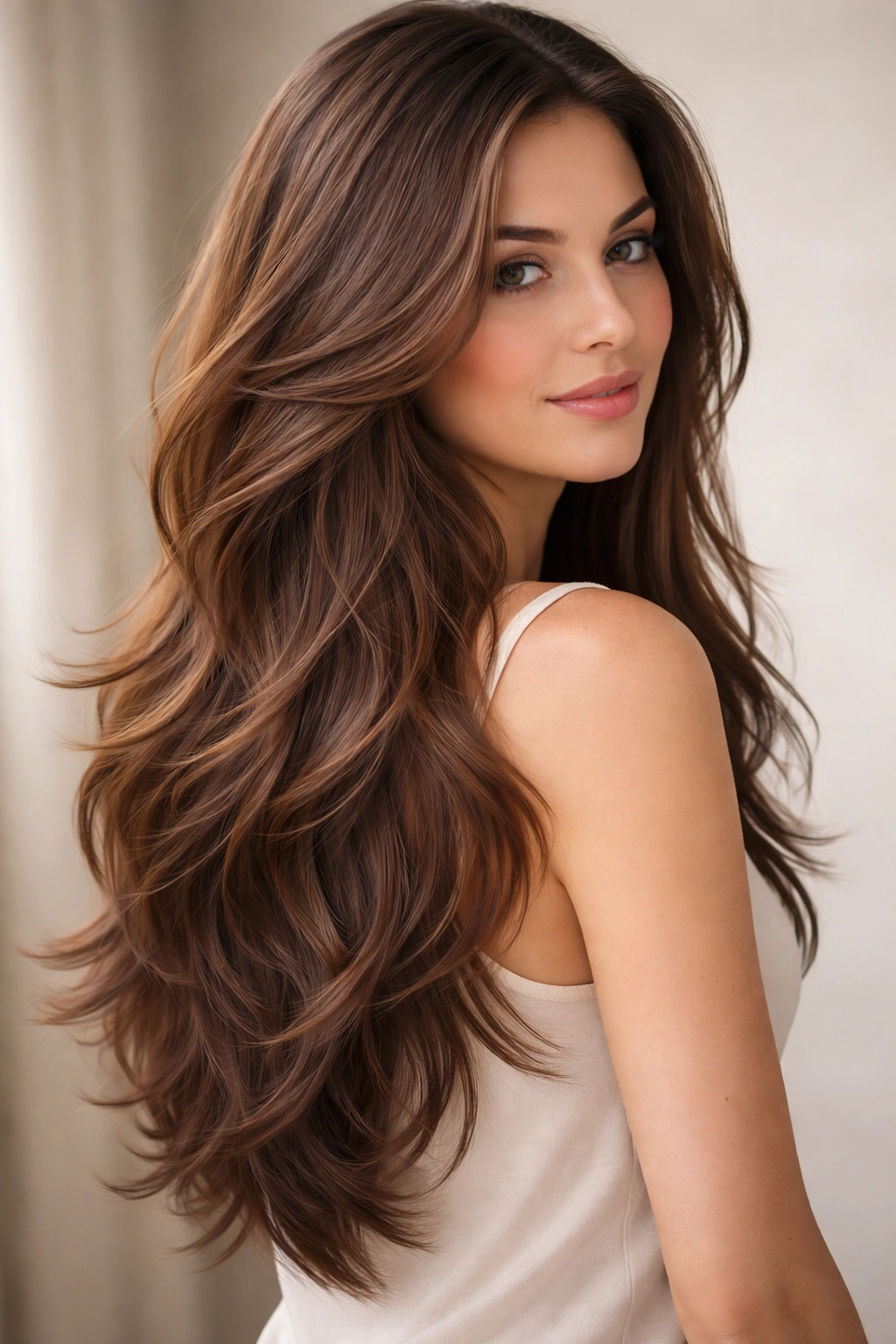
A V-shaped cut is longer at the face and shortest at the nape, creating a graduated taper. The “soft” version means the layers are feathered and blended rather than choppy, creating a polished look rather than an edgy one. Brown hair in this style looks timelessly elegant — this is the cut you see on women who clearly know how to work their hair.
Why This Shape Flatters Every Feature
The V-shape naturally frames the face while the graduated layers add movement throughout. As the hair tapers toward the nape, it creates length through the face where it’s most flattering. Brown tones in a V-shape create an inherent sophistication — the color and cut work together beautifully.
Practical Considerations for V-Shaped Styling
- Requires regular blow-drying with a round brush to achieve the intended shape; air-drying won’t give you the same result
- Layers need trims every 8-10 weeks to maintain the V-shape and prevent the blunt growth from destroying the geometry
- Works on all hair types, but is especially flattering on thick or heavy hair where the taper prevents bulk at the nape
- Face shapes: universally flattering, but especially good for round or square faces where you want to elongate
- Best for people willing to invest in regular blow-drying and styling
Stylist tip: When you get this cut, ask your stylist to show you exactly how to blow-dry it. The technique matters more than you might think — the round brush placement and direction determine whether your V-shape looks intentional or just grown-out.
8. The Beachy Choppy Layers With Piece-y Texture
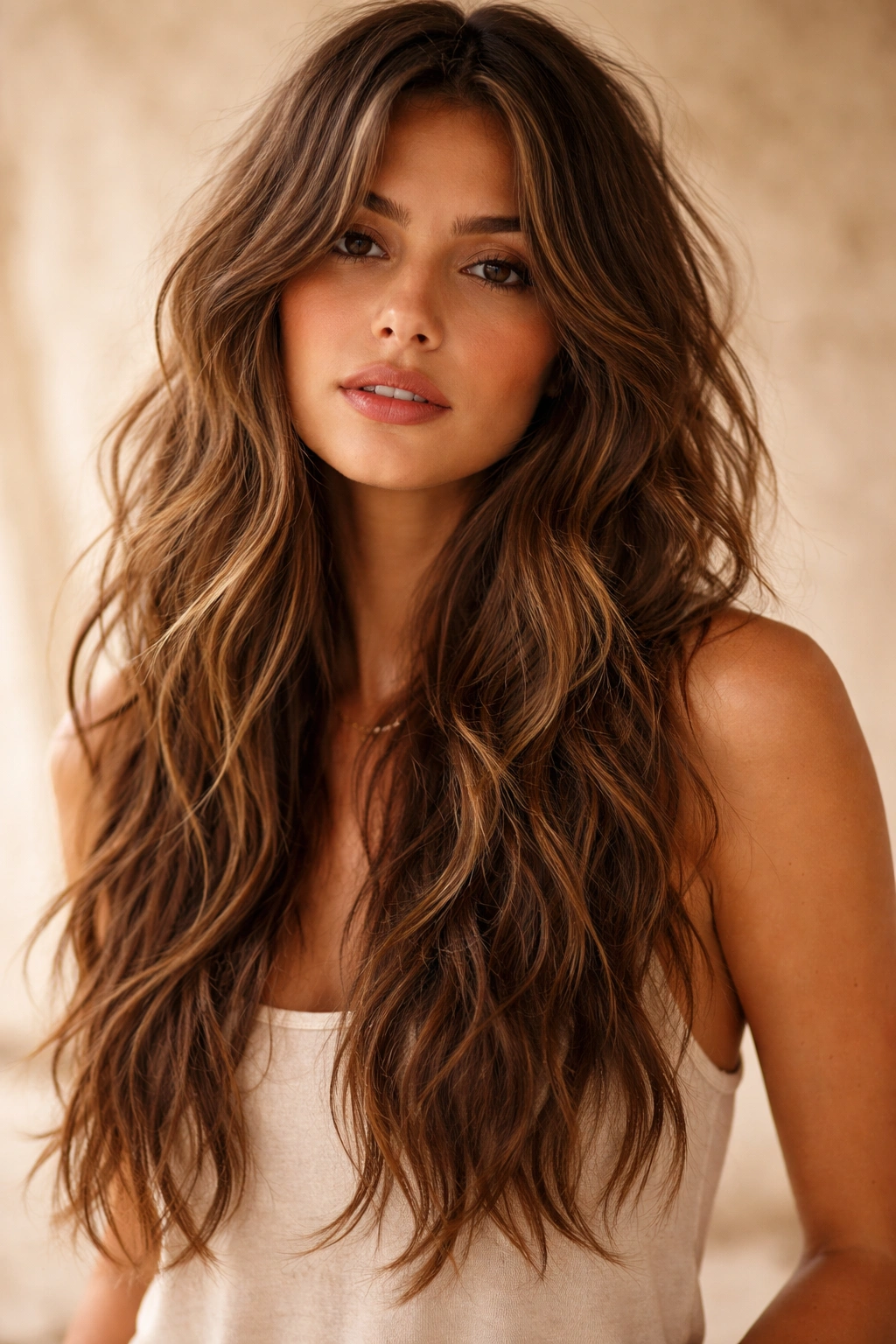
This cut prioritizes texture and movement above all else. Layers are choppy throughout, with deliberate breakage of the line that creates a sun-kissed, just-come-from-the-beach appearance. Rather than neat feathering, this is intentionally undone. In brown, this style reads as effortlessly cool rather than trying-too-hard.
Why This Works as a Lifestyle More Than Just a Hairstyle
A beachy choppy cut celebrates your natural wave pattern rather than fighting it. The choppy layers encourage waves to do their thing, and the piece-y texture makes everything look intentional. You can style it multiple ways — super wavy with product, more polished with a brush, or somewhere in between depending on your mood. Brown provides the sophistication that keeps this relaxed style from looking unkempt.
The Honest Truth About Maintaining This Look
- Requires regular product use — texturizing spray, sea salt spray, or other styling products are essential to activate the piece-y texture
- Styling can be quick (air-dry with product) or involved (blow-dry with a diffuser), depending on what look you want that day
- Maintenance trims every 6-8 weeks keep the choppy ends looking intentional rather than ragged
- Absolutely thrives on naturally wavy or curly hair; straight hair would need significant styling help
- Face shapes: works beautifully on most shapes, though very round faces might want slightly longer layers to elongate
- Best for people who embrace texture and movement rather than sleekness
Product recommendation: Sea salt spray is your friend with this cut. Apply it to damp or dry hair, work it through with your fingers, and either air-dry or diffuser-dry. The spray activates the texture and makes the choppy layers shine.
9. The Long Layered Shag With Subtle Texture
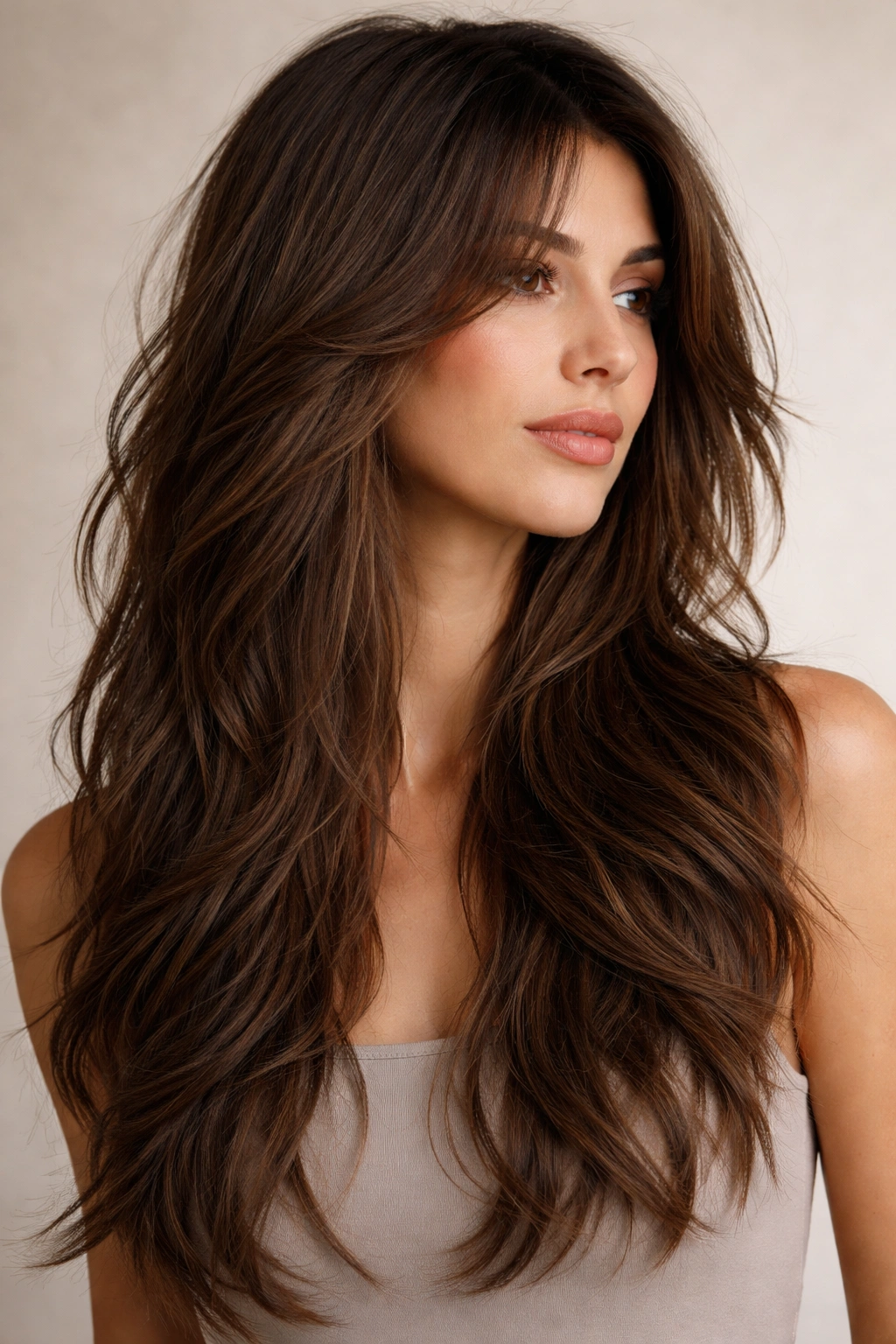
This is softer than a true choppy shag — it’s a shag that’s been refined and made wearable for people who want edge without commitment. Layers are visible and create movement, but they’re blended enough that you don’t look like you just rolled out of a 1970s rock venue. In brown, this style is effortlessly cool without trying too hard.
The Appeal of a Subtle Shag Approach
A subtle shag has all the movement and dimension benefits of more intense layering, but the blending makes it easier to style and more universally flattering. It works on straighter hair in ways that choppier cuts don’t. Brown tones make this style feel modern and intentional rather than retro.
Styling and Maintenance Expectations
- Can be styled multiple ways: smooth and polished with a blow-dryer and brush, or textured and relaxed with product and a diffuser
- Maintenance trims every 8-10 weeks keep the layers looking intentional
- Works on all hair types; wavy hair shows off the movement beautifully, but straighter hair can also rock this with styling
- Face shapes: particularly flattering on long or rectangular faces where the layers add width
- Less styling-dependent than choppy cuts, more styling-dependent than subtle face-framing
Insider perspective: A subtle shag walks the line between “I just threw this together” and “I definitely styled my hair.” That balance is what makes it so appealing — it looks effortless while actually showing that you care about your appearance.
10. The Long Seamless Layers With Invisible Gradation
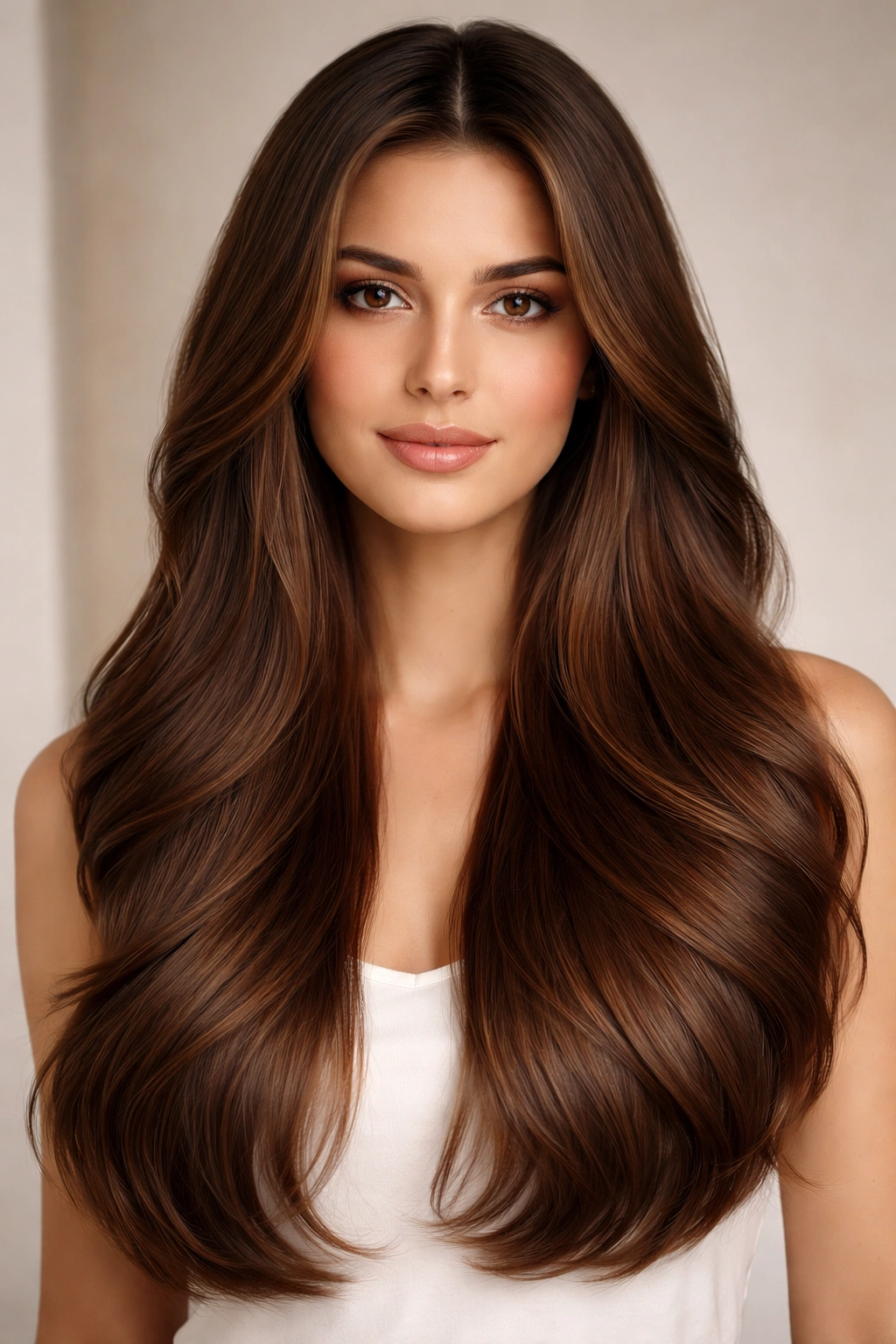
This is the most subtle approach to layering — the layers are there, but you barely notice them unless you’re looking for them. The gradation is so soft and blended that the hair appears almost one length from certain angles, while actually having considerable texture and movement built in. This is for people who want the benefits of layers without the appearance of a “layered haircut.”
Why Invisible Layering Is Actually Genius
Invisible layers give you movement and dimension while maintaining that coveted “long, flowing hair” aesthetic. The hair moves because of the layers, but looks simple and unified. Brown hair in this style appears effortlessly elegant — you’re not doing anything obviously special, but somehow your hair always looks beautiful. This is actually the result of very strategic cutting.
How to Maintain This Deceptively Simple Look
- Can be styled multiple ways without fighting the cut; the layers are flexible enough to work with your natural texture
- Trims every 10-12 weeks maintain the seamless blending; you don’t want grow-out to create obvious blunt lines
- Works beautifully on all hair types, especially those that are naturally wavy or have some body
- Face shapes: universally flattering since the layers are so subtle they don’t draw attention to specific features
- Lowest styling-demand of all these cuts; air-drying often works fine
The philosophy: This cut is for people who want to look like they have their life together without necessarily putting in maximum effort. The cut does the work; you just maintain it.
Final Thoughts
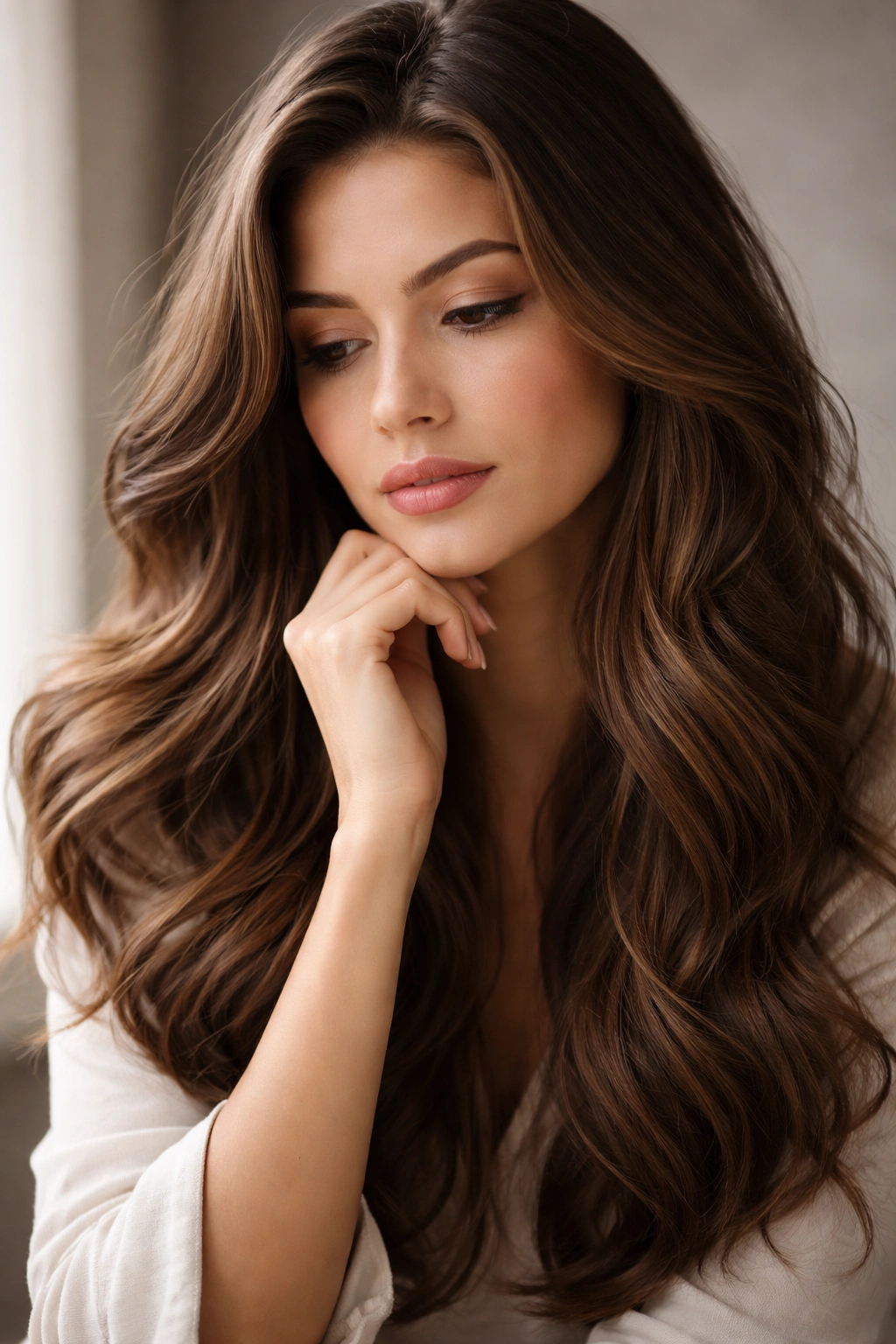
The right long wavy layered cut in brown is about matching the geometry of the layers to your hair type, face shape, and how much styling you’re willing to do. A super choppy shag will look dramatically different from seamless invisible layers, but both can be stunning when the right person chooses the right cut for the right reasons.
Start by being honest about three things: how much time you actually spend styling your hair daily, whether you prefer a polished or relaxed appearance, and what your hair naturally wants to do. The best cut isn’t the one you see on Instagram — it’s the one that works with your hair, not against it. A skilled stylist will recognize your hair’s natural movement patterns and suggest layering that enhances rather than fights those patterns.
Brown is genuinely one of the most flattering bases for layered cuts. It shows movement and texture without requiring highlights or color work to make the layers visible. You’re starting from a place of advantage — focus on finding the right silhouette and layer placement for your specific situation, and you’ll have a haircut that works beautifully for months between trims.
