



The struggle is real when you have thick, wavy hair and you’re trying to find a bob style that actually works with your texture instead of against it. Most standard bob cuts sit flat and lifeless on wavy hair, or they puff out in all the wrong places, or they require enough styling time each morning to feel like a second job. But here’s the good news: a well-chosen bob cut can actually make thick, wavy hair easier to manage while looking effortlessly polished and intentional.
The trick is understanding that thick wavy hair needs cuts that embrace movement and texture rather than fight it. Layers are usually your best friend—they remove bulk in strategic places, help waves fall more naturally, and create dimension that looks intentional rather than frizzy. Strategic texturizing, choppy ends, and asymmetrical lines all work beautifully with this hair type. The cut itself becomes a styling tool, allowing your natural texture to do the heavy lifting instead of forcing you to straighten or blow-dry your way to smoothness every single day.
Whether you’re thinking about going shorter or you want to keep some length while getting that bob shape, there’s a version of this classic style that will transform how you feel about your hair. Let me walk you through ten bob cuts that genuinely suit thick, wavy hair—styles you can actually see yourself wearing, not just styles that look good on straight-haired models.
1. Textured Shag Bob
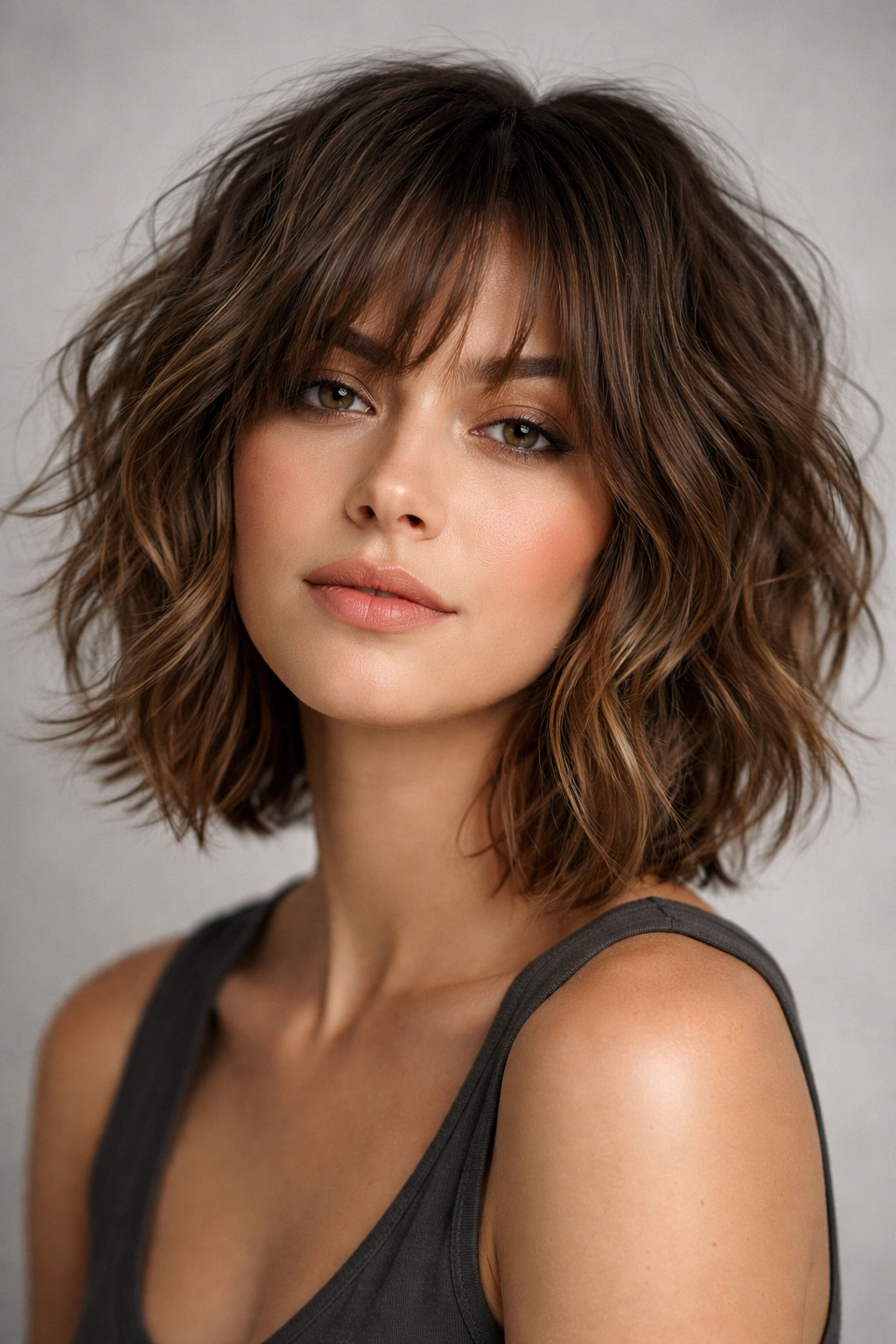
A shag bob combines short, choppy layers throughout with a slightly longer length at the front, creating a rock-and-roll vibe that absolutely thrives on thick, wavy texture. The beauty of this cut is that every strand is cut at a slightly different length, so when your waves dry naturally, they create movement and shape instead of a heavy blob of hair.
Why It Works for Wavy Hair
The layers in a shag bob interrupt weight distribution across your head, preventing the bulk that comes with thick hair. Instead of all that density pulling your waves straight, the short choppy pieces create multiple breaking points where texture can live and move independently. The shorter, textured pieces also dry faster, which means less time fighting frizz and more time actually looking put-together. Many people with thick wavy hair find that a shag requires minimal styling—you can literally air-dry it and it looks intentional.
How to Style and Maintain It
- Embrace your natural texture by scrunching in a curl cream or mousse while hair is still damp
- Use a diffuser attachment on your blow dryer if you want more defined waves, or skip heat entirely and let it air-dry
- Get trims every 4-6 weeks to maintain the choppy shape and prevent it from looking overgrown and shapeless
- Apply texturizing spray or sea salt spray to enhance movement and reduce any heavy, flat sections
What to Tell Your Stylist
Ask for choppy, disconnected layers throughout that are shorter near the crown and slightly longer in the front. Specify that you want the layers to be visible and intentional, not subtle—the choppiness is what makes this cut work with wavy hair rather than against it. Bring reference photos showing the level of chop and texture you’re envisioning, and make sure your stylist understands you have thick hair that needs weight removed strategically.
2. Long Layered Bob (Lob)
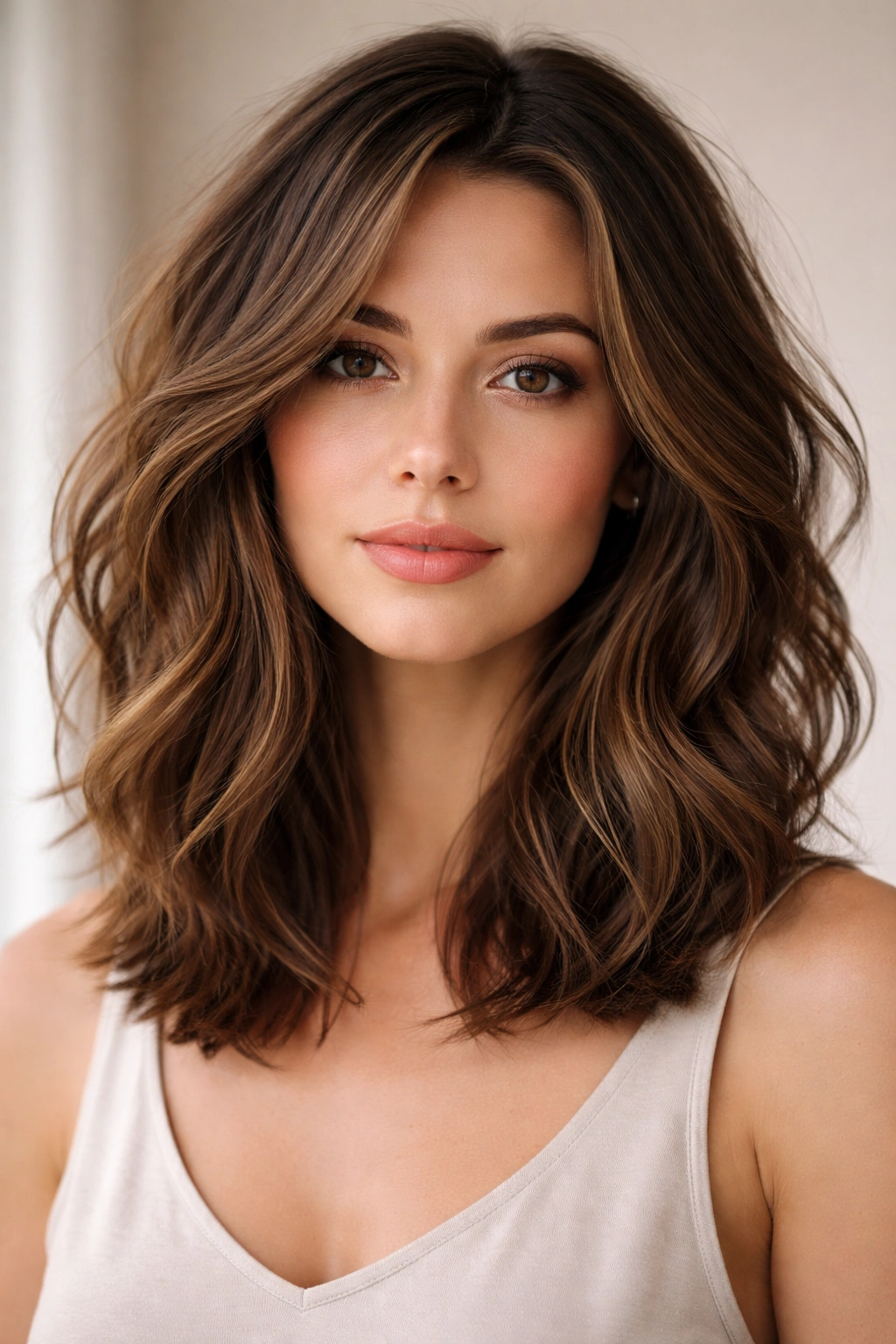
A lob—a long bob that typically hits somewhere between your chin and shoulder—is the gateway between shoulder-length hair and a traditional bob. When it’s cut with the right layers for thick, wavy hair, it gives you length while still creating the tapered shape and movement that defines a modern bob silhouette.
Why This Length Works
A lob sits at a sweet spot where it can showcase waves beautifully without becoming so long that thickness becomes an issue. The face-framing layers around your cheeks and jawline can be cut to follow your natural wave pattern, creating soft movement right where you want it. Because there’s more length overall, you have more flexibility with styling—you can wear it down and wavy, half-up, or even in a bun. The extra length also means your natural texture shows more clearly, rather than shorter cuts where waves might look more like frizz.
Styling This Length Effectively
- Apply leave-in conditioner and curl cream to damp hair, scrunching upward to encourage waves
- Dry with a diffuser, or air-dry if you’re patient and your waves are cooperative
- Use a flat iron on the very top layer to smooth any flyaways without flattening texture
- Try a half-up style on days when you want more polish—use a claw clip or silk scrunchie to keep texture intact
- Sleep on a silk pillowcase or pineapple your hair at night to preserve waves and prevent breakage
Getting the Layers Right
The layering in a long bob should be subtle enough to maintain the overall shape, but visible enough to remove weight and encourage texture. Ask your stylist to focus on removing bulk from the underneath layers while keeping the outside shape relatively blunt and structured. Face-framing layers should follow your natural wave pattern—your stylist should cut them at an angle that matches how your waves actually fall, not against the grain.
3. Choppy Wavy Bob
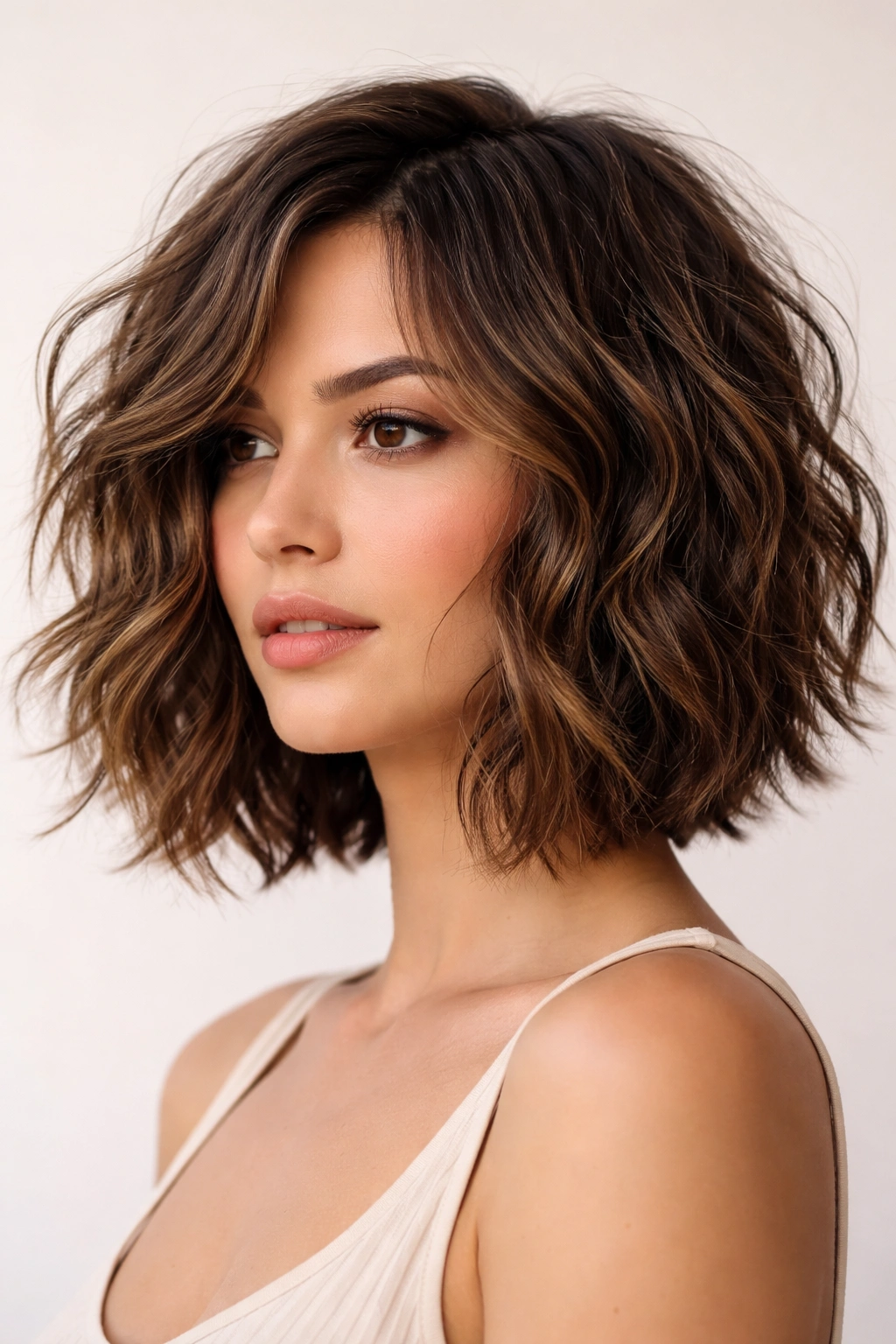
This is the most deliberately choppy version of a bob, where literally every piece has been cut at a different length and angle to create intentional texture and movement. It’s unapologetically undone, which means it plays perfectly with the natural texture of thick, wavy hair—the choppiness is the style, not something you’re trying to hide.
What Makes It Perfect for Thick Hair
A choppy wavy bob removes an enormous amount of weight from thick hair without looking like you’ve cut off all your length. The varying lengths mean that when you have waves, they create a beautiful, textured silhouette instead of a heavy, shapeless one. This cut actually looks better when your hair has texture and movement—straight-haired people sometimes struggle with choppy bobs because the choppiness looks random rather than intentional. For you, it’s the opposite. The natural wave pattern in your thick hair makes this cut look polished and deliberate.
How to Achieve This Look
- Start with a good texturizing product applied to damp hair—this could be a curl cream, mousse, or styling mousse
- Dry with a diffuser, flipping your head upside down during the first pass to encourage volume at the roots
- Use your fingers or a wide-tooth comb rather than a brush, which breaks up wave pattern
- Don’t overstyling—the point of this cut is that it looks effortlessly textured, not perfectly coiffed
- Refresh waves on day two with a light misting of water and reapplication of styling product
Communication with Your Stylist
Bring photos of choppy bobs you love and specifically point out the texture level and choppiness you want. Let your stylist know you’re not worried about the “messy” texture look—you actually want it visible and intentional. Ask them to cut the layers so they frame your face and follow your natural wave direction. Emphasize that you have thick hair and need weight removed, but you want to keep enough length that it doesn’t look too short or scalpy on top.
4. Curtain Bangs Bob
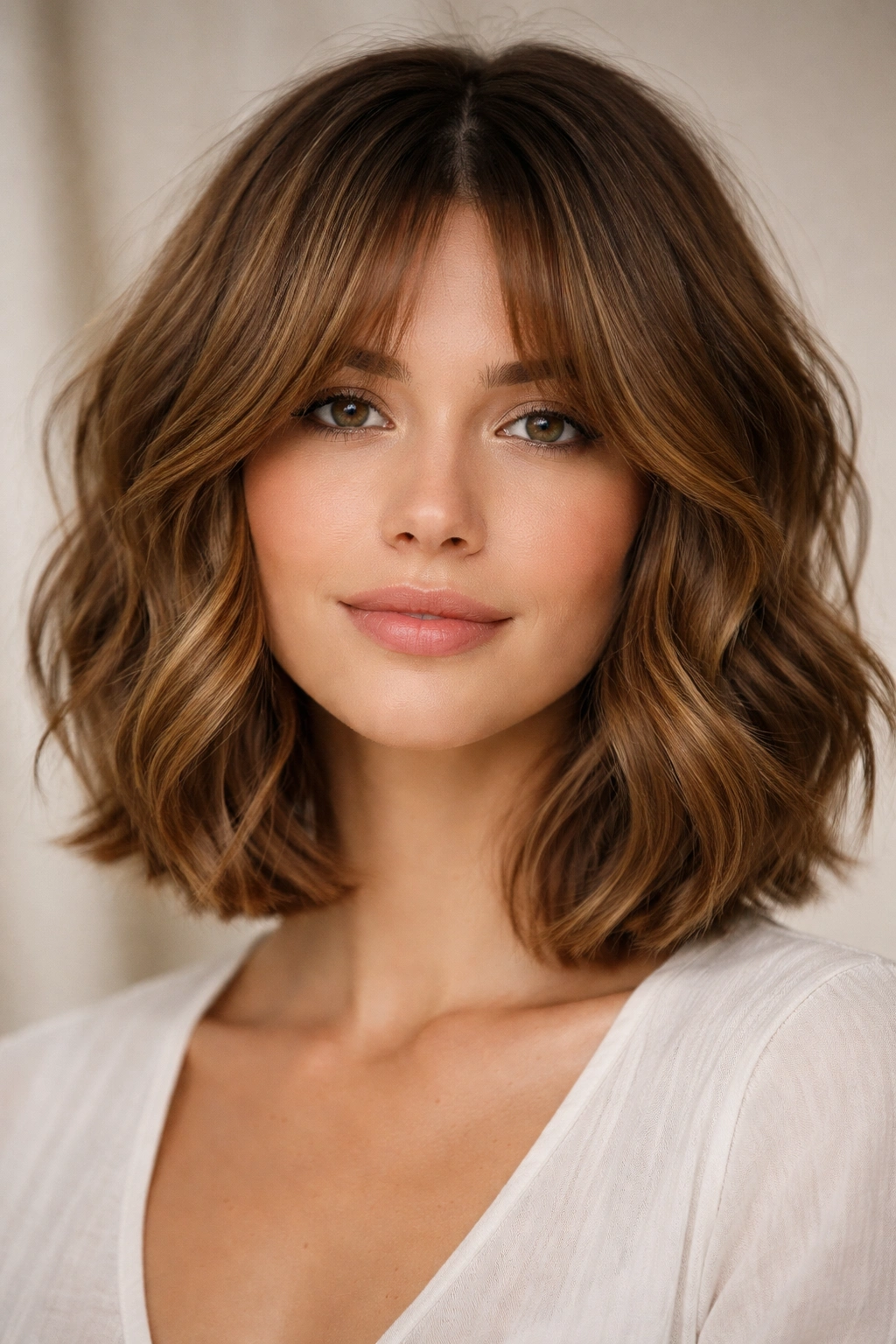
A bob with curtain bangs—longer pieces at the front that frame the face and part down the middle—is timelessly flattering and works beautifully with waves. The curtain framing draws attention to your face, while the rest of the bob provides shape and movement through the back and sides.
Why Curtain Bangs Elevate a Bob
Curtain bangs are perfect for thick, wavy hair because they work with your texture rather than demanding blunt precision. Because they’re longer and angled, they fall more naturally with waves instead of looking weird and chunky like traditional blunt bangs would on textured hair. The face-framing effect also helps balance the width of thick hair—those longer front pieces create a slimming line down the center of the face. And the best part? Curtain bangs actually benefit from a tousled, slightly undone appearance, which is exactly what thick wavy hair naturally does.
Styling Curtain Bangs
- Dry curtain bangs with a round brush, rolling them back away from the face to enhance the parted, flowing effect
- Use a flat iron on the bangs if you want them sleeker, but for a more natural look, let them air-dry into soft waves
- Apply a smoothing serum or light hairspray to the face-framing pieces to keep them from getting too frizzy or wild
- Part the hair down the center or slightly off-center—the curtain effect works best with a clear parting line
- On second-day hair, refresh bangs with a quick spritz of water and restyle with your fingers and a tiny bit of product
The Cut Details That Matter
Ask your stylist to cut the curtain bangs at an angle so they graze your cheekbones or collarbones—this length works best with waves. The rest of the bob should hit somewhere between your chin and shoulders, with longer layers throughout to encourage movement. The bangs should be separate enough from the rest of the cut that they create a distinct face-framing effect, rather than just blending into the surrounding hair.
5. Asymmetrical Bob with Layers
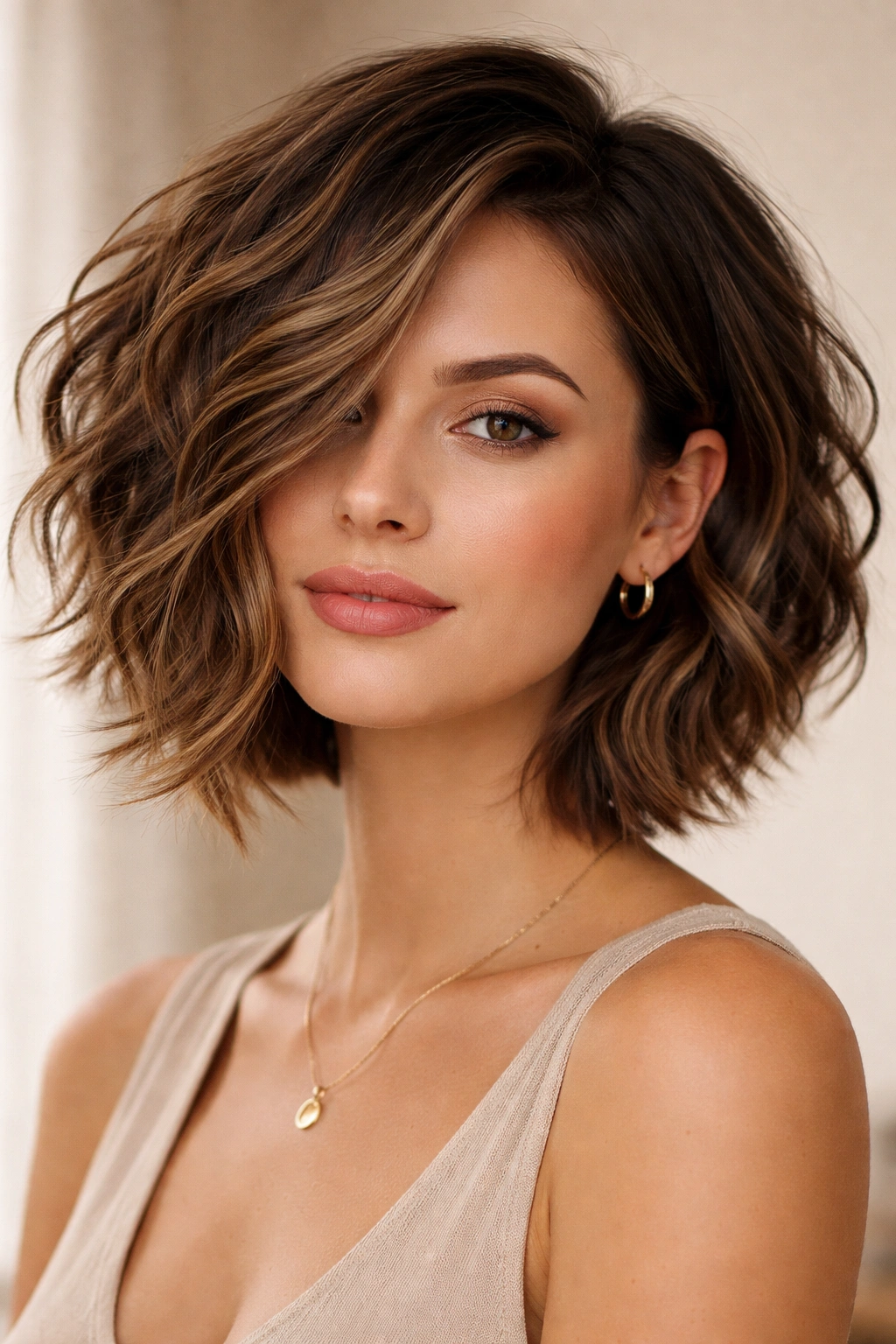
An asymmetrical bob is shorter on one side and longer on the other, creating an off-kilter silhouette that’s modern and flattering. When combined with layers, it becomes a seriously sophisticated cut that shows off texture beautifully while flattering almost any face shape.
Why Asymmetry Works
The asymmetrical length in a bob provides built-in variation that prevents the heavy, blobby feeling that thick hair sometimes gets in perfectly symmetrical cuts. The longer side can sweep across the face, creating a face-framing element without needing bangs. The shorter side shows off texture and movement. This cut also works particularly well if you have a face shape you want to flatter—the longer side can be positioned to create balance or width where you want it.
Layers in an Asymmetrical Cut
Layers should be cut throughout to remove weight and encourage your natural waves to move. The longer side usually has longer layers that maintain some length, while the shorter side can have shorter, choppier layers that create real texture. The graduation from short to long should feel intentional and modern, not haphazard. This is a cut that really requires a skilled stylist who understands how to work with texture and asymmetry simultaneously.
Styling an Asymmetrical Bob
- Apply curl cream or mousse to damp hair, focusing on the shorter side which will want to stick out
- Dry with a diffuser, and don’t be afraid to scrunch the shorter side upward to give it more volume and texture
- The longer side will naturally fall with more weight, so it may need less encouragement
- On a second day, use a texturizing spray and your fingers to refresh the shape
- The cut itself does most of the work—minimal daily styling is required to keep it looking intentional
Getting This Cut Right
This is definitely a cut for someone with a skilled stylist, particularly if you have thick wavy hair. Bring reference photos and discuss your face shape and which side you prefer to have longer (usually the side you naturally prefer to wear your hair). Explain that you want the asymmetry to be visible and intentional, not subtle. Ask your stylist to ensure the layers are cut to work with your wave pattern and to help direct texture movement in flattering ways.
6. Blunt Wavy Bob
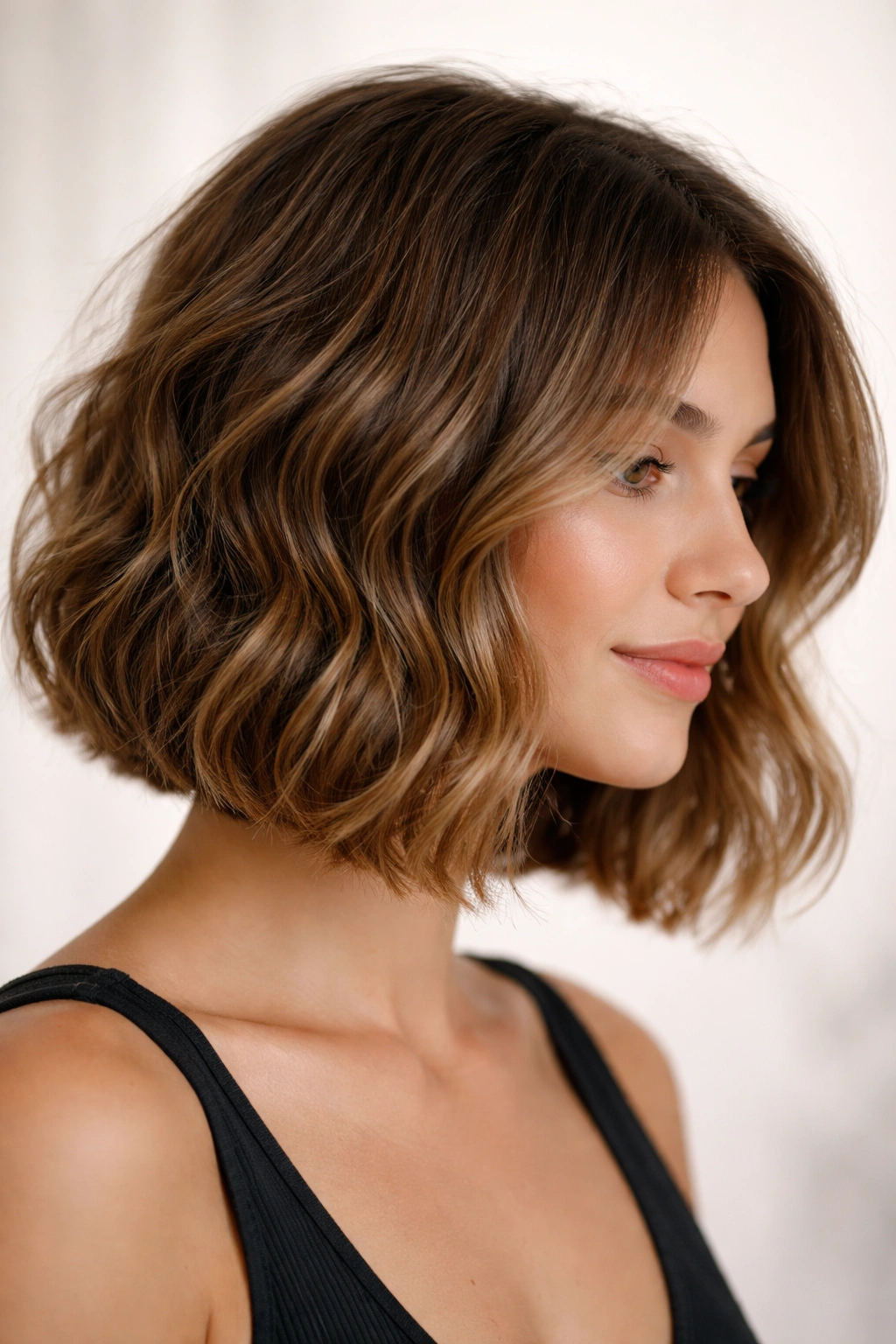
A blunt bob features a relatively straight, uncut hemline all the way around, creating a structured, clean silhouette. For thick, wavy hair, this works best when it’s cut with some length and combined with internal layers that remove weight without disrupting the blunt shape from the outside.
How to Make Blunt Work with Waves
The key to a blunt bob on wavy hair is understanding that you’re not trying to fight your texture into submission. Instead, you’re using internal layers to remove enough weight that your waves can fall naturally while still creating that crisp, blunt exterior line. This cut works best when it hits around your shoulders or slightly longer—shorter blunt bobs on thick wavy hair can look stiff and blocky. The bluntness becomes more of a suggestion than a rigid rule; your waves will soften it naturally, which is actually the point.
Styling for Definition
- Apply a curl-defining cream or gel to damp hair, working it through from roots to ends
- Blow-dry with a diffuser on low heat, or let it air-dry for more texture and movement
- The internal layers will create natural waves even without much effort on your part
- Use a flat iron on the very ends if you want to enhance the blunt line, or let your waves soften it organically
- A light hairspray helps keep the shape in place without making it look stiff
Maintenance Considerations
A blunt bob requires trims every 4-6 weeks to maintain the clean line, since any new growth disrupts the blunt aesthetic. This is more maintenance than some other bob styles, but many people find it worth it for the polished look. Talk to your stylist about whether a slight texture at the very ends might help your waves fall better while still maintaining the overall blunt impression.
7. Piece-y Texture Bob
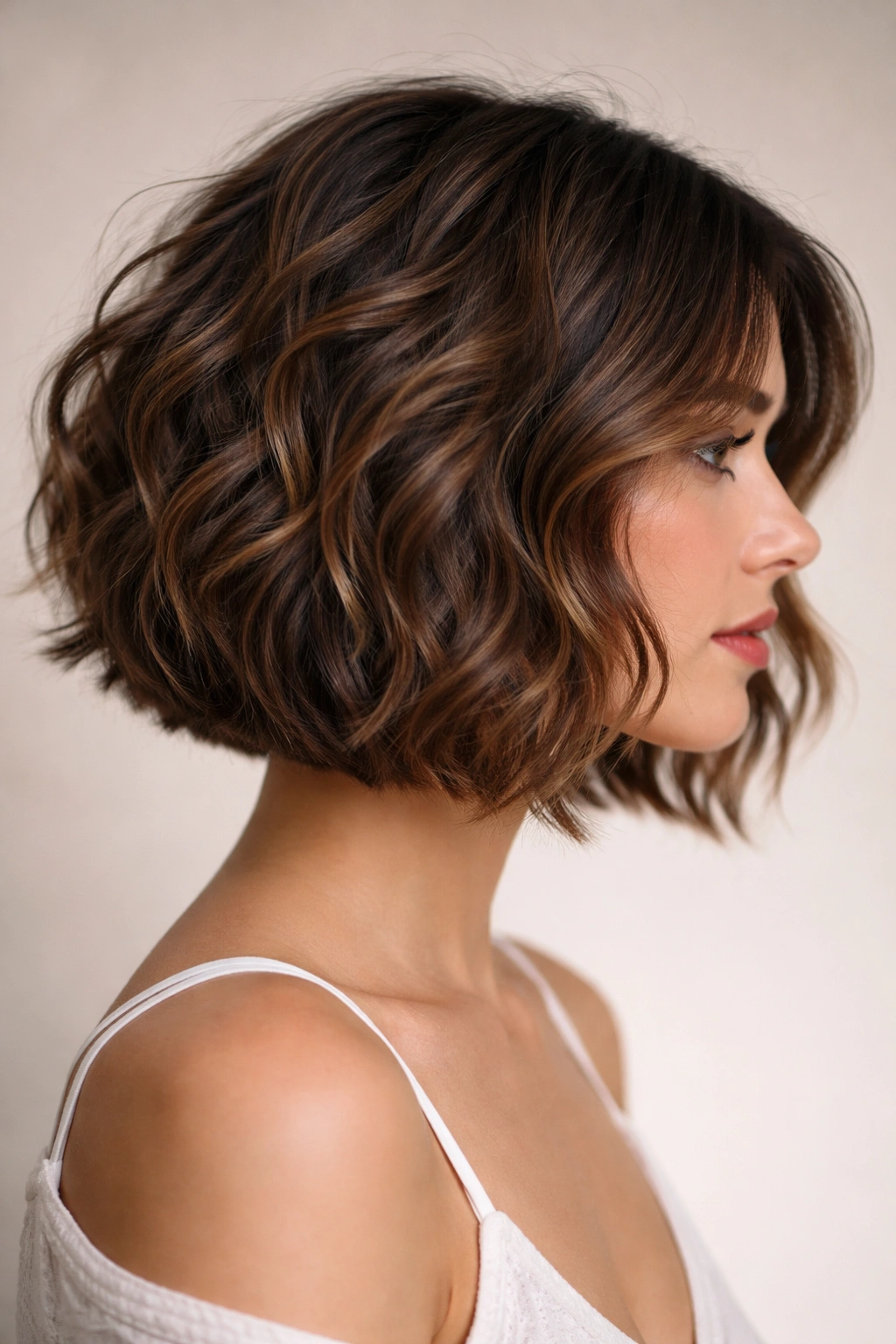
A piece-y textured bob is cut with specific techniques—like point-cutting or razor-cutting—that create intentional separation and movement throughout, so individual sections of hair are visually distinct rather than blending smoothly together.
Why Piece-y Texture is Ideal
For thick wavy hair, piece-y texture is absolutely ideal because it removes bulk in a way that looks intentional and modern rather than just thin or fried. The individual pieces of hair are separated from each other, which means your waves can move independently instead of clumping together. This texture also makes your hair look shinier and healthier because light hits the individual pieces differently. Plus, a piece-y cut looks good whether you’re having a great hair day or a frizzy day—the texture is meant to look undone.
Achieving the Piece-y Look
- Use a texturizing spray or dry shampoo at the roots for lift and separation
- Apply a lightweight styling cream or mousse, working it through to define individual pieces
- Dry with a diffuser, using your fingers to separate pieces as you go, rather than letting them clump
- Let some hair air-dry while other sections get heat styling for a mixed texture that looks natural
- Embrace the piece-y, slightly undone aesthetic—this cut is meant to look effortlessly textured
The Cut Technique
Ask your stylist to use point-cutting, razor-cutting, or texturizing shears to create piece-y separation throughout. This is different from just choppy layers—the techniques specifically create individual, separated pieces rather than gradual transitions. Make sure your stylist understands you want the texture to be visible even when your hair is completely dry, and that you love the undone, piecey aesthetic.
8. Disconnected Bob
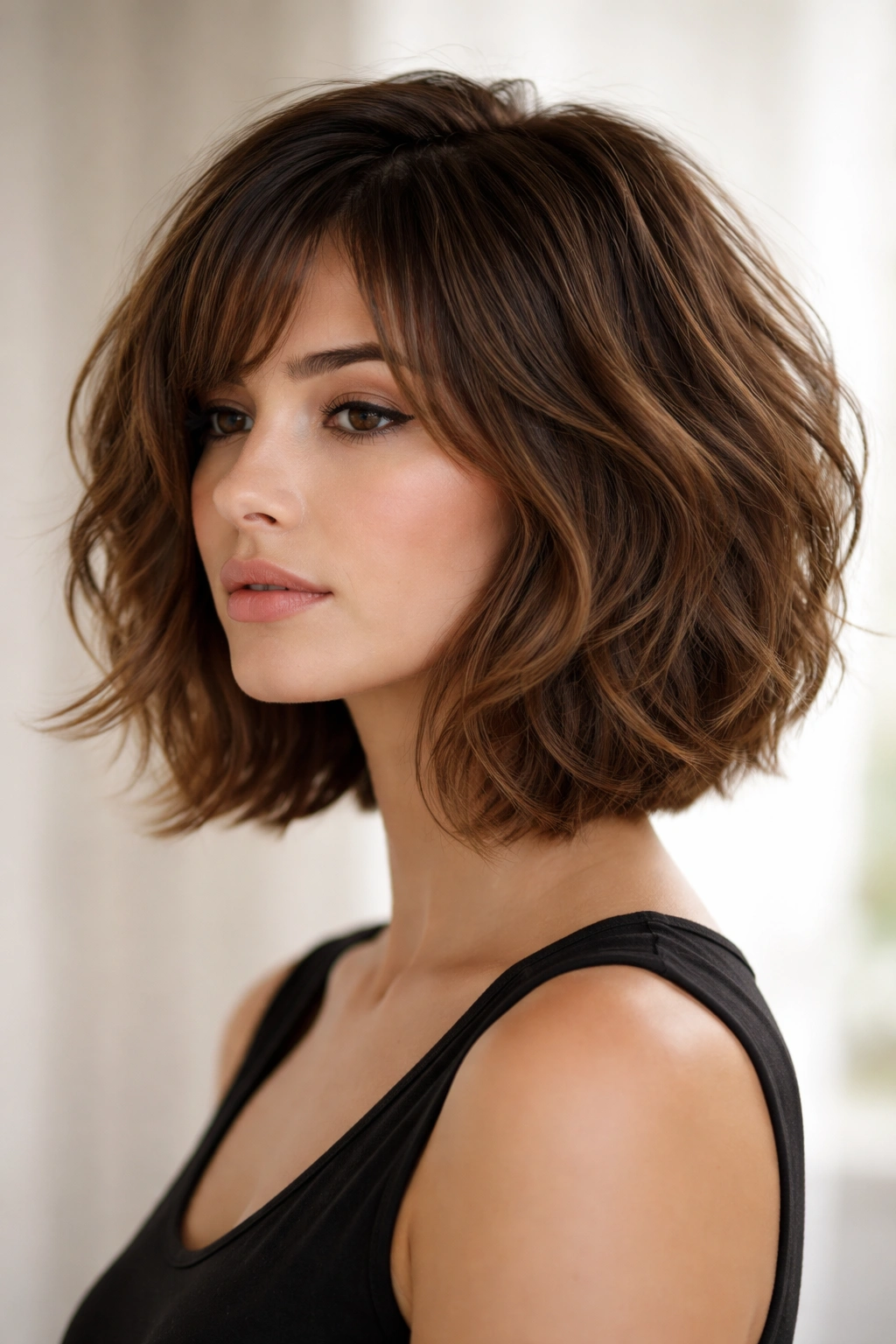
A disconnected bob features shorter pieces on top and a longer line below, creating a clear visual separation between the crown area and the longer bob length. This creates a modern, somewhat edgy look that handles thick hair beautifully.
How Disconnection Helps Thick Hair
The disconnected structure is particularly helpful for thick hair because the shorter pieces on top remove volume where it’s often heaviest—right at the crown and sides. The longer line below maintains length and femininity while the top has breathing room. This prevents the “mushroom head” effect that sometimes happens with thick hair. The structure also means you get real dimension and shape from the cut itself, rather than relying entirely on blow-drying and styling to create shape.
The Styling Advantage
- The shorter top section can be styled with volume and texture, while the longer bottom is smoother
- Dry the crown area with your head flipped upside down for maximum lift, then dry the longer section more normally
- Apply texturizing product to the top pieces to encourage separation and movement
- Let the longer section fall more smoothly—this contrast between textured top and sleeker bottom looks intentional and cool
- The disconnected structure means you can get away with less frequent trims, since the two sections grow out somewhat independently
What to Communicate
Tell your stylist you want a clear visual disconnect between the crown area and the longer bob—not a subtle graduated transition. The top should be noticeably shorter, and the bottom should be noticeably longer. Ask them to ensure the shorter pieces on top remove enough weight that you’re not dealing with heavy bulk at the crown. Bring reference photos showing the exact level of disconnect you’re aiming for.
9. Wavy Shoulder-Length Bob
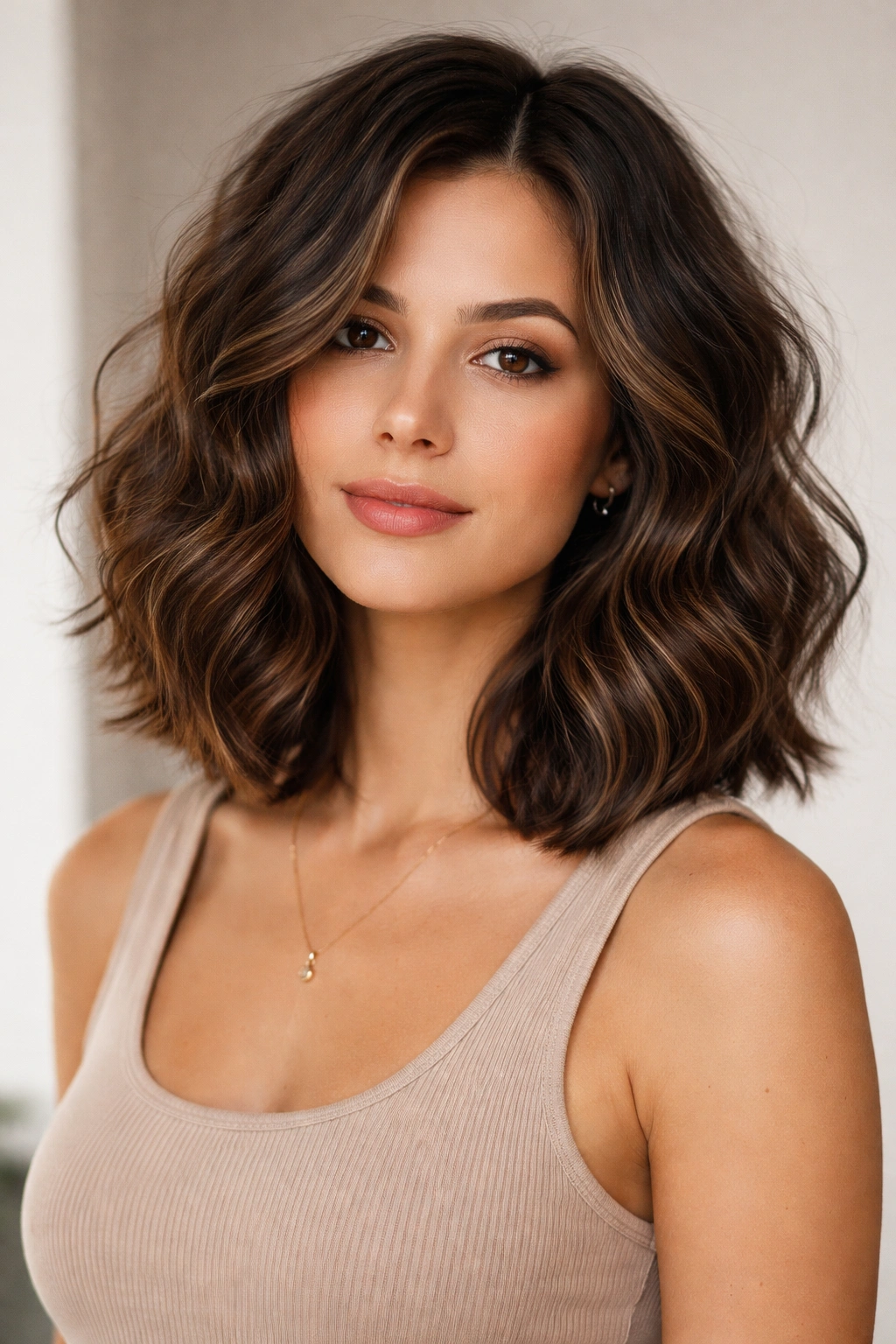
A shoulder-length bob is the longest version of a bob style, hitting right around your shoulder points. For thick, wavy hair, this length is incredibly versatile—it’s long enough to show off beautiful waves while short enough that thickness doesn’t become unmanageable.
Why This Length is Goldilocks Territory
Shoulder-length is right in the sweet spot for thick, wavy hair. It’s long enough that you can do multiple styling options—wear it down and wavy, add a half-up style, throw it in a ponytail or bun—but short enough that you’re not dealing with the bulk and weight of truly long hair. The length is enough to show off your wave pattern beautifully, particularly if you have larger, more defined waves. And it’s short enough that you can manage it without extensive daily styling or heat damage.
Layering at This Length
Layers at shoulder-length should be subtle enough to maintain the overall length, but visible enough to remove weight and encourage movement. Ask your stylist for longer layers that blend into the overall shape rather than choppy, disconnected layers. The face-framing layers should hit around your cheekbones or collarbones. The overall shape should feel rounded and soft, not blunt or severe.
Styling This Length
- Apply styling cream to damp hair and let it air-dry, or use a diffuser for more defined waves
- The length is long enough that you can experiment with different parting patterns and placement
- A half-up style looks great at this length and shows off texture beautifully
- Sleep waves in a loose braid or pineapple to preserve them overnight
- Minimal heat styling is usually needed since the length naturally works with your waves
Face-Framing Considerations
This length works beautifully with face-framing layers or even curtain bangs if you want them. The extra length means bangs can fall naturally with your waves rather than fighting them. Consider your face shape when deciding on layers—longer layers create a lengthening effect, while shorter, choppy layers create width.
10. Choppy Bangs Bob
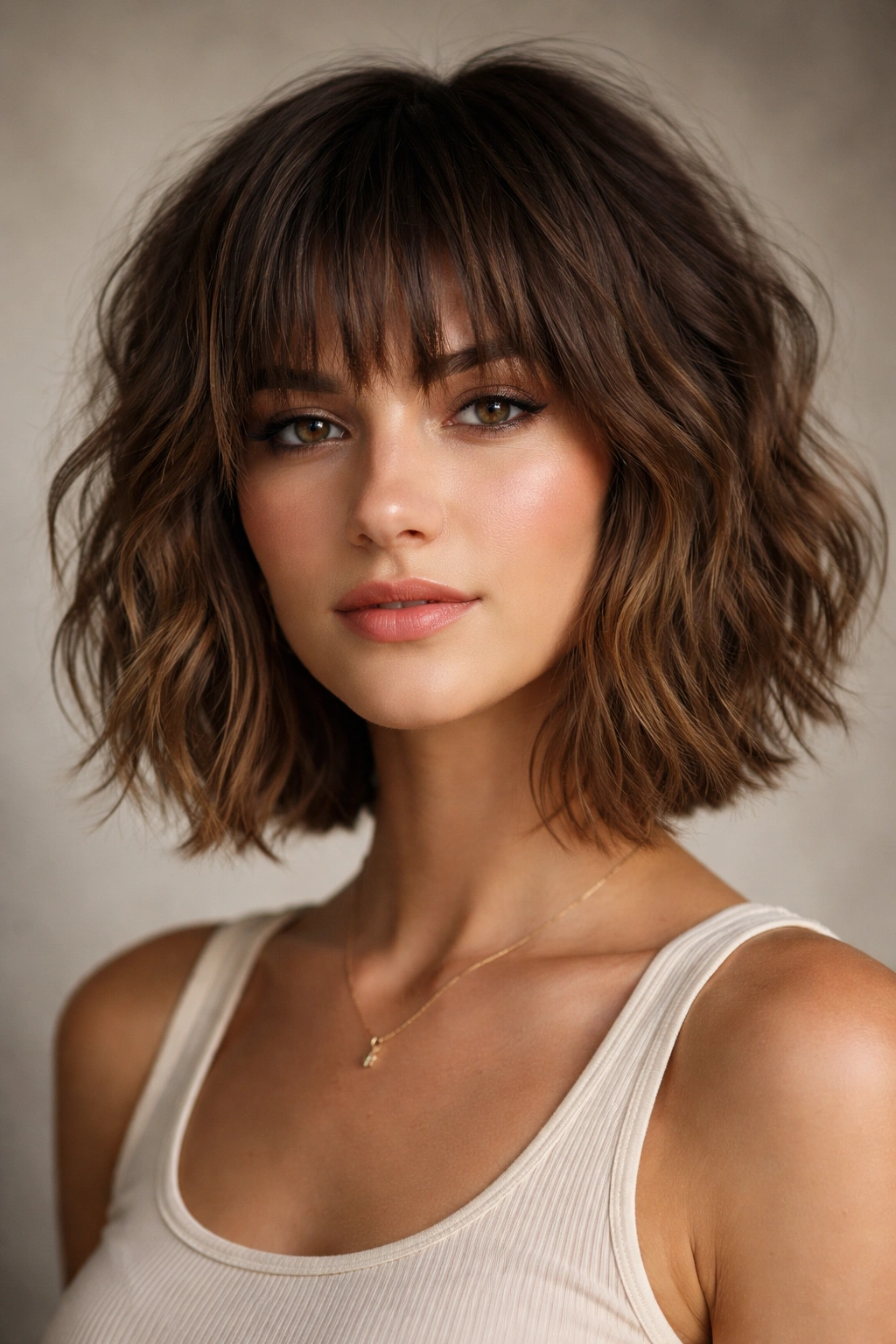
A bob with choppy bangs features short, textured, separated bangs across the forehead paired with a layered, textured bob throughout. This cut is bold, modern, and works wonderfully with thick, wavy hair because the choppiness is celebrated rather than hidden.
Why Choppy Bangs Work
Traditional blunt bangs can look odd on thick, wavy hair because they’re stiff and geometric against your natural texture. Choppy bangs, however, are cut to be textured and piece-y, so they integrate beautifully with your wave pattern. They move with your hair rather than fighting it. This cut says you’re embracing your texture rather than battling it, which honestly is the right energy for anyone with thick, wavy hair. The choppy bangs also add a fun, youthful, intentionally undone element that looks great on almost everyone.
Styling Choppy Bangs
- Dry bangs separately from the rest of your hair, using a round brush to encourage them to flip back slightly
- Apply a lightweight styling cream or mousse to bangs to define the individual pieces
- Use a flat iron sparingly on bangs—the whole point is that they look textured and undone, not perfectly smooth
- Embrace the piecey, textured look rather than trying to blend bangs smoothly into the rest of your hair
- Refresh bangs daily or every other day with a quick spritz of water and texturizing spray
Working with Your Stylist
Make it clear that you want choppy, piece-y bangs, not blunt or straight bangs. Specify that you want them textured enough that your natural waves will show right away. The bangs should be cut to sit at eye level or just slightly below, and they should have enough layers and texture that they naturally separate into distinct pieces. The rest of the bob should have layers throughout to match the choppy energy of the bangs.
Final Thoughts
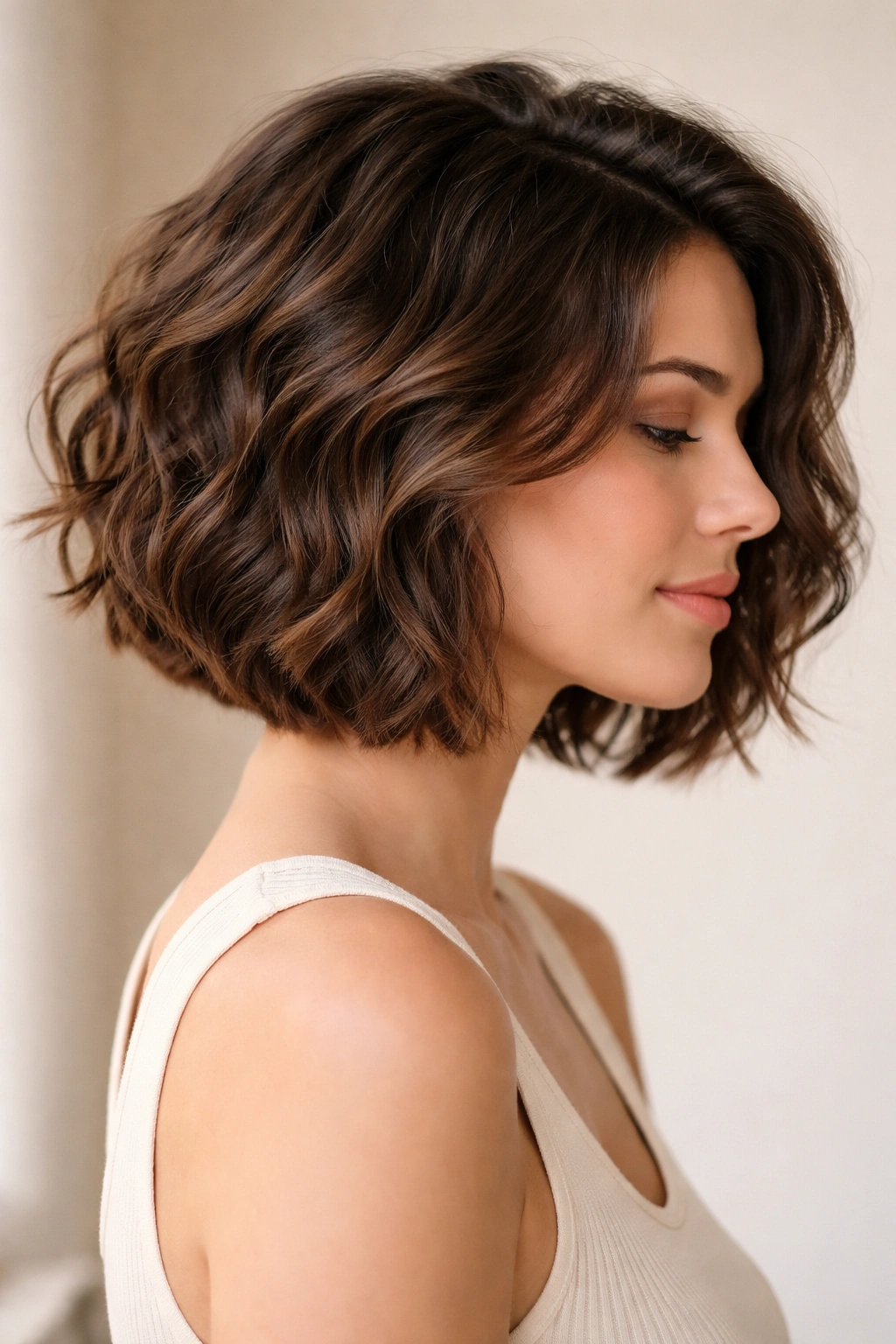
Finding the right bob for thick, wavy hair really comes down to choosing a cut that works with your texture rather than against it. The styles that perform best are the ones with strategic layering, choppy or textured pieces, and enough length to showcase movement. You’re not fighting your hair into submission anymore—you’re making your natural wave pattern and thickness the whole point.
The magic happens when your stylist understands how to cut for waves and thickness specifically. Walk into that appointment with clear photos of the style you want, and be specific about what you love about those images. Tell them whether you want a more polished, put-together look or a more undone, textured vibe. Let them know your styling commitment level—how much time you actually want to spend on your hair daily.
Once you get the cut right, the styling becomes so much easier. Most of these bobs look genuinely good with minimal effort, which is honestly the whole point. You want a style that makes your thick, wavy hair feel like an asset rather than a problem to solve.
