



Wavy hair and bangs can seem like a risky combination, but when styled intentionally, they create a look that’s effortlessly romantic, undeniably chic, and honestly one of the most flattering choices you can make. The texture already working in your hair means bangs have built-in movement and personality—they won’t fall flat or feel one-dimensional like they sometimes do with straight hair. The key is choosing a bang style that complements your natural wave pattern rather than fighting against it, and understanding how to work with your hair’s natural texture to keep everything looking intentional and polished.
If you’ve been hesitant about adding bangs to wavy hair because you’ve heard they’re “hard to manage,” I’m here to tell you that narrative isn’t quite accurate. Yes, they need slightly different care than bangs on straight hair, but the payoff is a style that looks lived-in and approachable rather than stiff and styled. Wavy bangs catch light differently, move with your hair’s natural rhythm, and create dimension that straight bangs sometimes lack. The right pairing of bang style with your specific wave pattern can actually make your daily styling routine easier, not harder.
This comes down to understanding which bang cuts work with your waves instead of against them, how to adapt your styling routine to keep bangs looking intentional, and which overall hairstyle structures complement different bang styles on textured hair. Whether you’re drawn to soft, romantic vibes or prefer a bolder, more modern aesthetic, there’s a bangs-and-waves combo that’ll make you genuinely excited about your hair every single day.
1. Wispy Curtain Bangs with Loose Waves
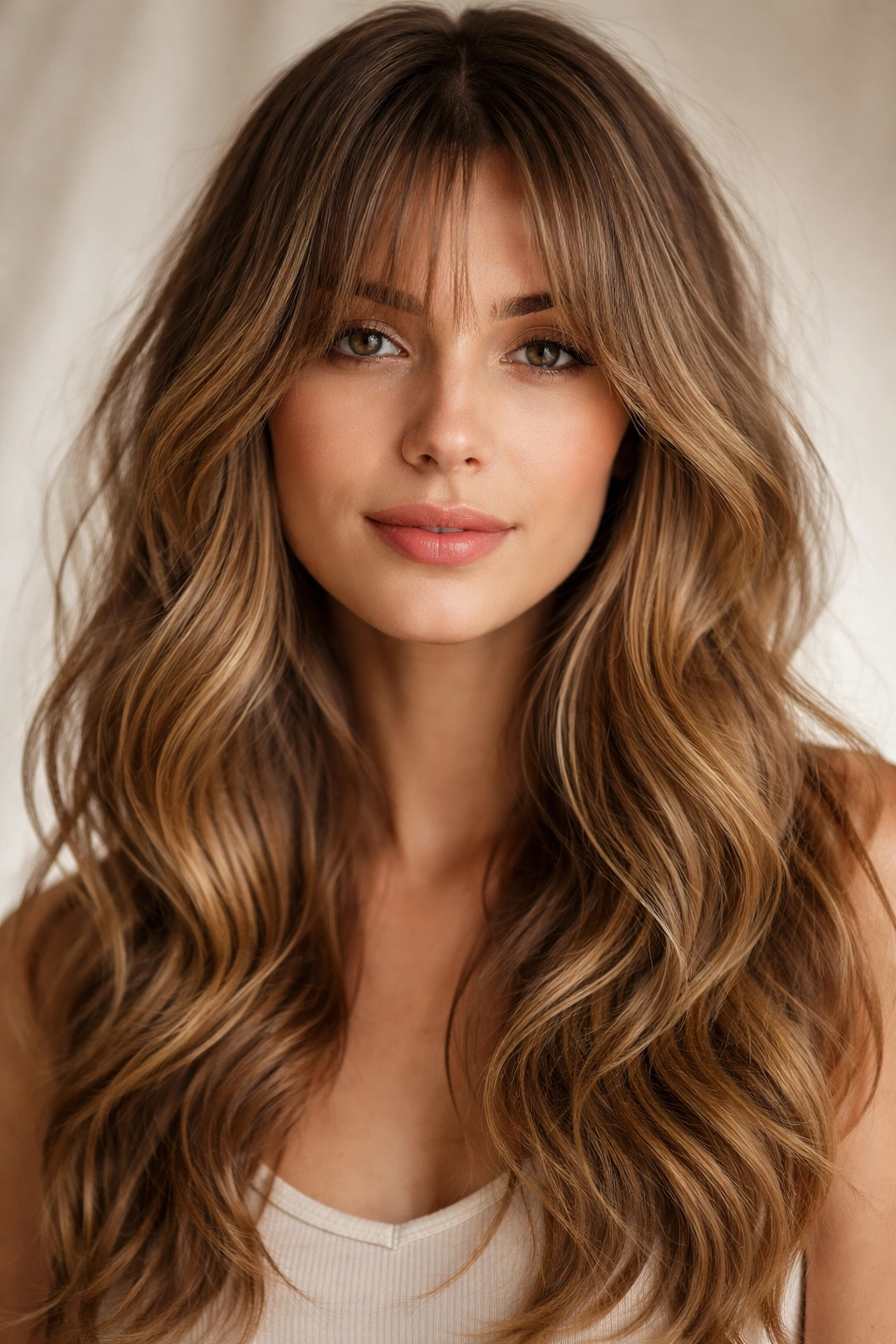
Curtain bangs are perhaps the most universally flattering choice for wavy hair, and wispy versions take that advantage even further. These bangs are longer through the center and gradually shorter toward the outer edges, creating a frame effect that opens up your face while still giving you that on-trend bang moment. Because they’re wispy—meaning the ends are texturized and lighter rather than blunt—they blend seamlessly with wavy hair and actually benefit from the natural movement your waves provide.
Why This Works with Wavy Hair
The beauty of wispy curtain bangs is that they actively work with your wave pattern rather than requiring you to fight it. Your natural texture helps separate the strands and creates definition at the ends, which is exactly what makes wispy bangs look intentional and styled rather than choppy or unkempt. The longer center length means you won’t feel like bangs are constantly in your eyes, and the gradual taper gives you flexibility—some days you can tuck them to the side, other days let them frame your face fully.
Styling Tips and Maintenance
- Blow-dry your bangs with a round brush, directing them slightly outward to enhance the curtain effect and work with your wave pattern rather than against it
- Apply a light texturizing spray to damp bangs before styling to enhance separation and prevent them from clumping together
- Plan a trim every 4-6 weeks to maintain the wispy, tapered texture—blunt ends will look less intentional as they grow out
- Use a straightener only on the very tips if you want extra polish, but embrace the texture for a more natural look most days
2. Choppy Textured Bangs with Wavy Layers
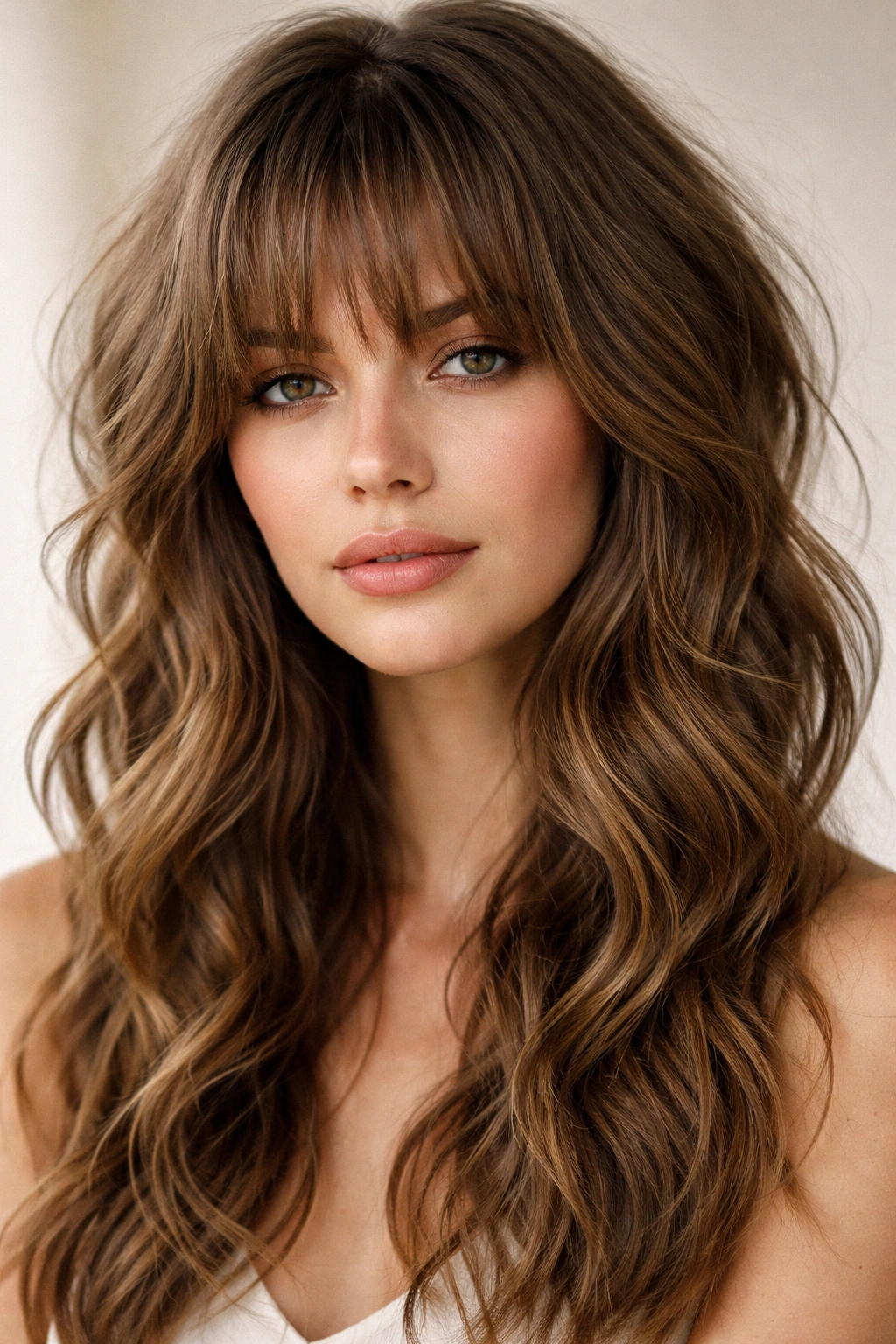
If you love the idea of bangs but want maximum movement and a deliberately undone aesthetic, choppy textured bangs are your answer. These bangs are cut with shorter and longer pieces mixed throughout, creating built-in texture and dimension that looks like it was created specifically to work with waves. The inconsistent lengths mean each strand can fall exactly where your natural wave pattern dictates, creating a look that feels both intentional and effortlessly styled.
The Styling Freedom Factor
Choppy bangs give you remarkable styling flexibility because their texture means they look good whether your waves are really defined, slightly loose, or somewhere in between. There’s no “right” way for them to fall—every combination looks intentional. This style works particularly well if you have thick hair or strong waves, because the choppy cutting actually helps distribute weight and prevents the bang area from feeling too heavy or bulky.
Making Them Your Own
- Embrace the texture by using a sea salt spray or texturizing product on damp hair before your waves naturally form
- Avoid over-brushing or trying to smooth choppy bangs into submission—let them be messy and piece-y
- Pair with equally textured layers throughout the rest of your hair for a cohesive, intentional look
- Consider adding some subtle highlights or dimensional color to the bang area to emphasize the chopped texture and movement
3. Soft Baby Bangs with Beachy Waves
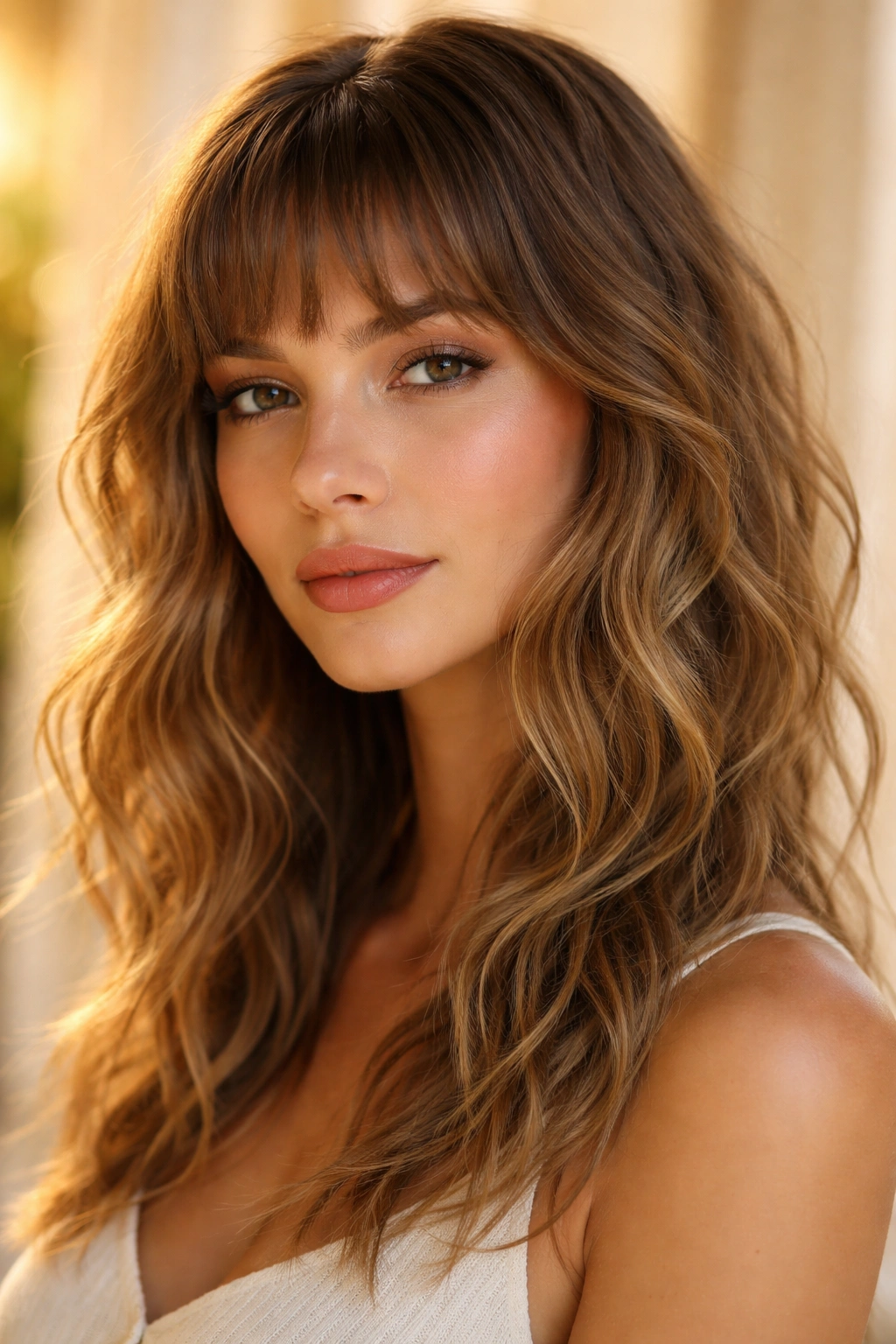
Baby bangs—cut much shorter and sitting higher on your forehead—create a youthful, fashion-forward vibe that’s become increasingly popular. On wavy hair, soft baby bangs (meaning the ends are feathered rather than blunt) feel less severe and more romantic than their blunt counterparts. They give you an edgy moment without sacrificing the soft, approachable energy that wavy hair naturally brings.
The Confidence Factor
Soft baby bangs are a bold choice, which is precisely why they’re so striking on the right person. They require confidence and a willingness to lean into a more playful, trend-aware aesthetic. With wavy hair, they feel less stark than they would on straight hair because your natural texture softens the line and creates a halo effect around your face. The feathering at the ends catches light and creates movement even when you’re standing still.
Styling and Confidence Tips
- These work best on faces that are either longer or more oval-shaped, as they can emphasize width if you have a rounder face shape
- Style with a blow-dryer and round brush to create soft curves rather than letting them fall completely straight
- Use volumizing products at the roots to ensure bangs don’t feel too heavy or hang too flatly
- Commit to the upkeep—baby bangs need trimming every 3-4 weeks to maintain their length and shape
- Wear them with confidence and style them as a statement, not an afterthought
4. Side-Swept Bangs with Tousled Waves
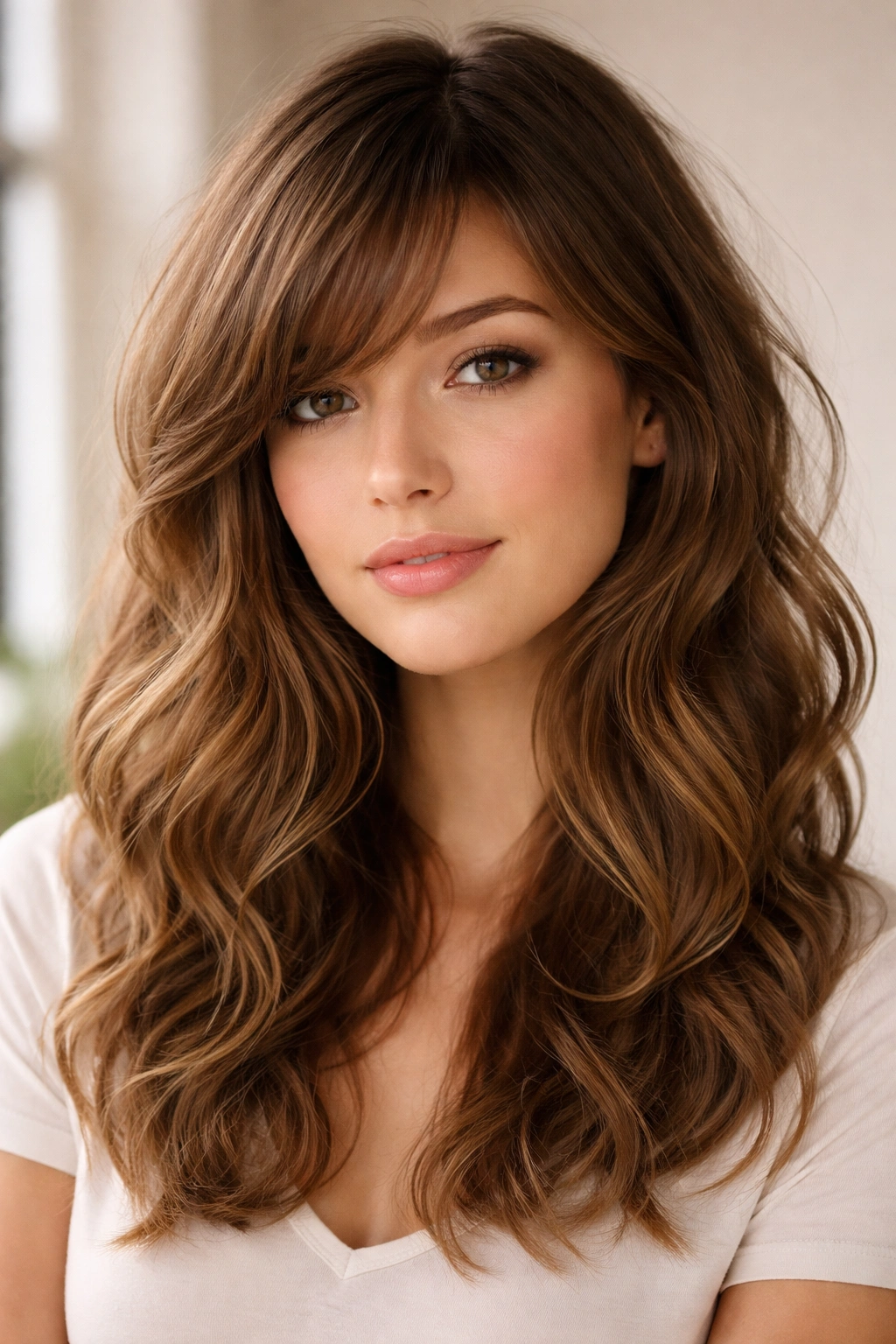
Side-swept bangs offer a middle ground between committing fully to bangs and keeping maximum flexibility. Cut longer on one side and gradually shorter as they approach the opposite side, they create a flattering asymmetrical frame that’s immediately softening. On wavy hair, the tousled, effortless vibe they create is virtually impossible to achieve with straight hair—your natural texture is actually doing half the work.
Why This Style Is So Versatile
You can wear side-swept bangs in multiple ways throughout the week: fully swept to one side for a polished look, swept gently to the side for a softer vibe, or even brushed back into a half-up style when you want them completely out of your face. This versatility makes them an excellent choice if you’re still deciding whether bangs are truly your thing. You get the softness of bangs without the commitment of a style that only works one way.
Achieving the Tousled Look
- Apply mousse or curl-enhancing cream to damp bangs before blow-drying to encourage movement rather than smoothness
- Blow-dry in the direction you want them to fall, using a round brush to create a slight curve
- Finish with a light hairspray that doesn’t stiffen the style—you want them to move, not feel crunchy
- Embrace second-day texture; side-swept bangs actually look better slightly lived-in than freshly styled
- Consider pairing with shoulder-length waves or longer for the most flattering proportions
5. Blunt Bangs with Voluminous Waves
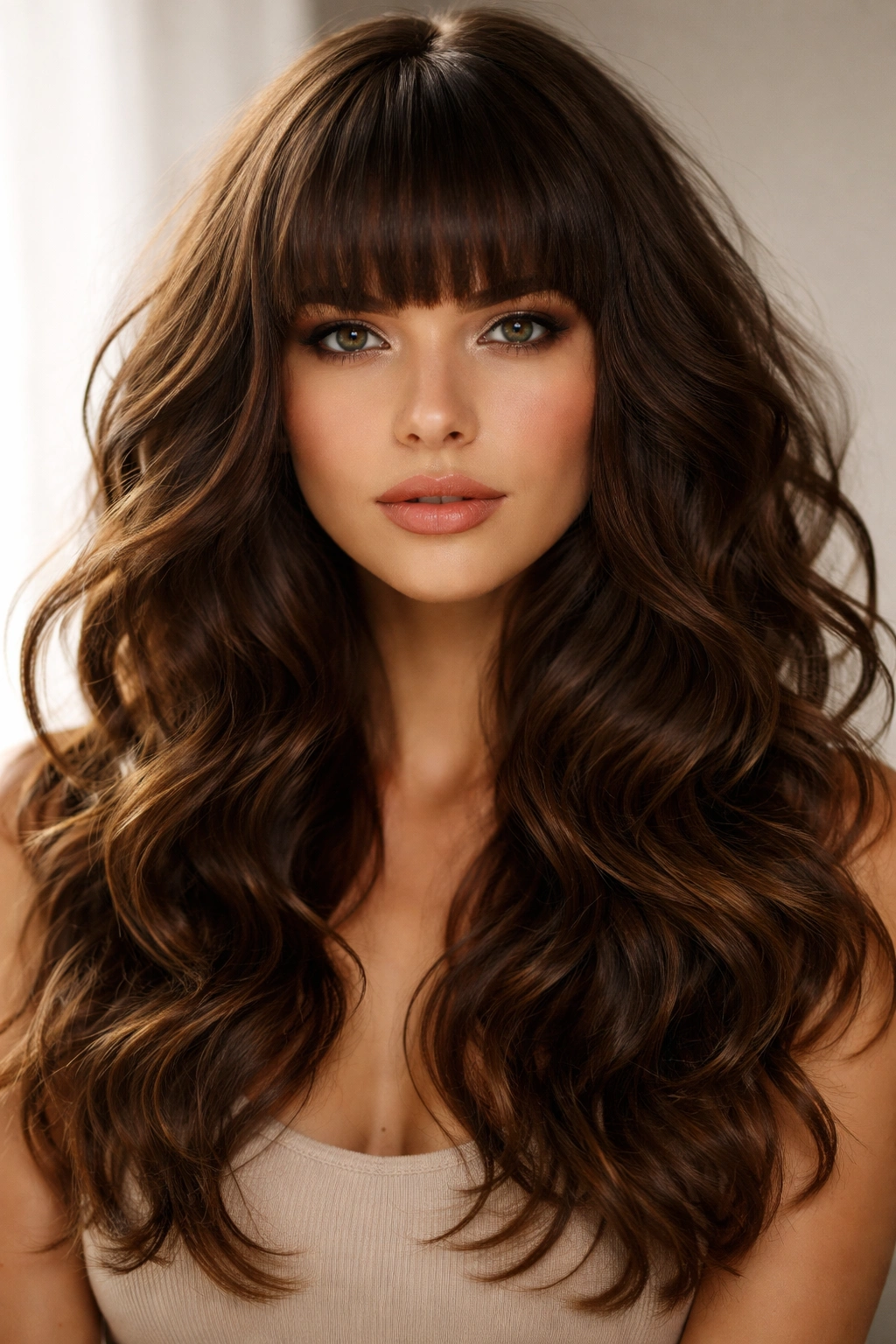
Blunt bangs—cut straight across with no texture or tapering—create a bold, graphic line that works strikingly well on wavy hair, especially when paired with seriously voluminous, defined waves. The contrast between the clean bang line and the textured movement of your waves creates immediate visual interest and a modern, fashion-forward aesthetic. This look says you’re deliberate about your style choices.
The Dramatic Impact
Blunt bangs are high-commitment because they create a very defined line, but on wavy hair that’s also highly textured and voluminous, they feel less severe and more balanced than they might on straight hair. The waves prevent the bangs from feeling too rigid or one-dimensional. This style works beautifully if you have thick hair, strong waves, and a face shape that’s either longer or more angular.
Maintaining the Blunt Edge
- Trim every 3-4 weeks to keep the line crisp and intentional; even slightly grown-out blunt bangs can start to feel undone
- Blow-dry with a paddle brush to smooth the bang area while still letting your waves be textured underneath
- Apply a smoothing product specifically to the bang line for polish while keeping the rest of your hair textured
- Pair with a sleek blow-out on the rest of your hair for impact, or lean into the contrast with very textured, beachy waves
- This style is best suited to longer hair or hair with volume in the mid-lengths and ends—it creates a top-heavy look otherwise
6. Feathered Bangs with Romantic Waves
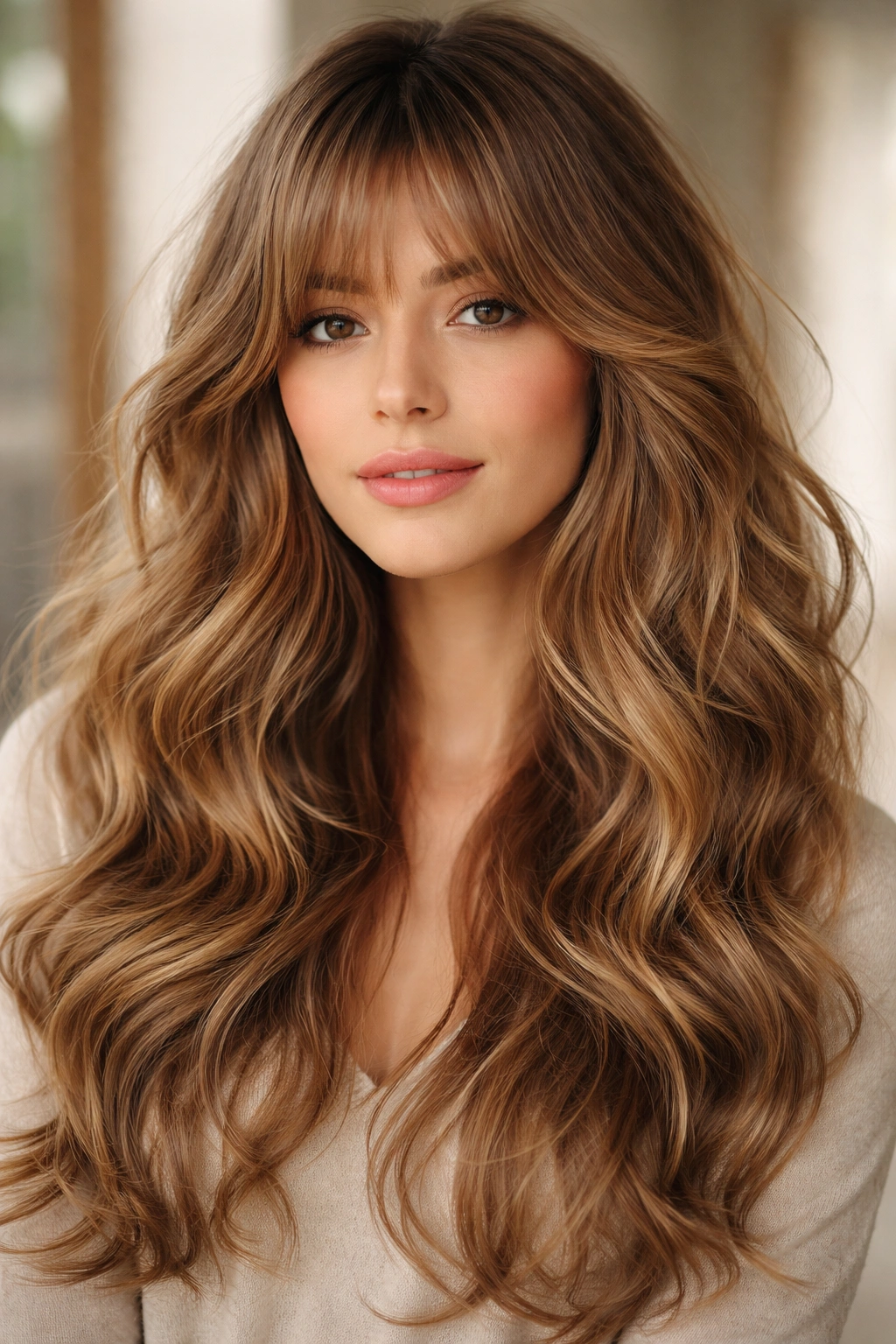
Feathered bangs are layered throughout, with each layer being slightly shorter than the one behind it. They create a soft, almost bird-wing effect that’s incredibly romantic and flattering. On wavy hair, feathered bangs integrate seamlessly with the rest of your texture and create a unified, intentional-looking style where it’s sometimes hard to tell where bangs end and longer hair begins.
The Seamless Integration
What makes feathered bangs special on wavy hair is that they don’t feel like a separate entity; they feel like a natural extension of your overall style. The layering in the bangs mirrors the layering you typically have throughout textured hair, creating visual cohesion. They frame your face beautifully while also allowing air circulation, so they won’t feel heavy or uncomfortable even if you have thick hair.
Achieving Feathered Perfection
- Feathered bangs benefit enormously from a good texturizing product—use sea salt spray, texture cream, or volumizing spray on damp hair
- Blow-dry with a round brush, lifting at the roots to create dimension in each individual feathered layer
- Avoid straightening; feathered bangs look best with their natural texture on full display
- These pair beautifully with an overall layered haircut that complements the feathering in your bangs
- They’re lower-maintenance than some bang styles because small imperfections in the layers actually add to the intentional texture
- Trim every 5-6 weeks to maintain the feathered shape without losing the length you want
7. Micro Bangs with Defined Wave Pattern
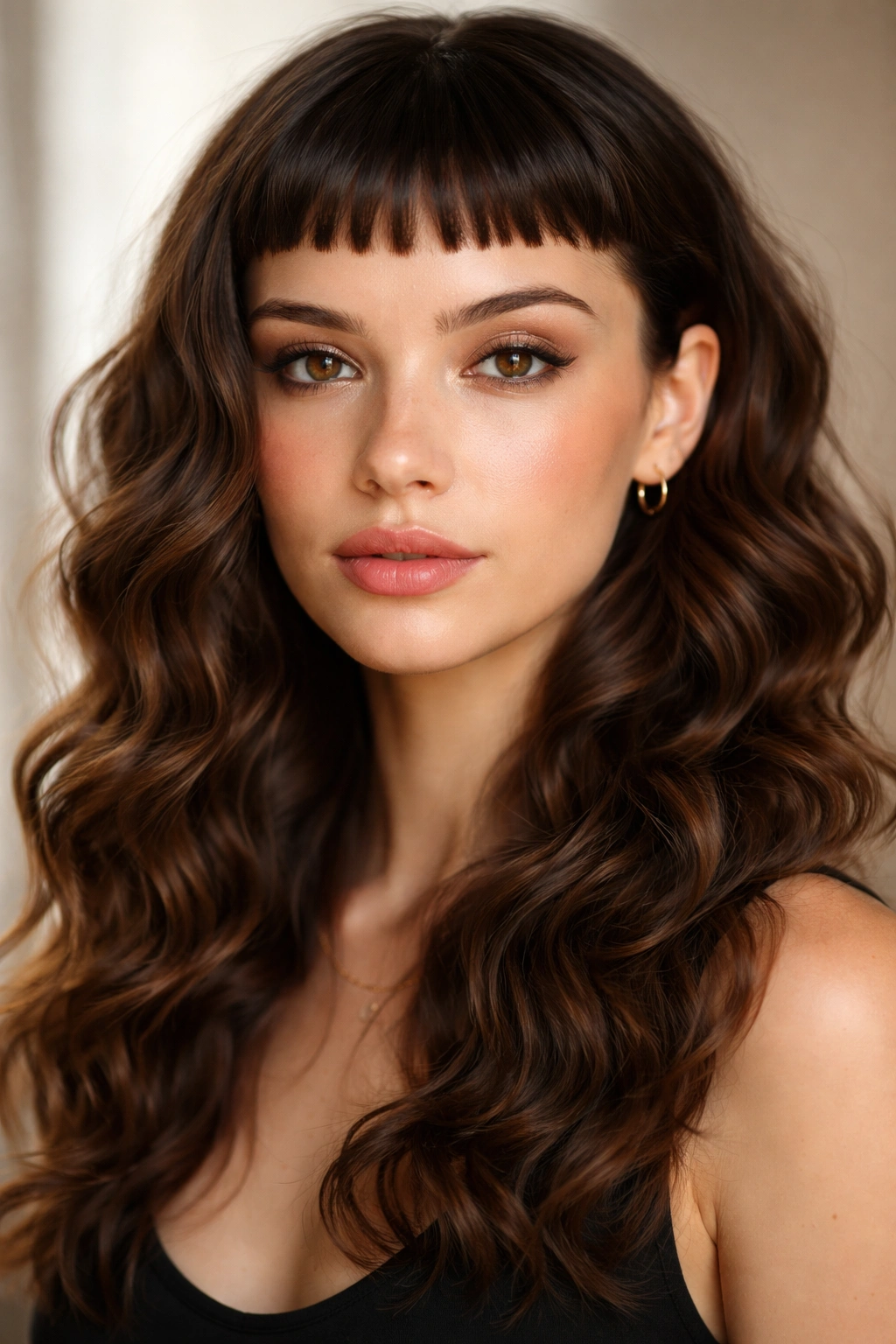
For those who want to make a serious statement, micro bangs—cut incredibly short and sitting very high on the forehead—create an avant-garde, fashion-forward look. Paired with clearly defined, bouncy waves, micro bangs become a study in contrast: ultra-modern on top, romantic and textured below. This isn’t a subtle choice, but on the right person with the right attitude, it’s absolutely stunning.
Committing to the Bold Choice
Micro bangs require confidence and a strong sense of personal style. They work best on people with longer faces, higher foreheads, or angular face shapes. On wavy hair, they actually feel less severe than they might on straight hair because the softness and movement of your waves balances the boldness of the bangs. You’re essentially creating a conversation-starting, head-turning style.
Making Micro Bangs Work
- Ensure you have a significant length difference between your bangs and the rest of your hair; micro bangs work best with longer lengths overall
- Style your waves with maximum definition and volume to balance the shortness of the bangs
- Use strong-hold products to keep your waves bouncy and prevent them from falling flat
- Commit to very frequent trims—every 2-3 weeks—because these grow out quickly and lose their impact
- Pair with sleek styling or simple makeup; let the hair be the statement, not competing elements
- This look absolutely requires you to be comfortable drawing attention to your face; if you prefer subtlety, skip this one
8. Shaggy Bangs with Modern Wavy Layers
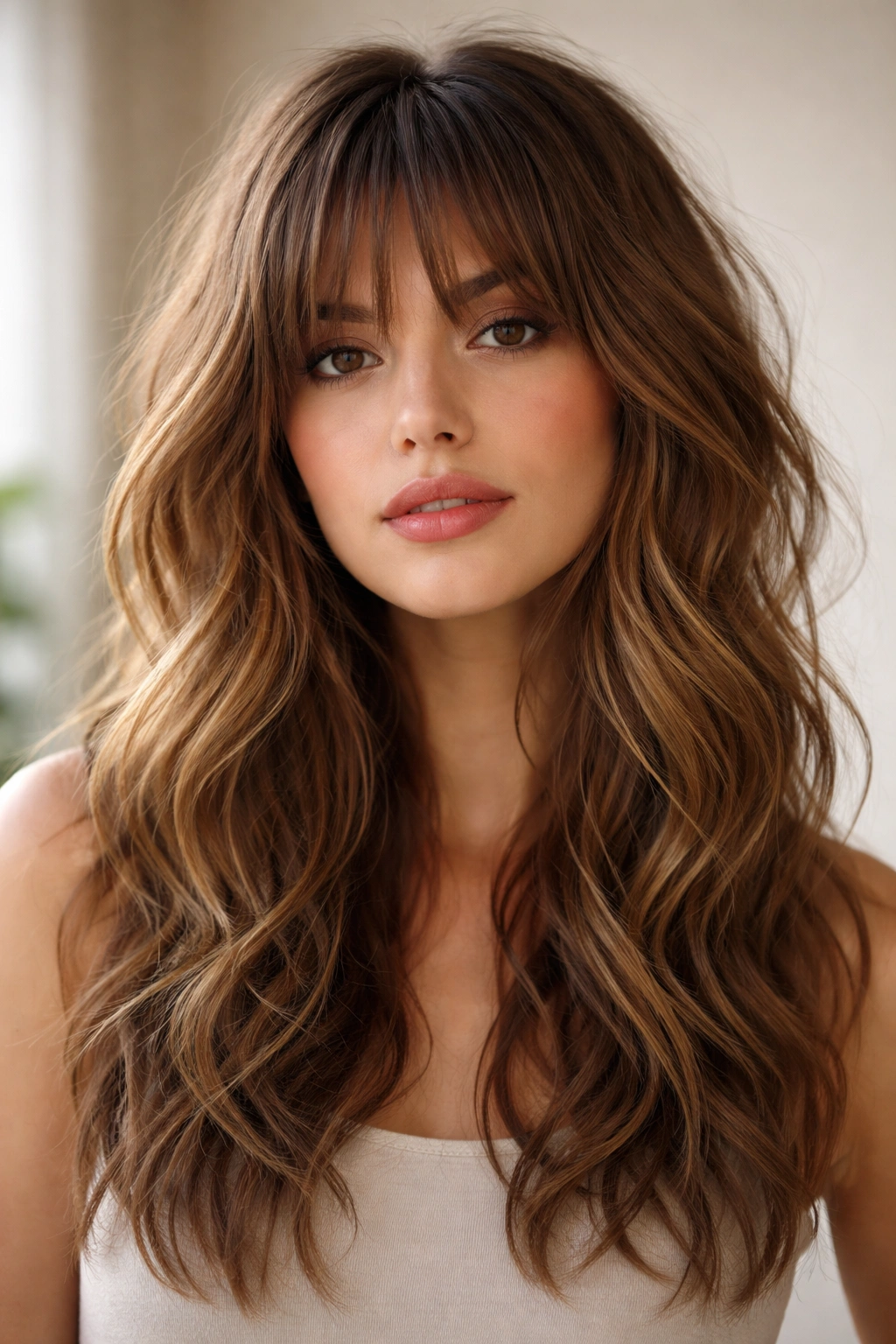
Shaggy bangs are cut with lots of layers and texture built in, creating a deliberately undone, ’70s-inspired aesthetic that feels incredibly current when paired with modern wavy layers. There’s overlap between the bangs and the rest of your hair because of all the layering, which creates a unified, effortlessly cool look. This style celebrates the fact that you have textured hair rather than fighting it.
The Undone Aesthetic
Shaggy bangs are all about embracing imperfection and intentional messiness. They should never look blowout-perfect; instead, they should look like you just got out of bed and your hair happened to fall exactly right. With wavy hair, this is actually achievable because your natural texture does most of the work. You’re not trying to create movement and texture—you’re just working with what you already have.
Styling Shaggy Bangs
- Apply a texturizing product or sea salt spray to damp hair before styling for maximum separation and definition
- Use your fingers or a diffuser attachment on a blow-dryer rather than a brush; you want texture, not smoothness
- Embrace the lived-in look; shaggy bangs actually improve with a day or two of wear
- Pair with an overall shaggy, layered cut throughout your hair for visual cohesion
- These work beautifully with longer hair (past shoulder-length) and benefit from lots of layers in the mid-lengths and ends
- Trim every 6-8 weeks to maintain the shag shape, but don’t feel like every layer needs to be perfect
9. Curved Bangs with Bouncy Waves
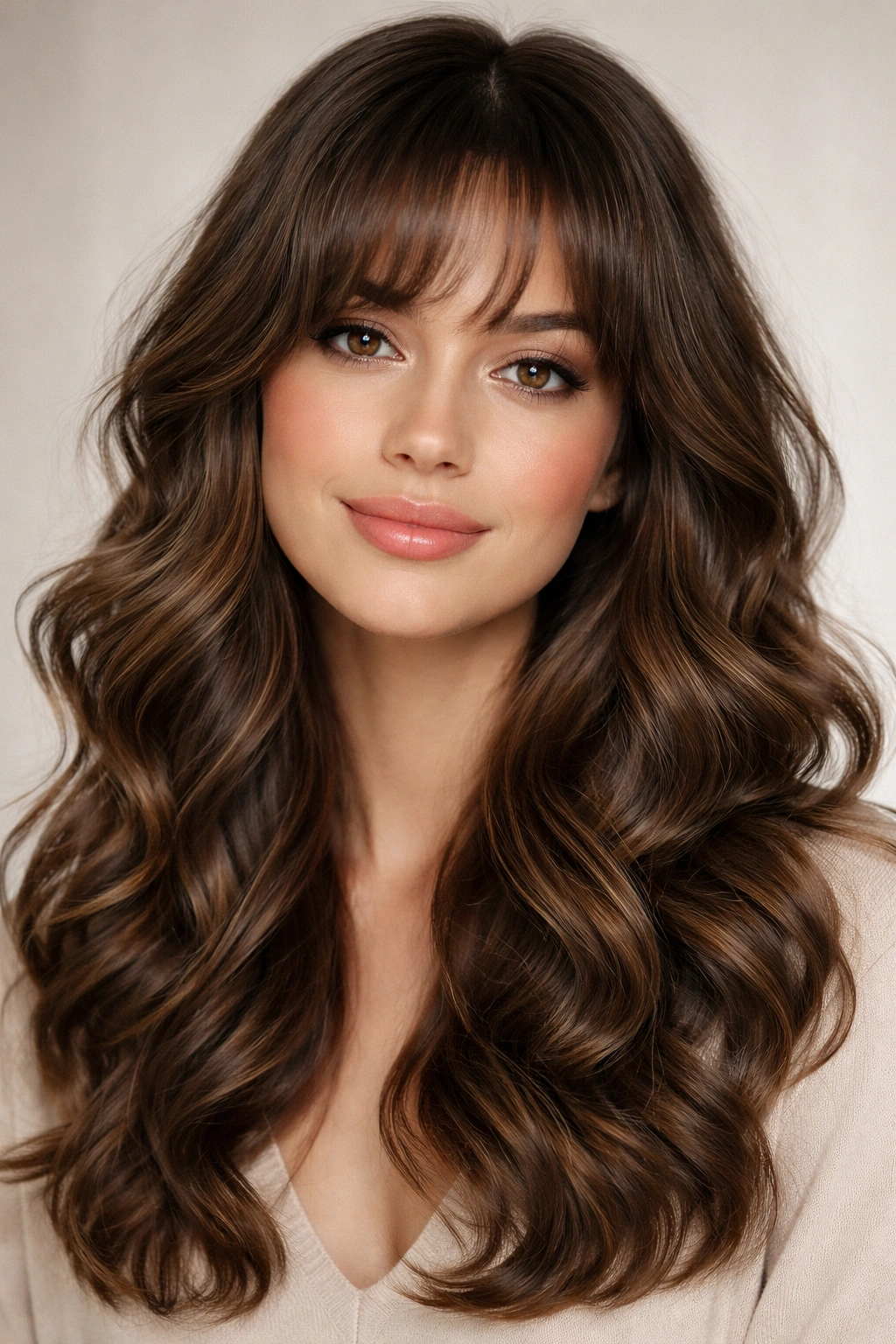
Curved bangs are cut with a gentle curve rather than completely straight across or fully swept to one side. They frame your face in a rounded, flattering way while still creating that bang moment. On bouncy waves, curved bangs look incredibly polished and intentional—the curve in the bangs echoes the curve in your waves, creating a harmonious overall aesthetic.
The Flattering Frame
Curved bangs work beautifully on most face shapes because the gentle curve is universally softening. They’re not as bold as blunt bangs, not as subtle as side-swept bangs—they’re the Goldilocks of bang styles. On wavy hair with good bounce, curved bangs create a frame that makes your face look more defined and your overall style look more intentionally styled without requiring a lot of effort.
Creating Bouncy Waves with Curved Bangs
- Use a curl-enhancing cream or mousse on damp hair before styling to encourage bounce and definition
- Blow-dry with a round brush, creating a slight outward curve at the ends of your bangs to emphasize the style
- Consider using a curling iron on low heat to add extra curve and bounce without frizz
- These pair beautifully with waves that are shoulder-length or longer, with good definition and movement
- Trim every 4-5 weeks to maintain the curved shape as the bangs grow out
- Apply a light hairspray that holds without crunching so your waves and bangs can still move naturally
10. Textured Bangs with Beachy Wavy Texture
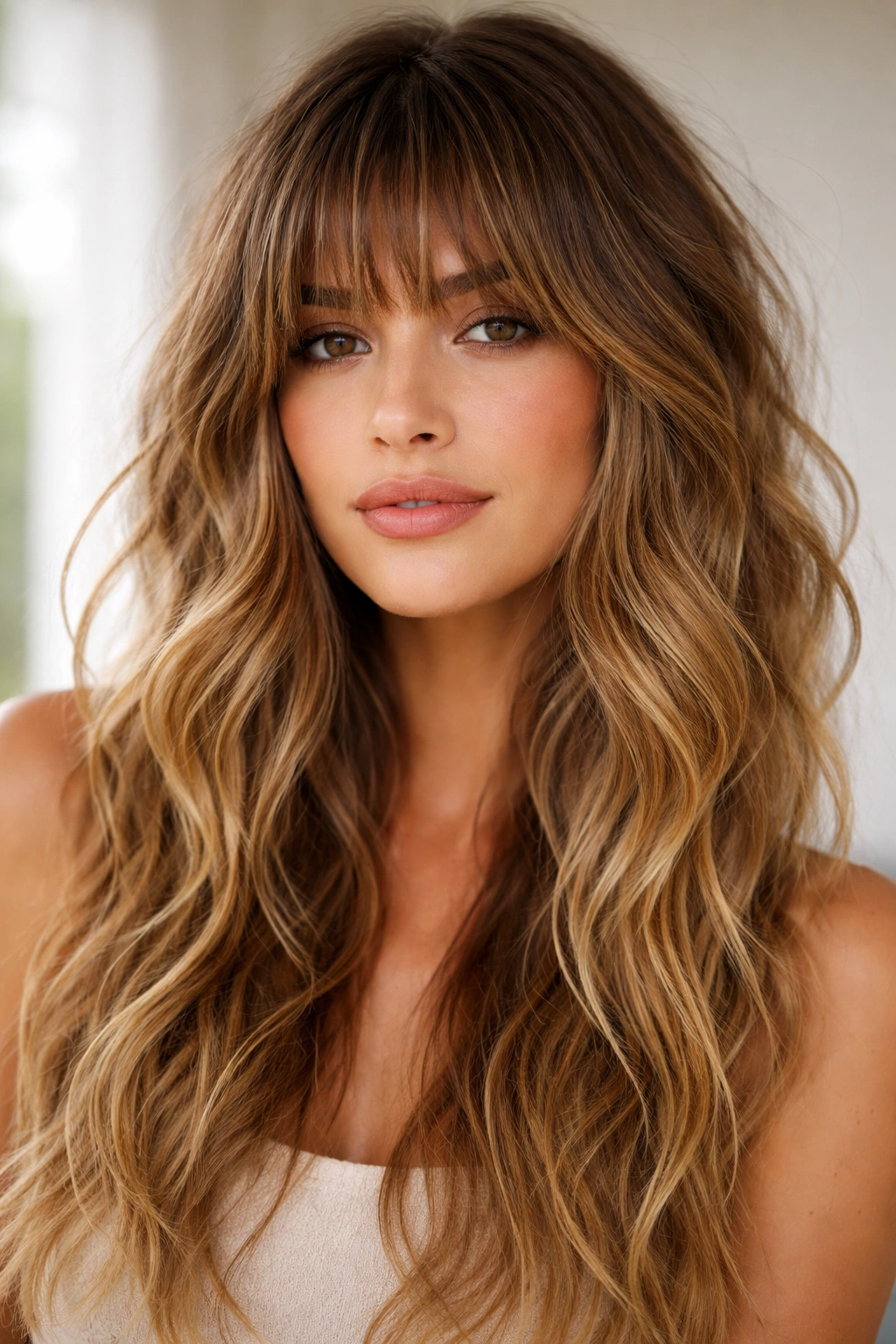
Textured bangs that incorporate choppy, razor-cut ends blend perfectly with beachy wavy texture, creating a cohesive look where there’s virtually no distinction between where your bangs end and your longer hair begins. Everything flows together with movement and texture, giving you a soft, romantic, effortlessly beautiful aesthetic. This is the ultimate “I woke up like this” style.
The Effortless Appeal
What’s beautiful about this combination is that it celebrates texture rather than fighting it. You’re not trying to blow everything out smooth or create artificial definition—you’re working with your hair’s natural ability to move and texture. This style feels accessible, approachable, and genuinely low-maintenance once you have the right cut and products to support your waves.
Achieving Effortless Beachy Texture
- Use a sea salt spray or texturizing product on damp hair before your waves naturally form or before blow-drying
- Consider applying the product to damp hair, then allowing your hair to air-dry or using a diffuser for maximum texture
- Avoid over-brushing or trying to make everything too neat; the whole point is intentional messiness
- Pair with an overall layered, textured cut that complements the movement in your bangs
- This works beautifully on shoulder-length to longer hair with waves throughout
- Trim every 5-6 weeks to maintain texture and prevent the textured ends from becoming scraggly
- Add highlights or balayage throughout to enhance dimension and depth in the textured areas
Final Thoughts
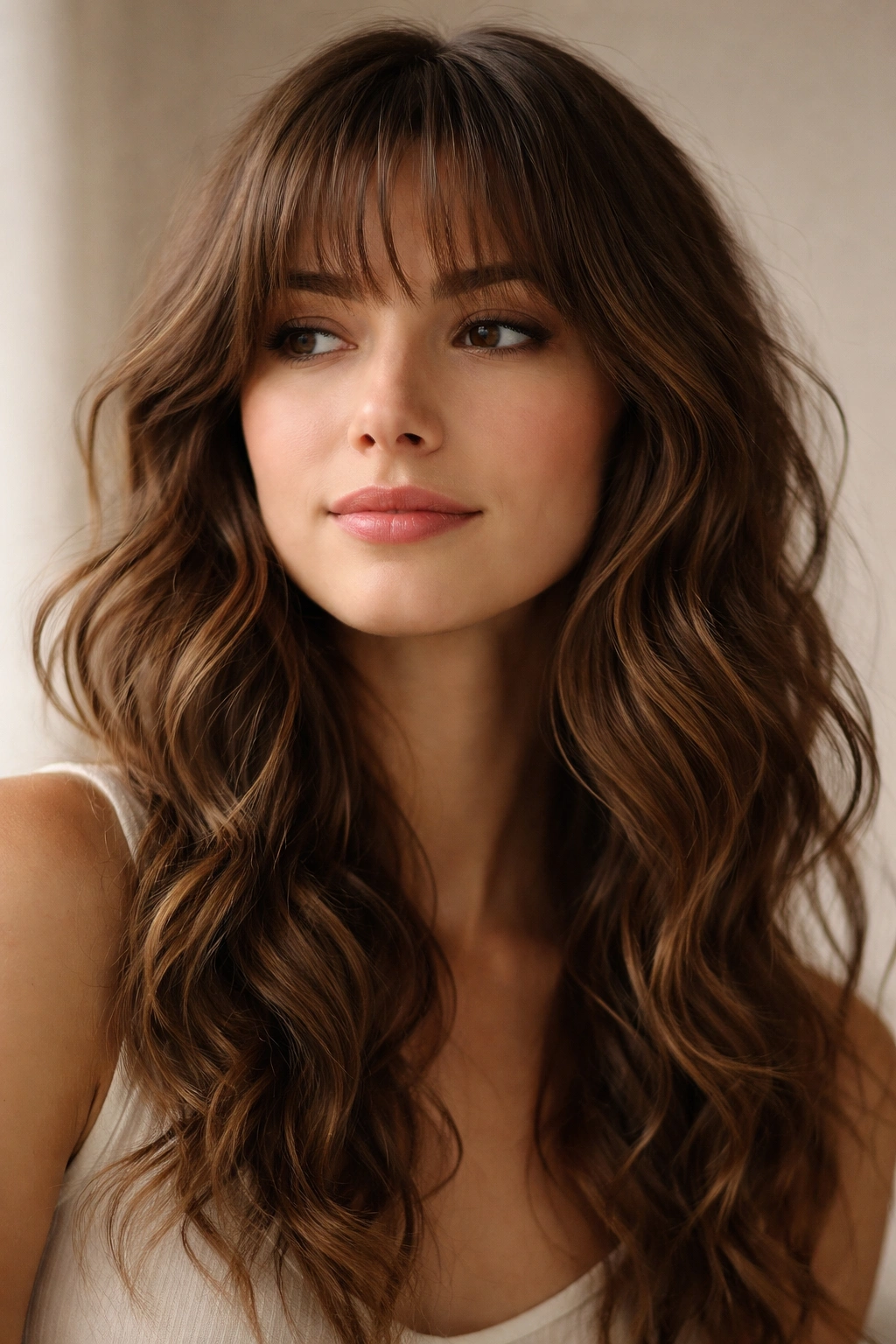
Bangs on wavy hair aren’t a risk—they’re an opportunity to amplify the beauty of your natural texture while framing your face in a way that feels fresh, intentional, and entirely you. The styles that work best are the ones that work with your waves rather than against them, which means embracing texture, movement, and a little bit of intentional imperfection. Whether you choose something soft and romantic, bold and modern, or effortlessly undone, the right bangs style will make you excited to style your hair every single morning.
The key to success is finding a stylist who understands wavy hair and has experience cutting bangs specifically for textured clients. A good cut is 80 percent of the battle—once you have the right shape and texture built in, styling becomes dramatically easier. Invest in a texturizing product you love, commit to regular trims every 4-6 weeks, and give yourself permission to embrace your hair’s natural pattern rather than trying to fight it. Your waves aren’t a limitation; they’re the secret ingredient that makes bangs look modern, effortless, and undeniably beautiful.
