



A wavy bob is one of those rare haircuts that manages to feel effortlessly chic while still requiring intention behind it—and when you pair that movement with brown tones, you’ve got something genuinely versatile. Brown offers an incredible range: it can go warm and honeyed, cool and ash-toned, rich and chocolatey, or somewhere beautifully in between. The way waves interact with brown hair creates depth and dimension that feels naturally luxurious, whether your strands fall just below your chin or land closer to your shoulders.
What makes the wavy bob such a standout choice is that it bridges the gap between low-maintenance and polished. You’re not committing to tight curls that demand rigorous styling every morning, but you’re also not settling for flat, one-note hair either. Waves give you texture, movement, and personality. And because brown is such a forgiving, universally flattering base color, it lets the cut itself do most of the talking—the shape, the layers, the way the ends flip or curve become the focal point rather than fighting for attention against an extreme color.
The right wavy bob in brown can transform how you feel about your hair entirely. It’s the kind of cut that looks intentional when you style it, but also holds its own when you’re rushing out the door. Whether you’ve got fine hair that needs texture-building technique or thick hair that’s naturally prone to waves, there’s a version of this cut that works for your specific hair type and lifestyle. Let’s walk through sixteen approaches to this classic cut, each with its own character and appeal.
1. The Shoulder-Grazing Warm Brown Waves
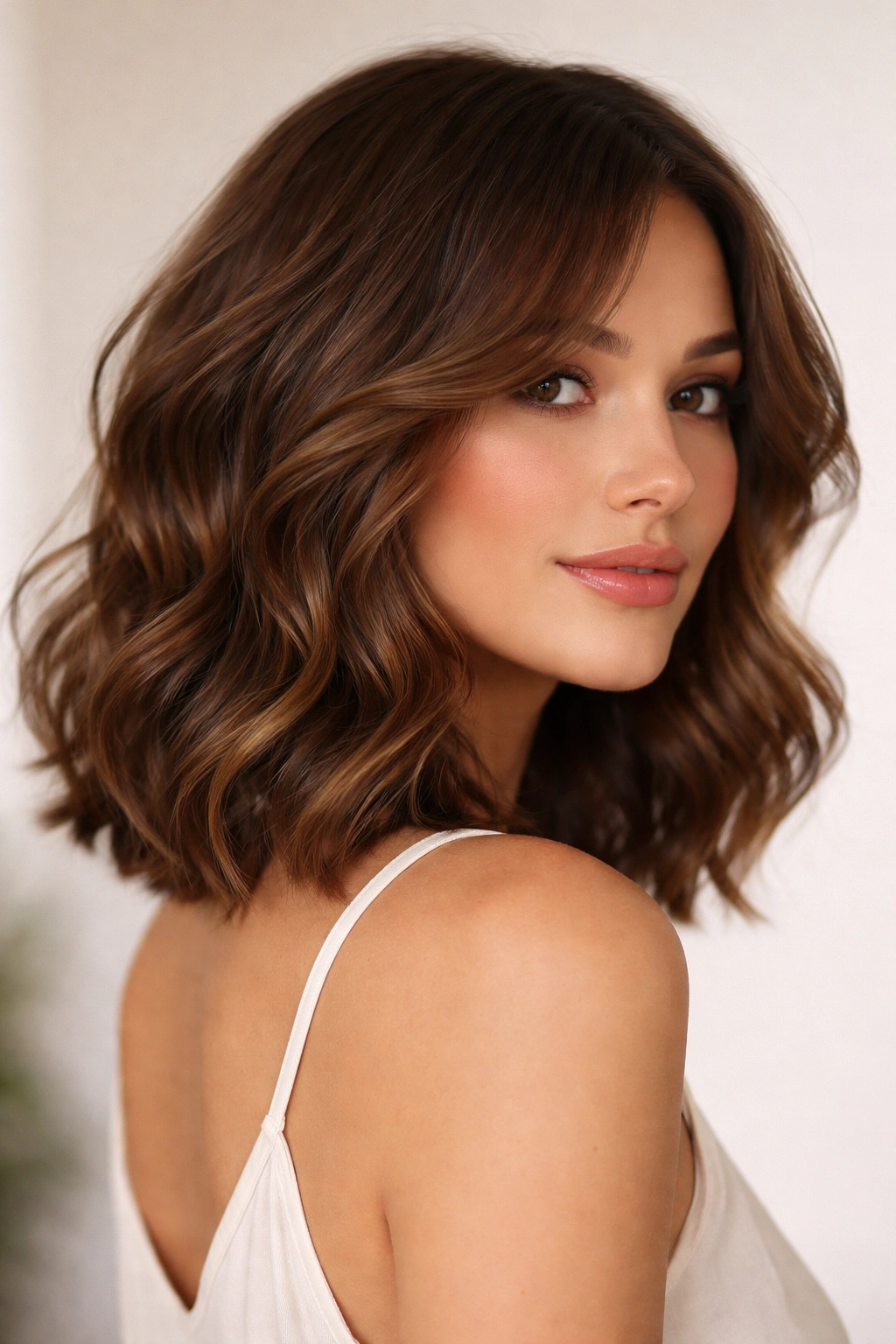
This length hits right at the shoulder, giving you that perfect sweet spot where waves have room to move without feeling overly long. The warm brown tone—think honey-kissed chestnut—catches light beautifully and makes the movement of the waves even more visible. The cut works best with subtle layers throughout that encourage the waves to flow rather than bunch up, and you get that flattering frame around the face that elongates your jawline.
Why This Style Works for Most Hair Types
Shoulder-length wavy bobs suit both fine and thick hair because the length provides enough weight to hold wave formation without pulling it flat, while the width at the shoulder creates a balanced silhouette that’s flattering on most face shapes. The warm brown shade adds richness without requiring heavy maintenance or frequent color touch-ups, making it genuinely practical for everyday wear.
How to Style and Maintain It
- Use a lightweight curl-cream or sea-salt spray on damp hair before air-drying for natural-looking waves
- A 1.5-inch barrel curling iron can refresh waves between washes if air-drying doesn’t give you the movement you want
- Get trims every 6-8 weeks to keep the shape crisp and prevent the ends from getting wispy
- Blow-dry with a diffuser attachment to encourage wave formation rather than frizz
Pro tip: Sleep on a silk or satin pillowcase to keep your waves intact overnight—the smooth fabric creates way less friction than cotton.
2. The Choppy Layered Brown Bob with Texture
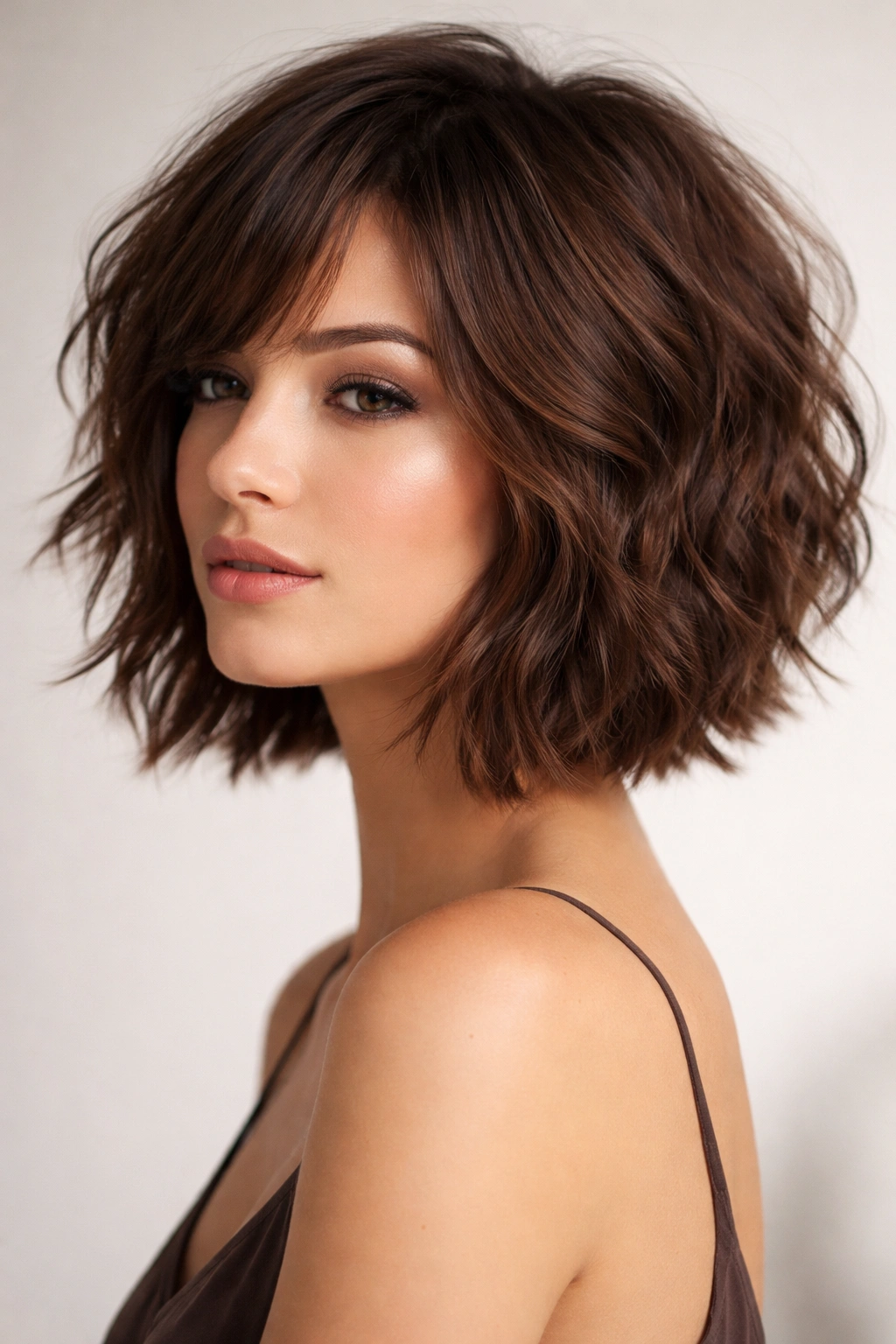
Choppy layers create the illusion of movement and volume even if your hair is naturally fine, and they’re especially striking in a rich brown shade where the depth of color gets broken up by the angle of each layer. This cut requires a stylist who understands that choppy doesn’t mean haphazard—each layer should be intentional, creating peaks and valleys that guide where your waves naturally form. The texture makes styling easier because the cut does half the work for you.
The Visual Impact of Strategic Layering
Choppy layers catch light differently at each level, creating a multidimensional effect that makes brown hair look thicker and more dynamic than a blunt cut. The irregular lengths also mean waves can form at different points along each strand, giving you texture that feels organic rather than uniform.
Best Practices for Choppy Layers
- Ask your stylist to point-cut the ends rather than blunt them—this creates more movement and less bulk
- Layers should be shorter near the crown to add lift, transitioning to longer pieces in front for balance
- Use texturizing spray or a light mousse to enhance the choppy effect and prevent the cut from looking too sharp
- Style with your fingers rather than a brush to maintain the piecy, textured look
3. The Blunt Wavy Bob with Soft Brown Undertones
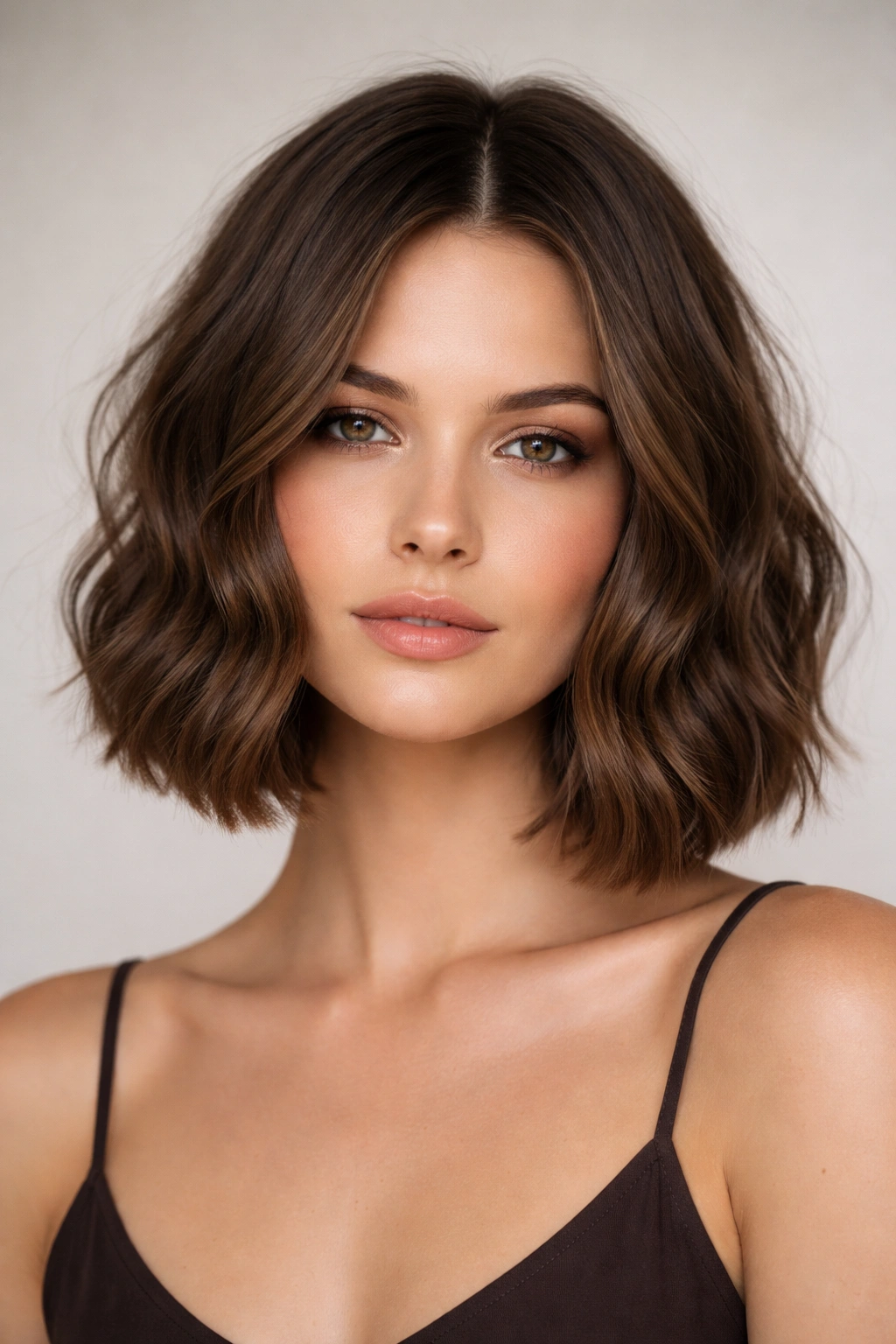
This cut keeps most of the length even through the bottom, creating a sleek, intentional line that contrasts beautifully with the softness of the waves. The soft brown undertones—ashy, cool-toned, less yellow—give it a modern, slightly sophisticated feel that works especially well if you have a more structured, angular face shape. The bluntness of the line provides architectural definition that the waves then soften, creating perfect balance.
Why Blunt Lines Enhance Waves
A blunt cut forces the viewer’s eye to notice the wave pattern more because the line itself is so defined. The contrast between the sharp bottom line and the curved, organic waves creates visual interest that feels both polished and relaxed. This style works especially well if you’re someone who appreciates clean lines but doesn’t want to sacrifice texture.
Styling Technique for Definition
- Blow-dry your waves in the direction you want them to fall—don’t let them dry randomly
- A straightening iron can be used to create more defined waves rather than undone ones (flip the barrel as you move down the section)
- Hairspray applied to damp waves helps them hold their shape as they dry
- The blunt line means any growth becomes obvious, so plan for trims every 5-6 weeks
4. The Textured Pixie-to-Bob Transition with Caramel Brown
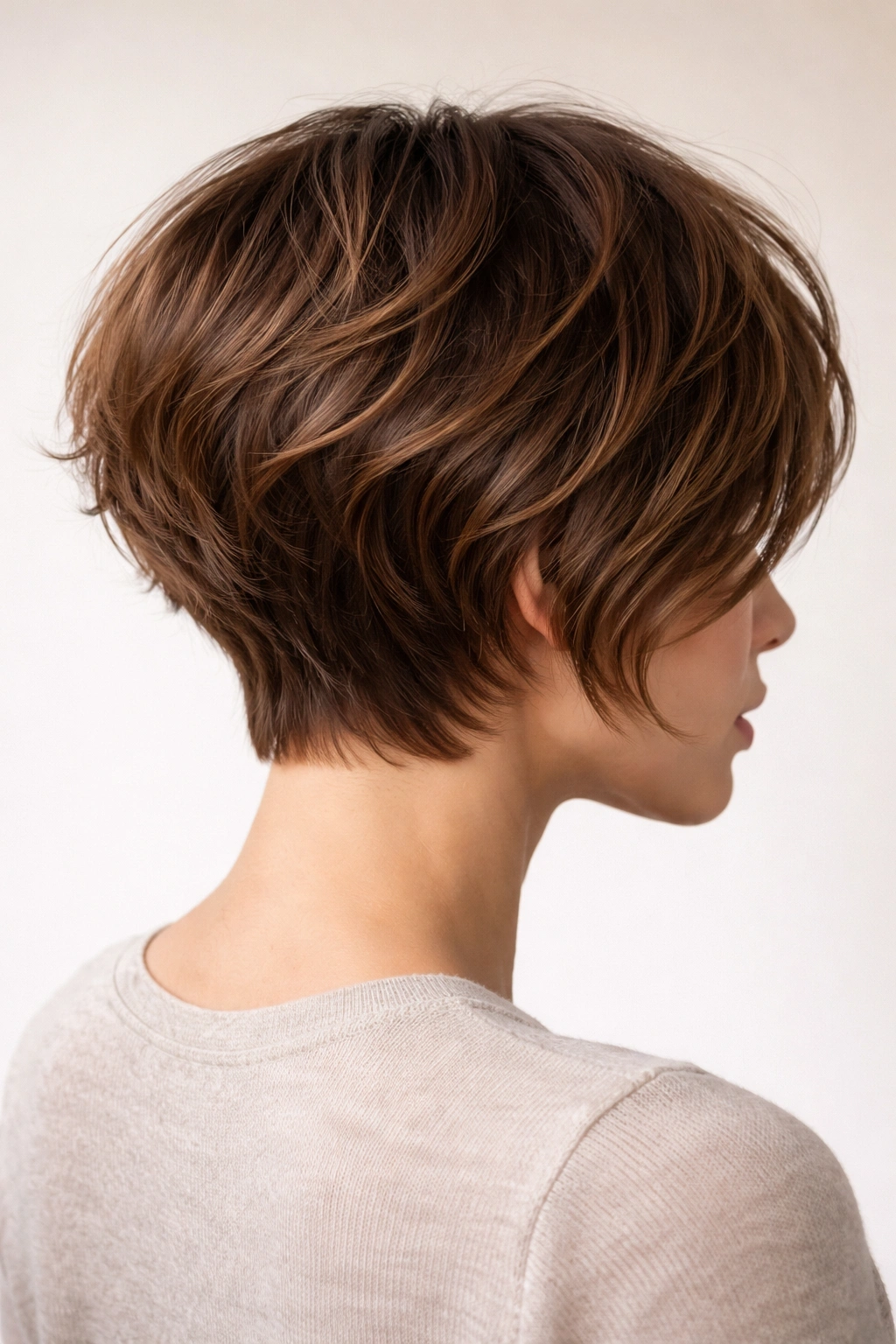
If you’re growing out shorter hair or experimenting with length, a textured bob with layers that create movement can feel less awkward than a blunt grow-out. The caramel brown tone—warmer and lighter than pure chocolate but deeper than blonde—adds brightness and makes the transition feel intentional rather than like you’re stuck in an in-between phase. Layers cut at varied lengths throughout help disguise the different growth rates.
Managing the Awkward Growth Phase
Textured layers mean you don’t have one obvious “line” that shows every quarter-inch of growth, making the transition between lengths feel less noticeable. The caramel brown also reflects light in a way that draws attention to the cut and movement rather than where your previous length ended.
Styling During Transition
- Lean into texture during the awkward phase rather than trying to make it sleek
- A light hairspray and finger-styling approach works better than trying to blow-dry everything smooth
- Experiment with different parting lines to change how the layers fall and what gets emphasized
- Request that your stylist cut layers with purpose—they should guide the eye to your best features as the length changes
5. The Curtain-Banged Brown Wavy Bob
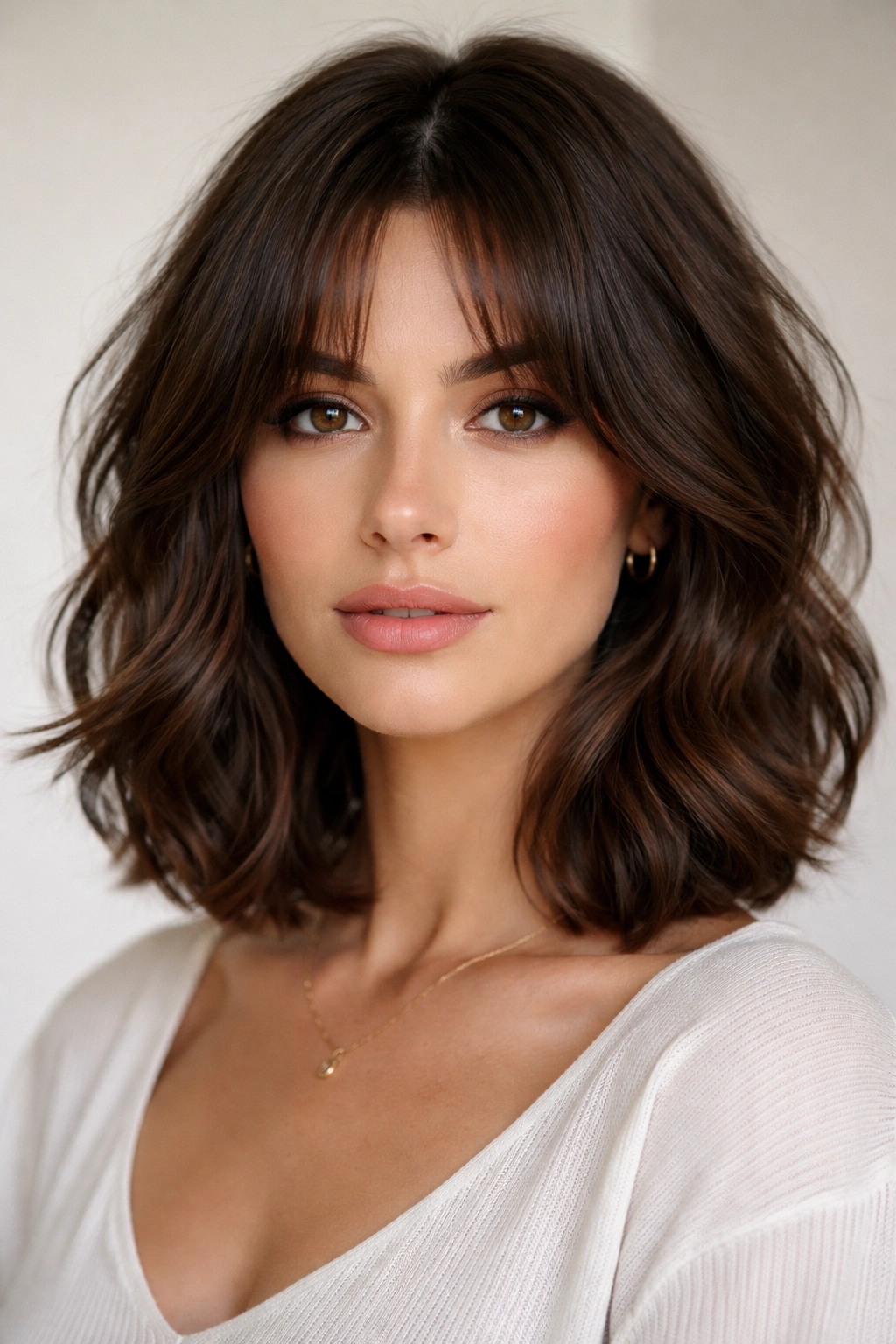
Curtain bangs frame the face while allowing for movement, and they pair beautifully with wavy texture because the waves naturally encourage the bangs to flip outward rather than falling flat and heavy. The brown base color makes the face-framing effect even more flattering because the darker tone creates definition around your features. This cut works especially well if you want to try bangs but aren’t ready to fully commit, since curtain bangs blend back into the rest of the cut as your hair grows.
The Face-Framing Power of Curtain Bangs
Curtain bangs create the illusion of a more defined cheekbone structure and draw attention upward to your eyes. When paired with waves, they’re incredibly forgiving because slight imperfections in the shape get softened by the texture. Brown hair makes this effect even more pronounced because the color density creates a natural frame.
Maintaining Curtain Bangs with Waves
- Curtain bangs need regular trims (every 3-4 weeks) to maintain their shape
- Blow-dry your bangs separately from the rest of your hair to control how they flip
- A round brush can help create the outward flip that makes curtain bangs work
- Avoid heavy products on the bangs themselves—they’ll weigh them down and make them fall straight
6. The Razored Undercutting with Espresso Brown
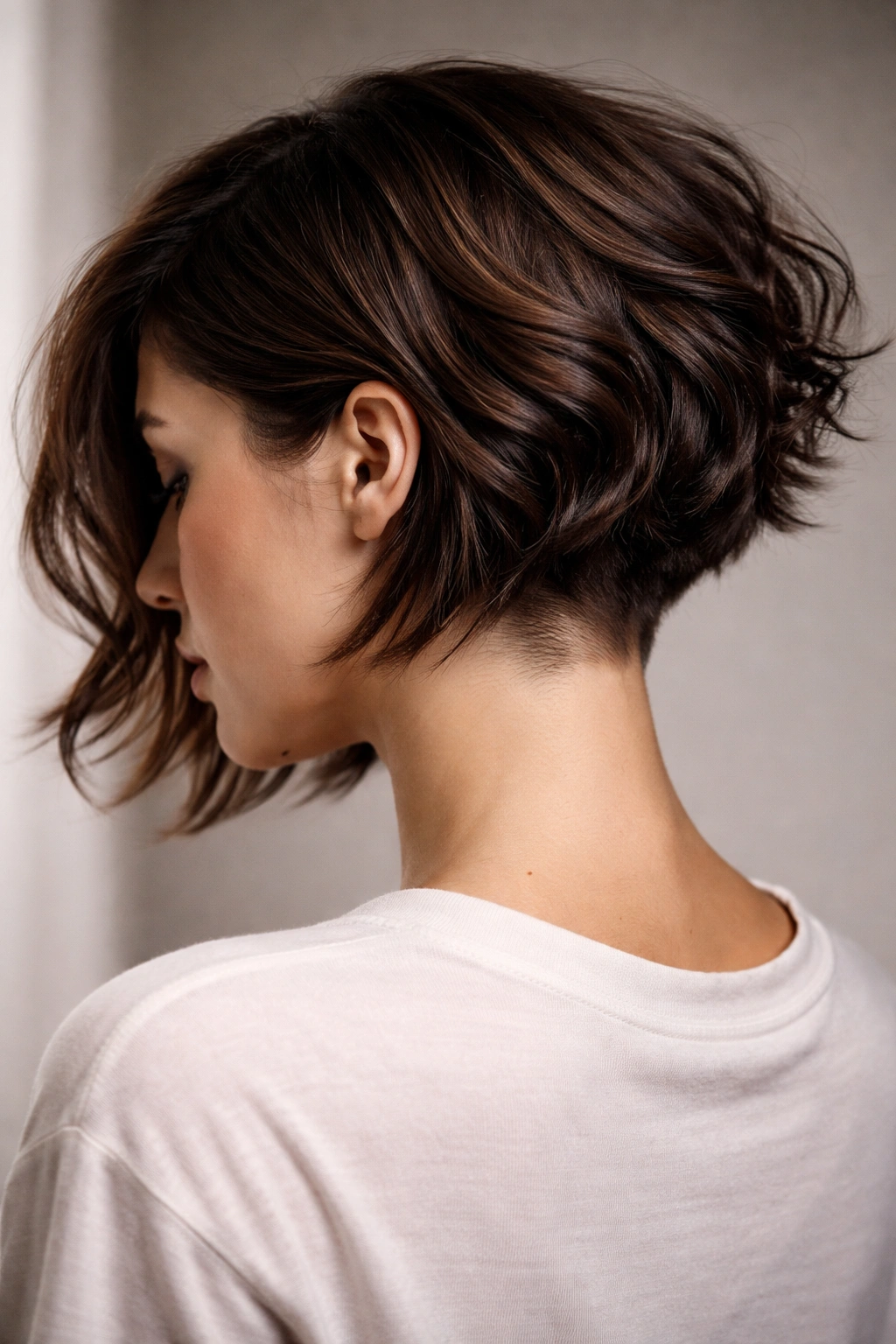
Razored layers create the most movement and texture, and when paired with an espresso brown—nearly black with warm undertones—the lightness of the cut contrasts strikingly with the depth of the color. The undercut (slightly shorter layers hidden underneath, with longer pieces on top) creates volume and encourages waves to form more dramatically. This is a cut for someone who loves texture and wants their waves to be the star of the show.
How Razoring Enhances Wave Formation
Razor-cutting creates thinner points along each strand, which means waves can form more easily and with more definition. The technique removes bulk strategically, creating the illusion of movement even if your natural wave pattern is subtle. Espresso brown shows these techniques more clearly than lighter shades because the depth of color highlights the haircut structure.
Working with Razored Texture
- Razored layers require more maintenance than blunt-cut layers—plan for trims every 4-6 weeks
- Use texturizing products (sea-salt spray, dry texture spray) to enhance the effect
- Finger-styling looks better than brush-styling with razored layers
- Avoid heavy serums or oils that can weigh down the texture
7. The Asymmetrical Wavy Bob in Medium Brown
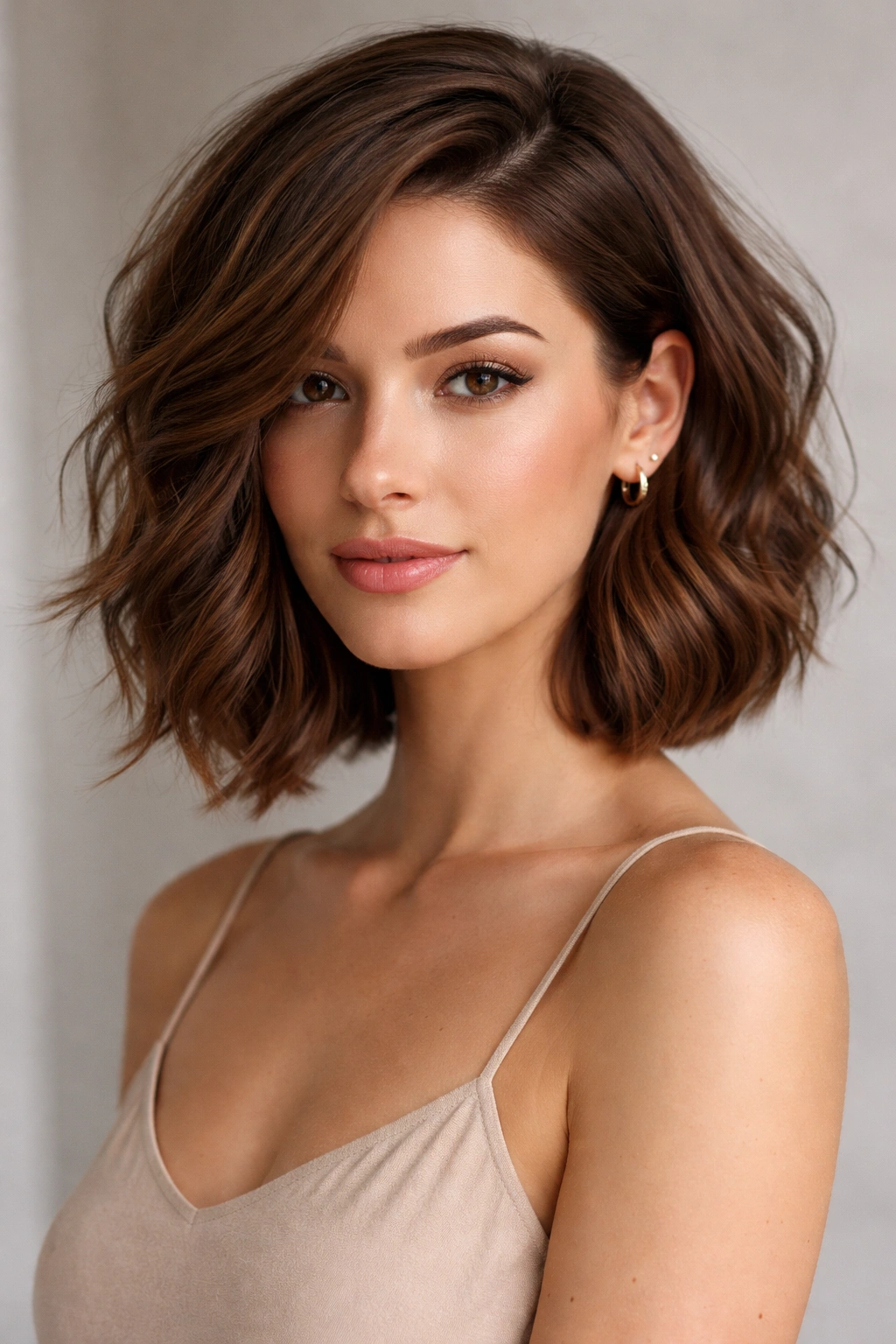
One side longer than the other creates visual interest and a modern edge, while medium brown (neither warm nor cool, just solidly warm-toned brown) feels approachable and easy to live with. The asymmetry means you’re not trying to keep two sides perfectly balanced, which is actually easier to maintain than a perfectly even bob. Waves on an asymmetrical cut create an almost playful effect that prevents the style from feeling too avant-garde.
Balancing Asymmetry with Waves
Asymmetrical cuts risk feeling unbalanced or awkward, but waves soften that effect by creating movement on both sides rather than having one side feel dominant. The medium brown keeps things from looking too trendy or high-fashion—it feels more wearable and everyday, even though the cut itself is distinctly modern.
Styling an Asymmetrical Wavy Bob
- The longer side can tuck behind your ear or flip over your shoulder depending on the occasion
- Waves on both sides help the asymmetry feel intentional rather than like a styling choice
- Style both sides with the same technique so neither side looks flat or underdone
- The shorter side often looks better with a deeper side part that shows off the cut’s shape
8. The Micro Fringe with Wavy Brown Layers
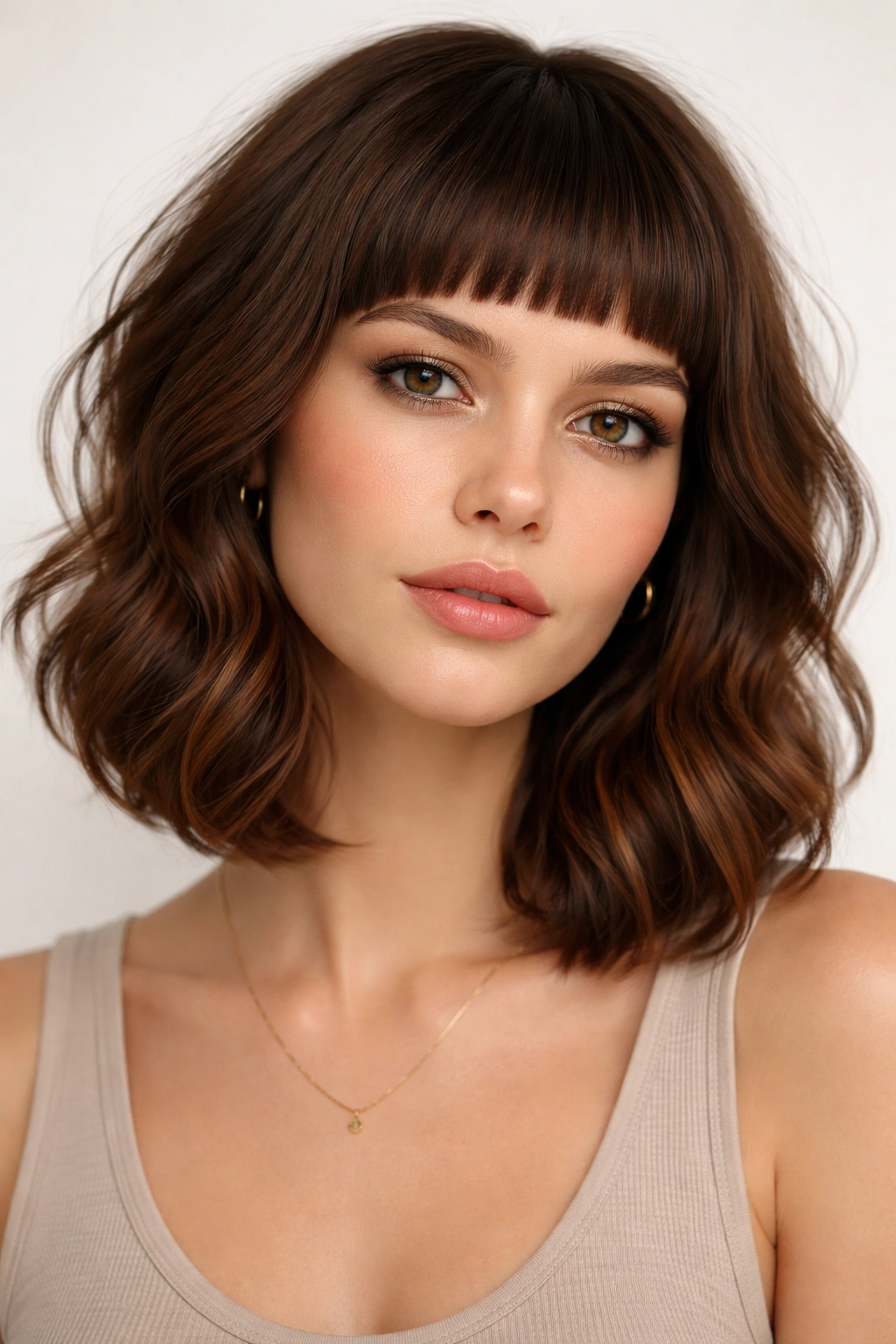
A micro fringe (very short, blunt bangs just above the eyebrows) creates an ultra-modern look that pairs surprisingly well with the soft, romantic quality of waves. This is definitely a bold choice, but in a rich brown, the fringe doesn’t feel severe—the warm tone softens what could otherwise feel edgy. The waves throughout the rest of the cut balance the sharpness of the fringe perfectly.
Creating Contrast Between Fringe and Waves
The micro fringe creates a defined line that makes the waves throughout the rest of the cut feel even softer and more romantic by comparison. This contrast is what makes the combination work—neither element overwhelms the other because they’re so visually different. Brown hair allows this contrast to feel cohesive rather than chaotic.
Managing the Micro Fringe
- Micro fringes require trims every 2-3 weeks without fail—grow-out is not cute
- You’ll be blow-drying the fringe every time you style because it won’t naturally fall into place
- Avoid heavy products on the fringe itself—keep it light so it moves naturally
- This style is best for people who don’t mind a higher styling commitment
9. The Tousled Lived-In Brown Bob with Undone Waves
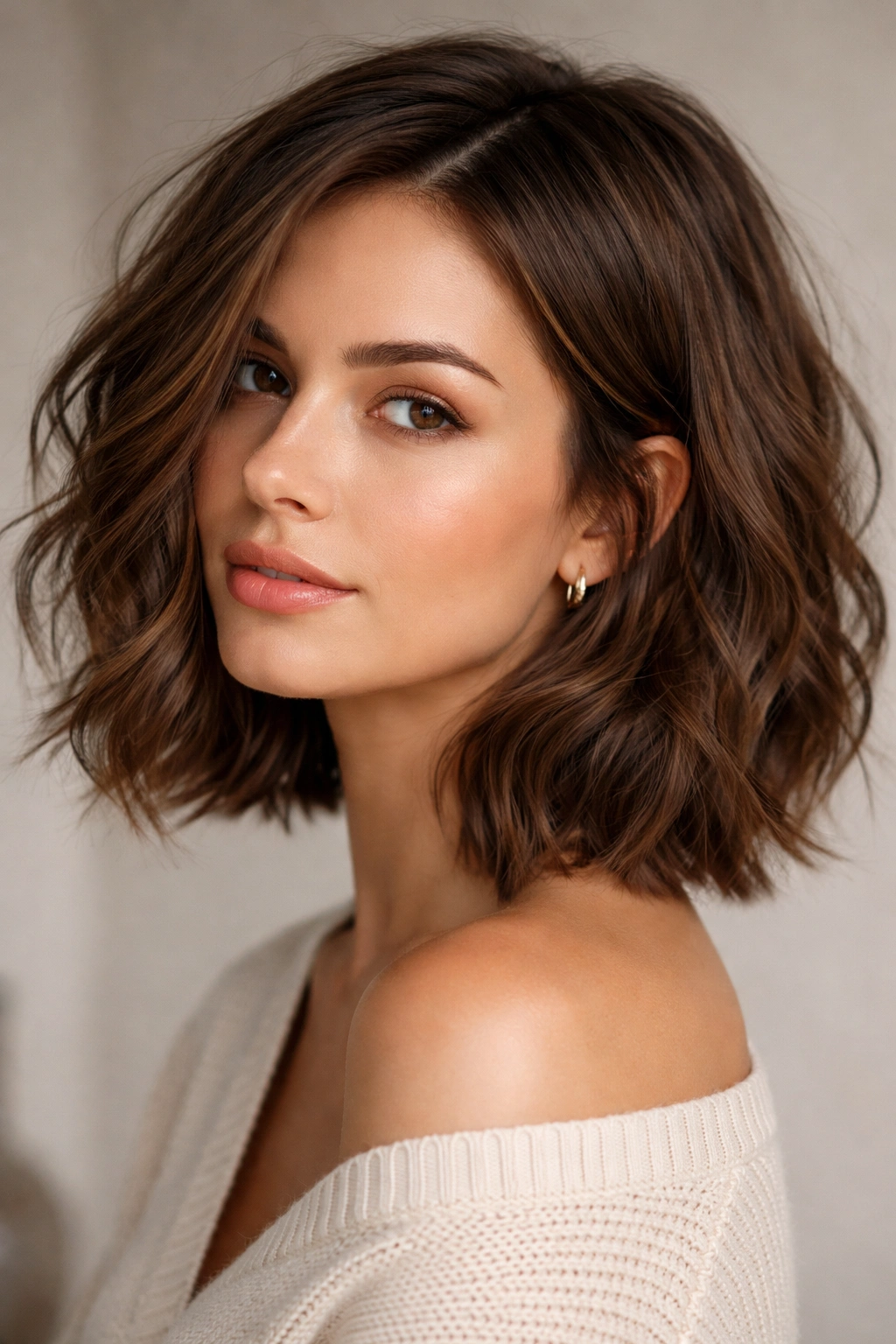
This cut prioritizes the feeling of effortless texture—layers that encourage waves to form naturally, cut to look intentionally undone rather than trying to achieve perfect definition. The lived-in brown tone (perhaps with subtle highlights or lowlights creating internal dimension) makes the tousled effect feel like it’s just how your hair naturally is rather than something you labored over. This is the “I woke up like this” version of the wavy bob.
Achieving the Effortless Look
The cut itself does most of the work here—layers are placed to encourage waves at different points, and shorter pieces near the crown add texture without requiring heat styling. The lived-in color adds dimension that makes the waves appear more pronounced without actually being tighter or more defined.
Styling for That Undone Vibe
- Embrace air-drying or use a diffuser on low heat rather than trying to blow-dry straight
- Use a light sea-salt spray or texturizing mousse on damp hair for gentle wave definition
- Resist the urge to over-style—the whole point is that it looks naturally textured
- Messy texture cream or dry shampoo can add grit and make waves hold better throughout the day
10. The Polished Bouncy Bob with Rich Chocolate Brown
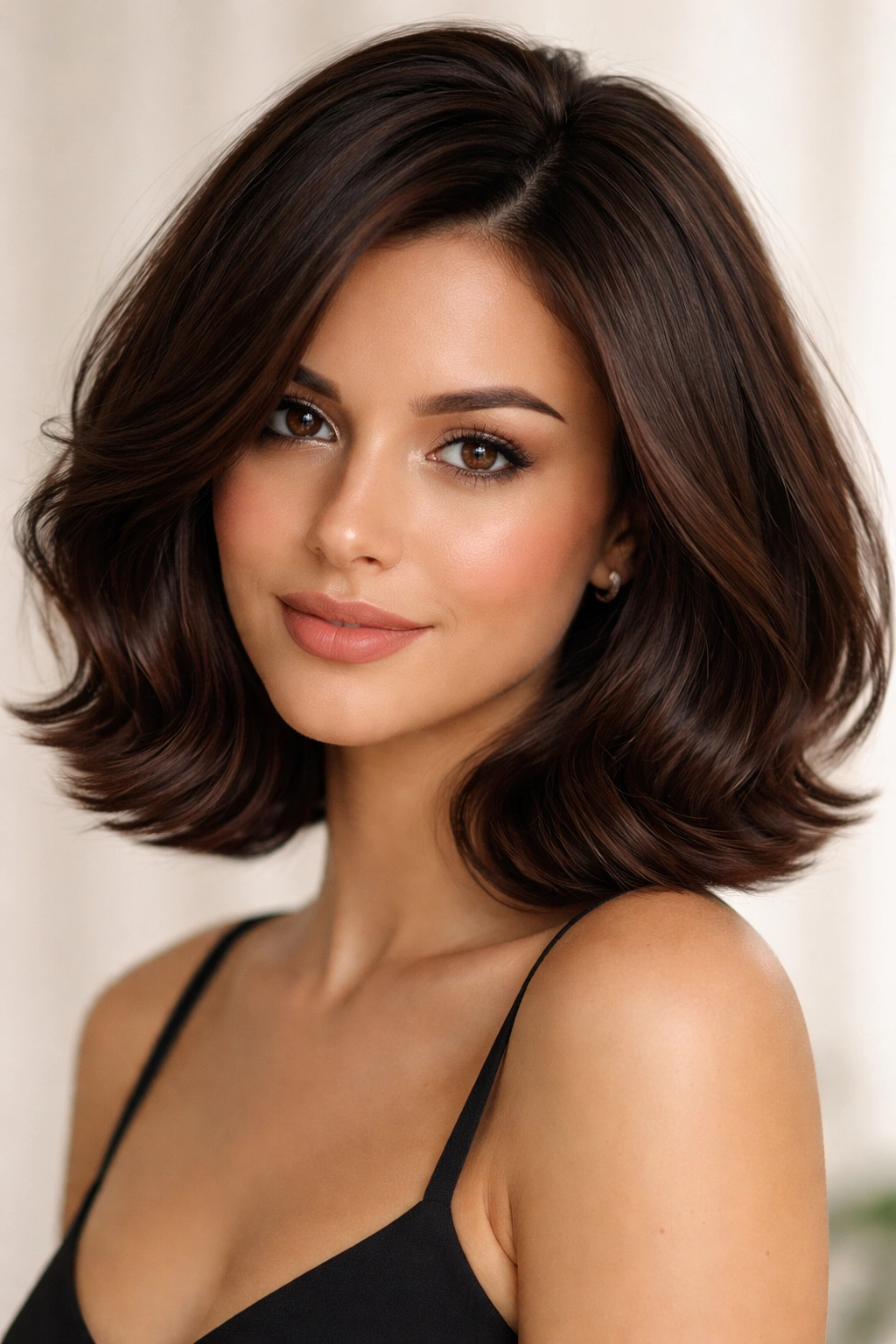
A bouncy bob prioritizes volume and movement, with strategically placed layers that encourage waves to form in a more uniform, deliberate pattern rather than looking random. Rich chocolate brown (deep, warm, luxurious) paired with bouncy waves feels both polished and fun—it’s the cut you’d wear to a nice dinner but also to casual weekend plans. The richness of the color makes the movement of the waves even more visible.
Building Volume Into the Cut
Volume comes from layers throughout (especially shorter pieces at the crown) and from the way the cut is blunt-ended at the bottom, which means there’s weight at the perimeter that encourages waves to bounce outward. The chocolate brown doesn’t hide the volume—it showcases it.
Styling for Maximum Bounce
- Blow-dry with a round brush to encourage waves to curve away from the face
- Use a volumizing mousse or spray on damp roots before blow-drying
- A 1.5-inch barrel curling iron can refresh waves if they fall flat during the day
- This style rewards heat styling, so plan for a few extra minutes in the morning if you want maximum bounce
11. The Stacked Wavy Bob with Dimensional Brown Tones
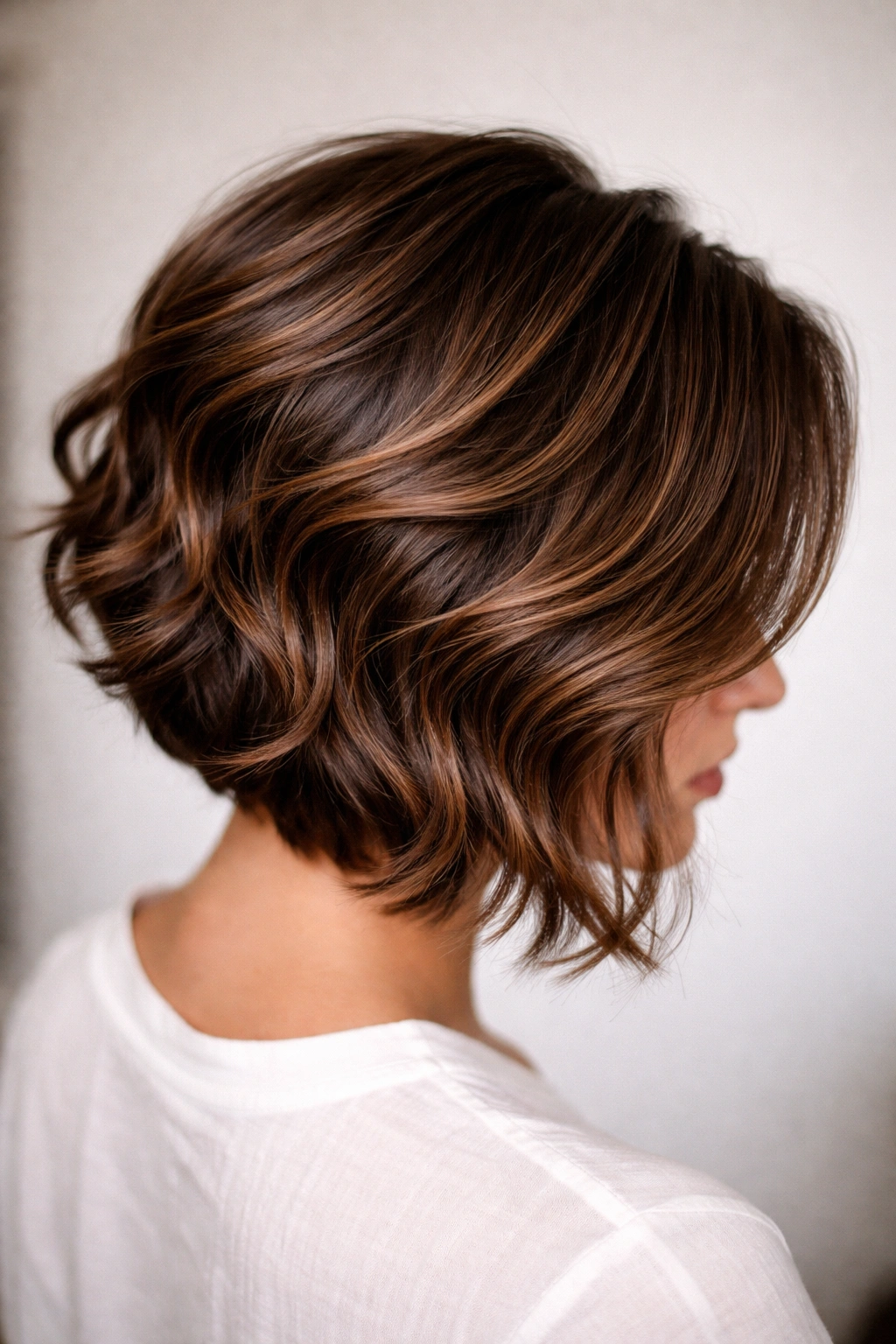
Stacking (cutting shorter layers on top, gradually getting longer toward the bottom) creates extra volume at the crown and encourages waves to form more dramatically. Dimensional brown tones—think a base of warm brown with subtle caramel or golden highlights running through—add depth and movement that makes the stacked cut even more visually interesting. This is especially flattering if you have a rounder face shape because the volume at the top creates proportion.
How Stacking Adds Dimension
Stacked layers create multiple points where light hits, which means the dimensional tones become more visible and the cut structure becomes clearer. The gradual transition from short to long also means waves form at different angles throughout the cut, creating an overall effect of movement and texture rather than uniform waves.
Maintaining Stacked Layers
- Stacked cuts require regular trims to maintain the shape—expect to go every 4-6 weeks
- Blow-drying is important because the stacking creates the volume through the cut itself, but heat styling magnifies that effect
- Texturizing products work especially well on stacked bobs because they enhance the layered effect
- Ask your stylist to keep some weight in the longer bottom pieces so they don’t become too wispy
12. The Shaggy Wavy Bob with Warm Caramel Brown
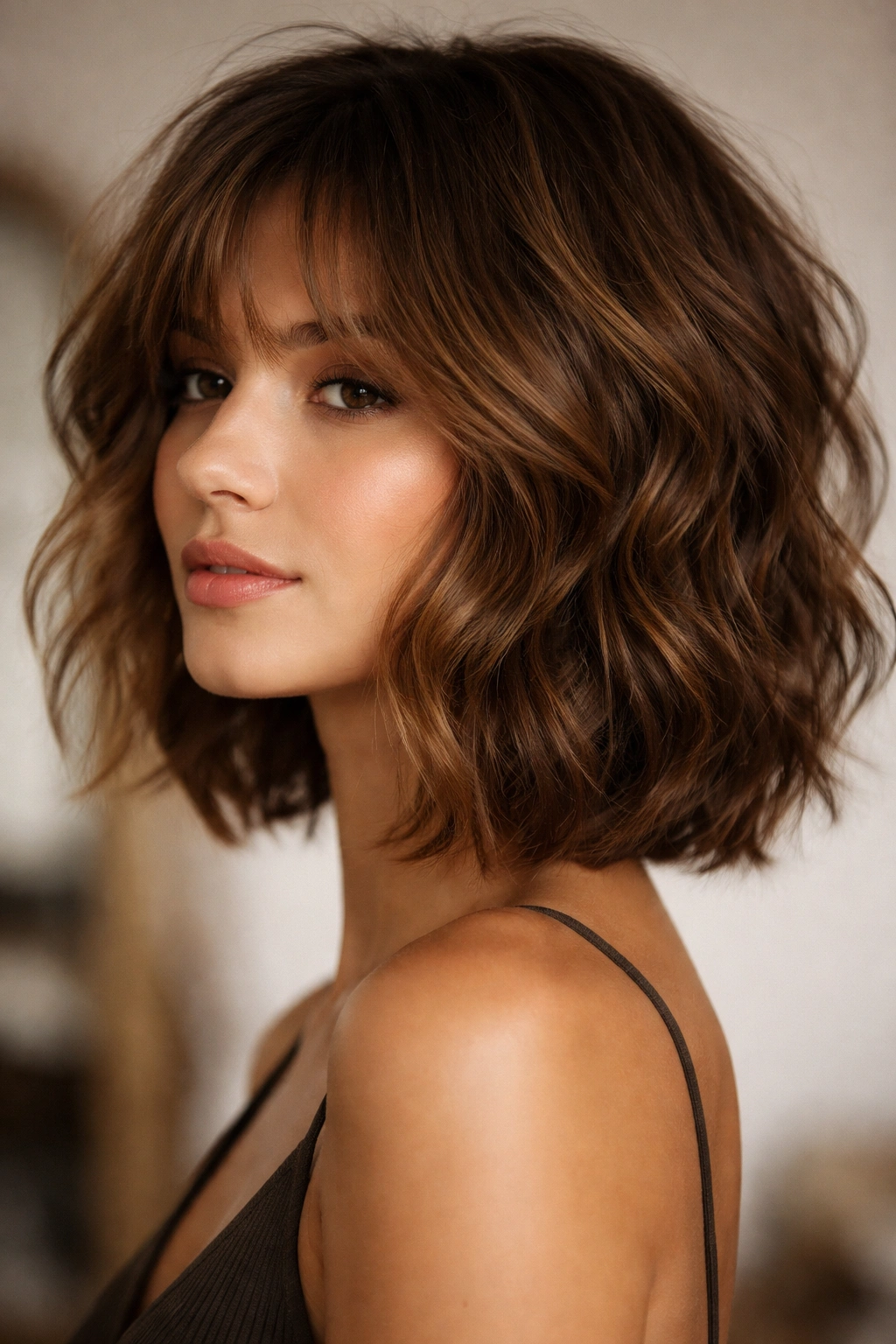
A modern shag approach to the wavy bob incorporates longer pieces mixed with shorter, choppy layers throughout, creating an intentionally undone, rock-and-roll vibe. Warm caramel brown (lighter than chocolate, warmer than ash) makes the shaggy texture feel approachable rather than too edgy. This cut celebrates texture and movement above all else—it’s for someone who loves waves and wants them to be the focus.
The Modern Shag Aesthetic
Modern shags differ from ’70s shags because the layering is more intentional and refined, even though they look undone. The caramel brown adds contemporary appeal rather than feeling retro. The movement created by the combination of layers and your natural wave pattern is what makes this cut special.
Styling a Shaggy Wavy Bob
- Embrace texture—this isn’t a cut for sleek, polished hair
- Sea-salt spray and texturizing mousse are your best friends
- Air-drying with fingers rather than a brush enhances the shaggy effect
- Shags often look better slightly grown out than freshly cut, so you don’t need trims as frequently if you like a more exaggerated effect
13. The Sleek Straight-Ended Wavy Bob with Chestnut Brown
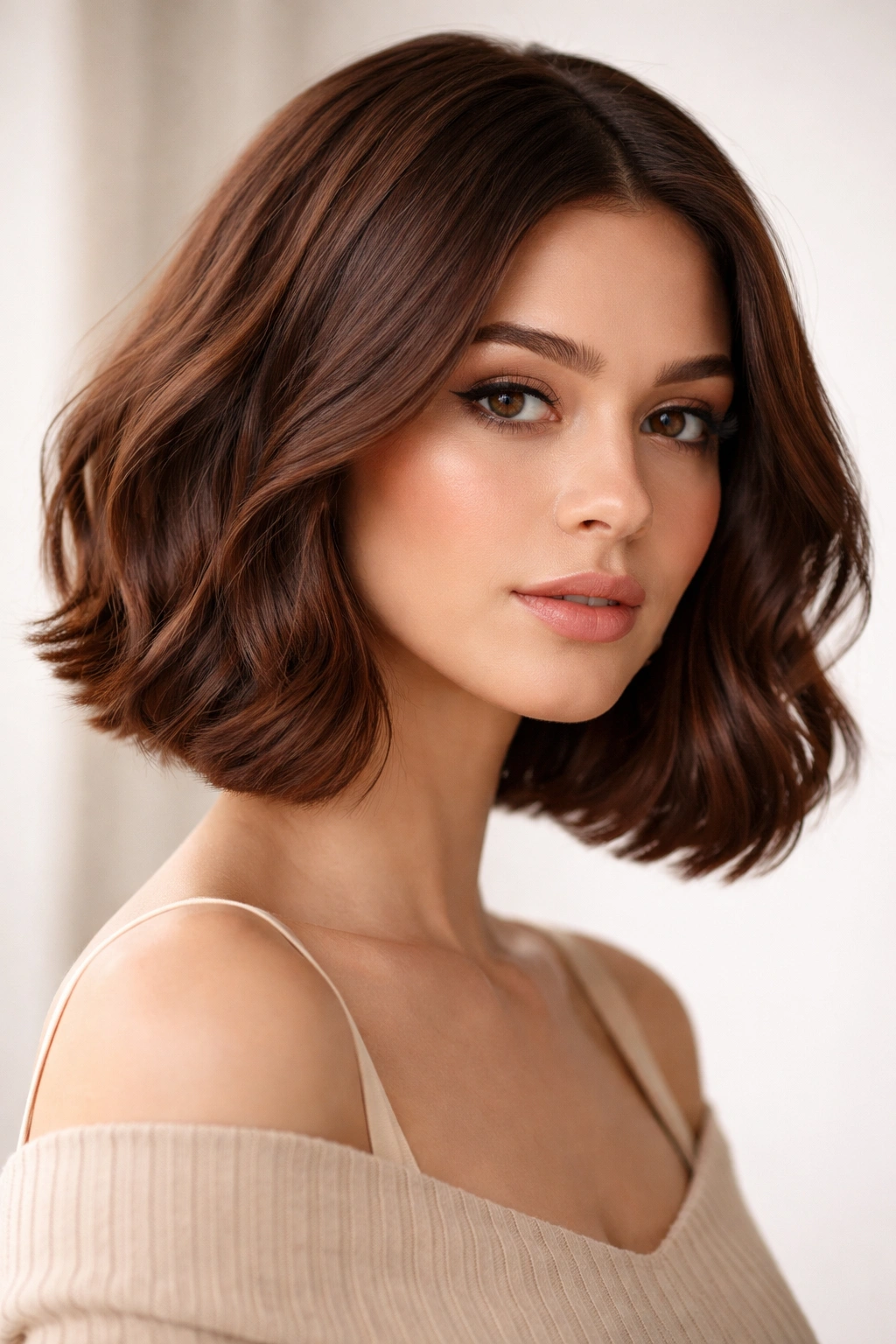
This cut combines a sharp, blunt baseline with intentional waves through the mid-lengths and ends, creating a striking contrast between structure and softness. Chestnut brown (warm with a hint of red undertones) adds richness and makes the wave pattern more visible against the darker base. The effect is modern and put-together—waves feel like a style choice rather than texture your hair naturally has.
Creating Intentional Waves on a Blunt Cut
The blunt line at the bottom grounds the cut, while waves introduced further up create movement that feels controlled and deliberate. This approach works especially well if you want waves but worry that too much texture makes you look unkempt. The chestnut brown adds warmth and dimension that prevents the waves from looking artificial.
Styling for Definition
- You’ll likely need to heat-style to create these waves if your hair isn’t naturally very wavy
- A wand or 1.25-inch barrel iron creates the most flattering wave pattern
- Apply waves to slightly damp hair and let them cool before brushing through slightly for softer definition
- This is a style that requires some daily effort, so be realistic about how much time you’re willing to spend
14. The Wispy-Ends Wavy Bob with Roasted Brown
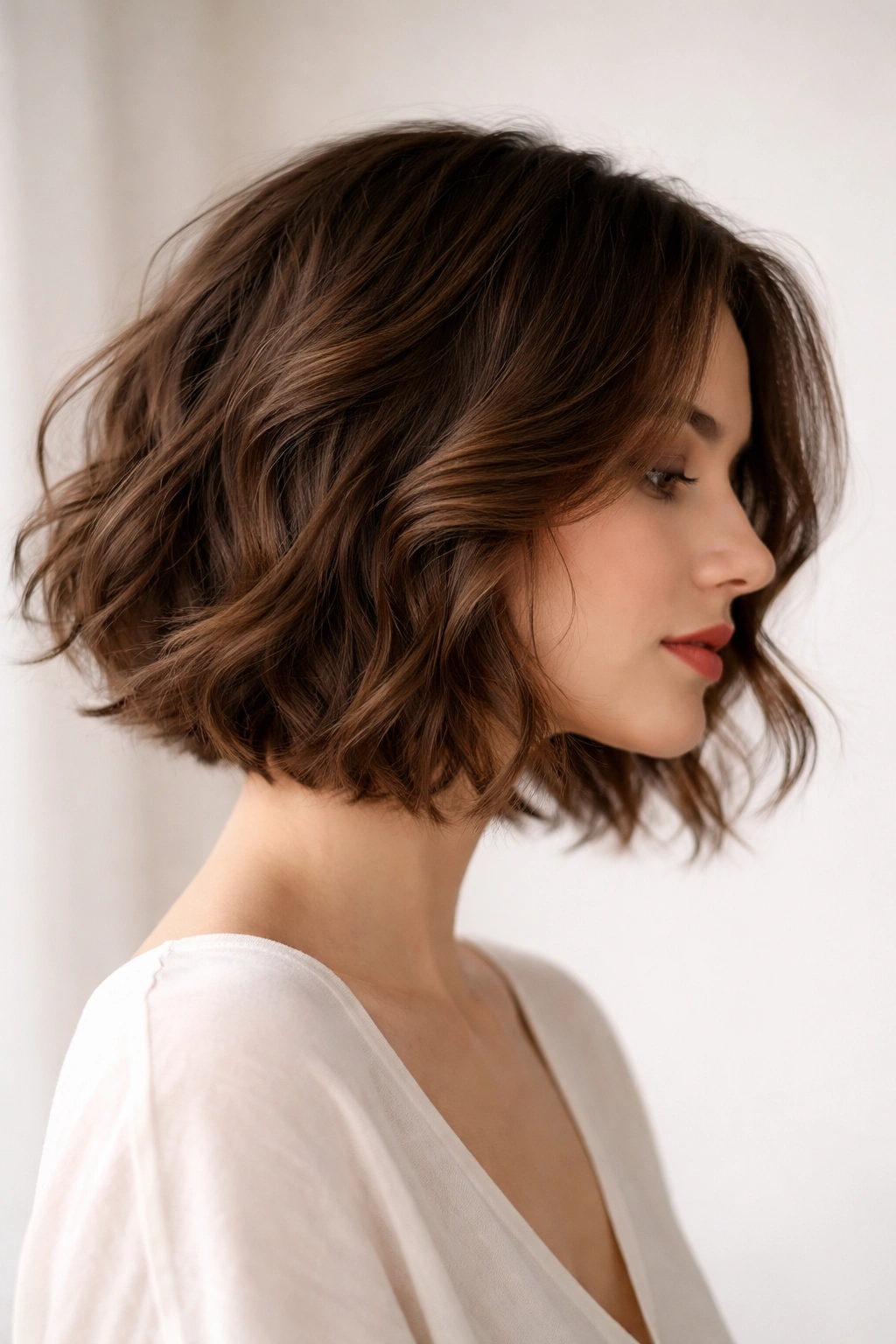
Wispy ends (thinned through the perimeter with a razor so they’re barely-there) create an ethereal quality, especially when paired with roasted brown—a medium brown with warm undertones that feels earthy and grounded. The waves combined with wispy ends create an almost ethereal movement, like the ends might float away. This is perfect if you want texture but also want your hair to feel light and airy.
The Lightness of Wispy Ends
Wispy ends are created by razor-thinning the perimeter rather than blunt-cutting it, which removes weight and allows the ends to move with the waves rather than all moving together. Roasted brown prevents this lightweight style from feeling too delicate or precious—it keeps it feeling wearable and practical.
Maintaining Wispy Ends
- Wispy ends can look ragged quickly as they grow, so plan for trims every 4-6 weeks
- Use texturizing products rather than heavy serums to avoid making the wispy ends look stringy
- Air-drying often looks better than blow-drying since the whole point is softness and movement
- Avoid over-brushing or over-styling, which can make wispy ends look thin rather than ethereal
15. The Structured Wave Bob with Honey Brown Highlights
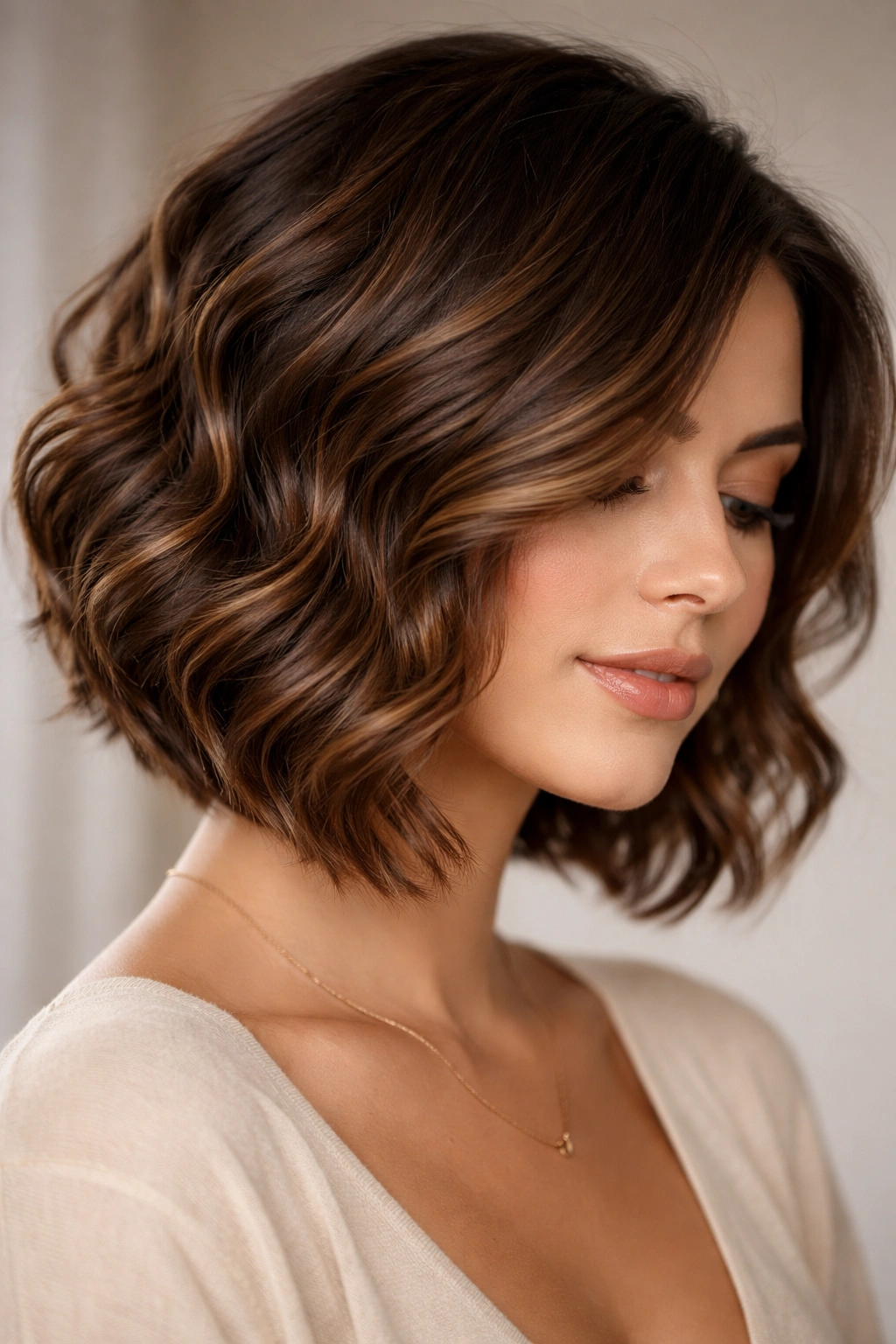
This cut adds subtle warm-toned highlights (honey, caramel, or golden pieces) throughout medium brown base, then structures waves through strategic layering that makes the highlights catch light beautifully. The structure comes from layers that guide wave formation in a specific direction, rather than letting waves form randomly. The result is sophisticated and intentional while still feeling textured and modern.
How Highlights Enhance Wave Structure
Highlights placed through the layers create additional visual texture and movement because light hits different pieces at different angles. The honey brown tone adds warmth and brightness that prevents the wave structure from feeling too rigid or overly styled. The combination of cut and color creates depth that makes the style feel expensive and intentional.
Styling for Highlight Visibility
- The highlights will be most visible when the waves are defined and styled rather than flat
- Heat-styling with a wand creates dimension that shows off the highlights
- Use curl-defining cream or mousse on damp hair before blow-drying to emphasize the wave structure
- The honey brown will need touching up every 6-8 weeks to keep the brightness visible
16. The Sleek-on-Top Textured-Underneath Bob with Deep Mahogany Brown
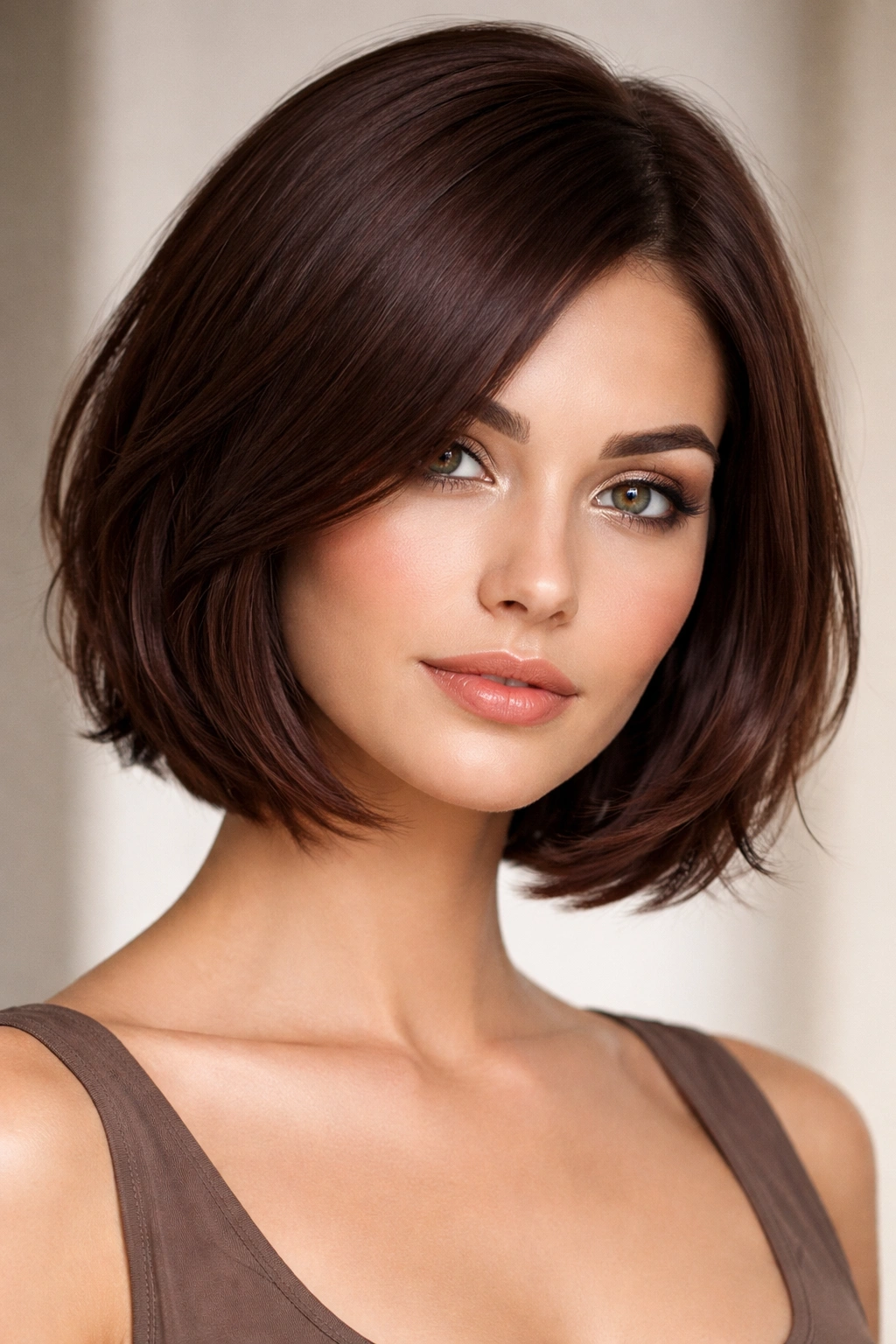
This cut keeps the crown and upper portions smooth and controlled while hiding choppy, textured layers underneath—the back of the cut has all the texture and movement while the top front stays sleeker. Deep mahogany brown (rich, warm with reddish undertones) makes this contradiction feel intentional and sophisticated rather than accidental. The hidden texture means you get movement without the cut looking chaotic from the front.
The Contrast of Sleek and Textured
The surprise of the texture when you see the back of the cut creates visual interest, and the sleek top gives a polished silhouette from the front. This approach works beautifully if you want waves and texture but also want to feel put-together and professional. The deep mahogany brown adds glamour and richness to the contrast.
Styling This Layered Approach
- Blow-dry the top smooth while using texture and movement on the layers underneath
- The back can look tousled and undone while the front stays polished
- Styling time varies depending on whether you’re going full polish or embracing the textured back more
- This is an underrated cut because people don’t realize there’s so much texture happening underneath
Final Thoughts
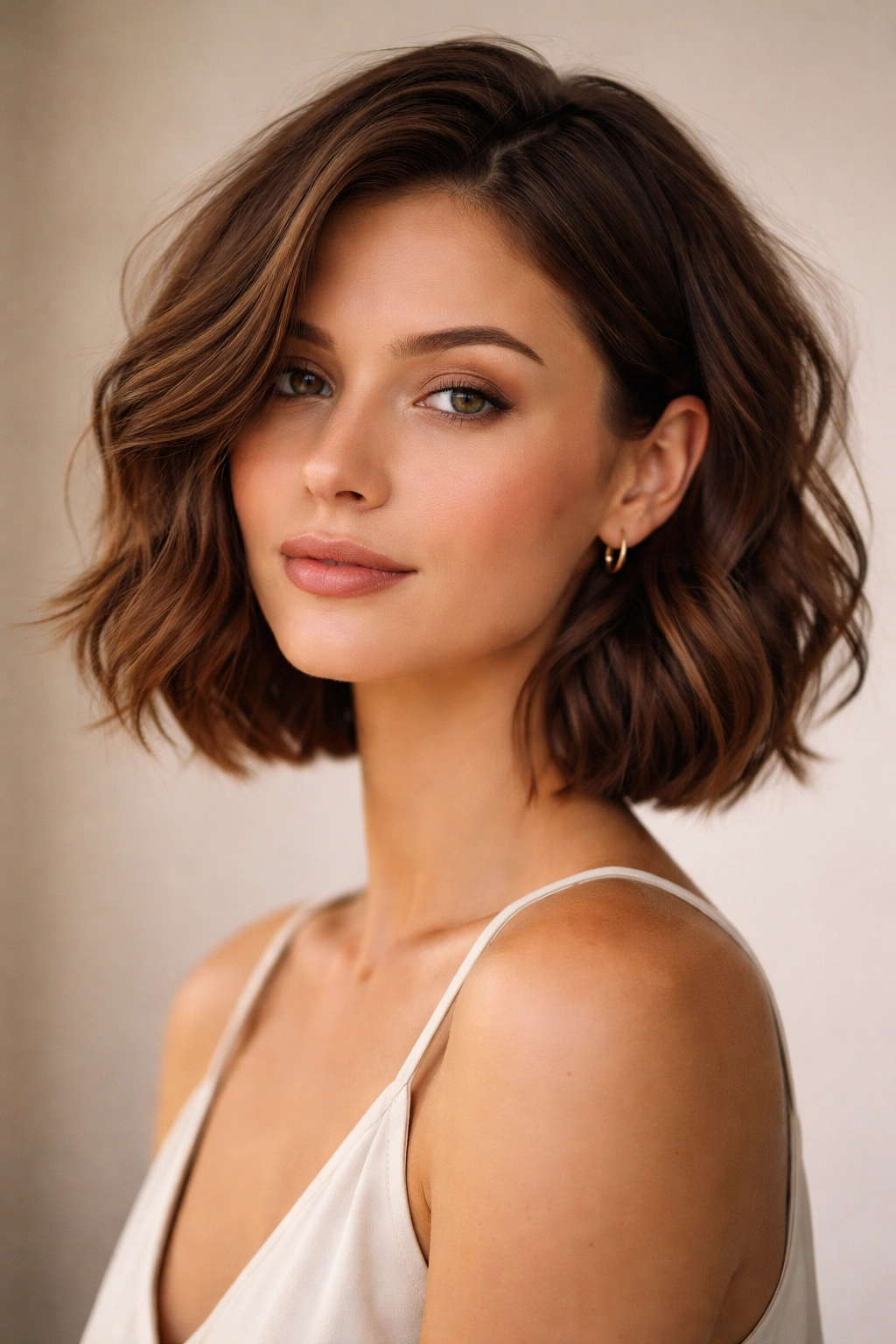
The wavy bob in brown is genuinely one of those versatile cuts that works across different ages, face shapes, and hair types—the key is finding the specific variation that matches your hair’s natural texture, your lifestyle, and the vibe you’re going for. Some versions require consistent heat styling and regular trims to maintain their shape, while others actually look better when you let them do their own thing. Brown tones range so widely that you’ll find shades that suit your undertones beautifully, whether your skin is warm, cool, or neutral.
The best version of this cut is the one that makes you feel confident enough to actually wear it regularly. If you’re someone who loves a quick-styling routine, lean toward the lived-in, tousled versions with undone waves. If you prefer structure and definition, go for a blunt-ended cut with intentional layering. And if you’re someone who enjoys spending time on your hair and experimenting with styling, you have even more options to explore. Bring these specific references to your stylist conversation—talk about the cut structure, the layer placement, the wave pattern you’re after, and be honest about how much maintenance you’re actually willing to do. That combination of clarity and realism will get you a cut you’ll actually love living with.
