



The struggle with frizzy, wavy hair is real—but it doesn’t mean you’re stuck with the same flat, one-length cut forever. The right layered haircut can actually become your secret weapon, working with your natural wave pattern instead of against it. Layers give frizzy hair breathing room, reduce bulk, and allow moisture to distribute more evenly throughout your strands. When you choose a cut specifically designed for wavy texture, you unlock a version of your hair that looks intentional, managed, and genuinely beautiful without fighting it every single day.
The key is understanding that not all layers are created equal when it comes to frizz management. A good layered cut for wavy, frizzy hair focuses on removing weight strategically, creating movement that enhances your wave pattern, and building in texture that makes the inevitable frizz look deliberate rather than chaotic. Whether you’re drawn to short, bold styles or flowing longer lengths, there’s a layered cut here that can transform how your hair looks and how much effort it takes to style. These aren’t cuts that require you to blow-dry and straighten everything into submission—they’re cuts that let your waves do what they naturally want to do.
1. Shaggy Layered Bob
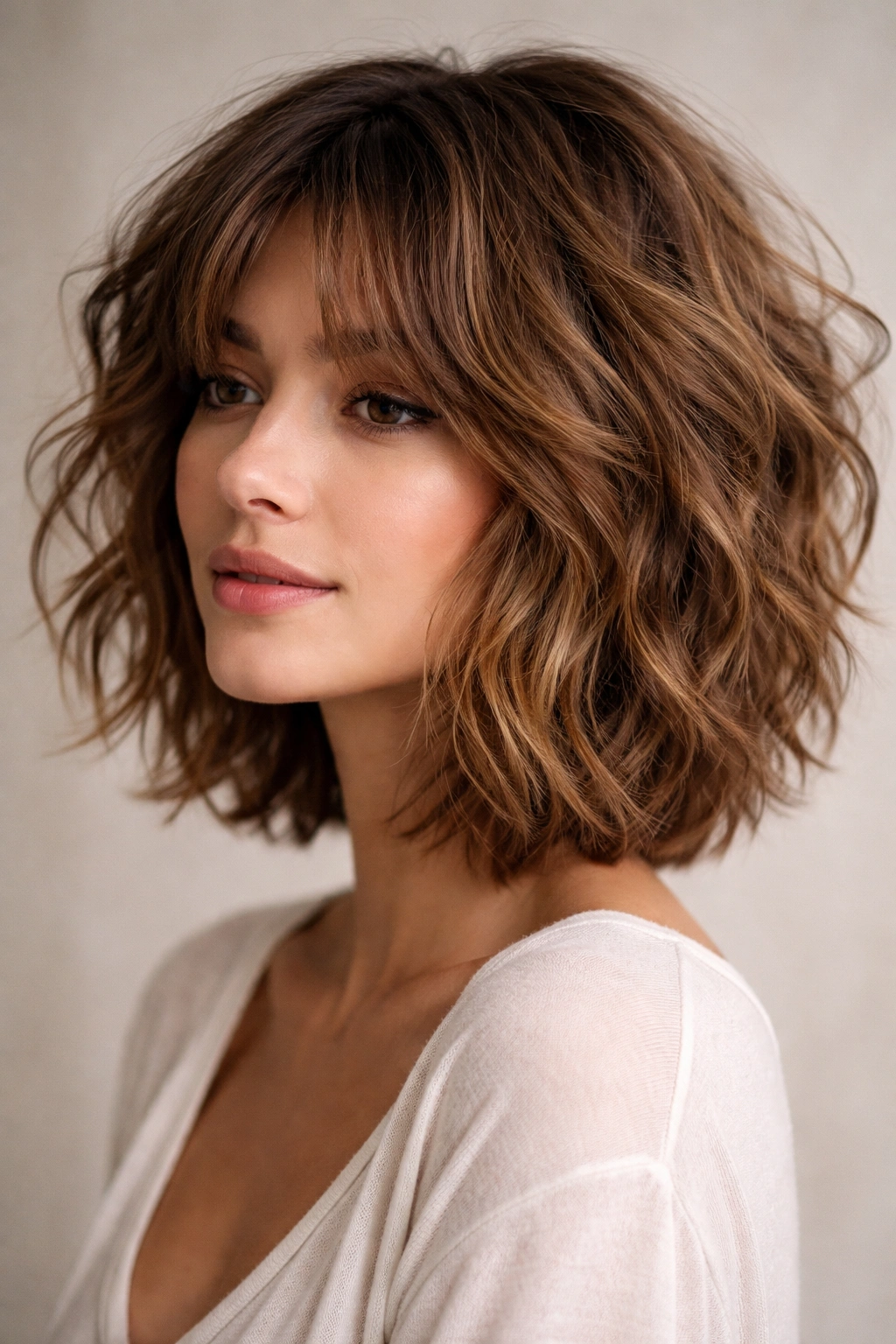
A shaggy layered bob sits somewhere between a classic bob and a modern mullet energy, with lots of texture throughout and shorter layers on top that create volume right where you need it. This cut works beautifully for wavy, frizzy hair because the choppy layers don’t cling to your face or flatten against your head—they flip, piece out, and move independently. The shorter layers catch light and show off your wave pattern, while the length underneath gives you something to work with for styling.
Why This Cut Controls Frizz
The shaggy bob’s secret is that it removes enough weight to prevent the dense, poofy look frizz creates, but keeps enough length to give you options for styling. The choppy texture means individual pieces can move rather than clumping together into a frizzy mass. When your hair is cut this way, products distribute more evenly and drying time drops significantly because you’re not fighting against thick, heavy sections.
How to Style and Maintain
- Apply leave-in conditioner or smoothing serum to damp hair, starting from mid-length down
- Use a diffuser attachment on low heat, scrunching sections upward to encourage your natural wave
- Once mostly dry, you can air-dry the rest or use your fingers to separate and shape the layers
- Refresh waves the next day with a wave cream or texturizing spray
- Get trims every 6-8 weeks to keep the layers sharp and prevent the shag from looking limp
Pro tip: A shaggy bob looks even better slightly undone—resist the urge to make it perfectly polished. The piece-y, textured vibe is the whole point.
2. Long Wavy Layers with Texture
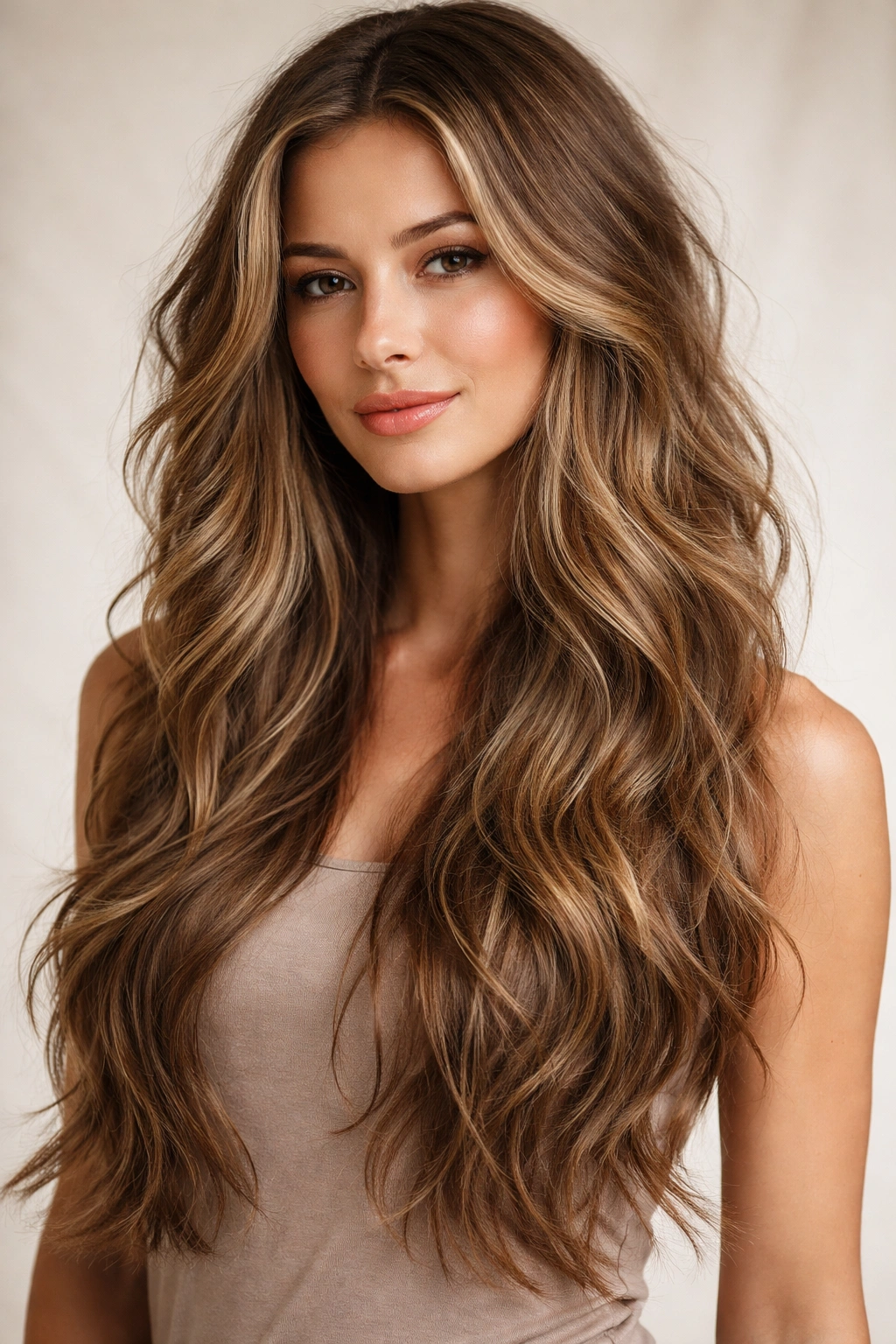
This is the “long hair, don’t care” cut reimagined for people who actually do care about managing frizzy waves. The layers start somewhere around mid-length and continue down, creating a staggered effect that allows each section to move independently. The result is hair that looks effortlessly wavy and full of movement rather than one heavy, frizzy sheet of hair.
How Layers Create Definition
When you have long frizzy hair in one thick length, the weight pushes your waves down and creates density that traps moisture and frizz. Long layers with texture break that weight into segments, so each layer can hold its own wave shape. The shorter layers on top create the illusion of volume without adding actual bulk, while the longer pieces underneath provide length and flow.
Styling Techniques for Long Wavy Hair
- Start with a hydrating shampoo and deep conditioning treatment (apply 1-2 times per week minimum)
- Apply a frizz-control serum or curl cream to soaking-wet hair before drying
- Use a microfiber towel or t-shirt to gently squeeze out water—avoid regular towels that roughen the hair cuticle
- Diffuse-dry your hair in sections, cupping the diffuser upward to encourage waves
- Sleep on a silk or satin pillowcase to prevent friction frizz overnight
- Refresh waves with a texturizing spray and finger-comb the next day
Key point: Long wavy layers need regular moisture to prevent that brittle, frizzy-at-the-ends feeling. Monthly deep conditioning treatments aren’t optional—they’re essential maintenance for this cut.
3. Choppy Pixie Crop
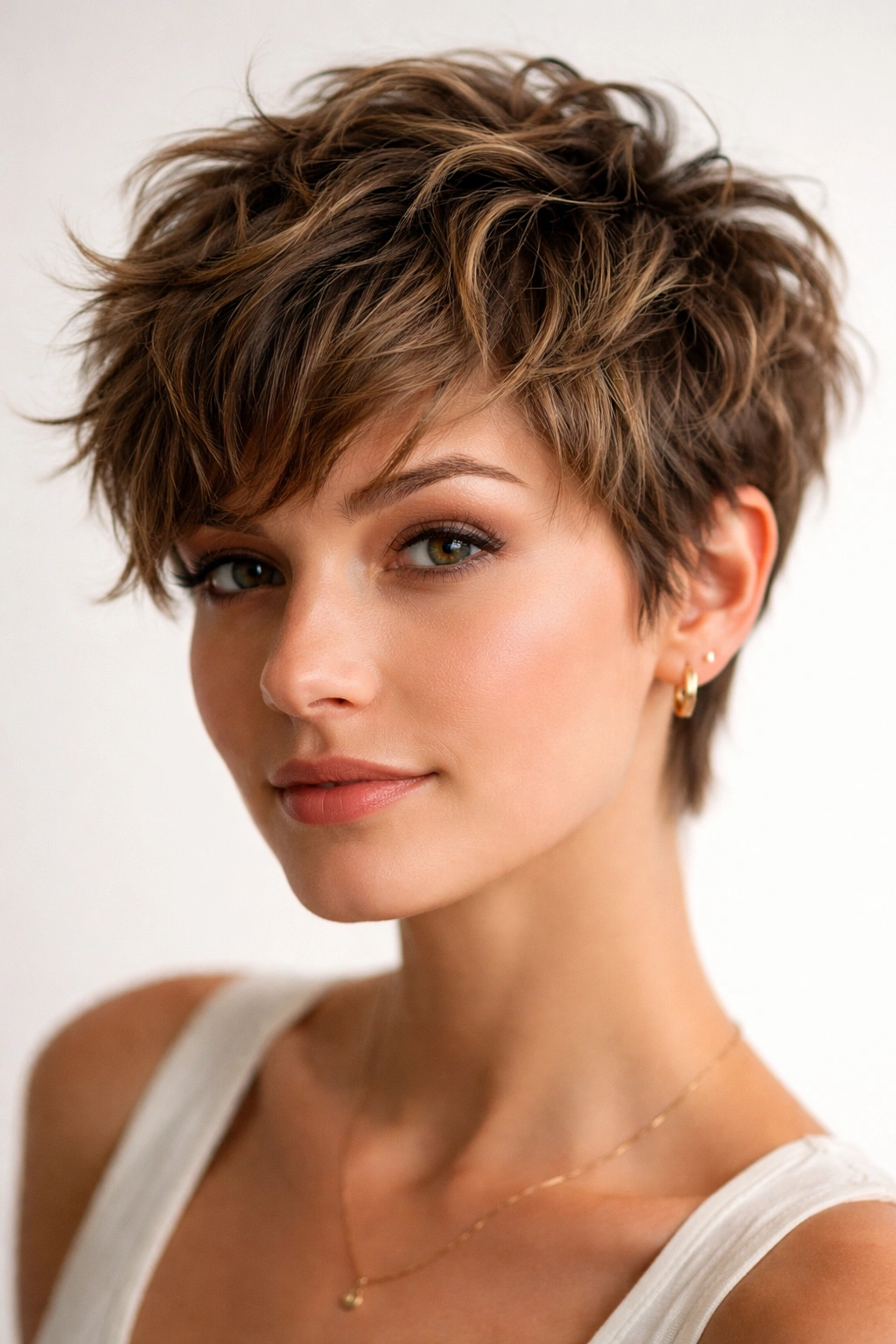
If you’re ready for a dramatic change, a choppy pixie crop with texture can be incredibly freeing for frizzy hair. This ultra-short cut removes all the weight and bulk that creates frizz in the first place. Short, textured layers on top create volume and show off your natural wave pattern, while the overall length keeps styling time down to just minutes each morning.
The Frizz-Fighting Magic of Short Hair
Shorter hair has less surface area for humidity to infiltrate, which means less frizz potential right out of the gate. A choppy pixie specifically uses layers and texture to create movement and shape, so you’re not stuck with a flat, helmet-like look. The cut works with whoever you are—whether you have loose waves or tighter texture, the choppy layers adapt beautifully.
Daily Styling Routine
- Wash with a lightweight, hydrating shampoo
- Apply a small amount of texturizing cream or pomade while hair is still damp
- Tousle with your fingers as it air-dries, or use a blow dryer on low heat for 2-3 minutes
- Restyle throughout the day with fingers or a light texturizing spray
- Trim every 4-5 weeks to keep the shape crisp and choppy
Worth knowing: A pixie crop requires commitment to regular trims. As it grows out, the layers lose definition and the frizz starts to win. If you’re not willing to visit your stylist monthly, this might not be your cut.
4. Shoulder-Length Textured Waves
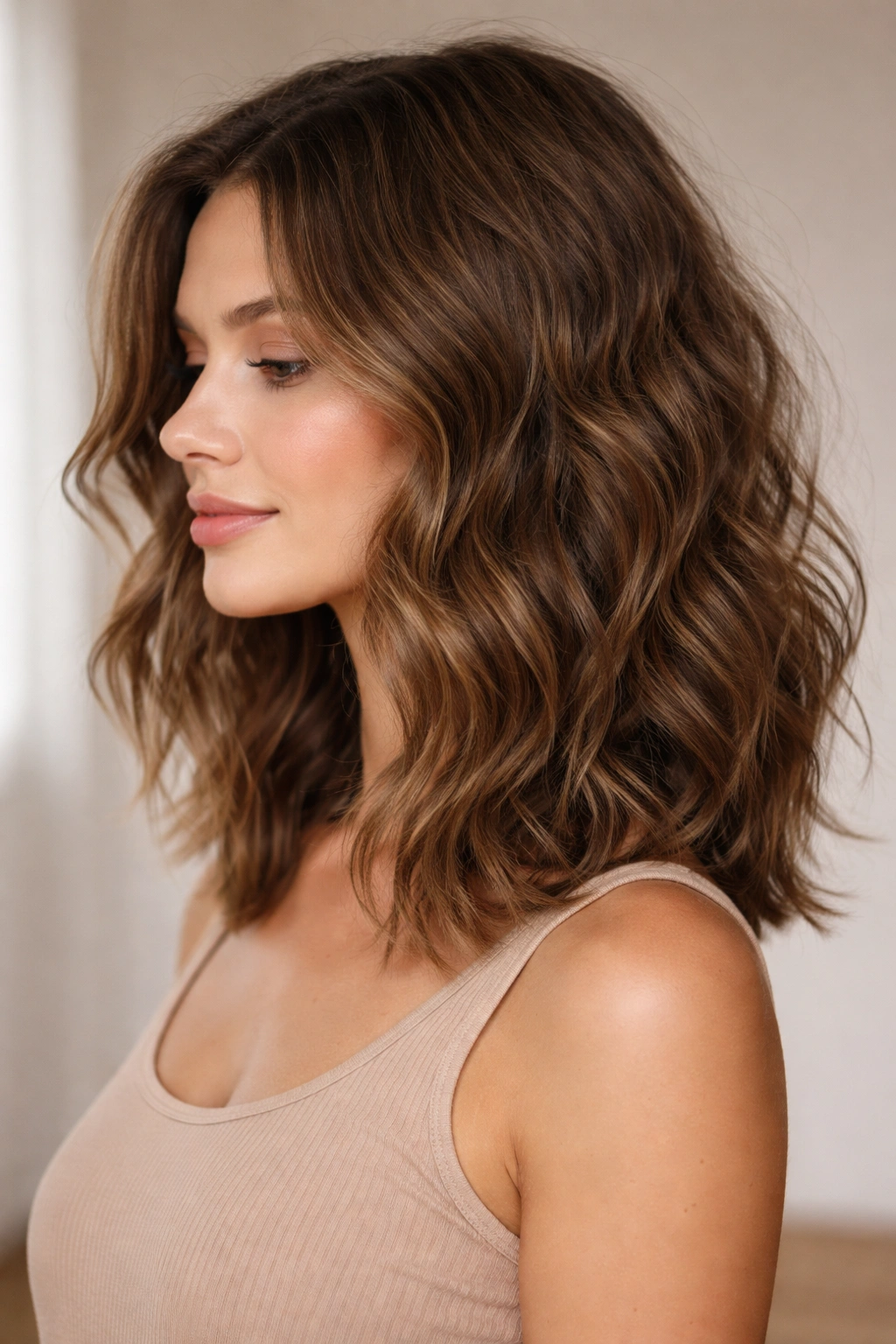
The shoulder-length sweet spot is perfect for people who want to keep some length without dealing with the weight and frizz management that comes with longer hair. This cut sits right at your shoulders with layers throughout that create texture and movement. The length is short enough to manage but long enough to feel feminine and versatile.
Why Shoulder Length Works for Wavy Hair
Shoulder-length hair experiences less pull from gravity than longer lengths, which means your waves stay more defined and the frizz looks more intentional. You have enough length to tie back when you need to, but not so much that you’re constantly fighting with product distribution and drying time. The textured layers create the illusion of density without the actual weight.
Styling for Maximum Wave Definition
- Use a curl-defining cream or wave gel on damp hair
- Rough-dry with a blow dryer and diffuser on medium heat for 5-10 minutes
- Finish with air-drying or lower heat to set the waves
- Use a light hairspray to hold the texture without creating crunchiness
- Refresh every 2-3 days with a wave cream and strategic scrunching
- Deep condition weekly to maintain moisture and prevent brittle, frizzy ends
This length also works well for half-up styles, braids, or tucking sections behind your ear—options that aren’t practical with very short hair but feel easy compared to managing long, heavy waves.
5. Face-Framing Layered Waves
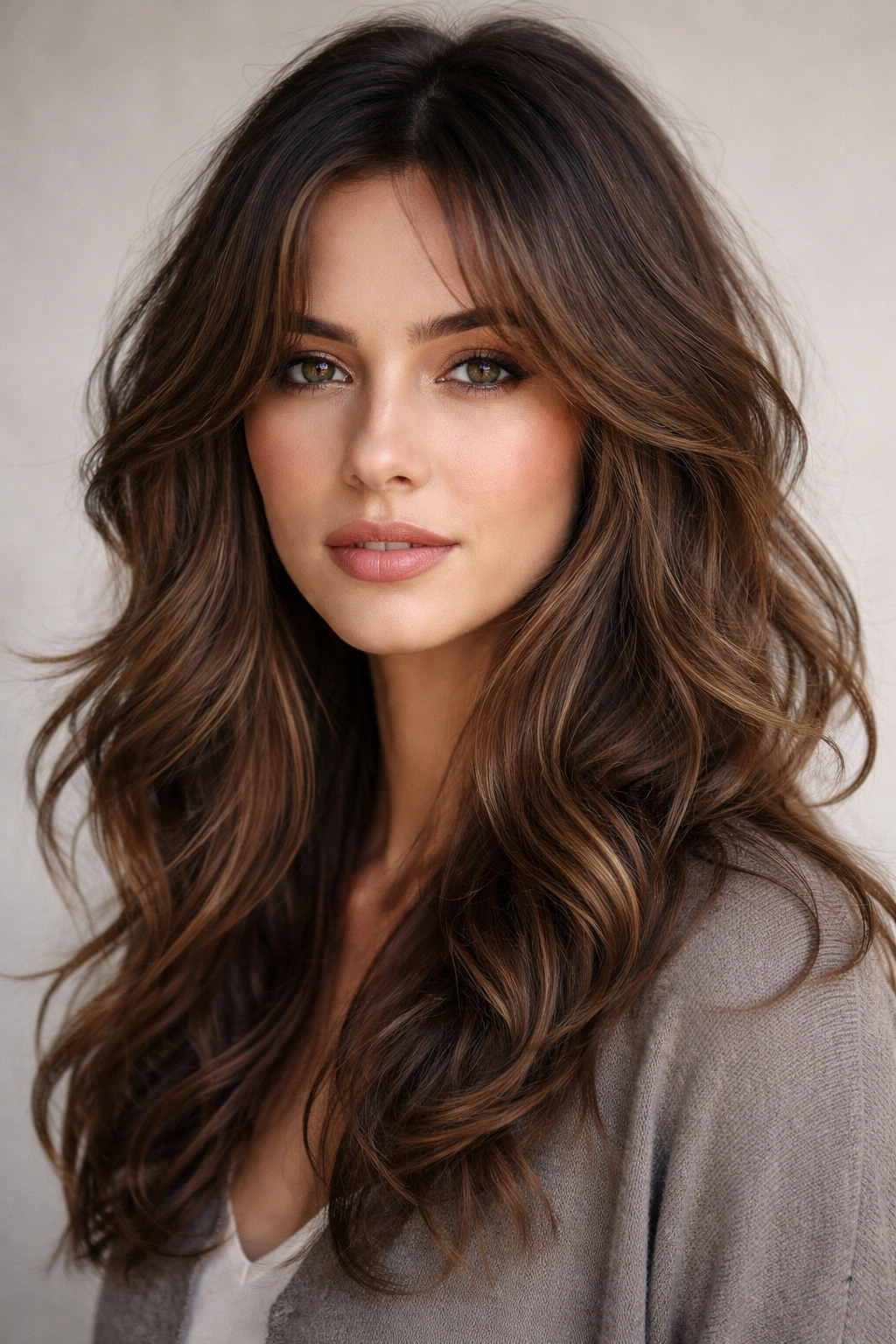
Face-framing layers are your secret weapon if you want to keep most of your length while dramatically reducing the amount of frizz around your face and neck. This technique places shorter, heavily textured layers directly around your face, while maintaining more length in the back. The effect is a flattering, intentional look that actually looks better with a little texture and movement.
The Psychology of Face-Framing Layers
When frizz happens around your face and neck, it can feel like it’s taking over your entire head. Face-framing layers acknowledge that reality and lean into it—the shorter pieces around your face are supposed to be textured and move a little. This takes the pressure off making your face-frame layer look perfectly sleek and lets you work with your hair’s natural inclination to frizz.
Cutting and Styling Strategy
- Ask your stylist for shorter layers that start around cheekbone length and get progressively longer toward the back
- Use a frizz-smoothing cream on the face-frame layers specifically, since they’re most visible
- Blow-dry these layers first, directing them away from your face
- The shorter layers will naturally flip and move—let them, rather than trying to force them flat
- Keep these layers trimmed every 6-8 weeks so they stay textured and don’t grow into the rest of your hair
Real talk: Face-framing layers are particularly good if you have a rounder face or want to create the illusion of more dimension. The shorter pieces near your face create visual interest that draws the eye.
6. Long Layers with Movement
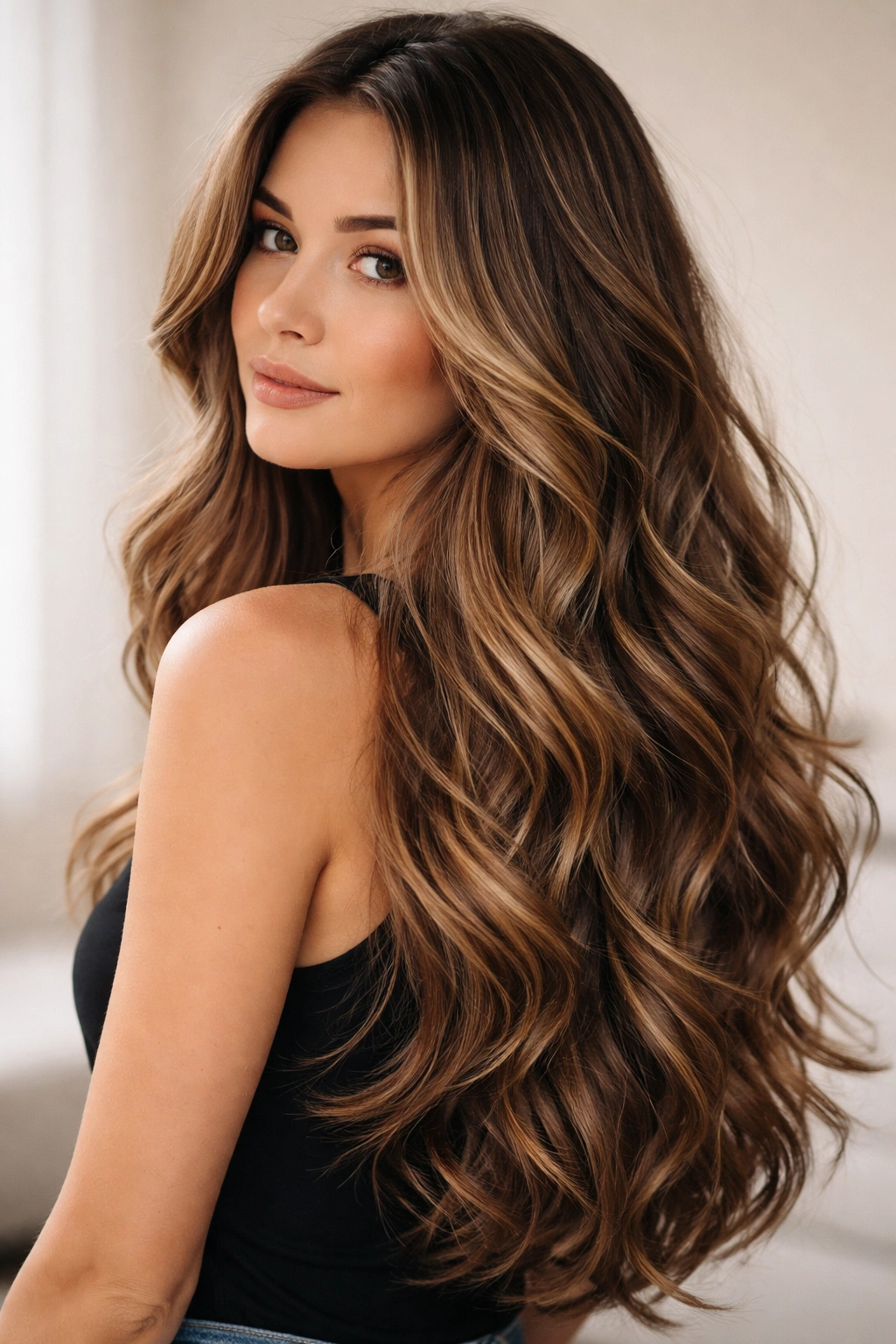
This is the grown-up, polished version of long layered hair for wavy, frizzy types. Rather than a shaggy, undone vibe, this cut has intentional layers that create movement and flow without looking chaotic. The layers are spaced further apart than in choppy cuts, allowing each one to do its own thing while maintaining an overall cohesive look.
Creating Movement Without Chaos
Long layers with movement require precise placement—not every strand gets chopped, but strategic sections throughout allow your natural wave to travel down the hair shaft without looking flat. The effect is sleeker than shag but way more interesting than one-length hair. You get the best of both worlds: enough length to feel luxurious, enough texture to control frizz.
Maintenance and Styling
- Invest in a good leave-in conditioner that won’t weigh down long layers
- Apply products from mid-length down, avoiding the roots to prevent greasiness
- Diffuse-dry on low to medium heat for the first 60% of drying, then air-dry the rest
- Use a light texturizing spray on day-two hair to refresh your waves
- Trim every 8-10 weeks to remove frizzy, thin ends before they create a scraggly look
- Consider a monthly deep conditioning treatment to keep long hair healthy and hydrated
The key is that longer hair requires more intentional hydration. Product buildup will flatten your waves and make frizz worse, so use lighter formulations and don’t overdo it.
7. Blunt Wavy Bob with Layers
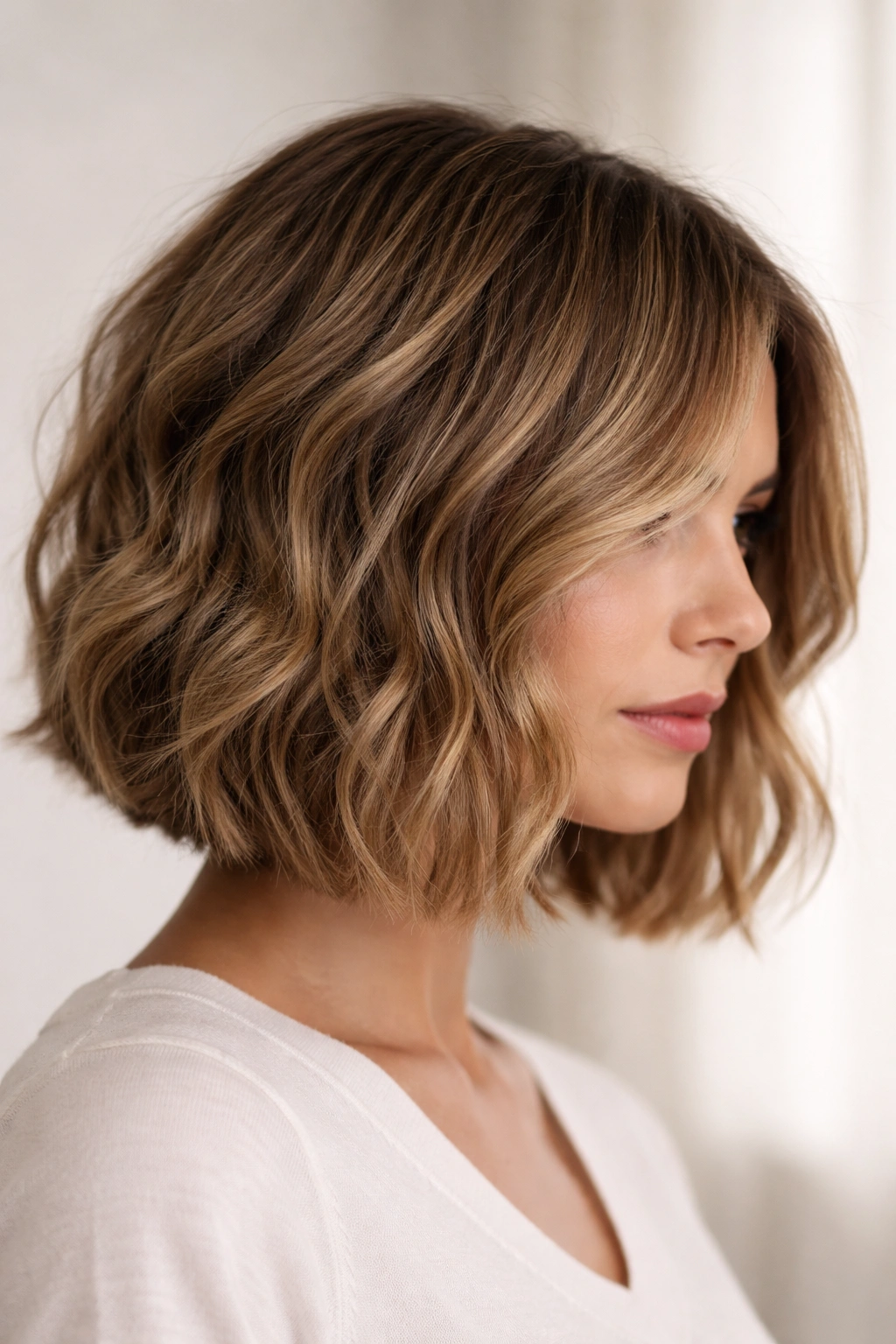
A blunt bob with subtle layers inside is a modern take on the classic—giving you the clean, defined lines of a blunt cut combined with the texture and movement that layers provide. The outside edge is relatively blunt, creating that polished aesthetic, while internal layers prevent the heaviness that usually comes with a blunt bob and solid frizzy hair.
Why This Cut Balances Bluntness and Texture
A fully blunt bob on wavy, frizzy hair often looks triangle-shaped or overly thick because all that hair weight with texture creates volume you don’t want. Adding subtle layers inside preserves the modern, clean vibe of a blunt cut while reducing the bulk. You get the sophistication of a blunt line with the texture-friendliness of layers.
Styling to Maintain the Blunt Shape
- Use a round brush while blow-drying to create soft waves rather than a straight, limp look
- Apply a smoothing serum to the outer perimeter of the bob to keep that blunt line clean
- Use texturizing spray on the interior layers to enhance movement without disturbing the shape
- The blunt edge will need touching up every 4-6 weeks to stay sharp
- Condition heavily to prevent that wiry, frizzy feeling that blunt bobs sometimes develop
This cut works particularly well if you have straight-to-wavy hair rather than very curly texture—it creates enough wave to look intentional without looking permanently undone.
8. Curly Lob with Choppy Layers
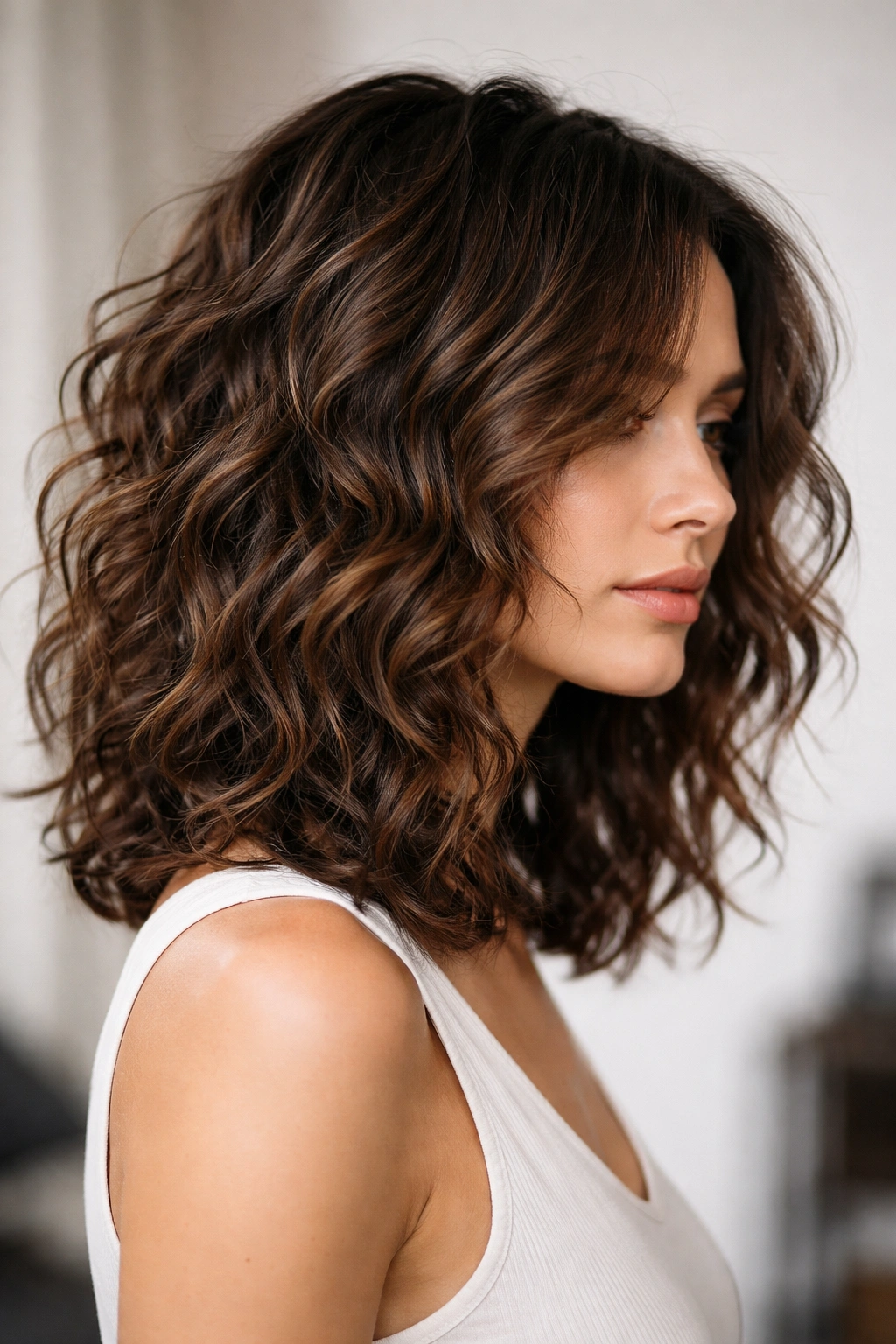
A lob (long bob) that hits around mid-chest or slightly longer pairs beautifully with choppy layers for curly, wavy, frizzy hair. This length is long enough to feel substantial but short enough that you’re not fighting the weight and drying time of truly long hair. Choppy layers throughout create separate curl patterns and prevent the dense, heavy look that makes frizz more noticeable.
How Choppy Layers Help Curly Hair
Every curl and wave has its own space to live and breathe when you use choppy layers. Rather than curls stacking on top of each other and creating bulk and frizz, each layer can form its own shape. The result is more defined waves and curls, less dense volume, and texture that looks intentional rather than messy.
Routine for a Choppy Lob
- Apply curl cream or mousse to soaking-wet hair before any drying
- Use a diffuser and cup sections of hair upward as they dry on low to medium heat
- Scrunch upward while drying to encourage curl formation in the layers
- Once dry, separate curls gently with your fingers—don’t rake through with a brush
- Use a lightweight hairspray to hold without crunching
- Deep condition every week and refresh curls with water and cream on non-wash days
- Trim every 8-10 weeks to keep the layers choppy and defined
Insider note: Choppy lobs look better when you’re willing to work with your natural texture. Fighting your waves and trying to make them straight defeats the whole purpose of this cut.
9. Medium Tapered Waves
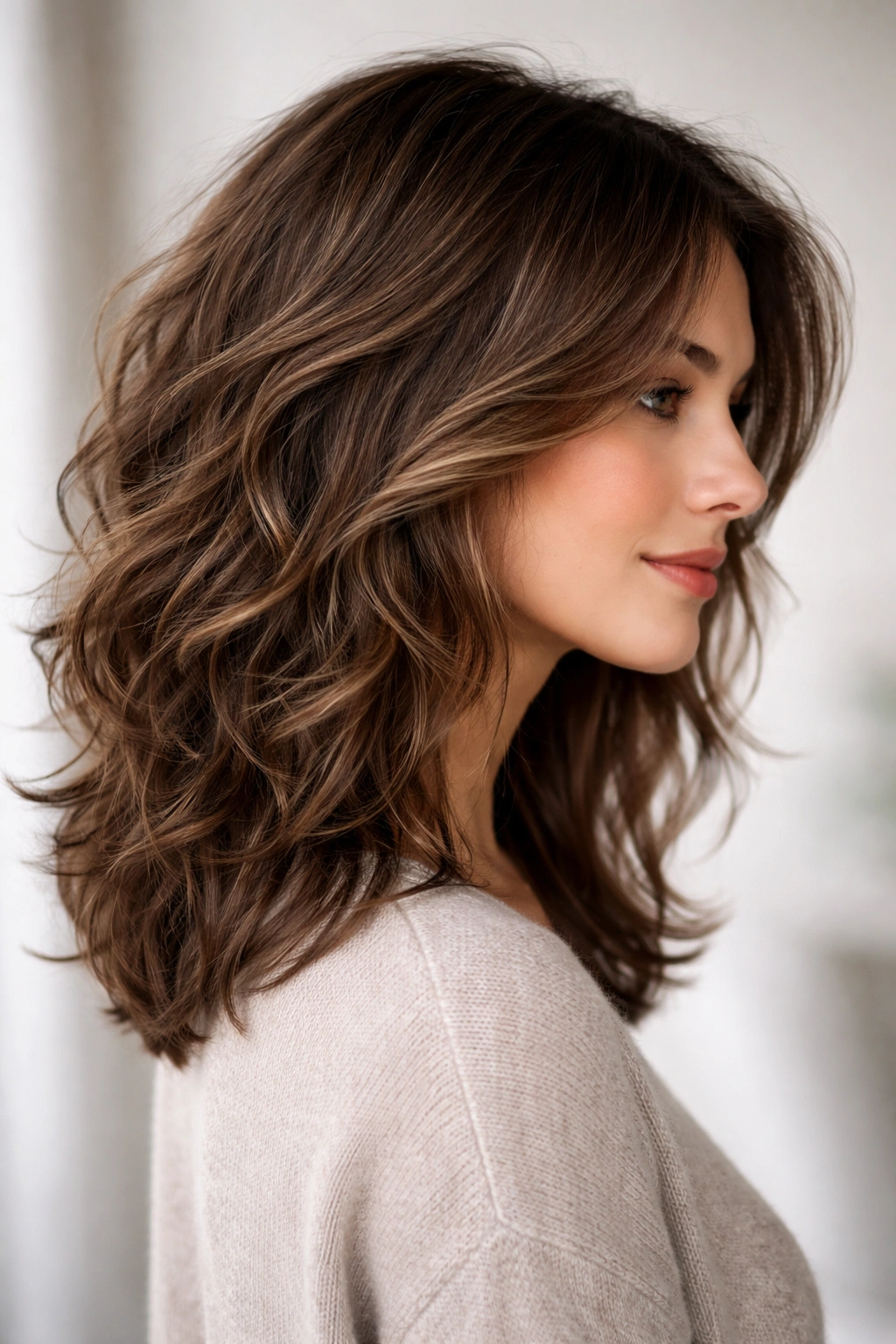
A tapered cut gradually removes length as it moves from the crown down, creating a shape that’s shorter in the back and longer in the front. For wavy, frizzy hair, this means the back gets less bulk (which reduces frizz potential), while the front stays longer and framing. The taper itself adds movement and prevents that blunt, heavy feeling.
The Taper’s Role in Frizz Management
Tapering is especially helpful at the nape of your neck and around the sides, where frizz and bulk can make your head look shapeless. By removing weight gradually rather than bluntly, you get movement and shape without sacrificing length where you want it. The front pieces can stay longer for face-framing while the back stays tidier.
Styling a Tapered Cut
- Apply volumizing mousse to damp hair at the roots to lift the back
- Blow-dry the crown and back first to establish shape, then work on the longer front pieces
- Use texturizing spray on day-two hair, focusing on the back to refresh the taper
- Trim every 6-8 weeks to maintain the tapered shape as it grows out
- The taper works best with some styling effort—if you prefer wash-and-go hair, this might not be ideal
A tapered cut is particularly flattering if you have a longer face or want to create the illusion of more width at the cheekbones.
10. Feathered Wave Layers
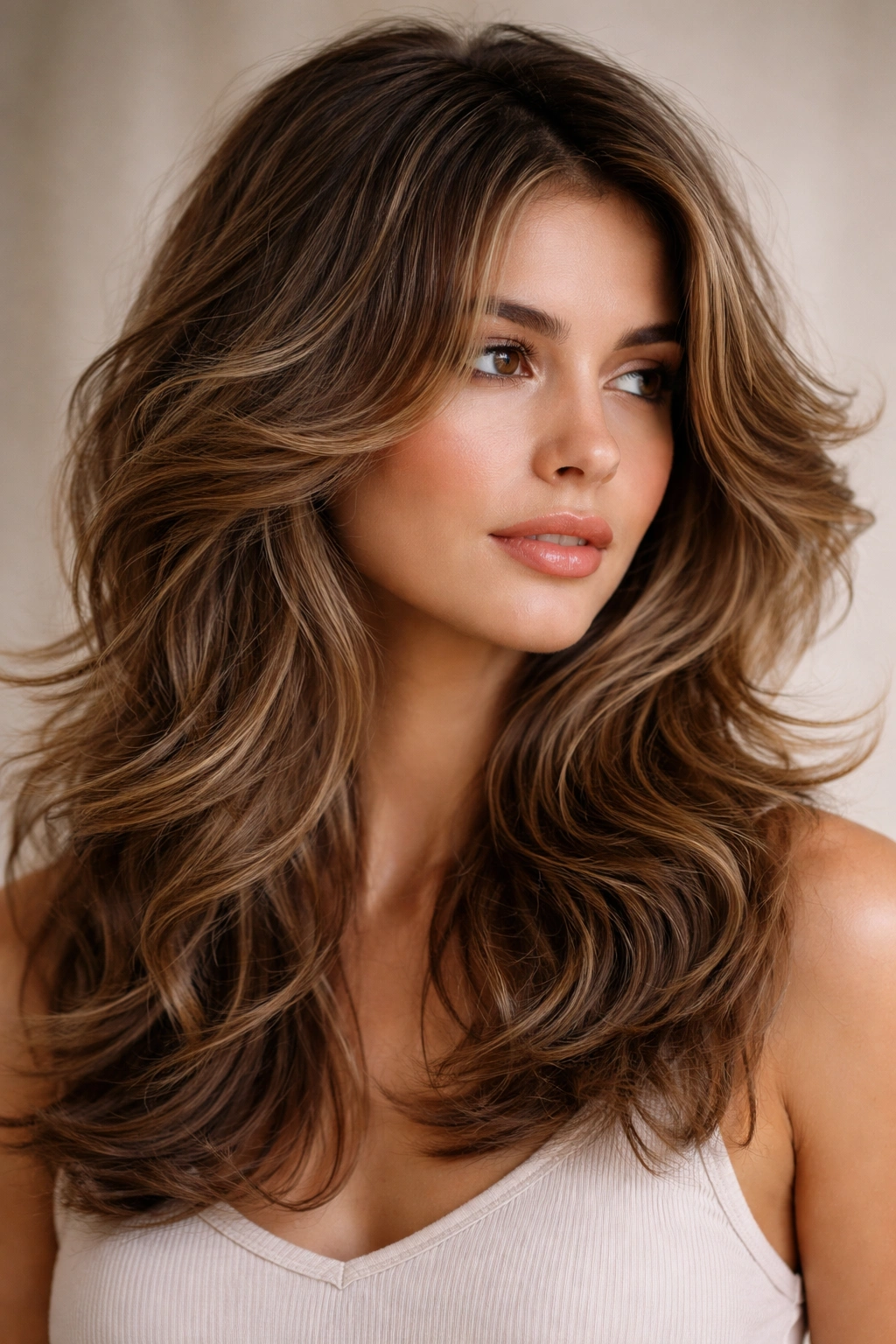
Feathering is a technique where each layer is cut to flip outward at the ends, creating a feather-like appearance throughout your hair. This is genuinely beautiful on wavy, frizzy hair because the flipped-out edges look intentional and piece-y rather than frizzy and chaotic. It’s a retro-inspired technique that’s experiencing a resurgence because it actually works for natural texture.
How Feathering Creates Definition
Feathered layers have shorter lengths at the crown that gradually get longer as you move down, then flip outward at the ends. This creates a shape that’s full at the crown, gradually tapers, and then flips back out at the ends. For wavy hair, this means volume where you want it, less density at the sides and back, and a deliberately textured, piece-y look.
Maintenance and Styling
- Ask your stylist specifically for feathering—it’s a technique that requires skill to execute properly
- Use a round brush while blow-drying to flip the ends outward naturally
- Apply texturizing spray to enhance the feathered look and hold it throughout the day
- Trim every 6-8 weeks because feathering loses impact as layers grow out and lose their flipped shape
- Use a light leave-in conditioner to keep the feathered pieces from looking dry and wiry
This cut requires some styling effort, but the payoff is hair that looks intentionally textured and piece-y rather than accidentally frizzy.
11. Textured Asymmetrical Cut
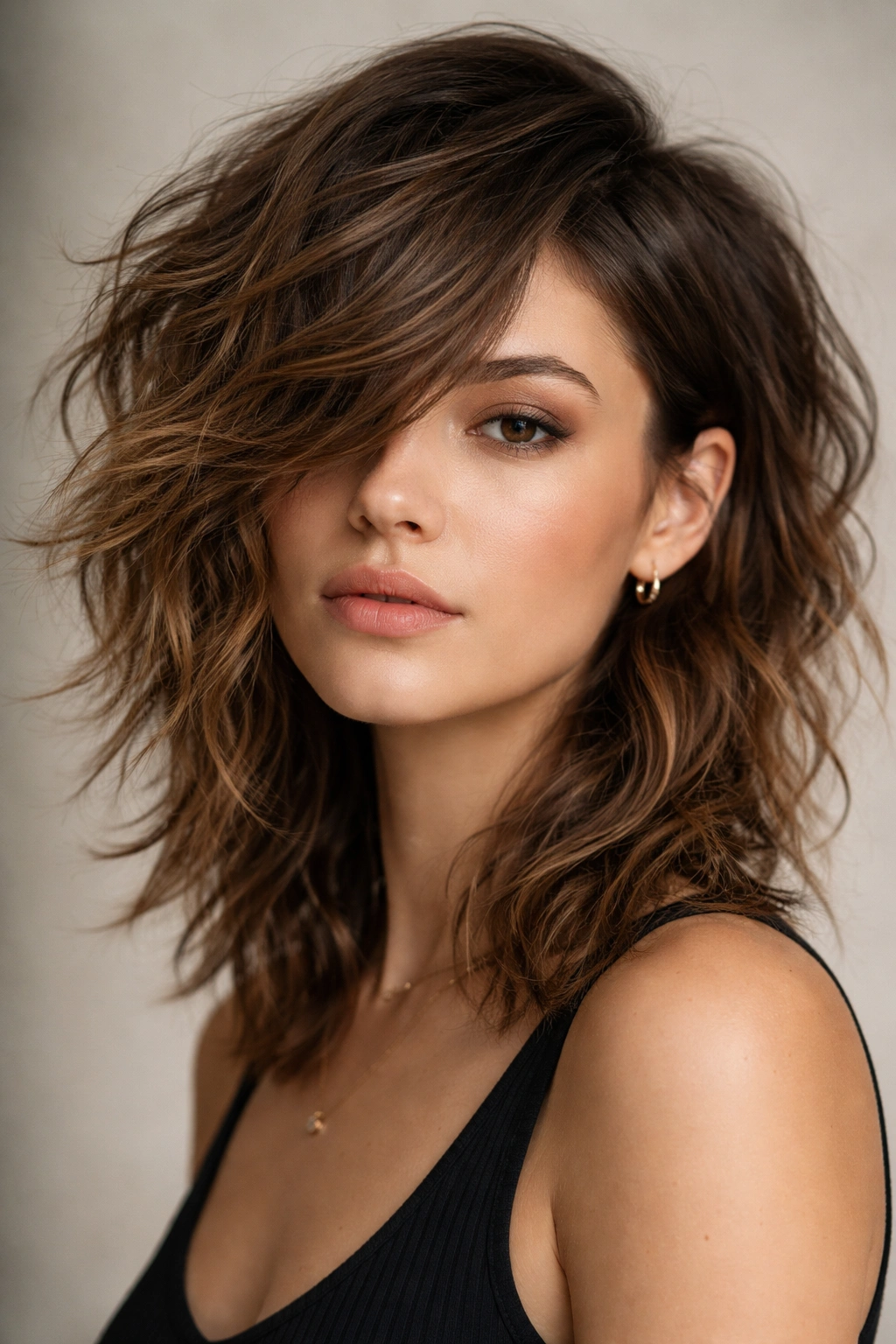
An asymmetrical cut has two noticeably different lengths—one side is shorter, one side is longer, creating movement and visual interest. For wavy, frizzy hair, an asymmetrical cut with heavy layering on both sides creates a bold, modern look that actually works with your hair’s natural texture instead of fighting it.
Why Asymmetry Works for Frizzy Hair
An asymmetrical cut acknowledges that your hair is going to do its own thing—so you give it permission to do different things on different sides. This removes the pressure of trying to make everything look symmetrical and balanced. The shorter side has less frizz potential and shows off your waves more dramatically, while the longer side provides length and a romantic element.
Styling an Asymmetrical Cut
- The shorter side will likely air-dry faster than the longer side, so diffuse-dry strategically
- Apply texture cream to both sides but use more on the longer side to keep it from getting too flat
- Refresh with wave spray or texturizing spray between washes
- Trim every 6-8 weeks to maintain the asymmetrical shape
- This cut looks best with some personal styling—it’s not a wash-and-go situation
Key point: Asymmetrical cuts require confidence to wear. If you’re uncertain about having two different lengths, go for a more subtle variation rather than a dramatic difference.
12. Wavy Wolf Cut
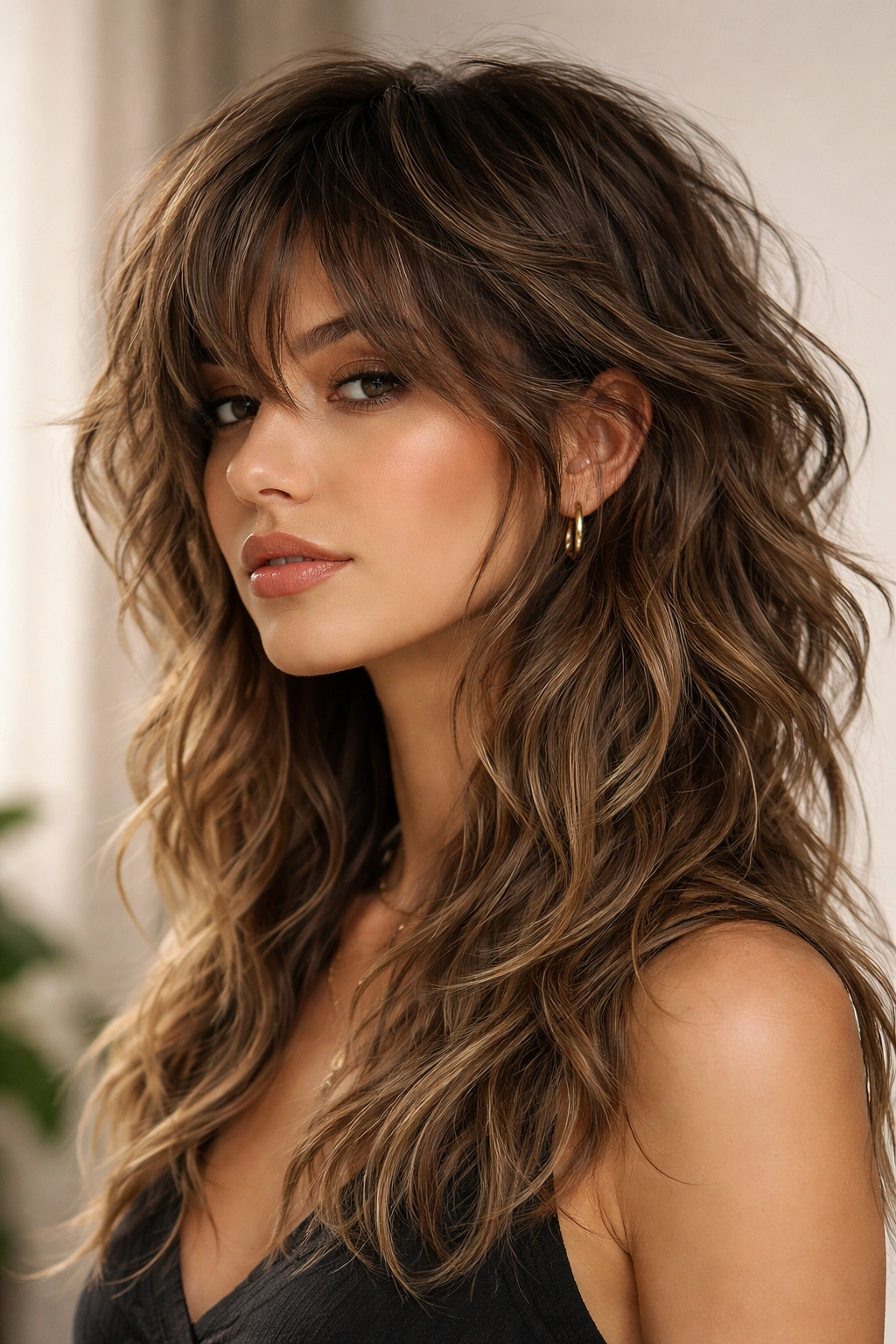
A wolf cut is a hybrid between a shag and a mullet, with very short, choppy layers on top and longer length in the back. It’s recently become popular with people who have wavy and curly hair because the structure works beautifully with natural texture. The short, choppy top creates volume and shows off your wave pattern, while the longer back gives you flow and movement.
The Wolf Cut’s Texture Appeal
The wolf cut’s genius is that it uses length strategically—keeping it where it matters (the back, for flow and femininity) while removing bulk where it creates frizz (the crown and sides). The choppy top layers don’t look like a bad haircut in progress; they look intentional and cool. The longer back section catches light and creates movement that makes frizzy waves look deliberately tousled.
Styling and Maintenance
- The top needs texture cream or pomade to look intentional rather than bedhead
- Blow-dry the crown and top sections first to establish shape and lift
- Let the back air-dry or use a diffuser to enhance your natural waves
- Use a light texturizing spray to refresh the short layers on day-two hair
- Trim every 5-6 weeks to keep the choppy top sharp and prevent the cut from growing into itself
- Deep condition regularly because the shorter layers tend to dry out faster
This cut absolutely requires styling effort and commitment to regular trims. If you want a low-maintenance look, a wolf cut isn’t it.
13. Layered Curtain Bangs with Waves
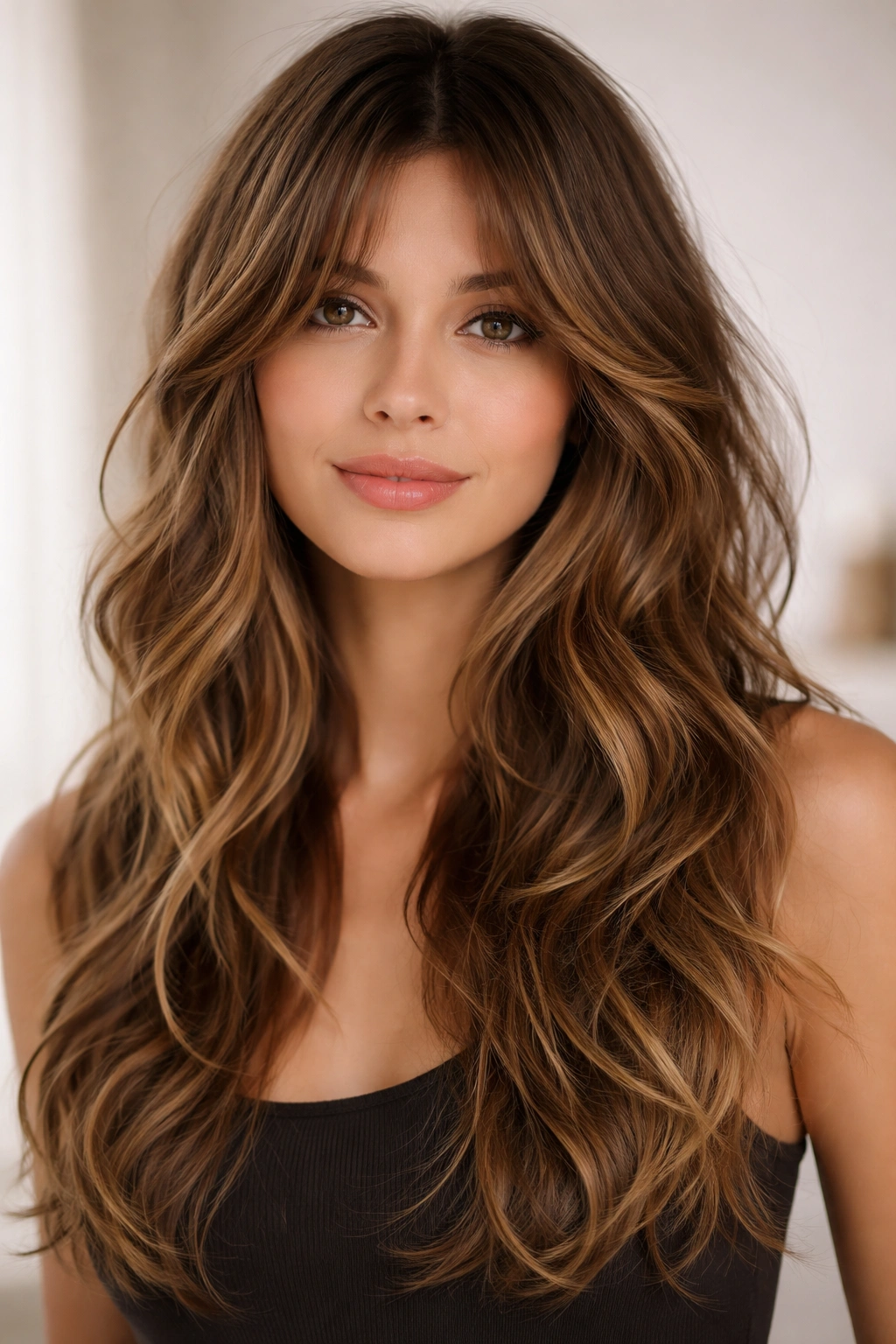
Curtain bangs (longer face-framing pieces that sit naturally and part down the middle) paired with layered waves throughout create a effortlessly chic, undone look. This is perfect if you want to keep length but add face-framing without committing to shorter layers everywhere. The curtain bangs draw attention to your face while the layered waves behind them do the actual frizz management.
Why Curtain Bangs Complement Wavy Hair
Curtain bangs work with wavy hair rather than against it—they’re supposed to move and have a little texture. You’re not fighting to make them smooth and blunt; you’re encouraging them to flip, curl, and frame your face naturally. This takes so much pressure off styling and embraces your hair’s inclination toward frizz and movement.
Styling Curtain Bangs and Layered Waves
- Use a volumizing mousse on damp hair, especially through the crown
- Blow-dry the curtain bangs away from your face, directing them to flip naturally
- Continue blow-drying the rest with a diffuser to enhance your natural waves
- Once mostly dry, separate the bangs with your fingers to create that deliberate, piece-y look
- Refresh bangs on day-two hair with a curling iron if they’ve fallen flat, or just spritz with texturizing spray
- Trim the bangs every 3-4 weeks (more frequently than the rest of your hair, since they grow and change quickly)
The layered waves behind curtain bangs don’t need to be perfect—the bangs take enough visual attention that slight frizz elsewhere actually adds to the vibe.
14. Tousled Medium Layers
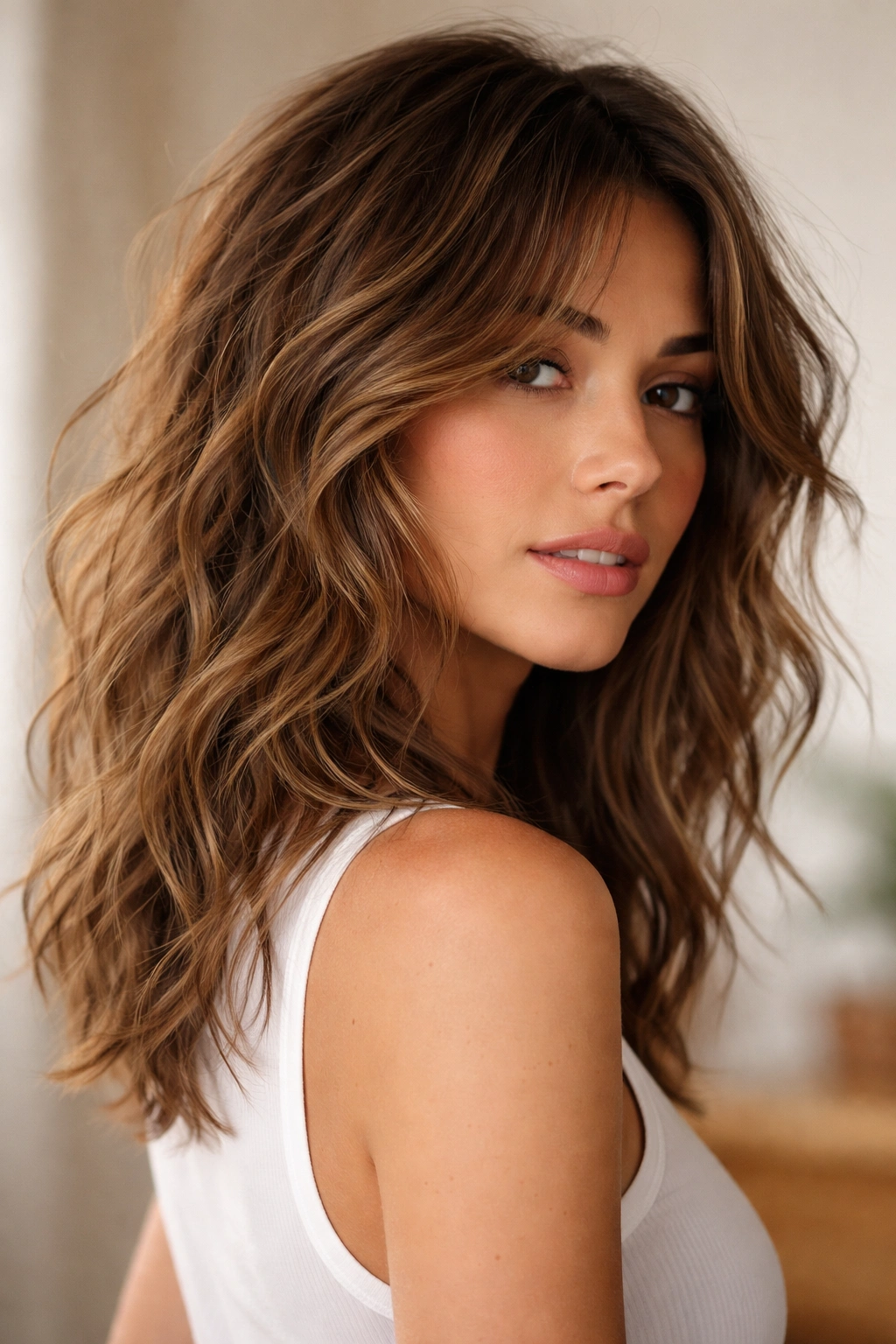
This cut is all about embracing a deliberately undone, tousled vibe. Medium length with choppy layers throughout, it’s designed to look like you just rolled out of bed with effortlessly perfect waves—even though some styling is happening behind the scenes. The layers create enough texture that frizz reads as intentional, piece-y movement rather than unruly mess.
The Art of Intentional Undone
The difference between “tousled” and “frizzy mess” is often just confidence and the right cut. Tousled medium layers are cut specifically so that messy texture and movement look cool. Each choppy layer has intention—it’s not random, it’s strategic. When you understand that you’re aiming for tousled rather than polished, your whole styling approach changes.
Creating the Tousled Look
- Apply texturizing cream or sea salt spray to damp hair and scrunch upward
- Use a diffuser on low to medium heat while scrunching sections, then let the rest air-dry
- Tousle with your fingers as hair dries—don’t worry about making sections perfectly uniform
- Use a light hold texturizing spray to maintain the piece-y texture throughout the day
- Refresh every 2-3 days with a spritz of water and cream, scrunching upward
- Trim every 7-8 weeks to keep the layers choppy and prevent them from growing into one length
This is genuinely one of the easiest cuts to maintain because imperfection is the whole point. A little frizz, a little texture, a little “I just woke up like this”—that’s the goal.
15. Choppy Shoulder-Length Waves
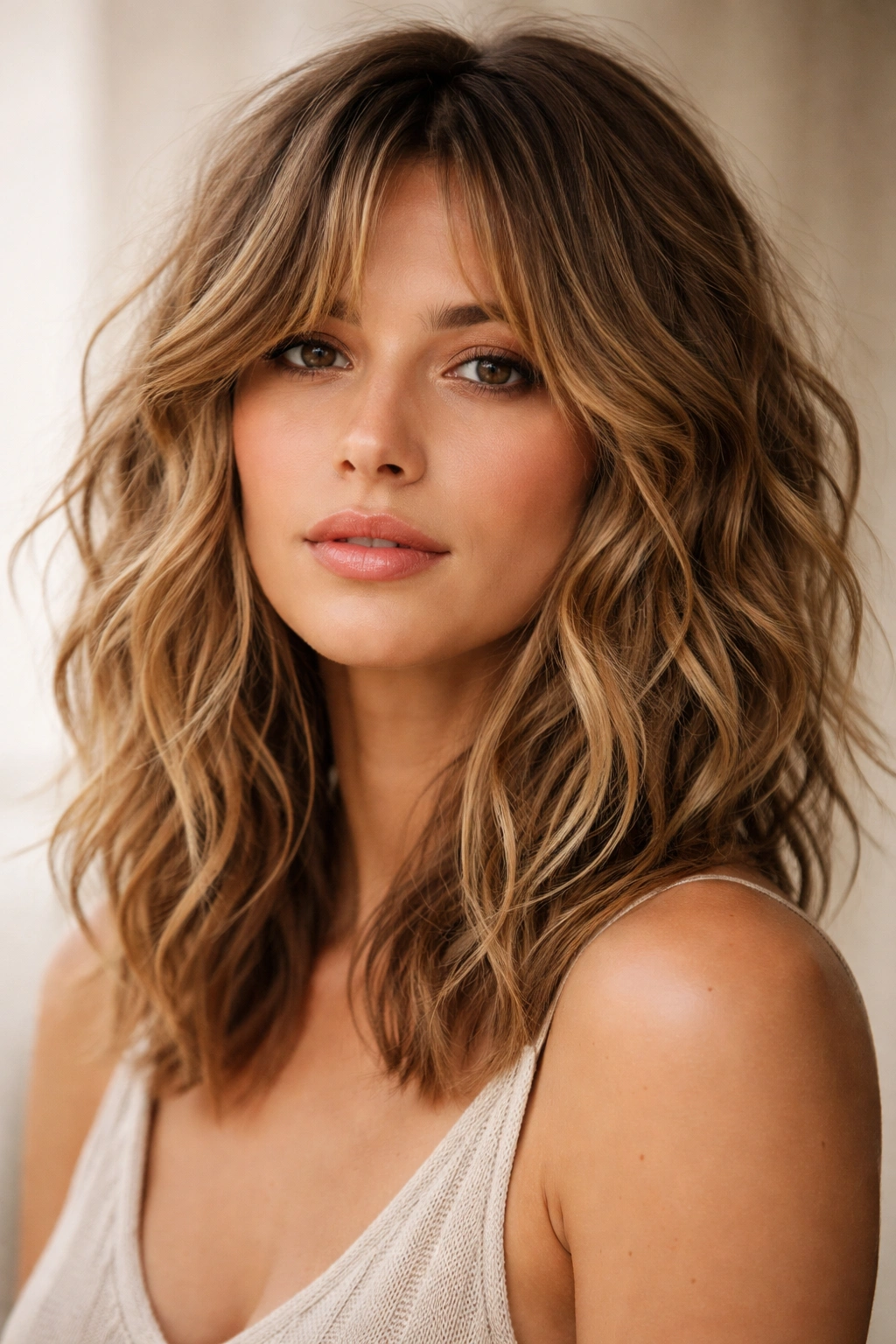
This is the perfect middle-ground cut: shoulder-length for versatility, choppy throughout for texture and movement, layered to reduce frizz. It’s not as short as a pixie but not as long and heavy as full-length wavy hair. The choppy layers give it serious texture without looking unkempt, and the shoulder length is easy to style and manage.
Why Choppy Works at Shoulder Length
Choppy layers at shoulder length create that tousled, textured look without requiring significant styling time. You have enough length to put your hair up or to the side, but not so much that gravity is pulling down your waves and creating density. The choppiness prevents the blob-like appearance that can happen when you cut wavy, frizzy hair into one solid length.
Daily Care and Styling
- Apply a leave-in conditioner or curl cream to damp hair
- Rough-dry with a diffuser to encourage your natural wave pattern
- Use your fingers to separate and shape the layers as you’re drying
- Finish with a light texturizing spray to hold the choppy texture
- Refresh every 2-3 days with water, product, and scrunching—full wash days only 2-3 times per week
- Trim every 6-8 weeks to maintain the choppy shape
- Consider a monthly deep conditioning treatment to keep shoulder-length hair healthy
Shoulder-length choppy waves are incredibly popular because they genuinely work—they’re not trendy, they’re fundamentally practical for wavy, frizzy hair types.
16. Layered Pixie-Bob Hybrid
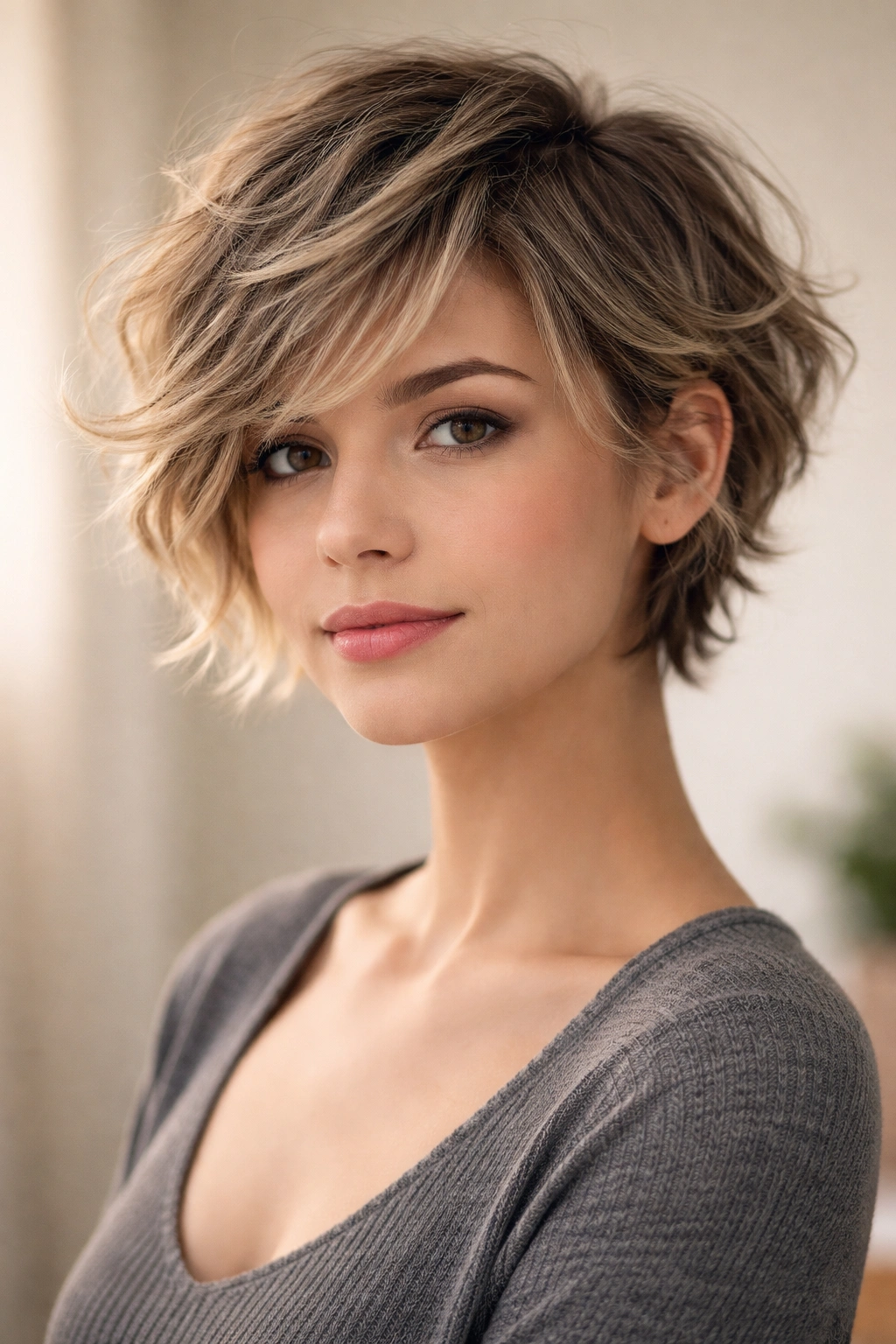
This cut is longer than a true pixie but shorter than a traditional bob—a hybrid that gives you the low-maintenance styling of a pixie with slightly more length. Textured layers throughout create movement and shape without requiring significant daily effort. It’s perfect if you want short hair but aren’t ready to commit to a full pixie crop.
The Best of Both Worlds
A pixie-bob hybrid keeps you out of the “awkward growing-out phase” that can happen with very short hair. You have enough length to style in multiple ways, but not so much that you’re dealing with weight and bulk. The textured layers ensure you’re not stuck with one severe look—you can style it sleeker on some days, piece-y and undone on others.
Versatile Styling Options
- For a sleek look: blow-dry with a round brush and apply a light pomade for shine
- For a tousled look: use texturizing cream while damp and tousle with your fingers
- For an androgynous look: slick back with gel or a light hairspray
- You can part it on the side, down the middle, or push it back—the length allows flexibility
- Trim every 5-6 weeks to keep the shape and layering intact
- Deep condition weekly because shorter hair often dries out faster
This cut works beautifully on people who want the confidence boost of short hair but also want the ability to style in different ways depending on their mood or occasion.
17. Extended Wavy Layers
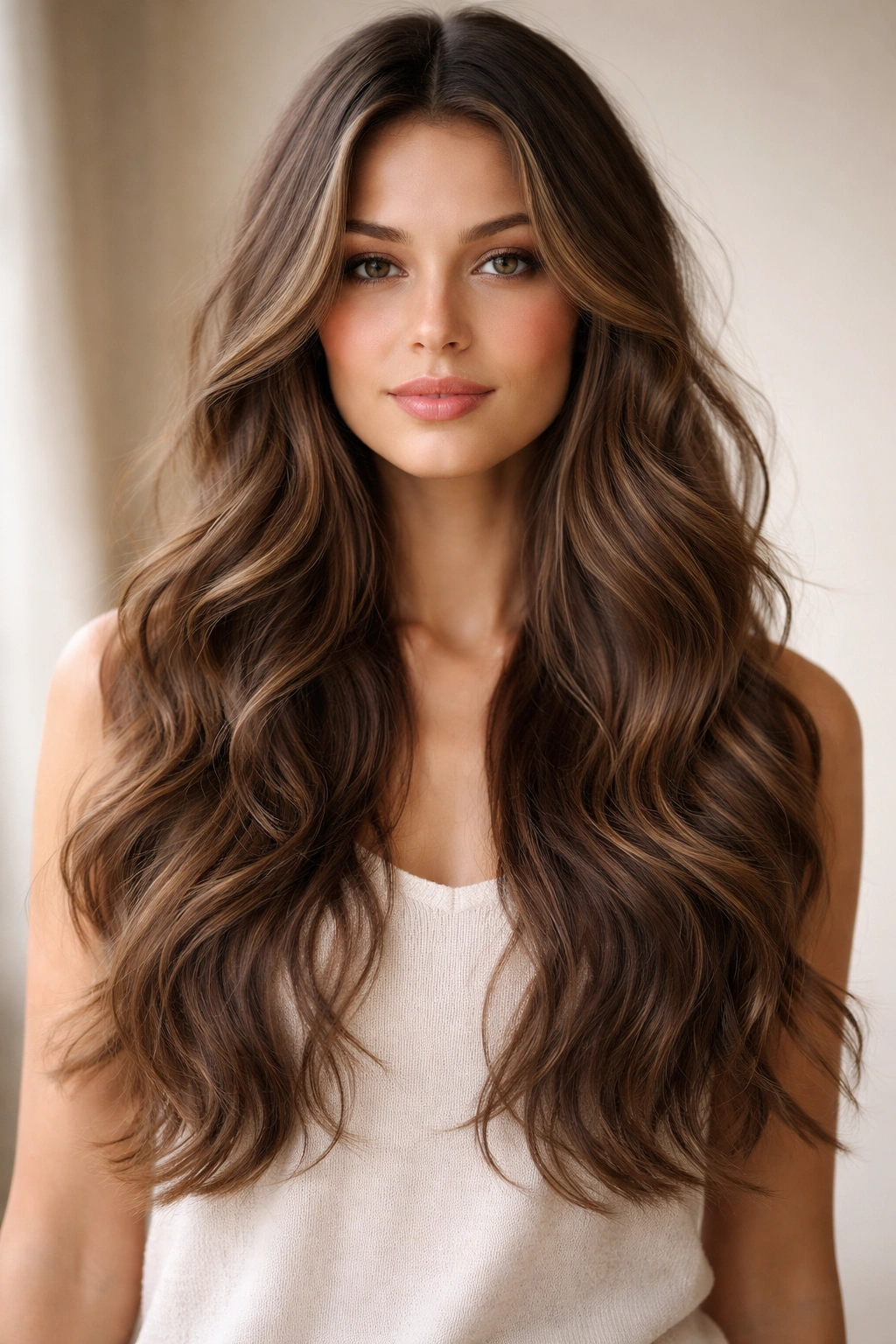
Extended wavy layers reach past your shoulders and create a long, flowing look with strategic texture throughout. Rather than choppy and piece-y, extended layers are more subtle—they remove weight and create movement without dramatically changing your hair’s appearance. This is for people who want long hair but need the layers to manage frizz and create definition.
How Subtle Layers Transform Long Hair
Long hair without layers can look flat, heavy, and frizzy. Adding subtle layers throughout allows each section to move independently while maintaining the overall long, romantic vibe. The layers start somewhere around mid-back and graduate longer, creating a silhouette that flows and moves rather than hanging like one thick rope.
Maintaining Extended Layers
- Deep condition at least twice weekly—long hair with layers needs serious hydration
- Use a leave-in conditioner or oil on your ends to prevent dryness and frizz
- Apply styling products from mid-length down, avoiding roots
- Diffuse-dry on low to medium heat, letting gravity help create natural waves
- Sleep on a silk or satin pillowcase to prevent friction frizz overnight
- Trim every 8-10 weeks to prevent thin, scraggly ends
- Consider occasional protein treatments to keep extended layers strong and healthy
Extended wavy layers require more maintenance than shorter cuts, but the payoff is hair that’s long and beautiful without looking like a frizzy, heavy sheet.
18. Textured Beach Waves with Layers
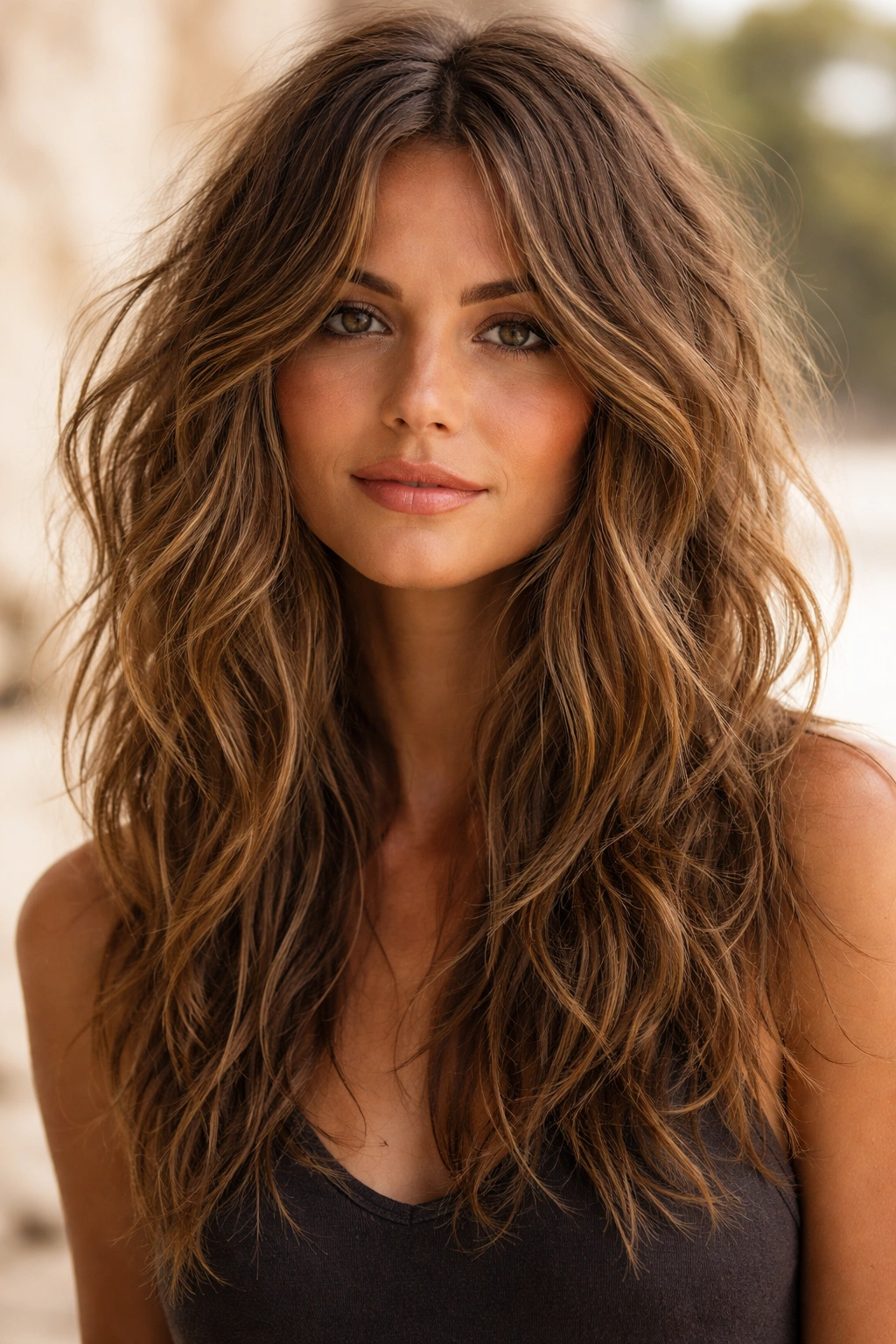
This cut is designed to look like you spend your life near the ocean—tousled, textured, piece-y waves throughout. It’s typically shoulder-length or slightly longer with choppy, irregular layers that create that sun-kissed, salt-air texture. For wavy, frizzy hair, this cut actually embraces your hair’s natural inclination and turns it into an aesthetic.
The Beach Waves Philosophy
Beach waves aren’t sleek or perfectly polished—they’re deliberately undone and textured. For people with naturally frizzy, wavy hair, this is liberation. You’re not trying to fight your hair into submission; you’re styling it because it’s textured and wavy. The layers ensure that texture looks intentional and cool rather than chaotic and unmanaged.
Creating Effortless Beach Waves
- Use a texturizing or sea salt spray on damp hair before any drying
- Scrunch and tousle sections while diffuse-drying on low heat
- Use your fingers to separate and create piece-y texture as you dry
- Finish with a light texturizing spray to hold the beach wave effect
- Refresh every 2-3 days with a spritz of water, sea salt spray, and finger-combing
- Full washes only 2-3 times per week—the less you wash, the better the texture holds
- Trim every 6-8 weeks to keep the layers choppy and intentional
Real talk: Beach waves work best if you embrace the texture and stop trying to make your hair smooth and polished. The whole point is tousled, undone waves—and that’s genuinely the most flattering thing for naturally wavy, frizzy hair.
The Takeaway
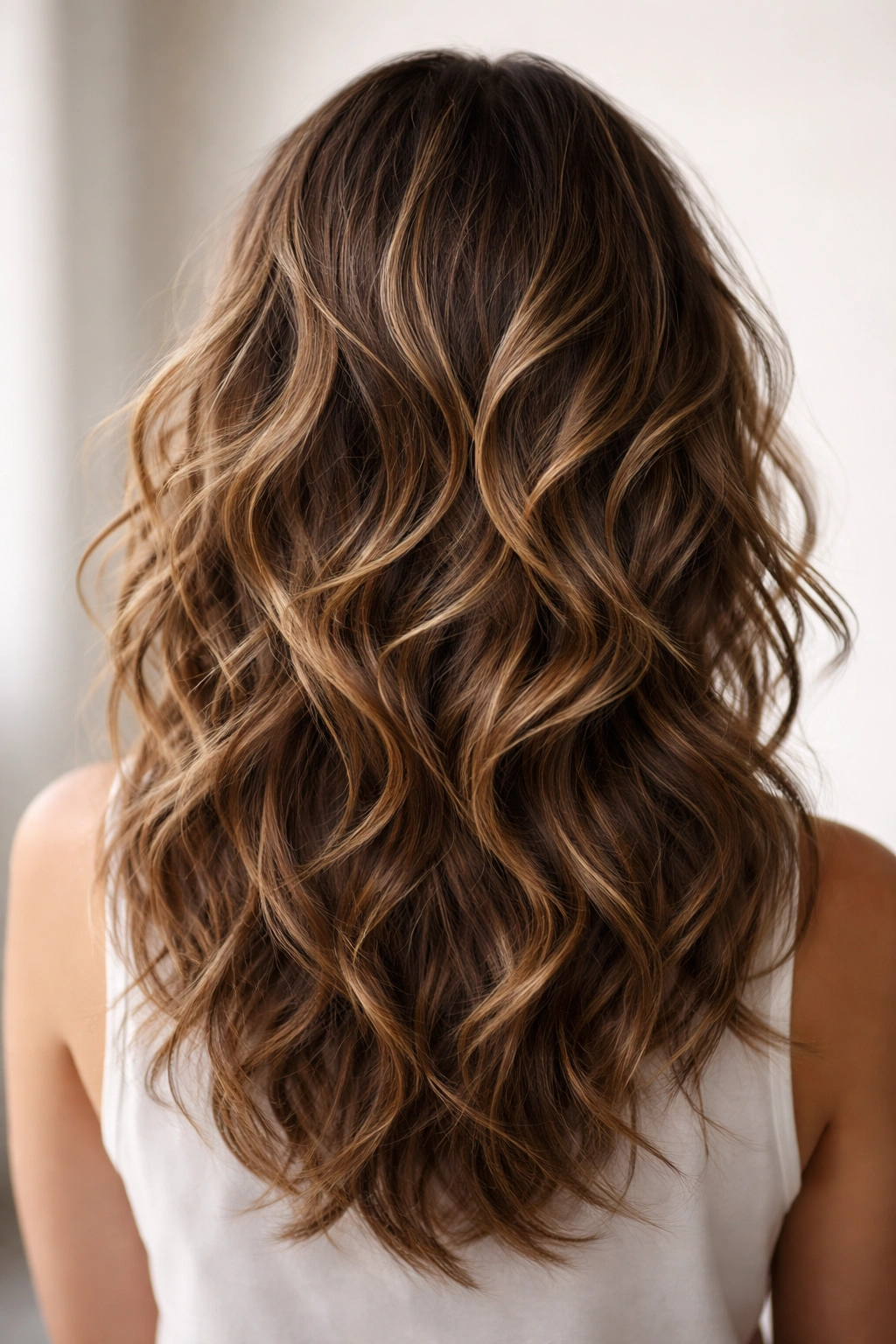
The best layered haircut for your wavy, frizzy hair depends on how much length you want, how much styling time you’re willing to invest, and what vibe you’re going for. Whether you choose a choppy pixie crop, a tousled medium bob, or extended layers that flow past your shoulders, the principle remains the same: the right layers work with your hair’s natural texture instead of against it.
The cut itself isn’t magic—you’ll still need good products, a moisturizing routine, and some styling effort to get the best results. But the difference between wearing a cut designed for frizzy, wavy hair versus fighting against a cut that wasn’t built for your texture is night and day. When your haircut actually suits your hair, you spend less time battling frizz and more time actually enjoying the beautiful waves you have.
Talk to your stylist about your specific hair type, texture pattern, and lifestyle before committing to any cut. Bring photos of styles you love, but also be honest about how much daily styling you’re willing to do. The perfect cut is one that works with your real life, not one that looks amazing in a photo but requires an hour of styling and product to achieve each morning.
