



Texture and movement become more valuable as we grow older—not less. If you’ve believed the myth that waves only look fresh on younger women, it’s time to reconsider. The right wavy hairstyle doesn’t make you look younger or older; it makes you look like yourself, just more polished and intentional. Women over 30 have the confidence, the understanding of their own face shape, and the styling know-how to pull off waves that feel sophisticated rather than trying-too-hard.
The key difference is structure. Youthful waves are often loose and undone—that’s part of their charm. But waves for women over 30 benefit from intentional architecture: layers that frame the face specifically, wave patterns that enhance bone structure, and styling choices that feel elevated. A good wavy hairstyle at this stage of life brings out your best features, adds movement without looking messy, and works with your hair’s natural texture rather than against it.
What makes a wavy hairstyle truly chic in your 30s and beyond isn’t complicated. It’s about finding a cut that works with your face shape, choosing a wave pattern that complements your features, and knowing how to style it in a way that feels effortless but intentional. You’re not chasing a trend—you’re curating a look that becomes part of your signature. The styles that follow each offer that balance of texture and refinement that only works when you know exactly what you’re doing.
1. Soft Waves with Layering
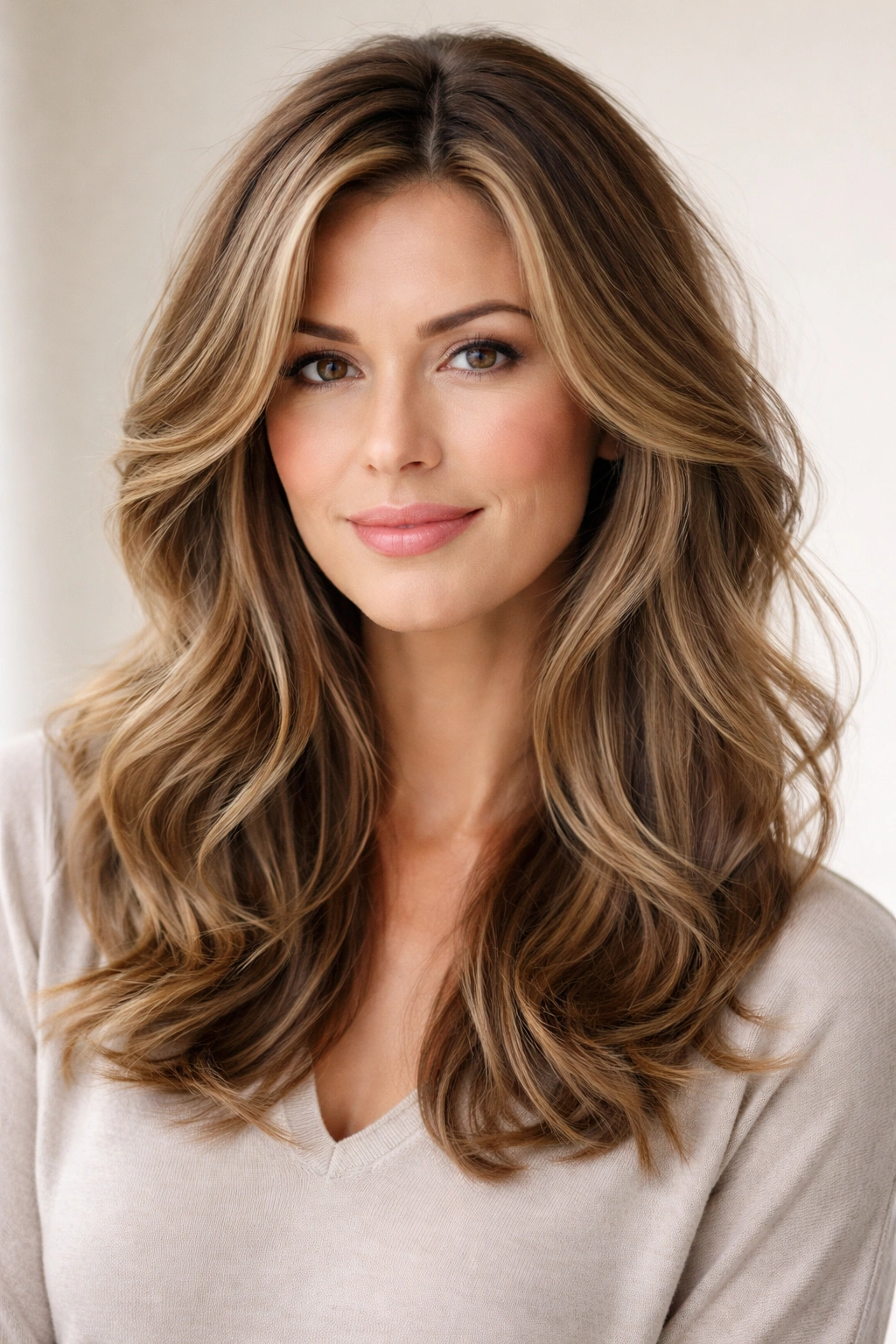
Layers transform regular waves into something dimensional and flattering. Instead of a blunt end that sits heavy, layered waves have movement built into the cut itself—they don’t rely on styling alone to look alive. For women over 30, this means less time fussing with your hair and more time enjoying the results.
The secret to this style is placement. Longer layers around the face create a flattering frame, while shorter layers underneath add movement that makes even thin or fine hair look fuller. You’re not cutting away length dramatically; you’re just adding strategic texture points that allow the waves to breathe and shift naturally.
Why This Works for Mature Features
Layered waves have a way of softening your face without making you look washed out. The movement draws attention upward to your eyes and cheekbones. If your hair texture is on the finer side, layers prevent that flat, aging appearance that thick blunt ends can create. If your hair is thick, layers prevent that heavy, severe look that can come across as trying too hard.
How to Style and Maintain It
- Use a wave-creating spray or salt spray before blow-drying to encourage natural texture
- Blow-dry with a round brush, directing sections away from the face
- Sleep on waves using a silk pillowcase to prevent creasing and breakage
- Refresh waves between washes with a texture spray or dry shampoo applied to the mid-lengths and ends
- Get a trim every 6-8 weeks to maintain the layering structure—this is crucial, as blunt regrowth undermines the effect
A quick styling note: you can achieve this look with a curling iron or wand, but the cut is what makes it genuinely effortless. The right layered cut holds waves even with minimal styling, which is ideal when you’re juggling work, life, and maybe a few other priorities.
2. Textured Lob with Wispy Waves
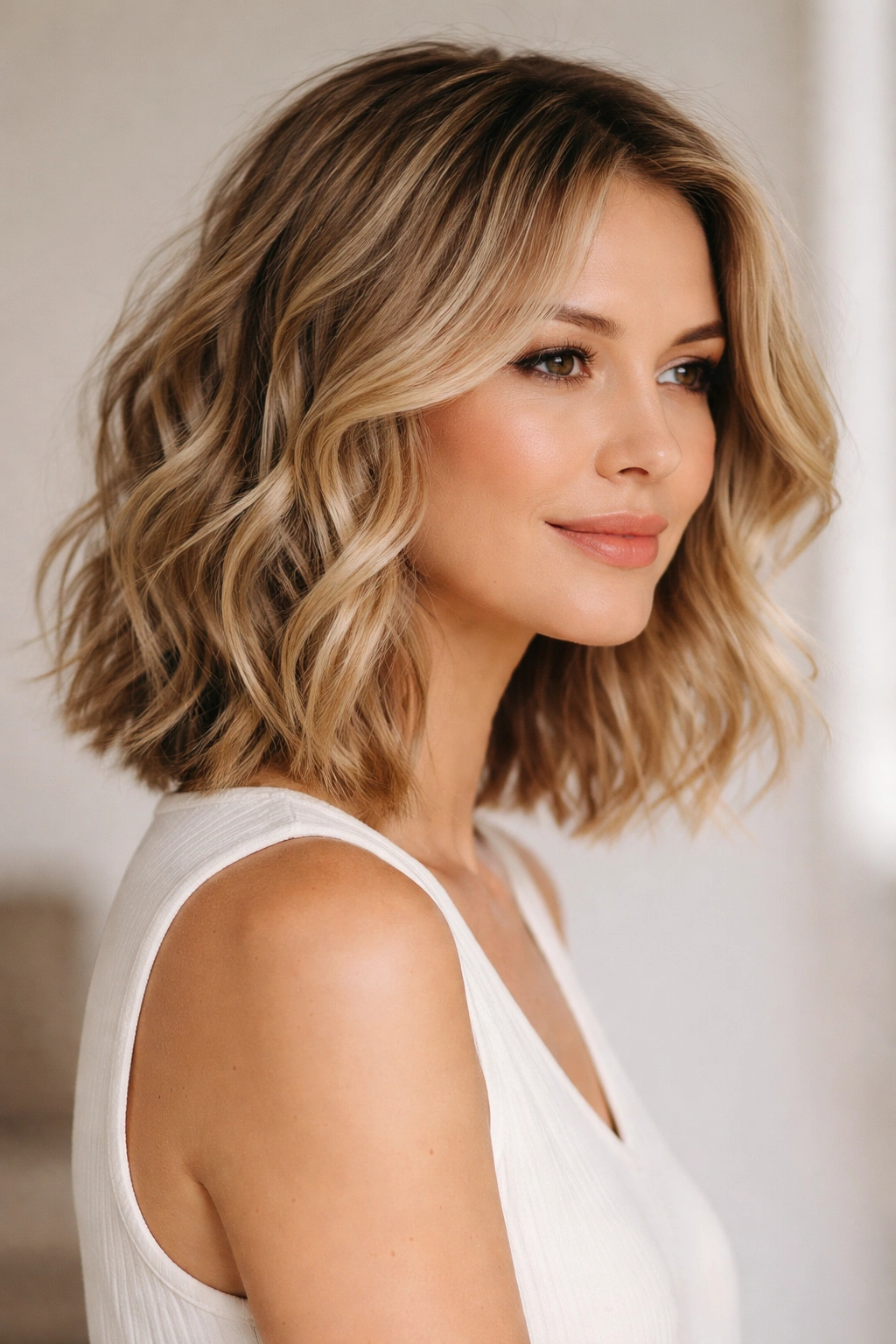
A lob—that’s a long bob, typically hitting between the chin and shoulders—is the goldilocks length for women over 30. It’s long enough to feel feminine and offer styling versatility, yet short enough to look intentional rather than like you’re holding onto something from years past.
Add wispy waves, and you’ve got a style that works whether you’re heading to a board meeting or Saturday brunch. The texture breaks up the line of the cut, making it feel less blunt and more lived-in.
Why This Style Suits Your 30s and Beyond
The lob is age-neutral in the best way possible. It works with mature features because it’s already a relatively sophisticated cut—not overdone, not trying too hard. Wispy waves add softness without sacrificing polish. This style says you’ve thought about your appearance without suggesting you’re obsessed with it. The shoulder-grazing length is long enough to create elegant waves but short enough that you won’t end up with limp, weighted-down hair by day three.
Styling Tips for Maximum Impact
- Apply wave cream or mousse to damp hair before blow-drying for hold and texture definition
- Blow-dry sections with your head tilted to one side, then the other, to create natural-looking asymmetrical waves
- Finish with a light hairspray rather than a heavy product that can make waves look stiff or manufactured
- Use a 2-inch curling iron to deepen and reshape waves, focusing on the mid-length and ends
- Wear your part slightly off-center to enhance the asymmetrical, modern feel
The textured lob is remarkably low-maintenance for how polished it looks. You can wear it with a sleek part on professional days and tousled and side-swept on weekends. That versatility makes it practical for real life, not just Instagram.
3. Shoulder-Length Waves with Face-Framing Layers
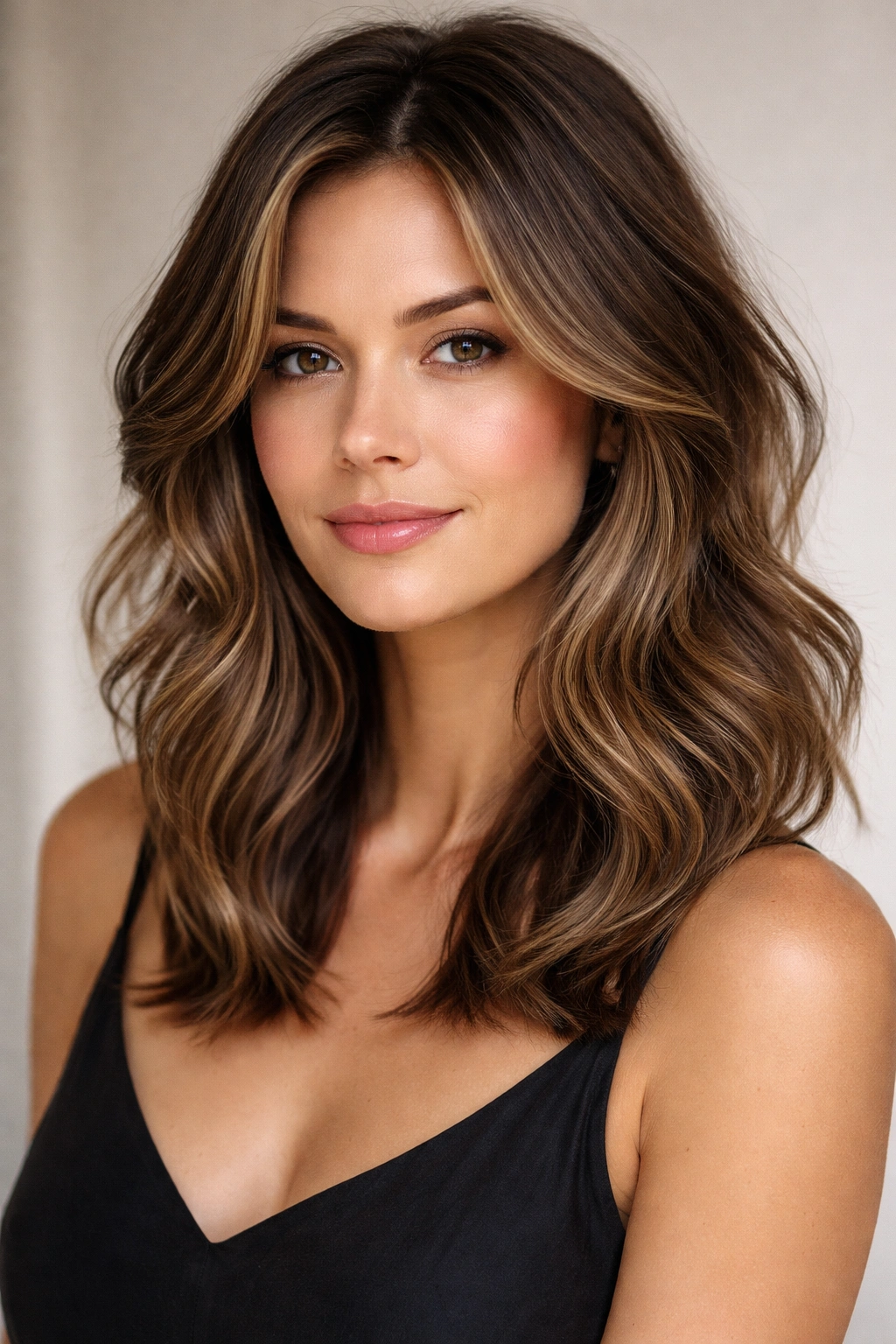
Face-framing layers are the unsung hero of sophisticated styling. They soften your jawline, draw attention to your eyes, and add movement exactly where you need it most. At shoulder length with soft waves, this becomes a style that’s genuinely flattering from every angle.
The key is that the face-framing layers are short enough to move independently from the rest of your hair. They’re not just decorative—they’re functional. These pieces move and shift throughout the day, creating a lived-in elegance that feels fresh.
The Face-Framing Advantage for Women Over 30
As our faces change subtly over time, strategic framing becomes more important. Layers that begin at the cheekbone and hit just below the jawline have a lifting effect that’s genuinely flattering. They soften any hardness in your jawline without requiring any filter or editing—just movement. This style also works beautifully if you have some gray at your temples; the moving pieces create visual interest that can make partial color or dimensional highlights look intentional.
How to Perfect This Cut and Style
- Ask your stylist for choppy, piece-y layers starting around your cheekbone, rather than subtle blended layers
- Layers should be shorter as they frame the face, then gradually blend into longer lengths toward the back
- Blow-dry these face-framing pieces separately with a small round brush to create independent movement
- Use a curling iron on the shorter face-framing layers first, then the longer layers, for cohesive waves that move together
- Refresh with dry shampoo and a light texturizing spray on day two and three for waves that feel intentional, not like bedhead
This style genuinely improves with a couple of days of wear. The waves deepen, the texture becomes more defined, and the face-framing layers settle into a pattern that feels effortless. Day-three hair is often the most beautiful version of this style.
4. Beachy Waves with Tousled Texture
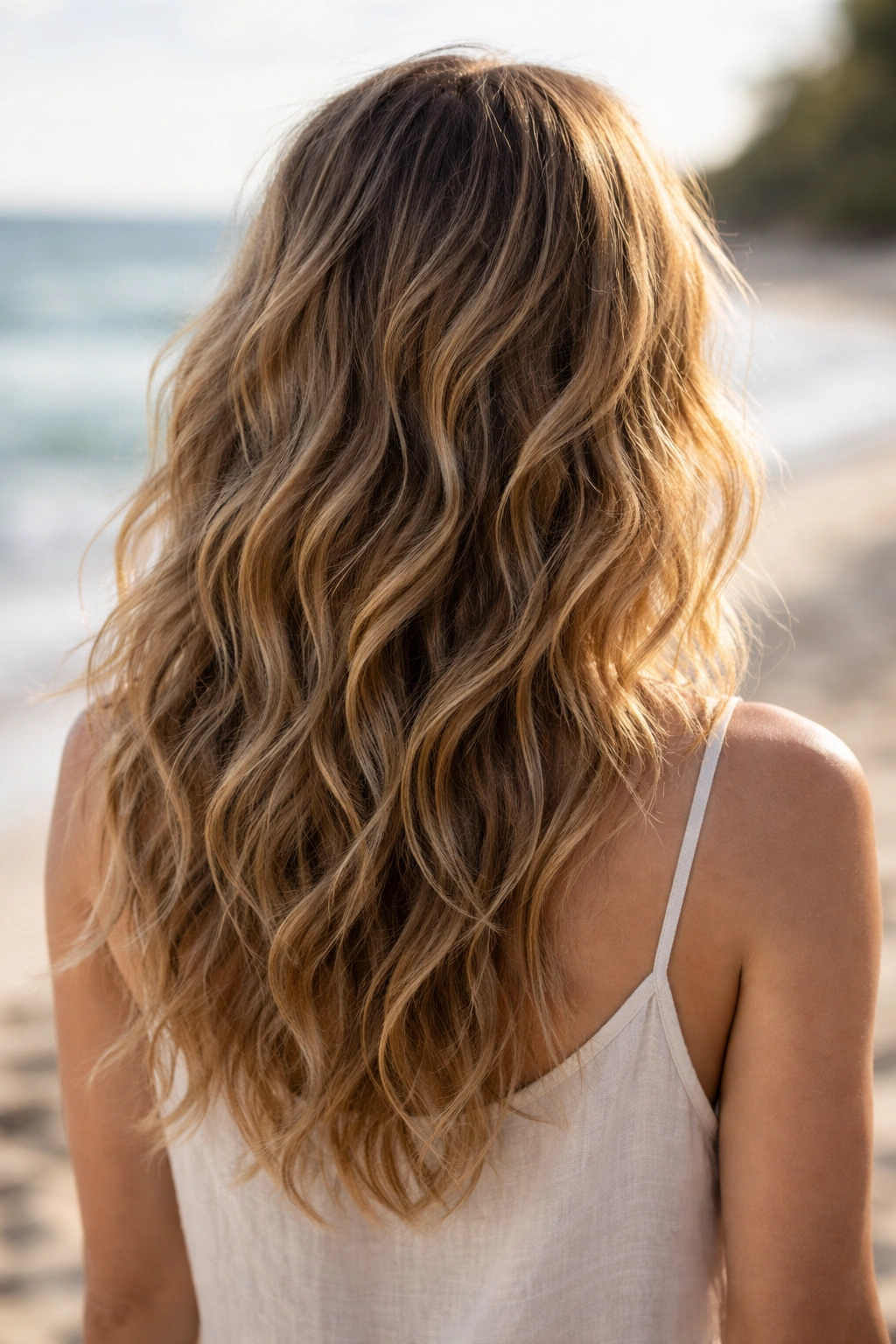
There’s a significant difference between beachy waves and disheveled hair, and that difference is intentionality. Beachy waves in your 30s aren’t about looking like you just came from the ocean—they’re about channeling that same ease and movement, but with deliberate styling and polish.
This style works best on hair with some natural texture, though you can absolutely create it on straight hair with the right tools. The waves should be irregular, with varied sizes and directions, but never messy enough to look unkempt.
Why This Works at Any Age (Done Right)
Beachy waves are often dismissed as youthful, but that’s only true when they look accidental. When they’re cut and styled with intention, they’re stunning on mature faces. The irregular wave pattern is forgiving—it doesn’t highlight fine lines or require perfection. The texture adds movement that makes your whole face look more animated and youthful, which is entirely different from looking young.
Achieving Effortlessly Textured Waves
- Start with a sea salt spray applied to damp hair, working it through to mid-lengths and ends
- Blow-dry your hair mostly dry, then use a 1.5-inch curling iron to create loose waves, rotating the barrel to vary the wave direction
- Leave some pieces unwavy—this variation makes the whole style look intentional and unforced
- Don’t curl all the way to the roots; waves should start an inch or two down from your scalp
- Use a light texturizing spray or dry shampoo as a finishing touch, focusing on the roots for grip and the mid-lengths for texture definition
- Sleep in a loose braid for second-day waves that require minimal re-styling
The beauty of this style is that it improves as you wear it. First-day waves are perfect if you’re going somewhere important. Second and third-day waves have more depth and definition. By day four, you’re refreshing with dry shampoo rather than re-styling completely, which saves real time in your life.
5. Deep Side Part Waves
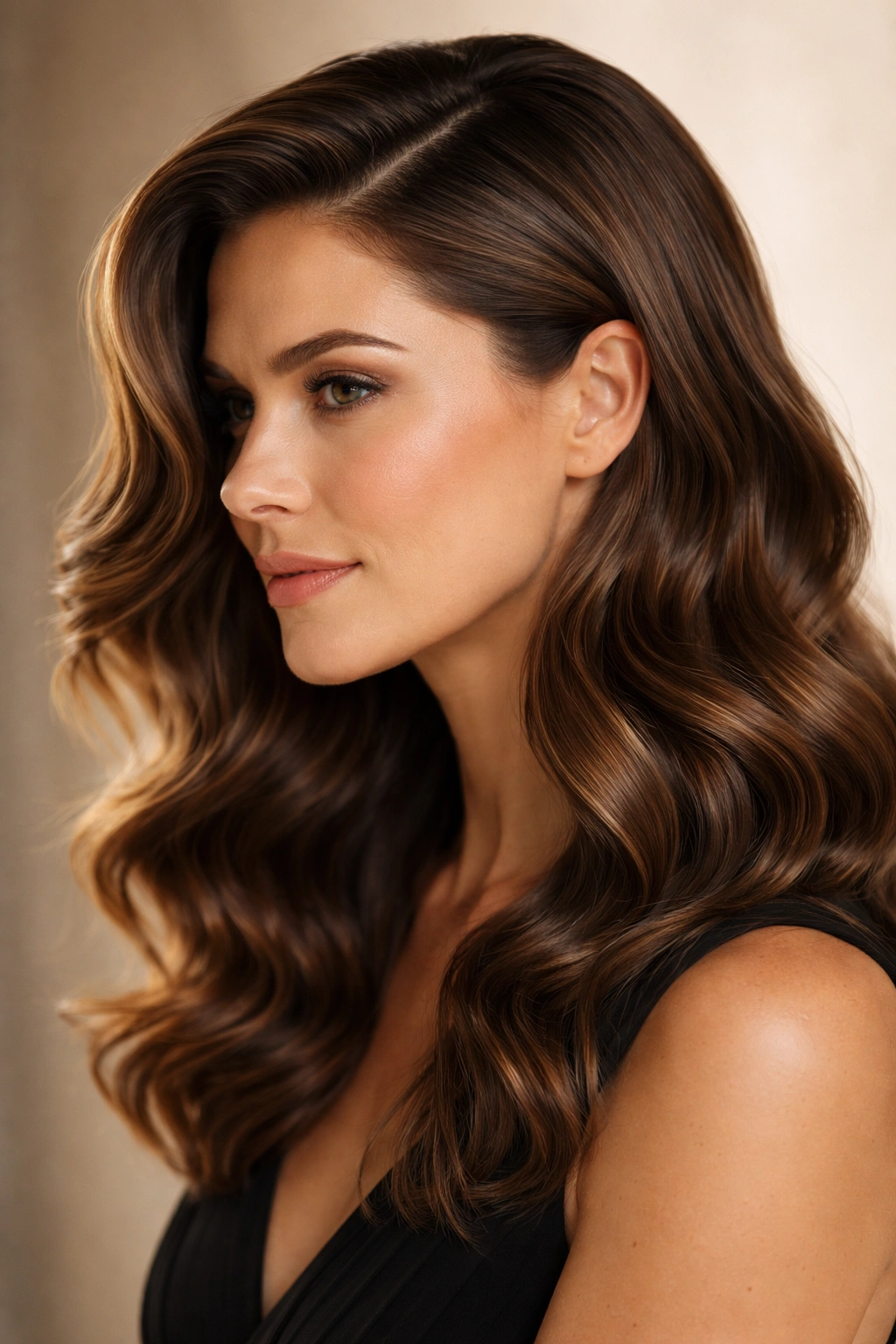
A deep side part is a styling choice that’s surprisingly transformative. It changes how light hits your face, alters your proportions visually, and can make waves look more elegant and intentional. Combined with soft waves, a deep side part creates an inherently sophisticated style.
This isn’t about trendy or fashionable—it’s about understanding that your styling choices affect how your face reads to others. A deep part shows confidence. It says you’ve made a choice about how you want to present yourself.
The Power of Directional Styling
Waves don’t automatically look chic; direction does. When your waves follow the direction of your part, they create a cohesive, polished appearance. When they fight your part or look random, they read as less intentional. A deep side part gives your waves a clear direction, which makes the entire style feel more controlled and sophisticated.
This style is particularly flattering if you have a strong cheekbone structure—the deep part draws light and attention to that side of your face, highlighting your best features.
How to Create and Maintain the Look
- Create your part when hair is wet, running a fine-tooth comb down from your hairline to the back of your head to establish a clean line
- Blow-dry with your head tilted toward the side of your deeper part; this helps set the direction
- Wave the hair away from the part side—if your part is on the right, waves should be directed to the left and away from that deep part line
- Use a teasing brush in the roots just behind the part to create subtle volume and lift
- Finish with flexible hold hairspray that holds shape without stiffness
- Refresh your part line in the morning with a small comb or teasing brush if it softens overnight
A deep side part paired with waves is an excellent choice for formal events, professional settings, or whenever you want to look particularly put-together. It’s also completely wearable for everyday life once you establish the habit of creating that part direction.
6. Romantic Half-Up Waves
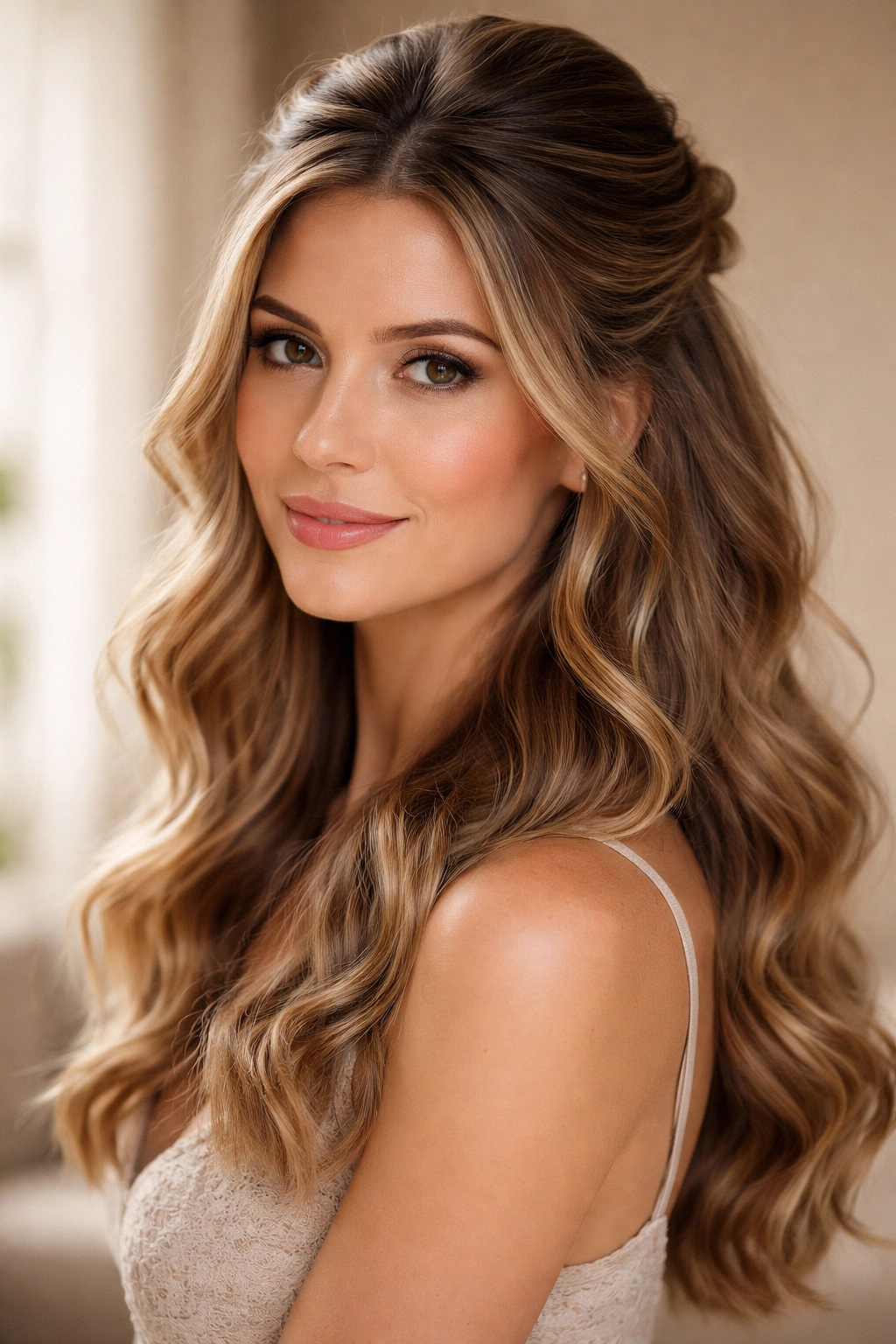
A half-up style with waves is sophisticated enough for evening events but approachable enough for everyday wear. The half-up configuration keeps hair off your face—which is flattering for mature features—while still showcasing the length and movement of your waves.
The romance comes from how the waves flow, the softness of the updo portion, and the way the style frames your face. It’s elegant without being stiff or overdone.
Why Half-Up Works for Polished Styling
Half-up styles inherently look intentional. You can’t accidentally end up with a half-up style—it requires a deliberate styling choice. That’s part of why it reads as polished and put-together. For women over 30, this style says “I chose to look like this” rather than “I woke up and this happened.”
The half-up configuration also flatters your face by creating height at the crown and openness at the cheekbones. This is universally flattering because it doesn’t weigh your face down and creates natural balance.
Styling a Half-Up with Beautiful Waves
- Create soft waves in the loose, bottom portion of your hair using a 1.5-inch curling iron, cooling each curl completely before releasing it
- Take a section from each temple area, about two inches wide, and gently brush out the waves in those sections slightly for a softer look
- Twist these sections back and pin where they meet at the center-back of your head with a bobby pin that matches your hair color
- Gently pull and tousle the crown section to create subtle volume and a romantic, undone quality
- Leave a few pieces loose around your face, curled away from your features
- Use a light flexible-hold hairspray so the half-up portion doesn’t feel stiff or sculptural
This style is particularly beautiful if you have longer hair—shoulder length or longer—because the waves in the lower portion have room to move and create visual interest. You can dress it down with casual clothes or dress it up with jewelry and makeup.
7. Voluminous Body Waves
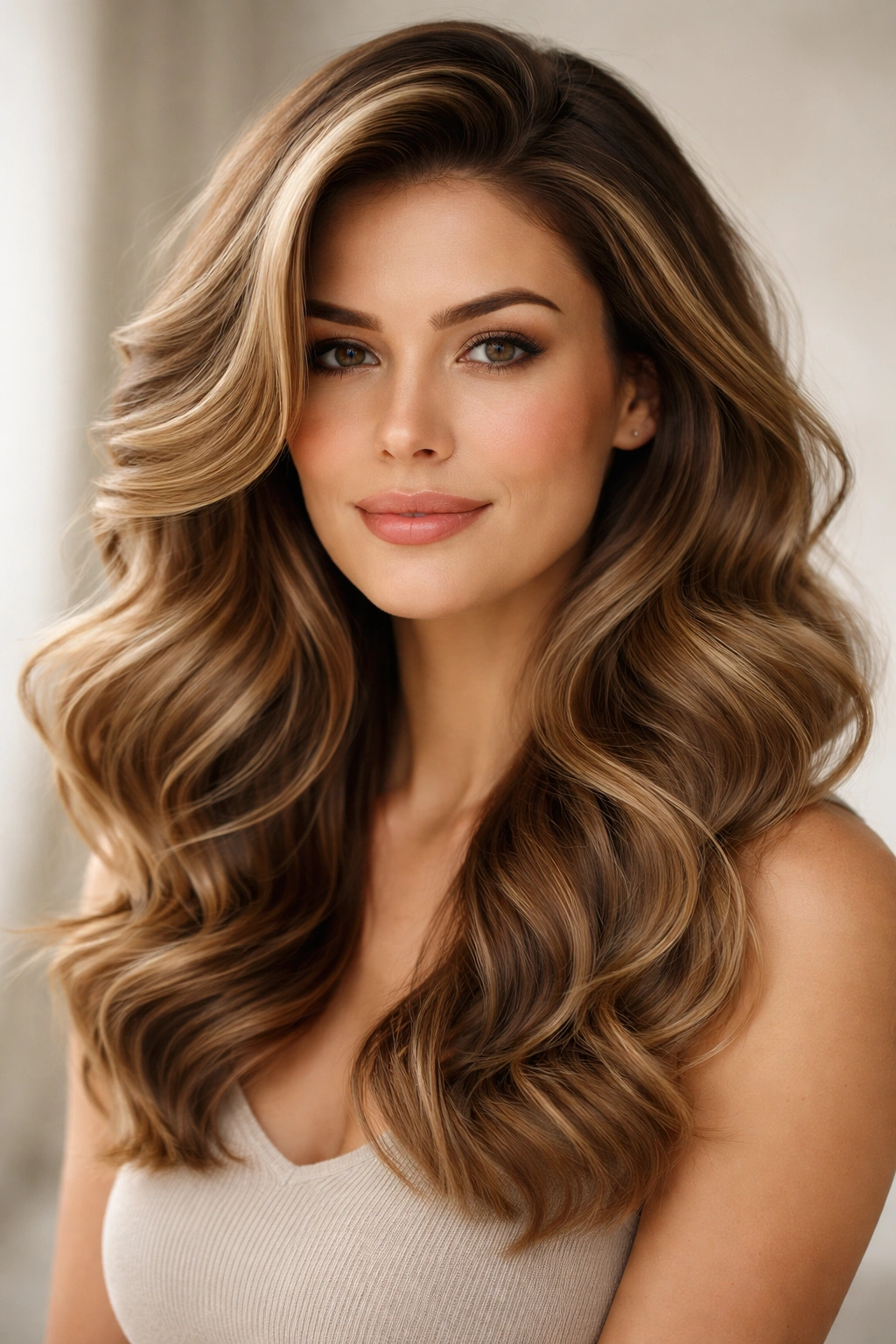
Volume isn’t about being big or trendy—it’s about creating shape and dimension that flatters your face and makes your hair look healthier and fuller. Voluminous body waves are waves that have genuine body and movement from root to tip, not just surface curls.
This style works beautifully on women over 30 who want to command presence without looking overdone. There’s confidence in visible volume—it suggests you have texture and thickness, even if your natural hair is fine.
Building Genuine Volume Into Your Wave Pattern
Voluminous waves aren’t fluffy or cartoonish; they’re structured. The volume comes from how you blow-dry your hair and how you create the wave pattern, not from teasing everything to death or using heavy products that flatten out.
This style requires starting with a good cut—layers are essential because they give waves room to sit and move independently rather than stacking on top of each other in a heavy mass. The cut should have shorter layers at the crown to create height naturally.
Creating Waves That Have Real Body
- Blow-dry your hair with your head upside down, using a medium round brush to lift roots and create natural volume
- Flip right-side up while still slightly damp and create waves using a 1.25-inch curling iron, curling away from your face
- Don’t uncurl immediately; allow each curl to cool completely in the barrel—this sets the wave and creates genuine hold
- Apply a texturizing mousse or volumizing spray to your roots before blow-drying for additional grip
- Gently brush out waves once they’ve cooled, working from the ends up to blend them into a cohesive pattern
- Use dry shampoo as a texturizing product, not just for oil absorption—it adds grip and makes waves more defined
Voluminous waves require a little more styling time than some other options, but the payoff is substantial. You look more energized, your face looks brighter because of the additional movement around it, and the overall effect is inherently flattering.
8. Effortless Waves with Subtle Highlights
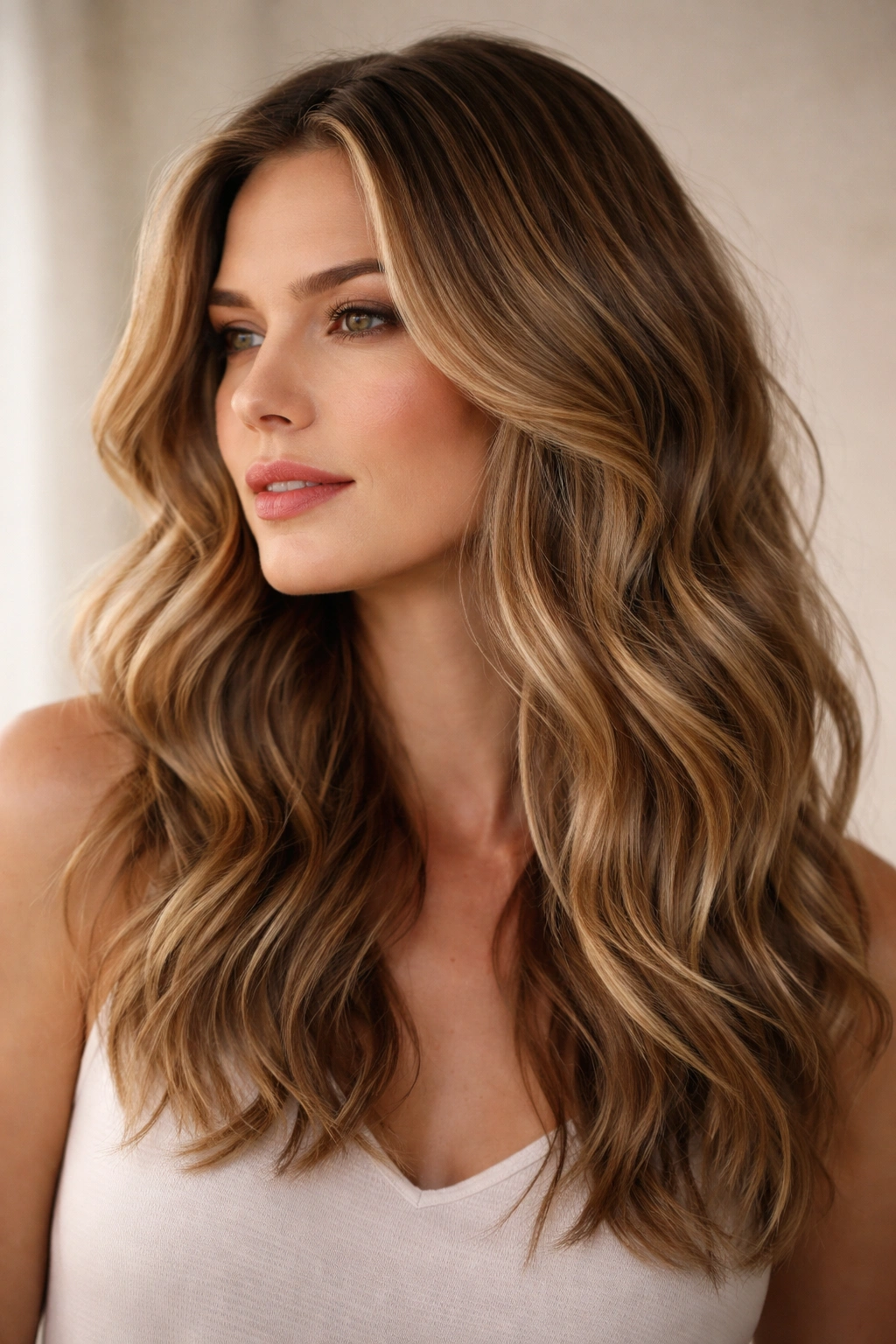
The styling choice isn’t just about the wave pattern—it’s also about how light interacts with your hair. Subtle dimensional color, whether that’s blended highlights, balayage, or just dimensional lowlights, makes waves look more textured and interesting.
Highlights don’t have to be dramatic to be effective. Subtle dimension catches light and creates an illusion of movement and volume, even on days when your waves aren’t perfectly defined.
How Color Enhances Wave Texture Visually
A single, solid color can flatten waves and make them look one-dimensional. Multiple tones—even subtle ones—create the visual impression of more texture and movement. This is particularly valuable for women with fine or thin hair, because the color variation creates an optical illusion of greater density.
Subtle highlights also age beautifully. They don’t require constant maintenance like dramatic balayage, and they blend gracefully with natural graying. As you grow older, this approach to color is more practical and sustainable than trying to maintain high-contrast highlights.
Choosing and Maintaining Dimensional Color
- Ask your colorist for softly blended highlights that are no more than two to three shades lighter than your base color
- Place highlights around your face and through the mid-lengths and ends where sun naturally hits hair
- Ask for dimensional lowlights as well, using a shade one to two shades darker than your base to add depth
- This combination creates the impression of natural dimension without requiring root touch-ups constantly
- Maintain your wave styling to maximize how the highlights catch light
- Use a color-safe shampoo and conditioner to extend the life of your color between appointments
- Space color appointments 8-12 weeks apart to let dimensions settle and blend naturally
The combination of subtle highlights and soft waves is genuinely sophisticated. It works in professional settings, social situations, and everyday life. You look like someone who takes care of herself without appearing to be obsessing over her appearance.
9. Pencil Curls and Loose Waves Hybrid
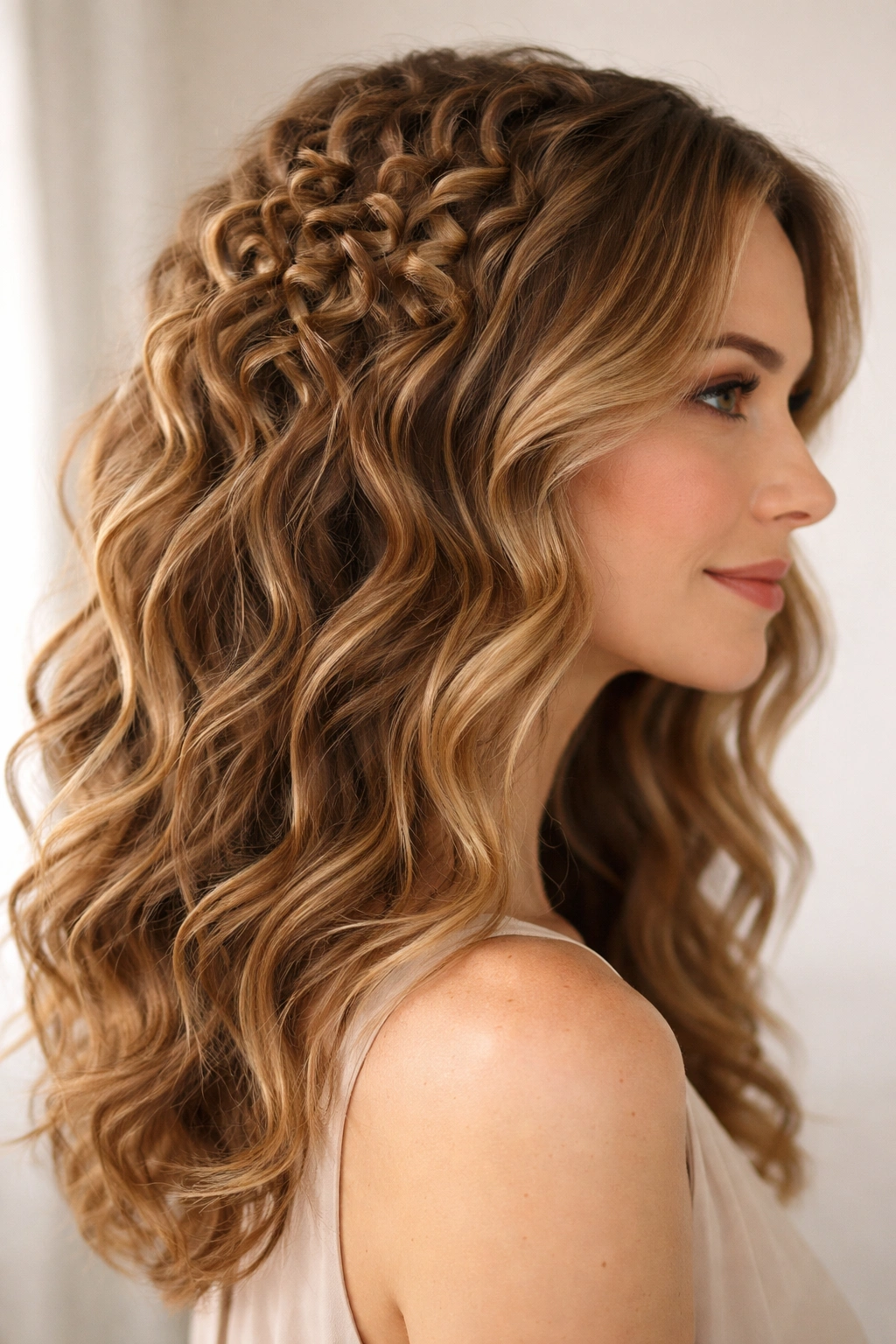
This style takes the best of two worlds: the defined, romantic quality of pencil curls with the softness and movement of loose waves. The hybrid approach means some pieces are more tightly waved while others are looser, creating visual interest and dimension without looking costume-like.
This is an excellent choice if you want waves that read as more intentional and polished than the purely undone aesthetic, but without the commitment of full curls.
Why This Combination Works So Well
Pencil curls alone can read as overly done or styled in a way that feels retro rather than current. Loose waves alone can sometimes read as undone to the point of looking like you just woke up. The combination—tighter definition in some sections, looser movement in others—reads as intentional styling that’s also modern.
This approach also offers versatility. On days when you want more polished waves, you can do more pencil curls. On days when you want softer waves, you can focus on the looser sections.
Creating This Textured Blend
- Use a 0.75-inch curling iron for pencil curls, working through the crown and one side of your head
- Use a 1.5-inch curling iron for looser waves, focusing on the opposite side and the back
- The variation in curl size automatically creates the hybrid effect
- Cool each curl completely before releasing to set the wave pattern
- Gently brush or finger-comb through once all curls are cool, which breaks the pencil curls slightly and creates the hybrid texture
- Use a flexible hold hairspray that allows movement while maintaining definition
- For second-day styling, re-curl only the pencil curl sections, leaving loose waves alone
This style is perfect for events that call for something more than casual but less formal than full curls. Think dinner out, professional events, or any situation where you want to look notably polished without appearing overly styled.
10. Waves with Braided Crown Detail
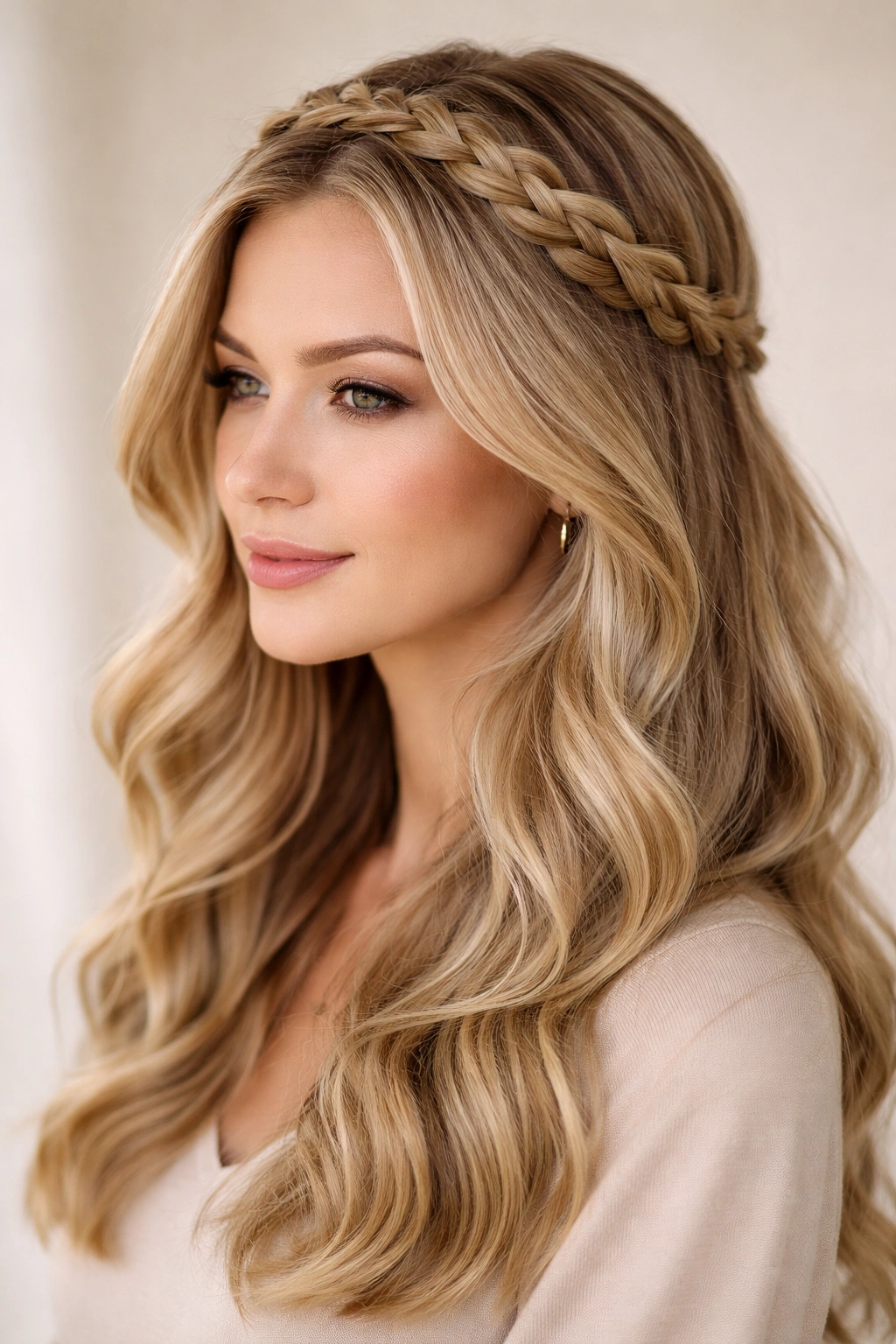
Adding a braid element to your waves instantly elevates the style from simple to intentional. A braided crown—a braid that travels along the top or side of your head, then releases into loose waves—creates an element of design that makes the entire look feel more curated.
This style works beautifully for events, but it’s also totally wearable for everyday styling if you’re comfortable with braids.
The Visual Impact of Strategic Braiding
A braid serves a functional purpose, but it’s also a design element. It draws the eye upward to your face and crown, creates height naturally, and adds complexity to your waves. The contrast between the structured braid and the loose, flowing waves is inherently balanced and flattering.
This style is particularly effective if you have finer hair or less overall wave texture, because the braid fills in that interest visually. It says “I care about how I look” without requiring perfect, voluminous waves.
How to Execute a Braided Crown with Waves
- Create soft waves in the lower portion of your hair using a 1.5-inch curling iron before braiding—this ensures beautiful waves visible below the braid
- Part your hair deeply to one side, then start a Dutch braid (braid under, not over) from your temple, traveling toward the back of your head
- Continue braiding until you reach about the center-back of your head, then gently pull the braid slightly to make it appear fuller and more romantic
- Secure the braid end with a small elastic that matches your hair color, leaving the rest of your hair loose to flow in waves
- Tuck the braid end behind your ear or let it sit at the nape of your neck, depending on your preference
- Gently tousle and separate the waves once the braid is complete for a balanced, romantic appearance
This style requires practice if you’re not comfortable braiding, but it’s a genuinely beautiful choice for creating a distinctive, intentional look that sets you apart from simpler wave styles.
11. Sleek Waves with Modern Undercut
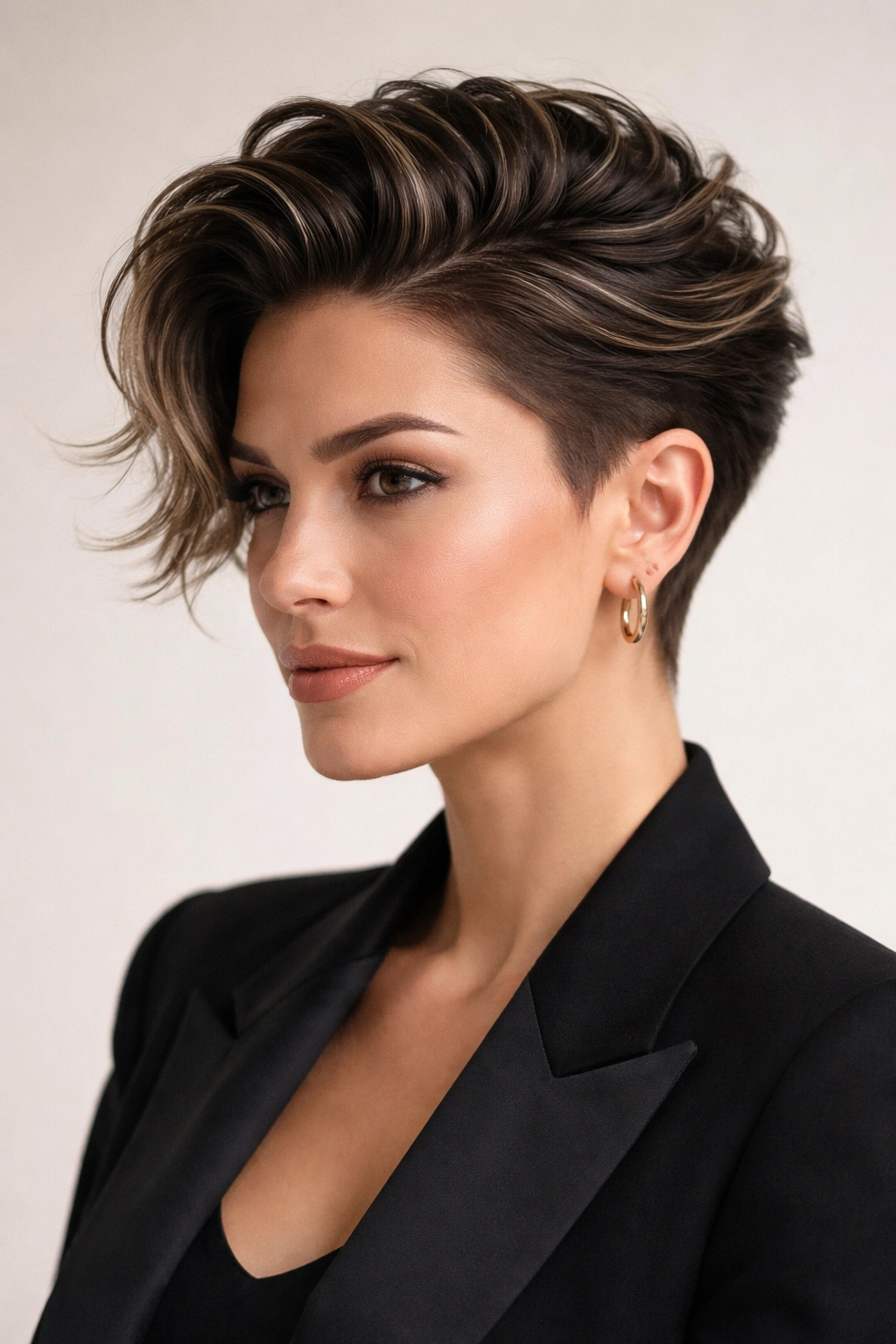
If you want waves with an edge—something that nods to modern styling rather than purely romantic texture—a sleek wave with an undercut provides exactly that. The undercut (shorter, often hidden layers underneath) adds dimension and prevents the style from looking too heavy or dated.
This is a bold choice, but it’s sophisticated and interesting in a way that pure waves sometimes aren’t.
Why Modern Undercuts Elevate Simple Waves
An undercut serves multiple purposes. Visually, it adds architectural interest and prevents the style from looking like you’re simply wearing long, wavy hair. Practically, it reduces bulk without sacrificing length, making the style easier to style and maintain. The contrast between sleek, intentional waves on top and the hidden texture underneath creates a sophisticated look that reads as modern and deliberately styled.
This approach appeals to women over 30 who want waves but also want something that signals confidence and clear styling choices rather than soft femininity alone.
Creating Sleek Waves Over an Undercut
- Ask your stylist for shorter, choppy layers underneath your hair, hidden completely when you wear your hair down
- These undercut layers should be shorter in the back, gradually longer as they approach your face layer
- Blow-dry your hair sleek and smooth using a paddle brush and focusing on polishing the top layer
- Create waves in the top layer only, using a 1.25-inch curling iron and curling away from your face
- Keep these waves defined and intentional rather than blended and soft
- Use a medium-hold hairspray that maintains definition without stiffness
- The contrast between the sleek top and the structured waves is intentional; don’t over-blend
This style is perfect for professional settings where you want to demonstrate that you take yourself seriously as a stylist. It works beautifully in creative industries, fashion, law, or any field where you want to signal both competence and personal style. It’s not a compromise between looking polished and looking interesting—it’s both.
Final Thoughts
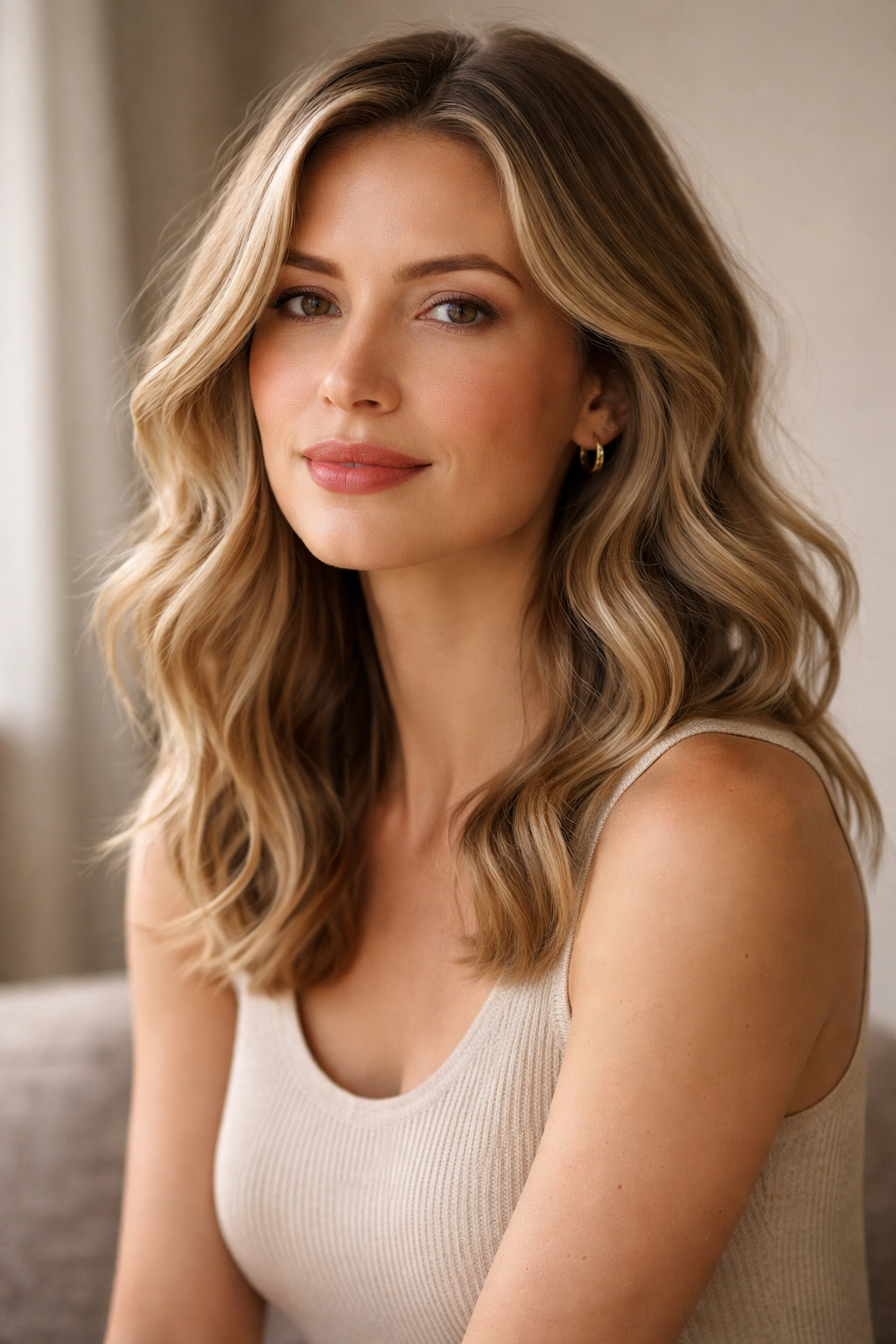
The right wavy hairstyle for your 30s isn’t about trying to look younger or choosing something safe. It’s about selecting a cut and styling approach that works with your hair texture, flatters your specific face shape, and reflects who you actually are. Waves at this stage of life are a choice, not a default—and that’s exactly what makes them so effective.
Your best wavy hairstyle will be one you can maintain realistically. That means considering your styling time, your patience level with hair care, and what actually works with your natural texture rather than against it. A high-maintenance style that you skip half the time looks worse than a realistic style you can maintain consistently.
Investment matters too. A great cut from a skilled stylist who understands layering and wave-friendly structure will transform how your waves look and behave. You can’t style your way around a poorly executed cut, but a good cut makes styling easier and results more beautiful. Professional styling advice, even as a one-time consultation, often pays for itself in the results you get at home.
Most importantly, your waves should feel like an extension of how you want to present yourself—not like you’re following someone else’s roadmap. Any of these styles can be adapted, mixed, or adjusted based on what works for your hair, your life, and your preferences. The goal is a look that makes you feel confident and polished, every single time you see yourself in the mirror.
