



Brown hair has a remarkable ability to showcase waves in ways that feel effortlessly polished, romantic, and deeply flattering. When you combine long wavy hair with rich brown tones, you’re working with a foundation that catches light beautifully, adds dimension through natural texture, and works across nearly every face shape and hair type. The wavelength, the placement of those waves, and how they layer together can completely change the vibe—from beachy and undone to sophisticated and intentional.
What makes long wavy brown haircuts particularly special is their versatility in styling. These cuts can look dramatically different depending on how you dry them, whether you emphasize the waves or soften them, and how you part your hair on any given day. A haircut that feels fresh and modern one day can shift into romantic and vintage the next, all without touching a styler. That’s the real power of a well-executed wavy cut—it gives you multiple looks built into a single haircut, and brown tones enhance every single variation.
The challenge many people face is figuring out which specific cut and styling approach will work best for their hair texture, face shape, and lifestyle. Are you looking for dramatic, sculpted waves or soft, subtle movement? Do you want choppy layers that create texture and bounce, or longer, smoother layers that feel more integrated? Should your waves start at the roots or lower down the hair shaft? These choices matter enormously when it comes to how your cut looks on you and how much styling effort you’re willing to put in.
This collection explores 15 distinct long wavy brown haircuts—each offering a different approach to length, layering, texture, and wave placement. Whether you’re drawn to dimensional highlighting, solid rich browns, face-framing details, or dramatic texture, you’ll find a style here that resonates with what you want to achieve.
1. Caramel-Kissed Waves with Layered Movement
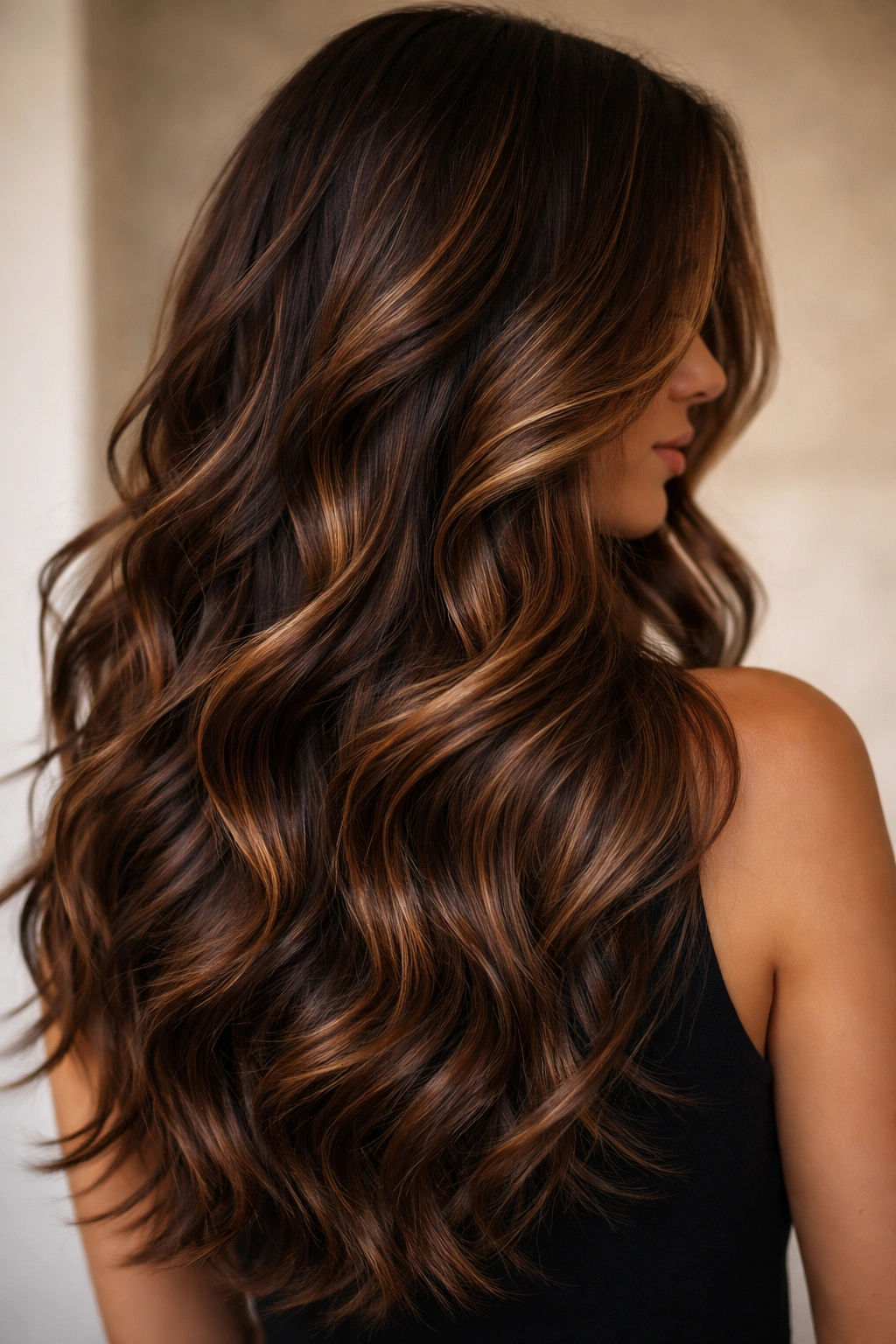
This cut combines a rich chocolate or dark brown base with strategically placed caramel highlights that catch light as your waves move. The highlights aren’t concentrated in front—they’re woven throughout the mid-lengths and ends, so they activate with every turn of your head. The cut itself features choppy, textured layers starting around mid-length, which gives the waves something to grip and creates natural separation between sections.
Why This Cut Creates Dimension
The layering technique used here isn’t uniform—longer layers near the face gradually become shorter toward the back, and the placement of caramel pieces follows the wave pattern itself. This means the lighter tones literally move with your waves, amplifying the dimension. When your hair is wet, you see the base color; when it’s dry and wavy, the caramel becomes the focal point. The contrast between warm and cool tones also makes brown hair appear thicker and more dynamic than a solid color alone.
How to Style and Maintain
- Blow-dry your waves with a round brush to enhance the curl pattern, or let them air-dry for a more undone texture
- Use a sulfate-free shampoo monthly to keep caramel tones from fading too quickly into the base color
- Apply highlights to just the caramel sections every 8-10 weeks to maintain separation from the base
- Sleep on a silk pillowcase to reduce friction and keep waves intact through the morning
- Refresh waves with a curling iron on days between washes—the caramel placement makes even a loose pass with heat look intentional
The real commitment here is the color maintenance, but once you establish a routine, it becomes automatic. Most people find that this cut actually requires less daily styling than a blunt cut of the same length because the layers and texture work with your natural wave pattern rather than against it.
2. Soft-Start Waves with Minimal Layers
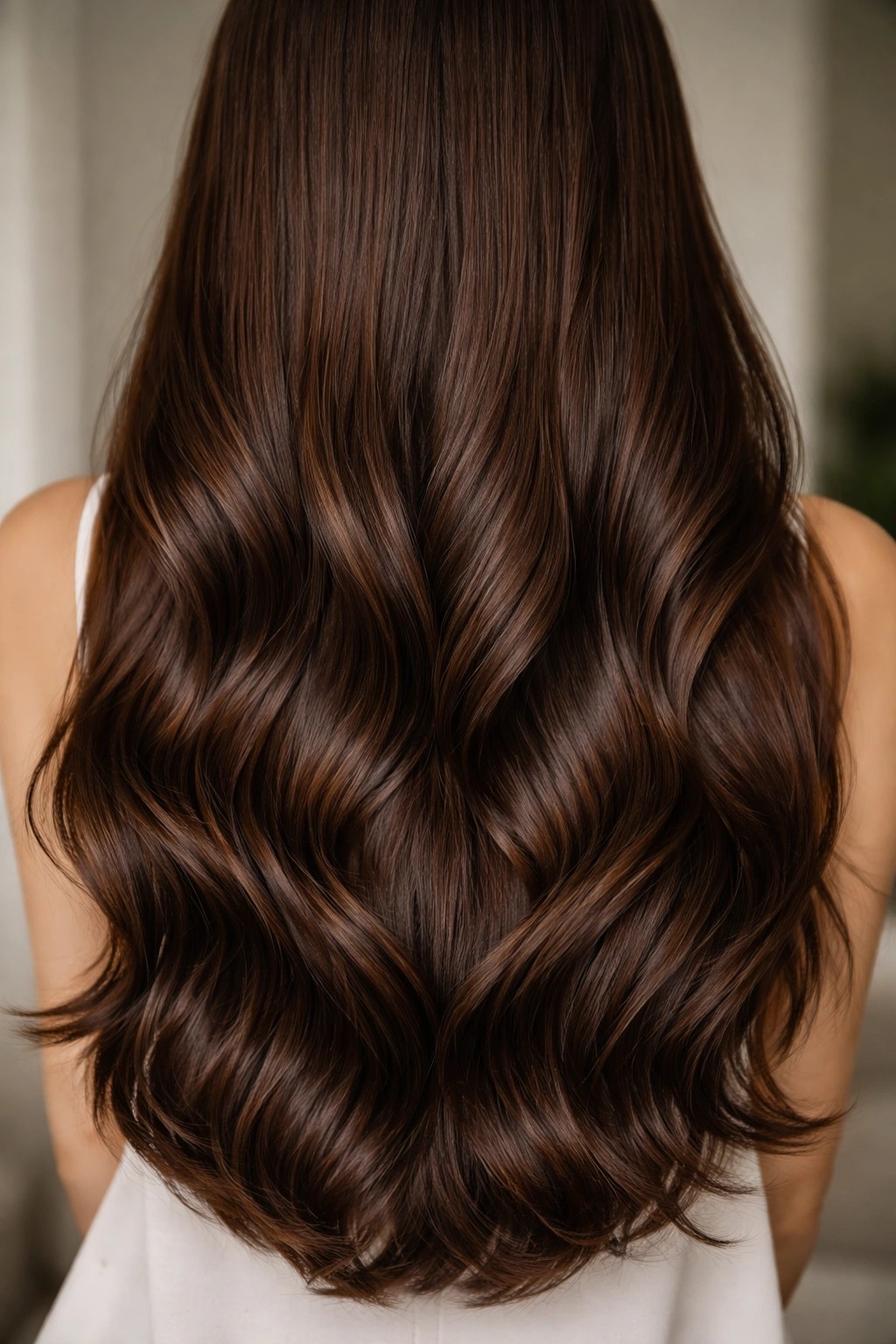
Long hair that’s only lightly layered—mostly trimmed straight across with subtle texture removed from the ends—creates waves that feel subtle and integrated rather than choppy. The waves in this style start lower, usually around mid-length or even lower, which means the top section stays relatively smooth. This approach works beautifully for people who want the visual interest of waves without dramatic texture or a heavily layered silhouette.
The Science Behind This Softer Approach
When you don’t chop layers throughout, the weight of longer hair actually helps define and smooth waves rather than break them up. The minimal layers mean each section of hair is roughly the same length, so waves have continuity—they don’t scatter in different directions. In a solid brown tone, this creates a very cohesive, almost liquid appearance, especially when you’re moving. The effect is sophisticated and intentional without looking styled.
Styling and Care Essentials
- Waves at the bottom third of hair require less frequent restyling between washes
- A silk hair tie worn low on your head protects delicate wavy ends without creating harsh creases
- Sleeping in loose braids (done the night before) creates set waves that last 2-3 days without heat
- Trim every 8-10 weeks focusing only on dead-end removal, not reshaping the overall cut
- A lightweight leave-in conditioner applied to damp waves before air-drying creates definition without frizz
This cut is ideal if you work in a professional environment and want a polished look that doesn’t read as “styled.” It’s also perfect if you have fine or thin hair, because choppy layers can sometimes make thin hair look thinner, while this integrated approach makes it appear thicker.
3. Choppy Layered Brown Waves with Fringe
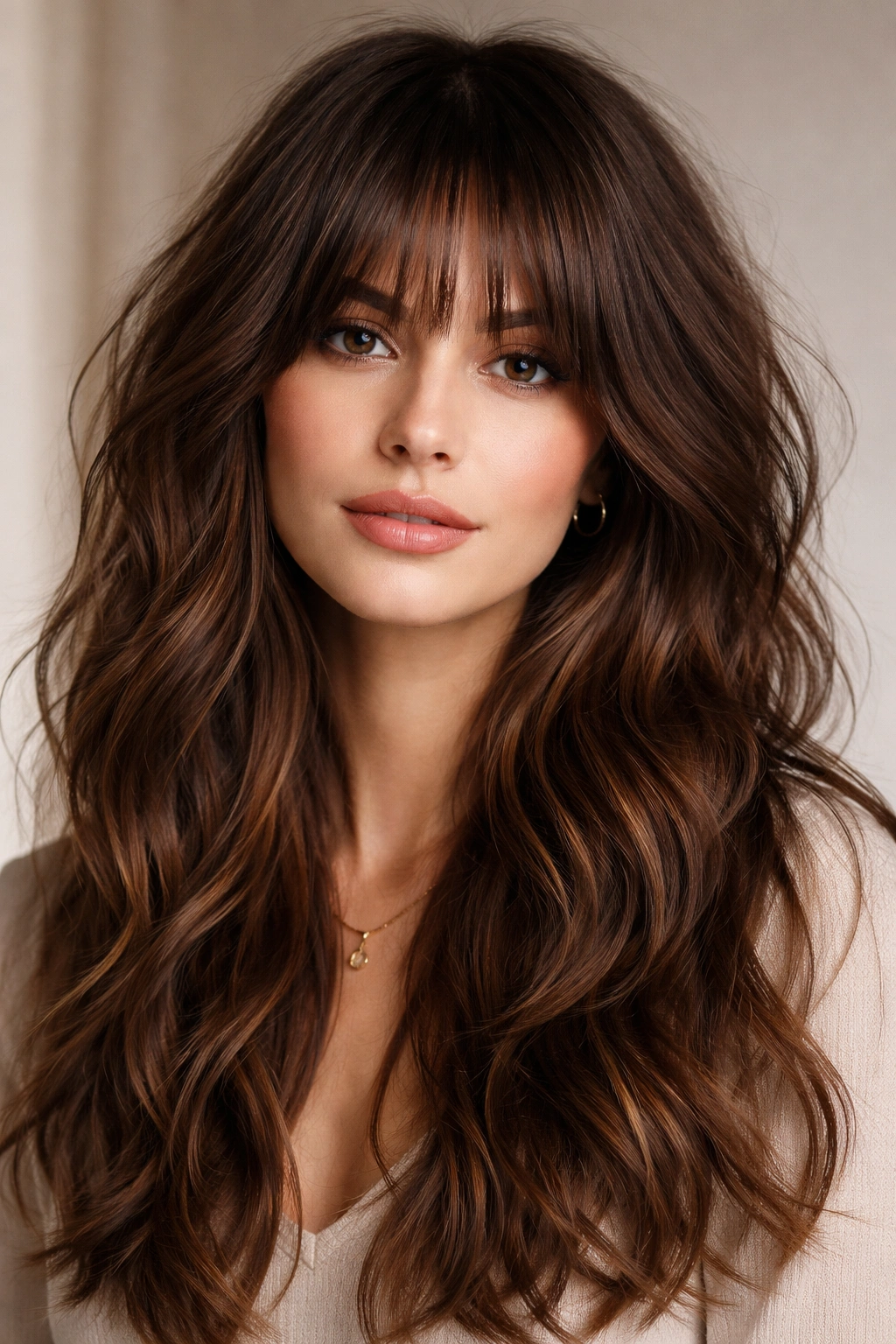
Introducing a longer, face-framing fringe into a choppy wavy cut creates an entirely different energy—playful, fashion-forward, and undeniably cool. The fringe (usually cut to brow-length or slightly longer) is heavily textured and layered, so it waves along with the rest of your hair rather than hanging straight. The rest of the cut features very choppy, deliberately piecey layers throughout, creating an almost shag-like texture that emphasizes movement.
Why Fringe Changes Everything
A fringe instantly adds personality and frames your face differently than hair swept to the sides. In combination with choppy waves, it creates an almost ’70s-inspired look that feels retro and current simultaneously. The fringe takes the focus to your eyes and cheekbones, making this cut incredibly flattering even if you’re not typically a “fringe person.” The choppy layers throughout give the fringe texture so it never looks blunt or helmet-like—it waves and separates naturally.
Daily Styling and Maintenance
- A fringe requires more frequent trims (every 4-6 weeks) to maintain its shape and prevent it from obscuring your vision
- On days when the fringe feels flat, blow-dry it upward and back slightly with your fingers to create texture and movement
- Textured waves look best when styled on days 2-3 after washing, when natural oils have settled into the layers
- A dry texturizing spray applied to roots before styling amplifies the choppy effect and adds grip
- Avoid blunt-edge scissors when trimming your own fringe between salon visits—ask your stylist to leave it textured rather than blunt
This is the cut for people who want their haircut to make a statement and aren’t afraid of a bit of daily styling. The payoff is a constantly evolving look that never feels boring.
4. Long Waves with Hidden Undercut Detail
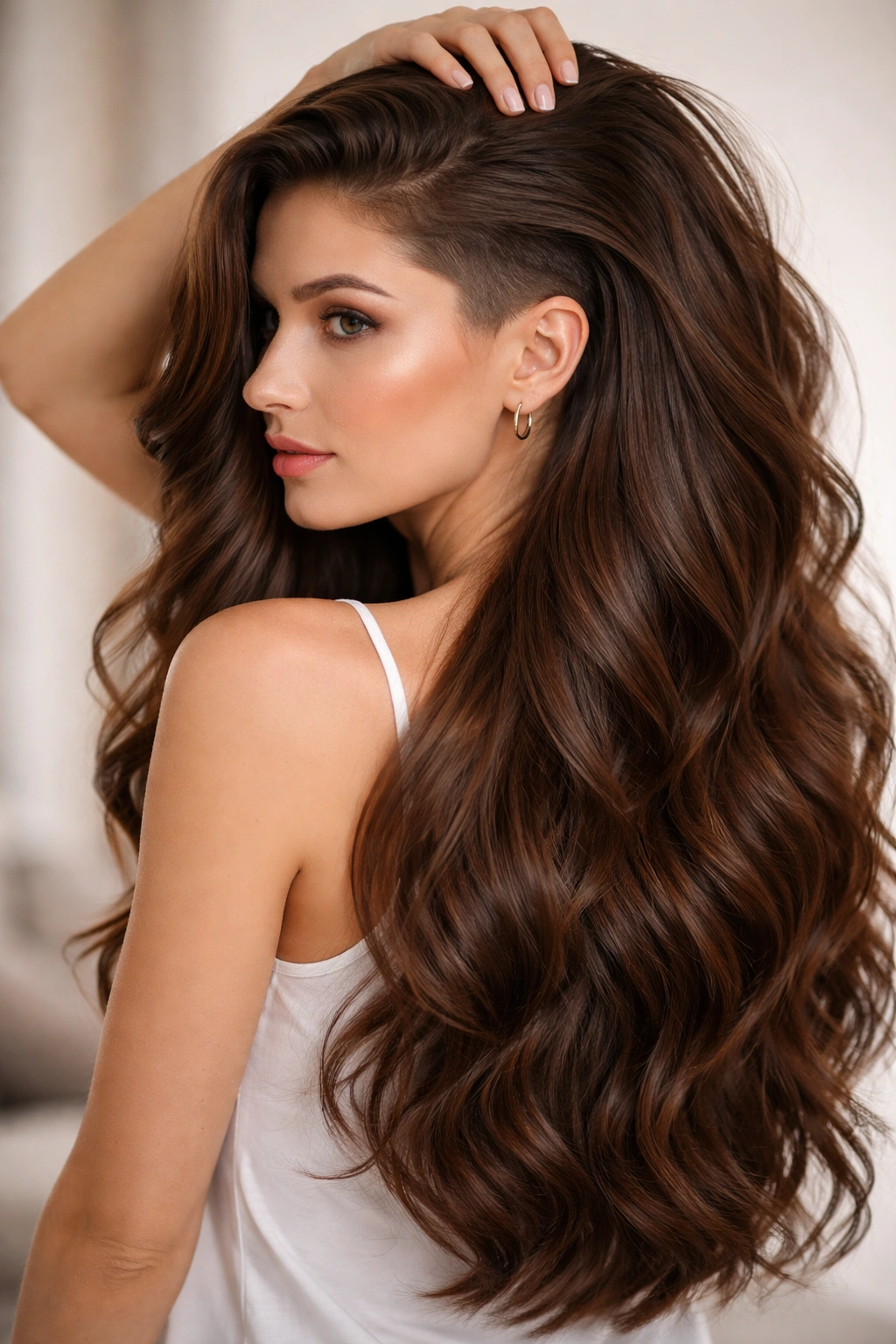
From the top, this cut appears to be a full-length wavy layer; flip your head over or run your fingers through your bottom layers, and you discover that the underneath is cut significantly shorter—creating a partial undercut that adds movement without being obvious at first glance. The brown color remains consistent throughout, with no highlighting, so the surprise element is purely textural. This cut is perfect if you want dramatic change without looking drastically different at first glance.
The Hidden Architecture
The undercut is usually concentrated in the lower half and back sections, creating a lighter, bouncier base under heavier top layers. This structural choice means your waves move more freely and have better separation, but when your hair is down, it looks like a traditionally layered long cut. The contrast in weight distribution also naturally encourages wave formation—shorter underneath layers lift longer top layers, creating a springy, wave-ready foundation. You’re essentially building in wave-support without visible texture.
Styling Benefits and Technique
- Waves require minimal blow-drying because the undercut naturally creates lift and movement
- Air-drying is often your best option with this cut—it automatically emphasizes the wave pattern
- The hidden undercut makes updos and ponytails look fuller and more textured, even when pulled back
- You have the option of hiding or revealing the shorter layers depending on how you style—down for a traditional look, partially pinned for a trendier vibe
- Color maintenance is simpler since there’s no highlighting, just occasional root touch-ups if you add color
This cut appeals to people who want a more dramatic change in how their hair moves and behaves, but prefer subtlety in appearance. It’s also genuinely flattering if you have thick or very wavy hair—the undercut removes bulk while maintaining length.
5. Warm Mahogany Brown Waves with Blended Layers
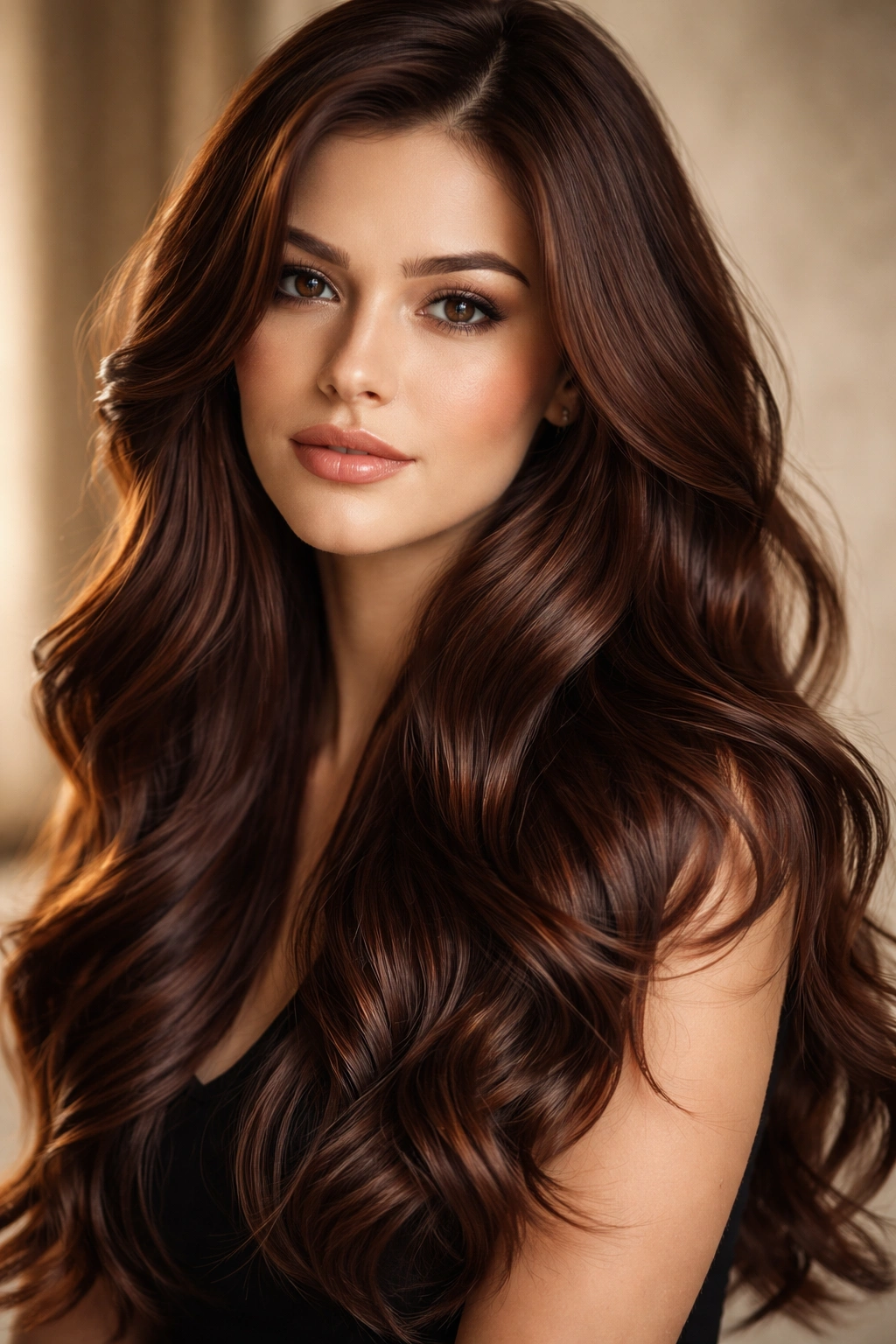
Mahogany brown is deeper and warmer than standard chocolate brown, with red undertones that create richness and warmth. When paired with waves, these undertones get more pronounced as the waves catch and reflect light differently throughout the day. The cut itself features seamlessly blended layers—not choppy or obvious, but subtly graduated so there’s movement without visible texture. This approach suits people who want sophisticated dimension through color and subtle shape rather than dramatic layering.
Understanding Color and Wave Interaction
Mahogany brown waves interact with light in a completely different way than cooler browns. The red undertones seem to glow in natural daylight, while indoor lighting brings out deeper, richer tones. Waves amplify this effect because each wave creates a slightly different angle to the light source. The blended layering approach works beautifully with this color because it allows the color itself to be the star—the layers support the waves without competing with the tonal depth.
Maintaining Mahogany Dimension
- Mahogany can fade slightly faster than cooler browns in direct sunlight, so use UV-protective hair products during summer
- Wash in cooler water (not hot) to seal the hair cuticle and lock in color
- A monthly color-depositing conditioner in mahogany or bronze keeps the tone fresh between salon visits
- Waves look richest when slightly damp—apply a light spray with a touch of shine before styling
- Blended layers need trims every 10-12 weeks to maintain the graduated shape, but trims are quick because you’re maintaining the shape rather than reshaping
This color and cut combination is ideal if you have warm skin undertones and want a sophisticated, polished appearance that doesn’t require heavy styling.
6. Beachy Waves with Long Choppy Layers and Texture
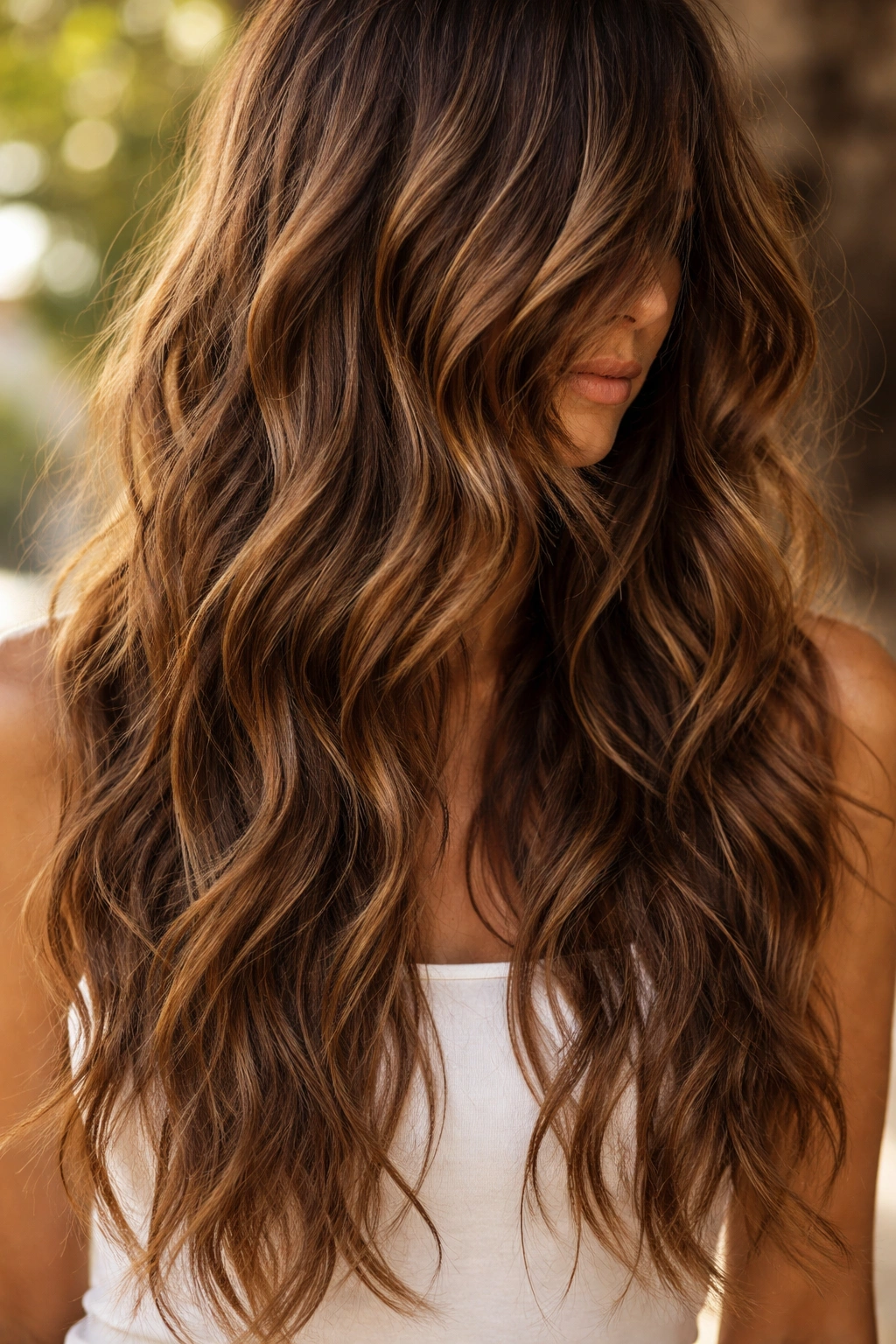
This is the cut that makes people ask “do you just come from the beach?” even when you absolutely don’t. The layers are choppy and deliberately uneven—not haphazard, but strategically varied in length so waves appear to scatter naturally across your hair. The brown tone is typically a warm honey-brown or medium brown that photographs beautifully and doesn’t require frequent color maintenance. This cut is all about texture and movement, with minimal styling required if you’re willing to work with your natural wave pattern.
Creating Natural-Looking Texture
The key to this cut is that layers aren’t uniform or predictable. A skilled stylist will vary layer lengths by quarter-inch increments, creating subtle variations that accumulate into obvious movement by the time you reach the bottom. When you wave hair with choppy layers, each layer moves independently, creating a cascading, almost organic-looking texture. The brown tone supports this because it doesn’t show every single line of a haircut—some softness in the color helps blur the intentionality and create an effortless appearance.
Minimal Styling for Maximum Impact
- This cut actually looks best on day 2-3 after washing, when you haven’t tried too hard
- Refresh waves with a sea salt spray and your fingers—no heat required
- Let it air-dry whenever possible; heat can make choppy layers look too intentional and less beachy
- A texture spray applied to damp roots before air-drying amplifies natural waves
- Trim every 10 weeks to maintain choppy texture; skipping trims makes choppy layers look stringy and unkempt
This is the opposite of a high-maintenance cut—it’s actually higher maintenance if you try to style it too much. The real trick is learning to embrace what your hair naturally does and just supporting it.
7. Rich Espresso Brown Waves with Side-Swept Styling
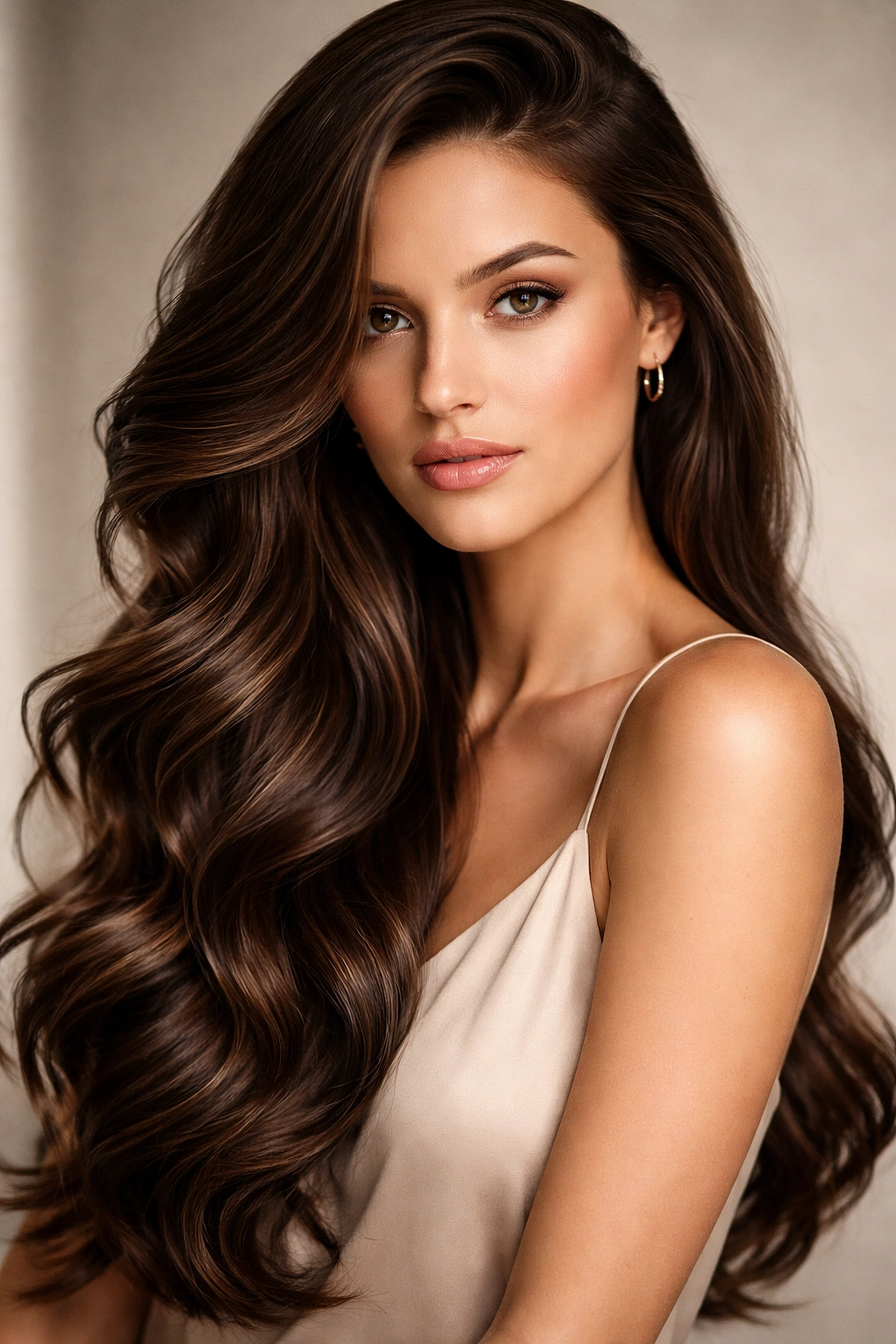
Espresso brown is nearly black but with genuine brown depth—it’s a color that looks different in sunlight than in indoor light, never appearing flat or lifeless. Waves in espresso brown are subtle unless you’re in bright light, which creates an interesting dynamic where movement shows more than color variation. The cut features longer layers that are side-swept, meaning most of your hair moves toward one side, creating an asymmetrical silhouette that’s both elegant and modern.
The Drama of Deep Brown Waves
Espresso brown minimizes the impact of waves in some lighting conditions, but that’s actually its strength—it forces you to rely on cut and shape rather than color to create dimension. The side-swept styling means waves move in a generally forward direction, creating a streamlined silhouette that’s surprisingly flattering. This cut works beautifully with wavy hair because the waves naturally follow the direction you’re encouraging with the cut, rather than fighting against a symmetrical style.
Styling a Side-Swept Wavy Cut
- A deep side part (starting from one temple, extending back) supports and enhances the swept direction
- Blow-dry from the side you’re sweeping toward to build in the directional movement
- Use a large barrel curling iron or round brush to enhance waves and direct them toward the swept side
- A boar bristle brush helps distribute natural oils from roots to ends, making waves look shinier and more polished
- Dark brown hair benefits from a shine serum applied to damp ends before styling—it makes waves look reflective and dimensional
This cut is sophisticated enough for professional settings but cool enough for casual life. The side-swept element makes even simple waves look intentional and put-together.
8. Balayage Brown Waves with Strategic Face-Framing
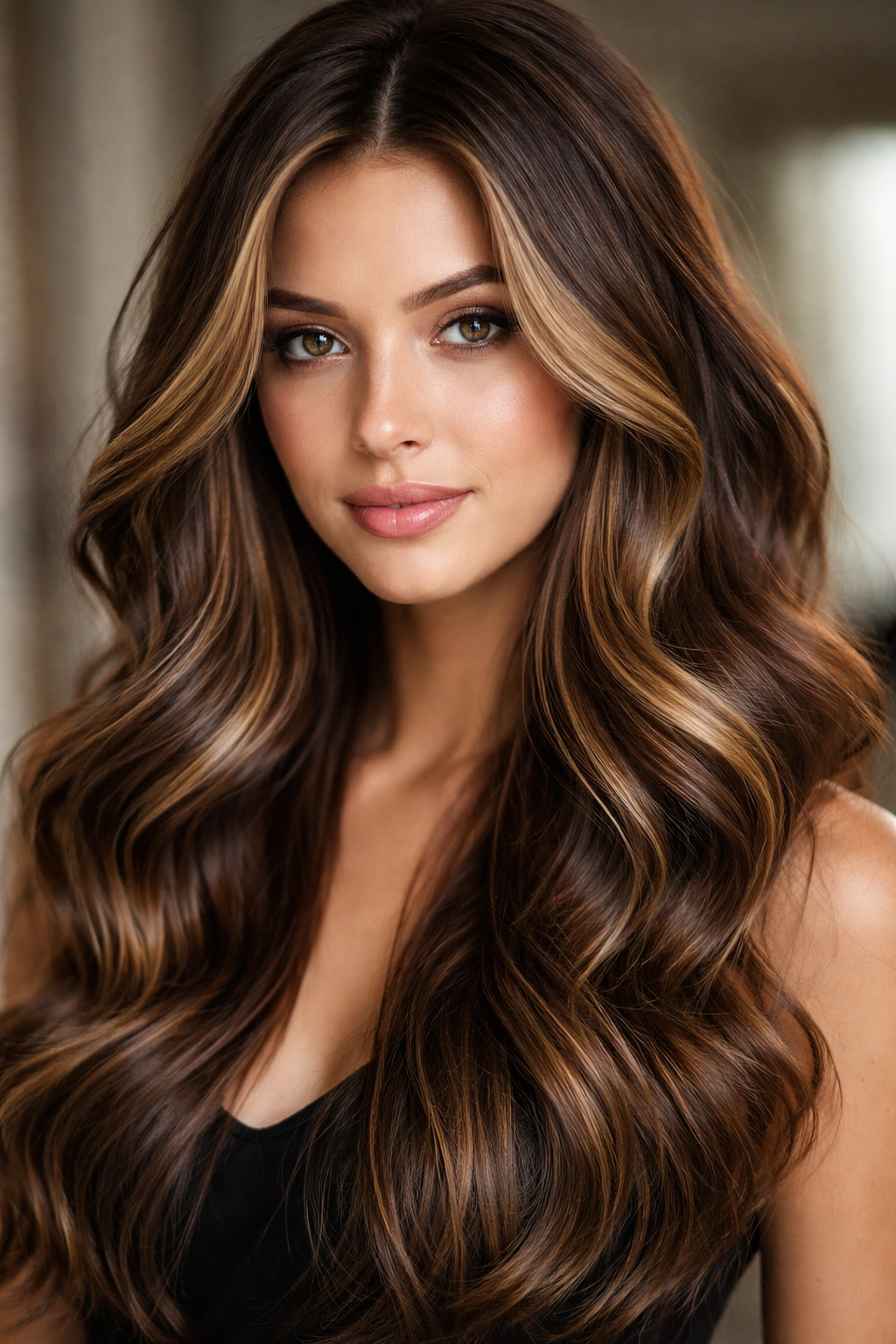
Balayage—hand-painted highlights applied with strategic placement—creates a completely different effect than traditional layering alone. With this cut, highlights are concentrated around the face and through the front layers, with less lightening toward the back. The base remains a rich, true brown, so the highlights feel integrated rather than striped. The cut itself features choppy layers designed specifically to make the highlighted pieces move and catch light, while the back stays more cohesive.
Why Strategic Placement Matters
Balayage highlights hitting your face-framing layers create an instant brightening effect around the eyes and cheekbones. When those highlighted pieces wave and move, they literally reflect light toward your face. This is why the placement is so important—if highlights were distributed evenly, they wouldn’t create the same dimensional focus. The strategic choice to concentrate lighter tones in front means they’re moving near your face constantly, which is where you want light and brightness to activate.
Maintaining Balayage Waves
- Balayage requires touch-ups every 4-5 months, rather than the 6-8 weeks needed for traditional highlights
- Use color-safe shampoo and conditioner to prevent highlighted pieces from oxidizing or darkening
- A weekly deep conditioning treatment keeps highlighted hair from becoming dry or brassy
- Waves in balayage hair look most vibrant when slightly damp or freshly styled—avoid flat, fully dry application
- Ask your stylist to add balayage specifically to your wave-bearing layers so you’re lighting the pieces that move most
This approach is perfect if you want color dimension without the maintenance of full highlights. The concentrated placement also looks more sophisticated and less obvious than all-over lighter tones.
9. Chocolate Waves with Curtain Layers and Center Part
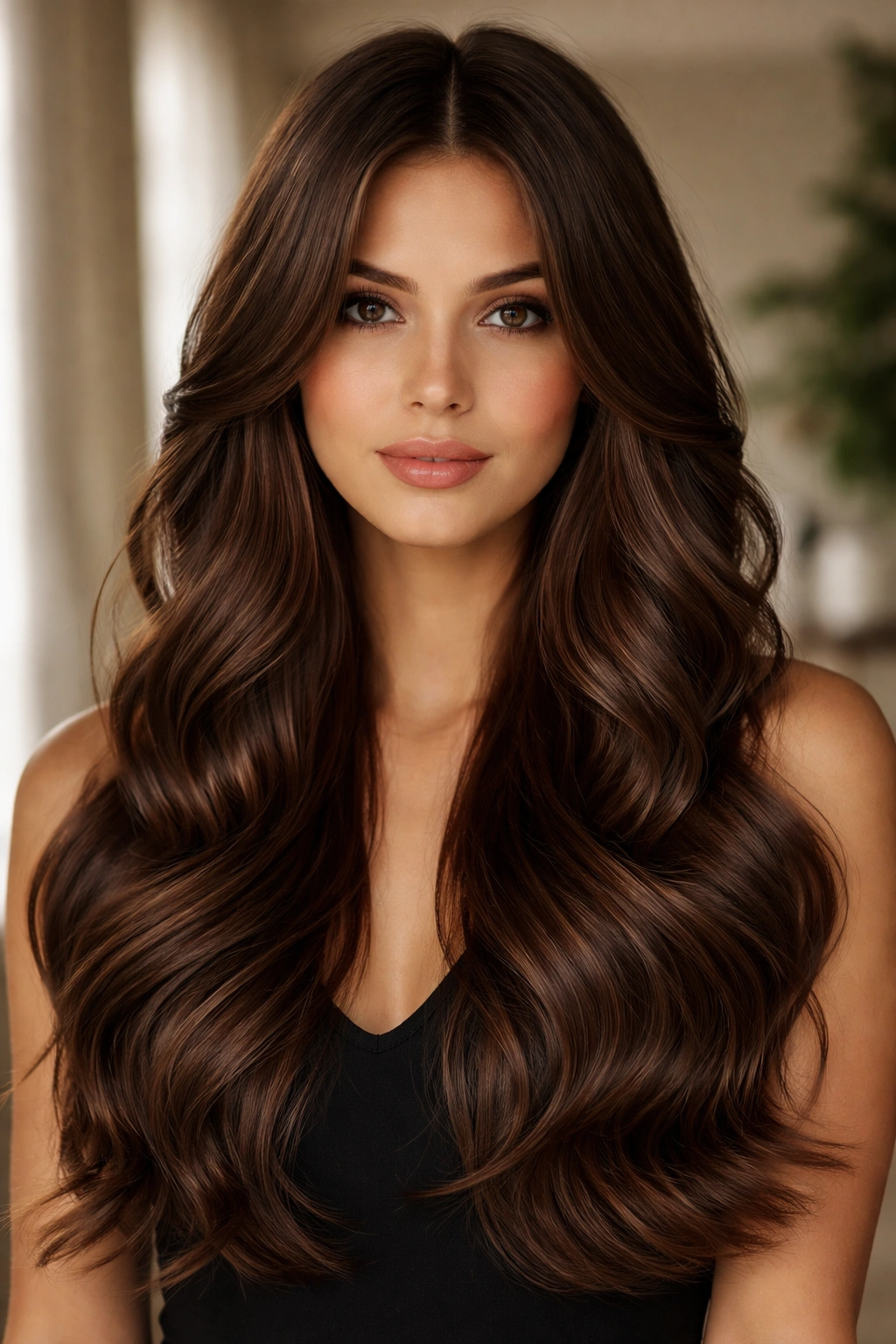
Chocolate brown is rich and true without red or golden undertones—a neutral, flattering brown that works across skin tones. Waves combined with curtain layers (layers that frame both sides of your face and fall toward the center) create a soft, face-flattering silhouette. The center part emphasizes symmetry and lets the waves move freely on both sides of your face. This is a naturally flattering cut that enhances bone structure without being dramatic.
The Flattering Architecture of Curtain Layers
Curtain layers were originally designed to flatter round and square face shapes by creating vertical lines and movement that elongates the face. When combined with waves, they become even more effective because the movement softens the frames rather than creating stark lines. Chocolate brown supports this because it doesn’t distract with warmth or coolness—it’s a neutral backdrop for the cut’s architecture. The center part divides your face visually and encourages both sides to have equal frame, which is naturally flattering.
Styling for Maximum Face-Framing Effect
- Blow-dry your center part and curtain layers forward and slightly outward to create the opening that flatters
- Waves should be softer and more integrated than choppy—think smooth curves rather than sharp texture
- Use a 1.5-inch curling iron to curl away from your face on both sides, reinforcing the forward frame
- Avoid pulling hair back entirely; this style shines when the front pieces remain down to frame
- A lightweight mousse applied to damp hair before blow-drying adds texture without weight
This cut is the most universally flattering of the bunch. If you’re uncertain about what will work with your face shape, this is a genuinely safe choice that enhances rather than emphasizes challenges.
10. Dimensional Brown Waves with Subtle Babylights
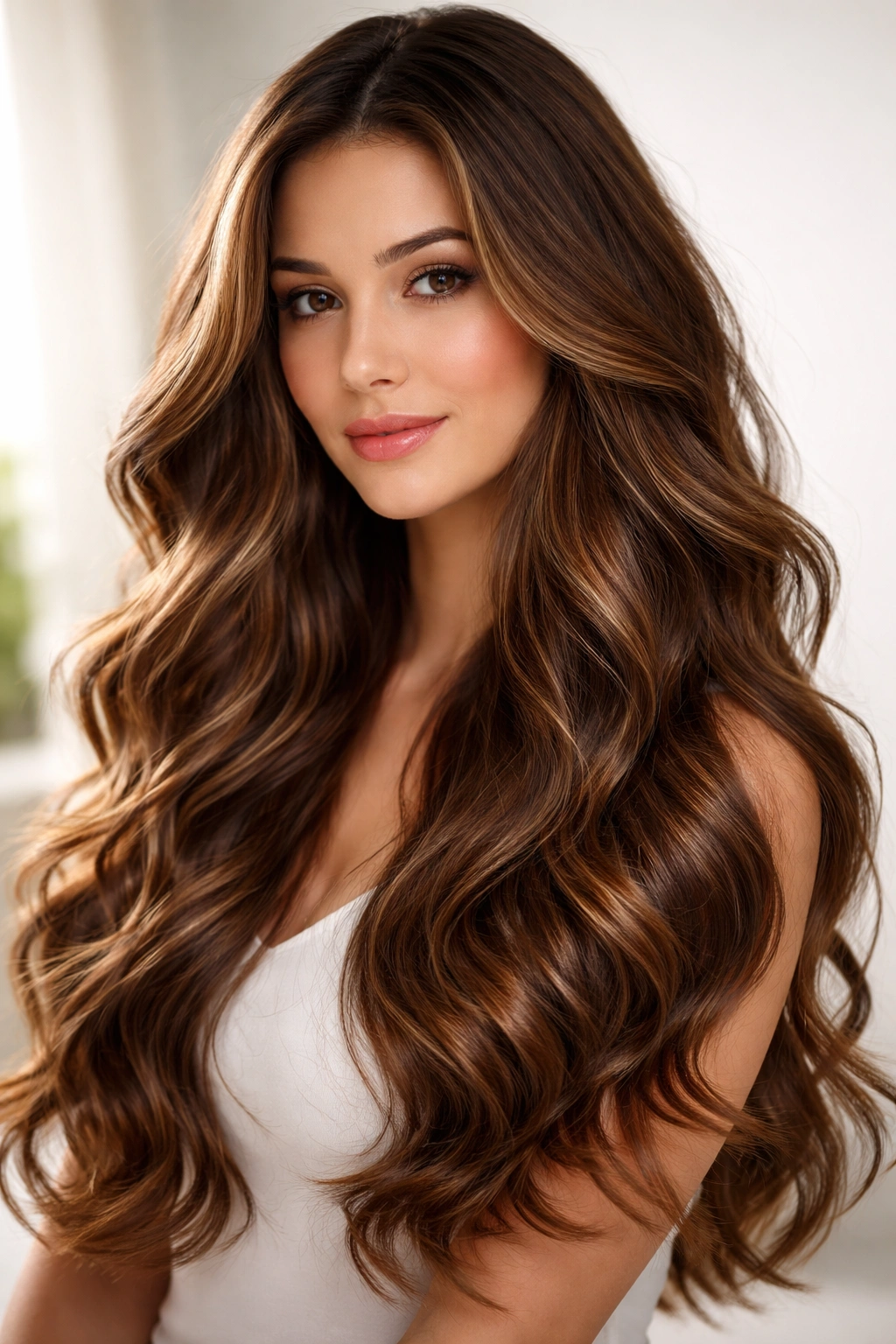
Babylights are very fine, thin highlights applied throughout the hair—they look like the natural lightening that sun exposure creates on dark hair. When applied to long wavy brown hair, babylights create micro-dimension throughout rather than obvious highlighting. The base remains brown, but as waves move, you see flecks of lighter tone peeking through, creating a complex, multidimensional appearance. The cut features blended layers that help showcase these fine highlights.
The Subtlety of Babylights on Waves
Babylights work beautifully with waves because waves naturally expose different sections of hair to light at different angles. Fine highlights throughout mean more of your hair is reflecting light at varying angles, creating complexity without brightness. This approach is perfect if you want dimension and depth but are concerned about maintenance or the appearance of obvious highlighting. The effect is that your hair looks naturally richer and more interesting, like you’ve just returned from a sun-filled vacation.
Maintaining Babylights Long-Term
- Babylights grow out much less noticeably than thicker highlights because they’re so fine
- Touch-ups are typically needed only every 6-7 months rather than every 4-6 weeks
- Use a color-safe shampoo to prevent brassy tones in the highlighted pieces
- Waves help disguise regrowth because the changing light and shadow created by texture is more noticeable than demarcation lines
- A subtle toner applied monthly keeps highlighted pieces from becoming too warm or brassy
This is the highlighting approach for people who want dimension but don’t want color maintenance to dominate their hair routine. It’s also the most natural-looking dimensional effect available.
11. Long Waves with Textured Undercut and Shag Layers
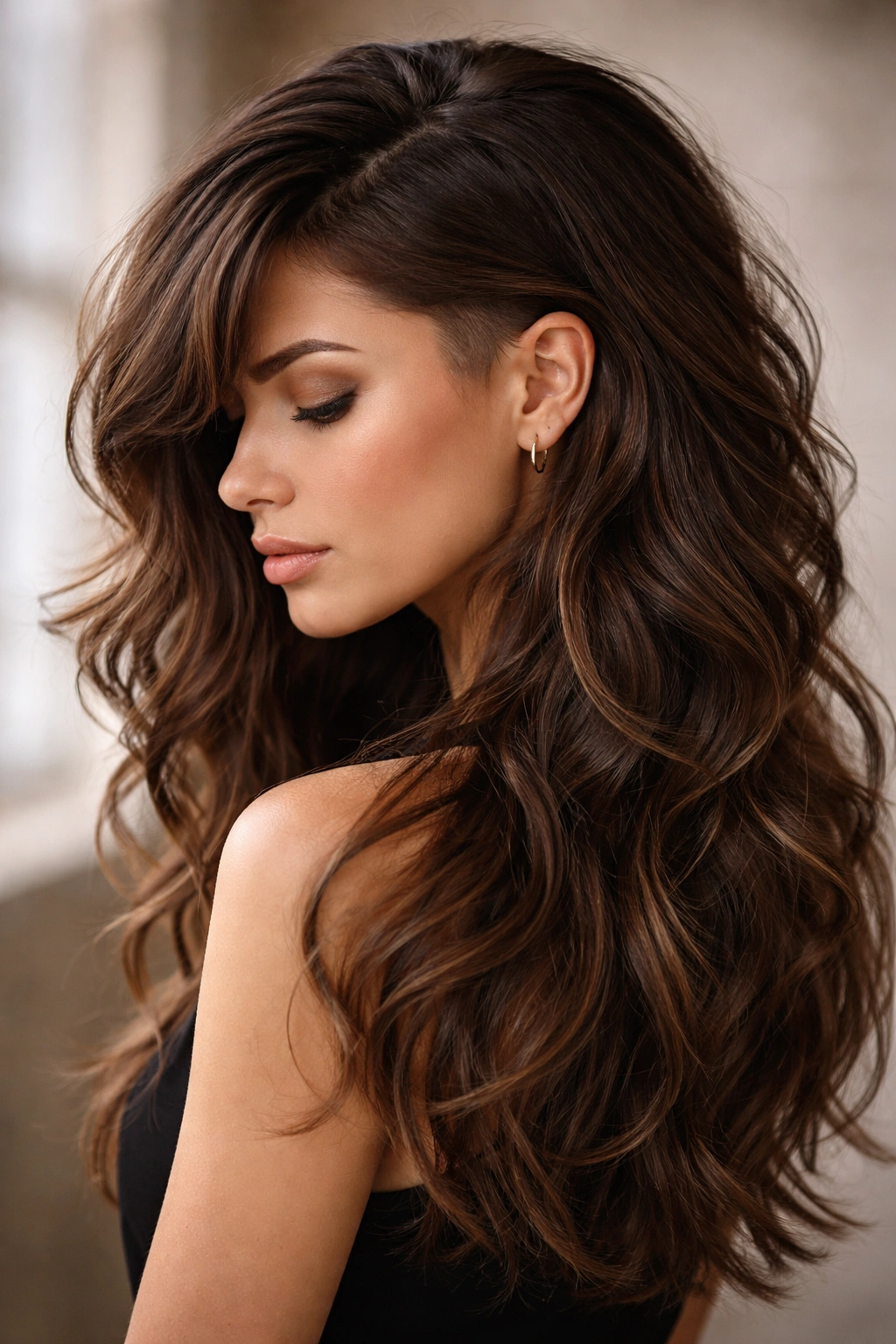
This is a more dramatic interpretation of the undercut concept—the bottom layers are significantly shorter than the top, creating almost a shag silhouette. Shag layers feature choppy, textured cutting throughout, not just on underneath sections. The brown is typically a warm, medium tone that shows the texture of the cut beautifully without being too light or too dark. This cut makes a bold statement about personality and style.
The Confidence Required for Shag
A shag cut, especially combined with an undercut, is genuinely striking. It requires a stylist who understands texture and movement, and it requires you to be okay with your haircut being something people notice and comment on. The good news is that if you have wavy hair, a shag is actually easier to style than it might appear—the waves work with the choppy layers to create intentional texture. The confidence comes from owning that your hair is definitely styled, and that’s the point.
Styling a Shag with Confidence
- Blow-dry with texture spray for maximum movement and separation between layers
- Don’t try to make it look smooth or neat; shag hair is supposed to look textured and a bit wild
- Use a round brush or curling iron to enhance natural waves and direct them outward
- A dry texture spray is your best friend—it’s what makes shag layers separate and move independently
- Maintain the cut every 6-8 weeks because shag layers look best when freshly cut and choppy (they don’t grow out gracefully like blended layers do)
This is the cut for people who are comfortable taking risks with their appearance and actually enjoy styling their hair. If you love the idea of your haircut being a conversation starter, this is it.
12. Warm Honey Brown Waves with Subtle Highlights and Longer Layers
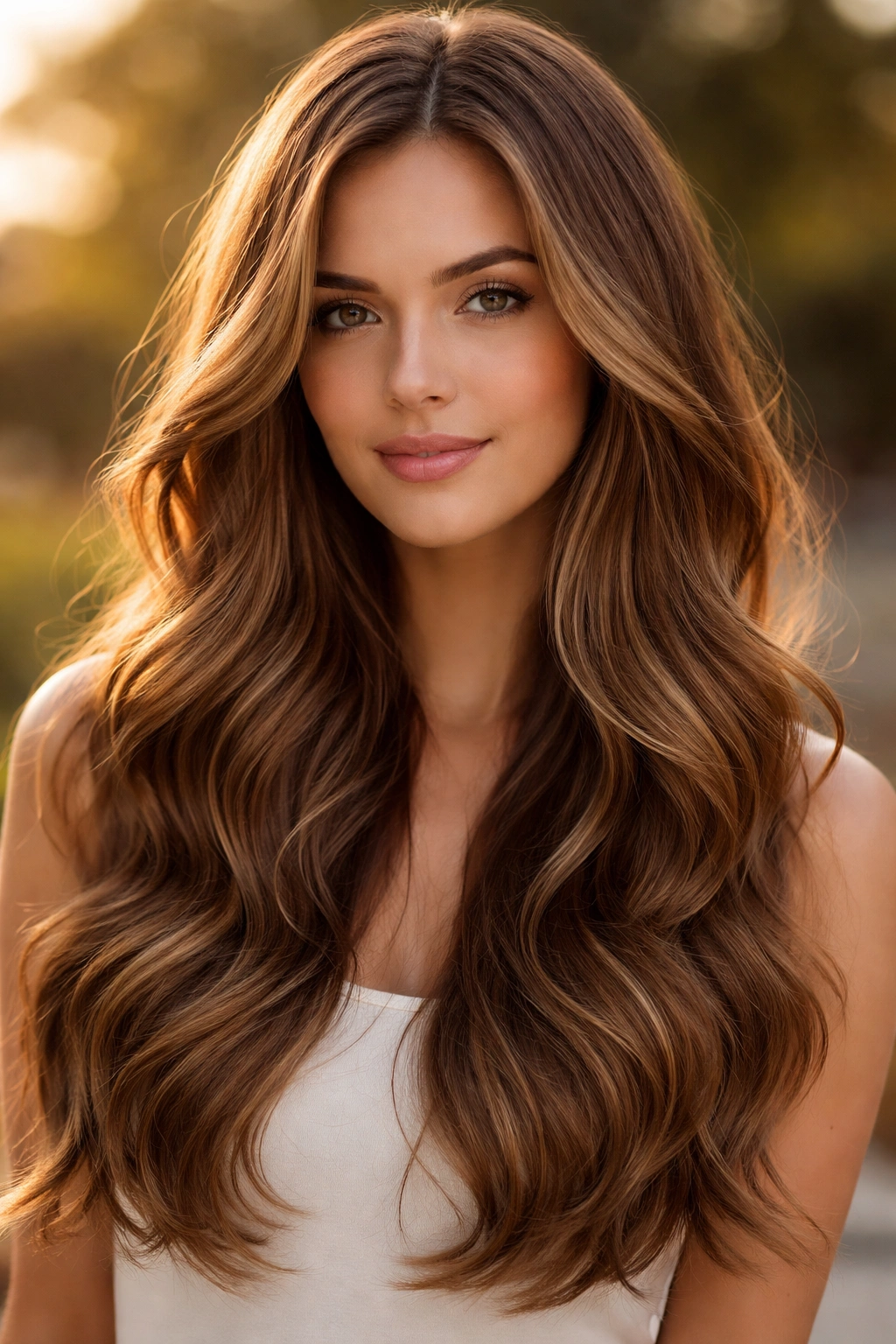
Honey brown is lighter and warmer than chocolate, with golden undertones that catch light beautifully, especially in natural outdoor lighting. Subtle highlighting—just a few pieces around the face—adds brightness without overwhelming the base color. The layers are longer and more integrated than choppy, creating waves that feel like they’re part of the overall silhouette rather than a textural element piled on top. This approach is sophisticated and modern.
Why Honey Brown Feels Effortlessly Flattering
Honey brown works across multiple skin tones and lighting conditions. In warm sunlight, it glows golden and rich; in indoor lighting, it appears deeper and more sophisticated. The slight warmth is approachable and friendly without being too light or brassy. When you add subtle highlights around the face and let them wave, you’re creating natural-looking brightness that enhances rather than overtakes. The longer, blended layers support this because they allow the color to be the focal point rather than making the haircut itself the obvious feature.
Achieving the Effortless Look
- Blow-dry with a round brush for smooth, defined waves rather than choppy texture
- Use a one-inch curling iron on dry hair to create soft, intentional waves
- Apply highlights to face-framing pieces only—about 8-10 very fine pieces that frame your cheekbones and temples
- A glossing treatment every 6-8 weeks keeps honey brown from becoming brassy
- This cut requires trims every 8-10 weeks to maintain the layer blend, but trims are subtle shape maintenance rather than dramatic reshaping
This is the sophisticated approach to brown wavy hair. It looks expensive and intentional without being high-maintenance or trendy in a way that will feel dated.
13. Deep Auburn Brown Waves with Textured Choppy Layers
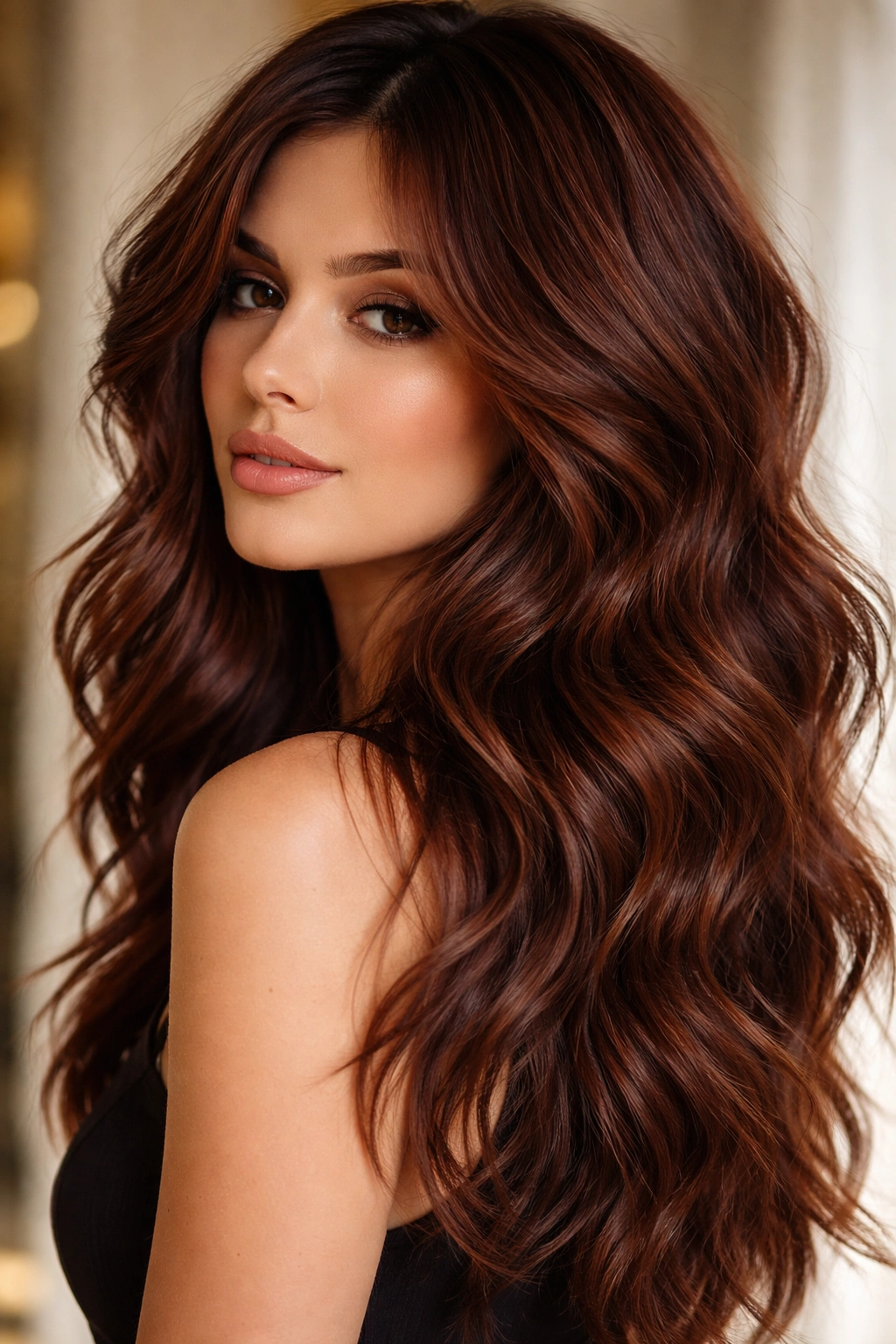
Auburn brown sits between true brown and red, with warm undertones that become obvious in sunlight or warm indoor lighting. Waves in auburn brown are incredibly visually striking because the undertones become even more pronounced as hair moves and light hits different sections. Choppy, textured layers amplify this effect by creating multiple angles for light to hit. This is a bold color choice that pairs beautifully with texture and movement.
The Drama of Warm Undertones in Waves
Auburn brown is warm enough to make waves visible in nearly all lighting conditions, but rich enough to feel sophisticated rather than orange. The warm undertones warm up your complexion and create visual warmth around your face. When you add waves that move and expose different angles to light, the warmth becomes more prominent—not overwhelmingly, but definitely noticeably. The effect is glamorous and confident. People will almost certainly comment that your hair is beautiful, because auburn waves genuinely are striking.
Maintaining Auburn Warmth
- Auburn can shift toward orange with fading, so use purple-toned hair products (purple shampoo once weekly) to keep it balanced
- Avoid prolonged sun exposure without UV-protective products, as auburn fades more obviously than cooler tones
- Use warm-toned glossing treatments (every 6 weeks) to maintain the auburn richness
- Choppy layers need trims every 8-10 weeks to maintain definition and prevent looking stringy
- Avoid hot water when washing; use cool or lukewarm water to prevent faster color fading
This is the choice for people who are confident in their appearance and don’t mind that their hair will be noticed and commented on frequently. If you’ve ever envied the look of red-toned brown hair, auburn is the answer.
14. Espresso Waves with Asymmetrical Choppy Layers
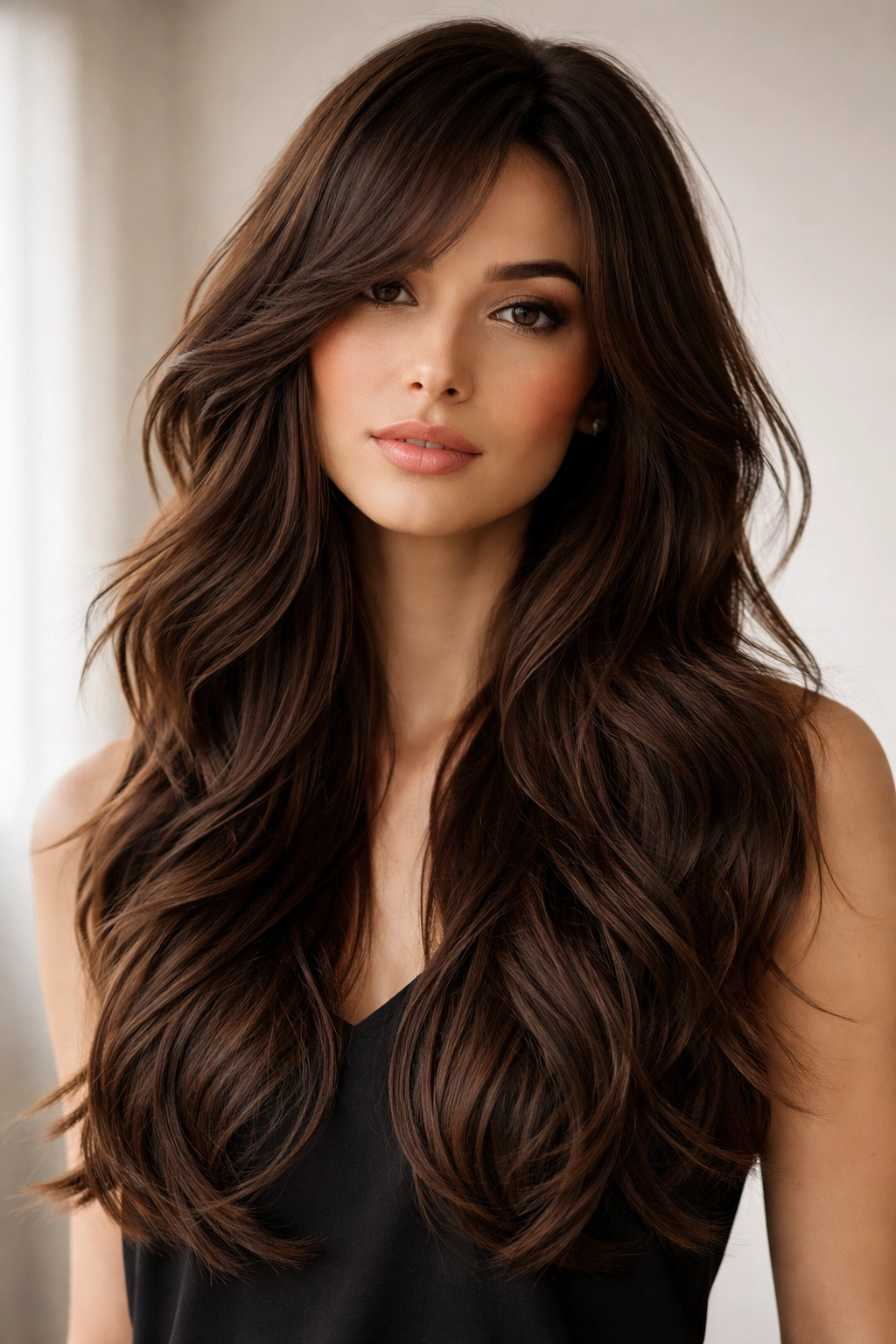
Asymmetrical layering means different sides of your hair are cut to different lengths or with different amounts of texture—one side might be significantly shorter or more heavily layered than the other. Combined with espresso brown (nearly black with brown depth) and waves, this creates a modern, fashion-forward silhouette that’s impossible to ignore. This is a cut for people who want their hair to make a definitive style statement.
The Visual Impact of Asymmetry
Asymmetrical cutting is inherently interesting to the eye—it creates movement and direction even when hair is completely still. When you add waves to asymmetrical layers, you’re amplifying that visual interest. The waves on the longer side of your head create more movement and softness, while waves on the shorter, more textured side look choppier and more intentional. The contrast between the two sides is what makes this cut so visually compelling. Espresso brown supports this by being a neutral base that lets the cut’s architecture shine without color distraction.
Styling Asymmetry Successfully
- Your longer side typically moves toward the longer side; support this with your natural part placement
- Blow-dry the shorter, more textured side with intention—create waves that move outward rather than falling flat
- Use texture spray on the choppy side to enhance separation and movement
- An asymmetrical cut often looks best when you’re not trying to make both sides match in styling; emphasize the difference rather than minimizing it
- Trims every 7-9 weeks are important because asymmetrical cuts grow out differently on each side and can become accidentally uneven
This cut is genuinely trendy and modern. It appeals to people who are comfortable taking risks and actively want their haircut to reflect personality and style choices. It’s not a cut to choose if you prefer to blend in.
15. Chocolate Brown Waves with Face-Framing Layers
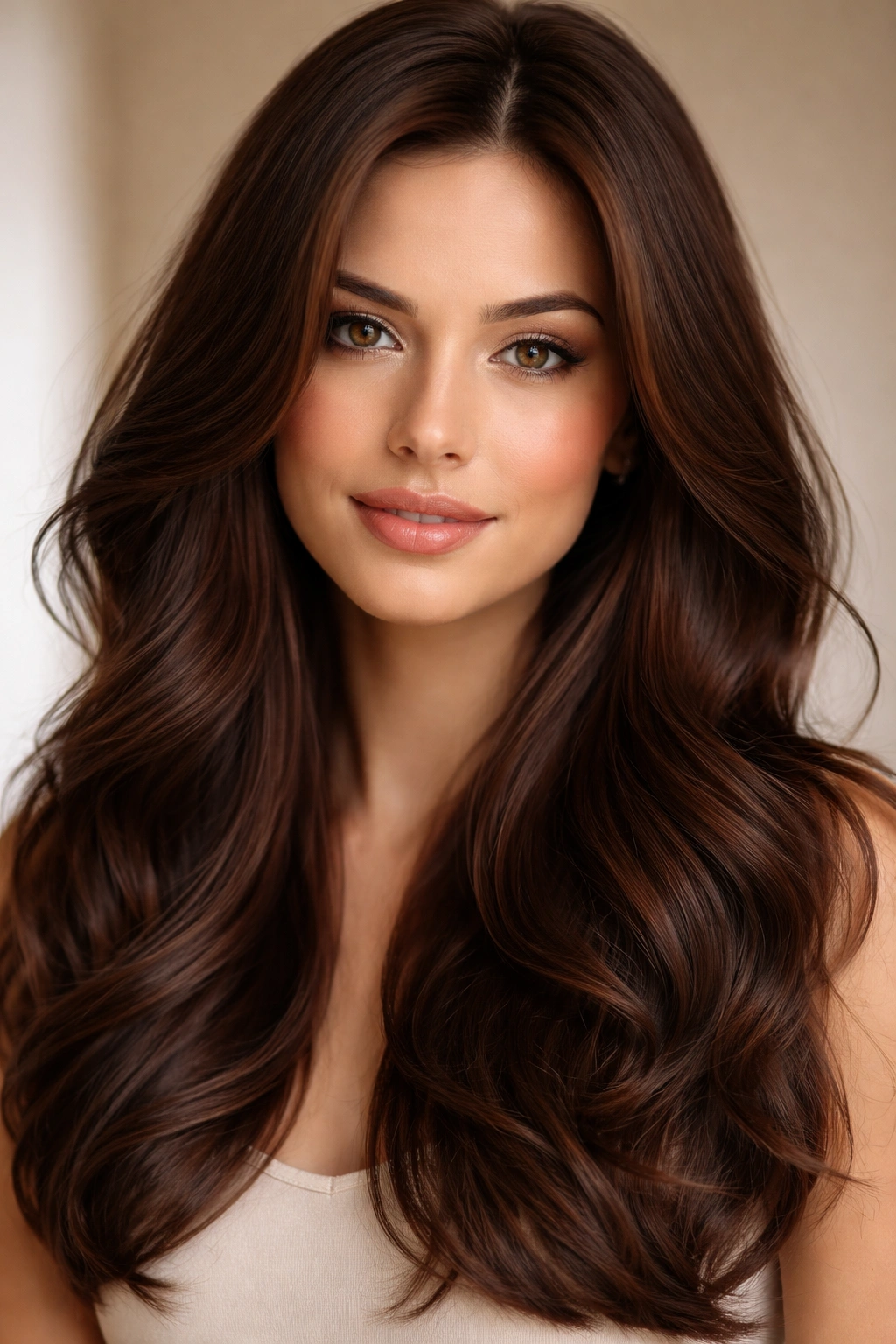
This classic approach combines true chocolate brown (no red, gold, or red undertones; just pure, neutral brown) with layers specifically designed to frame your face. Face-framing layers are cut shorter than hair at the sides and back, so they literally surround your face and move when you move. Waves combined with face-framing layers create soft, flattering movement around your features. This is the most universally flattering and timeless of all the approaches.
Why Classic Appeal Is Powerful
There’s a reason this combination remains popular across decades and trends—it’s legitimately flattering on nearly everyone. Chocolate brown complements virtually all skin tones and doesn’t require extensive color maintenance. Face-framing layers naturally enhance bone structure and draw attention to eyes and cheekbones. Waves add softness and movement without the commitment of choppy texture. The combination of all three elements is sophisticated, flattering, and modern without being trendy in a way that will feel dated in five years.
The Ease of This Approach
- This cut is more forgiving than choppy or asymmetrical alternatives; minor styling mistakes aren’t obvious
- Waves can be subtle or defined depending on your preference; the cut supports both
- Chocolate brown requires minimal color maintenance—touchups every 10-12 weeks for some people, and some people never color at all if they’re comfortable with natural regrowth
- Face-framing layers need trims every 10-12 weeks, but trims are quick because you’re maintaining a shape rather than making significant changes
- This style looks intentional and put-together with minimal daily styling—blow-dry and go, or air-dry if you have naturally wavy hair
This is the choice for people who want a genuinely flattering haircut that works for their life rather than requiring their life to accommodate their hair. It’s a excellent starting point if you’re new to long wavy cuts and uncertain what will work best.
Final Thoughts
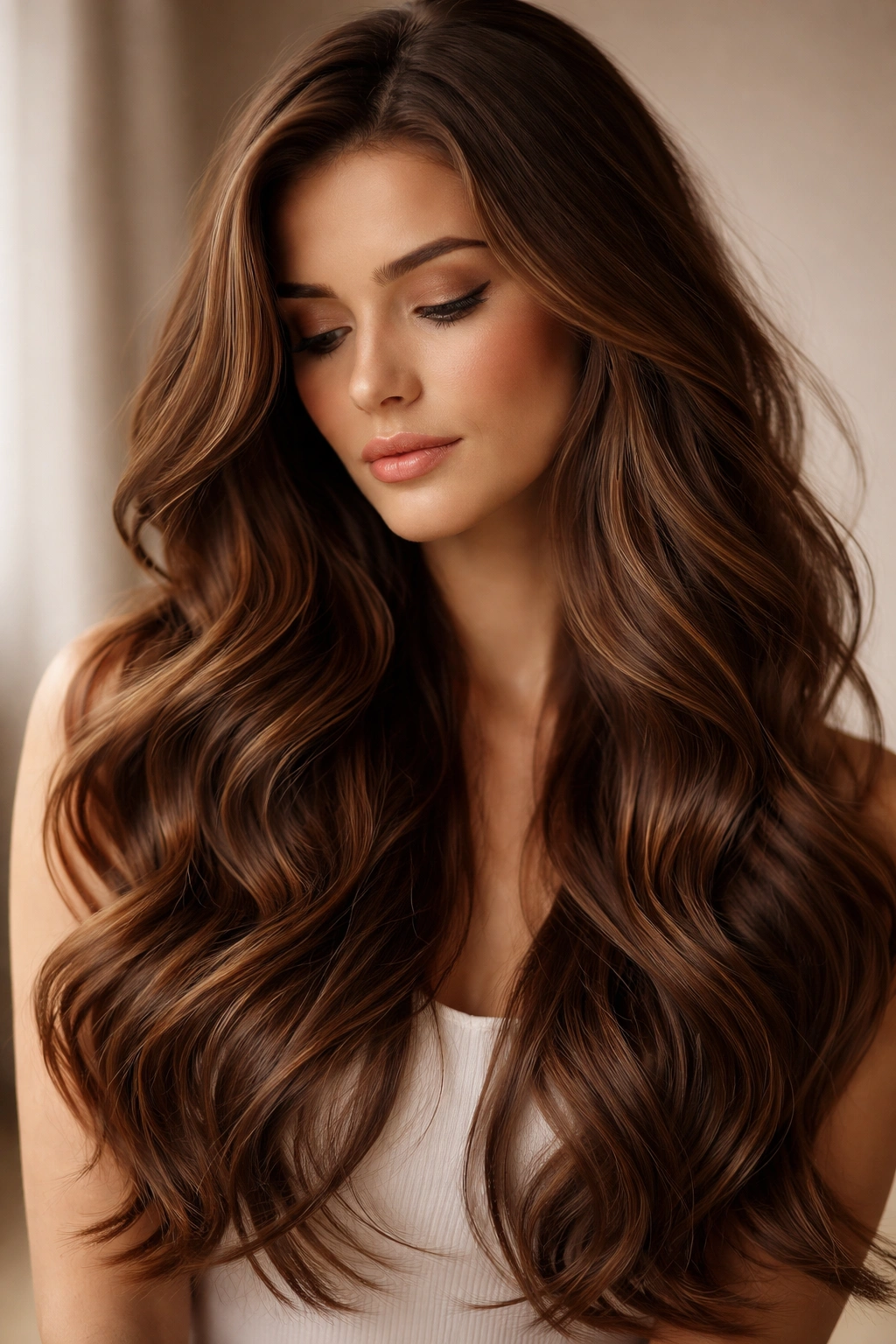
Long wavy brown haircuts offer an extraordinary range of possibilities, from subtle and sophisticated to bold and trend-forward. The specifics of which cut will work best for you depend on your natural hair texture (whether waves come easily or require encouragement), your lifestyle and willingness to style, your face shape and the angles that flatter you, and honestly, how much attention you’re comfortable drawing to your appearance.
The key to a successful long wavy brown haircut is choosing a stylist who genuinely understands how layers interact with waves, and who takes time to discuss not just the cut but how you plan to style it. A cut designed for frequent heat-styling will frustrate you if you prefer to air-dry, and vice versa. A heavily textured, choppy cut requires more maintenance and styling commitment than a blended, integrated approach.
Brown is an incredibly forgiving base color that accepts highlighting beautifully, looks rich and dimensional with minimal effort, and complements virtually every complexion. Waves add dimension, movement, and softness to any cut. When you combine them intentionally—choosing a cut structure that supports and enhances your natural wave pattern rather than fighting against it—you end up with hair that looks beautiful, feels manageable, and reflects your personal style. Whether you choose a timeless face-frame or a bold asymmetrical chop, the foundation is there to make it work.
