



A shag haircut never really went out of style—it just evolved. For women over 50, the modern wavy shag represents the perfect intersection of effortless elegance and age-defying texture. Unlike the dramatic shags of the 70s, today’s versions are refined, flattering, and designed to work with the natural changes in hair texture and face shape that come with maturity. The layers create movement that adds volume without requiring endless styling, while the choppy, piece-y texture catches light in ways that make even fine or thinning hair look fuller and more dynamic.
What makes a shag particularly smart for this age group is that it works beautifully with the reality of hair over 50. Your hair likely has more texture than it did twenty years ago, whether that’s natural wave or desirable frizz. A skilled shag cut harnesses that texture instead of fighting it. The layers are cut specifically to encourage movement and bounce, not to create bulk or weight. And because shags are supposed to look a little undone and piece-y, they’re far more forgiving than blunt bobs or sleek styles—a shag that’s been through two weeks of daily life still looks intentional.
The cuts that follow aren’t all identical. Some are longer and looser, others are chin-length and more structured. Some feature heavier bangs, others have wispy ones or no bangs at all. The unifying factor is that each one combines choppy, textured layers with enough wave or movement to create that effortless, lived-in quality that reads as modern and confident—not matronly or stuck in any particular decade. Whether you have naturally wavy hair, straight hair you’ll wave with a curling iron, or spiral curls you’ll shape with a shag, there’s a version here that will make you feel like yourself—just with better hair.
1. The Shoulder-Length Textured Shag
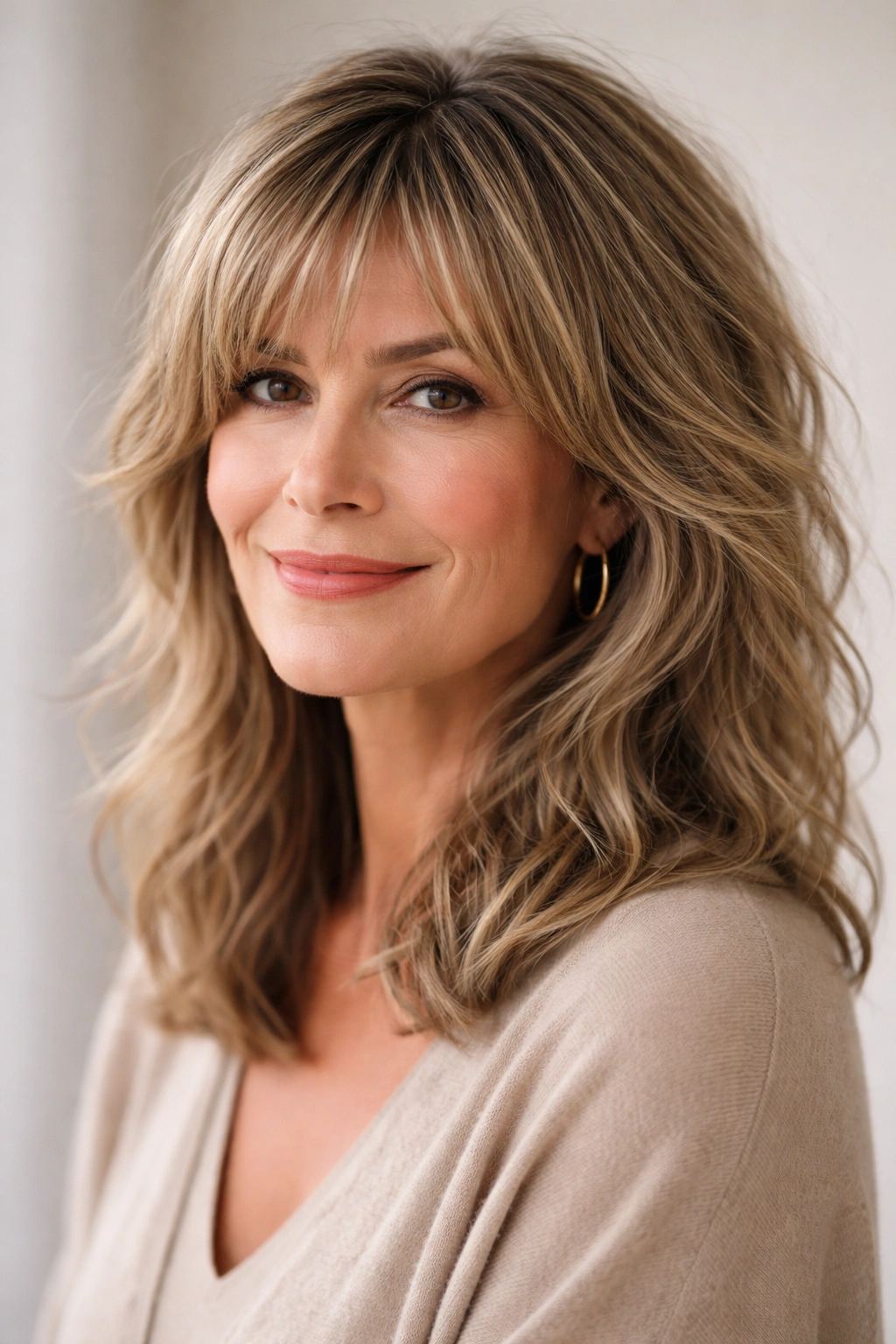
This is the quintessential modern shag for women over 50, hitting right around the shoulder with layers that begin at the crown and work their way down in choppy, uneven increments. The texture is the whole point—each layer is cut at a slightly different angle so that when your hair air-dries or you add loose waves, it naturally separates into piece-y, organic-looking sections instead of lying flat. The overall effect is voluminous without being bouffant, youthful without trying too hard.
Why It Works for Texture and Movement
The shoulder length gives you enough hair to work with that the layers create real dimension, but it’s not so long that weight pulls everything flat against your scalp. The choppy cutting technique means each layer catches light independently, making fine or medium hair appear denser and more substantial than it actually is. When you add even loose waves with a 1.25-inch curling iron or a flat iron twist, the texture multiplies—each piece waves slightly differently, creating that coveted undone, expensive-looking texture.
Styling and Maintenance
Best for: Straight, wavy, or slightly curly hair. This cut genuinely improves the look of natural wave because it’s designed to showcase it rather than smooth it out. Key features: Layers start at the crown (usually between 3-4 inches long), with the bottom layers hitting shoulder level or just barely below. Side-swept pieces frame the face without requiring constant styling. Pro tip: Get this cut dry or damp, never soaking wet—your stylist needs to see how your hair naturally falls to layer it correctly.
2. The Choppy Chin-Length Pixie-Shag Hybrid
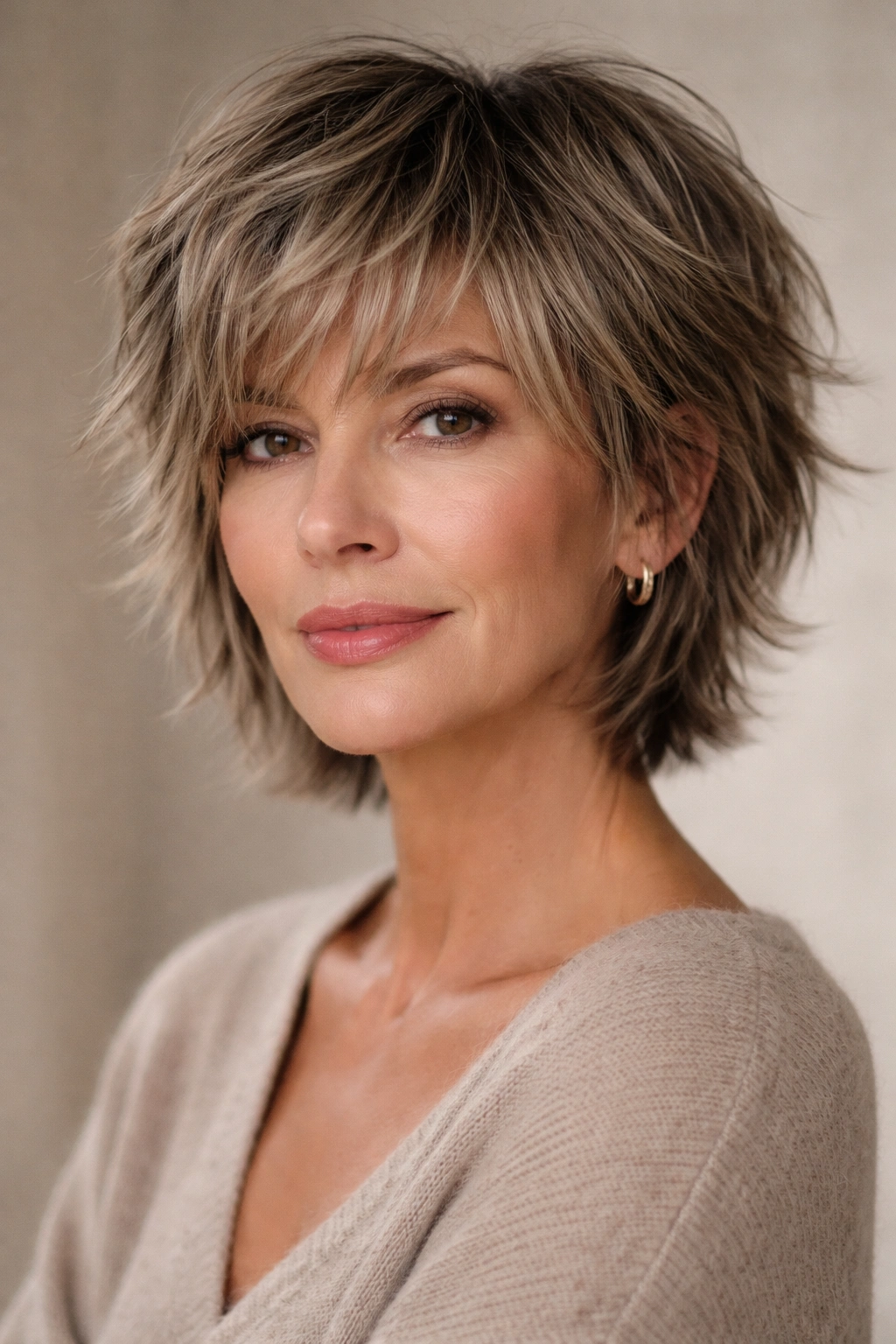
Bolder than a traditional shag, this cut sits right at the chin with extremely choppy, short layers throughout that create maximum texture and movement. It’s part pixie (short and sculpted), part shag (layered and piece-y), and entirely chic. The top layers are quite short, maybe 2-3 inches, while the underneath layers gradually build to chin length, creating surprising volume and a flattering frame around the face. This cut reads modern without being trendy—it’s been worn by everyone from Meg Ryan to Olivia Newton-John in recent years, and for good reason.
What Makes It Stand Out
The hybrid approach gives you the sophistication of a short cut with the softness and movement of a longer shag. Short layers on top mean zero fussiness with hair falling in your face—everything tucks behind the ears naturally or falls in a controlled way. The choppy texture is bold enough that it doesn’t require perfect waves; even slightly tousled hair looks intentional. And because the layers are quite pronounced, this cut actually flatters thinning hair by creating the illusion of density through strategic texture placement.
Who Should Consider It
Best for: Women with fine or thinning hair, or anyone who’s ready to go shorter but isn’t ready for a true pixie. This cut requires a bit more styling attention than a longer shag (you’ll likely blow-dry it most days), but the payoff is instant polish. The chin-length cut is forgiving for most face shapes because the choppy layers don’t emphasize jawline or cheekbones the way a blunt bob would. Styling note: A 1-inch curling iron and a round brush are your friends here—you’re not creating waves so much as directing the texture and creating shape.
3. The Long Lived-In Shag With Subtle Bangs
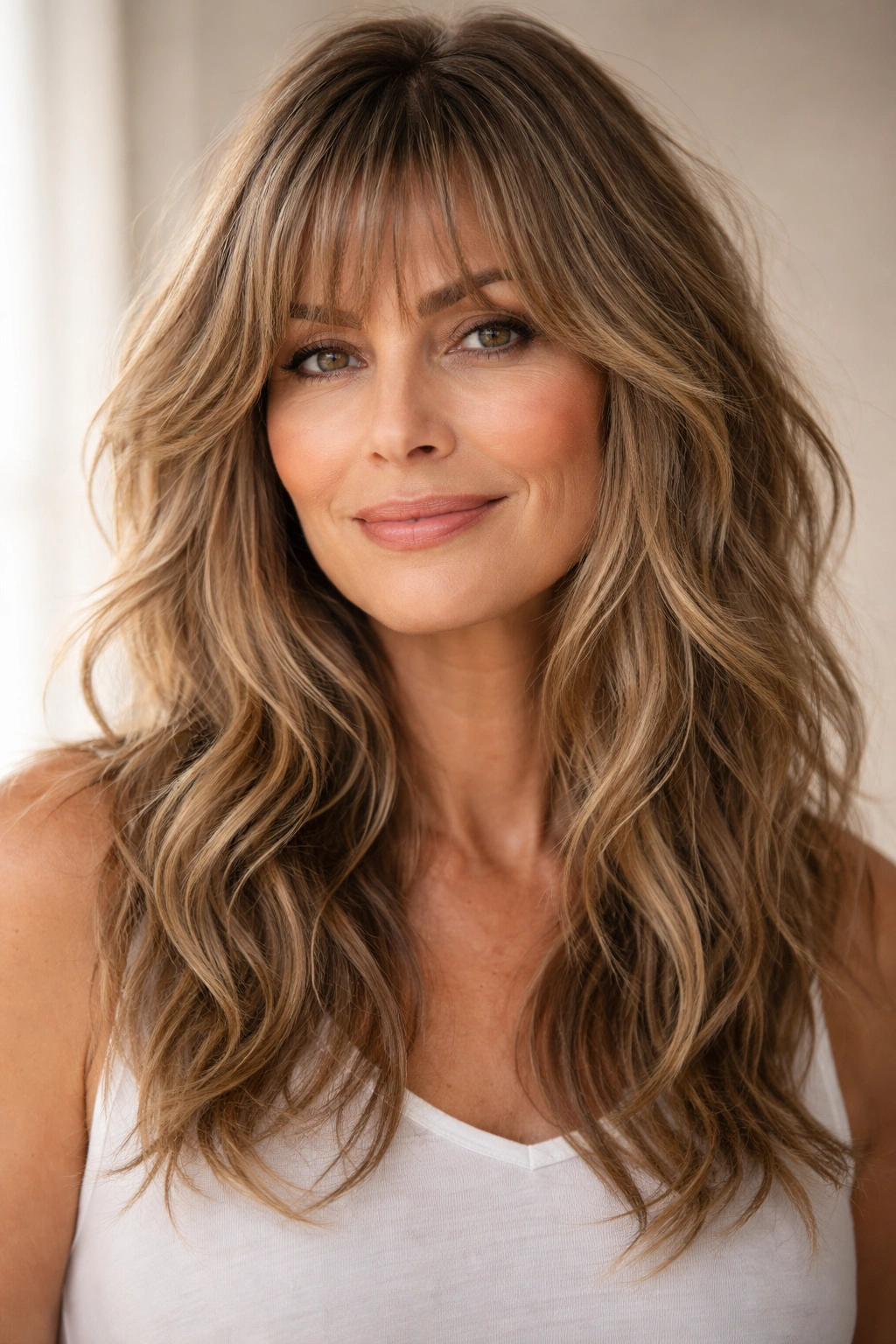
This version flows past the shoulders, often hitting collarbone or mid-chest, with choppy layers throughout and soft, piece-y bangs that start at the eyebrow and blend seamlessly into the side-swept layers. It’s the cut that looks like you just walked out of a beachside salon, even if you blow-dried it in your bathroom. The longer length appeals to anyone who loves having hair past the shoulders but wants something far more modern and dynamic than a one-length cut.
How This Version Differs From Standard Shags
The long lived-in shag maintains all the textured benefits of a shorter version but with more visual weight and movement potential. The bangs are soft and never heavy—they’re cut in the same choppy technique as the rest of the layers so they blend rather than sit as a separate section. This is crucial for women over 50; heavy, blunt bangs can feel dated and aging. The piece-y bangs allow your face to show through while still providing a subtle frame. Styling is also flexible: some days you’ll wear it wavy and full, other days it’ll dry with more separation and movement.
Length and Layer Placement
The breakdown: Crown layers start around 4-5 inches, gradually extending to collarbone or longer. Bangs begin at the brow and taper into the side sections. Why this length works: It’s long enough to pull back into a pony or bun on lazy days (something you can’t easily do with a chin-length cut), but short enough that it doesn’t require constant maintenance or feel dated. Maintenance reality: You’ll need a trim every 6-8 weeks to keep the layers looking intentional rather than ragged, but that’s true of any good shag.
4. The Reverse Shag With Longer Underneath Layers
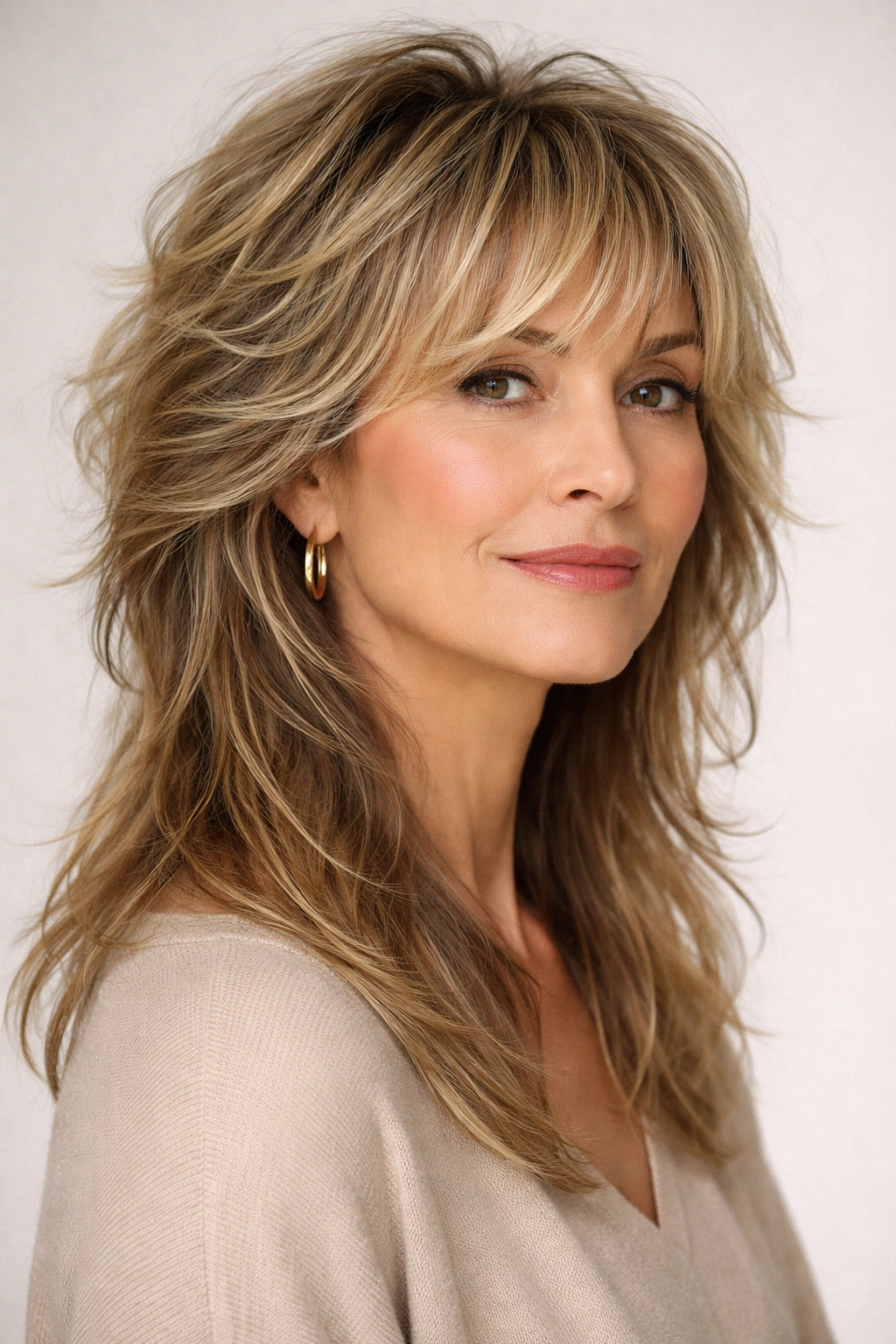
This is shag geometry flipped on its head: the top is shorter and more textured, while the underneath layers are substantially longer, creating an inverted triangle silhouette. It’s sophisticated and slightly unexpected, which makes it feel fresh rather than retro. The longer underneath layers create surprising movement and flow when you move, while the shorter, choppy top keeps everything from looking heavy or dated.
Why the Reversed Structure Works
Most traditional shags are shorter on top and gradually lengthen, which creates a rounded, textured crown. This reverse approach creates the opposite effect: a more sculpted, controlled top with movement and length reserved for the underneath. It’s exceptionally flattering for women who want texture and movement but also want the cut to feel polished rather than messy. The longer underneath layers also mean you have options: wear it up with the underneath layers showing for a modern look, or wear it down for full impact.
Styling Approach
Best for: Wavy or curly hair, or anyone willing to add waves with heat tools. The reverse structure needs some wave or movement to look intentional; worn stick-straight, it can look a bit grown-out rather than deliberate. Key detail: The underneath layers should be 2-3 inches longer than the bottom of the top layers, creating that clear length differentiation. Why it matters: This cut actually improves with a week or two of wear; as the underneath layers start to separate and move, it looks more and more intentional.
5. The Textured Shag With Heavy Sideswept Bangs
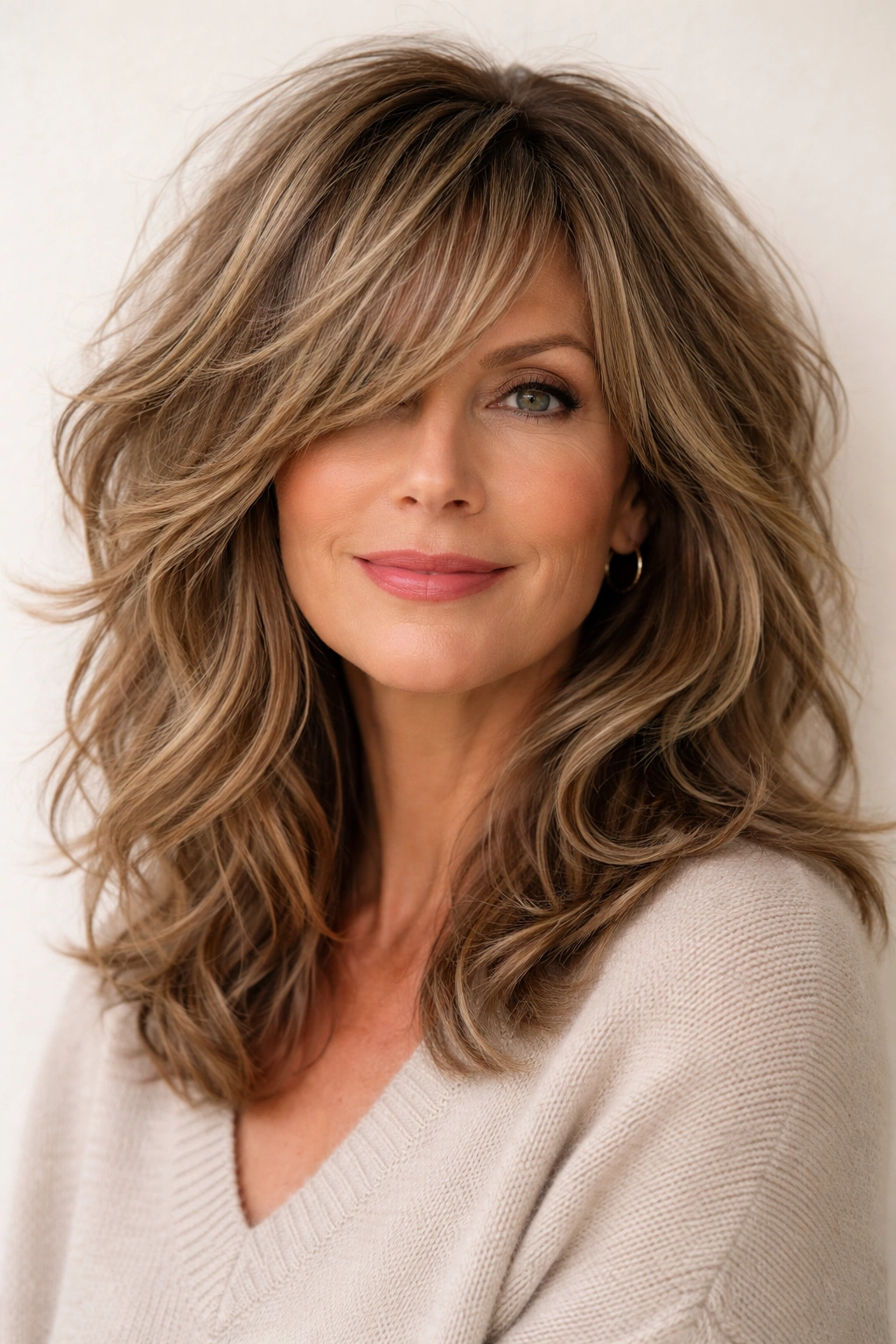
For women who want a bit more face-framing presence, this version features bangs that extend from the crown and sweep dramatically to one side, blending seamlessly into the longer layers. The bangs aren’t blunt—they’re textured and choppy, so they move independently rather than sitting as a solid sheet. The rest of the cut follows standard shag logic: choppy layers throughout, shoulder-length or slightly longer, maximum texture and movement.
What Heavy Sideswept Bangs Add
Sideswept bangs create a subtle lift at the crown and draw the eye toward the cheekbone and outward, which is incredibly flattering for faces that might feel broader or droopier with age. They’re not fussy or high-maintenance like curtain bangs; they blend into the cut. They also draw attention upward and slightly to the side, which creates visual softness. The choppiness means they won’t feel heavy or dramatic—they’ll move with your hair and create that piece-y texture throughout the entire cut.
Who This Flatters Most
Best for: Oval to heart-shaped faces, or anyone with a wider forehead or fuller cheeks they want to draw attention away from. The sideswept quality creates a subtle asymmetry that’s flattering without being obviously so. Styling consideration: These bangs require a quick blow-dry and flat iron or round brush to direct them correctly, but once you’ve got the habit, it takes maybe two minutes. Real talk: If you’ve never worn bangs as an adult, try this as your first version—the choppy, blended approach is far more forgiving than blunt or heavy bangs.
6. The Curly Shag Tailored for Spiral or Coil Texture
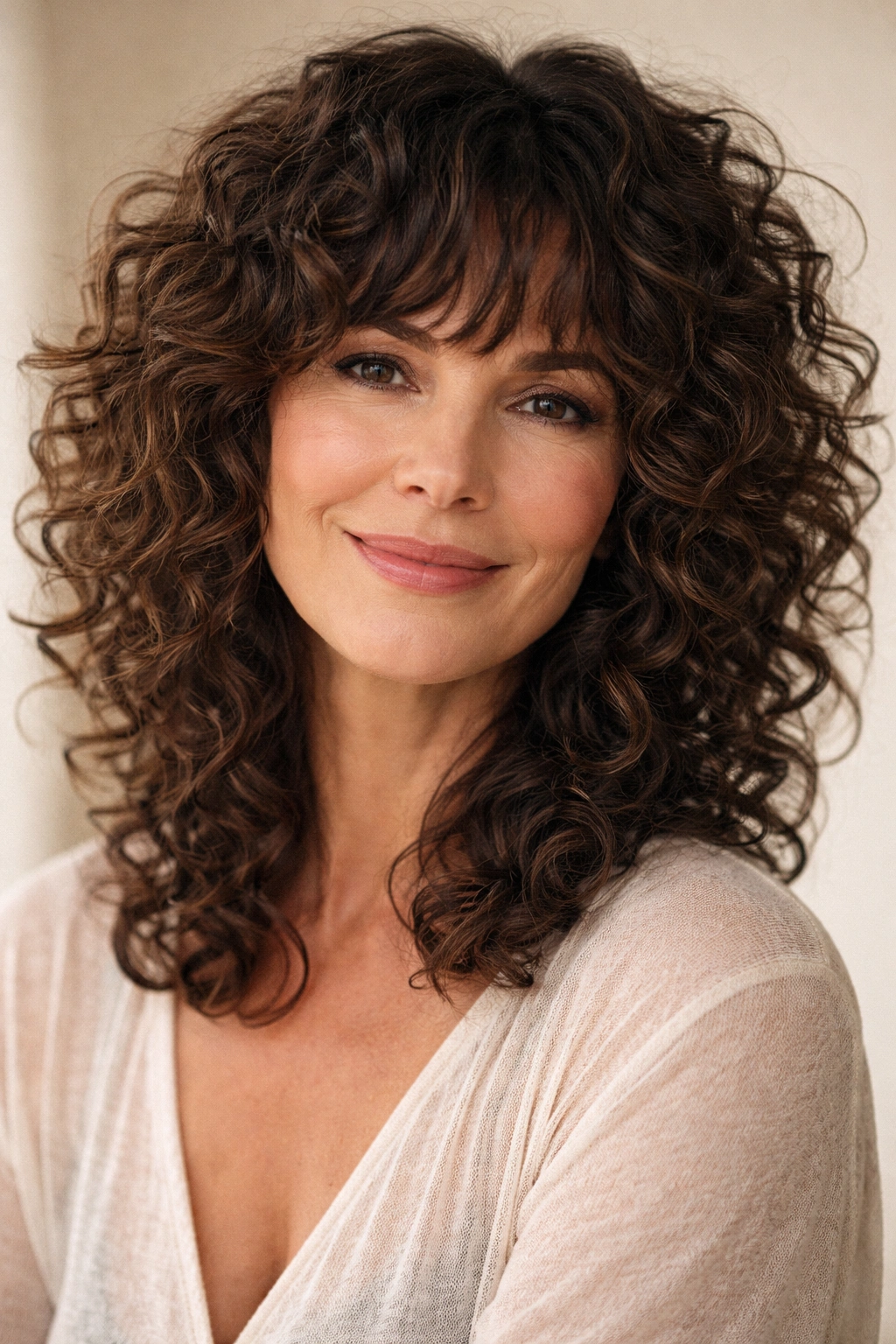
If you have naturally curly or coily hair, a shag designed specifically for curl patterns is transformative. The layers are cut at angles that work with your curl’s natural direction and width, creating separation between curls rather than stacking them or fighting them. The result is definition and shape without requiring endless frizz-fighting products. This cut celebrates texture instead of trying to contain it.
How Shag Layers Work With Curls
A regular shag cut with straight or wavy hair relies on layers creating separation and movement. With naturally curly hair, the curl pattern itself creates that movement—the stylist’s job is to cut in a way that enhances natural curl definition. This usually means cutting at angles that work with your curl’s natural direction, creating internal separation within curls rather than layers that sit on top of each other. The choppy technique still applies, but it’s executed differently to honor how curls actually grow and behave.
Specific Cutting Techniques for Curls
The dry cut advantage: Many curly-hair specialists cut curly shags while the hair is completely dry so they can see exactly how the curl pattern sits and behaves. A wet haircut can be misleading because straight or half-dry hair tells a different story than actual curls. Layer placement: Layers should begin higher on the crown (around 3 inches) to avoid top-heaviness, and gradually extend while respecting your curl’s natural circumference. Why this matters: A well-cut curly shag can be styled with absolutely no heat and will look intentional and modern.
7. The Barely-There Layered Shag for Fine Hair
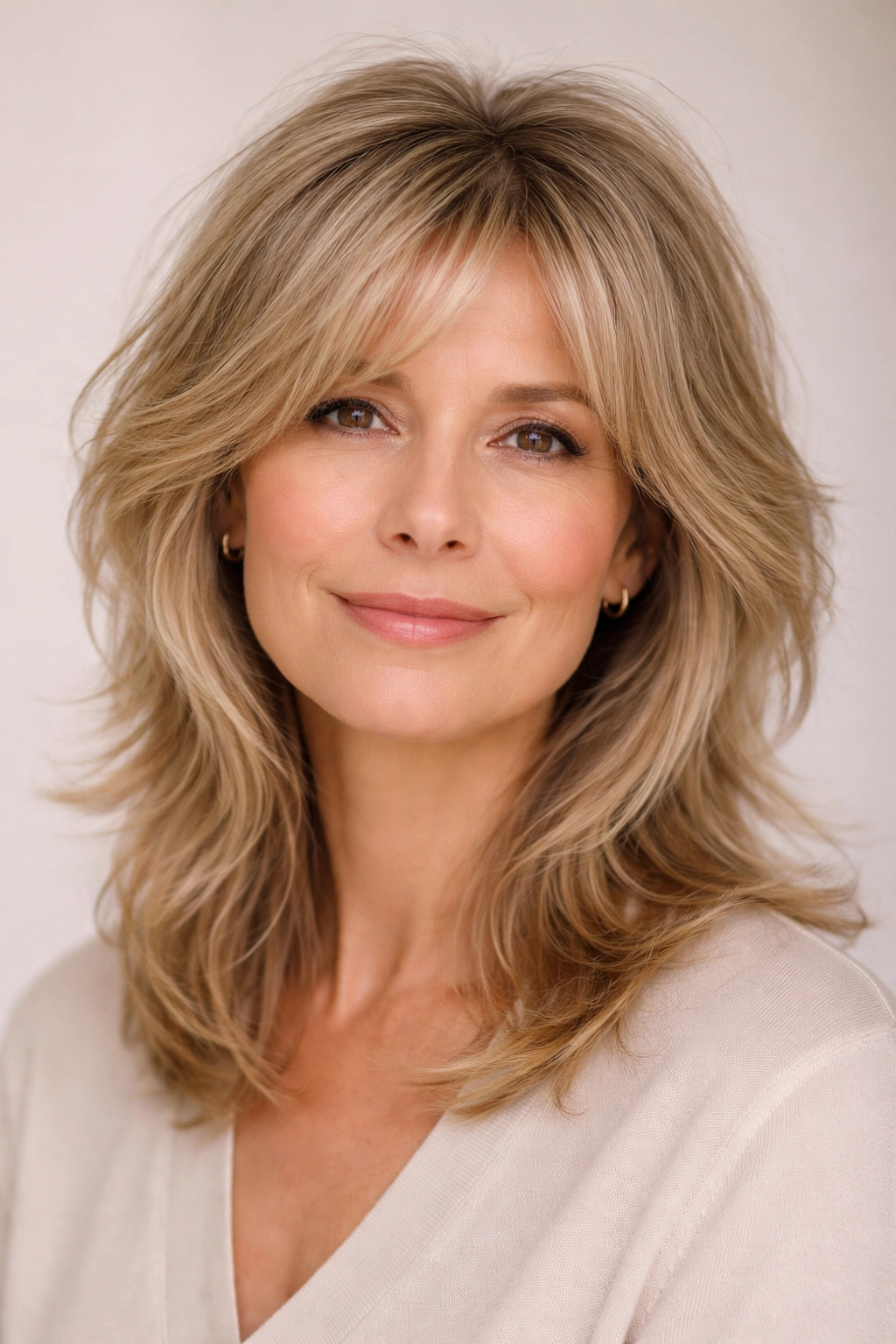
For women with fine or thin hair, too many choppy, dramatic layers can actually make hair look thinner—the eye sees lots of separation and perceives sparseness. This subtle version keeps the concept of a shag (choppy texture, pieces, movement) but with gentler, less dramatic layers. The top might have slightly shorter pieces, but the overall effect is softer, more textured than your typical one-length cut, but not aggressively layered.
Why Subtle Layers Help Fine Hair
The goal with fine hair is to create the illusion of density and volume without actually removing length or creating obvious gaps. Subtle layers do this through a combination of strategic, lighter-touch choppy sections (often called point-cutting or piece-work) that create texture and movement without creating visible separation between sections. The result is that your hair catches light differently in different spots, making it read as fuller, while still maintaining the overall density you need.
Styling and Texture Building
How to approach styling: You’re not trying to create drama here—you’re trying to build volume and movement. A round brush and blow dryer, or loose waves created with a large-barrel curling iron, will amplify the effect of the subtle layers without requiring any special effort. Length recommendation: Aim for shoulder-length or slightly longer—shorter lengths can emphasize thinness, while longer lengths give you more to work with. Product-free potential: One real benefit of a subtle shag is that on good-hair days, you might need nothing more than a blast of dry shampoo and a quick tousle to look put-together.
8. The Modern Mullet Shag Hybrid
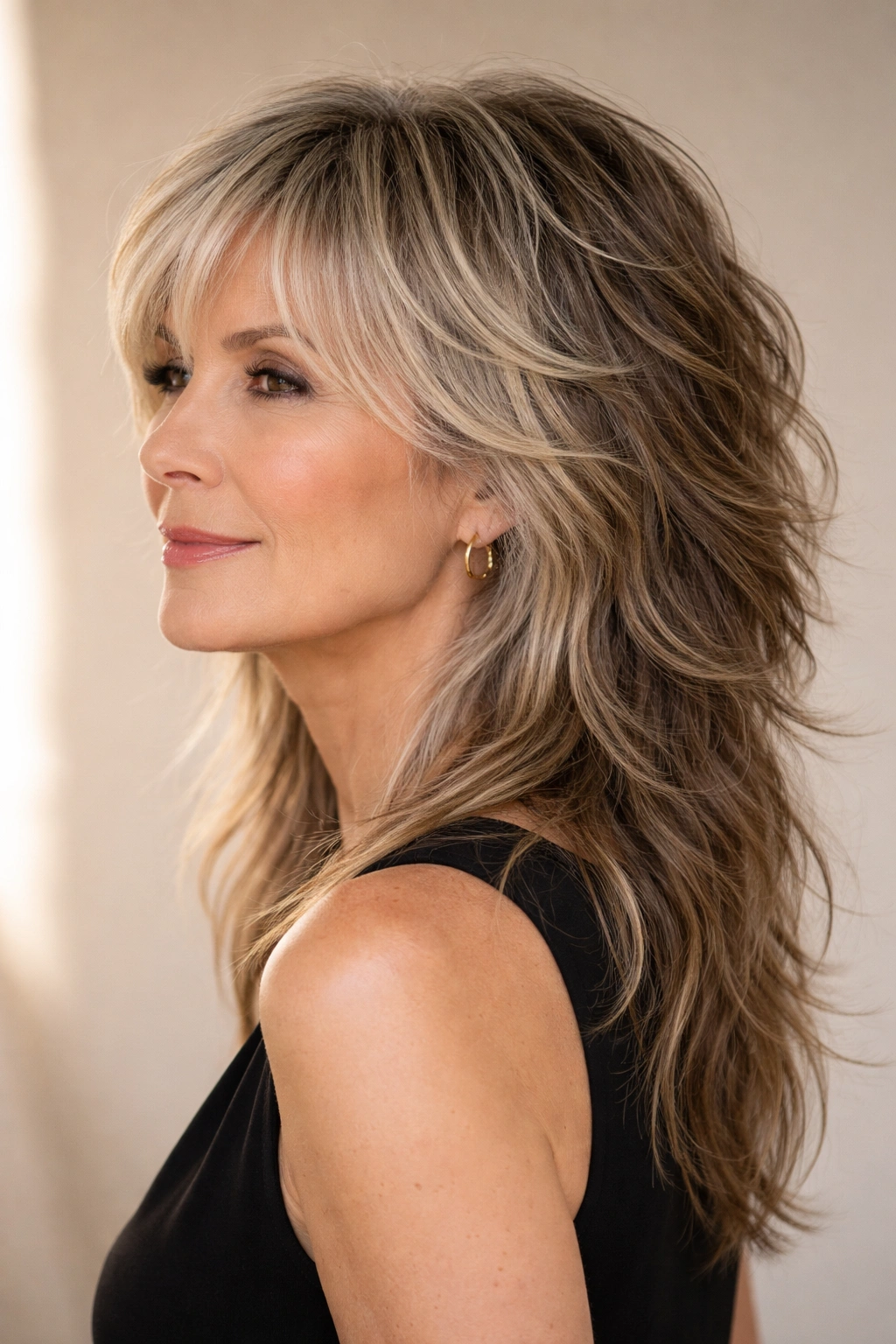
A modern mullet sounds edgy, and it can be—but the shag-mullet hybrid brings texture and movement to what could otherwise feel costume-y. The top and sides are cut in a typical shag: choppy, textured, shoulder-length or shorter. The back is noticeably longer, perhaps mid-back or even longer, creating contrast and movement when you move. It’s bold, utterly modern, and surprisingly flattering for women who have the confidence to pull it off.
Why This Works as a Shag Variation
The traditional mullet fails because of the stark, abrupt contrast between short and long. The shag-mullet hybrid succeeds because the choppy, textured layers on top gradually extend into the longer back length—there’s no sudden drop-off, just a gradual, piece-y transition. This makes it feel intentional and modern rather than nostalgic. The texture throughout keeps it from reading as costume-y, and the longer back gives you serious movement and length on days when you want to feel flowy.
Who Should Approach This
Best for: Women who feel confident with unconventional choices, or those who have a specific styling vision they want to execute. This isn’t a cut you wear and forget about—it requires some intentional styling. Styling reality: You’ll blow-dry the top section to create texture and shape, and the longer back will develop waves and movement based on how you wear it. Real consideration: This cut makes a statement. Make sure you’re genuinely excited about it, not just intrigued by the novelty.
9. The Face-Framing Shag With Longer Money Pieces
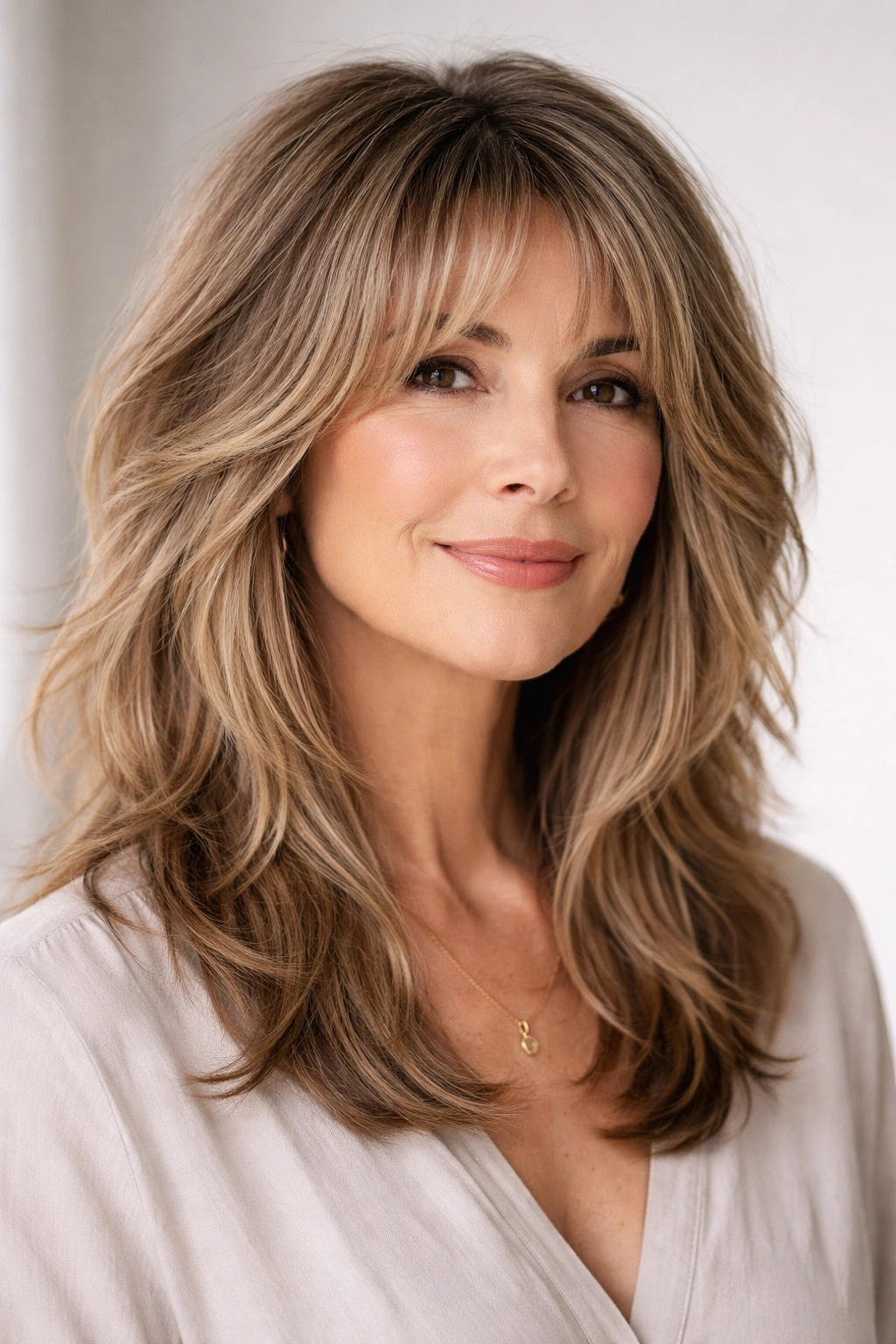
Sometimes called face-framing pieces or money pieces, this variation features the sides of the cut—the pieces that frame your cheekbones and jawline—cut noticeably longer than the rest of the shag. The main body of the cut sits at the shoulder or chin, but the face-framing pieces extend several inches longer, usually hitting collarbone or mid-chest. The contrast between the shorter main cut and longer face pieces creates instant dimension and draws attention to exactly where you want it.
How Face-Framing Pieces Enhance
Longer face-framing pieces do something specific for women over 50: they create a slimming effect by drawing the eye vertically, and they frame the face in a way that feels intentional and elevated. Because they’re longer and hit differently than the rest of your hair, they also move and catch light independently, creating optical interest. The choppy shag texture applies to the entire cut, including the face pieces, so they’re not blunt or heavy—they blend while still being distinctly longer.
Styling and Daily Wear
Why this works with waves: Face pieces of 16-18 inches wave beautifully and create a soft, elegant frame. Even if the rest of your cut is more textured and piece-y, longer face pieces have enough length to develop smooth, Instagrammable waves. Maintenance note: The face pieces will need a trim slightly more frequently than the rest of the cut to maintain the length distinction—plan for a refresh every 5-6 weeks if you want to maintain that specific contrast. Versatility: Wear it down for maximum dimension, or sweep the face pieces back for a cleaner, more polished look.
10. The Heavily Textured Choppy Shag for Thick Hair
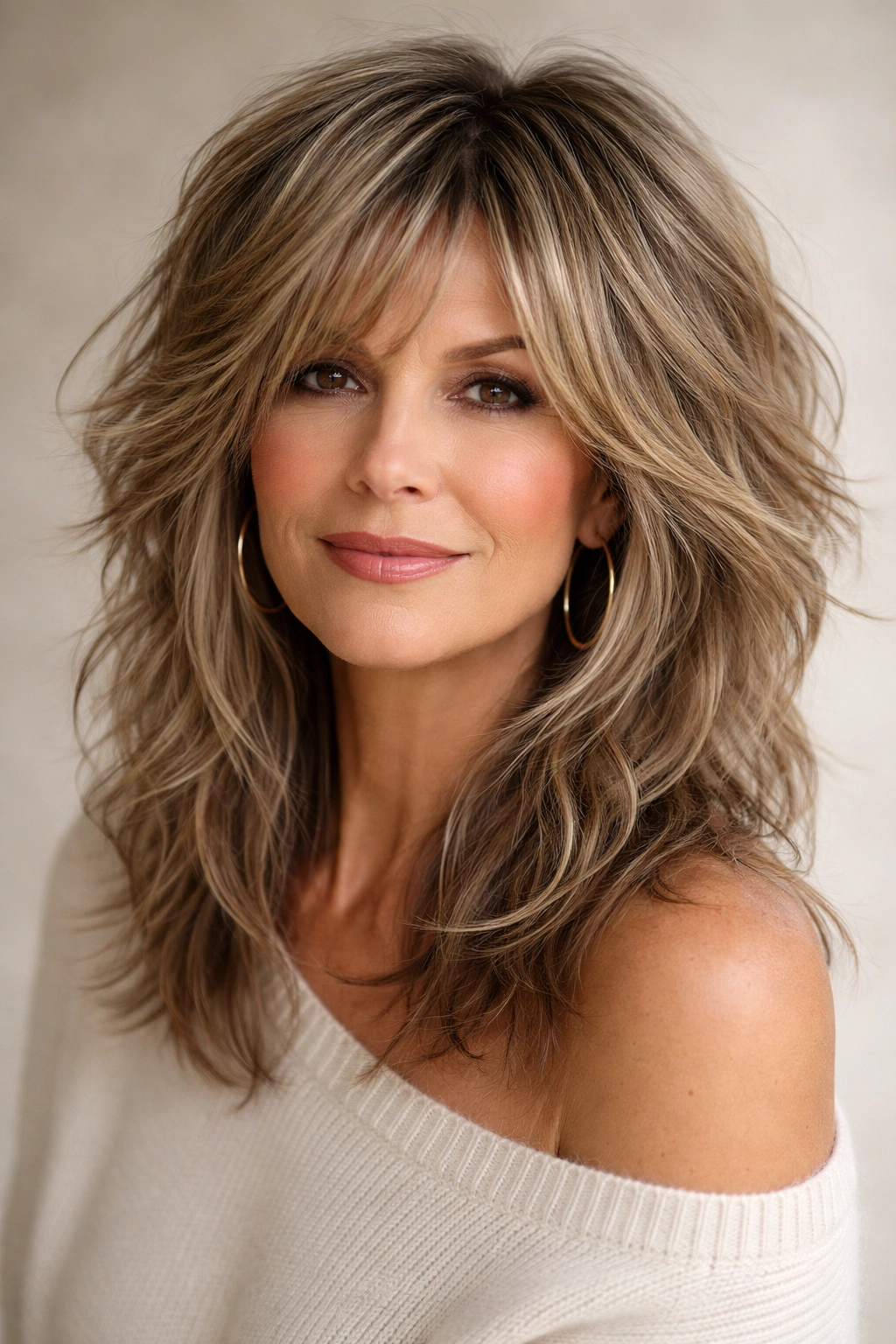
If you have thick, coarse, or very wavy hair naturally, a heavily textured shag cuts through density and creates real movement. Rather than fighting thickness with blunt cuts that sit heavy, a shag with frequent, dramatic layers thins the hair strategically while maintaining shape. Each layer is cut at a sharp angle, creating genuine separation between sections. Thinning shears are often used throughout to reduce weight without losing length.
Why Heavy Texture Works for Thick Hair
Thick hair benefits from layers that create internal movement and separation. When you have a lot of hair, choppy, dramatic layers aren’t excessive—they’re necessary to create the piece-y, intentional look that defines a shag. The thinning that happens throughout removes enough weight that the cut doesn’t sit heavy or require constant styling while still maintaining enough density that the cut feels full and textured. The result is that the cut looks effortlessly good rather than requiring endless blow-drying and product.
How to Maintain Texture Over Time
Growing out gracefully: Because the layers are dramatic, this cut looks good through 6-8 weeks of growth without looking shaggy and unkempt. After 8 weeks, you’ll want a refresh to maintain the piece-y quality. Styling ease: Thick hair with a textured shag often dries with volume and movement you didn’t create—let it. You’re not fighting your hair’s natural tendencies; you’re working with them. Color consideration: If you color your hair, a heavily textured shag shows dimension beautifully; lighter and darker pieces create even more visual interest.
11. The Soft, Piecy Shag With Barely-There Texture
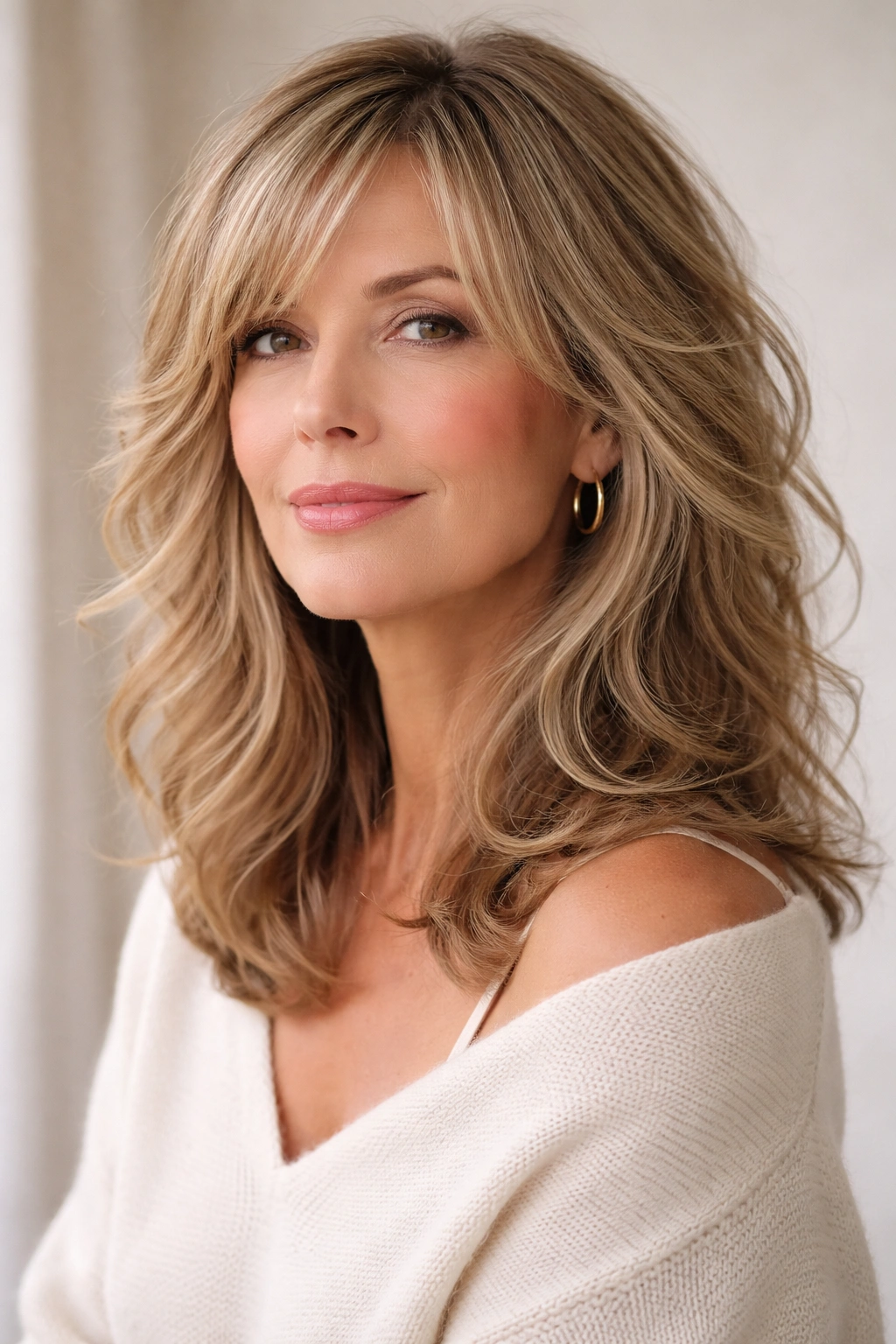
On the opposite end of the spectrum from heavily textured shags, this version features softer, less dramatic layers that create a piece-y effect without looking choppy or severe. It’s a shag for women who want movement and texture but prefer a more blended, cohesive look to an obviously layered one. The differences between layers are subtle—you notice the effect (movement, dimension) without necessarily noticing the technique (layers).
The Subtle Layering Approach
Rather than sharp angles and obvious separation, subtle shag cutting uses a softer hand, blending layers so they integrate rather than contrast. Thinning shears are used more sparingly, and the overall line is gentler. You still get the benefits of a shag—texture, movement, modern aesthetic—but with an aesthetic that reads more finished and less deliberately undone. This version appeals to women who want their hair to look effortlessly good without actually looking like they’re not trying.
Who Gravitates Toward This Version
Best for: Women who prefer a cohesive, blended aesthetic over texture that’s obviously layered. Someone might choose this if they want a shag but prefer a more formal or polished overall look. Lifestyle fit: This works beautifully if you don’t have time for daily styling—the subtle layers still create movement and dimension even on day-three hair without requiring you to actively style it. Styling flexibility: You can dress it up with waves for evening or leave it tousled for daytime; either way, it reads as intentional.
12. The Shag Tailored for Straight Hair With Minimal Styling

Straight hair doesn’t naturally create the wave and texture that make shags distinctive. However, a shag specifically tailored for straight hair, cut with an understanding that you’ll be heat-styling it, can be stunning. The layers are cut in a way that responds beautifully to a blow dryer and round brush or flat iron waves. Instead of relying on natural texture, the cut is designed so that styled waves create maximum dimension and movement.
Cutting for Straightness and Movement
The stylist cutting this needs to understand that without natural wave, the layers need to be cut at strategic angles so that when you blow-dry with a round brush, volume and movement emerge naturally. The choppy texture is still present, but the overall vision is cut with the understanding that it’ll be paired with heat styling. It’s not lazy or high-maintenance—it’s realistic. Most women with straight hair style their hair most days anyway; the difference is that this cut makes styling faster and delivers a better payoff.
The Blow-Dry Component
What you’re actually doing: You’re using a round brush to direct the layers and create gentle waves as you blow-dry. This takes maybe 10-15 minutes and creates a polished, dimensional look that lasts through your day. Wave-building: Some women use a 1.25-inch curling iron to add more intentional waves after blow-drying, while others find that the blow-dry alone creates enough texture. Product reality: A good volumizing mousse or light texture spray applied to damp hair before blow-drying helps the layers separate and hold movement longer.
13. The Short Choppy Shag for Maximum Texture
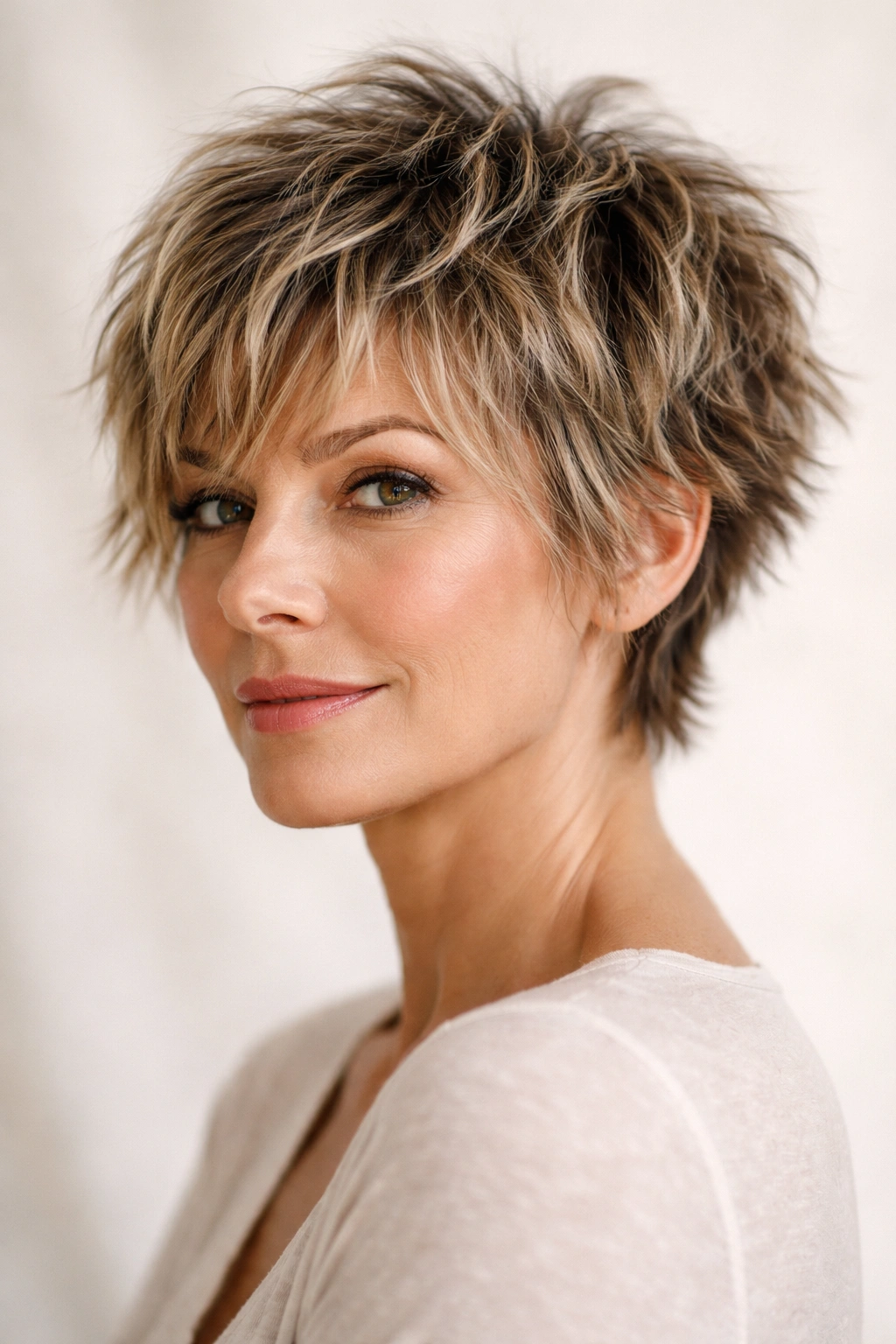
This ultra-short version sits above the ears and at the nape, almost like an evolved pixie cut with serious shag elements. It’s bold, requires consistent styling, but reads incredibly modern and chic. The entire cut is choppy and textured, creating multiple points and pieces. It’s not for the faint of heart, but for women who’ve always wanted short hair or who want to make a statement, it’s transformative.
Why Short Shags Require Confidence
A short shag reads differently depending on styling—messy and textured one day, sleek and piece-y the next. You’re styling it almost every time you wash your hair, but most women find that the modern, confident look is worth the few extra minutes. The cut itself is low-stakes for growth: if you hate it, you’re only three or four weeks away from a completely different look as it grows. But most women who take the plunge on a short shag become converts immediately.
Styling and Confidence-Building
How to make it work: A texture paste or matte clay applied to damp hair, combined with a blow dryer, creates intentional texture and separation. You’re not trying to look neat here—you’re trying to look fashionably undone. Real-world practicality: This cut works best if you wash your hair and style it at least most days. It’s not a wash-and-go situation. Who thrives: Women with confidence, women who love trying new things, and women who find the modern aesthetic of short, choppy texture genuinely exciting rather than scary.
14. The Layered Shag With Minimal Bangs
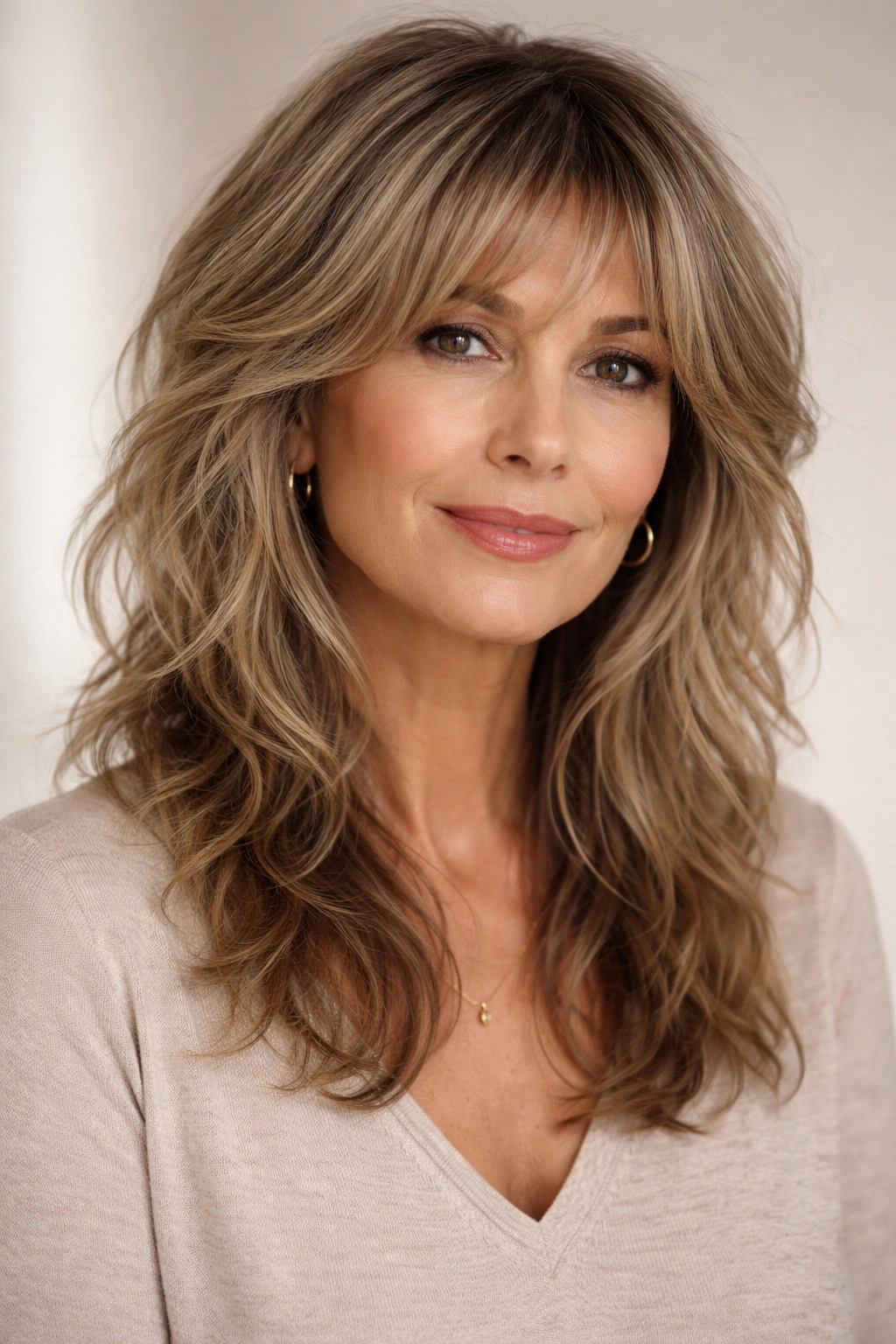
For women who want a shag but aren’t ready for full bangs, minimal bangs split the difference: just a slight textured fringe that starts a few inches back from the hairline and blends immediately into the side-swept layers. It’s barely-there enough that you might not even style it as bangs—it just becomes part of the overall texture and movement. This provides subtle face-framing without the commitment or daily styling of traditional bangs.
The Barely-There Bang Concept
Minimal bangs aren’t really bangs in the traditional sense—they’re just the shortest pieces of the front sections. Because they blend so seamlessly into the side-swept layers, they look more like textured face-framing than distinct bangs. They’ll move with your hair, blend or separate depending on how you style them, and never feel heavy or require active management. This is perfect if you’re intrigued by the idea of bangs but nervous about the commitment.
Why This Works as a Compromise
The benefit: You get subtle face-framing and a frame-like quality without actually having bangs to maintain and blow-dry separate. How it looks: Even wearing your hair down naturally, those slightly shorter front pieces create visual interest and dimension at the face level. Styling flexibility: On days when you blow-dry, you can direct them sideways with the rest of your layers. On lazy days, they just integrate into the overall texture.
15. The Colored Shag With Highlights to Enhance Texture
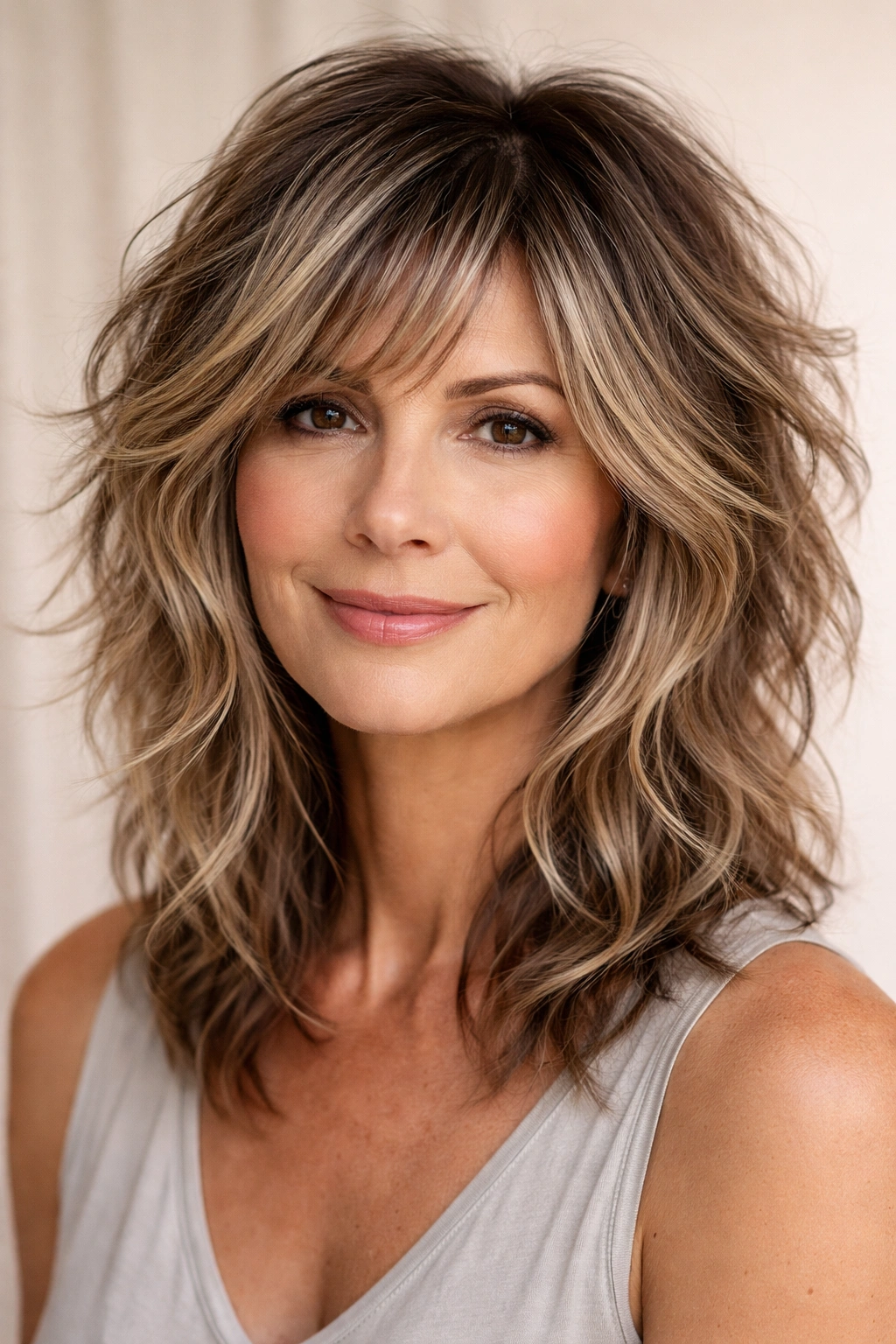
A shag becomes even more visually dynamic when paired with strategic color—specifically, subtle highlights or balayage that enhance the textured, piece-y aesthetic. Darker shadow roots at the base with lighter pieces throughout creates the illusion of even more dimension and movement than the cut alone provides. The color and cut work together to create depth that’s incredibly flattering and modern.
How Color Amplifies Shag Texture
Without color, a shag relies entirely on cut and styling to create dimension. With highlights strategically placed on the shorter, choppier layers and throughout the piece-y sections, light and shadow multiply. Lighter pieces catch light and read as separate from darker pieces, which makes the textured, layered aesthetic even more pronounced. It’s not about harsh contrast—it’s about subtle light-play that makes the cut look more intentional and dimensional than it actually is.
Color Strategy for Over 50
Why this works: As hair grays naturally, strategic highlights actually look incredibly natural and dimensional rather than obviously colored. Face-framing highlights around the face lift and brighten. Maintenance reality: Highlights last longer than all-over color, so you’re looking at 6-8 week refresh appointments rather than every 4-6 weeks. Depth consideration: Darker tones at the root (which can be natural gray) paired with lighter mid-lengths and ends read as expensive and intentional.
16. The Long Undercutted Shag for Hidden Volume
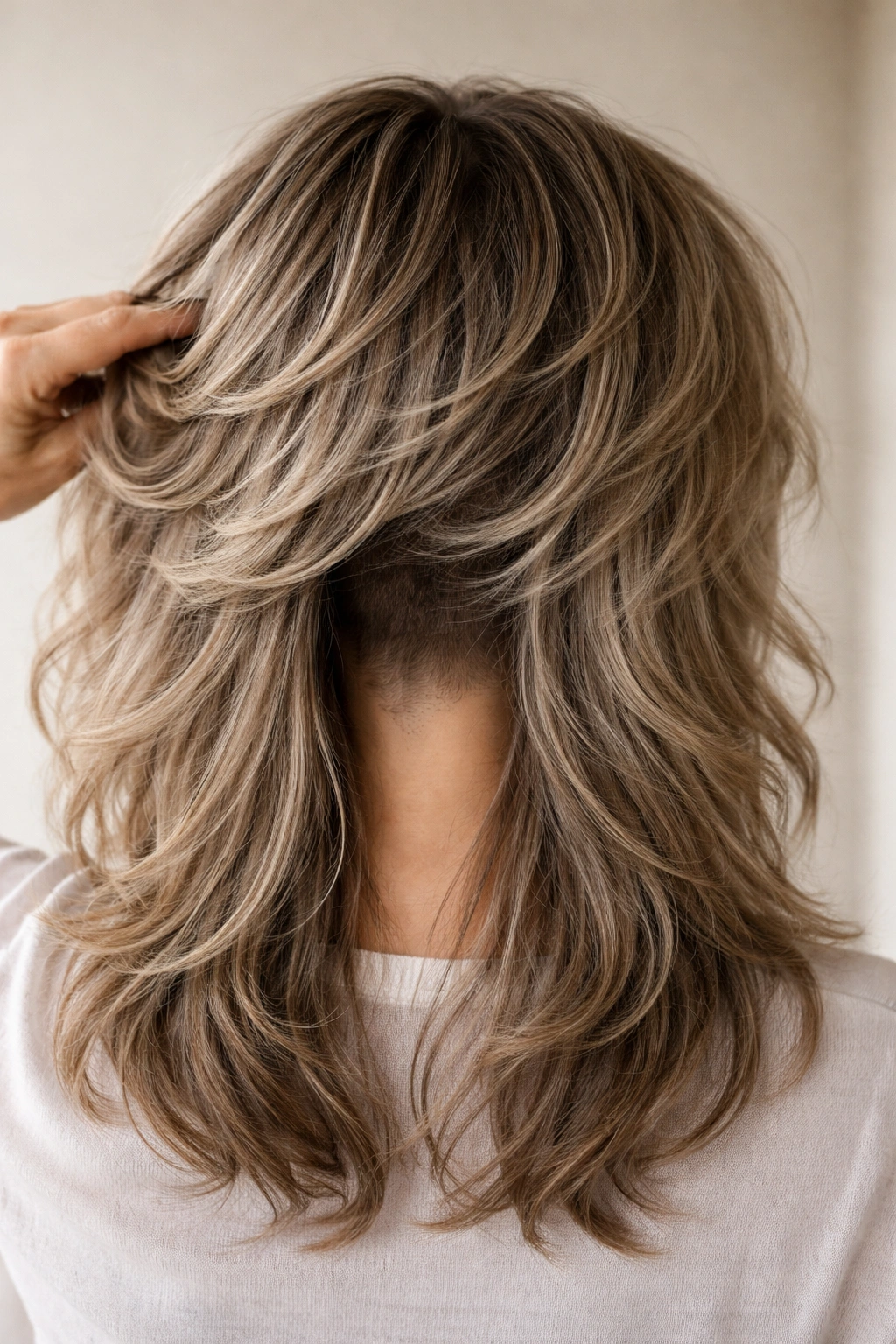
This version features a shag cut on the surface (choppy layers, piece-y texture visible throughout), but underneath, the undercut is significantly shorter—almost like a secret. The contrast is hidden until you pull your hair up or move in a certain way, at which point the undercut is revealed. It’s edgy, modern, and surprisingly practical for keeping overall styling manageable while maintaining the textured look on top.
Why Undercuts Change the Game
An undercut underneath a shag means the bottom layers are much shorter and more manageable than the visible outer layers would suggest. From the front and sides, it looks like a full-length textured shag. From behind or when you move, there’s this unexpected modern element. It also means less weight throughout the cut overall, which helps even thick hair maintain movement and shape without heaviness.
Who This Appeals To
Best for: Women who want a modern, slightly edgy aesthetic without sacrificing practicality. Someone might choose this if they love the idea of a shag but worry about weight or manageability. The reveal: Part of the appeal is that undercut—knowing it’s there even if others don’t see it creates a personal sense of style and modernity. Styling note: An undercut underneath actually makes blow-drying easier because there’s less density to work with.
17. The Transitional Shag for Growing Out a Bob
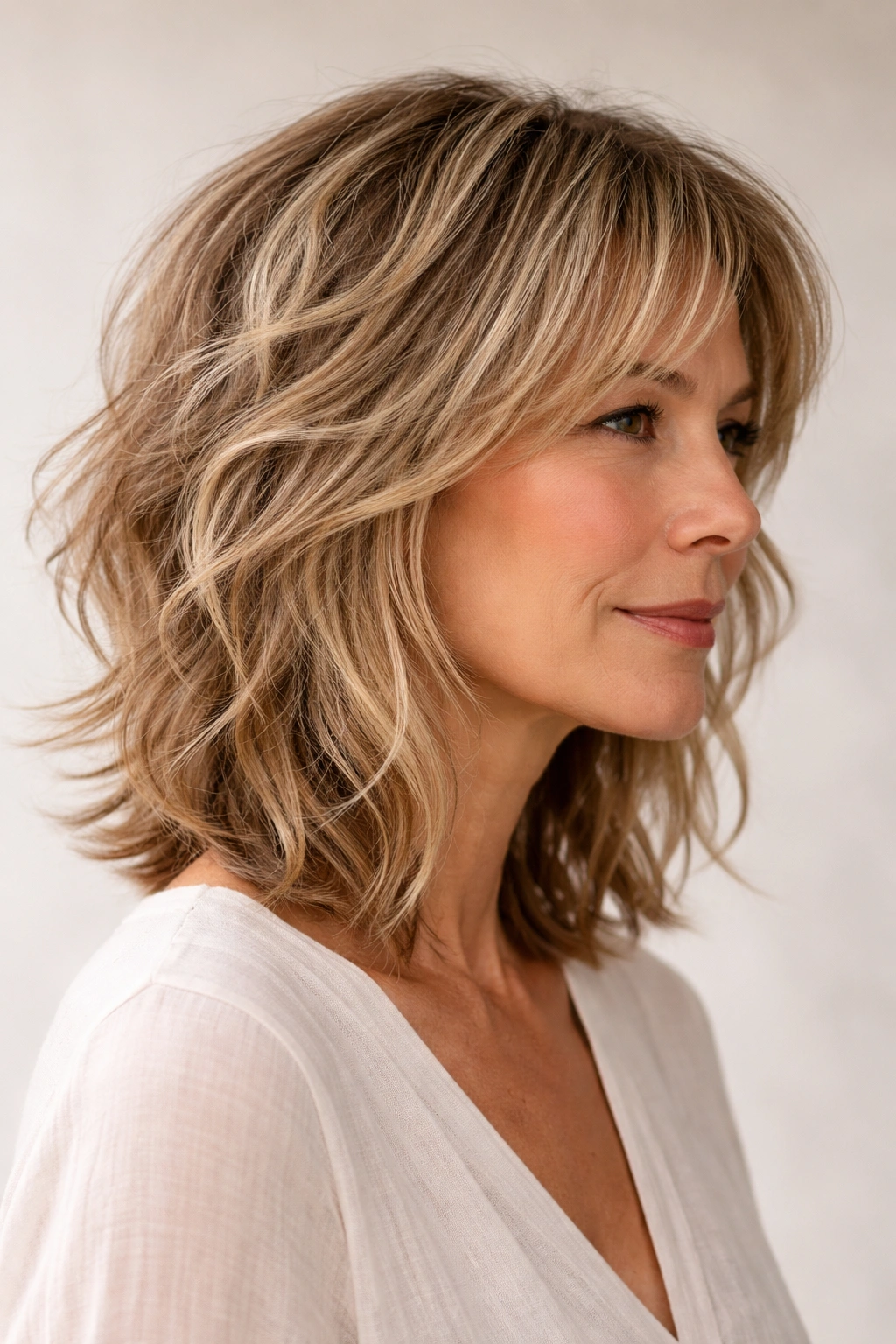
If you’re moving away from a shorter bob toward longer hair, a shag is the perfect transitional cut. Rather than sitting in that awkward in-between length phase where everything looks grown-out and undecided, a shag with strategic layers makes that in-between length feel intentional and modern. It gives you something to work with while your hair grows, and you can evolve it as your length increases.
Why a Shag Works as Transition
A shag’s whole aesthetic is about pieces and texture rather than one-length perfection. This means that hair at varying lengths—some pieces longer because they’re growing out, some shorter from the last cut—reads as intentional rather than neglected. Over the course of three to six months of growth, you’ll go from a shoulder-length shag to a longer one, and each stage will look deliberate and styled rather than like you’re in between haircuts.
Growing It Out Intentionally
Timeline and trims: You might get a refresh cut every 6-8 weeks, but instead of asking your stylist to maintain length, ask her to maintain shape and texture while letting it grow. This means trimming the shorter layers minimally while removing minimal length from the longer pieces. The evolution: Over time, you’ll gradually move toward a longer, more flowing version of the shag. When to stop trimming: Once you’ve reached your target length, you can transition to standard maintenance trims, or let it grow into a longer, less-layered style.
18. The Custom-Tailored Shag for Your Specific Face Shape
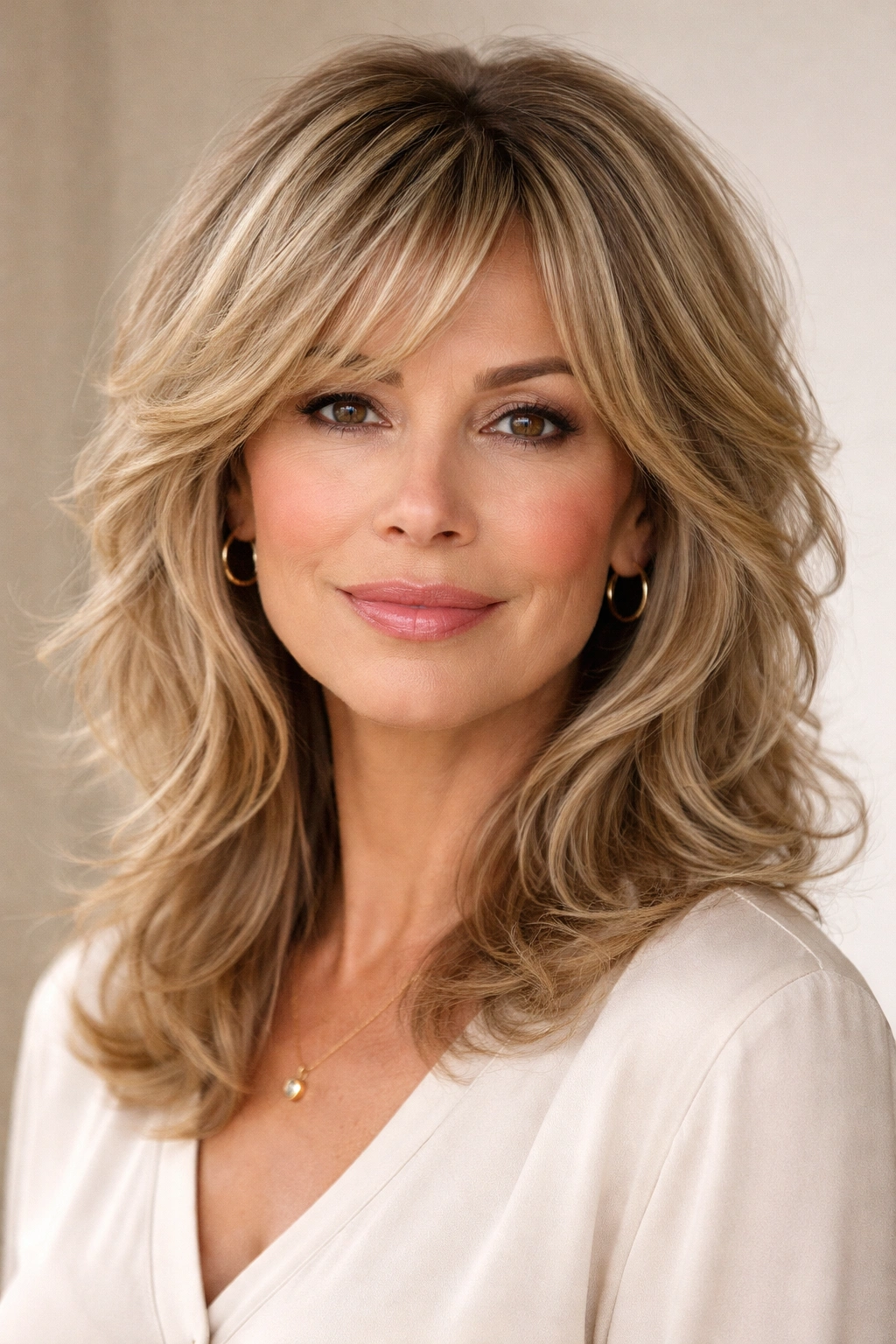
While all shags share certain qualities (texture, layers, piece-y movement), the ideal shag for your face is customized based on whether you have a round, square, oval, heart, or oblong face shape. Your stylist should understand not just how to cut a shag, but how to cut a shag that’s specifically flattering to your face. This might mean adjusting where layers start, how the face-framing pieces fall, or what length works best.
How Face Shape Changes the Approach
Round faces: Layers should start higher and create more vertical movement rather than horizontal width. Longer face-framing pieces make the face read as longer. Square faces: Choppy texture softens the angles of the jaw and cheekbones. Side-swept bangs or pieces draw the eye away from squareness. Oval faces: You’re lucky—most shag variations work beautifully. Focus on what length and texture feel best to you. Heart-shaped faces: Wider foreheads benefit from fuller volume at the chin level; consider longer face-framing pieces. Oblong faces: Horizontal layers and texture help prevent the face from reading too long and narrow.
Communicating With Your Stylist
Bring reference photos: Show images of shags that appeal to you, but also show them specifically what face shapes are in those photos. Discuss how your face shape compares. Ask about placement: The exact placement of layers and where face-framing pieces hit matters more than the generic shag name. Be specific: Instead of saying I want a shag, try saying I want choppy layers that create movement and some longer face-framing pieces. Your stylist can translate that into what works for you specifically.
Final Thoughts
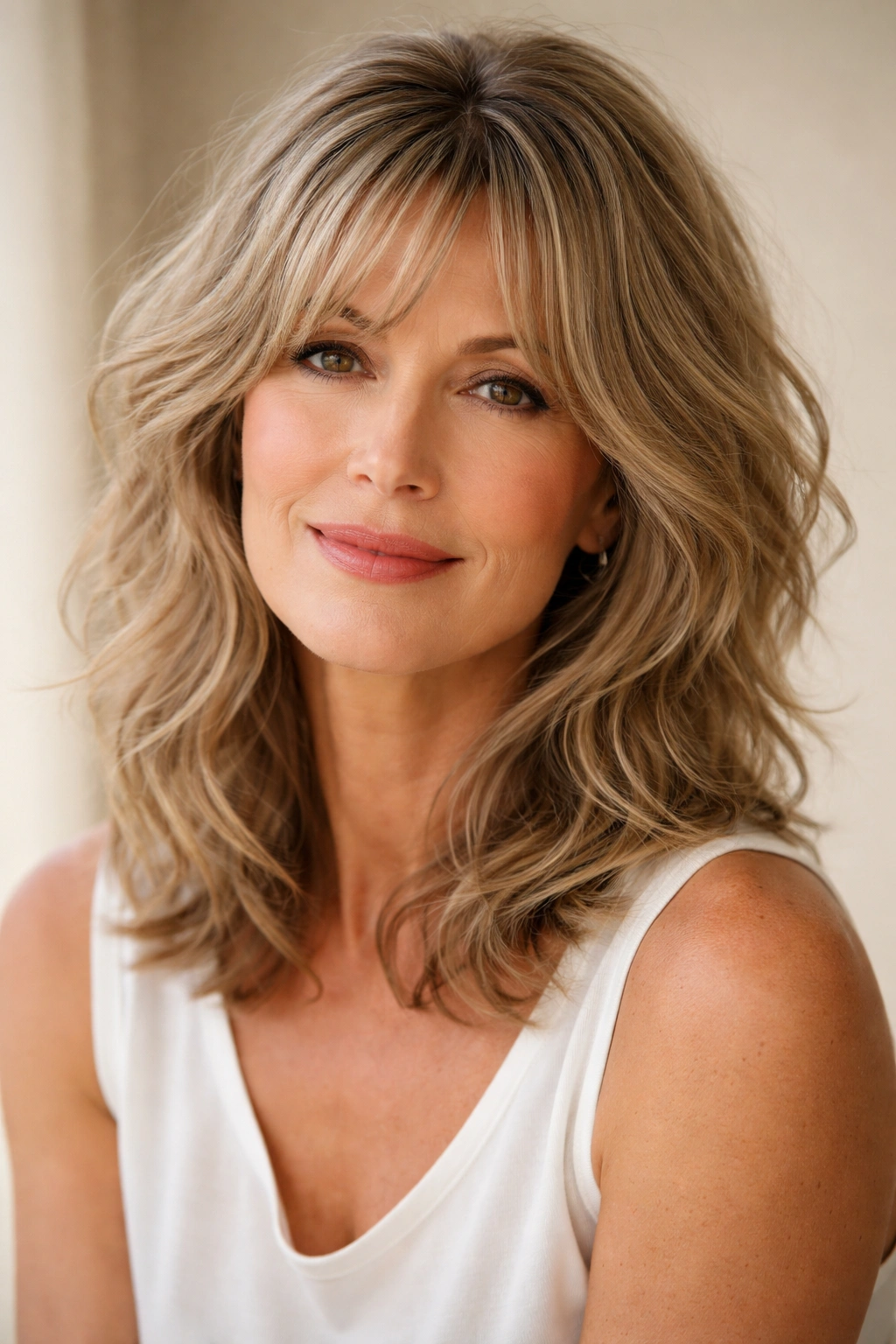
A wavy shag haircut for women over 50 isn’t about trying to look young—it’s about looking like yourself with better texture, movement, and polish. The right shag works with your hair’s natural tendencies rather than against them, requires realistic maintenance you’re actually willing to do, and flatters your specific face and coloring. Whether you choose a subtle, barely-there shag or a bold, heavily textured version, the goal is the same: a modern, confident cut that makes you feel genuinely good.
The beauty of a shag is its flexibility. You can style it in five minutes with just a tousle and some dry shampoo, or you can spend fifteen minutes with a blow dryer and round brush for something more polished. It looks good in photos, it looks good on regular days, and it genuinely improves with a little texture or movement whether that’s natural wave or heat-styling. Most importantly, a shag says you’re not afraid of texture, movement, or taking up space—and there’s nothing more youthful or confident than that.
