



Igbo wedding celebrations are a vibrant fusion of color, rhythm, music, and centuries-old traditions that bring entire communities together in joyful ceremony. At the heart of these celebrations stands a bride whose appearance has been meticulously prepared through every detail—and perhaps nowhere is her transformation more striking than in her choice of hairstyle. Igbo traditional wedding hairstyles are far more than cosmetic choices; they are visual declarations of cultural identity, social status, family heritage, and the bride’s readiness to enter a new chapter of her life.
The artistry involved in creating an authentic Igbo bridal hairstyle demands incredible skill, patience, and an understanding of both aesthetic principles and cultural symbolism. These hairstyles often take hours to complete, involving intricate braiding patterns, the integration of precious metals and beads, and sometimes the addition of real or synthetic hair extensions to achieve the desired volume, height, and impact. Each style tells a story—of the bride’s home region within Igboland, her family’s traditions, her personal style preferences, and the pride she takes in her heritage.
What makes Igbo traditional hairstyles particularly distinctive is their boldness. Unlike some other cultural bridal traditions that favor subtlety, Igbo wedding hairstyles are meant to make a statement. They’re architectural in nature, often featuring dramatic height, geometric patterns, and the strategic placement of ornamental elements that catch light and draw admiring eyes. The hairstyles showcase the skill of the braider, the resources available to the family, and the bride’s understanding of her own beauty.
Whether you’re an Igbo bride planning your wedding day, a family member seeking to understand these styles, or someone with a genuine appreciation for African cultural artistry, these twelve traditional hairstyles represent some of the most celebrated and enduring choices in Igbo bridal fashion. Each one brings its own character, history, and visual magnificence to a wedding celebration.
1. Ukazi Braids
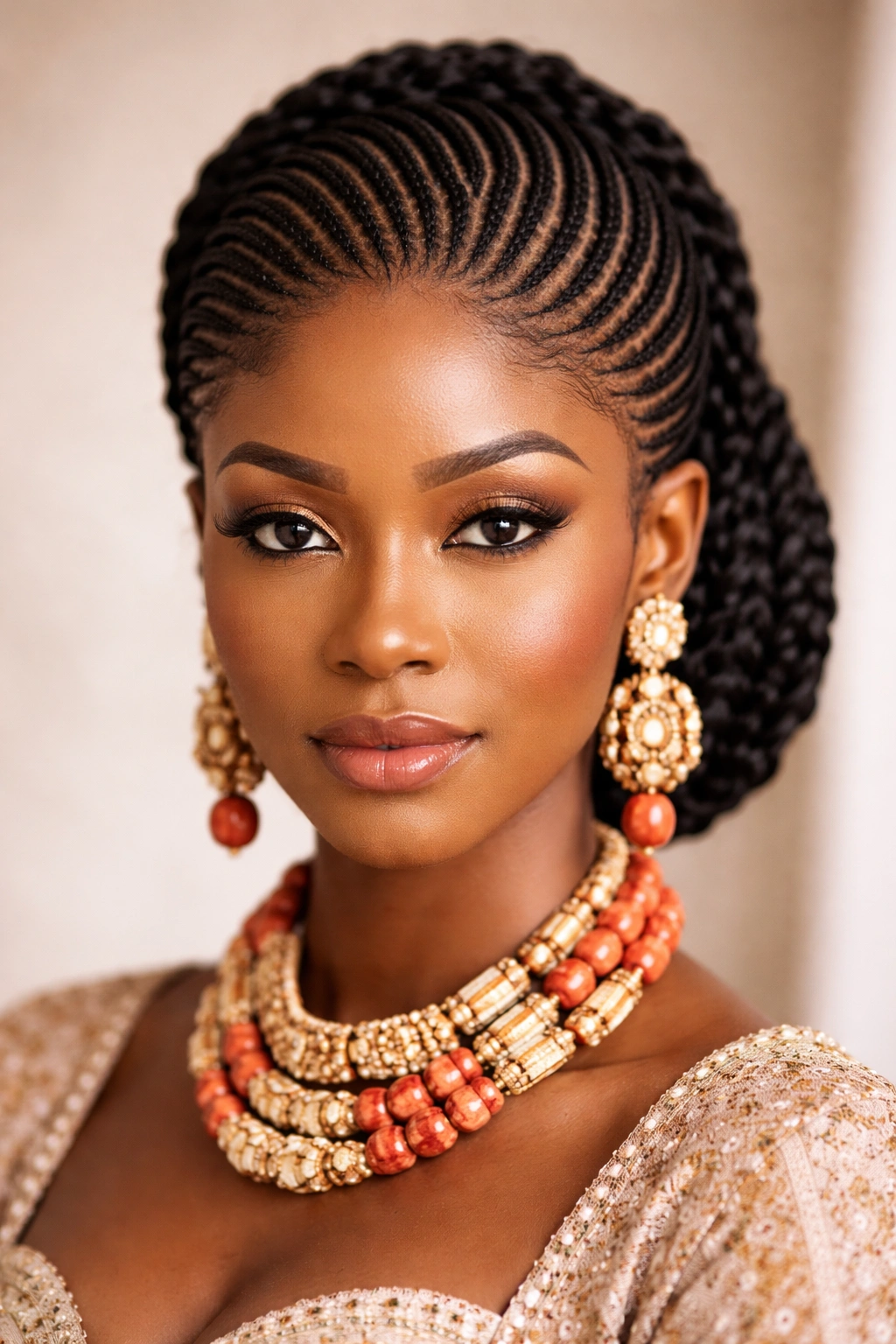
Ukazi braids are perhaps the most iconic and widely recognized Igbo bridal hairstyle, distinguished by their systematic geometric pattern that creates an almost architectural appearance on the head. The style consists of multiple thin, tightly woven braids that are arranged in perfectly parallel rows, often running from the front hairline straight back to the nape of the neck. These braids are typically completed with a close finish that highlights the natural curves and contours of the bride’s scalp.
The Cultural Significance
Ukazi braids carry profound meaning in Igbo culture, representing precision, order, and the meticulous care that a bride brings to her responsibilities within marriage and family. The name “ukazi” itself refers to a leafy vegetable widely used in Igbo cuisine, and the parallel pattern of the braids evokes the organized way these leaves are arranged in a bundle. This hairstyle is a testament to the braider’s technical mastery and the bride’s patience—sessions can extend 8 to 12 hours depending on hair length and density.
Styling Details and Variations
- The braids are typically jet black or color-coordinated with the bride’s outfit
- Height can be achieved by adding hair extensions at the roots or braiding with synthetic fibers from the start
- Some brides opt for braids that lay flat against the scalp for a sleek look, while others prefer braids with gentle curves
- Decorative elements like gold thread, beads, or hairpieces can be woven into select braids for added glamour
- The finish often includes a smooth, polished crown area left unbraided to allow for the placement of the bridal gele or headwrap
Pro tip: When wearing ukazi braids, ensure the braider finishes with a sealed edge—applying wax or protective cream to the braid ends prevents them from unraveling and keeps the style looking crisp throughout the wedding day and beyond.
2. Igba Braids with Crown Elevation
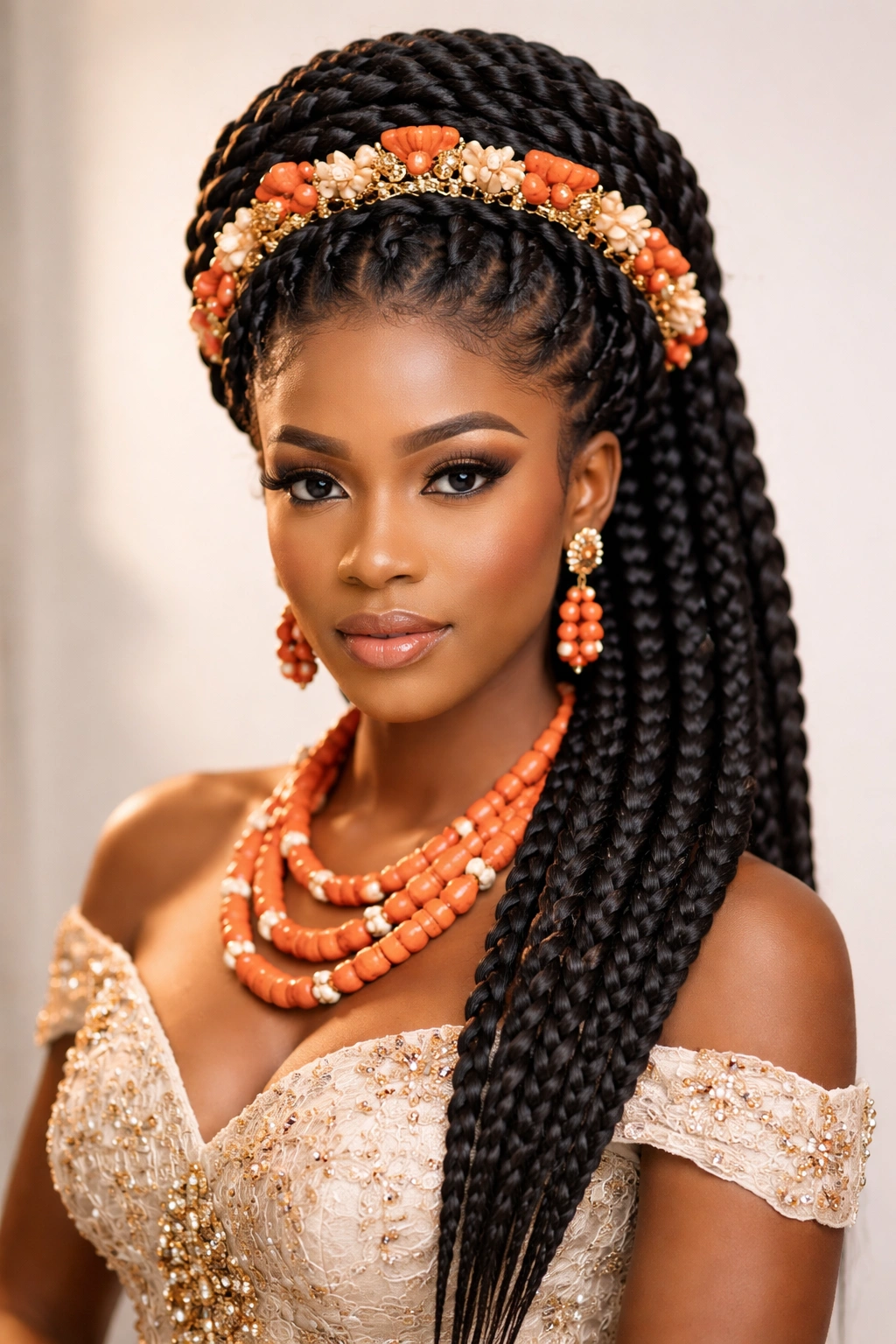
Igba braids represent a more ornamental approach to traditional Igbo hairstyling, characterized by thicker braids arranged in a crown-like formation around the head. Unlike ukazi’s parallel precision, igba braids create more visual texture and dimension, with the braids often beginning quite thick at the crown and tapering as they extend down the back. This style prioritizes dramatic height and presence, making it a favorite choice among brides who want their hairstyle to be visible from a distance.
The Structure and Artistry
The igba braid style demands exceptional skill from the stylist because each section must be carefully proportioned to create balanced visual weight. The braids are sometimes arranged in a circular or spiral pattern rather than straight lines, creating a more dynamic, almost sculptural effect. The thick braids allow for more elaborate embellishment, with gold chains, jewelry attachments, and ornamental pieces threaded directly into the braid structure itself.
Creating the Perfect Crown Effect
- Start with a careful sectioning system that divides the hair into 8-12 sections depending on desired drama
- Each section is braided separately, then the braids are often looped, coiled, or layered to create height
- The crown area typically features the thickest, most elaborate braids while the sides may be smoother and more controlled
- Synthetic hair extensions are almost always incorporated to achieve the necessary volume and weight
- The overall silhouette should create a visual frame for the face, making it appear slimmer and the eyes more prominent
Insider note: This style photographs beautifully because the three-dimensional structure casts interesting shadows, making the bride’s head appear more beautifully sculpted in both candid shots and formal portraits.
3. Gele-Ready Braids with Open Crown
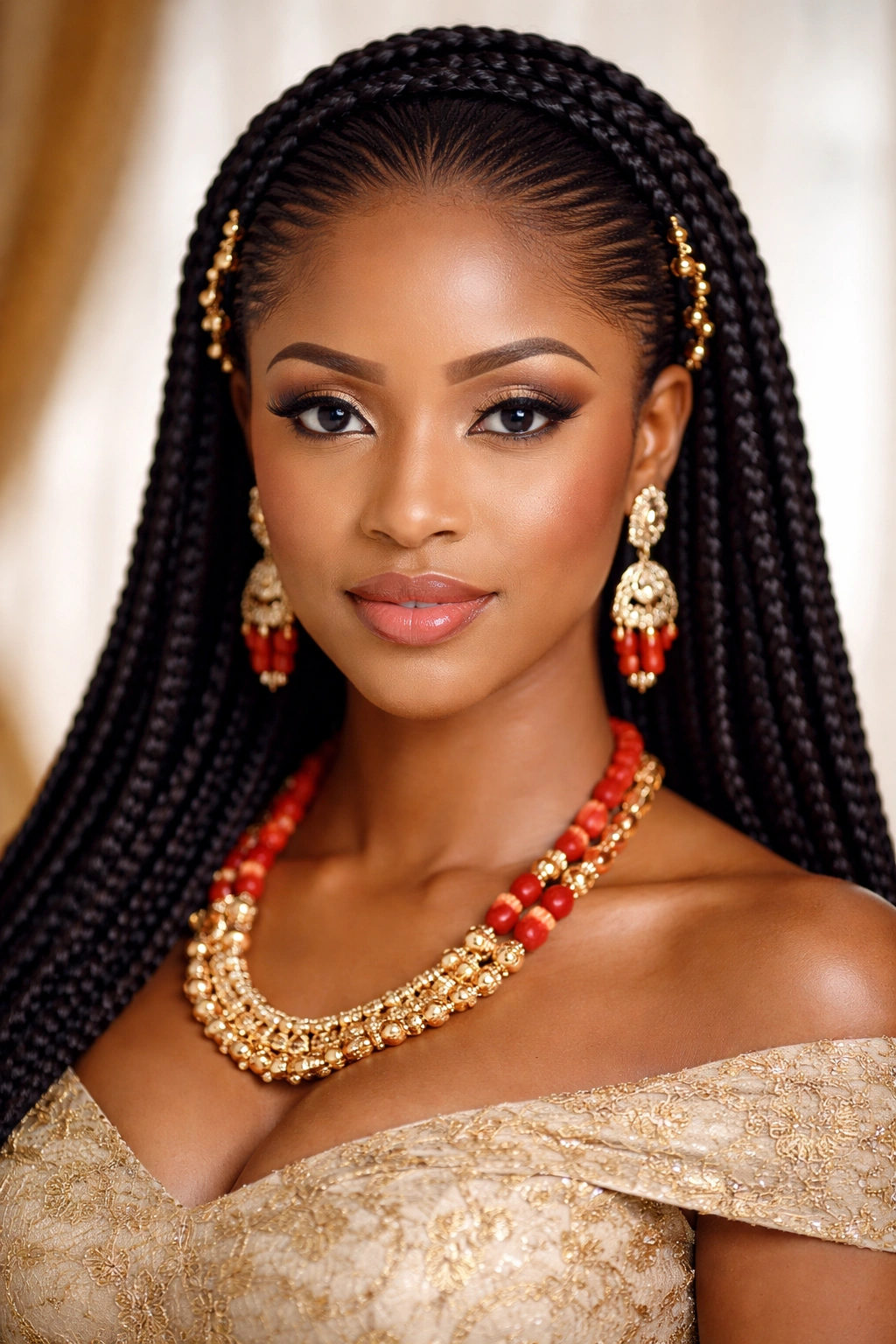
This style is specifically designed to accommodate the traditional Igbo gele (the elaborate wrapped headpiece that crowns the bride), featuring intricate braids around the perimeter of the head with a deliberately open, smooth crown area. The braids frame the face beautifully while the crown area remains flat and firm enough to support the weight of an ornate gele. This is one of the most practical traditional styles because it combines striking appearance with complete functionality for the gele placement.
How the Structure Supports the Gele
The braids in this style form a foundation or “base” upon which the gele can be secured with confidence. The braider typically creates multiple anchor points—strategic braids positioned at the front, sides, and back—that prevent the gele from shifting or sliding during the celebration. The crown area is left smooth and sometimes slightly padded to provide a comfortable, secure surface for the gele’s foundation knots.
Design Elements Worth Considering
- The perimeter braids can feature intricate patterns, including twists, loops, and weaving designs that show the braider’s artistry
- Some brides choose thin braids around the entire perimeter for a delicate frame, while others prefer thicker braids that create bolder visual lines
- The transition from braided sections to the smooth crown area should be seamless and even
- Small decorative elements can be woven into the perimeter braids, knowing that they’ll be partially covered by the gele
- This style works beautifully with two-toned synthetic hair, creating visual interest in the braided sections
Worth knowing: The smooth crown area should be checked for comfort before the wedding day—if the scalp feels tight, the braider can make gentle adjustments that loosen tension without compromising the style’s structure.
4. Concentric Circle Braids
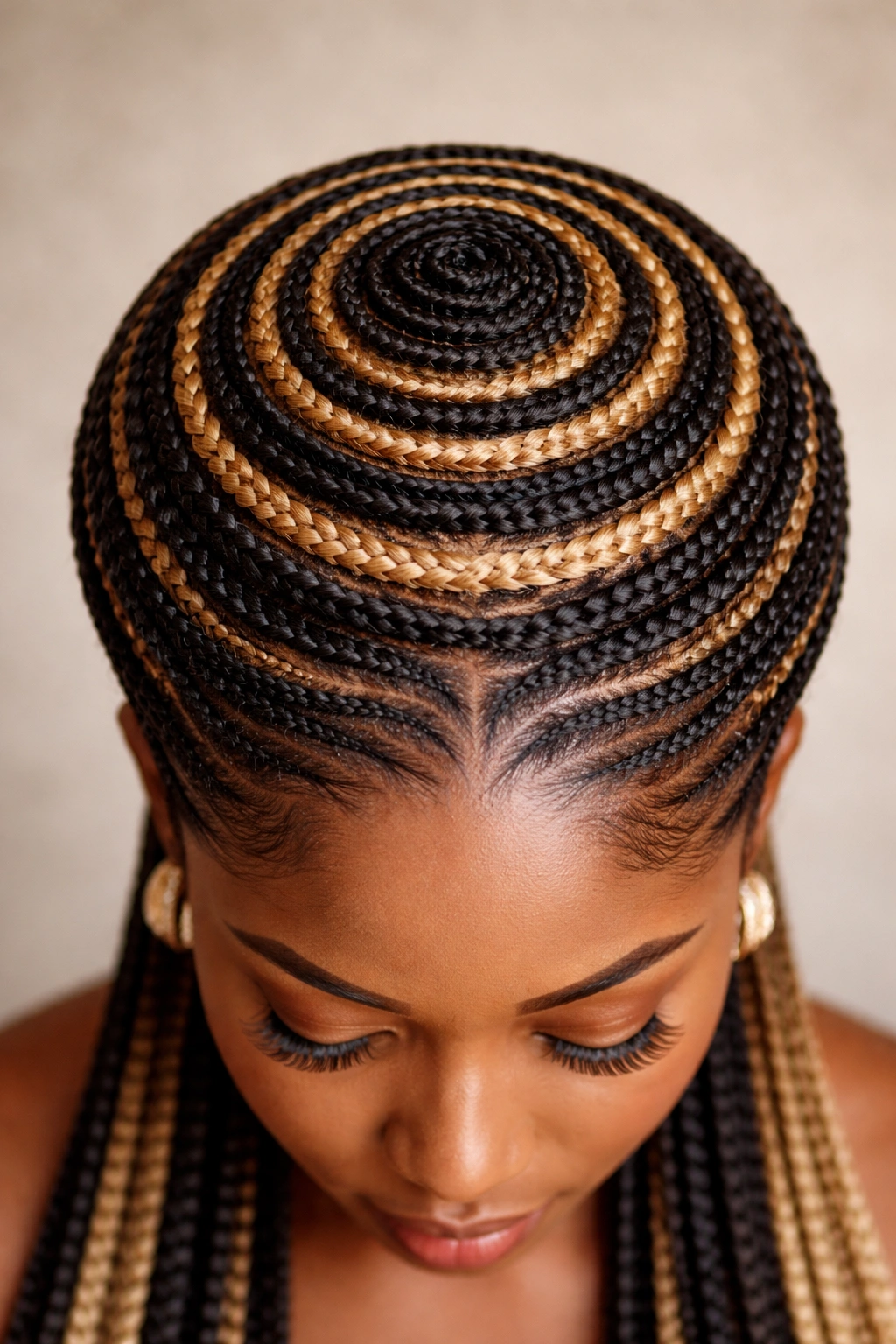
Concentric circle braids represent a more contemporary interpretation of traditional Igbo styling, featuring a series of braids arranged in circular rings around the crown of the head. Starting with a small circle of braids at the very top and expanding outward in larger and larger concentric rings, this style creates a hypnotic, visually stunning effect that commands attention. The geometric precision required makes this an advanced hairstyle that showcases exceptional braiding skill.
The Visual Impact and Artistry
This pattern creates an almost mathematical beauty, where each concentric ring is carefully sized and proportioned to create visual harmony. The rings can be braided in the same direction to create a spiral effect, or alternating directions can be used to create contrast and visual interest. Many brides who choose this style incorporate two-toned or multi-colored synthetic hair to emphasize the circular pattern—perhaps using gold and black, or deep burgundy and black to create stunning visual contrast.
Technical Execution and Considerations
- The braider must work from the center outward or outline inward, carefully calculating section sizes to maintain circular geometry
- Each braided ring should be even and consistently proportioned to avoid visual distortion
- The rings extend to cover the entire head, with the braids eventually reaching the nape of the neck and sometimes continuing down a portion of the back
- Decorative beads or small ornaments can be positioned strategically around the rings to emphasize the circular pattern
- This style typically requires 10-14 hours of braiding time due to the complexity and precision required
Key advantage: Concentric circle braids appear more distinctive than traditional straight-line patterns, allowing the bride’s hairstyle to stand out as a unique artistic expression while remaining firmly rooted in traditional Igbo aesthetics.
5. Ishi-Agwu (Royal Braids)
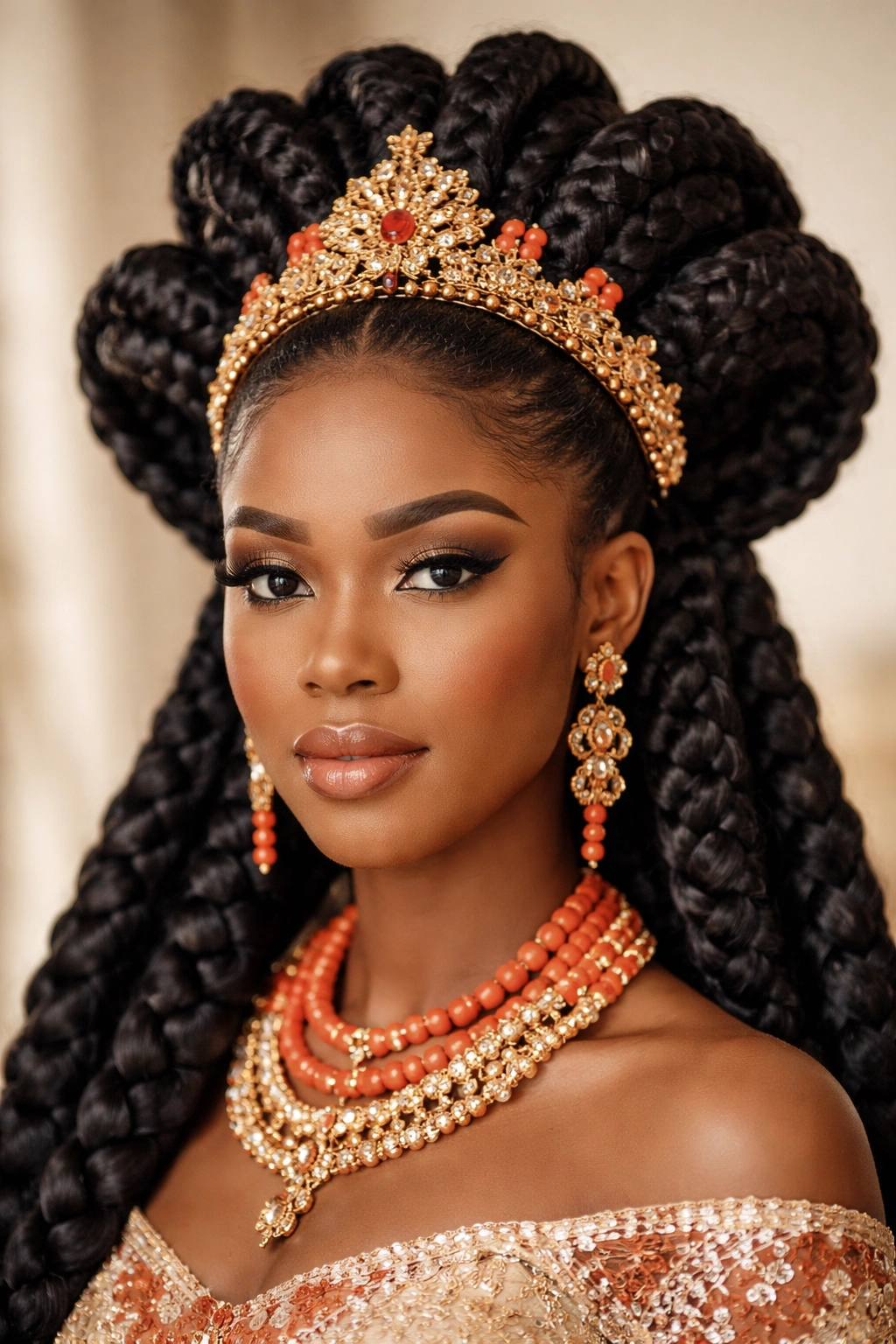
Ishi-agwu refers to the braiding style traditionally associated with royalty and women of high status in Igbo communities, characterized by exceptionally thick, prominent braids arranged in a way that conveys authority, power, and elevated social standing. The term “ishi-agwu” translates to something approaching “royal crown” or “crown of power,” and the hairstyle itself was historically reserved for women of significant importance. When a modern bride chooses this style for her wedding, she’s honoring this tradition while declaring her own confidence and presence.
Status and Symbolism
Historically, the ishi-agwu style would have been braided exclusively by the most skilled artisans, and the time, resources, and expense involved in creating the style would have indicated the bride’s family’s wealth and standing. While modern brides may choose this style for its stunning appearance rather than as a status declaration, the symbolic weight remains—this is a style that commands respect and attention.
Distinctive Characteristics
- The braids are notably thicker than in other traditional styles, often ranging from ½ inch to ¾ inch in width
- Typically, 4-8 very prominent braids are arranged across the crown, sometimes looped or coiled for additional height
- The braids often feature gold thread or thin gold cord woven throughout, creating a shimmering effect that’s visible from considerable distance
- The sides of the head may feature smaller, more delicate braids or twists that contrast with the bold crown braids
- Some versions include multiple layers—thick braids on top with progressively finer braids underneath, creating impressive depth and dimension
Something to consider: This style is best suited to brides who are confident wearing bold, dramatic looks and who want their hairstyle to be the defining visual element of their appearance on the wedding day.
6. Twisted Crown with Integrated Beads
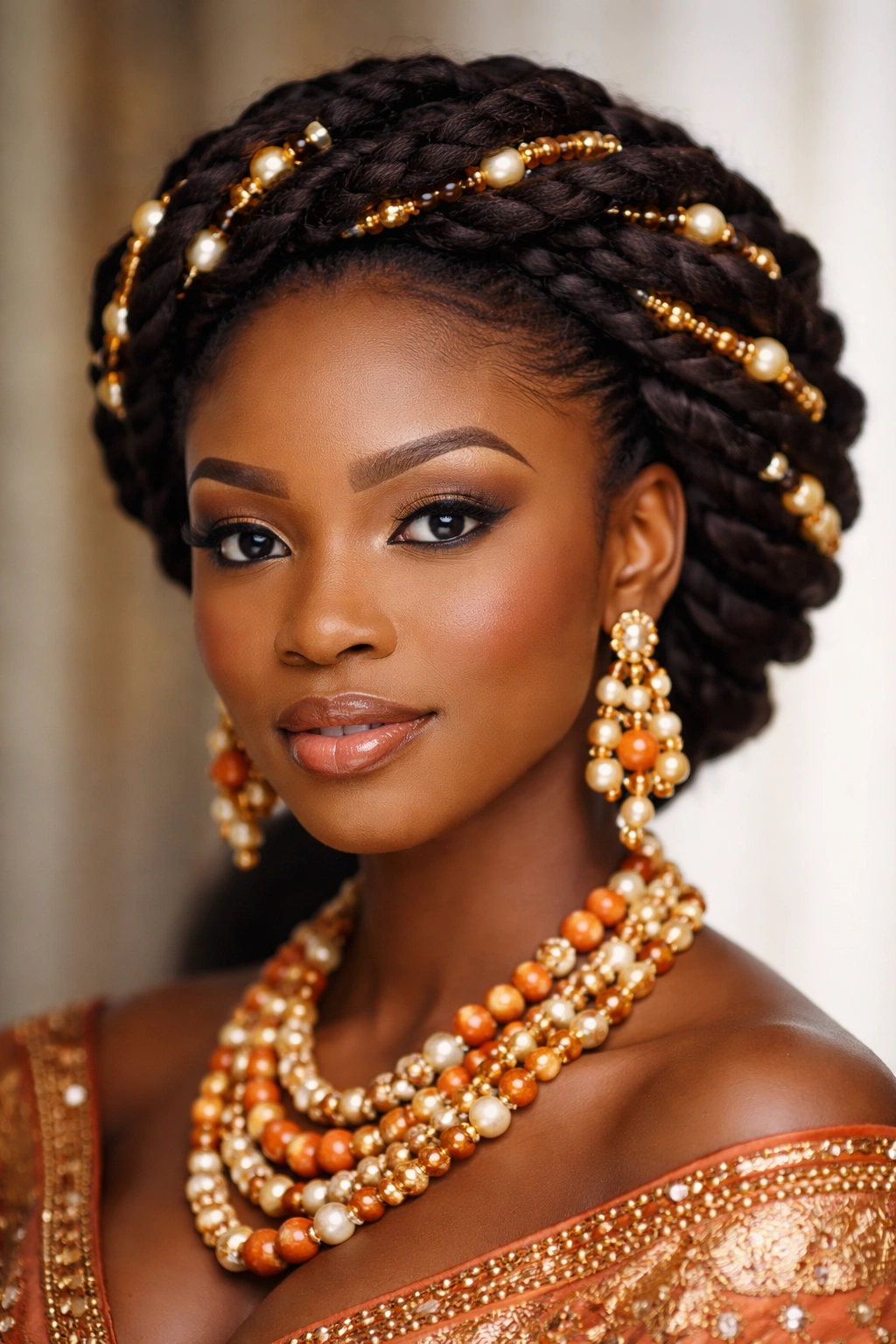
This style features thick, carefully twisted sections of hair (rather than braids) arranged in a crown formation around the head, with beads integrated throughout the twists at strategic intervals. The twisted sections are thicker and create a different visual texture than braided hair, producing a more organic, flowing appearance despite the style’s overall structured shape. Beads in gold, silver, coral, or glass are threaded onto individual hair strands or woven into the twist structure, catching light beautifully and adding traditional ornamentation.
The Beading Component
The beads serve both decorative and symbolic purposes—they represent wealth, beauty, and the bride’s connection to traditional African aesthetics. The beading pattern can be uniform (beads placed at consistent intervals throughout all twists) or strategic (beads clustered in certain areas to create focal points). Some brides choose beads that complement their wedding attire’s color scheme, while others opt for the timeless combination of gold beads against dark hair.
Creating the Twisted Crown Effect
- The hair is sectioned into thick, even portions, typically 6-10 sections depending on head size and desired drama
- Each section is twisted (not braided) either by hand or with synthetic hair extensions to create additional volume
- Beads are strung onto individual strands or threaded onto loops of hair as the twists are being formed
- The twists are arranged to form a crown or halo around the head, with some twists looping upward for height
- The back section may feature longer, looser twists that cascade partway down the back, creating movement
- Ends are typically sealed with wax or thread wrapping to prevent unraveling
Styling secret: When beads are positioned every 2-3 inches along each twist, the overall effect is far more refined and intentional than randomly scattered beads, creating an appearance that looks professionally curated rather than cluttered.
7. Multiple Loops and Coils Style
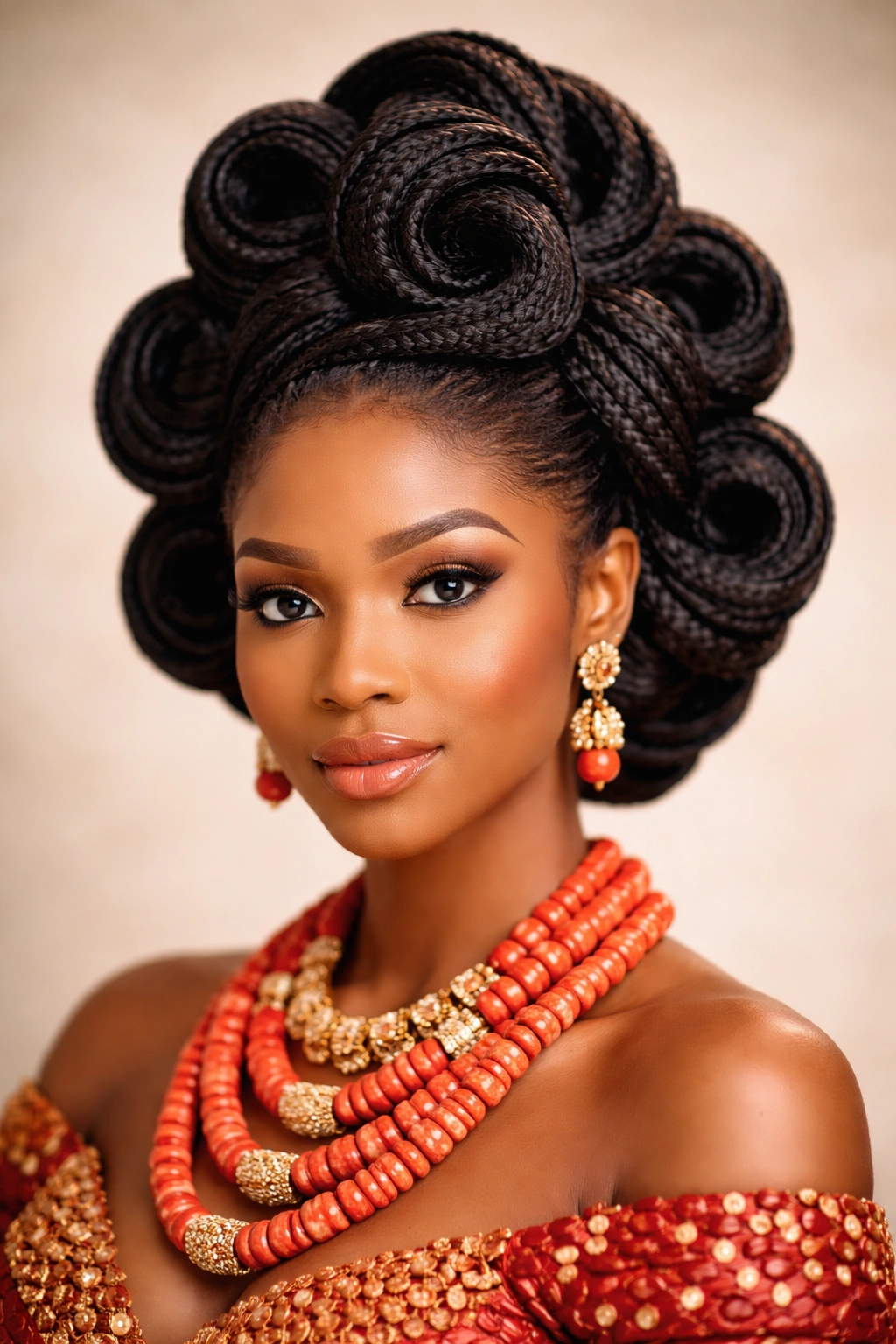
This sophisticated style features the hair braided or twisted, then expertly shaped into multiple loops, coils, and rolls that create an almost three-dimensional sculptural effect. Rather than allowing braids to hang straight or lay flat, the braids are carefully pinned, curled, and positioned to create geometric shapes and voluminous height. This style requires exceptional spatial reasoning and pinning skill, and the result is one of the most visually dramatic options available in traditional Igbo bridal hairstyling.
The Architecture of the Style
The loops and coils are arranged with intentional balance—perhaps larger coils positioned at the crown with progressively smaller coils at the sides, or a symmetrical arrangement with matching coils on both sides of the head. Some versions feature spiraling coils that create a sense of movement and flow, while others opt for more geometric, tightly controlled loops that convey precision and control. The interplay of light and shadow created by the three-dimensional structure makes this style exceptionally photogenic.
Technical Mastery Required
- The braider must complete all braids or twists first, then carefully study the overall shape before beginning to position loops and coils
- Each loop is secured with bobby pins hidden beneath the hair, creating an appearance of weightless, gravity-defying styling
- Some coils are wrapped tightly and pinned close to the scalp, creating defined shapes; others are allowed to be looser and more organic
- The base sections are often left straight or gently wavy to provide contrast with the elaborately shaped crown sections
- Multiple passes and adjustments are made to ensure perfect symmetry and balance
- Decorative elements like beads, ornamental pins, or small hairpieces can be positioned at coil junctures for additional beauty
Professional insight: A bride choosing this style should schedule her braiding at least one full day before the wedding—the stylist may want to make minor adjustments the morning of the wedding to ensure optimal appearance after the bride has been wearing the style overnight.
8. Braids with Extensions Creating Length and Drama
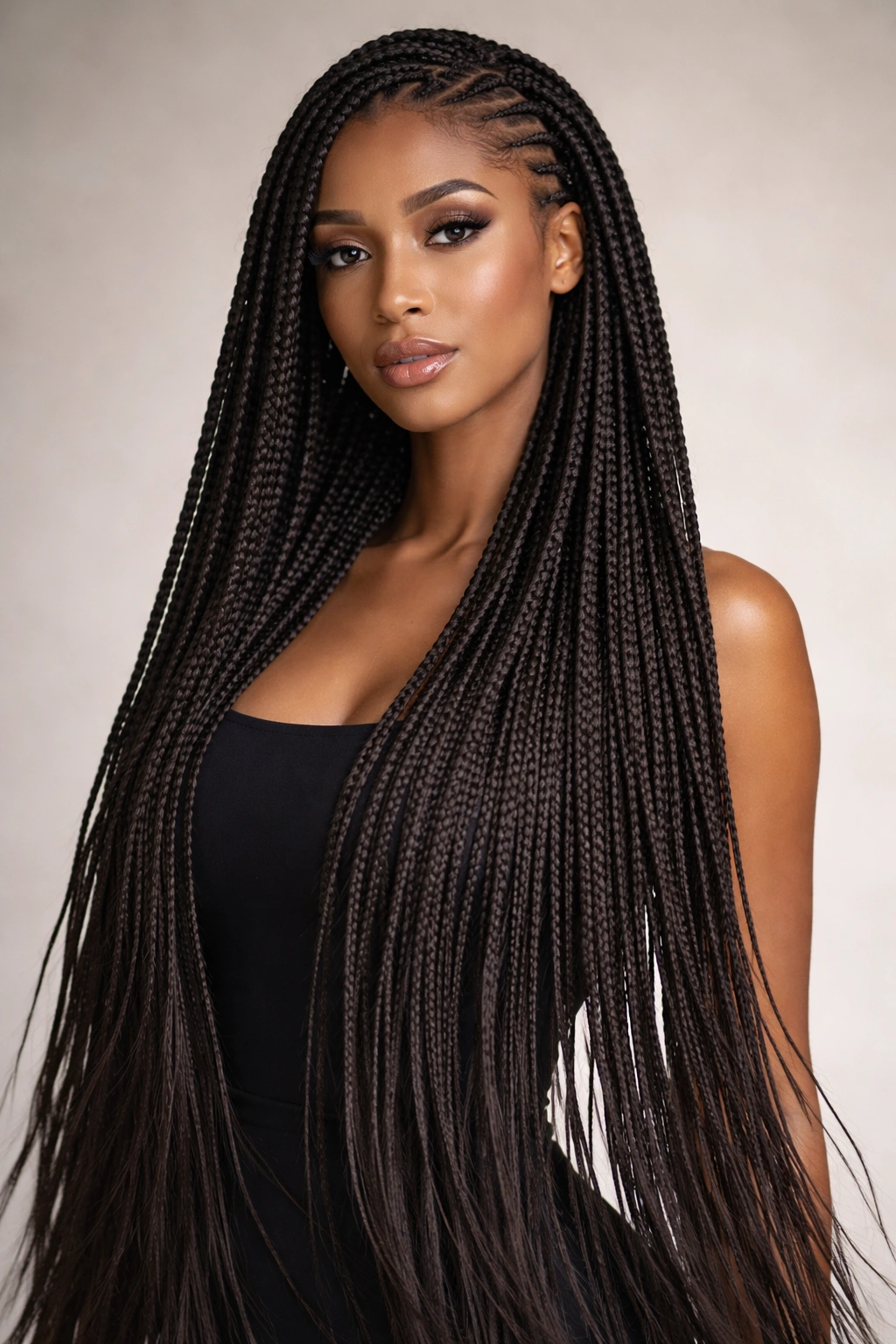
This style prioritizes length and dramatic flow, accomplished by braiding the hair with substantial synthetic hair extensions that create dramatic length even for brides with shorter natural hair. The braids may be thinner than some other styles, allowing more braids to be created across the head, producing an overall appearance of lush fullness. The extensions are chosen to match or complement the bride’s natural hair color, creating a seamless, voluminous appearance.
Extension Selection and Integration
Quality matters significantly when choosing extensions for this style—synthetic hair should have a natural texture that moves realistically, mimics the light-reflecting properties of human hair, and won’t appear plastic or obviously artificial. The extensions are typically integrated at the roots using crochet braiding techniques or by adding them to existing hair sections before braiding. The total length achieved can range from mid-back to knee-length, creating an extraordinary visual impact.
Styling the Extended Braids
- The braids can be arranged in straight rows, circular patterns, or asymmetrical designs depending on the bride’s preferences
- The length allows for dramatic styling options—the braids can be partially looped upward to create height while still showing the full length underneath
- Some braids are left to flow straight down the back, while others are curled or twisted to create textured, sculptural effects
- The ends are often left loose and slightly fluffed, creating a more organic appearance than sealed, finished ends
- Decorative accessories like hair jewelry, beads, or cuffs are strategically placed to showcase the length and create focal points
Maintenance consideration: Extended braids require careful nighttime care—a silk pillowcase or silk scarf wrap prevents friction and keeps the braids looking fresh throughout multiple days of celebration.
9. Zigzag Pattern Braids
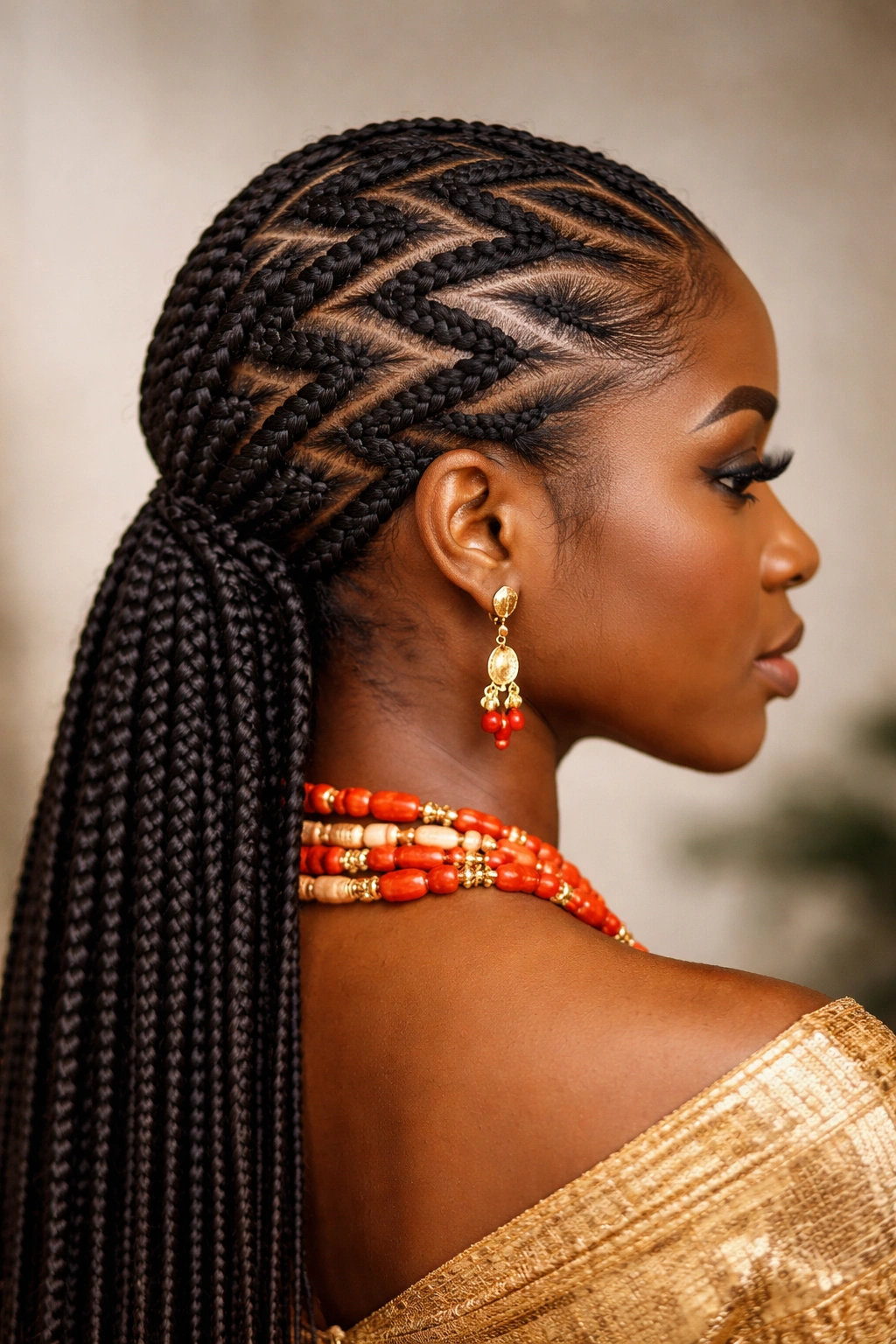
Zigzag pattern braids create a striking visual effect through their angular, dynamic arrangement rather than the more conventional parallel or circular patterns. The braids follow a zigzag or chevron pattern across the scalp, creating a sense of movement and visual energy. This style is modern in its aesthetic appeal while remaining authentically rooted in traditional Igbo braiding techniques, making it an excellent choice for brides who want a contemporary feel without abandoning cultural tradition.
The Pattern’s Visual Power
The zigzag arrangement naturally draws the eye across the head in a flowing, dynamic way, creating visual interest that doesn’t rely on excessive height or ornamentation. The angles created by the zigzag pattern can be sharp and angular for a more modern, edgy appearance, or gentler and more curved for a softer, flowing look. The variation in pattern creates visual movement even though the braids themselves are stationary.
Creating the Zigzag Effect
- The braider sections the hair in a carefully planned zigzag pattern before beginning any braiding
- The braids follow the sectioning exactly, creating the characteristic pattern across the head
- The depth of the zigzag can vary—some versions feature very pronounced angles while others use gentle curves
- The braids themselves can be uniform thickness or vary in thickness to create additional visual interest
- Some versions incorporate color variation or two-toned synthetic hair to emphasize the pattern further
- The crown area is typically left smooth to accommodate a gele or other headpiece, while the zigzag pattern covers the sides and back
Design advantage: This pattern flatters virtually all face shapes because the diagonal lines create angles that balance and harmonize with facial geometry in ways that parallel braids sometimes cannot.
10. Coiffed Braids with Sculptured Front Sections
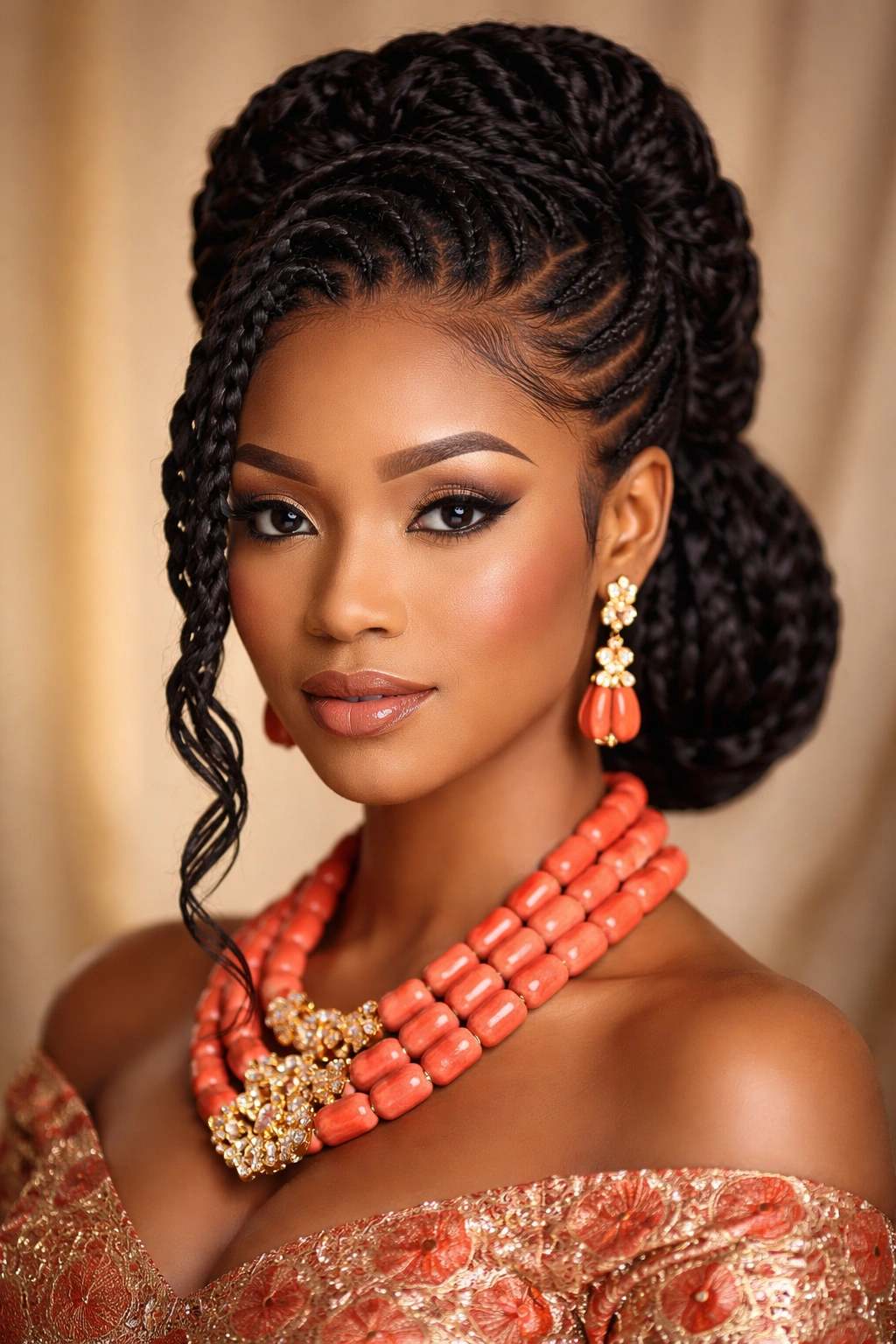
This refined style features elaborately braided sections that are coiffed (styled into an elegant, formal arrangement) particularly at the front and crown areas, creating a sophisticated, almost architectural appearance. The front sections are often braided in intricate patterns or tightly coiled to frame the face beautifully, while the crown features shaped braids that create height and presence. The overall effect is extremely polished and elegant, making this an excellent choice for brides who value refinement and subtle sophistication over dramatic boldness.
The Refined Front Styling
The front sections frame the face with particular care, ensuring that the braids complement facial features and create a flattering silhouette. Often, the braids begin very close to the hairline and are styled to follow the natural curve of the forehead and temples. The sculpting at the front is meticulous—the braider may spend considerable time perfecting the flow and symmetry of these highly visible sections.
Elements of the Full Style
- Front sections are typically thinner, more intricate braids that showcase detailed work
- The transition from the front facial framing sections to the fuller crown sections is carefully managed for visual harmony
- Subtle ornamentation like delicate gold thread or small beads may be integrated into the front sections for added elegance
- The crown section often features coiled braids or looped sections that create height without appearing excessive
- The back sections taper smoothly, with braids that extend down the back or are coiled up for a neat, finished appearance
- The overall effect should feel refined, intentional, and effortlessly elegant
Bride consideration: This style is ideal for brides who will be wearing their hair visible throughout the celebration—the front sections are too beautifully detailed to be completely covered by a gele, making this style perfect for ceremonies where the bride’s braids remain on display.
11. Braids with Attached Beaded Ornaments
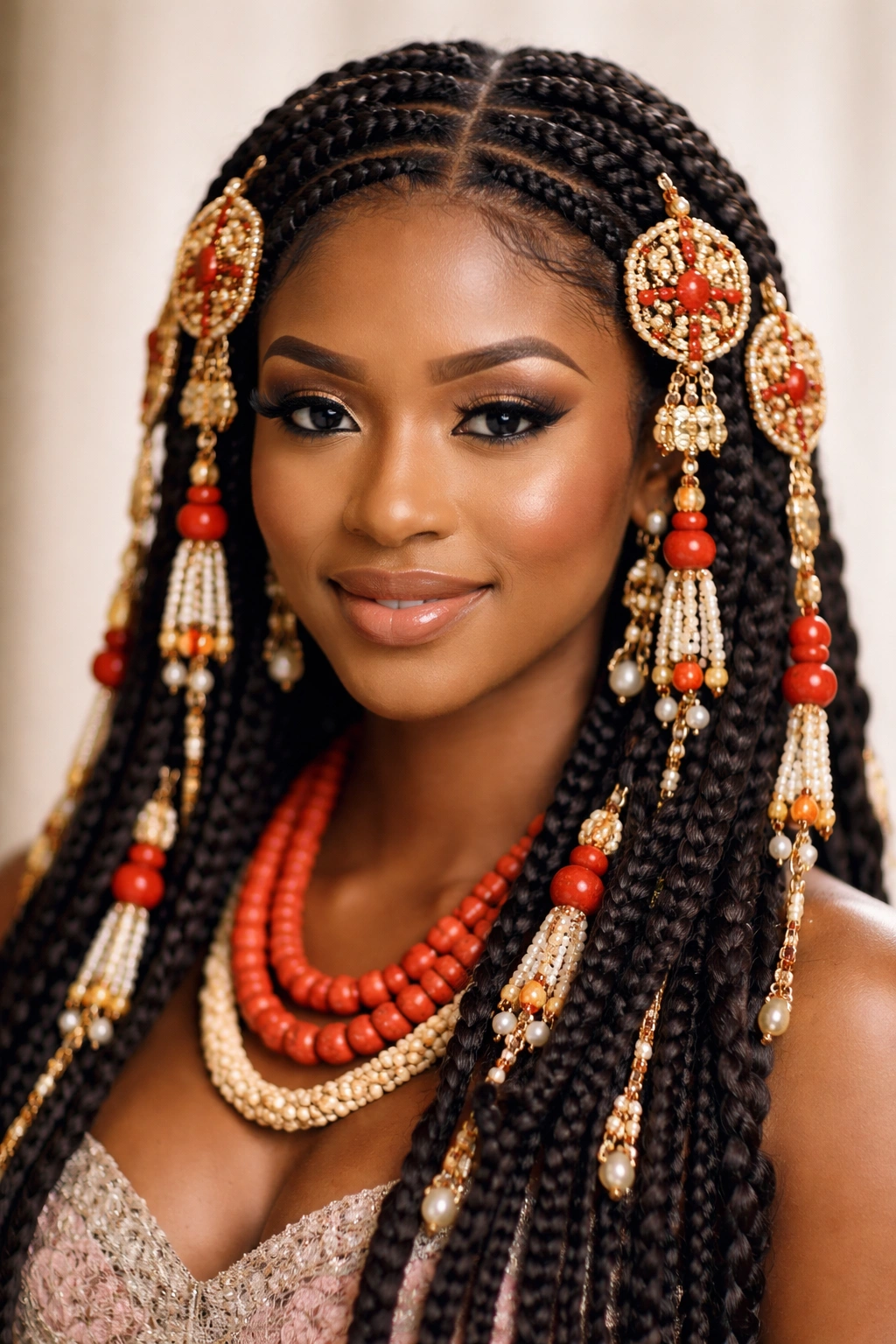
This style features braiding as the foundation, but the real artistry emerges through the attachment of custom-made or antique beaded ornaments, jeweled hairpieces, and decorative elements that are secured directly into the braided structure. These ornaments might include hand-beaded geometric shapes, dangling pieces, metal ornaments, or traditional Igbo-crafted jewelry pieces that hold family or cultural significance. The braids serve as the canvas upon which these precious ornaments are displayed.
The Ornament Component
The ornaments are carefully selected or commissioned to complement the bride’s wedding attire and personal aesthetic. Some brides choose pieces that have been in their family for generations, connecting them to their ancestors and family history. Others commission custom pieces from traditional artisans, creating something entirely unique that will become a family heirloom. The placement of ornaments is strategic—positioned to catch light, to frame the face, or to create a specific visual narrative.
Styling the Braids and Ornaments Together
- The braids are typically straightforward—straight rows, circular patterns, or simple geometric arrangements that won’t compete visually with the ornaments
- Braids are often left unadorned in many sections, allowing the ornaments to be the focal point of the styling
- Ornaments are secured with small threads, wires, or beads sewn into the braids at multiple points to ensure they remain stable throughout the celebration
- Placement is strategically planned—perhaps ornaments clustered around the crown, or distributed symmetrically across the braids
- The weight of ornaments is considered when planning the braiding structure, ensuring the braids are strong enough to support them
- Some ornaments dangle slightly, creating movement and catching light beautifully as the bride moves
Cultural connection: Choosing to wear family heiroom ornaments or commissioning pieces from traditional Igbo artisans deepens the cultural significance of the hairstyle, transforming it from a beautiful style into a connection with heritage and family history.
12. Minimalist Braids with Strategic Ornamentation
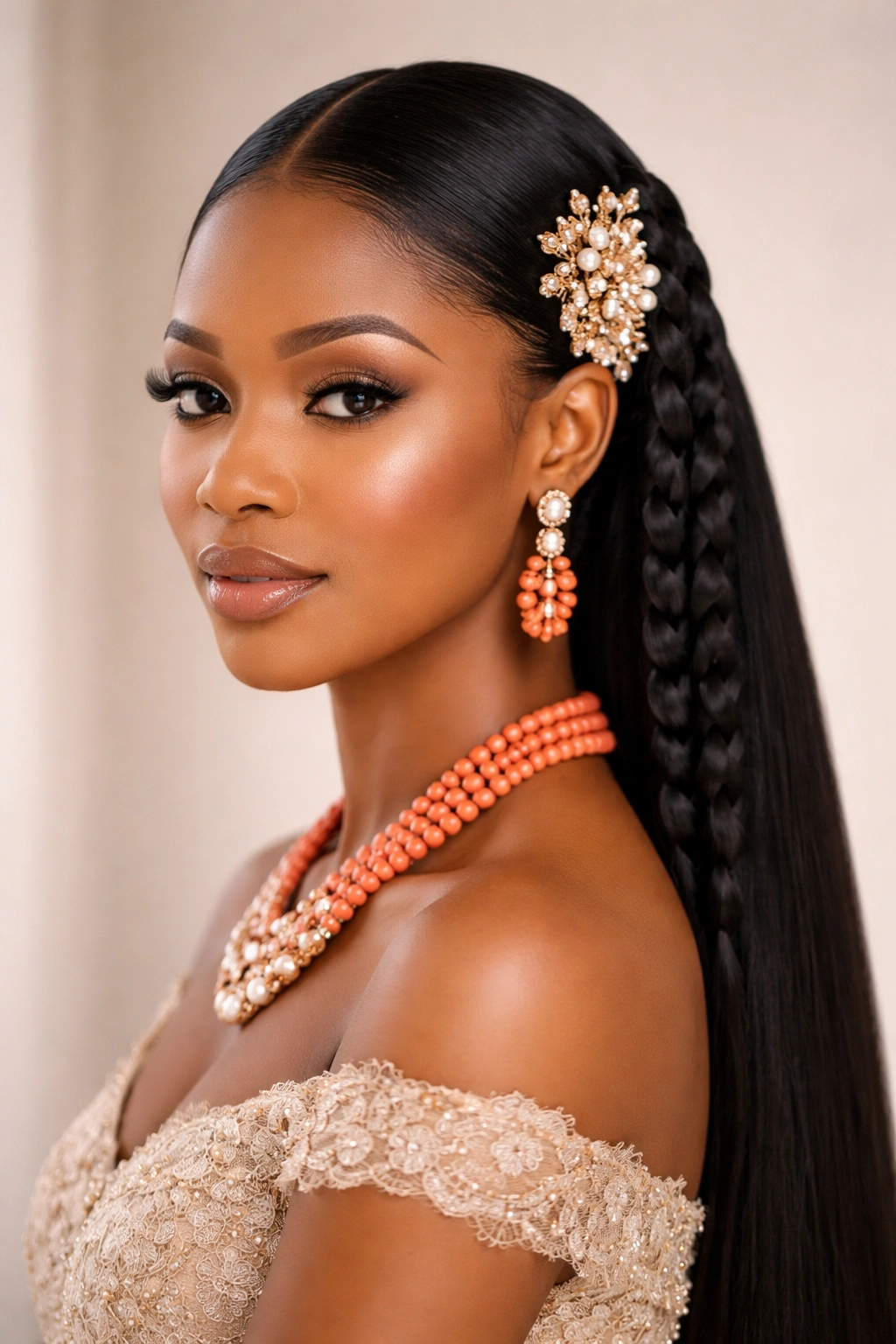
This final style represents a more contemporary approach to traditional Igbo bridal hairstyling, featuring clean, simple braids with highly selective ornamentation that creates maximum impact through restraint. Rather than covering the entire head with elaborate braids, this style might feature just 2-4 thick, beautifully executed braids combined with smooth, polished hair sections. The ornamentation—perhaps a single statement piece, a small cluster of beads, or a delicate gold accent—is chosen with precision to create focal points without overwhelming the overall effect.
The Philosophy of Strategic Restraint
This style appeals to modern brides who appreciate clean lines, contemporary aesthetics, and the principle that less can indeed be more. The braids are executed with absolute perfection because there’s nowhere to hide—every detail is visible. The smooth sections of hair are polished to a high shine, creating textural contrast with the textured braids. The overall effect is refined, modern, and exceptionally versatile for brides who want to show off other elements of their appearance—like an elaborate gele, striking jewelry, or ornate wedding garment.
Creating Impact Through Simplicity
- Typically, 2-6 very thick, prominent braids are chosen rather than many thin braids
- The braids are positioned strategically—perhaps framing the face, creating a crown section, or positioned asymmetrically for visual interest
- Large portions of the head remain smooth, providing clean, elegant contrast
- Ornamentation is extremely selective—perhaps a single ornamental piece or a carefully placed cluster of beads
- The braided sections are sometimes enhanced with metallic thread or subtle color variation, while other portions remain simple and elegant
- This style pairs beautifully with bold geles, striking jewelry, or any bridal elements that would compete visually with overly elaborate hair
Modern appeal: This approach acknowledges that contemporary brides may want to honor traditional Igbo hairstyling while maintaining a personal aesthetic that feels current and individually expressive.
Final Thoughts
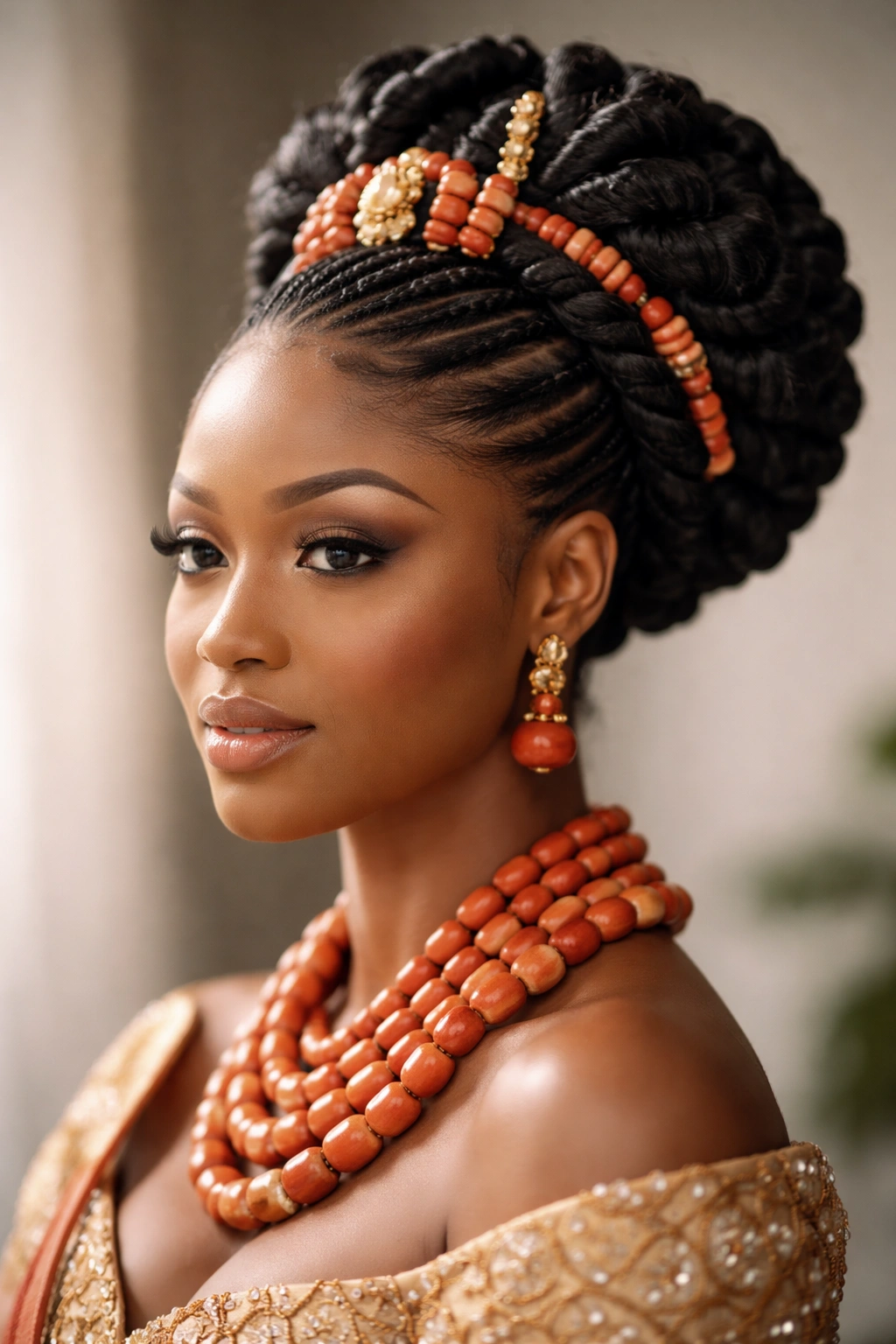
The journey of choosing an Igbo traditional wedding hairstyle is ultimately a deeply personal decision that intertwines cultural pride, individual aesthetics, practical considerations, and the unique vision each bride holds for her wedding day. Whether you’re drawn to the architectural precision of ukazi braids, the dramatic presence of royal styles, the elegant restraint of minimalist approaches, or any of the styles between, your choice will carry meaning far beyond mere appearance.
The true artistry lies not just in the braider’s technical skill—though that matters enormously—but in how the chosen style makes you feel. A bridal hairstyle should make you feel powerful, beautiful, connected to your heritage, and ready to step forward into the next chapter of your life with confidence and grace. It should photograph beautifully, remain comfortable throughout hours of celebration, and most importantly, feel authentically like you.
Consider consulting with multiple braiders before committing to a particular style, discussing not just the aesthetic but also the practical matters of timing, comfort, and how the style will work with your complete bridal vision. Plan your braiding appointment well in advance, allowing time for any adjustments or refinements. Most importantly, remember that whatever style you choose represents a moment in time when you’re visibly, beautifully rooted in your culture and heritage—that’s something worth celebrating with pride.
