



Fulani braids have become a defining protective style and cultural statement, but here’s what many people don’t realize: they’re not just for long, thick hair. Short hair presents a completely different canvas, and when you work with your length rather than against it, these braids can look sharper, feel more manageable, and honestly last longer than their longer counterparts. The key is understanding which variations grip well on shorter texture, how tight placement affects longevity, and exactly what maintenance keeps them fresh for weeks.
If you’ve dismissed Fulani braids because your hair sits above your shoulders, you’re missing out. Short-haired Fulani styles have a completely different aesthetic — they’re bolder, lower-maintenance, and they hold up beautifully when styled with intention. The braids sit closer to your scalp, which means less tension on the edges, fewer stray hairs to deal with, and a look that photographs remarkably well from every angle. This guide covers nine variations specifically designed for short hair, each with realistic styling timelines and the exact maintenance moves that keep them looking intentional week after week.
1. Classic Fulani Braids with Gold Cuffs and Center Part
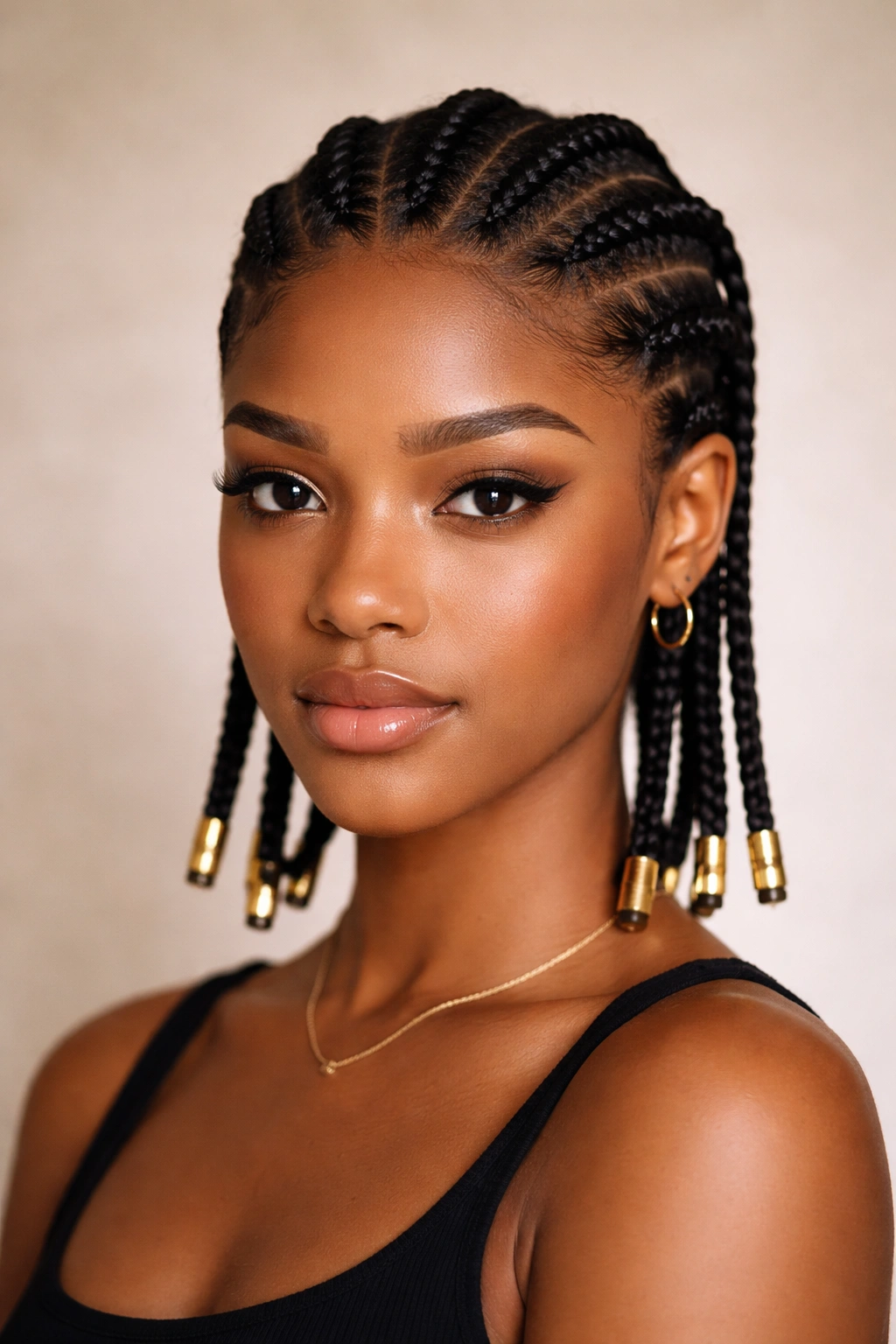
This is the foundational Fulani look — clean cornrows braided from the front hairline straight back or slightly angled toward the crown, typically totaling three to five braids depending on your hair density. On short hair, this style becomes incredibly striking because the braids catch light immediately and there’s nowhere for messiness to hide; everything reads as deliberate. The gold cuffs and beads slide onto individual braids at the ends, creating that signature glint without requiring length to showcase them.
Why It Works on Short Hair
Short hair means you can braid closer to the scalp without the weight pulling your style loose prematurely. The tension distributes more evenly across shorter lengths, and the braids maintain their shape and definition significantly longer — often holding crisp lines for four to six weeks. Because there’s less hair to manage overall, you can focus on achieving truly sleek cornrows from root to tip, making the style feel refined rather than casual.
How to Maintain It Week After Week
- Sleep on a silk or satin pillowcase every night; cotton absorbs moisture and causes frizz within days
- Use a lightweight oil or braid-specific spray on the braids themselves (not near your scalp to avoid buildup) every 3-4 days
- Spot-clean the parts between braids with a dry shampoo or texture spray to keep them sharp and defined
- Refresh the gold cuffs every 5-7 days if they slip; secure them snugly or they’ll migrate downward and lose impact
Real-World Longevity
Expect this style to look fresh and intentional for 5-6 weeks on short hair. By week four, you might notice very slight frizz at the ends or loosening near the nape, but proper maintenance extends it easily. Many people find this version actually improves after week two once initial tension relaxes and the braids settle into place.
2. Half-Up Fulani Braids with Crown Detail
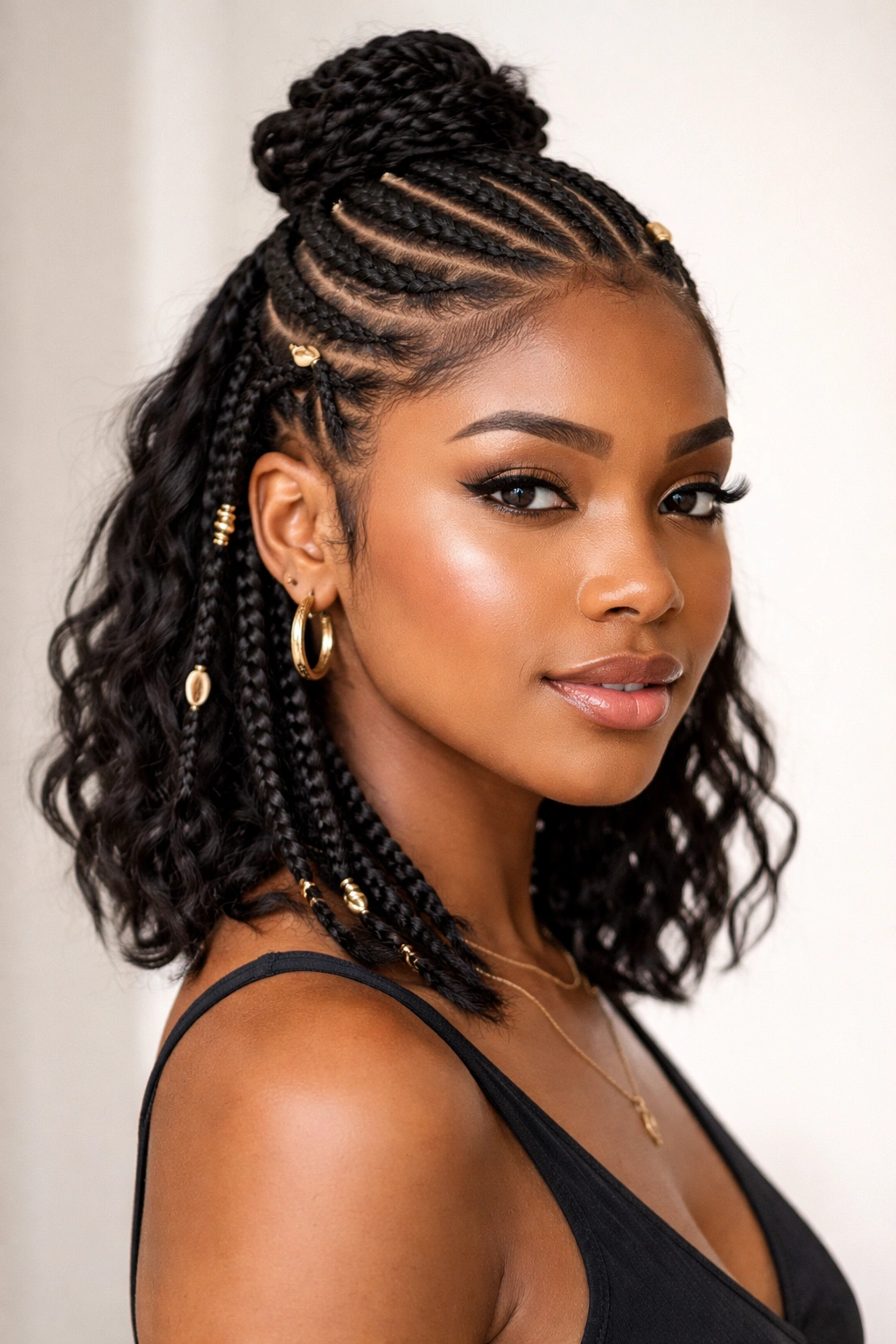
This variation takes Fulani braids only partially through your hair — typically braiding the top section from front to back, leaving the bottom half free to wear down, in a puff, or twisted. On short hair, this creates drama without requiring all-over braiding commitment, and it’s significantly faster to install. The crown detail references the traditional Fulani aesthetic while remaining modern and approachable.
Why It Works on Short Hair
Half-up styles are perfect for short hair because they remove the challenge of braiding all the way to very short ends where the braids might slip out or look awkward. By leaving the bottom section free, you give yourself styling flexibility — you can wear it down one day, twisted into a high puff the next, or swept to the side. This versatility actually makes the style feel fresher over its lifespan because you’re not seeing the exact same look every single day.
How to Maintain It Week After Week
- The braided section needs the same silk pillowcase and light oil treatment as full Fulani braids
- The free section below benefits from nightly finger-combing or gentle detangling to prevent knotting and matting
- Refresh the free-section hair with a light braid-out wave or soft twist every 2-3 days for visual variety
- Keep the line where the braids end and the free hair begins clean and distinct by using a edge control or smoothing cream just along that boundary
Real-World Longevity
The braided crown section easily lasts 5-6 weeks, but the free section below will begin showing wear after about three weeks if you’re styling it multiple ways. Many people find they enjoy this style most weeks 2-4, when the contrast between the neat braids and the textured bottom half reads as intentionally artistic rather than just practical.
3. Side-Swept Fulani Braids with Shaved or Faded Sides
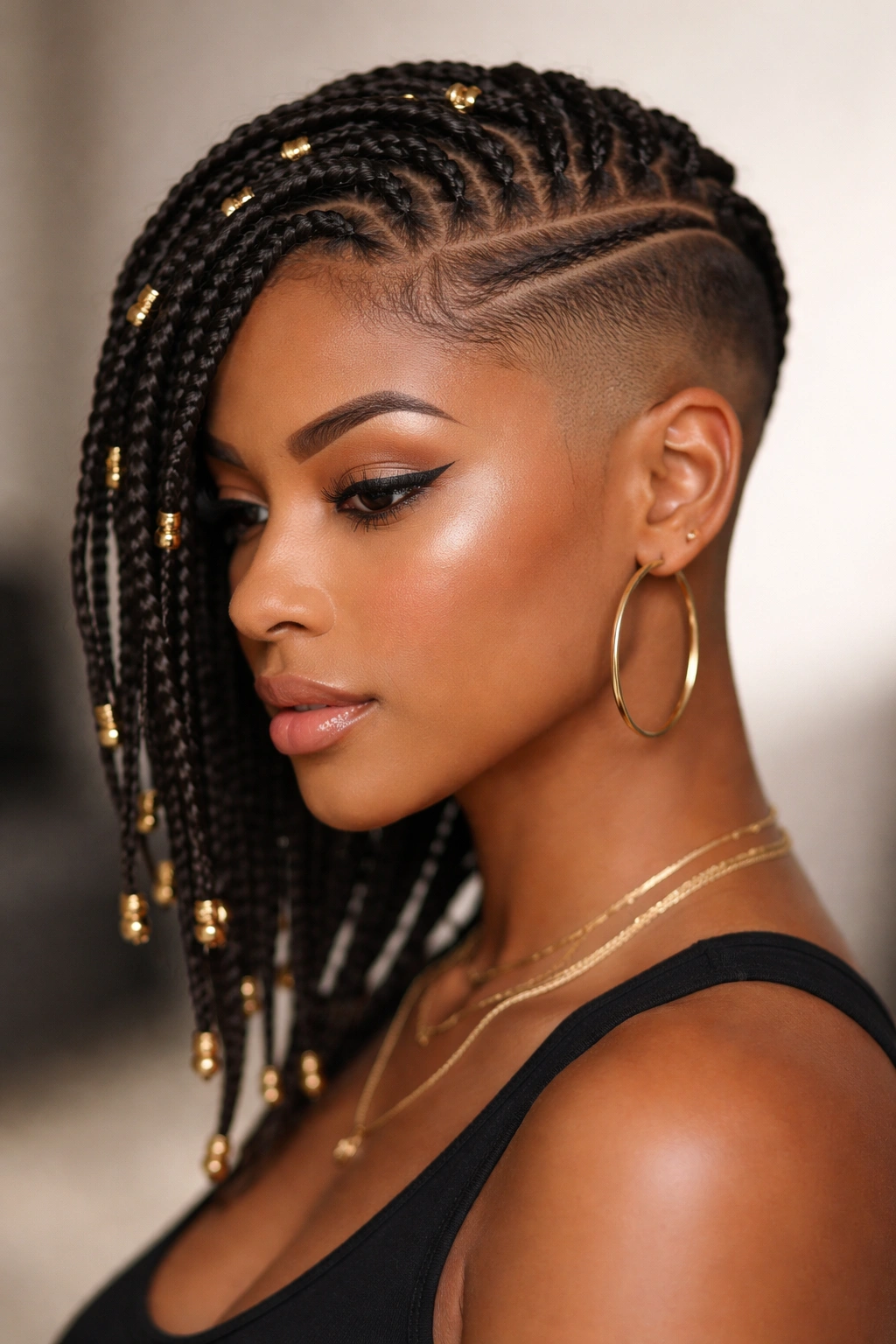
This version angles all your braids to sweep toward one side of your head, typically from the opposite temple across toward the ear. On short hair with shaved or faded sides (often called an undercut), this creates serious visual impact — the braids pop against clean sides, and the side-sweep creates movement and dimension. This style carries cultural weight and makes a confident statement.
Why It Works on Short Hair
The undercut aesthetic was practically designed for braid styling. Your braids have nothing competing visually, and they sit so crisply against the faded section that they look impossibly neat. The length on top doesn’t need to be very long for this to work — even hair that’s 2-3 inches on top can be braided into a sweeping style that’s undeniably bold. The contrast is what makes it work, and short hair delivers that contrast perfectly.
How to Maintain It Week After Week
- Keep the faded sides extremely clean by outlining and re-fading every 1-2 weeks (this is crucial to the look)
- Braid maintenance follows the standard routine: silk pillowcase, lightweight oil, spot cleaning the parts
- The shaved or faded section needs careful washing — always wash your braids gently in sections to avoid disturbing the shaved area
- Use a beard oil or lightweight moisturizer on the faded sides to prevent dryness and keep skin healthy beneath the style
Real-World Longevity
The braids themselves last 5-6 weeks, but this style’s visual impact depends heavily on how fresh the fade looks. If you’re committed to maintaining the undercut, the entire look stays powerful for the full 6-week cycle. If the fade grows out without refresh, the style loses definition after about week three.
4. Fulani Braids with Blonde or Colored Highlights Throughout
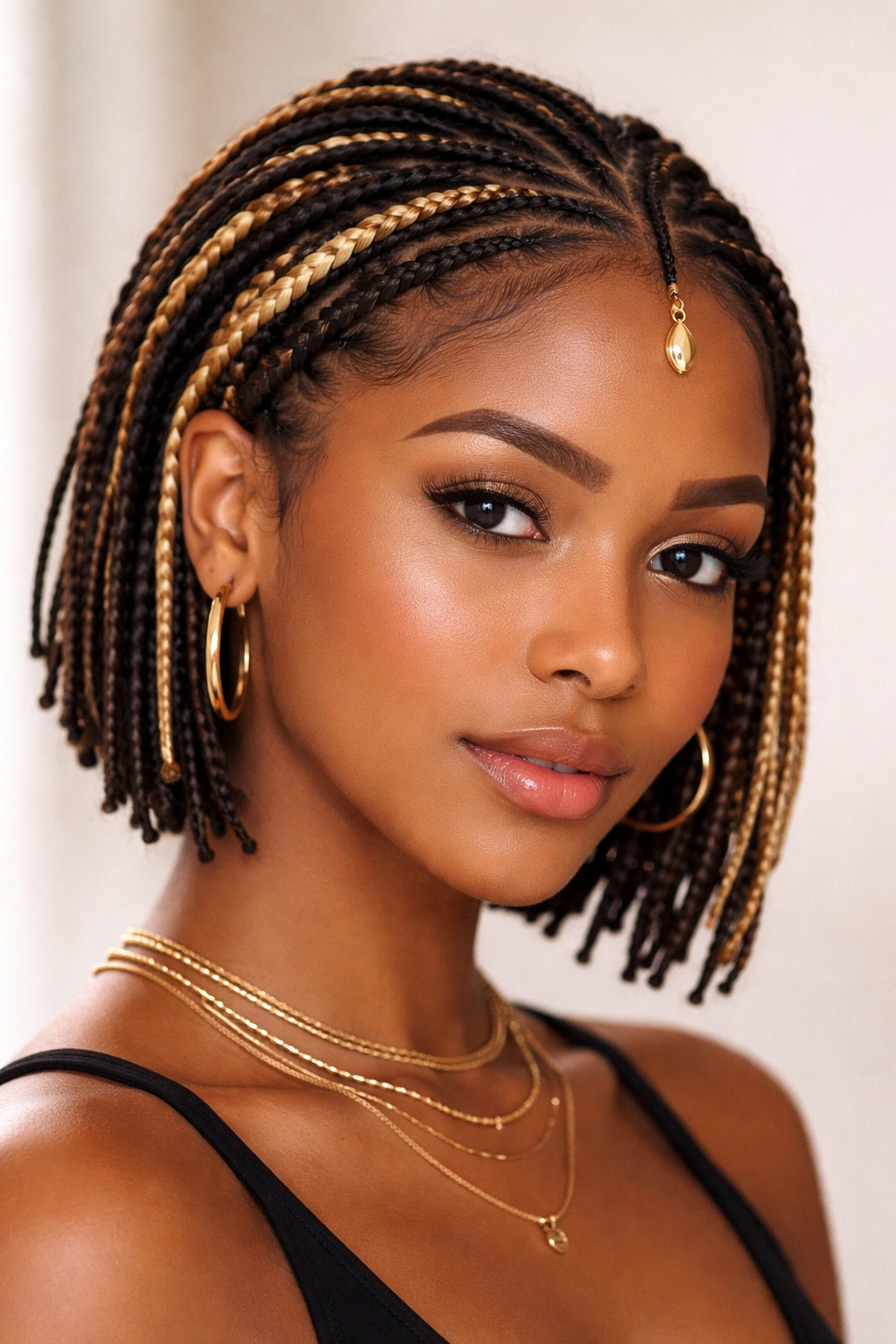
This version incorporates gold, blonde, or colored yarn woven directly into the braids as you have them installed, creating visual richness and dimension even from a distance. The color doesn’t need to be on every single braid — strategic placement on front braids or alternating colors creates depth. On short hair, this color detail reads immediately and makes the style feel intentional and styled rather than purely protective.
Why It Works on Short Hair
Short hair means every detail is visible, so colored yarn or highlighted braids register powerfully. You don’t need length for the color to impact the overall look — even a few colored braids in the front section create significant visual interest. The brightness of the color against shorter hair creates a halo effect that longer hair sometimes can’t achieve because the eye travels down the entire length rather than catching on highlights throughout.
How to Maintain It Week After Week
- Colored yarn or synthetic highlights wash differently than standard braids; they can fade or dull over time with exposure to water and product
- Avoid heavy oils on the colored sections; instead, use very light, clear sprays to prevent the color from looking muddy
- Wash gently and rinse thoroughly to prevent color-treated yarn from bleeding or transferring to your scalp
- Refresh colored yarn can sometimes be added to existing braids around week 3-4 to brighten the look without reinstalling everything
Real-World Longevity
The braids hold for 5-6 weeks, but the color vibrancy peaks weeks 1-3. By week four, colored yarn typically begins looking softer or slightly faded, which some people prefer. The style remains visually strong and maintained through week six, but if you love that bright, fresh color pop, you might choose to refresh at the four-week mark.
5. Baby Fulani Braids for Delicate, Fine Texture
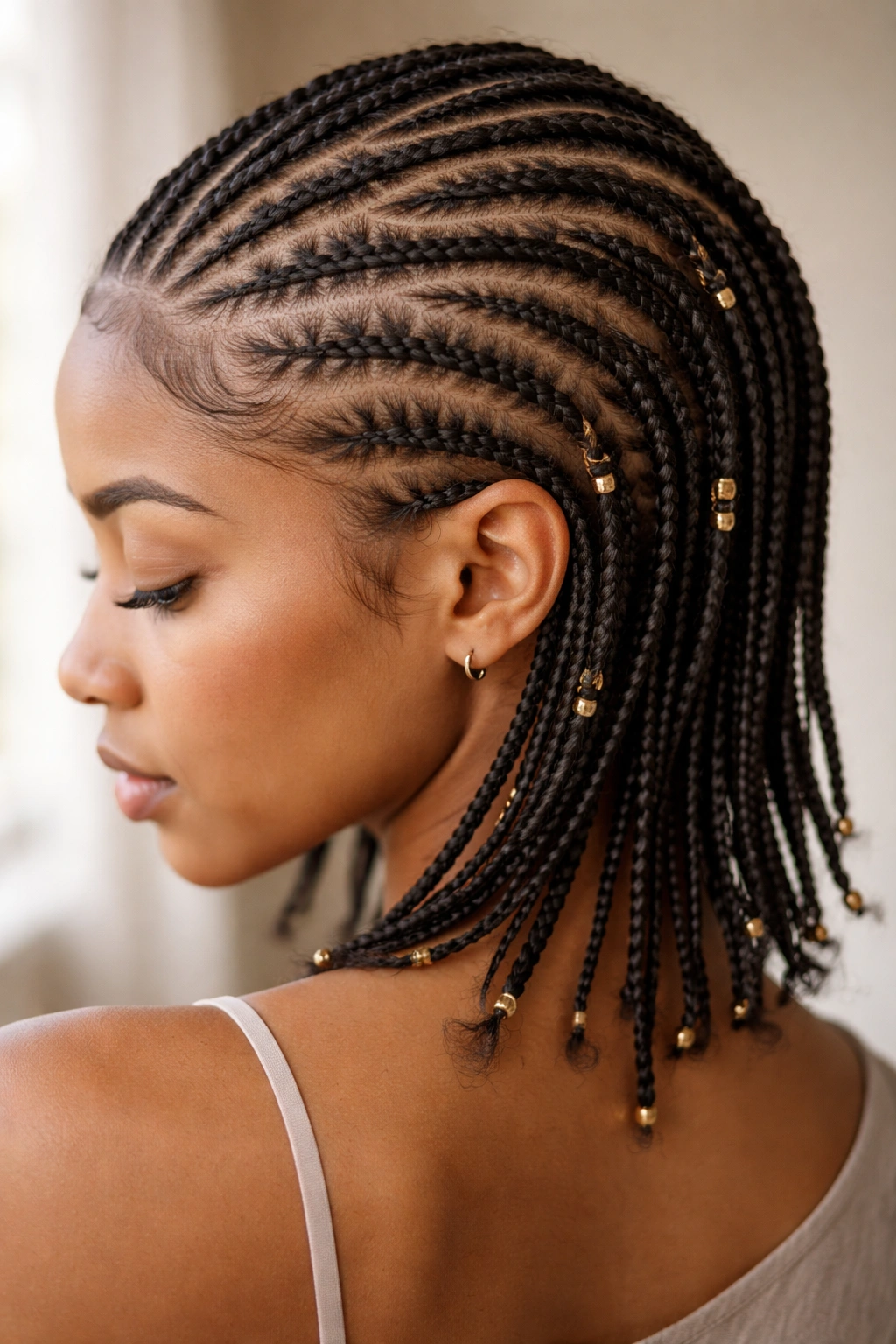
This variation uses significantly smaller, more delicate braids — sometimes called micro or baby braids — woven in the Fulani pattern. Rather than three to five thick statement braids, you might have eight to twelve finer braids that create an intricate, lacy appearance. This works beautifully on finer or more delicate hair textures that can’t support thicker braids without excessive tension.
Why It Works on Short Hair
Fine hair in particular benefits from this approach because smaller braids distribute weight more evenly across more hair sections, reducing the tension and stress on any single section. On short hair, these delicate braids have a completely different aesthetic — they look more ornate and almost jewelry-like, which short lengths can showcase beautifully. The finer braids also look less bulky against a shorter hairline, creating elegance rather than thickness.
How to Maintain It Week After Week
- Handle these braids even more gently than standard Fulani braids; they’re more prone to loosening if you’re too rough
- Oil maintenance is especially important because the braids have more surface area and dry out faster; apply lightweight oil every 2-3 days
- Avoid heavy beads or cuffs on baby braids; the weight will pull them loose faster
- When sleeping, consider using a silk bonnet rather than just a pillowcase to reduce any friction on these delicate braids
Real-World Longevity
Baby Fulani braids typically last 4-5 weeks on short hair before you’ll notice loosening, especially near the ends or around the nape. Some people choose to refresh or reinstall at the four-week mark rather than pushing to six weeks, since the delicate nature means they show wear slightly faster than thicker braids. However, many people find the intricate look worth the slightly earlier refresh timeline.
6. Fulani Braids with Cloth Wraps and Beads
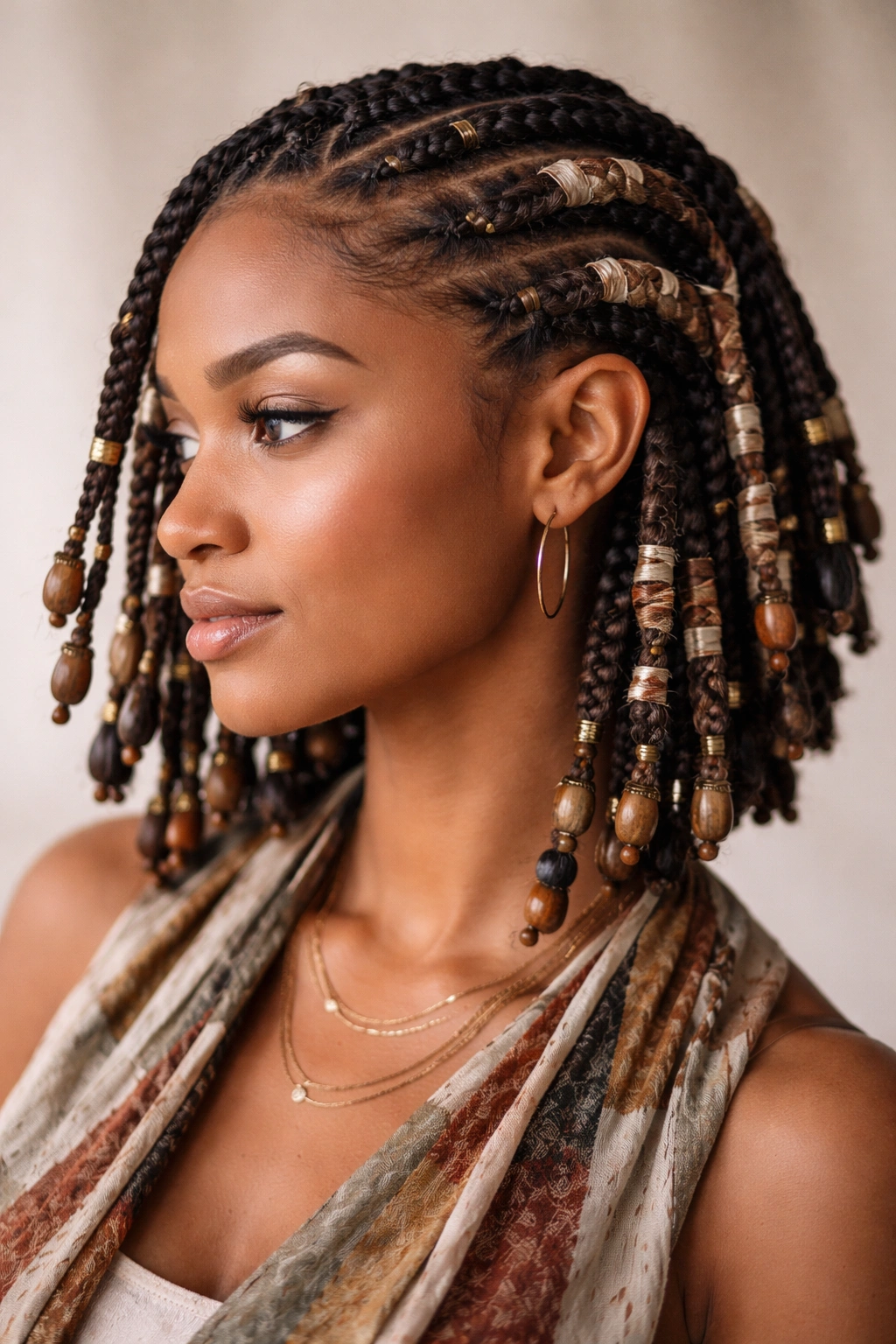
This variation combines traditional Fulani braids with cloth wraps woven into sections — often called wrapped braids or fabric-wrapped braids. Strips of fabric (often in coordinating or contrasting colors) are sewn or woven into the braids alongside yarn and beads, creating texture, visual interest, and practical durability. On short hair, the wrapped sections read as intentional detail rather than filler, and they actually strengthen the braids’ hold.
Why It Works on Short Hair
Fabric wraps create texture and visual richness that short hair can display beautifully. The wrapped sections have different catches of light than traditional braids, so as you move your head, the style reveals different colors and textures. Practically speaking, wrapped sections also hold their shape and definition longer than yarn-only braids because the fabric creates internal structure. On short hair, this means your style stays crisp and intentional for longer.
How to Maintain It Week After Week
- Wrapped sections need careful washing because the fabric can absorb water and take longer to dry than standard braids
- Avoid heavy conditioning on wrapped sections; instead, use light oils or sprays that won’t leave buildup on fabric
- Wrapped sections can sometimes collect lint from pillowcases and clothing; use a soft-bristled brush or old toothbrush to gently remove lint without disturbing the braid
- The fabric itself can fade or pill over time; this adds character to the style, but keep it in mind aesthetically
Real-World Longevity
Wrapped Fulani braids often last 6-7 weeks on short hair because the fabric component literally holds everything together more securely than yarn alone. The wrapped sections look crisp for the full timeline, making this an excellent choice if you’re looking to extend the style’s lifespan as long as possible.
7. Front-Facing Fulani Braids with Statement Beads
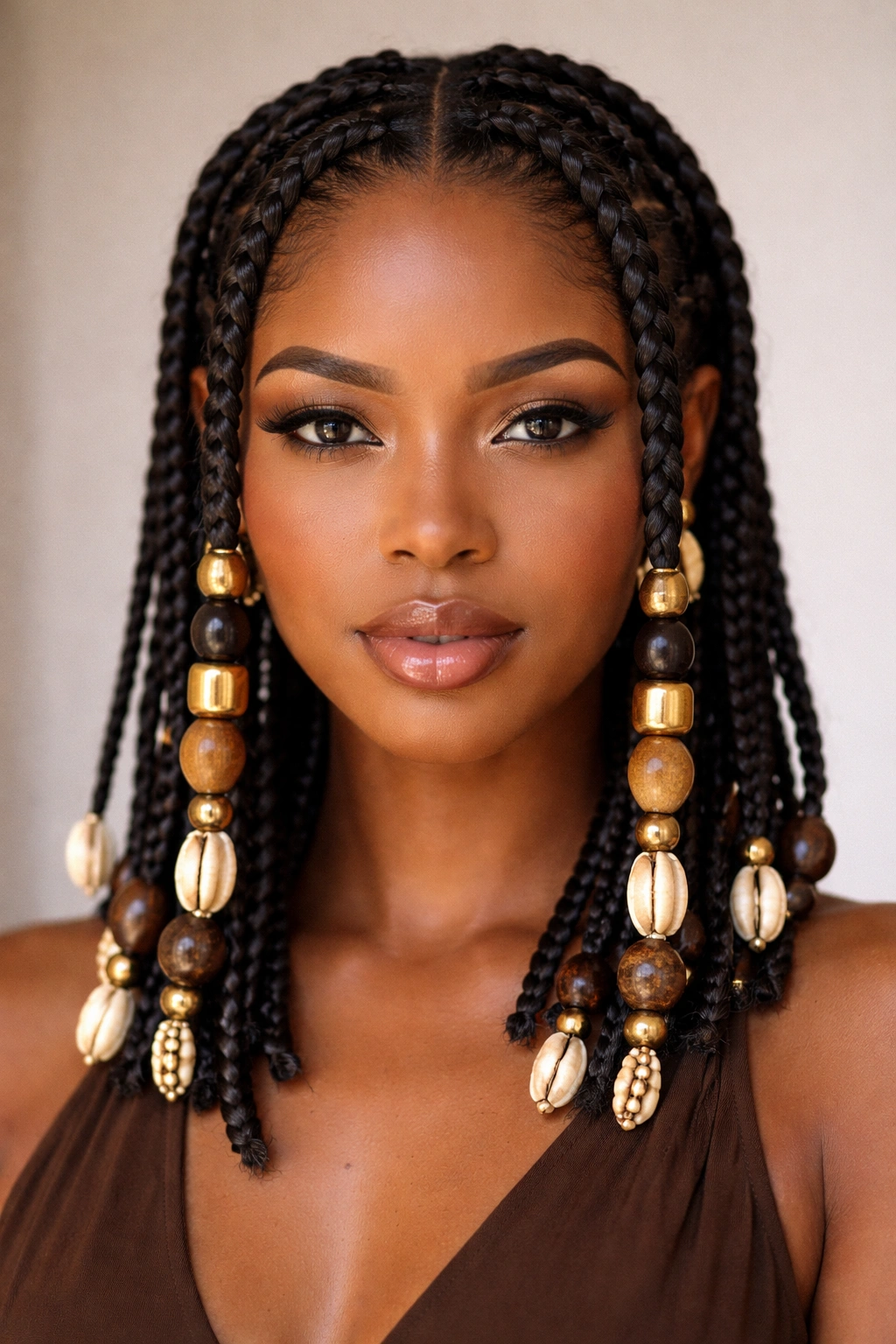
This variation focuses primarily on the front sections of your hair — typically two thick braids on either side of your face, or three braids down the center with shaved or closely cropped sides. Statement beads (larger, more decorative beads in gold, wood, or shell) are placed strategically where they frame the face and catch light immediately. On short hair, this positioning makes the beads the focal point of your entire look.
Why It Works on Short Hair
When your hair is short, placement matters enormously because there’s no length to carry the visual weight of a style. By focusing the braids and statement beads at the front near your face, you create impact exactly where it’s visible most — in selfies, when you’re speaking to someone, when you’re walking. The beads catch light constantly, and on short hair they read as jewelry or adornment rather than just braid maintenance.
How to Maintain It Week After Week
- The front braids experience more environmental exposure (sunlight, wind, friction) so they may loosen slightly faster than back braids
- Check bead positioning every 2-3 days; they shift downward with movement and gravity, so occasional repositioning keeps them where you want them
- Use edge control or smoothing cream on any hair between the front braids to keep the style looking intentional and groomed
- The front sections may show slight frizz first, so prioritize those areas when doing your braid-refreshing spray every 3-4 days
Real-World Longevity
The braids themselves hold well for 5-6 weeks, but the statement beads often need repositioning by week three. Many people find that the style looks its absolute best weeks 2-4, when the braids are still tight and the beads haven’t migrated. Beyond week four, you’re maintaining rather than reveling in the fresh look, though it certainly remains wearable.
8. Curved or Angled Fulani Braids Toward the Back
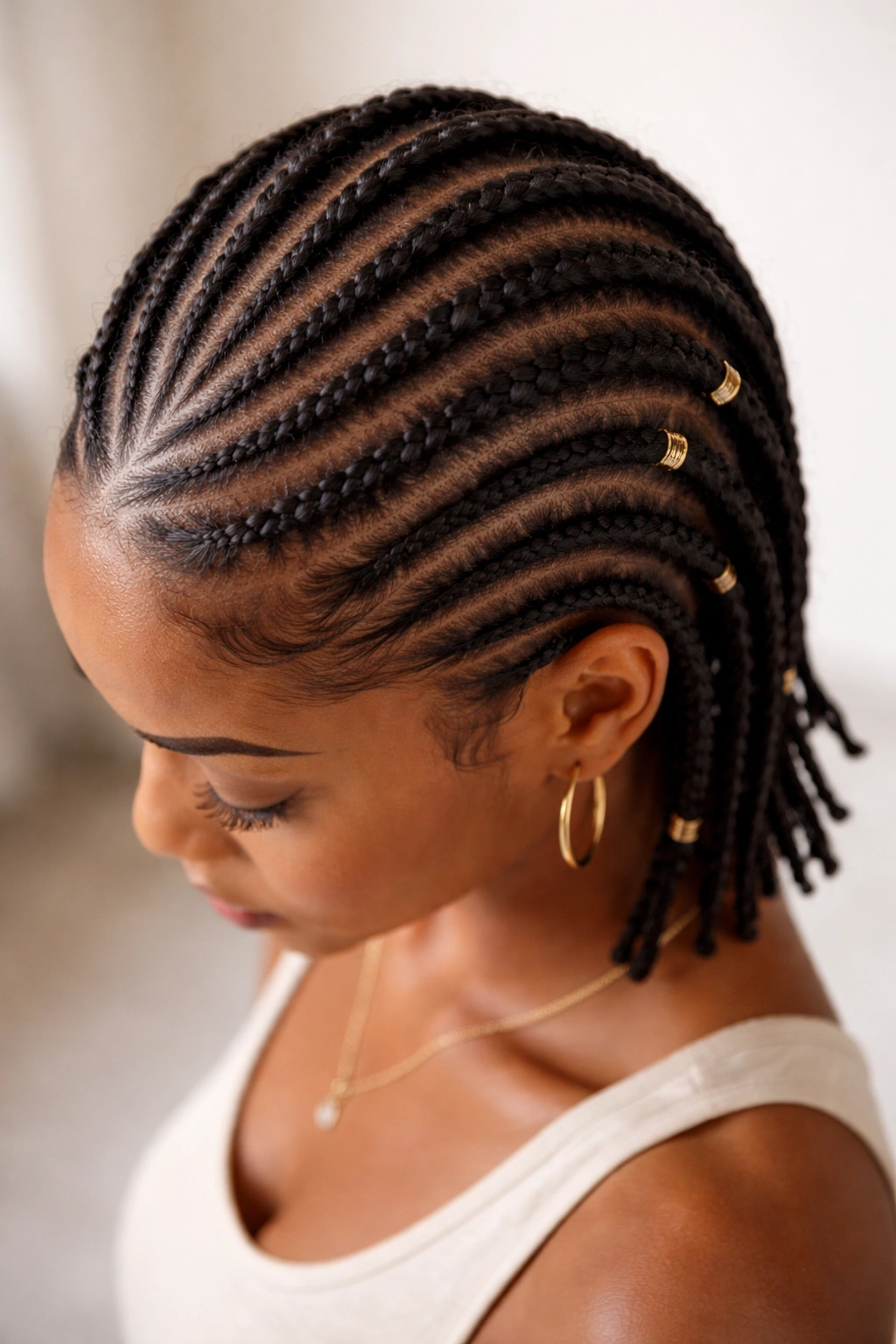
Instead of braiding straight back from your hairline, this variation curves or angles the braids — typically braiding from one side toward the opposite side, creating a curved or diagonal pattern. On short hair, this geometric approach creates visual movement and feels more artistic than a standard straight-back pattern. The braids might angle toward a point at the back, fan out, or curve around the crown.
Why It Works on Short Hair
Short hair actually makes curved and angled braids easier because there’s less distance to maintain tension over. The curved lines read as intentional design work rather than accidental. From above, the geometric pattern you’ve created becomes visible, and short hair allows that bird’s-eye-view perspective to really showcase the work. This style is absolutely stunning in photos taken from above or at angles.
How to Maintain It Week After Week
- Mark your part lines with edge control when you have the braids installed to keep the curved pattern visible even as hair grows slightly
- When refreshing the style, work specifically on maintaining the curved or angled line by reapplying edge control along the braid paths
- Spray maintenance follows the standard routine, but pay extra attention to the corners and curves where the pattern changes direction
- These angled styles sometimes loosen fastest at the curves where tension naturally relaxes slightly
Real-World Longevity
Curved and angled Fulani braids hold beautifully for 5-6 weeks on short hair. The geometric precision remains visible weeks 1-4 without much effort, and weeks 5-6 require more intentional maintenance to keep the pattern reading clearly. However, many people find that even as the braids slightly loosen, the curved design stays visually interesting because the eye follows the geometric lines rather than fixating on individual braid tightness.
9. Minimalist Fulani Braids with Barely-There Beads
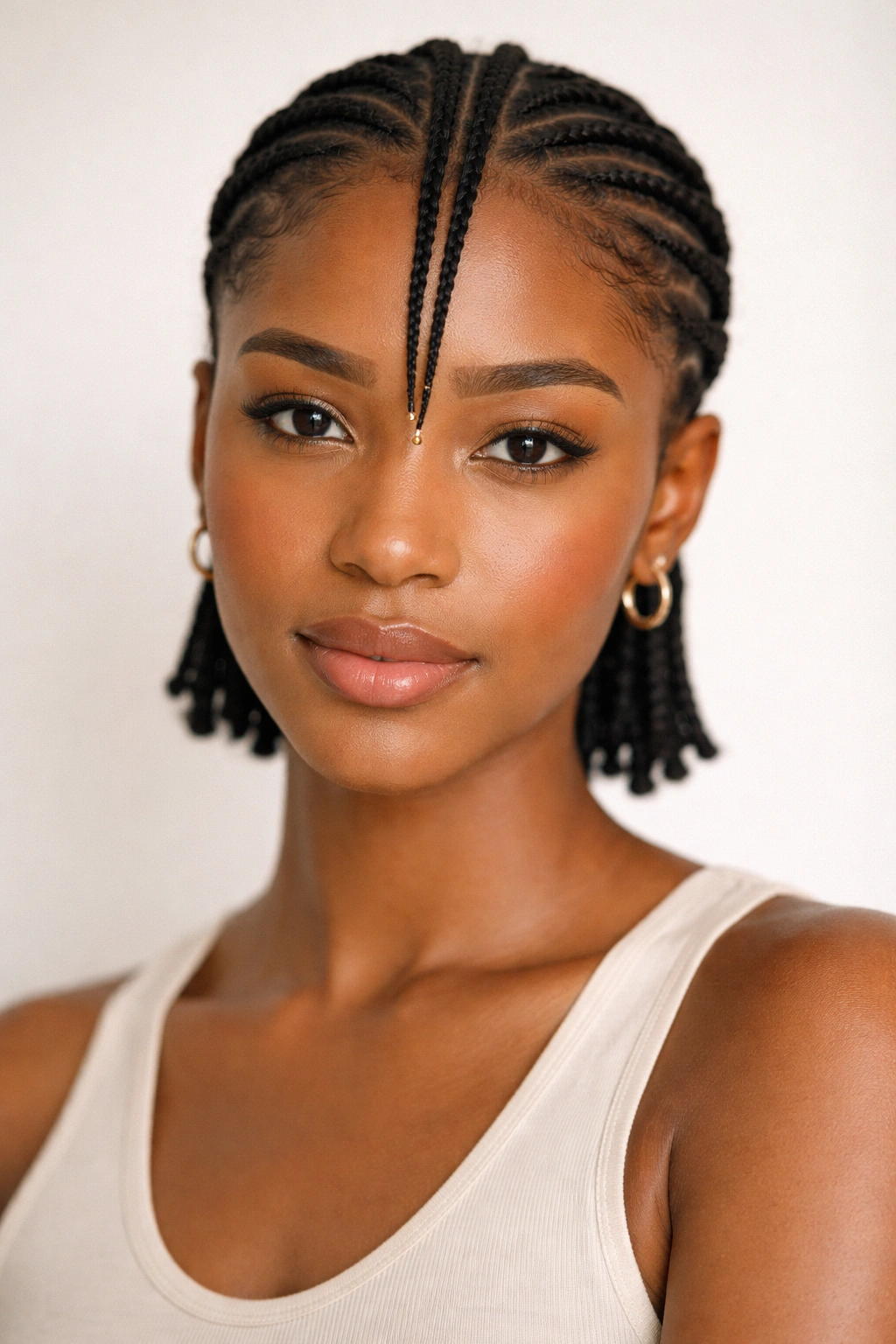
This final variation strips Fulani braids down to their essence — typically just one thick braid or two thin braids running down the center, minimal beading (perhaps just one or two small beads), and maximum negative space. It’s the Fulani aesthetic without the maximalist energy. On short hair, this restraint actually maximizes impact because you’re not competing with visual clutter.
Why It Works on Short Hair
Less is often more with short hair, and minimalist Fulani braids prove the point. A single thick, beautifully executed braid running down the center of short hair reads as sophisticated and intentional. There’s nowhere for the eye to get lost, so people notice the quality of the braid work, the texture, and the placement. This style works beautifully on very short hair (2-3 inches) where full Fulani styles might feel overwhelming.
How to Maintain It Week After Week
- Because there’s no visual complexity to rely on, the braids themselves must stay absolutely crisp; this means more frequent maintenance than other Fulani variations
- Use a braid refresher spray or lightweight oil every 2-3 days without fail
- Consider sleeping in a satin bonnet or on a silk pillowcase because even minimal frizz is visible on a simplified style
- Keep any minimalist beads positioned precisely; their placement becomes part of the design when there are so few visual elements
- The simplicity means that your scalp care matters more — keep braids clean at the scalp to prevent buildup from showing as easily
Real-World Longevity
Minimalist Fulani braids can technically hold for 5-6 weeks, but they look their best for 3-4 weeks. The simplicity means any loosening becomes immediately visible, so many people prefer to refresh at the four-week mark rather than pushing further. However, if you’re committed to frequent maintenance, they’ll stay wearable through week six.
Maintenance Secrets That Add Weeks to Your Braids
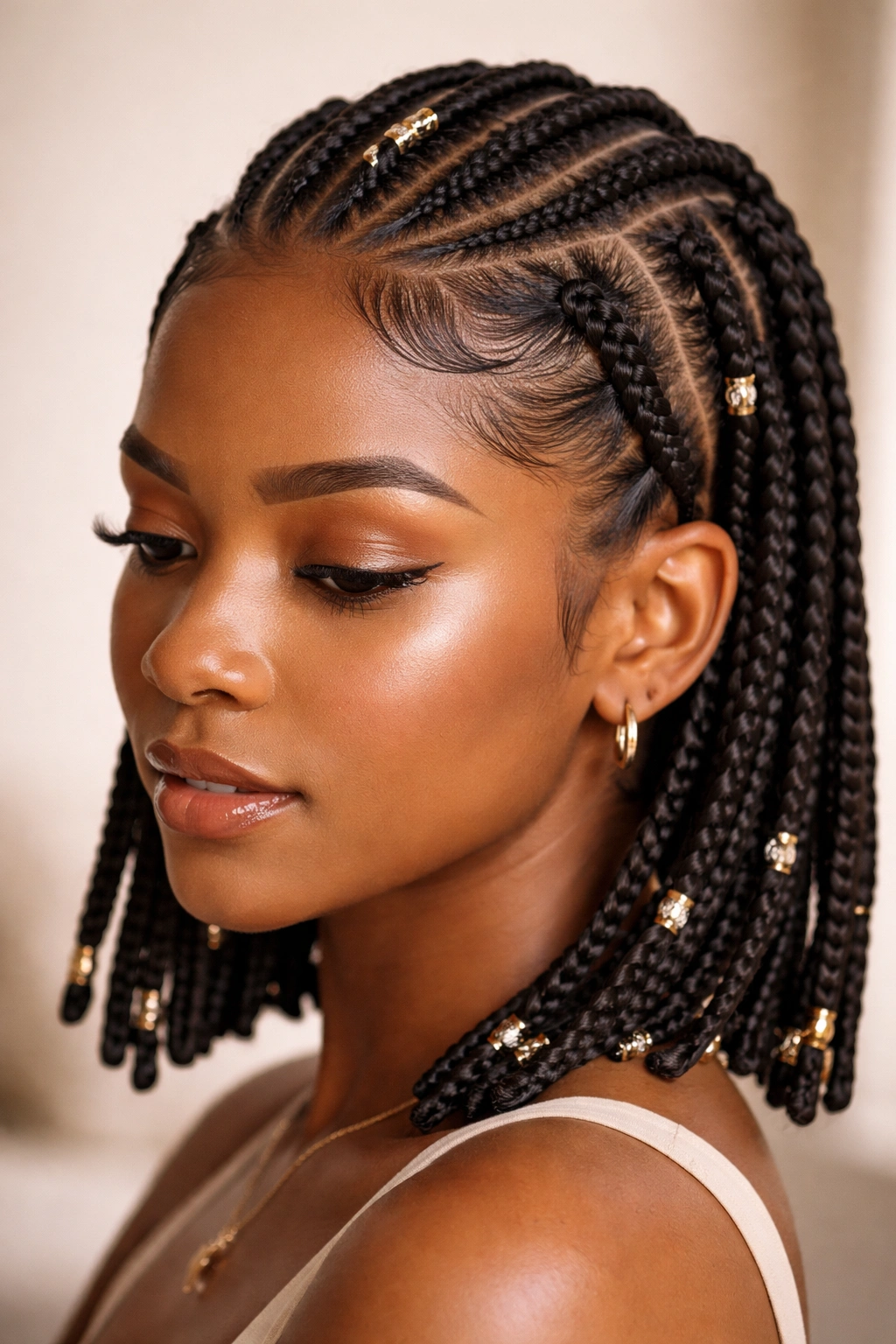
The difference between braids that start looking tired by week three and braids that stay fresh through week six comes down to maintenance consistency, not braid installation quality. Sleep on silk or satin every single night — this isn’t optional if you want longevity. Cotton pillowcases wick moisture from your braids and create frizz within days. Lightweight oil or braid spray every two to three days keeps braids hydrated and prevents that dull, straw-like appearance that signals a style’s decline.
Scalp care matters equally. Keep your braids clean at the root using dry shampoo or a diluted clarifying spray every 5-7 days; buildup under braids creates a foundation for frizz and odor. Gently apply clarifying spray to the scalp itself rather than soaking the braids. When you do wash your hair, part your braids gently and wash the scalp underneath without aggressively disturbing the braids themselves.
Protect your hairline and edges by keeping braid tension moderate and using lightweight edge control to smooth flyaways and baby hairs without creating stiffness. The tension should feel secure but not painful; if your head hurts after two hours of wearing fresh braids, they’re too tight and will cause damage over time.
Choosing the Right Style for Your Hair Type and Life
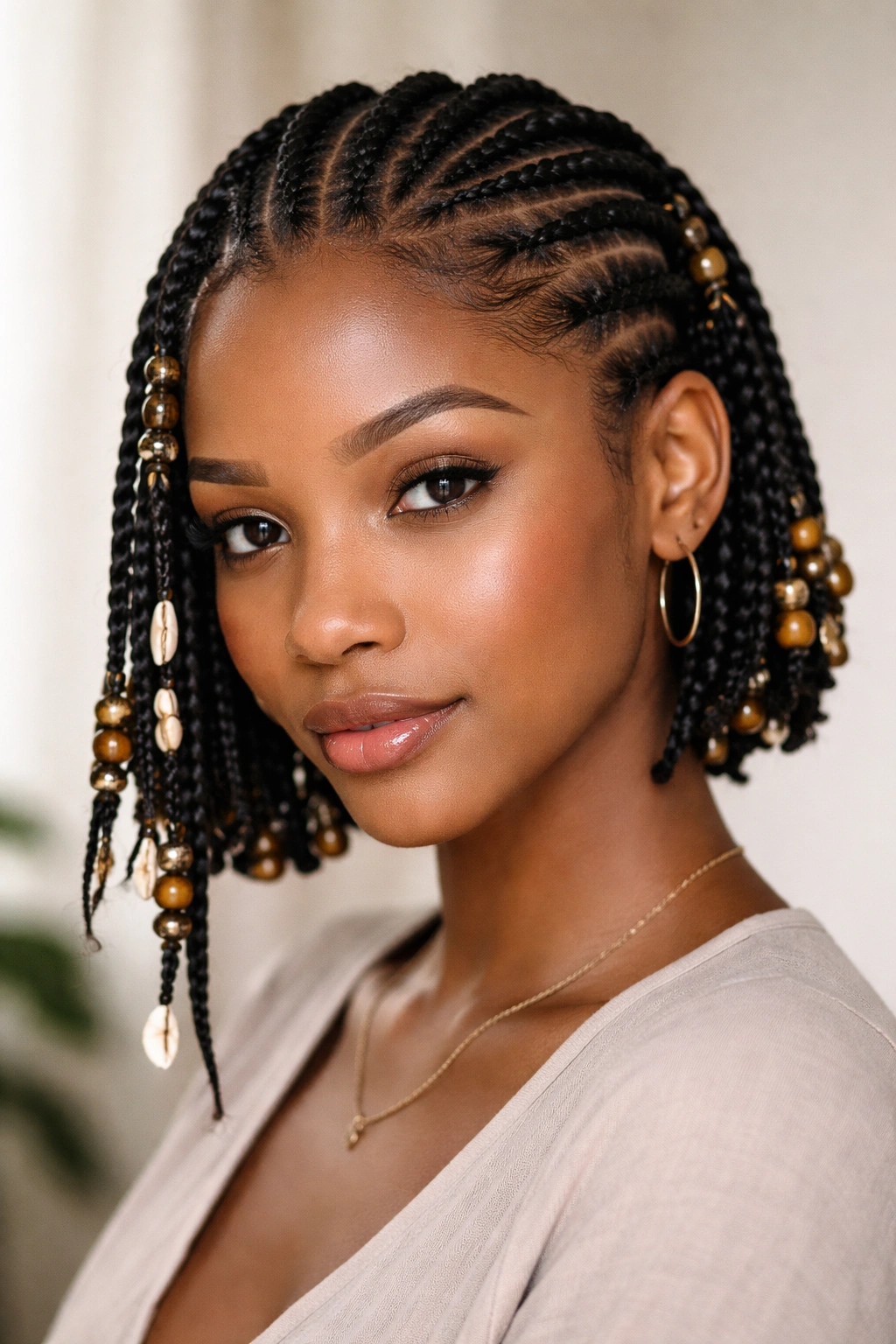
Not every Fulani variation works identically on every hair type or for every lifestyle. Fine or delicate hair thrives with baby Fulani braids or minimalist styles where weight distributes evenly, while thick, coily hair can absolutely handle the thicker statement braids with full bead coverage. If you live in a humid climate, tighter braids and wrapped sections tend to hold better than loose, yarn-only braids. If you’re extremely active or athletic, wrapped or reinforced braids withstand more movement without loosening.
Consider your work environment too. Professional settings often suit minimalist or front-facing braids more than full-coverage styles with heavy beading. Social or creative environments might celebrate the maximalist wrapped or highlighted variations. Your personal preference matters most, but being realistic about maintenance and lifestyle means you’ll actually enjoy the style for its full lifespan rather than taking it down early because it stopped working for you.
Short hair deserves braiding styles as intentional and well-executed as longer hair receives. These nine variations prove that length isn’t a limitation — it’s a different canvas with its own aesthetic possibilities. The right Fulani braids on short hair read as bold, artistic, and completely in control. They last longer than you might expect, they look sharper than you’d assume, and they have room to breathe in a way that longer braids sometimes can’t achieve. Pick the variation that speaks to your aesthetic, commit to the maintenance, and watch your short hair become a canvas for really sophisticated style work.
Final Thoughts
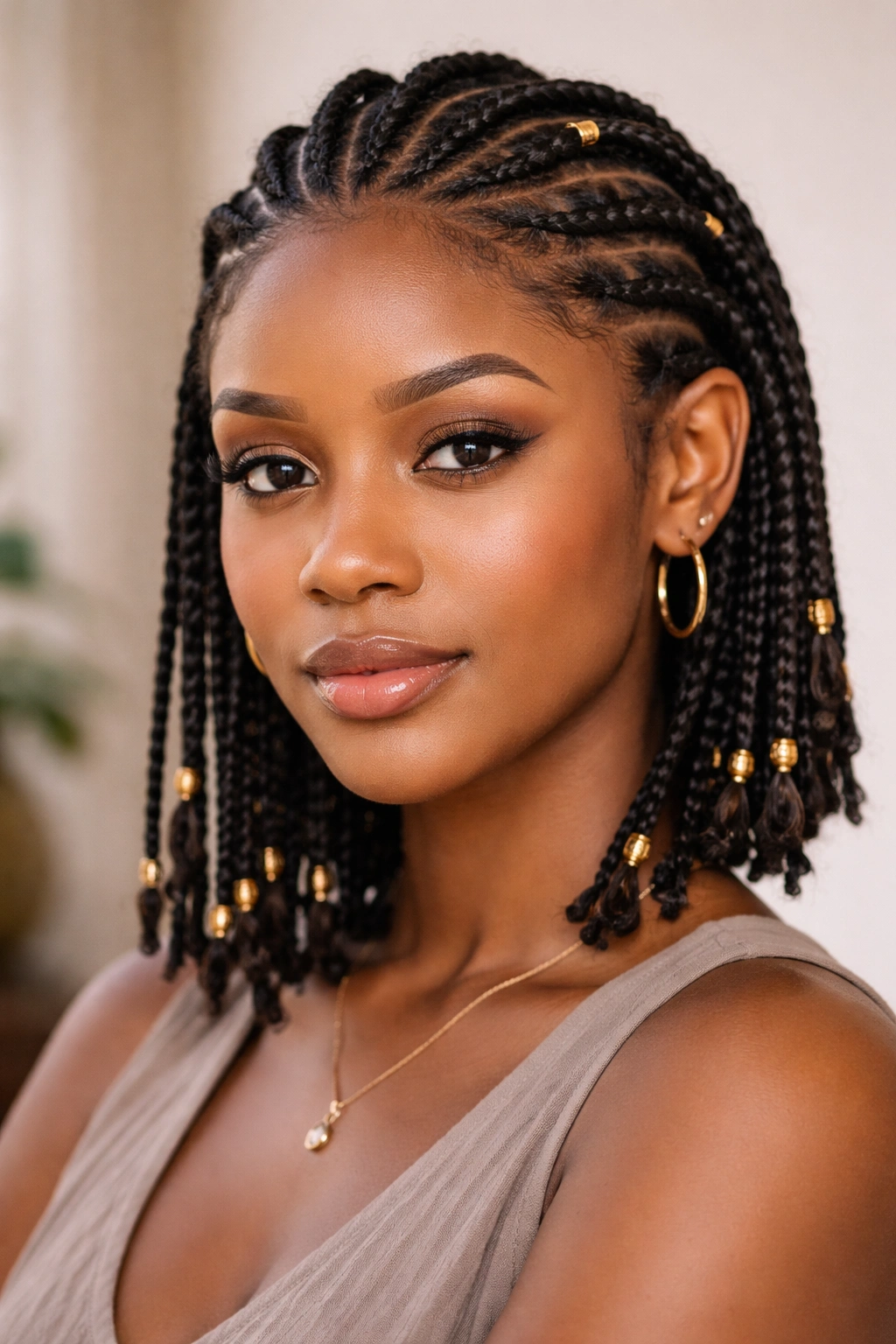
Fulani braids for short hair aren’t a workaround or compromise. They’re a fully realized aesthetic choice that happens to work better on shorter lengths in several ways. Your braids will stay tighter, last longer, require less scalp tension, and photograph better than longer versions. The key is choosing a variation that respects your hair texture and lifestyle, installing it with tension you can actually maintain daily, and following through on basic maintenance that literally takes five minutes every few days.
Start with the variation that speaks to you — don’t overthink it. If you love the detail of wrapped braids, do wrapped braids. If you prefer minimalist simplicity, one perfectly executed braid matters more than five mediocre ones. The best Fulani braids are the ones you’ll actually wear with confidence and maintain consistently. Short hair gives you a legitimate advantage here: every choice you make is visible, which means your intentionality shows immediately. That’s not pressure — it’s opportunity.
