



Curtain bangs are having a major moment, especially for people with frizzy, wavy hair who’ve struggled to find a bang style that actually works with their natural texture instead of against it. The beauty of curtain bangs lies in their forgiving structure — those soft, parted-down-the-middle layers frame the face without requiring the precision and daily smoothing that blunt bangs demand. For wavy and frizzy hair, they’re practically a game-changer because they work with your waves rather than fighting them, and the longer length gives you flexibility to style them in multiple ways depending on your mood, the weather, and how your waves are cooperating on any given day.
The challenge with wavy, frizzy hair is finding a bang that doesn’t look limp or overly controlled, but also doesn’t emphasize every flyaway and strand of frizz. Curtain bangs solve this problem elegantly. They’re long enough that your waves can do their thing, they’re shaped in a way that diffuses frizz throughout the layers rather than concentrating it, and they create movement and dimension that actually makes frizz feel intentional rather than accidental. Whether you want soft, romantic waves, textured shag vibes, or structured face-framing layers, there’s a curtain bang style that will complement your natural wave pattern and make your hair look fuller, bouncier, and genuinely better.
What makes these styles work for frizzy wavy hair isn’t just the curtain bang cut itself — it’s how that bang is layered into the rest of your hair, what products and techniques you use to enhance your waves, and which styling approach brings out the best in your specific texture. Let’s walk through 10 stunning curtain bang styles that are specifically designed to look gorgeous on wavy, frizzy hair.
1. Shaggy Curtain Bangs with Textured Layers
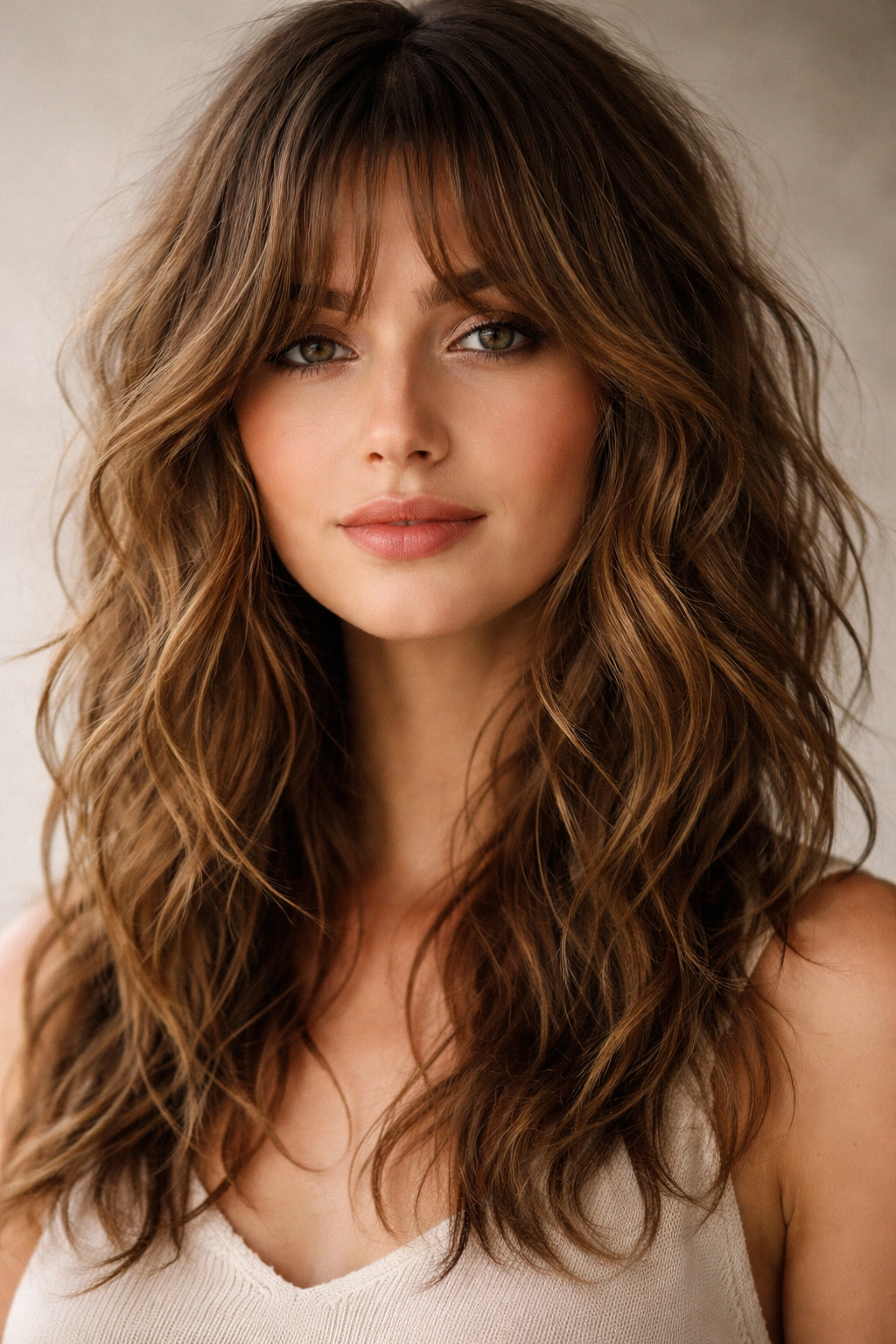
Shaggy curtain bangs are the perfect entry point if you’ve never tried bangs with wavy hair. This style keeps bangs longer and softer, integrating them seamlessly into choppy, textured layers that run through your entire head of hair. The shaggy approach means zero bluntness and tons of movement — your waves have room to breathe and show off their natural texture without looking constrained.
Why This Works for Frizz-Prone Waves
Shaggy layers break up the density of your hair, which actually reduces the appearance of frizz by distributing it across multiple texture levels. Instead of a solid mass of wavy hair that shows every bit of moisture-induced frizz, you get layers that create visual interest and make frizz feel like part of the style’s intentional texture. The curtain bangs sit in the middle of all this movement, so they look soft and natural rather than like a separate, formal element on top of your waves.
How to Style This Look
- Apply a lightweight wave cream or mousse to damp hair before diffusing
- Diffuse waves until about 70% dry, then let them air dry completely
- Use a texture spray or dry texture product on day-one or second-day hair for extra grip
- Run a texturizing paste through the layers to emphasize movement and break up any clumpy frizz
- Flip your head to one side when diffusing bangs to encourage them to part naturally
- Don’t blow-dry bangs completely straight — let them retain some of your wave pattern
Pro tip: This style looks better on second or third-day hair when natural oils have distributed and your waves have relaxed into their true pattern.
2. Side-Swept Curtain Bangs
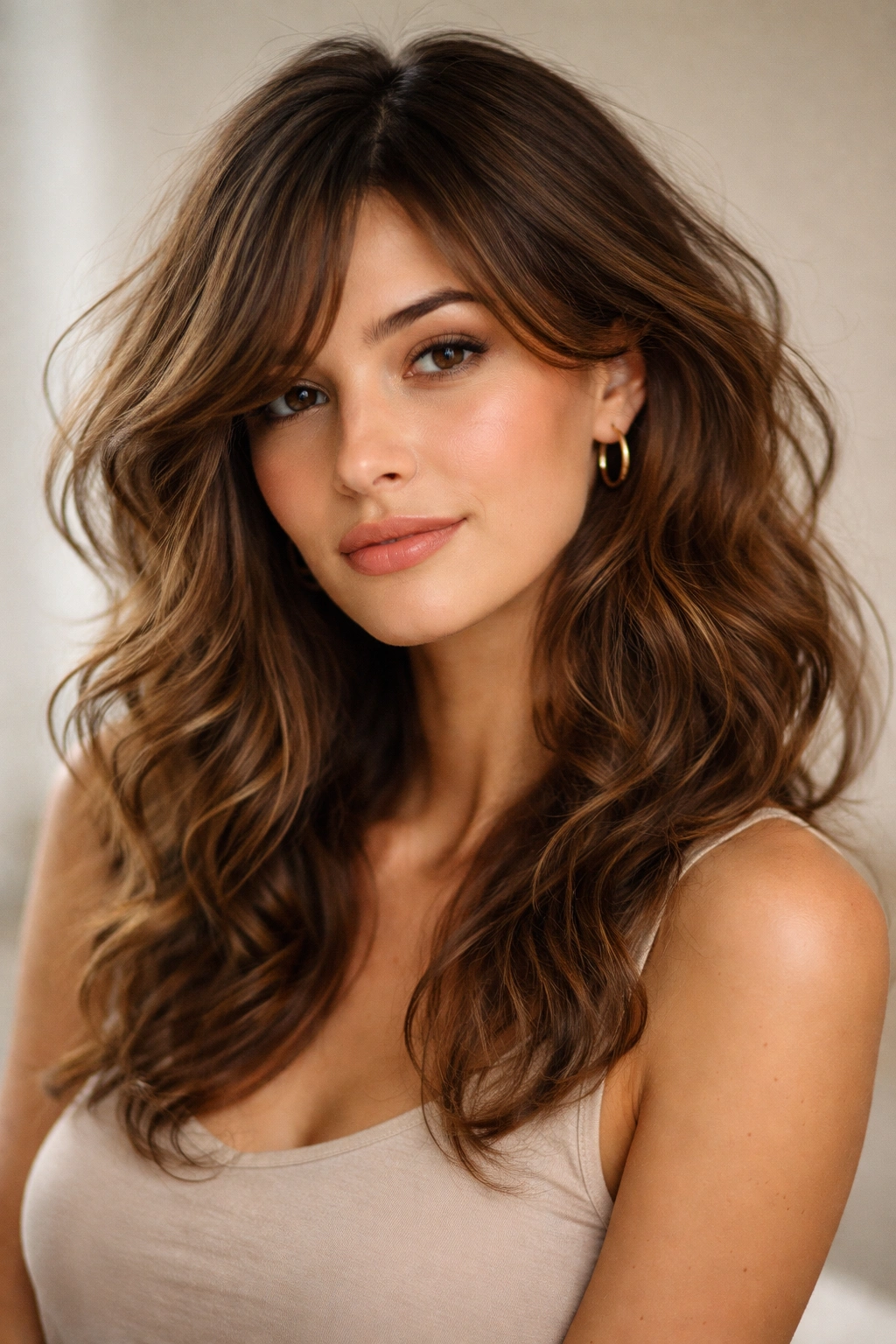
Side-swept curtain bangs take the classic side-part and make it more dynamic by extending the longer bang section to one side while the shorter side blends into your waves. Rather than hanging straight down the center, they sweep across and merge with the natural movement of your hair, creating a dimension that flatters round or square face shapes while making wavy hair look intentionally tousled.
What Makes Them Different
Unlike center-parted curtain bangs that divide your face straight down the middle, side-swept versions allow your waves to have more movement on one side. This asymmetry is actually incredibly flattering for wavy hair because it lets you work with the natural fall of your waves instead of forcing them into a symmetric pattern they don’t naturally want to make. You get the face-framing benefits of bangs without the precision requirement.
Styling and Product Recommendations
- Use a curl-defining cream or gel that holds without crunchiness for a balance between definition and softness
- Blow-dry with a concentrator nozzle, directing airflow to encourage the longer bang section to sweep to the side
- Clip the longer bang side while your hair is still damp to train it to fall that direction
- Once dry, release the clip and the bang will naturally fall in a sweeping, face-framing shape
- For frizz control, apply an anti-frizz serum to the bang area before styling — this area catches the most wind
- Tousle and separate layers with your fingers rather than a brush, which can activate frizz
Worth knowing: This style works best if you’re willing to part your hair on one side rather than center-parted every single day.
3. Curtain Bangs with Undercut Waves
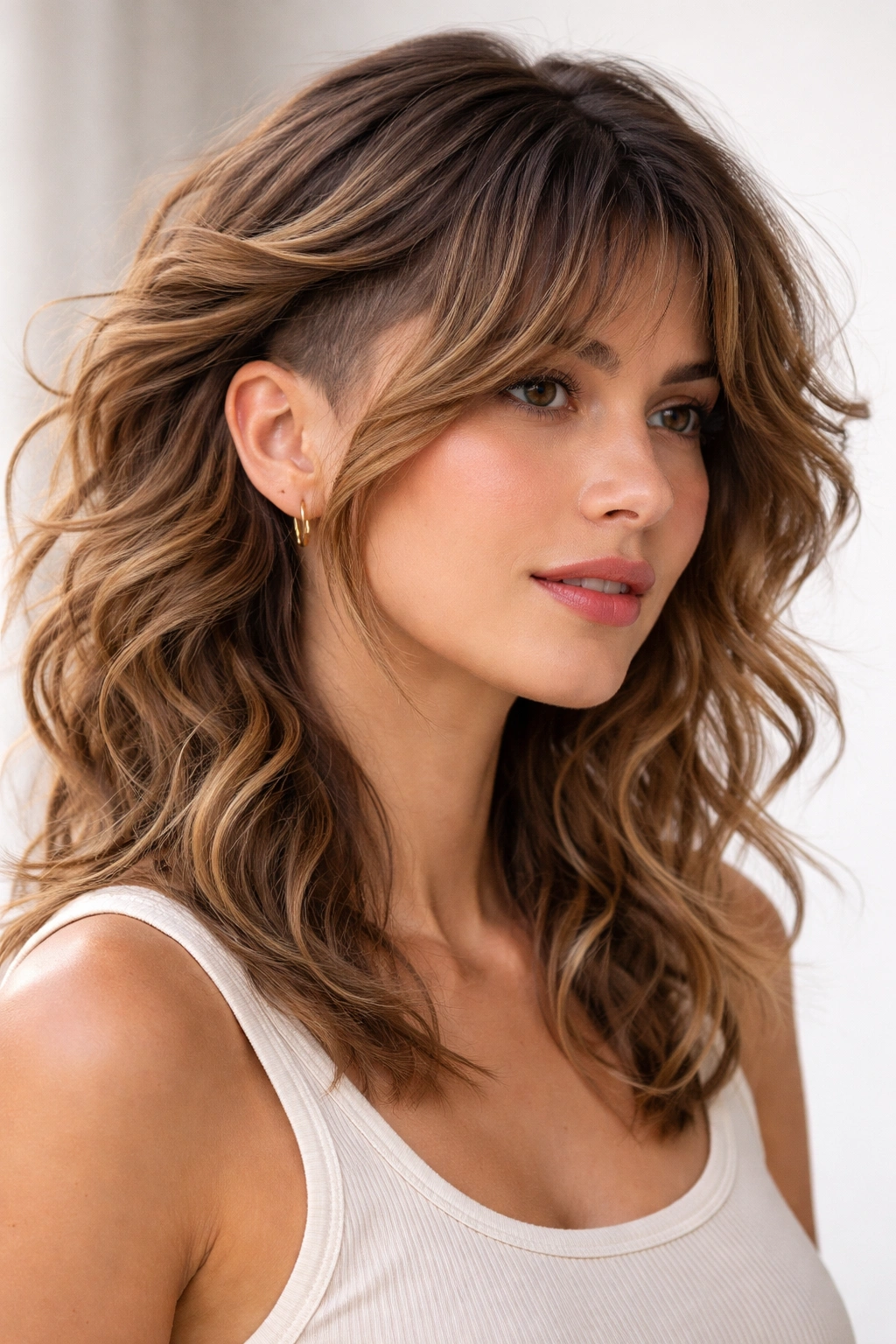
An undercut pairs perfectly with curtain bangs when you have frizzy waves because it removes bulk from underneath while keeping length on top. The undercut creates a stark contrast between the lighter, more controlled top layers and the structured waves underneath, which gives your entire head of hair a modern, intentional look. Your curtain bangs float over this texture, creating soft movement without any heaviness.
Why Undercuts Help with Frizzy Hair
Heavy, dense waves magnify frizz because all that hair is competing for moisture and creates a humid microclimate. An undercut removes that weight and density, which means less frizz at the roots and more breathability throughout your hair. The top layers, including your curtain bangs, look airier and more defined because they’re not weighed down by excessive bulk underneath. This is one of the smartest cuts for wavy, frizzy hair because it gives you the length and movement you want while controlling the volume problem.
How to Work With This Cut
- Ask your stylist to blend the undercut carefully so it’s not too obvious when you wear your hair down
- Textured waves work better than perfectly smooth waves with this cut — embrace your natural wave pattern
- Dry your hair upside down to lift the top layers away from the undercut section
- Use a medium-hold mousse or cream rather than heavy gel, which could weigh down the lifted top layers
- Scrunch and separate your waves with your hands rather than using a brush
- On second-day hair, spritz with water or a wave refresher spray to revive the texture
Insider note: Undercut waves are especially useful in humid weather because the reduced density means less moisture absorption overall.
4. Blunt Curtain Bangs with Choppy Texture
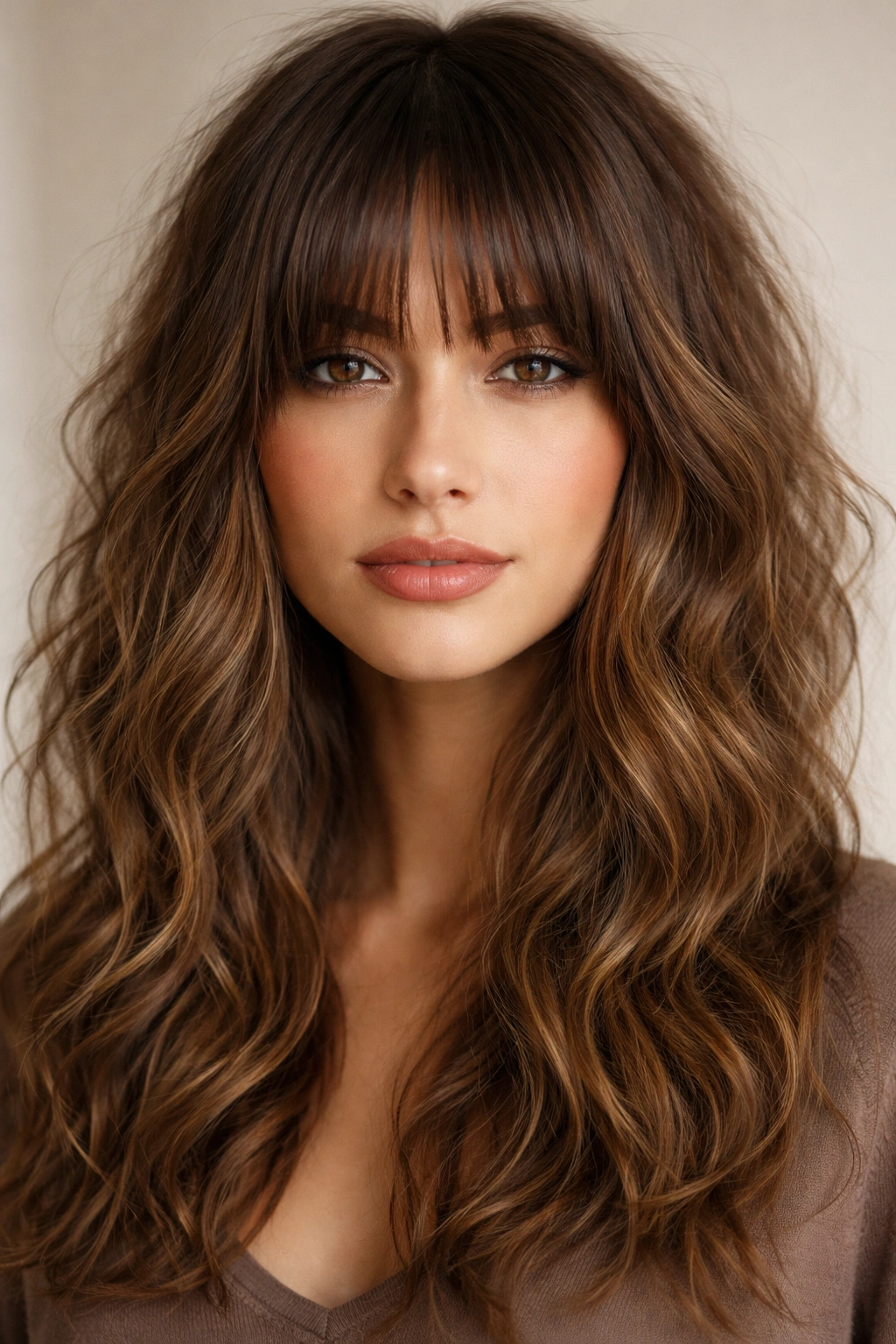
Blunt curtain bangs sound risky for wavy, frizzy hair, but when they’re combined with choppy layers throughout the rest of your hair, they actually look intentional and edgy rather than overwhelming. The bluntness of the bang line is softened by the choppy texture of your waves and the frequent cutting of your overall layers, creating a cohesive look where everything feels deliberately textured rather than like your frizz is taking over.
The Secret to Making Bluntness Work
The trick is that your stylist needs to cut blunt bangs while understanding that they’ll be worn with your natural wave pattern, not against it. Blunt bangs that are then styled into your waves look sharp and modern, not stiff or formal. The bluntness gives definition to the bang shape, while the waves and frizz soften that line enough to feel relaxed and intentional. It’s about having enough texture everywhere else in your cut so that the blunt bangs don’t feel isolated or overly controlled.
Styling for a Cohesive Look
- Blow-dry bangs with a paddle brush to emphasize the blunt line, then roughen them up with your fingers
- Use a texturizing spray or dry shampoo on bangs to add grip and texture that breaks up the bluntness
- Apply a flexible hold cream or light gel to bangs and waves together so they’re all styled with the same product
- Piece out sections of your bangs with the cream to create texture within the blunt line
- Scrunch everything together while semi-damp to encourage wave formation
- The goal is for bangs to look blunt but not stiff — texture breaks that stiffness
Real talk: This style requires more frequent bang trims (every 3-4 weeks) because the blunt line becomes obvious quickly.
5. Face-Framing Curtain Bangs with Long Waves
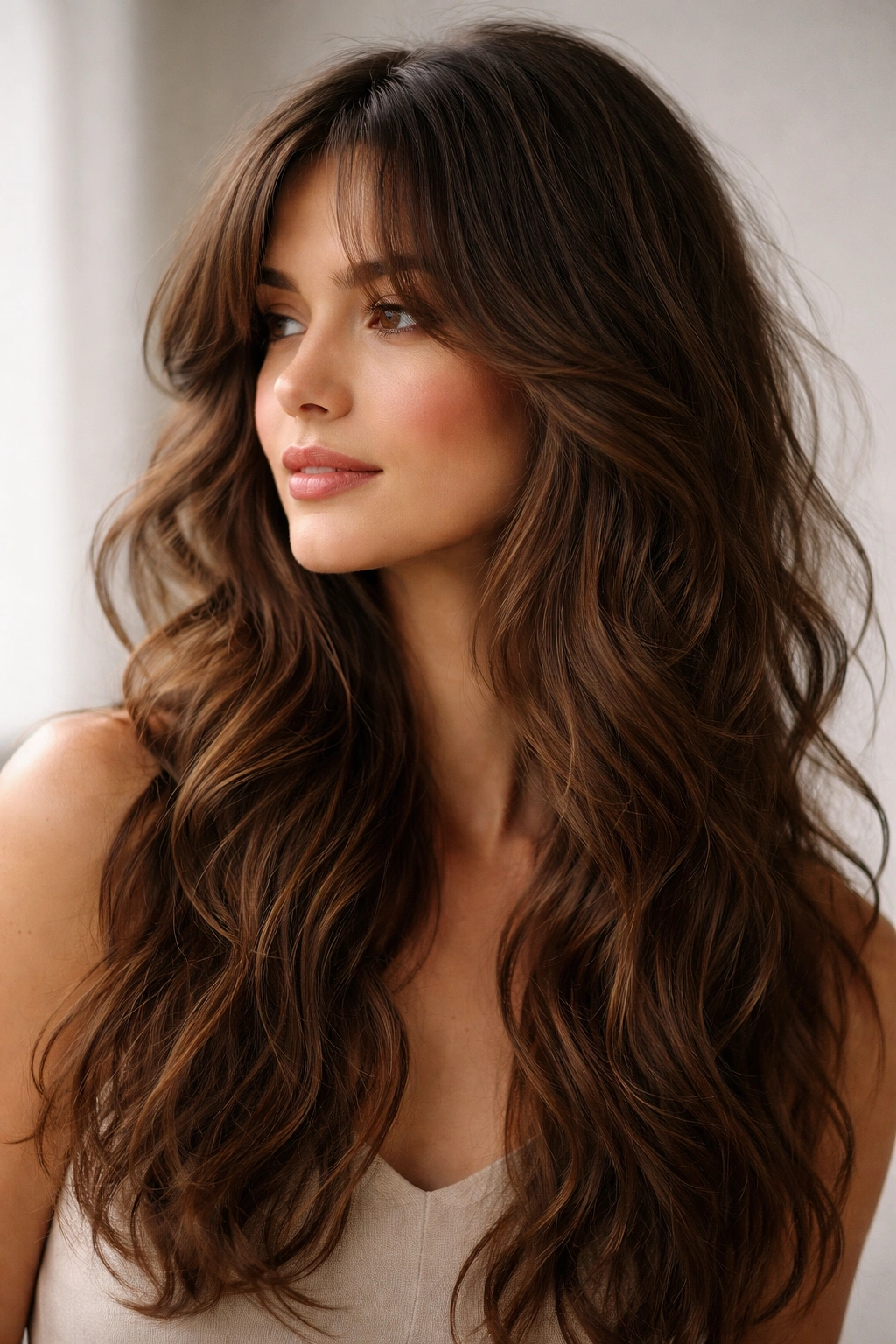
If you want maximum face-framing without committing to layers throughout your entire head, longer curtain bangs paired with longer waves is your answer. The bangs graze just below your cheekbones or hit at your jaw, long enough that they blend seamlessly into your overall length but short enough to frame your face distinctly. Your hair underneath remains long and wavy, giving you length, movement, and the softness that long waves naturally provide.
Why Length Works for Frizz
Longer hair actually holds waves better and distributes frizz more effectively than shorter hair. When your bangs are longer, they can follow the natural wave pattern without looking out of place, and they’re flexible enough to be worn multiple ways — parted down the center, swept to one side, tucked behind your ear, or let loose across your face. That versatility means you can adjust them based on how your frizz is behaving on any given day.
Caring for Longer Bangs
- Longer bangs need regular trimming (every 6-8 weeks) to maintain their shape without becoming scraggly
- Apply leave-in conditioner or curl cream to bangs before diffusing to prevent them from drying out faster than longer hair
- Use a microfiber towel or t-shirt to dry bangs gently — rough toweling accelerates frizz
- Diffuse bangs on low heat to maintain their wave pattern without creating frizz
- Long bangs can get stuck under your collar or strap — clip them to the side while wearing a ponytail
- On second-day hair, mist bangs with water and re-crunch to refresh their wave pattern
Worth knowing: You’ll need to style longer bangs separately from your hair rather than letting everything dry together.
6. Wispy Curtain Bangs with Spiral Curls
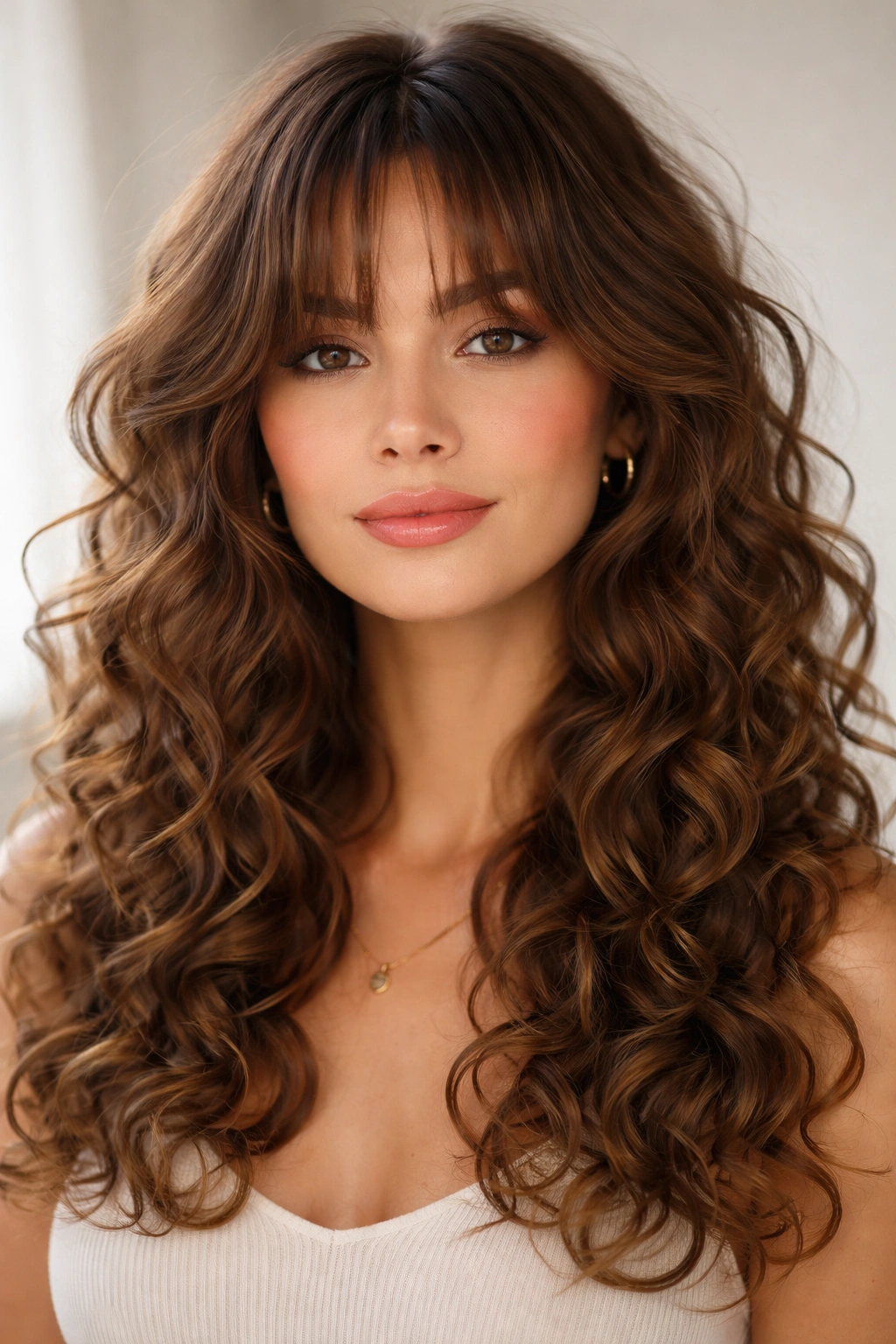
For those with naturally curly or spiral-wavy patterns, wispy curtain bangs pair beautifully with pronounced spiral curls throughout your hair. Wispy refers to lighter, feathered ends that taper gradually rather than blunt lines, so they look intentionally delicate and airy. When combined with defined spiral curls, wispy bangs add softness to the face while your defined curls create visual drama and texture that makes frizz feel like part of your curl definition rather than a separate problem.
The Wispy Advantage
Wispy bangs are more forgiving than any other bang style for frizzy wavy hair because the feathered, tapered ends actually blend frizz into the style. Flyaways that would look obvious against a blunt line simply become part of the wispy texture. The lightness of wispy bangs also prevents them from drooping or looking limp on humid days — the tapered ends dry quickly and maintain lift better than blunt or thicker bang lines.
Creating Defined Spirals
- Use a curl-defining cream or gel with strong hold but soft finish
- Apply products to soaking wet hair and distribute with a wide-tooth comb
- Separate hair into sections and twist each one gently around your finger to encourage spiral formation
- Use a diffuser on medium-low heat, cupping sections of hair in the diffuser to protect curls
- Allow hair to cool completely after diffusing before touching it — this sets the curl pattern
- Scrunch bangs gently into the gel to encourage spiral formation without disrupting the wispy texture
- Once fully dry, gently break up curl clumps with your fingers to prevent the look from being too tight
Pro tip: Wispy bangs on spiral curls look best when you don’t brush them out — let them stay in their formed curls and they’ll look intentional and beautiful.
7. Curtain Bangs with Beach Wave Texture
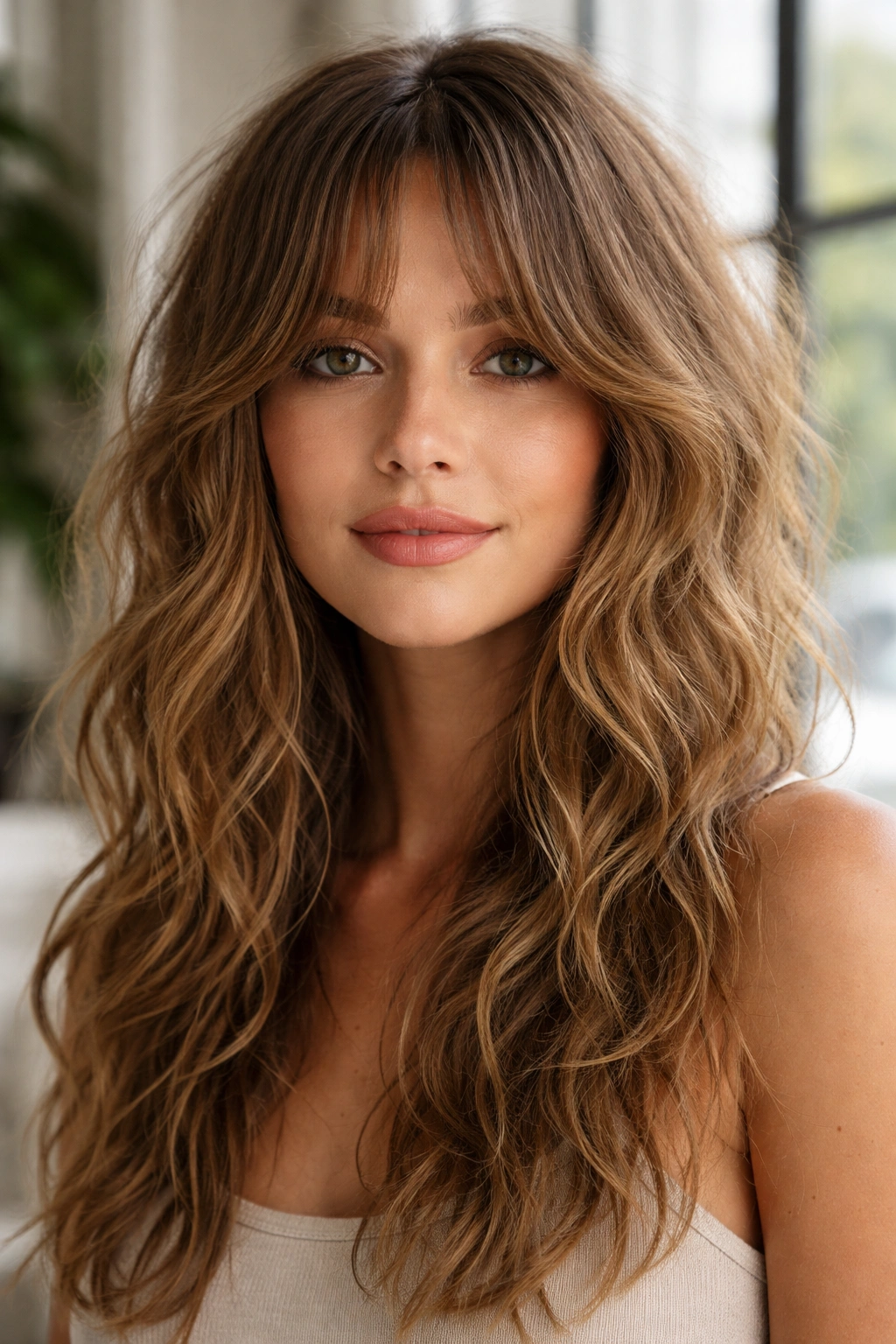
Beach waves are naturally forgiving of frizz, which makes them perfect for pairing with curtain bangs when your hair tends toward the wavy and frizzy side. Beach waves have that undone, tousled quality that celebrates texture rather than fighting it, so your curtain bangs become part of a cohesive, intentionally textured look. The waves appear soft and effortless rather than controlled or perfect, which is the whole vibe you’re going for with frizzy wavy hair.
Achieving Genuine Beach Waves
True beach waves aren’t created with a curling iron or heat tool — they’re created with products, scrunching, and air drying that work with your hair’s natural wave tendency. For wavy, frizzy hair, this is actually the easiest wave texture to achieve because you’re not fighting your hair’s nature. You’re enhancing what’s already there.
Product and Technique Approach
- Use a salt spray or texture cream designed for waves — these add grip and definition without heavy products
- Apply to damp hair and scrunch toward the roots to encourage lift and wave formation
- Air dry completely, or diffuse on low heat while scrunching intermittently
- Don’t brush or comb while dry — use your fingers to separate and tousle waves
- A light hairspray or texture spray on completely dry hair adds hold without crunchiness
- Beach waves look better slightly messy — embrace the texture rather than perfecting them
- On day two or three, mist with water, scrunch, and let air dry to refresh waves
Real talk: Beach waves are actually the lowest-maintenance wave style for frizzy hair because perfection isn’t the goal.
8. Curtain Bangs with Braided Section
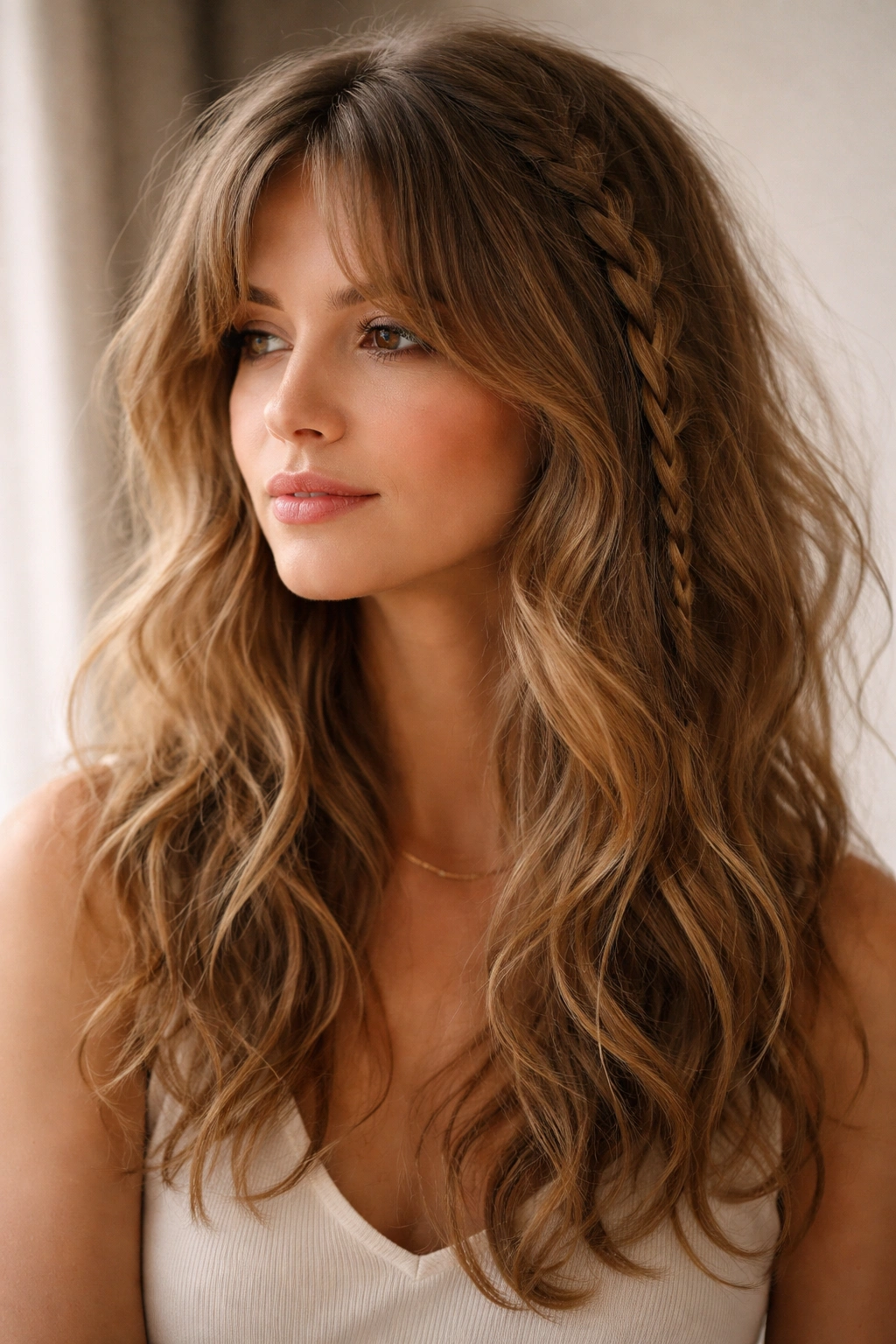
Adding a delicate braid woven through or next to your curtain bangs creates visual interest and texture while actually helping control frizz by keeping that area defined and structured. A thin, loose braid that runs beside your curtain bangs gives you a styled, intentional look while your wavy, frizzy hair remains free underneath. The braid pulls double duty: it looks deliberately fashionable and it manages frizz through strategic sectioning.
Why Braids Help with Frizz
A braid keeps hair bound and smooth in a specific section, which reduces flyaways and frizz in that area. When combined with curtain bangs that frame your face, the braid creates a styled, polished look without requiring your entire head of hair to be perfectly smooth. It’s the perfect compromise between embracing your waves and having some intentional structure.
Braiding Your Bangs
- Start the braid just above your temple on one side of your curtain bangs
- Make a loose, relaxed three-strand braid rather than a tight, formal braid
- Incorporate a few strands of your bang hair into the braid if you want to integrate them fully
- Braid down toward your ear, then let it blend into the rest of your hair
- Loosen and pull the braid gently after you’ve finished braiding to increase texture and softness
- Secure the braid with a small, clear elastic or bobby pins that match your hair color
- The braid should look relaxed and effortless, not tight or formal
Worth knowing: This style works better on second or third-day hair when your waves are more defined.
9. Grounded Curtain Bangs with Volume
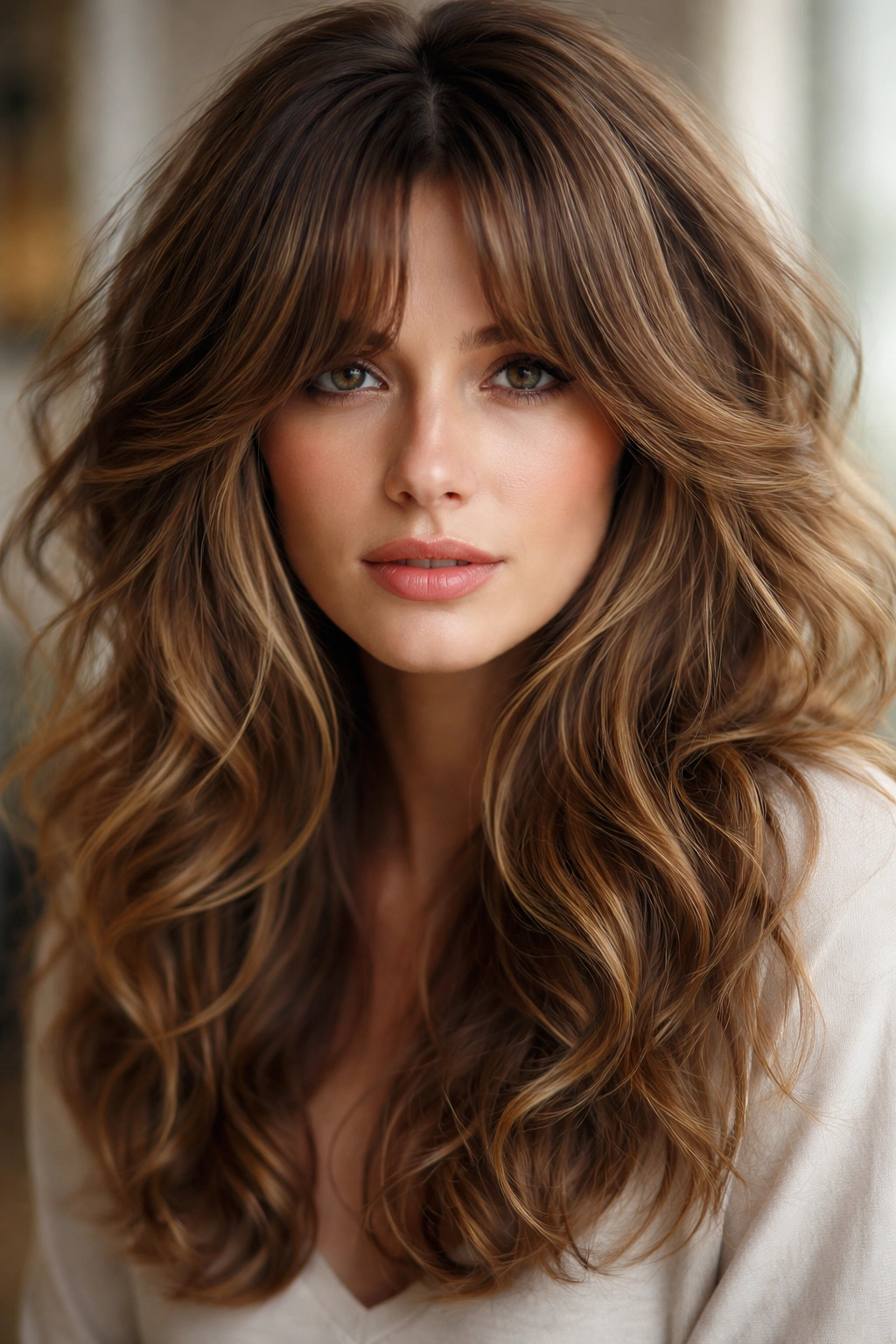
For those who want maximum volume and dimension, grounded curtain bangs with voluminous waves create a bold, statement-making look that actually makes frizz work in your favor. “Grounded” refers to slightly heavier, denser bangs that have more presence rather than feathery or wispy styling, and when paired with voluminous waves that start from the roots, they create drama and fullness that reads as intentional, luxe texture rather than accidental frizz.
Building Volume From the Roots
Volume-building starts at the scalp, not at the ends. When you create lift at your roots, the rest of your waves cascade from that foundation, creating a silhouette that’s larger and more structured. Curtain bangs have enough weight that they look balanced against voluminous waves rather than being overwhelmed by them.
Techniques for Maximum Volume
- Apply a volumizing mousse or root-lifting spray to damp hair at the scalp
- Blow-dry your roots while flipping your head upside down to encourage lift
- Use a round brush on your roots to create additional lift and structure
- Dry your lengths with a diffuser to enhance your natural wave pattern
- Once roots are set, flip your head back up and let the rest dry normally
- Use a teasing brush or comb at the roots to increase texture and grip
- Apply texture spray or dry shampoo at the roots on day two to maintain lift
- Scrunching as you air dry helps your waves form with that voluminous look
Insider note: Grounded bangs require slightly more frequent trims than wispy bangs because the heavier line becomes visible as it grows out.
10. Curtain Bangs with Dimensional Layers
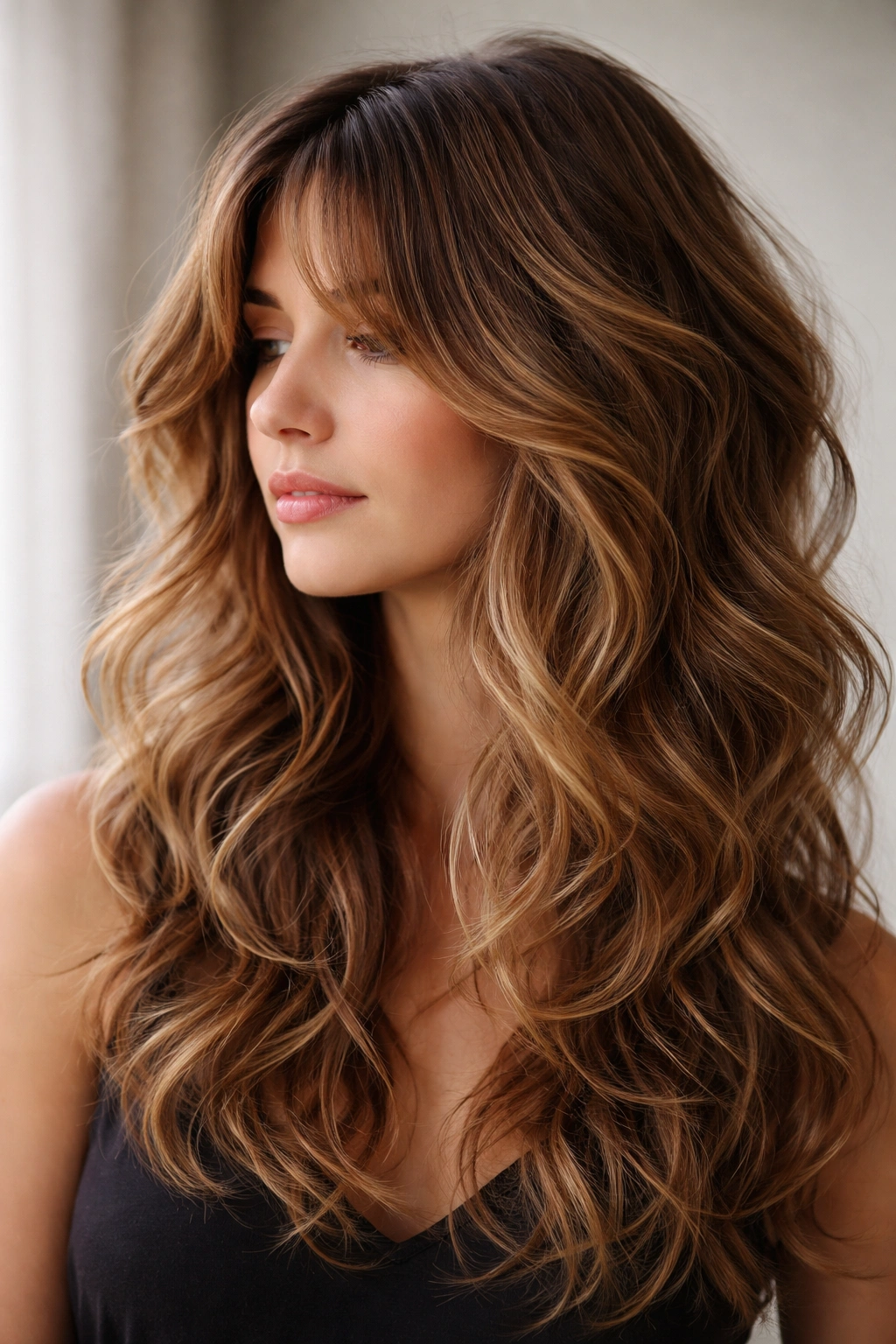
Dimensional layers throughout your hair create visual depth and movement that makes frizz disappear into the overall texture rather than standing out. When your stylist cuts layers of varied lengths interspersed throughout your head, plus adds curtain bangs that integrate into those layers, you get a look where frizz becomes part of a cohesive, textured style. Light reflects off the different layer lengths, creating visual interest that distracts from frizz and emphasizes dimension instead.
Why Dimensional Layers Work
Multiple layer lengths create movement in multiple directions, which means your waves have room to move without creating a heavy, clumped appearance where frizz is obvious. Instead of smooth sections between waves, you get textured sections that celebrate your hair’s natural tendency to wave and frizz. It’s the most sophisticated approach to working with frizzy wavy hair because it’s fundamentally restructuring how your hair falls.
Styling Dimensional Layers
- Use a lightweight, medium-hold cream or mousse that defines waves without crunchiness
- Apply products to damp hair and distribute evenly through all your layers
- Diffuse with a curved or standard diffuser, cupping different sections to dry multiple layers at once
- The goal is for all your layers to dry with their own individual wave pattern
- Use your fingers to separate and piece out layers while semi-damp to prevent them from clumping
- Scrunch and lift different sections to encourage independent wave formation
- A light hairspray on completely dry hair holds everything without making layers look stringy
Pro tip: Dimensional layers require regular trims every 6-8 weeks to maintain the intentional layering and prevent them from growing into a shapeless length.
Final Thoughts

Curtain bangs genuinely transform how frizzy wavy hair can look and feel, shifting it from something you manage or endure into something you work with intentionally. The styles that work best are the ones that honor your hair’s natural wave pattern rather than fighting it — and the good news is that all these approaches do exactly that. Whether you choose soft, wispy feathering or grounded texture with volume, the key is finding a stylist who understands wavy, frizzy hair and knows how to cut bangs that actually work with your specific wave pattern instead of requiring hours of daily styling to tame.
The second part of success is accepting that wavy, frizzy hair needs different products and techniques than straight or smoothly wavy hair. Lightweight, moisturizing products that enhance texture rather than try to flatten it, diffusing rather than blow-drying straight, and embracing the tousled, textured aesthetic rather than aiming for perfection — these mindset shifts make an enormous difference. Your curtain bangs will look better, your overall hair will feel healthier, and you’ll spend less time fighting your hair and more time actually enjoying it. Start with the style that speaks to you, give it at least two weeks to settle into its natural pattern, and be willing to adjust your styling approach based on what your specific waves want to do.
