



Bangs and wavy hair in Black textures create some of the most striking, face-framing looks available. The combination of movement, texture, and dimension that natural wave patterns bring to bangs gives you endless styling possibilities—whether you’re looking for something soft and romantic, bold and dramatic, or playfully modern. Black hair carries depth and richness that makes bangs pop visually in ways that lighter hair textures simply can’t replicate, and the natural texture of your waves adds a sculptural quality that makes even simple bang styles feel elevated.
The real challenge isn’t finding styles that work with wavy Black hair and bangs—it’s knowing which ones will actually enhance your face shape, suit your lifestyle, and keep your waves looking intentional rather than accidental. Not every bang style plays nicely with wave patterns, and not every approach to styling will work if you’re not matching the technique to your specific hair texture. The good news? Once you understand how your waves interact with bangs, you have access to styles that textured hair with straighter patterns can’t pull off as naturally.
What makes these 16 styles special is that they’re designed specifically for the reality of wavy Black hair—the texture, the shrinkage, the way your waves behave when you add bangs. You’ll find options that lean into your natural texture without fighting it, styles that work with minimal heat styling, and approaches that actually get better and more interesting as your waves settle in and set. Some of these styles are perfect for everyday wear, while others make a bolder artistic statement. All of them showcase how beautifully bangs and waves work together when they’re matched thoughtfully.
1. Textured Curtain Bangs With Layered Waves
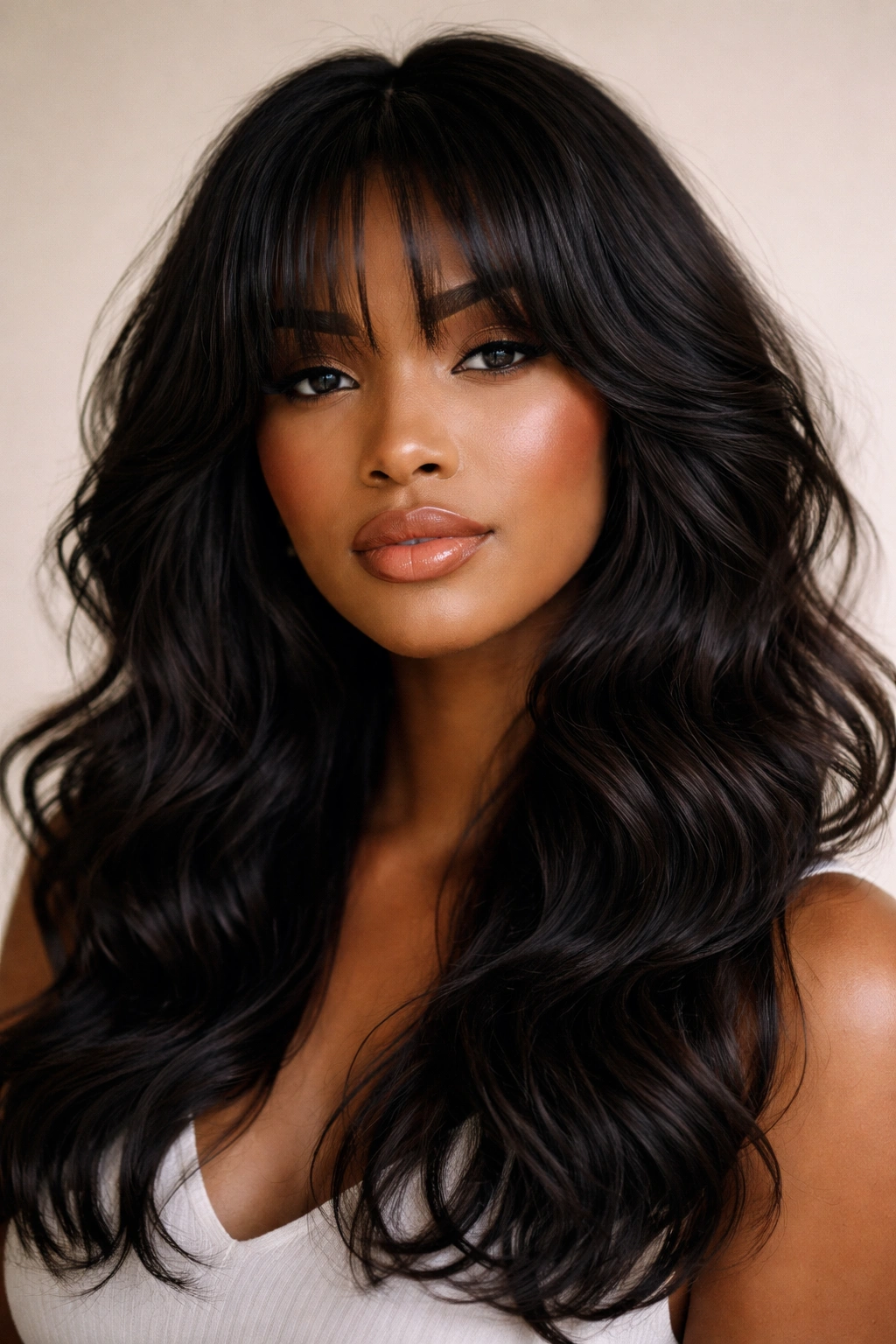
Curtain bangs are the safest entry point into bangs with wavy hair because they frame your face without creating harsh lines. With textured Black hair and natural waves, curtain bangs become something even more versatile—they fall into the wave pattern rather than fighting against it, and they naturally separate and cascade when your waves are moisturized and set properly. The key is getting them cut to sit right at or just above your cheekbones, where they catch light and frame your features without obscuring them.
Why This Works for Wavy Hair
Curtain bangs don’t require you to fight your texture. They’re designed to sit away from your face on both sides, which means your natural wave pattern actually enhances the style instead of undermining it. The separation that happens naturally in wavy hair becomes the defining feature rather than a problem to solve. When your waves are healthy and hydrated, curtain bangs almost style themselves.
How to Style and Maintain
- Apply leave-in conditioner or moisturizing cream to damp hair before styling
- Use a diffuser attachment on low heat, or air-dry while scrunching your waves upward
- Once dry, you can separate and define individual waves using a light oil or mousse
- Curtain bangs in this style typically need a trim every 6-8 weeks to maintain the shape
- On refresh days, light misting with water and product reactivates your waves without restyling
Pro tip: Curtain bangs actually look better slightly shaggy and lived-in with textured hair. You don’t need them perfectly blunt—the piece-y, separated quality is actually the goal.
2. Blunt Box Braids With Straight Bangs
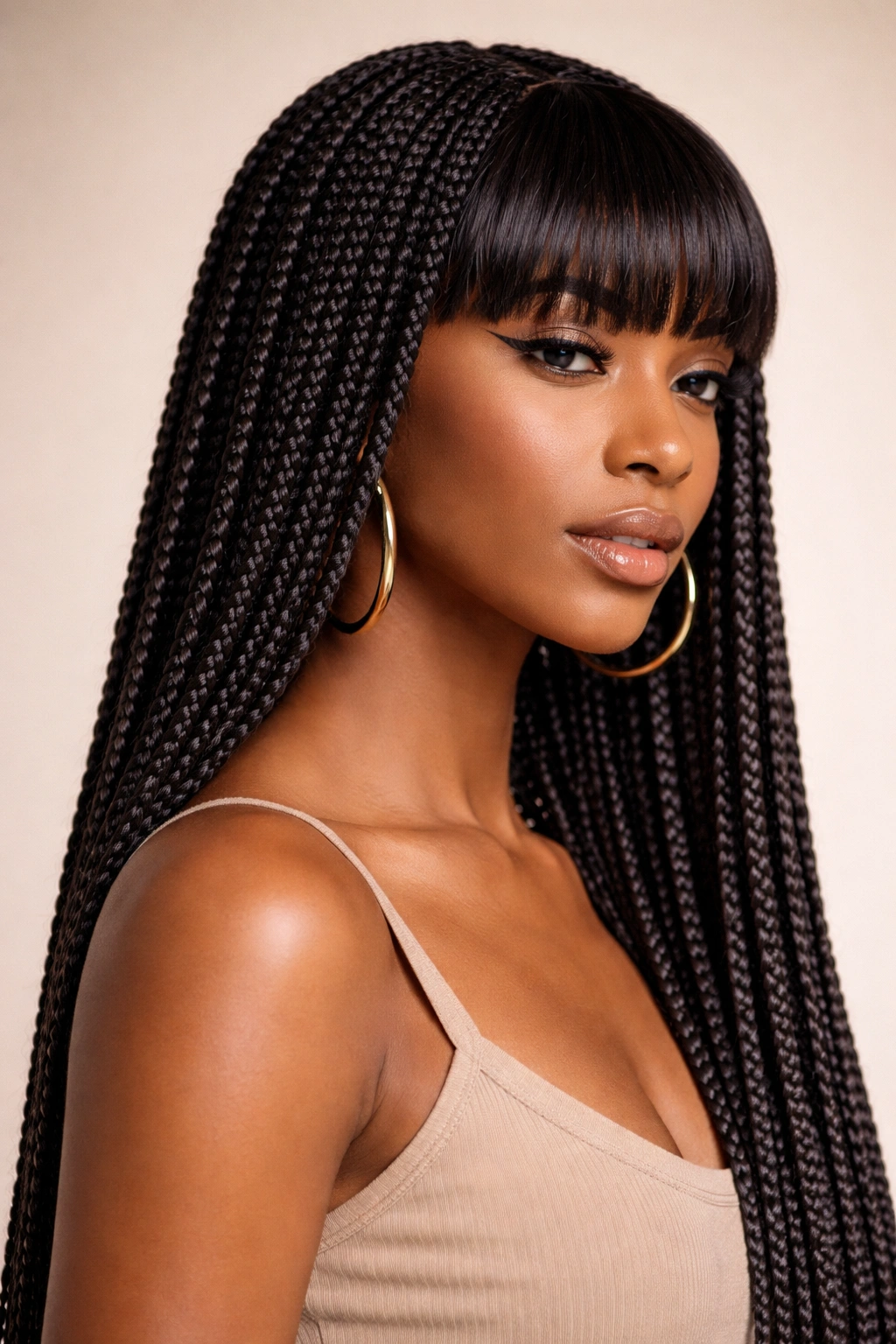
This is a protective style that deserves serious consideration if you’re looking for something that lasts weeks while giving you completely different versatility. Straight bangs paired with box braids create a striking contrast—the rigid geometry of the braids against the clean lines of blunt bangs reads as intentional and stylish. This works particularly well when you want your bangs to feel like a bold statement rather than blending softly into your waves.
The Visual Impact
Blunt bangs create a frame that feels modern and fashion-forward, especially when paired with the texture and depth of box braids. The bangs sit in sharp relief against the darker tones and shadows created by your braids, making them feel like a deliberate design choice rather than a default styling decision. This contrast is what makes the look work—the opposition between structure and braided texture creates visual interest.
Styling and Longevity
- Blunt bangs should sit about half an inch above your eyebrows when you’re going this bold
- Keep your baby hairs and edges clean and moisturized, especially around the bang area
- The style lasts 4-6 weeks before your roots grow enough that the look feels less intentional
- You can refresh the look by taking down your braids and re-braiding with fresh sections weekly
- Consider using mousse or light gel on your bangs if they tend to curl up or frizz away from the blunt line
3. Soft Fade Bangs With Shoulder-Length Waves
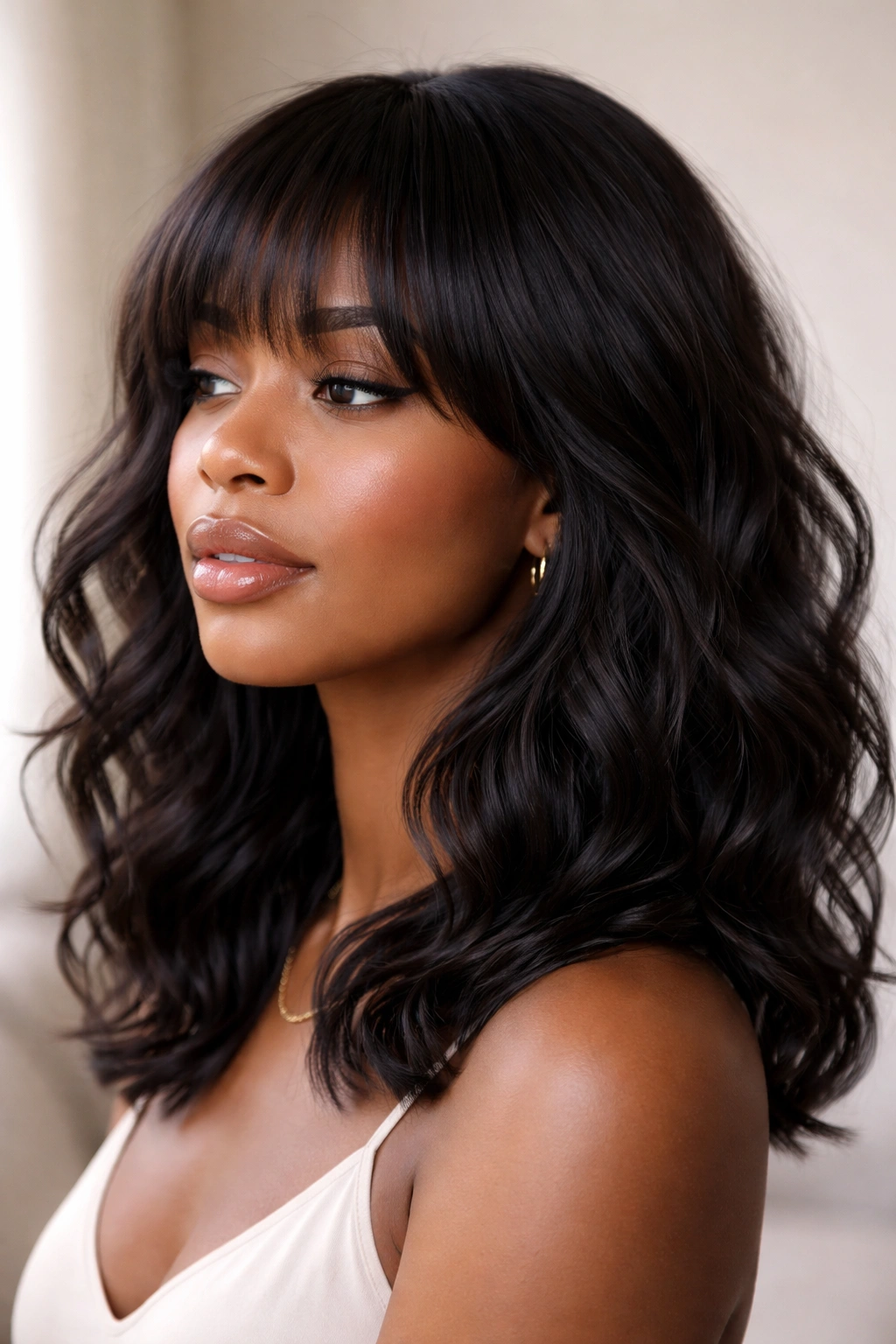
This is the perfect middle-ground style—bangs that aren’t as severe as blunt cuts but still frame your face with intention. Fade bangs gradually lengthen from the center of your forehead outward, creating a flattering shape that works with nearly every face structure. Paired with shoulder-length waves, this style feels current, wearable, and genuinely flattering for everyday life.
Why Fade Bangs Are Forgiving
Fade bangs are forgiving because they don’t require precise bluntness to look intentional. As your waves dry and your roots grow, the style actually improves—faded bangs look even better slightly grown out. This is one of the rare bang styles where you’re not fighting against natural growth and texture; instead, you’re working with it. The softness of the fade also means that if your waves behave differently on different days, it barely registers as a styling failure.
Day-to-Day Styling
- Wash and condition your waves with products formulated for textured hair
- Apply curl cream or wave-defining mousse to damp hair
- Diffuse on medium heat while cupping your waves upward, or air-dry
- Your bangs will naturally dry into the fade shape without needing additional styling
- Refresh on day two or three with a light misting of water and product
4. Micro Bangs With High-Volume Waves
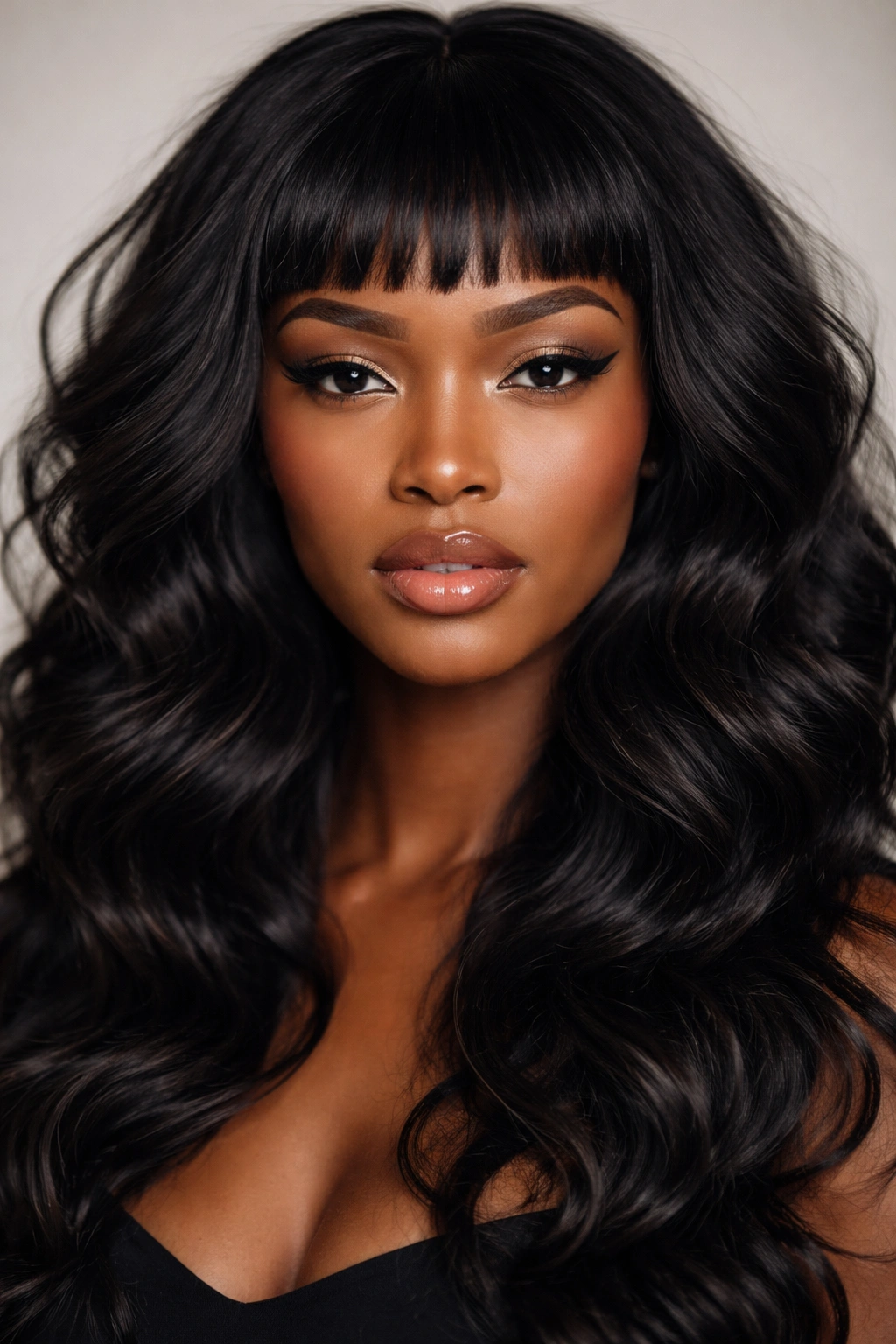
Micro bangs are a high-commitment style, but they make an undeniable statement—especially with the volume and movement that natural waves bring. These sit very short, usually just above your eyebrows, and they require intentional styling to avoid looking accidentally childlike. The key to making micro bangs sophisticated is pairing them with substantial wave volume and texture that commands attention. This isn’t a subtle choice, and that’s exactly the point.
The Confidence Factor
Micro bangs read as intentional, editorial, and fashion-forward. They work best when paired with bold styling choices elsewhere—high-volume waves, statement makeup, deliberate styling texture. You’re not trying to look effortless with this style; you’re making a creative statement. The good news is that natural wave texture in Black hair gives you the volume and dimension needed to balance short bangs without looking overwhelmed.
Making Them Look Intentional
- Use a volumizing mousse or gel on damp roots before diffusing
- Diffuse your hair in sections, focusing on root lift and wave definition
- Keep your scalp moisturized with a lightweight oil to prevent dryness and flaking
- Style your waves with intention—defined waves look editorial; undefined waves look accidental
- Trim micro bangs every 4-5 weeks because even slight growth changes the impact
Worth knowing: Micro bangs photograph beautifully and look more sophisticated than they feel in person. Don’t judge them from a selfie taken immediately after styling.
5. Wispy Layered Bangs With Shag Waves
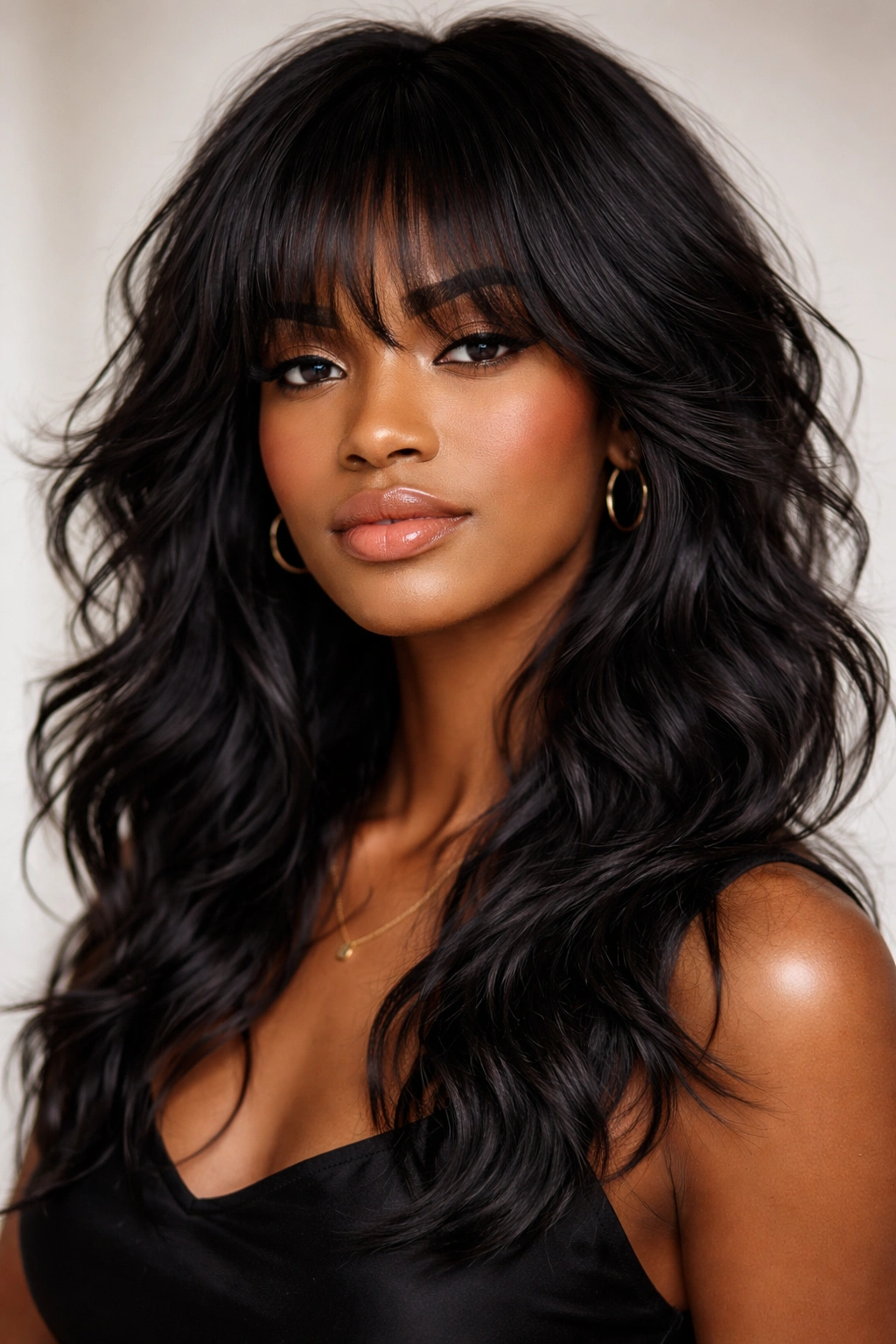
Shag cuts are back, and they pair beautifully with wavy hair and bangs. Wispy layered bangs soften the look compared to blunt styles, and when combined with a full shag cut—shorter layers throughout to create movement and texture—you get something that feels both retro and contemporary. The layers interact with your natural waves to create a style that practically styles itself.
How the Layers Work Together
The genius of layered bangs with a shag cut is that both elements celebrate texture and movement. Your waves actually enhance the shag—the shorter layers catch light, create dimension, and move independently, making your overall look feel more alive and dynamic. This is one of the few styles where textured hair gives you a genuine advantage over straighter textures.
Maintenance and Styling
- Get trimmed every 5-6 weeks to maintain the shag’s shape and movement
- Use products that define and separate your waves rather than smoothing them down
- A light curl cream or wave mousse applied to damp hair is usually all you need
- Let your hair air-dry or use a diffuser—blow-drying straight defeats the purpose
- The style actually improves on day two or three as your waves settle and soften
6. Side-Swept Bangs With Defined Wave Pattern
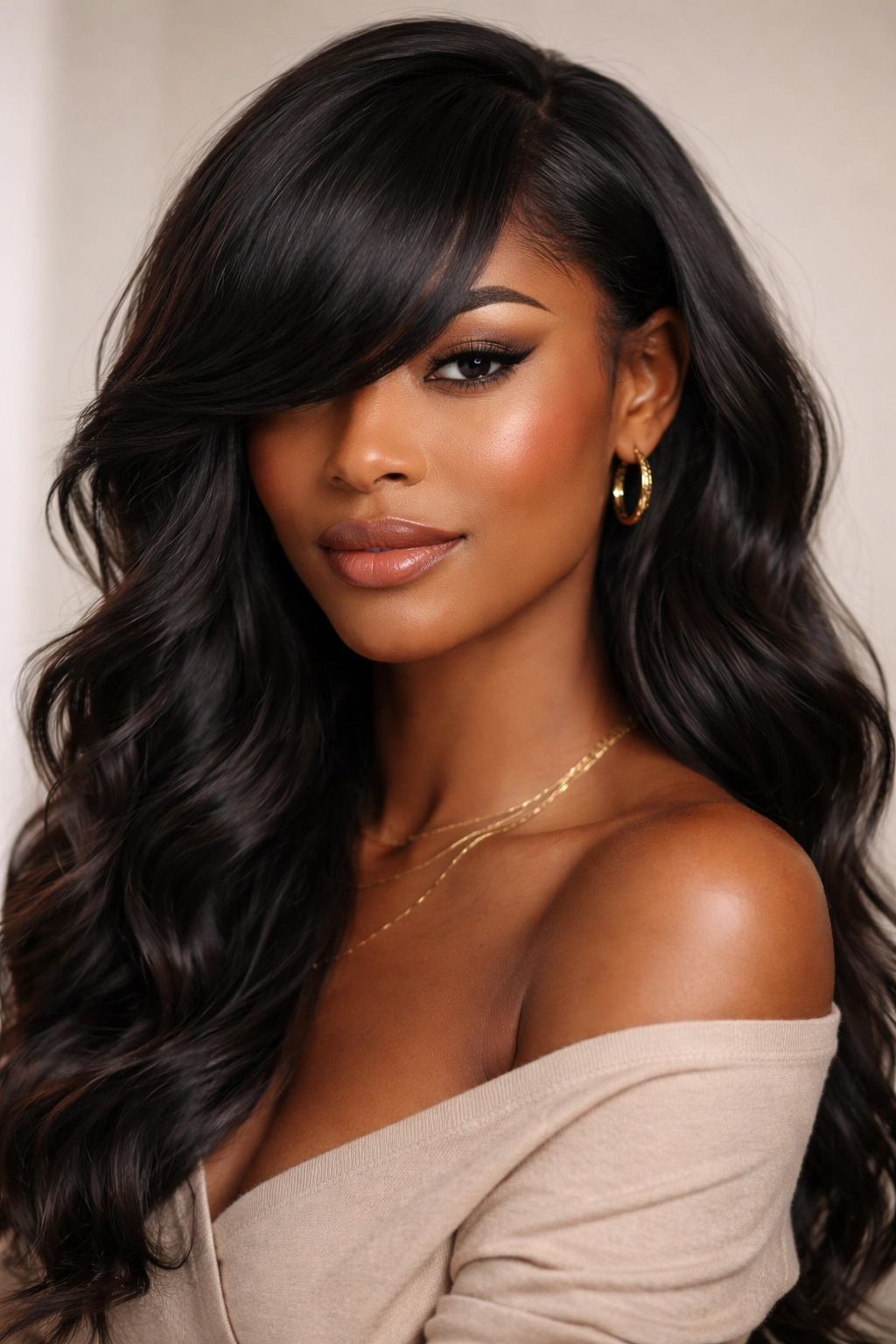
Side-swept bangs are universally flattering because they elongate the face and work with nearly any face shape. When you pair them with deliberate wave definition and pattern, you create a style that feels refined and intentional. Side-swept bangs in Black hair with visible wave texture have a sophisticated quality that reads as controlled and styling-aware rather than accident-prone.
The Face-Shaping Power
Side-swept bangs create a visual diagonal line that elongates your face, which is why they’re so flattering. They also allow you flexibility—on some days your bangs sit more fully across your forehead, on others they tuck more deliberately to the side. This adaptability means the style works even when you’re not in a full styling mood, which is part of its brilliance.
Creating Defined Waves
- Use a curl-defining cream or gel on soaking-wet hair
- Apply product section by section, scrunching upward to encourage wave formation
- Diffuse on medium heat while scrunching, or apply product to wet hair and let it air-dry
- Once dry, you can use a light oil to enhance shine and separation without disrupting the waves
- Refresh your wave pattern on day two with water and minimal product
Worth knowing: Side-swept bangs look intentional even when they’re a little undone. Slight frizz or waves falling slightly differently adds to the sophistication rather than detracting from it.
7. Choppy Textured Bangs With Tousled Waves
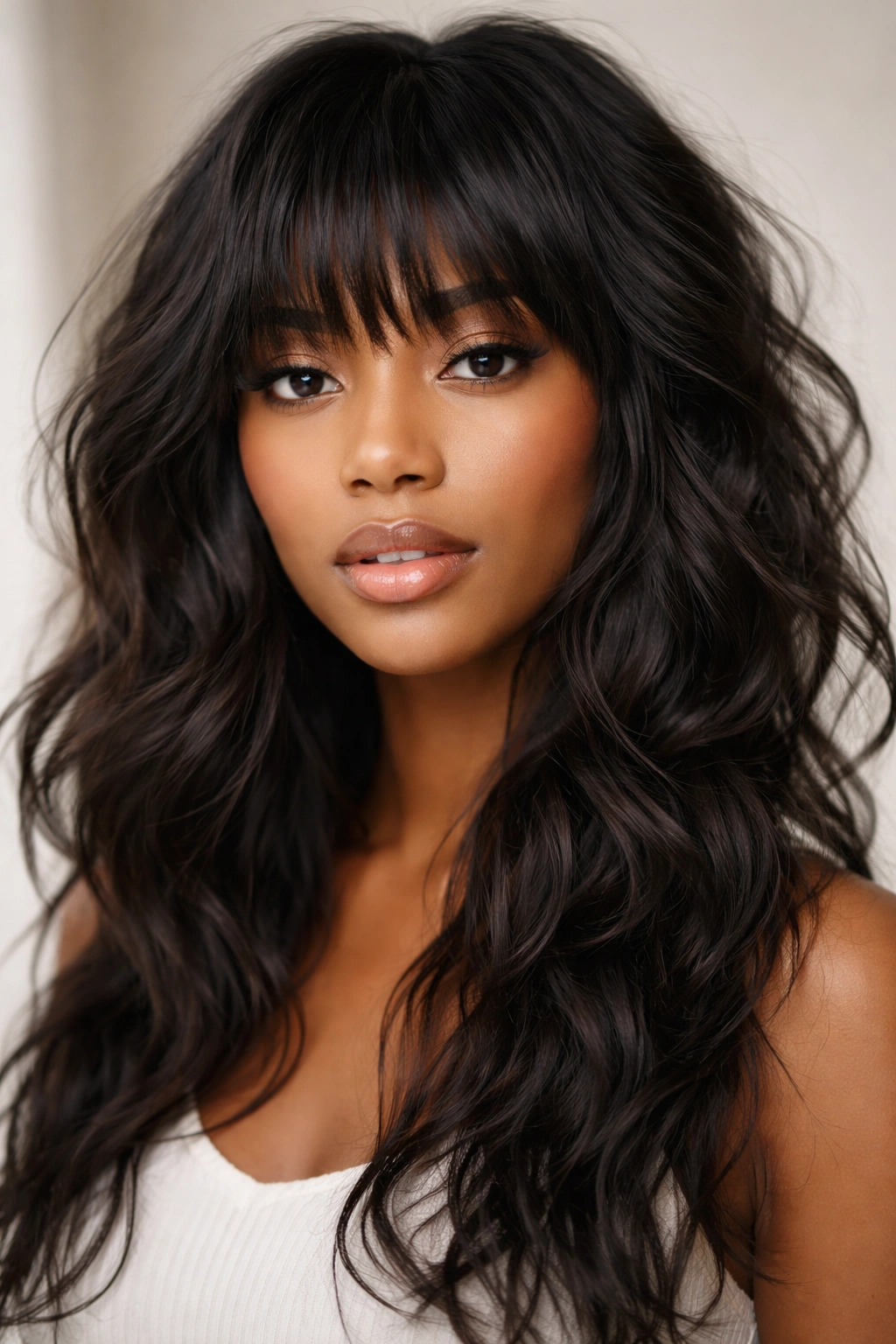
If you want bangs that feel modern and intentionally undone, choppy textured bangs are your answer. Rather than cutting a blunt line, choppy bangs are cut with choppy layers throughout, creating a textured, piece-y effect. This style celebrates imperfection and movement in a way that feels very current. Paired with tousled waves and Black hair texture, choppy bangs feel editorial and fashion-aware.
The Undone-On-Purpose Aesthetic
Choppy textured bangs lean into the natural texture and movement of your waves rather than fighting against them. This means styling is actually simpler—you’re not trying to create a precise line; you’re enhancing texture and creating intentional movement. The bangs look better slightly tousled and piece-y than they do perfectly smooth and uniform.
Styling for Texture
- Apply mousse or a texturizing spray to damp hair before diffusing
- Use your fingers or a curl pick to separate and define individual pieces
- Diffuse on medium-high heat for volume, or air-dry for a softer effect
- Once dry, use a light pomade or wax on your fingertips to piece out individual bang sections
- The style gets better as the day goes on—don’t judge it immediately after styling
8. Extended Bangs Fading Into Layered Waves
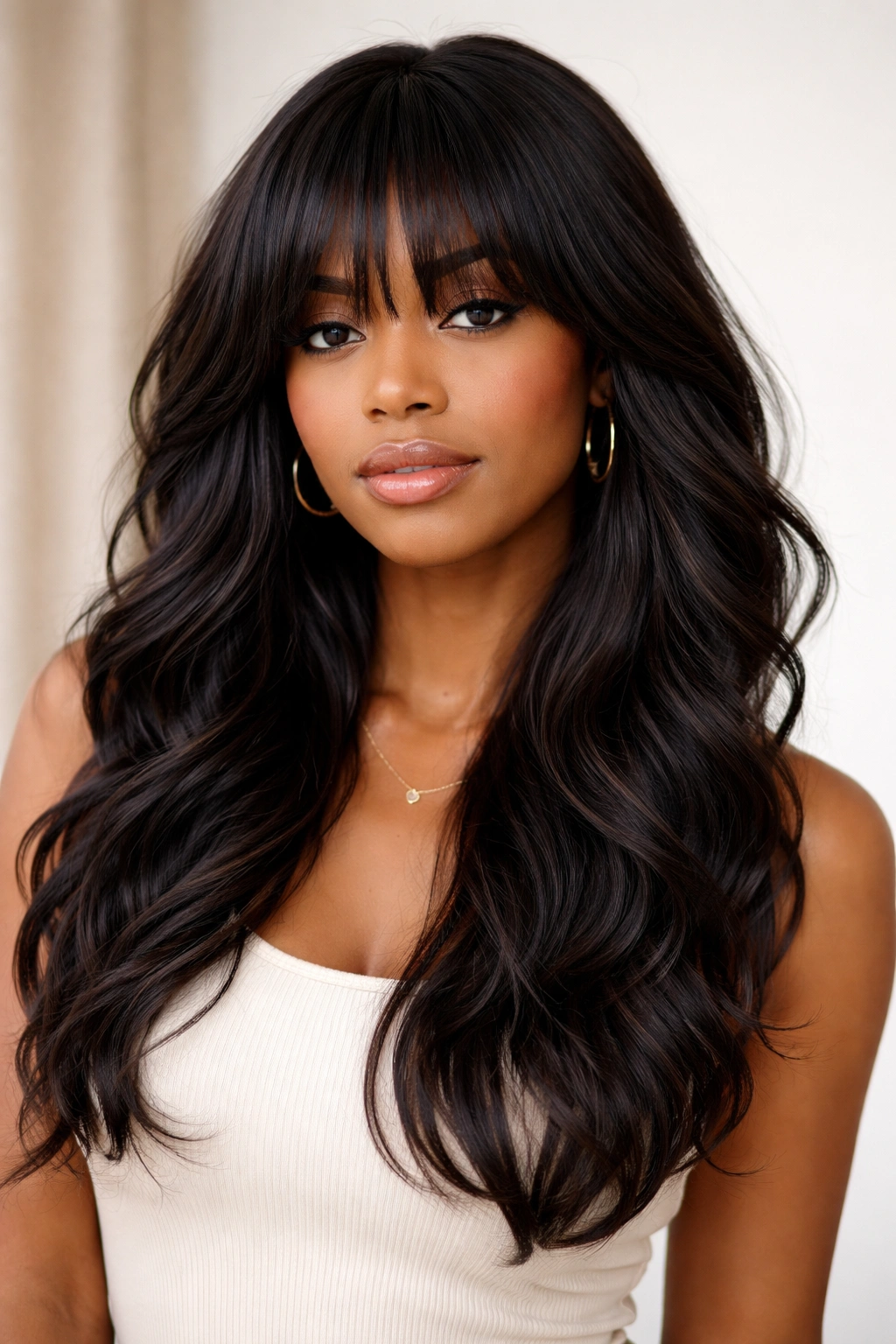
Extended bangs sit just at or slightly below your jawline, offering more coverage than traditional bang styles while still framing your face. When these gradually fade into layered waves throughout your hair, you create a unified look where the bangs feel like a natural extension of your overall cut rather than a separate element. This requires a skilled cut, but the result is worth it.
The Cohesive Design
Extended bangs that fade into layers create a sophisticated silhouette because every section of your hair is working together. Your stylist needs to understand how your waves behave to cut layers that will fall correctly once your hair dries with its natural texture. The payoff is a style that feels intentional and designer-level in its execution.
Getting the Cut Right
- Work with a stylist experienced in cutting wavy and textured hair
- Bring reference photos showing the exact length and texture you want
- Have a consultation about your wave pattern and how your hair shrinks when wet
- Trim every 6-8 weeks to maintain the fade and layer structure
- The style looks best when your waves are healthy, moisturized, and well-defined
9. Half-Up Styling With Bangs and Wavy Crown
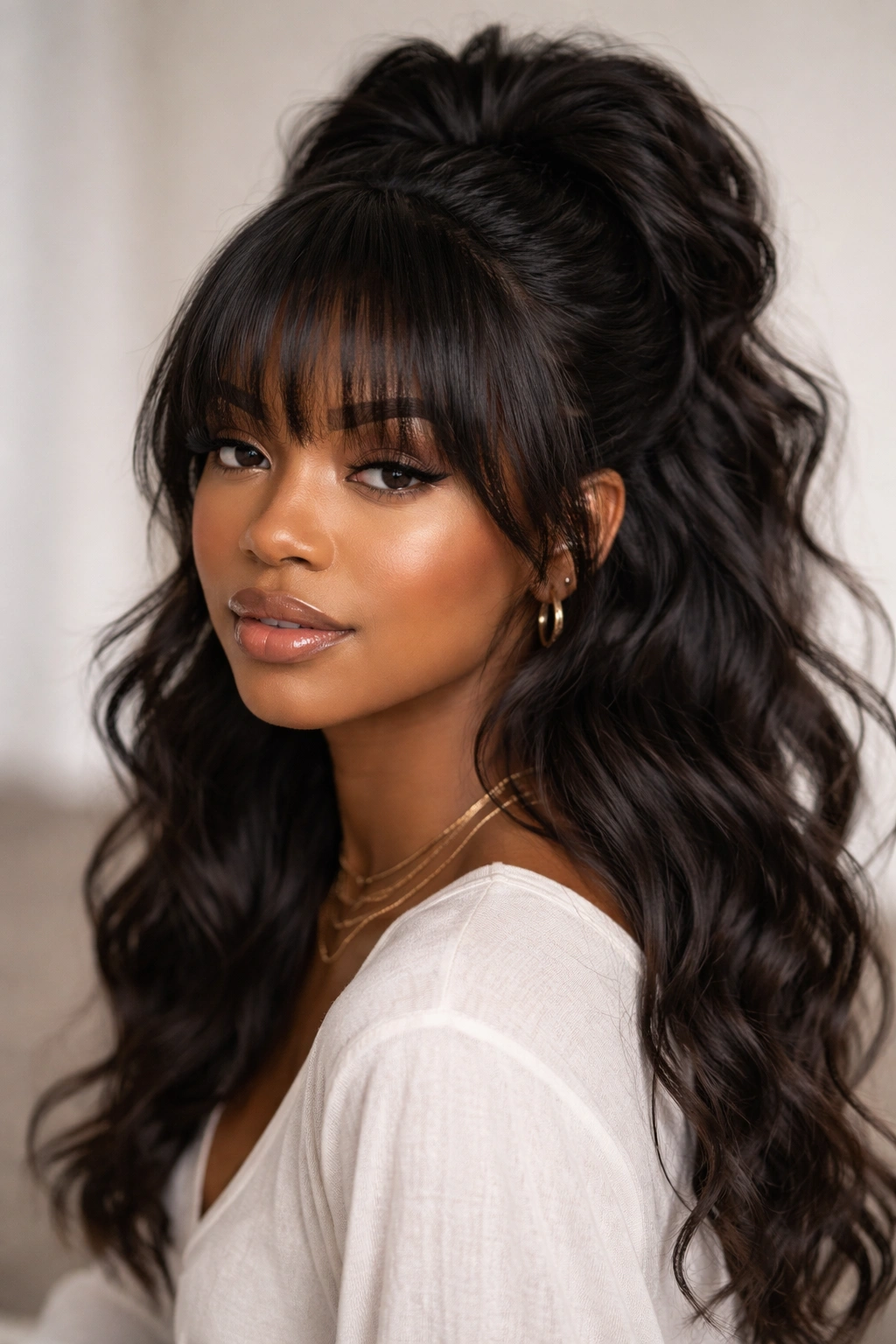
Half-up styles are a cheat code for making any hair look more intentional and styled. When you combine half-up styling with bangs and the natural volume of wavy hair, you get something that feels both polished and effortless. Your bangs frame your face while the half-up section creates volume at the crown and shows off the length and wave pattern of your full hair.
Creating the Volume
The beauty of half-up styling with textured hair is that you’re using your natural wave pattern to create the crown volume rather than fighting against it. Your waves already provide texture and dimension at the crown—you’re just gathering the back section and letting the front and sides frame your face. This works with your hair’s natural tendencies instead of against them.
How to Execute the Style
- Start with clean, damp hair and apply your usual wave-defining products
- Diffuse your hair completely dry, focusing on root lift
- Once dry, take a section from each temple and secure them at the back with a clip or elastic
- Your bangs stay down and frame your face while the back section creates height
- Use a light oil or mousse on your fingers to smooth any flyaways
- The style looks intentional immediately and gets even better on day two
Pro tip: You don’t need your bangs to be perfectly smooth for this style to work. Slightly textured, piece-y bangs actually enhance the look by providing visual interest in the front.
10. Slicked-Back Bangs With Textured Wave Definition
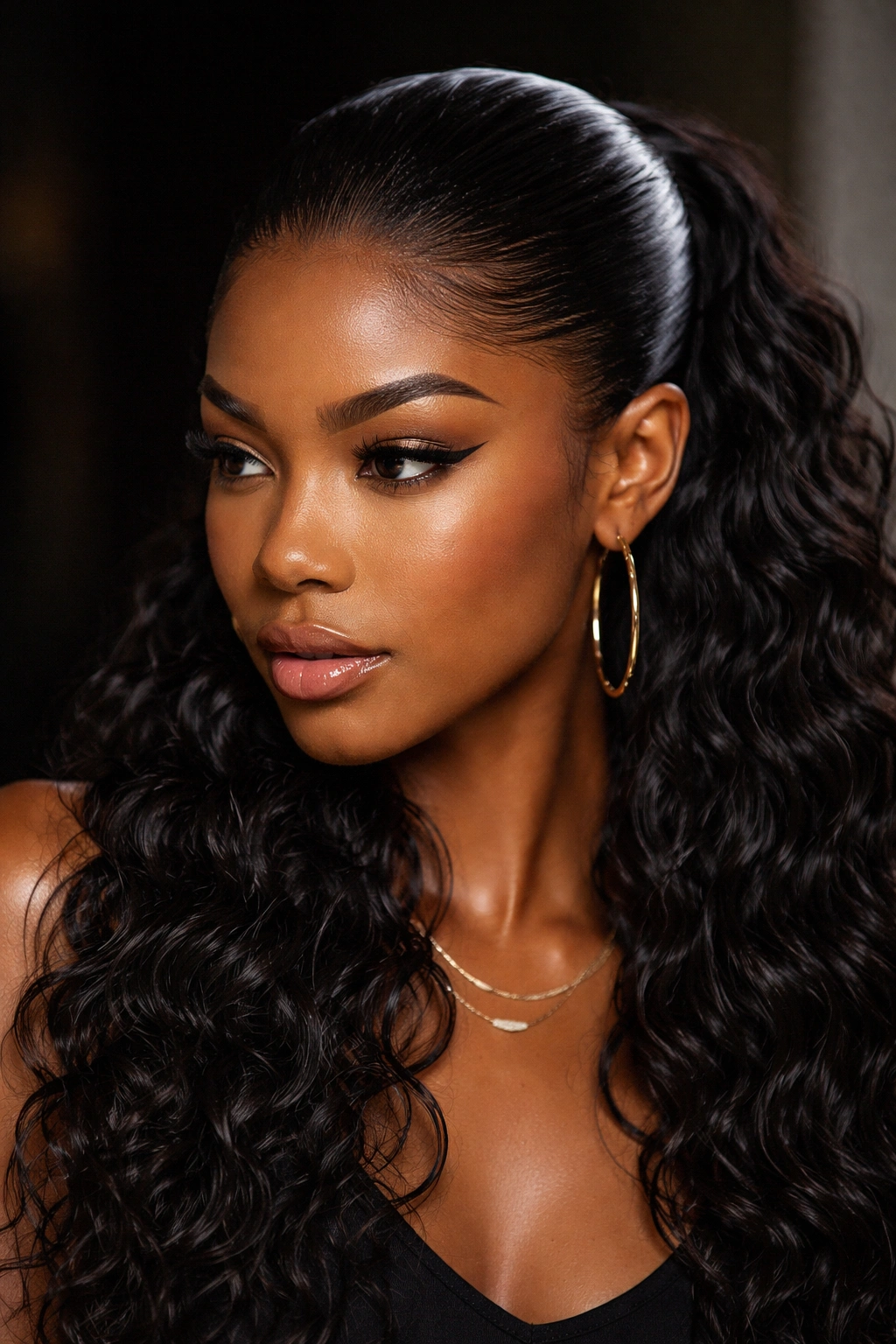
For a bolder statement, try slicking your bangs straight back with a firm gel or pomade while letting the rest of your hair display full wave texture and definition. This creates a striking contrast—the severe geometry of slicked-back bangs against the organic movement of waves. It’s a style that reads as intentional and artistic rather than practical or understated.
The Contrast Is the Point
Slicked-back bangs are bold because they’re not trying to be subtle. You’re creating a visual opposition between smooth and textured, severe and organic. This works particularly well with Black hair because the depth and richness of the color makes both the smooth bangs and defined waves appear more dramatic and intentional.
Achieving the Look
- Apply a strong-hold gel to damp hair, focusing on the bang area
- Smooth your bangs straight back and secure with bobby pins while the gel sets
- Let the rest of your hair air-dry or diffuse to define your waves
- Once everything is dry, remove the pins and your bangs should hold the slicked-back shape
- Use a light pomade or edge control on your hairline for a polished finish
- Refresh daily with a small amount of gel applied to your fingertips
11. Asymmetrical Bangs With Diagonal Wave Pattern
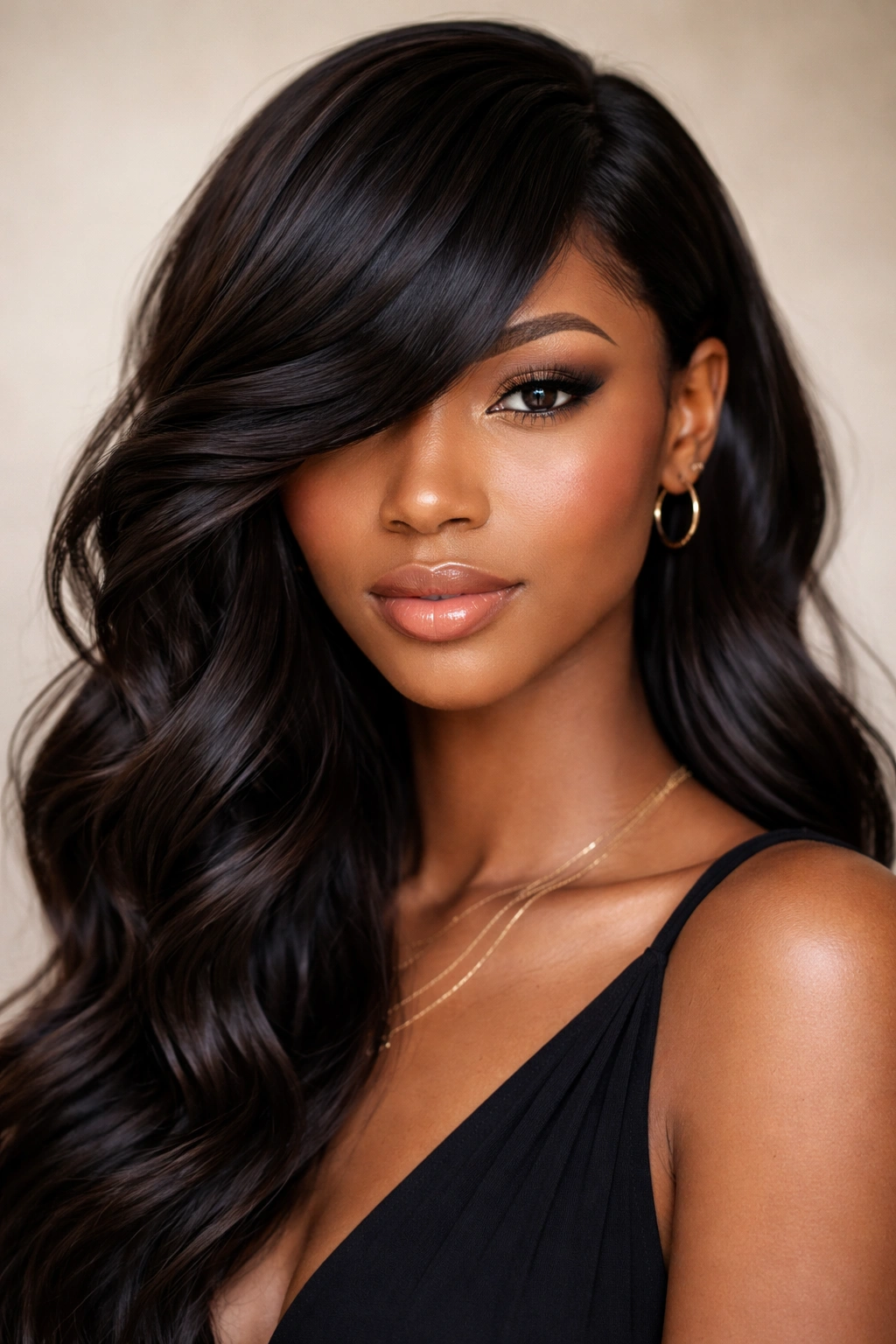
Asymmetrical bangs are longer on one side than the other, creating a diagonal line across your forehead. When paired with waves that you deliberately style to follow the same diagonal direction, you create a cohesive, artistic look. This style works beautifully with Black hair and natural waves because the texture reads as intentional rather than accidental.
The Artistic Quality
Asymmetrical bangs are statement-making without being as extreme as micro bangs or choppy styles. They read as fashion-aware and deliberately artistic. The diagonal line you create with both your bangs and your wave pattern pulls the eye in a flattering direction and creates movement across your face.
Styling the Diagonal
- Apply wave-defining product to damp hair
- As you diffuse, direct your waves toward the longer side of your bangs
- Use your hands to encourage waves to follow the diagonal direction
- Once dry, use a light oil to enhance the wave pattern and direction
- You can refresh this style on day two by misting with water and redefining the wave direction
12. Braided Bangs Integrated Into Cornrow Style
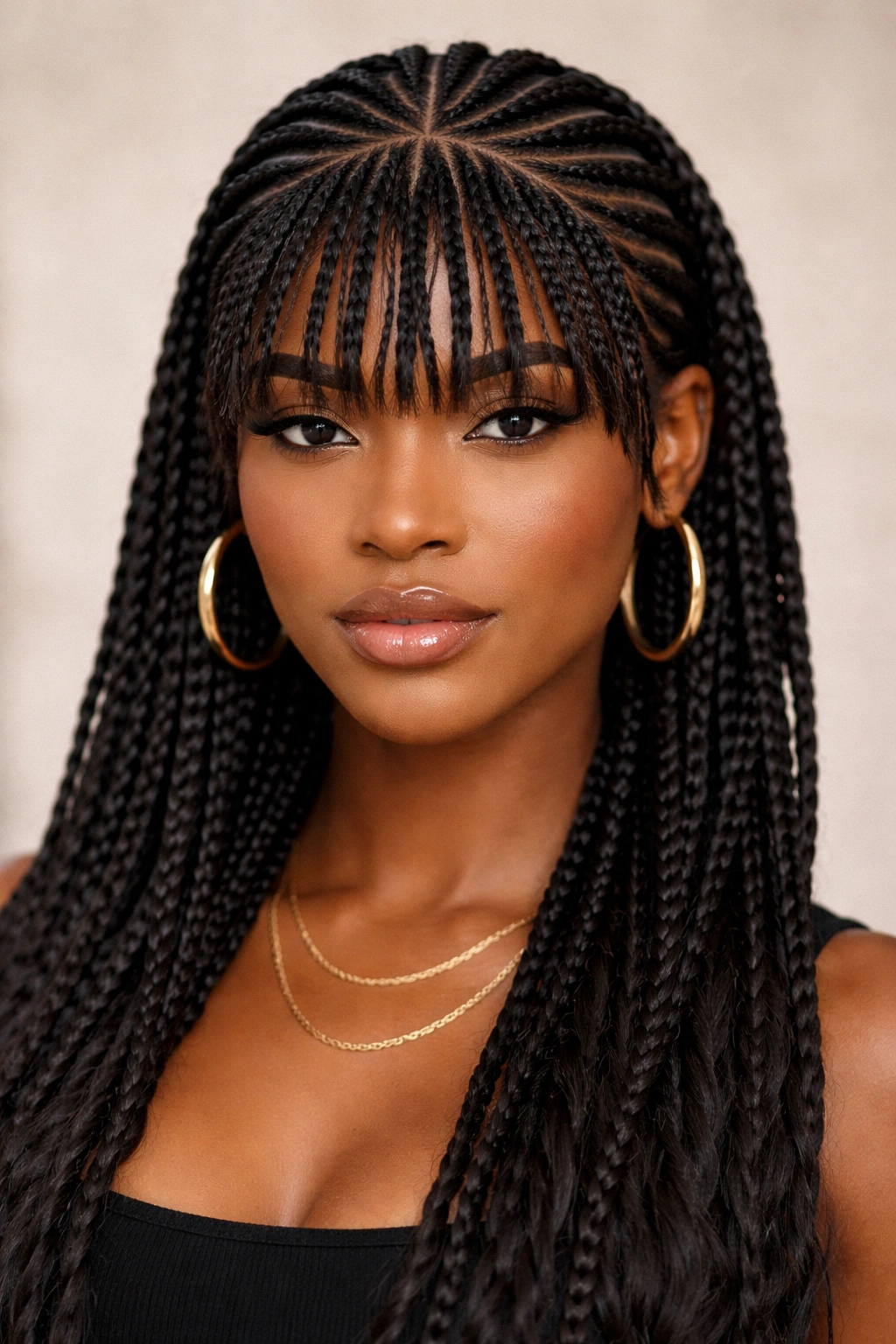
For a protective style with flair, try incorporating braided bangs directly into your overall braided look. This might mean cornrows that frame your bangs as part of the design, or actual braided bangs that sit above or between cornrows. This creates a unified look where your bangs aren’t a separate element—they’re part of the overall braided design.
Design Integration
Braided bangs as part of a larger braided style create cohesion and show sophistication in your styling choices. Rather than putting straight hair bangs on top of braids, you’re creating a unified design where every element works together. This approach requires more thought and planning at the braiding stage.
Execution and Longevity
- Plan your braiding design with your stylist before you begin
- Decide whether your braided bangs will sit above or be incorporated into your cornrow pattern
- Keep your edges and scalp moisturized throughout the protective style period
- Braided styles typically last 2-4 weeks depending on how well you maintain the edges
- You can refresh by gently rebraiding any sections that have loosened
- Wear a bonnet or silk scarf at night to maintain the style’s longevity
13. Flipped Wavy Bangs With Curved Volume
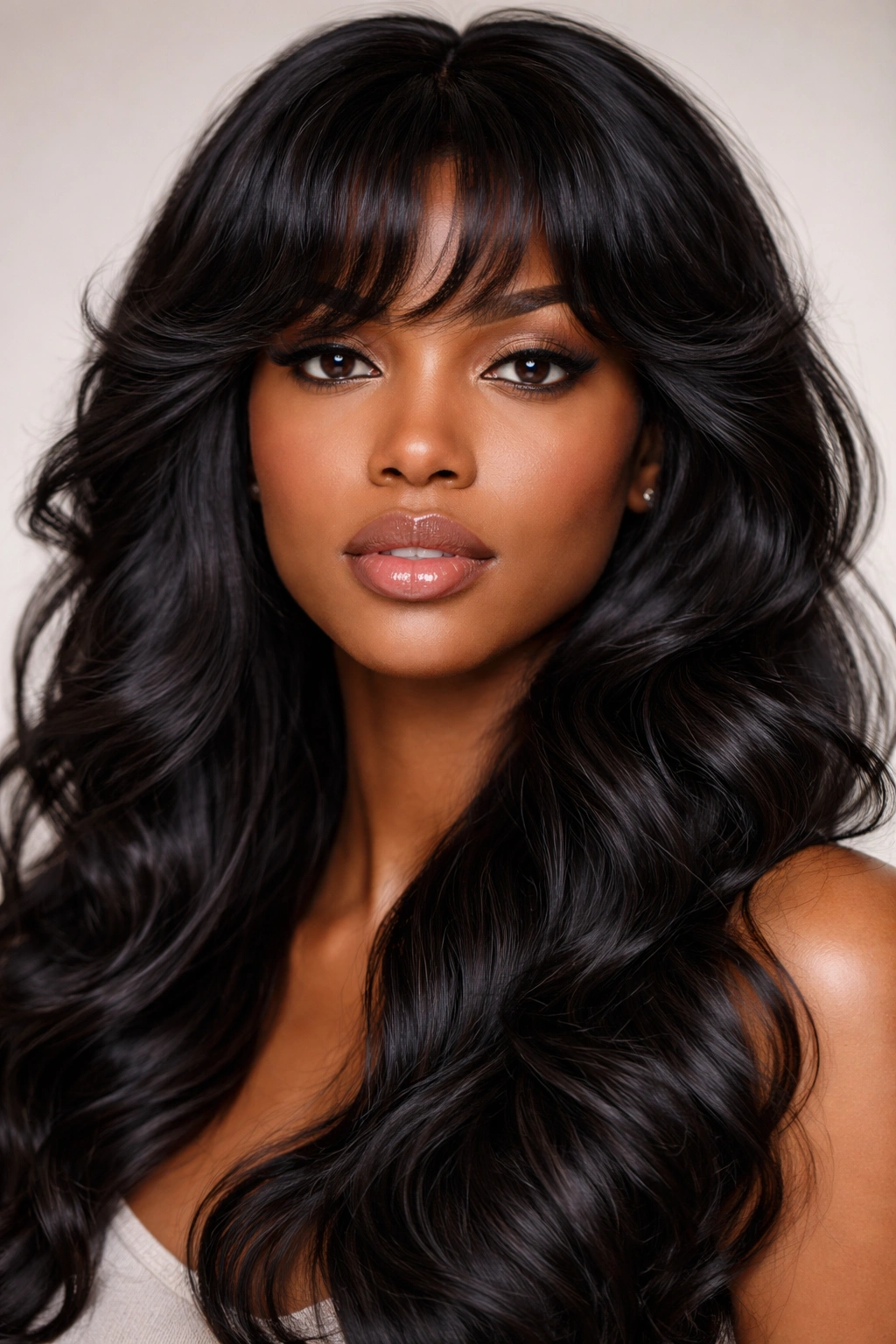
Flipped bangs are styled outward and slightly upward, creating a curved, swept effect. When you pair this with overall wave volume and definition, you get a style with incredible dimension and movement. This approach feels fun and modern without being as severe as some other bang styles.
The Flip Technique
The flip comes from how you style your bangs as they dry—using a brush or your fingers to direct them slightly upward and outward as you diffuse. The curve and flip you create makes your face appear brighter and more open. This works beautifully with natural wave texture because the flip integrates with your overall wave pattern rather than standing apart from it.
Creating and Maintaining the Flip
- Apply curl cream or mousse to soaking-wet hair
- As you diffuse, use a round brush or paddle brush to direct your bangs upward and slightly outward
- Alternatively, you can pin your bangs up while they dry and remove the pins once they’re set
- Your waves should be equally volumized to balance the flipped bangs
- Refresh with water and light product on day two or three
Worth knowing: The flip looks better slightly exaggerated than you might think. What feels overdone in person often photographs beautifully.
14. Crimped Textured Bangs With Wavy Layers
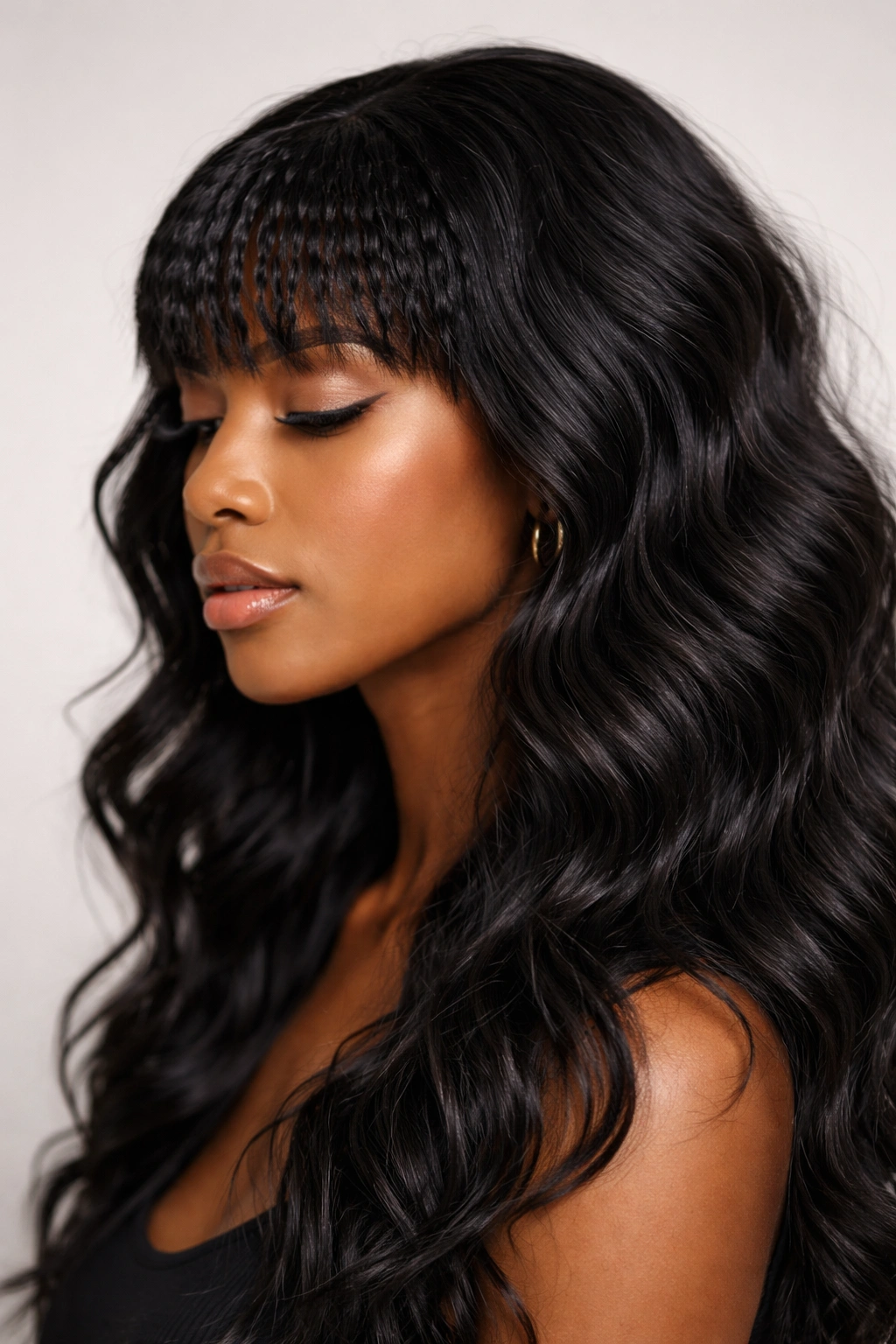
For something completely different, try crimping your bangs to create added texture and volume, then pairing that with softly wavy layers throughout your hair. Crimped bangs feel playful and fashion-forward, especially when the crimped texture contrasts with softer waves in the rest of your hair. This creates visual interest and a style that photograph beautifully.
The Texture Play
Crimped bangs are bold, but they work because they’re clearly intentional—you’re not trying to hide the crimping. When paired with softer waves throughout your hair, the crimped bangs become a design element rather than a texture mishap. This works particularly well with Black hair because the texture and depth make crimped elements read as sophisticated.
Creating Crimped Bangs
- Blow-dry your bangs smooth or with slight wave
- Use a crimping iron (smaller size works best for bangs) to crimp small sections
- Crimp throughout your bang section, varying the direction of crimps for texture
- Finish your wave styling on the rest of your hair
- Use a light mousse or styling spray to enhance texture without flattening the crimps
- This style lasts a few days before needing restyling
15. Soft-Focus Bangs With Loose Waves and Volume
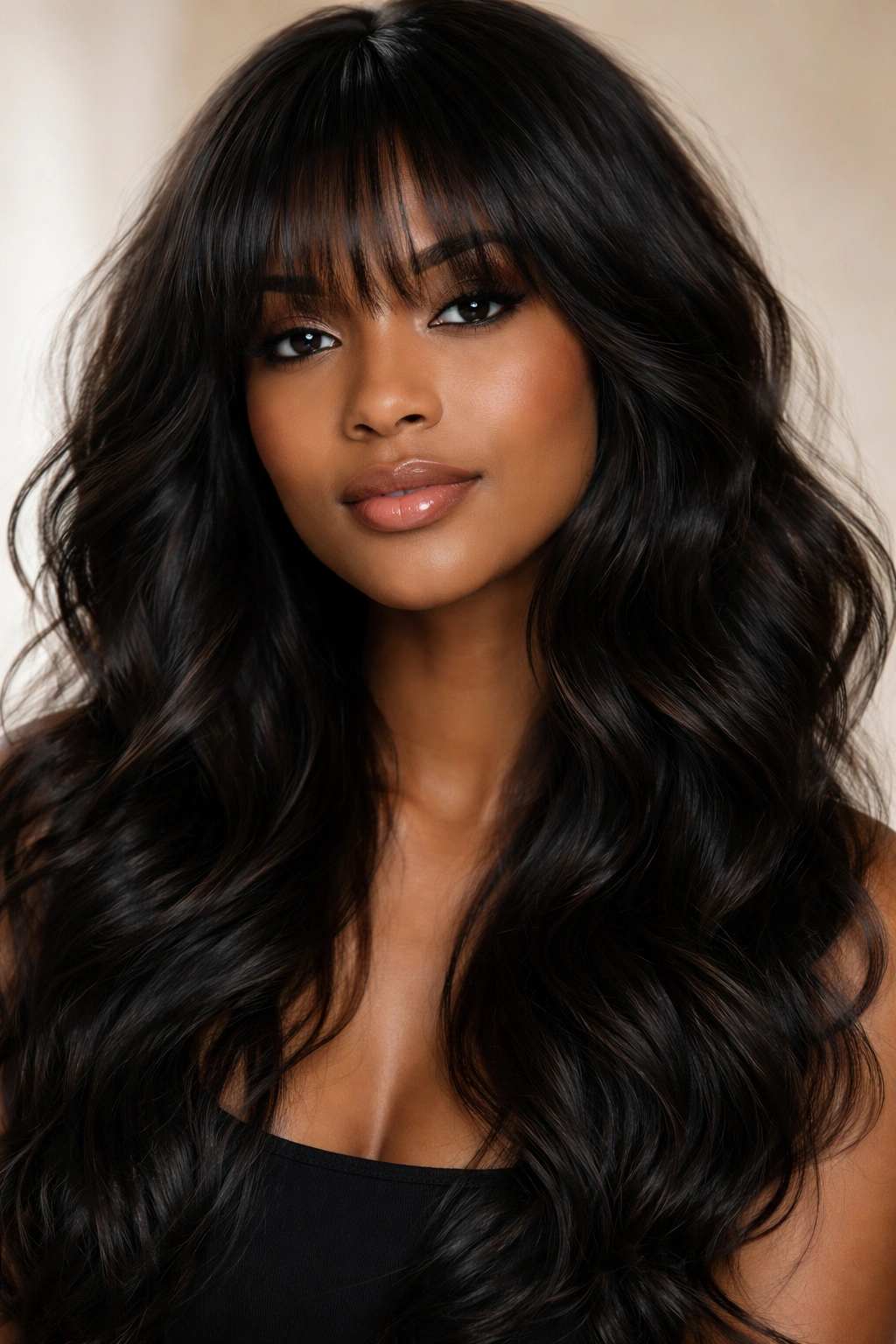
If you want bangs that feel romantic and slightly soft-focus, this approach uses longer bangs that sit above your eyebrows but have softer, less defined edges. The styling approach emphasizes loose, voluminous waves throughout your hair rather than defined curl patterns. The overall effect is dreamy and romantic without feeling overly styled.
The Soft Aesthetic
Soft-focus bangs work by slightly diffusing the edges and letting your wave pattern be loose and relaxed rather than tightly defined. This style depends on healthy, hydrated hair that holds waves beautifully without requiring crisp definition. The bangs should feel like a natural frame rather than a deliberate design choice.
Achieving the Soft Look
- Use a smoothing cream or defining cream designed for loose waves
- Apply product to damp hair and gently scrunch while diffusing on low heat
- Let the diffuser sit without moving too much—you want gentle drying rather than aggressive styling
- Once dry, use your fingers rather than a brush to separate and fluff your waves
- Avoid products that create crisp definition; instead choose ones that enhance softness
- The style improves on day two when waves relax and soften
16. Colored Underpiece Bangs With Textured Waves
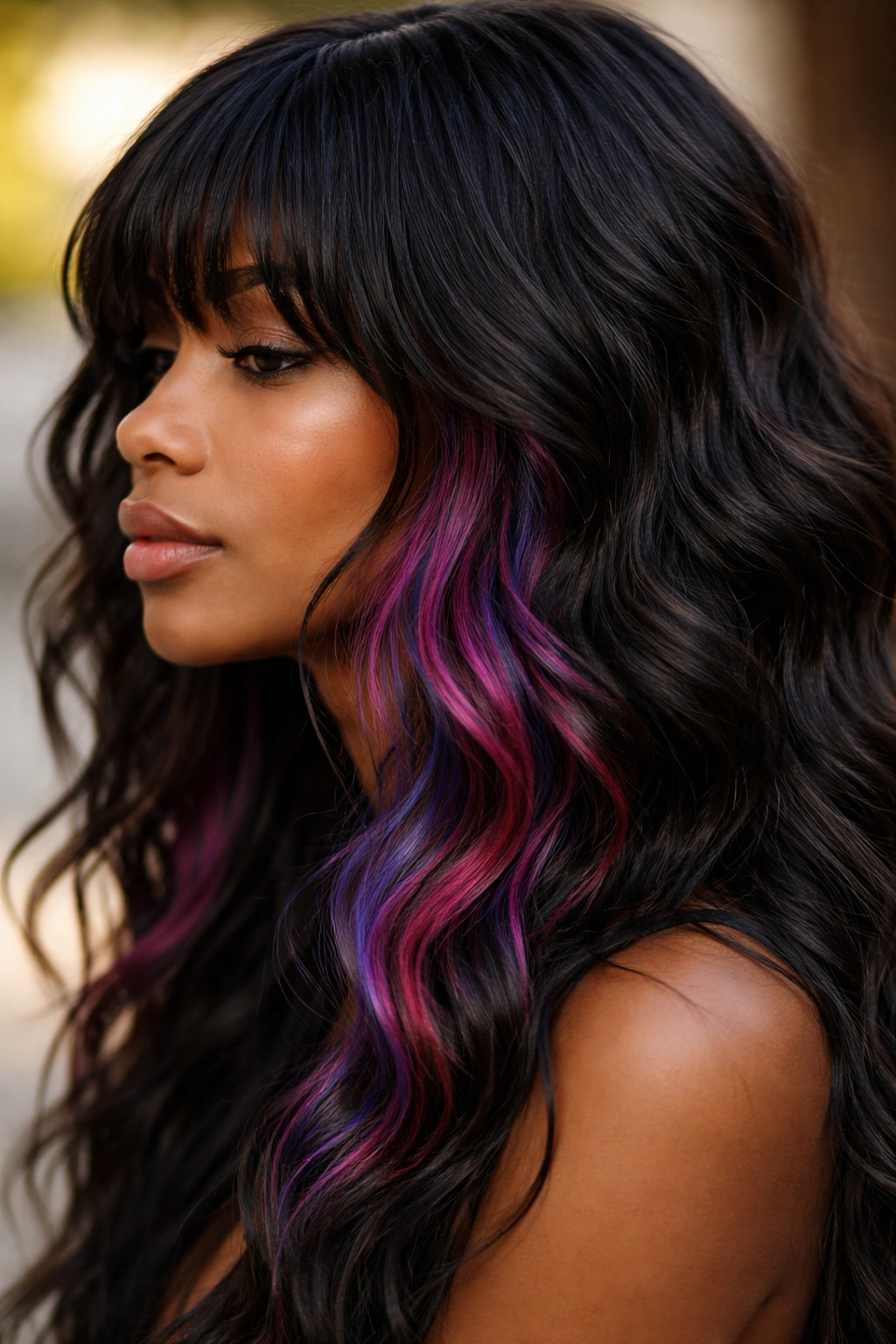
For maximum visual impact, consider coloring just your underpiece—the section of hair at the back underneath the top layer—a contrasting color, while keeping your bangs and top layers your natural color or a coordinating shade. This creates dimension and visual interest that’s revealed as you move. Combined with textured waves, this creates a sophisticated, multi-dimensional look.
Creating Dimension Through Color
Underpiece coloring works beautifully with textured hair because your waves create movement that reveals the hidden color as you move and style. From the front, people see your bangs and natural color, but as soon as you move, the colored underpiece creates visual drama and sophistication. This is a high-investment style that makes a lasting statement.
Maintenance and Styling
- Work with a colorist experienced in underpiece coloring and textured hair
- The color placement requires skill to look intentional and balanced
- Plan for color maintenance every 6-8 weeks depending on growth
- Style your waves with definition to ensure the underpiece color shows through the wave pattern
- The style photographs beautifully and looks different from every angle
Final Thoughts
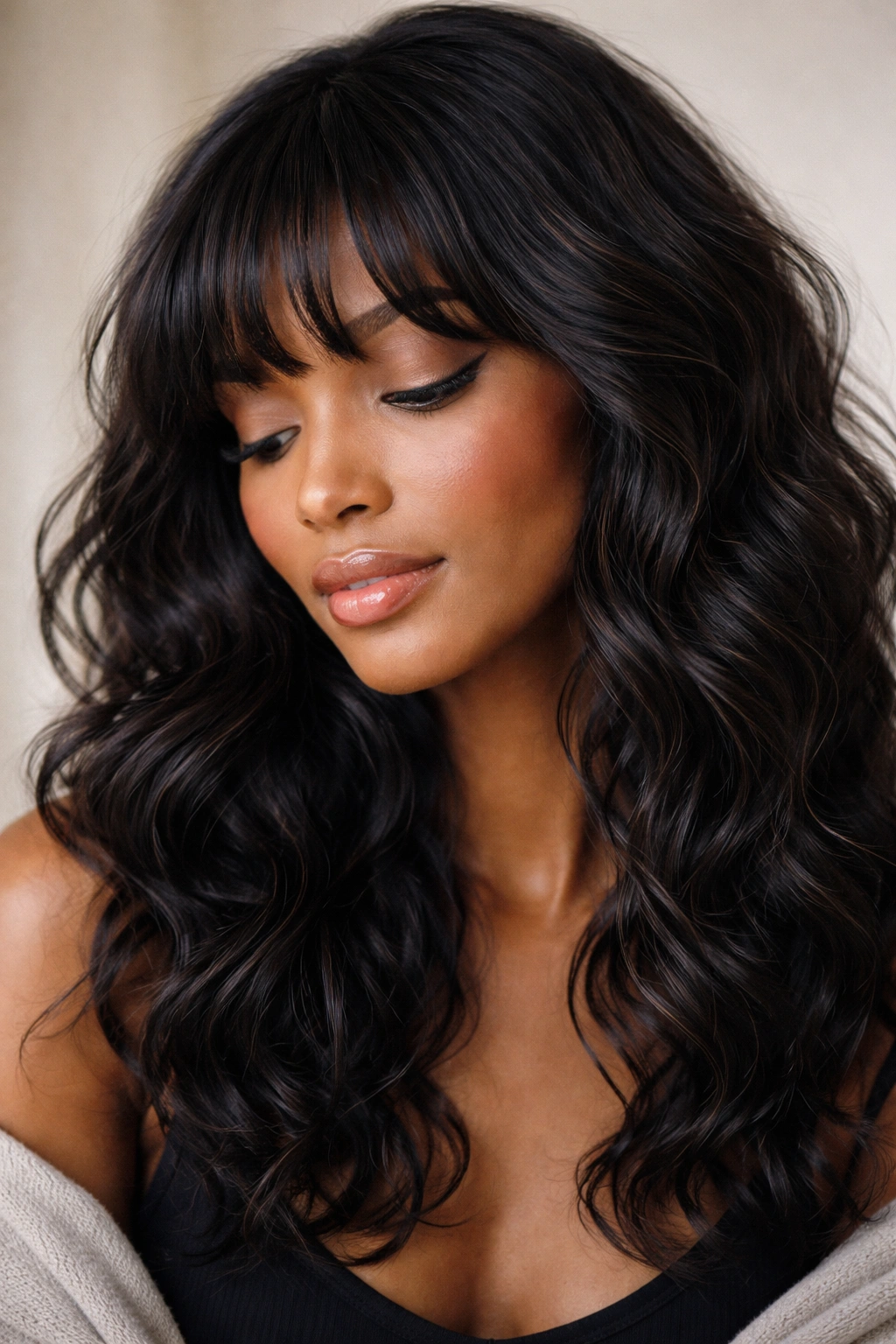
Bangs and wavy hair in Black textures create possibilities that straighter hair simply can’t replicate. The natural movement, depth, and texture you’re working with means you’re not fighting against your hair to achieve these styles—you’re working with its inherent properties. The key to making any of these 16 styles work is understanding your specific wave pattern, knowing how your hair responds to different styling techniques, and finding products formulated for textured hair rather than products designed for other hair types.
The best style for you depends on your lifestyle, your willingness to style regularly, and honestly, how bold you want to feel. Some of these styles are everyday wearable; others are clearly statement-making. What matters is choosing something that makes you feel confident and that you’ll actually want to style. Your bangs should enhance your face and work with your waves, not against them.
Remember that how your bangs look depends significantly on hydration, product choice, and how well you understand your specific wave pattern. Invest in a good haircut from someone experienced with textured hair and bangs, use products formulated for your hair type, and don’t judge a style immediately after styling—many of these looks improve as your waves settle in and relax. Your bangs and waves are a powerful combination when they’re working together intentionally.
