



Long hair with bangs is a striking combination, and when you add waves or curls into the mix, the possibilities become even more exciting. The texture gives bangs natural movement and dimension that blunt cuts could never achieve on straight hair. Wavy and curly hair types can actually work beautifully with bangs—they just need the right style, the right approach to maintenance, and an understanding of how your specific curl pattern will interact with the cut.
The challenge many people with waves and curls face is finding bangs that don’t fight against their natural texture. Heavy, blunt bangs can look overly styled and rigid, while choppy layers can frizz uncontrollably if you’re not careful about moisture and technique. The key is choosing a bang style that complements your curl pattern rather than fighting it—and then learning how to style and maintain it so the bangs stay defined and beautiful.
What makes bangs work so well with long wavy and curly hair is the framing power they bring to your face. They add instant dimension, create the illusion of fuller hair at the crown, and give you countless ways to style the overall look depending on your mood or the occasion. Whether you want soft, romantic waves, bouncy spirals, or tousled beach curls, there’s a bang style that will enhance rather than complicate your routine.
Let’s explore fifteen distinct long-length styles with bangs that work exceptionally well for wavy and curly hair—each with specific styling techniques and maintenance tips tailored to textured hair.
1. Feathered Long Bangs With Loose Waves
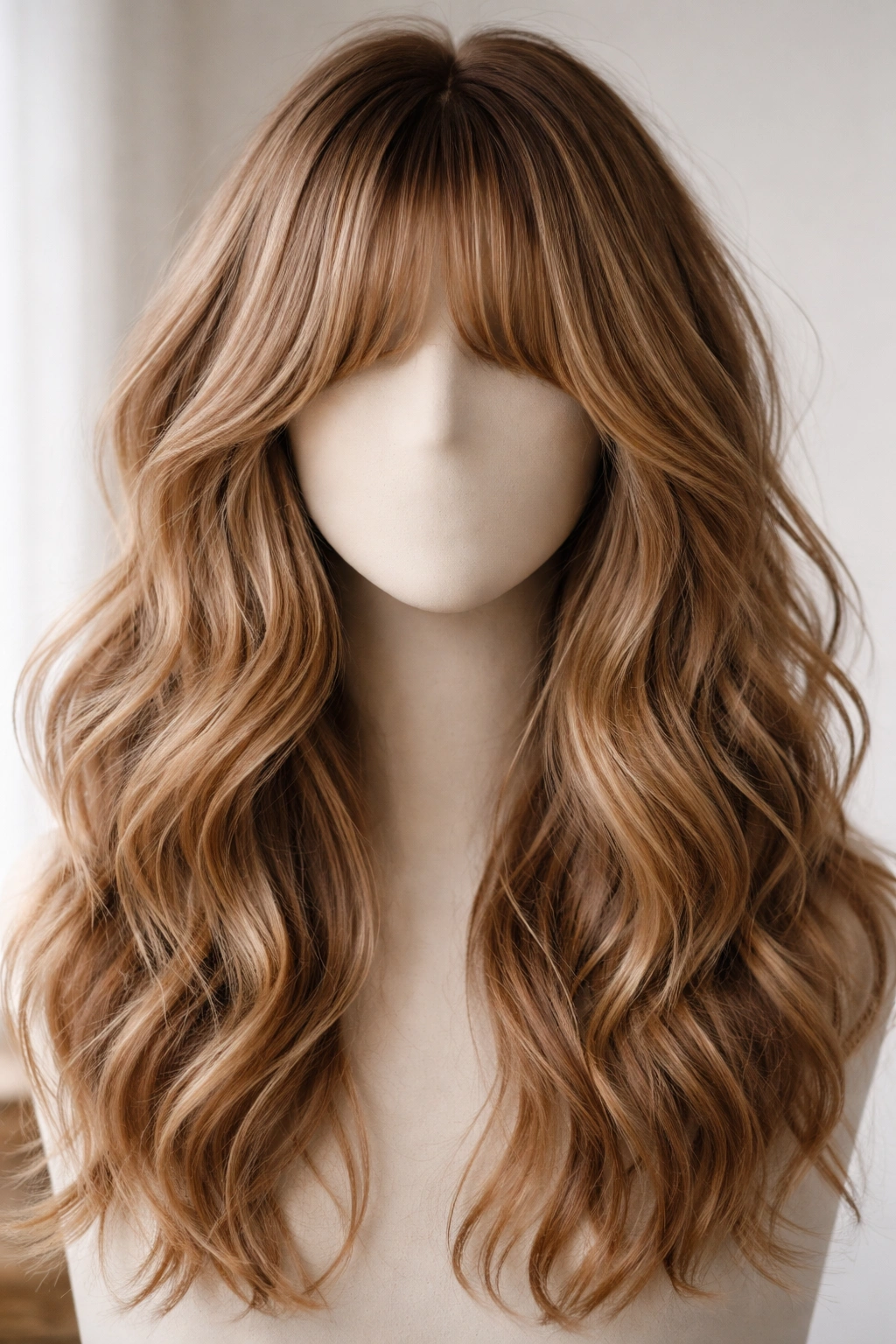
Feathered bangs are cut at different lengths, creating a soft, graduated look that moves with your waves instead of against them. This style starts shorter at the center and gradually extends toward the sides, so the bangs blend seamlessly into the longer length and create a flattering frame for any face shape.
Why This Works for Wavy Curly Hair
Feathered bangs don’t fight your natural texture—they use it. The varying lengths mean no single hair has to maintain a blunt edge, which reduces frustration when you have natural waves. The bangs dry with movement built in, and they look intentional rather than undone, even on days when you’re not styling them to perfection.
Styling Tips and Techniques
- Blow-dry the bangs on a medium setting, directing them toward the side you prefer. Use your fingers or a paddle brush to create soft movement as they dry.
- The feathered layers should graze your eyebrows or fall just slightly longer—this prevents them from looking too severe or creating a heavy shadow across your eyes.
- On days when you want more definition, apply a curl-defining cream to damp bangs and scrunch them slightly with your hands as they air-dry.
- The rest of your long hair can be styled in loose waves or spirals without any special coordination needed—the feathered bangs complement any curl pattern beautifully.
Pro tip: Feathered bangs often look best when you have at least a medium density of hair; sparse hair can look thinner with this cut. If you have finer hair, ask your stylist for slightly thicker feathering to maintain fullness.
2. Curtain Bangs With Voluminous Ringlets
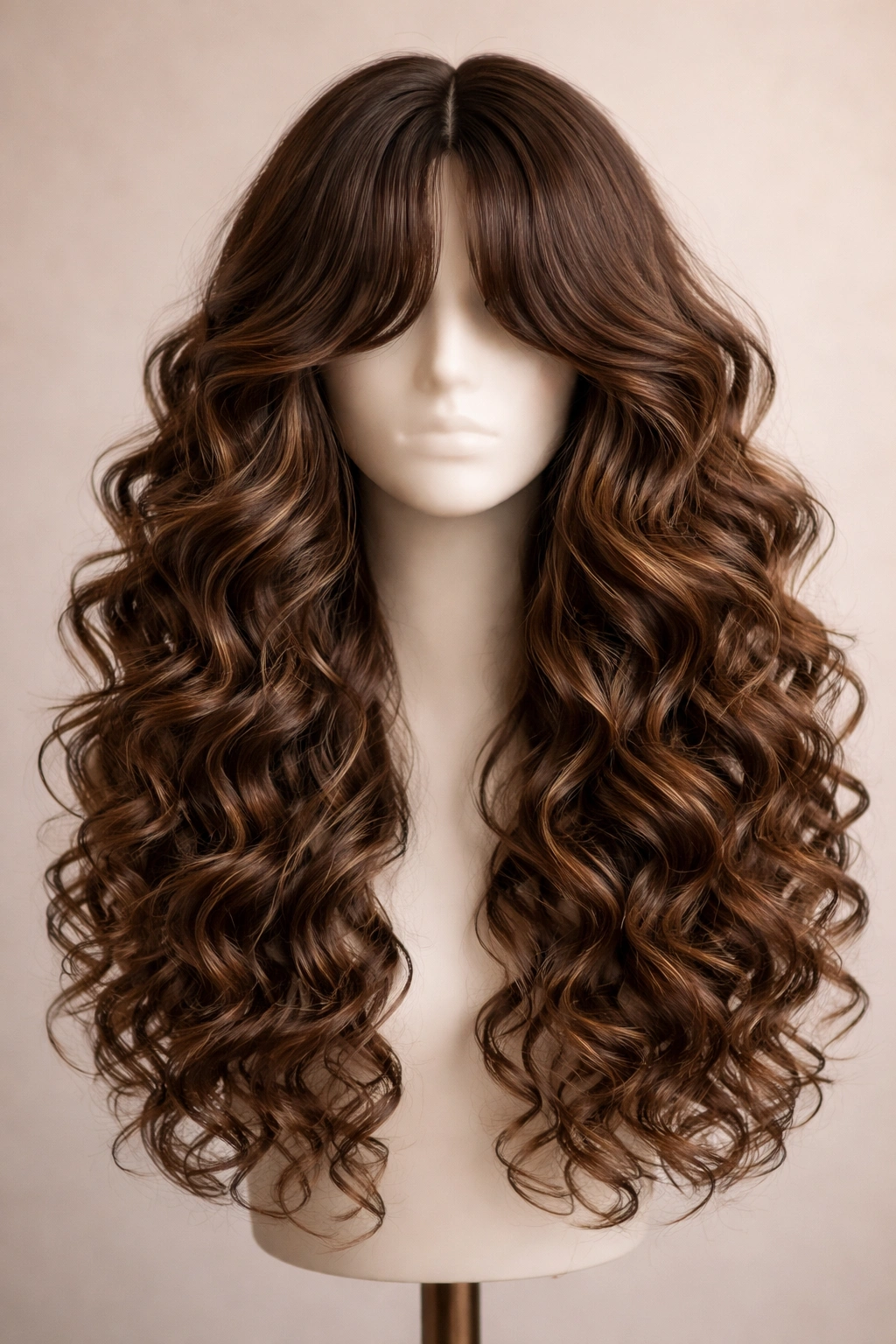
Curtain bangs part naturally in the center and sweep toward both sides of your face like a frame. They’re one of the most forgiving bang styles for wavy and curly hair because they’re designed to move and separate rather than stay put in a single shape. Paired with long, voluminous ringlets or spirals, this combination creates a romantic, effortless aesthetic.
Why This Works for Wavy Curly Hair
Curtain bangs actually require movement to look good, which means your natural texture is an asset, not a liability. The center part allows each side to dry and style independently, so your curl pattern naturally enhances the curtain effect. There’s built-in forgiveness here—if one side dries curlier than the other, it still looks intentional.
Styling Tips and Techniques
- Start with damp hair and apply a curl-enhancing mousse or gel to the bangs specifically, encouraging them to spiral or wave outward rather than hang straight down.
- Use a diffuser attachment on your blow dryer to dry the bangs while cupping them gently in your hands, allowing the curl to form without disrupting the wave pattern.
- The rest of your hair can be styled in loose waves, defined ringlets, or even natural air-dried curls—curtain bangs work with all of these.
- Pin the bangs up while the rest of your hair dries, then release them last for maximum volume and definition.
Worth knowing: Curtain bangs tend to grow out gracefully, so you can extend the time between trims. As they grow, they naturally blend into your longer length, making them a low-maintenance option for people who hate frequent salon visits.
3. Wispy Textured Bangs With Beach Waves
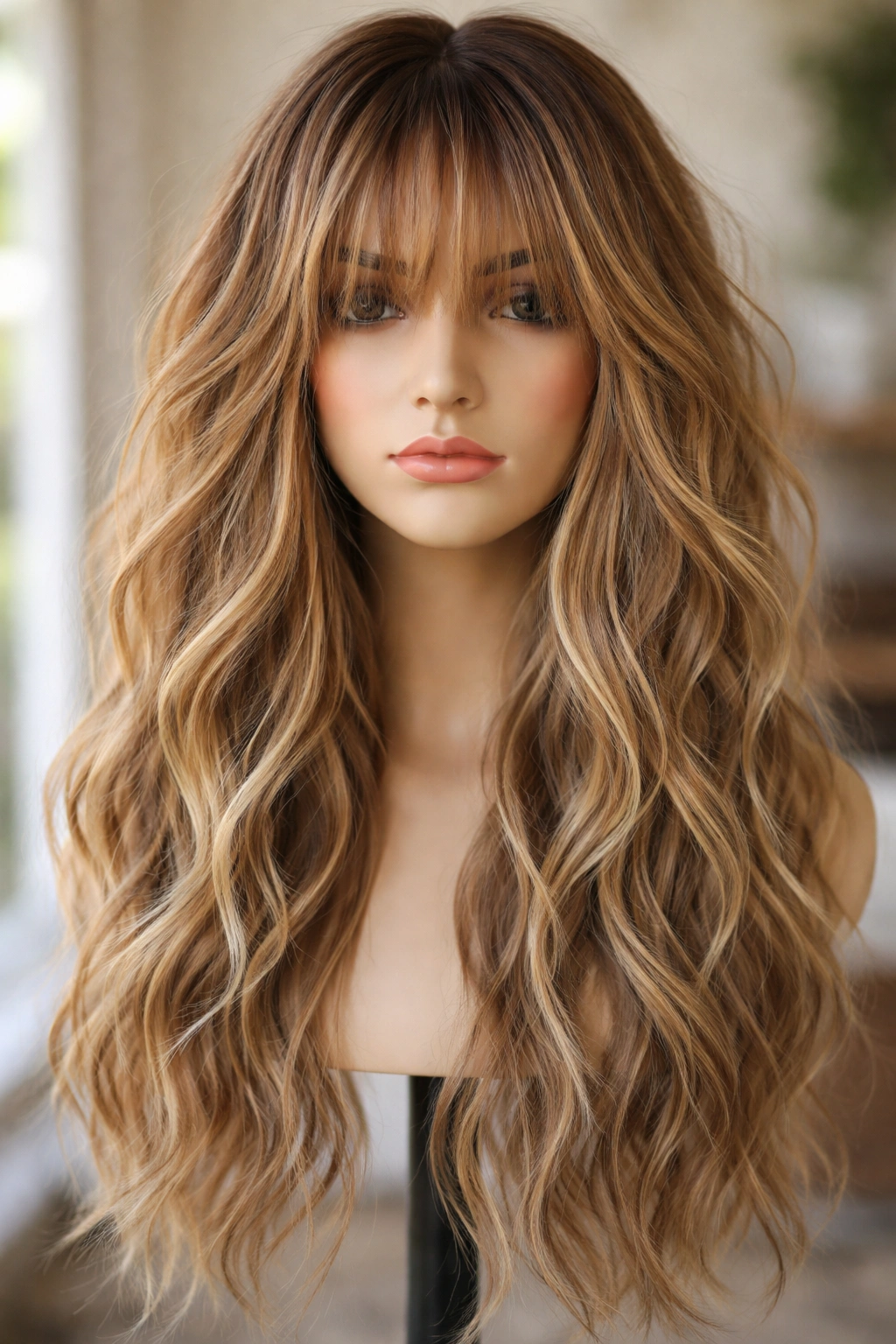
Wispy bangs are cut with choppy, irregular lengths using a technique that creates texture throughout the cut, not just at the tips. Instead of feathering that creates longer, flowing layers, wispy bangs have short, broken-up pieces that mimic the natural texture of waves and curls. Paired with loose, tousled beach waves throughout your long hair, this style reads as deliberately undone and effortlessly cool.
Why This Works for Wavy Curly Hair
Wispy bangs are designed to mimic natural texture, so wavy and curly hair is actually the ideal base for this look. The individual broken-up pieces of the bangs dry with their own natural wave or curl, creating a lived-in, beachy effect that looks more polished than it does high-maintenance.
Styling Tips and Techniques
- Use a sea salt spray on damp bangs and hair to enhance the naturally textured feel. This product adds grip and definition without making anything look greasy or overdone.
- Rough-dry your bangs with a blow dryer on a low setting, using your fingers to tousle and separate the choppy pieces as they dry.
- You can achieve this look without blow-drying by applying a lightweight curl cream to damp bangs and hair, then air-drying or using a diffuser for added volume.
- Tousle the bangs forward and to the side with your fingers once they’re dry; resist the urge to brush them smooth, as smoothing defeats the purpose of the choppy cut.
Insider note: This style benefits from a bit of texture powder or dry shampoo even on freshly washed hair—it adds grip and keeps the wispy, broken-up effect from falling flat by the end of the day.
4. Brow-Skimming Bangs With Tight Coils
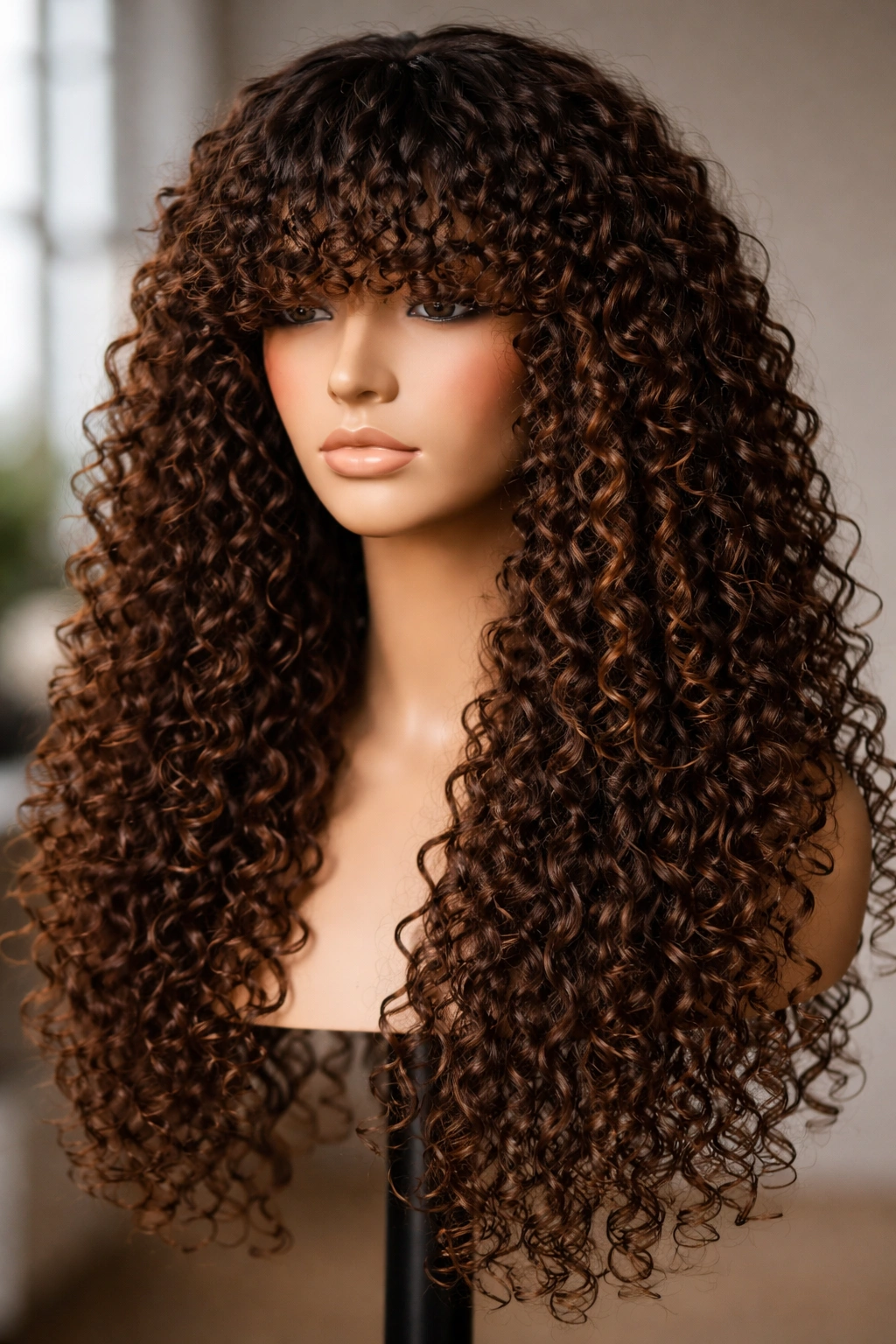
Brow-skimming bangs just barely graze your eyebrows, creating a bold frame for your face without covering your eyes. They work beautifully on tightly coiled or densely textured curly hair because the natural curl pattern creates volume and prevents the bangs from looking flat or stringy. Pair them with long, defined coils or curls for a striking, polished look.
Why This Works for Wavy Curly Hair
Tightly coiled hair naturally creates lift at the scalp, which means brow-skimming bangs sit with beautiful volume and texture. The density of curly hair also means the bangs stay full and textured rather than thinning out or looking scraggly.
Styling Tips and Techniques
- Apply leave-in conditioner and a curl-defining gel to damp bangs before blow-drying or air-drying, encouraging each coil to form independently.
- Use a diffuser to dry the bangs, cupping them gently in the diffuser to protect the curl pattern and encourage maximum definition.
- The bangs should dry in a uniform texture that matches the coils throughout your hair, creating a cohesive, intentional look.
- This style shines when the bangs have clearly defined, bouncy curls—avoid plopping or scrunching them so much that you disrupt the individual curl formations.
Pro tip: Brow-skimming bangs require frequent touch-ups because they grow down and into your eyes quickly. Plan for a bang trim every 3-4 weeks if you want to maintain the look. If that feels like too much commitment, start a bit longer and let them gradually grow into a longer length.
5. Side-Swept Bangs With Soft S-Waves
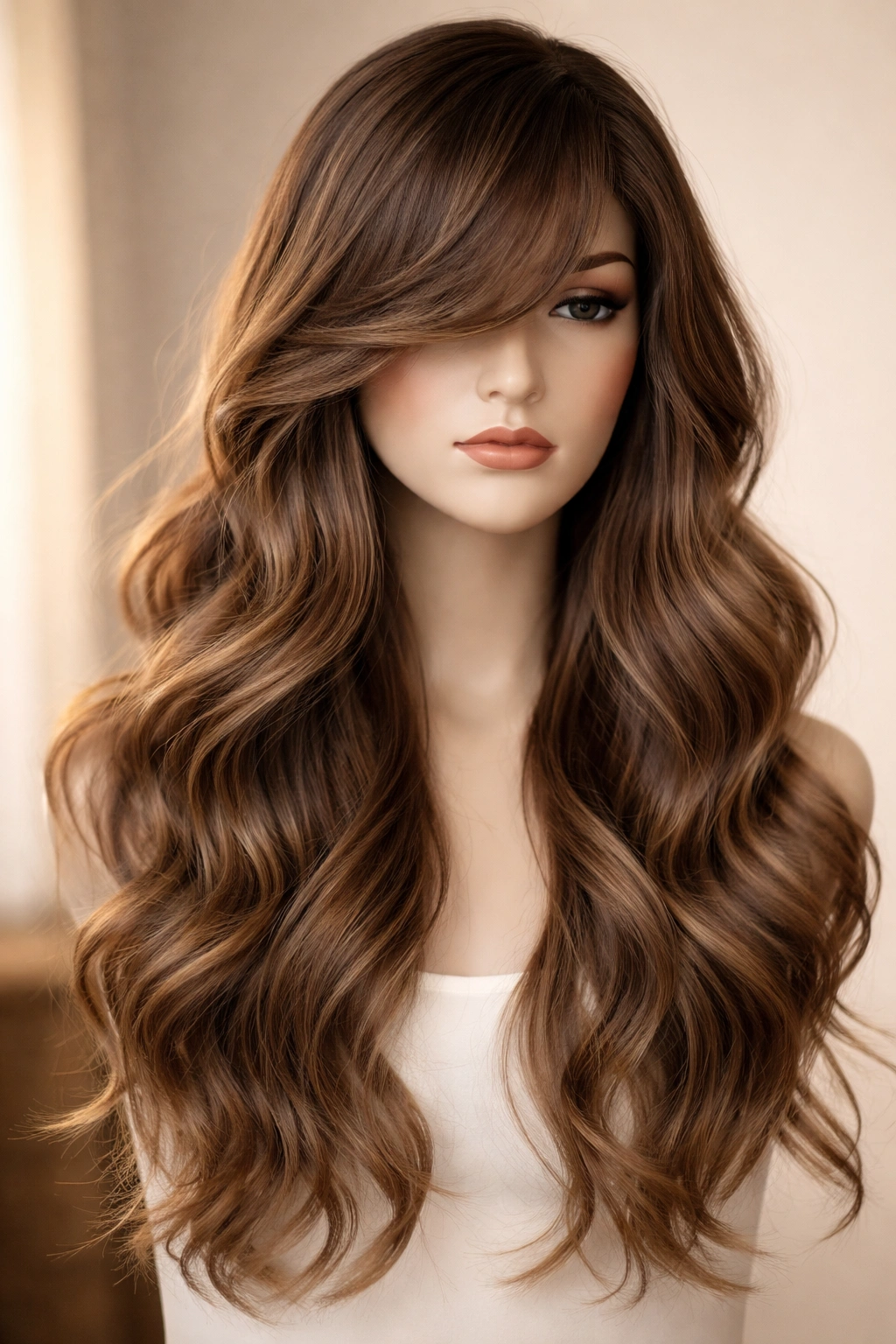
Side-swept bangs sweep dramatically across the forehead and reach somewhere around the cheekbone or jaw on the longer side. They create asymmetry and visual interest, and they work perfectly with soft S-waves that flow throughout long hair. This style flatters most face shapes and adds sophistication without looking overly formal.
Why This Works for Wavy Curly Hair
Side-swept bangs naturally encourage asymmetrical drying, which means your waves can dry on their own without you fighting to make them match. The longer side of the bangs blends seamlessly into your longer length, making this a low-maintenance cut that grows out elegantly.
Styling Tips and Techniques
- Blow-dry the bangs to the side you prefer, using a round brush to create a soft curve and wave as they dry.
- Apply a smoothing cream or light serum to the bangs before blow-drying to reduce frizz and encourage the soft wave pattern.
- The bangs should have movement—they’re not meant to fall perfectly straight across, but rather to curve and flow naturally.
- As they grow, side-swept bangs transition gracefully into longer pieces that you can tuck behind your ears or style as curtain-style layers.
Worth knowing: Side-swept bangs can occasionally slip forward and block your vision if you wear them on the side opposite your natural hair part. If this bothers you, ask your stylist to cut them slightly shorter, or plan to style them more firmly into place using a light hairspray on those days.
6. Choppy Layered Bangs With Defined Curls
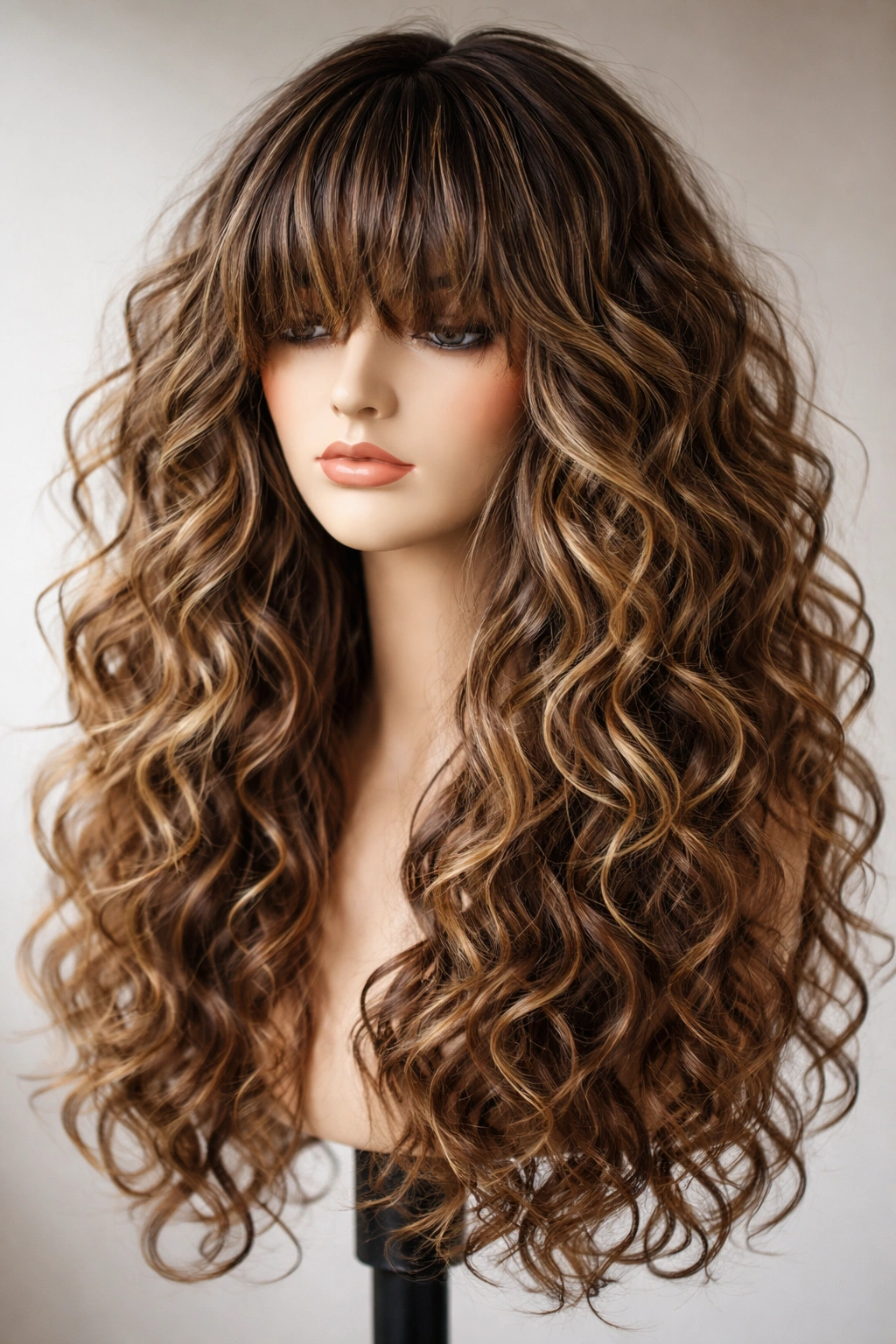
Choppy layered bangs are cut with multiple layers of varying lengths throughout, creating tons of texture and movement built directly into the bang cut itself. The layers are much more pronounced than wispy bangs—you can see distinct, chunky pieces rather than subtle, broken-up texture. Combined with defined, well-separated curls throughout your long hair, this creates a bold, high-impact look.
Why This Works for Wavy Curly Hair
Choppy layers are designed to work with curly and textured hair. Each layer sits at a different length, so curl shrinkage doesn’t make the entire bang look bunchy—instead, it creates intentional texture and movement. This style celebrates your curl pattern rather than fighting it.
Styling Tips and Techniques
- Use a strong-hold curl cream or gel on damp bangs, applying it generously and encouraging each layer to form independently.
- Blow-dry using a diffuser, or air-dry and then define curls by finger-coiling individual pieces and allowing them to set.
- The layers should be clearly visible and separate—if the bangs start to clump together, gently separate them with your fingers while they’re still slightly damp.
- This style requires regular trims to maintain the choppy, layered effect; plan for bang trims every 4-5 weeks.
Insider note: Choppy layered bangs look best when the rest of your hair is also layered throughout, creating a cohesive, all-over textured look. If your long hair is all one length, ask your stylist to add layers throughout to complement the textured bangs.
7. Blunt Bangs With Relaxed Waves
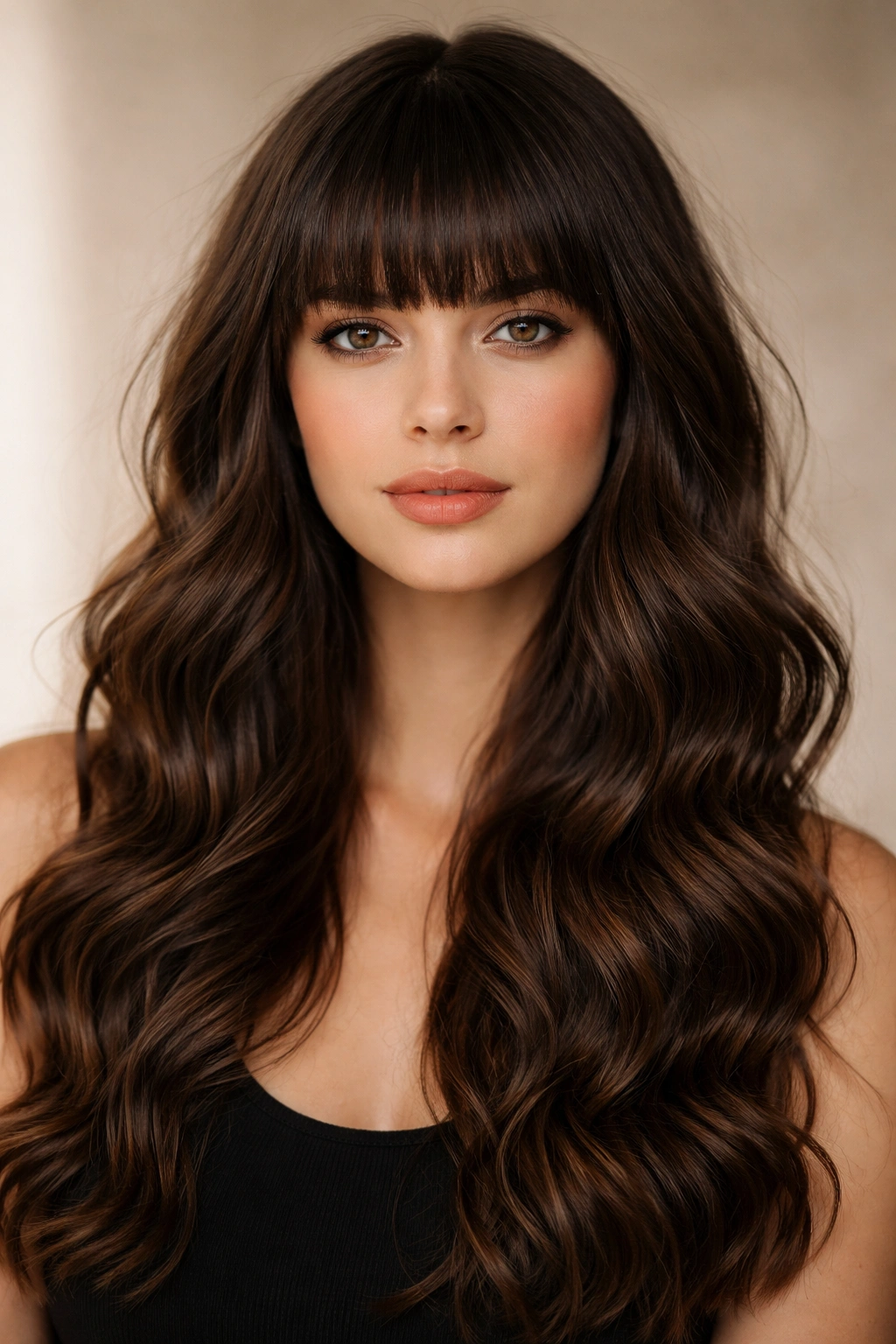
Blunt bangs are cut straight across, creating a bold horizontal line across your forehead. They sound like they’d be difficult with wavy hair, but when paired with relaxed, loose waves throughout the rest of your hair, they create an appealing contrast—structured bangs against soft, moving waves creates visual interest and style.
Why This Works for Wavy Curly Hair
The key to blunt bangs on wavy hair is making sure the rest of your hair is textured and relaxed. The contrast between the structured bangs and the soft waves makes both elements feel more intentional. Your waves become the proof that you’re embracing your natural texture, not fighting it.
Styling Tips and Techniques
- Blow-dry the bangs straight across and slightly under on a medium heat setting, using a paddle brush to create a smooth, blunt line.
- The bangs should be completely dry before you leave the house, or they’ll start to curl and disrupt the blunt line as the day goes on.
- Use a smoothing serum or anti-frizz cream on the bangs specifically to keep them sleek and to prevent curl from overtaking the blunt edge.
- The rest of your hair can be styled in loose waves, tousled curls, or natural texture—the more relaxed and undone the rest of your hair looks, the more the blunt bangs stand out as a deliberate, style choice.
Pro tip: Blunt bangs require the most maintenance of any bang style—you’ll need to blow-dry them every time you wash your hair to maintain the straight, blunt edge. If you have a daily routine that includes blow-drying anyway, this isn’t a problem. If you prefer to air-dry or use a diffuser, this might not be the right style for you.
8. Textured Fringe Bangs With Spiral Curls
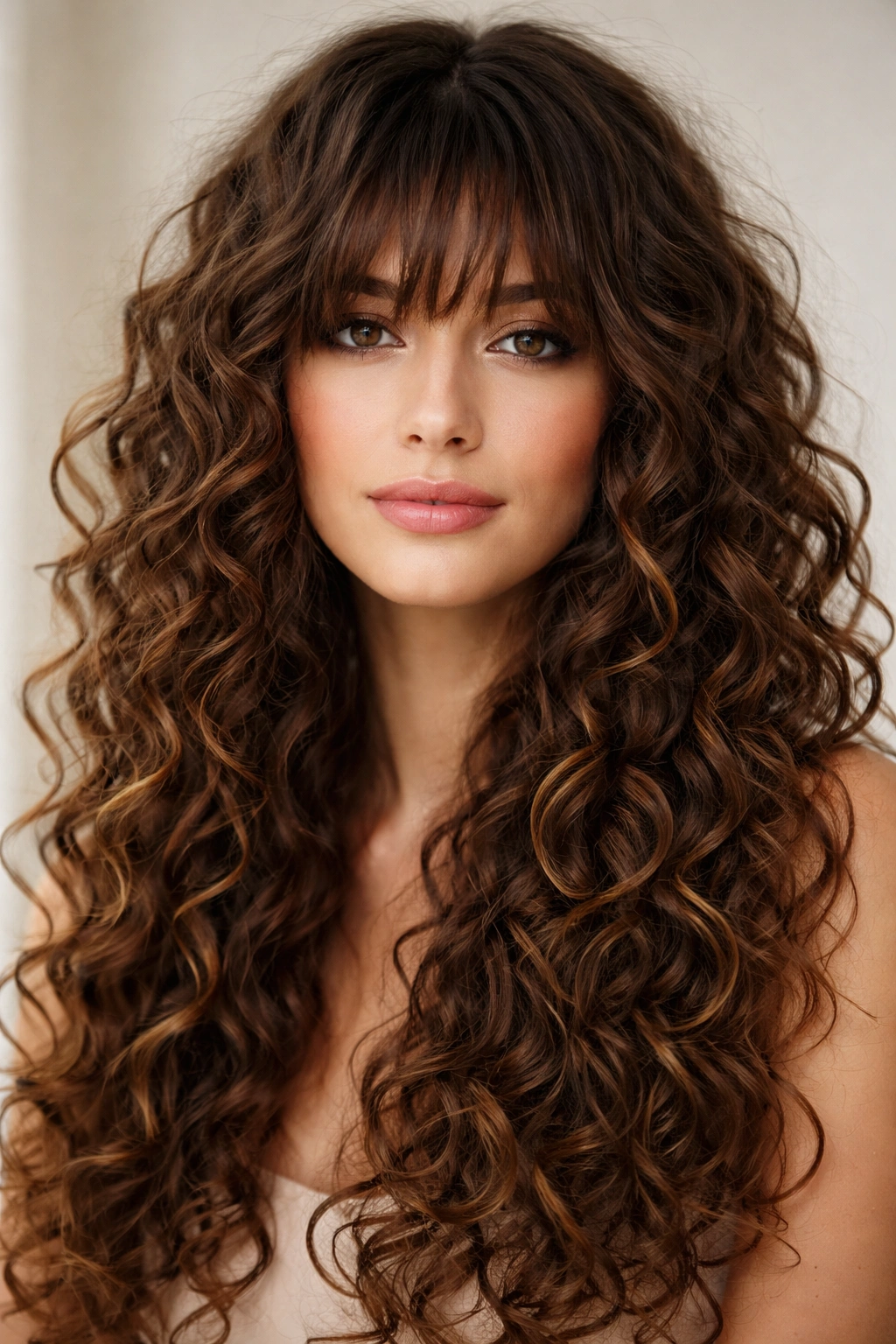
Textured fringe bangs are similar to wispy bangs but often cut slightly longer—they’re choppy and broken up, creating a fringed effect that moves and separates throughout the day. Paired with long spiral curls or coils, this combination creates a playful, youthful look with tons of dimension and bounce.
Why This Works for Wavy Curly Hair
Textured fringe is literally designed to move and separate, which is exactly what your curl pattern wants to do. The choppy cut allows each curl to spring up and define itself without being constrained by a heavy, blunt edge. This style thrives on bounce and movement.
Styling Tips and Techniques
- Apply a curl cream or gel to damp bangs, encouraging each piece to form its own curl without trying to unify them into one mass.
- Use a diffuser to dry the bangs, or allow them to air-dry naturally, gently finger-coiling individual pieces to encourage spiral formation.
- The bangs should look like little individual spirals or coils once dry—this is the goal, not something to fix.
- Tousle the fringe forward with your fingers once the bangs are completely dry, separating any pieces that stuck together and creating movement.
Worth knowing: Textured fringe bangs look best when styled with defined curls rather than loose waves. If you usually wear your hair in relaxed waves, this particular bang style might look out of place.
9. Curved Bangs With Loose Ringlets
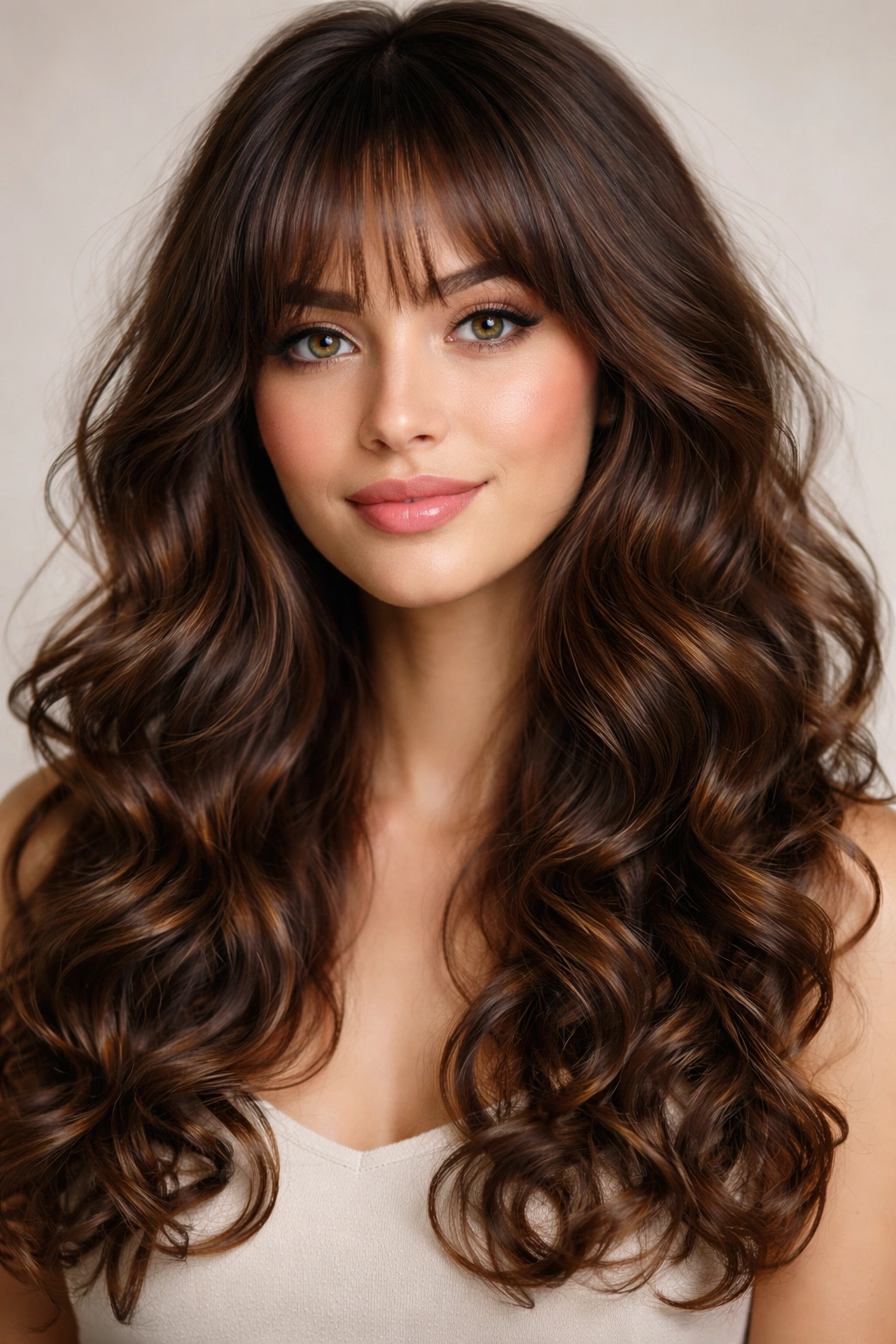
Curved bangs are cut with a gentle arc or curve, creating a soft frame that follows the shape of your face. Unlike side-swept bangs that go dramatically to one side, curved bangs stay relatively centered but with a graceful curve that’s flattering and romantic. Combined with loose ringlets, this is one of the most romantic and polished combinations available.
Why This Works for Wavy Curly Hair
Curved bangs naturally work with your wave pattern—the arc is built into the cut, so your waves enhance the curve rather than fighting it. The bangs look soft and romantic because they’re designed to be curved, not because you’re trying to force waves into a blunt shape.
Styling Tips and Techniques
- Blow-dry the bangs with a round brush, curving them gently as they dry to emphasize the arc of the cut.
- Apply a lightweight mousse or curl cream to damp bangs before blow-drying to encourage wave and curl formation within the curved shape.
- The curve should be subtle and elegant, not overly dramatic or spiral-like—think of a gentle arc rather than a tight curl.
- The rest of your hair can be styled in loose ringlets, beach waves, or relaxed curls; the curved bangs complement all of these beautifully.
Insider note: Curved bangs grow out more gracefully than blunt bangs because the curve becomes longer and more side-swept as they grow, eventually blending into your longer length. You can extend the time between trims by styling the longer bangs in different ways—center them, sweep them to the side, or tuck them partially behind your ear.
10. Micro Bangs With Defined Coils
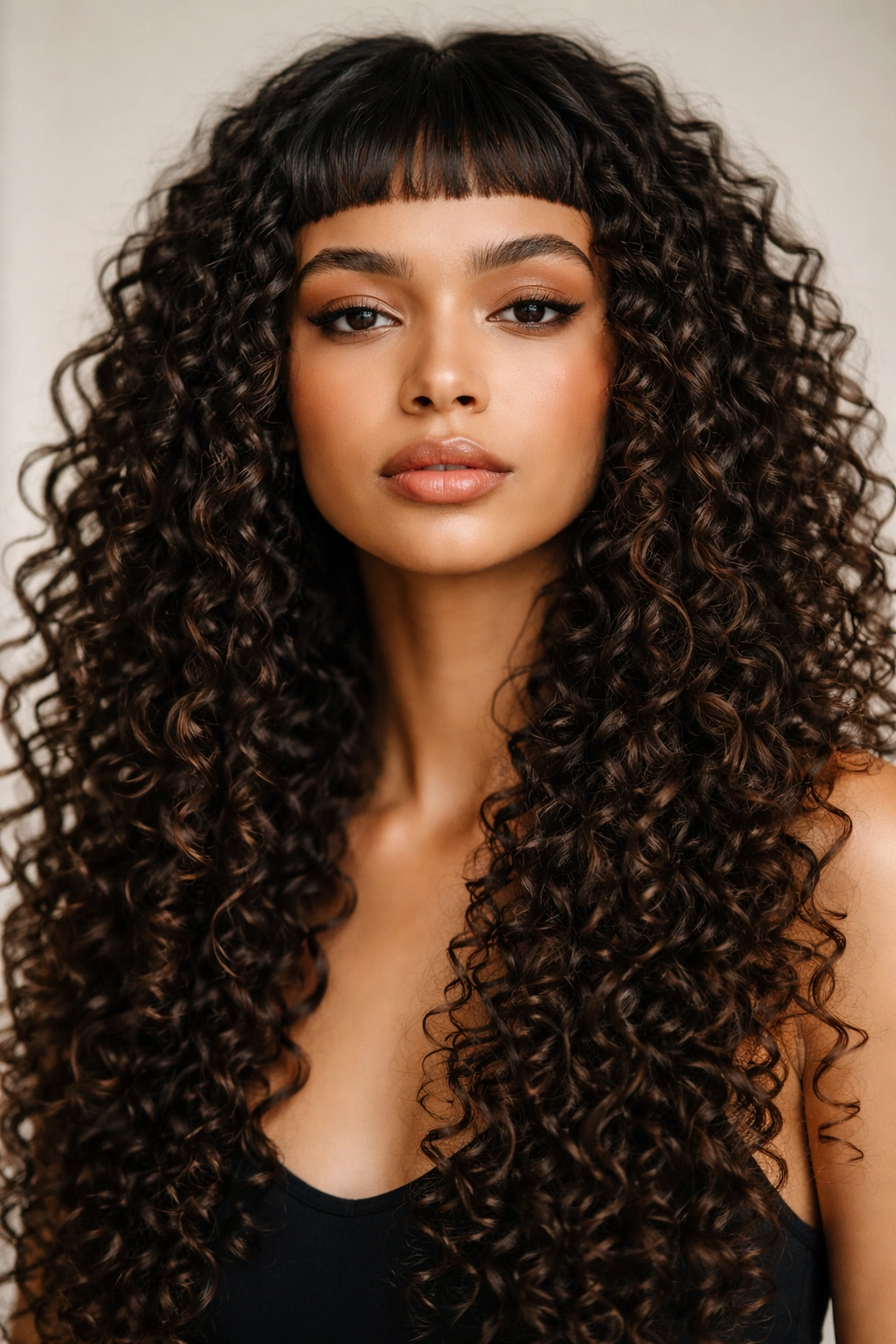
Micro bangs sit well above the eyebrow, creating a bold, statement-making look that’s become increasingly popular. They’re extremely short and require significant confidence to pull off, but on curly or tightly coiled hair, they look striking and intentional. Paired with defined coils throughout your long hair, micro bangs create a high-fashion, editorial look.
Why This Works for Wavy Curly Hair
Micro bangs work best on densely textured, curly hair because the volume at the crown prevents them from looking too sparse or strange. The hair on top and around the micro bangs creates a frame that makes the short length feel intentional and polished rather than like a mistake.
Styling Tips and Techniques
- Micro bangs need to be styled every day to look their best—blow-dry them straight across with a paddle brush and smooth them with a light serum.
- Alternatively, style them with the same curl pattern as the rest of your hair by applying curl cream and diffusing them dry for a more editorial, textured look.
- This style requires frequent trims—plan for bang touch-ups every 2-3 weeks because they grow down quickly and lose their impact within weeks of the cut.
- Micro bangs look best with long hair that’s clearly styled with defined curls, waves, or coils; they look awkward with relaxed, undone texture.
Pro tip: Before committing to micro bangs, ask your stylist for a consultation about whether your face shape, hair density, and lifestyle can support them. They’re a statement look that requires ongoing commitment to maintenance.
11. Long, Soft Bangs With Tousled Waves
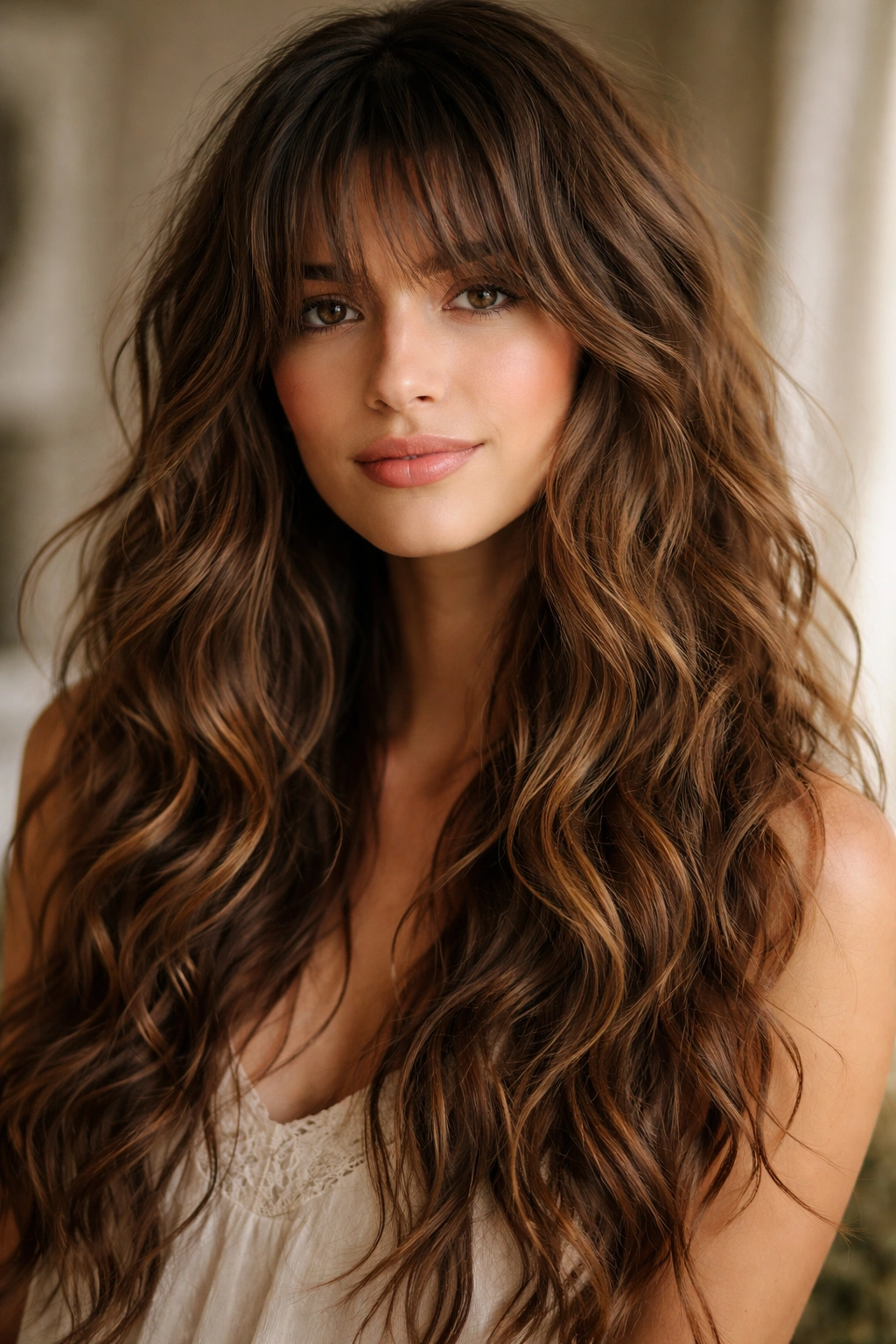
Long bangs that reach past your cheekbones or toward your jaw are incredibly versatile and forgiving. They work with multiple styling options and can be worn in countless ways throughout the week. When paired with tousled, relaxed waves throughout your long hair, they create an effortlessly chic, bohemian aesthetic.
Why This Works for Wavy Curly Hair
Long bangs are incredibly forgiving on wavy hair because they’re long enough to blend into your longer length if they don’t curl the way you want them to. You can wear them swept to the side, parted in the center, tucked behind your ears, or tousled forward—the styling flexibility is one of the biggest advantages of this style.
Styling Tips and Techniques
- Apply a curl cream or sea salt spray to damp bangs and tousle them as they air-dry or diffuse them for a relaxed wave pattern.
- You can blow-dry the bangs smooth with a paddle brush for a more polished day, or scrunch them with a diffuser for added texture—the same bangs work for both looks.
- The bangs should fall somewhere between your eyebrows and your cheekbones for maximum versatility and flattery.
- Longer bangs naturally blend into layered long hair; ask your stylist to add subtle layers throughout your longer length to create a cohesive look.
Worth knowing: Long bangs are one of the lowest-maintenance bang styles because you can style them so many different ways. If you’re not sure about committing to bangs, starting with longer bangs gives you more flexibility to find your preferred styling method.
12. Shag Bangs With Choppy Layers
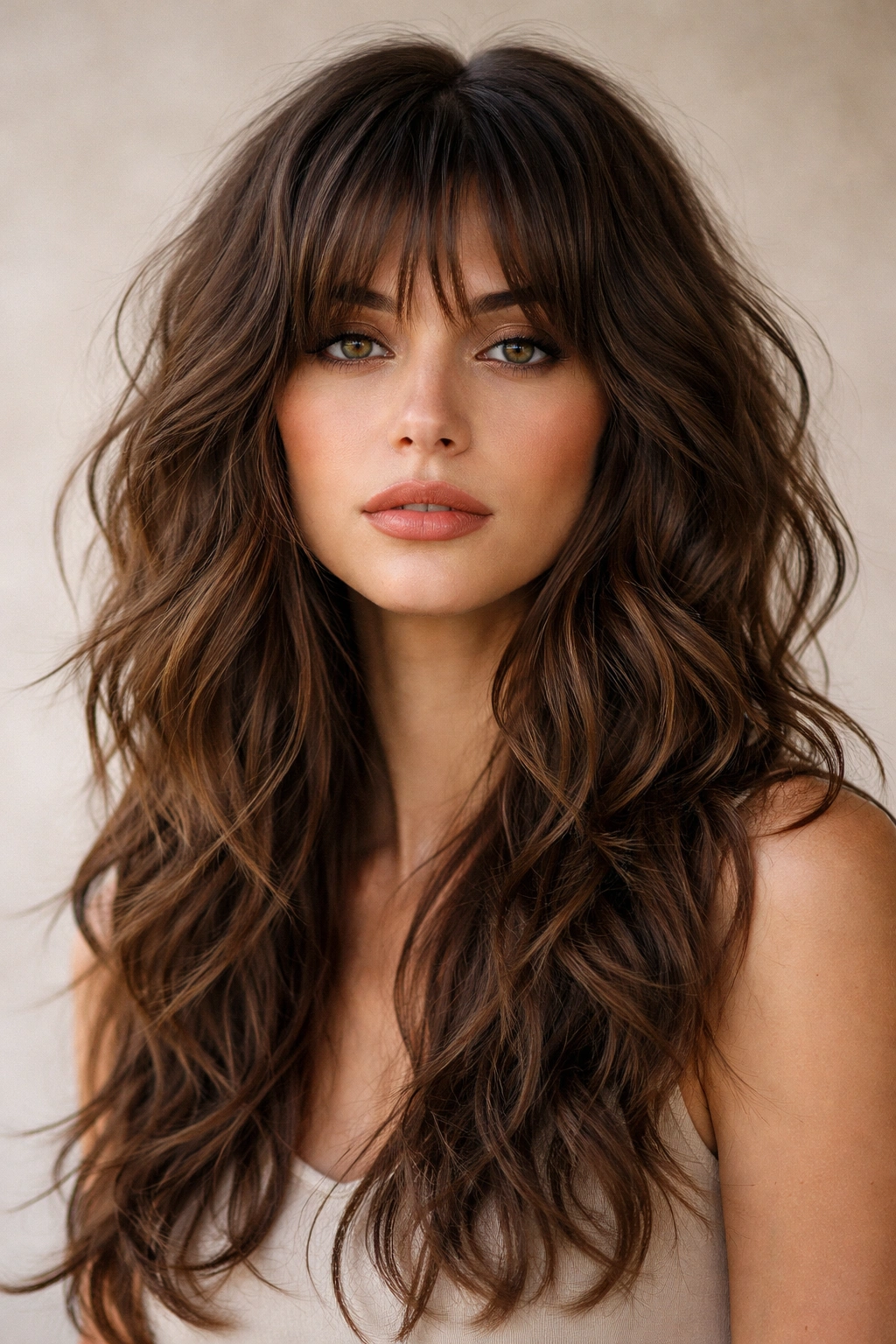
Shag bangs are part of an all-over choppy, layered shag cut. The bangs aren’t distinct from the rest of the cut—they’re the shortest pieces of a graduated, choppy style that gets progressively longer as you move down. This is a throwback look that’s become increasingly popular, especially on wavy and curly hair where it creates tons of texture and movement.
Why This Works for Wavy Curly Hair
Shag cuts are made for textured hair. Every single layer sits at a different length, so curl shrinkage and natural movement create tons of built-in texture and dimension. This style celebrates everything your waves and curls naturally want to do.
Styling Tips and Techniques
- Apply curl cream or gel throughout your damp hair, encouraging each layer to form its own curl or wave.
- Blow-dry using a diffuser, or allow your hair to air-dry naturally for a more relaxed, lived-in look.
- The shorter layers at the top and around your face will naturally air-dry with volume and texture; the longer pieces underneath will have their own wave pattern.
- Tousle your hair with your fingers throughout the day to maintain the choppy, separated texture—this style looks better when it’s slightly undone rather than too polished.
Insider note: Shag cuts require regular trims to maintain the choppy, layered shape, especially if you want the shorter pieces to stay relatively short. Plan for full trims every 6-8 weeks.
13. Parted Bangs With Voluminous Curls
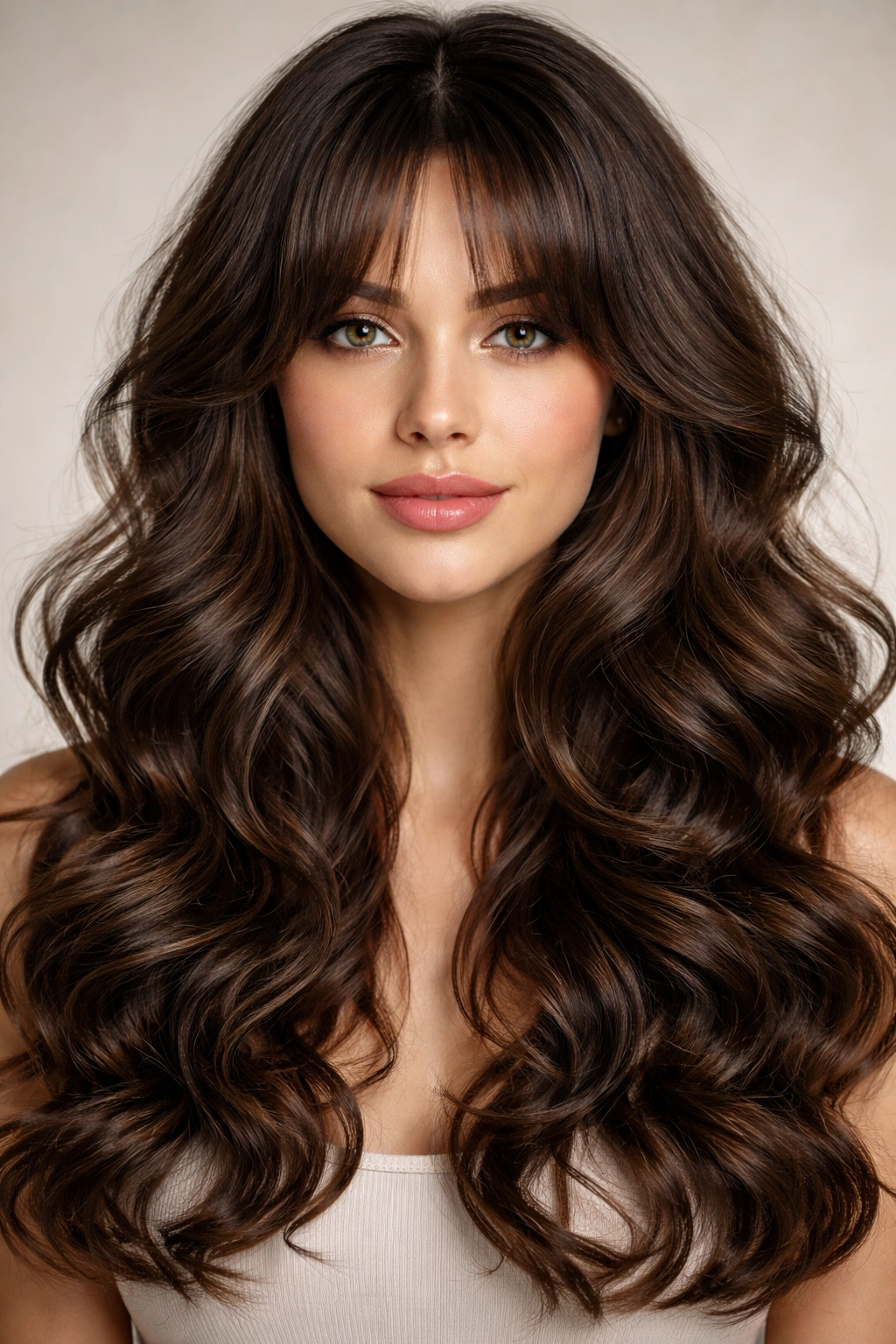
Parted bangs are cut so that they naturally part in the middle, creating two separate curtain-like pieces that frame your face on both sides. Unlike traditional curtain bangs that hang separately, parted bangs are more connected at the crown and part at about the hairline or eyebrow area. Paired with voluminous, bouncy curls throughout, this style is feminine and flattering.
Why This Works for Wavy Curly Hair
Parted bangs work with your natural part, which means less time spent styling them into a specific shape. Your wave and curl pattern will help them separate naturally, creating the curtain effect without you having to work for it.
Styling Tips and Techniques
- Apply curl cream to damp bangs and encourage them to form two separate sections by gently directing them away from the center part as they dry.
- Use a diffuser to dry the bangs with your fingers, encouraging curl formation on both sides of the part.
- The rest of your hair can be styled in loose waves, defined curls, or voluminous spirals—parted bangs complement all of these.
- If your bangs don’t naturally want to part in the center, you can train them over time by consistently drying them with the part in place, or accept that they’ll part slightly off-center (which often looks even more flattering).
Pro tip: Parted bangs often look fuller and thicker than they actually are because the part creates the illusion of density. This makes them a great choice for people with finer or thinner hair.
14. Dramatic Side Bangs With Beach Curls
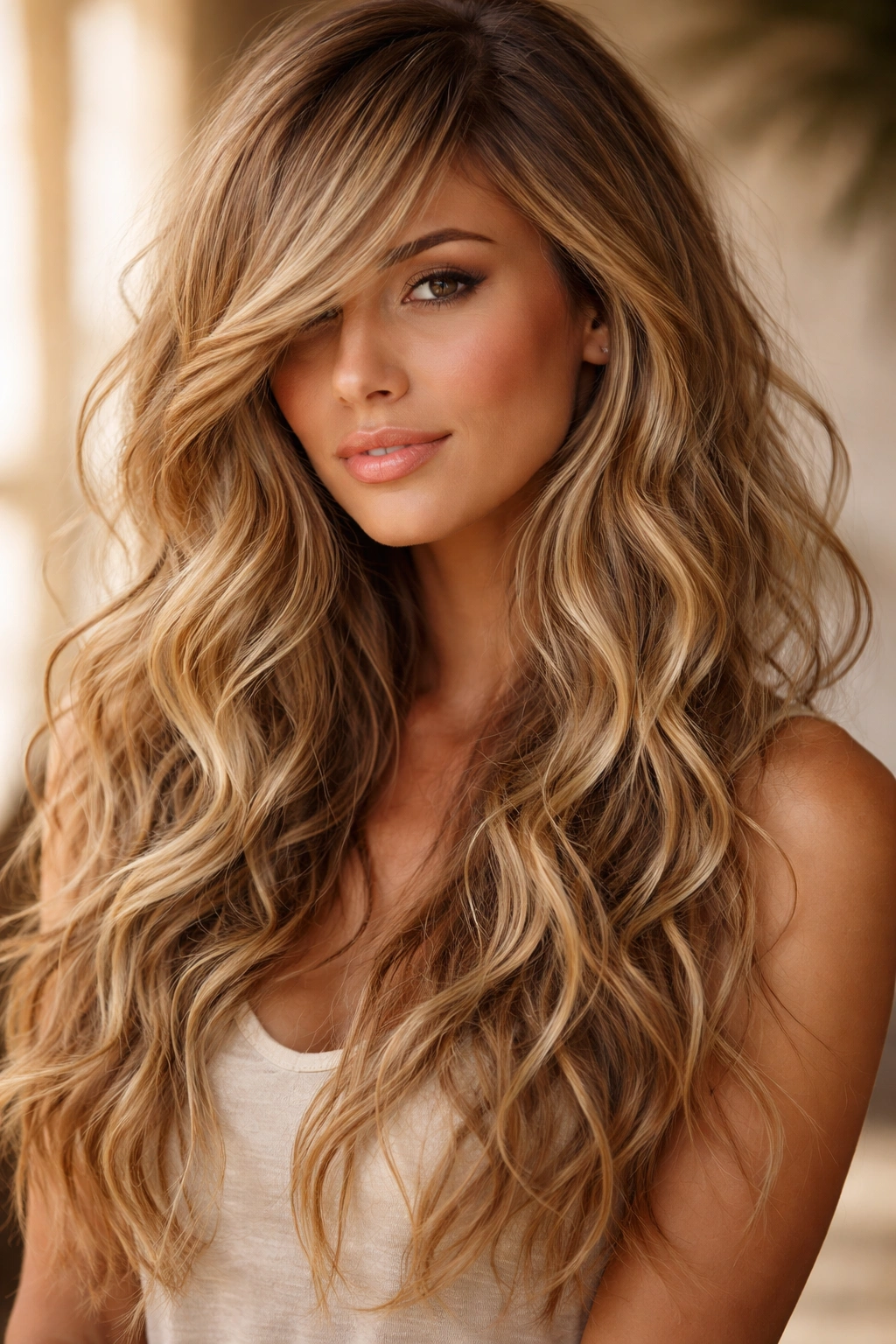
Dramatic side bangs are swept far to one side, creating an asymmetrical, bold look that covers roughly one-third of your forehead. They’re longer than traditional side-swept bangs, sometimes reaching your jaw or even your shoulder on the longer side. Combined with loose beach curls throughout your long hair, they create a glamorous, beachy aesthetic.
Why This Works for Wavy Curly Hair
Dramatic side bangs actually benefit from waves and curls because the asymmetry of the waves complements the asymmetry of the bangs. Both elements are naturally undone and textured, creating a cohesive look that reads as deliberately styled rather than accidental.
Styling Tips and Techniques
- Blow-dry the bangs to the side you prefer, using a round brush or paddle brush to create soft waves and movement as they dry.
- Apply a smoothing serum or curl cream to damp bangs before blow-drying to encourage soft waves without excessive frizz.
- The bangs should curve and flow naturally as they dry; resist the urge to straighten them completely, as a bit of movement in the bangs looks more natural and modern.
- The rest of your hair can be styled in loose waves, tousled curls, or natural texture—dramatic side bangs work beautifully with all of these.
Worth knowing: Dramatic side bangs can occasionally slip forward during the day, especially on hot or humid days. If you experience this, a light hairspray on the underside of the bangs can help keep them in place without weighing them down.
15. Modern Feathered Bangs With Textured Waves
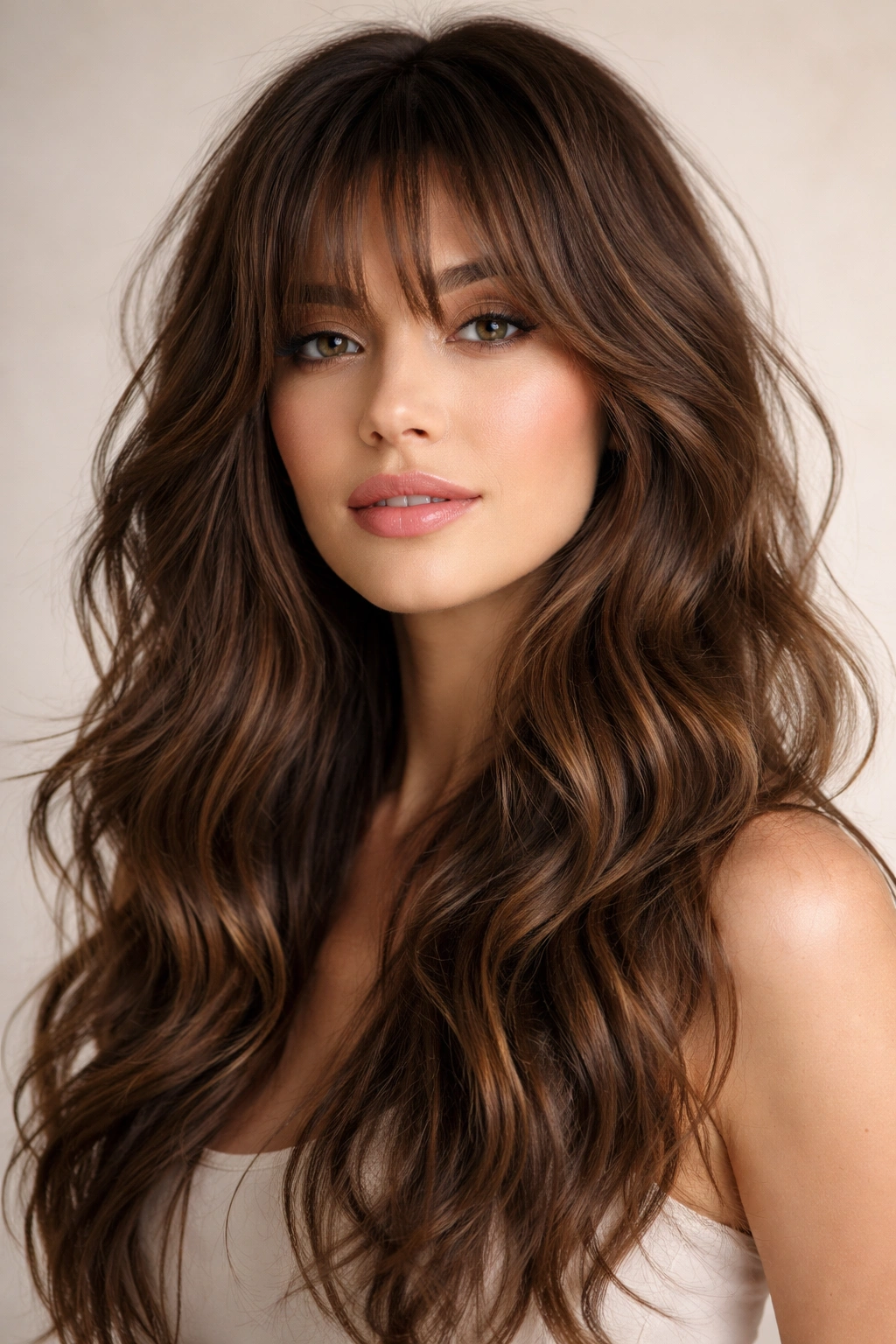
Modern feathered bangs are an updated version of the classic feathered cut from decades past—they’re still cut with varying lengths, but they’re shaped more subtly and often have more texture chopped throughout rather than one smooth gradient. Combined with textured, piece-y waves throughout your long hair, this creates a contemporary look that feels current and fresh.
Why This Works for Wavy Curly Hair
Modern feathered bangs are cut with the understanding that hair naturally has texture and movement. The cut celebrates this rather than fighting it, creating a style that improves when your natural waves and curls show up.
Styling Tips and Techniques
- Apply a curl cream or texturizing product to damp bangs, encouraging them to form waves and texture rather than hanging straight.
- Blow-dry using a diffuser or allow your bangs to air-dry naturally; either way, they should dry with natural movement and separation.
- Use your fingers to tousle the bangs as they dry, creating piece-y texture throughout rather than one smooth, feathered line.
- The rest of your hair should be styled in waves or curls that match the texture level of the bangs—they should look like one cohesive, textured style rather than bangs and hair with different texture levels.
Insider note: Modern feathered bangs look best when styled with movement and aren’t blow-dried completely smooth. A bit of frizz and flyaway texture actually enhances this style rather than detracting from it.
Final Thoughts
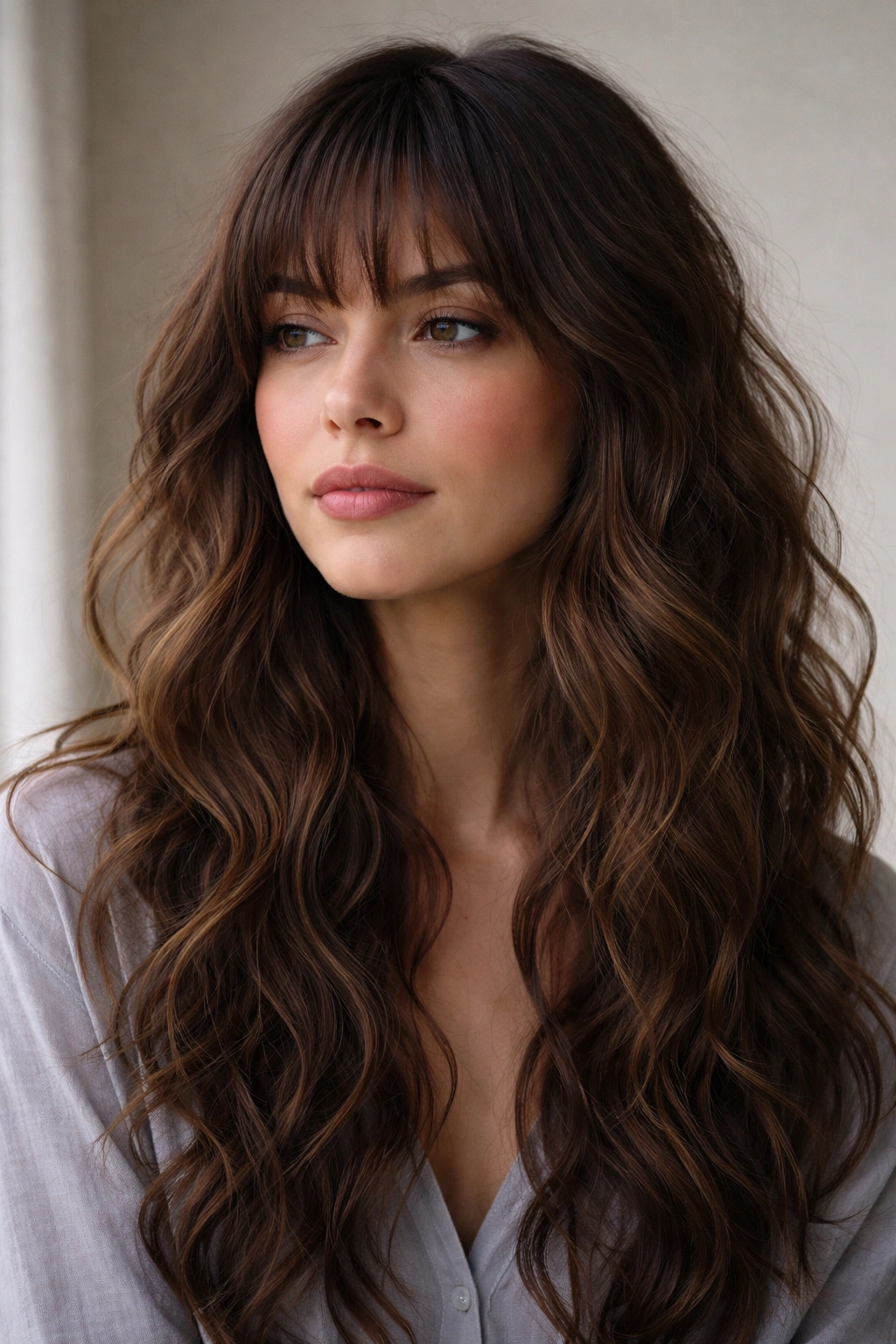
The right bangs for your wavy or curly hair comes down to three things: choosing a cut that works with your natural texture rather than against it, understanding how to style that specific cut to enhance your waves or curls, and committing to regular trims to keep the style looking intentional as it grows.
Wavy and curly hair actually has advantages when it comes to bangs—that texture creates built-in movement, dimension, and forgiveness that blunt cuts on straight hair don’t have. A curved bang naturally curves. A feathered bang naturally separates. A choppy bang naturally creates texture. Your waves and curls want to help these styles look good.
Before you book an appointment, talk with your stylist about your specific curl pattern, how much time you realistically want to spend styling bangs each day, and how often you’re willing to come in for trims. Some styles require more maintenance than others, and being honest about your lifestyle helps you choose something you’ll actually love wearing. And remember—bangs grow out. If you try a style and it’s not right for you, you have the freedom to grow them out and try something different next time.
