



Short wavy hair with balayage highlights strikes the perfect balance between effortless texture and dimensional color that catches the light from every angle. If you’re considering this combination, you’re looking at a hairstyle that works equally well for a quick weekday look or a polished weekend aesthetic — all without requiring a blow dryer and thirty minutes of styling effort. The beauty of pairing waves with balayage is that the movement of your hair actually enhances the dimension of the color, making those hand-painted highlights look even more intentional and expensive than they are.
The challenge, though, is knowing which short wavy cut will actually suit your face shape, hair texture, and the specific way you want to style your waves. Not all short cuts work equally well with loose waves, and not every balayage placement will flatter every face. The wrong combination can feel choppy or make your face appear wider than it is. But get it right, and you have a hairstyle that feels modern, textured, and genuinely low-maintenance compared to other color and cut combinations.
What makes these styles special is that balayage — which means hand-painting the color onto the hair rather than using foils — creates a naturally dimensional effect that complements the movement of waves far better than traditional highlights ever could. The color follows the flow of your curls and waves, so the dimensional effect literally moves with you. Plus, because balayage is placed more concentrated on the ends and pieces around the face, it works beautifully with short cuts where those lighter pieces frame your features.
The styles below cover every major variation of short wavy hair with balayage — from choppy and playful to sleek and textured, from face-framing pieces to all-over movement. Whether you’re starting from longer hair or already committed to short, one of these approaches will give you the exact look you’re visualizing.
1. Choppy Pixie-Wave Hybrid With Face-Framing Balayage
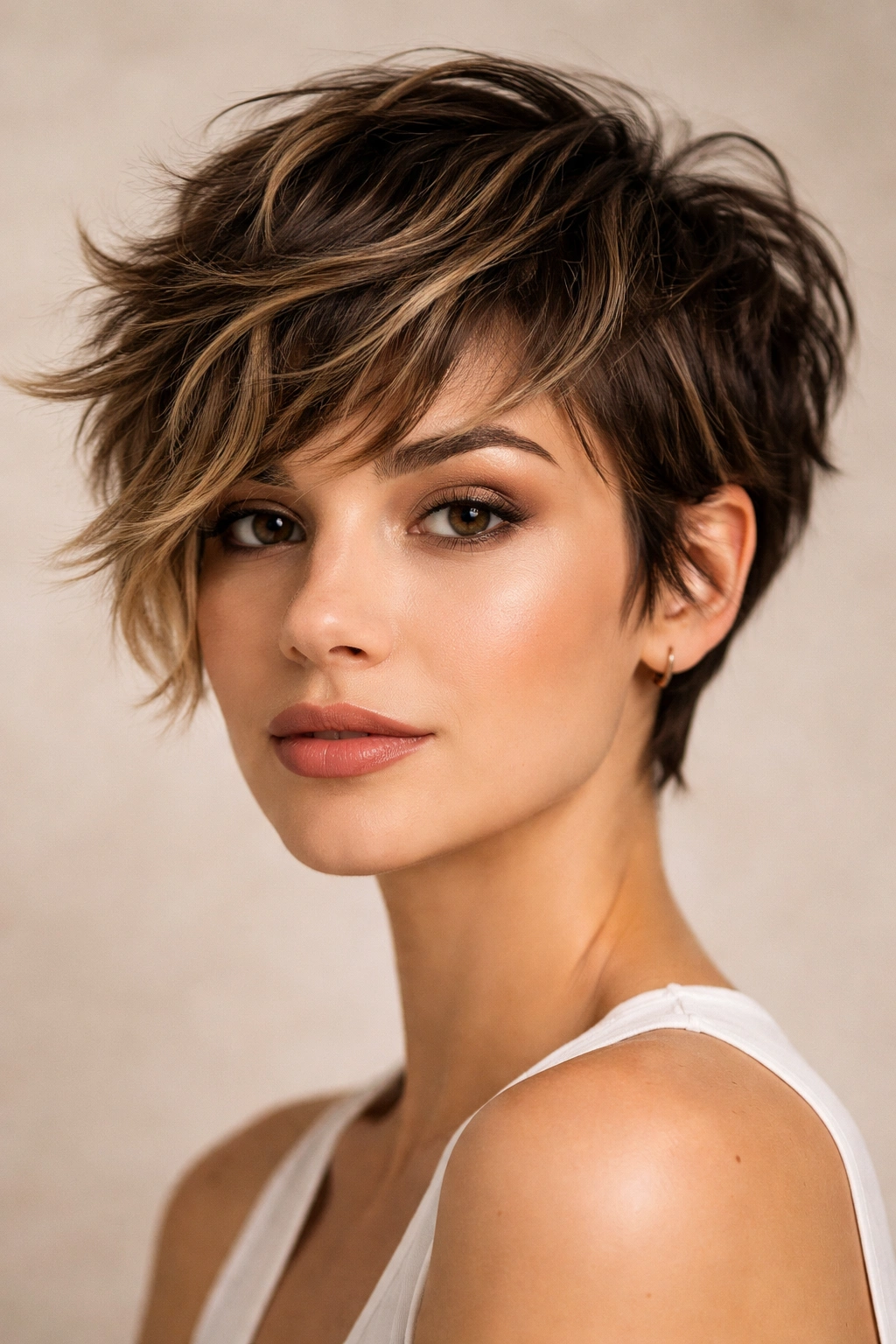
This style splits the difference between a pixie cut and a longer short cut, keeping the sides and back quite short while leaving enough length on top to create real texture and wave. The balayage here is concentrated heavily around the face and throughout the crown area, with darker roots that add immediate dimension and movement to what would otherwise be a fairly minimal cut.
Why This Works for Waves and Color
The choppy layers throughout the crown are exactly what short wavy hair needs to avoid looking flat or matted down at the roots. Those layers give the waves somewhere to live and move — they don’t fight the texture, they work with it. The balayage on the shorter pieces around the face picks up light constantly as you move your head, which makes the dimension feel even more intentional than it would on longer hair. The dark roots also ground the style and create instant depth, making the lighter pieces appear even more luminous.
What You Need to Know
- Works best on naturally wavy or slightly curly hair texture (straight hair in this cut needs daily styling to maintain dimension)
- Requires maintenance every 6-8 weeks for the roots and the cut itself
- The shorter sides need trimming every 3-4 weeks to keep definition and prevent an awkward in-between phase
- Best suited to oval or heart-shaped faces — the short sides can emphasize a round face
- Styling is genuinely minimal: damp hair, a texturizing product (cream or spray), and air-dry or quick diffuser work
2. Textured Bob With Piece-y Balayage Layers
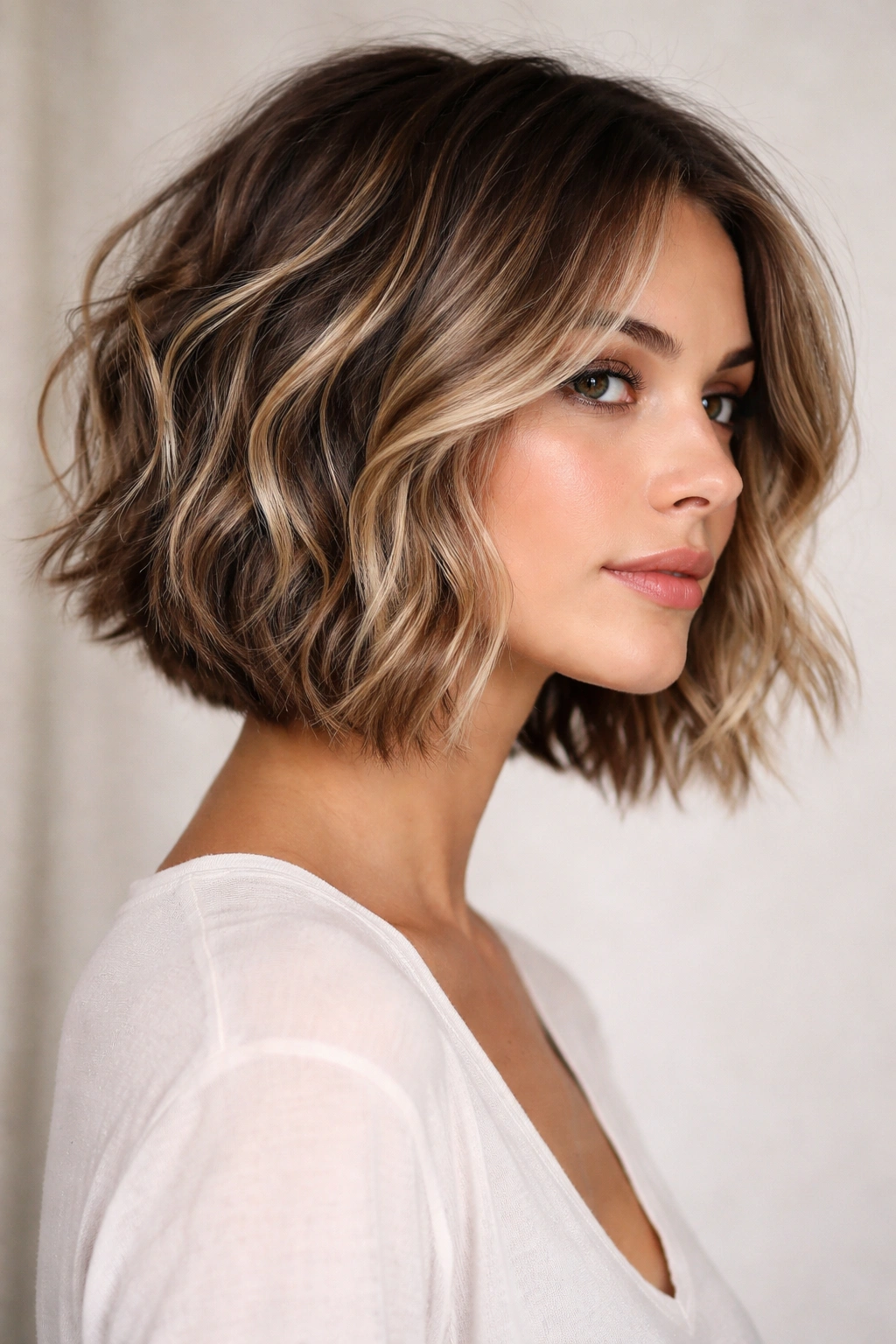
A textured short bob sits right at the chin or slightly shorter, with choppy, uneven layers throughout that catch light and create instant movement even in straight hair. The balayage here focuses on placing lighter pieces throughout the layers, so every layer shift has a color shift that emphasizes the texture.
Why This Works for Waves and Color
Layering a bob dramatically changes how waves behave in it — instead of all the hair moving in one direction, the layers allow waves to separate and move independently. This creates that piecey, intentional look that feels modern and effortless. The balayage placed on these individual layers makes each piece of texture visually pop. When you run your fingers through the hair, you see color variation in every direction, which feels dynamic and lived-in.
What You Need to Know
- This requires a stylist who understands how to cut layers specifically for wave pattern, not just generically shorter pieces
- Styling is still low-commitment: rough-dry with product or air-dry with a wave cream
- The layers need refreshing every 4-6 weeks or the cut starts to blend and lose its texture definition
- Suits most face shapes but feels especially youthful and modern on oval and oblong faces
- The balayage should use 2-3 tones for maximum dimension in the layers
3. Shaggy Wavy Cut With Rooted Balayage
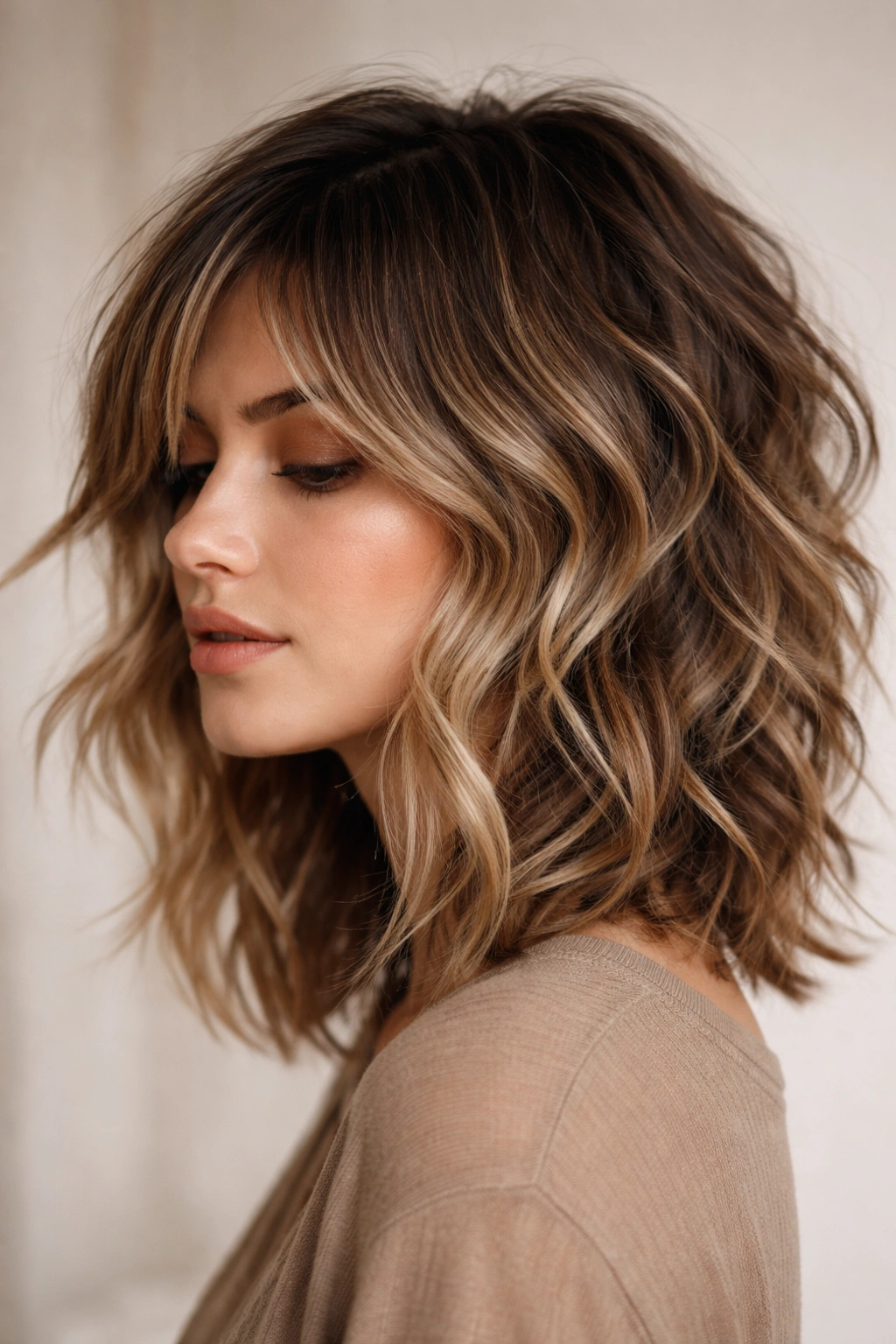
A modern shag for short hair brings back the ’70s texture with longer choppy layers throughout, lots of movement at the crown, and shorter pieces in the back. This is texture for the sake of texture — the cut is literally designed to emphasize wave and create maximum movement. The balayage uses a darker, more shadowed root with lighter painted pieces throughout, making the shag feel even more dimensional.
Why This Works for Waves and Color
Shag cuts are built for wavy hair — they literally exist to make waves look more intentional and beautiful. The longer choppy layers give waves room to move and separate into distinct pieces rather than clumping together. The rooted balayage (where the roots stay relatively dark) keeps the style grounded while the lighter pieces on the longer layers catch light and movement. This combination feels rock-and-roll modern without any effort at all.
What You Need to Know
- Shags actually require some styling — this isn’t truly wash-and-go hair, though it’s close
- Use a texturizing spray or cream on damp hair, blow-dry with a diffuser for maximum movement, or air-dry with product for a more relaxed vibe
- The cut needs refreshing every 5-6 weeks to maintain the shaggy shape (it grows out and blends without regular trims)
- Suits almost every face shape, but feels especially youthful on square and round faces where the layers soften angles
- The darker roots hide regrowth beautifully, so you can go 8-10 weeks between color touch-ups
4. Tousled Lob With Balayage Throughout
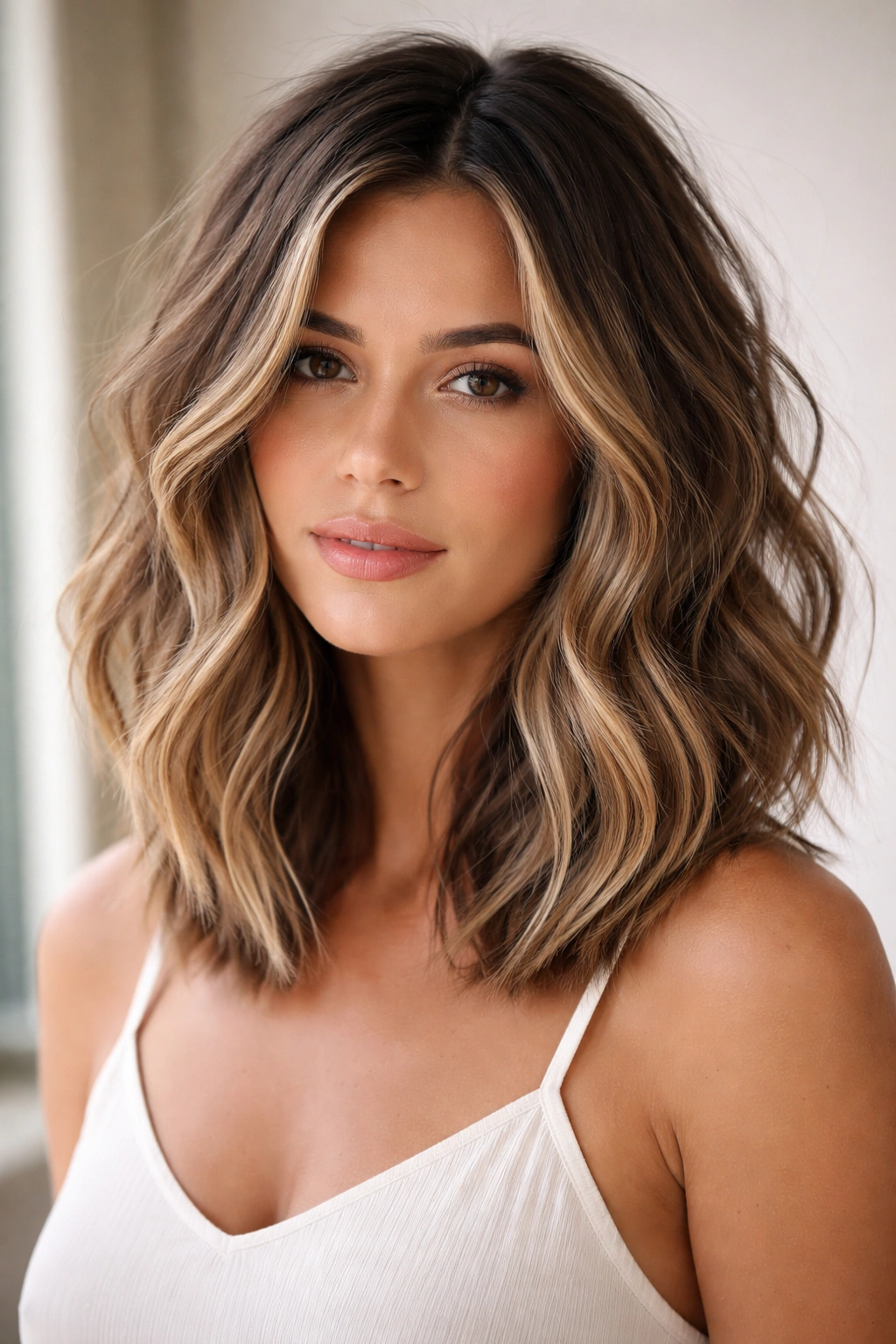
A lob (long bob) sits between the chin and shoulders and, when styled with loose waves, creates a genuinely effortless aesthetic. This version keeps the hair relatively blunt at the ends to emphasize a clean shape, but includes enough subtle layers to accommodate wave movement. The balayage is placed throughout the entire head for all-over dimension rather than concentrating on one area.
Why This Works for Waves and Color
A lob with waves gives you the styling flexibility of longer hair but the lower-maintenance feel of shorter hair. You can wear the waves textured and tousled for a casual look, or smooth and sleek for something more polished — same cut, completely different vibe. The all-over balayage means that whether you wear your hair tousled or straight, there’s dimensional color working throughout. The length also shows off color better than very short cuts, because you have more surface area for the balayage to travel across.
What You Need to Know
- Styling options range from air-dry with product to a 10-minute wave with a curling iron
- The cut needs refreshing every 6-8 weeks to maintain the shape and prevent scraggly ends
- Works beautifully on all face shapes and hair textures
- The longer length means you’re committing to more frequent color maintenance (every 6-8 weeks) because regrowth is more visible
- This is genuinely versatile — you can go from undone beach waves to sleek straight hair without changing the cut
5. Bouncy Waves With Dimensional Root Smudge Balayage
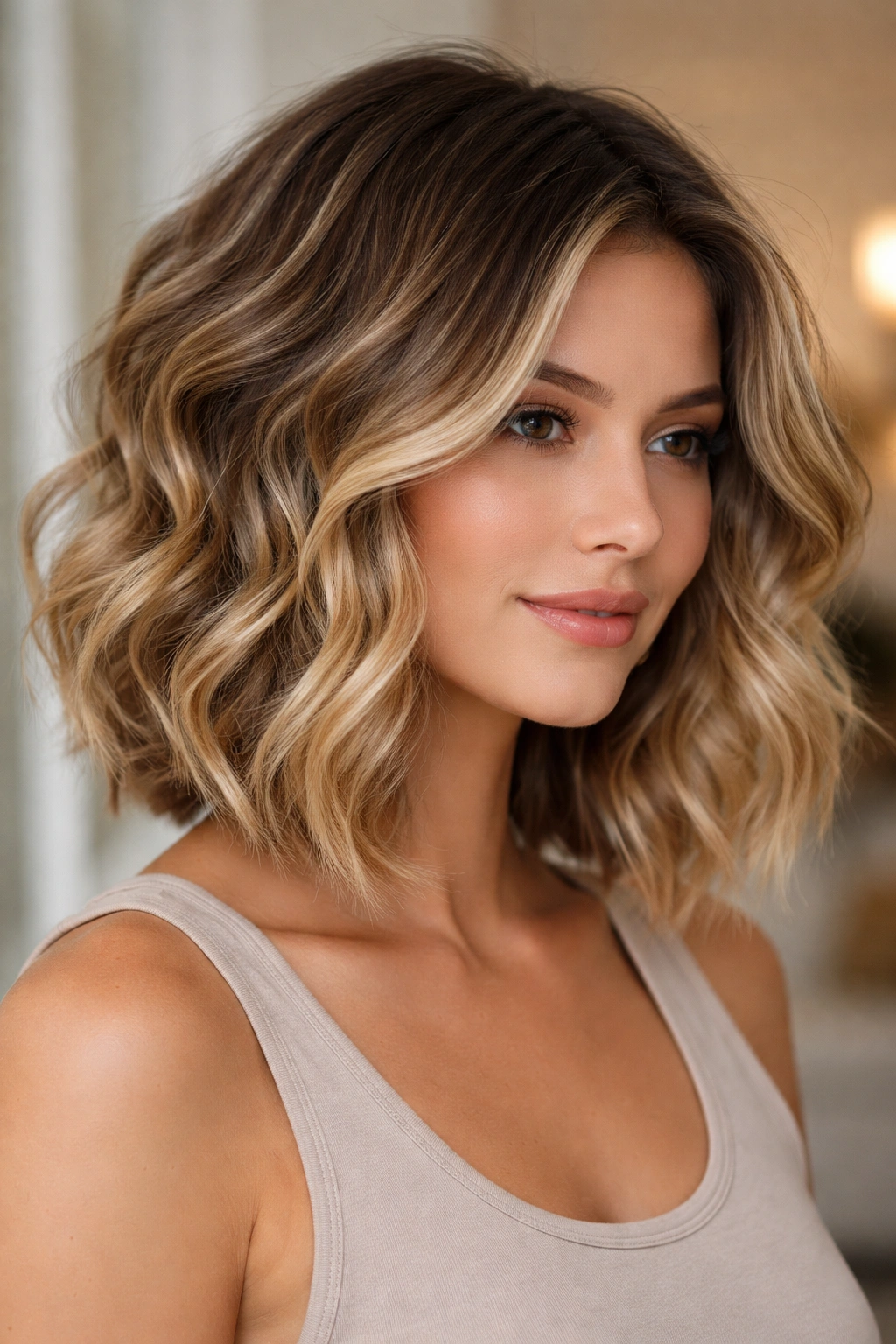
This style emphasizes the actual wave pattern in your hair rather than fighting it. The cut is relatively simple — shorter on the sides and back, with gradually longer pieces toward the face and crown — but styled specifically to maximize and define the waves. The balayage uses a technique called root smudge, where the darker color isn’t a harsh line but instead blends gradually into the lighter tones, creating a soft, dimensional look even as it grows out.
Why This Works for Waves and Color
Root smudge is genuinely the most low-maintenance balayage technique because it looks intentional even when the new growth comes in. The transition between the darker roots and lighter ends is so gradual that you can comfortably go 10-12 weeks between touch-ups. The cut is designed to enhance natural wave rather than create artificial texture, so if you have naturally wavy hair, this feels like the least amount of styling effort imaginable — just add product and your natural texture does the work.
What You Need to Know
- Best on naturally wavy or curly hair — if your hair is straight, you’ll need consistent styling to maintain the bouncy wave effect
- The root smudge technique requires a skilled colorist who can blend multiple tones smoothly; it’s worth paying for this done well
- Styling: damp hair, texturizing product, air-dry or diffuser blow-dry
- Works on most face shapes but feels especially soft and flattering on angular faces where the waves create contrast
- The root smudge means this style actually looks better (less harsh) as it grows out, not worse
6. Pixie-Length Crop With Sophisticated Balayage
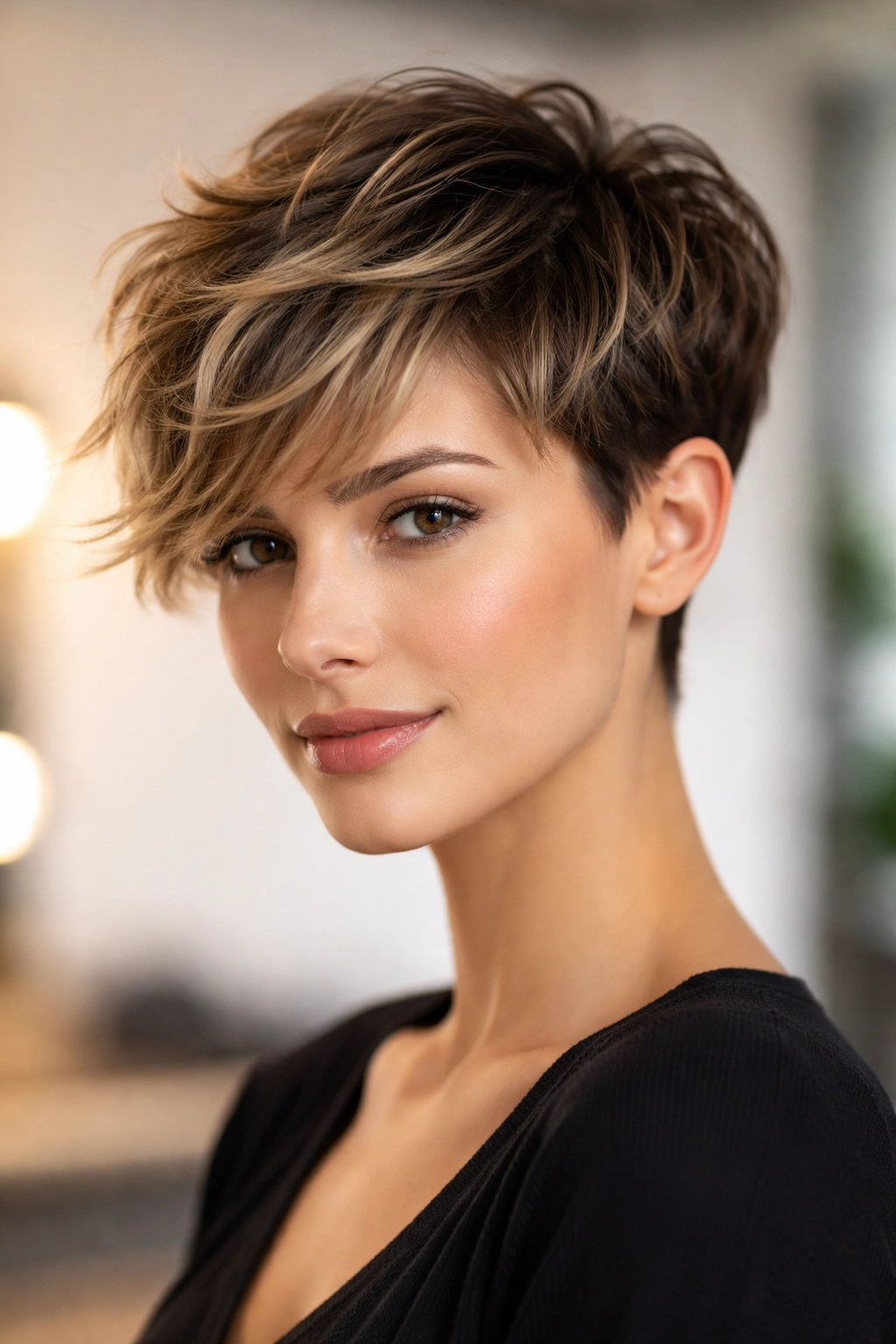
This is genuinely short — pixie-length sides and back, maybe an inch or less — with enough length on top and around the face to create soft waves. It’s a bold style that requires confidence, but the balayage softens it considerably. Strategic placement of lighter pieces around the face and throughout the crown creates a sophisticated, intentional look rather than reading as severely short.
Why This Works for Waves and Color
A pixie with waves is immediately more interesting and textured than a pixie cut straight. The waves add softness and movement that keeps the extreme shortness from feeling too severe. The balayage is essential here — it keeps the style feeling modern and dimensional rather than like a basic crop. Lighter pieces around the face soften angles and draw attention to your features rather than your hair texture (or lack of it).
What You Need to Know
- This requires truly excellent, confident styling from a professional — the cut has zero margin for error
- Styling is actually quite simple: wet hair, styling cream or light texturizing product, blow-dry with fingers or a round brush
- Requires trimming every 3-4 weeks without exception — growth is immediately visible
- Suits oval and oblong faces best; can work on round faces but requires very skillful styling to balance proportions
- The balayage should use at least 2-3 lighter tones scattered throughout; a single highlight color reads as less sophisticated at this short length
7. Soft Waves With Ribboned Balayage Pieces
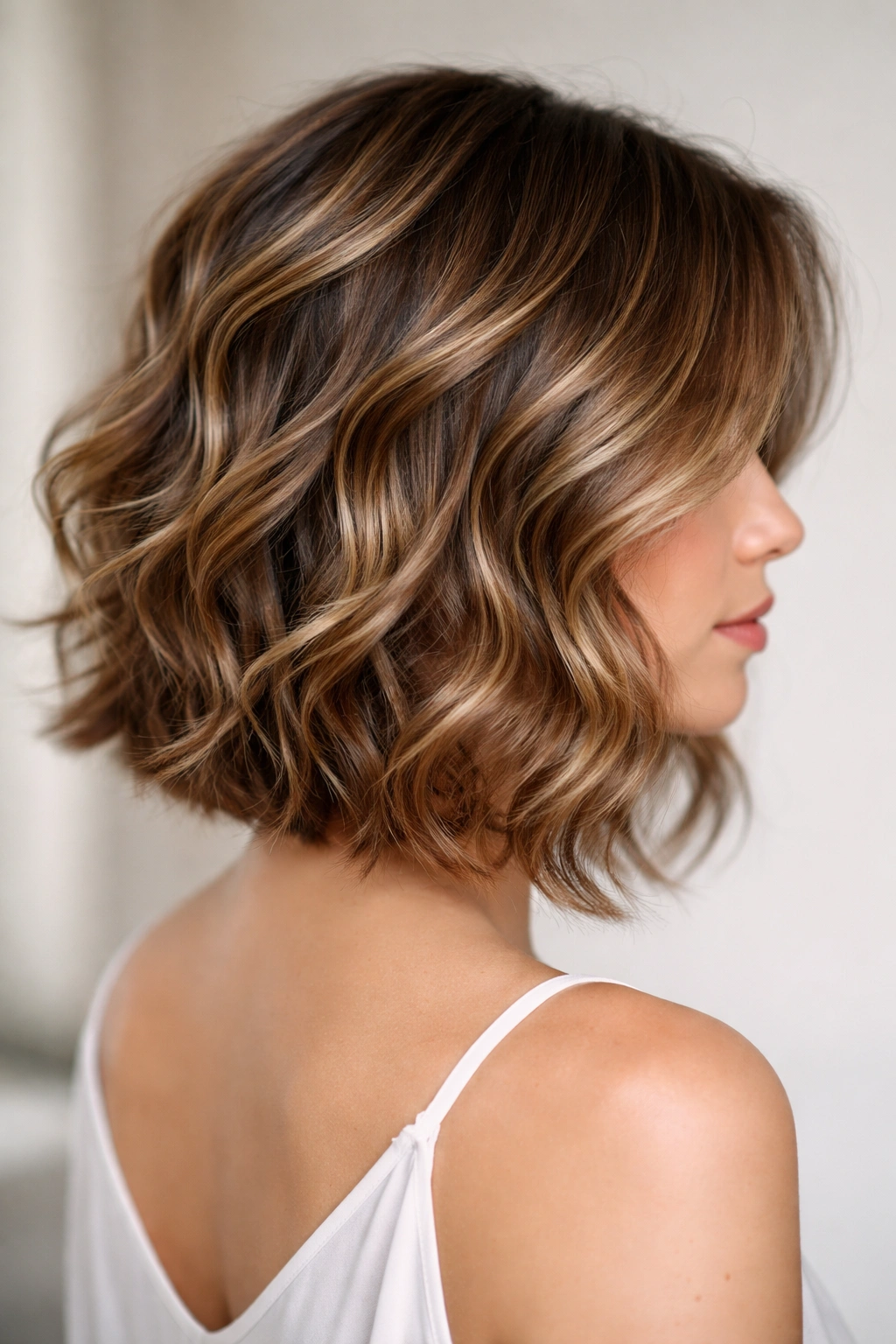
This style creates super soft, loose waves using a combination of the cut and how it’s styled. The cut itself is a shorter layered style, but the magic happens in the styling — waves are created gently so they feel romantic and undone rather than intentional and structured. The balayage uses a ribboned technique where thinner, narrower pieces of lighter color are painted throughout, creating dimension without the thick blocks of color that can sometimes feel heavy.
Why This Works for Waves and Color
Ribboned balayage works beautifully with soft waves because the thin pieces of color create visual interest without competing with the softness of the wave pattern. This approach feels feminine and romantic — intentional but not overdone. The soft wave styling technique means you’re creating genuine texture and movement rather than relying on the cut alone to provide shape. This combination feels genuinely effortless and wearable for everyday life.
What You Need to Know
- Requires a colorist experienced with ribbon balayage — it’s a specific technique that creates a very different effect than traditional balayage
- Styling: damp hair, curl cream or wave spray, soft curling iron or diffuser work on damp hair
- The cut needs refreshing every 6-8 weeks; the styling maintains itself with product
- Works beautifully on all face shapes and hair textures
- This combination requires the most styling effort of the list — you’re creating waves rather than enhancing existing texture
8. Sleek Textured Crop With Expensive-Looking Balayage
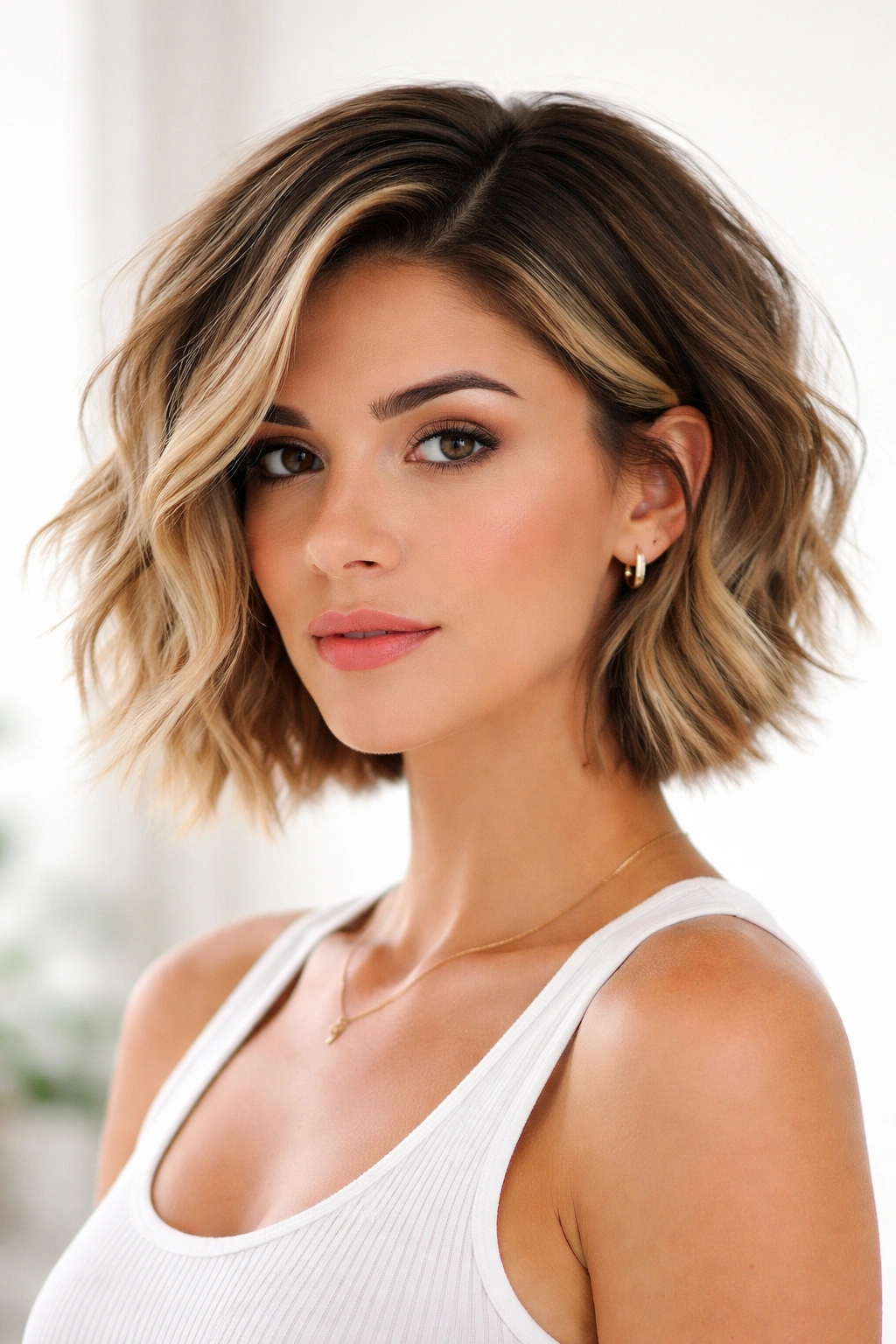
This style prioritizes polish and sophistication. The cut is cropped quite short but shaped extremely precisely, with careful attention to angle and proportion. The texture comes from strategic layers placed specifically to create subtle movement without disrupting the clean lines of the cut. The balayage here is placed with real intention — darker pieces near the roots and scalp, with lighter pieces concentrated on the face-framing areas and throughout the crown.
Why This Works for Waves and Color
This is the approach that makes balayage look like you paid triple the price for your color. The precision of both the cut and the color placement makes everything look intentional and expensive. The subtle texture prevents the short, precise cut from reading as severe or geometric — the layers soften it without disrupting its clean lines. This style works for professional, polished settings while still feeling modern and stylish.
What You Need to Know
- Requires a high-skill stylist and colorist; this is not the place to save money
- The cut is fairly high-maintenance — needs refreshing every 4-5 weeks to maintain clean lines
- Styling is minimal but intentional: blow-dry with a round brush for shape, optional light texturizing spray
- Works best on oval and oblong faces; can suit other shapes but requires careful proportioning
- The color maintenance is moderate — you can go 7-8 weeks between touch-ups, but the precision means longer stretches become more noticeable
9. Tousled Beach-Wave Lob With Warm Balayage Tones
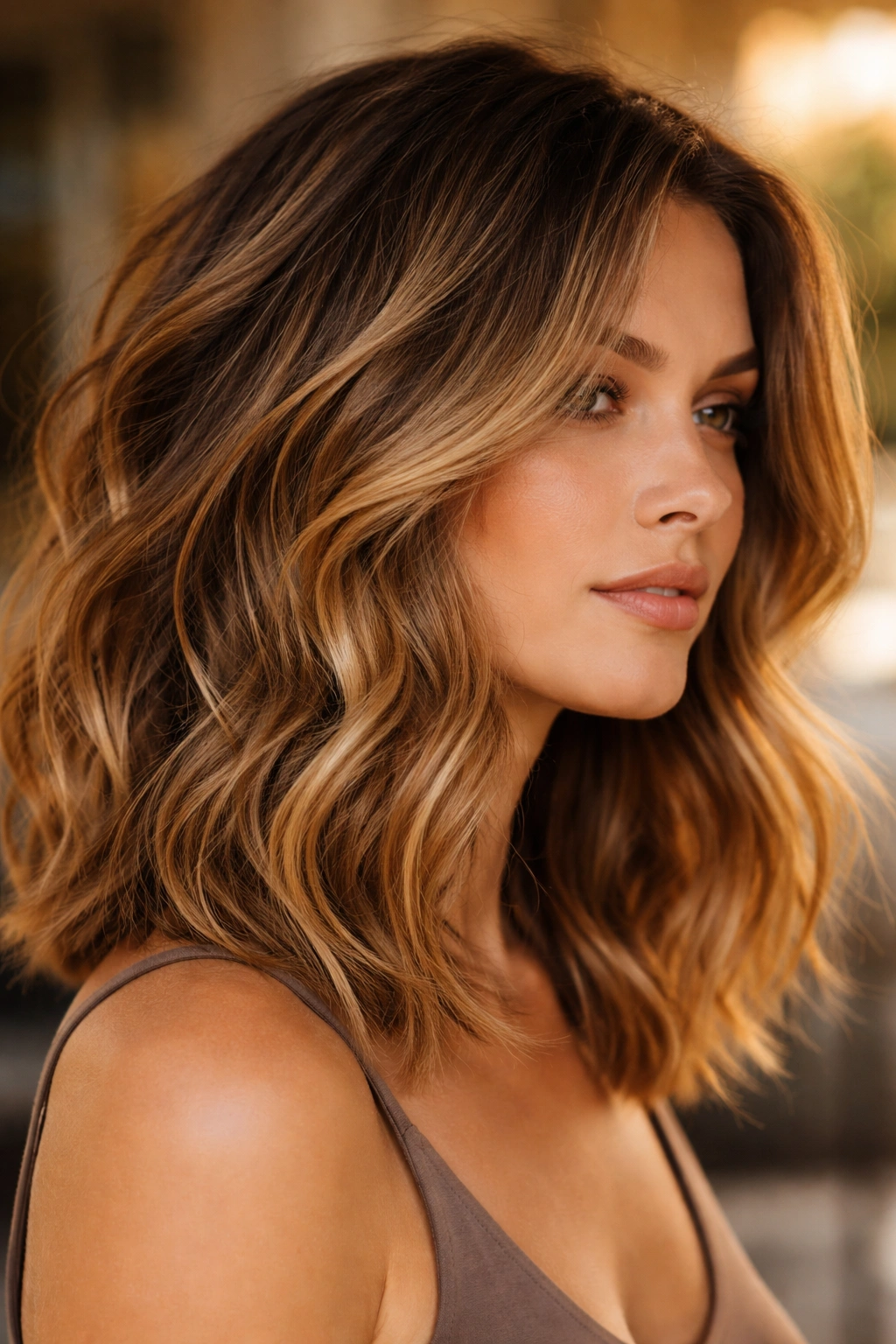
This version of a lob specifically emphasizes an undone, textured aesthetic with loose, irregular waves that look like you just came from the beach (even if you didn’t). The balayage uses warmer tones — caramels, honeys, and warm blondes — painted in a way that follows the natural highlights and shadows of your hair, making the dimension feel organic and sun-kissed.
Why This Works for Waves and Color
Warm balayage tones pair beautifully with beach-wave texture because they actually mimic how the sun naturally lightens hair over time. The irregular wave pattern means the color hits light from lots of different angles, making the warm tones glow rather than feel flat. This combination feels summery and relaxed even when you’re nowhere near a beach. The warm balayage is flattering on most skin tones and reads as inherently sophisticated because it looks so naturally achieved.
What You Need to Know
- Styling: damp hair, texturizing spray or sea salt spray, air-dry or rough-dry with a diffuser
- The cut needs refreshing every 7-8 weeks; the lived-in aesthetic actually hides a slightly grown-out cut pretty well
- Works beautifully on most face shapes and all hair textures
- The warm tones require the right skin undertone to look flattering — discuss this with your colorist before committing
- This style actually requires fairly regular color touch-ups (every 6-7 weeks) because the warm tones shift and fade relatively quickly
10. Textured Undercut With Bold Balayage Contrast
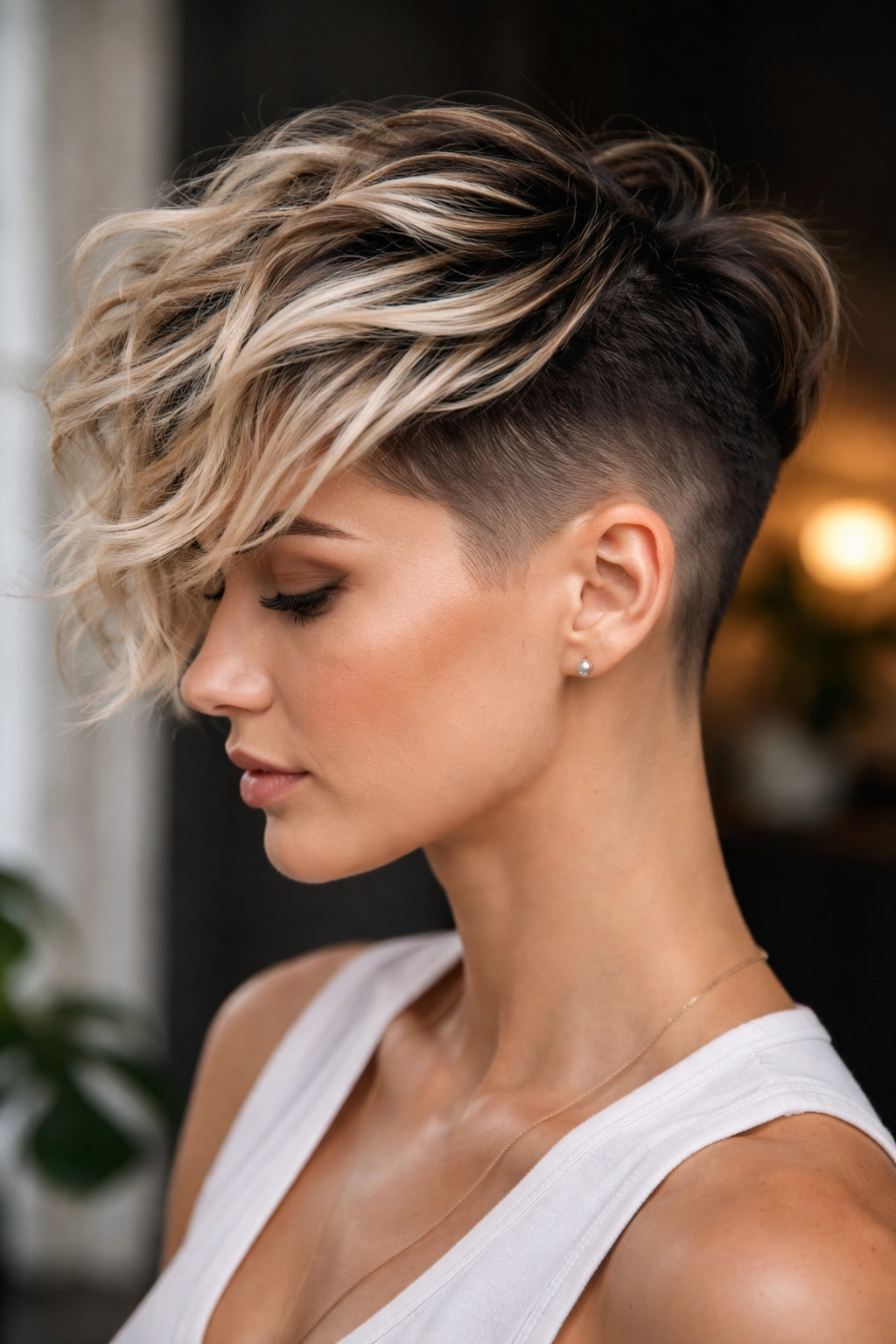
This modern style uses extreme contrast in length — very short, even shaved in places, on the sides and back, with significantly longer textured hair on top. The balayage makes this stark contrast work visually by using strong color contrast as well — darker roots and back paired with much lighter pieces on the longer top section, so the color variation echoes the length variation.
Why This Works for Waves and Color
An undercut feels extremely modern and bold. Pairing it with textured waves on top softens it considerably and makes it feel less severe. The balayage is what makes this work as a whole-package style rather than feeling like two competing ideas — the color variation creates a visual flow from the short, dark back up to the longer, lighter top section. This is a style for people who want to make a statement while still having some softness and movement.
What You Need to Know
- This requires a highly skilled stylist — the cut has to be executed with precision or it looks awkward
- Styling is more involved: the undercut is low-maintenance, but the longer top section needs styling with texturizing product and a blow dryer or straightener to look intentional
- Maintenance is moderate — the undercut needs refreshing every 3-4 weeks, and the cut on top needs refreshing every 5-6 weeks
- Suits angular face shapes beautifully; can work on round faces but requires skill to proportion correctly
- The balayage should be high-contrast to maximize the visual impact; soft, subtle color is lost against the dramatic cut
11. Lived-In Layered Bob With Multitonal Balayage
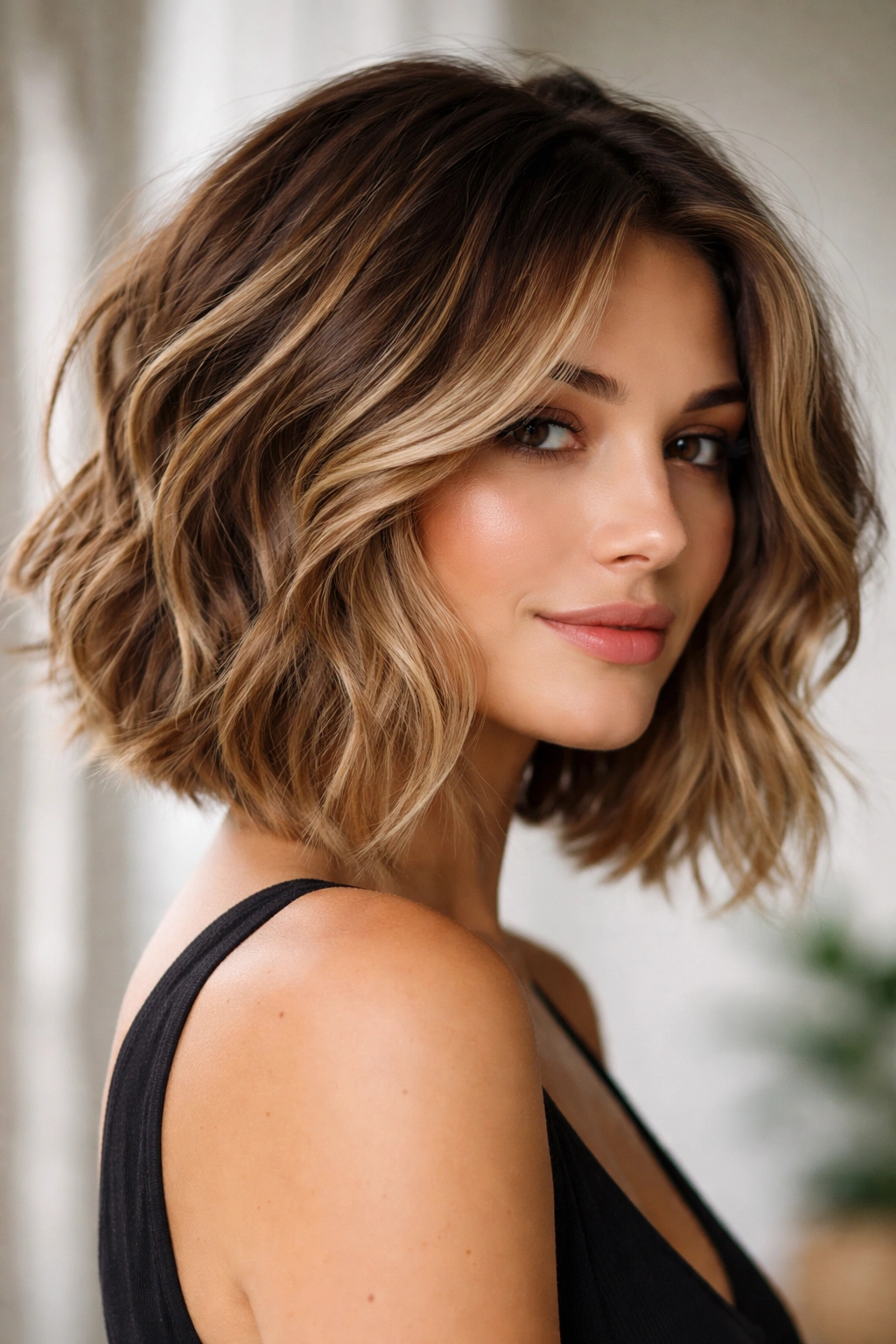
This is a relatively simple short bob — blunt-ish ends, lots of choppy layers throughout, nothing too architectural. The magic is in the lived-in aesthetic created by the many layers that break up the shape, plus the balayage that uses multiple tones (usually 3-4 different colors ranging from dark to light) to create real depth throughout the head. The result feels textured, dimensional, and genuinely effortless.
Why This Works for Waves and Color
A heavily layered bob naturally creates waves and texture, especially if you have any wave or curl pattern in your hair. The multitonal balayage means there’s visual interest in every single layer — when you move your head or run your fingers through your hair, you see color variation everywhere. This approach feels modern and intentional without requiring precision styling. The “lived-in” aesthetic means small imperfections in styling actually add to the charm rather than detracting from it.
What You Need to Know
- Works best with naturally wavy or curly hair (straight hair needs more frequent styling)
- Styling: damp hair, texturizing cream or spray, air-dry or quick diffuser work
- The cut needs refreshing every 6-8 weeks; the layers blend out without maintenance
- Works on all face shapes and hair types
- The multitonal balayage requires a skilled colorist but is genuinely lower-maintenance than a single-tone approach (6-8 week intervals between touch-ups are fine)
- This style actually looks better as it grows out — the root shadow adds to the dimension rather than fighting against it
12. Sleek Waves With Strategic Face-Framing Balayage
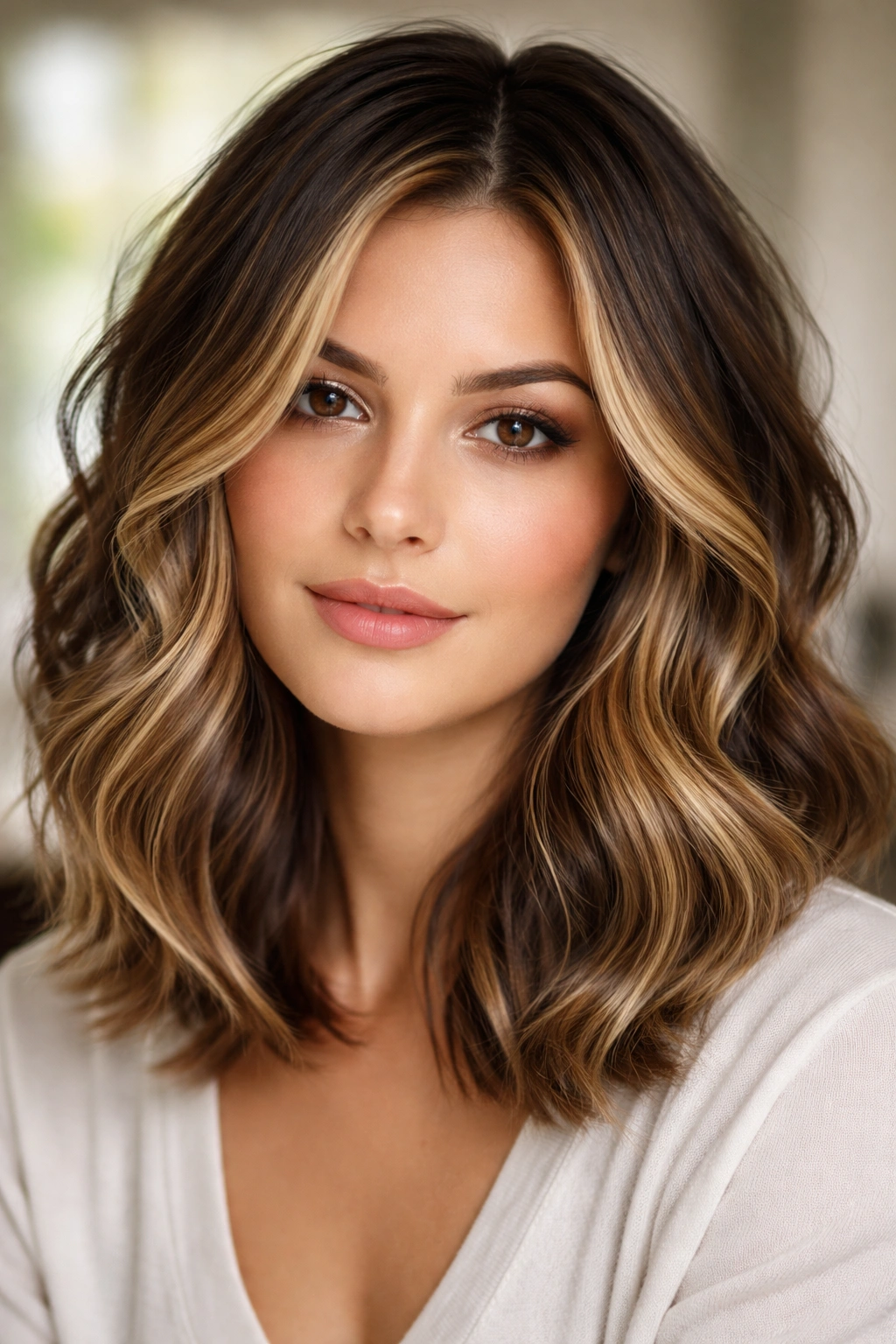
This style creates definition through careful wave styling rather than cut alone. The cut is a shorter layered piece that’s relatively simple and doesn’t rely on extreme texture. The waves are created with intention using styling tools and technique, producing consistent, polished-looking waves. The balayage is concentrated strategically — lighter pieces are placed specifically to frame the face and draw attention to your features, while the back and bottom layers remain relatively darker.
Why This Works for Waves and Color
Strategic face-framing balayage is one of the most flattering approaches because the lighter color literally draws attention toward your face. Pairing this with polished waves creates a look that’s visually lifted and sophisticated. This approach works for people who want to look intentional and styled without looking overdone. The concentration of lighter color in the face-framing pieces means the rest of your hair can be more subtle, creating balance.
What You Need to Know
- Styling requires intention but not complicated technique: damp hair, styling product, blow-dry and/or curling iron to create polished waves
- The cut is moderate-maintenance — needs refreshing every 6-8 weeks
- The balayage is quite low-maintenance because most of the color is concentrated away from the hairline where regrowth is most visible
- Works beautifully on most face shapes; is especially flattering on round or square faces where face-framing is desirable
- You can comfortably go 8-10 weeks between color touch-ups with this approach
13. Feathered Waves With Dimensional Balayage Blend
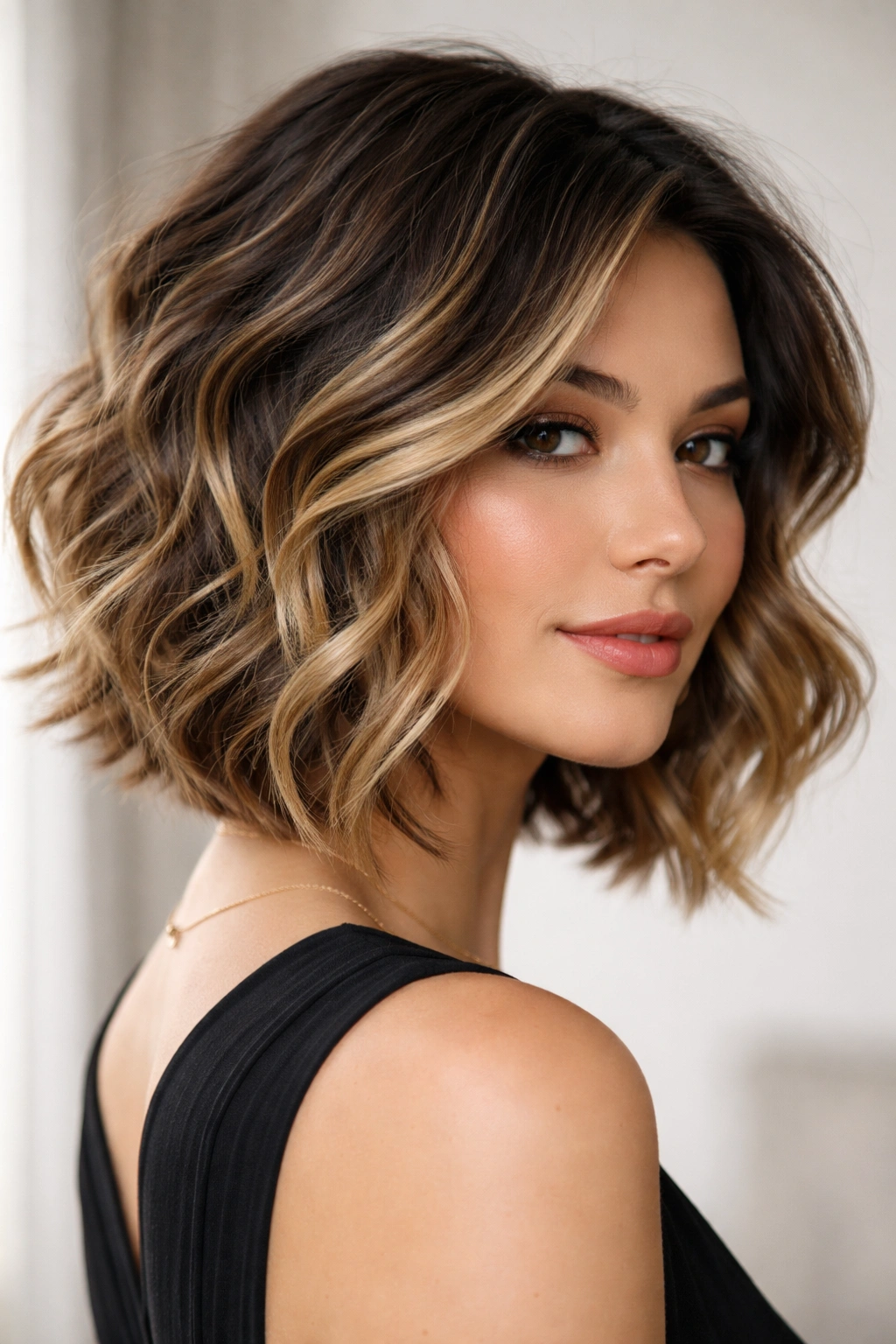
Feathered styling creates those beautiful waves that separate into distinct pieces rather than clumping together into thick waves. The cut includes shorter layers that work specifically with feathered styling technique. The balayage here uses a blended approach where the color moves from darker at the roots to progressively lighter throughout the mid-lengths and ends, creating a naturally dimensional look that’s enhanced by the feathered wave pattern.
Why This Works for Waves and Color
Feathered waves are genuinely one of the most flattering wave styles because they create soft, light texture rather than heavy, clumpy waves. The blended balayage echoes this light, feathery feeling — the gradual color transition mirrors the gradual separation of the feathered pieces. This combination feels romantic, textured, and genuinely sophisticated. The feathering technique is an active choice in styling, so this approach works well for people who enjoy their styling routine.
What You Need to Know
- Styling is key here — you’re creating feathered waves with a curling iron and technique, not just working with existing texture
- Styling requires: damp hair, heat protectant, curling iron, and knowledge of the actual feathering technique (consider asking your stylist to show you during your cut appointment)
- The cut needs refreshing every 6-8 weeks
- The blended balayage is very low-maintenance and looks intentional as it grows out
- Works on all hair types, though looks especially beautiful on finer hair where feathered waves create noticeable dimension
- You can go 10-12 weeks between color touch-ups with this approach
14. Modern Shag With Colorful Balayage Accents
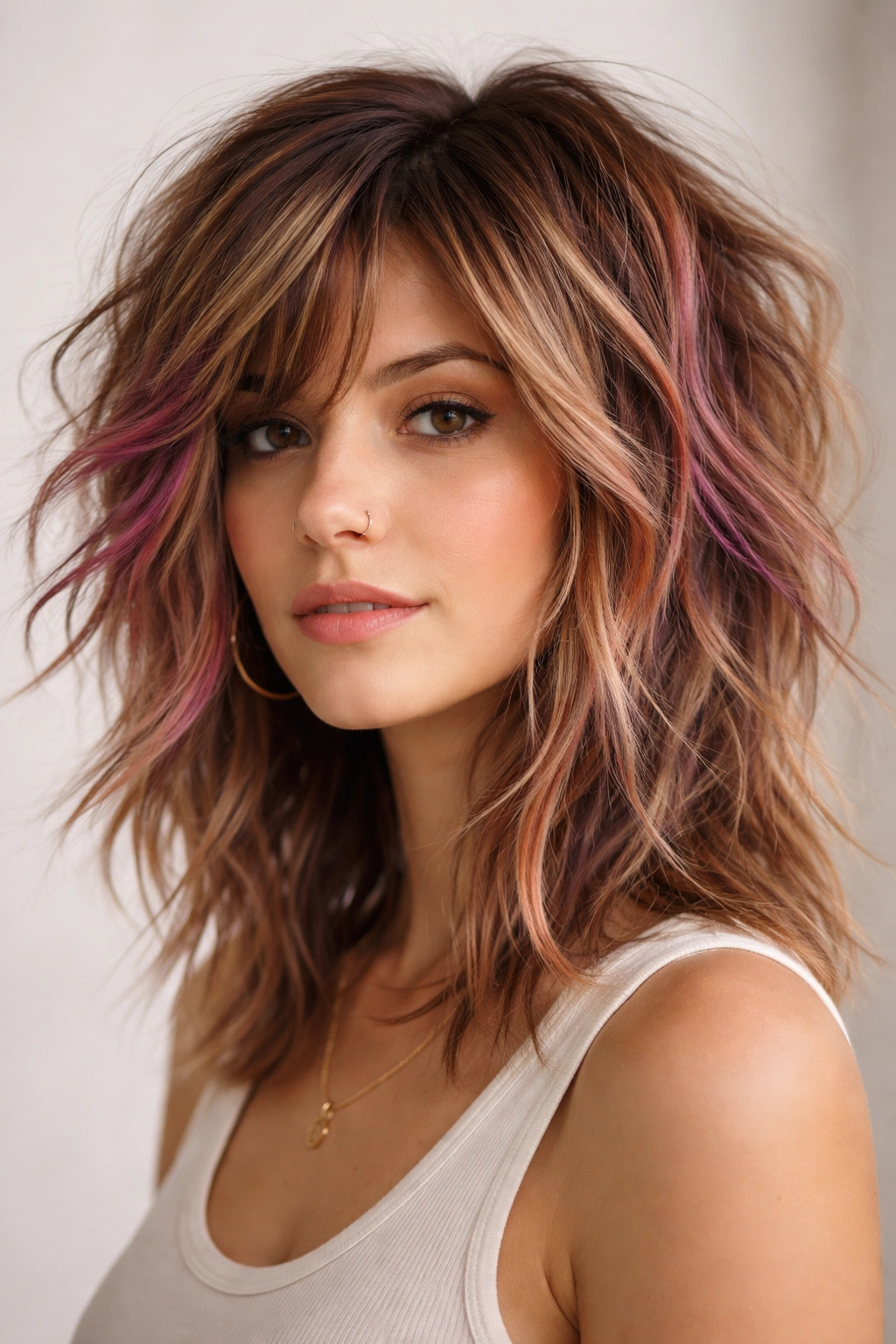
This final style brings back the shag with a contemporary twist. The cut includes lots of choppy layers and tons of texture, but it’s styled in a more modern, controlled way than classic shags. The balayage here incorporates one or two unexpected accent colors — maybe a subtle cool tone mixed with warmer tones, or a touch of color that complements your skin tone uniquely — placed specifically to catch light and add personality.
Why This Works for Waves and Color
A modern shag is built for texture and movement. Adding colorful balayage accents means you’re not just creating one visual story with your cut, you’re creating another layer of interest with color. The unexpected accents prevent the style from feeling predictable or overdone. This approach suits people who want their hair to be a genuine statement — it’s not trying to look effortless, it’s celebrating intentional, creative styling.
What You Need to Know
- Styling requires attention: texturizing product, blow-dry with a diffuser or round brush, and sometimes a curling iron or straightener depending on how you want the shag to look that day
- The cut needs refreshing every 5-6 weeks to maintain the shaggy shape
- The balayage with accent colors is moderate-maintenance — you’ll want to refresh every 6-8 weeks to keep the accent color vibrant
- Works best on oval and oblong faces; can suit other shapes but the texture and length require careful proportioning
- This is genuinely a style for people who love styling their hair and want their hair to be a creative outlet
- The colorful accents should be placed by an experienced colorist who can make them look intentional, not accidental
Final Thoughts
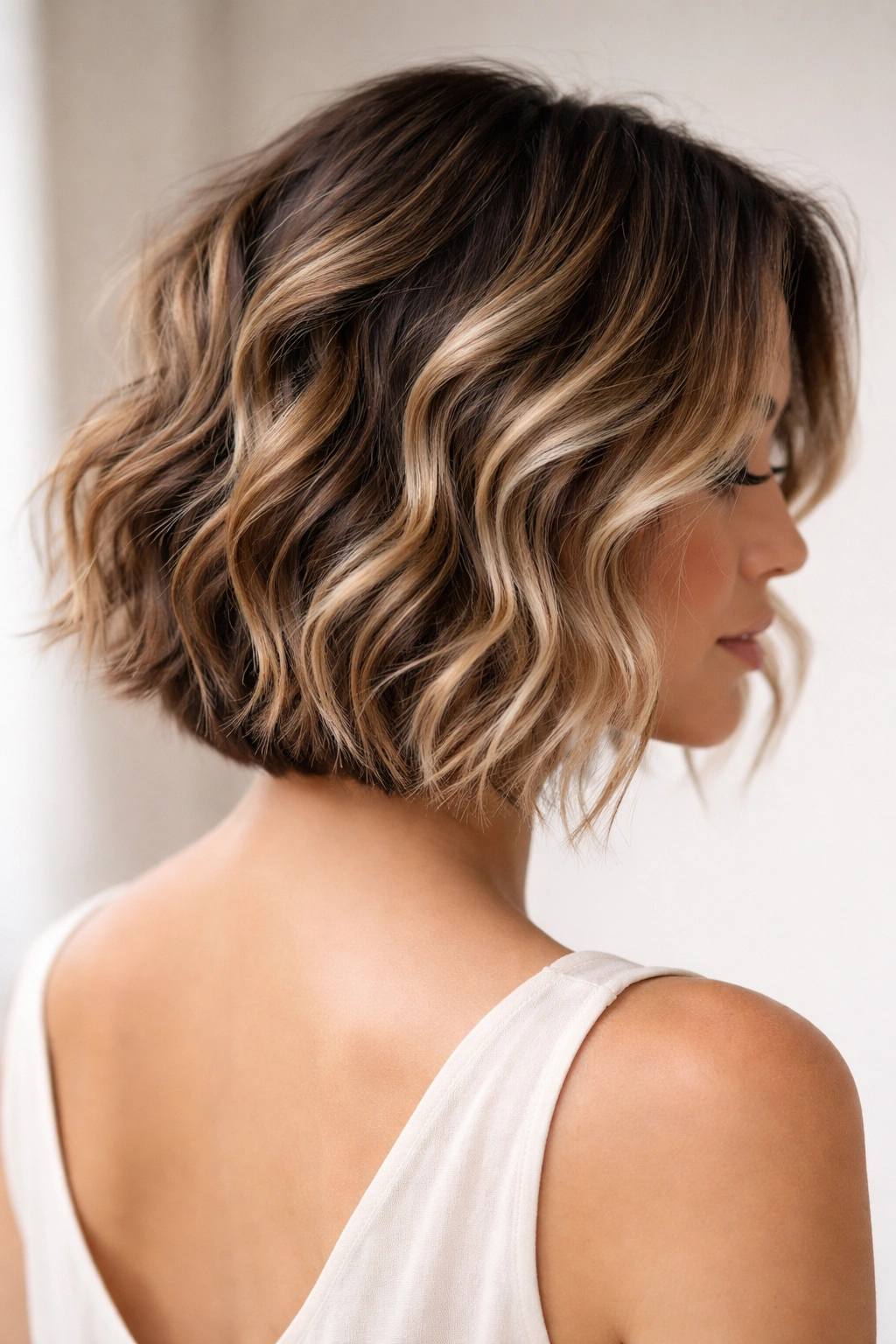
Combining short wavy hair with balayage is genuinely one of the smartest color and cut combinations you can choose. The movement of waves automatically complements dimensional color, and the shorter length means less maintenance overall compared to longer hair with the same color technique. The key is choosing the specific cut and color placement that matches not just your hair type, but also your styling preferences and the amount of daily effort you’re willing to invest.
If you want truly low-maintenance, look for a cut with lots of natural texture and a rooted or blended balayage technique that doesn’t show regrowth harshly. If you enjoy styling your hair and want it to be a creative part of your daily routine, go for cuts that require intentional wave-creation and colorful accents that keep things interesting. Either way, the partnership between waves and balayage ensures your hair looks dimensional, textured, and intentionally beautiful from every angle.
