



Curtain bangs have made a serious comeback, and if you’ve got wavy hair, you’re already sitting on one of the best canvases to rock this trend. There’s something about the way curtain bangs frame the face that feels effortlessly cool—they’re not too severe, not too safe, and they work with your natural texture instead of against it. The thing is, wavy hair and curtain bangs are basically made for each other. Your waves create natural movement that makes those face-framing layers look intentional and lived-in, even when you’re just rolling out of bed.
The real appeal of combining long lengths with curtain bangs and wavy hair is the versatility. You’re not locked into one look—you can wear your hair down with the waves doing their thing, pull it back into a ponytail (curtain bangs still frame your face), or half-up the back while those bangs catch the light. The length protects your ends while the layers at the front keep your face from looking too heavy. Long hair with waves already has movement; add curtain bangs and suddenly you’ve got dimension and styling options that feel fresh without requiring a complete transformation.
What makes this combination really work is understanding how your specific wave pattern interacts with bangs. Curtain bangs aren’t blunt—they’re side-swept and feathered, which means they can blend seamlessly with your waves instead of fighting them. You’re not fighting your hair texture; you’re working with it. Whether your waves are loose and beachy or tighter and more defined, there’s a way to style curtain bangs that feels natural and looks intentional.
1. Classic Beachy Waves With Center-Parted Curtain Bangs
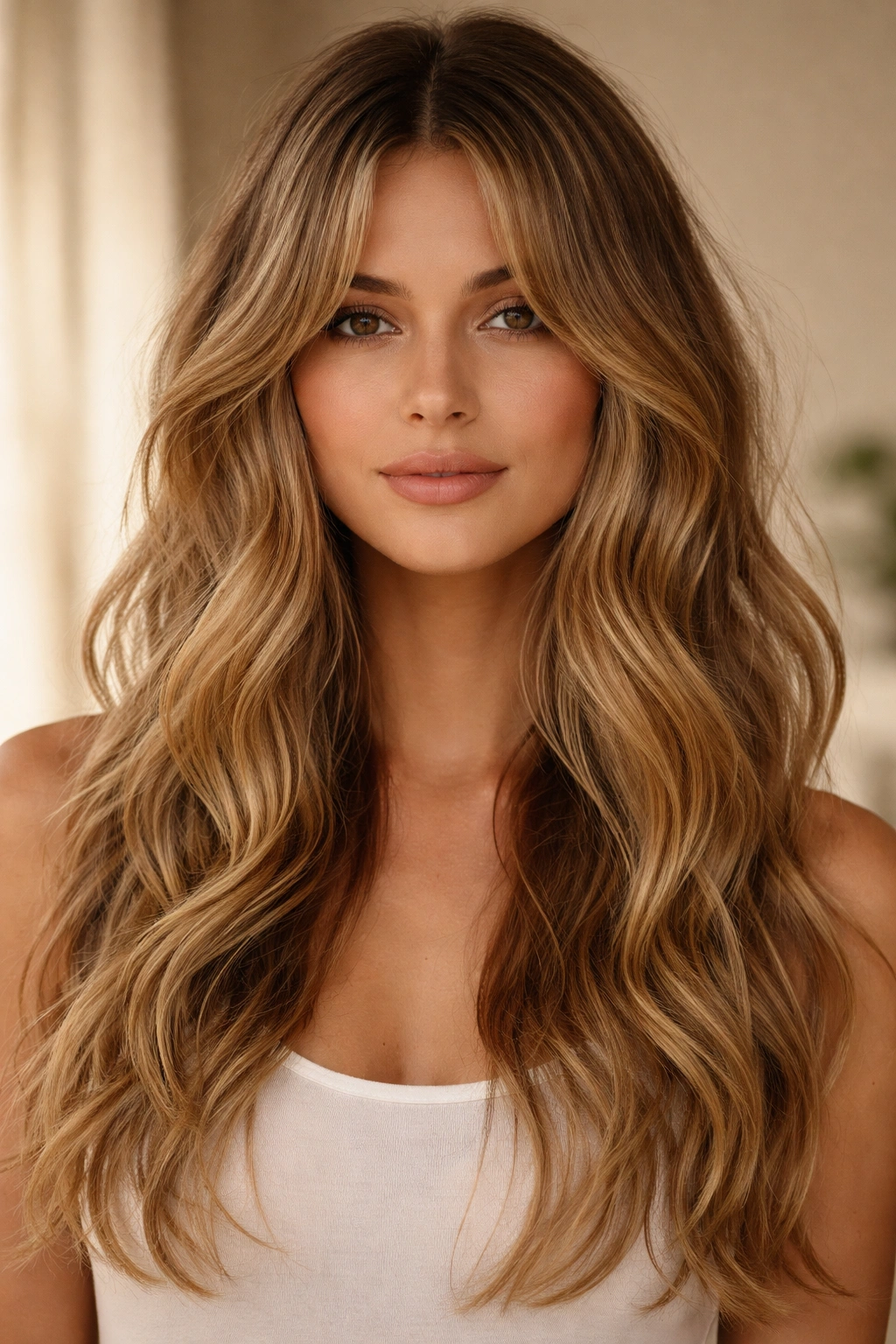
The foundation of this look is embracing your natural wave pattern and letting it shine without fighting it. Center-parted curtain bangs create a face-opening effect that’s both classic and contemporary, giving you a soft, approachable vibe. Your waves drape down naturally from the center part while the bangs gently curve away from your face, creating that effortless movement everyone loves.
Why This Works With Wavy Hair
Wavy hair naturally wants to move and flow—center-parted bangs honor that movement instead of constraining it. When your stylist cuts the bangs with enough length so they don’t fight your wave pattern, they integrate smoothly into the rest of your hair. The waves add volume and texture to the bangs themselves, preventing them from looking too thin or wispy.
How to Style and Maintain It
Blow-dry your waves with a medium round brush, directing them away from your center part to enhance movement. Use a curling iron on the bangs to emphasize that gentle curve outward—this takes about 30 seconds per side. A texture spray applied to damp hair before blow-drying makes the whole style feel more cohesive and helps your bangs blend with your waves.
Pro tip: Sleep on this style with a loose braid or low ponytail to preserve the waves overnight, and refresh the bangs in the morning with a flat iron or curling iron.
2. Shaggy Layers With Side-Swept Curtain Bangs
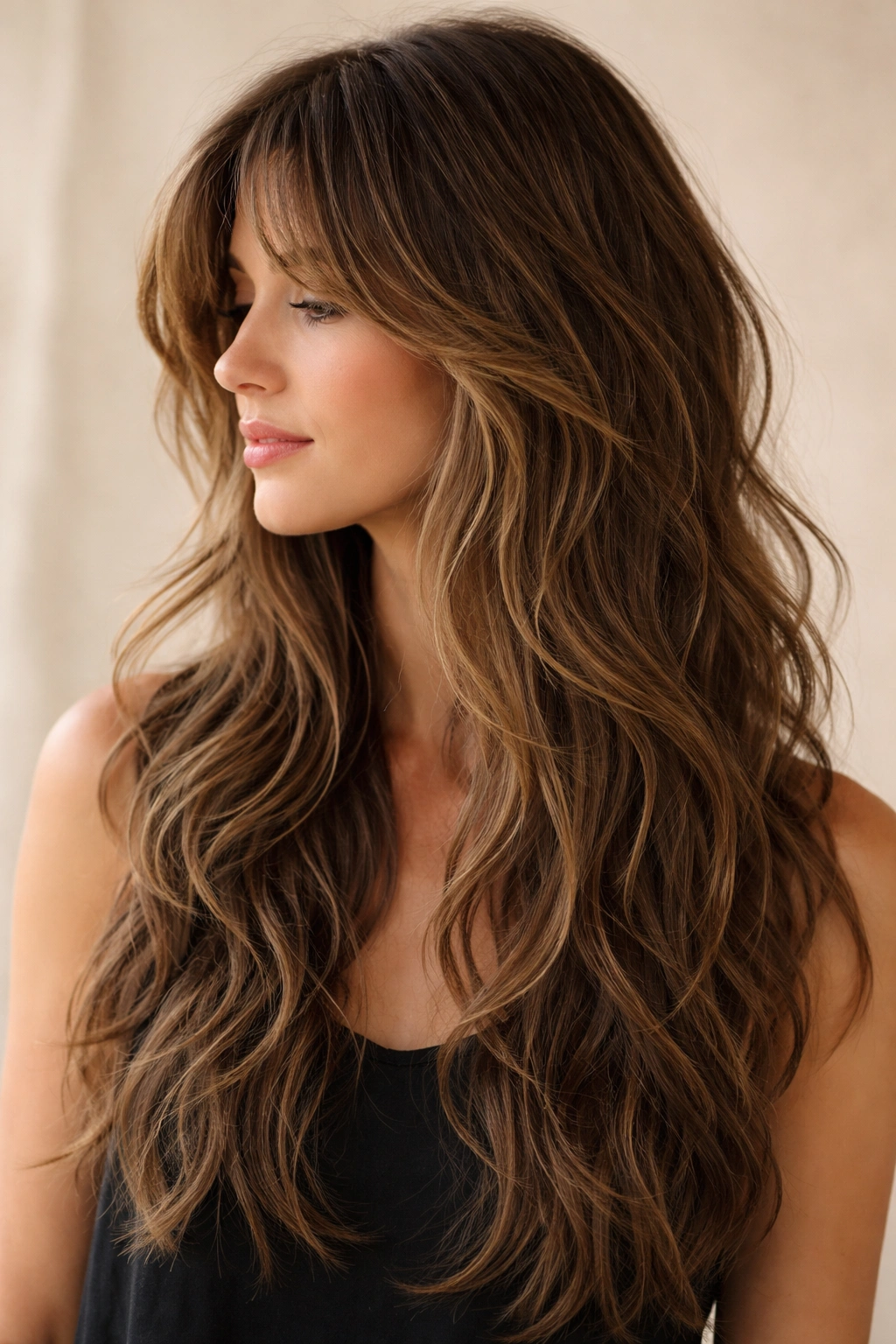
Shaggy layers throughout long wavy hair amplify texture and create movement that’s distinctly editorial. Side-swept curtain bangs work beautifully with this approach because they’re already directional—they emphasize the layers rather than fighting them. The bangs can be longer on one side, creating an asymmetrical vibe that feels intentional and modern.
The Texture Story
Shaggy layers are designed to catch light and show off dimension. Your waves already create this naturally, and curtain bangs add another layer of movement to the equation. The layers don’t need to be heavily choppy—even subtle layering throughout creates enough variation that your waves have plenty of texture to work with. This approach works especially well if you have finer wavy hair that can look limp in a blunt cut.
Styling for Maximum Impact
Embrace your natural drying pattern and enhance it with a diffuser attachment. Apply sea salt spray to damp hair and scrunch as you dry. Once dry, use a curling iron on random sections to deepen waves where they’re naturally less defined. The bangs should be styled with gentle heat to add a soft curve—not a tight curl. Run your fingers through everything once it’s cool to break up the pattern and create that intentional, undone texture.
Worth knowing: This style grows beautifully and doesn’t require frequent trims. A refresh every 10-12 weeks keeps the bangs looking fresh while the layers can go longer between cuts.
3. Blunt-End Long Waves With Feathered Bangs
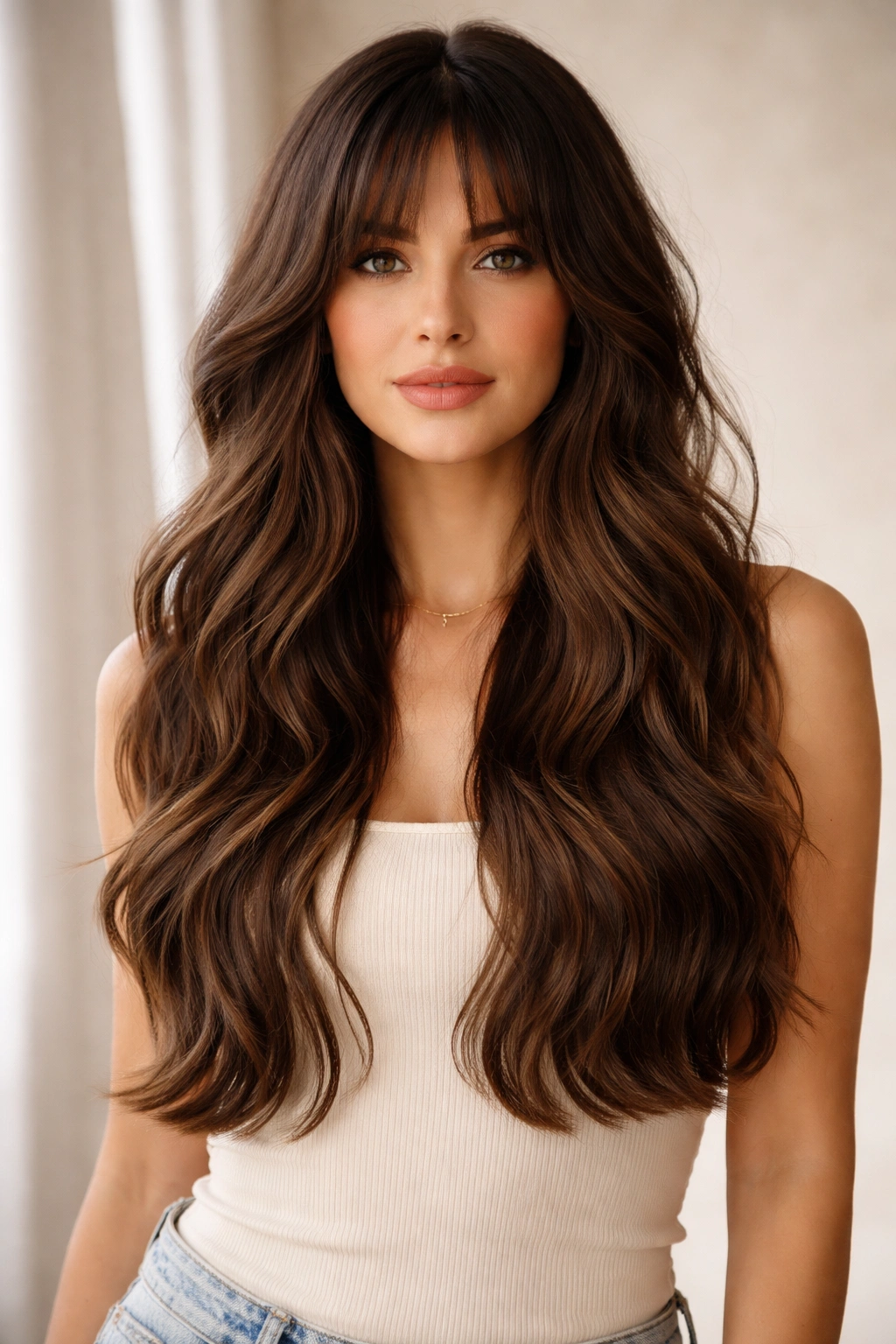
Long hair with a blunt bottom line creates a strong silhouette, and feathered curtain bangs soften that intentional bluntness with movement and texture. The contrast between the defined hemline and the delicate feathering of the bangs is what makes this style striking. Feathered bangs have fine, tapered ends that blend with wavy texture instead of looking choppy.
Why Feathering Matters
Feathering removes weight from the edges of your bangs, which is crucial for wavy hair. A thick, blunt bang can look heavy and won’t integrate smoothly with waves. Feathered ends give the bangs porosity—they literally have more surface area to interact with your wave pattern. This prevents that awkward moment where your bangs look flat while your hair is textured.
Creating the Right Effect
Start with a proper cut from someone who understands feathering—it’s a technique that needs precision. Once you have the cut, styling is straightforward. Blow-dry with a round brush to smooth the bangs slightly, then use a small curling iron to add a soft flip away from your face. You want the bangs to wave, not curl tightly. The key is letting your waves do most of the work; the bangs are there to frame, not dominate.
Insider note: If your feathered bangs ever start looking wispy, a light trim every 6-8 weeks keeps them looking intentional rather than grown-out.
4. Loose Waves With Choppy Curtain Bangs
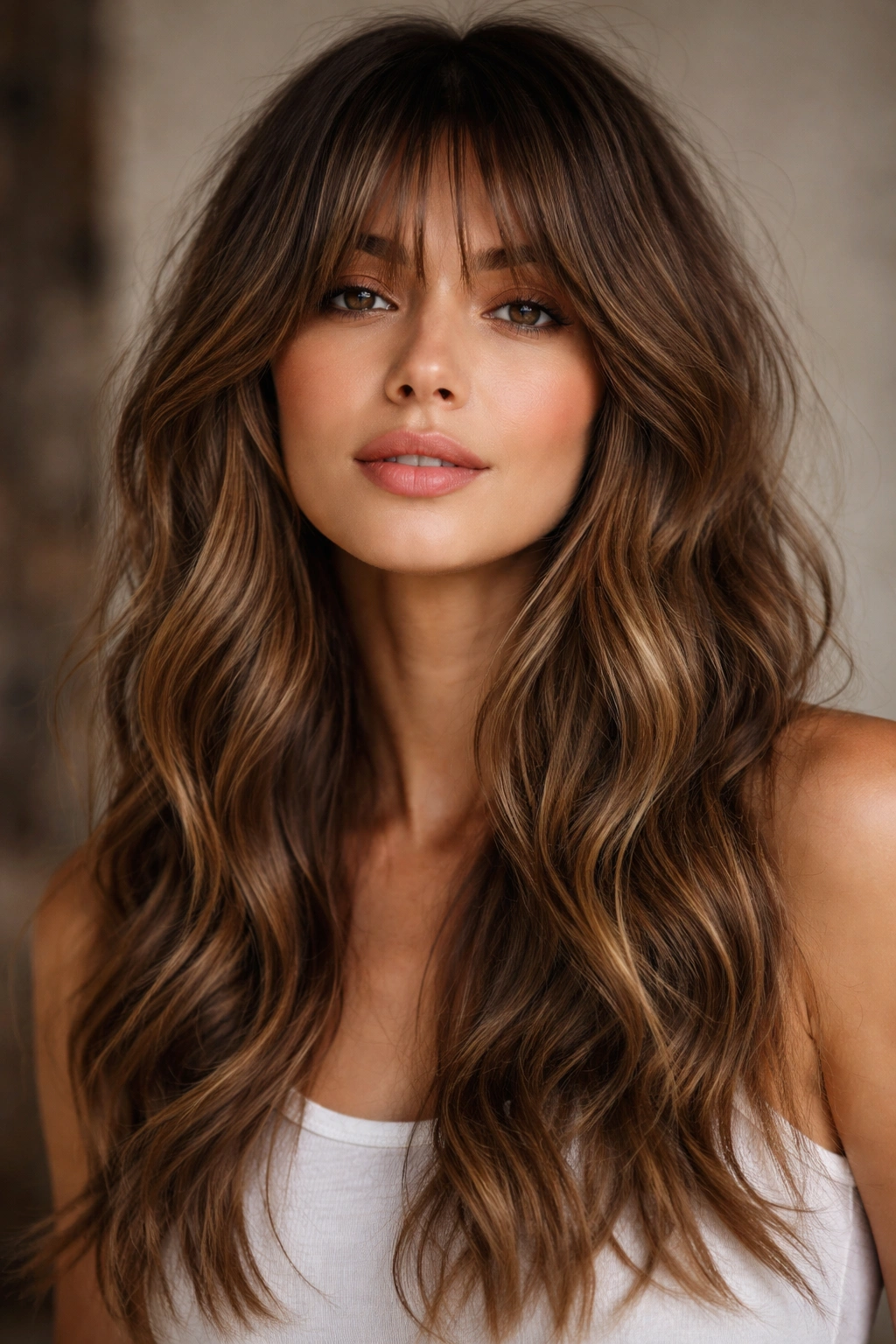
Choppy bangs have defined layers built into the cut, creating instant texture that matches wavy hair beautifully. Rather than sitting flat, choppy curtain bangs have visual movement right from the cut—they’re not blunt, and they’re not overly feathered. The layers catch light and create a youthful, edgy vibe that feels current. Paired with loose waves throughout, this style reads as intentionally textured rather than randomly messy.
The Texture Relationship
Choppy bangs essentially act as preview layers for what’s coming in your longer hair. They signal to the viewer that this is a textured, layered look. Your loose waves confirm that message and make the whole style feel cohesive. The choppiness prevents the bangs from looking like a separate element—instead, they feel like a natural extension of your wave pattern.
Styling Approach
Let your waves dry naturally or use a diffuser if you need to speed things up. The bangs will look best with a light tousle once completely dry. You can use a small curling iron to emphasize individual sections, or just run your fingers through them. The point is to activate the texture in the bangs without over-styling. A texture spray or sea salt spray applied to damp hair amplifies the effect without requiring extra work.
Pro tip: This is the most forgiving style for managing bangs with wavy hair—the choppiness means small inconsistencies in your waves don’t show.
5. Romantic Long Waves With Soft, Shoulder-Length Curtain Bangs
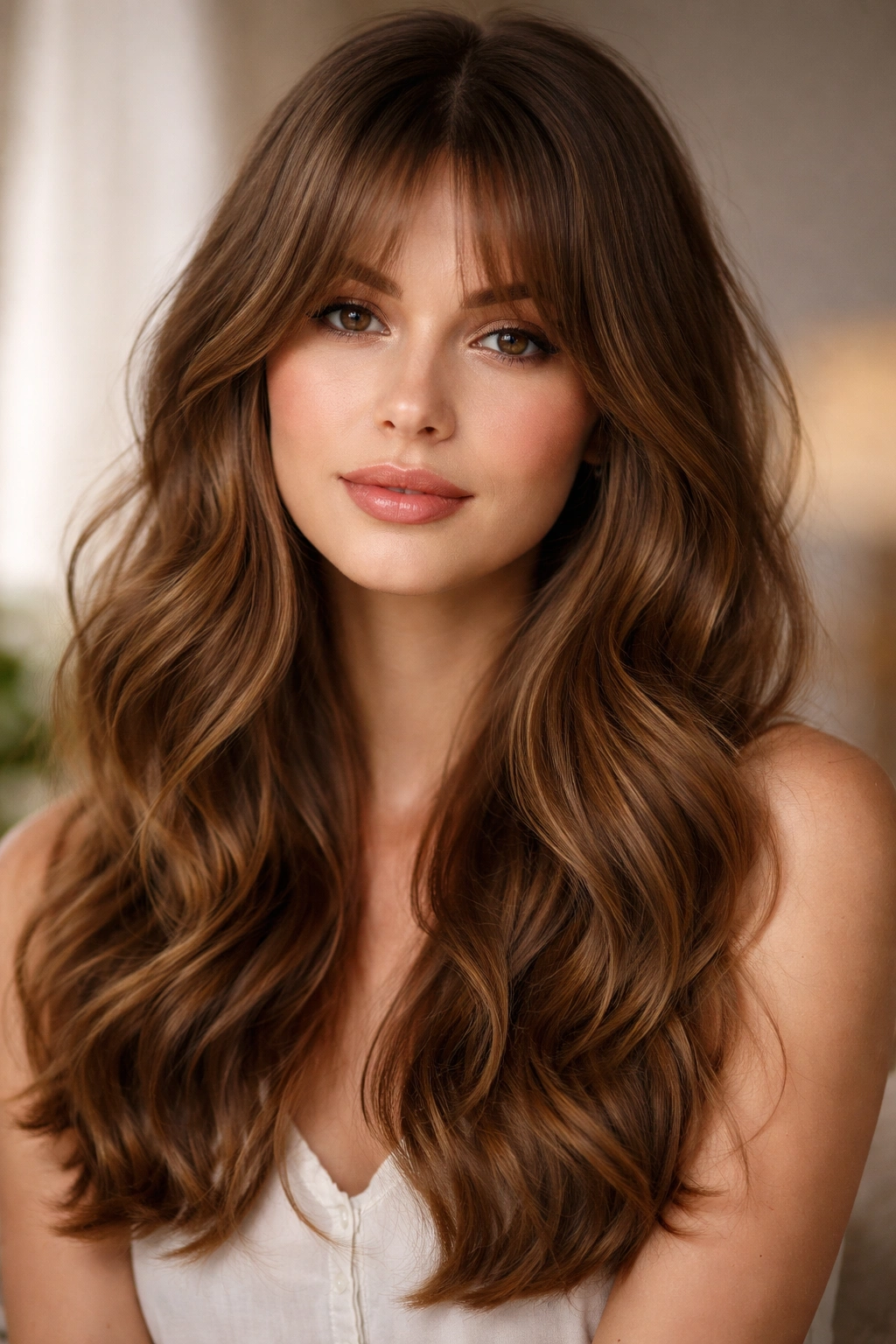
Longer curtain bangs that reach shoulder-length create a romantic, swooping effect that’s particularly flattering with very long wavy hair. These bangs aren’t cropped short—they’re cut at a length that allows them to blend with your longer layers. The drape is intentional and elegant, creating a face-framing effect without the severity of shorter bangs. This is the style for people who like the idea of bangs but want maximum flexibility.
Why Length Matters
Longer bangs integrate more seamlessly into long hair. They don’t create a jarring visual break between your bangs and your length. Instead, they’re simply the shortest layers in a graduated, long-layered haircut. This prevents the “wig” effect that sometimes happens when short bangs meet very long hair. The longer your bangs, the more they move with your waves rather than against them.
Styling for Romance
Blow-dry your waves with a round brush, paying attention to the bangs so they have a gentle curve. You want them to frame your face, not hang straight down. Once dry, use a large barrel curling iron to create waves in the bangs that mirror the waves in your longer hair. The goal is flow and movement—everything should feel connected. A light texturizing spray adds hold without visible product.
Worth knowing: This style doesn’t require tight styling. The longer the bangs, the more forgiving they are when your styling isn’t perfect.
6. Thick Wavy Hair With Dense Curtain Bangs
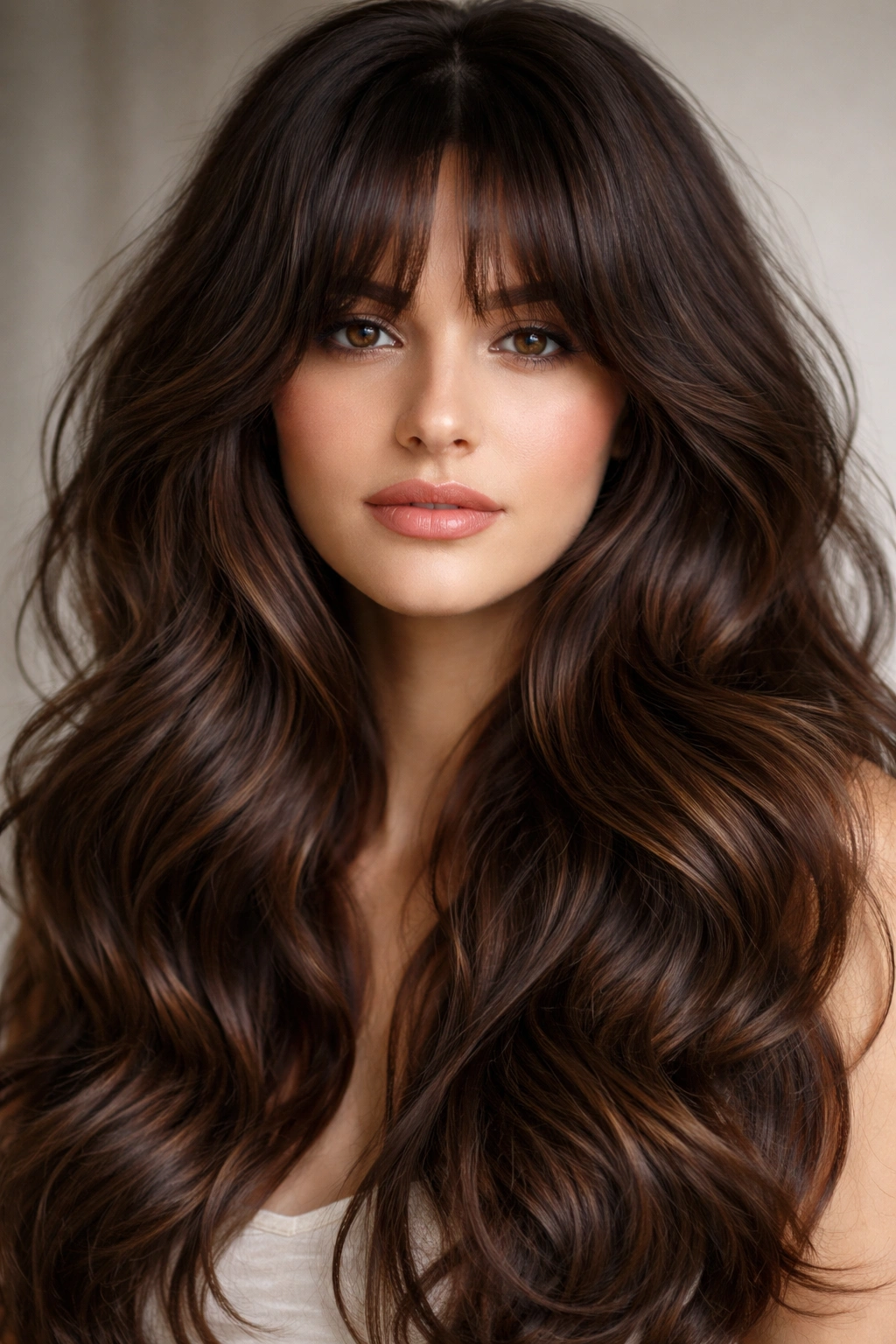
If you have thick, coarse wavy hair, dense curtain bangs—rather than thin, delicate ones—create balance and proportion. Your hair has weight and volume naturally, so your bangs should too. Dense bangs use more hair in the cut, creating a fuller look that feels intentional rather than sparse. The thickness allows the bangs to support themselves and move as a cohesive unit rather than in individual wispy strands.
Working With Hair Density
Thick wavy hair can easily look overgrown and shapeless without the right cut. Dense curtain bangs actually help by creating defined movement at the front. The weight of the bangs anchors them, preventing them from flipping or curling upward unexpectedly. This is especially important for people with very coarse wave patterns where thinner bangs might look out of proportion.
Styling Dense Bangs
You have more styling flexibility with dense bangs. Blow-dry them with a paddle brush to smooth and control them, then use heat to add movement. Because there’s more hair, you can create waves within the bangs themselves. Apply heat to different sections to create dimension—one side might be wavier than the other, which looks intentional with dense bangs. Use a volumizing product for hold without the weight that might flatten thick hair.
Pro tip: Dense bangs actually look better when slightly textured—use a texturizing spray or a light hairspray to add grip and prevent them from looking overly smooth against thick waves.
7. Fine, Delicate Waves With Wispy Curtain Bangs
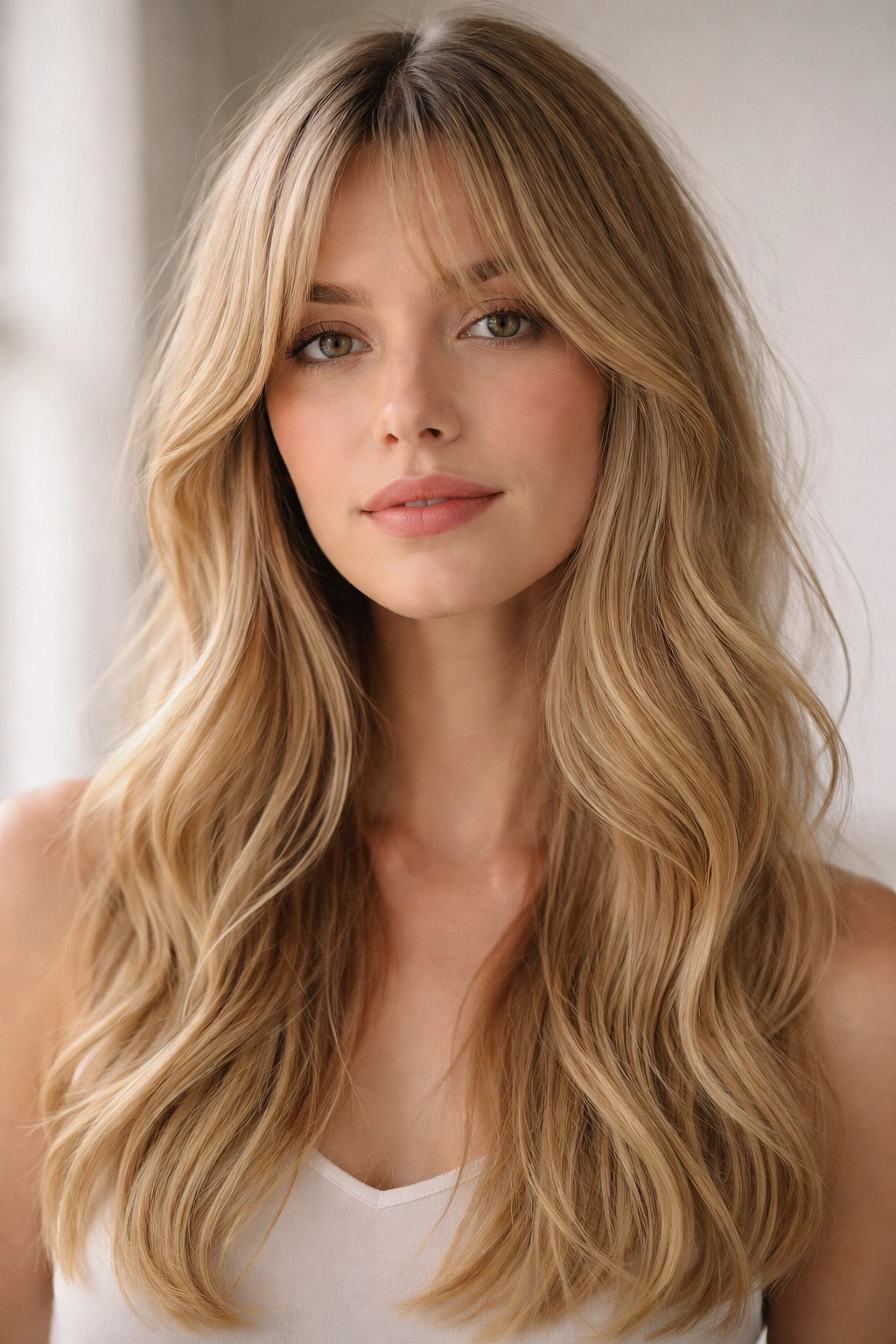
If your waves are subtle and your hair is fine or thin, wispy bangs that taper to delicate points create the perfect proportion. Thick, heavy bangs would overwhelm fine hair, making your face look smaller and your bangs look disproportionate. Wispy bangs are practically weightless—they enhance your face without creating visual heaviness. The tapered ends disappear into the texture of your fine waves rather than looking like a separate element.
Protecting Fine Hair
Fine wavy hair is all about creating the illusion of volume without actual weight. Wispy curtain bangs do exactly that—they create movement and frame your face while adding minimal weight. The individual wispy sections catch light, creating visual texture without requiring product or heavy styling. This approach also means less daily styling effort because the bangs cooperate with your naturally delicate waves.
Styling Without Damage
Minimizing heat is crucial for fine hair. Let your waves air-dry whenever possible, and use a diffuser on low heat if you need to speed things up. If the bangs need shape, a quick pass with a small curling iron on low heat creates gentle movement without damage. The bangs should look like they’re barely styled—just styled enough to frame your face. A lightweight texture spray adds hold without the buildup that makes fine hair look limp.
Insider note: Fine wavy hair with wispy bangs looks best with slightly longer bangs—at least to your cheekbones. Anything shorter can make the fine texture look too wispy and insubstantial.
8. Honey-Toned Waves With Barely-There Curtain Bangs
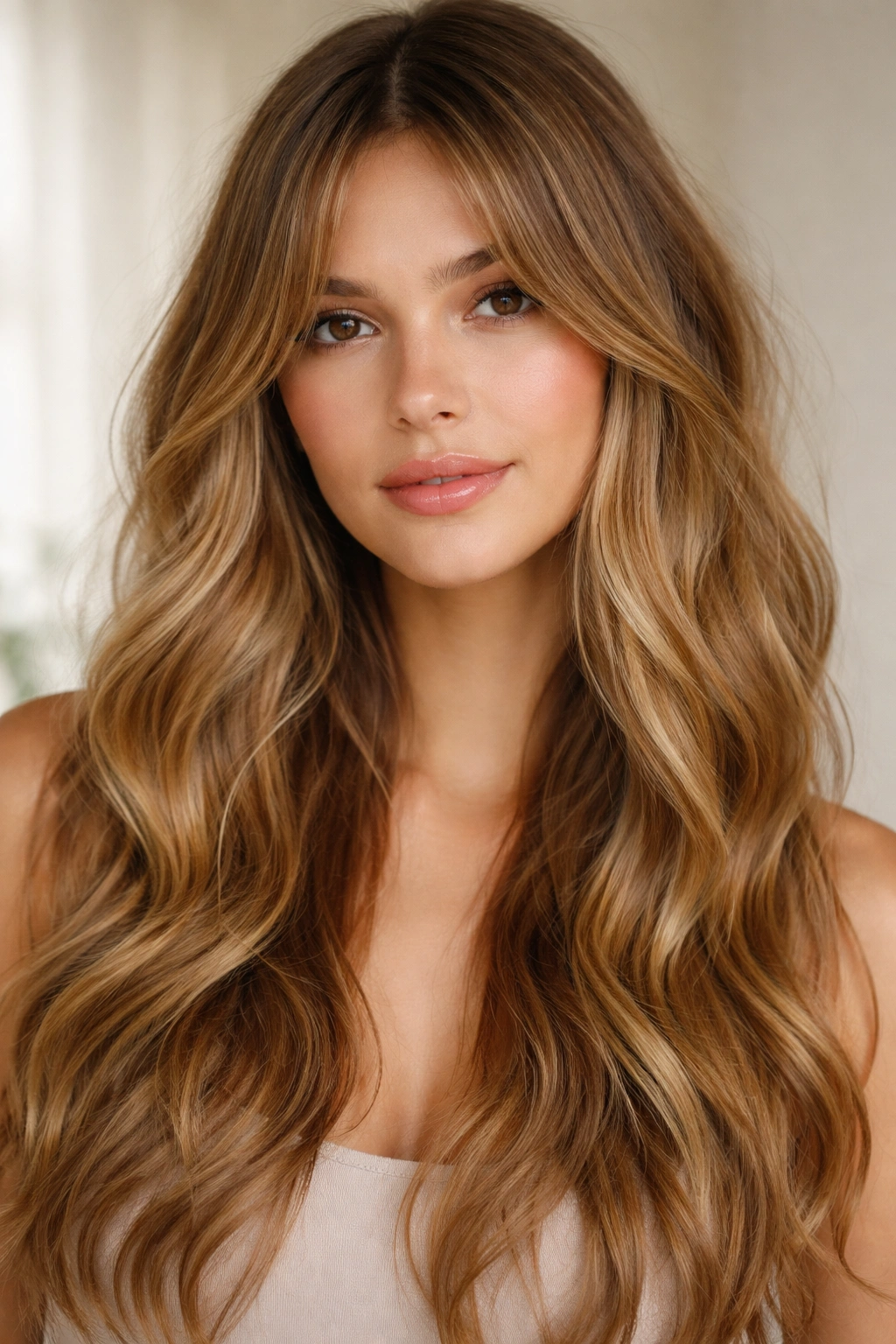
Barely-there curtain bangs are so subtle they almost blend into your hairline, making them perfect for a minimalist approach that still frames the face. These bangs are cut at a length where they barely register as separate from your longer layers. With honey-toned waves, the subtle color variation in your hair actually helps disguise the bangs—they’re less of a statement and more of a whisper. This works beautifully if you love the idea of face-framing without commitment.
The Subtlety Factor
Barely-there bangs are ideal for people who aren’t ready for a dramatic change or who prefer flexibility. Since they’re so short—often just grazing your eyebrows or shorter—they grow out gracefully and don’t require frequent trims. The light, minimal coverage means they won’t flip or curl unexpectedly. Honey tones add warmth and dimension, making the subtle bangs blend into the overall movement of your waves.
Easy Maintenance
This is legitimately the lowest-maintenance bang option. You can style them or not—they work either way. A quick blow-dry with your fingers or a brush is all that’s needed. The honey tones in your hair create visual interest that the minimal bangs don’t have to compete with. If you want to style them, a quick curl with a small iron adds a soft frame, but it’s optional.
Worth knowing: If you eventually want to grow your barely-there bangs into longer bangs, it’s a gradual, unnoticeable transition. No awkward growing-out phase.
9. Deep-Wave Pattern With Strong Curtain Bangs
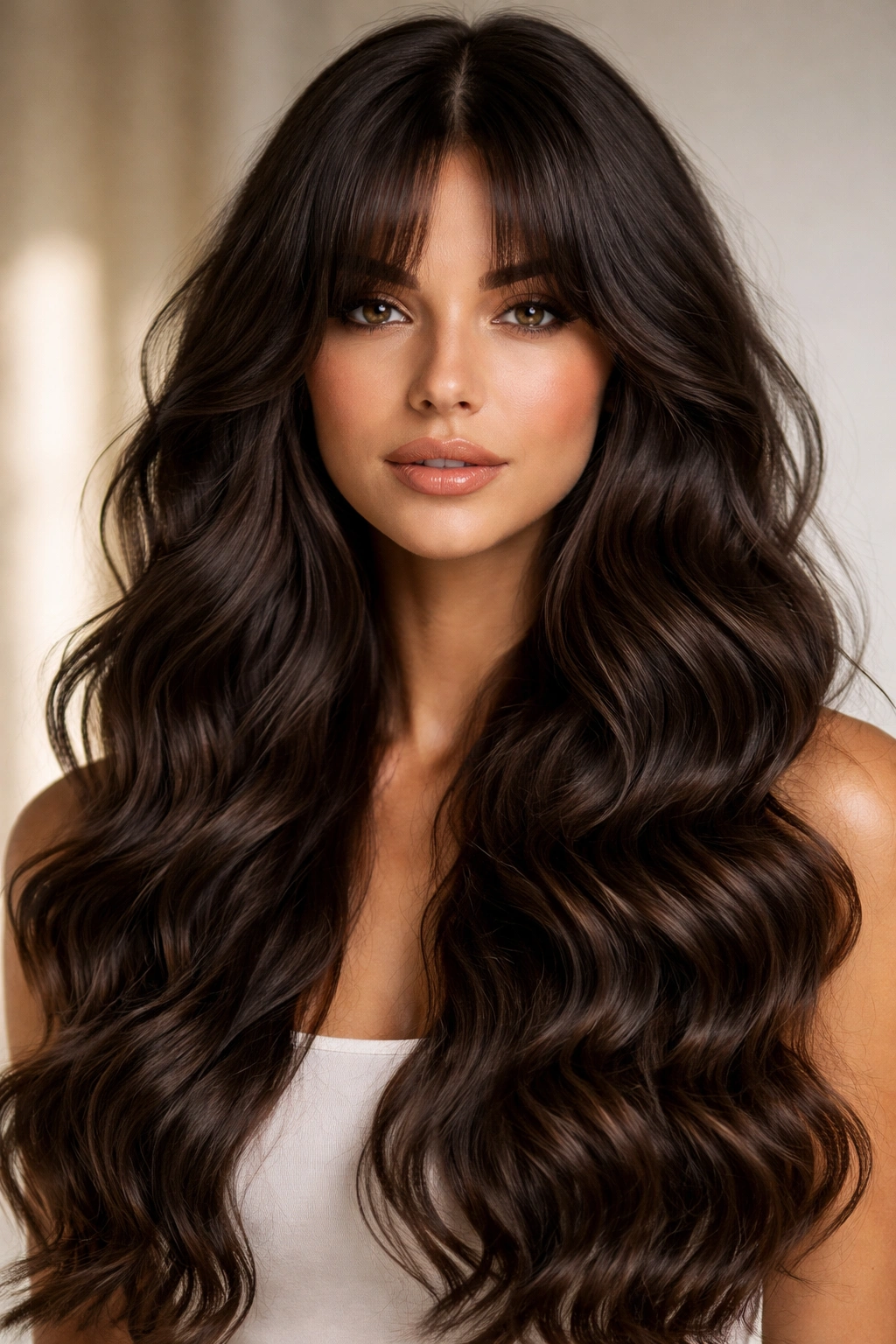
Deep waves that are tight and defined pair beautifully with strong curtain bangs that have a clear shape and deliberate movement. Your waves already create texture and definition, so your bangs should match that intentionality. Strong bangs have a more pronounced curve away from the face—they’re not subtle, and they’re not wispy. The structure of strong bangs complements structured waves, creating a look that feels cohesive and intentional rather than random.
Matching Intensity Levels
The intensity of your wave pattern should match the intensity of your bangs. Deep waves announce themselves as textured and defined. Subtle, wispy bangs would look out of place—they’d feel like a different style entirely. Strong curtain bangs with a clear sweep and shape mirror the definition of your waves. Together, they create a style that’s both coordinated and individual.
Styling Deep Waves With Bold Bangs
Deep waves often benefit from some styling to maintain definition. Use a diffuser on low-to-medium heat, scrunching as you dry. Once dry, separate individual sections and use a curling iron to deepen and define the waves where needed. The bangs should be styled with intention—a medium-barrel curling iron creates a strong curve. The combination of defined bangs and deep waves creates a distinctly styled look that reads as editorial and put-together.
Pro tip: Deep waves sometimes benefit from a curl-enhancing cream applied to damp hair before drying. This helps maintain wave definition and makes your bangs sit better in the style.
10. Balayage Waves With Blended Curtain Bangs
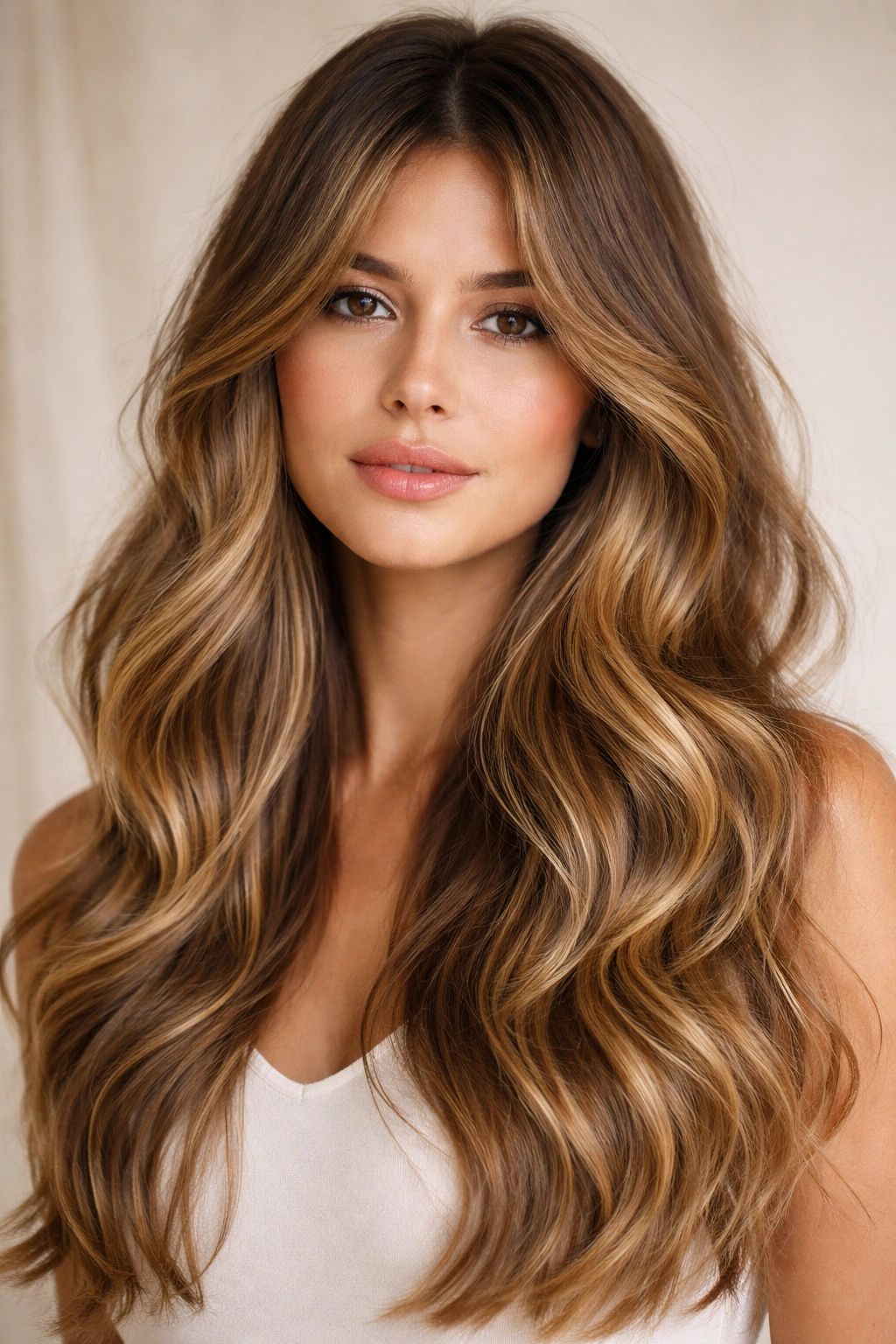
When you have balayage color moving through your waves, blended curtain bangs that don’t create a hard color line are essential. Blended bangs use similar coloring techniques as your overall color—lighter pieces on the outer edges and slightly darker at the roots. The bangs integrate with your balayage rather than standing out as a separate color section. This creates a cohesive, painted effect that feels intentional and high-end.
Color Coordination
Balayage is all about soft, integrated color. Your bangs should follow the same philosophy. Rather than being one flat color, they should have dimensional pieces that echo the color in your longer hair. This might mean balayage highlighting through the bangs, or simply ensuring the roots match your base color and the pieces catch the same tones as the rest of your hair. The result is a style where the bangs feel like a natural part of the overall color picture.
Maintaining Blended Bangs
Blended bangs with balayage require minimal maintenance because the color variation is forgiving. Root touchups needed for your balayage apply to your bangs too. The multidimensional color means slight color variations don’t show as obviously. When styling, let your balayage do some of the visual work—the color movement creates interest that complements the bangs without requiring extra styling effort.
Insider note: Consult with your colorist about how they’re coloring your bangs alongside your balayage. Good blending means you’re getting the same artistry on your bangs that you get on the rest of your hair.
11. Textured, Lived-In Waves With Undone Curtain Bangs
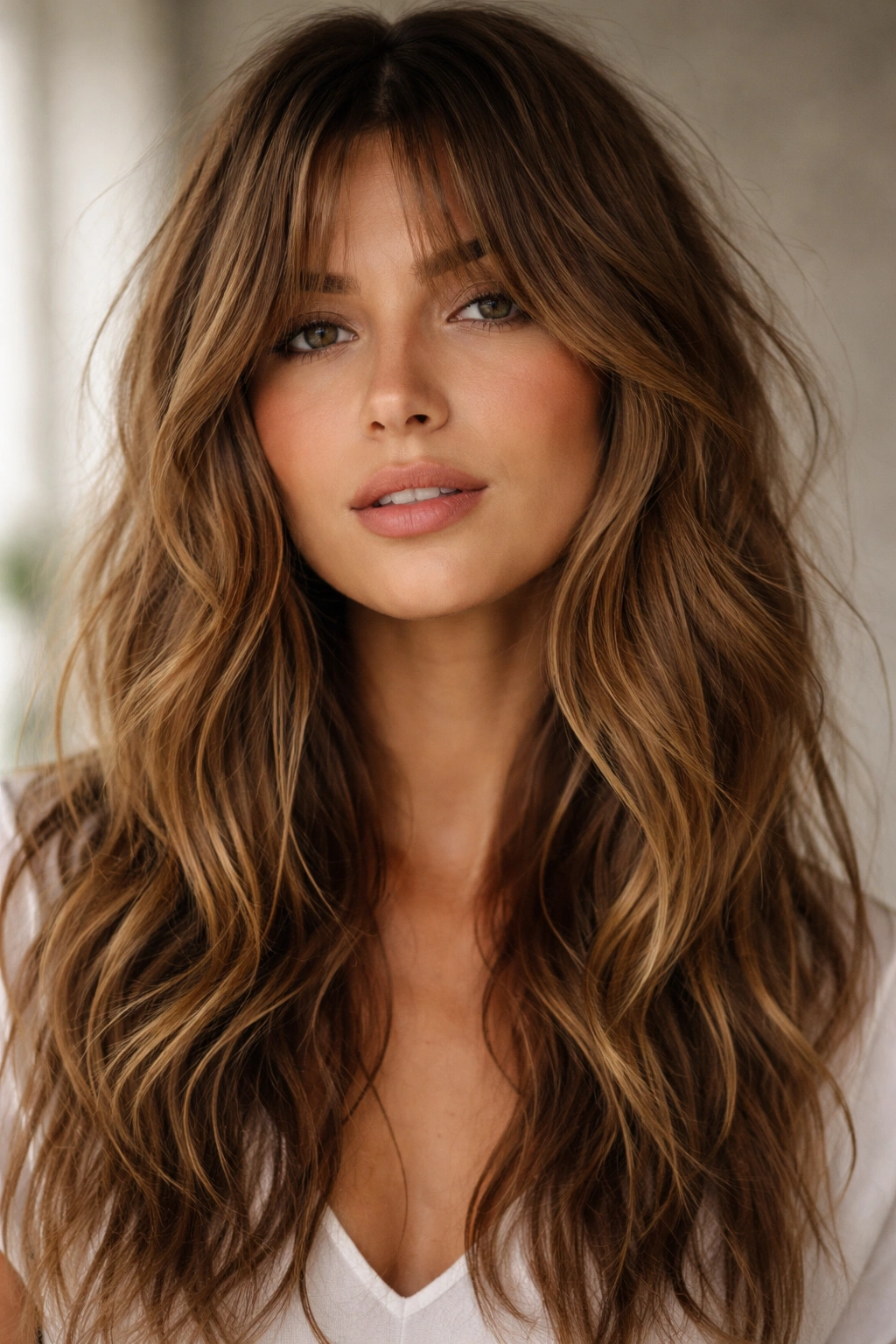
Undone curtain bangs are cut with intentional texture built in—they’re not meant to look perfectly styled. Paired with lived-in, textured waves throughout, this creates a style that celebrates imperfection. The bangs might have slightly different lengths, feathered unevenness, and a tousled appearance. Rather than looking unkempt, undone bangs look editorial and cool. This is the style for people who want something interesting without the daily styling commitment.
Embracing Imperfection
Undone doesn’t mean badly done—it means intentionally undone. The cut itself creates the texture through layers and choppy sections. Your waves provide natural movement that keeps everything looking fresh and intentional. The bangs don’t need to match perfectly from side to side; that variation adds to the undone aesthetic. This style celebrates the reality of wavy hair: it moves and changes throughout the day, and that’s the whole point.
Minimal Styling Required
Air-drying is actually ideal for this style. Use a diffuser if you want to speed up drying, but let your natural wave pattern dominate. Once dry, run your fingers through everything—that’s it. The texture is already built into the cut, so you’re not fighting against it. If you want to add a touch more definition on a particularly wave-resistant day, a light sea salt spray and some finger scrunching work beautifully.
Pro tip: This style grows beautifully because the undone aesthetic forgives slight growth better than more structured styles.
12. Colored Tips With Coordinated Curtain Bangs
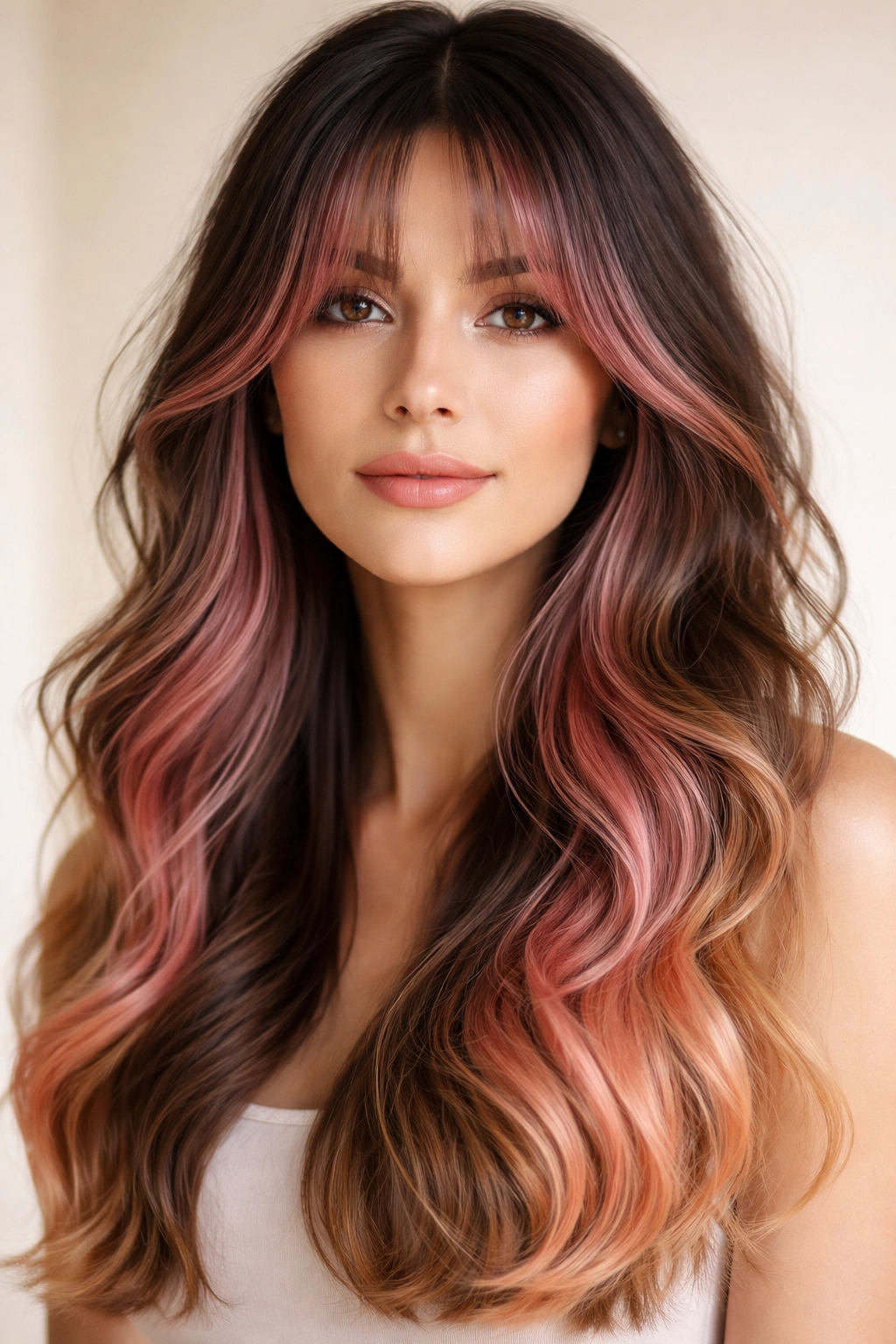
If you have colored ends—whether that’s a subtle ombré, balayage on the tips, or deliberately colored bottom sections—coordinating your curtain bangs with that color creates visual interest. The bangs can catch some of the same color treatment as your ends, creating a cohesive color story. This works especially well if your colored tips are a significantly different shade from your roots—the bangs can bridge that color transition.
Color Harmony
Your bangs and your ends should feel like they’re part of the same color plan. If your tips are heavily highlighted or colored, your bangs should have at least some of that same coloring. This might mean having your stylist apply similar lightening or color directly to your bangs, or positioning your bangs so they naturally catch some of the same product as your longer hair. The result is a cohesive look where every section of your hair is part of one unified color vision.
Maintaining Colored Ends and Bangs
Both require similar maintenance schedules. If your tips are colored, your bangs will likely need refreshing on a similar timeline. Regular deep conditioning protects both your ends and bangs from color damage. When styling, the color movement in both sections draws attention to the texture and movement of your waves. The bangs and ends essentially frame your face and your length, creating bookends of color and movement.
Worth knowing: This approach works best with longer bangs (shoulder-length or longer) that have enough length to show color variation.
13. Straightened Top With Wavy Bottoms and Curved Bangs
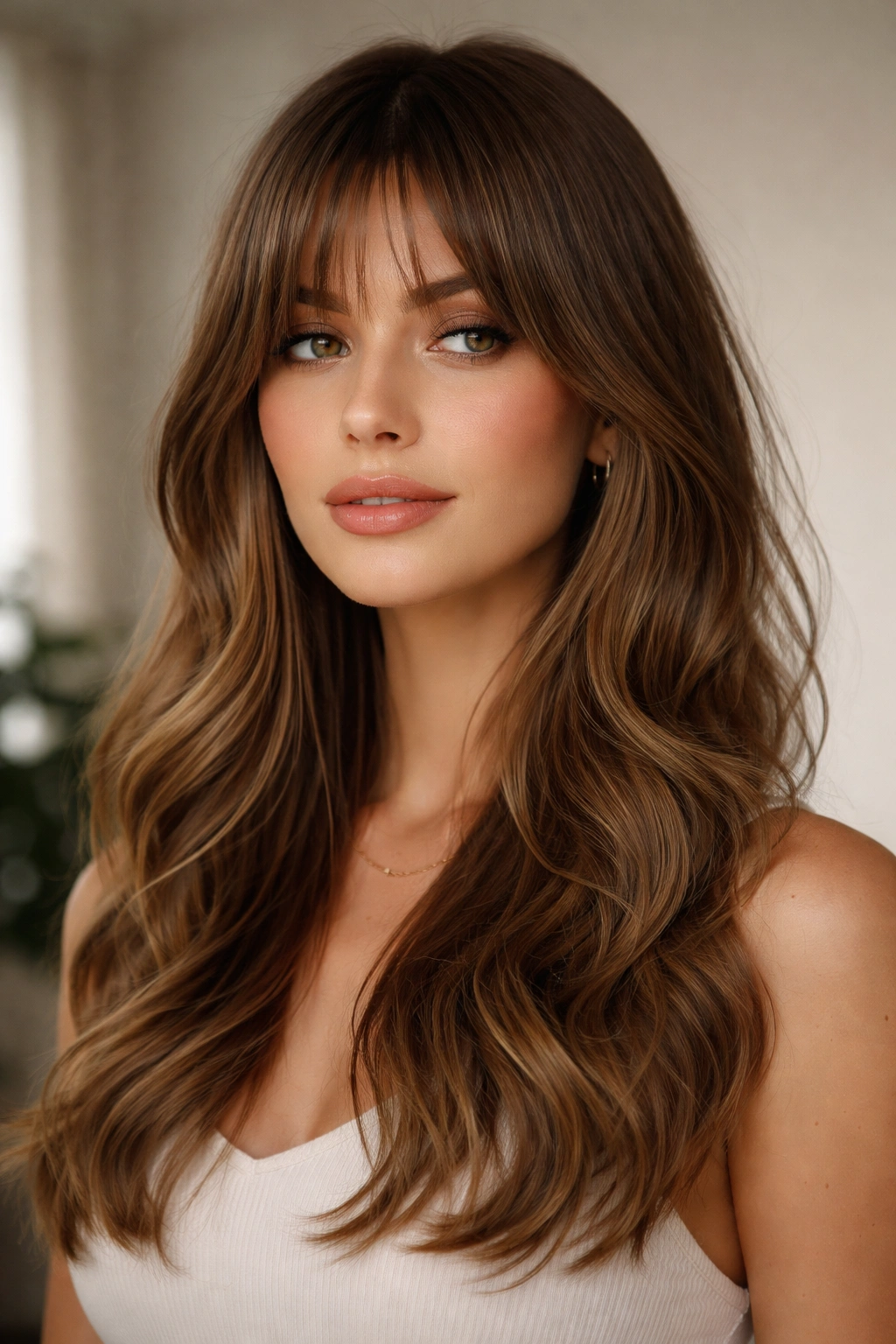
Some people prefer straightening their roots and crown for smoothness while keeping the movement through their lengths and waves. Curved curtain bangs (rather than waved bangs) work beautifully with this approach—they add soft movement at the front while complementing your sleeker crown. The bangs have a gentle C-curve away from your face rather than being textured or waved. This creates a hybrid style that gives you smoothness where you want it and waves where the texture shines.
The Smooth-and-Wavy Aesthetic
This is a sophisticated style that combines two different textures intentionally. The smoothed crown gives structure and polish, while the waves and textured ends provide movement and dimension. The bangs bridge these two textures—they’re smoother than your wavy ends but have more movement than your straightened crown. This approach is especially flattering for people with thick wavy hair who find all-over waves look too bulky.
Styling This Hybrid
Blow-dry your roots and crown smooth with a paddle brush, smoothing as you go. Let your mids and ends air-dry or use a diffuser to emphasize the waves. Style the bangs with a medium curling iron to create that gentle C-curve. The overall effect should feel intentional and polished at the top, with more relaxed movement as you move down. Use a smoothing serum on the straightened sections and a texture spray on the waved sections for hold.
Pro tip: This style requires a flat iron touch-up every week or so to maintain the smooth crown if you live in a humid climate.
14. Extra-Long Length With Micro-Bangs
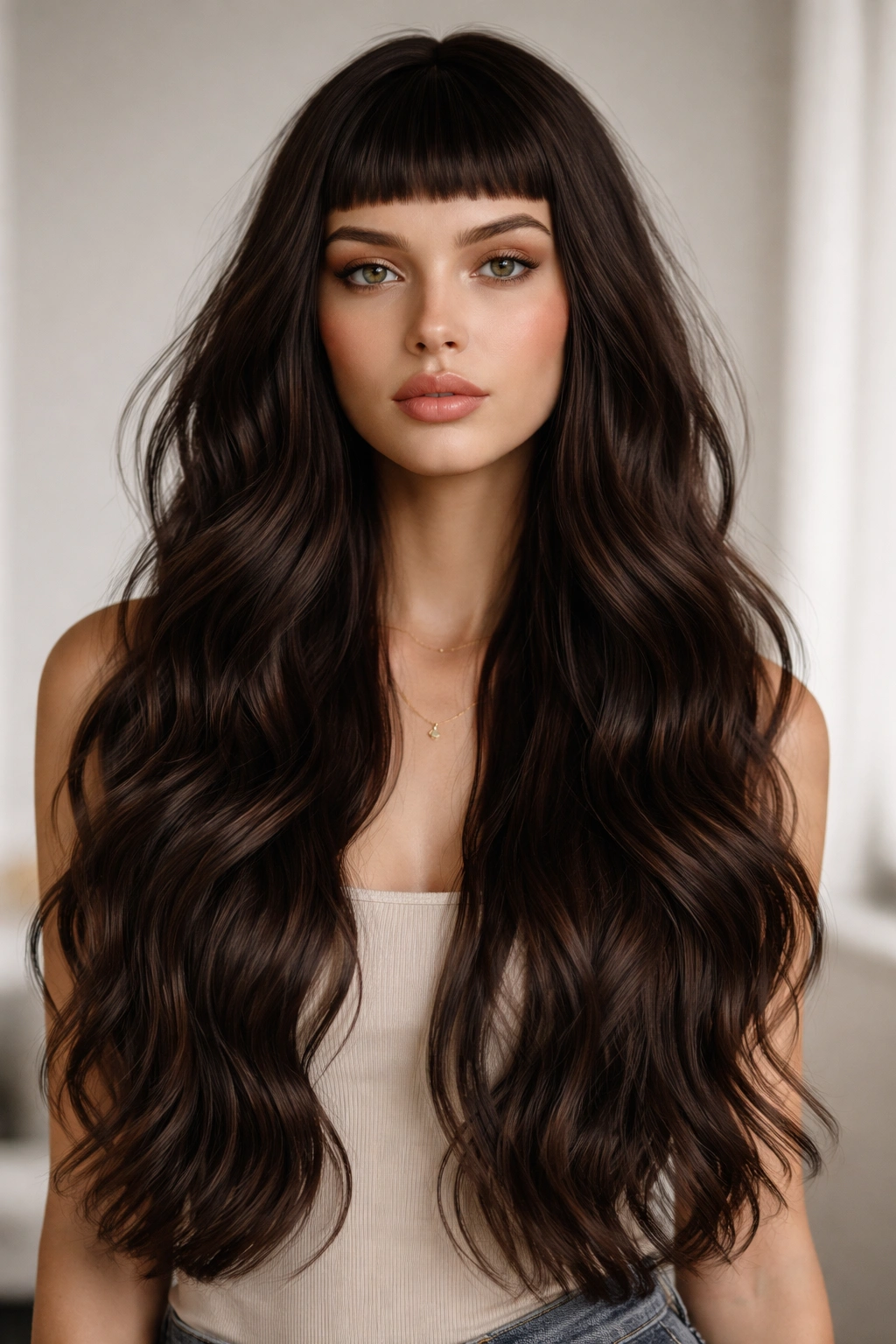
Micro-bangs—very short, often sitting well above the eyebrows—create a striking, bold statement with extra-long wavy hair. The extreme contrast between the cropped bangs and the length creates visual interest and a modern silhouette. Micro-bangs require confidence and the right face shape, but they create an unforgettable look. With long waves, the bangs create a frame that highlights your face while all the length and movement is still there to wear however you want.
The Bold Approach
Micro-bangs are not subtle. They’re a statement, and they work best with complete confidence and styling intention. They pair beautifully with extra-long waves because the length and movement balance the cropped bangs visually. This isn’t a wispy, delicate style—it’s a style that announces itself. Your wave pattern is visible below the bangs, and the contrast between the short, defined bangs and the flowing waves creates drama.
Styling Micro-Bangs
These require styling daily, typically blow-dried smooth and sometimes flat-ironed for polish. You want the bangs to look sharp and intentional, creating that stark contrast with your waves. The bangs should not curl or flip—they should sit straight or with just a slight curve depending on your hair texture. Everything below the bangs can be as textured and wavy as you like. The style is all about that intentional contrast.
Worth knowing: Micro-bangs require commitment. You’re looking at trims every 3-4 weeks to maintain the length. This style isn’t for people who want low-maintenance bangs.
15. Mid-Back Length With Subtle Layers and Minimal Bangs
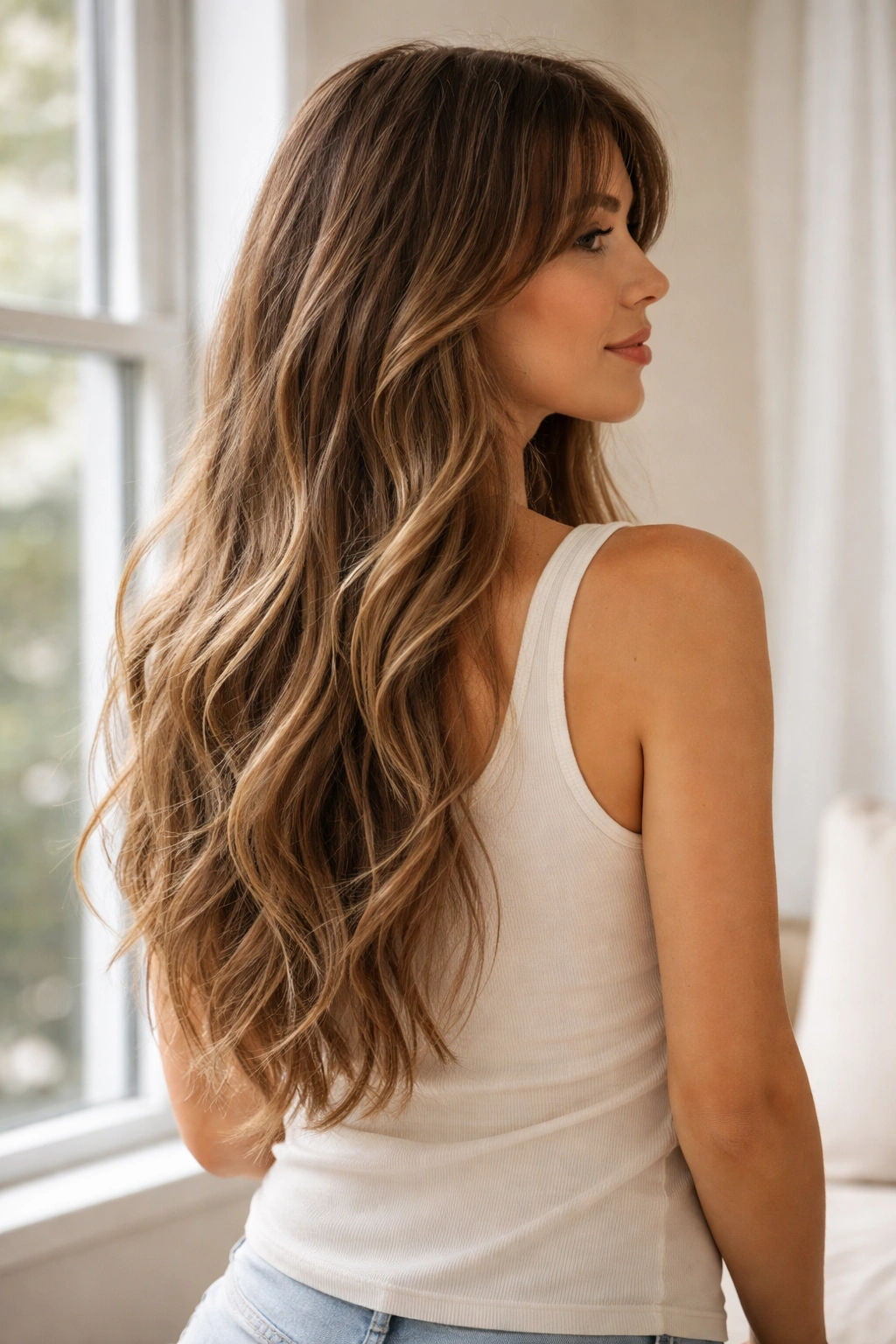
For the ultimate long-hair look with just a whisper of bangs, mid-back length with barely-there layers and minimal bangs creates movement without dramatically changing your silhouette. The subtle layers throughout provide just enough texture that your waves have room to develop dimension. The minimal bangs are almost invisible in photographs—they’re there for framing but don’t announce themselves. This is the style for people who want the benefits of bangs without the drama.
Embracing Subtlety
Long, long hair already makes a statement. Minimal changes can feel dramatic when you’re working with so much length. Subtle layers prevent your length from looking like a shapeless bulk, while minimal bangs give you some face-framing without requiring serious styling commitment. The layers and bangs are there to enhance your natural texture rather than creating a new silhouette entirely.
Low-Maintenance Styling
Air-drying is ideal here. You don’t need to blow-dry, style, or curl anything if you don’t want to. The subtle layers and minimal bangs work with your natural waves rather than fighting them. If you want to add intentional styling, a diffuser and some scrunching on damp hair enhances the waves. The minimal bangs don’t need shaping—they integrate with your longer layers and move however your hair naturally moves.
Pro tip: This style is incredibly forgiving as it grows. Minimal bangs mean no awkward growing-out phase, and subtle layers mean you’re not locked into a specific silhouette.
Final Thoughts
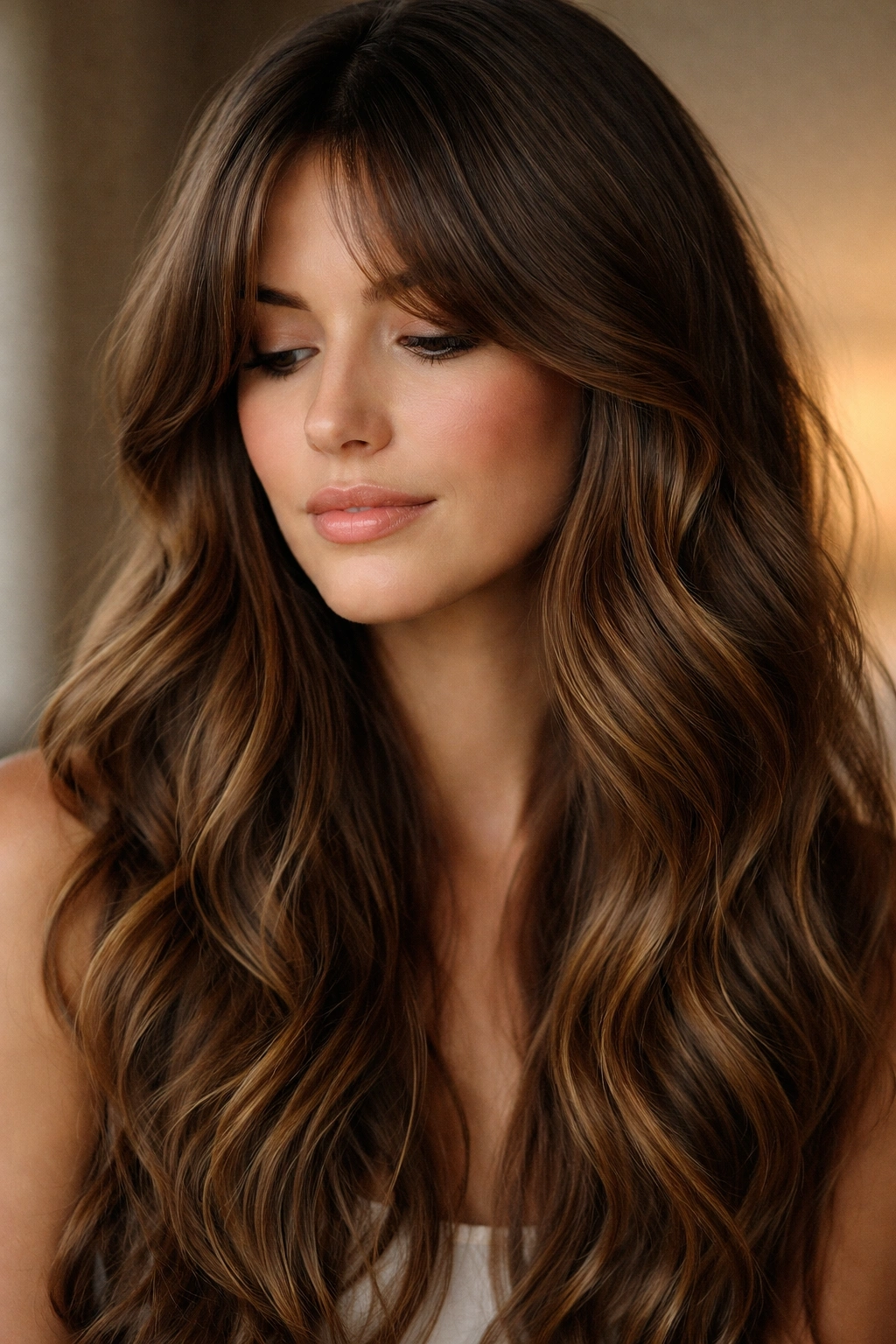
The beauty of long wavy hair with curtain bangs is that you’re not locked into one rigid look. Depending on how you style your hair on any given day, the same cut can feel different. Wear your hair down for waves and movement, pull it back and the bangs frame your face. Straighten it for a completely different vibe, or add extra curl for more texture. The cut works with all these possibilities rather than requiring one specific styling approach.
What makes this combination timeless is that it respects your hair’s natural texture while adding intentional shape. You’re not fighting your waves or forcing them into a mold. Instead, you’re working with them. Curtain bangs enhance that conversation between cut and texture, creating something that feels both intentional and effortless. Whether you go for barely-there or bold, wispy or dense, the right curtain bangs with long wavy hair will give you a style that earns you compliments and makes styling genuinely enjoyable.
