



There’s something undeniably striking about long blonde waves with bangs—they capture both sophistication and effortless femininity at once. The combination of length, texture, and a framing edge creates movement and dimension that shorter hair sometimes struggles to achieve. But here’s what most people get wrong: not every bang style works equally well with wavy hair. The texture, the blonde tone, the way the bangs interact with your waves—these details matter enormously. A bang style that looks gorgeous on straight hair might fight against your natural texture or age your face if you’re not thoughtful about the cut. This guide breaks down 16 actual, wearable long styles with bangs specifically designed for wavy blonde hair, with the specific details you need to ask your stylist for and the realistic maintenance each one requires.
What makes these styles different is that they work with your waves instead of fighting them. You’ll find options ranging from soft, romantically undone looks to more structured, polished variations. Each style includes exactly what bangs suit that particular wave pattern, how to style it on a regular basis, and which blonde tones make the whole effect sing. Whether you’re naturally wavy, considering a perm to add texture, or wondering how to finally make those bangs work with your hair type, you’ll find a specific answer here.
1. Long Textured Waves With Wispy Bangs
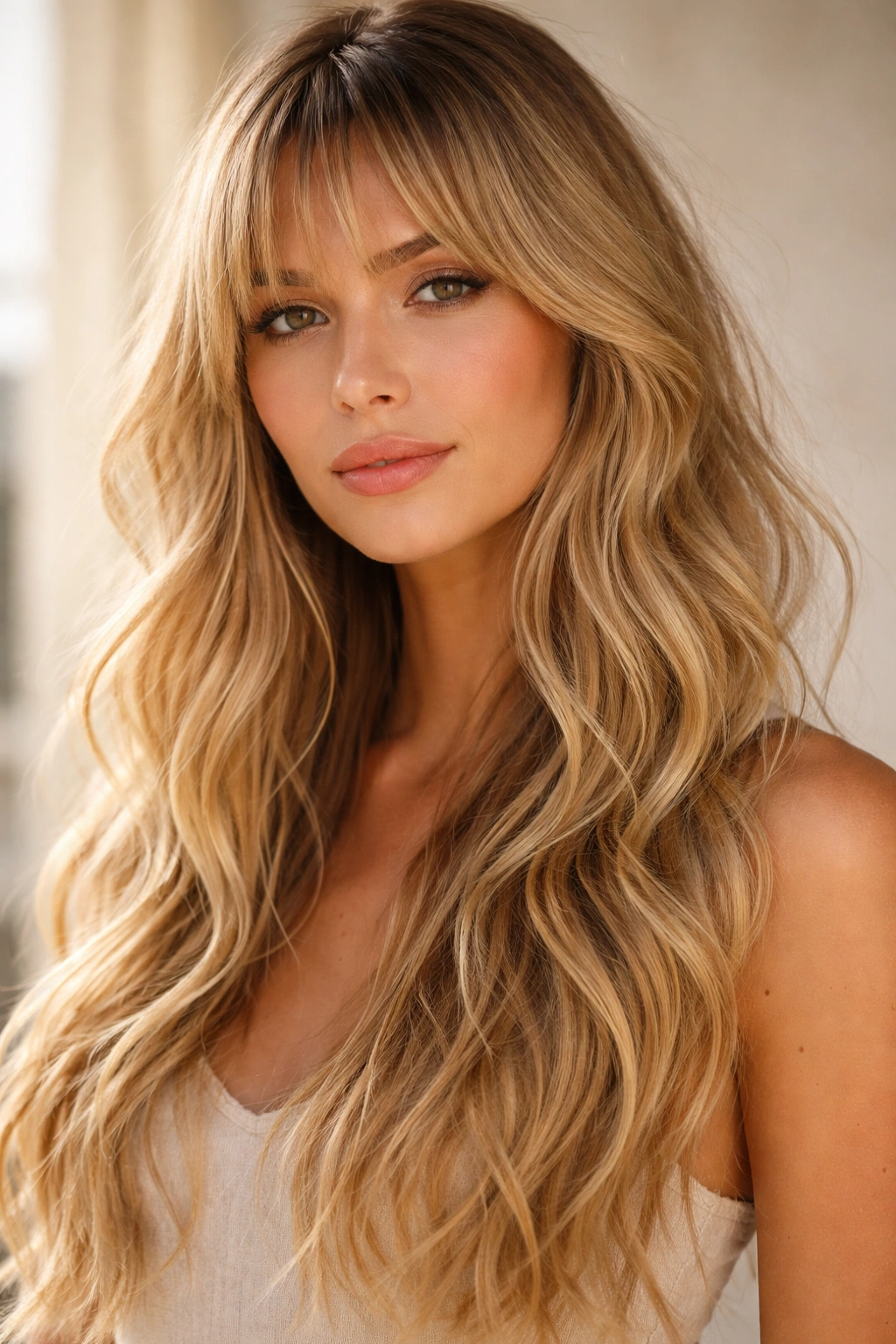
This is the style that looks like you just came back from a seaside vacation and didn’t brush your hair. Long textured waves paired with wispy bangs create an intentionally undone, romantic effect that reads as modern and effortless rather than neglected.
What Makes This Style Stand Out
Wispy bangs are individual strands that frame the face at slightly different lengths, typically the shortest hitting around eyebrow level while longer pieces blend seamlessly into the side pieces. With wavy hair, wisps work beautifully because they can move with your natural texture instead of looking blunt or rigid. The blonde blonde tones—think honey, butter, or warm sandy blonde—work best because they catch light through the textured waves and make the movement even more visible. The longer you keep the wavy texture loose and separated (rather than smooth or heavily styled), the more modern and intentional this look appears.
Styling Tips and Maintenance
- Use a curl-defining cream or sea salt spray to encourage your natural wave pattern to show through
- Finger-comb the bangs rather than using a brush, which breaks up the pieces and makes them look stringy
- The longest wispy sections should integrate with your side-swept layers, creating one cohesive movement rather than an obvious separation between bangs and hair
- Sleep on a silk pillowcase to reduce friction frizz and help your waves hold definition overnight
- Don’t straighten the bangs — this defeats the entire aesthetic. Embrace the slightly curved, undone quality that wispy bangs naturally have with wavy hair
Who This Suits
This style works beautifully on heart-shaped or oval faces because the wisps soften the forehead without creating a harsh line. It suits people who prefer a more relaxed, low-maintenance styling routine and don’t mind occasional frizz as part of the texture.
2. Beach Blonde Waves With Blunt Bangs
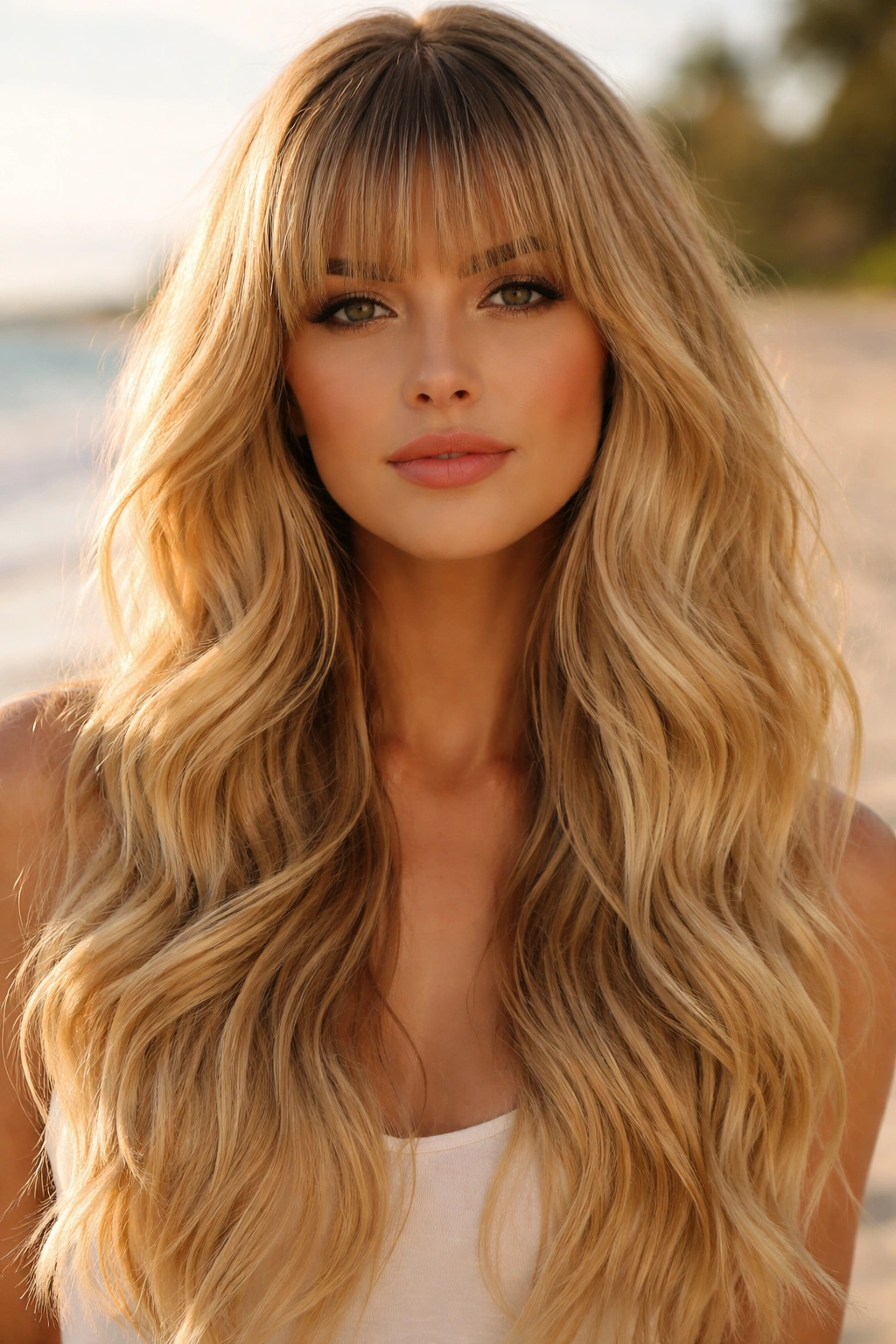
Blunt bangs create a stark, intentional contrast with soft waves—this is the “I just cut these with decisive intention” vibe. When paired with sandy, sun-kissed blonde waves, blunt bangs read as high-fashion and bold rather than severe.
What Makes This Style Stand Out
Blunt bangs sit at a consistent length across the forehead, typically reaching the eyebrows or just above, creating a clean line that catches light and frames the face dramatically. With wavy blonde hair, the blunt bangs anchor the softness of your waves—they provide visual weight and definition that prevents the entire look from feeling too romantic or whimsical. This style works especially well with dimensional blonde (think highlights and lowlights creating depth) because the bangs draw attention to your face while the waves below add texture and movement. The contrast between the geometric precision of the blunt cut and the organic movement of waves creates visual interest that feels intentional and modern.
Styling Tips and Maintenance
- Keep your bangs moisturized—blunt bangs show every bit of dryness and dullness, so use a weekly deep conditioning treatment on the bangs specifically
- Blow-dry your bangs straight and smooth with a paddle brush to maintain the blunt appearance; let them dry as they naturally wave while wet and they’ll look messy rather than intentional
- The longer your waves, the better blunt bangs look—aim for at least mid-back length to create enough contrast
- Get your bangs trimmed every 3-4 weeks to maintain the blunt line, as they’ll grow out and start to look ragged otherwise
- Don’t let blunt bangs get too long—they work specifically because they’re a defined length
Who This Suits
Blunt bangs suit angular or square face shapes because they emphasize your natural geometry rather than fighting it. They’re perfect for people with confidence in bold choices and enough styling time for a blow-dry routine every couple of days.
3. Soft Layers With Side-Swept Bangs
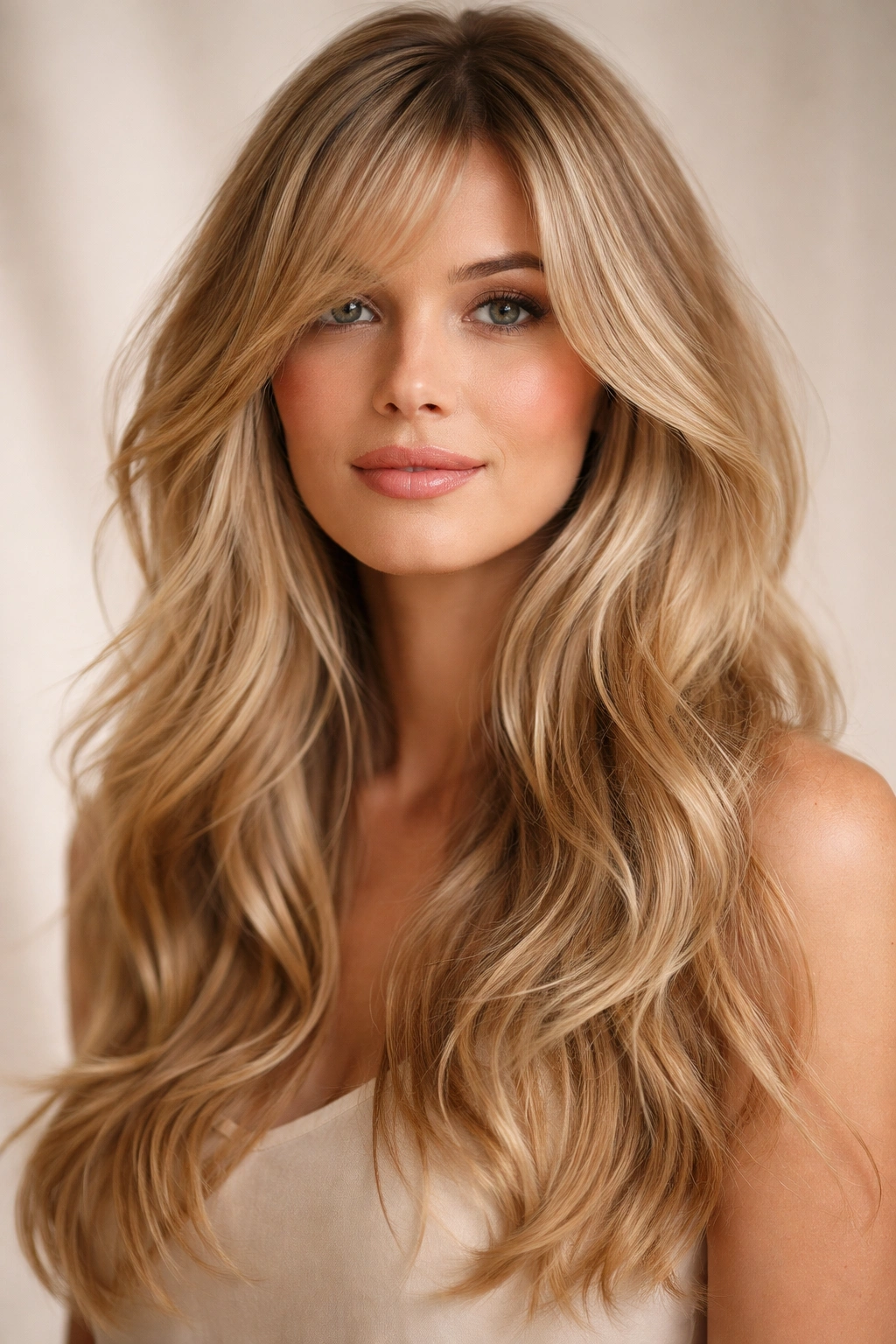
This is the universally flattering option—layers throughout the length combined with side-swept bangs that blend seamlessly into your hair. It’s the style that works on almost every face shape and hair type because it’s fundamentally about creating movement and softness.
What Makes This Style Stand Out
Side-swept bangs start longer on one side of your part (often reaching below your cheekbone or further) and sweep across to be shorter on the opposite side, typically grazing your eyebrow. With layered waves in blonde, the bangs integrate into your overall shape rather than creating a separate visual element. The layers throughout your length create staggered movement—some waves fall longer and some shorter, so light plays across multiple levels of your hair. Blonde hair shows these layers beautifully because the color variation (whether natural blonde, highlighted, or balayaged) catches light at each layer differently, creating dimension and depth that makes the entire style look fuller and more textured.
Styling Tips and Maintenance
- This style requires regular layering trims (every 6-8 weeks) to maintain definition, but the maintenance pays off in how effortlessly the style looks good between cuts
- Use a light texturizing product rather than heavy creams—this keeps layers from clumping together and looking flat
- Blow-dry on a lower heat setting with a diffuser to enhance your wave pattern and keep individual layers separated
- Side-swept bangs blend best when your hair is slightly damp during styling; they’ll stay in place better than if you try to sweep them when completely dry
- The side you sweep them toward should match your natural side part or the direction your hair naturally falls
Who This Suits
Side-swept bangs suit almost every face shape because they’re so adaptable—longer on one side means you can customize how much of your face they frame based on your specific features. They’re ideal for people transitioning into bangs for the first time because they’re forgiving and blend easily if you change your mind.
4. Shaggy Long Waves With Curtain Bangs
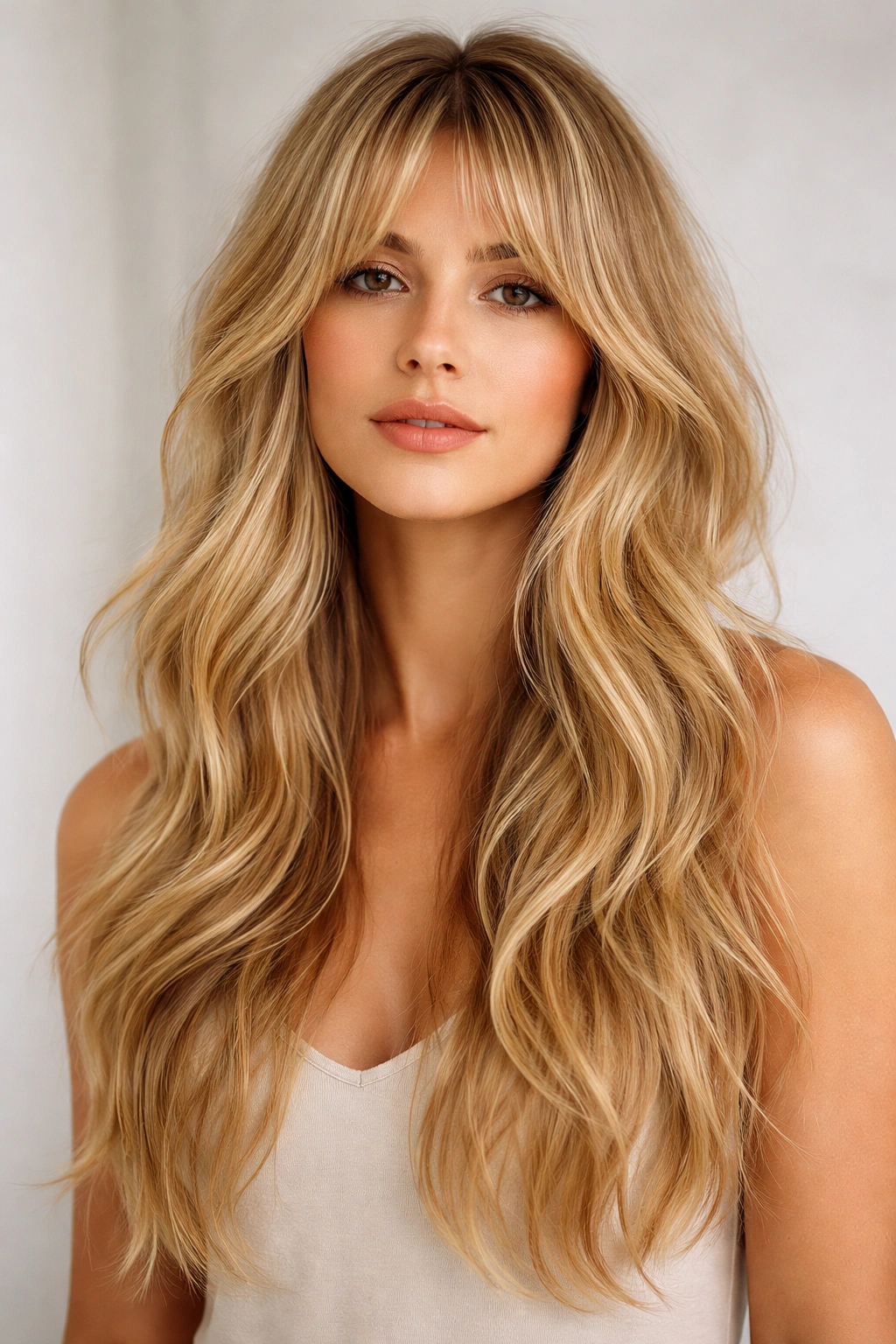
Curtain bangs are separated down the middle and frame your face on both sides, creating an opening that draws attention to your eyes and cheekbones. Combined with shaggy, choppy layers throughout wavy blonde hair, this creates a ’70s-inspired look that feels contemporary and fashion-forward.
What Makes This Style Stand Out
Curtain bangs literally frame your face like curtains opening to a window—they’re typically shortest in the center (around eyebrow level) and graduate longer as they move toward your temples and jawline. Shaggy layering means your hair has lots of choppy, uneven lengths throughout, which creates tons of movement and texture. With blonde hair, this combination reads as intentionally cool rather than messy—the color lifts the style and makes the movement feel purposeful. The shaggy layers mean your hair will have natural separation and texture without needing to heavily style it; the blonde shows this dimension beautifully.
Styling Tips and Maintenance
- Shaggy curtain bangs benefit from some intentional texture—use a texturizing spray or salt spray to encourage separation rather than smoothness
- You can air-dry this style and it’ll often look better than blow-dried, because the choppy layers air-dry into naturally separated pieces
- The middle curtain opening should align with your natural center part; if you part your hair differently, the curtains won’t frame your face correctly
- These bangs work especially well if you have a longer face or a wider forehead—the curtain opening shortens a long face and the side-parted movement reduces the prominence of a large forehead
- Trim every 6-8 weeks to keep the layers looking intentional rather than overgrown and messy
Who This Suits
Curtain bangs with shaggy layers suit people who naturally have thicker hair (because thin hair can look more separated/stringy with lots of layers) and those with longer or rounder face shapes. They’re ideal if you like a statement style that feels effortlessly put-together without actually requiring much styling.
5. Beachy Blonde Waves With Feathered Bangs
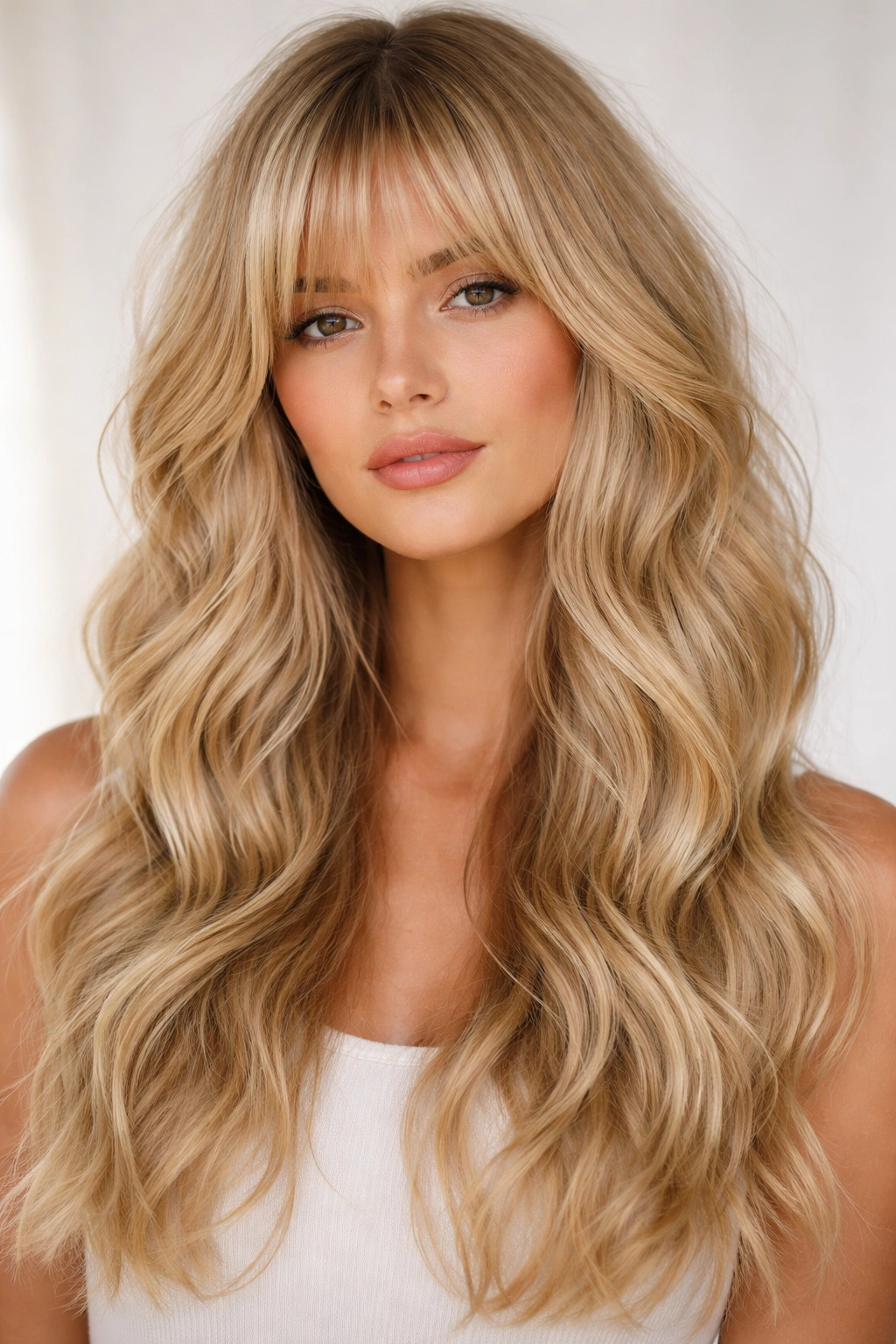
Feathered bangs are layered within the bang section itself, creating movement and texture that mimics the feathered texture of your waves. This style is all about cohesion—the bangs look like they’re the same texture as everything else on your head.
What Makes This Style Stand Out
Feathered bangs have shorter layers stacked within the bangs themselves, so when you look at them straight-on, you see texture and depth rather than a solid wall of hair. They’re slightly longer than traditional bangs (usually grazing mid-forehead to eyebrow), and because of the internal layering, they move with your natural wave texture. With beachy blonde waves—whether that’s honeyed, butter, platinum, or sun-kissed tones—feathered bangs create an effect that looks like your entire head is the same texture. This is especially beautiful if you’ve added subtle highlights and lowlights to your blonde, because the bangs show that dimension clearly.
Styling Tips and Maintenance
- Feathered bangs look best when your waves have some texture product applied—use a texturizing cream or spray before air-drying or blow-drying
- Avoid blow-drying with a paddle brush, which will flatten the feathering; instead use a diffuser or your fingers to encourage the layered texture to separate
- The feathering inside the bangs will start to look overgrown after about 6 weeks, so plan for regular trims
- These bangs pair best with longer waves—the shorter your wave texture, the less interesting the feathered bangs look
- Don’t try to make feathered bangs look smooth or sleek; this style is specifically about embracing texture
Who This Suits
Feathered bangs work beautifully on oval or heart-shaped faces and suit people with naturally wavy to curly hair. They’re perfect if you want bangs that don’t require a specific styling routine—they look good whether you’ve styled your hair or just let it air-dry.
6. Long Straight Waves With French Bangs
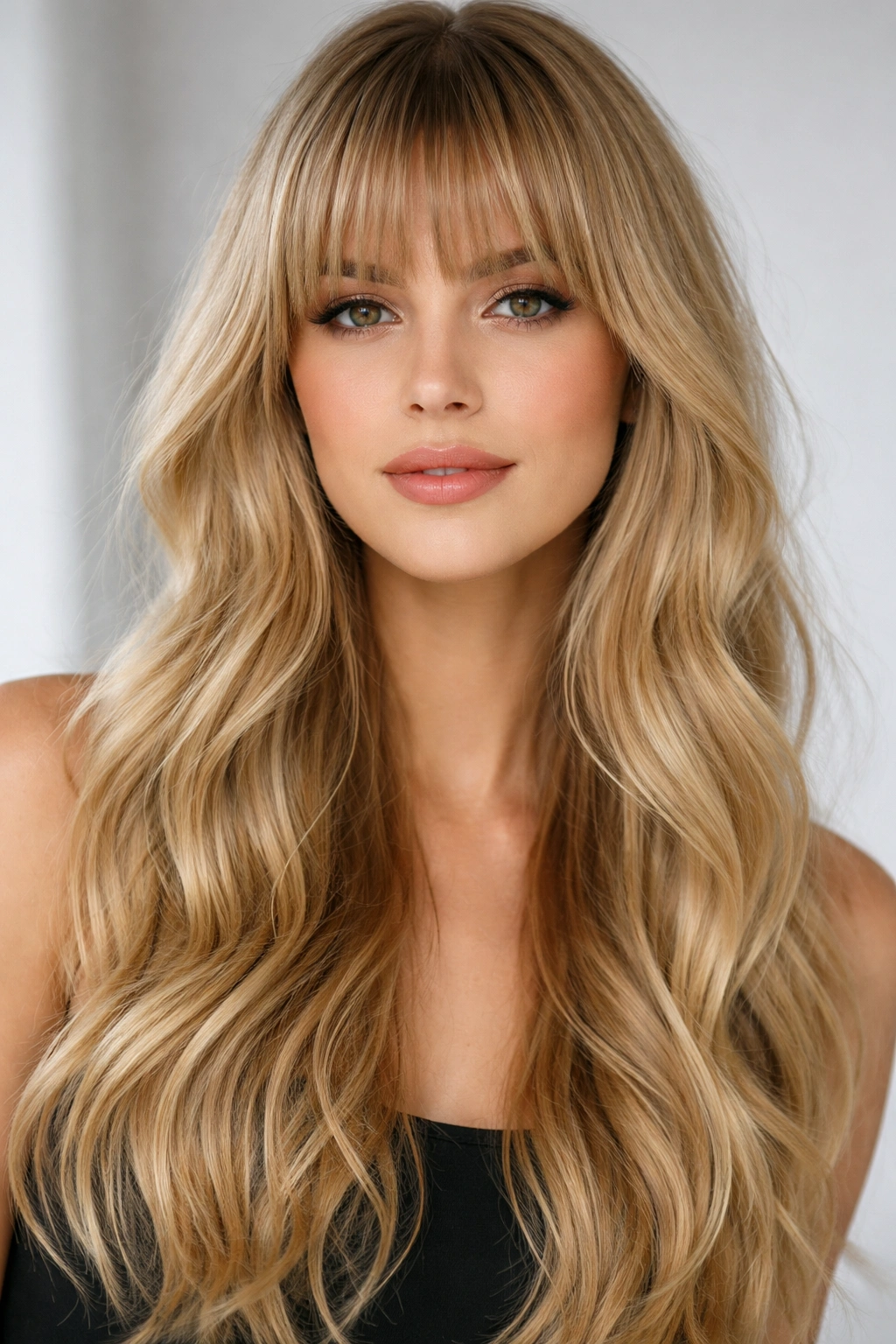
French bangs are fuller and cover more of the forehead than typical bangs—they typically start higher on the forehead and extend down to eyebrow level, creating a more substantial frame. Paired with long, polished waves in blonde, they create a chic, slightly European sophistication.
What Makes This Style Stand Out
French bangs provide more coverage and create a bolder frame than wispy or side-swept options. They’re typically blunt or slightly textured at the edges, and they sit fuller and denser than other bang styles. With long waves in blonde, they create a balanced proportion—the fuller bangs anchor all that length and prevent the style from feeling too thin or one-note. Blonde shows this style beautifully because the color draws the eye to your face (where the French bangs are) and then down through the waves. If you have a smaller face or finer facial features, French bangs won’t overwhelm you if you keep the waves soft and textured rather than sleek.
Styling Tips and Maintenance
- French bangs need to be blow-dried to maintain their fullness and shape; air-drying often makes them look flatter or wavier than intended
- Use a volumizing mousse on the bangs before blow-drying to help them maintain lift and body
- The blunt or textured edge of French bangs requires trimming every 4 weeks to look polished
- These bangs pair best with waves that have some polish or definition to them—very undone, tousled waves can make French bangs look overly formal by contrast
- Avoid heavy styling products on the bangs—lighter texturizing sprays work better than creams, which can weigh them down
Who This Suits
French bangs suit oval, heart-shaped, or rectangular face shapes and work well for people with finer hair (because they cover more forehead, making your face appear fuller). They’re ideal if you have a professional styling routine and enjoy maintaining a polished look.
7. Voluminous Waves With Choppy Bangs
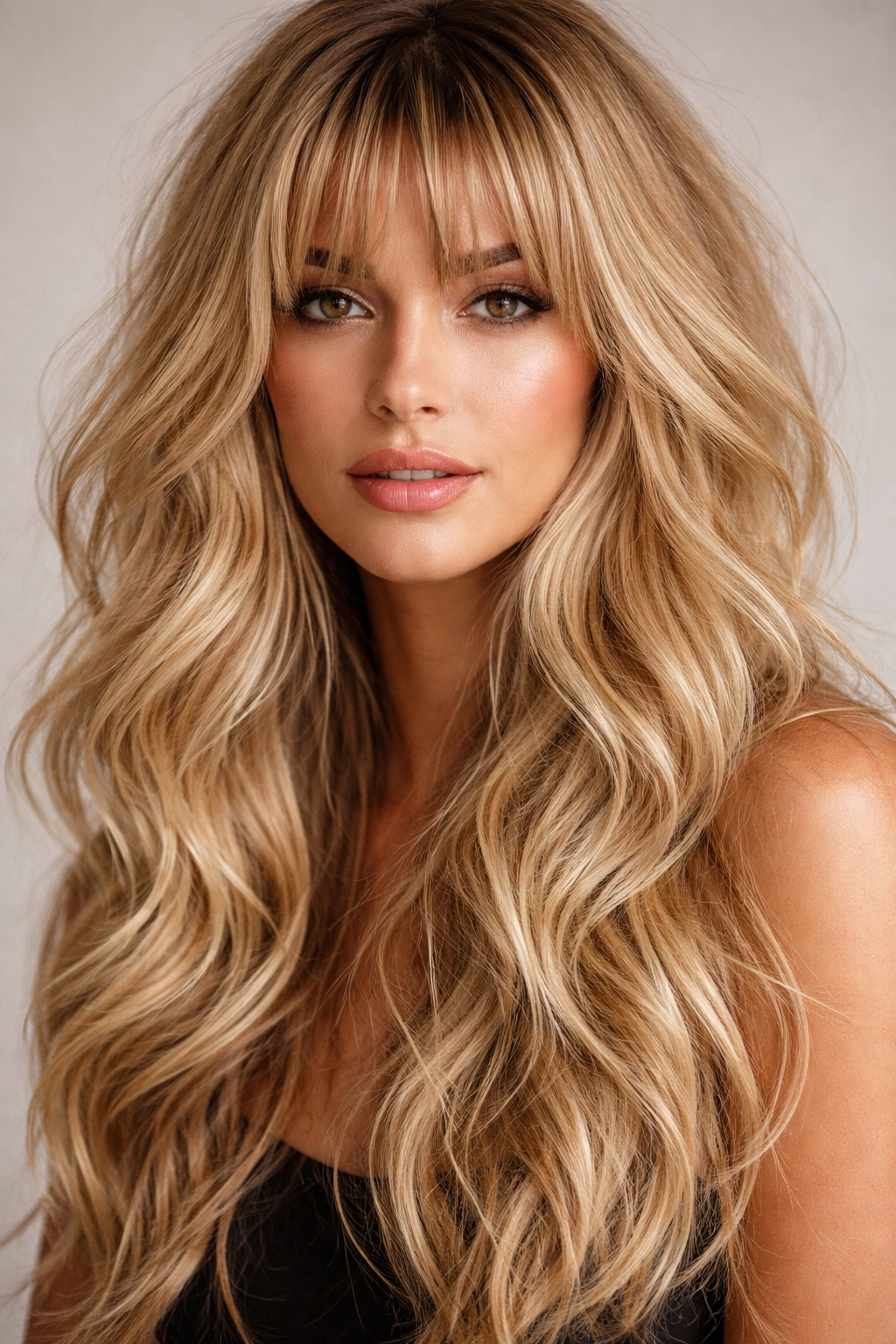
Choppy bangs are cut with shorter and longer pieces mixed throughout, creating inherent texture and movement within the bang section itself. This style is about maximum movement and visual impact—nothing about it is understated.
What Makes This Style Stand Out
Choppy bangs have intentional, visible texture—you can see the individual layers and separated pieces when you look at them. With voluminous, thick waves in blonde, choppy bangs create a look of intentional movement and edge. The choppy texture means your bangs move the same way your waves do—they don’t sit stiffly or fight against your natural texture. This is especially striking if you’ve created volume through layering or through styling (blow-drying with products, using a diffuser, or creating waves with a curling iron). Blonde hair makes the choppiness visible and emphasizes the texture; darker colors can sometimes make choppy bangs look stringy or thin by contrast.
Styling Tips and Maintenance
- Choppy bangs benefit from texture—use texturizing spray, dry shampoo, or sea salt spray to encourage separation
- These bangs actually look better with a bit of texture product applied; smooth, wet-looking product will make them look limp
- You need regular trims (every 3-4 weeks) because choppy layers start to look ratty and unkempt as they grow out
- Blow-dry with a diffuser or let air-dry; a paddle brush will flatten the choppiness and defeat the point of the cut
- These bangs suit people who like a statement, bold style—they’re not subtle or understated
Who This Suits
Choppy bangs work best on people with naturally thick or wavy hair and suit oval or angular face shapes. They’re perfect for anyone with confidence in a bold, fashion-forward look and the commitment to regular maintenance.
8. Cascade Waves With Micro Bangs
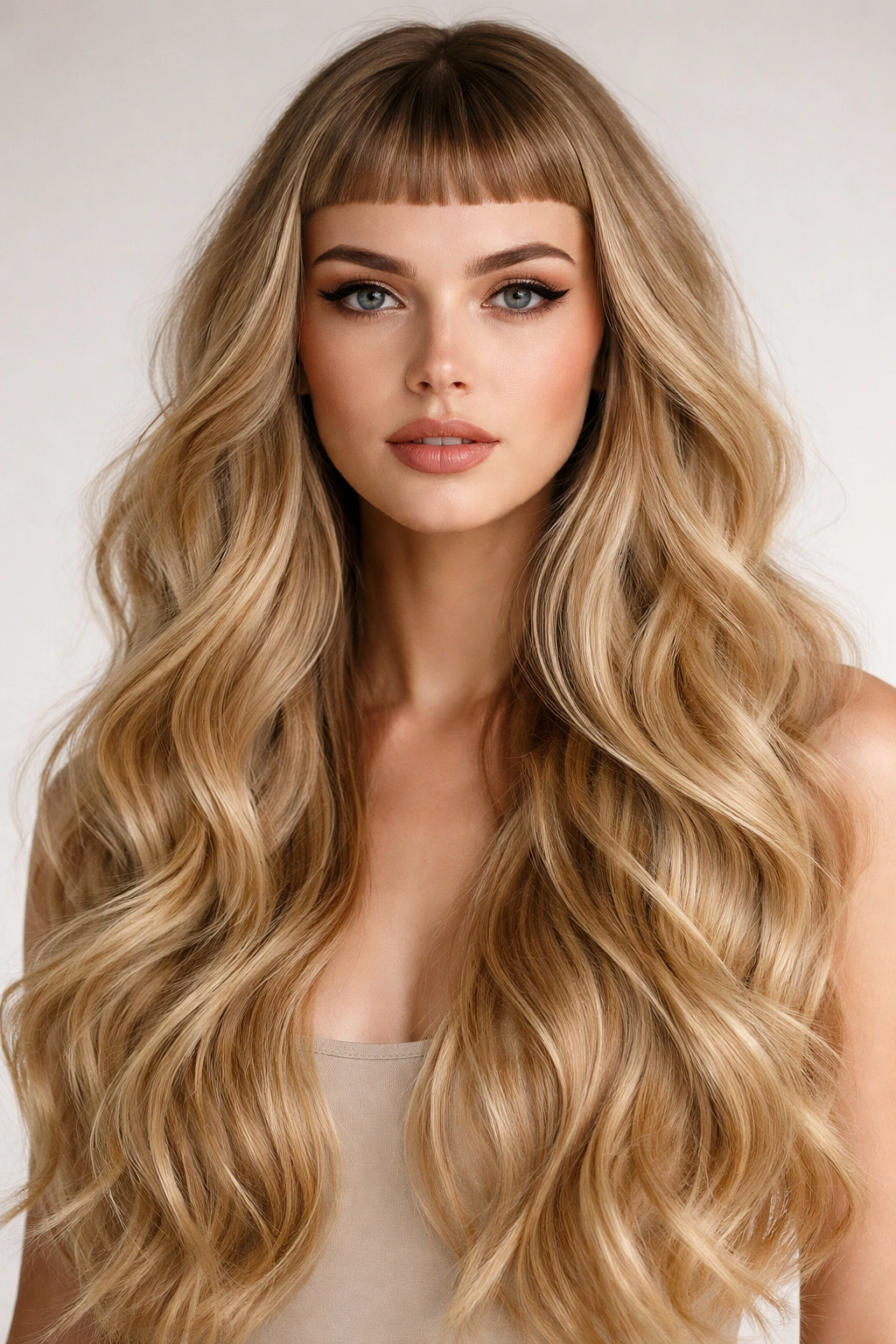
Micro bangs are very short—sitting well above the eyebrow, usually around mid-forehead level or higher. With long cascade waves, they create a striking contrast between the short, bold frame and the long, flowing movement below.
What Makes This Style Stand Out
Micro bangs are a statement—there’s no blending or softness about them. They sit high on the forehead and are typically blunt or slightly wispy, creating a graphic line that frames your face dramatically. Cascade waves suggest gentle, flowing movement—imagine waves that start at the crown and gradually undulate down the full length of your hair. With blonde hair, the contrast between the short, geometric micro bangs and the soft, flowing waves below creates visual drama and style. This look reads as fashion-forward and intentional; it works because the micro bangs force the style into the “editorial choice” category rather than something that happened by accident.
Styling Tips and Maintenance
- Micro bangs show every imperfection, so they require maintenance every 2-3 weeks to avoid looking overgrown
- Your forehead skin becomes visible, so make sure you have a good skincare routine; bangs that expose your forehead need a clear complexion to look polished
- The contrast works best when your waves are polished and defined, not overly undone; asymmetry between sleek micro bangs and tousled waves reads as unintentional rather than intentional
- These bangs work best on people with lower foreheads or more balanced proportions—if you have a very high forehead or very small features, micro bangs can overwhelm
- Avoid heavy styling products on the bangs; keep them clean and defined with light texture only
Who This Suits
Micro bangs suit confident people who love bold choices and angular or oval face shapes. They’re ideal if you have a smaller forehead or if you specifically want to draw attention upward to your eyes and cheekbones.
9. Loose Waves With Side Bangs
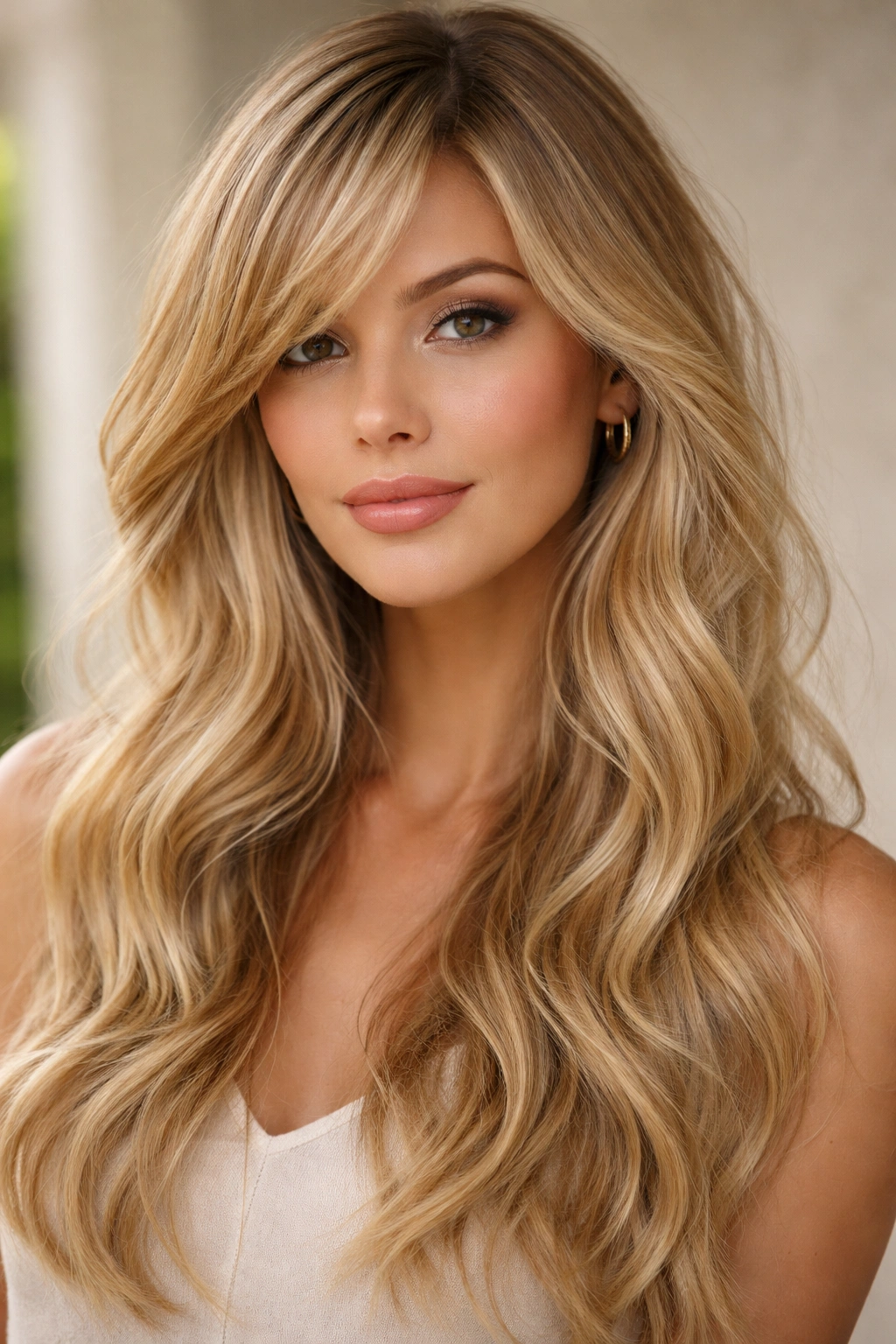
Side bangs sweep across the forehead and cheek area, typically longer on one side than the other, creating an asymmetrical frame. Paired with loose waves (waves with a soft, gentle texture rather than tight curls), this creates an elegant, effortlessly beautiful style.
What Makes This Style Stand Out
Side bangs are one of the most versatile bang styles because you can customize how much they frame your face—longer pieces can sweep dramatically across your face, or they can be shorter and more subtle. With loose waves in blonde, side bangs integrate seamlessly into your overall shape. The asymmetry of side bangs means they blend into your side-parted waves rather than creating a separate visual element. Blonde hair, especially with subtle highlights, shows the flow and movement of this style beautifully. The bangs guide the eye along your face, and the loose waves continue that gentle movement down your length.
Styling Tips and Maintenance
- Side bangs work best when you have a consistent side part; if you switch sides frequently, they won’t sit correctly
- Loose waves suggest gentle movement without tight texture, so avoid heavy curl-defining products that would create defined ringlets
- A light-hold mousse or wave-setting spray applied to damp hair and then air-dried or diffuser-dried works beautifully for this style
- Side bangs don’t require frequent trimming if they’re longer; you can usually go 8-10 weeks between trims without them looking overgrown
- Let these bangs do what they naturally want to do—fighting them into a specific shape often makes them look stiff
Who This Suits
Side bangs suit nearly every face shape and are especially flattering on square or round faces because they soften your angles. They’re ideal for people who want a softer, more romantic aesthetic without requiring a high-maintenance styling routine.
10. Thick Wavy Blonde With Curtain-Cut Bangs
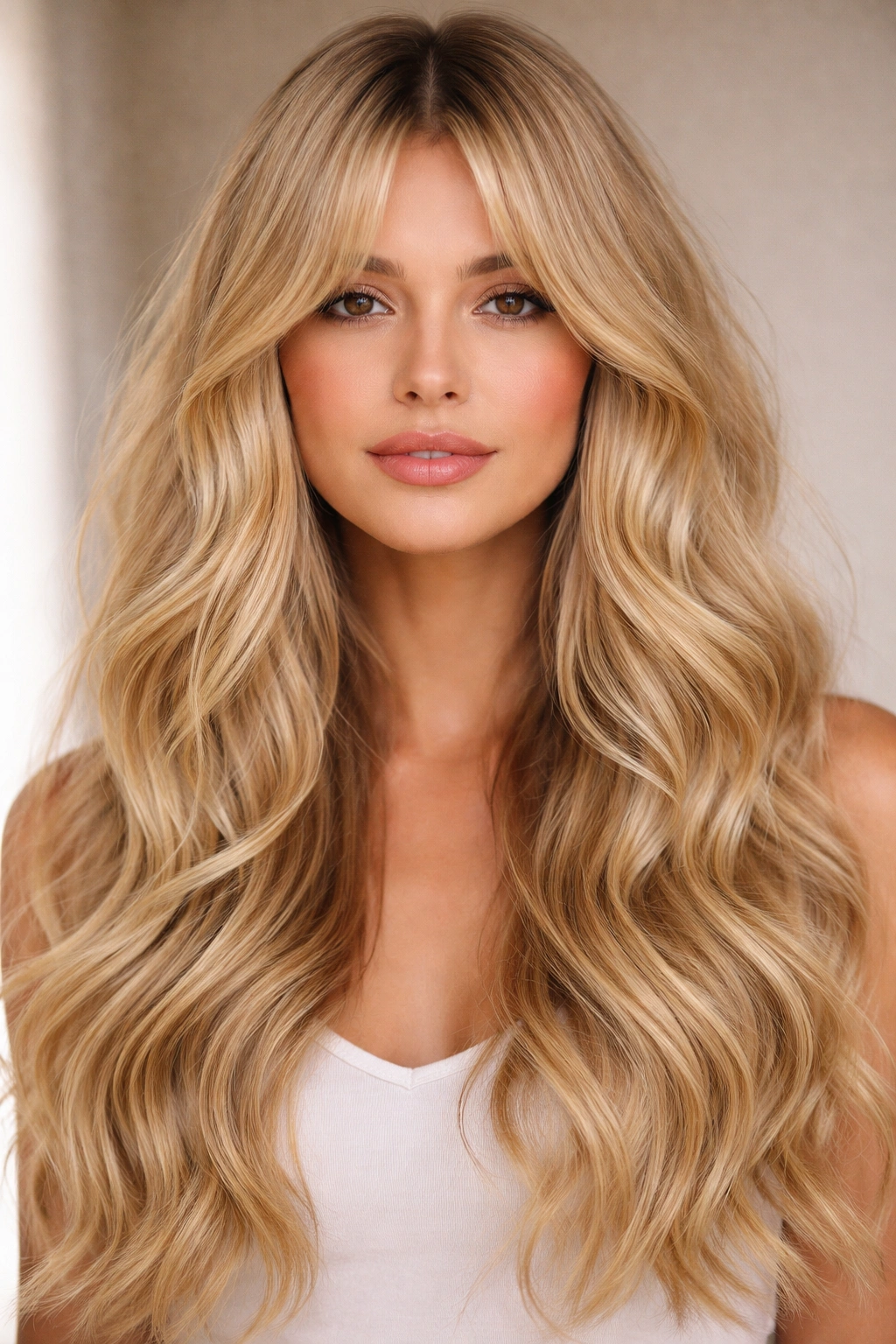
Curtain-cut bangs are specifically cut to frame your face on both sides with an opening down the middle. This differs from standard curtain bangs because the cut is designed with the intention of that center separation, rather than bangs that can be parted in the middle.
What Makes This Style Stand Out
Curtain-cut bangs are cut at an angle that naturally falls to both sides of your part, typically starting at mid-forehead length in the center and graduating longer toward the sides, hitting around cheekbone level. With thick, wavy blonde hair, this cut creates a glamorous frame that emphasizes your eyes and cheekbones. The thickness of your hair means the bangs will have natural body and movement rather than lying flat or thin-looking. Blonde shows this style beautifully because the light color makes the face-framing movement visible and draws attention to your features.
Styling Tips and Maintenance
- Curtain-cut bangs naturally want to fall to the sides, so work with this tendency rather than against it
- You can air-dry these bangs and they’ll usually land in the right place if your hair is naturally wavy
- A very light texture spray helps define the separation between the two sides of the curtain
- These bangs look best when you have a center part (or at least a flexible part) so the curtains can frame your face symmetrically
- Trim every 6-8 weeks to maintain the angled cut that creates the curtain effect
Who This Suits
Curtain-cut bangs suit thick-haired people and work beautifully on oval, heart-shaped, or long face shapes. They’re perfect if you want a glamorous style that works with your natural hair texture rather than requiring you to fight it.
11. Honey Blonde Waves With Layered Bangs
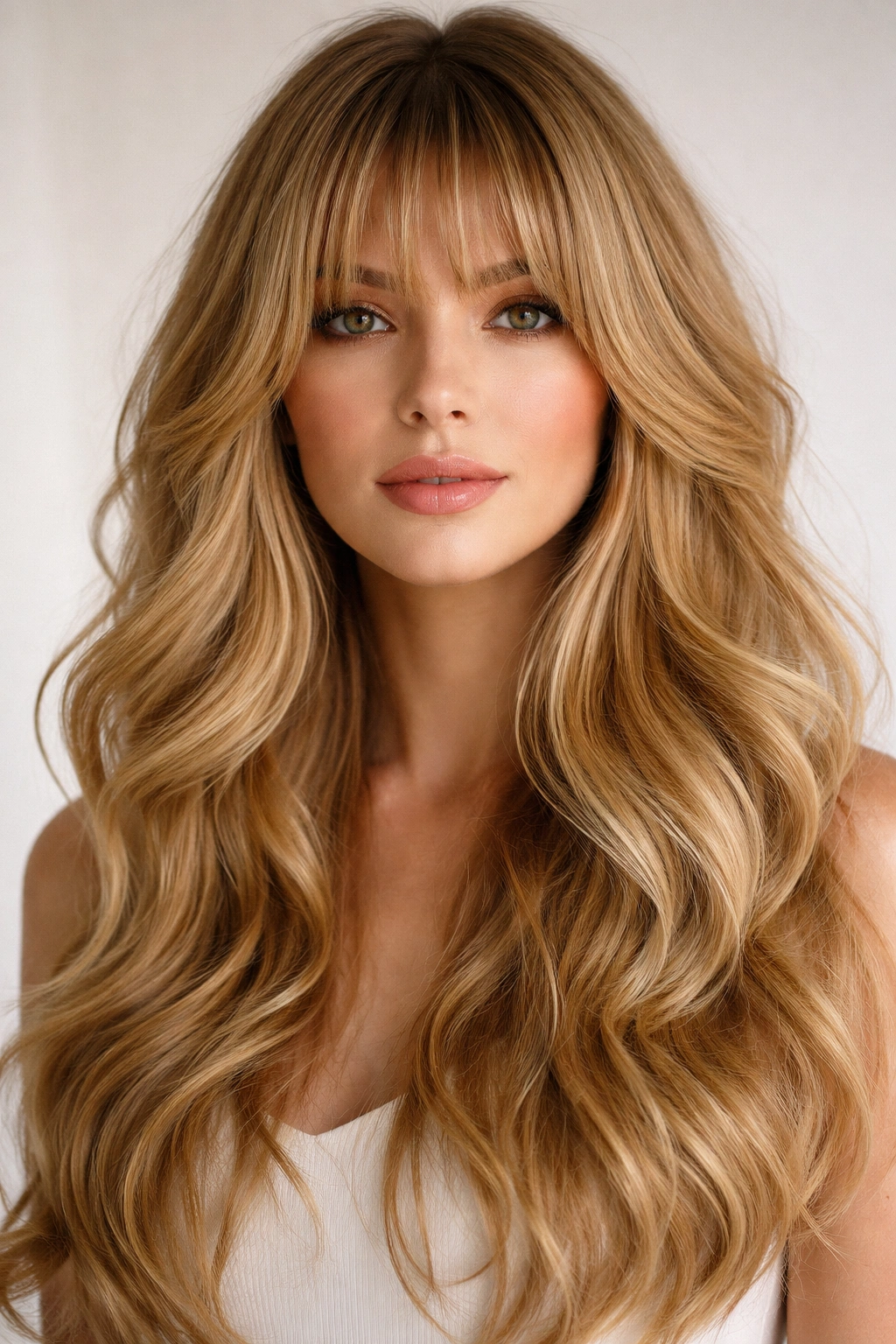
Layered bangs have multiple lengths stacked within the bang section, similar to feathered bangs but with more pronounced layers and more definition between each layer. With honey blonde waves, this creates a style full of dimension and visual interest.
What Makes This Style Stand Out
Layered bangs show defined texture—you can see distinct shorter and longer pieces that create movement within the bang section itself. Honey blonde (a warm, golden blonde tone) pairs beautifully with layered bangs because the color variation catches light through all those layers, making them visible and dimensional. With waves throughout your length that also have layers, your entire head reads as textured and full of movement. This style works especially well if you’ve added lowlights or dimensional color to your blonde, because the layers show that color depth at every level.
Styling Tips and Maintenance
- Layered bangs need regular maintenance (every 4-6 weeks) to keep the layers defined and prevent them from looking overgrown
- Use a texturizing product to encourage the layers to separate and show their texture; smooth, wet-looking products will flatten them
- These bangs look better when they have some movement—straightening them will make them look less interesting
- Blow-dry with a diffuser or your fingers rather than a paddle brush, which flattens layers
- The key to making layered bangs look intentional rather than damaged is regular trims and texture products
Who This Suits
Layered bangs work beautifully on people with wavy to curly hair and suit oval or rectangular face shapes. They’re ideal if you like a textured, dimensional look and have the commitment to regular trims.
12. Sleek Wavy Blonde With Arched Bangs
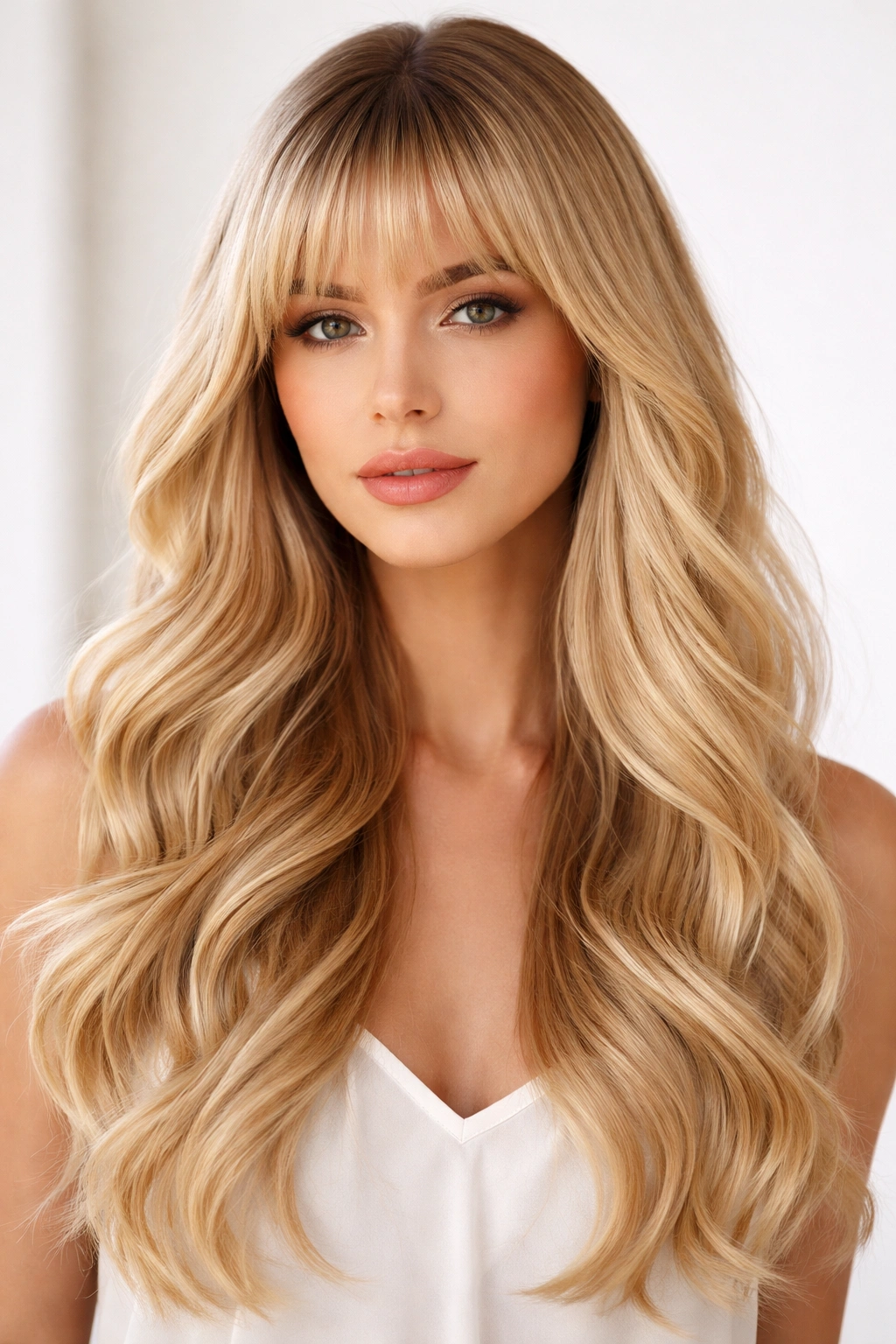
Arched bangs have a curved shape—they’re shorter in the center and curve down on the sides, following the arch of your eyebrows. With sleek waves in blonde, this creates a polished, flattering frame.
What Makes This Style Stand Out
Arched bangs follow the natural arch of eyebrows and eye shape, creating a flattering frame that enhances your eye area. The curve of the arch complements the softness of waves rather than contrasting with it. With blonde hair, especially if you’ve added highlights around your face, arched bangs draw attention to your eyes and upper face. Sleek waves (waves that have some polish and definition rather than tousled looseness) pair beautifully with arched bangs because both elements feel intentionally shaped.
Styling Tips and Maintenance
- The arch means these bangs show your eyebrow shape clearly, so make sure you’re happy with your brow arch or shape; if not, the bangs will emphasize areas you don’t love
- Arched bangs need to be blow-dried to maintain the curve; air-drying often makes them lose their shape
- Use a round brush or a 1-1.25 inch curling iron to gently curve the bangs around your eye shape as you blow-dry
- These bangs trim every 4-5 weeks to maintain the arch; as they grow out, the arch becomes less defined
- The arch works best if you’re working with the natural shape of your face—forcing an unnatural arch will look unflattering
Who This Suits
Arched bangs suit people with balanced to slightly wider-set eyes and work on oval or heart-shaped faces. They’re ideal if you want a polished style that shows you’ve put thought into your appearance without being overly dramatic.
13. Tousled Waves With Shorter Face-Framing Bangs
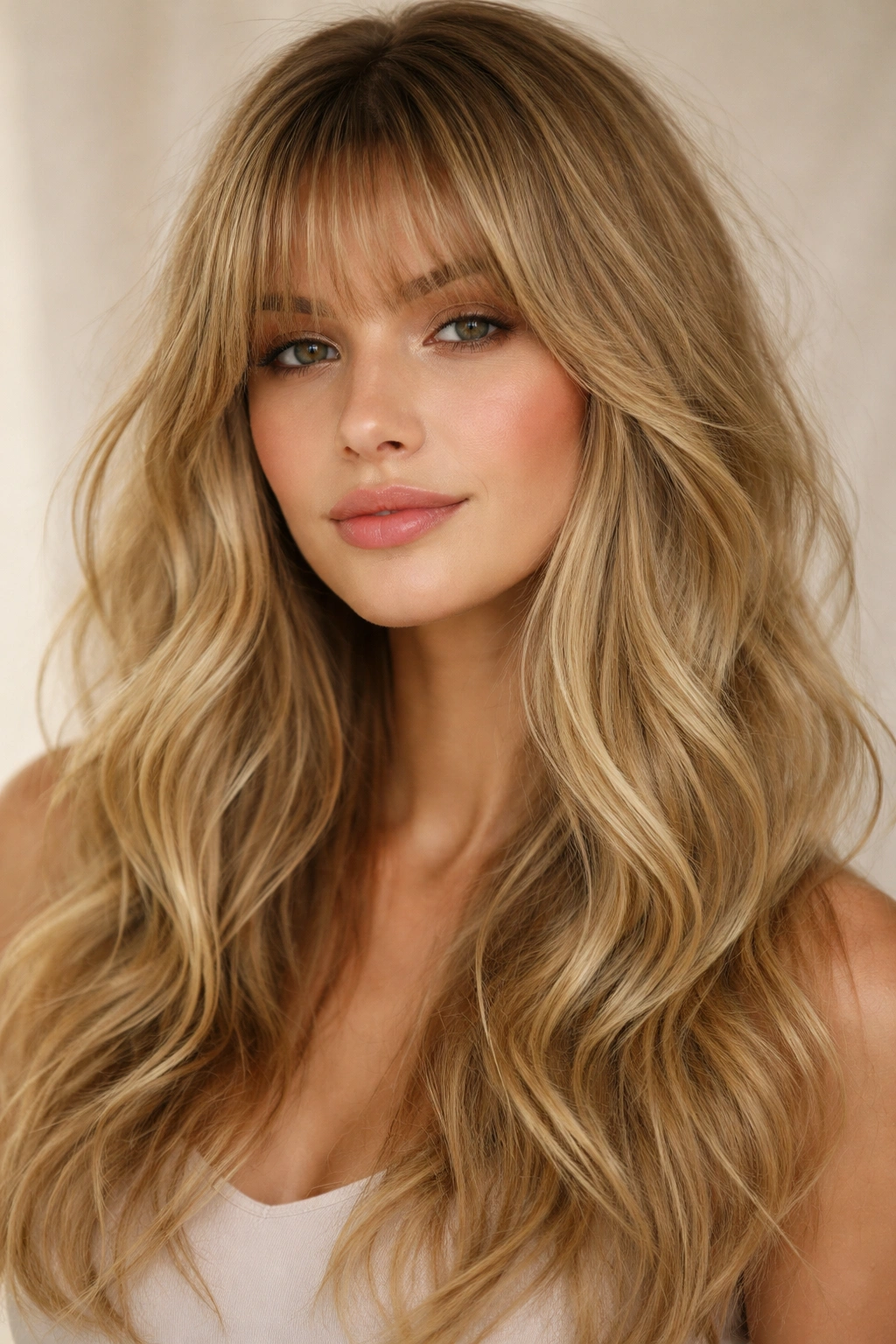
Shorter face-framing bangs are cut around eyebrow level or just above, blending into your side pieces so they frame your face without being obviously separated as bangs. With tousled waves, this creates a romantic, undone aesthetic.
What Makes This Style Stand Out
Shorter face-framing bangs create a soft frame without looking like traditional bangs—they integrate into your overall shape because they’re the same length as (or just slightly shorter than) your side pieces. Tousled waves suggest movement and texture without being overly defined or polished. Together, this reads as effortlessly beautiful rather than carefully constructed—the kind of hair you’d have if you didn’t spend hours styling it. With blonde hair, tousled waves catch light throughout, and the shorter face-framing pieces catch light right around your face, drawing attention to your eyes and cheekbones naturally.
Styling Tips and Maintenance
- These bangs work best when you let them blend into your layers; trying to make them sit as separate bangs defeats the purpose
- Tousled waves usually require some texture product and air-drying or diffuser-drying, not blow-drying with a paddle brush
- The shorter pieces blend as you grow them out, so you can go longer between trims (8-10 weeks) before they look overgrown
- These bangs suit people who prefer a more relaxed, low-maintenance styling routine
- The key to making shorter face-framing bangs look intentional is having consistent layers throughout your hair—they shouldn’t look like an accident
Who This Suits
Shorter face-framing bangs suit almost every face shape and hair type, and they’re especially flattering on heart-shaped or round faces. They’re perfect for people transitioning to bangs or those who prefer a softer, more romantic aesthetic.
14. Ethereal Waves With Razor-Cut Bangs
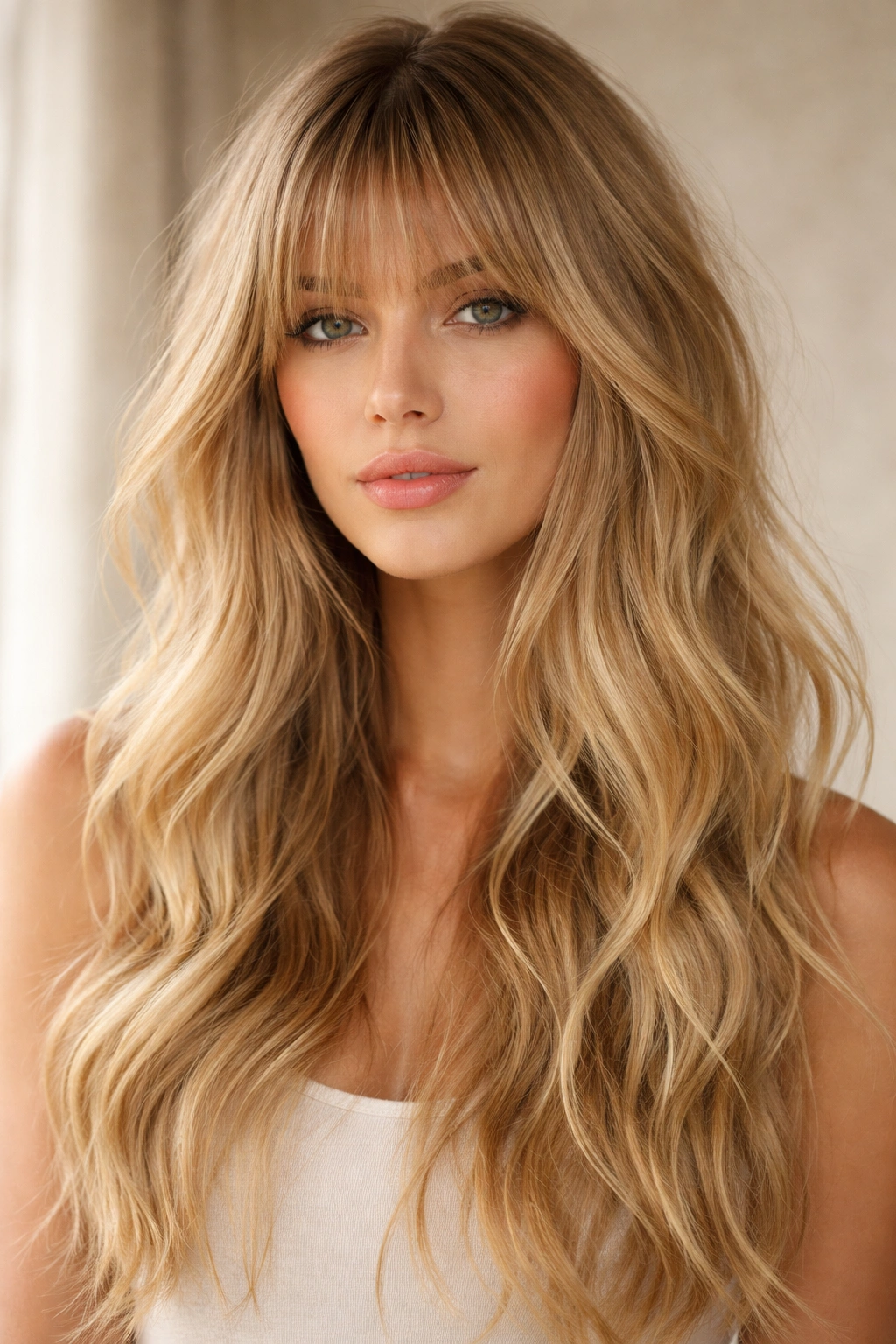
Razor-cut bangs are created with a razor rather than scissors, which creates a softer, slightly textured edge rather than a blunt line. With ethereal waves (very soft, gentle waves with a dreamy quality), this creates a beautiful, artistic look.
What Makes This Style Stand Out
Razor-cut bangs have a softer edge than scissor-cut bangs because the razor technique creates texture and slight irregularity in the line. With ethereal waves, this soft-edged quality enhances the romantic, dreamy aesthetic. The slight texture in the bang edge mirrors the soft texture of your waves, creating cohesion. With blonde hair, the soft edges of razor-cut bangs don’t show a harsh line; instead, they blend gracefully. This is especially beautiful if your blonde has subtle highlights that create dimension—the razor-cut edge shows that dimension at the edge of your bangs.
Styling Tips and Maintenance
- Razor-cut bangs naturally have some texture, so they often look better when you embrace that texture rather than trying to smooth them completely
- A light texturizing spray enhances the soft edge quality
- These bangs trim every 5-6 weeks to maintain the soft edge, but they’re more forgiving than blunt bangs because small imperfections in the line become part of the soft aesthetic
- Avoid heavy styling products that might weigh down the soft edge
- These bangs work best if your waves are genuinely soft—very defined, tight waves can make razor-cut bangs look out of place
Who This Suits
Razor-cut bangs suit romantic, artistic personalities and work on nearly every face shape. They’re ideal if you want bangs with softness and movement rather than precision and definition.
15. Long Spiral Waves With Soft Bangs
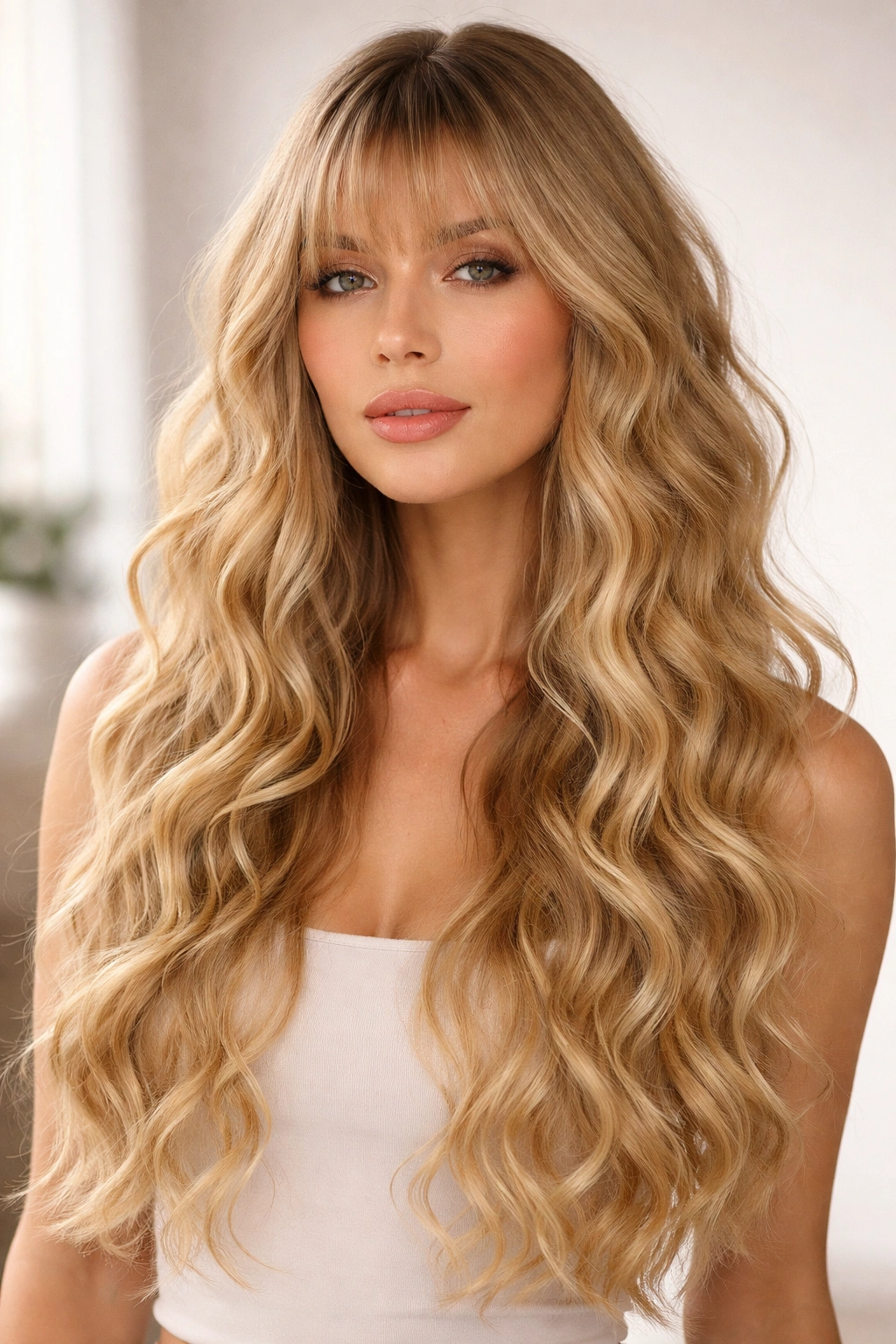
Spiral waves are created through tight curling or specific wave-setting techniques that result in defined, spiraling texture throughout your length. Soft bangs are gently textured, typically wispy or lightly layered, creating a contrast in definition.
What Makes This Style Stand Out
Spiral waves create dramatic, defined texture—imagine hair curled on a curling iron and left loose, creating spiral-shaped waves throughout. Soft bangs don’t have all that definition; instead, they’re gentler and less textured. This contrast is intentional and beautiful—the soft bangs frame your face delicately while the spiral waves create structure and interest below. With blonde hair, spiral waves catch light dramatically, and the softer bangs mean your face isn’t competing with your hair for attention. This works especially well if you’ve created a dimensional blonde with highlights and lowlights.
Styling Tips and Maintenance
- Spiral waves require more styling effort than loose waves; you’ll likely need a curling iron or wave-setting technique regularly
- Soft bangs can air-dry if you’re using a texturizing spray, but they may look better if you gently style them with your fingers as you air-dry
- The contrast between your defined waves and soft bangs is intentional, so don’t try to make your bangs match your wave definition
- These bangs trim every 5-6 weeks to maintain their soft, less-textured quality
- This look is especially beautiful for special occasions or photos—the dramatic waves and soft framing create editorial-quality results
Who This Suits
Spiral waves with soft bangs suit people with thicker hair and those who enjoy regular styling. They’re perfect if you want a glamorous, defined style with a touch of softness in the framing.
16. Modern Blonde Waves With Blended Bangs
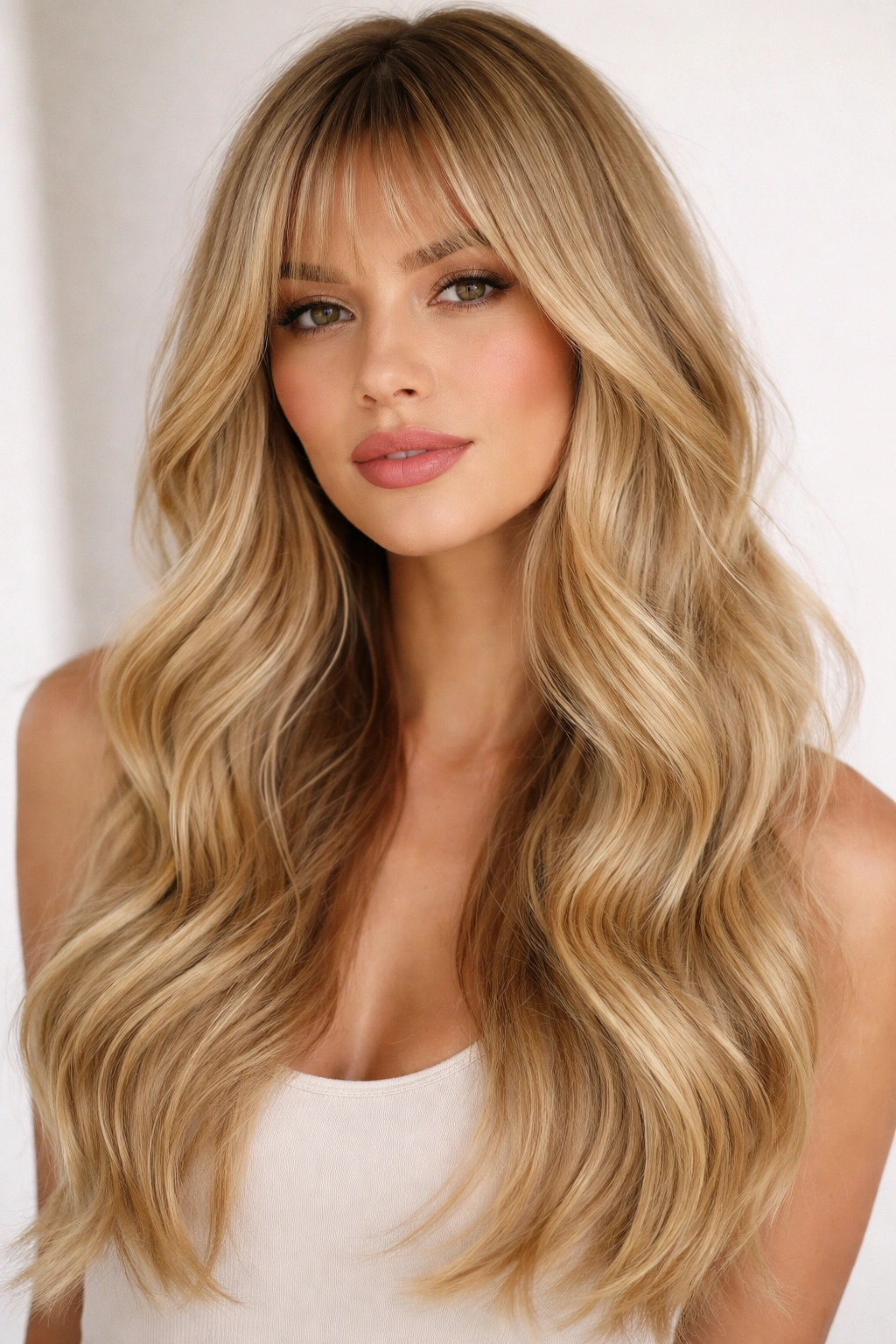
Blended bangs are cut so that they integrate seamlessly into your side pieces without an obvious separation line. With modern waves (contemporary-feeling waves that aren’t overly loose or overly tight), this creates a cohesive, polished style.
What Makes This Style Stand Out
Blended bangs are the ultimate in modern, integrated styling—they’re cut at lengths that allow them to blend into your layers without you being able to point to where the “bangs” start. This is the opposite of traditional bangs that sit as a separate element. Modern waves have a contemporary feel—they’re textured enough to read as intentional movement but not so tight they look like traditional curls. With blonde hair in contemporary shades (think rich butter blonde, soft honey blonde, or dimensional balayage), blended bangs create a style that feels current without being trendy or dated. Everything blends together into one cohesive shape.
Styling Tips and Maintenance
- Blended bangs require regular layers throughout your cut; your stylist needs to think about your entire head, not just the bang area
- You need a blow-dry and styling routine to maintain the polished, blended effect; these bangs don’t work well with purely air-dried hair
- A light-hold mousse and blow-drying with a diffuser or round brush creates the modern wave effect
- Trim every 6-8 weeks to maintain the layering that allows the bangs to blend
- The key to blended bangs is consistency—your entire cut needs to support the blended aesthetic, not just the bang area
Who This Suits
Blended bangs suit people who enjoy a styling routine and want a polished, contemporary look. They work on most face shapes and hair types and are perfect if you want bangs that don’t obviously look like bangs.
Final Thoughts
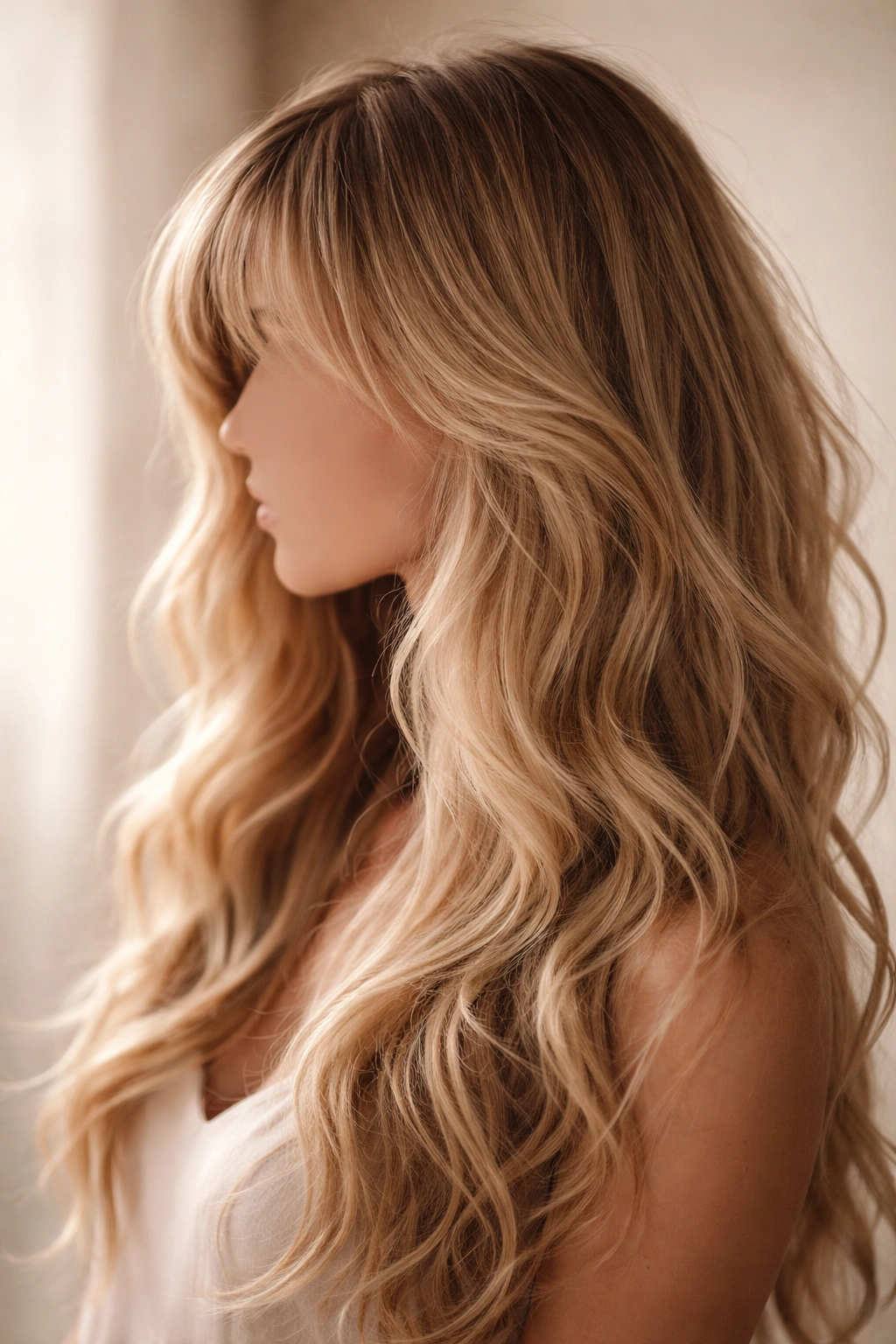
The right bang style for long wavy blonde hair comes down to understanding how your specific wave texture, face shape, and lifestyle align with different bang options. Some of these styles celebrate your waves’ movement and texture, while others create intentional contrast. Some require minimal maintenance and styling, while others thrive with regular blow-drying and products.
The most important thing is choosing a bang style that feels natural for how you actually live and style your hair. If you love air-drying your hair and prefer a relaxed aesthetic, microbangs or French bangs might frustrate you because they require blow-drying to look their best. Conversely, if you blow-dry daily and love polished styles, feathered bangs or side-swept options might feel too undone. Ask your stylist specifically how each cut will work with your natural wave pattern, how much styling time it requires, and how frequently you’ll need trims. A great bang cut should feel like it was designed exactly for you, not something you’re fighting every single day to maintain.
