



Gray hair has a quiet power that’s often underestimated. When it catches the light, it carries an elegance that younger brunettes and blondes can only attempt to mimic through expensive highlights and toning treatments. But gray isn’t just elegant—it’s also remarkably versatile, especially when paired with texture like waves. The interplay between the neutral tone and movement creates something dynamic, sophisticated, and genuinely modern. Shoulder-length gray hair with waves hits a sweet spot: it’s long enough to showcase dimension and movement, but short enough to feel manageable, youthful, and undeniably chic.
The beauty of wavy shoulder-length styles in gray is that they work across age groups and face shapes. Waves add volume and softness that flatters most people, while the gray itself eliminates the need to chase color maintenance. You’re not covering grays or dealing with roots—you’re leaning into them and making them the entire point. The result is a hairstyle that actually gets better and more interesting over time, not worse.
What makes these styles even more compelling is how they challenge outdated ideas about gray hair. This isn’t your grandmother’s gray bob. These are modern cuts with personality, tailored movement, and styling versatility that would work just as well on someone in their 40s as someone in their 70s. Whether you’re transitioning to gray, already there and looking for fresh styling ideas, or simply considering something different, these twelve shoulder-length wavy styles offer genuine inspiration and proven approaches that actually work.
1. The Tousled Choppy Layers with Textured Waves
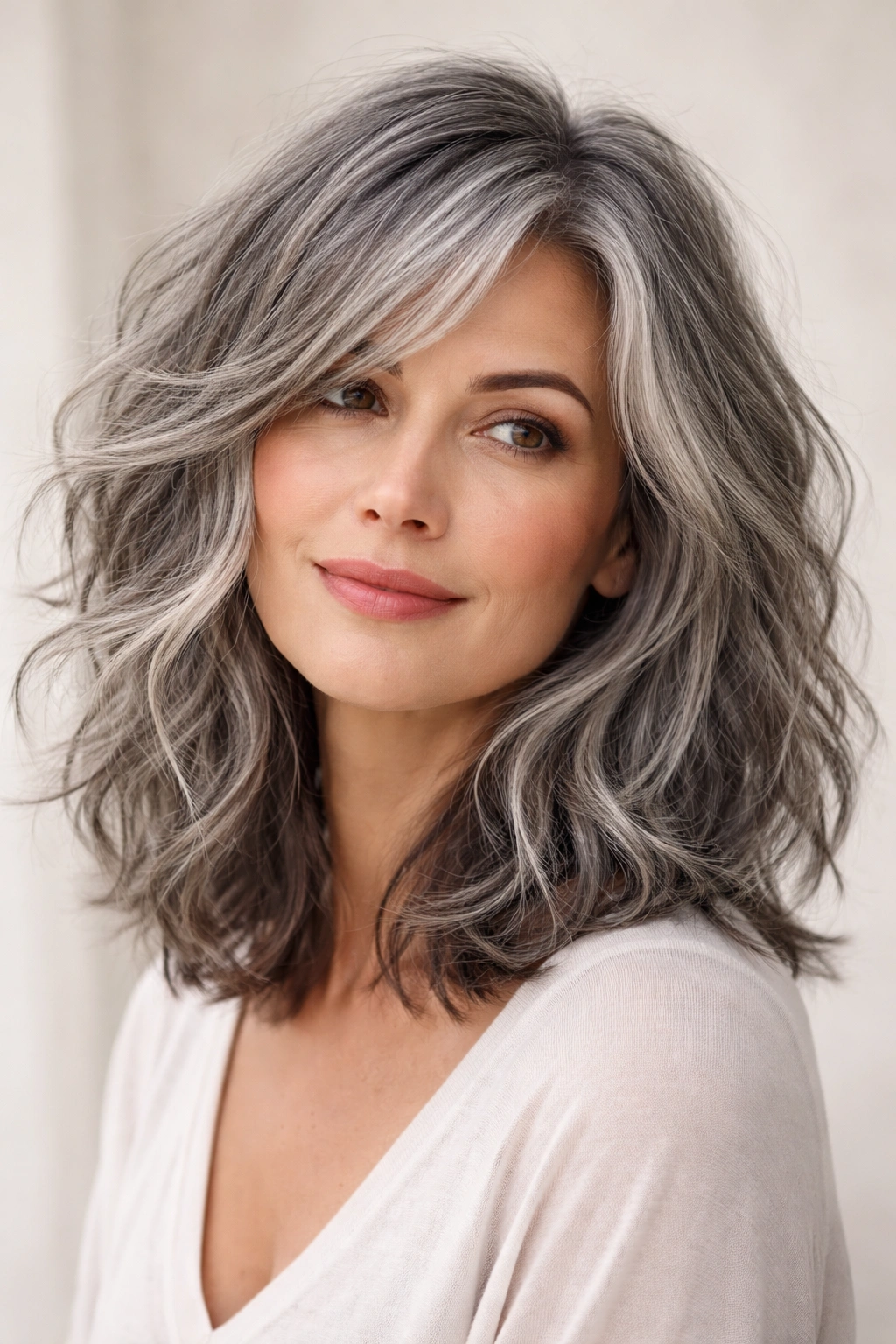
This style thrives on movement and attitude. Choppy, uneven layers throughout the mid-lengths and ends create natural texture that enhances waves without requiring heavy product or heat styling. The layers are cut at different lengths—some hitting right at the shoulder, others falling 1-2 inches shorter—which creates dimension when the hair falls into waves.
Why This Cut Works
Choppy layers are forgiving with natural texture and gray hair specifically. The cut itself creates the appearance of fuller, thicker hair because the layers allow wave patterns to show rather than compress under the weight of blunt ends. This style requires movement to look its best, and waves provide exactly that. The texture of gray hair—which often has a slightly coarser, more interesting natural texture than pigmented hair—actually works in favor of choppy layers.
Styling and Maintenance
- Use a sea salt spray on damp hair before air-drying for natural, piecy waves without frizz
- A lightweight mousse applied to roots adds body without weighing down layers
- Tousle with fingers while drying for intentional undone texture
- Refresh waves on day two with a wave-enhancing cream and gentle scrunching
- Cut every 6-8 weeks to maintain the choppy layer definition
Who It Suits Best
This works beautifully for people with naturally wavy or curly hair who want to lean into texture rather than fight it. It also suits those seeking a more youthful, modern silhouette without looking like you’re trying too hard. If you have a face shape that benefits from layers framing the face (ovals, hearts, rectangles), this cut maximizes that flattery.
Pro tip: The choppier the layers, the more frequently you’ll want trims to maintain that separated, textured look. Let your stylist know you want this to look intentionally undone, not scraggly.
2. The Soft Waves with Face-Framing Pieces
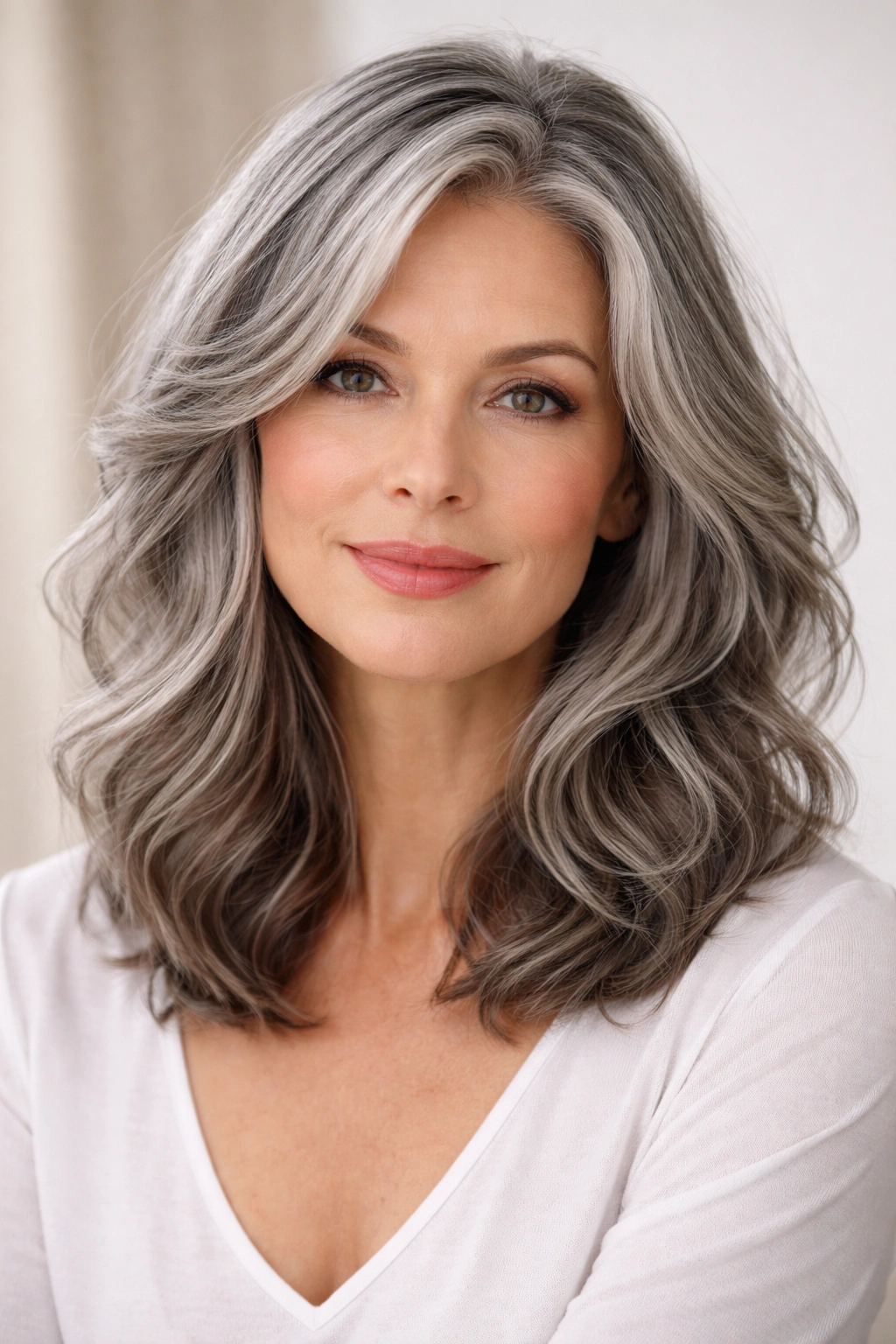
This is the most universally flattering approach to shoulder-length gray hair. Face-framing pieces are cut shorter—typically 1-2 inches shorter than the main length—and wave gently inward or outward depending on your preference. The rest of the hair falls in soft, consistent waves that hit right around the collarbone.
The Appeal of Face Framing
Face-framing pieces serve multiple purposes. They soften the overall silhouette, draw attention upward, and create the illusion of a lifted, more sculpted face. With gray hair specifically, these pieces catch light beautifully and create visual interest near the face. The shorter pieces also make styling easier—you can curl them differently than the back section if needed, or let them dry naturally while focusing wave-building effort elsewhere.
How to Style for Best Results
- Blow dry with a round brush to create shape at the roots
- Curl face-framing pieces away from the face with a 1.5-inch barrel curling iron
- Apply anti-frizz serum to enhance wave definition without crunchiness
- Use lightweight hairspray to hold waves for 24+ hours
- Refresh with a texturizing spray and finger-styling on day two
Maintenance Needs
- Every 5-6 weeks for layering refresh
- Monthly trims to keep face-framing pieces in ideal position
- Deep conditioning treatments every other week maintain softness in waves
This style genuinely improves your face shape and works particularly well if you have a round, square, or rectangular face where softening and widening at the cheekbones matters.
3. The Curtain Bangs with Flowing Waves
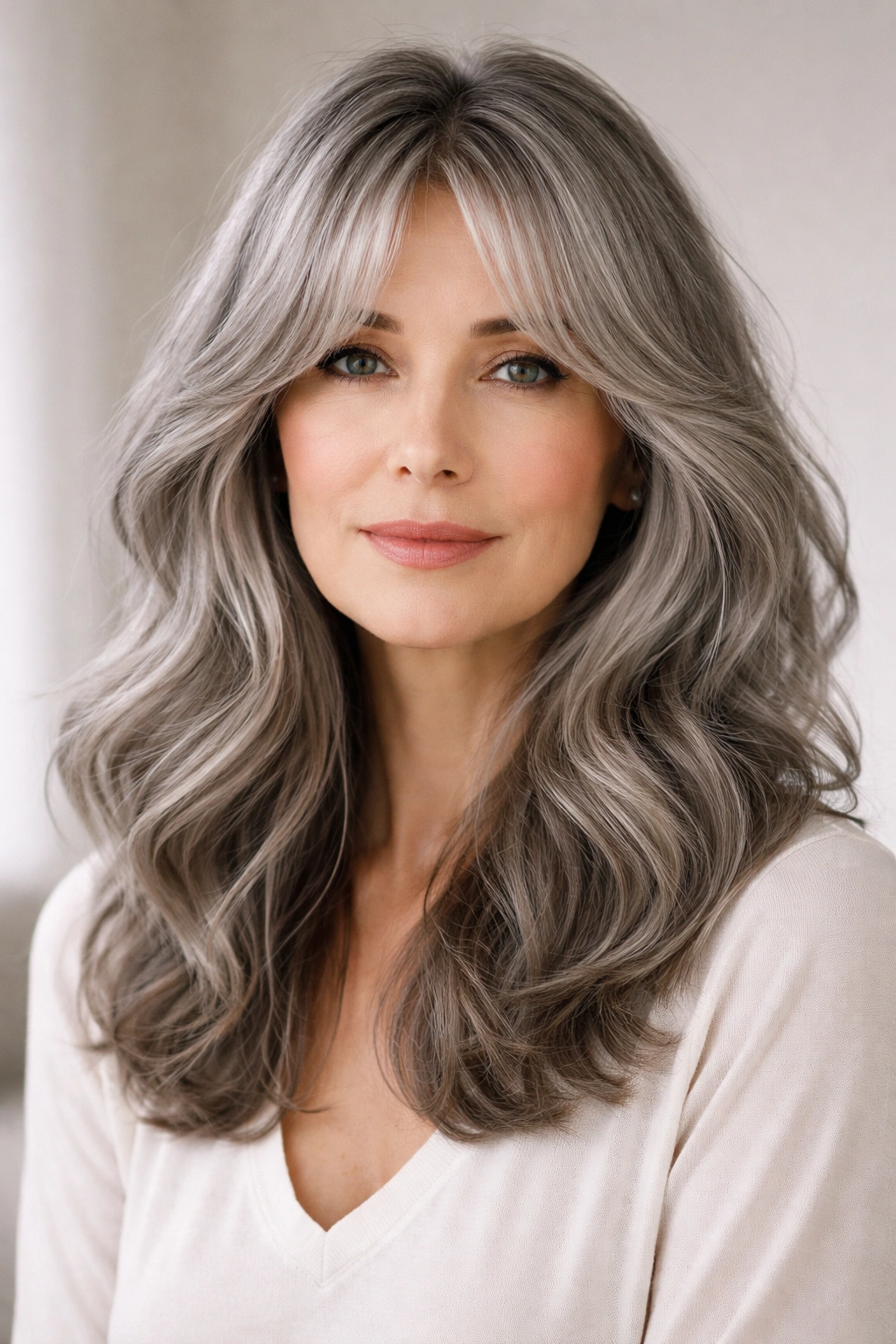
Curtain bangs—the longer, face-parting style that sweeps away from the face—bring a retro-cool energy that pairs beautifully with gray. The bangs are typically chin-length or slightly longer, creating a center part that opens up the face. The rest falls in loose waves past the shoulder.
Why Curtain Bangs Work with Gray
Curtain bangs create a focal point near the top of the face without the bluntness of traditional bangs. With gray hair, they add movement and dimension right where you want visual interest. The longer length means they blend seamlessly into the rest of your wave pattern rather than creating a stark line. They also photograph beautifully—light hits them differently than the rest of your hair, creating depth.
Styling Considerations
- A blow dryer and round brush shape the bangs’ natural wave during drying
- Light-hold mousse applied to the bang area creates movement without stiffness
- Curling the bangs slightly outward with a small barrel curling iron keeps them from falling flat
- A wide-tooth comb gently separates curtain bang waves before they dry completely
- Minimal product works best—too much causes the bangs to look heavy or greasy
Who Should Consider This Cut
Curtain bangs flatter most face shapes, but especially round and square faces. They work well if you have a high forehead you want to soften. If you’re nervous about committing to bangs, curtain bangs are the gentlest introduction—they grow out gracefully and blend into your hair naturally if you change your mind.
4. The Shaggy Mullet-Inspired Layers
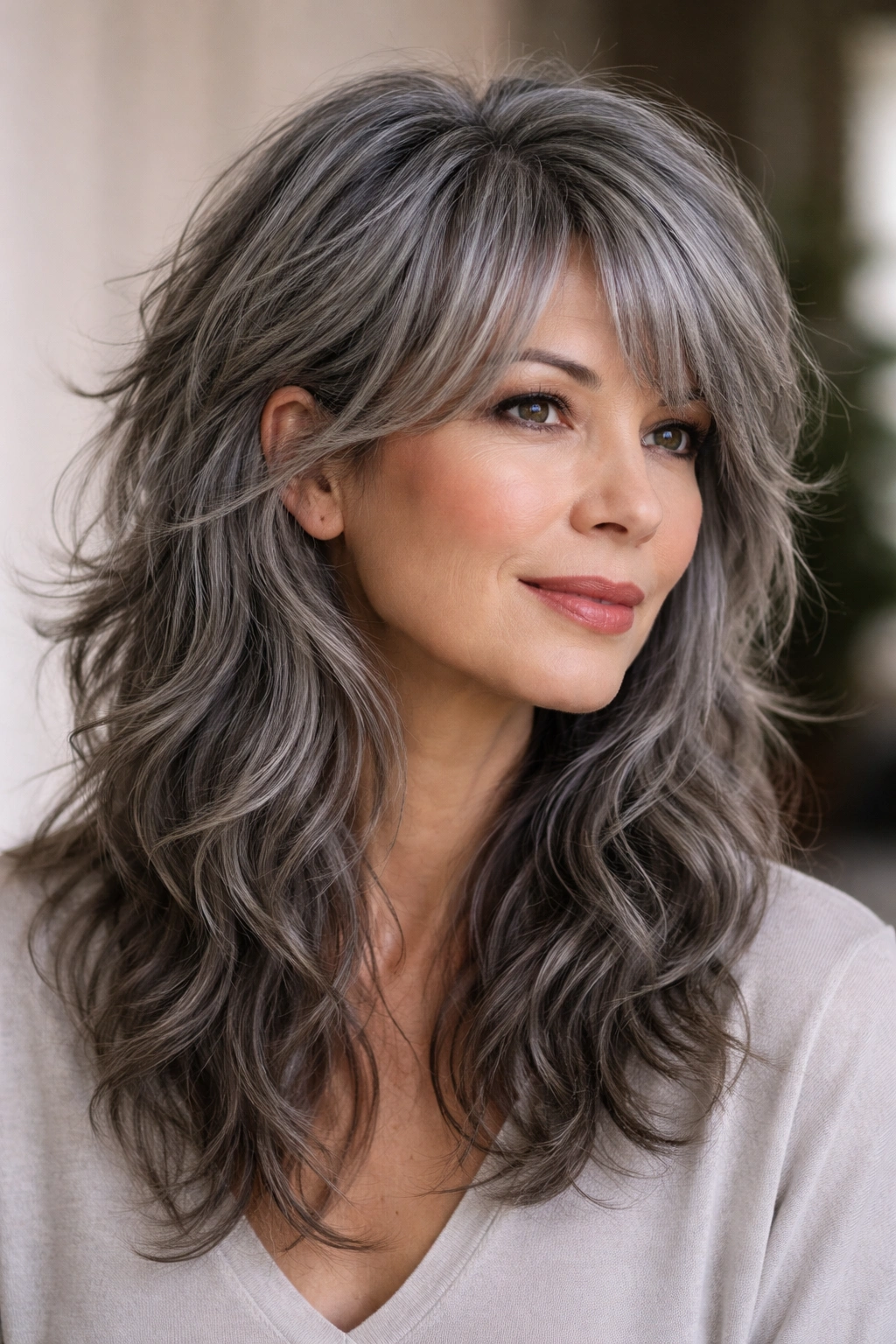
This modern take on the shag has much shorter layers on top (hitting closer to ear level) with longer, wavier layers below. It’s edgy, undeniably cool, and surprisingly wearable. The contrast between shorter textured pieces on top and longer flowing waves below creates movement and visual interest.
The Modern Shag Advantage
Traditional shags can feel dated, but the modern version is refreshed with intention. The shorter top layers create volume and texture that reads as intentional rather than scraggly. Gray hair makes this style look sophisticated rather than grungy because the neutral tone elevated the overall aesthetic. The combination of short and long works with natural wave patterns.
Styling for Impact
- Blow dry with products applied to the shorter layers first to establish height at the crown
- Scrunch wave-enhancing cream into the longer layers while damp
- Use a diffuser attachment to enhance natural wave pattern
- Finger-style while drying for a lived-in texture
- Shorter layers may need more frequent trims (every 4-5 weeks) than the longer sections
Who Rocks This Best
This style suits people who want to make a statement and aren’t afraid of texture. It works particularly well with naturally wavy or curly hair and suits face shapes that benefit from volume at the crown (round faces, narrow faces). If you love movement and don’t mind spending time on styling, this delivers impact.
5. The Blunt Shoulder-Length Bob with Internal Waves
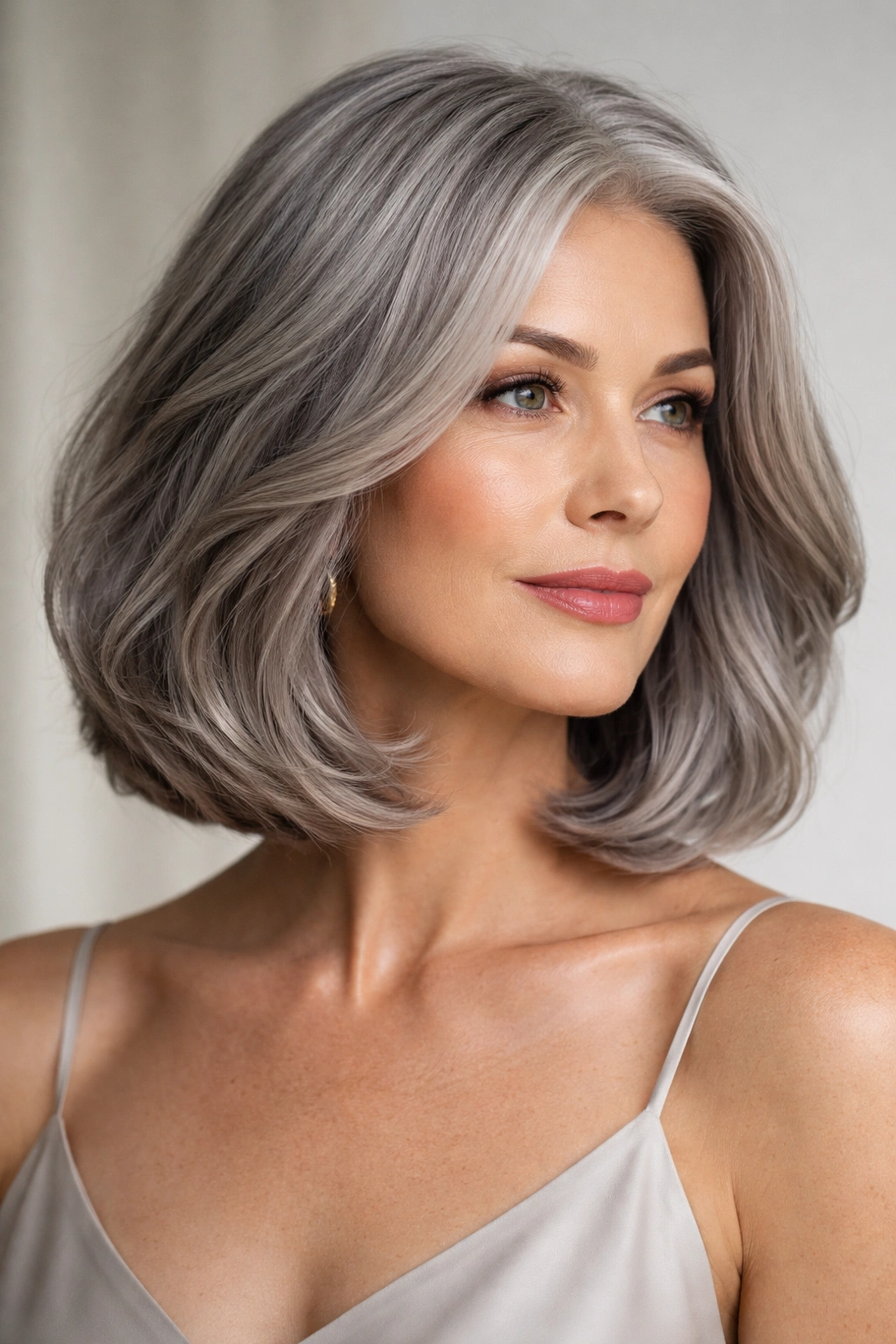
This is structure with softness. A blunt cut creates clean lines—typically hitting right at the shoulder or collarbone—but waves are built into the hair through perming, rolling methods, or heat styling. The waves are subtle enough to maintain the clean line of the bob, but obvious enough to add significant texture and movement.
Why Blunt Edges Matter
Blunt ends create a polished, intentional look. With gray hair, they photograph beautifully and catch light. The waves within a blunt-edged cut create the best of both worlds—the sophistication of a structured style plus the softness and movement of waves. This cut requires less styling than other wave styles because the bluntness provides shape even when straightened.
Styling Approach
- A blow dry with a round brush creates internal waves without the need for a curling iron
- Sea salt spray applied to damp hair enhances natural wave pattern
- For more defined waves, roll sections on large hot rollers while blow-drying
- Lightweight styling cream maintains waves without buildup
- The blunt edge means you can air-dry and still look polished
Maintenance Schedule
- Every 4-5 weeks to maintain blunt edge sharpness
- Monthly conditioning treatments keep waves soft
- This style actually improves slightly as it grows out slightly because waves become more pronounced
This style works beautifully for people with straight or gently wavy hair who want the appearance of more texture without overwhelming curl. It suits professional settings and reads as intentionally styled rather than casual.
6. The Textured Waves with Shorter Layers Throughout
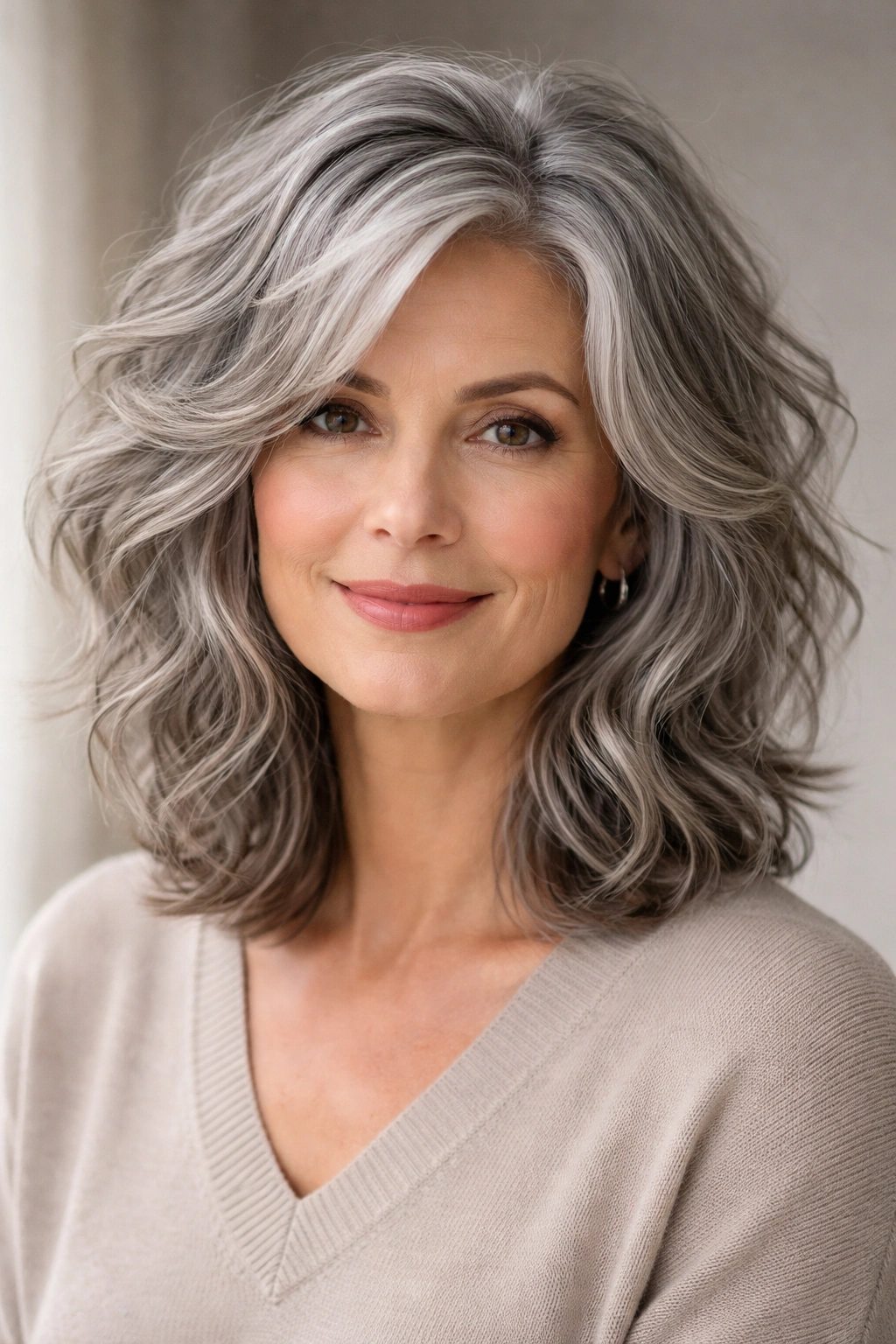
This style has shorter layers distributed throughout—not just at the face, but at the crown, around the sides, and throughout the back. Every section is cut to a slightly different length, creating a textured, dimensional look. When waves are added, the effect is incredibly dynamic.
The Layering Philosophy
Multiple layers at varying lengths create movement even with minimal styling. The gray hair itself has interesting texture, and these layers allow that texture to show. This cut works with your hair’s natural pattern rather than against it, making styling easier and results more consistent.
Achieving the Look
- A skilled stylist cuts short layers throughout, creating multiple texture points
- Waves can be achieved through styling, perming, or a combination
- Light texturizing spray defines individual waves without crunchiness
- Blow-dry with a diffuser to encourage wave formation
- Finger-styling while partially dry creates natural-looking separation
Who Benefits Most
This works exceptionally well for people with naturally wavy or curly hair and those who want a low-maintenance style that still looks intentional. It suits most face shapes and flatters a variety of hair densities. If you have fine hair, the layers prevent it from looking thin. If you have thick hair, the layers reduce bulk while maintaining length.
7. The Romantic Loose Waves with Soft Layers
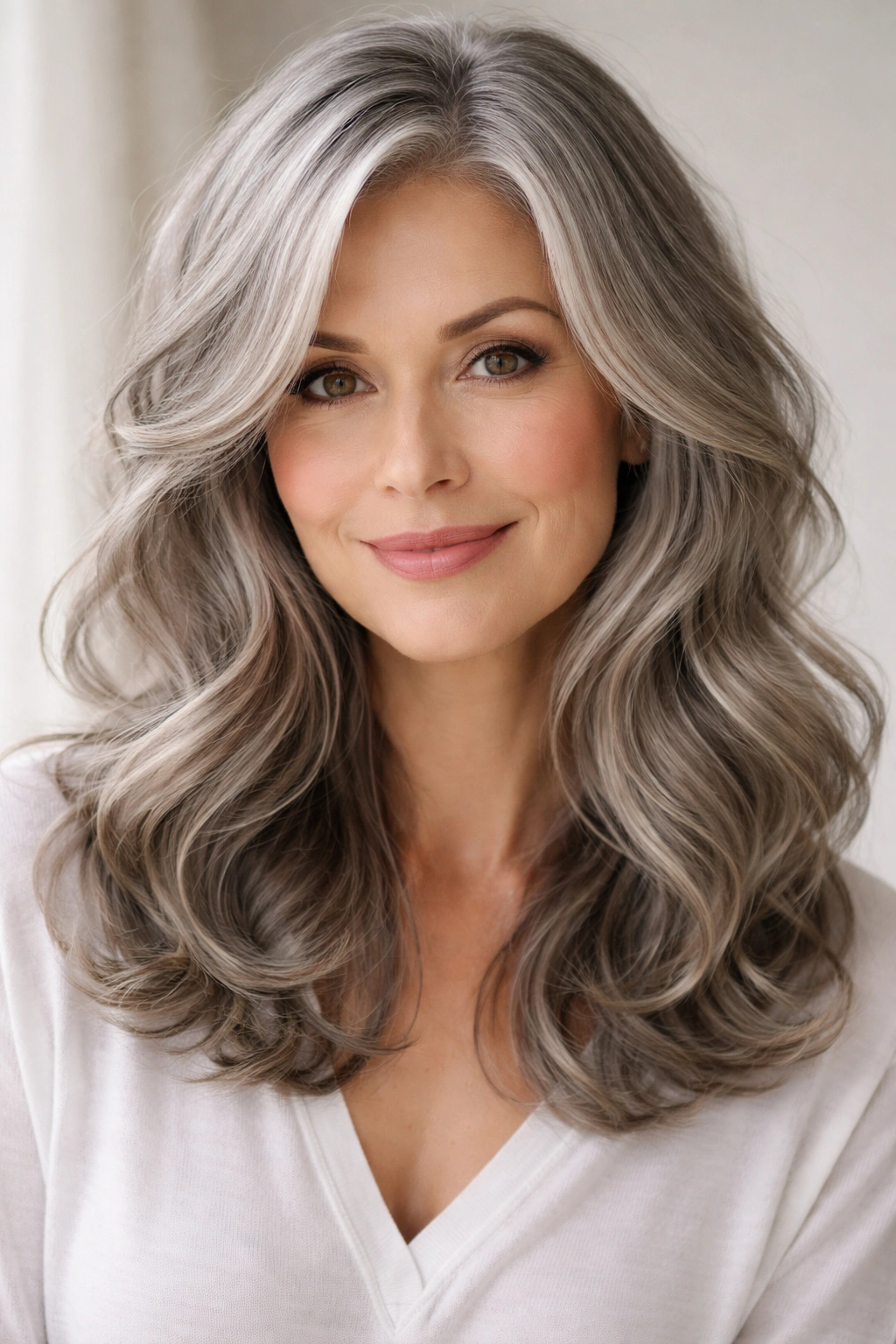
This is the gentle, feminine approach to gray shoulder-length hair. Soft layers throughout the hair create texture without choppiness, and large, romantic waves flow downward from roots to tips. The overall effect is effortless elegance.
Creating Romantic Movement
Romantic waves are larger, looser waves that take an hour or more to fall out after styling. They require barrel sizes of 1.5-2 inches and typically low-heat or heat-free techniques. With gray hair, these waves have a luminous quality because light reflects off the wave surface differently.
Styling Steps
- Apply a heat protectant spray to damp hair
- Blow dry to 80% dry, then finish with a large-barrel curling iron
- Curl sections away from the face, working methodically around the head
- Use a paddle brush to gently brush out waves into soft, flowing movement
- Light hairspray holds waves for 24+ hours
- Sleep on a silk pillowcase to preserve waves overnight
Who This Suits
Romantic waves work beautifully for most face shapes and suit people who want an elegant, feminine aesthetic. They work particularly well for events and special occasions but can be toned down with a more casual outfit for everyday wear. If you have naturally straight hair, this style requires consistent heat styling, but the payoff is undeniably beautiful.
8. The Textured Waves with Undercut Subtlety
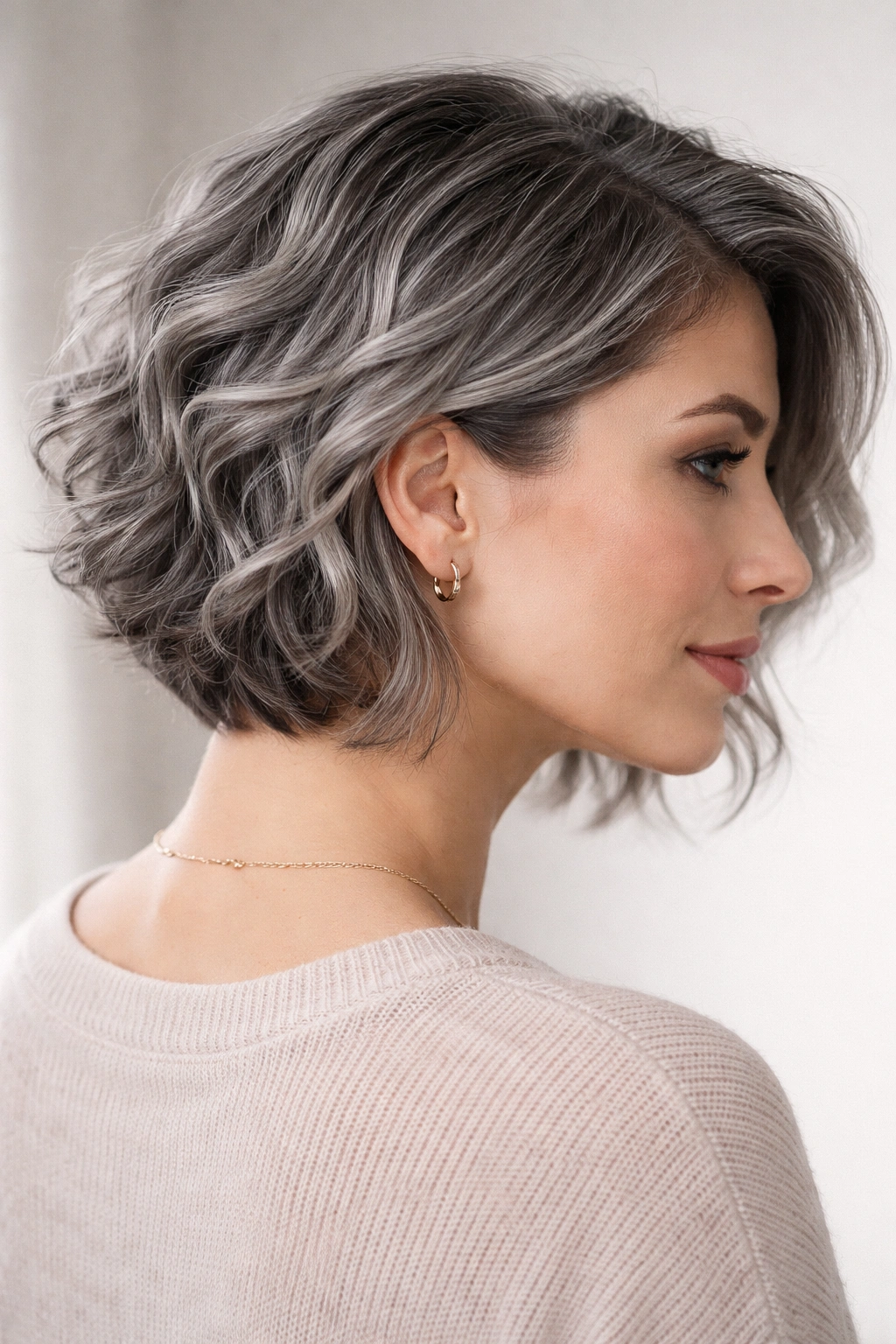
An undercut is when the hair at the nape of the neck is cut significantly shorter—sometimes dramatically so—while the top and sides remain longer. With an undercut, you have short textured layers at the back and longer waves on top and around the face. When you style with waves, the undercut creates unexpected texture contrast.
Why Undercuts Work with Gray
An undercut adds edge and modernity to gray hair. The shorter section at the nape shows off the natural texture and gray tone beautifully, while longer waves on top maintain femininity and movement. It’s a bold choice that absolutely works—it just requires confidence and willingness to stand out slightly.
Styling Possibilities
- The undercut area naturally waves and textures without effort
- Longer top layers can be styled in loose waves for contrast
- Waves can be tousled casually or more carefully styled depending on the occasion
- The undercut area is easy to refresh with fingers and light product
Commitment Level
This style requires a stylist experienced in geometric cuts. Maintenance is moderate—the longer sections need trims every 6 weeks, while the undercut grows out visibly after 3-4 weeks. If you love the look, the maintenance is worth it. If you’re uncertain, start with a less dramatic undercut that you can grow out without looking unkempt.
9. The Beachy Waves with Textured Ends
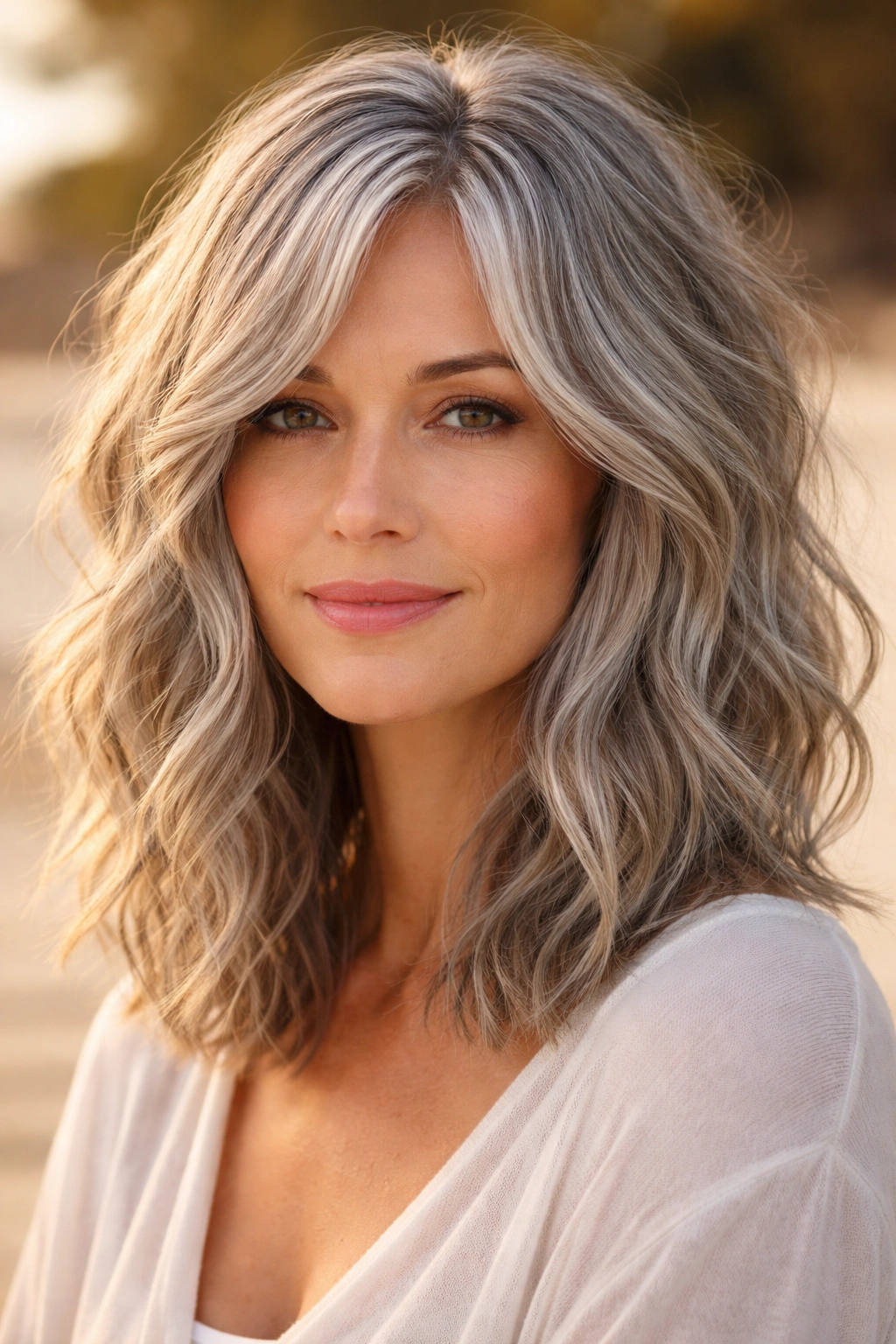
This style captures that “I just came from the beach” aesthetic while being entirely intentional. Medium-length layers create texture, and waves are tousled and separated rather than sleek. The ends are deliberately choppy and textured—sometimes even slightly shorter in some sections than others.
Achieving Beachy Texture
Beachy waves require product and technique but actually look better slightly undone. A sea salt spray is essential—it gives hair that salty, textured quality. Waves are larger and looser, often created by scrunching product into damp hair rather than formal curling.
Styling Routine
- Apply sea salt spray to damp hair before styling
- Either air-dry with the product in place or blow dry with a diffuser
- Use fingers to scrunch and separate waves, not a brush
- A light styling cream or light-hold mousse prevents frizz without stiffness
- Refresh on day two with dry shampoo and finger-tousling
Who This Suits
This works beautifully for people with naturally wavy hair and those who want a casual, approachable aesthetic. It suits most face shapes and is particularly flattering for those who prefer a less “done” appearance. With gray hair, beachy waves have a sophisticated-casual quality—you look effortlessly put-together.
10. The Sculpted Waves with Precision Layers
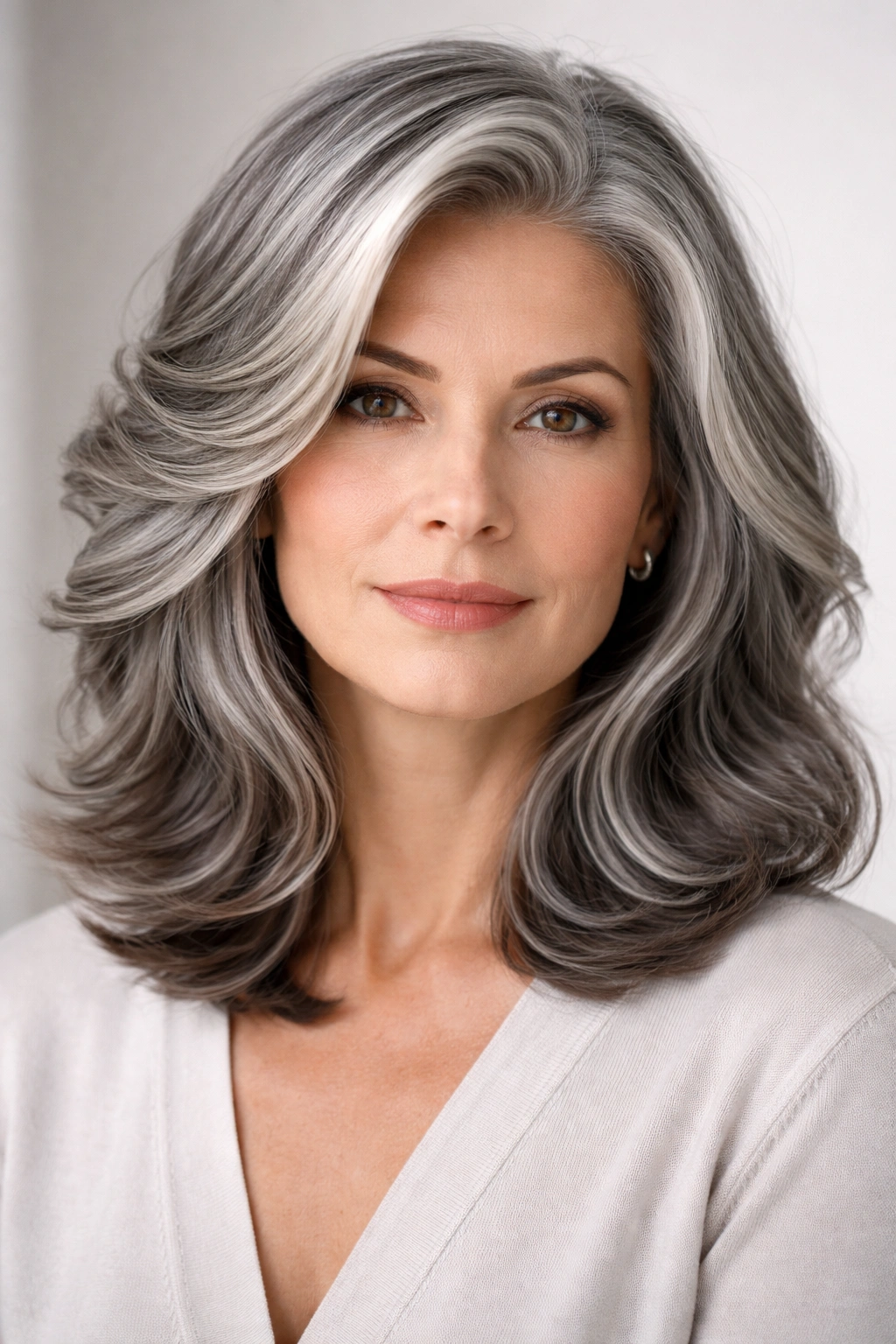
This style is the opposite of beachy. It features precision-cut layers in exact places, and waves are carefully sculpted rather than tousled. Each wave is visible and intentional. The result is polished, modern, and undeniably striking.
The Precision Approach
Precision layers are cut at specific angles to create shape and movement in exact locations. Waves are then styled with intention—each curl is formed and positioned deliberately. This requires more styling effort but delivers impressive results.
Styling with Intention
- Blow dry with a round brush to establish volume at the roots
- Use a large-barrel curling iron to create uniform, defined waves
- Each section is curled away from the face for flattery
- Flexible hold hairspray maintains waves without crunchiness
- Waves stay intact for 1-2 days with this approach
Time Investment
This style requires 15-20 minutes of styling time most days. If you enjoy the styling process and have the time, the results are magazine-quality. If daily styling feels like a burden, consider something lower-maintenance.
11. The Side-Parted Waves with Longer Front Pieces
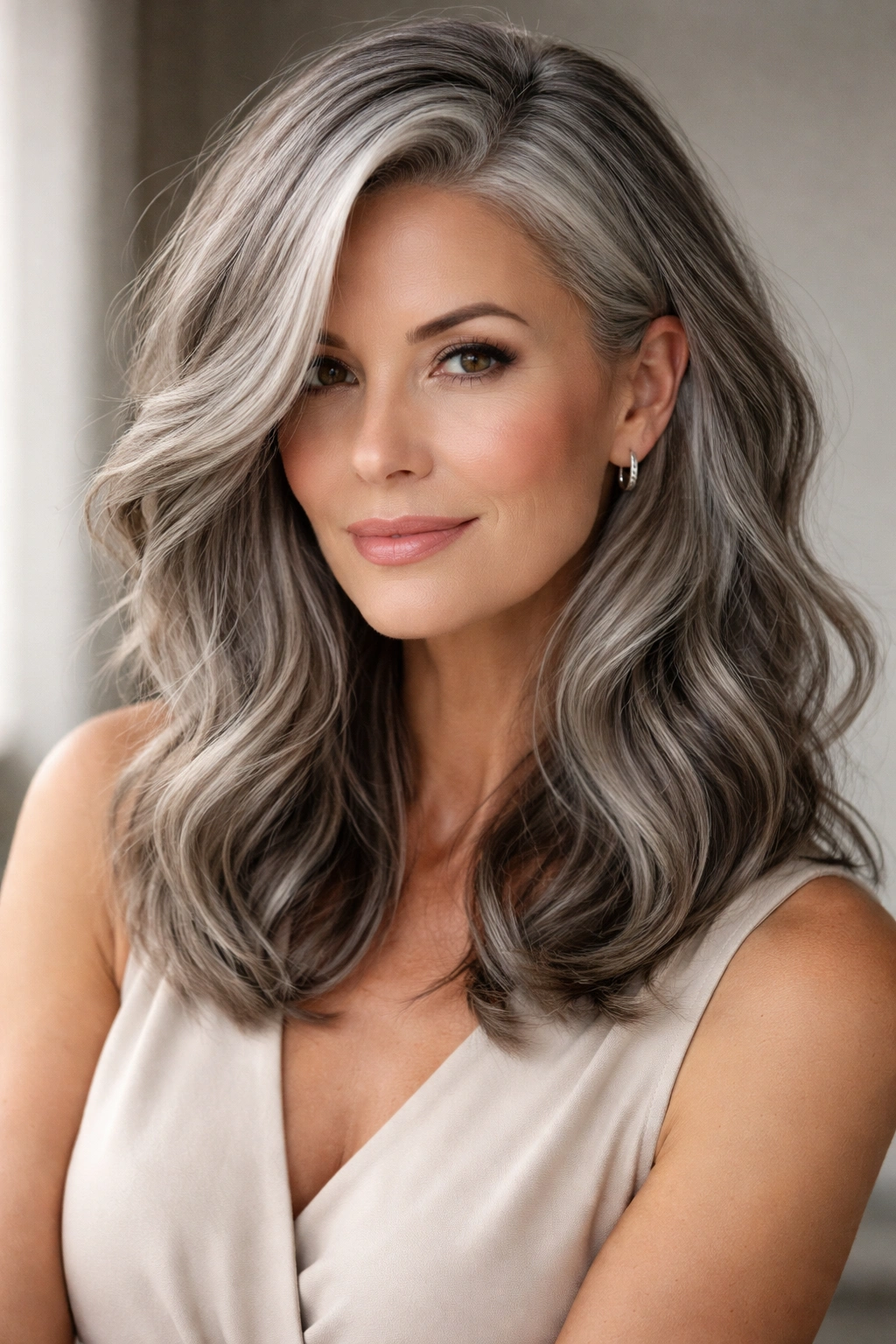
A deep side part creates visual drama and flattery. The longer side has waves that fall past the shoulder, while the shorter side is tucked behind the ear. The longer front pieces frame the face beautifully. This style works with shoulder-length gray hair in a particularly striking way.
The Power of Side Parting
A side part instantly lifts the face and creates an elegant silhouette. With gray hair, it shows off the tone beautifully on both sides of the face. The longer pieces on one side create movement and interest, while the tucked-back side shows off bone structure and ears.
Styling Steps
- Blow dry with the direction of the intended part established early
- Create the side part with a rattail comb for precision
- Curl the longer side’s pieces away from the face
- Tuck the shorter side behind the ear, securing with a small bobby pin if needed
- Light hairspray holds everything in place
Maintenance Timing
- 5-6 week trims maintain layer positioning
- The side part becomes more flattering as you adjust to it—give yourself a week to get used to the new look
- This style photographs beautifully and is ideal for professional photos or events
12. The Piecy Waves with Disconnected Layers
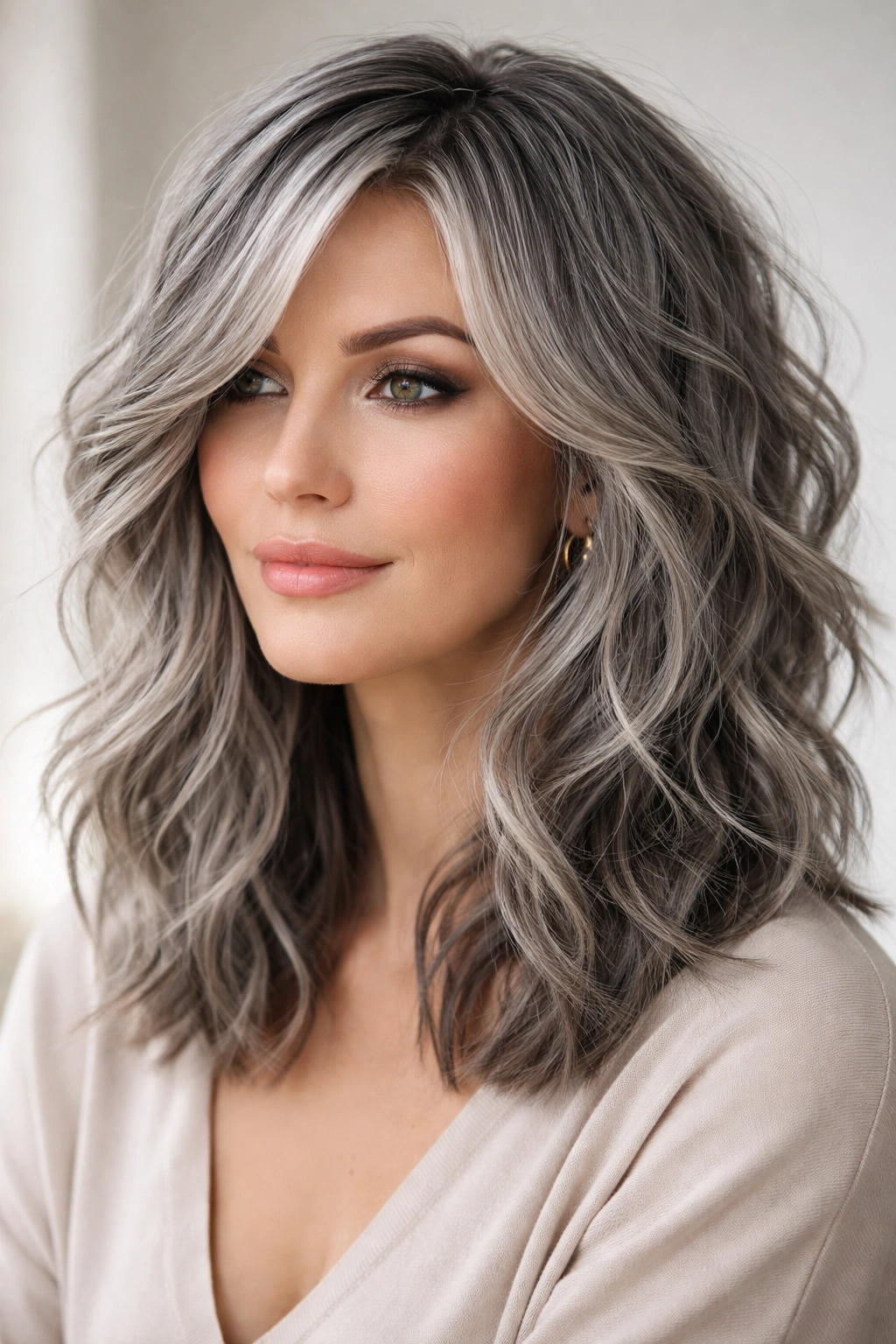
This final style takes disconnection to an intentional level. Layers are cut with visible separation—they don’t blend smoothly but instead sit distinctly on top of each other. Waves enhance this piecy quality, creating movement in individual sections rather than a unified wave pattern.
The Piecy Aesthetic
Disconnected layers create a contemporary, fashion-forward aesthetic. With gray hair, they look sophisticated and intentional rather than undone. Each piece of hair has its own movement, creating visual interest and dimension throughout.
Creating the Effect
- Layers are cut with deliberate length differences
- Mousse or texturizing cream is applied to damp hair and scrunched in
- Waves are encouraged through air-drying with a diffuser or loose heat styling
- Fingers separate and piece out the layers as hair dries
- The final look is textured, dimensional, and distinctly modern
Styling Consistency
- This style looks best when you lean into the piecy aesthetic rather than trying to smooth it down
- Texturizing spray refreshes the look on day two
- Fingers are better than brushes for this style
- Every 5-6 weeks, trim to maintain the intentional layer separation
Who This Suits
This modern approach works for people who love fashion-forward hair and aren’t afraid of texture. It suits wavy and curly hair particularly well. If you have fine hair, these pieces show off individual strands beautifully. If you’re seeking something that looks contemporary and a little bit daring, this delivers.
Final Thoughts
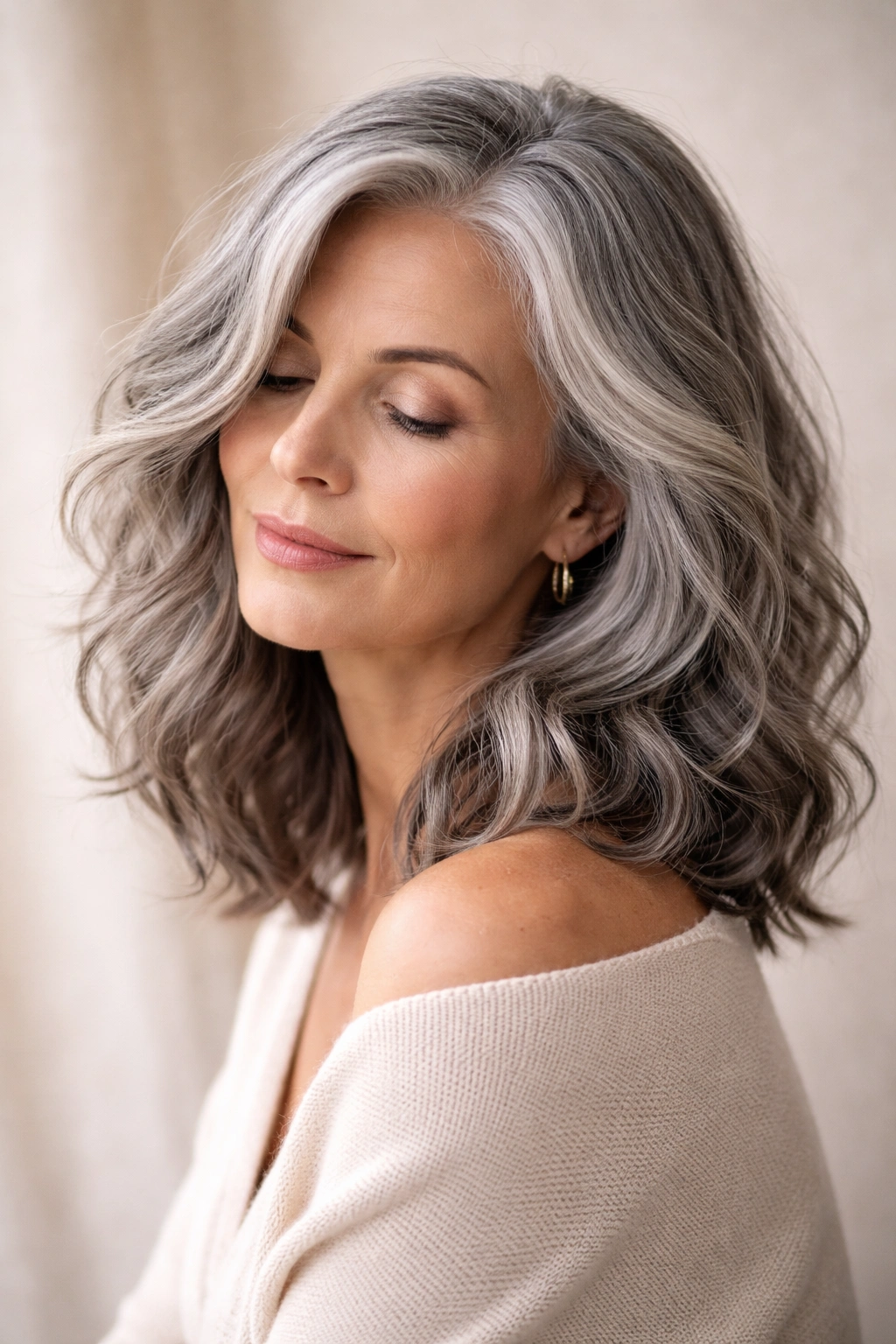
Choosing a shoulder-length gray hairstyle is less about following trends and more about finding the right balance of movement, texture, and ease that works with your lifestyle. Gray hair deserves to be celebrated, not hidden, and pairing it with waves—whether soft and romantic or bold and textured—elevates the entire aesthetic. The styles above range from minimal-maintenance beachy waves to more sculpted precision cuts, so there’s genuinely something for everyone regardless of how much time you want to invest in styling.
The best approach is finding a stylist who understands both gray hair and your natural wave pattern. Bring photos of the styles that speak to you, be honest about your daily routine and styling comfort level, and trust their expertise in suggesting customizations that work specifically for you. Gray shoulder-length waves are a genuinely smart choice—they’re modern, versatile, beautiful, and they only get better the longer you wear them.
