



The hime cut—that iconic Japanese-inspired style with sharp, straight-cut bangs and elegant side locks—might seem like it belongs strictly on sleek, straight hair. But there’s something genuinely stunning about adapting this classic silhouette to wavy textures. When you work with your natural wave pattern instead of against it, a hime cut becomes even more dimensional, romantic, and distinctly modern.
The challenge and the beauty of hime cuts for wavy hair is that you’re working with movement. Straight-haired wearers can let their bangs fall in a perfect line, while you get to play with how your waves create texture within the cut’s structure. The defined side curls that make a hime cut recognizable become even more pronounced when your hair naturally wants to wave and curl. Done right, a hime cut on wavy hair looks intentional, editorial, and effortlessly put-together.
What makes these styles work is choosing the right variation—the right length, layer placement, and bang style for your specific wave pattern. Whether you’ve got loose, beachy waves, tighter spiral curls, or something in between, there’s a hime cut that’ll enhance your texture instead of fighting it. Let’s explore ten distinct approaches to this elegant style that’ll actually work for your waves, not against them.
1. Classic Hime Cut with Wavy Layers
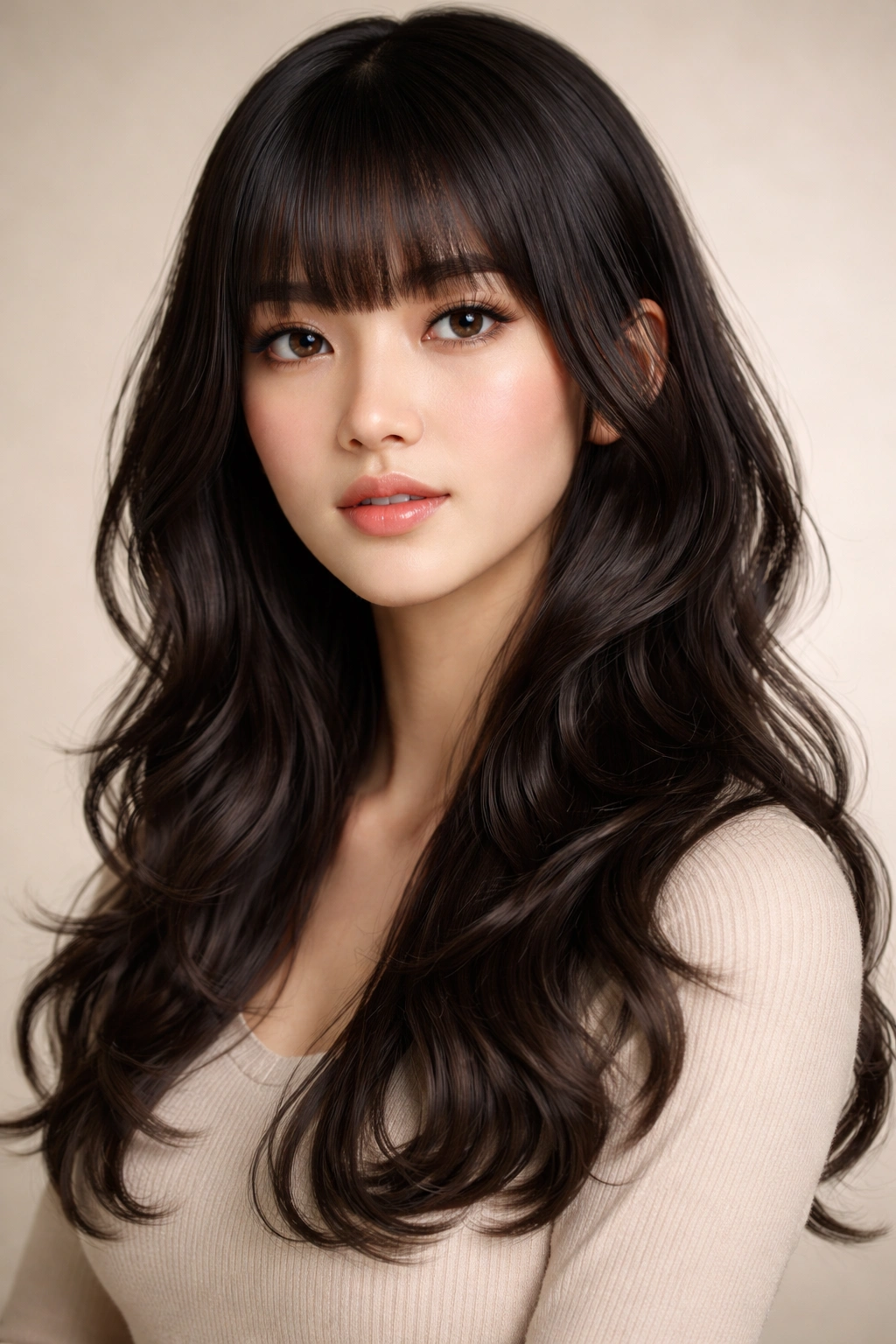
This is the foundational hime silhouette adapted for textured hair—straight-cut bangs paired with side locks and layered throughout the mid-lengths to enhance your natural wave pattern. The layers prevent the weight from flattening out your waves while maintaining that iconic hime aesthetic. Think of it as the approachable entry point into this hairstyle category.
Why It Works for Wavy Hair
Layers are a wavy hair’s best friend because they reduce bulk while encouraging movement. Instead of fighting against the density of a solid, blunt hime cut, layering channels your waves into defined, intentional-looking curls and texture. The strategic placement of layers—particularly around the face and through the lengths—creates the illusion of more controlled waves while actually requiring less styling effort. Your natural texture becomes an asset rather than an obstacle.
Key Features and Styling Tips
- Straight-cut bangs that graze just above the eyebrows, kept blunt and precise to contrast with the textured layers beneath
- Side locks that fall past shoulder length, naturally framing the face with soft wave definition
- Mid-length layers starting around the chin area and continuing through the ends for movement and bounce
- Textured ends that curl slightly outward rather than falling straight down, enhancing the wavy aesthetic
- Minimal styling required—your waves do most of the work once you’ve got the cut right
A quick tip: ask your stylist to dry-cut or curl-check your hair during the cut rather than cutting everything on straight, wet hair. This ensures the layers land where they’ll actually sit once your waves dry and spring up to their natural height.
2. Textured Hime with Curtain Bangs
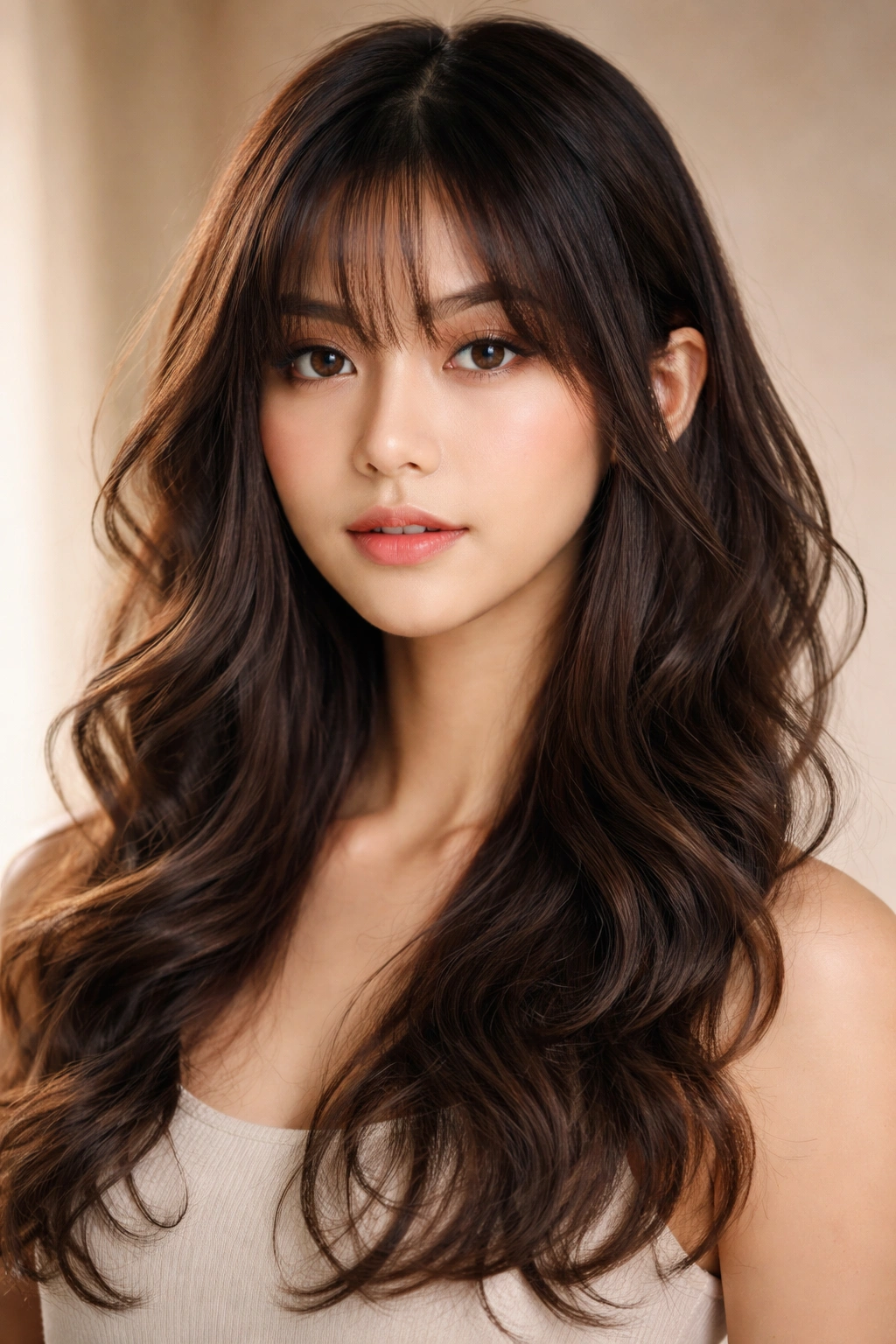
Instead of the traditional blunt bangs, this version features wispy, curtain-style bangs that part in the middle and sweep toward the sides. The softer, more gradual bang line works beautifully with wavy hair because it complements your natural movement rather than demanding that your bangs stay pin-straight. The rest of the hime structure remains—defined side locks and organized texture—but the overall feeling is more romantic and less rigid.
Why Curtain Bangs Suit Wavy Hair Better
Straight blunt bangs require daily straightening and styling to maintain their line, which means commitment and heat tools. Curtain bangs, by contrast, actually look better when there’s some wave and movement through them. They fall naturally around the contours of your face, and any slight curl or wave just adds to their charm. This means you can wake up, scrunch your waves slightly, and your bangs look intentionally tousled rather than like you’ve neglected them.
How to Request and Maintain This Cut
- Ask for face-framing curtain bangs that part slightly off-center and curve gently toward your cheekbones
- Keep the side locks defined but let them blend smoothly into the rest of your layers
- Maintain choppy, textured layers throughout for consistent movement and bounce
- Dry your bangs with your fingers rather than a brush—this encourages the natural wave and curl pattern
- Schedule a trim every 6-8 weeks to keep the bang shape fresh and prevent them from growing into your eyes
Pro tip: Use a lightweight sea salt spray on damp bangs and let them air-dry, or blow-dry with a diffuser to encourage that effortless, piece-y appearance that makes this style so forgiving.
3. Long Hime Cut with Spiral Waves
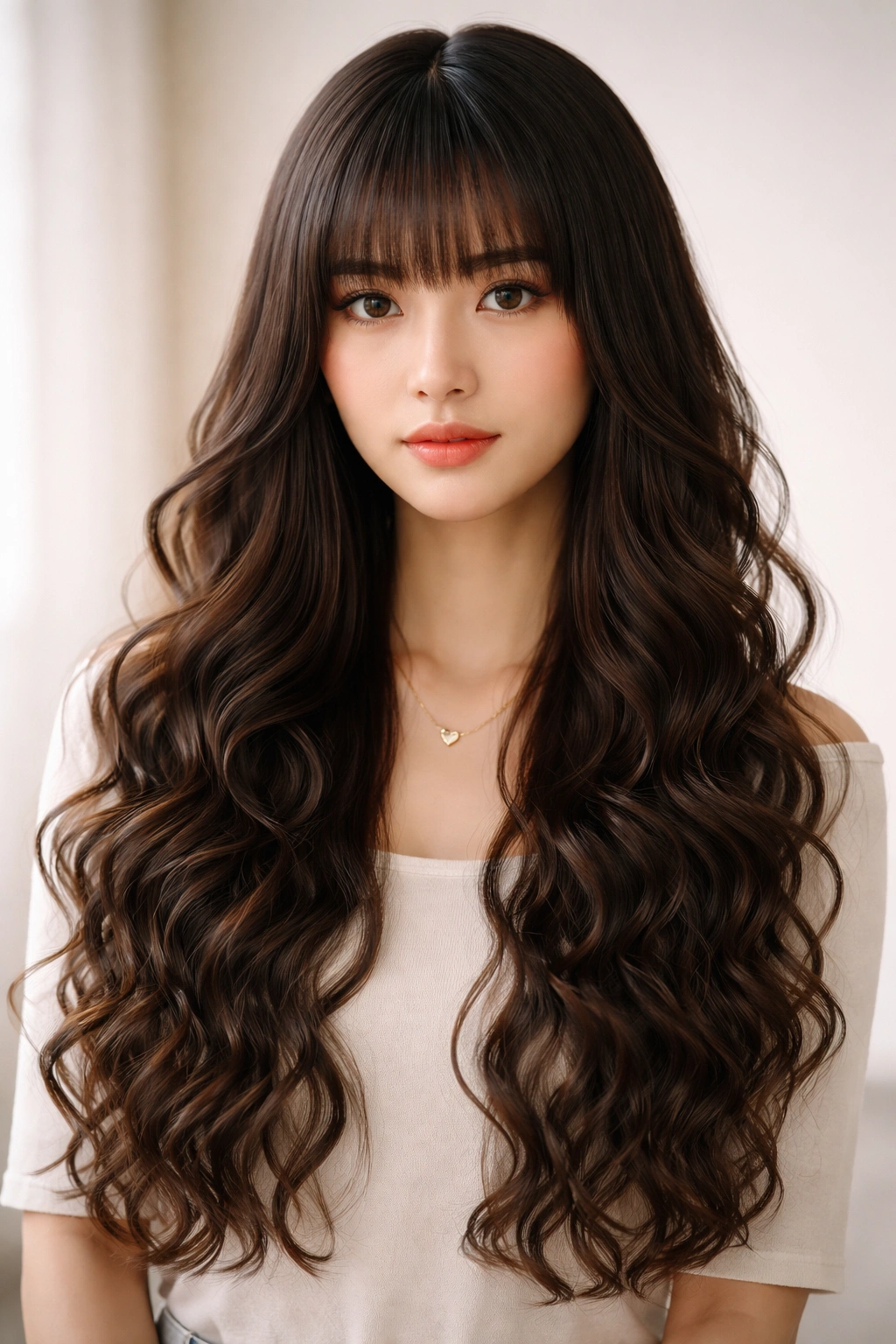
For those with tighter, more defined wave patterns—think spiral curls or ringlet-like texture—a longer hime cut showcases the beauty of your natural curl formation. The bangs are still present and defining, but the overall length extends well past the shoulders, allowing you to see the full spiral structure of your waves. This creates an ethereal, almost mermaid-like aesthetic that’s both romantic and distinctly elegant.
Why Long Length Flatters Spiraling Waves
Longer hair distributes weight more evenly, which helps prevent your tighter waves from bunching up near the scalp. The additional length actually encourages more defined, stretched-out spirals because gravity works with your curl pattern rather than against it. A long hime cut honors the natural beauty of your waves instead of cropping them so short that you lose the dimensional curl formation that makes your hair special in the first place.
Styling and Maintenance Considerations
- Straight-cut bangs that hit mid-forehead, creating sharp contrast with spiraling waves below
- Side locks extending to bra-strap length or longer to fully showcase your curl definition
- Minimal layering through the back and lengths to preserve your natural spiral pattern
- Regular deep conditioning to keep longer waves hydrated and bouncy
- Plopping technique for drying to encourage defined spirals rather than disturbing them
Here’s what works: diffuse-dry your waves upside-down for maximum volume, then flip your head up and separate any spirals that stuck together. The result is a full, curly hime cut that looks intentionally stunning.
4. Shorter Hime Cut with Choppy Texture
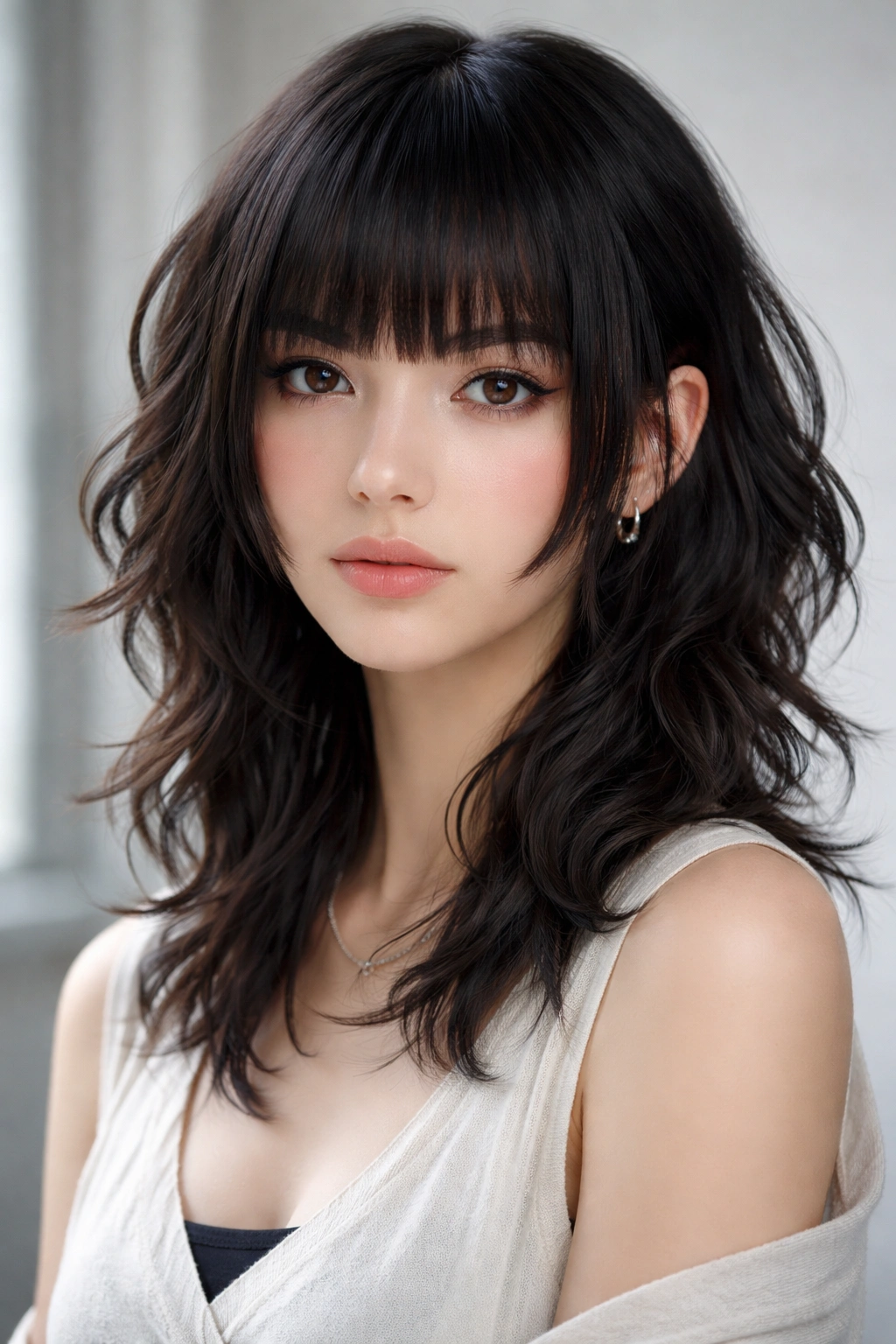
If you prefer shorter hair but still want that hime aesthetic, this cropped variation keeps bangs and side locks but brings the overall length to chin-level or just below. Heavy choppy layers throughout create an edgy, modern vibe while still maintaining the signature hime structure. It’s perfect if you want the style without the commitment of long hair maintenance.
Why Choppy Layers Work on Shorter Wavy Hair
Choppy, disconnected layers create movement and visual interest when hair is shorter, making even fine or limp waves look fuller and more textured. The sharp, uneven angles of choppy layers prevent the hair from sitting flat against your head, and they encourage each wave to move independently rather than clumping together. This makes your waves look intentional and styled rather than like you haven’t brushed your hair.
How to Get This Cut Right
- Blunt straight-cut bangs positioned at the middle of your forehead for maximum impact
- Side locks that frame the face without extending much past chin length
- Heavy choppy layers creating disconnected, jagged angles throughout the crown and mid-lengths
- Shorter length at the nape, graduating longer toward the face for a flattering shape
- Textured, piece-y ends that curl outward slightly
The beauty of this version: you can style it slicked-back and dramatic with a gel or pomade, or tousled and carefree with a curl cream. The choppy layers work with whatever styling direction you choose.
5. Asymmetrical Hime Wave Cut
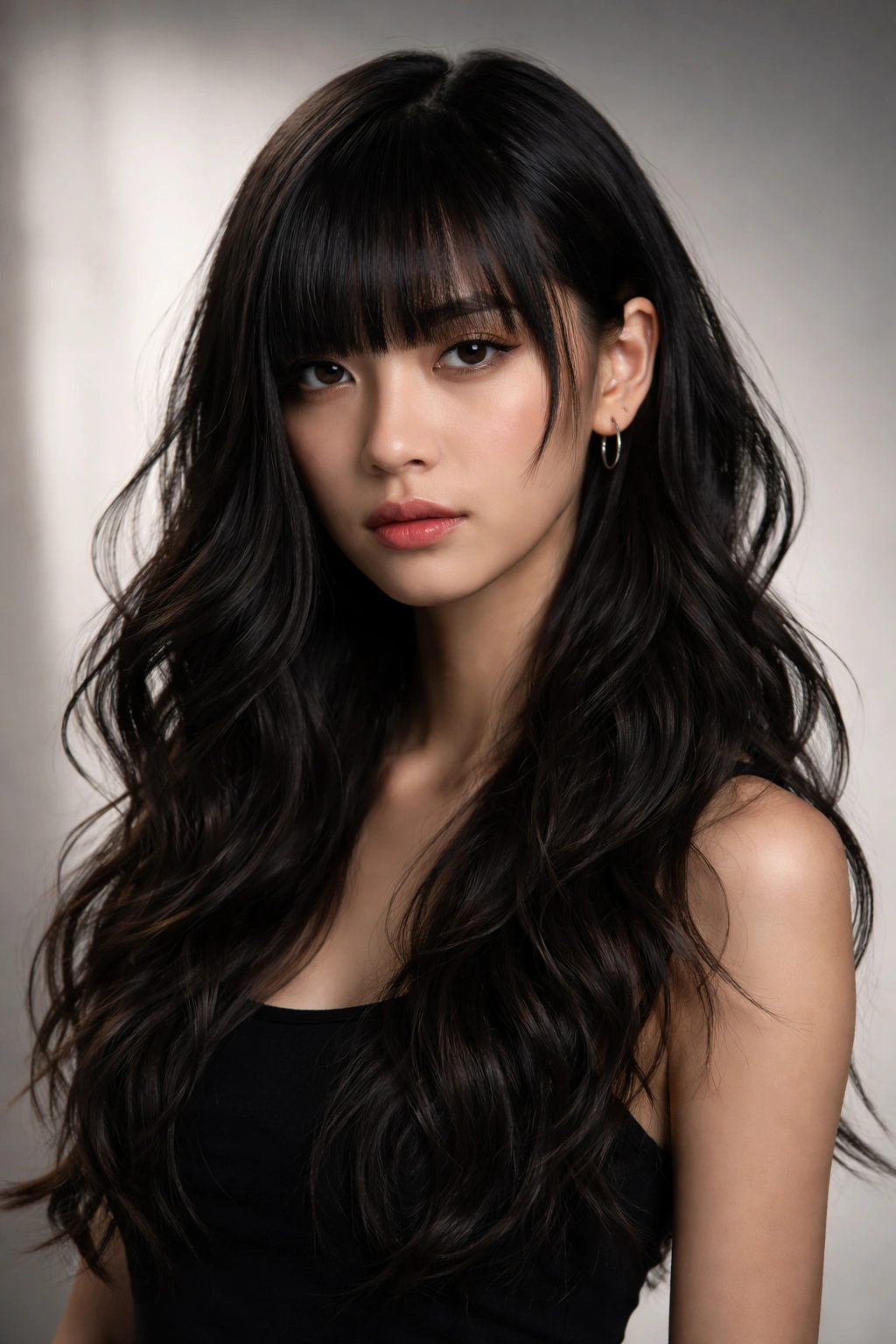
Take the classic hime cut and make one side longer than the other—this creates an edgy, fashion-forward take on the traditional style. The bangs stay straight and defined, but the asymmetry of the side locks makes this version feel modern and artistic. One side might extend to shoulder length while the other reaches your bra strap, or the difference could be more subtle. The asymmetry plays beautifully with wave patterns, creating unexpected texture and movement.
Why Asymmetry Enhances Wavy Hair
An asymmetrical cut looks intentional and editorial on wavy hair in a way it sometimes doesn’t on straight hair. The waves on your longer side will have more stretch and distinct curl formation, while the shorter side will look fuller and bouncier. This natural variation in how your waves behave on different lengths actually makes the asymmetry look more purposeful and less accidental. Plus, asymmetry gives you styling flexibility—you can tuck the longer side behind your ear, flip it across your chest, or let it fall freely depending on your mood.
Creating Dimension with Asymmetry
- Straight bangs positioned slightly off-center if desired, echoing the asymmetry
- One side lock extending significantly longer than the other—aim for at least a 3-4 inch difference
- Matching layers on both sides so the shorter side isn’t too blunt and heavy
- Graduated layers on the longer side that encourage waves to fall in a defined spiral pattern
- Styling versatility that lets you switch the vibe daily
Pro tip: The longer your hair is on one side, the more dramatic the asymmetry looks—but even a subtle 2-inch difference creates visual interest and makes the style feel contemporary rather than costume-y.
6. Hime Cut with Undercut Detail
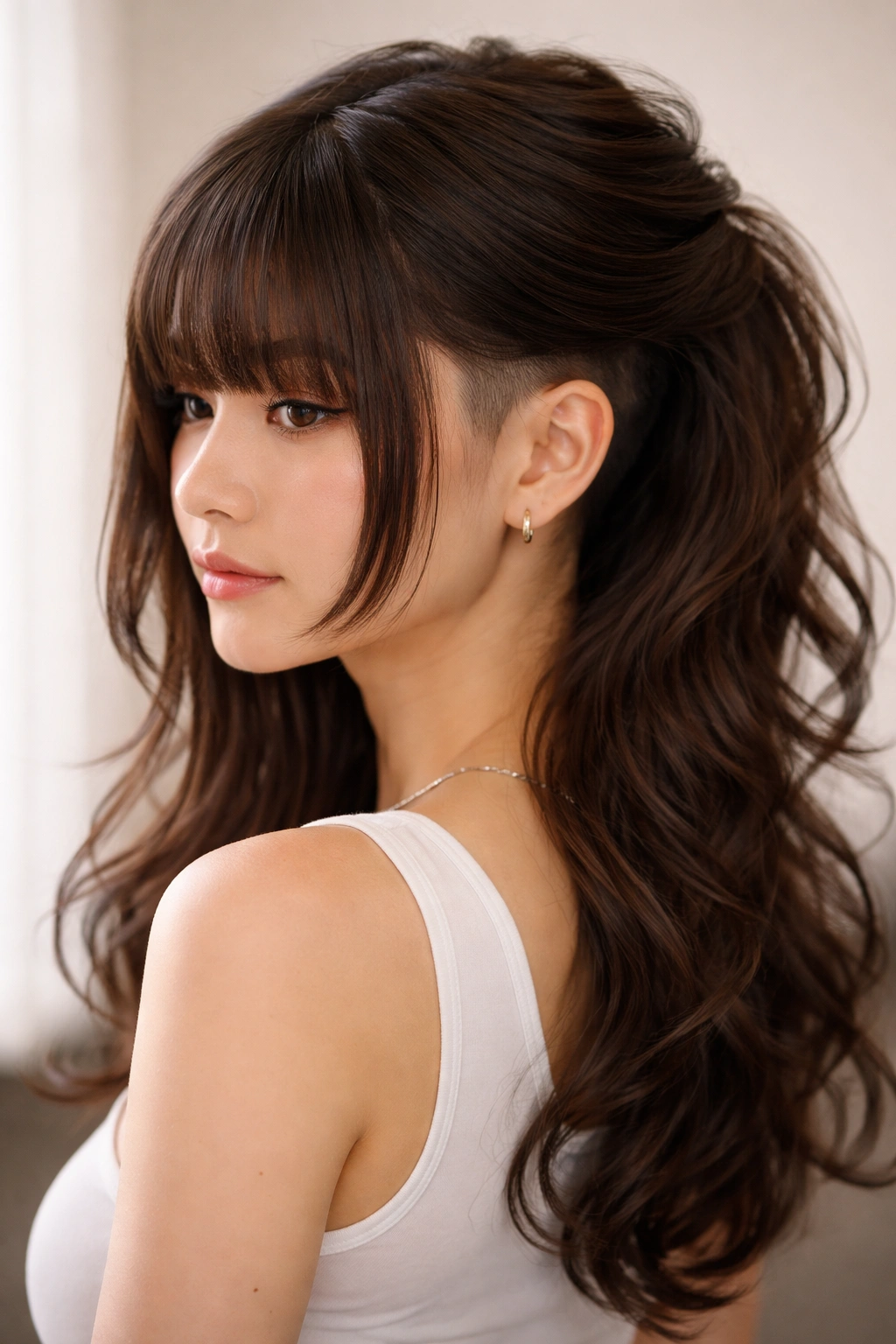
For a bold, artistic take on the hime cut, add an undercut element—shaved or closely clipped sections hidden underneath or along the sides of your hair. When you wear your hair down, the undercut stays completely hidden, but the clever layering and shorter interior lengths create lift and movement that wavy hair desperately needs. It’s an edgy secret that no one sees unless you want them to.
How Undercuts Create Volume for Wavy Hair
An undercut removes weight from underneath your hair, which means your waves don’t get weighed down by density at the base. The shaved or clipped sections allow air to flow through your hair more freely, encouraging your waves to stand away from your scalp rather than lying flat. You get the visual fullness of longer hair on top with the practical benefits of shorter, lighter hair underneath—a true win for anyone whose waves tend to deflate by midday.
Designing Your Undercut Hime
- Bangs and side locks positioned normally, forming the classic hime silhouette
- Undercut sections along the back or sides, clipped short enough that they’re completely hidden by the hair above
- Longer layers on top that fall over the undercut and hide it completely when hair is down
- Slightly asymmetrical placement of undercut sections for a modern, editorial feel
- Maintenance every 4-6 weeks as the undercut grows in and needs refreshing
The styling advantage: once your undercut settles in, your waves will naturally have more volume and movement without any additional effort. You’re literally working with gravity and hair physics instead of against them.
7. Modern Hime with Soft Waves
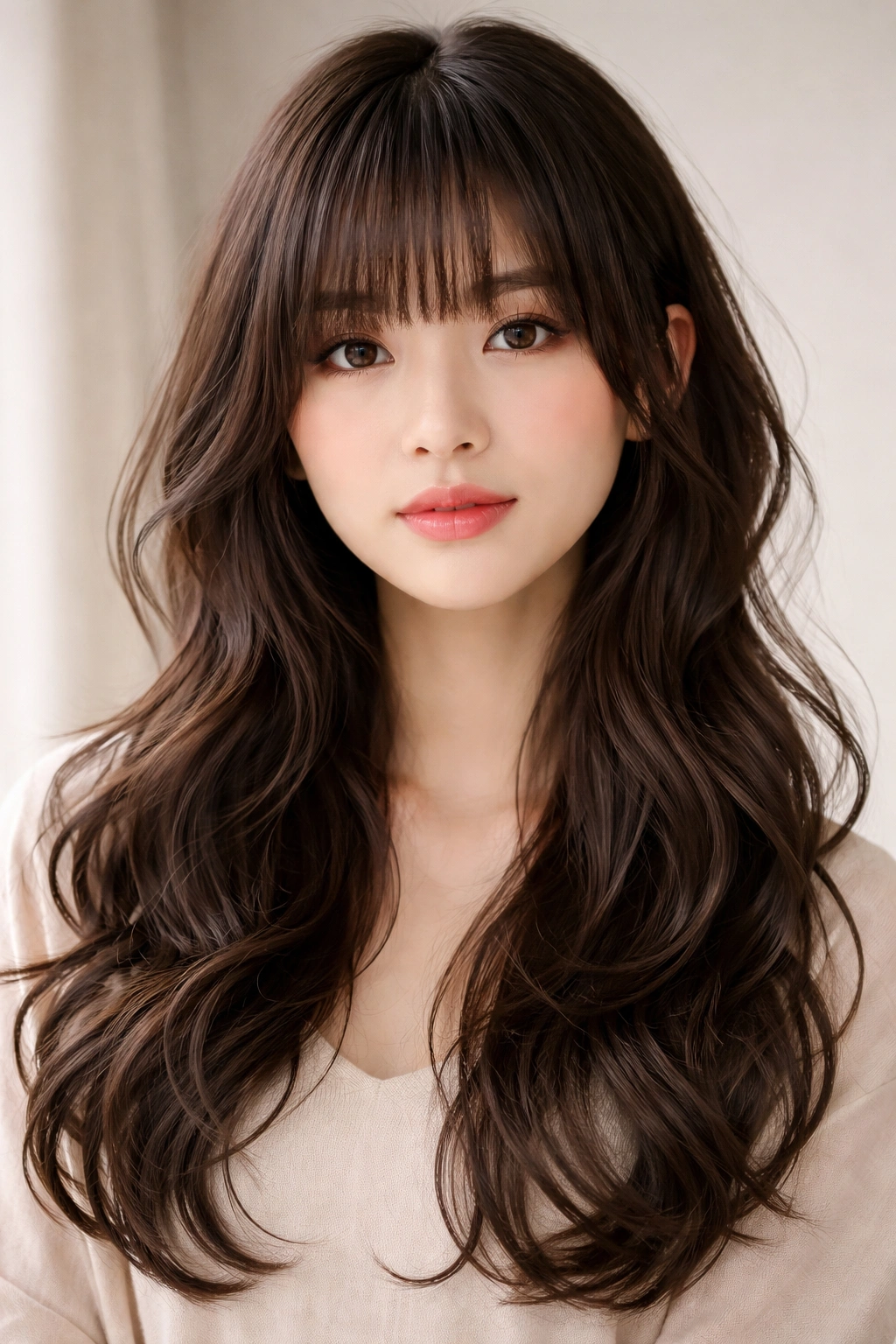
This variation softens the traditionally sharp hime silhouette by rounding the edges, deepening the layers, and embracing a more romantic, undone aesthetic. The bangs are still straight but might be slightly longer, and the side locks are still defined but blend more smoothly into the rest of your hair. Think of it as a hime cut reimagined for people who prefer soft, feminine energy over sharp graphic lines.
Why Softness Works for Wavy Hair Textures
Harder, sharper lines can look severe or contrived on wavy hair, especially if your natural texture is soft and romantic. A modern, softer hime acknowledges your wave pattern and works with it rather than creating tension between the geometric line of the cut and the natural softness of your texture. The result feels cohesive and intentional—like you chose to emphasize the romantic quality of your waves rather than fighting against it.
Achieving the Soft Hime Aesthetic
- Straight bangs that are slightly longer than traditional hime bangs, grazing just at the brow
- Side locks that blend softly into the rest of your layers rather than creating a stark separation
- Generous layering throughout that encourages wave movement and softens any blunt lines
- Textured, rounded ends rather than sharp, blunt edges
- Face-framing pieces that curl around your cheeks and soften your features
Try styling this with a curl cream or wave-enhancing mousse applied to soaking-wet hair, then air-drying or diffusing. The result is a soft, intentional texture that feels modern and effortless.
8. Voluminous Hime with Deep Waves
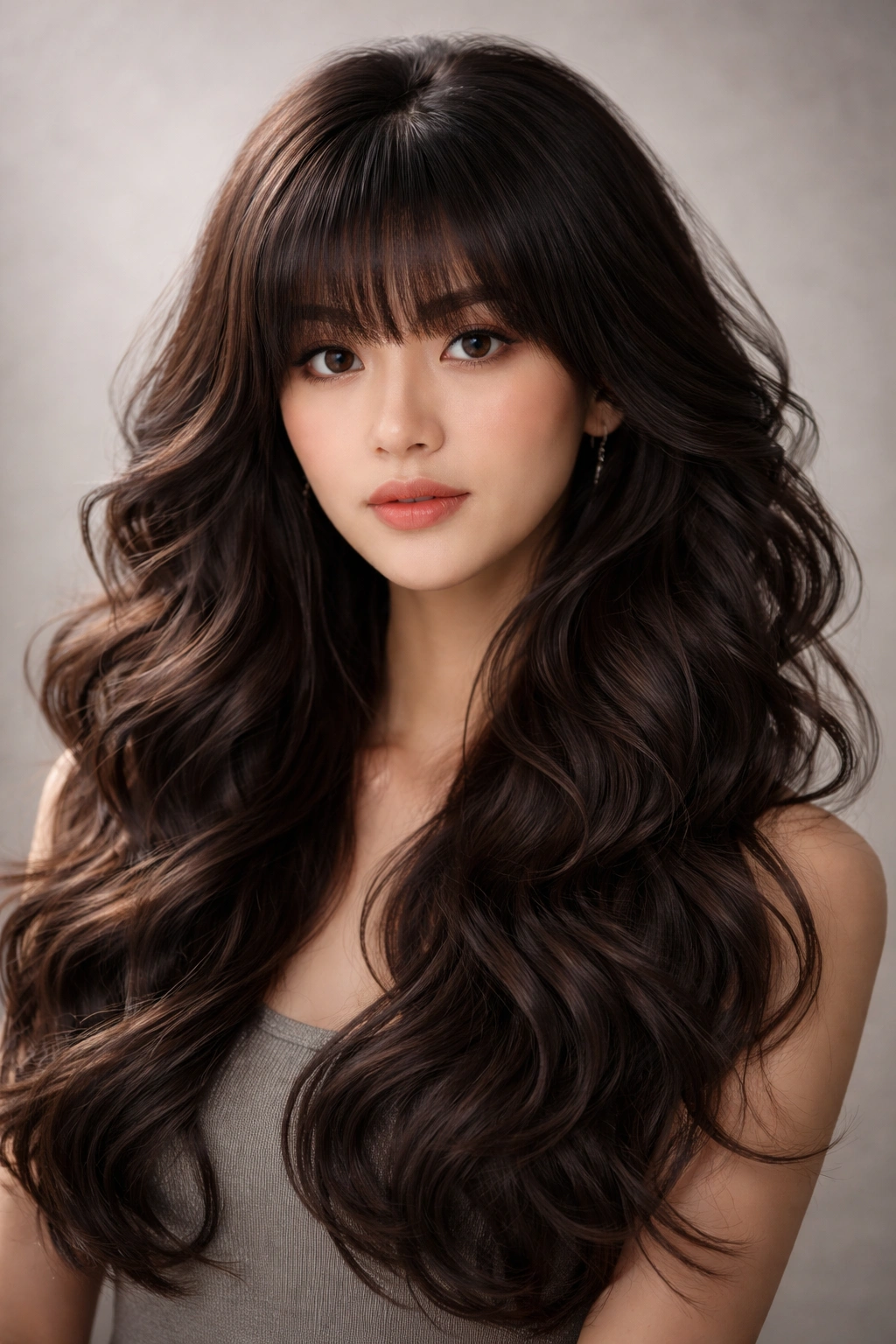
For those who want maximum volume and dramatic wave definition, a voluminous hime cut emphasizes fullness and movement through strategic layering and shape. The side locks are present and defined, but the overall silhouette is wider and rounder through the crown, with deep waves that cascade rather than fall. This version works particularly well if you have naturally wavy or curly hair that you’re embracing rather than trying to straighten.
Building Volume Into Your Hime Structure
The key to a voluminous hime is layering that doesn’t just add texture—it adds shape. Layers are concentrated at the crown and throughout the crown area to maximize lift and height, while longer layers through the mid-lengths and ends encourage waves to cascade outward. Your hair stylist should be cutting strategically to encourage your waves to fall in distinct, separated waves rather than clumping together, which naturally reads as thinner and deflated.
Creating and Maintaining Maximum Volume
- Shortest layers at the crown for maximum lift and height where you want it most
- Graduated layers through the mid-lengths that encourage waves to fall in a cascading pattern
- Deep, structured waves created through the cut itself, not just styling
- Strategic weight removal through choppy or feathered layers rather than blunt cuts
- Volumizing mousse or root-lifting spray applied at the roots while hair is damp for extra oomph
Pro tip: Flip your head upside-down while diffusing to encourage maximum volume, then let your waves cool in that upside-down position before flipping back up. You’ll have a hime cut that practically defies gravity.
9. Hime Bob with Wavy Texture
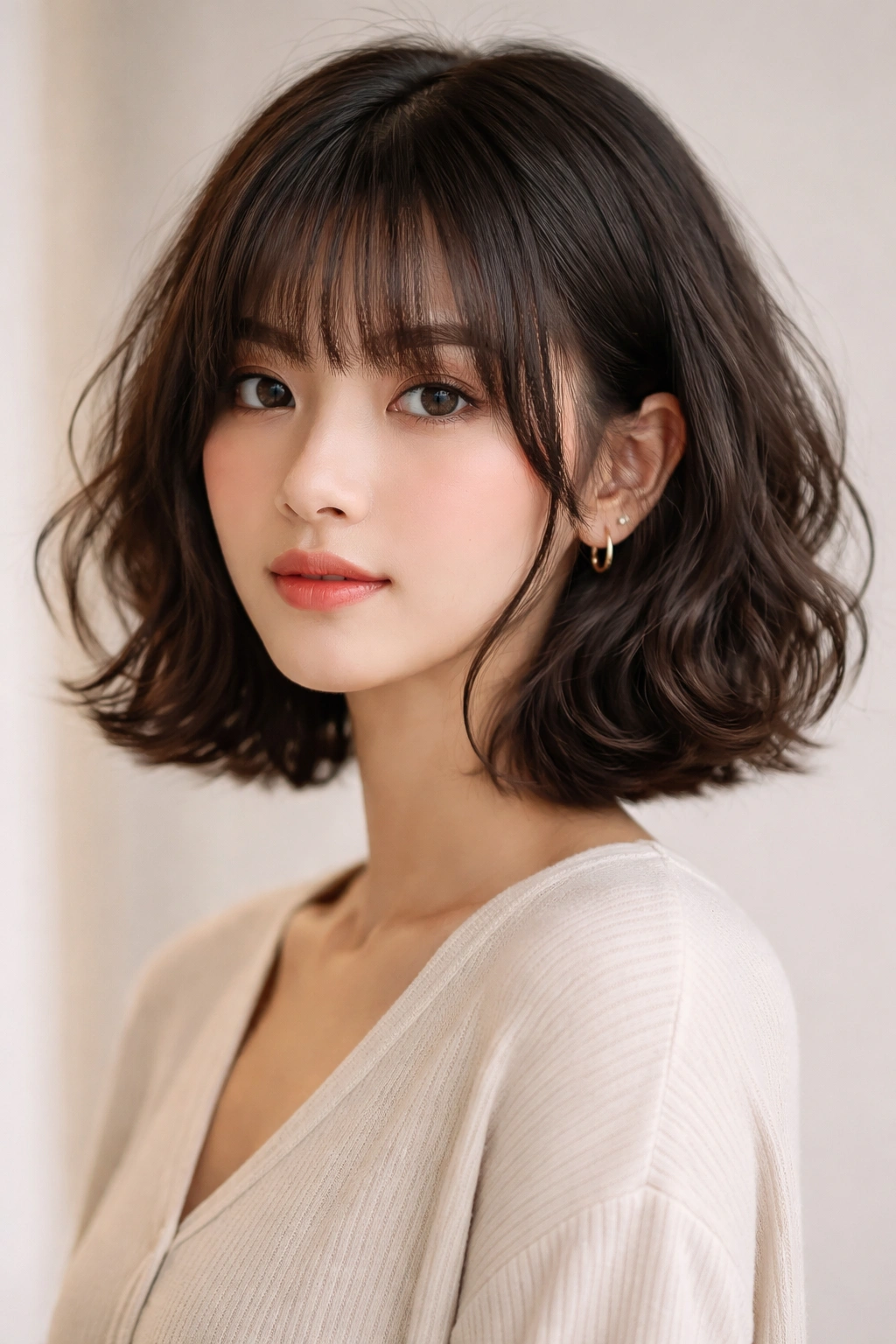
If you want the structure of a bob with the defining elements of a hime cut, this hybrid combines the two. The bangs are straight and defined like a classic hime, and the side locks frame the face, but the overall silhouette is a bob—usually hitting around chin-length or just below. The back is fuller than it would be in a traditional hime cut, and the whole style feels more wearable and less dramatically styled.
Why a Hime Bob Simplifies Styling
A traditional hime cut commits you to longer hair and specific styling. A hime bob gives you similar visual impact with significantly less maintenance and styling time. The shorter length means your waves will naturally have more bounce and volume without you having to do much work. Wash, add a curl product, and you’re done—your waves will probably dry beautifully without assistance.
Building Your Hime Bob
- Straight-cut bangs positioned at mid-forehead or slightly longer
- Side locks that extend just past the jawline, framing your face elegantly
- Round or graduated back that creates a cohesive bob shape rather than a dramatic hime silhouette
- Textured layers throughout that encourage waves and prevent the bob from sitting flat
- Shorter overall length that keeps styling simple while maintaining hime’s defining elements
This version is perfect if you like the idea of a hime cut but worry about committing to longer hair or complicated styling routines.
10. Blended Hime with Tousled Waves
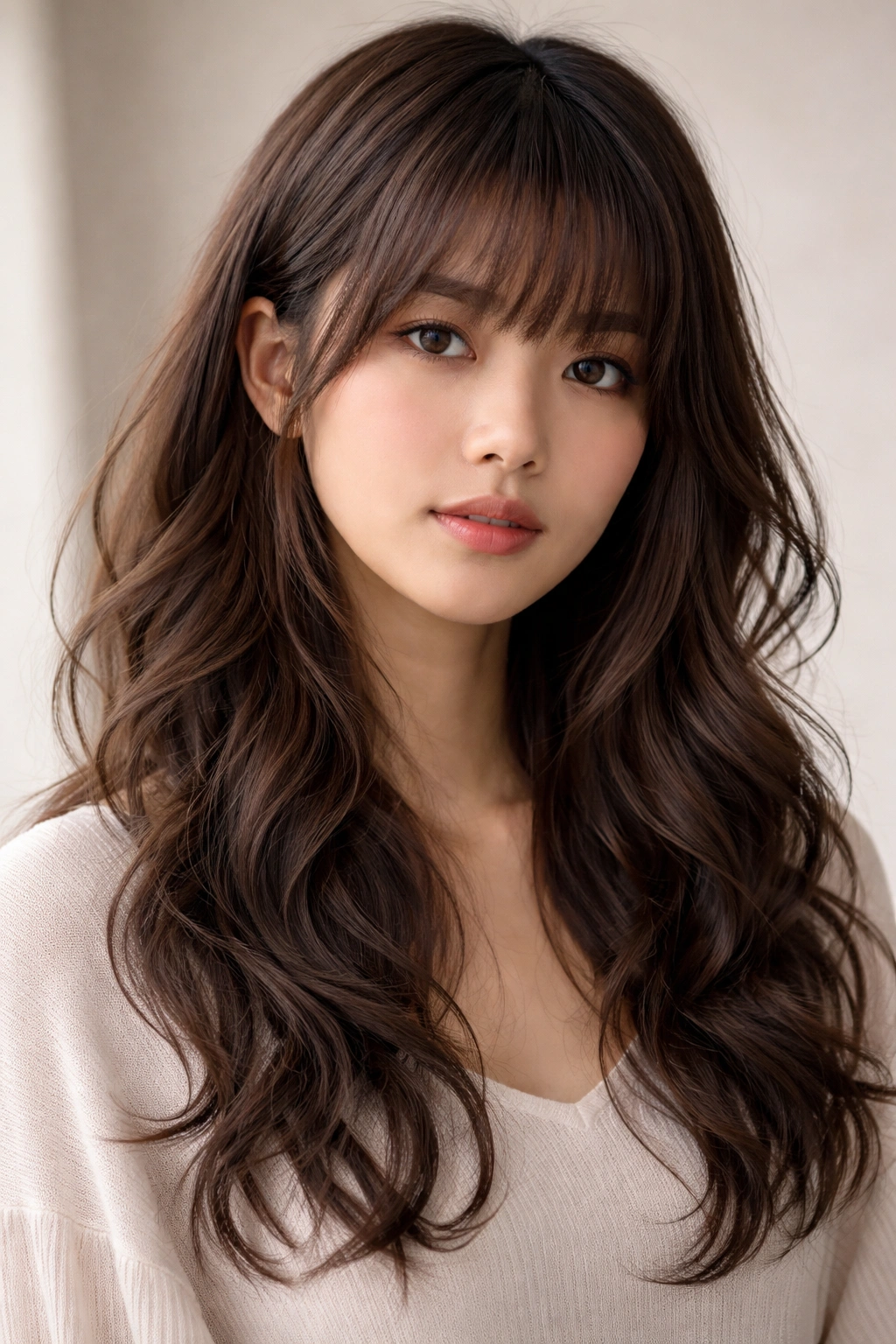
The most fashion-forward, least rigid version of a hime cut, this blended approach softens the lines so thoroughly that it almost doesn’t look like a hime cut at all—until you see how perfectly it’s structured. The bangs blend softly into the rest of your hair rather than creating a sharp line, the side locks are present but subtly defined, and the overall effect is effortless, tousled, and distinctly romantic. It’s a hime cut for people who want the structure without the statement.
Why Blending Works for Contemporary Wavy Hair
Many people see hime cuts and love the concept but worry they’ll look too costume-y or too distinctly styled for everyday wear. A blended hime gives you the structure and visual interest of the cut while looking like your natural waves just happen to fall this way. You get the benefits of a thoughtful haircut without the commitment to a specific, recognizable silhouette that demands styling precision.
Executing a Seamless Blend
- Straight-cut bangs that gradually blend into layers rather than creating an abrupt line
- Side locks that are implied rather than dramatic, created through longer layers on the sides rather than distinct sections
- Heavily layered throughout with choppy, feathered ends that encourage natural wave movement
- Lived-in, undone texture created through the cut itself, not through deliberate styling
- Styling flexibility that lets you wear this as casual or polished as you prefer
Try this styling approach: apply a lightweight, liquid gel to soaking-wet hair, then either air-dry or diffuse depending on your time and preference. Your waves will settle into a beautifully defined, intentional-looking pattern that reads as effortlessly gorgeous rather than high-maintenance.
Final Takeaways
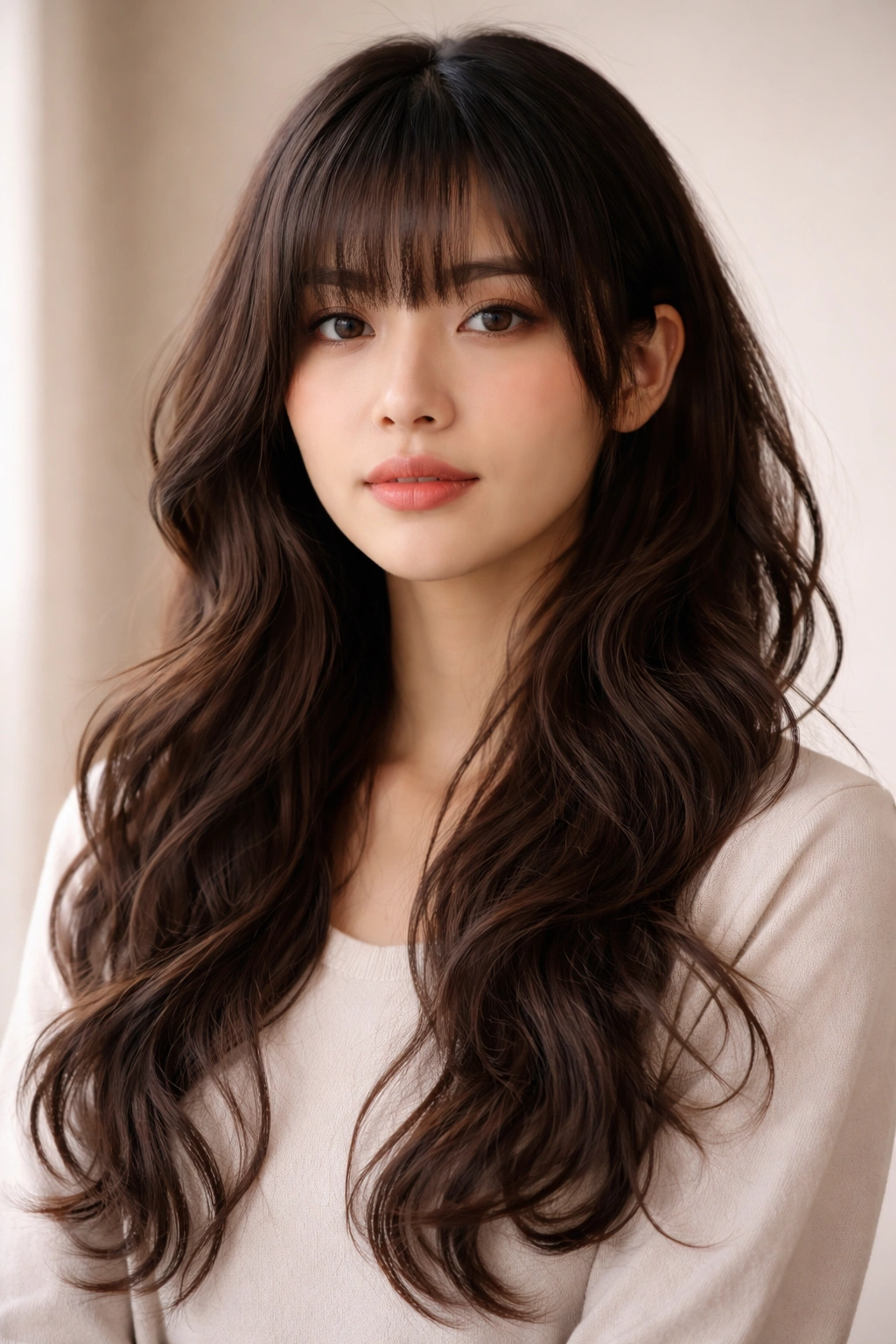
A hime cut on wavy hair isn’t about fighting your texture—it’s about choosing the right version of this classic style that enhances what you already have. Whether you go full-on structured with a classic hime or choose a softer, blended interpretation, the key is communicating clearly with your stylist about your wave pattern and your lifestyle.
Show your stylist photos of the specific version that speaks to you, and crucially, show them photos of your hair when it’s wavy—not straightened. Your stylist needs to understand your actual texture, not what your hair could look like with an hour of styling. Many hime cuts fail for wavy-haired people not because the cut itself is wrong, but because it wasn’t designed with waves in mind.
The best hime cut for you ultimately depends on three things: how much styling you’re willing to do daily, how defined or loose your natural wave pattern is, and what kind of energy you want to project. A voluminous hime with deep waves projects completely different energy than a blended, tousled version. Neither is better—they’re just different expressions of the same basic silhouette. Once you’ve figured out which version resonates with you, trust the cut to do most of the work, and let your waves do what they do best.
