



Copper hair transforms short, wavy cuts into something undeniably striking. Whether your waves are natural or created with styling tools, this warm metallic shade adds dimension, richness, and a touch of bold personality that feels both modern and timeless. The beauty of copper in short wavy hair is how it catches light at every angle—the waves amplify the color’s depth, creating movement and visual texture that flat styles simply can’t match.
What makes copper particularly magical for short wavy hair is its versatility across skin tones. From warm olive complexions to cooler undertones, copper translates beautifully when the right shade is selected. The color plays especially well with the natural highlights and shadows that waves create throughout the cut, giving your hair an almost three-dimensional quality without extra effort. Short wavy styles in copper tend to feel lower-maintenance than longer lengths, yet they deliver maximum impact and visual interest.
The challenge many people face isn’t whether copper would work for them—it’s choosing which style direction to go. Do you want something edgy and textured, or soft and romantic? Shorter and more structured, or longer and more flowing? The following styles showcase the incredible range of short wavy copper hairstyles, from tousled pixie cuts to shoulder-grazing bobs, proving that this color and texture combination works beautifully across every styling approach.
1. Tousled Copper Pixie Wave
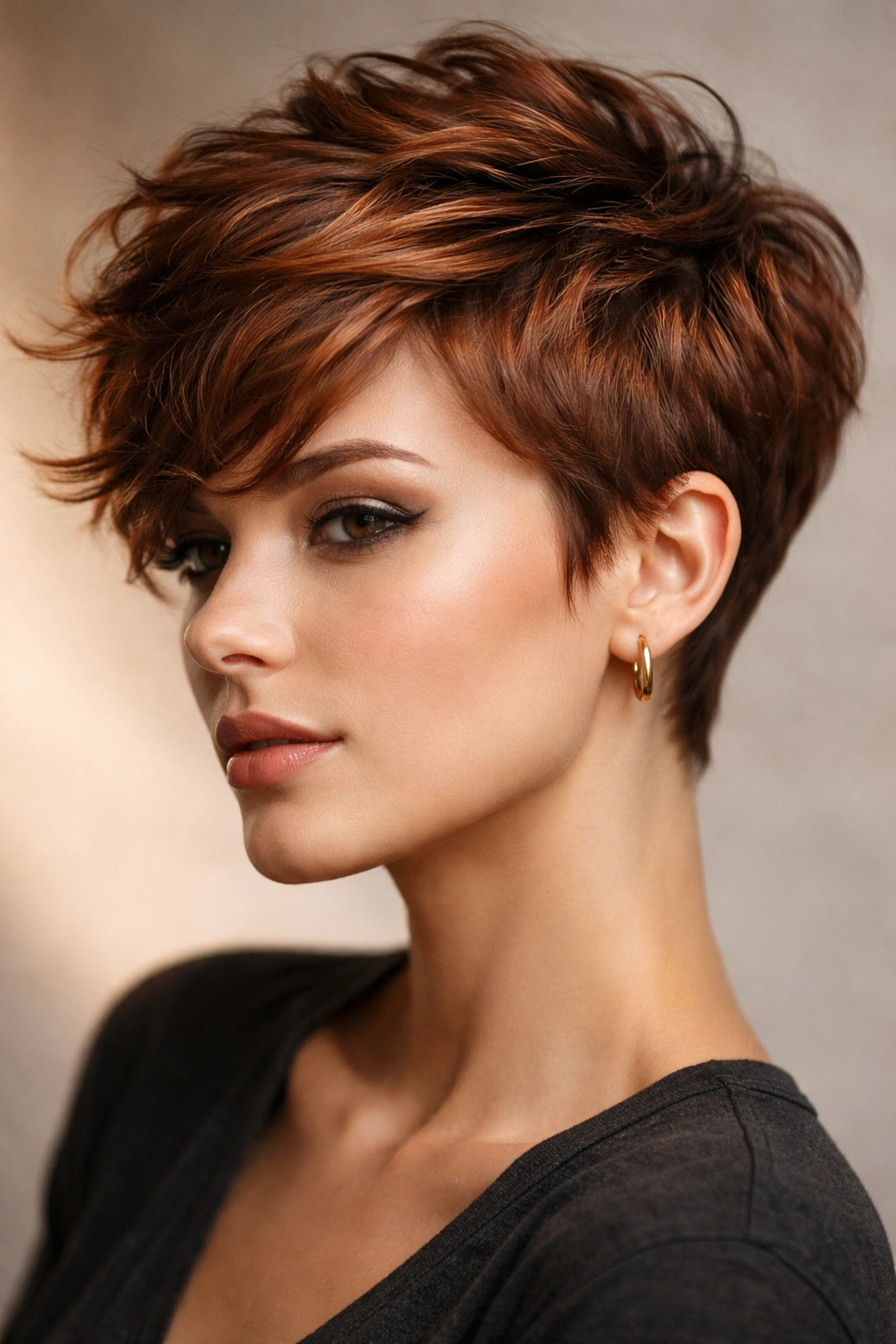
A tousled pixie with copper undertones delivers maximum attitude in minimal length. This style works by keeping the back and sides closely cropped while leaving the top and crown longer, creating natural textured layers that catch the copper tone perfectly. The wavy texture on top adds softness to an otherwise edgy cut, balancing masculine and feminine energy in a way that feels effortlessly cool.
Why This Style Stands Out
The beauty of the tousled pixie wave is how it combines low maintenance with high impact. You’re not fighting a long length while your copper color develops its richness, and the short nature means styling takes just minutes with a bit of texture cream or pomade. The waves create the illusion of more volume than a straight pixie, and the copper deepens in the short hair with less damage risk than longer lengths experience.
How to Get and Maintain It
- Ask your stylist for graduated layers on top, keeping length around 2–3 inches on the crown
- Request clippered sides and back, usually a fade to about ¼ inch
- Use a texture cream or matte pomade to enhance waves and separate strands
- Style while damp, working the product through with your fingers for natural-looking separation
- Schedule a trim every 4–6 weeks to maintain shape and prevent shapelessness
Pro tip: Tousled pixies photograph exceptionally well in natural light, where copper shows its warmest, most dimensional side. Take your color inspo photos outdoors before committing to the cut.
2. Copper Shag with Choppy Waves
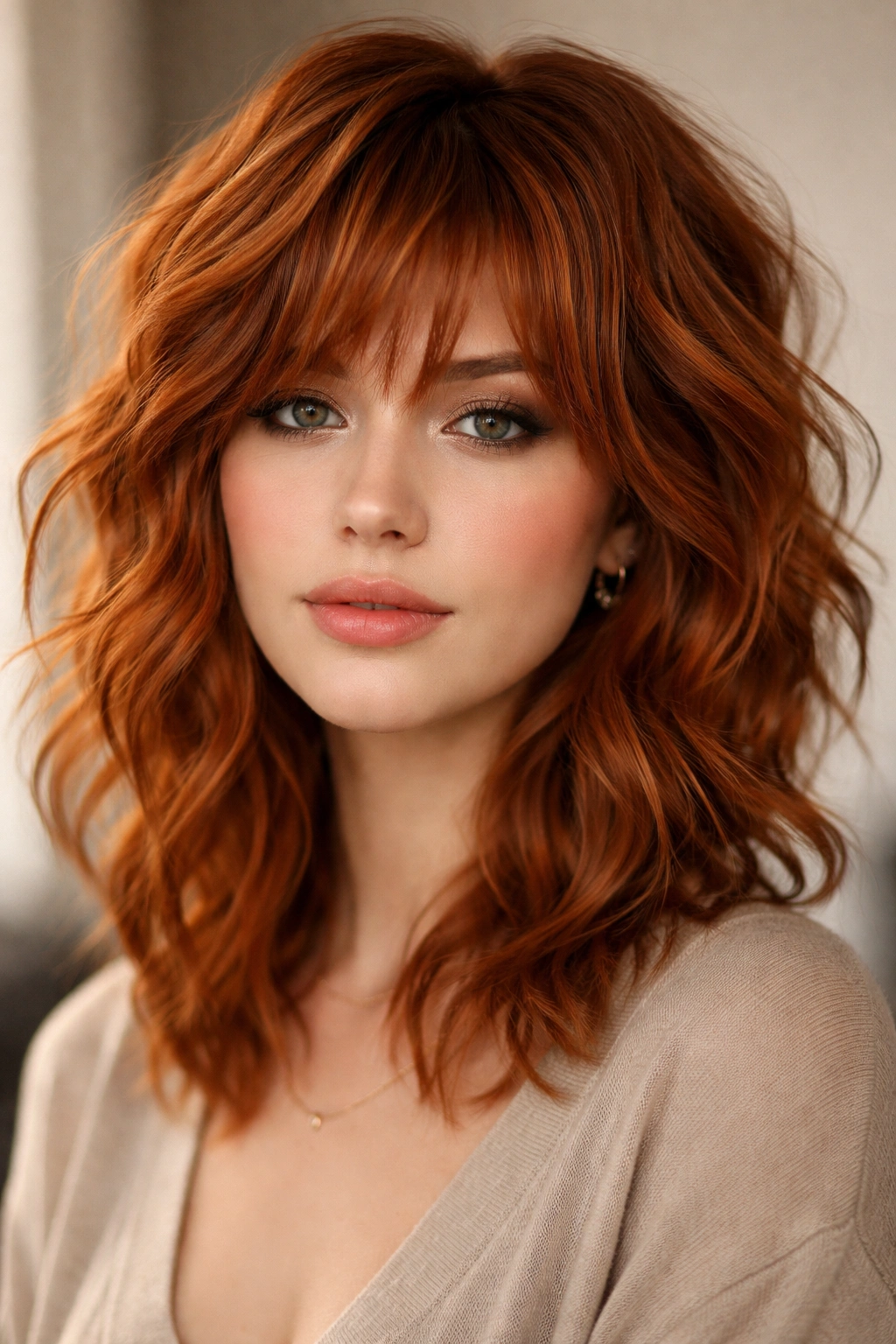
The shag returns, and it’s absolutely perfect for showing off copper. This cut features choppy, razor-textured layers throughout that create immediate volume and movement, especially when paired with natural waves. The shorter front pieces and longer back layers create a playful, lived-in vibe that feels modern without trying too hard.
What Makes It Different
Shags are designed to work with texture rather than against it. When you have waves, a shag stylist can cut the layers at angles that enhance your natural wave pattern rather than forcing your hair into an unfamiliar shape. Copper in a shag cut looks distinctly editorial—like you stepped out of a high-fashion spread rather than your everyday life.
Styling Essentials for Maximum Shag
- Blow-dry with a diffuser attachment to enhance waves while maintaining choppy texture
- Use a texturizing spray at the roots for extra lift and movement
- Embrace a slightly undone aesthetic—perfection defeats the purpose of a shag
- Apply a light finishing spray rather than heavy hold products that flatten layers
- Flip your head while styling to encourage waves and prevent flatness at the crown
Worth knowing: Shag cuts look significantly less shaggy when your copper is brassy or warm-toned versus cooler, more ashy copper. The warmth adds cohesion to choppy layers.
3. Copper Wavy Bob with Textured Ends
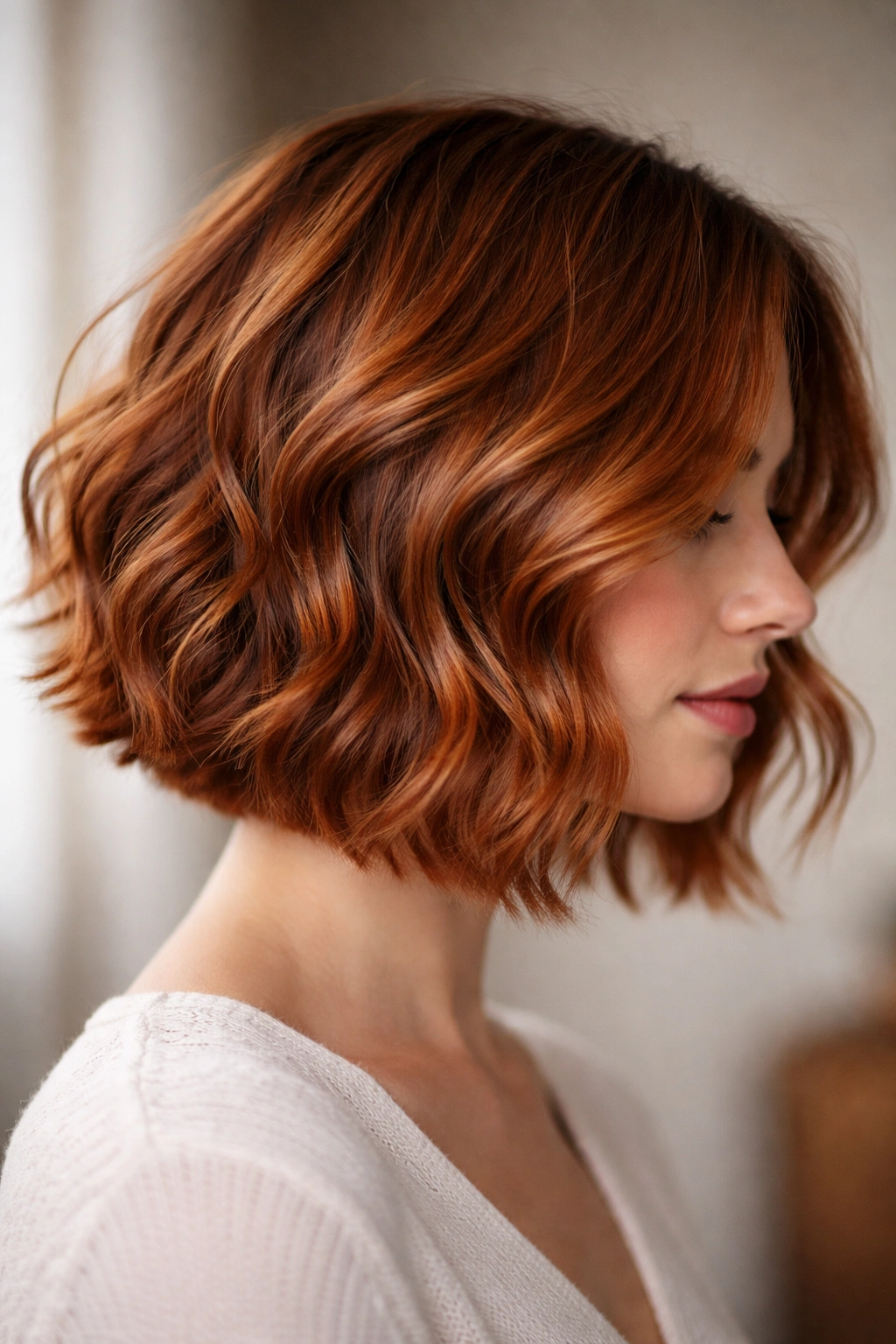
A classic bob shape becomes something entirely different when you add wave texture and copper color. This style sits right at chin length or slightly shorter, with textured, piece-y ends that break up the line and create movement. The copper brings warmth to a traditionally polished cut, making it feel more approachable and less corporate.
Why Copper Elevates the Traditional Bob
Bobs can read as safe, even boring, in darker or more muted tones. Copper immediately makes a bob feel like a statement. The color draws the eye upward to your face, and the textured, wavy ends prevent the style from looking stiff or overly structured. It’s professional enough for work but interesting enough that you don’t feel like you’re wearing a costume.
Bob Maintenance and Styling Tips
- Schedule trims every 6–8 weeks to keep the line clean and prevent shapelessness
- Blow-dry straight first, then use a curling iron to create waves in the textured section
- Apply serum or lightweight oil to the ends to prevent frizz and emphasize the texture
- Sleep on a silk pillowcase to preserve waves overnight
- Experiment with a side part versus a center part to change the vibe entirely
Insider note: Textured bob ends look fuller and thicker than blunt-cut bobs, so if you’ve been worried about your hair looking too fine, textured is your answer.
4. Shoulder-Grazing Copper Waves
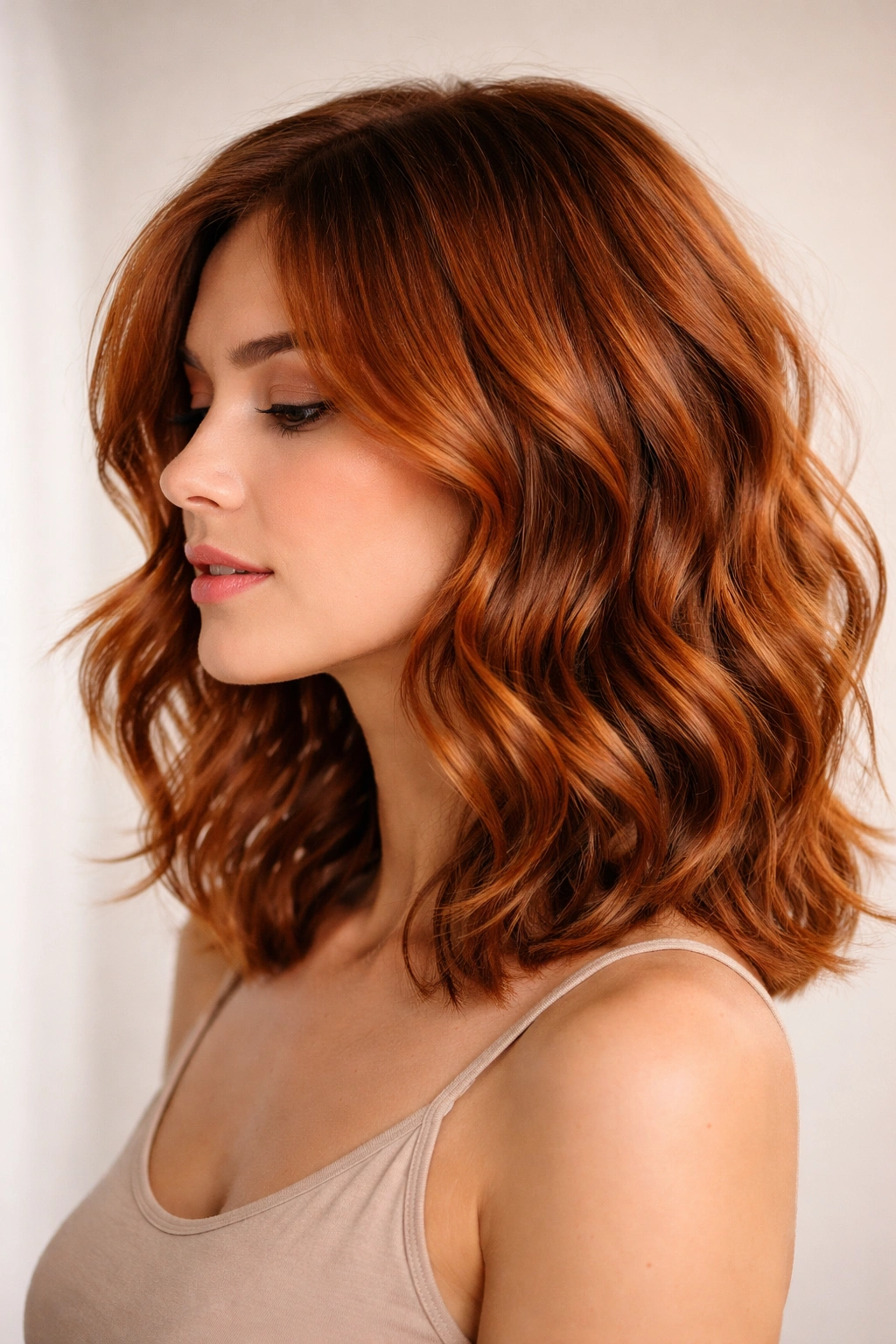
When you want something longer than a pixie but still definitively short, shoulder-grazing wavy layers deliver the perfect middle ground. This length allows your natural waves to shine while keeping the style manageable and modern. Copper at this length is long enough to develop rich depth, short enough to require minimal daily maintenance.
The Science of Shoulder Length and Waves
At shoulder length, your waves have enough weight to hold their shape without needing constant refreshing or styling. The copper tone gets warmer and richer because the hair has more time to develop its color while shorter strands fade out. You get the best of both worlds—enough length for styling versatility, short enough that you’re not spending hours on hair care.
Styling This Length Effectively
- Create waves by blow-drying with a curling iron, curling sections away from the face
- Sleep in loose braids to maintain waves without additional styling the next day
- Use a sea salt spray for texture and a more undone, beachy vibe
- Layer the cut to encourage natural wave pattern and prevent one-dimensional flatness
- Side-part for drama, center-part for balance and sophistication
5. Copper Wavy Lob with Bangs
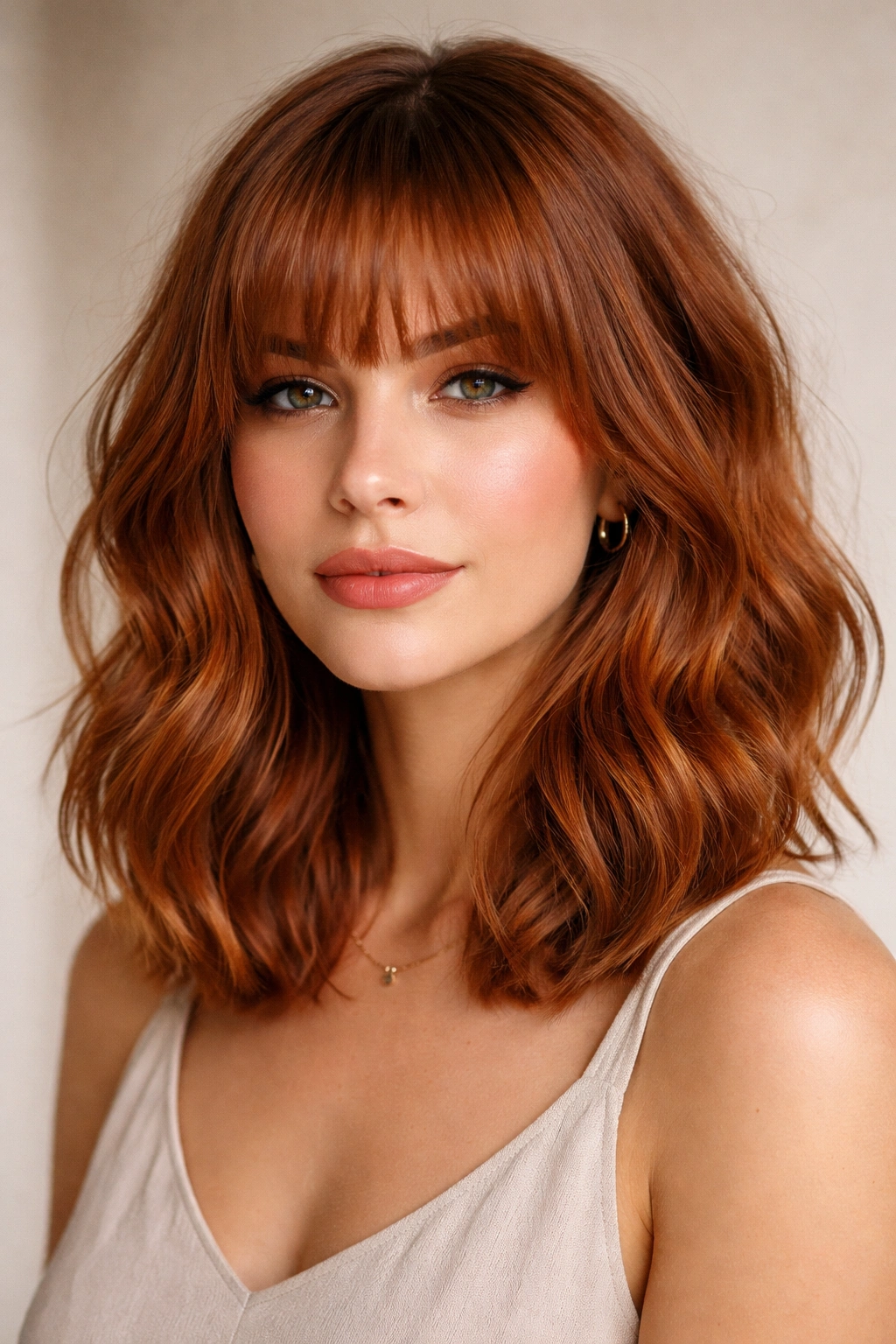
A lob (long bob) with bangs takes on entirely new dimension in copper with waves. The bangs become a design element rather than just a functional feature, framing the face while the waves create depth and dimension throughout. Copper makes this cut feel vintage-inspired without looking costumey or dated.
Bangs Paired with Copper and Waves
Bangs are a commitment, but they’re absolutely transformative for short wavy copper hair. They draw the eye directly to your face, making the overall style feel intentional and fashion-forward. The waves combined with bangs create an interesting juxtaposition—soft texture paired with a defined front edge. Copper’s warmth complements most skin tones, so bangs feel flattering rather than harsh.
Working Bangs Into Your Routine
- Ask for long, wispy bangs that sit below the brow rather than blunt, short bangs
- Blow-dry bangs straight while blow-drying the rest with waves for contrast
- Keep bangs slightly longer to prevent constant trims as your hair grows
- Use a lightweight styling cream on bangs to prevent frizz while maintaining texture
- Blow-dry bangs away from your face initially, then curl them toward your face as a final step
6. Copper Textured Pixie-Bob Hybrid
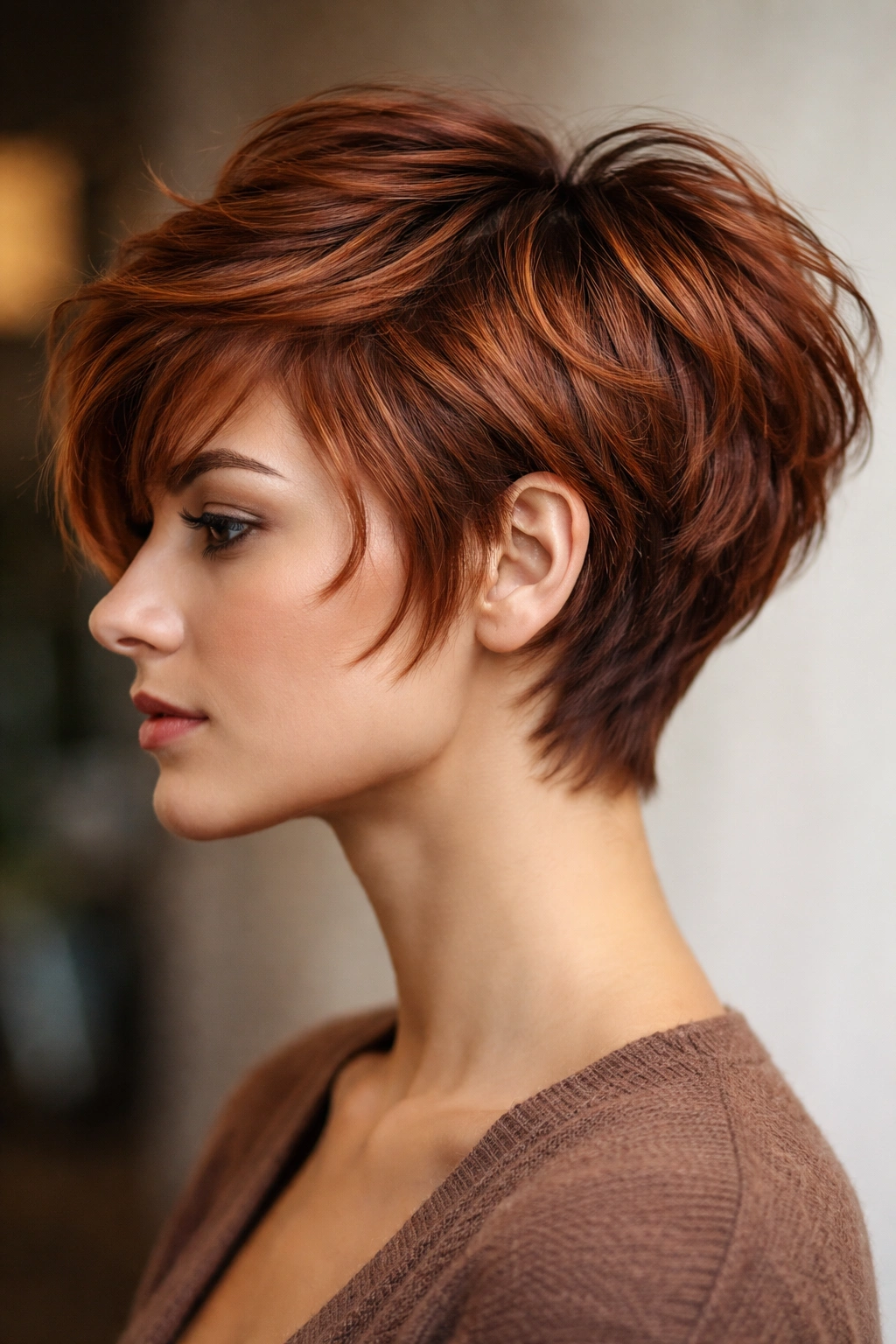
Somewhere between a pixie and a bob lies a hybrid cut that’s gaining serious traction, especially in copper. This style keeps sides and back structured and short like a pixie, but extends the top and front longer like a bob. The result is architectural, dynamic, and absolutely perfect for showcasing copper’s depth.
Why the Hybrid Approach Works
A pixie-bob hybrid lets you have maximum style with minimal styling time. The short back and sides prevent that awkward growing-out phase, while the longer front gives you a more traditionally feminine silhouette. Copper in this cut looks especially expensive and editorial because the color is distributed across different lengths, creating natural dimension.
Cutting and Maintaining the Hybrid
- Work with a stylist experienced in this specific cut—it’s more technical than a standard pixie or bob
- Expect the front to be 3–4 inches longer than the back
- Use a texturizing paste on damp hair to enhance the intentional choppy quality
- Refresh waves with a curling iron if they fall flat throughout the day
- Get shaped trims every 4–6 weeks to maintain the architectural integrity
Pro tip: This cut photographs beautifully from the side, where the length gradient becomes most apparent. Request side-angle photos before and after to truly see the transformation.
7. Wavy Copper Mullet
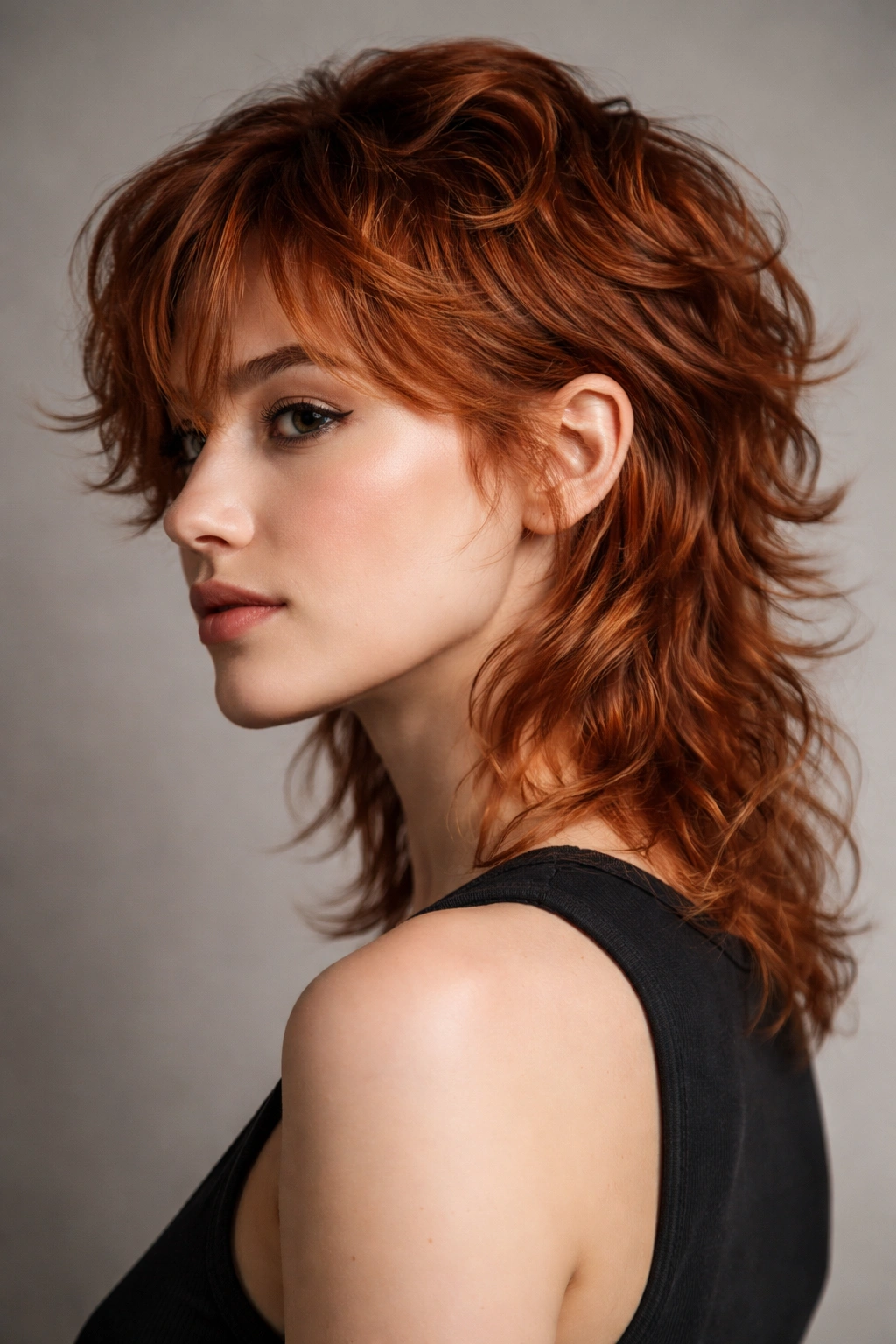
Yes, mullets are back—and in copper with soft waves, they’re genuinely cool, not ironic. A modern mullet in this color feels playful and intentional rather than dated. The wavy texture softens what could otherwise feel too edgy, and copper adds sophistication that grounds the whole look in contemporary fashion rather than ’80s nostalgia.
The Modern Mullet Approach
A new-school mullet with waves is nothing like the ’80s version. The sides are tapered rather than dramatically shorter, the waves are soft rather than heavily permed, and the overall shape is subtle rather than shockingly obvious. Copper’s warmth and dimension help sell the modern interpretation—you’re not evoking the past, you’re creating something entirely current.
Making the Mullet Work
- Keep the ratio subtle—business in front, party in back doesn’t have to be extreme
- Style the front with waves or loose curls, the back with slightly more texture and tousle
- Use a styling cream that defines texture without heavy hold
- The mullet looks best with movement, so avoid overly stiff products
- Own it completely—hesitance reads as ironic rather than intentional
8. Copper Wavy Shag with Undercut
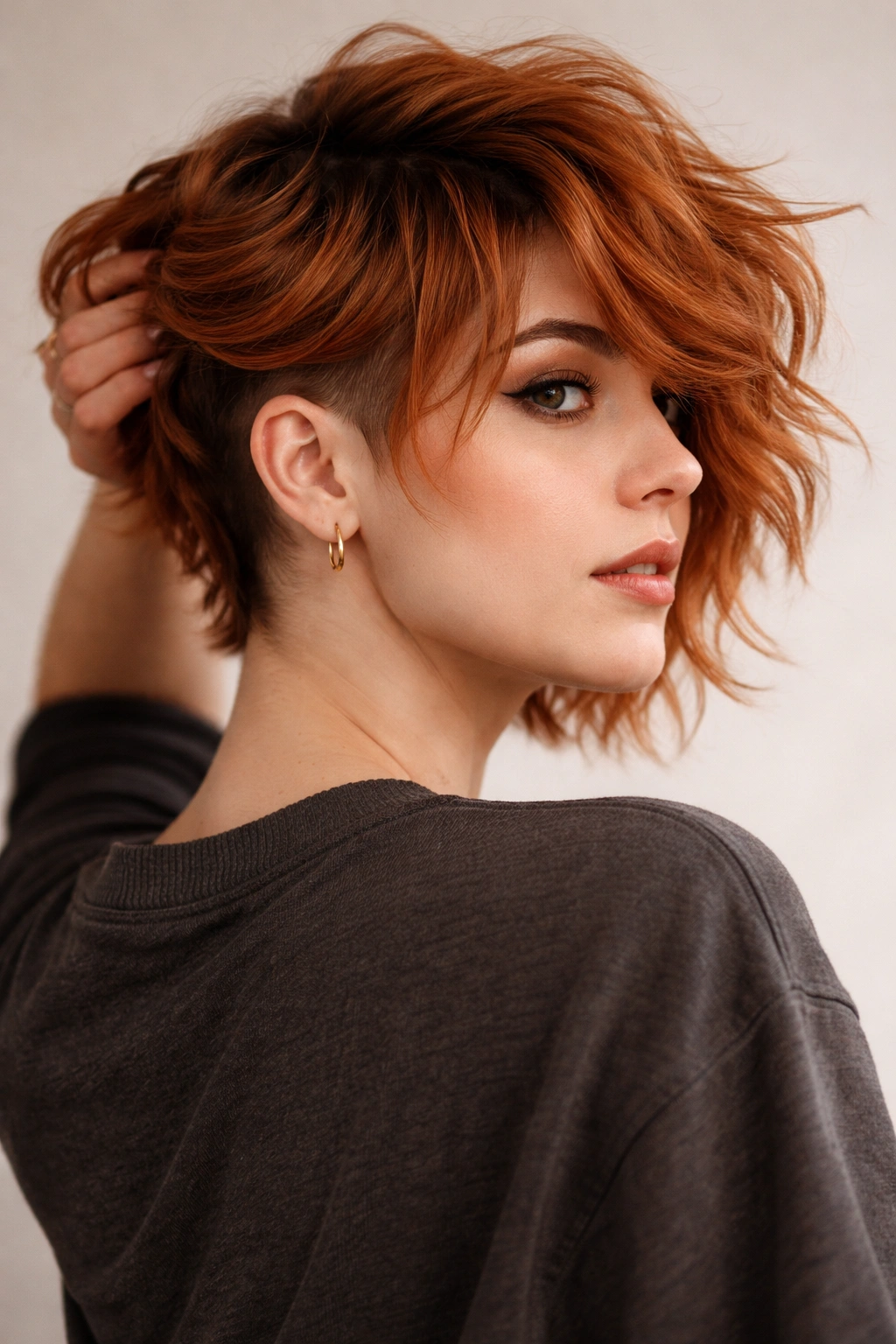
An undercut paired with a shag in copper creates serious visual interest and contrast. The undercut sits hidden most of the time, but when you pull your hair up or it falls just right, it peeks through and adds an edge. Copper throughout keeps it from reading as too aggressive, instead landing as fashion-forward and bold.
The Undercut and Shag Combination
Undercuts work especially well with shag cuts because the choppy layers of the shag draw attention away from the undercut, preventing the overall look from feeling too extreme. Copper adds warmth that humanizes the edginess, making it feel like something a creative person would choose rather than a rebellion. The shag on top can be wavy and textured while the undercut sits sleek and clean beneath.
Styling an Undercut Shag
- The undercut requires monthly trims to maintain shape and prevent awkward regrowth
- Style the shag on top with texture cream or a light salt spray
- If you wear your hair down, the undercut is invisible—embrace this contrast
- Pull your hair into high ponytails or buns to show off the undercut when you want impact
- Use a curling iron on the top shag layers to enhance the wave and texture
9. Copper Wavy Pixie with Longer Crown
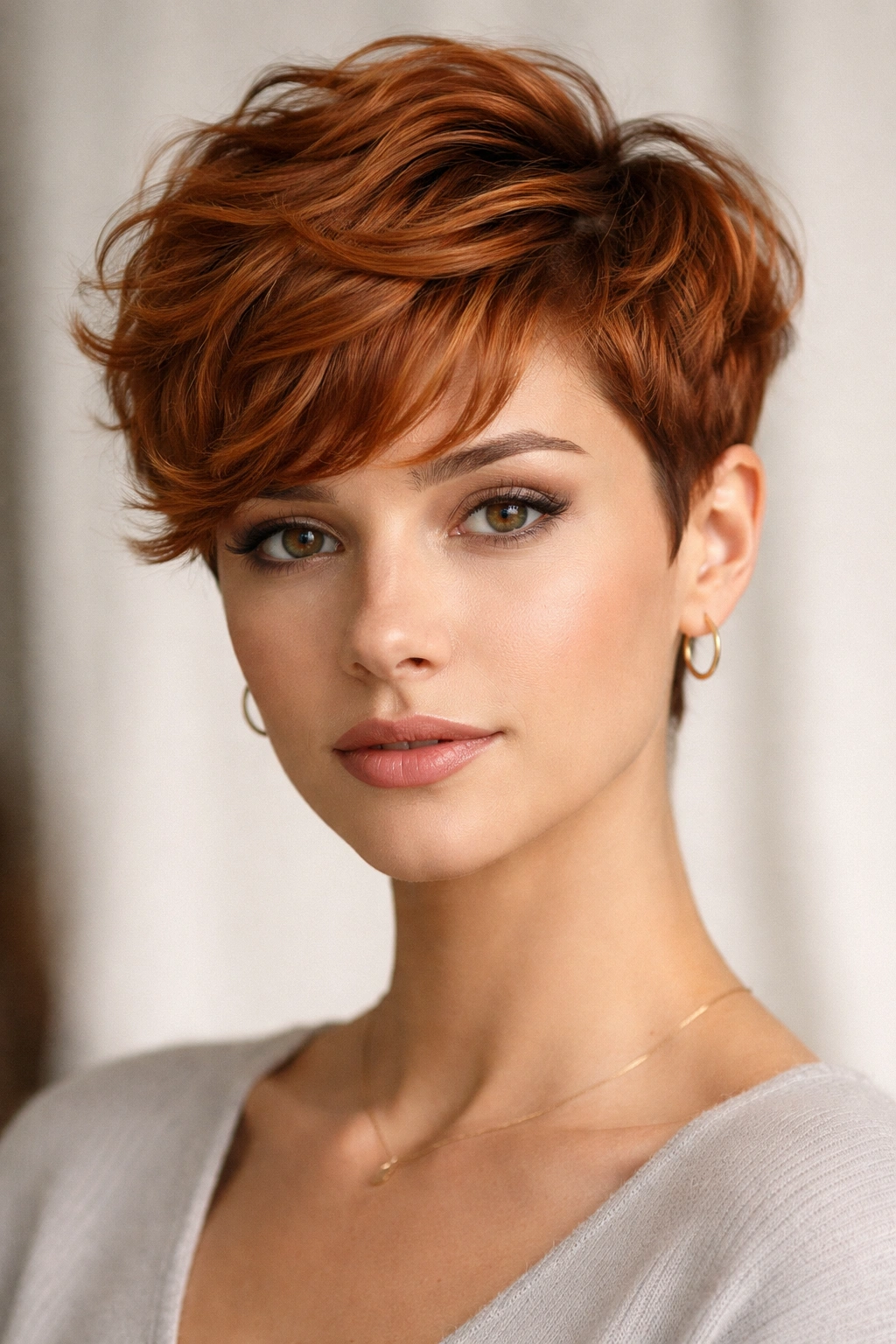
A grown-out pixie with intentional length left on the crown creates beautiful waves and dimension. This isn’t a pixie-bob hybrid—it’s a pixie that’s been allowed to grow slightly without becoming a different style entirely. The sides and back stay trimmed short, but the crown develops length that gets waved or curled for a unique look.
The Intentional Pixie Grow-Out
Rather than letting a pixie grow out awkwardly, this approach gives you permission to maintain length on top while keeping sides managed. In copper, this becomes a style choice rather than a growth phase. The short sides ground the longer crown, preventing it from reading as unkempt, while the waves add softness and femininity.
Making Length on Top Work
- Blow-dry the crown straight first, then use a curling iron for waves
- Apply texture spray before curling to enhance hold and wave definition
- Keep the sides and back trimmed to prevent an overgrown, messy appearance
- Style the crown waves away from your face for a more intentional look
- The length on top gives you options—you can wear it wavy, straight, or even tucked behind your ears
10. Copper Wavy Wolf Cut
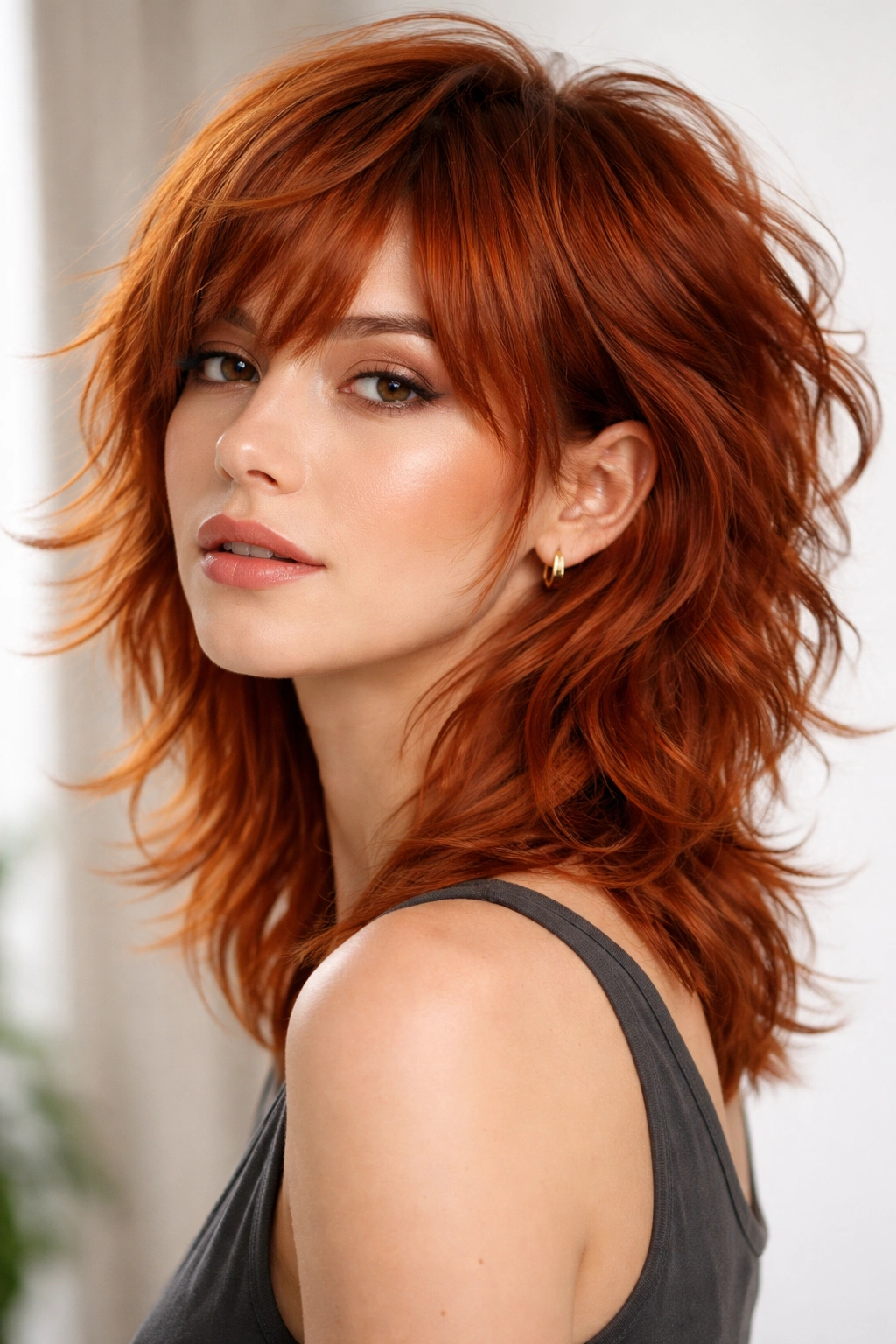
The wolf cut—a mashup of mullet and shag—is perfect for copper waves. Imagine choppy shag layers everywhere combined with shorter, tapered sides and a longer back. It’s edgy, textured, and undeniably cool. Copper in a wolf cut looks effortlessly stylish because the color enhances rather than competes with the already-busy layered structure.
Wolf Cut Details and Dimension
A wolf cut is designed to have maximum texture and movement from every angle. The layers are intentionally choppy and uneven, creating that lived-in shag energy, while the overall shape is tapered for a more contemporary silhouette. Copper’s warmth and shimmer make the layers more visually interesting because different lengths catch light differently.
Styling the Wolf Cut
- Embrace the tousled, textured aesthetic—perfection defeats the purpose
- Use a sea salt spray and scrunch while blow-drying for maximum wave definition
- The cut itself does most of the work; you’re just enhancing what’s already there
- Side-part for edginess, center-part for a slightly softer vibe
- Refresh waves with a curling iron if they fall flat, but the goal is lived-in, not polished
Worth knowing: Wolf cuts require a stylist who truly understands layering and texture. A mediocre wolf cut just looks shaggy and unkempt.
11. Copper Wavy Hime Cut
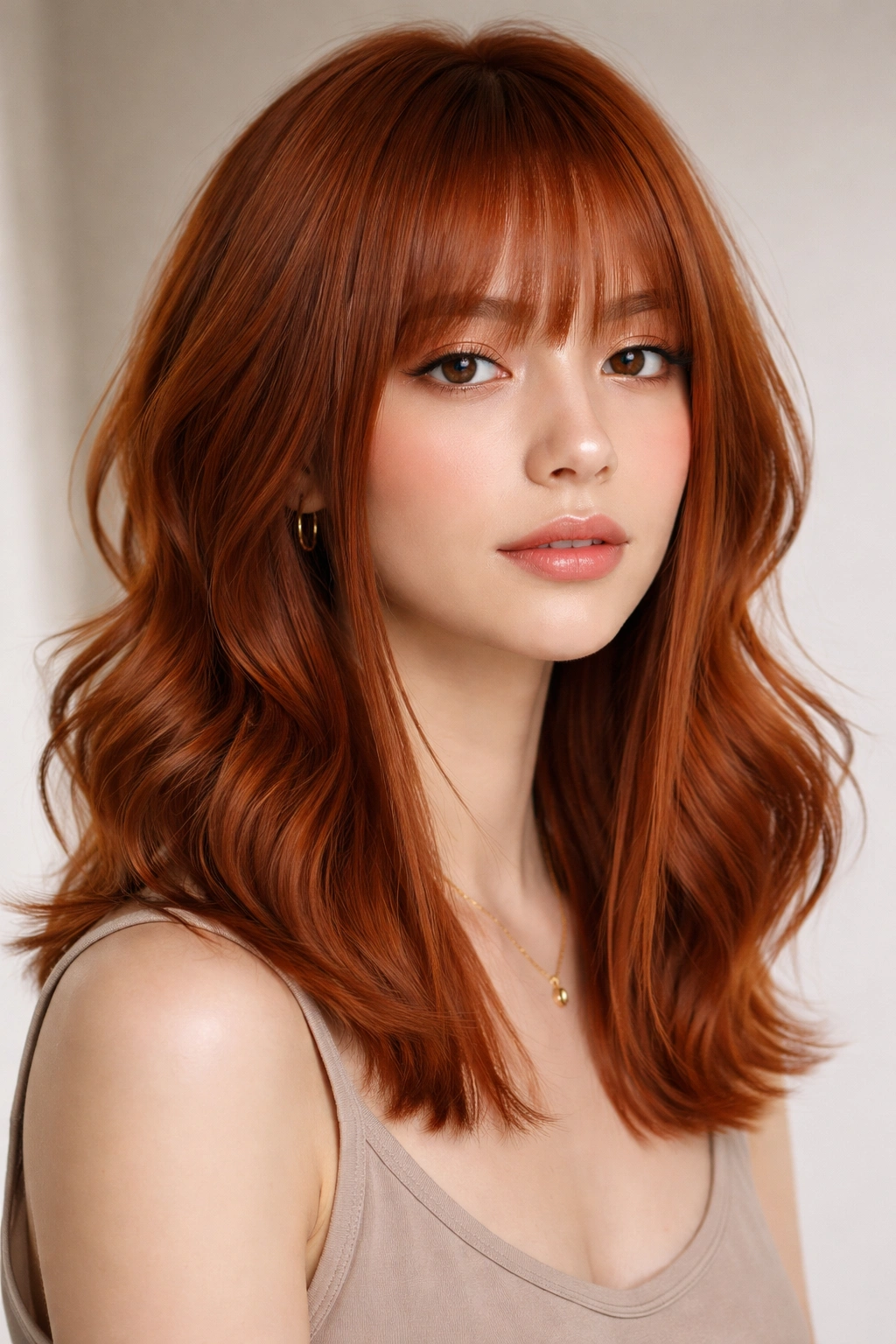
For something more structured and intentional, a hime cut in copper brings that editorial, fashion-forward energy. This Japanese-inspired cut features long pieces in front, shorter length in back, and straight front sections that frame the face. Pair it with waves throughout the back and crown, and you get a striking juxtaposition of structure and softness.
Hime Cut Structure and Styling
The hime cut is all about intentionality and clean lines paired with softer texture. The front pieces can be straight while the back is wavy, creating visual interest and preventing the overall look from feeling too geometric. Copper makes this cut feel contemporary rather than costume-like, grounding it in current fashion rather than pure fashion history.
Creating the Hime Effect
- Ask your stylist for long, face-framing pieces that sit at least jaw-length or longer
- Keep the back significantly shorter, creating obvious length contrast
- Style the front pieces straight or with subtle waves for softness
- Use a flat iron on the front for definition and a curling iron on the back for texture
- The contrast between straight front and wavy back is what makes the cut work
12. Copper Wavy Asymmetrical Bob
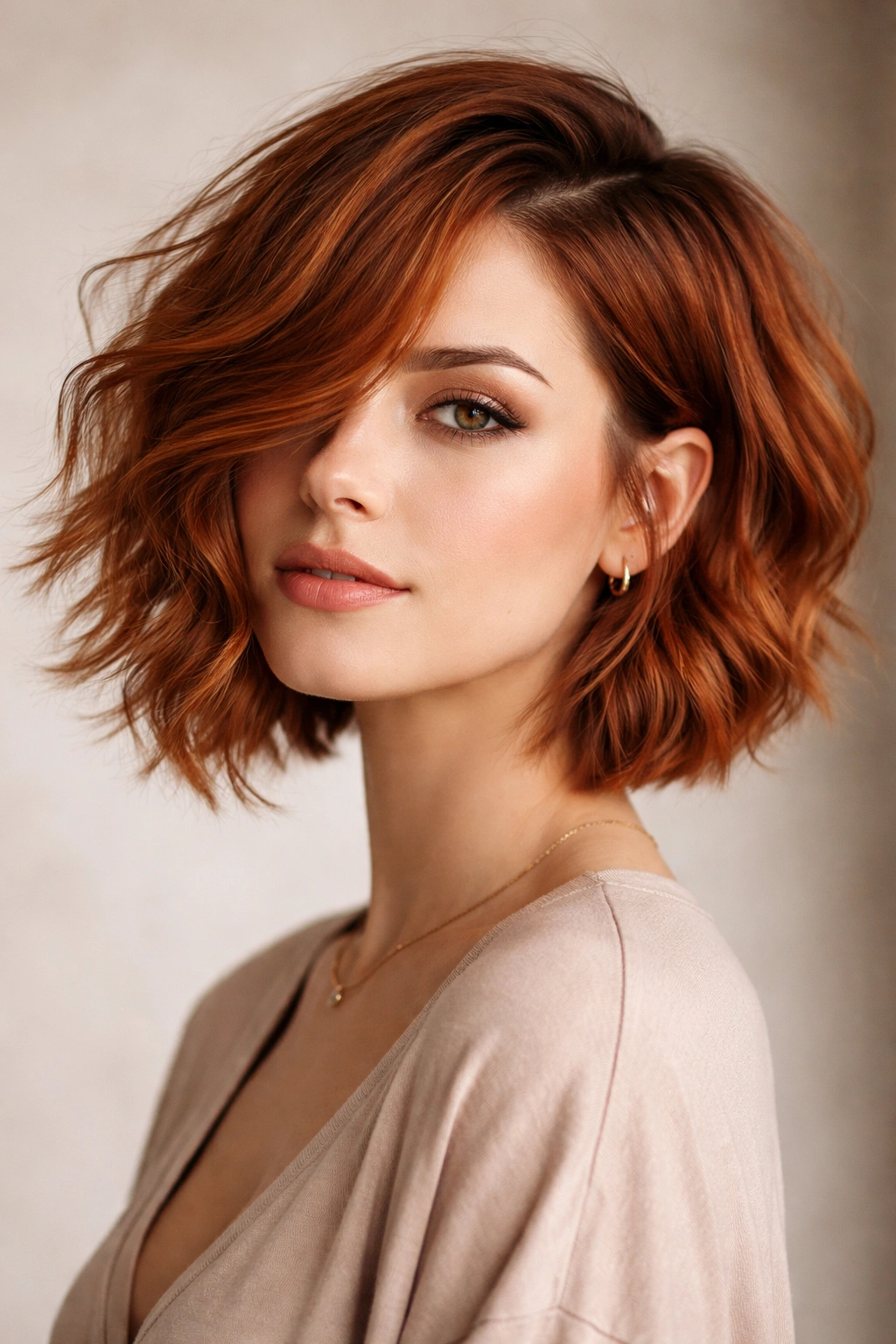
An asymmetrical bob with waves in copper feels modern and slightly artistic. One side sits longer than the other, creating an off-balance silhouette that’s undeniably cool. The wavy texture prevents the asymmetry from reading as too sharp or aggressive—instead, it softens the geometry while maintaining the edgy shape.
Asymmetrical Bob Appeal
Asymmetrical cuts automatically read as intentional and fashion-forward, especially in a striking color like copper. The waves add softness that balances the sharp silhouette, creating something that feels both bold and wearable. Copper’s warmth and depth work perfectly with asymmetrical shapes because the color itself adds visual interest that complements rather than competes with the cut.
Wearing and Styling the Asymmetrical Bob
- The longer side can be tucked behind the ear or styled away from the face for drama
- The shorter side can be air-dried wavy or styled with a curling iron for defined waves
- Side-parting is essential—it emphasizes the asymmetry rather than hiding it
- Use texture spray on both sides, but style them differently for maximum contrast
- This cut is perfect for people who want something daring without being extreme
13. Copper Wavy Curtain Cut
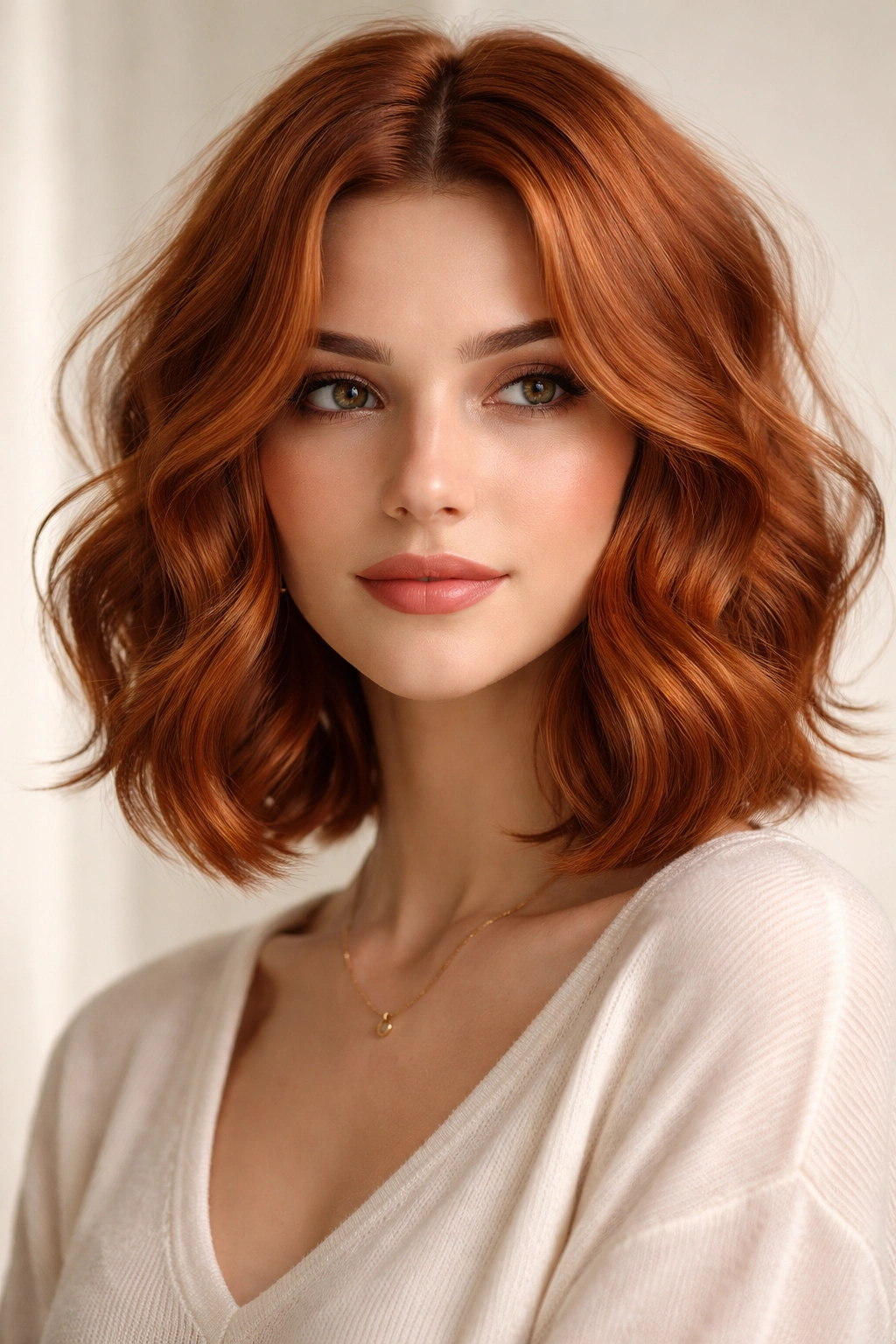
The curtain cut—parted down the middle with longer pieces framing the face—becomes soft and romantic in copper with waves. The waves flow toward the face from the center part, creating a flattering frame that works beautifully with copper’s warm tones. This style is slightly longer than a true short cut, but still definitively short compared to mid-length or long hair.
Curtain Cut Classic Appeal
Curtain cuts have been around for decades because they’re endlessly flattering and work with virtually every face shape. Adding waves and copper elevates the classic into something that feels current and intentional. The center part draws attention to your face, which is especially gorgeous when framed by warm copper waves.
Styling the Curtain Cut
- Blow-dry the curtains away from the face initially, then curl them gently back toward the face
- Use a lightweight styling cream to define waves without frizz
- Sleep on braids to maintain wave pattern overnight without additional styling
- The waves should curve slightly away from your face rather than sticking straight out
- This cut works beautifully with or without bangs—experiment to see what feels right
14. Copper Wavy Textured Bob with Face-Framing Layers
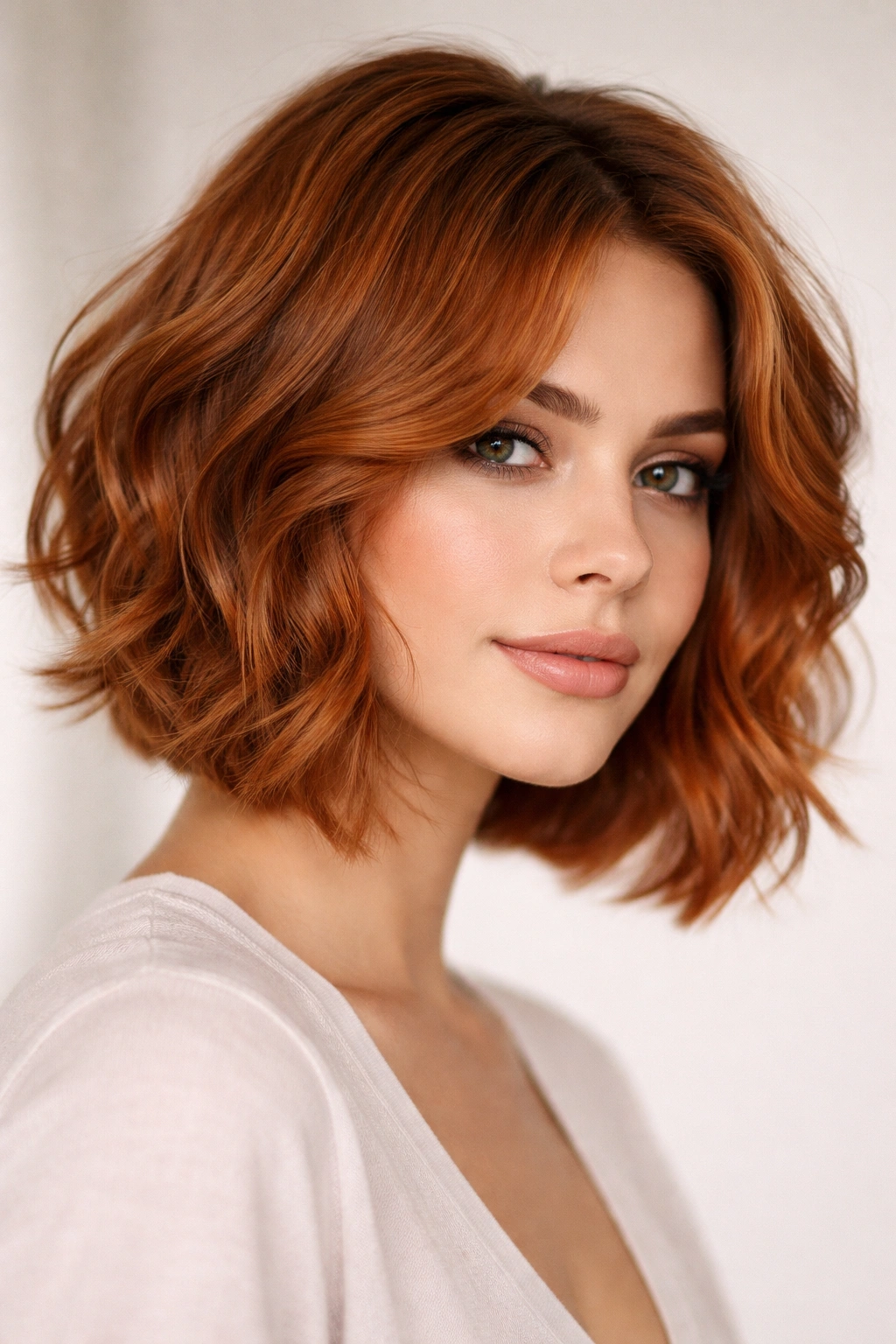
End with a fuller, more textured bob than the earlier simple bob style. This version features substantial internal layering that creates texture and movement throughout, not just at the ends. Shorter, choppy face-framing pieces work alongside the longer back layers, creating dimension and preventing any hint of flatness. In copper, this textured approach catches light at multiple angles, making the color look rich and expensive.
Layered Texture and Light Reflection
The difference between a simple bob and a highly textured, layered bob is the amount of dimension and movement throughout the cut. The textured version has short layers scattered throughout that create visible texture and prevent the bob from looking like a solid block. Copper in this cut looks especially dimensional because light bounces off each individual layer, emphasizing the color’s depth and warmth.
Achieving Maximum Texture
- Ask your stylist for choppy, razor-textured layers throughout, not just at the ends
- Request shorter face-framing pieces that sit shorter than the rest of the bob
- Use a texturizing spray before blow-drying to enhance the layered effect
- Blow-dry with a diffuser attachment to encourage waves and texture
- Apply texture cream to damp hair, working it through with your fingers for separation
Pro tip: This textured, layered bob looks best with slightly undone styling. Heavy-handed blow-drying and flat-ironing defeats the purpose of all that intentional texture.
Final Thoughts
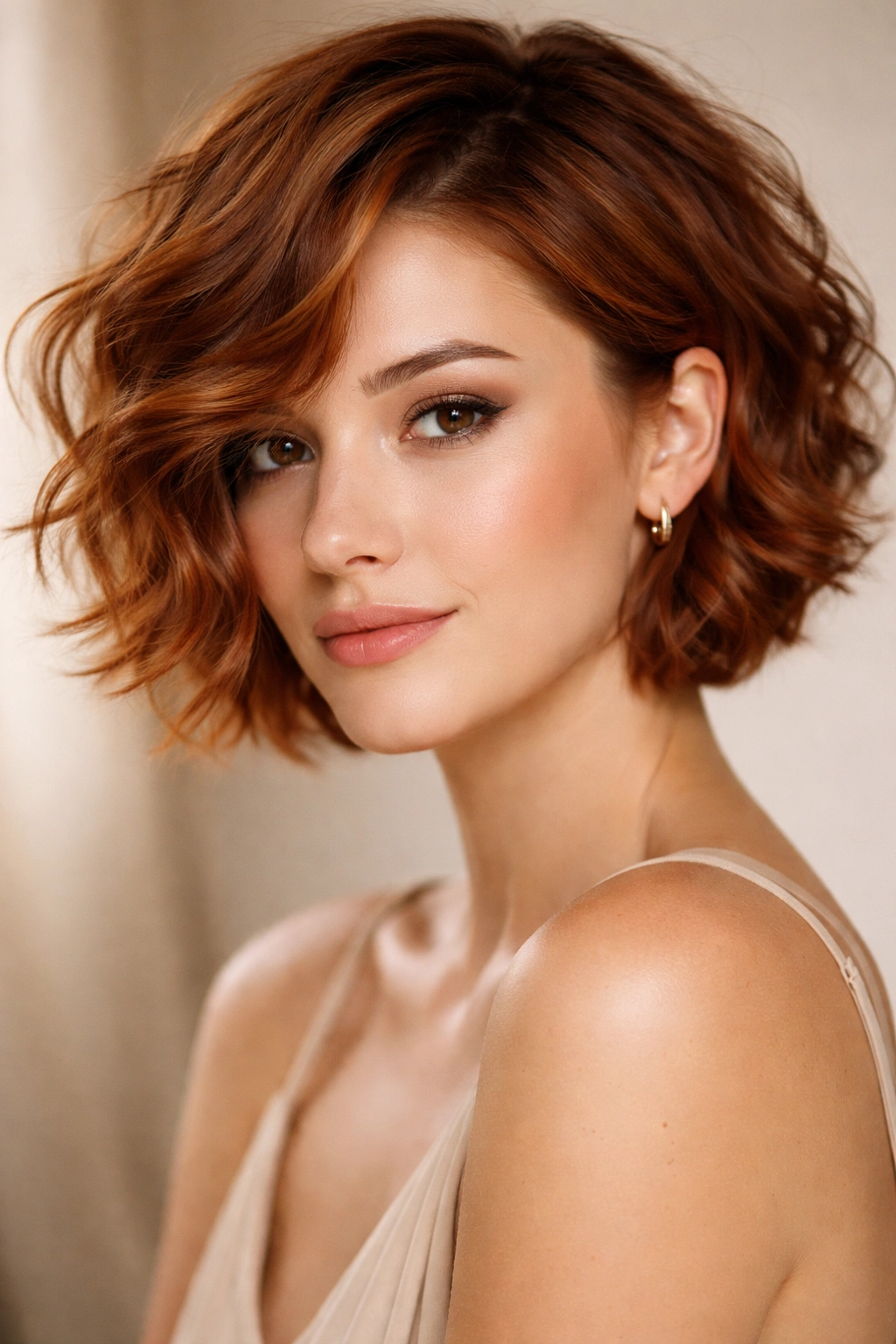
Copper in short wavy hair is a combination that delivers serious impact without requiring extreme maintenance or daily styling commitment. Whether you choose something edgy and textured like a shag or wolf cut, something classic and refined like a textured bob, or something bold and unconventional like an asymmetrical cut, the copper color amplifies the waves’ natural dimension and creates a look that feels intentional and current.
The key to making any of these styles work is finding a colorist and stylist who truly understand what you’re after. Bring reference photos of both the cut and the copper shade—the color makes an enormous difference in how the cut reads, and the cut shapes how the color displays. Short wavy copper hair is a commitment to looking interesting and distinctive, so choose a style that aligns with how much effort you’re willing to invest daily in styling and maintenance.
From there, it’s about embracing the texture and dimension you’ve invested in. These styles look best when you’re not fighting them—when you’re using texturizing products instead of smoothing everything flat, when you’re letting waves develop naturally rather than over-managing them into submission. Short wavy copper hair is inherently striking; your job is just letting it be exactly what it is.
