



Braids have been central to Black beauty culture for centuries—they’re a way to celebrate heritage, protect natural hair, and express individual style all at once. But when you have wavy hair, the game changes. Wavy texture brings its own rhythm and flow, and the right braid style can showcase those beautiful waves while keeping your hair healthy and looking intentional.
The beauty of braiding wavy hair lies in the interplay between structure and movement. Unlike stick-straight hair, your waves create natural dimension within the braid, giving the finished style more texture, depth, and visual interest. Whether you’re looking for a protective style that lasts weeks, a casual weekend look, or something statement-making for a special occasion, there’s a braid style perfectly suited to wavy hair’s unique characteristics.
What makes a braid work well on wavy hair isn’t just about technique—it’s about understanding how your texture will interact with the braid pattern, which sections will frame your face best, and how to maintain the style so it looks fresh and intentional throughout its wear time. The braids in this guide range from intricate, multi-dimensional styles to surprisingly simple variations that don’t require hours in the chair. Each one is designed to complement wavy texture, protect your natural hair from daily wear and tear, and let you walk out feeling confident and beautiful.
1. Knotless Box Braids with Wave Definition
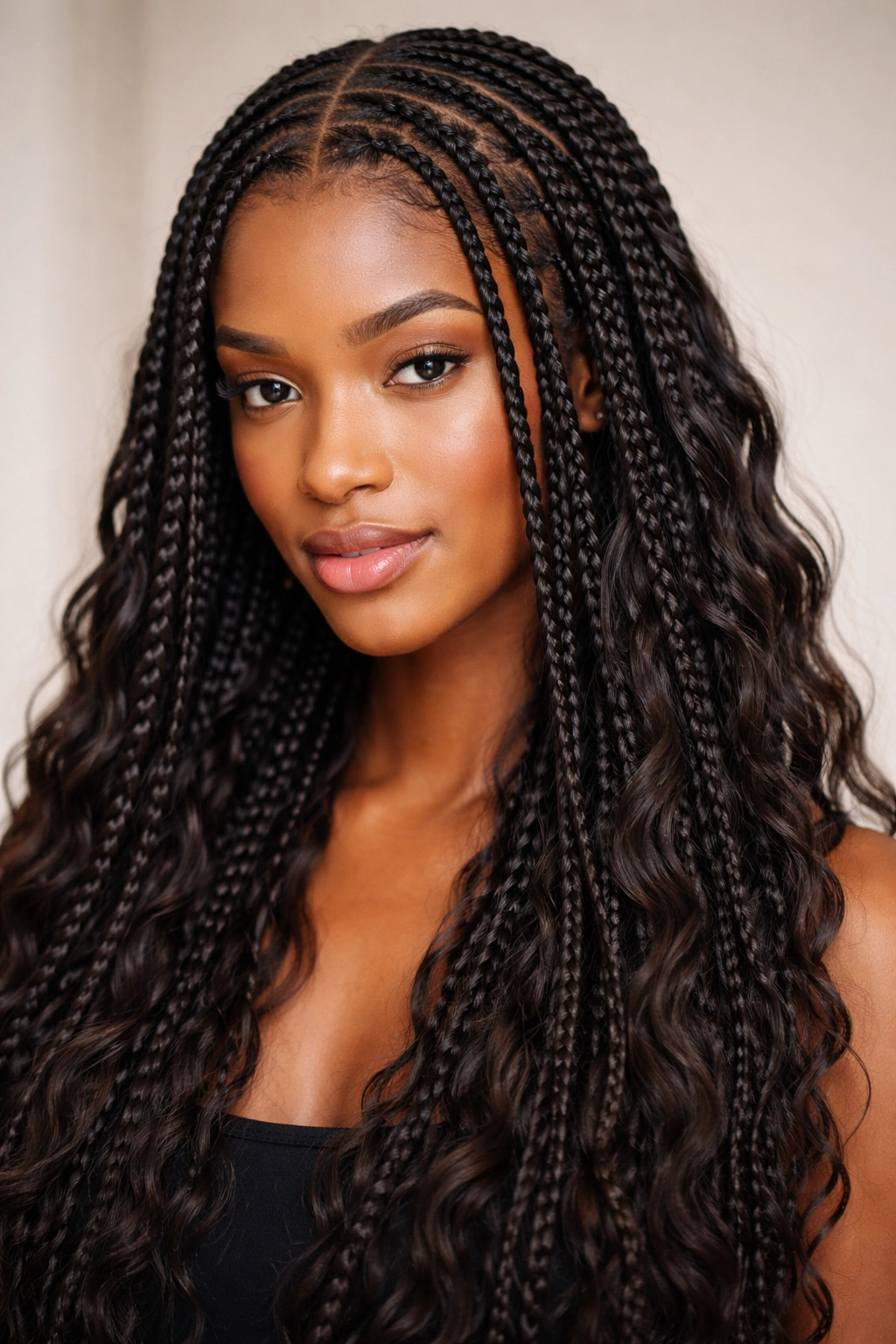
Knotless box braids have revolutionized protective styling, and they’re particularly stunning on wavy hair because they allow your natural texture to peek through at the roots and throughout the braid. Unlike traditional box braids that start with a tight knot at the base, knotless braids are built by gradually adding hair as you braid downward, creating a smoother, more natural-looking foundation that sits beautifully against wavy hair.
Why They Work So Well for Wavy Hair
Knotless braids distribute tension more evenly across your scalp compared to traditional box braids, which means less stress on your hairline and edges over the weeks you wear them. Because they sit flatter against your head, they look polished without that bulky root appearance that sometimes happens when knotless braids meet tighter natural textures. The wave pattern in your hair creates a soft, undulating effect within each individual braid that reads as intentional rather than unkempt—the braids look like they have their own dimension.
How to Maintain Them for Maximum Longevity
- Wrap your braids at night using a silk or satin scarf to reduce frizz and maintain smoothness—wavy hair is prone to frizz when braids sit loose on a cotton pillowcase
- Refresh the edges with a light moisturizing cream every 3-4 days; wavy hair at the root needs hydration to stay healthy during extended braid wear
- Avoid excessive moisturizing of the full length—knotless braids can absorb water and take much longer to dry than traditional protective styles
- Separate any braids that are starting to grow together at the roots with a fine-tooth comb every week to keep the individual braid pattern visible
Pro tip: Install knotless braids slightly looser than you might for straight hair—they’ll tighten naturally as your hair settles, and wavy texture will make them feel snugger than the initial installation feels.
2. Goddess Braids with Curved Edges
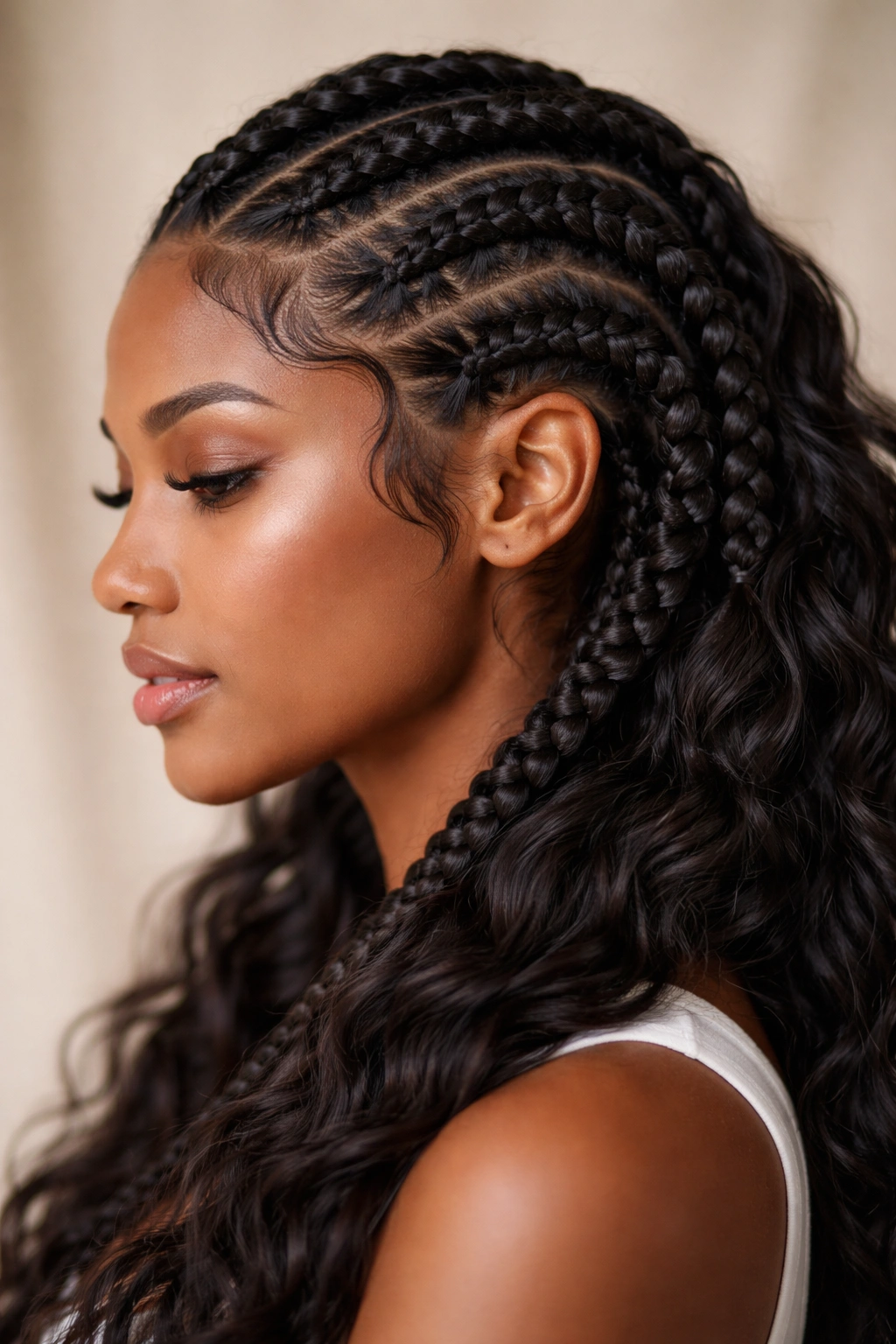
Goddess braids are a larger, more sculptural version of cornrows that sit elevated and flow dramatically across the head. When you style them on wavy hair, they look less geometric and more organic—the waves soften the architectural feel of the braids and create this beautiful hybrid between braided protection and natural texture. They sit boldly against the head without looking severe, which is the sweet spot for a style that’s both protective and photogenic.
What Sets Goddess Braids Apart
Goddess braids are thick enough and structured enough to protect hair for weeks, yet fluid enough that they can curve and spiral around the head in sculptural patterns that would look stiff on straighter hair. Your wavy texture actually makes the curves appear more intentional and graceful. They can be styled to frame the face, wrap around the crown, or spiral down the back—endless creative possibilities that work beautifully with your hair’s natural movement.
Styling and Installation Tips
- Ask your braider to taper the braids slightly as they reach the end—thinner tapered ends are more elegant on wavy hair and create a better aesthetic with the texture showing through
- Incorporate contrasting synthetic hair (lighter or darker than your natural color) for dimension that reads even richer when waves show through the braid structure
- Style the ends with a flat iron on low heat if you want a sleek finish, or leave them natural and wavy for a more undone, textured look
- Create curved or spiral patterns rather than straight lines; wavy hair makes curved patterns feel fluid rather than rigid
Worth knowing: Goddess braids actually look more polished as they age—a day or two in, the waves relax slightly and the overall effect becomes even more beautiful. Resist the urge to “fix” them too early.
3. Two-Strand Twists with Wavy Texture
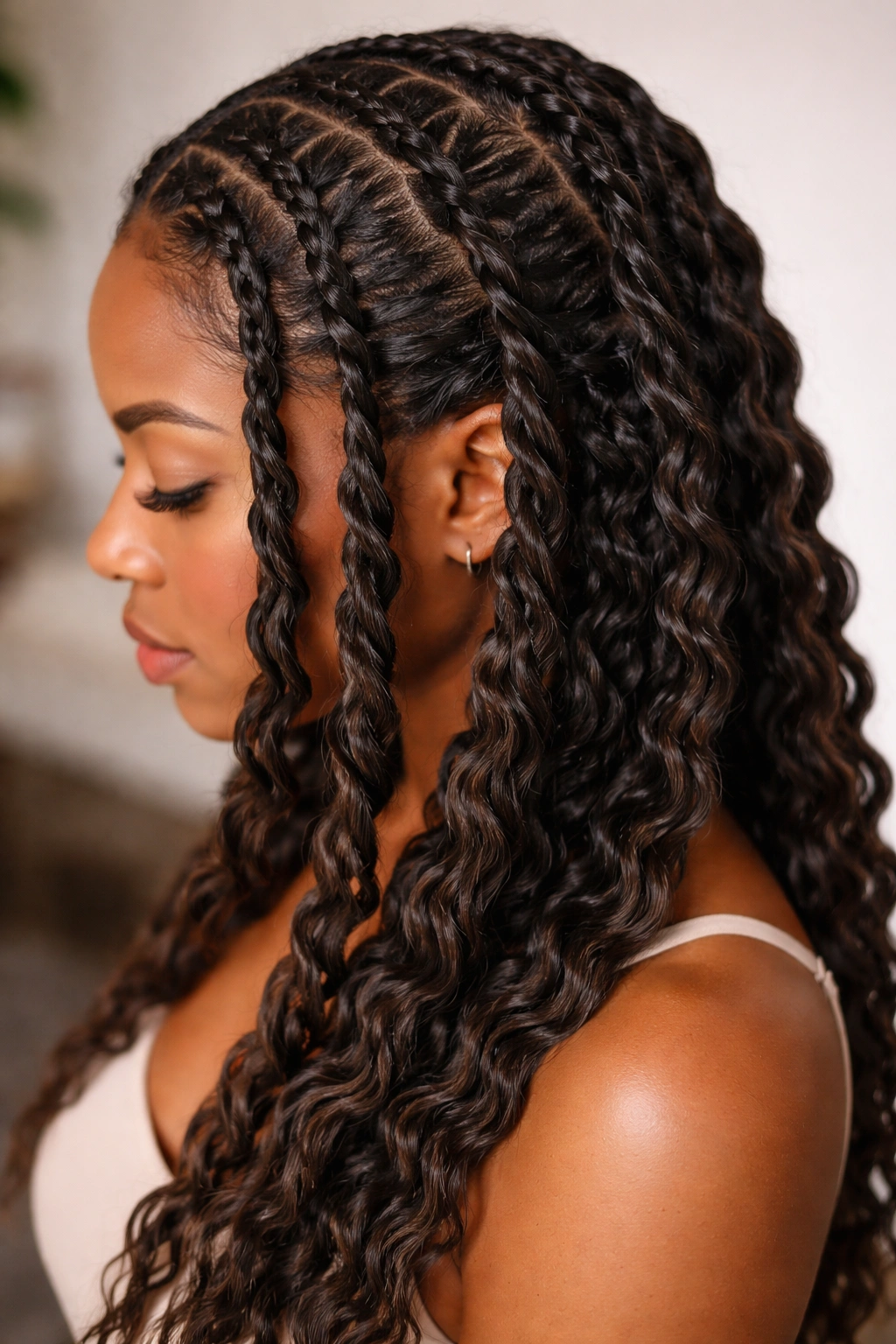
Two-strand twists are one of the easiest protective styles to install and one of the most versatile. On wavy hair, two-strand twists don’t look basic or undone—they look intentional and textured, with the natural wave pattern creating visual complexity within each twist. They’re also one of the most comfortable protective styles to wear daily because they don’t create the same scalp tension as braids.
Why Two-Strand Twists Shine on Wavy Hair
Each twist naturally showcases your wave pattern, and the interplay between the twisted structure and your hair’s natural movement creates this organic, lived-in aesthetic that’s hard to achieve on straight hair. Twists are the perfect middle ground between completely loose natural hair and heavy protective braiding. They keep hair protected and styled, but they feel lighter and less restrictive than most braided styles.
Different Ways to Wear Two-Strand Twists
- Create small twists for a delicate, intricate look that shows off maximum texture definition
- Twist larger sections for a bolder, chunkier style that feels more architectural and modern
- Combine size variation—small twists framing the face with larger twists around the crown and back for dynamic visual interest
- Sweep twists into an updo once they’re set, creating a textured high bun or low ponytail that feels elegant and effortless
- Wrap a section of twists with contrasting synthetic hair to create highlighted sections that pop against your natural color
Quick fact: Two-strand twists actually look better on day 3-4 than day 1—give them time to settle and the wave pattern will become even more visible as your hair relaxes slightly.
4. Senegalese Twists with Natural Ends
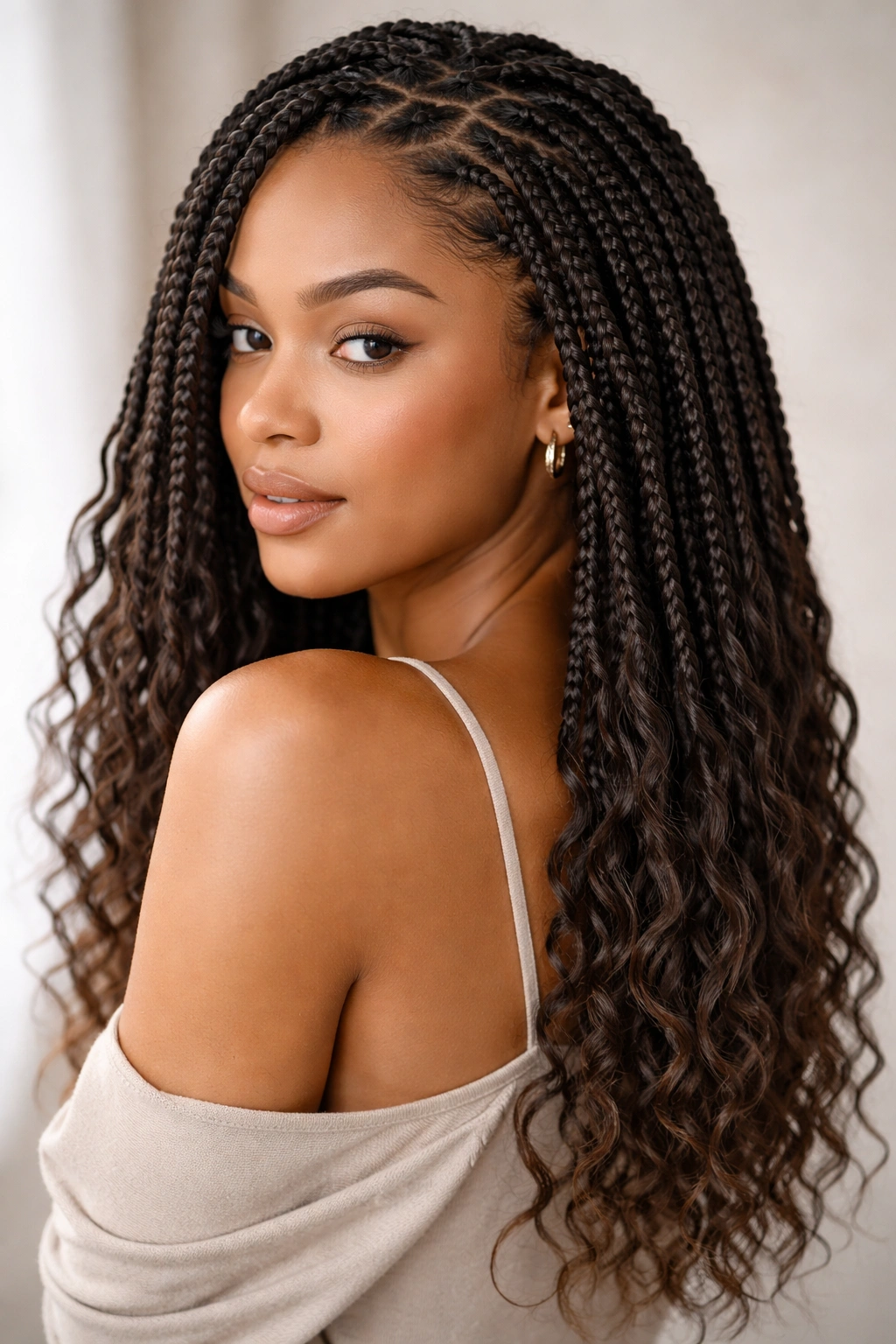
Senegalese twists are thinner, more delicate than two-strand twists because you’re twisting with small sections of your own hair plus larger sections of synthetic extension hair. The result is a finer, more elegant protective style that works beautifully on wavy hair because your natural texture shows throughout the twist and the thinner diameter creates a softer frame for the face.
The Aesthetic Appeal for Wavy Hair
Senegalese twists feel lighter and more refined than their chunkier cousins, and when you have wavy hair, that refinement becomes even more evident. The waves create a subtle texture line within each twist, and from across the room, the overall effect is sophisticated rather than casual. They’re thin enough to style into intricate updos while remaining thick enough to last 6-8 weeks with proper care.
Installation and Styling Considerations
- Ask your braider to use high-quality synthetic hair that matches your wave pattern if possible—shiny, silky extension hair complements wavy texture better than matte alternatives
- Taper the ends naturally without heat if you want a soft, textured finish, or lightly straighten just the very tips for a cleaner line
- Create a middle part to show off symmetry, or do a deep side part for an asymmetrical vibe that feels modern and intentional
- Leave 2-3 inches of natural hair visible at the base before the braids begin; this exposed natural hair adds visual interest and makes the style feel less costume-like
Insider note: Senegalese twists actually benefit from slightly wider spacing than some other protective styles—if they’re too tightly installed, the weight can cause excessive tension on wavy hair at the roots.
5. Fulani Braids with Geometric Patterns
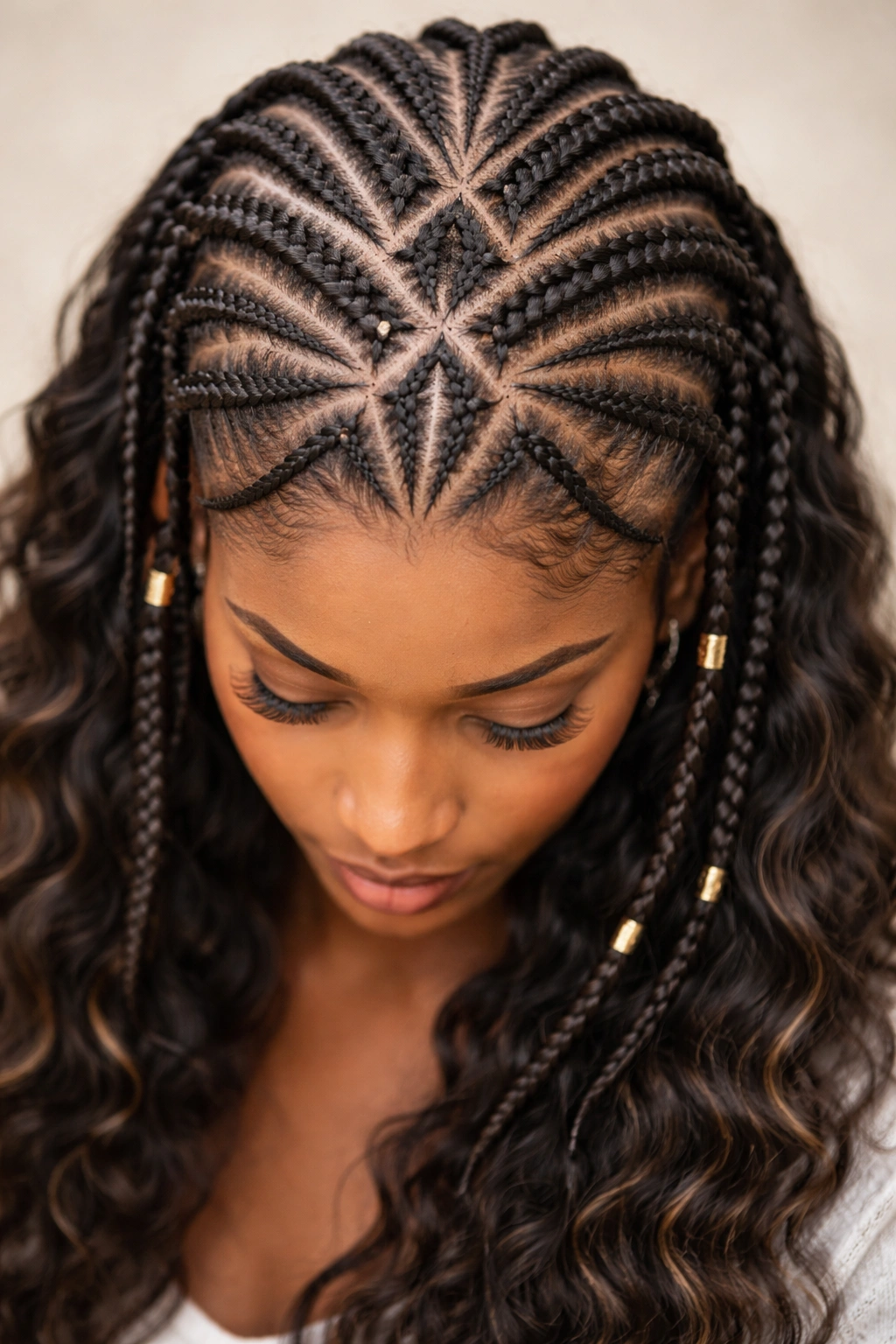
Fulani braids take cornrowing to an art form with intricate geometric patterns, often incorporating wrapping with gold thread or contrasting synthetic hair. They’re inspired by the traditional styling practices of Fulani women across West Africa, and when done on wavy hair, they become a stunning fusion of cultural richness and textured beauty. The geometric patterns look even more striking when your hair’s natural waves peek through each braid.
Creating Visual Impact with Pattern
Fulani braids typically feature a central pattern (often a circle or geometric shape created with unwrapped braids) surrounded by smaller braids or twists. On wavy hair, these patterns create incredible depth because your texture adds shadow and dimension to the architectural design. The overall effect is far more visually rich than it would be on straight hair, making every pattern choice feel intentional and powerful.
Gold Thread and Wrapping Technique
- Use high-quality gold thread that won’t tarnish or dull over the wear period; cheap thread can stain your hair or irritate your scalp
- Wrap thread tightly but not so tight it creates tension—the thread should follow the braid’s structure without cutting into the hair itself
- Consider wrapping only certain sections rather than every braid; selective wrapping can make patterns pop without appearing overdone
- Mix gold with copper, silver, or colored thread for a look that feels personal and contemporary rather than historically literal
Pro tip: Fulani braids actually photograph better in natural light than indoors—the sunlight picks up the thread detail and the wave texture in ways that artificial light can’t replicate.
6. Passion Twists with Bouncy Curls
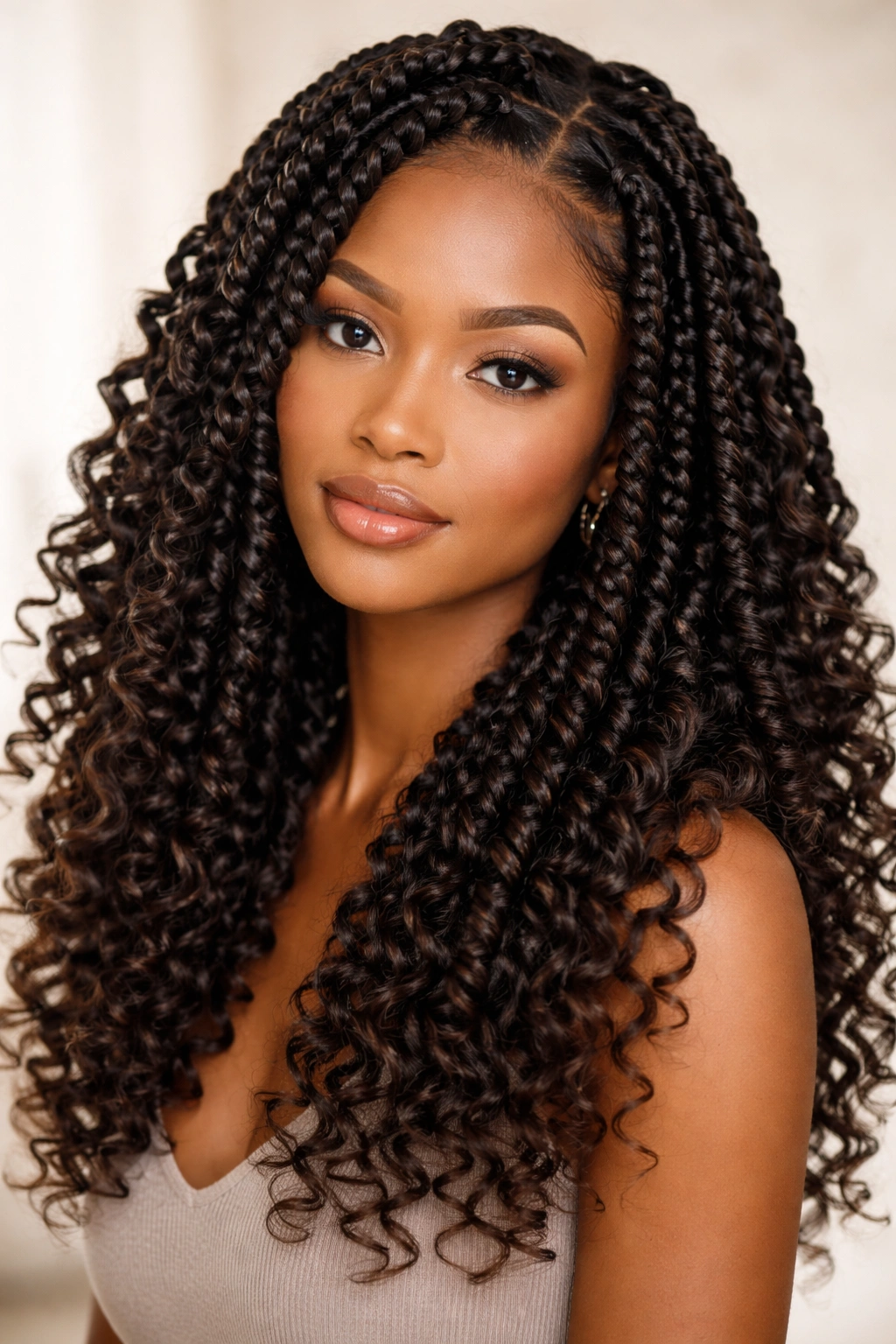
Passion twists are a newer protective style that combines the structure of twists with the volume and bounce of crochet curls. They’re created by twisting your natural hair with curly synthetic hair, and the result is a voluminous, textured style that looks incredible on wavy hair because your natural waves complement the synthetic curls. Unlike many crochet styles, passion twists look grown-out and textured rather than costume-like or overly artificial.
Why Passion Twists Work on Wavy Hair
The key is that your natural wavy texture reads as a unified aesthetic with the curly extension hair rather than clashing with it. The overall effect is a unified mass of texture—not a contrast between straight base hair and curly additions. Passion twists also allow for incredible versatility; you can wear them up or down, refresh the styling with a curling iron, or palm-roll the base to increase definition as they age.
Maintenance During the Wear Period
- Sleep with a bonnet or wrap to keep the style defined and prevent frizz—passion twists are more prone to frizz than standard twists because of the synthetic curl texture
- Refresh the twists at the roots every 5-7 days with a light oil or mousse to maintain definition and keep them looking intentional
- Separate any sections that are starting to clump together with a fine-tooth comb or rat-tail comb
- Dry shampoo powder between washes can refresh the style and absorb excess oil without requiring a full wash
Worth knowing: Passion twists actually age beautifully if you maintain them—by week 3-4 they look even more voluminous and lush than they did initially, and the waves show through more beautifully as they relax slightly.
7. Tribal Braids with Shaved or Undercut Details
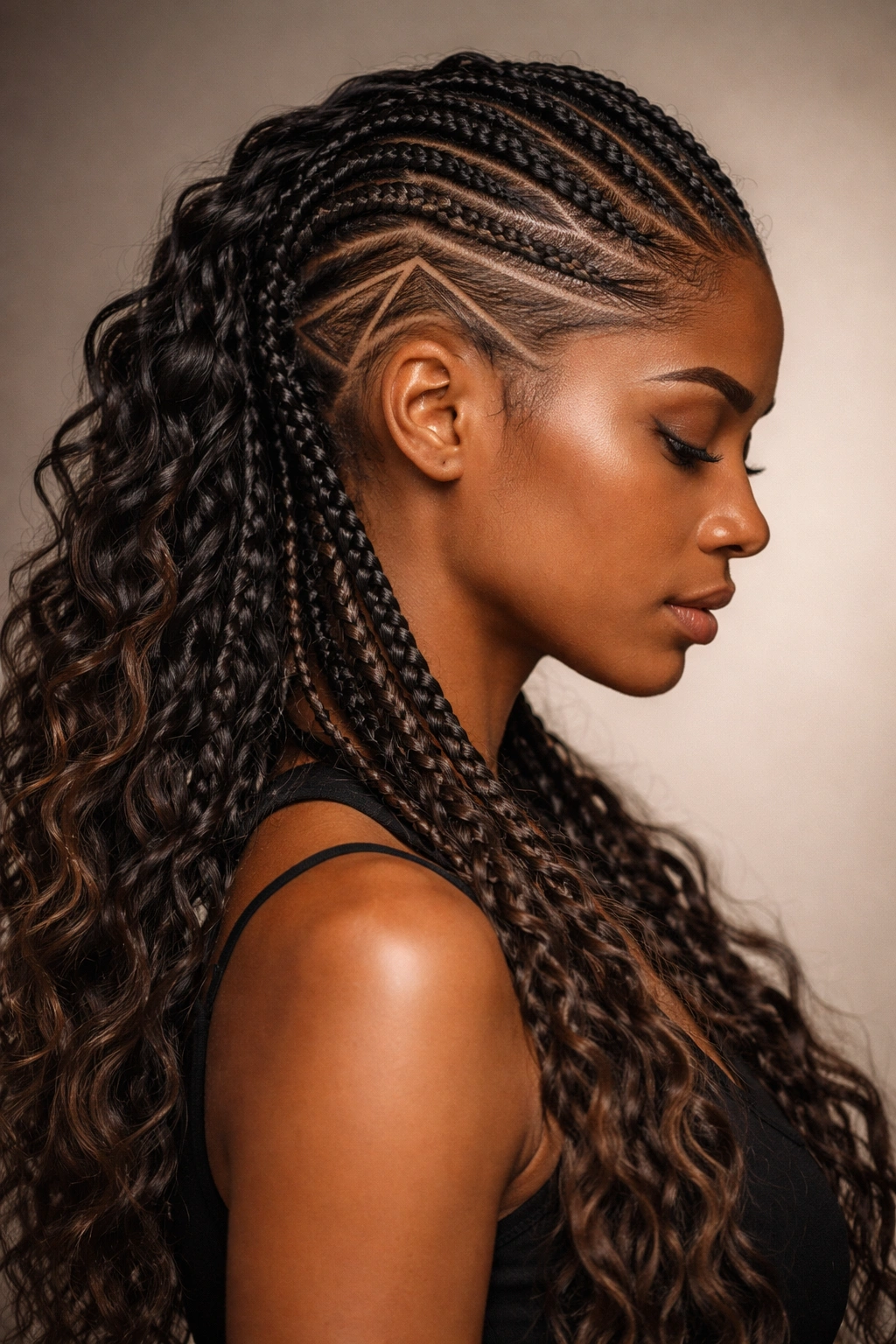
Tribal braids are statement-making protective styles that combine cornrowed patterns with shaved or undercut sections of the scalp. They’re dramatic, edgy, and absolutely stunning on wavy hair because the contrast between the braided sections and the exposed scalp creates incredible visual impact. Your wavy texture makes the braided patterns stand out even more dramatically against the smooth, exposed areas.
Creating Bold Visual Contrast
Shaving intricate patterns into your undercut—geometric shapes, lines, logos, or artwork—adds a level of personal expression that turns a protective style into a full artistic statement. On wavy hair, these undercut patterns read as confident and intentional. The braided sections sitting next to the exposed scalp create shadow and dimension that wouldn’t exist on straight hair in the same way.
Caring for Shaved Sections
- Keep shaved sections moisturized with a light oil to prevent irritation or dryness—exposed scalp needs protection just like your hair does
- Wrap at night to protect both the braids and the shaved sections from friction against pillowcases
- Be cautious about swimming or heavy sweat—chlorine and salt can irritate exposed scalp more easily than covered areas
- Plan your braids around your hair growth timeline; if you want clean undercuts, schedule them for when you’re ready to have sections touched up every 2-3 weeks
Pro tip: The best undercut designs for wavy hair are those with clean lines and geometric shapes—those contrast beautifully against the texture of both the braided sections and your natural wave pattern.
8. Crown Braids with Wrapped Sections
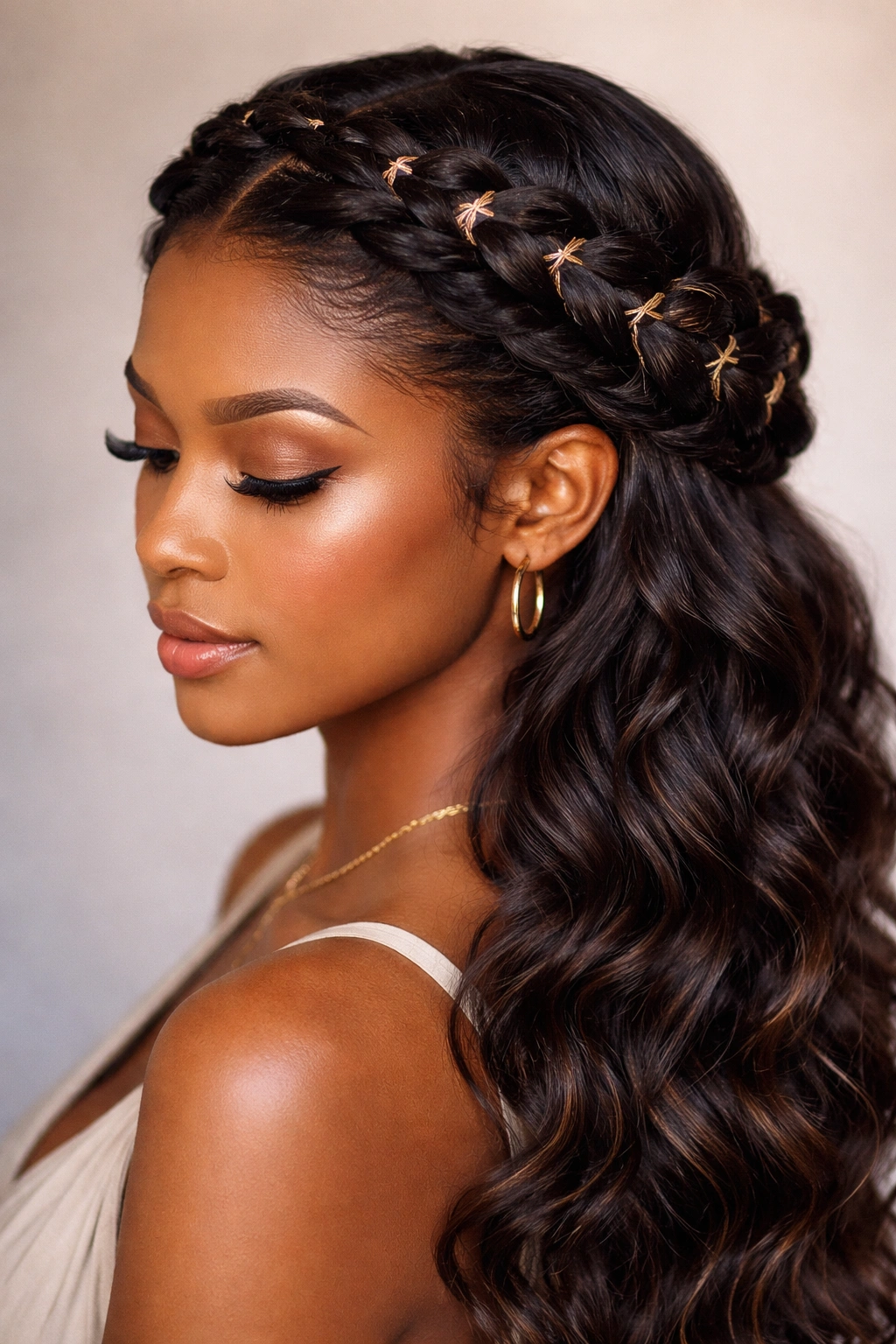
Crown braids are traditional cornrows that wrap around the head like a crown, and they’re genuinely one of the most elegant protective styles when done on wavy hair. The wrapped sections—where you’ve interwoven synthetic hair or thread throughout the braid—add visual interest and sophistication, and the crown placement shows off the side profile while keeping hair completely off the face and neck.
Why Crown Placement is Flattering on Wavy Hair
Crown braids work on almost every face shape because they draw the eye upward and create a long, elegant line from the back of the head down the nape of the neck. On wavy hair, the natural texture adds softness to the top of the head that balances the architectural structure of the braids. The overall effect is feminine, refined, and somehow both protective and expressive at the same time.
Variation in Wrapping and Spacing
- Wrap only alternate braids to create a striped visual effect that’s more subtle than wrapping every braid
- Use wrapped braids to frame the face and then unadorned braids across the back for a graduated effect
- Leave the first inch or two of hair at the roots unbraided to create a soft halo effect that flatters wavy texture
- Create multiple smaller crown braids rather than one large one; this gives more dimension and works better on finer wavy hair
Quick fact: Crown braids actually look best when they’re not perfectly tight—slightly looser tension allows the wavy hair at the roots to create a soft, intentional halo rather than looking strained.
9. Ghana Braids with Thick, Glossy Finish
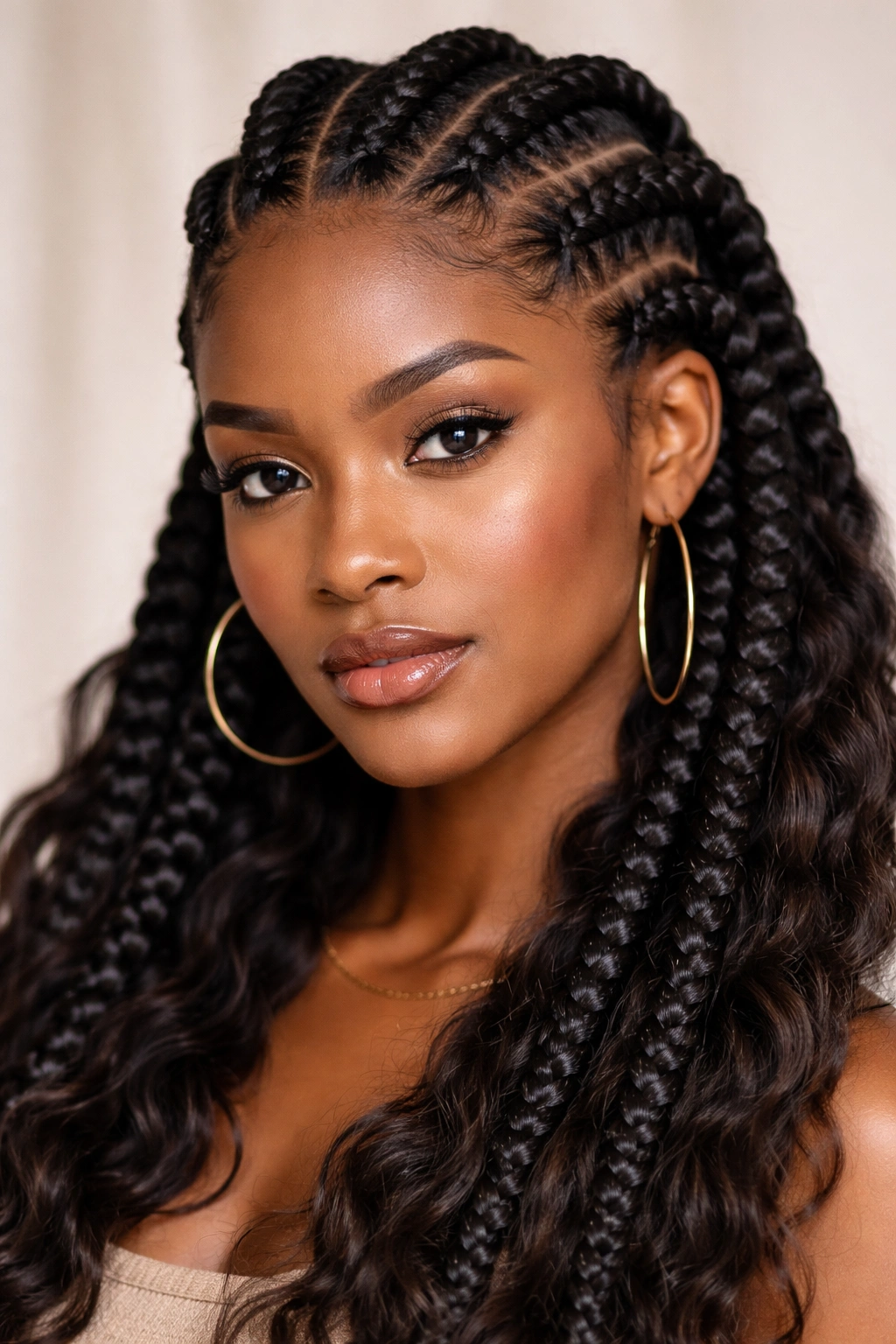
Ghana braids are similar to cornrows but created with much thicker sections, often with extension hair incorporated throughout for added volume and protective coverage. They’re bold, dramatic, and when done on wavy hair, they create an incredible aesthetic because your natural texture fills in the braids with natural dimension. Ghana braids are typically fewer in number but much thicker and more sculptural than traditional cornrows.
The Power of Thickness on Wavy Hair
Ghana braids work beautifully on wavy hair specifically because the thicker diameter means your waves create visible texture within each braid rather than disappearing into the structure. You get the protective benefits of a fully braided style combined with the visual interest of seeing your natural texture throughout. It’s the best of both worlds—fully protective while still showing texture.
Achieving That Glossy, Finished Look
- Use high-quality, glossy extension hair that catches light and makes the braids look intentional rather than casual
- Smooth the braids with a light edge control cream or gel once they’re installed to create a polished, finished appearance
- Incorporate metallic or contrasting synthetic hair strategically to add visual interest without overwhelming the style
- Style the ends with heat (if you’re not averse to heat) to create sleek, finished tips that feel more intentional
Pro tip: Ghana braids look more polished if you install them with slightly more length than you think you need—you’ll have room to style them into updos or work with the ends without the style feeling too short and bulky.
10. Micro Braids with Detailed Precision
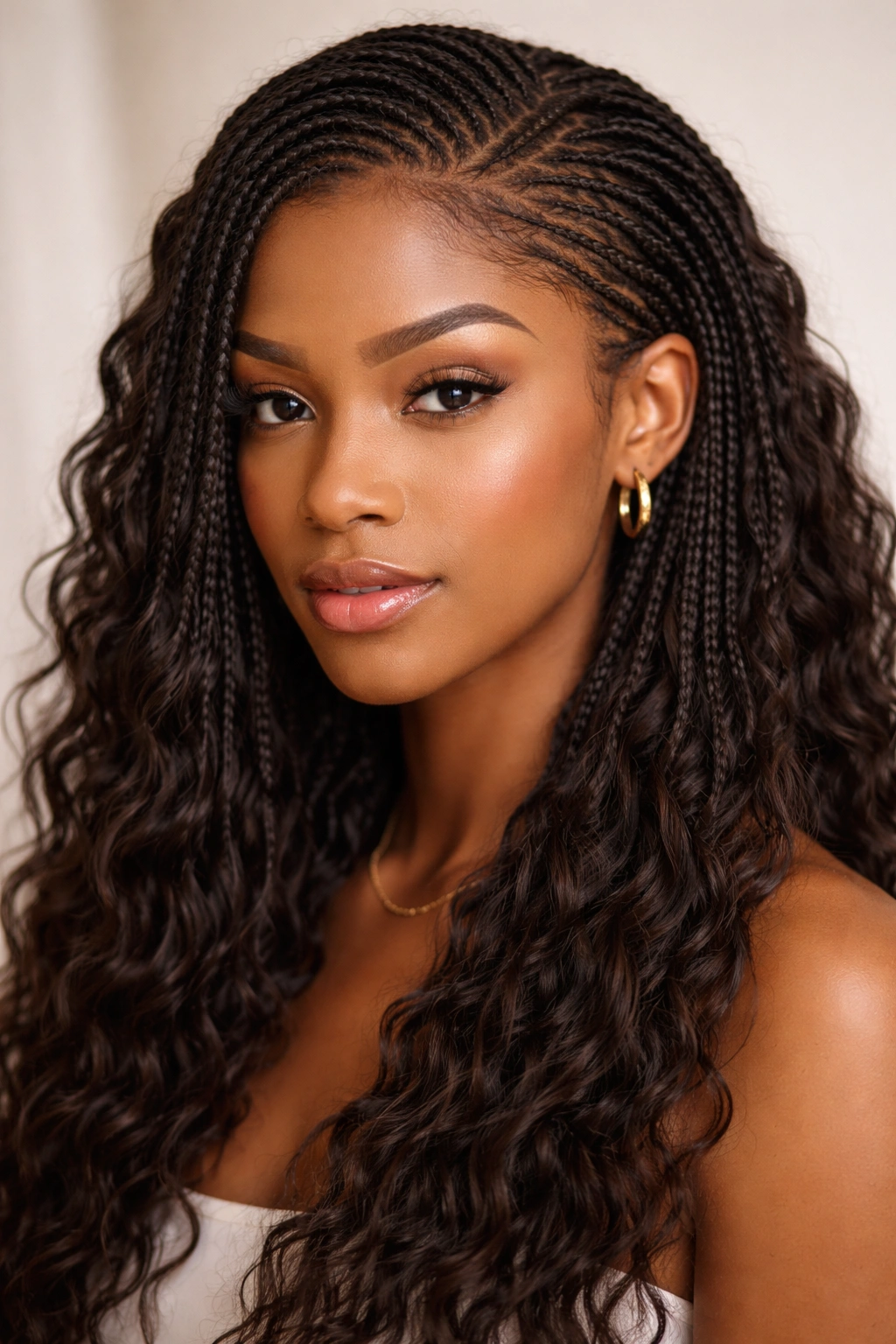
Micro braids are the finest, most delicate braided protective style—each braid is maybe the width of a pencil lead, and they take time to install but offer incredible versatility once they’re done. On wavy hair, micro braids work because they’re small enough that they don’t overpower your natural texture; instead, they create a unified, detailed appearance that reads as sophisticated and intentional rather than heavy-handed.
The Versatility of Micro Braids on Wavy Hair
Because micro braids are so small, you can style them into virtually any look—sleek ponytails, elaborate buns, half-up styles, or wear them completely loose for a textured, bohemian aesthetic. The wavy texture of your natural hair actually adds movement to micro braids that you wouldn’t get on straight hair; they fall and move more naturally even when you’re wearing 100+ individual braids.
Installation and Long-Term Care
- Budget significant time for installation; micro braids can take 8-12 hours depending on hair length and density
- Use thin synthetic hair or use your own hair exclusively to keep individual braids truly fine and delicate
- Separate braids regularly during the installation if you’re having someone else do them—micro braids can start sticking together if not properly separated
- Plan for regular maintenance; micro braids benefit from weekly refreshing at the roots with light mousse or gel to keep edges clean
Worth knowing: Micro braids actually last much longer than thicker braids because the smaller diameter means each braid flexes less and experiences less tension stress during daily wear. With proper care, you can wear them for 8-12 weeks comfortably.
11. Lemonade Braids with Side-Swept Drama
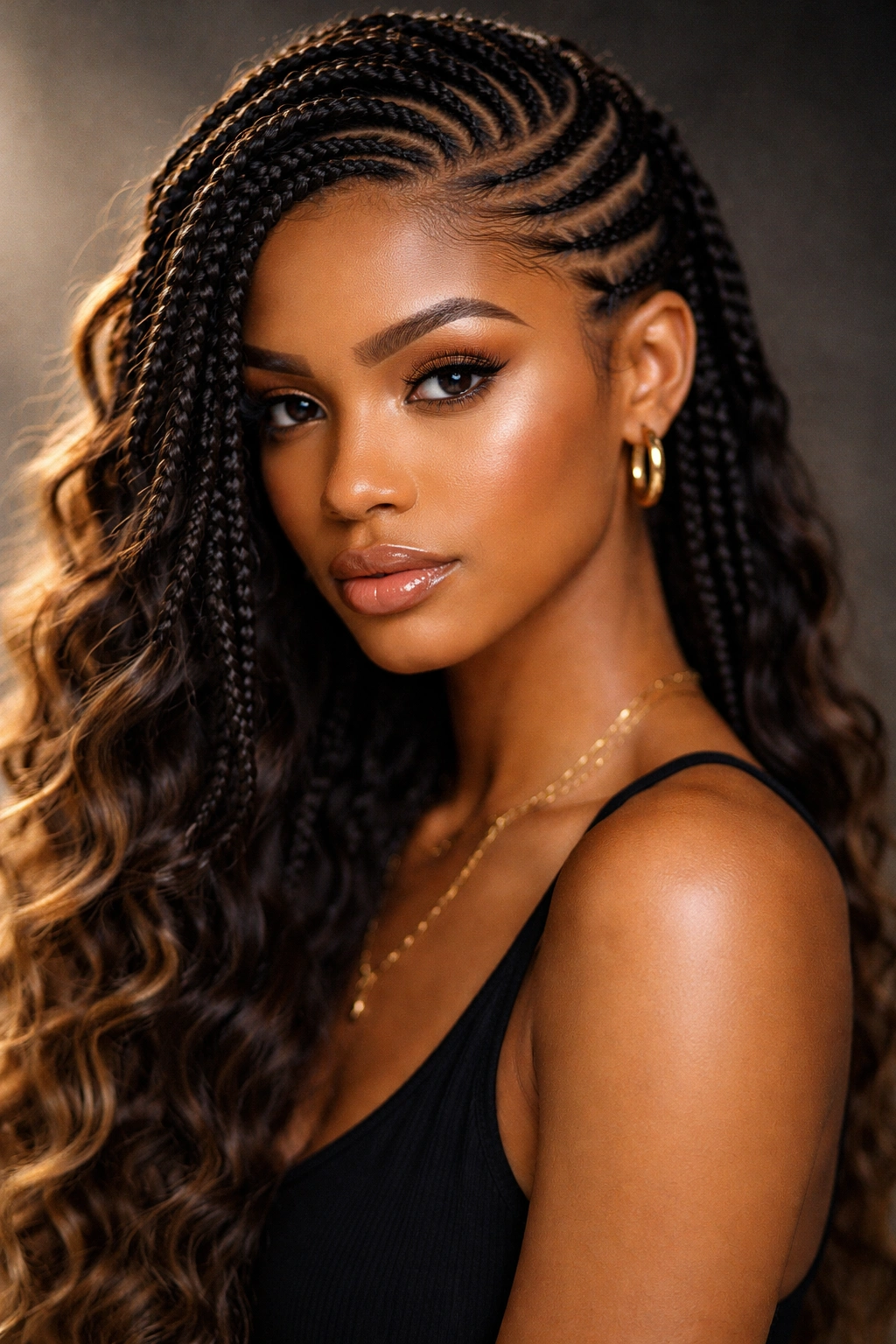
Lemonade braids are a modern take on cornrows—thick cornrows that curve and sweep across the head to one side rather than running straight back. Named after Beyoncé’s iconic hairstyle, lemonade braids combine sculptural cornrow structure with an asymmetrical, fashion-forward placement. On wavy hair, they look absolutely stunning because the asymmetry plays beautifully with your natural texture’s movement.
Creating Asymmetrical Drama on Wavy Hair
The off-center, side-swept placement of lemonade braids works particularly well on wavy hair because your hair’s natural movement echoes and amplifies the directional flow of the braids. The overall effect is confident and intentional without feeling costume-like. The side placement shows off the texture and dimension on one side of the face while keeping the other side soft and loose.
Styling Options Beyond the Classic Look
- Create double lemonade braids—one from each side of the head meeting at the back—for a more balanced look that still reads as modern and edge
- Incorporate the loose hair side into the style by creating loose waves or waves pinned up to frame that side of the face
- Add subtle wrapping with thread or contrasting synthetic hair to the braided sections for visual interest
- Tuck the loose hair side behind the ear during day wear for a cleaner look, and let it loose for evening or special occasions
Pro tip: Lemonade braids look fresher if you leave slightly more hair loose on the side rather than braiding everything tightly—the loose waves should flow and have movement, not be slicked back aggressively.
12. Cornrow Bun with Wavy Texture on Top
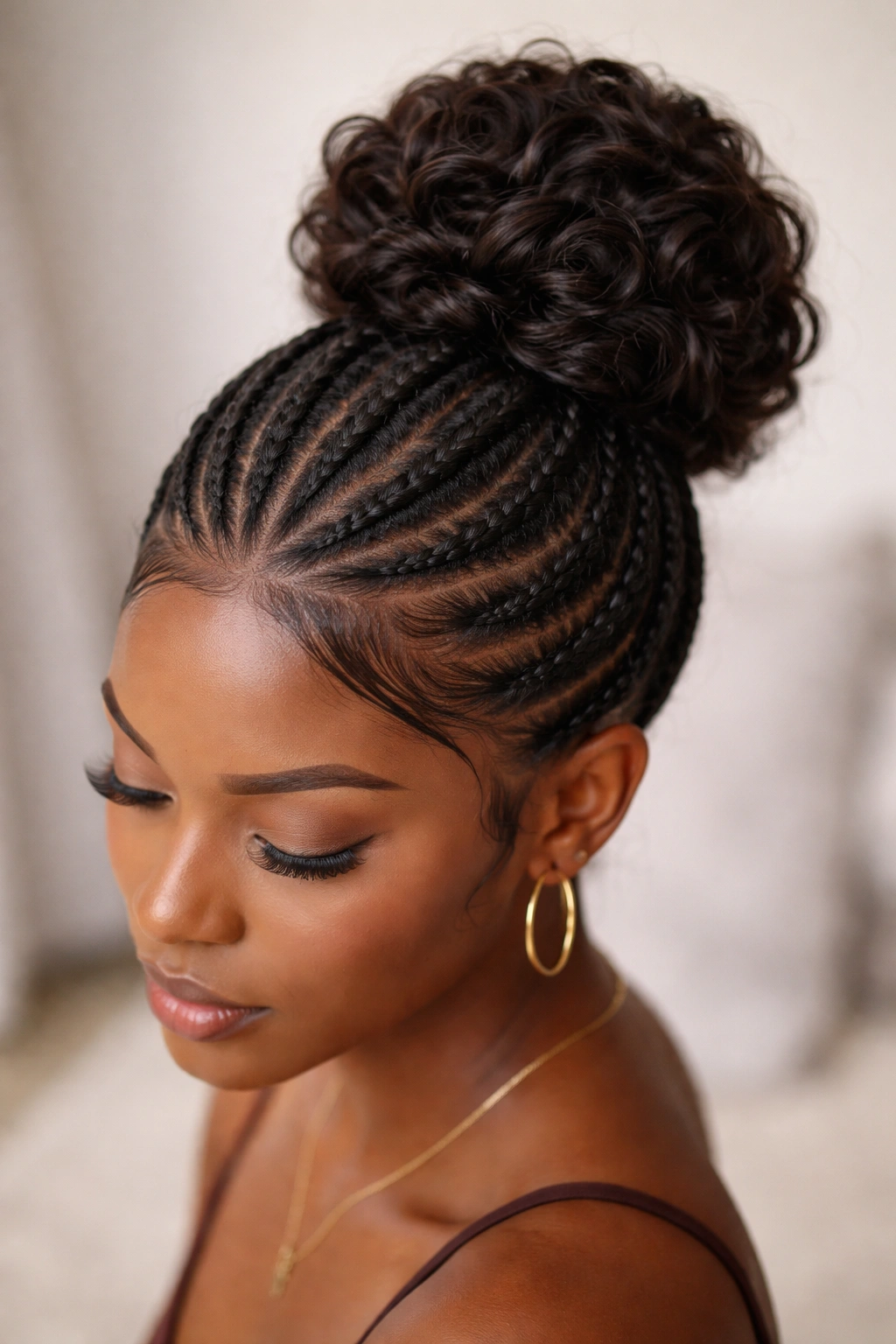
A cornrow bun combines protective cornrowing with volume and movement on top—cornrows run from the nape of the neck up to the crown where they feed into a gathered bun, leaving loose hair or waves cascading from that central point. On wavy hair, this style is incredibly versatile and romantic; the structured cornrows provide protection while the wavy top section adds softness, movement, and visual interest.
Creating Balance Between Structure and Texture
The magic of the cornrow bun on wavy hair is that you get the protective benefits of cornrowing without having to cover your entire head with braids. The loose wavy section on top showcases your natural texture, and the cornrows underneath handle the protective work. It’s a style that feels elegant, modern, and genuinely suited to wavy hair specifically.
Variations for Different Occasions and Moods
- Create a side cornrow bun for an asymmetrical, playful vibe that feels less formal than a centered style
- Wrap the cornrowed sections with colored thread for visual pop that contrasts with the loose waves on top
- Cornrow the entire head and gather into a low bun for a style that’s protective but still shows off your hair length
- Leave longer pieces loose around the face and frame them with soft waves for a romantic, date-night version of the style
Quick fact: The cornrow bun actually works better on wavy hair than straight hair because the natural waves in the loose section blend seamlessly with any waves you create with heat styling—there’s no contrast between your natural texture and styled texture.
Final Thoughts
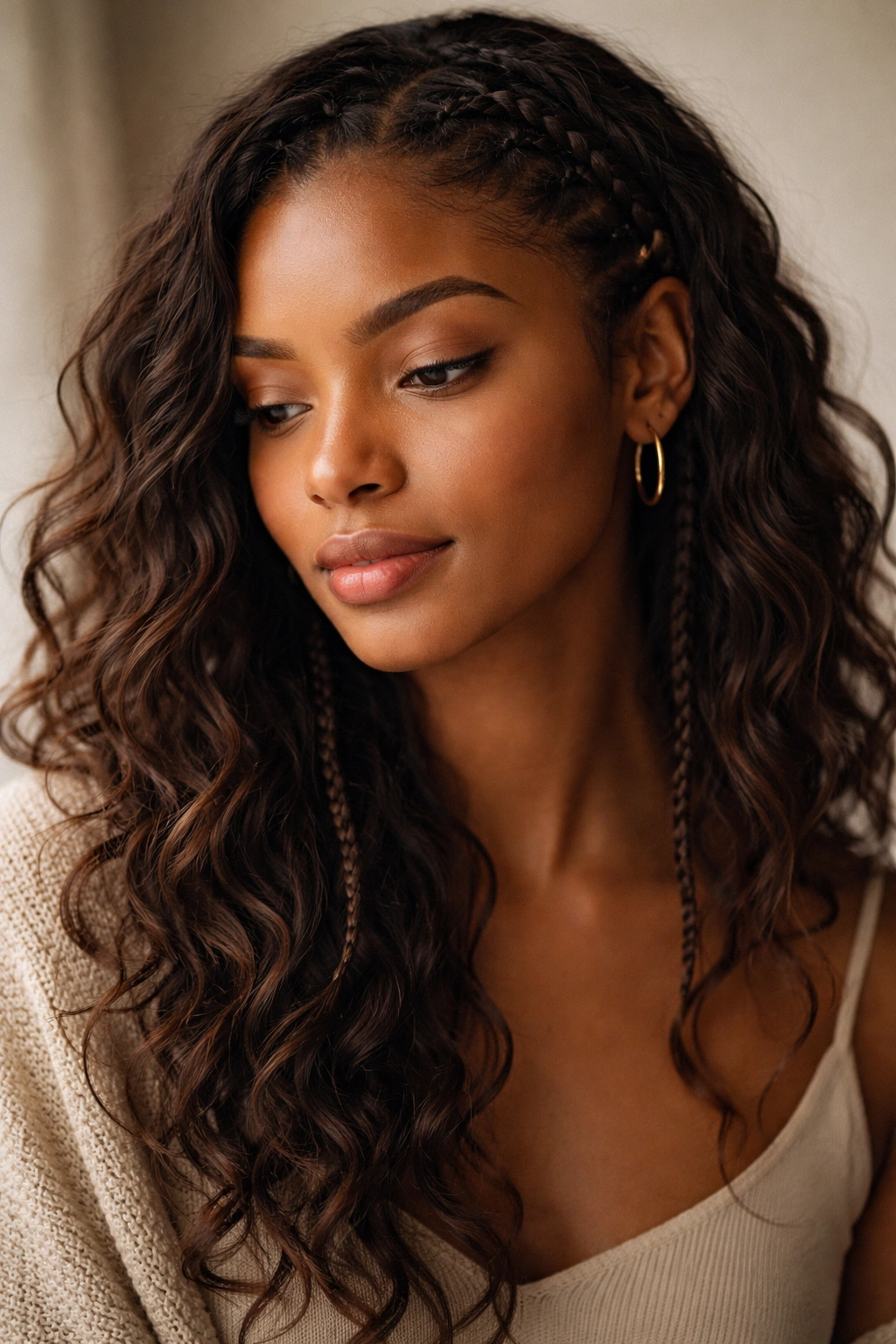
Choosing a braided style for wavy hair comes down to understanding what you want from the style—how long you want to wear it, how much maintenance you’re willing to do, whether you want a protective look that’s also bold and statement-making, or something more subtle. The beautiful thing about wavy hair is that it works with almost any braid style rather than against it; your natural texture adds dimension and movement that enhances every braiding technique.
The braids that look most stunning on wavy hair are typically the ones that let your natural texture show through—thinner braids like Senegalese twists or Ghana braids, styles that leave sections of natural hair visible like the cornrow bun, or styles where the waves create natural highlights and shadow like knotless box braids. But equally stunning are the bold, statement-making styles like Fulani braids or tribal braids where the artistic design is elevated by the textured backdrop of your hair.
Whatever style you choose, remember that wavy hair is an asset in braiding, not a limitation. Your waves create natural dimension, softness, and visual interest that makes protective styles look intentional, expressive, and genuinely beautiful. The key is finding a braider who understands wavy texture and knows how to work with your hair’s natural movement rather than against it. When you get that right combination of skill and understanding, your braided styles will be something you’ll genuinely look forward to wearing again and again.
