



Fulani braids have graced the heads of African communities for centuries, representing not just a hairstyle but a cultural statement steeped in heritage and artistry. When you’re working with curly hair, these intricate braided styles take on a whole different dimension—they work with your natural texture rather than against it, creating dimension, volume, and movement that straight-haired versions sometimes struggle to achieve. The beauty of Fulani braids on curly hair lies in how the braid pattern interacts with your coils and curls, adding both visual interest and practical benefits like protective styling and extended wear.
Curly hair has unique needs, and Fulani braids offer a stunning way to celebrate that texture while keeping your strands protected and manageable. Whether you’re dealing with tight coils, loose waves, or anything in between, there’s a version of Fulani braids that works beautifully with your curl pattern. The braiding technique incorporates your natural hair with additional extensions, allowing you to experiment with length, color, and overall aesthetic without committing to permanent changes.
The key to making Fulani braids work on curly hair is understanding how your specific curl pattern will interact with the braid style, how to prep your hair beforehand, and what maintenance looks like over the weeks you’re wearing them. Let’s explore twelve stunning variations of Fulani braids that work exceptionally well on curly hair, from the classic center-parted style to creative modern interpretations with colored extensions and unique patterns.
1. Classic Center-Parted Fulani Braids
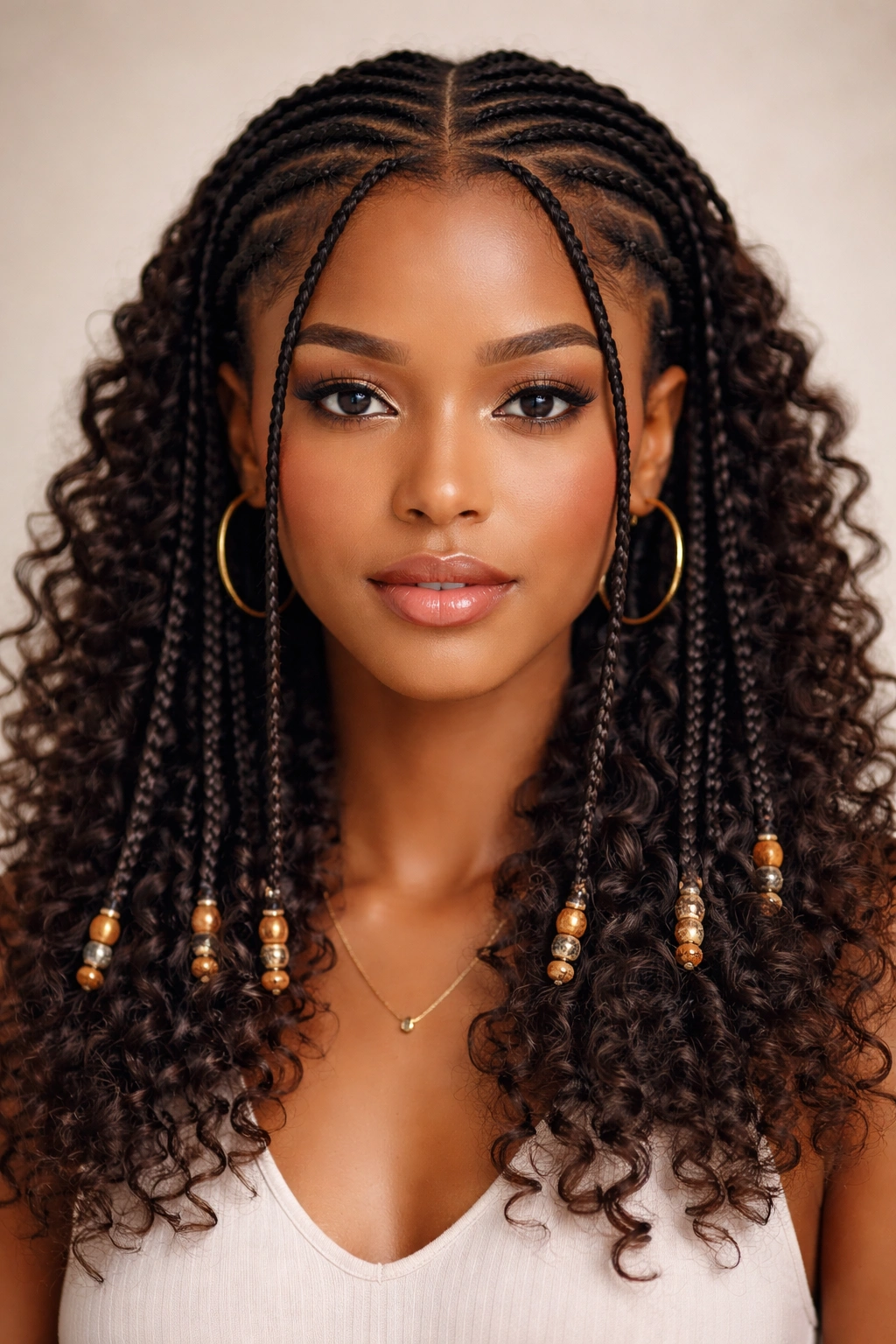
The iconic Fulani braid style features a precise center part that runs from your hairline straight back through the crown, creating two sections that frame the face beautifully. With curly hair, this center part actually becomes more striking because your natural texture adds volume on either side of the parting line. The braids themselves begin right at the hairline and travel back toward the crown, often incorporating beads, shells, or gold cuffs at the ends for traditional flair.
What Makes This Style Stand Out for Curly Hair
The center parting showcases your natural curl pattern on the unbraided portions while the braids themselves create a structured contrast. On curly hair specifically, this style offers incredible versatility—you can leave portions of your curls unbraided and loose, creating a mixed texture look that’s both protective and expressive. The braid lines become even more defined against your curly texture, making the geometric precision of Fulani braids pop visually in ways they sometimes don’t on straighter hair types.
Styling and Duration Details
- Best on curl types: Works across all curl patterns from 3A waves to 4C coils; tighter curls make the braid definition especially crisp
- Styling variations: Leave the crown fully braided, or stop the braids mid-head and let your curls flow freely from that point
- Longevity: Typically lasts 4 to 6 weeks with proper care; the braids actually loosen slightly as your hair grows, so they remain comfortable throughout
- How to style: Pin the braids up into a bun for a different look, or leave them down and arrange them over your shoulders; add decorative pieces strategically along the part line
- Maintenance schedule: Refresh the style every 7 to 10 days by washing your scalp with a water bottle or spray to avoid loosening the braids
Pro tip: Use a fine-tooth comb or a stiff brush to redefine your center part every 3 to 4 days—the more precise and sharp your part line looks, the more impressive the overall style appears.
2. Curved Fulani Braids Framing the Face
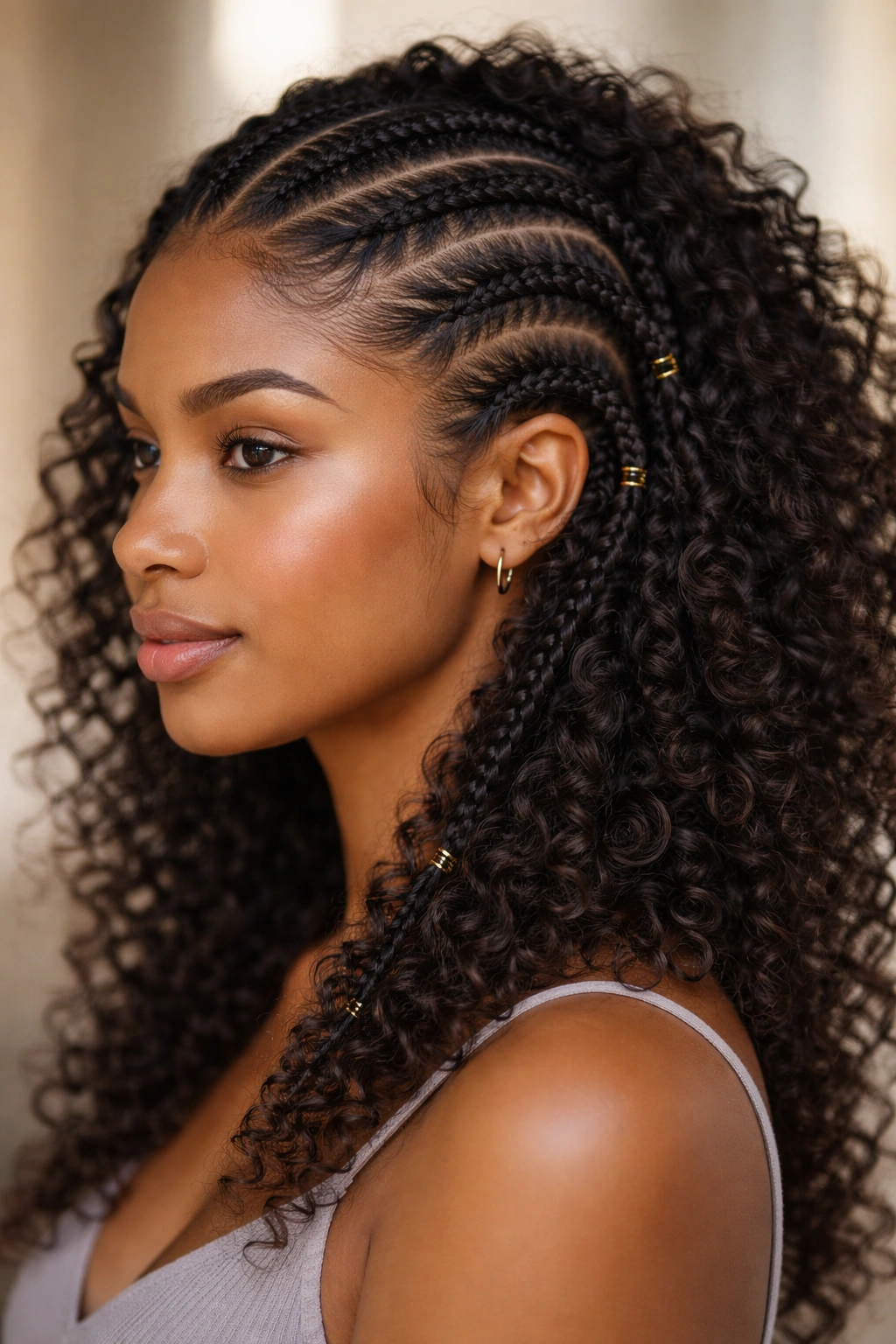
Instead of a straight center part, curved Fulani braids create a winding pattern from one side of your face to the other, following the contours of your head. This adaptation works exceptionally well on curly hair because the curves mirror the natural flow and bounce of coils and waves, creating an organic feeling despite the structured braiding. The curved lines soften harsh edges and create a more fluid silhouette that complements rounded face shapes beautifully.
Why This Version Works Beautifully on Curly Hair
Curved braids interact differently with curly hair than straight braids do—the bends in the braid pattern echo the bends in your curls, creating visual harmony. The curves also allow you to incorporate more of your natural hair into the unbraided sections, which means less tension on your hairline and a more blended, natural-looking style overall. This version feels less structured than classic Fulani braids, making it perfect if you want the aesthetic without the severe geometric precision.
Key Styling Features
- Braid path: Braids begin at one temple, curve back toward the crown following the natural head shape, and continue to the other temple or back of the head
- Texture integration: Your natural curls frame the braided sections, creating a halo effect that’s particularly stunning on people with 3B to 4A curls
- Adornment placement: Beads and cuffs look especially elegant when placed along the curved lines, following the braid path naturally
- Volume and fullness: The curved pattern allows you to leave substantial sections of your hair unbraided, maintaining maximum volume and movement
- Wearing duration: 4 to 6 weeks is standard, though some people find curved braids loosen faster than straight center-parted versions since the curves distribute tension differently
3. Triple Braids with Varied Thicknesses
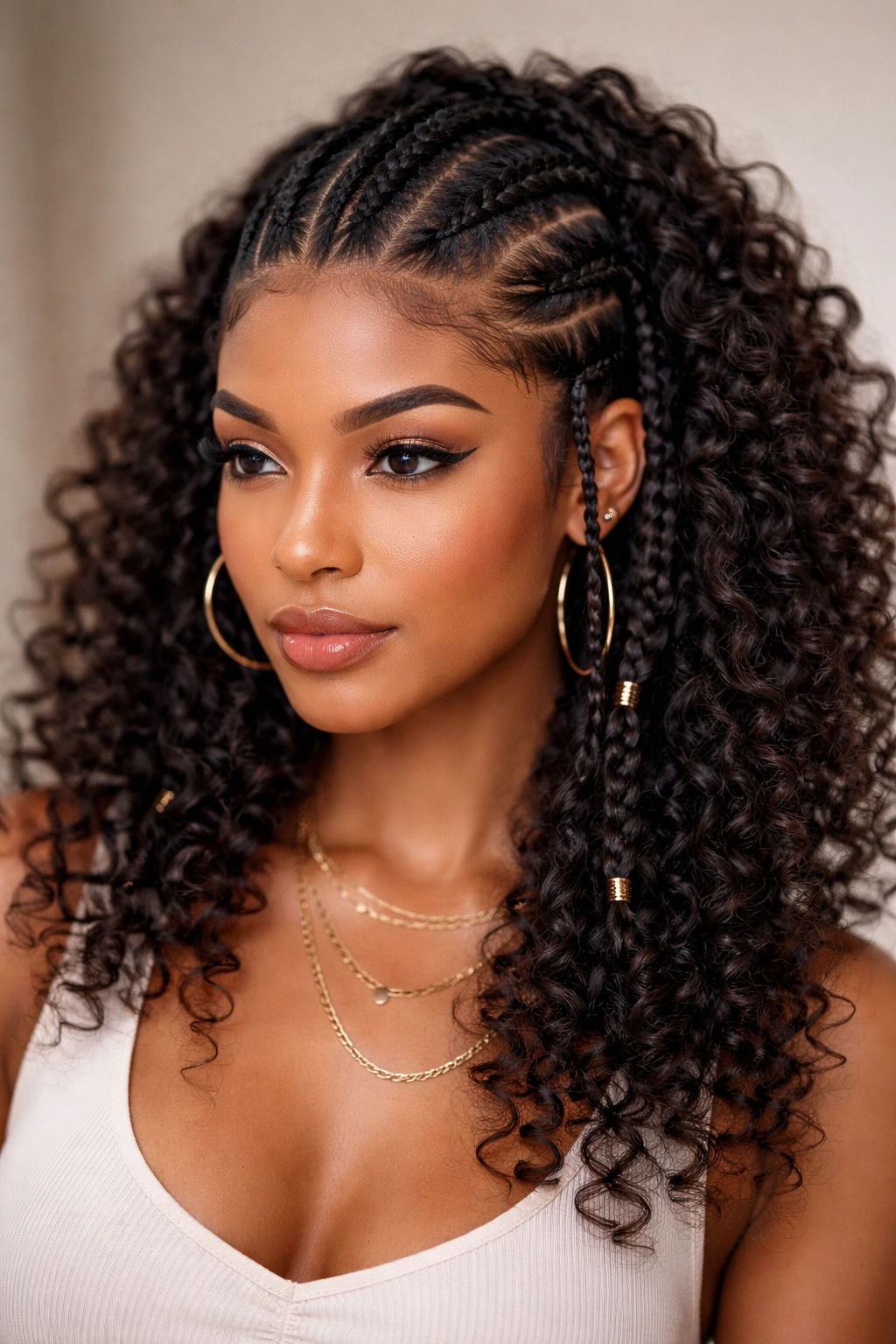
This style takes the classic Fulani approach and creates three distinct braids running from front to back, but makes each one a different thickness. You might have thin accent braids on either side framing your face and a thicker main braid down the center, or some combination that creates visual interest through contrast. With curly hair, the varied thicknesses create a playful, modern interpretation of traditional Fulani braids that feels both respectful to the heritage and contemporary.
Why Varied Thickness Transforms the Look
Mixing thin and thick braids adds dimension that feels intentional and artistic rather than random. On curly hair, this thickness variation becomes even more pronounced because the braid size interacts with your curl definition differently—thin braids sit crisply against your curls while thicker braids create bold lines that anchor the overall style. This version allows you to play with proportion and balance in ways that single-thickness braids don’t offer.
Customization Options for Your Curl Type
- Thin braids: Perfect for creating delicate frame lines around the face; work on all curl patterns but look especially refined on 3A to 3C textures
- Thick center braid: Provides visual weight and impact; works best starting at your hairline and extending at least halfway down your head for proportion
- Extension choice: Consider using extensions that match your curl pattern for seamless blending, or choose a contrasting color for bold visual impact
- Positioning: Start all three braids at your hairline and allow them to taper as they reach the back, or create staggered starting points for an asymmetrical look
- Accessory strategy: Add beads primarily to the thicker braids to avoid overwhelming thin braids, or use subtle gold cuffs on thin braids with bolder pieces on the thick ones
Worth knowing: The thin braids around your face are the first to loosen, so refresh them at the 3-week mark if you’re keeping the style past that point.
4. Fulani Braids with Curly Extensions Blended In
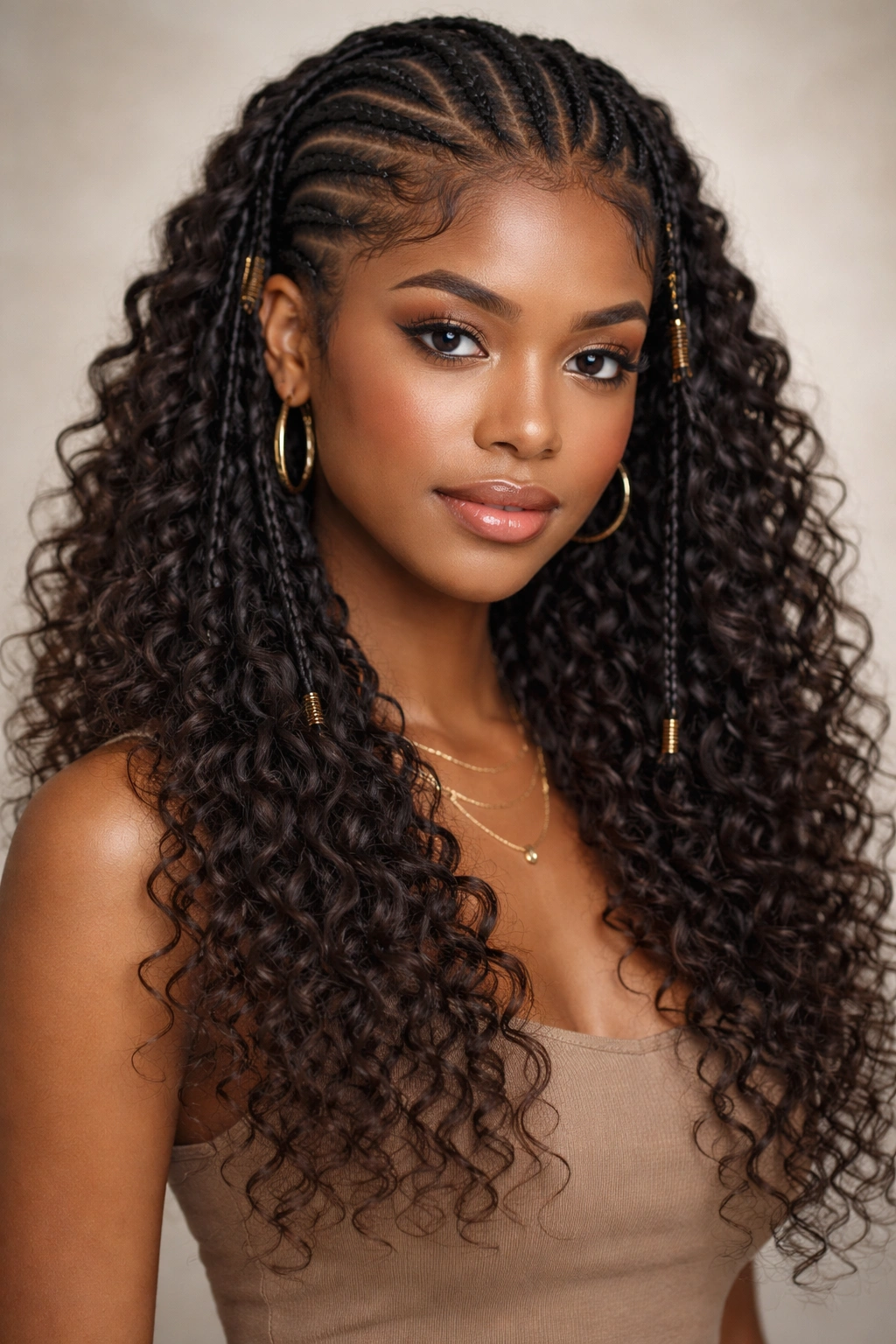
Rather than braiding in straight synthetic extensions, you can request or create Fulani braids that incorporate curly hair extensions that match your texture. This creates a braided hairstyle that transitions seamlessly into natural-looking curly hair at the ends, eliminating the stark line where many braid styles end. When extensions and your natural hair share a similar curl pattern, the final result feels cohesive and less “braid-y”—more like you’re displaying an exaggerated version of your own hair.
How Curly Extensions Change the Game for Your Hair Type
Curly extensions create visual continuity that straight extensions simply can’t achieve on naturally curly hair. When the braided portions transition into curly, coily, or wavy extensions that match your natural pattern, the entire style reads as more organic and intentional. This approach also distributes weight differently—your natural hair provides the weight at the roots through the braids, while the curly extensions provide visual weight at the ends without the denseness that straight extensions create.
Technical Considerations for Best Results
- Extension texture matching: Spend extra time finding extensions that match your curl pattern; mismatched textures create a jarring visual break even when colors match
- Length planning: Curly extensions appear shorter than they measure because the curl pattern takes up space; a 20-inch curly extension may hang at 14 to 16 inches
- Braid tension: Curly extensions are often lighter weight than straight ones, so you can use slightly more extension weight without putting excessive tension on your hairline
- Blending technique: Some stylists blend small sections of your natural curls into the braids periodically to create an even more seamless transition
- Frizz management: Curly extensions can frizz more than straight ones, especially in humidity; plan for slightly more maintenance with products that define and hold curls
- Weight distribution: The lighter weight of curly extensions means the style may be more comfortable to wear for extended periods, especially in warm weather
5. Side-Swept Fulani Braids with Loose Curls
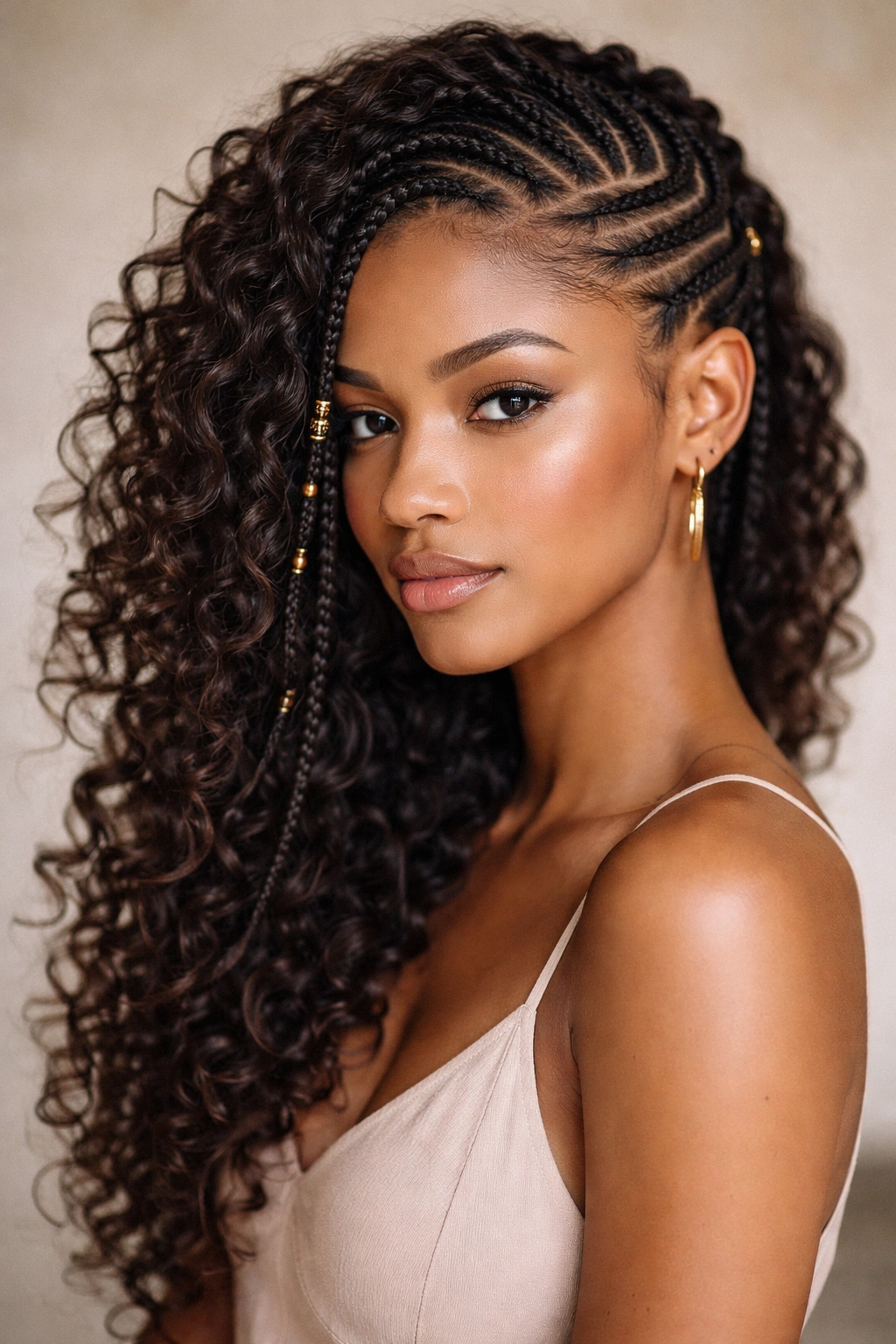
This romantic variation takes the classic Fulani braid positioning and angles it dramatically to one side, sweeping braids toward your shoulder or back. The opposite side of your head remains largely unbraided, allowing your natural curls to flow freely. This asymmetrical approach feels modern and fashion-forward while maintaining the cultural authenticity of Fulani braids.
Why This Works Particularly Well on Curly Hair
Curly hair naturally resists strict symmetry—it has volume, movement, and personality that begs for asymmetrical styling. Sweeping Fulani braids to one side creates a deliberate asymmetry that looks intentional and editorial rather than like your braids simply shifted. The loose curls on the unbraided side provide a soft contrast to the geometric braids, creating the kind of balance that’s especially appealing on naturally textured hair.
Creating the Side-Swept Effect
- Part placement: Create a deep side part that sits well off-center, closer to one temple than the other
- Braid starting point: Begin braids at the deep part and continue them toward the back, angling them slightly rather than going straight back
- Curl section: Leave the larger section of hair (the side away from the braids) unbraided and styled in your natural curls
- Volume strategy: Tease or fluff the unbraided curly section to increase volume and create a balanced silhouette despite the braids being on only one side
- Accessory focus: Concentrate beads and cuffs on the braided side to draw the eye there and balance the visual weight of loose curls on the other side
- Styling options: Tuck the loose curly section behind one ear for a cleaner look, or let it sweep across your face for a softer, more romantic aesthetic
Insider note: This style photographs beautifully because the asymmetry photographs as intentional and artistic rather than accidental—perfect if you’re looking for a look that works both in person and on camera.
6. Feed-In Fulani Braids with Gradual Thickness
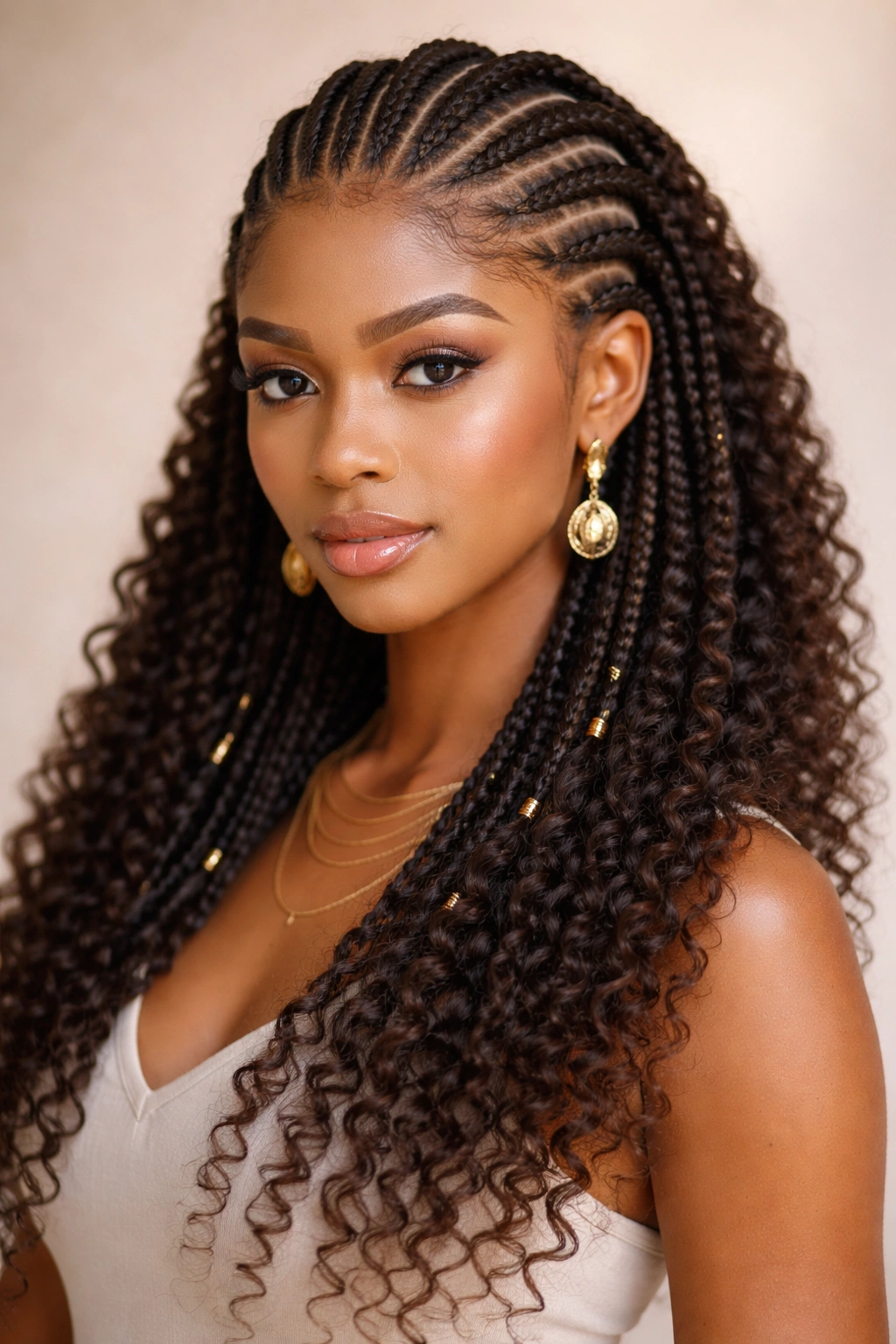
Feed-in braiding is a technique where you gradually introduce extension hair into the braid as you work backward, creating a braid that’s thin at the hairline and gradually thickens as it extends away from your head. With Fulani braids, this technique prevents tension at your hairline while creating a visual effect that transitions smoothly from your natural hair to the extension-enhanced portions. On curly hair, feed-in Fulani braids create an especially elegant line because the graduated thickness echoes the way curls naturally vary in size and density.
The Science Behind Feed-In Braids on Curly Hair
Traditional braids that start thick at the hairline can put considerable tension on curly hair at the roots—where many of us are already dealing with fragility or breakage. Feed-in braiding solves this by using only your natural hair at the hairline, then gradually incorporating extensions. On curly hair specifically, this technique respects the natural weakness at the roots while allowing you to create the Fulani aesthetic without compromise. The graduated thickness also creates a visual effect that’s less uniform and therefore more forgiving—slight imperfections in the braid line are less noticeable when the thickness is changing intentionally.
Implementation Details for Your Curls
- Starting thickness: Begin with only your natural hair at the hairline—no extensions braided in yet
- Introduction point: Start adding extension hair after the first 2 to 3 inches of braid, introducing it gradually over the next 3 to 4 inches
- Full extension: By the time you’re about 8 inches from the hairline, the braid should be using full extension weight
- Tension management: This technique allows for much gentler tension throughout, especially important if your hairline is sensitive or you’re recovering from hair loss
- Skill requirement: Feed-in Fulani braids require more skill than standard Fulani braids—find a stylist with specific experience with this technique
- Maintenance advantage: Feed-in braids often last longer because the tension is distributed more evenly; many people wear them 6 to 8 weeks successfully
7. Fulani Braids with Gold and Pearl Cuffs
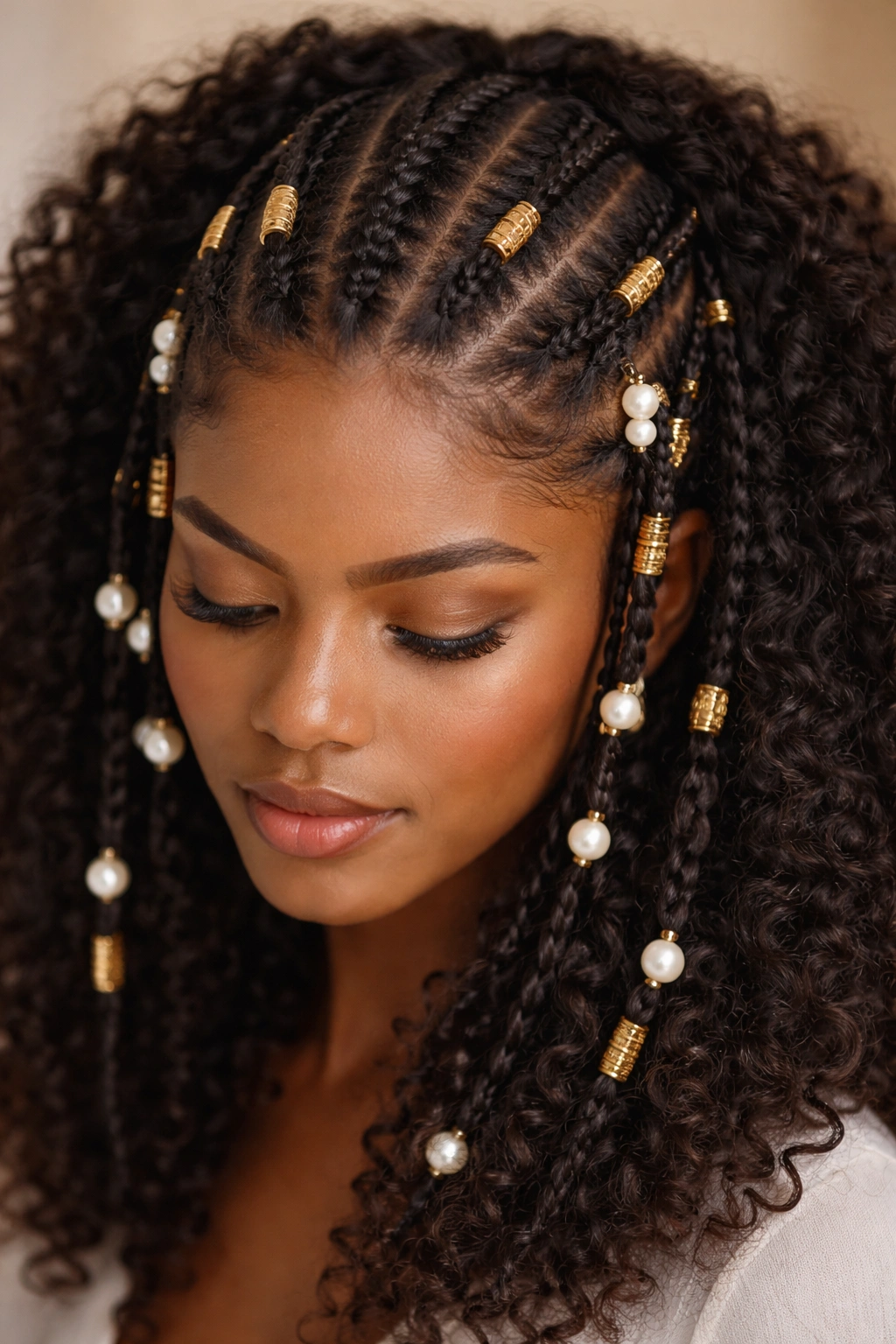
Traditional Fulani braids incorporate decorative elements—historically shells, bone, and metal pieces that reflected cultural significance and status. Modern versions often use gold or silver cuffs, pearls, or decorative bands placed at intervals along the braids. When these pieces are integrated thoughtfully into braids styling curly hair, they add sophistication and intentionality that transforms a protective style into a statement look.
How Cuffs and Beads Interact With Curly Hair
On curly hair, metallic and pearl cuffs catch light differently than they do on straight hair because your curls refract and reflect light in multiple directions. A gold cuff on a Fulani braid sitting against curly hair creates small pockets of shine that make the entire style sparkle. This creates an especially luxurious appearance that feels less like a casual protective style and more like an intentional, dressed-up look. The cuffs also help anchor sections of the braids, which can prevent them from loosening prematurely on your curly hair.
Strategic Placement and Selection
- Gold finishes: Warm gold complements deeper skin tones and creates a classic, timeless look; pair with bronze or copper beads for a cohesive palette
- Silver finishes: Cool silver tones work across all skin tones but create a more modern, edgy aesthetic; pair with clear or white beads for a contemporary vibe
- Pearl elements: Subtle pearl cuffs or decorative caps add elegance without overwhelming; space them approximately 2 to 3 inches apart for visual balance
- Placement strategy: Consider placing the largest, most decorative cuffs at the ends of braids where they frame your face, and use smaller, simpler pieces toward the back
- Quantity balance: Resist the urge to overload braids with cuffs and beads; too many pieces creates visual chaos, especially on curly hair where texture is already present
- Metal positioning: Place cuffs slightly lower on the braid (not right at the base of the braid start) to avoid putting pressure directly at your hairline
Pro tip: Choose cuffs that are smooth and won’t snag your curls when you remove the braids—textured or jagged pieces can catch fine hairs and cause breakage.
8. Double-Braided Fulani Style with Connecting Strands
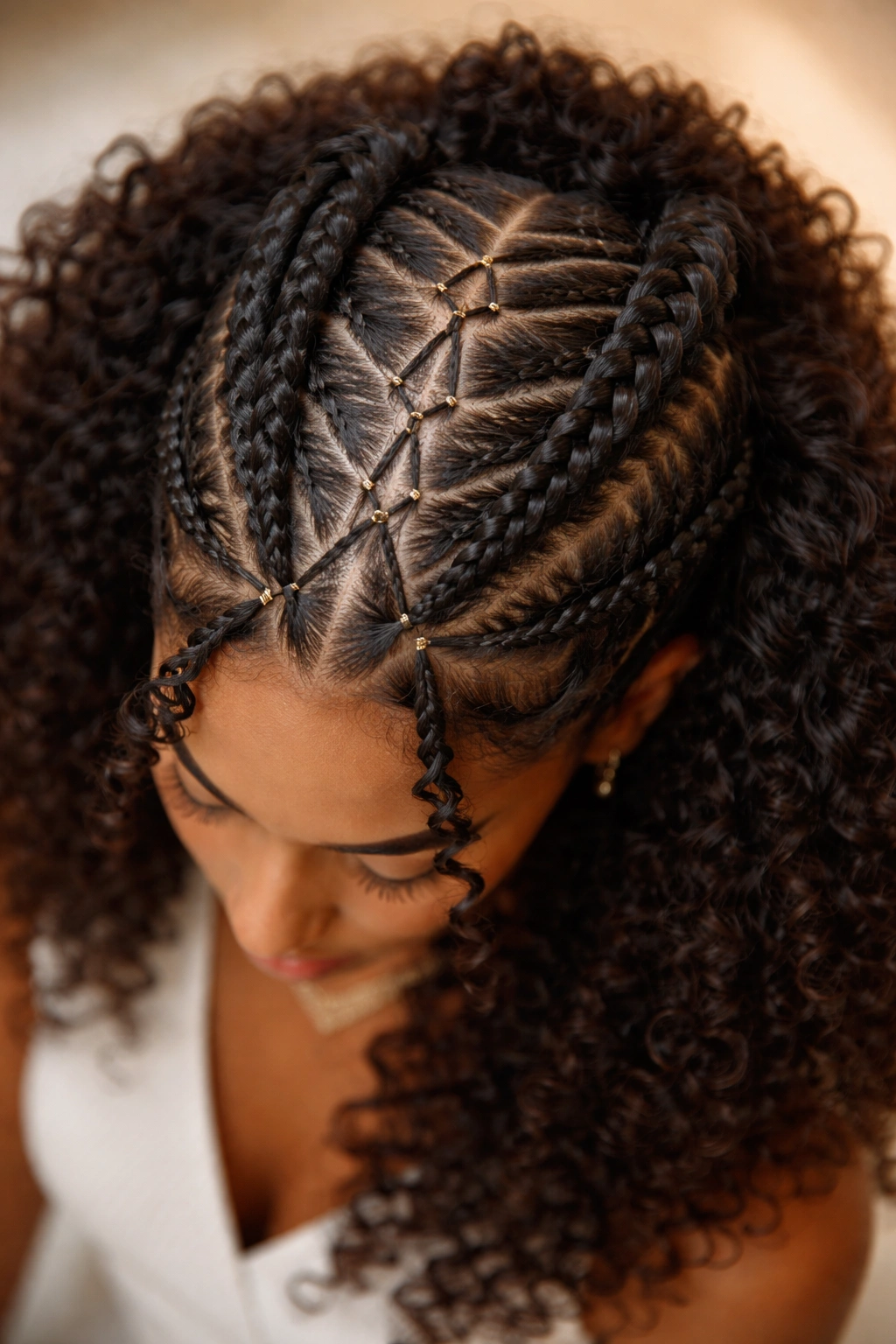
This modern interpretation takes classic Fulani braids and creates an additional element by connecting the main braids with thinner strands or smaller braids. The connecting pieces run between the main braids, creating a geometric web-like pattern when viewed from above. On curly hair, this style creates incredible visual depth—your natural curls peek through and around the geometric pattern, creating a multi-dimensional effect that’s particularly striking.
Why This Contemporary Version Suits Curly Hair
This style plays beautifully with curly hair’s natural texture by creating distinct lines and patterns while still showcasing the curls themselves. The connecting strands create compartments that visually organize your curls while maintaining the natural volume and movement. It’s a more complex version of Fulani braids that feels editorial and intentional, perfect if you want to wear your braids as a statement piece rather than simply a protective style.
Creating the Connected Pattern
- Main braids: Start with two or three primary Fulani braids positioned as you would style them traditionally
- Connecting strands: Once the main braids are complete, add smaller braids or twisted sections that connect between them, running roughly parallel to your hairline
- Pattern options: Create straight connecting lines, diagonal lines, or even curved lines depending on your aesthetic preference
- Entry and exit points: Connecting strands work best when they seem to emerge organically from the main braids rather than appearing added-on
- Color consideration: Use the same extension color for connecting strands and main braids, or create contrast with a different shade if you want the pattern to pop even more prominently
- Complexity level: This style requires a highly skilled stylist—it’s not appropriate for a first-time braider or someone unfamiliar with geometric braid patterns
9. Chunky Fulani Braids with Ombré Extensions
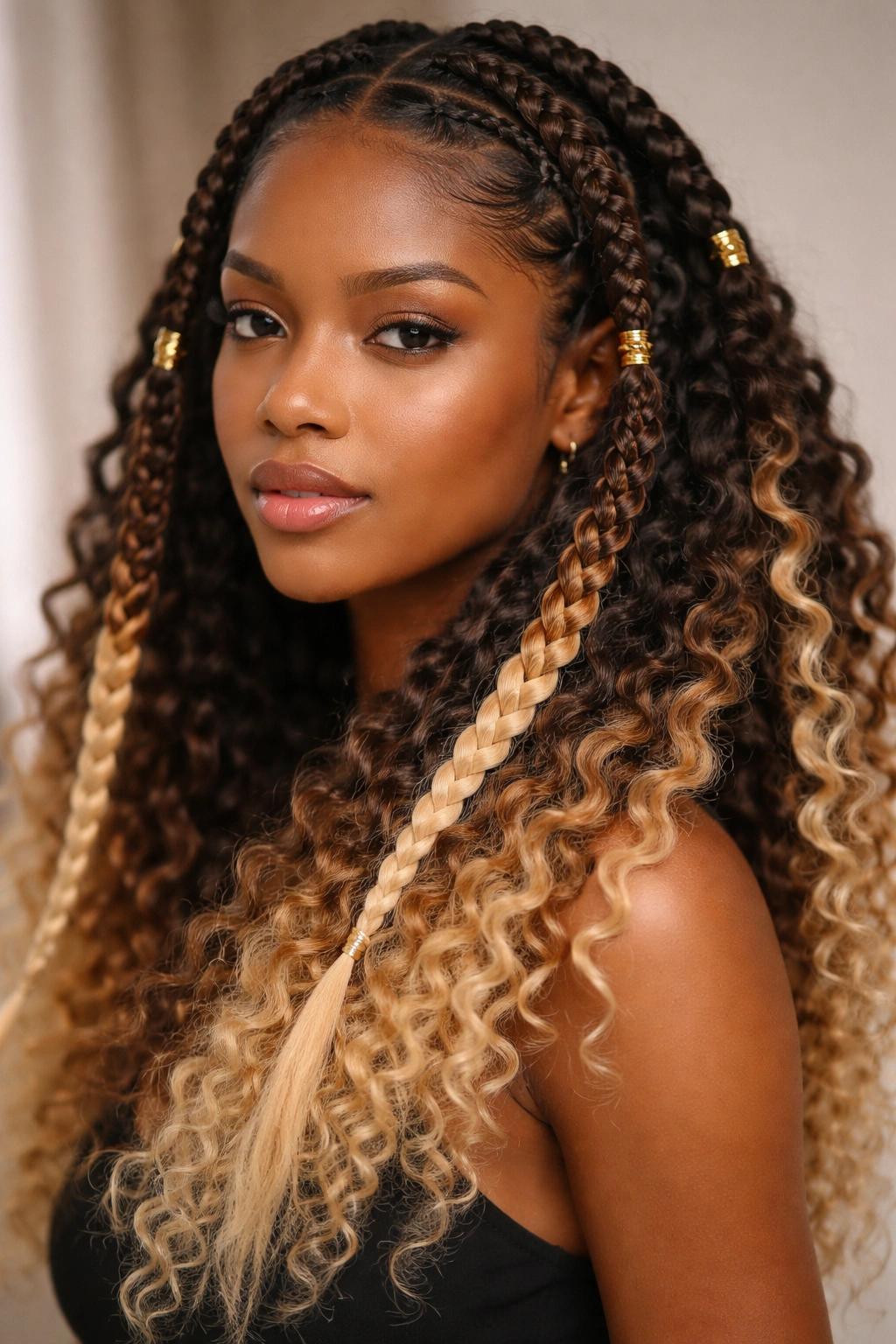
This bold, modern style uses thicker, fewer braids (perhaps just two or three main braids) and incorporates ombré or gradient-colored extensions. The braids might start with your natural color at the roots and transition into lighter, blonde, or multi-tonal extensions by the ends. On curly hair, the thickness of the braids means they have serious visual impact, and the color transition adds movement and depth that makes the whole style feel dynamic and contemporary.
Why Thick Braids and Ombré Color Work on Curly Hair
Thicker braids on curly hair create bold visual lines that can hold their own against your hair’s natural texture and volume. When combined with ombré coloring, the color graduation creates an optical illusion of extra length and draws the eye through the style in a particular direction. The thicker braids are also easier to accessorize and style in different ways—you can wrap them up, pin them, or drape them differently depending on the occasion.
Technical Execution for Best Results
- Braid count: Two or three thick braids create maximum impact; too many thick braids become visually busy on curly hair
- Braid thickness: Each braid should be roughly the width of your thumb or slightly wider; this allows the braid definition to remain crisp while still reading as substantial
- Color selection: Choose ombré shades that complement your skin tone; warm tones (blonde to copper to bronze) work across most skin tones, while cool ombré (black to ash to silver) suits cooler undertones particularly well
- Color placement: Start the lightest color about 12 to 14 inches from the scalp, creating a gradient that becomes progressively lighter toward the ends
- Extension quality: Thicker braids are more visible, so invest in quality extensions with good color that won’t fade quickly or look plastic-y
- Styling versatility: Thick ombré braids look great worn down, wrapped into a crown, or styled into an updo, so you’ll get multiple looks from one braid style
Worth knowing: Ombré braids may show buildup or residue more visibly than single-color braids, so plan for scalp cleansing every 5 to 7 days rather than every 2 weeks.
10. Jumbo Fulani Braids with Statement Beads
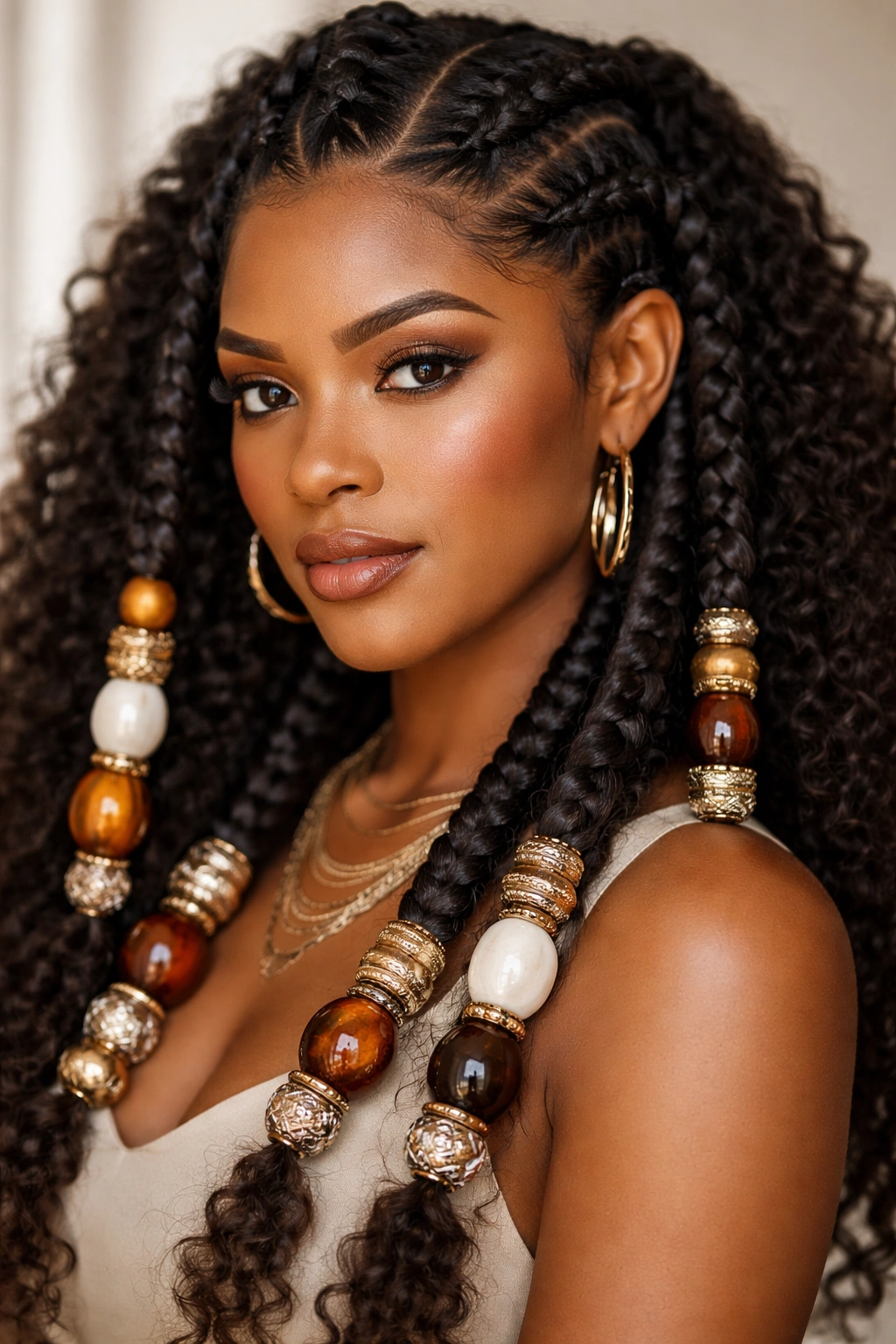
Jumbo refers to significantly thicker braids—these are chunky, bold statements that work beautifully on curly hair because they have the visual weight to balance your hair’s natural volume. Where standard Fulani braids might be the width of a pencil, jumbo versions are closer to the width of a marker, creating bold lines across your head. When combined with larger, more decorative beads and cuffs, this creates a look that’s impossible to ignore—it demands attention and announces that you’re making a statement with your hair.
Why Jumbo Works Particularly Well on Textured Hair
Your curly hair already has volume, so jumbo braids don’t overwhelm your frame the way they might on finer hair types. Instead, they create a balanced silhouette where the bold braids are proportional to your natural hair volume. Jumbo Fulani braids on curly hair read as regal and intentional rather than extreme—they’re a celebration of texture rather than a departure from it.
Styling Jumbo Braids on Curly Hair
- Starting point: Jumbo braids typically start at your hairline (or just behind it in a feed-in style) and extend back several inches or across the back of your head
- Color options: Single-color jumbo braids create maximum visual impact; consider black, dark brown, or your natural color for classic elegance, or go bold with burgundy, deep purple, or jewel tones
- Bead sizing: Use larger, more statement-making beads with jumbo braids—delicate small beads will disappear into thick braids and waste the opportunity for impact
- Bead materials: Consider mixed materials—combine metal beads, pearl cabs, wooden elements, or crystal beads to create visual interest
- Bead frequency: Space beads approximately 3 to 4 inches apart on jumbo braids; they should be visible and notable without appearing crowded
- Accessories beyond beads: Add small scarves, decorative clips, or hanging chains to the ends of jumbo braids for a fully styled look
Insider note: Jumbo braids put more weight on your head and may cause tension headaches if worn too tightly; communicate clearly with your stylist about comfort and ensure you’re getting feed-in or another tension-reducing technique.
11. Fulani Braids with Spiral Curls at the Ends
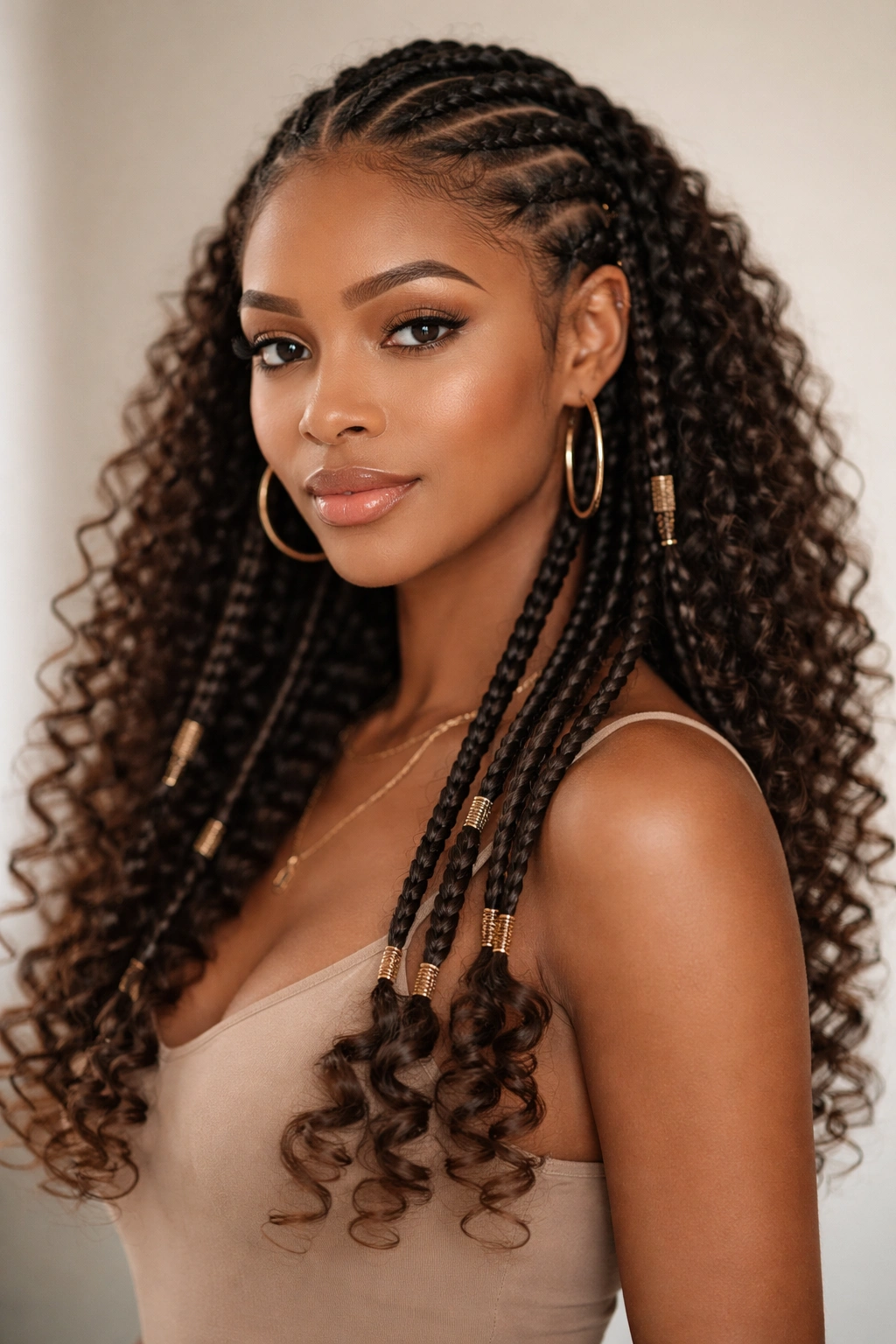
Rather than ending in straight braids or simple loose curls, this variation incorporates spiraled or pin-curled extensions at the very ends of your braids. As the braids end, they transition into defined spiral curls that create a romantic, vintage-inspired finish. On naturally curly hair, this style creates interesting contrast—geometric braids that gradually transition into romantic spirals, combining structure with softness.
Why Spiral Ends Add Dimension to Your Style
Spiral curls at the ends of braids add a finishing flourish that feels intentional and polished. On curly hair, they echo your natural curl pattern while creating a more defined, styled appearance than simply leaving braids to taper off. The spirals catch light differently than straight braids or loose curls, creating visual interest and movement even when your hair is still.
Creating Spiral Curl Ends
- Timing and technique: Have your stylist create the spirals as the final step, after all braiding is complete; this ensures the curls are crisp and defined
- Spiral size: Match spiral size to your natural curl pattern where possible; large spirals work on naturally wavy hair, while smaller spirals suit tighter curls
- Curl duration: Spirals created during the braiding process typically last the full duration of your braids (4 to 8 weeks)
- Product support: Use a light curl-defining gel or mousse on the spirals during installation to ensure they hold well; avoid heavy products that might weigh them down
- Maintenance: Refresh spirals every 7 to 10 days by lightly misting with water and redefining with your fingers or a small curling iron on low heat
- Sleep positioning: Sleep on a silk or satin pillowcase and consider wrapping spirals loosely before bed to maintain their shape through the night
12. Minimalist Fulani Braids with Clean Lines
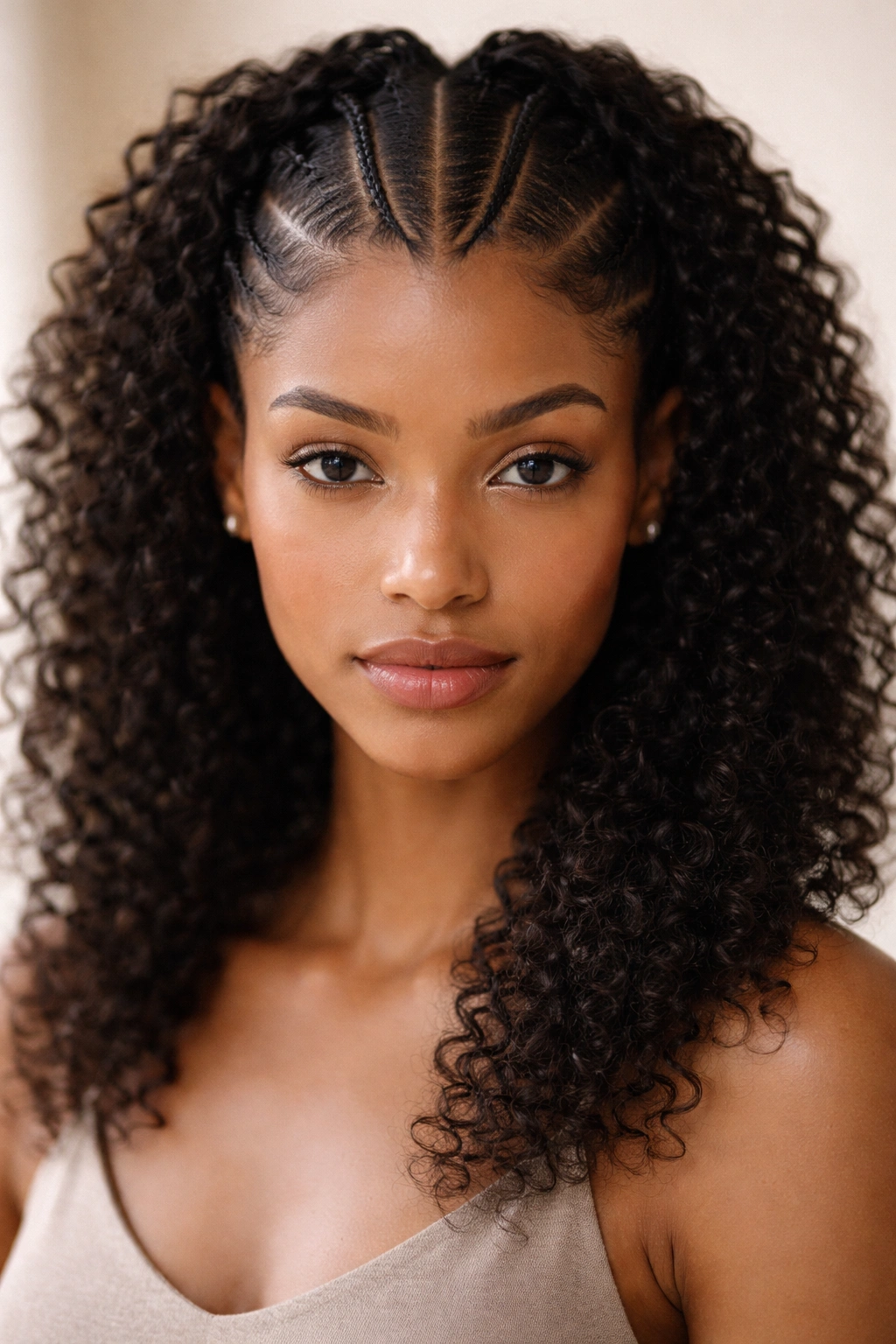
This understated version strips away the elaborate accessories and additional elements to focus purely on the braid structure itself. Just one or two thin, perfectly executed Fulani braids running from hairline to the back of your head, with no beads, no ombré color, no connecting strands—just clean, geometric lines. On curly hair, the simplicity means your natural texture becomes the co-star alongside the braids, creating an aesthetic that feels modern and intentional rather than maximalist.
The Power of Simplicity on Curly Hair
Minimalist Fulani braids work beautifully on curly hair because they create visual contrast without overwhelming your natural texture. The precision of the braids is showcased against the softness of your curls, and there’s an elegance in restraint that makes this style feel mature and sophisticated. This version is perfect if you want the cultural authenticity of Fulani braids without the visual heaviness of multiple accessories or complex patterns.
Execution and Styling
- Braid count: One or two braids positioned either down the center or off to one side create the minimalist aesthetic
- Width choice: Thin braids (roughly the width of a pencil) look especially refined and elegant
- Extension color: Use extensions that exactly match your natural hair color for maximum seamlessness, or choose a single contrasting tone for subtle visual interest
- Positioning freedom: A single center-parted braid is classic, or position two braids off-center for asymmetrical sophistication
- Maintenance advantage: Fewer braids mean less styling time and less complexity—this style is easier to maintain and allows your natural hair to shine
- Versatility: Minimalist braids work for any occasion, from casual everyday wear to professional settings to formal events
Pro tip: Minimalist Fulani braids look especially striking when your braids are precise and crisp—imperfections are more visible without the visual complexity of multiple braids or accessories, so invest in a skilled stylist.
Preparing Your Curly Hair Before Braiding

Getting your curls ready for Fulani braids is just as important as the braiding technique itself. Your hair needs to be clean, moisturized, and in optimal condition so it can withstand the tension and styling of the braids without breaking or becoming excessively dry. Preparation week is when you set yourself up for success with your Fulani braids.
Start with a clarifying wash one to two weeks before your appointment to remove buildup, product residue, and anything that might interfere with the braiding process. Follow that with your regular washing routine, using a gentle, moisturizing shampoo and deep conditioning treatment. Your curls should feel soft, hydrated, and bouncy—if they feel dry or straw-like, they’re not ready for braids yet. Dry, brittle hair breaks more easily under the tension of braiding and will look dull and lifeless once the braids are installed.
Two or three days before your appointment, apply a protein treatment if your hair tends toward dryness, or a moisture-rich deep conditioner if your curls are already hydrated. Your hair’s moisture-protein balance matters because hair that’s too dry is fragile, while hair that’s too soft or mushy is weakened and prone to breakage. Aim for that sweet spot where your curls feel strong, resilient, and healthy.
The night before your braiding appointment, do a final light conditioning treatment, but don’t wash your hair that final day. A tiny bit of natural oil at your scalp and throughout your hair actually helps with the braiding process—your stylist will have an easier time working with hair that has some slip and isn’t stripped of its natural oils. Some people sleep with their hair in a loose protective style like a braid or pineapple to minimize frizz and tangles before the appointment.
Scalp Care and Cleansing With Braids
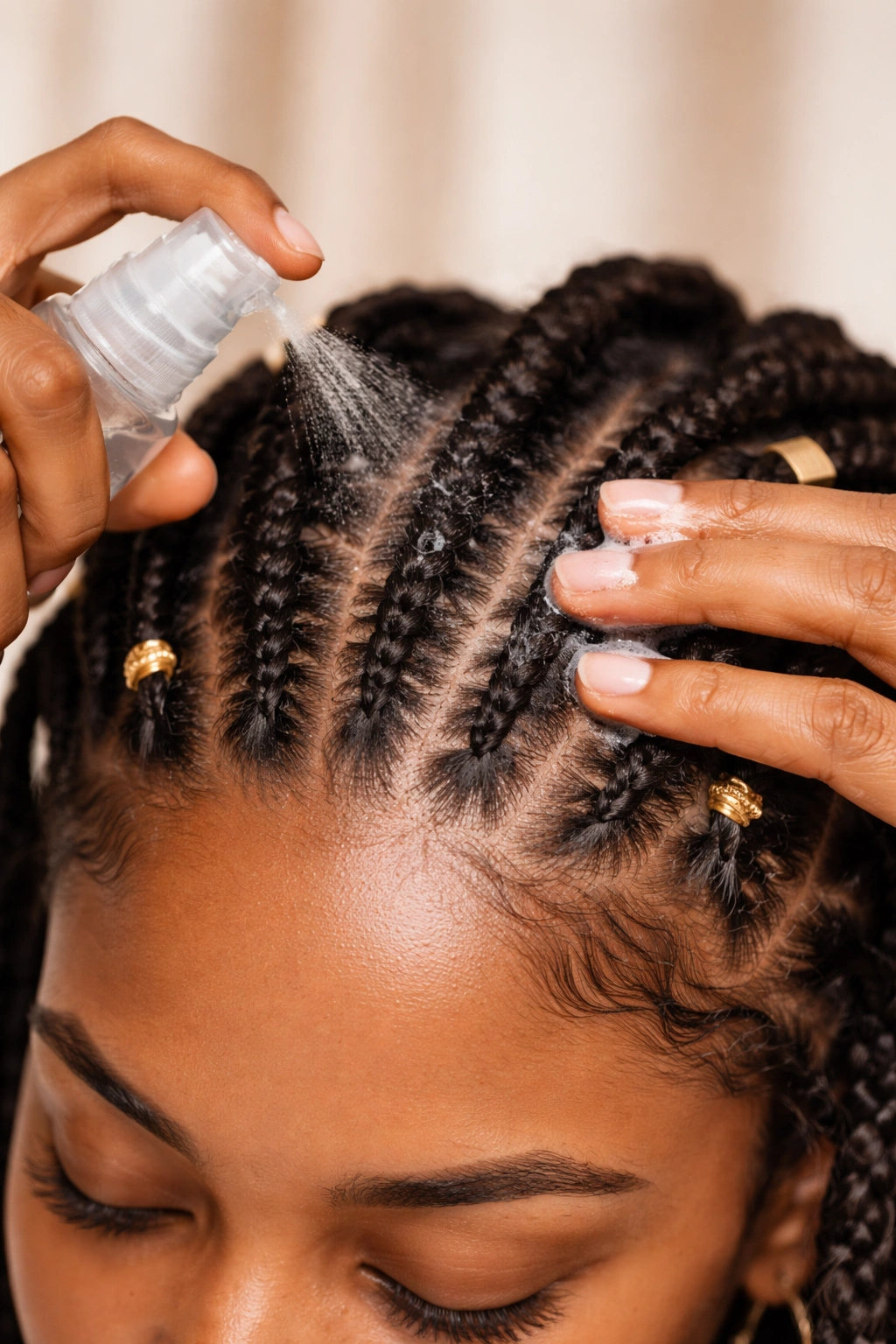
Your scalp continues to produce oil, sweat, and dead skin cells while your hair is braided—just as it does when your hair is loose. The difference is that you can’t wash your hair the same way you normally do, so you need a modified routine that keeps your scalp clean without loosening or damaging your braids. A clean scalp means less itching, fewer infections or irritation, and ultimately better comfort while wearing your Fulani braids.
The most effective method is to use a water bottle with a spray nozzle, a diluted cleansing liquid, and your fingers to gently cleanse your scalp between your braids. Mix water with a small amount of sulfate-free shampoo or a clarifying scalp wash, then spray the mixture directly onto your scalp, working in sections. Use your fingertips (not your nails) to gently massage your scalp and work the cleanser through, loosening buildup and oil. Rinse thoroughly with clean water, making sure no shampoo residue remains.
This scalp cleansing routine should happen every 5 to 7 days while your Fulani braids are in. You can also use dry shampoo or scalp powder between liquid washes to absorb excess oil and extend the time between full cleansings, though these shouldn’t replace actual washing entirely. Avoid getting your braids excessively wet—the goal is to cleanse your scalp while keeping your braids as dry as possible, since extended dampness can cause mildew or mold growth in the braid areas.
At night, consider using a silk or satin bonnet or pillowcase to reduce friction between your braids and your pillow. This minimizes frizz along the braid lines and helps preserve the neat appearance of your style longer. If you sleep with a bonnet, a loose one is better than one that’s too tight, since excessive tension while sleeping can contribute to hairline damage over time.
Managing Frizz and Maintaining Braid Definition
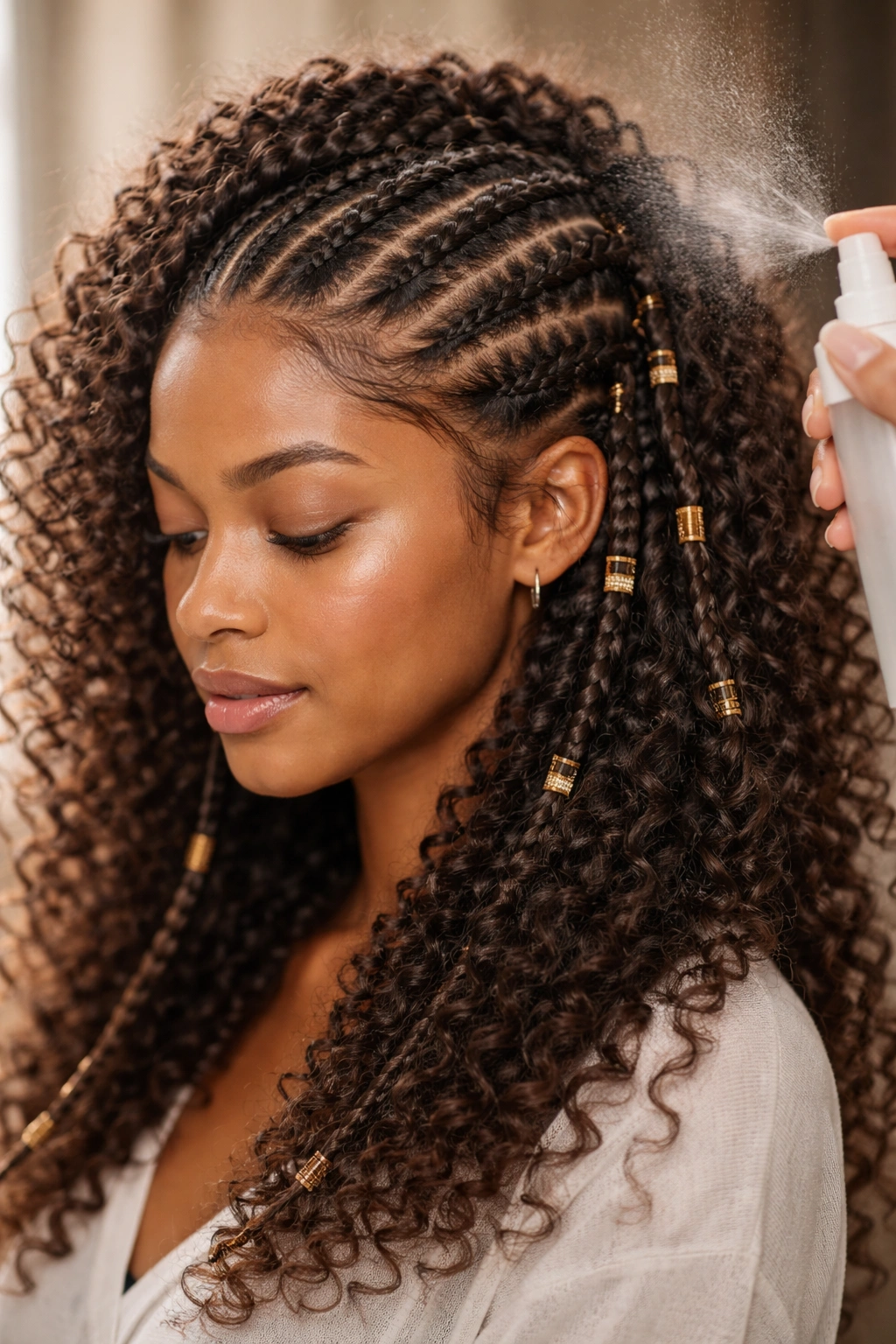
Fulani braids on curly hair are inherently more prone to frizz than the same braids on straight hair because of your hair’s texture and tendency to move outward rather than lying flat. Managing frizz is really about accepting some softness around the braid lines while keeping the core structure intact and neat. A bit of frizz is actually normal and adds to the authenticity of the style, but excessive frizz that obscures the braid definition needs attention.
Use lightweight, nourishing products designed for curly hair to manage frizz without creating buildup. A leave-in conditioner applied every few days, especially to the unbraided portions of your hair, keeps your curls moisturized and less prone to frizz from dryness. For the braids themselves, a light frizz-control serum or anti-frizz spray applied sparingly can help tame flyaways without making your braids look greasy or weighed down. Apply these products with a light hand—your braids don’t need much.
If frizz builds up significantly after a few weeks, you can refresh your braids’ definition by lightly misting them with water and smoothing them with your hands or a soft-bristled brush. Some people use a barely-damp toothbrush to gently smooth the outer edges of their braids and tidy up the line. You can also re-tighten braids slightly by having your stylist do a refresh appointment, where they tighten any loose sections and refresh your edges—this is especially helpful if you’re planning to keep your braids past the four-week mark.
Removing Your Fulani Braids Safely
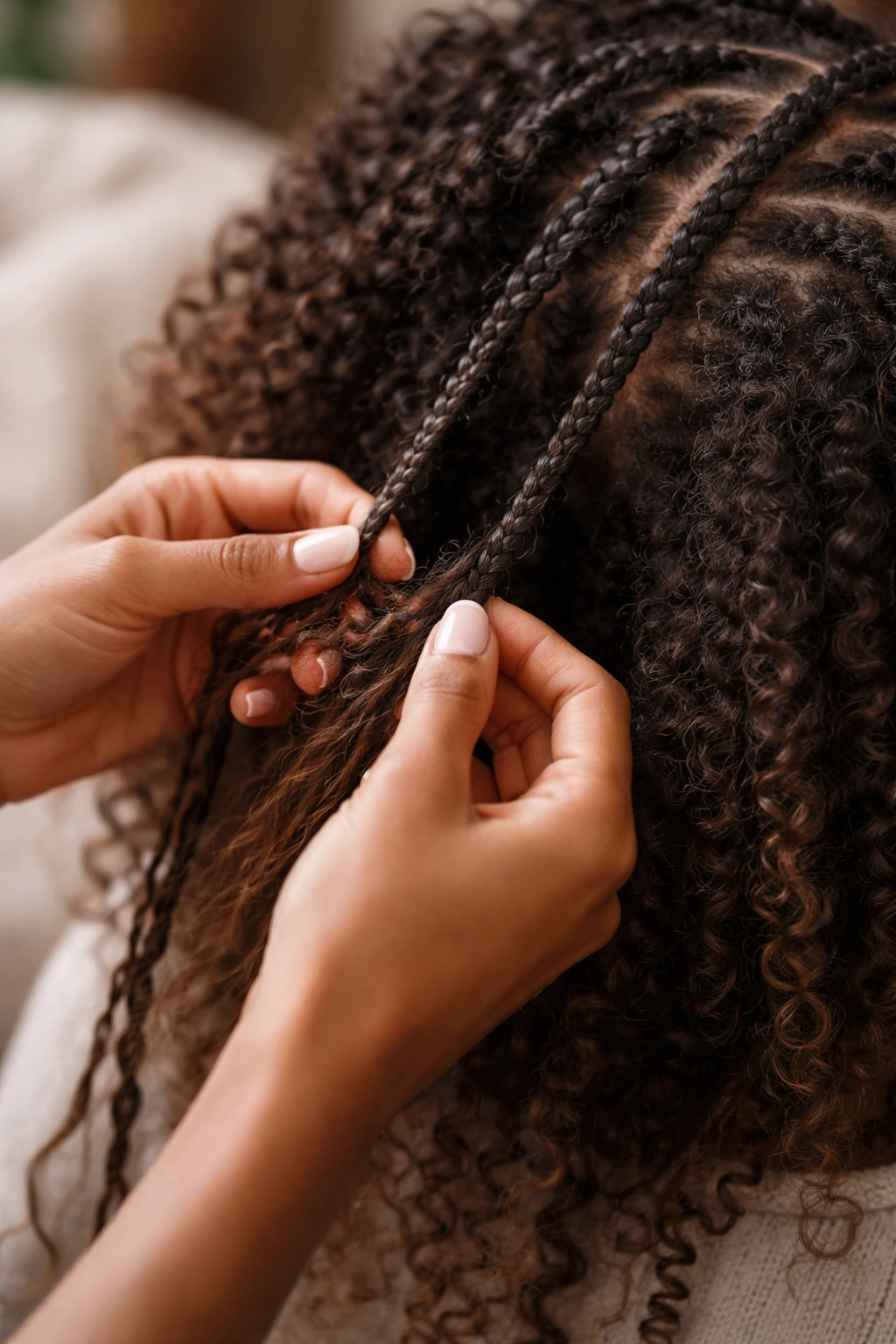
Removing your braids properly is as important as installing them—rushing the removal process or being rough can cause significant breakage and damage to your natural hair. Plan to spend 30 minutes to an hour carefully removing your braids, depending on how many you have and how long you’ve worn them. Wet hair is more fragile than dry hair, so remove your braids on dry hair, or at least mostly dry hair.
Start by gently loosening each braid from the ends backward toward your scalp, unraveling the extension hair from your natural hair strands. Work slowly and methodically, using your fingers or a small comb to gently separate the extension hair from your own hair as you go. Don’t pull or yank on the braids—this causes breakage of your natural hair. If a braid feels stuck or difficult to remove, mist it lightly with water and wait a moment before trying again.
Once all your braids are removed, rinse your hair thoroughly to remove any product residue or loose hair. Then shampoo gently with a moisturizing shampoo, being extra gentle with your strands. Your hair will likely feel tangled or matted where the braids were—this is completely normal. Apply a rich, slip-filled conditioner and comb through very gently with a wide-tooth comb, working from the ends up toward your roots. Never comb from roots to ends on freshly-unbraided hair, as this causes unnecessary breakage.
Consider a deep conditioning treatment or protein treatment in the days after removal to help restore your hair’s strength and health after being braided. Your hair may feel a bit dry or fragile at first, and that’s normal—give it time to recover. Avoid heavy styling or manipulation for at least a week after removal, allowing your hair to rest and bounce back into its natural shape and vitality.
Choosing Extensions That Work for Curly Hair
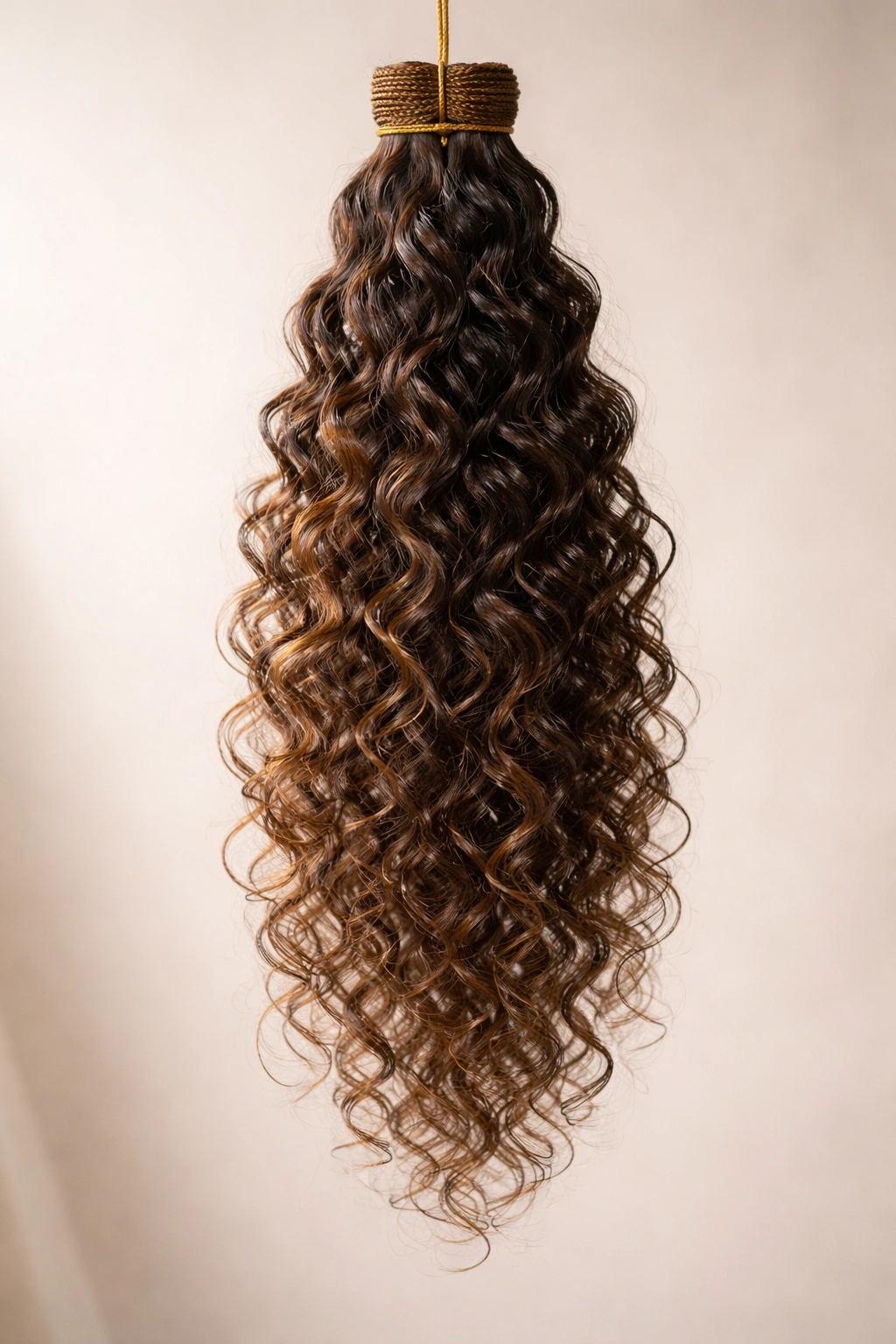
The quality and type of extensions you use for your Fulani braids significantly impact how the finished style looks and how long it lasts. Not all synthetic or human hair extensions are created equal, and curly hair often has specific needs that some extensions don’t address. Choosing the right extensions means thinking about texture, weight, color, and how the extensions will interact with your natural curl pattern.
For curly hair specifically, you have a few options. Straight synthetic extensions create the classic Fulani braid look and provide strong contrast to your natural curls if you want that aesthetic. Human hair extensions offer more versatility for styling and a more natural appearance; they also blend more seamlessly if you find extensions that match your curl pattern. Some braiders offer pre-curled or kinky-curly extensions specifically designed to coordinate with textured natural hair, which creates the most cohesive blended look.
Consider the weight of your extensions as well. Lightweight extensions put less tension on your hairline and neck, which is especially important on curly hair where your edges may already be delicate. Heavier extensions create more visual impact and last longer before loosening, but they require more tension during installation and may cause discomfort over time. Most people find a middle ground works best—extensions that are substantial enough to create the look you want but not so heavy that they’re uncomfortable.
The color of your extensions should either match your natural hair color for a seamless, blended look, or contrast with it intentionally for visual impact. Matching colors make the style look effortlessly beautiful and showcase the braid structure without color distraction. Contrasting colors—whether ombré, a solid different shade, or multicolored—make the braids themselves the focal point and create movement and visual interest. There’s no wrong choice; it depends on whether you want subtle elegance or bold statement.
Final Thoughts
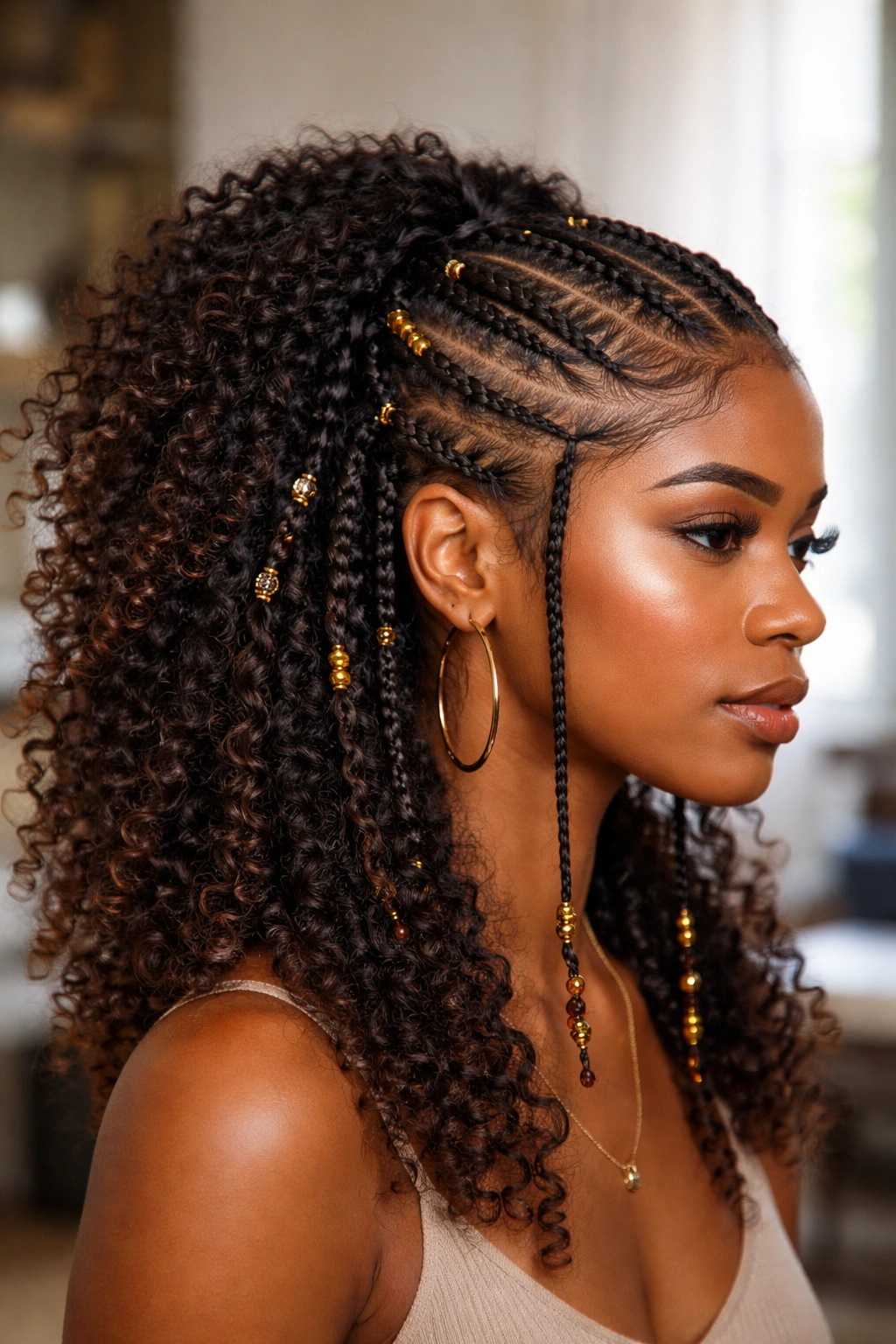
Fulani braids celebrate your natural curly texture while offering the protective benefits of a braided style that can last weeks. Whether you choose the timeless elegance of classic center-parted braids, the romantic softness of spiral curls at the ends, or the bold statement of jumbo braids with decorative cuffs, this is a style that honors cultural heritage while giving you endless opportunity for personal expression.
The key to beautiful, healthy Fulani braids on curly hair is understanding that your curls are an asset, not something to minimize or work around. Your curl pattern adds dimension, volume, and visual interest that enhance the braids rather than detract from them. Proper preparation, gentle maintenance, and careful removal all contribute to a style that looks stunning while keeping your natural hair healthy and strong.
Take your time selecting a skilled stylist who has specific experience with Fulani braids on textured hair. A stylist who understands your curl pattern and how it will interact with the braiding technique can recommend the best options for your hair type and help you achieve a style that’s both beautiful and sustainable for your hair’s long-term health. The time you invest in proper installation and maintenance will pay off with a hairstyle that you can genuinely love wearing for weeks.
