



Fulani braids have become one of the most sought-after protective styles for Black hair, and for good reason. These intricate, beautiful braids originated with the Fulani people of West Africa, who used them not just as a fashion statement but as a cultural marker rich with meaning and tradition. The style features thin, elegant braids often accented with metallic cuffs, beads, or cowrie shells that catch the light and add dimension to your look. What makes Fulani braids so special is their versatility — you can wear them sleek and understated, or bold and heavily adorned depending on your mood, the occasion, and your personal aesthetic.
The appeal goes beyond beauty alone. Fulani braids are a genuine protective style that keeps your hair ends tucked away from environmental damage while allowing your natural hair to rest and recover. They’re also surprisingly low-maintenance once installed, making them practical for anyone with a busy lifestyle. Whether you’re new to braiding or a seasoned pro, there’s a Fulani braid variation that’ll speak to you. The variations are nearly endless — from sleek two-strands to intricate multi-braid arrangements, from minimalist metal accents to elaborate bead work that turns your head into wearable art.
Before diving into specific styles, know that Fulani braids typically take anywhere from 3 to 6 hours to install, depending on the complexity and the length of your hair. The investment in time and money is real, but so is the longevity — most installations last 6 to 8 weeks with proper care. Throughout this guide, I’ll walk you through 14 stunning Fulani braid variations that showcase the full range of what’s possible with this iconic style, from classic interpretations to modern twists that blend traditional technique with contemporary flair.
1. Classic Fulani Braids with Gold Cuffs
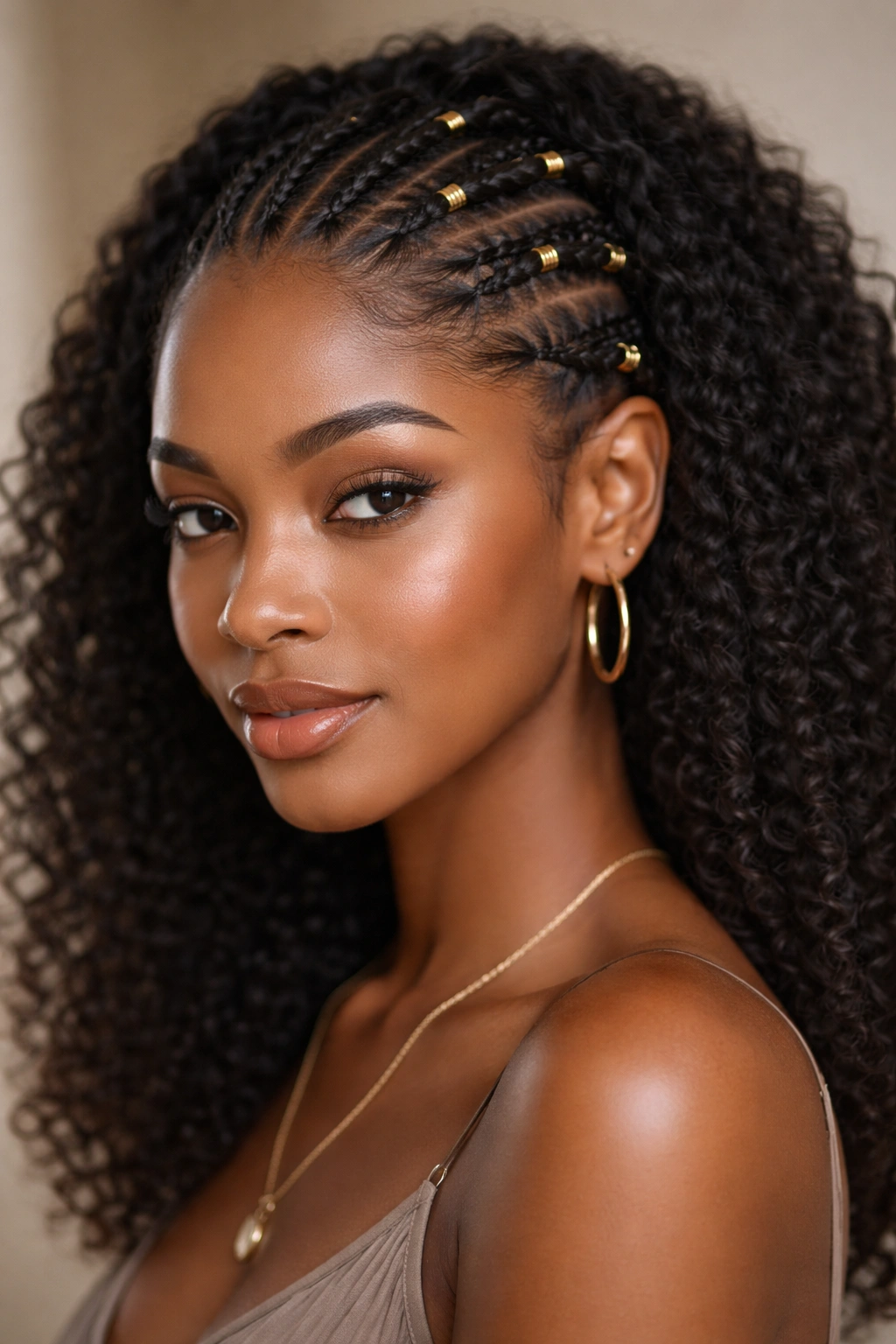
This is the quintessential Fulani braid style that made the look iconic in the first place. Picture two to four thin, delicate cornrows running from the front of your scalp toward the back, with the rest of your hair left in its natural texture or in loose braids. The magic happens with the gold cuffs — smooth, cylindrical metal sleeves that slide onto your braids and catch every bit of light. The cuffs can be positioned near the roots for a bolder statement or scattered throughout the length of the braids for a more nuanced effect.
Why This Look Works So Well
The beauty of classic Fulani braids lies in their balance of restraint and glamour. The braids themselves are relatively simple to execute, making them accessible even if you’re not going to a high-end braider. The gold cuffs do all the heavy lifting visually — they’re the jewels that elevate the entire look from everyday protective style to something you’d wear to a special event. The thin, defined braids show off your face shape and allow your features to take center stage rather than competing with an overly complicated hairstyle.
How to Style and Maintain
- Keep your braids moisturized by misting them lightly with water and a leave-in conditioner every few days
- Wrap your braids at night in a silk or satin scarf to prevent frizz and protect both your braids and your natural hair underneath
- Adjust the gold cuffs as your braids loosen slightly over time — this gives you the chance to refresh the look midway through your wear period
- Wash your scalp gently with a sulfate-free cleanser, using your fingertips rather than your nails to avoid pulling on the braids
- The gold cuffs stay on throughout the entire wear, acting as lightweight protective sleeves that won’t slip off
Pro tip: Mix gold with silver metallic cuffs on alternate braids for a two-tone effect that’s modern and visually interesting without being matchy-matchy.
2. Fulani Braids with Cowrie Shells
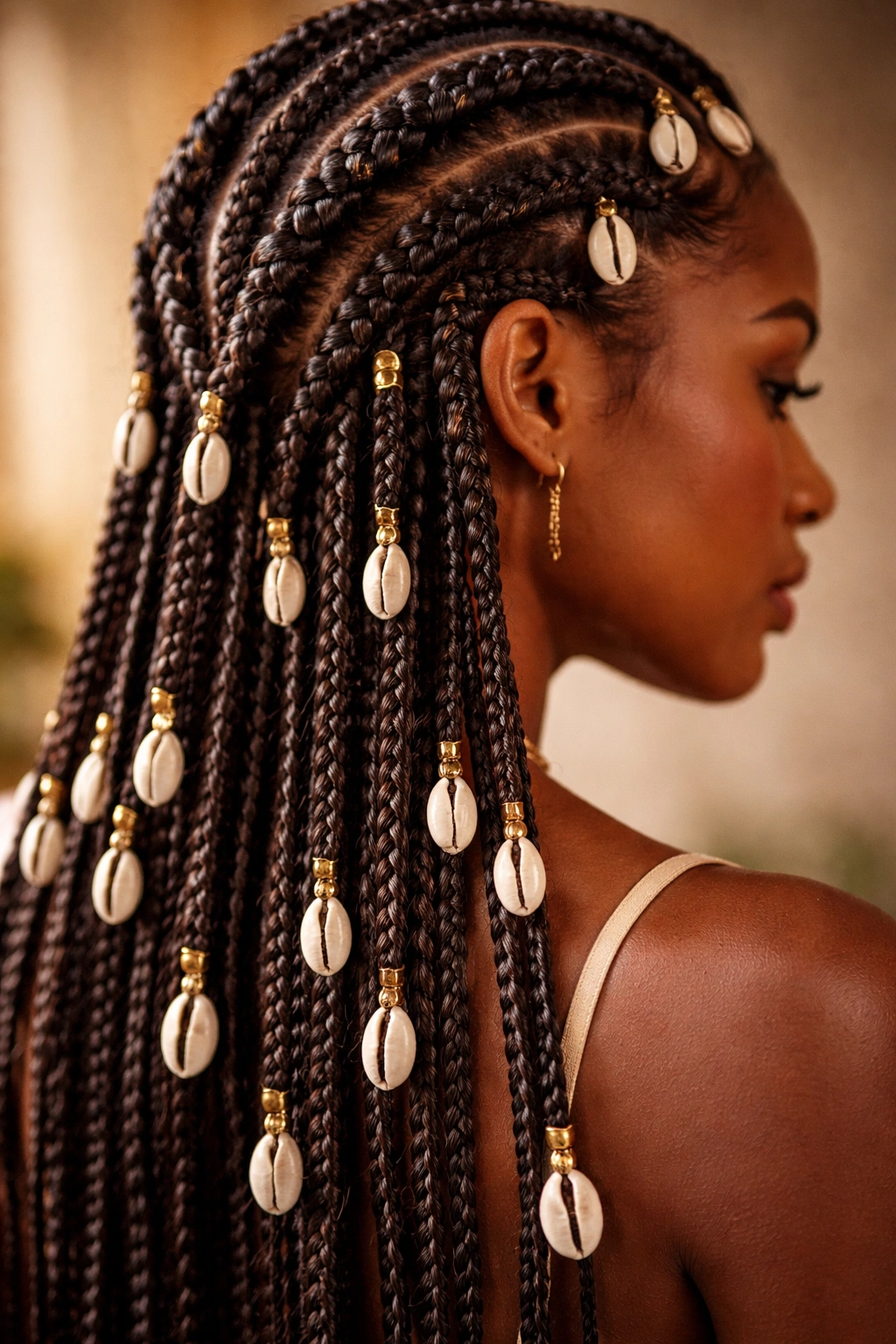
Cowrie shells represent abundance, fertility, and protection in African tradition, and they’re making a powerful statement in contemporary Fulani braid styles. Instead of (or in addition to) metal cuffs, cowrie shells are threaded onto your braids, typically positioned near the ends or scattered throughout. The shells have a natural cream color with subtle brown markings that create a warm, organic aesthetic. Some braiders incorporate both shells and beads for an even more elaborate look, mixing textures and creating visual rhythm along each braid.
The Cultural and Aesthetic Significance
Wearing cowrie shells isn’t just about looking beautiful — it’s about honoring where this style comes from and reclaiming a piece of African heritage. Historically, cowrie shells were used as currency in West Africa and held deep spiritual meaning. Today, incorporating them into your Fulani braids is a deliberate choice to celebrate that legacy while creating a style that’s distinctly personal to you. The shells also catch light differently than metal cuffs do, creating a more subtle, earthy shimmer that feels sophisticated and intentional.
Installation and Care Tips
- Ask your braider about the attachment method before installation — some shells are glued, others are threaded, and some are even attached with small metal caps
- If shells are glued on, be extra gentle during the wrapping process at night to avoid putting pressure on the attachment points
- Avoid submerging your braids completely in water for long periods if the shells are glued, as this can weaken the adhesive
- Check the shells periodically for any that might be loosening and secure them before they fall out completely
- The shells can be reused on your next set of braids if your braider installed them with care
Worth knowing: Real cowrie shells are more delicate than metal cuffs, so this style works best if you’re relatively gentle with your hair and plan to keep your braids for the full duration rather than removing them early.
3. Fishtail Fulani Braids
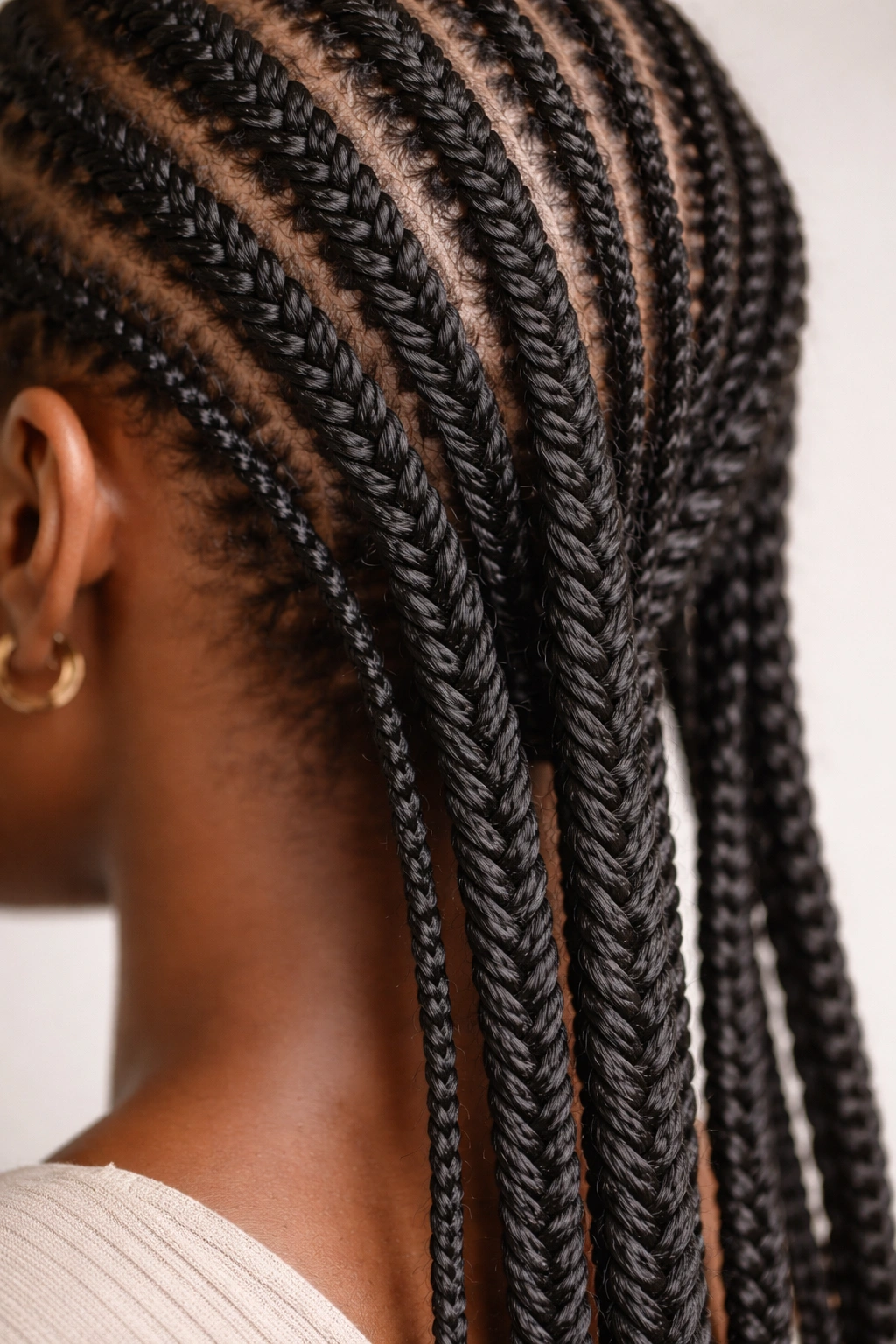
Instead of simple three-strand braids, fishtail Fulani braids use a more intricate weaving pattern that creates a delicate, textured appearance reminiscent of actual fishtails. The technique involves taking thin sections from alternating sides and weaving them together in a way that creates a flat, elegant braid with built-in visual interest. Even without any cuffs or beads, fishtail braids have inherent dimension that makes them look more complex than they actually are. When you do add metallic accents, they highlight the texture and depth of the braiding pattern.
What Makes Fishtail Braids Stand Out
The fishtail technique is harder to execute than a basic three-strand braid, which means your braider needs real skill and precision. This isn’t a style for someone just starting out in the braiding game — you want someone with proven experience. The payoff is worth it, though. Fishtail Fulani braids photograph beautifully because the texture catches light in multiple ways. They also feel more substantial and interesting than simple braids, even though they’re often thinner than standard three-strand braids.
Styling Considerations
- Fishtail braids work especially well with gold, rose gold, or copper cuffs that complement their warm, intricate texture
- You can wear fishtail Fulani braids with your natural hair texture showing around them, creating a softer, more blended look
- Consider pinning the front braids to the side or gathering them into a half-up style for variety throughout your wear period
- Fishtail braids can appear slightly looser than other braiding techniques after a few weeks — this is normal and actually creates a pretty, softened effect
- The thinner construction of fishtail braids means they dry faster after washing, which is genuinely convenient
Insider note: If you have finer hair or a sensitive scalp, fishtail braids might feel more comfortable than thicker braids because they put less tension on your hair and scalp.
4. Feed-In Fulani Braids
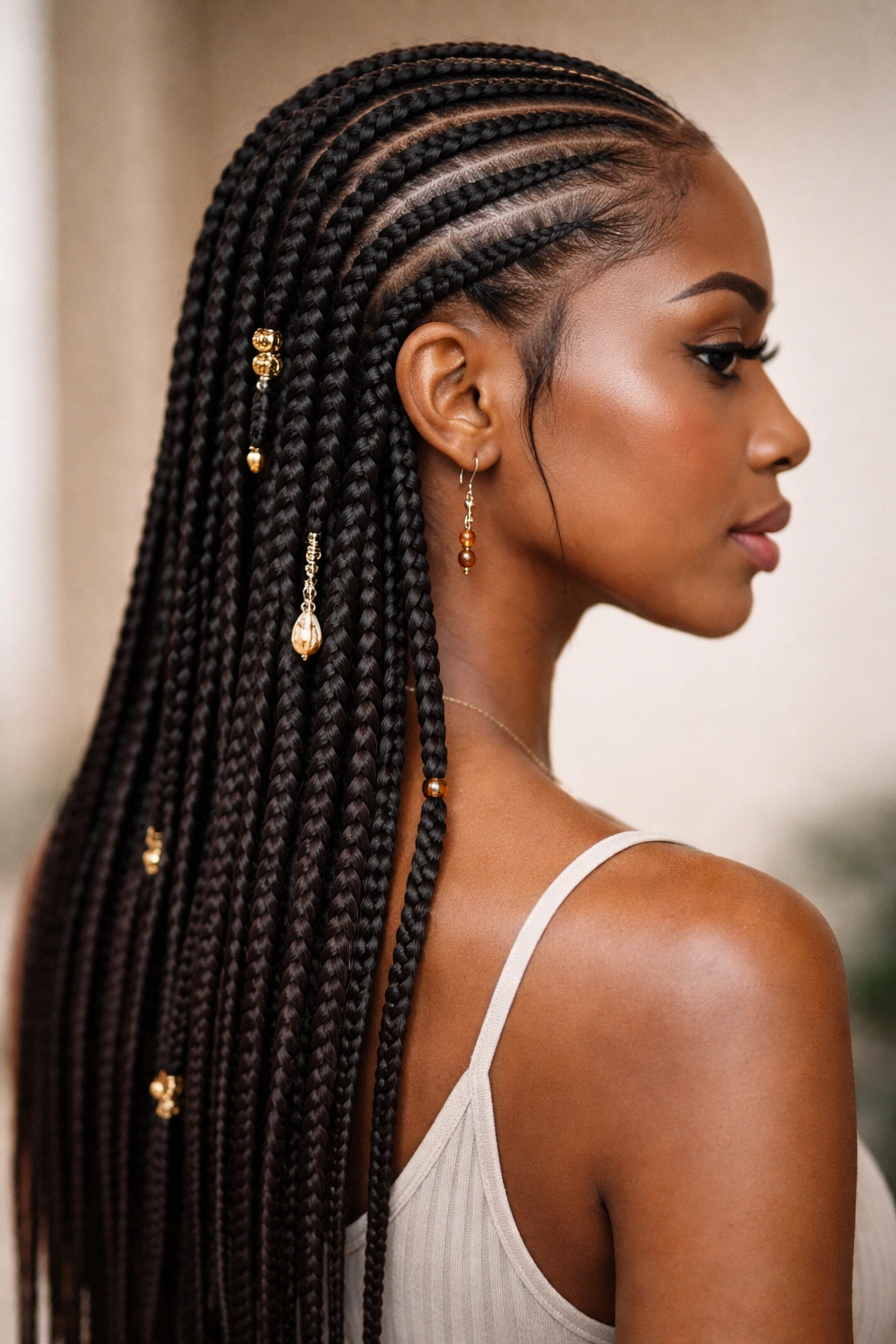
Feed-in braids are a game-changer for protective styling because they minimize tension on your hairline while still giving you that braided look you want. Instead of starting the braid with all the hair from a single section, your braider gradually adds (or “feeds in”) hair as they work down the length of the braid. This technique means the braid starts very thin at the root and gradually gets fuller toward the ends. Feed-in Fulani braids look incredibly neat and intentional, and they’re much gentler on your edges and hairline.
Why Feed-In Braids Are Easier on Your Hair
Tension alopecia — hair loss caused by consistent, excessive pulling — is a real concern with protective styles. Feed-in braids distribute the tension more evenly along the entire length of your hair rather than concentrating it all at the roots. Your braider is using your natural hair more efficiently, which means less tension overall. This technique is especially important if you have a history of hair loss, if your edges are already sensitive, or if you’ve had bad experiences with tight braids in the past.
Making Feed-In Fulani Braids Work for You
- Communicate with your braider about how much tension you want — you want your braids to last 6-8 weeks, but not at the expense of your hairline
- Feed-in braids look best with cuffs or beads positioned along the length where the braid is fullest, typically the middle section
- You’ll likely notice the braids at the root are thinner — this is completely normal and actually a sign that the technique was executed correctly
- Feed-in Fulani braids can be worn loose or gathered into updos; they’re versatile because of their graduated construction
- Check your hairline regularly throughout the wear period — if you notice any tenderness or small breakage, loosen the braids slightly or consider taking them down early
Pro tip: If you’re going to feed-in Fulani braids, definitely ask your braider to avoid any tight elastics or bands at the front hairline — keep the entire front section as loose as possible while still maintaining the style.
5. Fulani Braids with Beads and Pearls
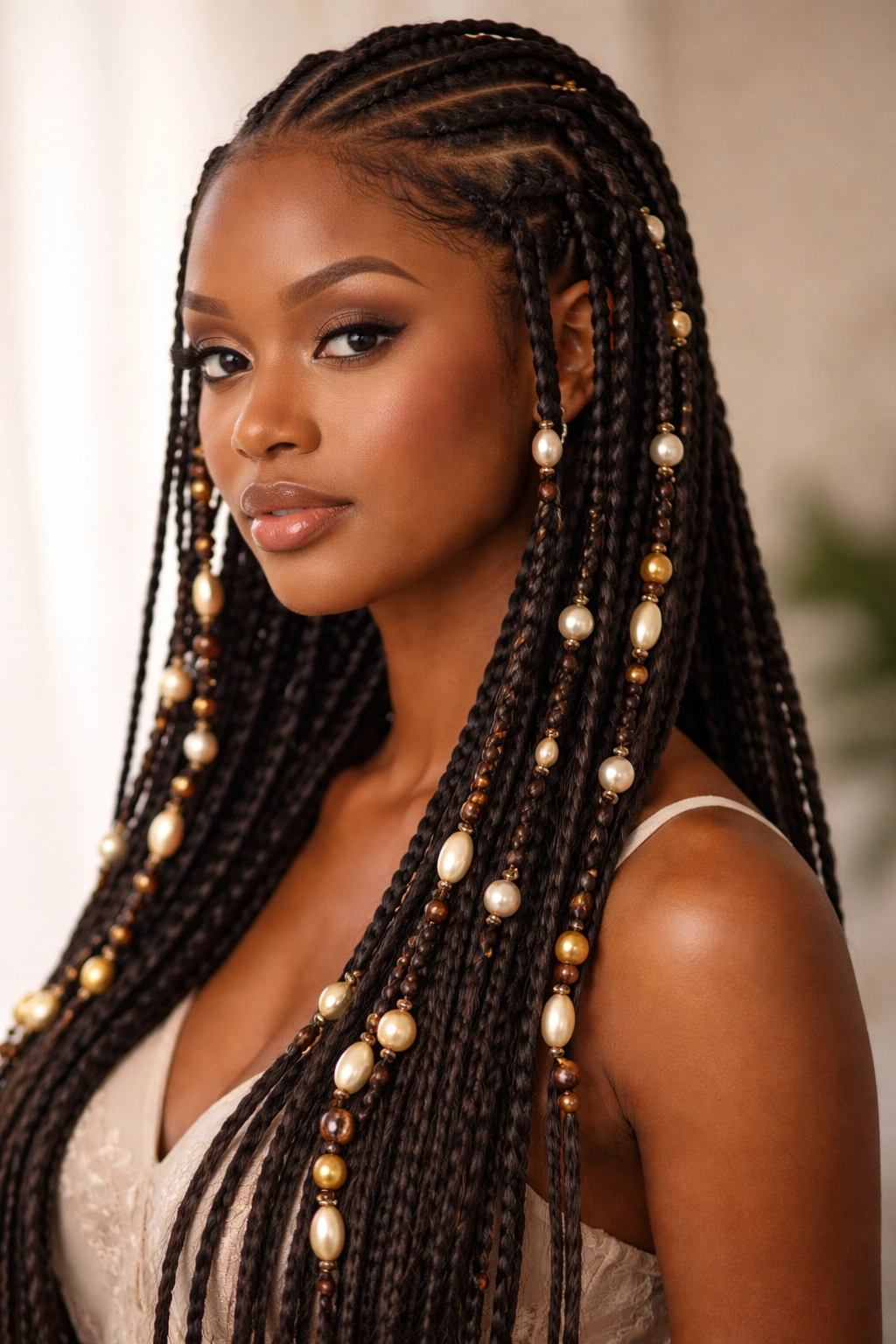
This style layers beads and pearl accents throughout your Fulani braids for a look that’s equal parts bohemian and refined. Unlike metal cuffs that typically go on one braid, this approach involves beads of various sizes threaded onto multiple braids, often at different lengths so they’re scattered throughout. You can mix pearl-toned beads with gold metallic beads, or go monochromatic with all gold or all silver. Some stylists also incorporate larger statement beads at the ends of certain braids to create focal points.
Creating Visual Interest with Varied Bead Placement
The genius of bead-adorned Fulani braids is that they give you control over the visual weight and flow of your hairstyle. Placing larger beads near your face draws attention to your features, while scattering smaller beads throughout creates an overall sense of movement and playfulness. Pearls specifically add an elegant, luxe quality that feels dressy even if you’re wearing it in a casual setting. The beads also make a subtle sound when you move, which some people love as part of the aesthetic and tactile experience.
Bead Installation and Longevity
- Ask whether beads are glued, threaded, or attached with tiny metal caps — each method has different durability and removal consequences
- If beads are glued, they’re permanent for the duration of your wear — which is fine, but know you can’t adjust them
- Threaded beads are more flexible but can occasionally slip off, especially if the braid loosens over time
- Metal-capped beads are the most durable and adjustable, and they can often be transferred to your next set of braids
- Avoid yanking on beads during the wrapping process at night or during regular handling
- If a bead does fall off, your braider might be able to reattach it, or you can carefully remove nearby beads and thread new ones on
Worth knowing: More beads mean more weight on your hair, so this style works best if you have thicker hair or don’t mind the slight heaviness. Some people find the sound and feel of multiple beads genuinely soothing; others find it distracting.
6. Goddess Fulani Braids
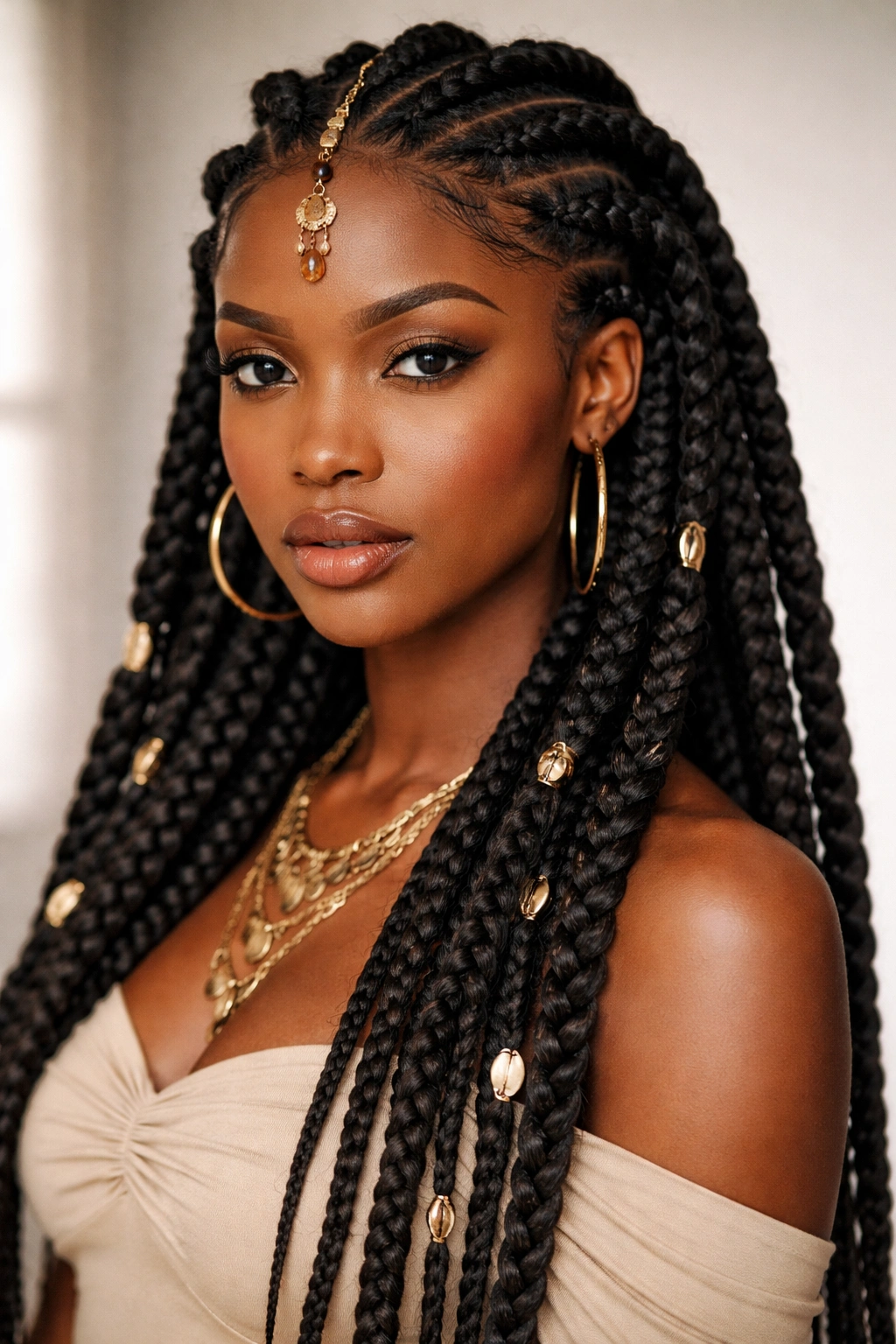
Goddess Fulani braids are thicker, more substantial braids that create a bolder, more dramatic look than the delicate traditional Fulani style. Rather than 2-4 thin braids, you might have 6-8 braids that are still smaller than typical box braids but noticeably heftier than classic Fulani braids. The term “goddess” comes from the regal, commanding presence these larger braids create. They photograph beautifully, they last longer than thinner braids (typically 8-10 weeks), and they make a clear style statement without requiring as much embellishment.
Why Go Thicker
Thicker braids are genuinely practical for anyone with dense, voluminous hair — they show off your hair’s fullness in a flattering way and create gorgeous movement. They’re also faster to install than thin braids (typically 3-4 hours instead of 5-6), which means less time in the chair and often a lower cost. The weight distribution is still relatively even along your scalp, so goddess Fulani braids are still protective if your braider installs them without excessive tension. These braids work with or without cuffs, though when you do add them, they have major visual impact.
Styling Thick Fulani Braids
- Goddess Fulani braids look stunning swept to one side, pinned into a low bun, or left to flow down your back
- The thickness means these braids maintain their neat appearance longer — they don’t loosen and frizz as quickly as thinner braids
- You have lots of flexibility with cuff placement; thicker braids can handle statement-sized cuffs that would overwhelm thin braids
- Consider doing a half-up style to showcase the thickness of your braids while keeping hair off your face
- These braids work beautifully for special events, professional settings, and everyday wear
Pro tip: Goddess Fulani braids look especially striking with subtle wave or curl in the sections of hair between the braids — ask your braider if they can lightly curl those sections for added dimension and movement.
7. Fulani Braids with Twists
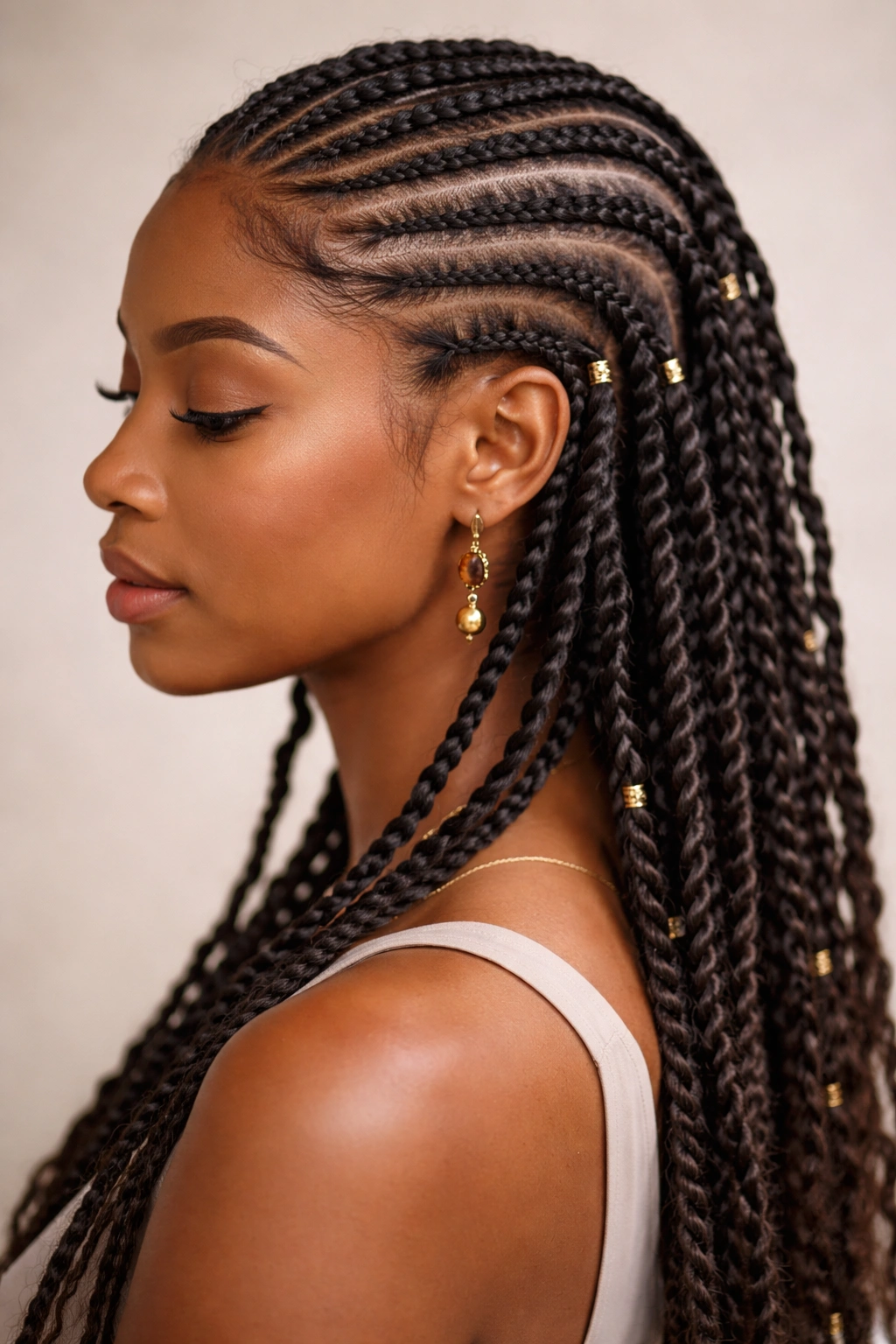
This style interweaves thin braids with two-strand twists for a look that’s textured, dynamic, and visually complex without being over-the-top. You might have two braids on one side and two twists on the other, or they might be alternated in a pattern. The combination of braiding and twisting creates different textures that play off each other beautifully. Twists are faster to install than braids and create a slightly different aesthetic — they’re less formal and more free-flowing while still being a protective style.
The Visual Appeal of Mixed Textures
When you combine braids and twists, you create visual rhythm and interest that a single texture can’t match. Your eye travels along the design, catching on the tighter structure of the braids and the slightly looser, more organic feel of the twists. This hybrid approach also allows your braider to work more efficiently — twists are quicker than braids, so a mixed style might take slightly less time overall. The end result is a style that feels contemporary and intentional, like you made deliberate creative choices about your look.
Maintenance for Braids and Twists Together
- Twists loosen slightly faster than braids, so expect the twists to soften and separate a bit before the braids do
- You can separate the twists further if you want a softer, more textured look as time goes on
- Avoid moisturizing only the braided sections — twists need love too, so mist and condition the entire head
- Twists don’t hold cuffs as securely as braids do, so if you want metal accents, focus them on the braided sections
- Gently re-twist any sections that are unraveling as they age, or just embrace the softer, separated look
- The transition between braids and twists should be smooth with no visible gap in coverage
Insider note: If you have shorter hair or less density, mixed braids and twists can create the illusion of more fullness because the twists puff out slightly more than thin braids do.
8. Triangular Fulani Braids
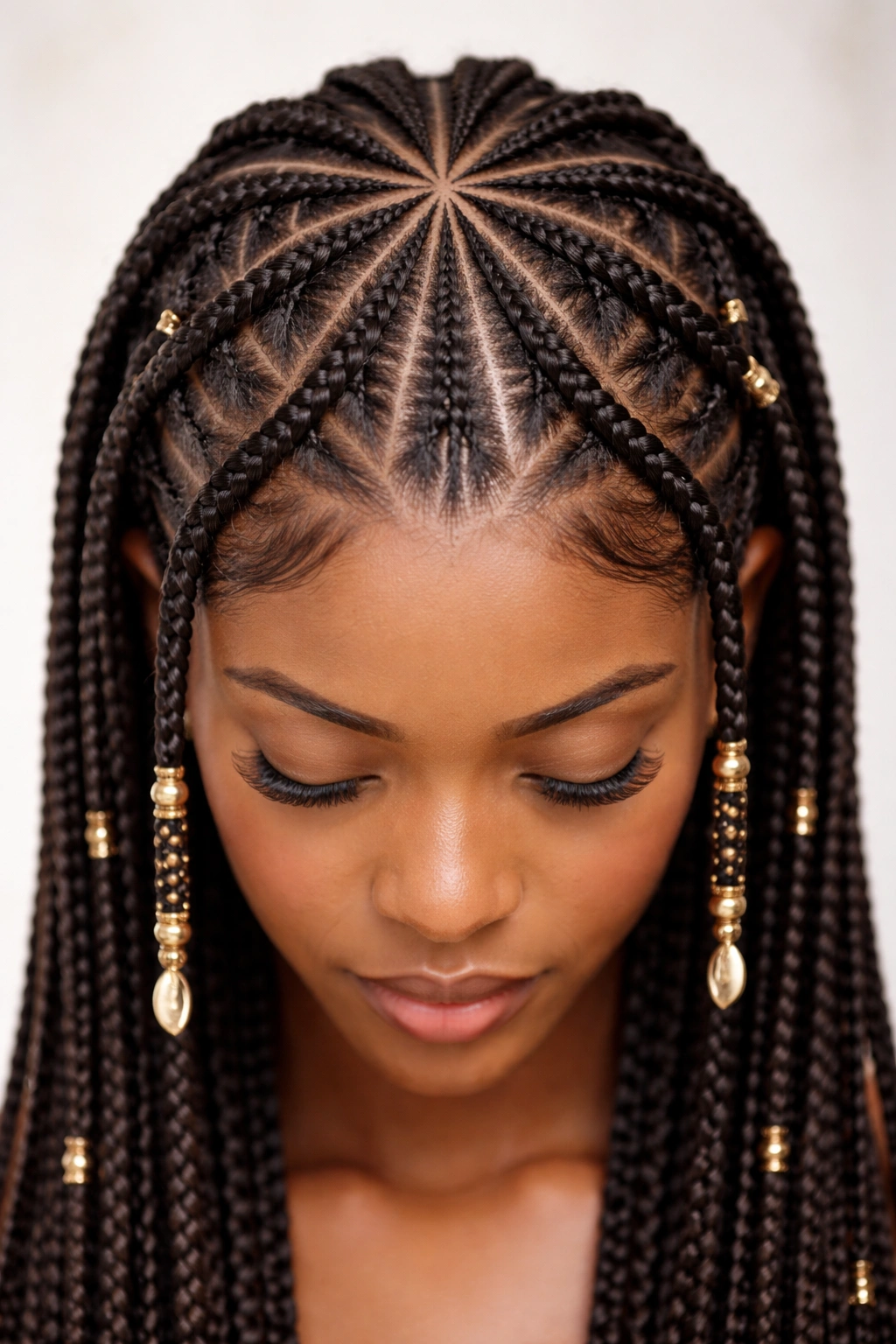
Triangular Fulani braids feature braids positioned to create a geometric pattern across your scalp, typically with more braids at the front and fewer as you move toward the back. The result is a clean, architectural look that’s super flattering to all face shapes. The braids might start at three different points on your forehead and converge toward the crown, or they might radiate outward from a center part. This positioning makes the style look intentional and polished, and it’s particularly flattering because the braids help frame your face beautifully.
Geometric Styling Strategy
The power of triangular placement is that it works with your natural head shape rather than against it. Your braider will map out the best placement for your specific face shape and hairline, which means the style is customized to you. The geometric arrangement also makes it easier to style the braids into updos or half-up styles because they have natural anchor points. The visual effect is sophisticated and modern — this isn’t just random braids scattered across your head; it’s clearly a thought-out design.
Creating Balance and Proportion
- Triangular placement works especially well if you have a round or square face shape — the angles soften and balance your features
- If you have a longer face shape, consider having your braider position the braids to add width at the sides
- The spacing between braids matters — they should be close enough to look intentional but not so close that they create too much bulk
- You can adjust which sections of hair are left out or styled differently to create asymmetry that feels modern and interesting
- This style photographs beautifully because the geometric arrangement is visually clear and appealing
Pro tip: Triangular Fulani braids look stunning with a silk press or light wave applied to the hair between the braids — the contrast between the structured braids and the soft waves is really compelling.
9. Fulani Braids with Colored Extensions
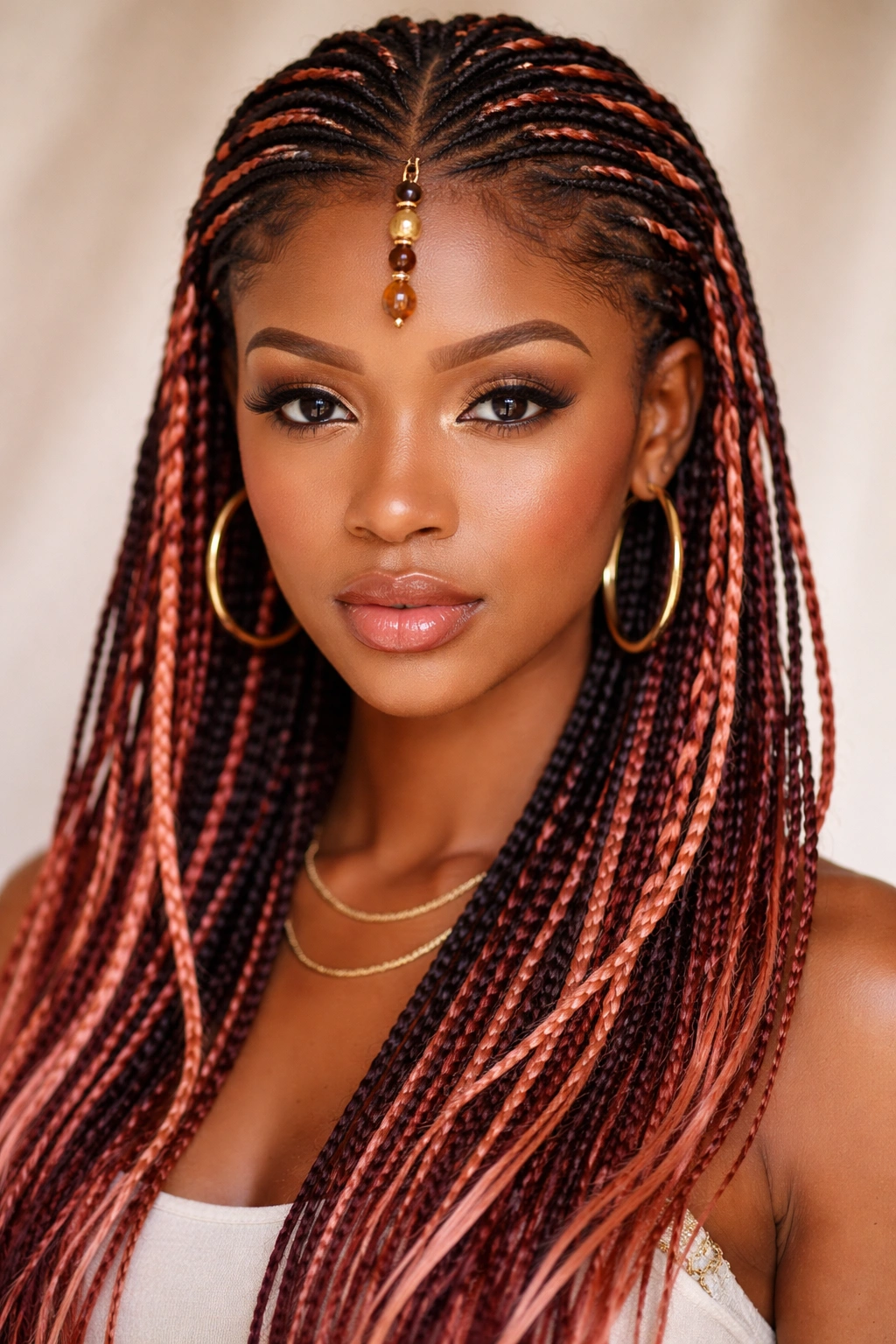
Adding colored extensions to your Fulani braids opens up endless creative possibilities. You might add thin strands of color throughout, go full-length with colored extensions, or use colors strategically for maximum visual impact. Popular color choices include rose gold, burgundy, honey blonde, copper, or even jewel tones like emerald or sapphire for a bolder statement. The colored extensions don’t have to match your natural hair color — in fact, the contrast is usually what makes this style work so beautifully.
Color Choices That Work with Fulani Braids
Warm-toned colors like rose gold, copper, and caramel tend to work with any skin tone because they complement both warm and cool undertones. Cool-toned colors like silver, ash blonde, and jewel tones are stunning for cooler skin tones and can create a really striking contrast. You can also play with color placement — maybe just the top layer of braids is colored while the underneath sections are your natural hair color, creating a surprise element when you move. Some people go monochromatic with a single color throughout, while others layer multiple colors for a rainbow effect.
Installation and Color Care
- Make sure your braider is using quality synthetic hair or human hair extensions — cheap extensions will fray and tangle
- Colored synthetic braiding hair is prone to fading, so ask your braider about colorfast options
- Avoid exposing your colored braids to excessive heat or direct sunlight, as this accelerates fading
- If you’re adding color to existing braids, the installation takes longer because sections need to be separated and colored extensions woven in
- Colored extensions add weight to your braids, so this style works best if you have dense hair and strong edges
- The color might need a touch-up by week 4 or 5 if you’re noticing significant fading
Worth knowing: Colored extensions are more high-maintenance than natural-hair-colored braids. If you’re someone who prefers a low-fuss style, this might not be your best option, but if you love the bold, creative vibe, it’s absolutely worth the extra attention.
10. Layered Fulani Braids with Crown Detail
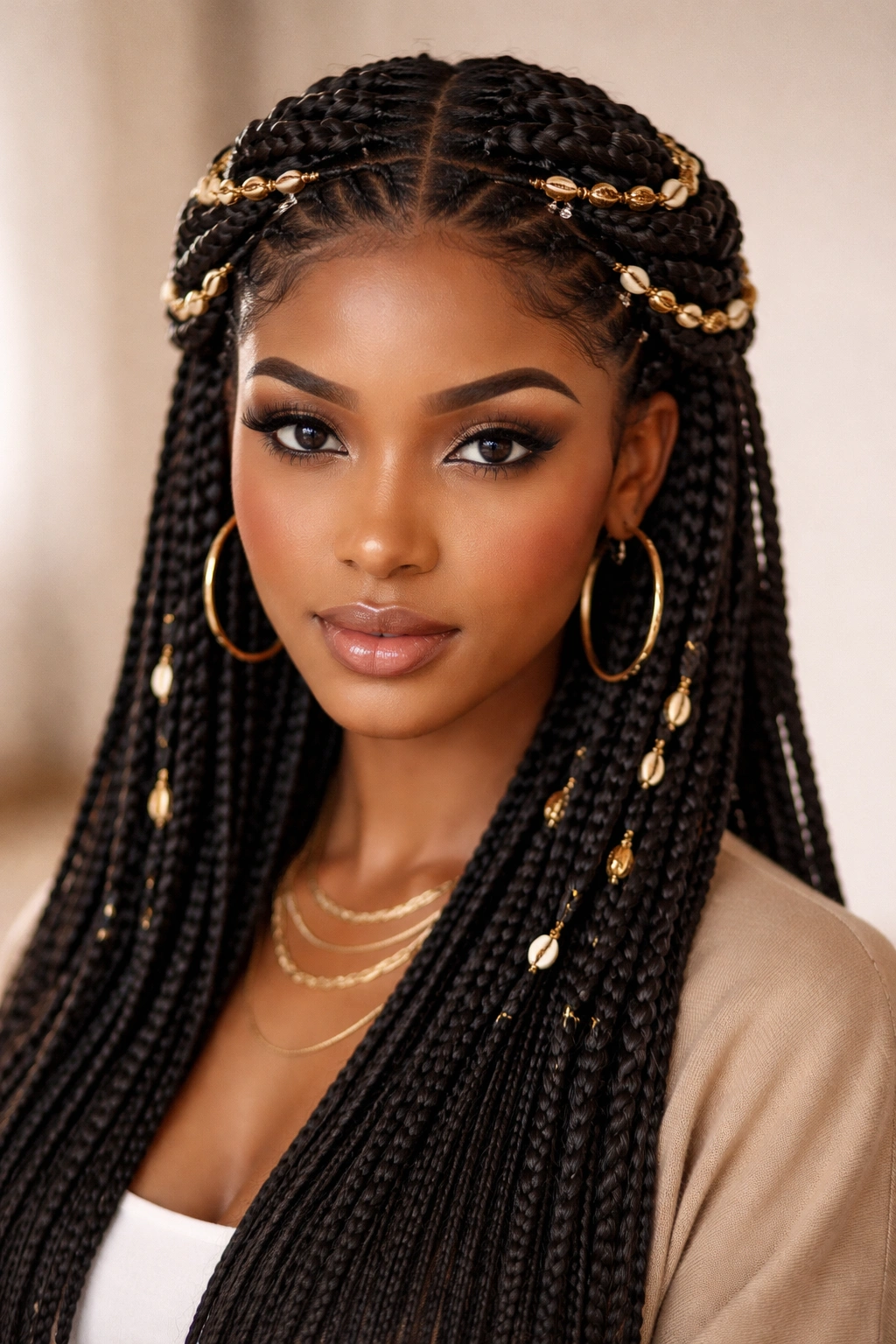
This sophisticated style creates a crown-like effect by positioning thicker or more ornate braids around the top and sides of your head, almost like a halo. The front sections might be intricate and adorned while the back is simpler, or the braids might be progressively thicker as they move from front to back. The “crown” effect makes you the focus, drawing attention upward and creating a regal, elegant look that works beautifully for events or just for everyday confidence-boosting.
Creating a Focal Point with Strategic Placement
The genius of this style is that it uses placement and ornamentation strategically to create a clear focal point. Your face becomes the centerpiece, with the braided crown framing and highlighting it. This is an excellent style if you want people to see and remember your face — the braids aren’t competing for attention; they’re directing attention to your features. The crown detail also gives you flexibility in how you style the rest of your hair — you might leave the back down, gather it up, or create contrast with different textures.
Executing the Crown Detail
- Work with your braider to establish exactly where you want the crown to sit and how thick or ornate it should be
- The crown can be achieved through placement alone (positioning braids in a crown pattern) or through ornamentation (adding more cuffs and beads to certain braids)
- Ensure the crown detail doesn’t create excessive tension in areas that are already vulnerable, like your edges
- You can change up how you style the crown throughout the wear period by adjusting cuff placement or pinning sections up or down
- This style works beautifully for weddings, special events, professional settings, and anywhere you want to feel extra polished
- The layered approach means some sections will loosen faster than others — strategically, this can actually extend the lifespan of the style
Pro tip: Ask your braider to leave certain sections slightly looser around the crown than others — this creates visual softness and prevents the crown from looking too rigid or severe.
11. Fulani Braids with Hair Rings
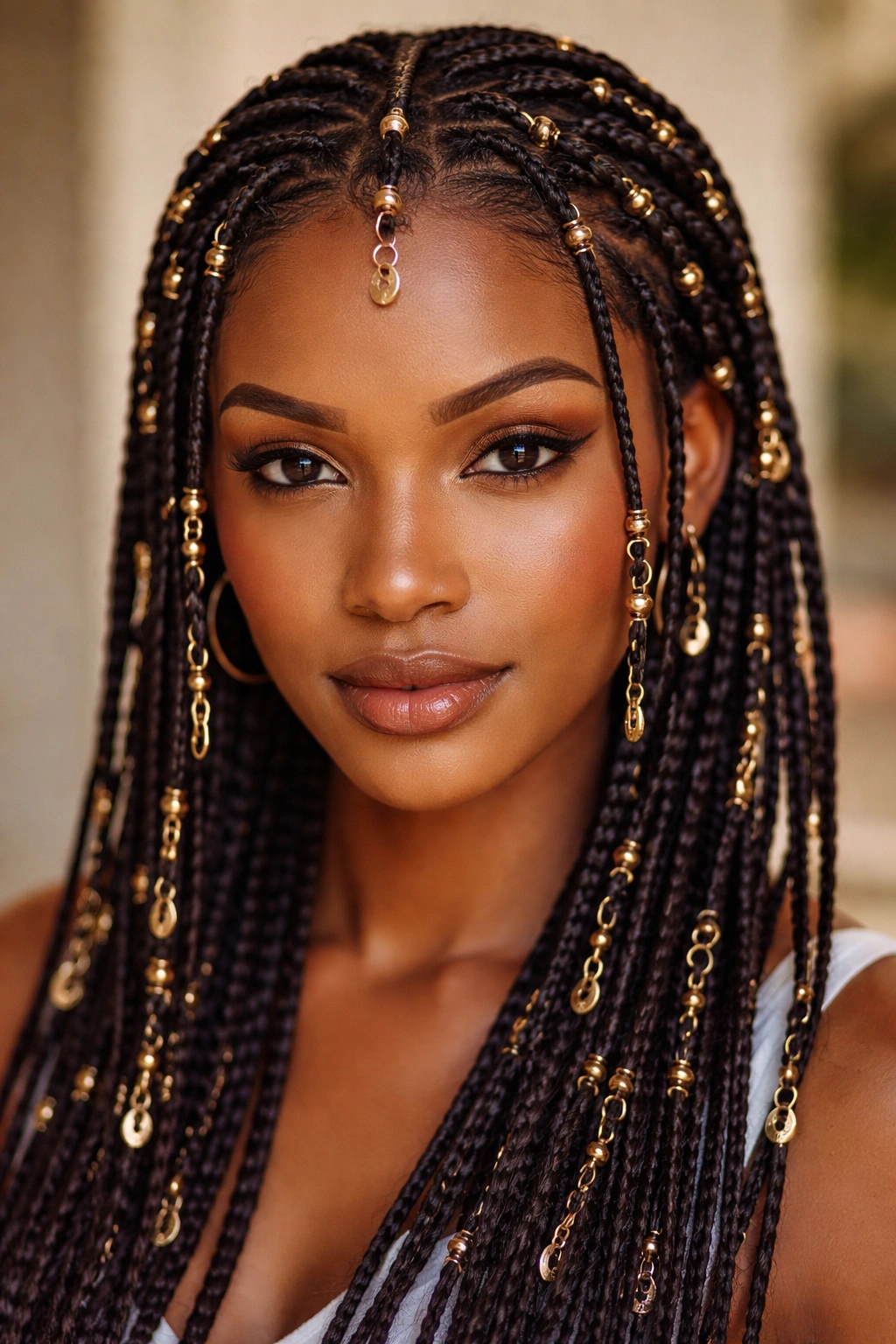
Hair rings are metal bands that you slip onto sections of braids, and they’re becoming increasingly popular as an alternative to or addition to traditional cuffs. Hair rings are typically smaller and more delicate than cuffs, and you can use dozens of them on a single hairstyle to create a densely decorated, intricate look. They can be worn all the way down the length of your braids, clustered near your face, or positioned strategically for maximum visual interest. Hair rings often feature designs, engravings, or gemstone accents that make them true pieces of jewelry.
Decorative Possibilities with Hair Rings
Hair rings offer more customization than cuffs because you can use so many of them in so many different configurations. You might choose rings with a consistent design for cohesion, or mix and match different styles for an eclectic, personalized look. Some rings are smooth and minimalist, while others are ornate with filigree or gemstones. This level of customization allows you to really express your personal style and make the braids feel uniquely yours. The smaller size also means hair rings can work with thinner braids where larger cuffs would look overwhelming.
Practical Considerations for Hair Rings
- Hair rings should fit snugly around your braids but not so tight that they cut off circulation or stress the braid
- Metal hair rings can be adjusted and reused on future styles, making them a good long-term investment
- Avoid yanking or twisting hair rings roughly during styling — they’re sturdy but not indestructible
- If you want to adjust a hair ring’s position, it can be carefully slid along the braid without damaging it
- Rings can occasionally slip down as your braids loosen over time — you can slide them back up or embrace the new positioning
- Mixing hair ring sizes creates visual interest; don’t feel like you need to use uniform rings throughout
Insider note: If you have the budget and genuinely love customized jewelry, consider investing in quality brass or gold-plated hair rings — they’ll last through multiple styles and develop a beautiful patina over time.
12. Braided Bun Fulani Style
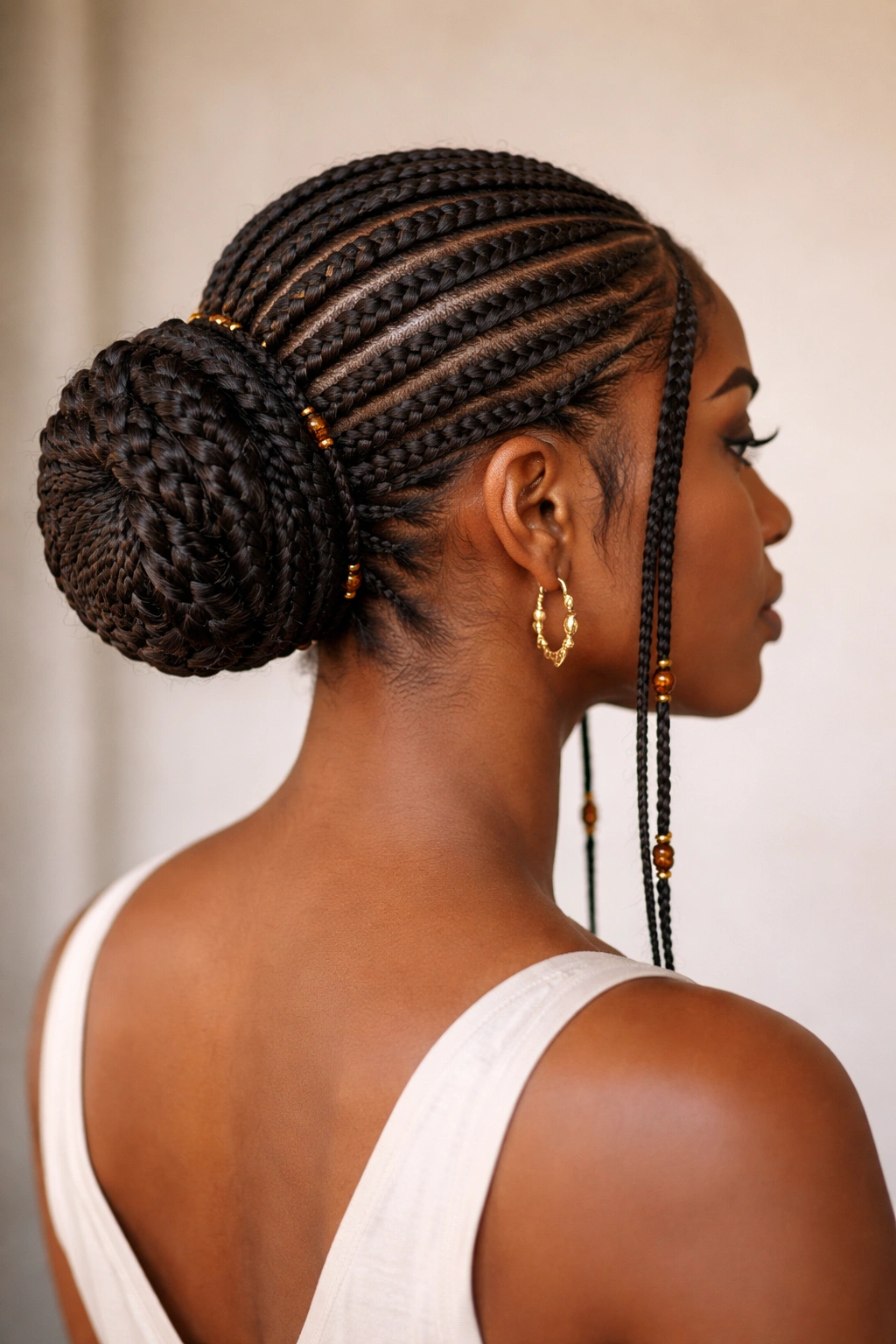
This elegant updo style takes Fulani braids and gathers them into a bun at the nape of your neck or at the crown. You might have thin braids running the length of your head that feed into a twisted or braided bun, or you might have loose braids that are gathered and secured into a bun. This style is practical and polished simultaneously — it keeps hair completely off your face and neck, making it perfect for warm weather or professional settings, while still showing off your braiding work.
The Versatility of Braided Buns
A braided bun works for virtually any occasion and situation. You can wear it loose and relaxed for casual days, or super sleek and refined for professional or formal events. The braids create natural texture and visual interest that a simple bun wouldn’t have, and the bun itself is an easy-to-create styling option when you want to refresh the look throughout your wear period. You can also experiment with where the bun sits — a high bun feels playful and youthful, while a low nape bun is more classic and sophisticated.
Styling and Securing Your Braided Bun
- Use a silk or satin elastic rather than a standard hair elastic to minimize snagging and frizz
- If your bun sits at the base of your neck, try a decorative claw clip or silk ribbon tied around it for added visual interest
- The bun can be twisted loosely for a soft, romantic effect or wound tightly for a more structured look
- You can leave a few face-framing braids down if you want a slightly softer appearance than a fully enclosed bun
- This style works beautifully with gold cuffs or hair rings positioned along the braids before they reach the bun
- The braided bun is protective for your edges and hairline because there’s minimal tension on those vulnerable areas
Pro tip: Sleep on your braided bun by gently placing it on a silk pillowcase or wrapping it in a silk scarf — this keeps the style looking fresh and prevents flattening or frizz that would make it harder to restyle.
13. Side-Swept Fulani Braids
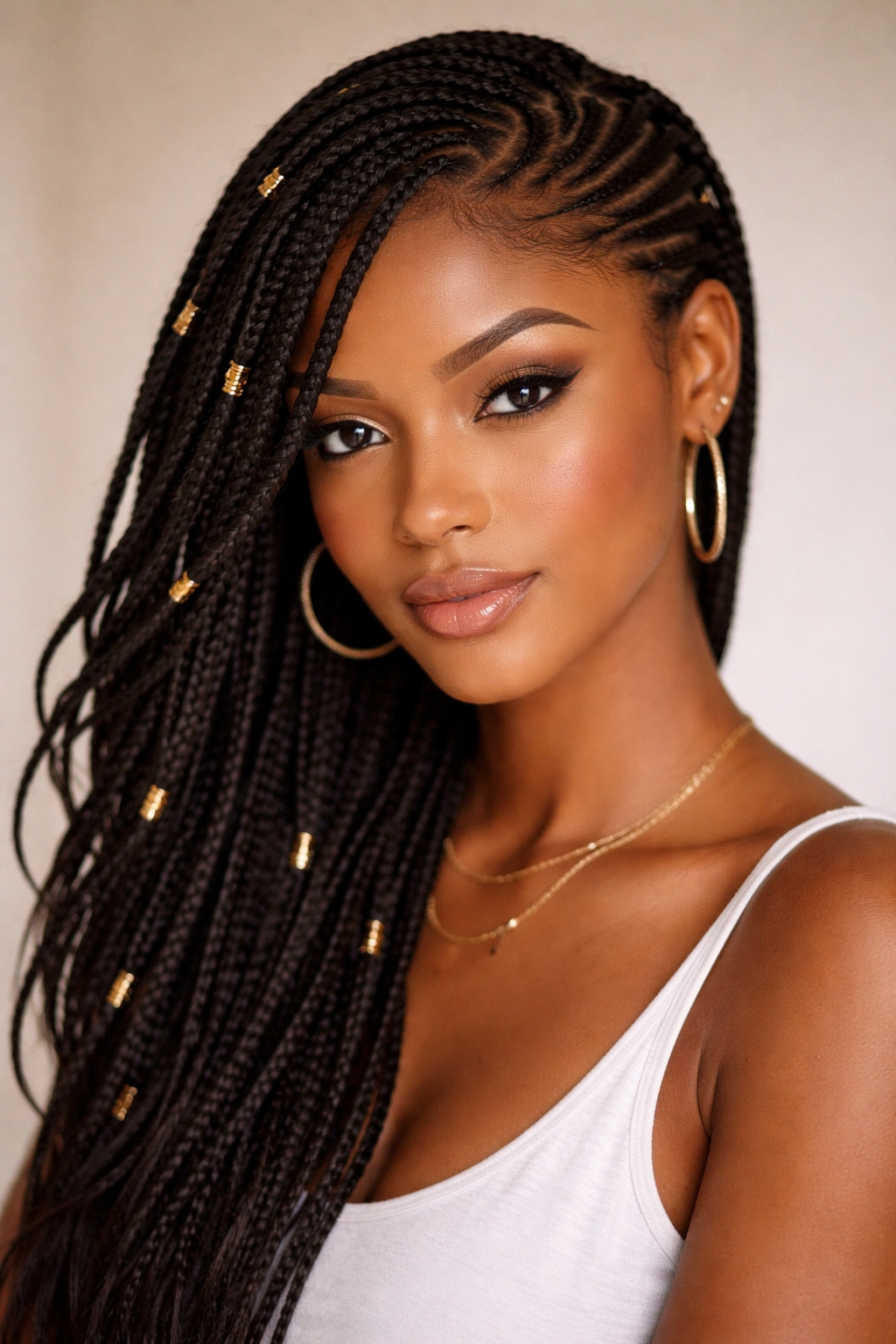
Instead of centering your braids or distributing them evenly across your head, side-swept Fulani braids emphasize movement and flow by sweeping all or most of your braids toward one side. The braids might originate from a center or side part and sweep dramatically toward the opposite side, or they might simply be styled with movement and direction rather than being arranged symmetrically. This asymmetrical approach is modern, flattering, and creates the illusion of fullness by layering your braids across one side of your head.
The Flattering Power of Asymmetry
Side-swept styles are incredibly flattering because they naturally frame your face while directing attention precisely where you want it. If you have concerns about one side of your face, you can position your braids to highlight your best side. The asymmetrical arrangement also feels contemporary and intentional — it’s not the default centered style, so it reads as a deliberate fashion choice. The movement created by sweeping braids also makes your hairstyle feel alive and dynamic rather than static.
Achieving the Side-Swept Look
- Work with your braider to plan which direction you want the sweep to go — generally toward the less prominent side of your face
- Braids can originate from multiple points and converge toward one side, or originate from one side and radiate outward
- You can use larger or more ornate braids on the side you’re emphasizing to draw additional attention there
- The sweep can be loose and flowing or tight and structured depending on how you want to style it
- This style works beautifully with your braids left down to flow over your shoulder, or gathered partially or fully to the side
- Side-swept braids photograph beautifully from the side angle, making them excellent for profile photos
Worth knowing: If you have a strong preference about which side of your face you want shown, make that clear to your braider during the consultation — they’ll design the placement accordingly.
14. Fulani Braids with Natural Texture Blend
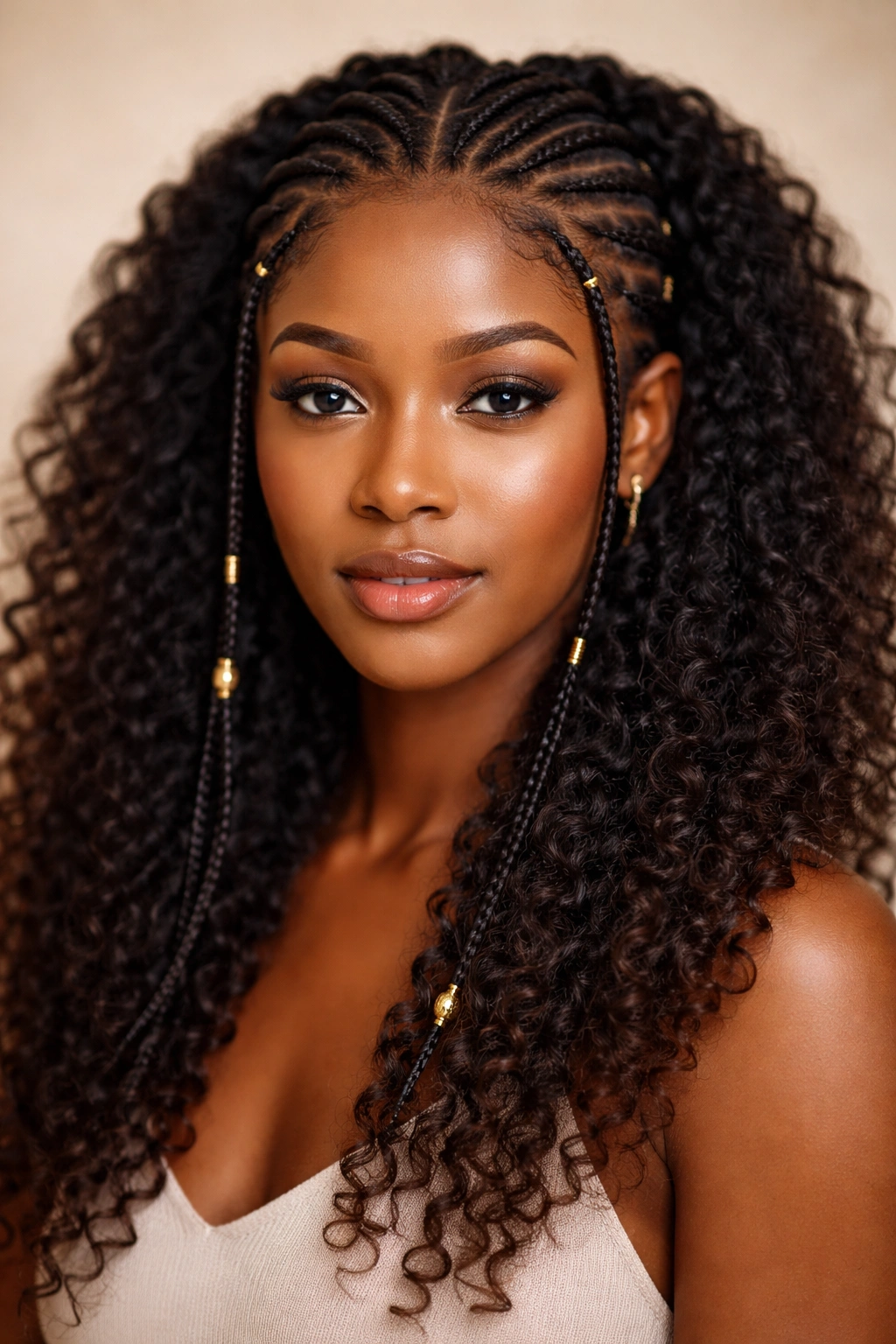
This contemporary approach blends your Fulani braids with sections of unbraided, natural hair texture, creating a style that honors both the protective aspects of braiding and the beauty of your natural hair. You might have thin braids interspersed with sections of textured natural hair, or braids only at the front with natural hair showing in the back. The combination creates visual texture, depth, and a modern aesthetic that feels less structured than all-over braiding while still protecting most of your hair.
Celebrating Your Natural Hair Texture
The natural texture blend approach is about confidence and refusing the false choice between “styled hair” and “natural hair.” Your natural texture is beautiful, and blending it with braids creates a look that’s both protective and authentic. This approach also reduces the overall tension on your scalp since only portions of your hair are braided, making it an excellent option if you have sensitivity issues or prefer maximum gentleness. The result is a style that feels like you — not a completely transformed look, but an elevated version of your actual hair.
Creating Balance Between Braids and Natural Texture
- Discuss with your braider which sections to braid and which to leave textured — this will depend on your hair density, face shape, and preferences
- Braids at the front frame your face while natural texture in the back creates a softer silhouette
- You can braid just the top layer or crown section, letting the underneath be completely natural
- The unbraided sections can be styled with a silk press, light waves, or left in their natural curl pattern
- Moisturize both your braided sections and your natural hair equally — the unbraided sections still need regular care
- This style works beautifully for transitioning between protective styling and everyday styling
- The natural texture sections will give you more styling flexibility for changing up your look throughout the wear period
Pro tip: If you’re blending braids and natural texture, ask your braider to feather or blend the transition between the two so it looks intentional and seamless rather than like two separate hairstyles competing for attention.
Final Thoughts
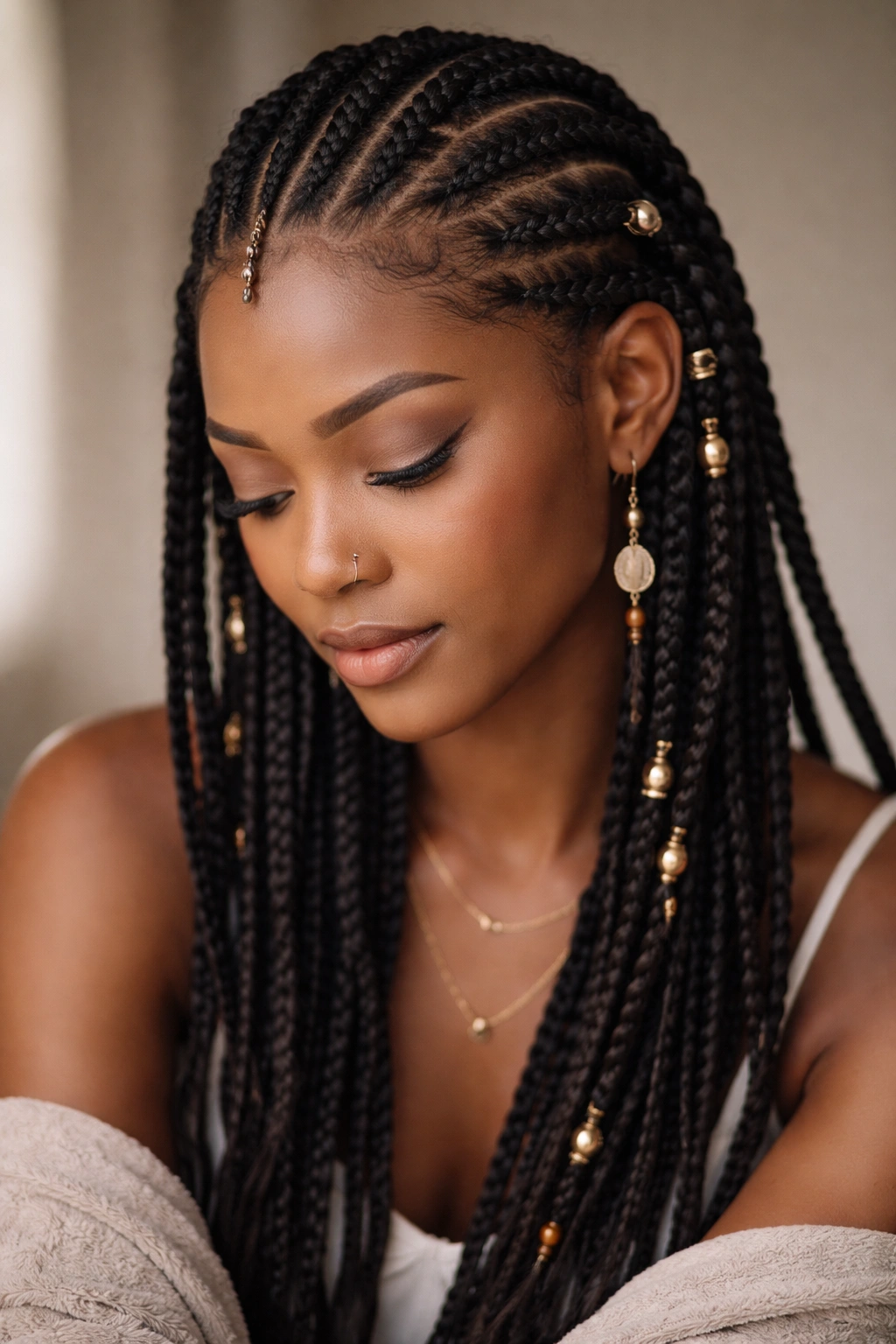
Fulani braids have earned their place as one of the most versatile, beautiful, and culturally significant protective styles available to Black women today. Whether you choose classic gold cuffs, elaborate bead work, bold colors, or a minimalist natural blend, the key is selecting a style that feels genuinely like you and that aligns with your hair’s needs and your lifestyle. The variety of options means there’s truly something for everyone — from the minimalist who wants simple elegance to the bold experimenter who wants to make a statement.
When you’re ready to get your braids installed, invest time in finding a skilled braider who understands your hair, listens to your vision, and prioritizes both aesthetics and hair health. A good braider won’t braid excessively tight, won’t skimp on installation time to rush through your head, and will give you detailed care instructions for maintaining your style. The quality of the installation directly impacts how long your braids last, how healthy your hair remains underneath, and how good you feel wearing them.
Remember that your Fulani braids are more than just a hairstyle — they’re a connection to heritage, a form of self-expression, and a practical choice for protecting your natural hair. Wear them with confidence, take care of them intentionally, and enjoy the freedom that comes from a protective style that’s also genuinely beautiful.
