



Fulani braids have become one of the most coveted protective hairstyles, and for good reason. These elegant braids, traditionally inspired by the Fulani people of West Africa, combine cultural authenticity with contemporary flair. When created with high-quality human hair extensions, they transform into a versatile canvas for creativity — allowing you to experiment with lengths, colors, and intricate patterns that might not be possible with your natural hair alone. The beauty of Fulani braids lies in their ability to work across different face shapes, hair types, and personal styles, whether you prefer bold and dramatic or subtle and refined.
What makes Fulani braids special compared to other protective styles is the thoughtful incorporation of decorative elements — golden cuffs, beads, cowrie shells, and strategic parting patterns that frame the face beautifully. When you add human hair extensions to the mix, you’re not just protecting your natural hair; you’re creating a statement piece that can last anywhere from four to eight weeks with proper care. The weight and movement of quality human hair extensions actually makes Fulani braids sit more naturally on the head, reducing tension on your edges and creating a more comfortable wearing experience overall.
The following ten styles showcase the incredible range and versatility of Fulani braids with human hair extensions. Each represents a different approach to the classic pattern, whether you’re looking for something intricate and eye-catching or streamlined and wearable for everyday occasions. The key to success with any of these styles is choosing the right hair extensions and working with a skilled braider who understands the cultural significance and technical precision these braids demand.
1. Classic Fulani Braids With Center Part and Gold Cuffs
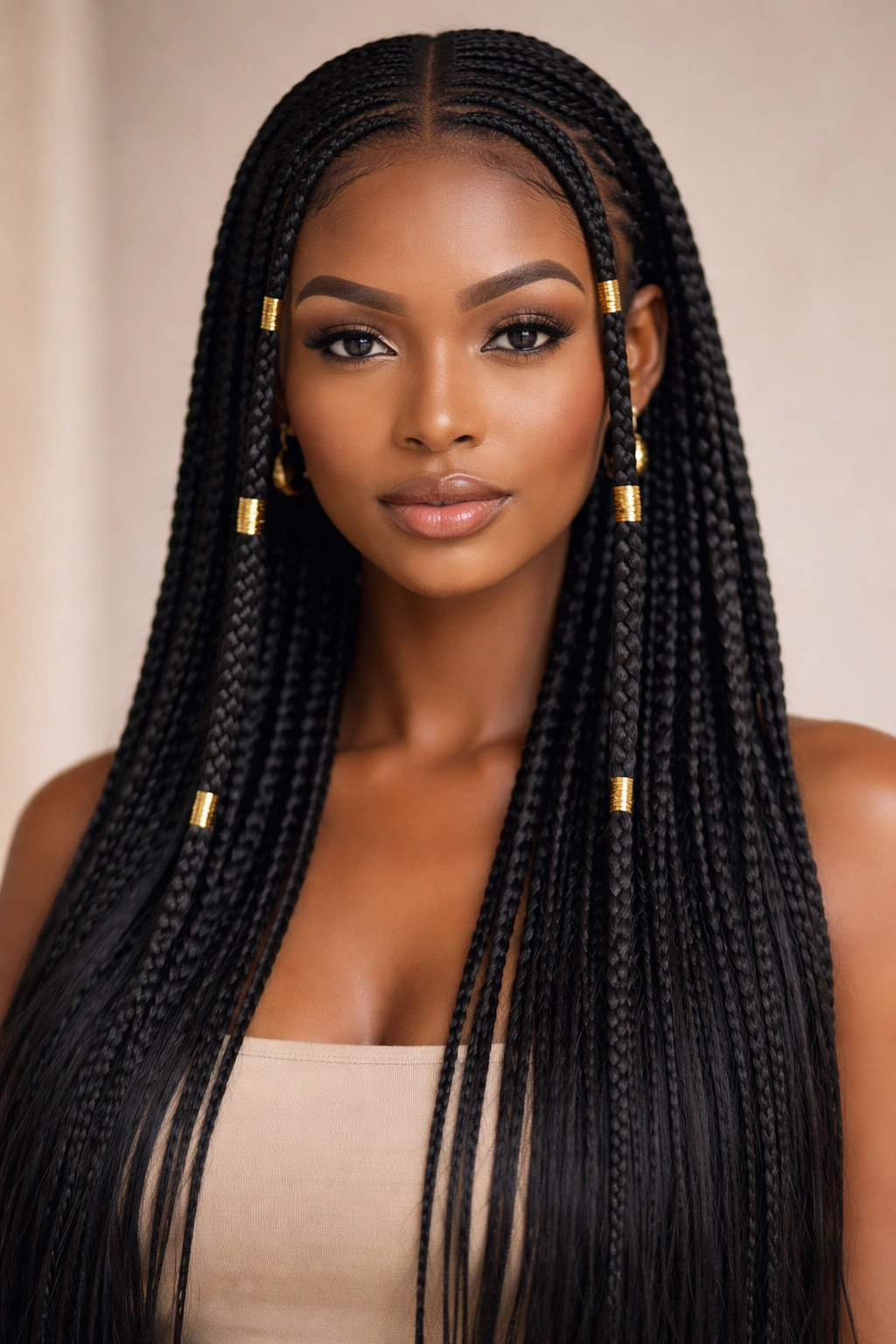
This is the quintessential Fulani braid style — the one that launched a thousand Pinterest boards and inspired countless imitators. The defining characteristic is the clean center part running from forehead to nape, with perfectly symmetrical braids on either side. What elevates this beyond a standard cornrow is the signature gold cuffs (or rings) that wrap around individual braids, typically concentrated around the face and scattered throughout the style for visual interest.
Why This Style Works So Well
The center-parted Fulani braids create a flattering frame for most face shapes, and the gold metallic accents catch the light beautifully, adding dimension and movement even when your hair is in a fixed braid style. Human hair extensions allow you to add volume and length that creates more dramatic impact when you incorporate the cuffs. The style feels both protective and glamorous — you’re genuinely protecting your natural hair while still looking polished enough for special events or everyday wear.
Installation and Maintenance Tips
- Use medium to thick-weight human hair extensions for the most visible cuff detail (cuffs sit better on fuller braids)
- Ask your braider to section carefully for the center part so the line stays crisp and visible throughout wear
- Gold cuffs tend to slip slightly as your hair settles, so expect to adjust them after a few days
- This style typically takes 3 to 4 hours to complete, depending on braid thickness and the number of cuffs
Pro tip: If you’re wearing this style to an event, have your braider position the cuffs higher on the braids on the day of installation — they’ll naturally slide down slightly as the braids relax, creating a more intentional look after a day or two.
2. Fulani Braids With Front-Facing Feed-In Braids
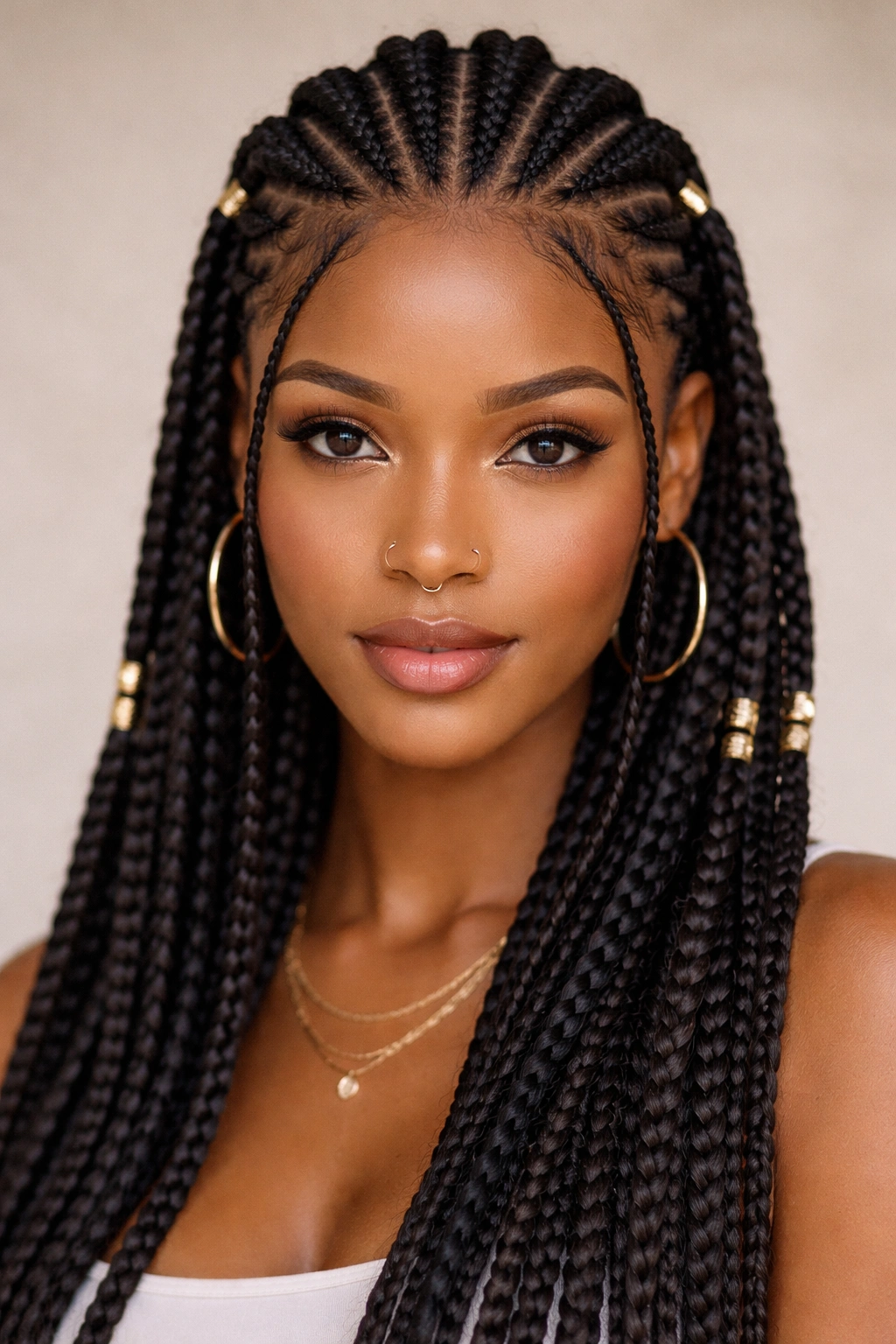
This creative variation keeps the essence of Fulani braids but adds a dimensional element by incorporating feed-in braids along the front hairline. Feed-in braids are thinner, more delicate braids that blend seamlessly with your natural hair at the roots, creating a gradient effect from thin braids at the hairline to thicker statement braids toward the crown. This approach is particularly flattering for protecting baby hairs and edges while still achieving that stunning Fulani aesthetic.
The Visual Impact of This Variation
Feed-in braids at the front create softer lines that frame the face more gently than traditional thick Fulani braids going all the way to the hairline. The thinner braids allow more of your facial features to show through, and when you add gold cuffs or beads exclusively to the thicker statement braids behind them, you create a sophisticated contrast between the delicate and the bold. This variation works especially well for people with sensitive edges or those who experience hair loss along the hairline.
How to Style and Care for Feed-In Fulani Braids
- Human hair extensions should be blended carefully from the roots to avoid a harsh contrast between extensions and natural hair
- Feed-in sections typically take longer to install (4 to 5 hours), but the longevity is excellent — often lasting 7 to 8 weeks
- Sleeping in a silk bonnet or pineapple (gathering the braids loosely on top of your head) protects the feed-in section specifically
- You can style the front braids into an updo or leave them face-framing for different looks throughout the weeks you’re wearing the style
Worth knowing: The thinness of feed-in braids means they’re more prone to frizz at the hairline if you’re using synthetic extensions. Investing in high-quality human hair extensions specifically for this style makes a measurable difference in how polished the front looks after a week or two.
3. Fulani Braids With Colorful Highlights and Mixed Extensions
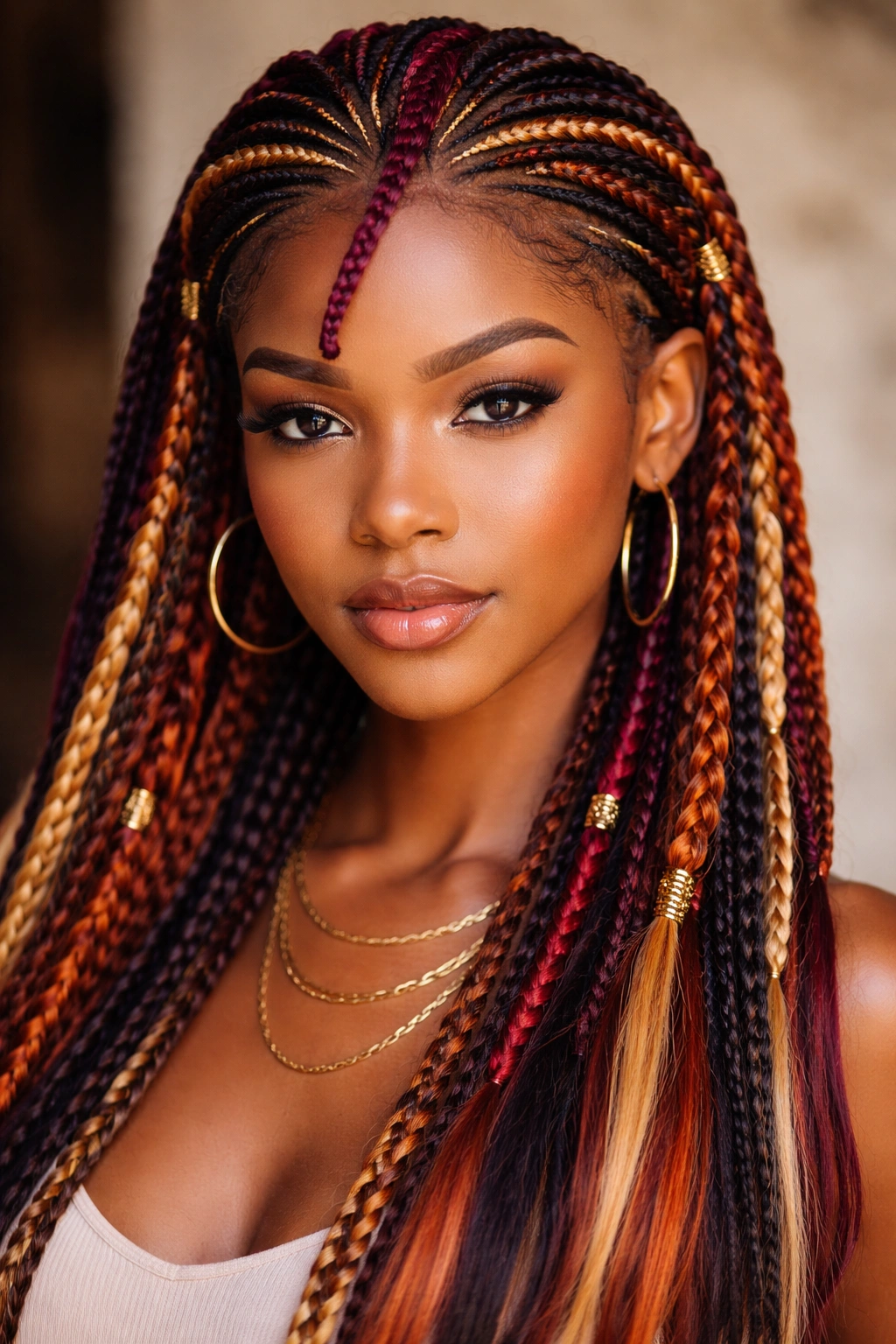
For anyone who wants to make a statement, mixing human hair extensions in contrasting colors creates a stunning visual impact that photographs beautifully. Common approaches include alternating colors throughout the braids, creating a gradient from one color to another, or weaving a single bold color stripe through otherwise natural-colored braids. Deep burgundy, honey blonde, copper, and ash gray all create gorgeous contrast against darker skin tones.
Choosing and Blending Extension Colors
Quality human hair extensions accept color differently depending on their base shade, so work with your braider to select extensions that will complement your natural hair color and skin tone. Lighter-colored extensions tend to look more natural when they’re at least two shades lighter than your natural hair, while darker extensions can be just one shade off. The strategic placement of color — often concentrated on one side of the head or in specific braids that frame the face — creates visual interest without overwhelming the style.
Longevity of Color in Braids
Colored human hair extensions fade gradually with exposure to sunlight and chlorine, so if you’re planning to be in the pool or spend extended time outdoors, be realistic about color longevity. Most colors remain vibrant for 4 to 6 weeks of regular wear. You can extend the life by using UV-protective products and avoiding chlorinated water. Some people intentionally embrace the fading as part of the style’s evolution — a gradient effect emerges naturally as weeks progress.
Insider note: Ask your braider to use slightly more colored hair at the face-framing braids where the contrast will be most visible, then gradually decrease the proportion of colored hair as you move toward the back. This creates a more cohesive, intentional look rather than random color placement throughout.
4. Fulani Braids With Cowrie Shells and Beads
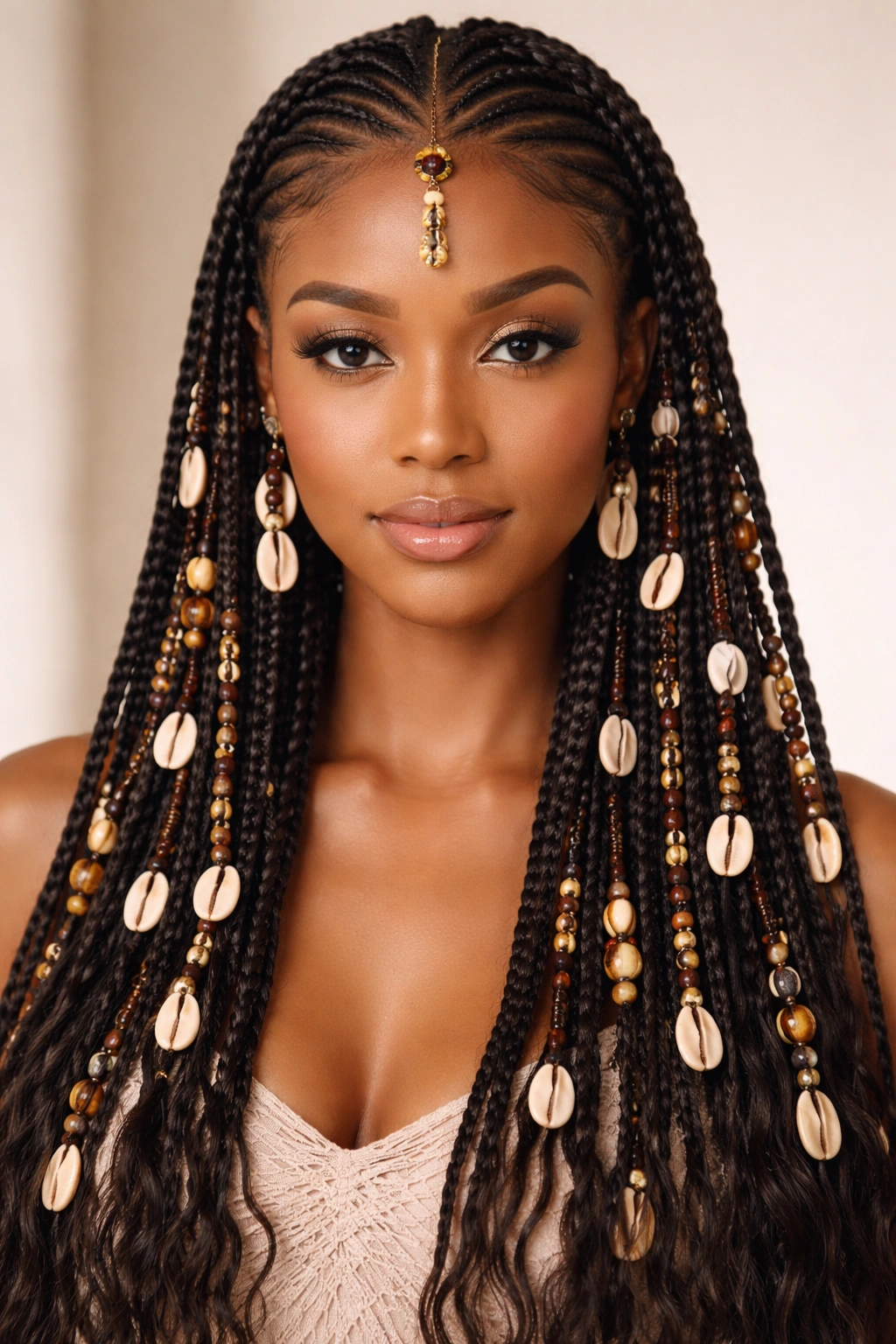
This style honors the traditional cultural elements of Fulani styling by incorporating cowrie shells and decorative beads alongside or instead of metal cuffs. Cowrie shells add an organic, boho-luxe element that feels both ancestral and contemporary. You can scatter them throughout the braids, cluster them in patterns, or reserve them for the front-facing braids that frame your face.
Selecting Quality Shells and Beads
Authentic cowrie shells vary in size, color, and finish — some are naturally bleached and cream-colored, while others are golden or bronze. The weight of shells matters; heavier shells can create tension on individual braids, so they’re best distributed rather than concentrated in one area. Beads offer more lightness and come in infinite colors and finishes (glass, wood, metal, acrylic). Mixing shells and beads creates textural interest and allows you to coordinate with clothing or jewelry.
Installation Considerations
Shells and beads must be securely attached so they don’t slide off during the weeks you’re wearing the style. Your braider should tie them in with thread at the base of each braid rather than simply sliding them onto completed braids. This takes additional time during installation but ensures longevity. Human hair extensions actually work better for this style than synthetic braiding hair because the hair “grips” the beads and shells more securely.
Refreshing the Look Mid-Wear
One advantage of this style is that you can remove beads and shells after a few weeks and replace them with new ones for a completely different aesthetic without redoing the entire braid style. This is perfect if you want to transition the look for different occasions or seasons — remove all shells for a more minimal look, or replace them with different colors to match a new outfit.
Pro tip: Request that your braider leaves a small loop of loose hair at the end of braids where you plan to add shells and beads. This gives you flexibility to add, remove, or swap out shells yourself throughout the weeks without waiting for your braider’s next availability.
5. Fulani Braids With Wrap-Around Crown Detail
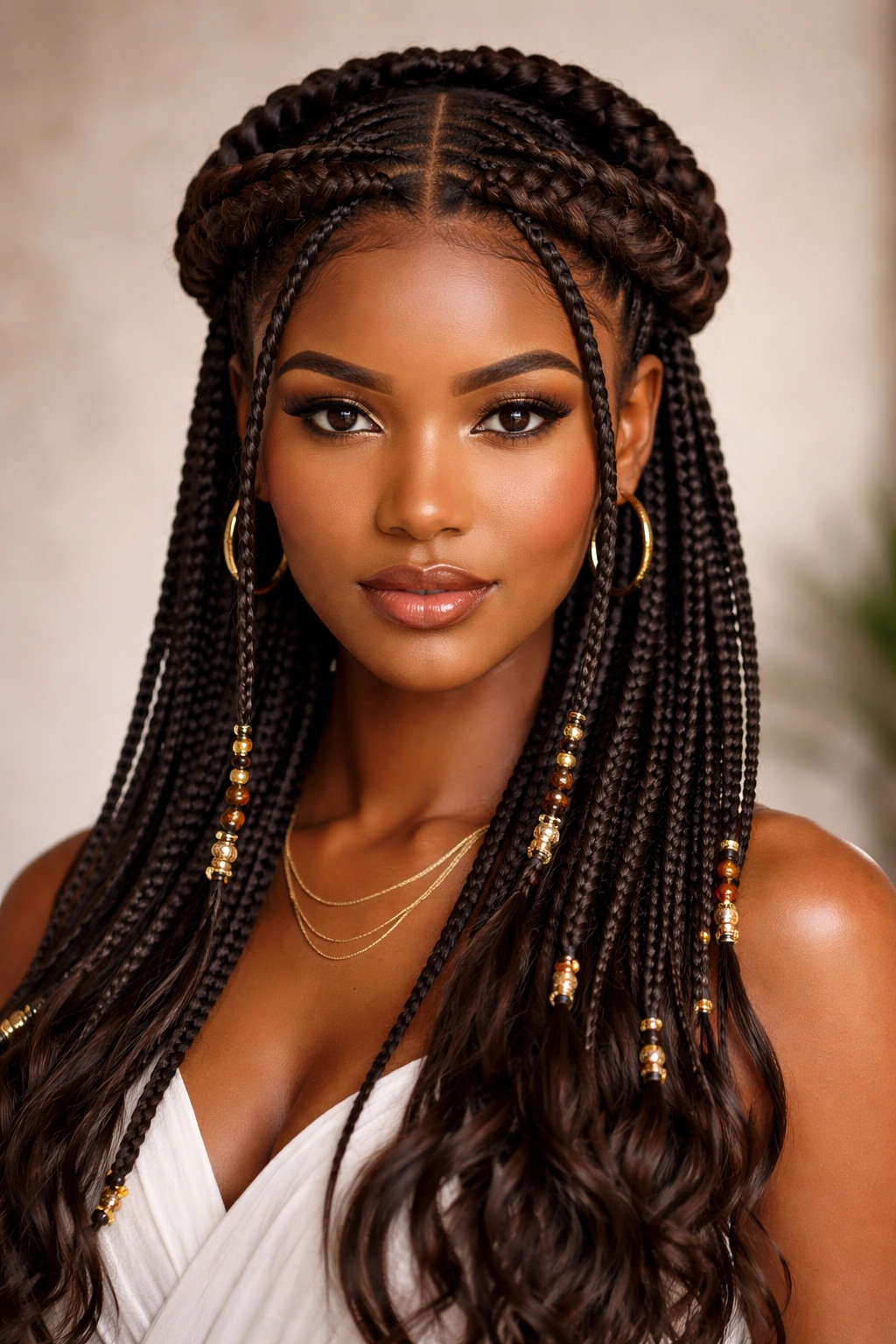
This variation maintains the classic center-parted Fulani braids but adds an extra braided element that wraps around the crown like a halo. A separate braided section (typically three strands or feed-in style) is created along the crown from one side of the head to the other, creating a sculpted, ethereal effect that photographs beautifully. The crown braid can be the same color as your Fulani braids or a contrasting color for added dimension.
Creating the Crown Effect
The crown braid is typically installed last, after the main Fulani braids are complete. Your braider picks up sections from the tops of your center-parted Fulani braids and incorporates them into a crown braid that runs from temple to temple. This requires skill and precision because the crown braid must sit at the perfect angle — too high and it looks awkward, too low and it compresses the Fulani braids underneath. The crown braid is often the thinnest element of the style, creating a delicate contrast with the thicker statement braids below.
Styling Options With a Crown Braid
With the crown detail in place, you have more flexibility for different looks. You can leave all the braids down for a full, dramatic effect, or you can style the lower Fulani braids into a high bun while keeping the crown braid visible for a sophisticated updo. Some people take the crown braid up into a ponytail or bun at the crown, creating a sculptural look from the side or back.
Longevity and Touch-Ups
The crown braid is under more tension than other braids because it’s positioned at the top of the head where movement happens naturally. Expect it to show wear (frizz and loosening) before your main Fulani braids do. Many people ask their braider to refresh just the crown section after 3 to 4 weeks, extending the life of the overall style without a full reinstall. Human hair extensions are forgiving here — they hold the braid pattern more securely than synthetic hair and frizz less noticeably.
6. Fulani Braids With Starburst or Geometric Parting Patterns
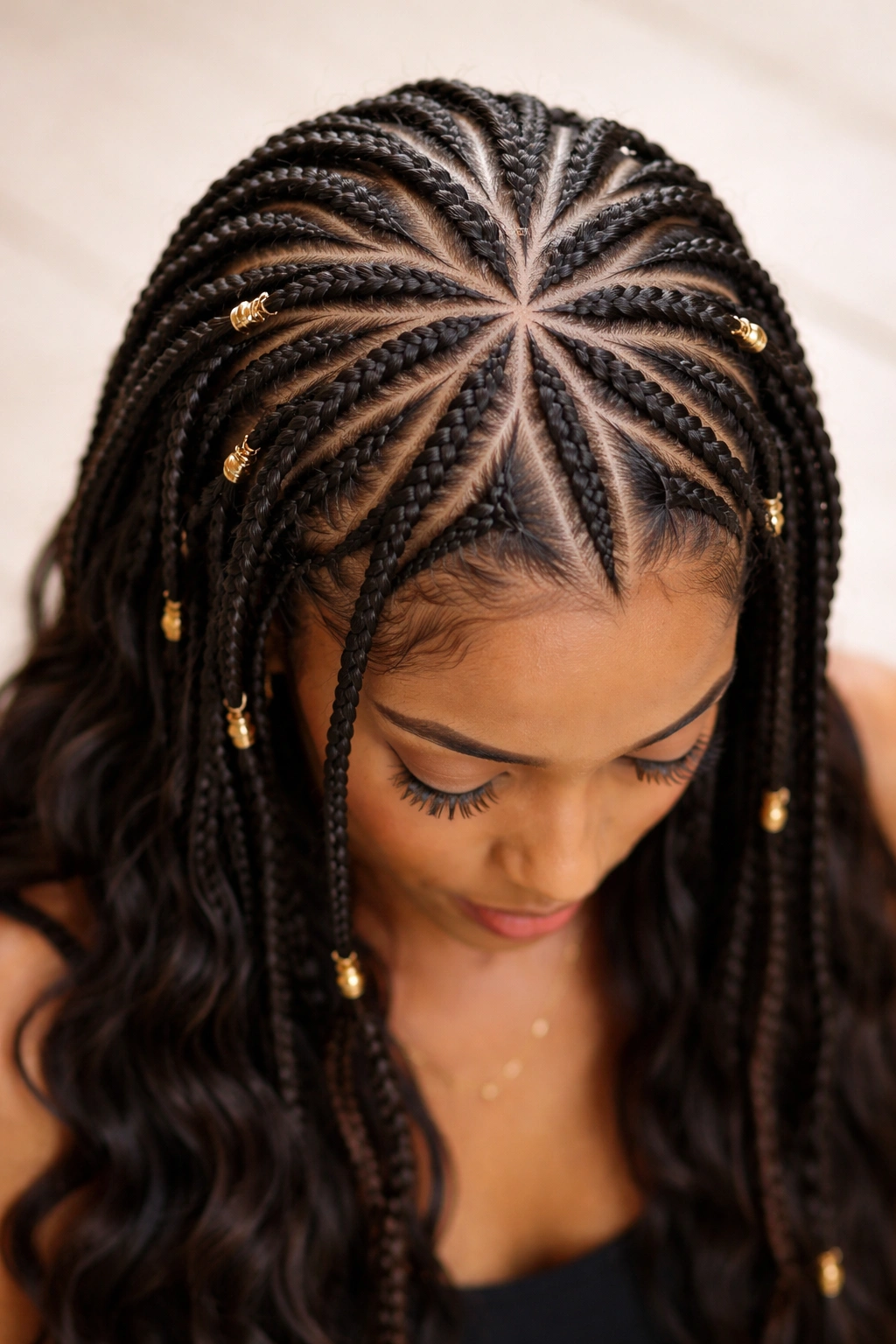
Instead of the traditional center part, this variation incorporates geometric parting patterns — starburst designs that radiate from a central point, triangular sections, or rectangular blocks that create a bold, sculptural look. Parting patterns are an opportunity to showcase creativity while honoring the precision of Fulani braiding. The geometric patterns create visual interest from above and behind, making this style particularly popular for social media and special events.
Planning a Geometric Parting Pattern
Starburst patterns work best on round or square face shapes, while triangular or rectangular patterns can be adjusted to suit individual preferences. Your braider will sketch the parting pattern on your scalp with a pencil before beginning to braid, ensuring symmetry and precision. The partings themselves become part of the design — they should be clean, straight lines that frame each braided section clearly.
Color Coordination With Patterns
Geometric partings create the perfect opportunity to showcase contrasting hair colors. If you’re using colored extensions, your braider can place them strategically within each section created by the partings. For example, with a starburst pattern, you might have natural-colored braids in the center with a gold-colored extension weaving through the outer “rays,” creating a visual gradient that expands outward from the head.
Installation Time and Maintenance
Geometric patterns add significant installation time because they require more precision and planning. Expect these styles to take 4 to 5 hours or longer. The good news is that the initial impact is striking, and the longevity is excellent because careful parting and braiding create less tension overall. The downside is that as your natural hair grows and the extensions loosen slightly, the geometric precision becomes less crisp. This is a style that looks most dramatic in the first 2 to 3 weeks.
Worth knowing: Take clear photos of your parting pattern from directly above before you leave the salon. If you need to do a partial refresh after a few weeks, you can show these photos to your braider to maintain the original design.
7. Fulani Braids With Thin Braids and Minimal Ornamentation
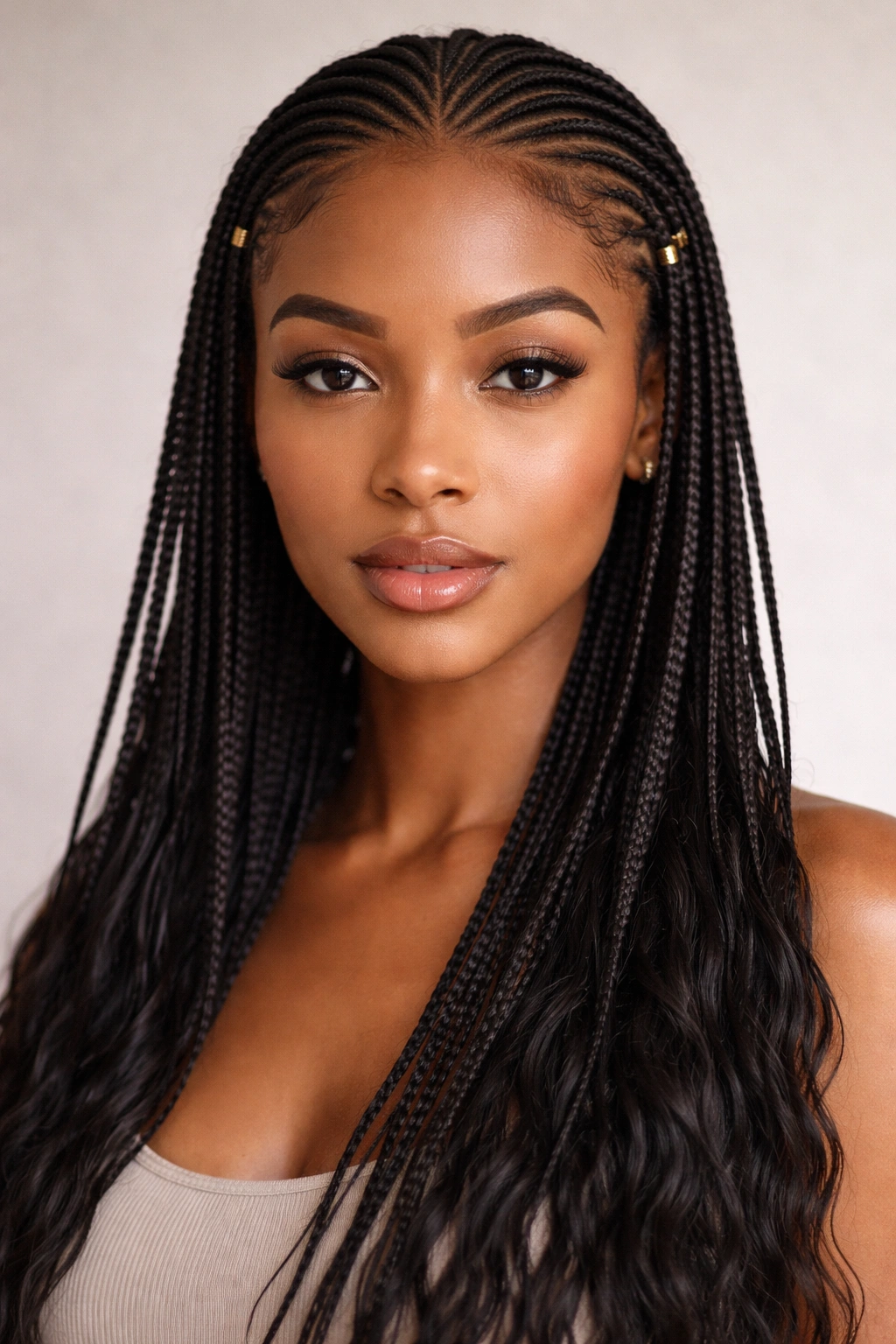
For a more understated, wearable version of Fulani braids, opt for thinner braids with minimal cuffs or beads — just one or two placed strategically near the front. This variation sacrifices drama for practicality and elegance. Thinner braids actually allow more of your scalp to show through, creating a lighter, more breathable style that’s more comfortable for extended wear. The look is refined and sophisticated rather than maximalist.
Advantages of Thin Fulani Braids
Thinner braids are genuinely more comfortable because they distribute weight more evenly across your scalp rather than concentrating tension in a few thick sections. They’re also more versatile for styling — you can easily gather thin braids into updos, ponytails, or side-swept looks without creating bulk. The installation time is actually longer because there are more individual braids to create, but the finished style tends to be more durable because thinner braids loosen more slowly.
Styling Thin Fulani Braids
The minimalist approach to ornamentation means the focus stays on the braided texture itself. These braids look beautiful worn completely down, but they’re also easy to style into sleek buns, low ponytails, or half-up styles. You can even create temporary waves or curls at the ends of the braids by loosening them very carefully — the thinner profile makes this easier to do without the braids falling apart completely.
Hair Extension Considerations
For thin Fulani braids, you want human hair extensions that have some texture (not super slick), as this helps the braids hold their pattern. Extensions that are too soft or silky will slip against your natural hair and loosen more quickly. Most quality human hair extensions work well, but specifically look for hair described as having “body” or “grip” rather than extensions marketed as super-straight or silky.
8. Fulani Braids With Back-to-Front Finishing Braids
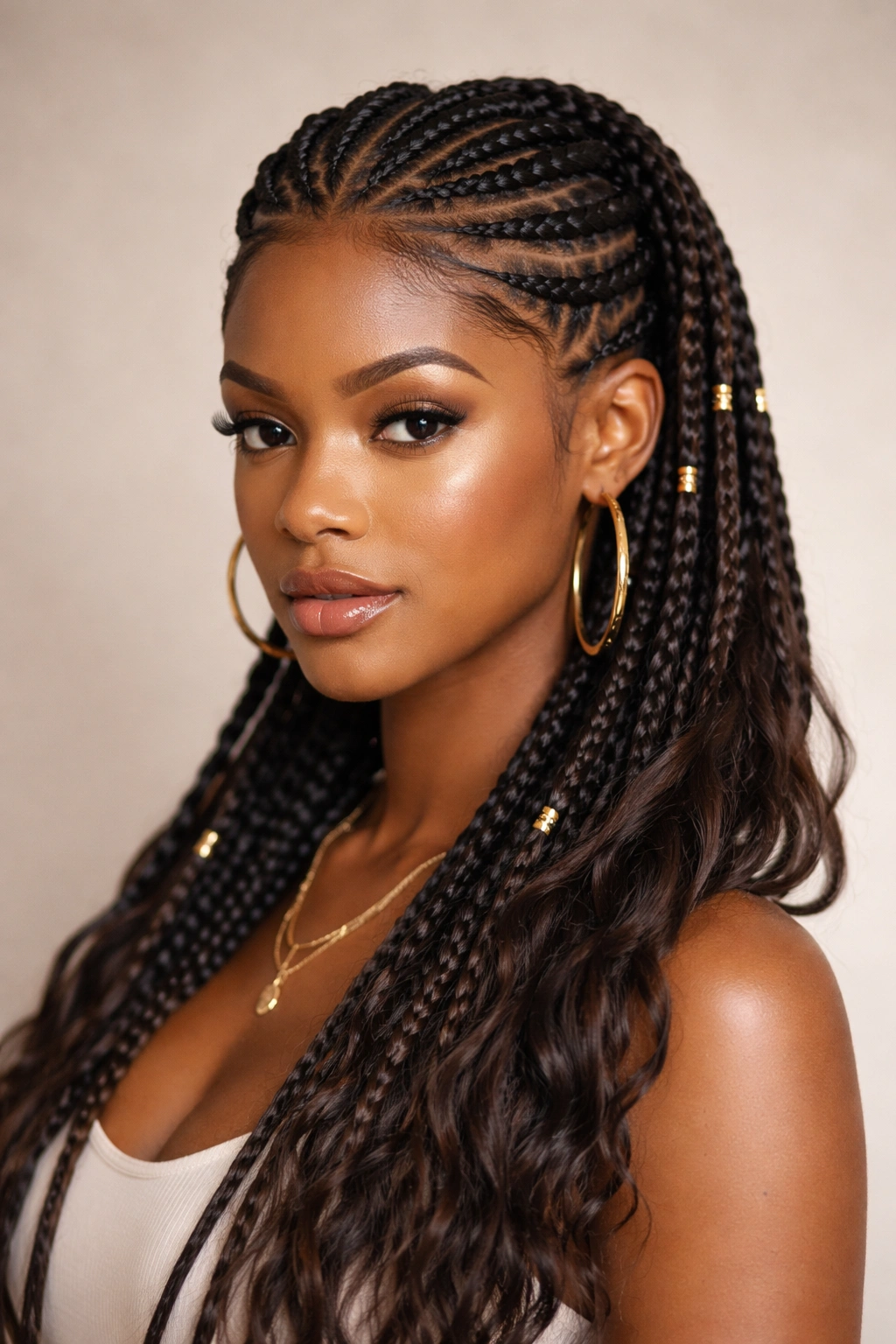
This creative styling technique involves creating your standard Fulani braids, then taking a few of those braids from the back of your head and bringing them forward over the top to create a crown-like effect that frames your face differently than traditional front-facing Fulani braids. The back-to-front finishing braids create dimension and allow you to show off the full length and texture of your extensions while keeping the look polished and controlled.
How the Back-to-Front Technique Works
After your braids are complete, your stylist selects 3 to 6 braids from the back section of your Fulani style and carefully pins them up and over the crown to the front of your head, securing them with bobby pins and sometimes threading. This creates asymmetry and movement — the finished look is less structured than traditional Fulani braids and feels more contemporary. This technique works best with human hair extensions because the hair holds its shape and doesn’t slip around as much as synthetic braiding hair would.
Creating Movement and Dimension
The back-to-front braids create the illusion of movement even though your hair is completely braided and secured. The braids flowing from back to front catch light differently depending on your angle and movement, and they frame your face in a more organic, less predictable way than straight-down braids. This style photographs beautifully because the dimension and flow read well in images.
Refreshing the Look Throughout Wear
The bobby pins securing the back-to-front braids may loosen after a few days as your hair settles and you move around. You can easily re-pin them yourself or ask your braider for a quick adjustment. This style is more flexible than some others — you can actually change where the finishing braids sit to create different looks, pinning them to different sides of your head or gathering them into a half-up style for variety throughout the weeks.
9. Fulani Braids With Ombré Extensions and Gradient Effect
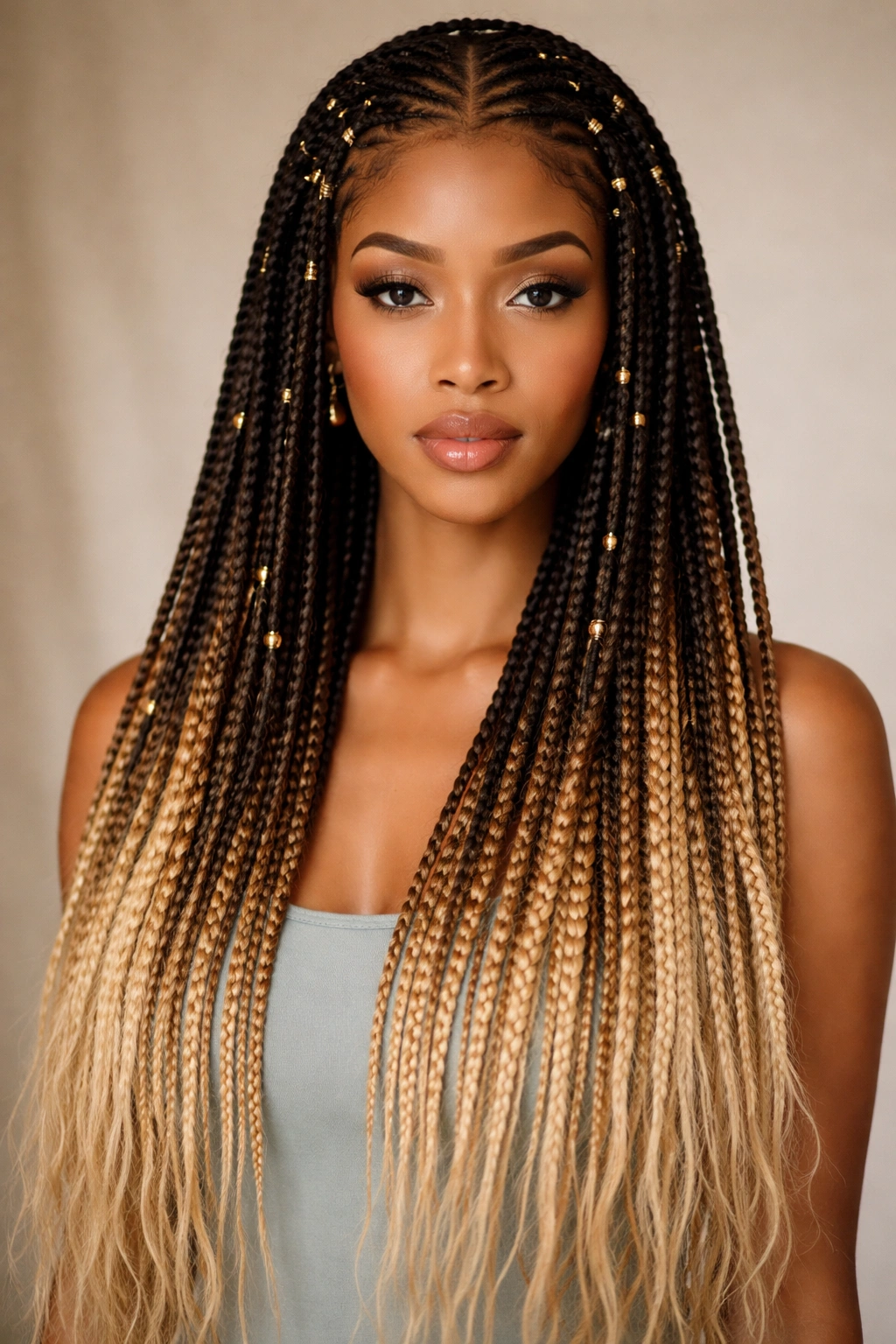
By gradually transitioning from darker hair at the roots to progressively lighter shades toward the ends, you create a dimensional, gradient effect that adds visual depth and sophistication. This technique works beautifully with Fulani braids because the long, linear nature of braids shows off color transitions dramatically. You might transition from black to burgundy to copper, or from dark brown to caramel to honey blonde, depending on your preference and skin tone.
Achieving a Seamless Gradient
Creating a true ombré effect with Fulani braids requires using multiple shades of human hair extensions and strategically blending them throughout the braids. Some braiders use a gradient approach by using progressively lighter-colored extensions for each braid, while others blend colors throughout individual braids. The seamlessness of the transition determines the impact — a blended gradient looks more intentional and expensive than color blocks that change too abruptly.
Caring for Ombré Braids
Lighter-colored extensions fade faster than darker colors, which means your gradient will shift over time. This can actually work in your favor — as the lighter ends fade slightly, the gradient becomes softer and less dramatic. However, if you want to maintain the original impact, use UV-protective products and limit sun exposure. Some people intentionally plan their ombré with this fading in mind, choosing colors that will look attractive in their faded state as well.
Color Coordination With Your Wardrobe
One advantage of the ombré technique is that you have multiple colors to work with for outfit coordination. Wearing colors that pick up on different parts of your gradient — maybe a burgundy top to match the mid-tones, or a gold accessory that complements the lighter ends — creates a cohesive, intentional look. This style is particularly popular for people who love playing with color and want flexibility in how they coordinate their appearance.
Pro tip: Invest in a purple or blue-toning shampoo if your lighter extensions trend toward yellow or brassy as they age. Using a color-depositing shampoo once weekly can help maintain the tone of your ombré longer.
10. Fulani Braids With Side-Swept Styling and Temple Detail
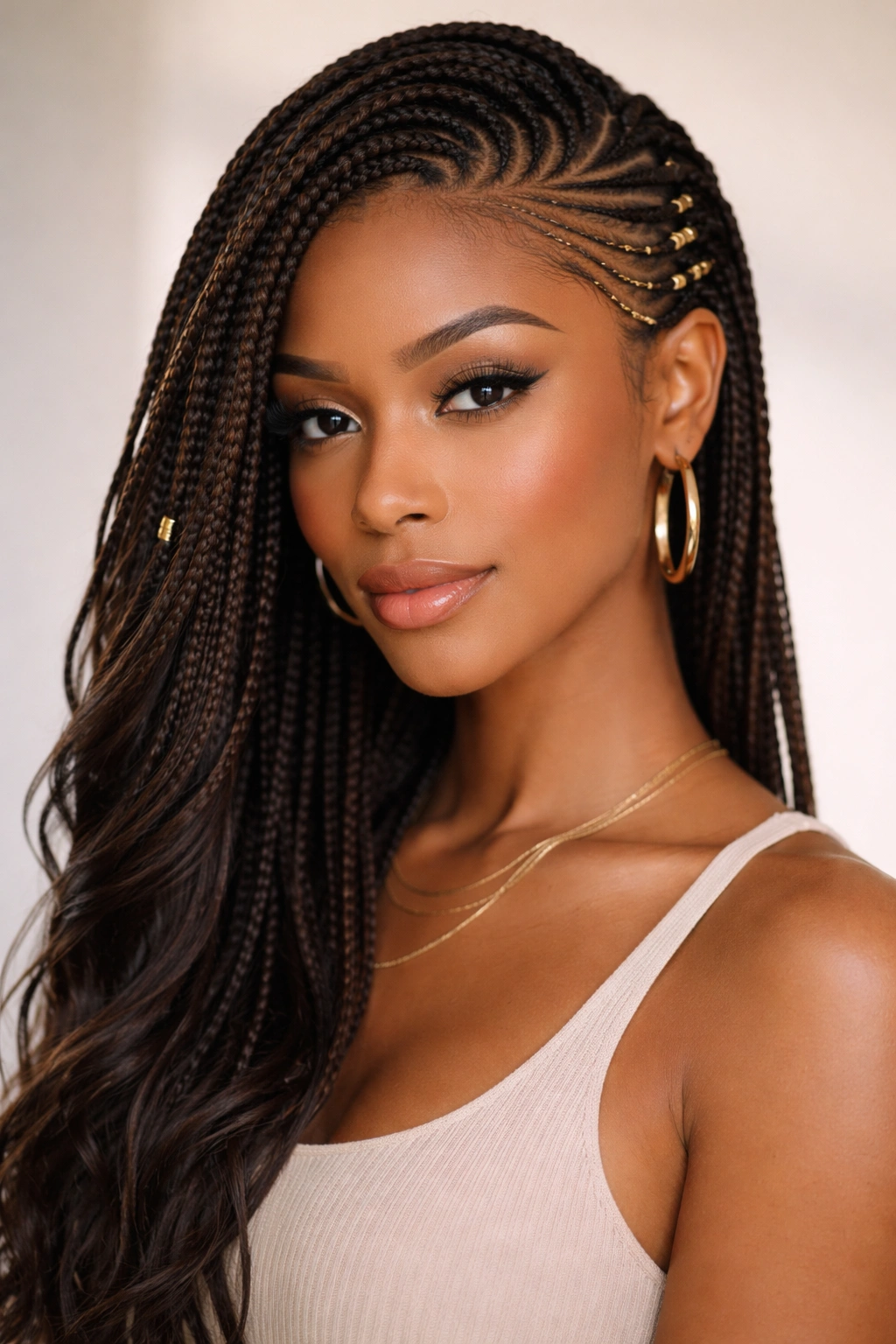
This final variation keeps the core Fulani braid technique but changes the overall composition by sweeping the braids dramatically to one side instead of down the center. The braids are often parted more densely on one side of the head and more sparsely on the other, creating an asymmetrical, sculptural effect. Additional detail braids or elaborate cuffs and beads are concentrated on the side where the braids gather, creating a focal point.
The Visual Impact of Asymmetry
Side-swept Fulani braids feel more contemporary and edgy than traditional center-parted versions, and they’re incredibly flattering for people who want to showcase one side of their face. The gathering of braids to one side creates visual weight and can be used strategically to balance or frame different face shapes. This style is popular for special events and parties because it feels special and intentional without being maximalist.
Styling Options and Variations
With the braids swept to one side, you have the back and other side of your head as a canvas for additional styling. Some people shave or undercut the non-braided side, creating dramatic contrast. Others keep the natural hair on the side that isn’t braided visible, creating texture variation. You can also gather the side-swept braids into a dramatic side bun or ponytail, further emphasizing the asymmetrical design.
Creating the Swept Effect Naturally
Ask your braider to part the braids so they naturally fall to one side rather than trying to force braids across your center. This typically means creating the parting pattern with a diagonal line from one temple across the crown to the opposite side. When the braids are created along this diagonal, gravity and the weight of the hair help them stay side-swept without excessive pinning or products required to maintain the position.
Flexibility as Hair Grows
As your natural hair grows and the extensions loosen slightly, the side-swept position may relax and become less dramatic. This is actually fine — the style remains flattering and wearable even if it’s less sculptural than it was initially. Around week 4 or 5, if you want to refresh the swept effect, your braider can re-tighten the braids and re-establish the side-swept parting pattern without doing a full reinstall.
Final Thoughts
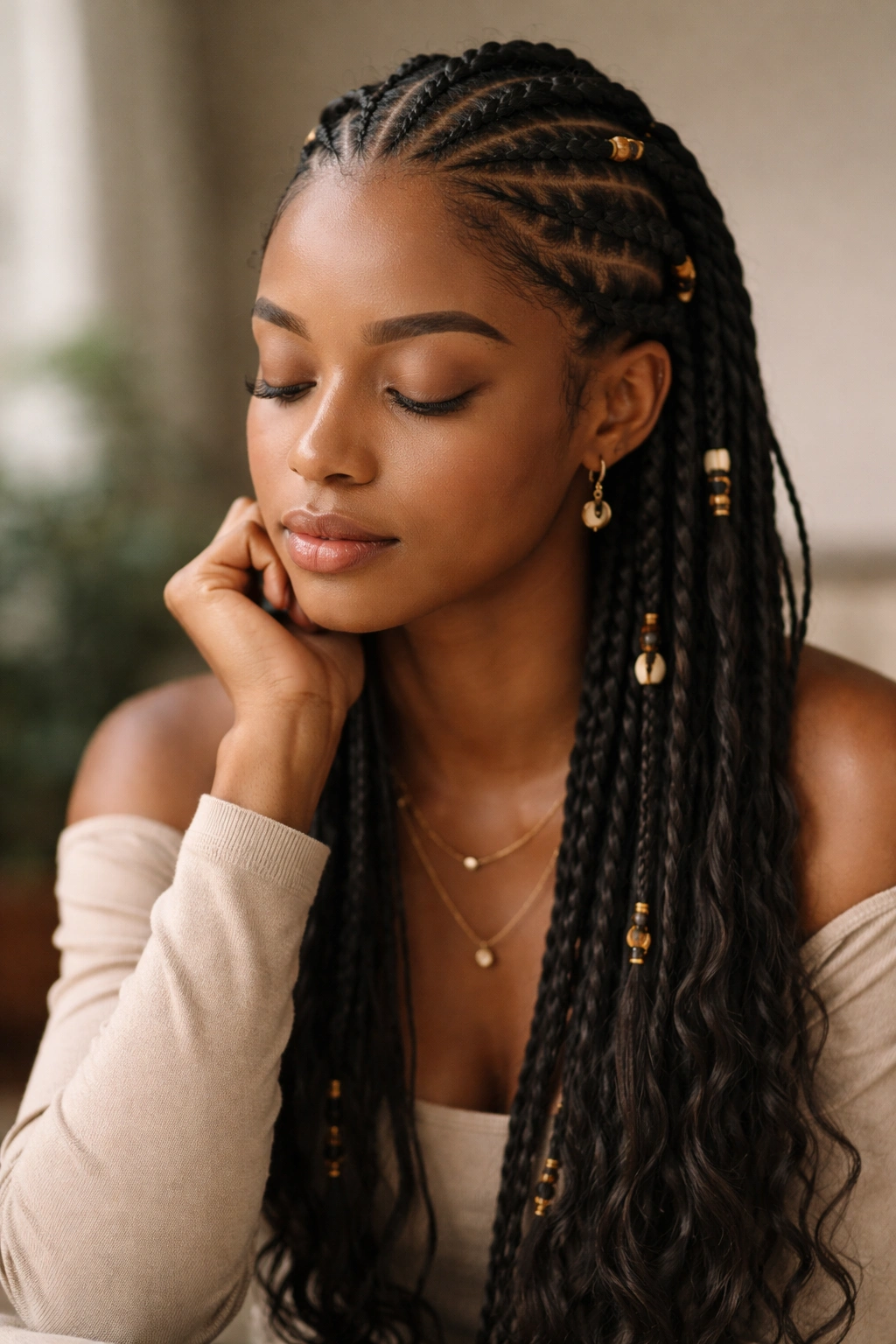
Fulani braids with human hair extensions offer incredible versatility for expressing your personal style while protecting your natural hair. Whether you choose the elegance of classic center-parted braids with gold cuffs, the creativity of geometric parting patterns, or the understated sophistication of thin braids with minimal ornamentation, you’re working with a style that’s rooted in cultural significance and contemporary flair.
The success of any Fulani braid style depends on three key factors: the quality of your human hair extensions, the skill and precision of your braider, and your commitment to proper care and maintenance throughout wear. Invest in extensions that feel good in your hands — they should have some texture, not feel waxy or synthetic. Find a braider who understands the cultural importance of the style and takes pride in precision and symmetry. And once you’re wearing your braids, protect them with silk bonnet wear, gentle handling, and moisturizing products designed for braided styles.
Fulani braids will continue to evolve, and new variations will emerge as braiders innovate and people push the boundaries of what’s possible with this classic style. The ten variations covered here represent popular and stunning approaches, but they’re just the beginning of what you can create. Your next step is finding a skilled braider, selecting extensions that make you feel confident and beautiful, and committing to a style that feels authentically you. The result will be a protective style that carries cultural weight, turns heads, and keeps your natural hair healthy underneath.
