



Yoruba hair weaving styles represent centuries of cultural artistry, technique, and beauty innovation from the Yoruba people of West Africa. These intricate braiding patterns aren’t just hairstyles—they’re expressions of identity, heritage, and craftsmanship that have evolved while maintaining deep cultural significance. Whether you’re exploring your roots, seeking protective styling options, or simply drawn to the geometric beauty and complexity of these designs, Yoruba weaving offers an incredible range of possibilities that work for different hair types, face shapes, and occasions.
The appeal of Yoruba hair weaving extends far beyond aesthetics. These styles promote healthy hair growth by distributing tension evenly across the scalp, protect natural hair from environmental damage and daily manipulation, and can be styled to last for weeks with proper maintenance. The versatility is remarkable—you can wear them casually in their natural form, or dress them up with beads, gold thread, or decorative accessories for special events. Each style tells a story, whether through the specific weaving pattern, the addition of traditional adornments, or the way the braids are arranged and styled.
What makes these styles truly special is how they blend tradition with contemporary expression. Modern wearers are combining classic Yoruba weaving techniques with modern touches—color, length variations, creative crown placements—while honoring the cultural roots and technical excellence these patterns demand. If you’re ready to explore the beauty, structure, and cultural richness of Yoruba hair weaving, you’ll find that each style offers its own character and challenges. Let’s dive into twelve stunning options that range from elegant and understated to bold and dramatic.
1. The Classic Yoruba Braid Crown
The Yoruba braid crown is the signature style that defines much of Yoruba hair aesthetics. This style features thick, symmetrical cornrows that begin at the hairline and curve around the crown of the head in a raised, architectural pattern. The braids sit high and proud on the head, creating an immediate visual impact that’s both regal and commanding. Many traditional versions feature three or five main sections arranged in a geometric pattern, though the number of braids and their exact placement can be customized to suit your head shape and personal preference.
Why This Style Endures
The crown arrangement isn’t arbitrary—it’s designed to frame the face beautifully while showcasing the precision and skill of the braider. The elevated placement creates an illusion of height and elegance that works for virtually every face shape. This style holds its shape exceptionally well, which means you can wear it for three to four weeks with minimal touch-ups if the braids are done correctly.
How to Wear It Best
- Pair with a clean, smooth hairline using edge control products for a polished finish
- Add gold beads or metal cuffs to the ends of braids for traditional flair
- Style with minimal additional hair if you prefer a more refined look, or add bulk for drama
- Accessorize with decorative pins or wrap the crown section with gold thread for special occasions
A real pro tip: Sleep on a silk or satin pillowcase to maintain the smoothness and shine of the braids throughout their lifespan.
2. The Stacked Braid Pyramid
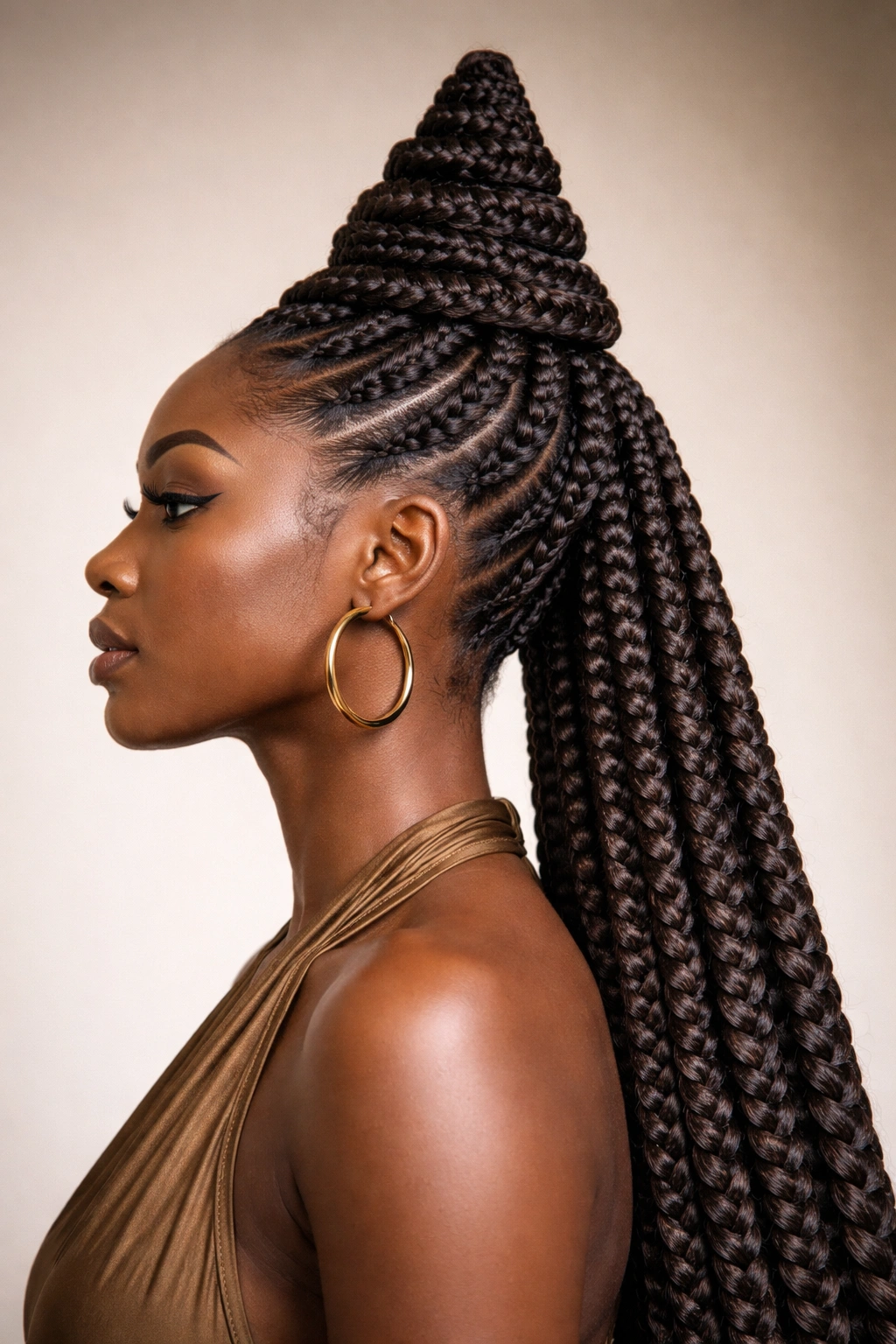
The stacked braid pyramid takes vertical architecture to an extreme. This style stacks braids on top of each other in tiered rows, creating a dramatic three-dimensional pyramid effect that rises dramatically from the nape of the neck upward. Each tier contains progressively thicker braids, and the visual result is nothing short of sculptural. The style originated as a way to celebrate elaborate braiding skill and remains a show-stopping choice for anyone wanting maximum visual impact.
Building the Pyramid Structure
Creating this style requires careful planning and significant braiding expertise. The braider must calculate the correct braid thickness and placement so that each tier sits perfectly on top of the previous one without gaps or instability. The base braids are typically the thickest, and each ascending tier gets progressively finer, creating that elegant pyramid taper. The number of tiers can vary from three to five depending on your hair length and volume.
Styling and Maintenance
- The pyramid can be worn with the point facing forward, backward, or to the side—each orientation creates a different vibe
- Spray the braids lightly with moisturizing mist every few days to keep them fresh
- Avoid sleeping on the pyramid directly; use a satin bonnet or wrap to protect the tiers
- This style works best for special occasions or events since the impact is quite dramatic
The reality: This style demands serious hair length and volume to execute properly, and it’s an investment of both time and money at the salon.
3. The Twisted Crown Goddess Braids
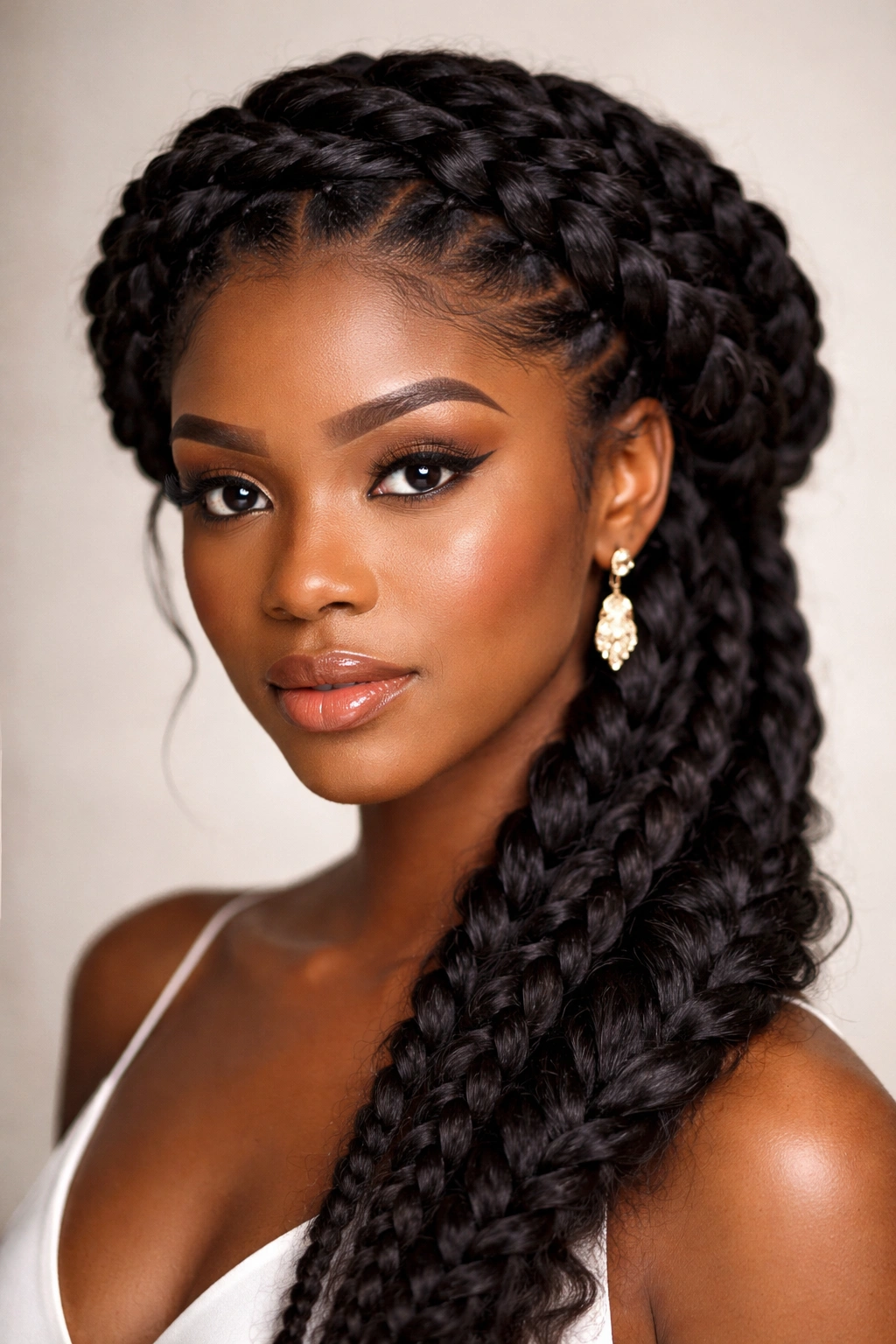
Goddess braids are thicker, fuller braids that incorporate twists along with traditional braiding. Rather than pure three-strand cornrows, goddess braids blend sections of twisted hair with braided sections, creating a textured, organic appearance that reads as more relaxed than structured Yoruba styles while maintaining their elegance. When arranged in a crown formation, they create a romantic, slightly bohemian effect that feels both traditional and contemporary.
The Twist-and-Braid Technique
The magic of goddess braids lies in the technique itself. The braider incorporates sections of two-strand twists alongside the braided sections, creating rhythm and visual interest. This variation in texture means the style catches light differently as you move, creating depth. The goddess braid crown typically features five to seven braids arranged symmetrically, and the twists prevent the style from feeling too formal or severe.
Who This Style Suits Best
- Anyone wanting softness and movement within a protective style framework
- Those with medium to thick hair texture who want visual interest
- People with rounder face shapes (the twists create vertical lines that elongate)
- Anyone seeking a style that’s elegant but not overly formal
Real-world insight: Goddess braids require more daily maintenance than pure cornrows because the twist sections need occasional refreshing and moisture, but the effort is worth it for the aesthetic payoff.
4. The Geometric Side-Swept Braids
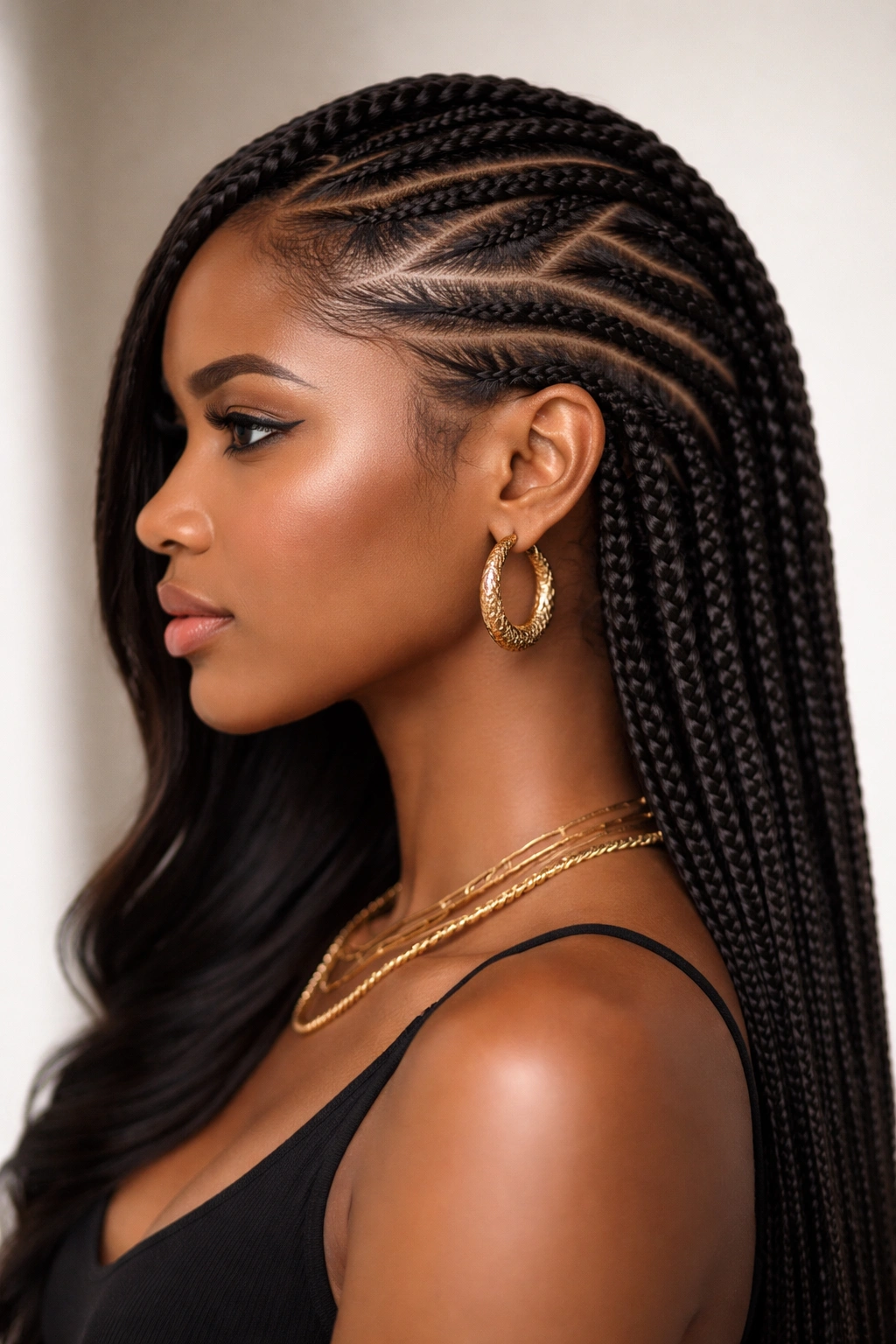
This modern take on Yoruba styling features asymmetrical braids that sweep from one side of the head to the other in geometric patterns. Rather than traditional centered or crown-placed braids, this style positions all the braids on one side, creating a dramatic diagonal line across the head. The braids follow angular, zigzag, or diagonal patterns rather than the symmetrical curves of classic styles. This asymmetry brings contemporary flair while maintaining traditional braiding technique.
Creating Asymmetrical Drama
The artistry here is in the pattern placement. The braider might create a diagonal line sweeping from the temple to the opposite ear, or weave a series of interconnected geometric shapes across one hemisphere of the head. The reverse side is often left clean and smooth, or braided with finer, less prominent braids that balance the bold statement side. This contrast creates visual excitement and draws attention to your facial features from one angle.
Styling Applications
- Wear the braids down and loose, or pull them into an elaborate high bun on the side
- Tuck the smooth side behind your ear to show more facial contour
- Add metallic thread or beads specifically to the patterned side for emphasis
- This style photographs beautifully from one angle, making it perfect for the aesthetically inclined
The technique demands a skilled braider with artistic vision—not all stylists can execute geometric patterns with precision.
5. The Starburst Crown with Radiating Lines
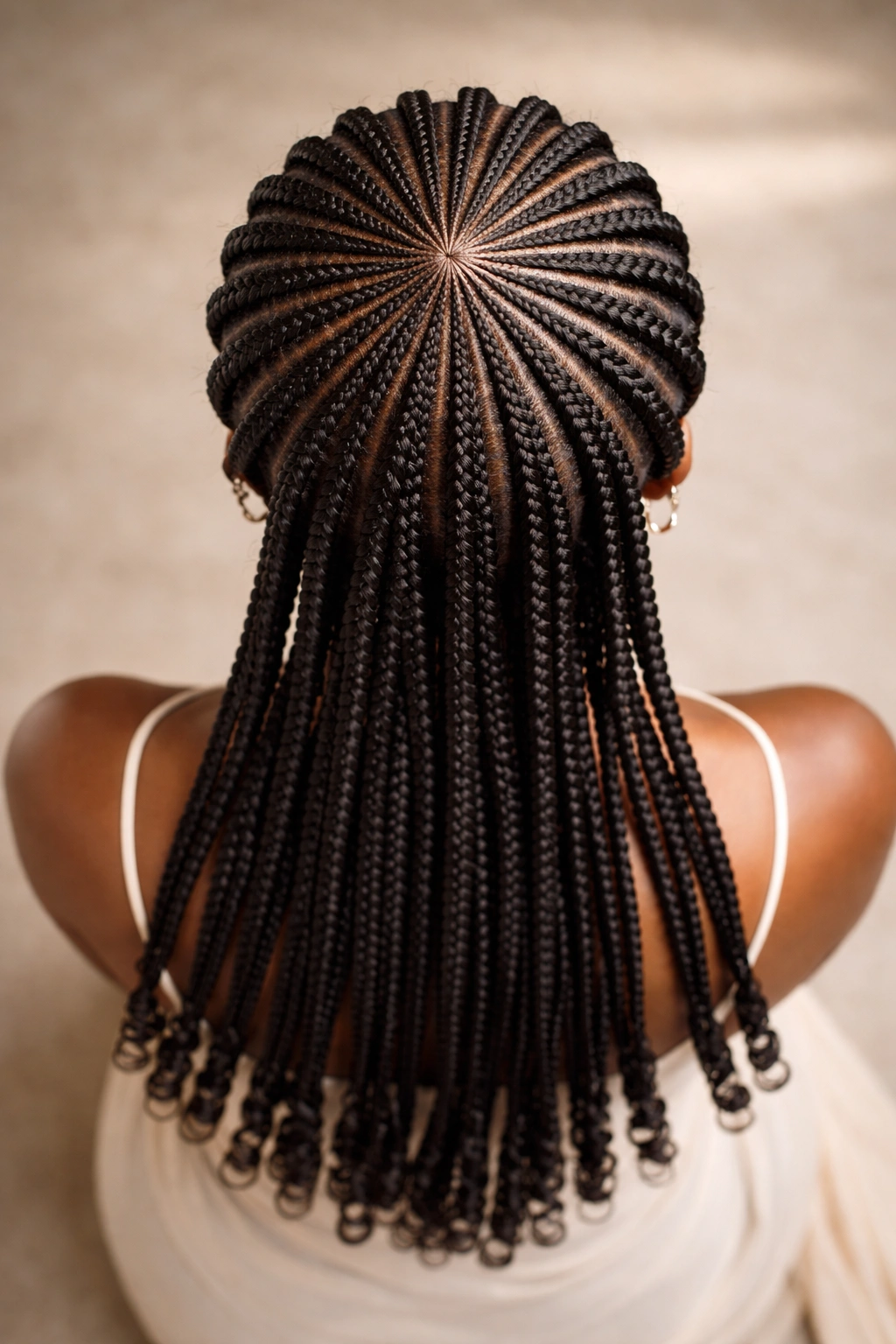
The starburst style features braids that radiate outward from a central point, like rays of sun emanating from the crown. All the braids begin at the center top of the head and travel downward in different directions, creating a stunning symmetrical pattern when viewed from above. The effect is like looking at a geometric sunburst or mandala design rendered in hair. This style is particularly striking because it creates an optical illusion of movement and flow.
The Radial Pattern Architecture
Creating a perfect starburst requires the braider to map the head like a geometric grid. The braids are typically 4 to 8 in number, depending on the desired thickness and spacing. Each braid begins at the crown point and travels downward at specific angles—typically around 45-60 degree increments—creating that perfect radiating effect. The braids can be of uniform thickness or can vary slightly to create subtle visual interest. Many versions leave the center crown area visible, showing the scalp in the middle of the starburst pattern for maximum visual clarity.
Wearing the Starburst
- The braids can end at the shoulders, mid-back, or longer depending on your hair length
- Add decorative elements like beads or wraps at regular intervals along each braid
- Style with a statement crown or headwrap over the center point for traditional flair
- The style works beautifully with natural hair texture at the ends of the braids
Maintenance note: The center point where all braids meet can experience tension, so some experienced wearers alternate this style with others to give that area a break.
6. The Halo Braid Circle
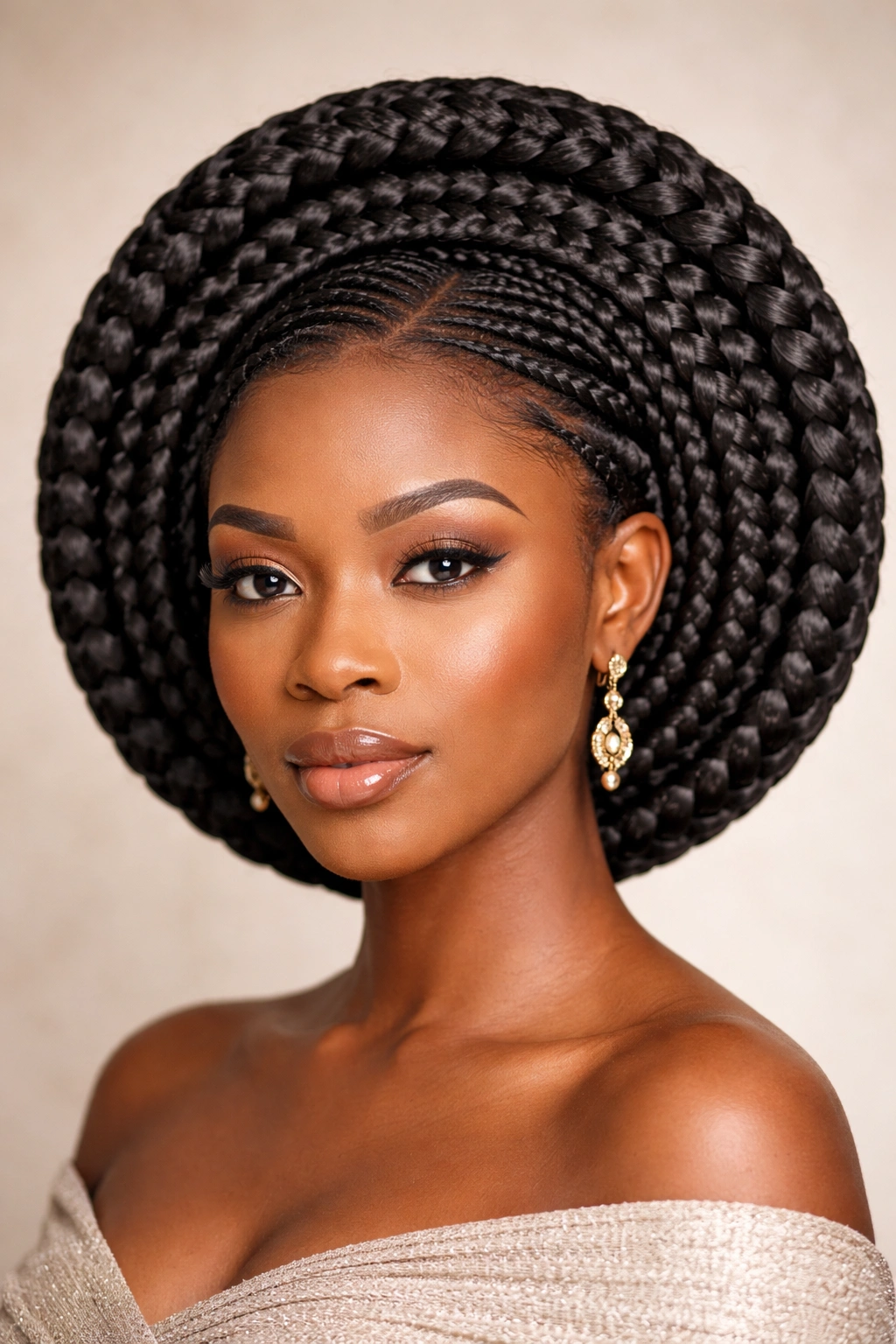
The halo braid creates a perfect circle around the head, like a crown or halo sitting on the scalp. Multiple thick braids are woven in concentric circles, starting from a central point and spiraling outward, or alternatively, braids are arranged in a circular formation that frames the face. This style celebrates the braiding work itself as the focal point rather than creating an additional shape or architecture. The halo effect is both protective for the hairline and visually harmonious, with braids framing the face on all sides.
Circular Geometry and Face Framing
The halo braid works with multiple concentric rows, typically three to five circles depending on hair length and volume. Each circle sits just slightly back from the previous one, creating depth and dimension. Some versions taper the braid thickness from larger outer circles to finer inner circles. The style is particularly flattering for longer face shapes because the horizontal circular lines create width and balance. The braids can vary in thickness, and many traditional versions feature intricate detailed work that celebrates the braider’s skill.
Versatile Styling Options
- Wear hair down flowing past the halo braids for a romantic look
- Gather the loose hair into a bun at the center or back, with the halo frames it
- Add thin gold chains woven through the braids for special occasions
- The halo works equally well with sleek, smooth loose hair and with textured natural hair beneath
This style demands hair length and volume, typically requiring at least shoulder-length hair or added extensions to execute properly.
7. The Multi-Directional Beaded Braids
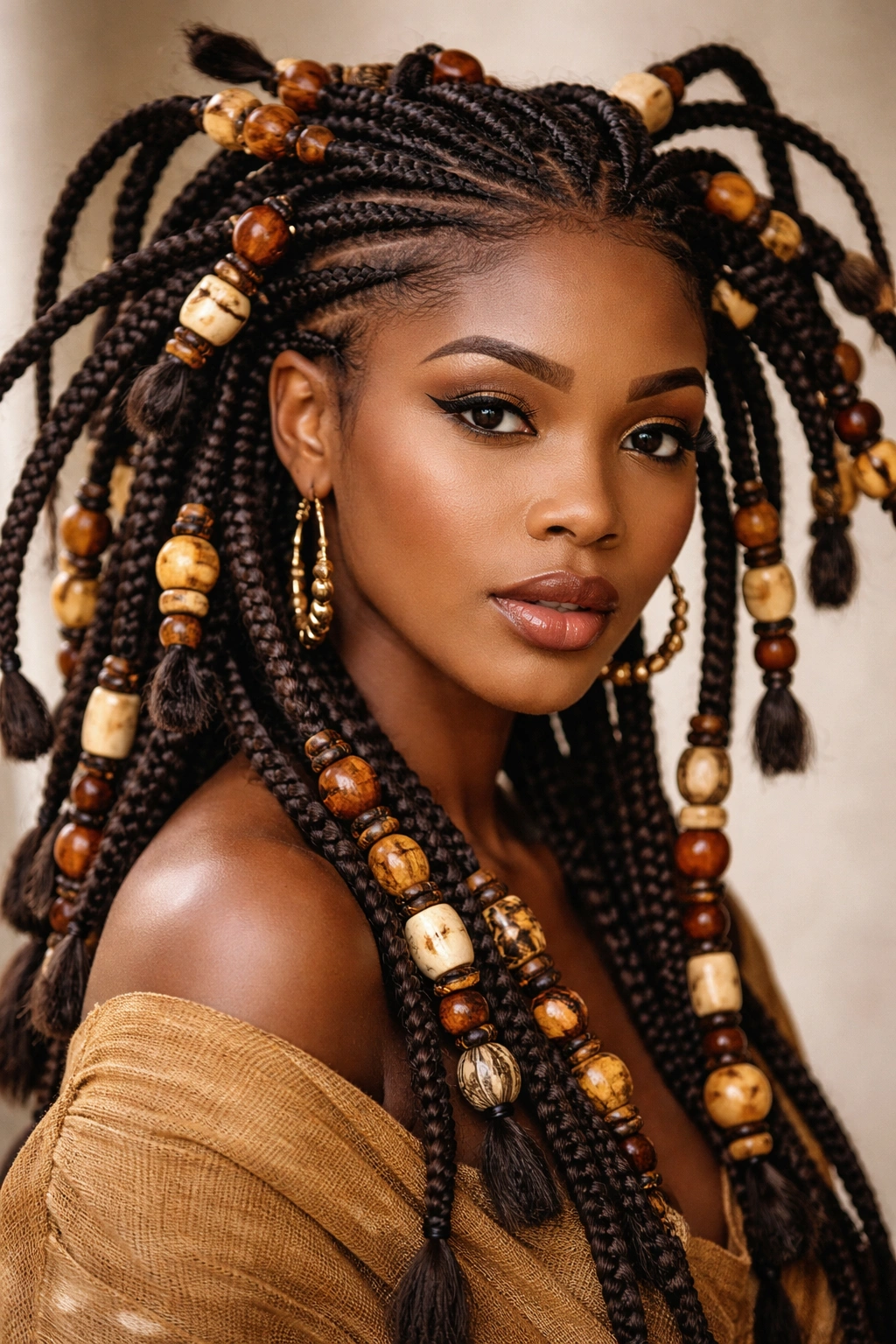
This style breaks free from the structured placement of classic Yoruba braids by arranging them in various directions and patterns, often incorporating bold, colorful beads throughout. The braids might start at different points on the head, travel in different directions, and converge or diverge in interesting ways. Large wooden beads, metal beads, or decorative clay beads are strung onto the braids at intervals, creating a look that’s celebratory and visually complex. The multi-directional approach feels less formal than crown-based styles while maintaining the elegance of precise braiding.
Bead Selection and Placement Strategy
The choice of beads is crucial to the overall aesthetic. Traditional selections include natural materials like wood, bone, and clay, though contemporary versions incorporate metals, plastics, and even semi-precious stones. The placement matters just as much as the selection—beads can be clustered densely near the scalp, scattered throughout, concentrated at the ends, or arranged in specific patterns that create additional visual design. The weight of the beads should be distributed evenly to avoid tension on specific areas of the scalp.
Making This Style Your Own
- Choose bead colors that complement your skin tone and personal aesthetic
- Mix bead sizes for visual rhythm and movement
- Combine metallic, wooden, and natural beads for texture
- Consider the beading pattern—symmetrical, asymmetrical, gradient, or random
Important consideration: Heavier beads can create more scalp tension over time, so this style is better suited for shorter wear periods (2-3 weeks) or for those with particularly strong, healthy hair.
8. The Reverse Crown with Low Braids
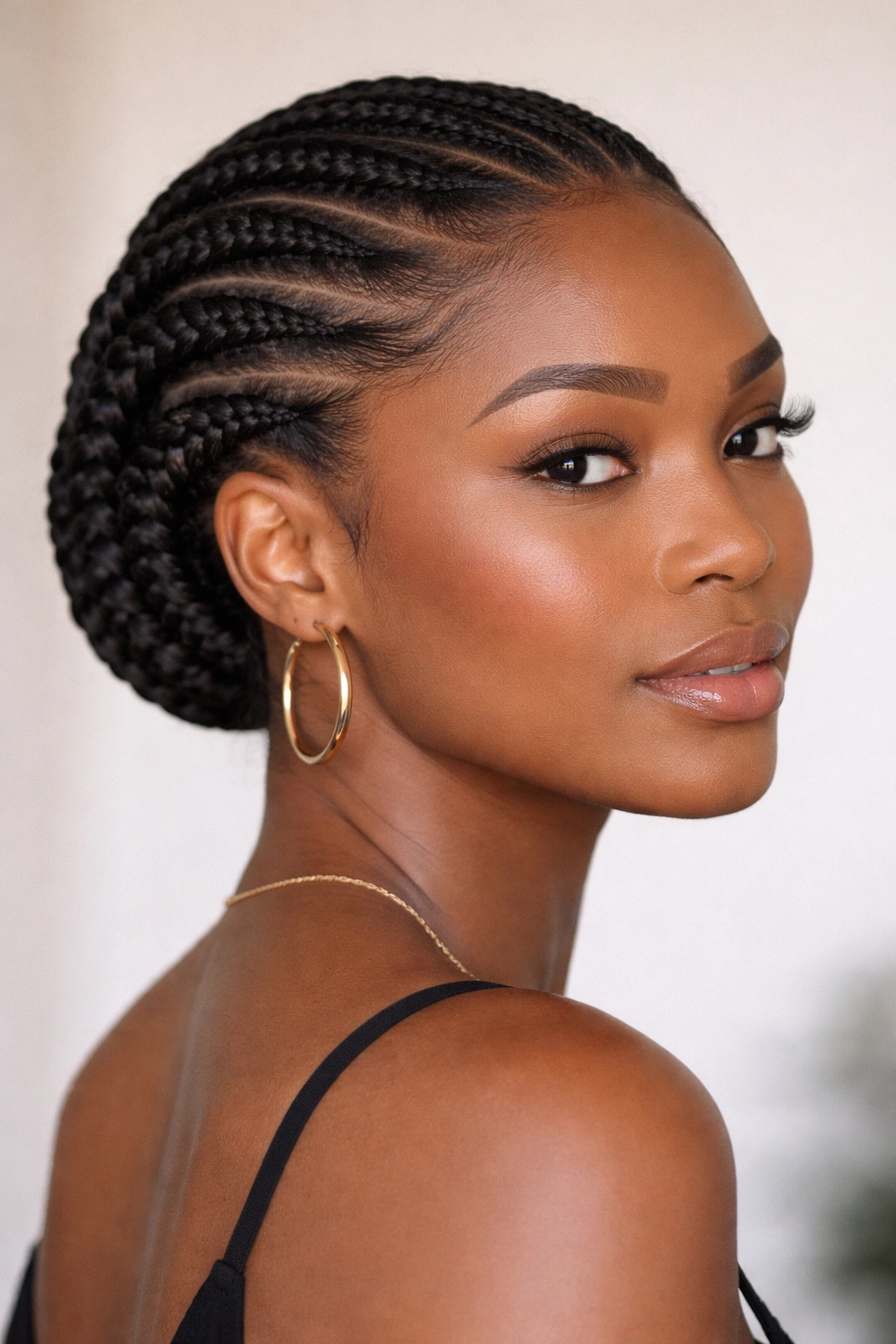
Instead of braids positioned high on the crown, the reverse crown features the main architectural braids positioned lower on the head, often starting from the nape of the neck and building upward or traveling along the sides and back. This inverted approach creates a completely different visual effect—it’s more understated than the traditional crown, focuses attention lower on the head, and feels modern while maintaining the geometric precision of Yoruba traditions. The reverse placement is often combined with a smooth, sleek hairline that’s left visible and unbraided.
Lower Placement Advantages
Positioning the main braids lower on the head distributes tension away from the delicate hairline, making this style ideal for anyone with sensitivity or previous hair loss in the frontal area. The lower positioning also creates a different silhouette—it visually broadens the shoulders and creates a lengthening effect through the face. Because the braids begin lower, they typically showcase more length and allow more freedom with how the loose hair flows once it’s released from the braided section.
Styling the Reverse Crown
- Leave the frontal hairline completely unbraided for a sophisticated, minimalist look
- Create a sleek, smooth front section using edge control and polish
- Wear the loose hair loose and flowing, or gather it into a half-bun or ponytail
- Add thin braids or twists to the front section if you want more detail without architectural braiding
This style works beautifully for professional settings where you want sophisticated detail without overwhelming visual drama.
9. The Box Braid Interpretation
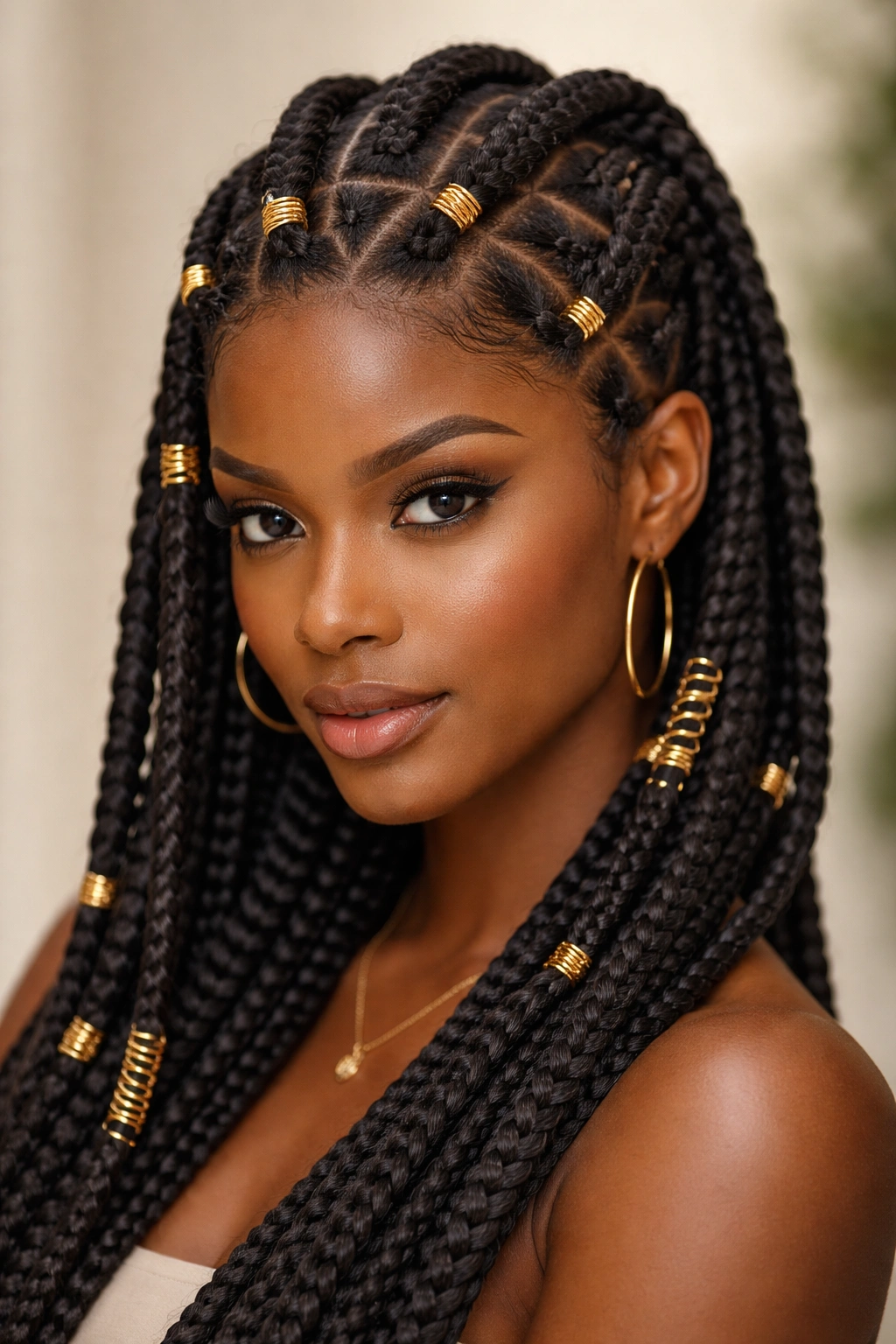
While box braids are technically distinct from traditional Yoruba cornrows, contemporary Yoruba-inspired versions incorporate the precision and cultural elements of traditional styling into a box braid format. These are thicker, more sculptural braids with space between them, arranged in patterns that honor Yoruba geometric traditions. The box braid interpretation typically features planned, architectural placement rather than the all-over grid of typical box braiding, and they’re often worked with the same cultural intentionality as traditional styles.
Geometric Placement in Box Braids
The key difference from standard box braiding is the intentional pattern and placement. Rather than uniform grid spacing, Yoruba-inspired box braids might feature increasing thickness from one side to the other, radiating patterns, crown placements, or geometric designs. The space between braids is carefully calculated to create visual patterns. Many traditional variations include gold wrapping or beading at the base or throughout the braids. The braids might be styled in multiple configurations—up in elaborate buns, flowing down, or partially pinned.
Modern Versatility
- Add gold cuffs or wrapping to selected braids for traditional flair
- Experiment with ombre color effects where braids transition from one color to another
- Style in elaborate updo arrangements or leave flowing
- The individual braids can be wrapped with thread or adorned with beads
The advantage: This style offers more daily styling flexibility than traditional cornrows since individual braids can be repositioned or restyled without disturbing the entire look.
10. The Triangular Crown Pattern
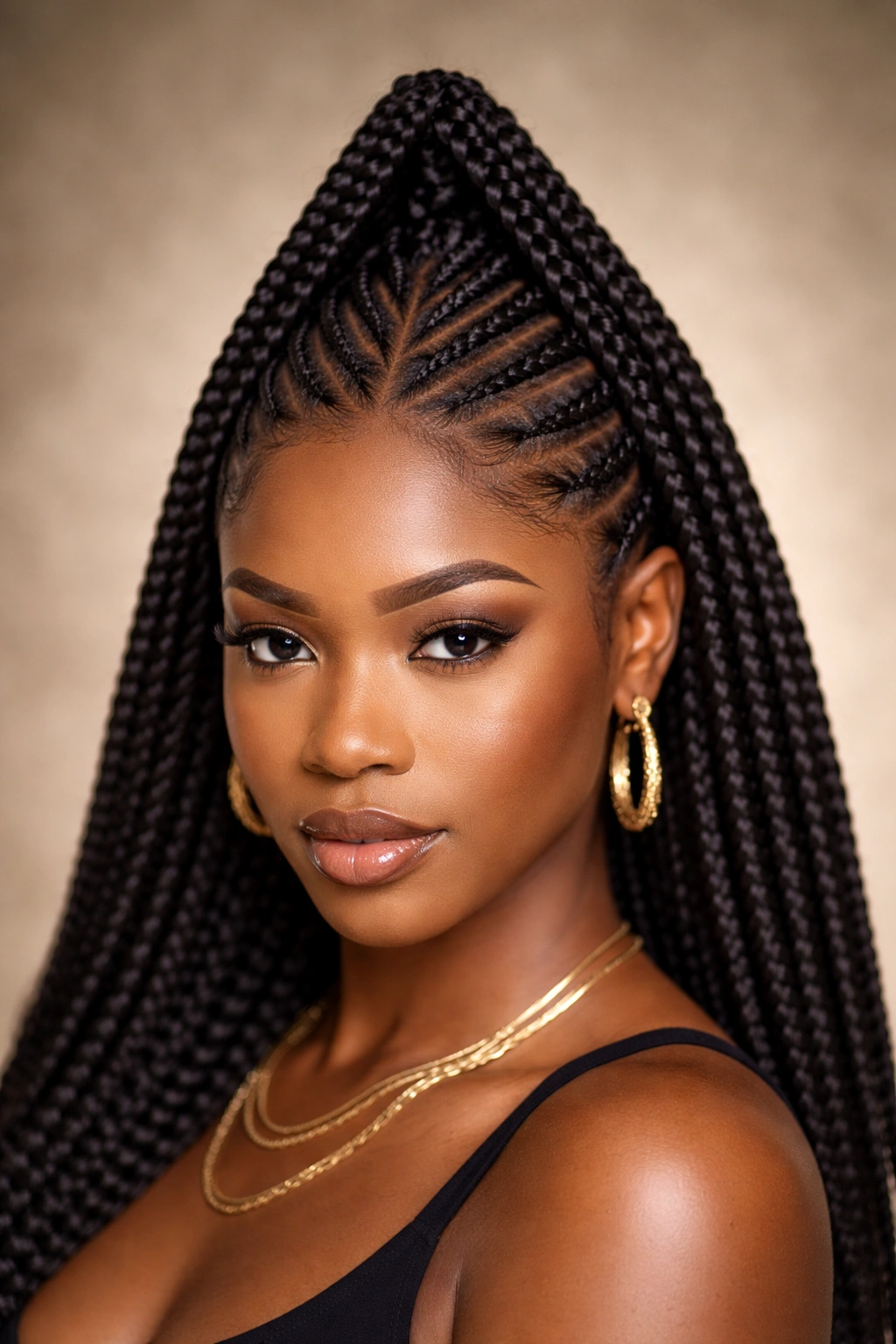
This striking style features braids arranged in a large triangle formation, with the point facing either downward (toward the nape) or upward (toward the forehead). The three sides of the triangle create a bold geometric shape that’s visually commanding and celebrates mathematical precision. The braids within the triangular frame are typically parallel to each other, creating internal linear patterns that reinforce the overall triangle shape. This is a sophisticated choice for anyone wanting maximum visual impact through geometric design.
Triangle Orientation and Meaning
The downward-pointing triangle (apex near the forehead) creates a grounded, powerful aesthetic and is traditionally associated with stability and foundation. The upward-pointing triangle emphasizes height and creates an elongating effect through the face. The size of the triangle can be adjusted based on head shape and personal preference—a tighter, smaller triangle feels more refined and conservative, while a larger triangle that encompasses more of the head is bolder and more dramatic. Some versions feature the triangle as the main element with additional braids filling surrounding space, while others allow the triangle to be the sole focus.
Executing the Triangle
- Ensure the three sides are mathematically equal for perfect symmetry
- Use consistent braid thickness throughout the triangular frame
- Fill the interior with parallel braids that align with the triangle’s direction
- Leave hair down below the triangle for balance and flow
This style requires a highly skilled braider with strong geometric understanding—imprecision in any of the three sides will be immediately visible.
11. The Double Crown with Linked Braids
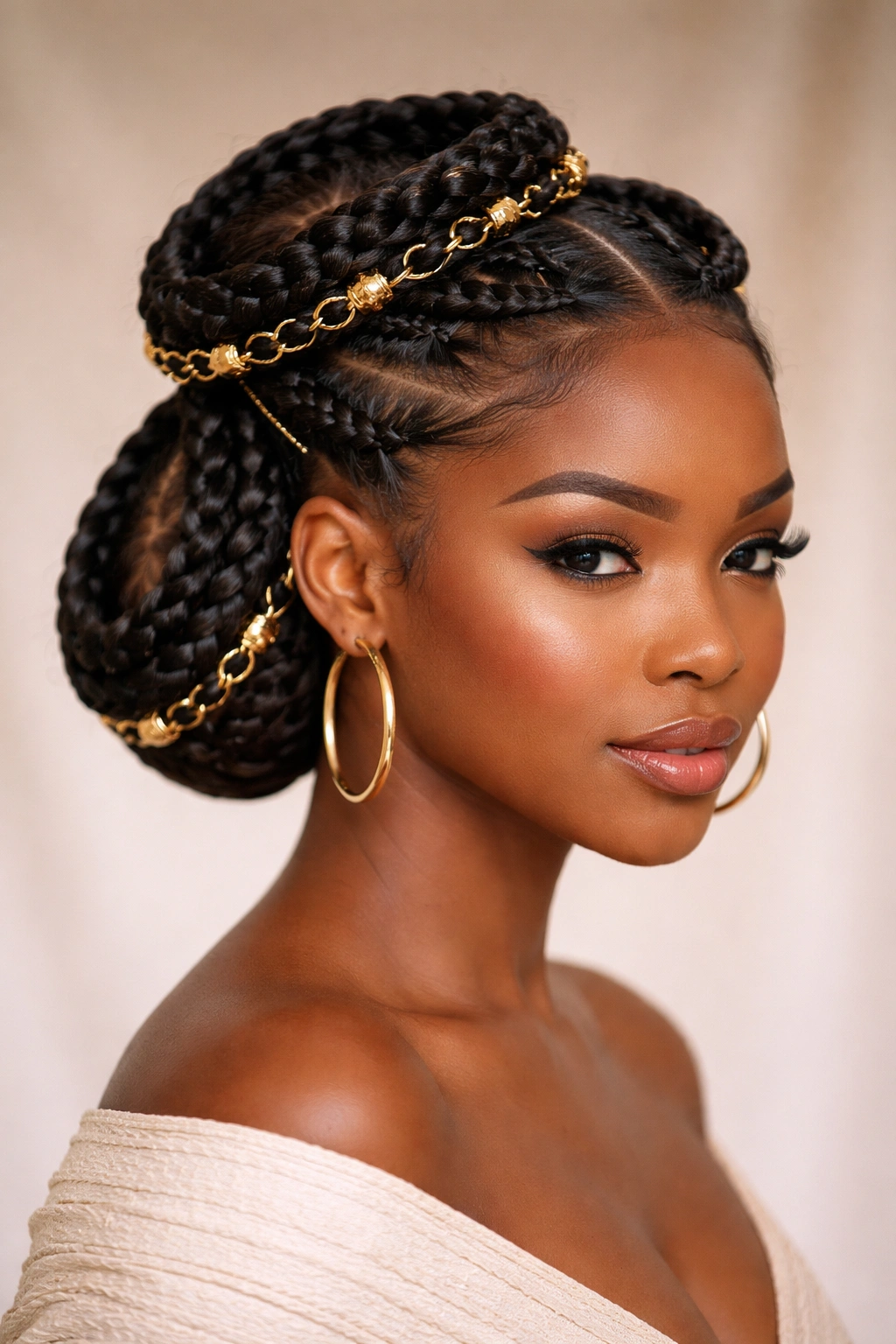
The double crown features two distinct braid arrangements—one positioned higher and one lower on the head—that are visually connected, creating a complex, layered effect. The two crowns might mirror each other, create a symmetrical pattern, or be deliberately asymmetrical for modern flair. The “linking” can be achieved through braids that physically connect the two crown sections, through matching decorative elements, or simply through intentional design that makes the eye read them as a unified composition rather than two separate styles.
Architectural Complexity
Creating a double crown demands a comprehensive vision of how the two sections interact visually. The upper crown might feature five braids in a traditional crown formation, while the lower crown features four braids in a slightly different pattern. Connecting elements—thicker braids that bridge the two sections, decorative thread that ties them together, or matching bead placements—unify the design. The contrast between the two crowns creates visual interest and allows the style to evolve as you move and the light hits it differently.
Double Crown Styling
- Enhance each crown section with different bead colors or decorative elements
- Create asymmetry by making one crown larger and more prominent than the other
- Add flowing loose hair between the two crowns for romantic contrast
- Style with a head wrap that echoes the double crown pattern for a coordinated look
Time investment: This style takes considerably longer to create than single-crown versions and requires significant expertise, so expect longer salon visits and higher costs.
12. The Spiral Twist Braid Fusion
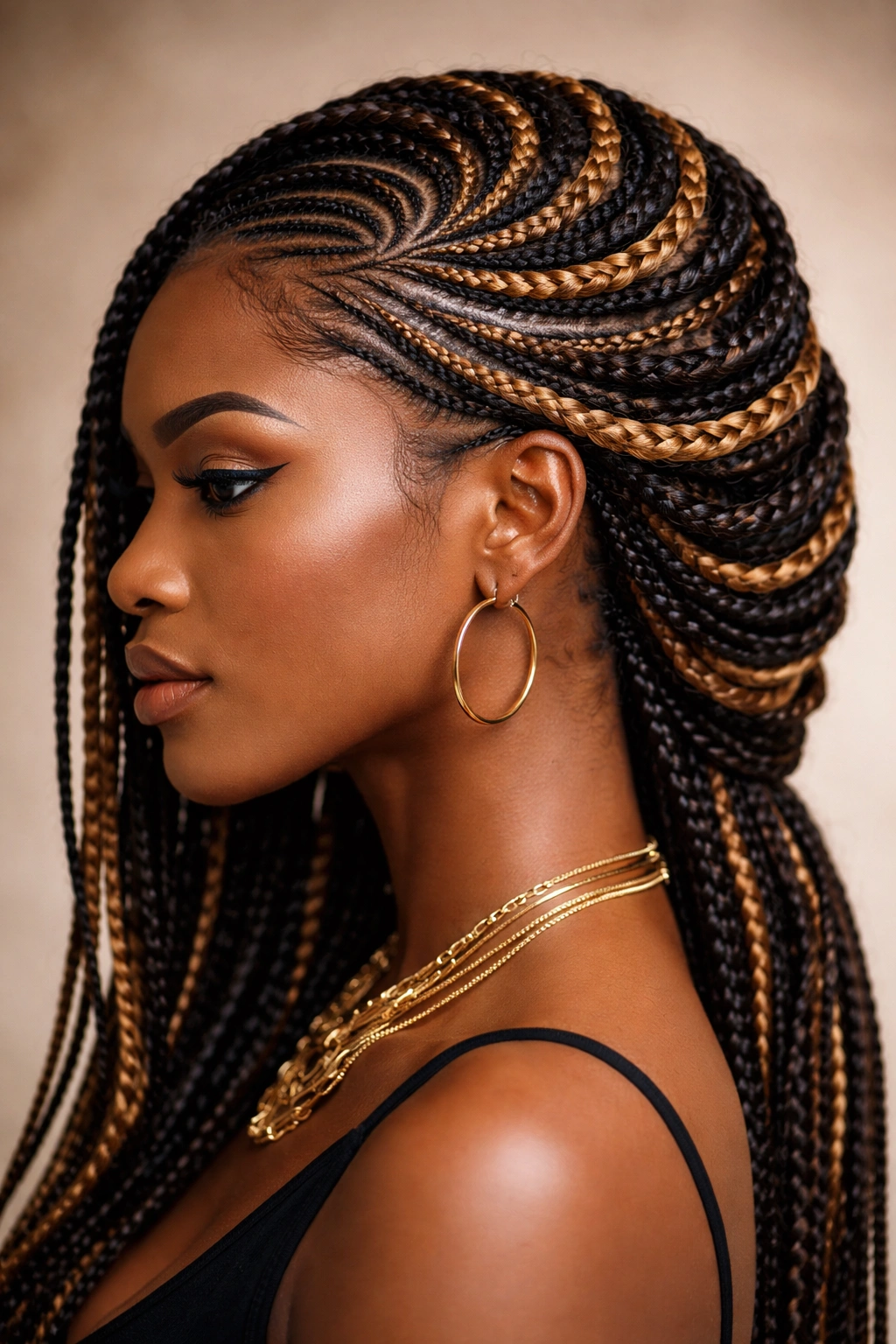
The final style blends traditional braiding with spiral twists and directional turns, creating a dynamic style that feels both structured and organic. Braids flow in spiraling patterns across the scalp, sometimes rotating around central points, sometimes traveling in helical patterns that create the visual illusion of movement and flow. The fusion of straight-line braids with curving spiral sections creates visual rhythm and showcases advanced technique. This style can be arranged in a crown formation, a side placement, or all-over coverage depending on preference and hair length.
Spiral Technique and Visual Impact
The spiral elements are created by gradually rotating the direction of the braids as you move across the scalp, or by creating actual spiral/helical patterns with the braid itself. The effect is hypnotic and complex—it draws the eye along the spiraling path and creates multiple layers of visual interest. This style works particularly well in metallic or two-toned color because the spiral pattern is enhanced when light hits different tones as your head moves. The technique requires exceptional spatial reasoning and braiding skill.
Wearing the Spiral Fusion
- Consider a monochromatic color palette to let the spiral pattern shine
- Add thin metallic thread that follows the spiral path for emphasis
- Wear hair down to showcase the full spiral effect
- The style photographs beautifully and translates well to video and movement-based imagery
Reality check: This style is best suited for special occasions or professional photoshoots because the intricate spiral pattern requires consistent maintenance to look its absolute best throughout wear.
Final Thoughts
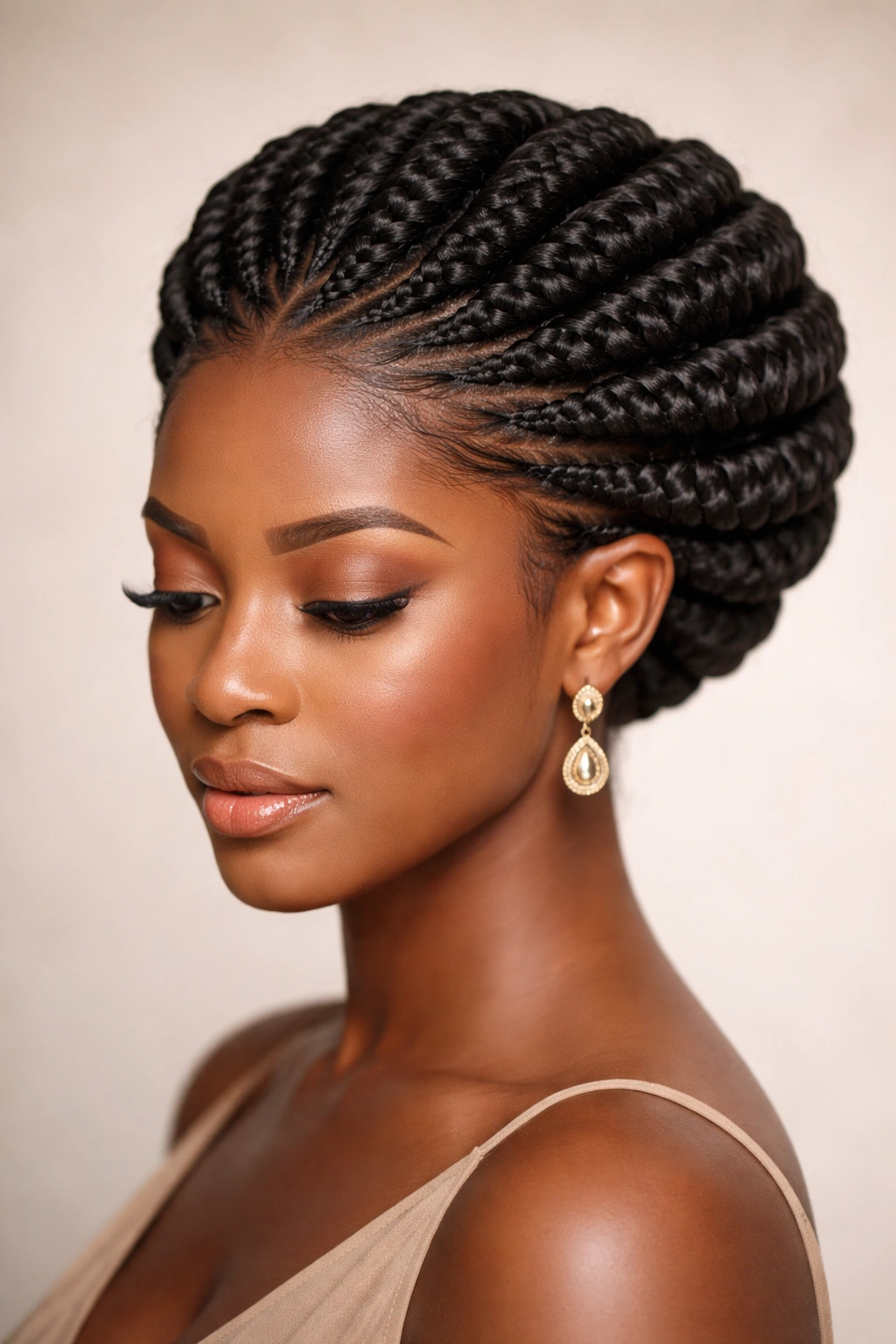
Yoruba hair weaving styles offer an incredible range of options for expressing your personal aesthetic while honoring a rich cultural heritage. Whether you’re drawn to the classic elegance of the crown braid, the architectural boldness of geometric patterns, or the romantic flow of twisted goddess braids, there’s a style that aligns with your hair type, lifestyle, and vision. The key is finding a skilled braider who understands not just the technical execution of these styles, but also their cultural significance and the artistic vision behind them.
The investment you make in these styles—both financially and in terms of time—is an investment in your hair health and confidence. These protective styles, when done properly and maintained with care, allow your natural hair to rest and grow while you enjoy weeks of beautiful, artistic styling. Take time to research braiders in your community, look at portfolio examples, and have a conversation about what you’re hoping to achieve. A skilled braider becomes a partner in your hair journey, helping you explore different styles, understand what works for your unique head shape and face, and pushing the boundaries of what’s possible while respecting the traditions that make these styles so meaningful.
Your choice to explore Yoruba hair weaving is a celebration of artistry, heritage, and personal beauty. Whichever style you choose, wear it with the confidence and pride it deserves.
