


Igbo hairstyles have been a cornerstone of African beauty and cultural expression for generations, showcasing the creativity, artistry, and heritage of the Igbo people of southeastern Nigeria. These styles aren’t just about aesthetics—they’re deeply rooted in tradition, identity, and practical wisdom about caring for natural hair. Whether you’re looking to reconnect with your cultural roots, try something bold and transformative, or simply discover new ways to style your natural hair, Igbo-inspired styles offer incredible versatility and visual impact.
What makes Igbo styles particularly striking is their ability to work with virtually any hair texture while celebrating the natural beauty of coily, kinky, and textured hair. These styles combine intricate craftsmanship with functionality—many were historically designed to protect hair while allowing it to grow strong and healthy. From elegant updo arrangements to eye-catching spiral patterns, Igbo hairstyles represent a rich tradition of innovation in Black hair care and styling. The techniques used in these styles have been passed down through families and communities, each generation adding their own modern twist while honoring the original artistry.
Whether you’re wearing your hair for a special occasion, a cultural celebration, or simply because you want your natural hair to shine, these fourteen styles offer the kind of impact that turns heads while keeping your hair in a healthy, protective state. Many of these styles are achievable at home with patience and practice, though working with a skilled stylist familiar with natural hair and Igbo techniques can ensure flawless execution and longevity.
1. Igbo Braids with Thick Twisted Patterns
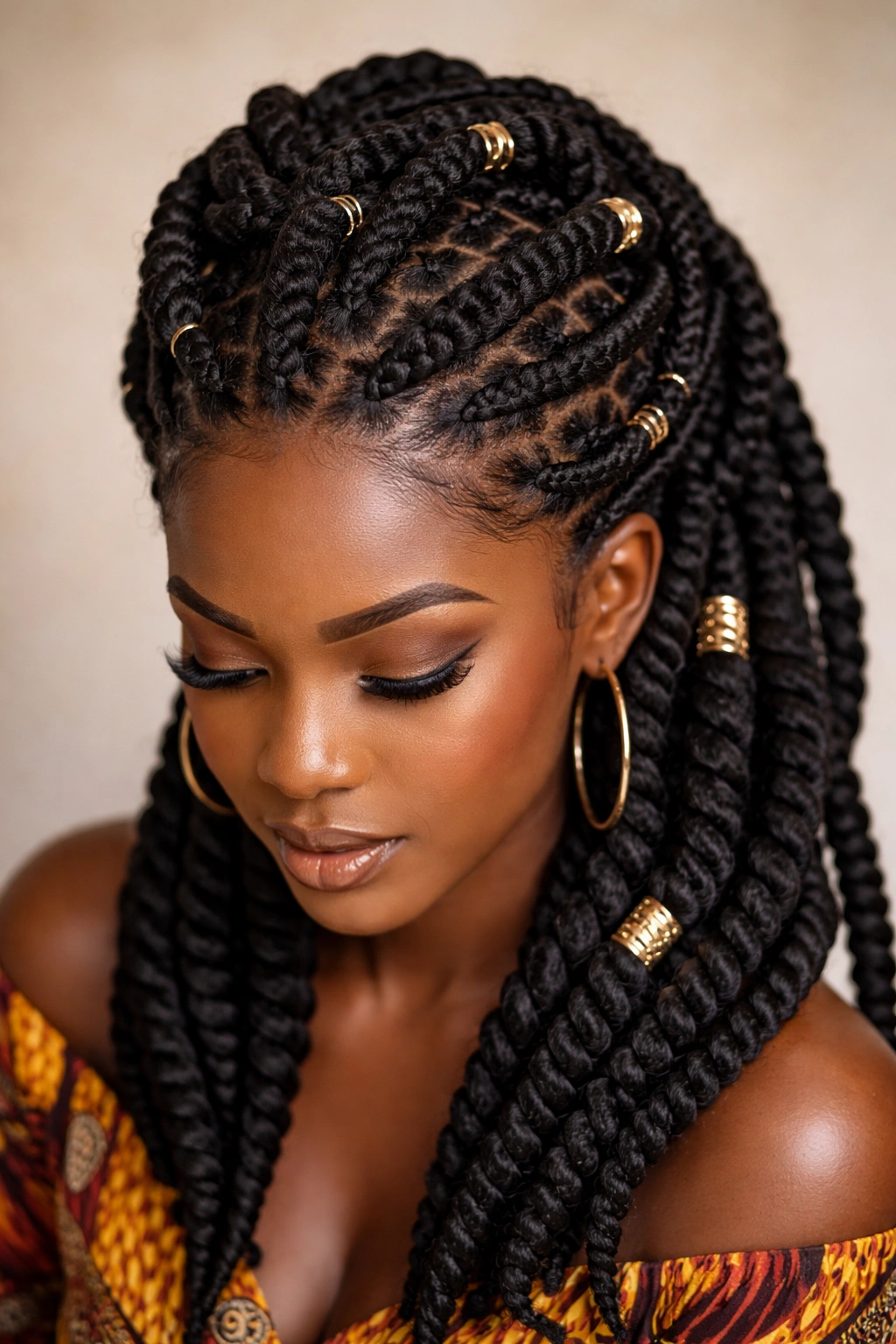
Igbo braids are characterized by their thickness and dimensional texture, often incorporating twisted sections that create a sculptural, almost three-dimensional effect on the scalp. These braids typically use human hair extensions to add volume and length while maintaining that signature Igbo aesthetic that prioritizes bold, statement-making patterns. The style works beautifully as a protective style that keeps your natural hair tucked away while showcasing intricate geometric designs.
Why This Style Creates Such Visual Impact
The magic of Igbo braids lies in how they play with light and shadow. The twisted sections catch the light differently than flat braids, creating depth and movement even when your head is still. The patterns often follow specific routes across the scalp—sometimes spiraling from the crown, other times creating concentric circles or flowing lines—that make each style uniquely personal. This dimensional quality is what makes these braids photograph so beautifully and why they’ve remained popular across generations.
How to Achieve This Look
- Work with a stylist experienced in Igbo braiding techniques, as the twisted sections require specific skill
- Choose extensions in a color that either matches your natural hair or creates intentional contrast for visual interest
- Plan your pattern before starting—sketch it out or show reference images to your stylist
- Expect the appointment to take 4-6 hours depending on the complexity and number of braids
- Use a silk or satin scarf at night to maintain the style’s integrity and reduce frizz
Pro tip: These braids typically last 4-6 weeks if you keep your scalp moisturized with lightweight oils and avoid tugging on the roots when washing.
2. Igbo Puffball Buns with Geometric Bases
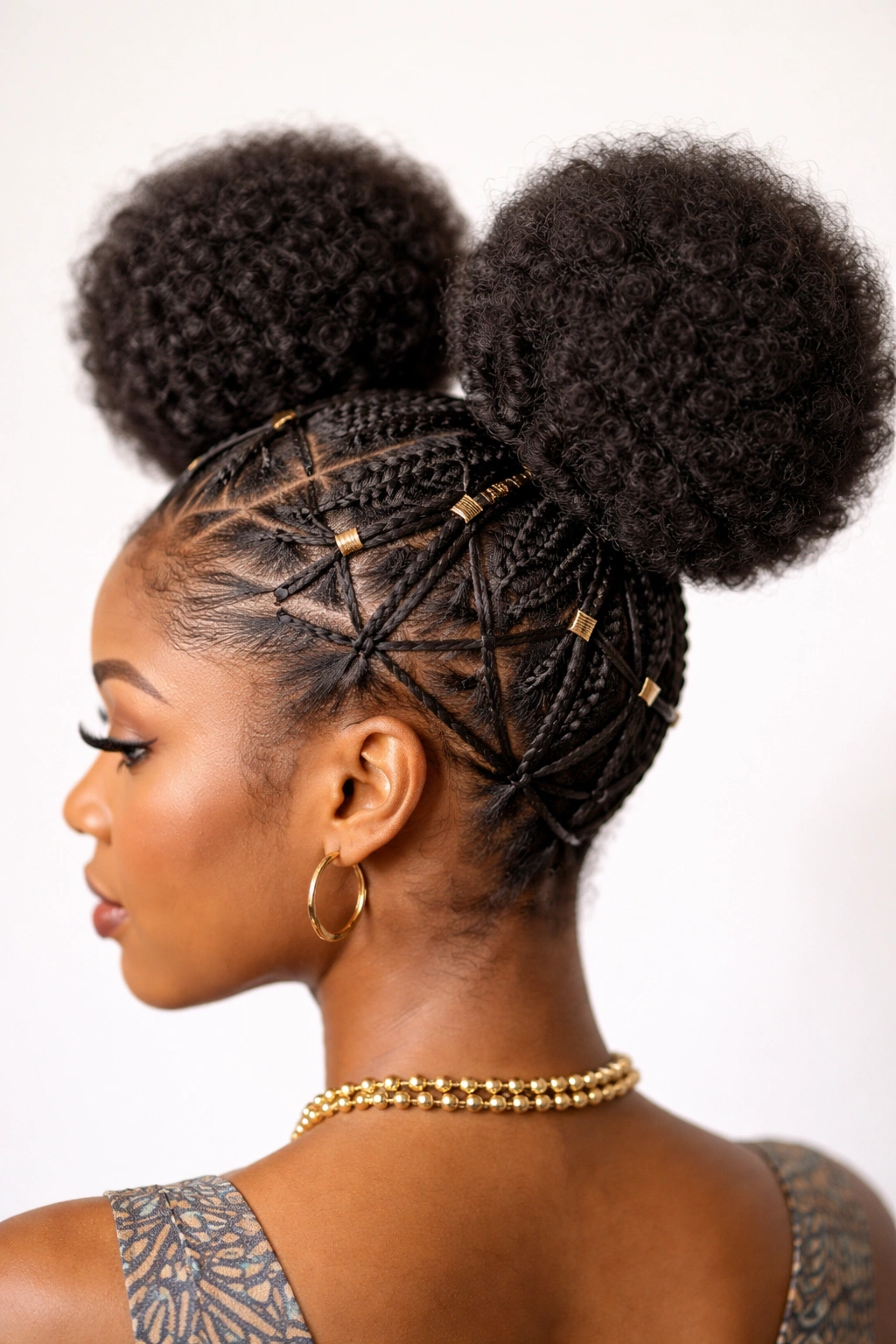
Puffball buns sit elevated on top of the head with voluminous, rounded sections of hair that create an almost sculptural silhouette. The base of each bun is often built with geometric braiding patterns—triangles, diamonds, or intricate spirals—that make the foundation as visually interesting as the puff itself. This style combines practicality with artistry, keeping hair secure while creating a look that’s instantly recognizable as distinctly Igbo.
What Makes This Style So Striking
The contrast between the precise, geometric patterns at the scalp and the soft, rounded puffs creates visual drama that photographs beautifully from every angle. These buns can be worn high and centered for a regal, pulled-together look, or slightly to the side for a more modern, playful vibe. The style works whether you’re wearing it natural or with extensions, though adding hair can increase the volume and impact of the puffs.
Build and Styling Tips
- Prep your hair with a light leave-in conditioner to make sections pliable and reduce breakage
- Create your geometric base using the braiding technique you’re most comfortable with
- Gather the remaining hair into a high ponytail and divide it into sections
- Coil or twist each section tightly, then wrap it around itself to form the puff
- Secure with bobby pins and smooth flyaways with edge control for a polished finish
- The style holds best when you use a silk or satin bonnet while sleeping
Pro tip: Adding a decorative hair cuff or wrap around the base of each puff elevates the look instantly and adds another layer of visual interest.
3. Igbo Crown Braids with Center Spiral
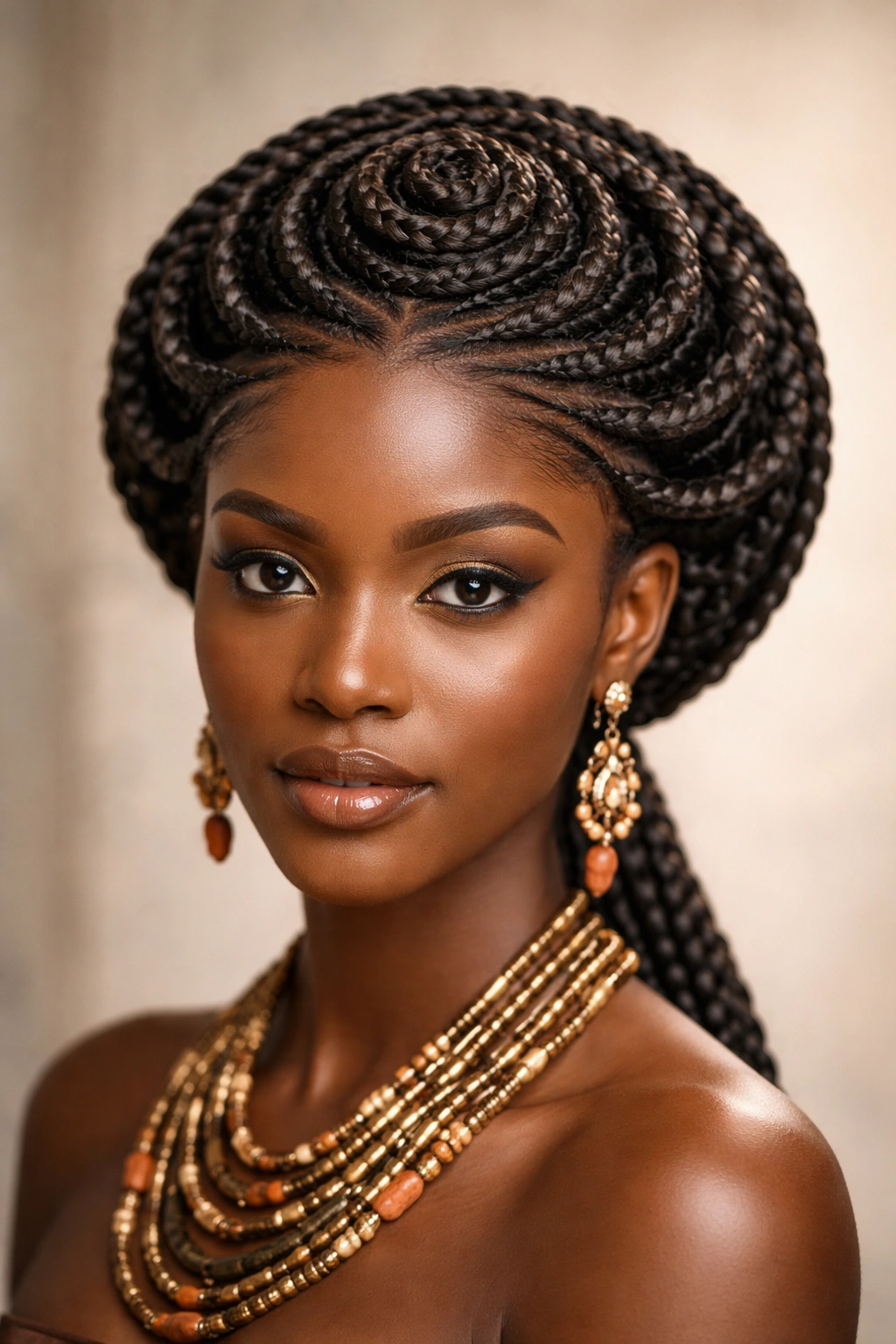
Crown braids that spiral around the head create an almost regal, tiara-like effect that’s both protective and undeniably beautiful. This particular Igbo interpretation often features a central spiral that draws the eye upward, sometimes with smaller complementary spirals radiating from the center point. The style frames the face beautifully while keeping all your hair secured and protected.
Why Spiral Patterns Matter in Igbo Styling
Spirals hold deep significance in many African cultures, representing growth, evolution, and the cyclical nature of life. In the context of hairstyling, spiral patterns create movement and direction that draws attention upward, creating an elongating, flattering effect on the face. The spiral technique also allows hair to move more naturally than flat braids, which can be especially beneficial if you’re concerned about tension on your hairline.
Steps to Execute This Look
- Section your hair into two or three main parts, depending on the size of your spirals
- Start at the crown or the base of your neck, depending on which direction you want the spiral to flow
- Use a two-strand twist or three-strand braid technique, gradually incorporating more hair as you spiral upward
- Keep the tension even throughout to ensure the spiral is smooth and consistent
- Finish the ends by wrapping them around themselves or securing with a decorative hair cuff
Pro tip: Use a curling iron on a low setting to gently separate the twisted sections after styling, creating a softer, more romantic version of the spiral that still maintains structure.
4. Igbo Zig-Zag Box Braids with Extensions
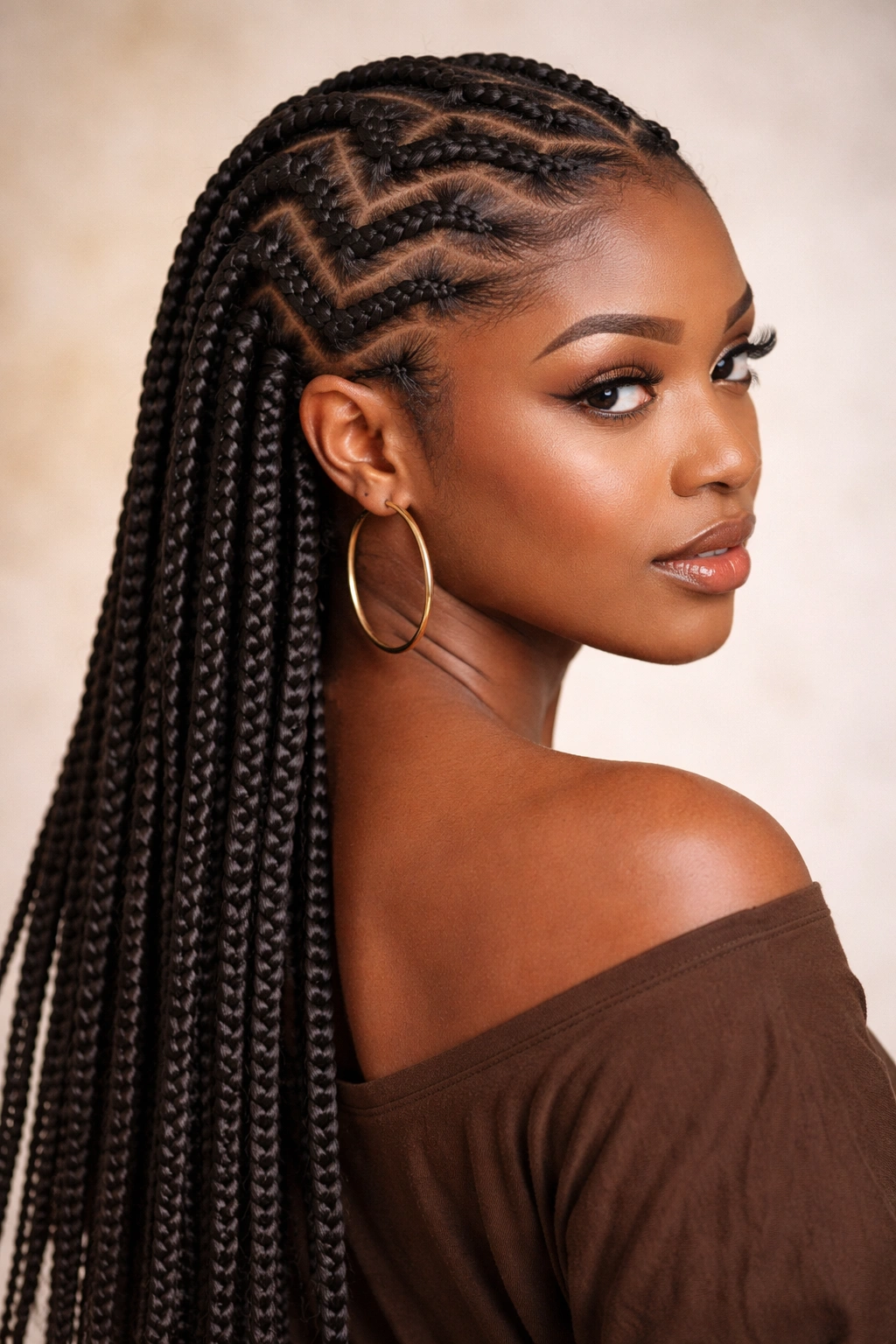
Box braids arranged in dramatic zig-zag patterns across the scalp represent a modern interpretation of traditional Igbo braiding while maintaining the bold aesthetic that defines the style. Each braid sits in its own individual box section, but instead of following a standard grid pattern, the boxes zigzag across the head creating a dynamic, almost hypnotic visual effect. This style is protective, long-lasting, and genuinely stunning.
The Artistry Behind Zig-Zag Patterns
Zig-zag patterns require mathematical precision and artistic vision—your stylist must map out the pattern carefully to ensure it flows naturally across the scalp while creating intentional visual movement. The pattern can be symmetrical or asymmetrical depending on your preference and face shape. Asymmetrical zig-zags often create a more modern, edgy feel, while perfectly symmetrical patterns feel more balanced and formally elegant.
Maintenance and Longevity
- Moisturize your scalp between washes with lightweight oils that won’t clog pores
- Wash every 7-10 days using a sulfate-free shampoo and focusing on the scalp, not the braids themselves
- Apply deep conditioning treatments weekly to prevent dryness and maintain the health of your natural hair underneath
- Sleep with a silk or satin bonnet to prevent friction and reduce frizz
- Braids in this style typically last 6-8 weeks with proper care
Pro tip: After about 4 weeks, the root regrowth can be refreshed by having your stylist re-braid just the new growth at the base, extending the life of the full style.
5. Igbo Twisted Crown with Gold Leaf Accents
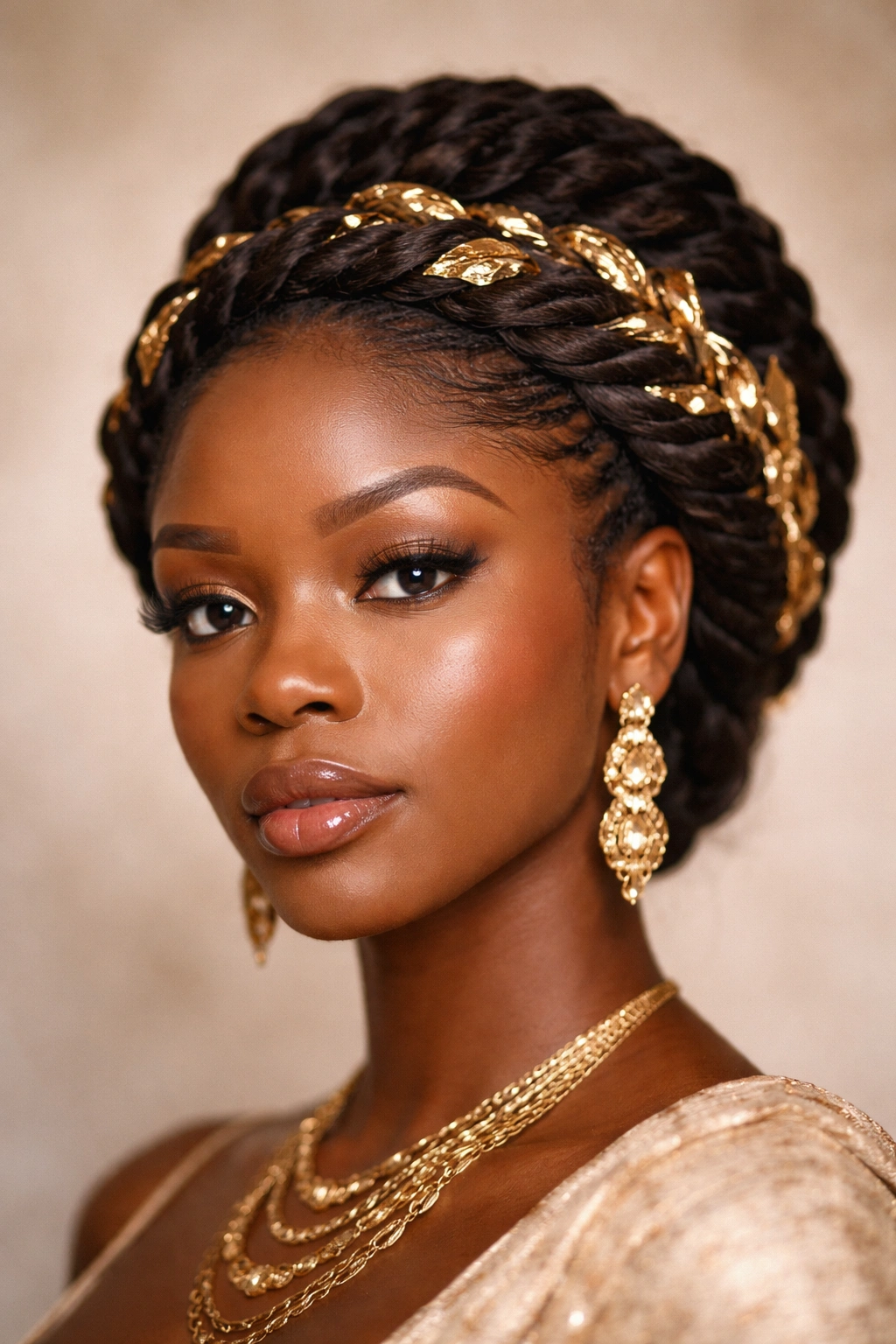
Twisted crowns create an elegant, sophisticated look that sits like a tiara around the head while keeping hair completely protected and secure. The Igbo version often incorporates gold leaf, gold wire, or metallic accents woven into the twists themselves, adding luxury and visual richness that transforms the style from everyday wear to occasion-worthy. This is the style you wear when you want to make a statement and feel absolutely regal.
How Gold Accents Transform the Look
Gold reflects light beautifully against darker skin tones and creates instant visual richness that elevates a simple twisted style into something museum-quality. The metallic accents draw the eye and add dimension, making the twists appear more intricate and carefully crafted than they might without the embellishment. Whether you use genuine gold leaf, gold wire, or metallic thread depends on your budget and how long you want to keep the style.
Creating and Maintaining the Crown
- Start with pre-twisted sections or create two-strand twists as your base
- Carefully wrap gold leaf or metallic thread around each twist, securing it with a small dab of edge control or hairspray
- Arrange the twists around the crown of your head, pinning them in place with bobby pins
- Use a flexible hairspray to keep flyaways in check while maintaining the natural texture of the twists
- Secure the ends of the twists at the back of your head or bring them together in a decorative cluster
Pro tip: This style photographs beautifully and works perfectly for weddings, formal events, or any time you want to celebrate your cultural heritage with undeniable style.
6. Igbo Goddess Locs with Varied Diameters
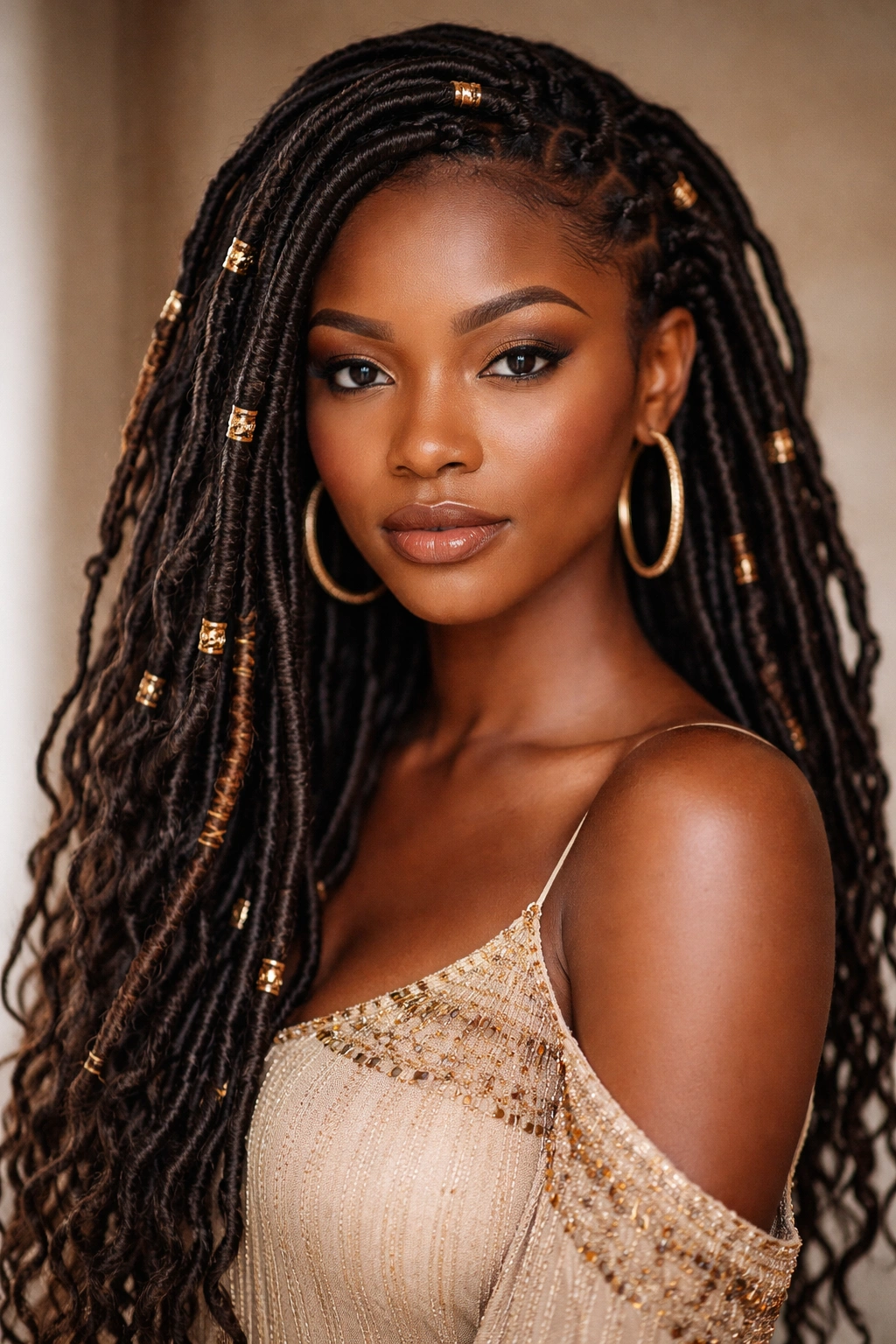
Goddess locs are a protective style that mimics the look of traditional locs while remaining removable and gentler on natural hair than permanent locking. Igbo-inspired goddess locs often feature varied diameters—some thick and bold, others thinner and more delicate—creating visual interest and a uniquely personal aesthetic. This style combines the protective benefits of locs with the flexibility of a temporary style.
Why Varied Diameters Matter
Uniform locs can feel monolithic and heavy, while varied diameters create rhythm and visual movement. Some thicker sections provide boldness and impact, while thinner sections offer delicacy and intricacy. This variation also allows the style to drape and move more naturally, preventing that stiff, uniform appearance that some protective styles can create. The contrast in sizes creates a style that feels both artistic and practical.
Installation and Styling Process
- Prep your natural hair with a moisturizing treatment to ensure flexibility and health
- Section your hair into areas where you want different diameter locs
- Use a wrapping technique with hair extensions to create the locs, varying the thickness of extension used
- Style the finished locs into updos, leave them down, or gather them partially for different looks
- The style typically lasts 6-8 weeks with proper care and can be reinstalled multiple times
Pro tip: Sleep with a satin bonnet or on a satin pillowcase to maintain the smoothness of the locs and prevent unnecessary frizz.
7. Igbo Fulani Braids with Statement Coins
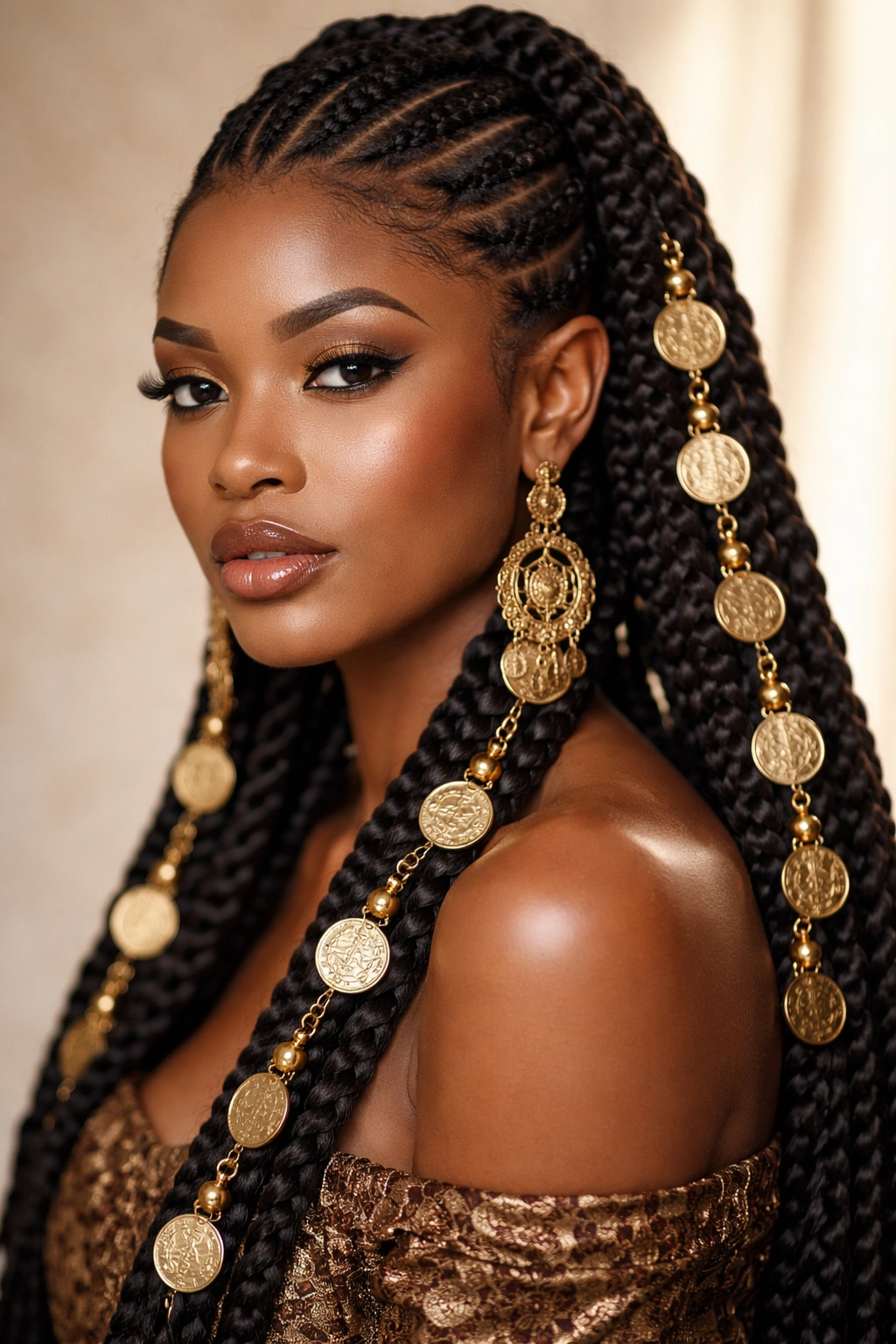
Fulani braids, when interpreted through an Igbo lens, become dramatic, sculptural styles often adorned with traditional coins, shells, or metallic ornaments that celebrate both cultural heritage and personal artistry. These braids are typically thicker and fewer in number than box braids, with the braiding pattern extending from the crown down and often wrapping around the head in an elegant, ceremonial way. The addition of coins adds weight, movement, and undeniable visual impact.
The Significance of Traditional Ornaments
Coins and shells in braids represent wealth, protection, and cultural pride. Each ornament tells a story and connects the wearer to ancestral traditions while making a bold contemporary statement. The way these adornments hang and move with the braids creates dynamic visual interest that changes as you move through space.
Installation and Styling Considerations
- Work with a stylist experienced in handling and securing ornaments safely
- Ensure coins or shells are securely attached so they won’t slide or become loose
- Use strong, flexible extensions that can support the weight of the ornaments
- Style the braids in patterns that allow the ornaments to be visible and appreciated
- The weight of ornaments means these braids are better for shorter-term wear (3-4 weeks) than very long-term styles
Pro tip: Mix metals—combine gold coins with silver shells or add both shiny and matte finishes for additional visual complexity and interest.
8. Igbo Spiral Twists in Two Tones
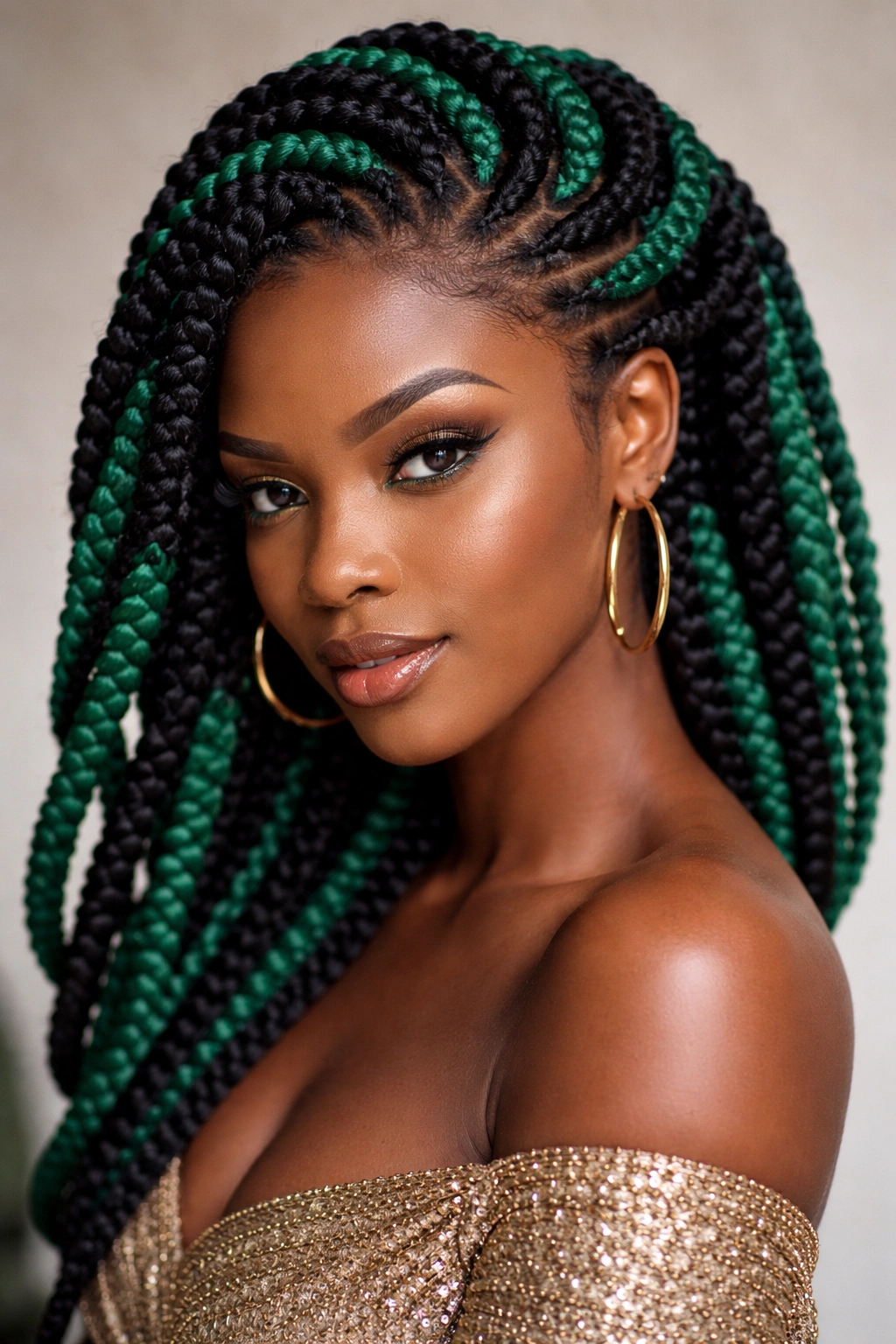
Two-tone spiral twists combine color and texture in a way that creates immediate visual drama while keeping your natural hair protected and healthy. The Igbo interpretation typically features bold color choices—perhaps combining black with a jewel tone like emerald or sapphire, or creating contrast with lighter tones like blonde or rose gold. The spiral technique means the two colors wind around each other, creating a hypnotic, candy-like effect.
Choosing Color Combinations That Pop
The best two-tone combinations for natural skin tones depend on your undertones and personal preference, but generally, jewel tones (emerald, sapphire, ruby) create rich, sophisticated pops against darker skin, while brighter colors (electric blue, hot pink, lime green) create playful, youthful energy. Consider the colors separately and together—the way they interact matters as much as each individual color.
Creating and Maintaining the Twists
- Divide your hair into sections where you want each two-tone twist
- Use two extensions in different colors and two-strand twist them together
- Keep the tension even so the colors wind evenly around each other
- Style into updos or wear down with the twists cascading
- Wash and condition gently to preserve color vibrancy, using color-safe products
- These twists typically last 4-6 weeks
Pro tip: Refresh the color by having your stylist re-twist just the new growth at the roots, extending the life of the full style significantly.
9. Igbo Triangular Sections with Stacked Braids
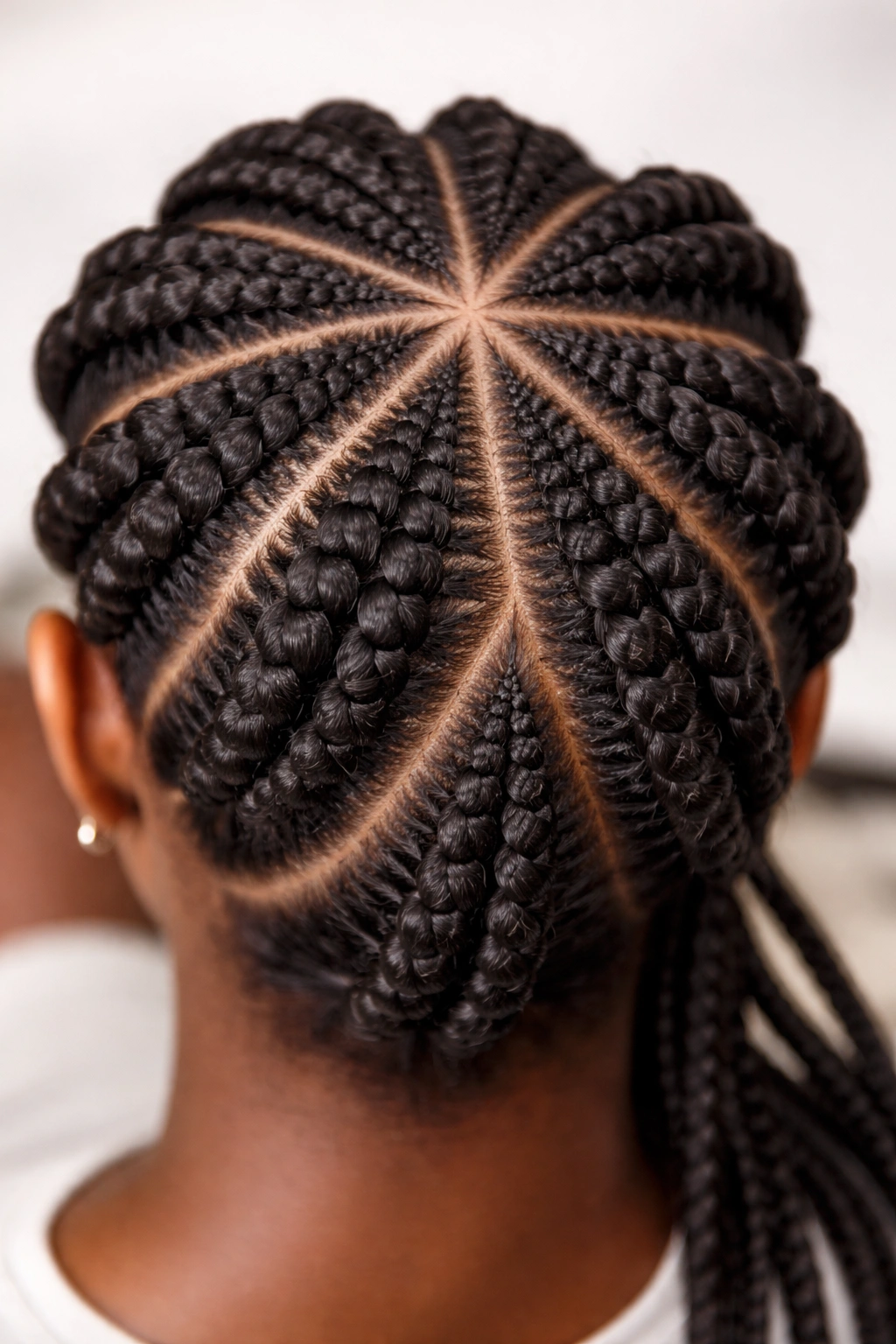
Triangular sectioning represents a distinctly Igbo approach to hair organization, dividing the scalp into precise triangular sections that create geometric beauty even before the braiding begins. Stacked braids—braids that sit directly on top of each other within each triangle—create bold lines and dimensional texture that make this style unforgettable. The visual effect is almost architectural, turning your scalp into a work of geometric art.
Understanding Triangular Sectioning
Triangular sections follow the natural growth patterns of the scalp while creating intentional visual lines that frame the face and head shape. This technique requires precise sectioning but results in a style that looks intentionally designed rather than random or haphazard. The triangles can be arranged in various patterns—radiating from the crown, flowing down from the front, or arranged in completely custom configurations.
Execution and Styling
- Map out your triangular sections before starting—use a spray bottle and a fine-tooth comb to mark clear lines
- Each triangle will contain 2-4 braids depending on the size and your desired thickness
- Braid each section consistently so the overall pattern is cohesive and intentional
- Pay special attention to keeping the sections clean and the braids tight at the base
- These braids last 4-6 weeks and photograph beautifully from directly overhead
Pro tip: The top-down view of this style is its best angle, so consider photographing it from above to really showcase the geometric artistry.
10. Igbo Bantu Knots with Defined Curls
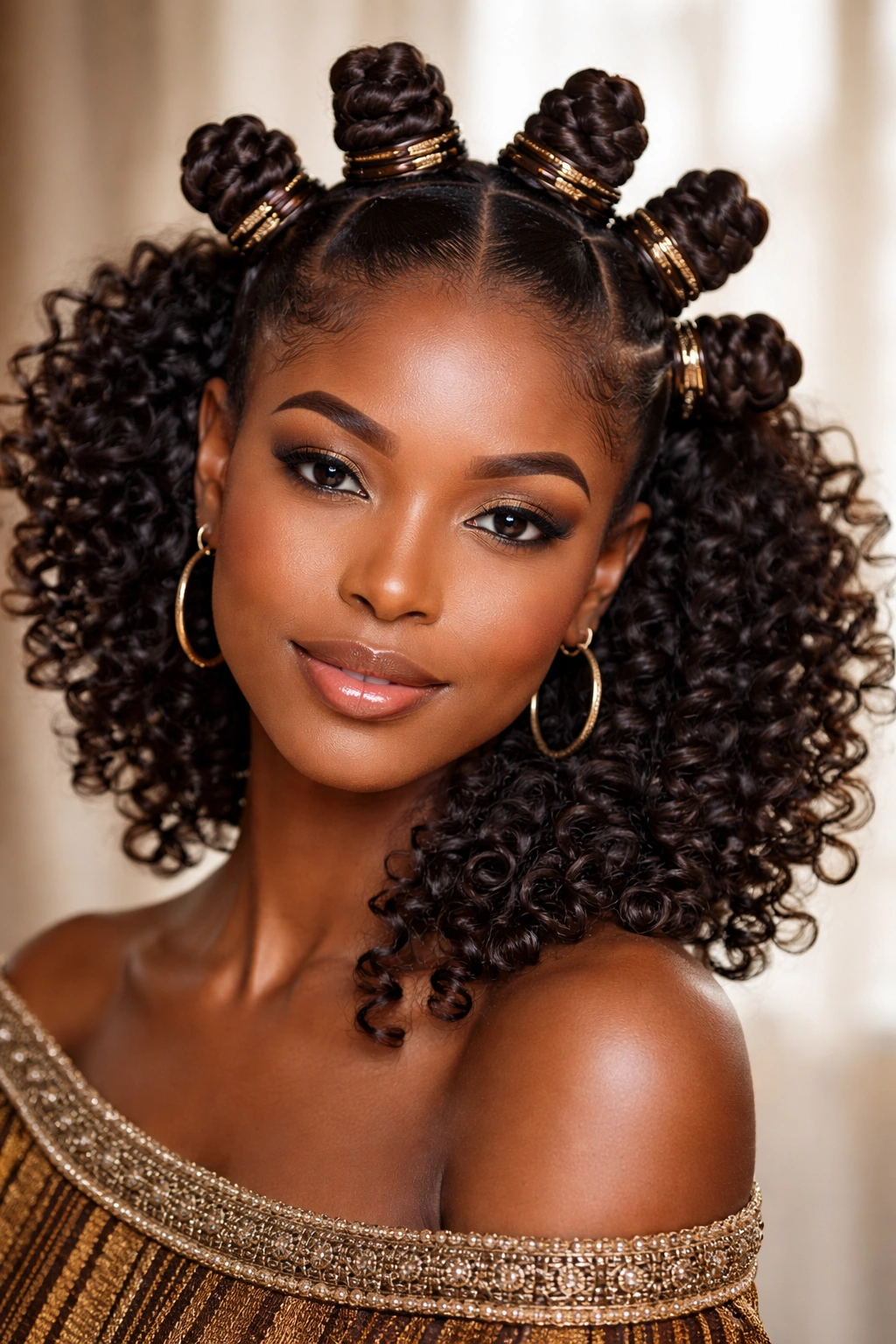
Bantu knots are a traditional Igbo protective style that involves sectioning hair and coiling it tightly at the scalp, creating defined knots that sit like bumps across the head. When released, these knots create beautifully defined curls or spiral patterns depending on how long the style is worn and how the hair is released. This style celebrates natural texture while offering protection and the flexibility to wear it multiple ways.
The Versatility of Bantu Knots
What makes Bantu knots so brilliant is their adaptability—you can wear them in the knot formation itself for a bold, sculptural look, or you can take them down for gorgeous spiraling curls. The style works on all hair lengths from tapered cuts to waist-length natural hair. Bantu knots also require no extensions, making them a more accessible option than some other protective styles.
Creating and Releasing the Style
- Section hair into 8-20 sections depending on your hair volume and desired knot size
- Coil each section tightly at the base, then wrap the remaining length around the coil
- Secure with bobby pins or just by tucking the ends under the coil
- Leave in overnight or for several hours for optimal curl definition
- Release gently, uncoiling each knot to reveal defined curls
- Use a lightweight oil or curl cream to enhance and define the curls
Pro tip: For longer-lasting curls, apply a setting lotion before creating the knots, or spritz the finished curls with a flexible hold hairspray.
11. Igbo Water Waves with Sculpted Base Braids
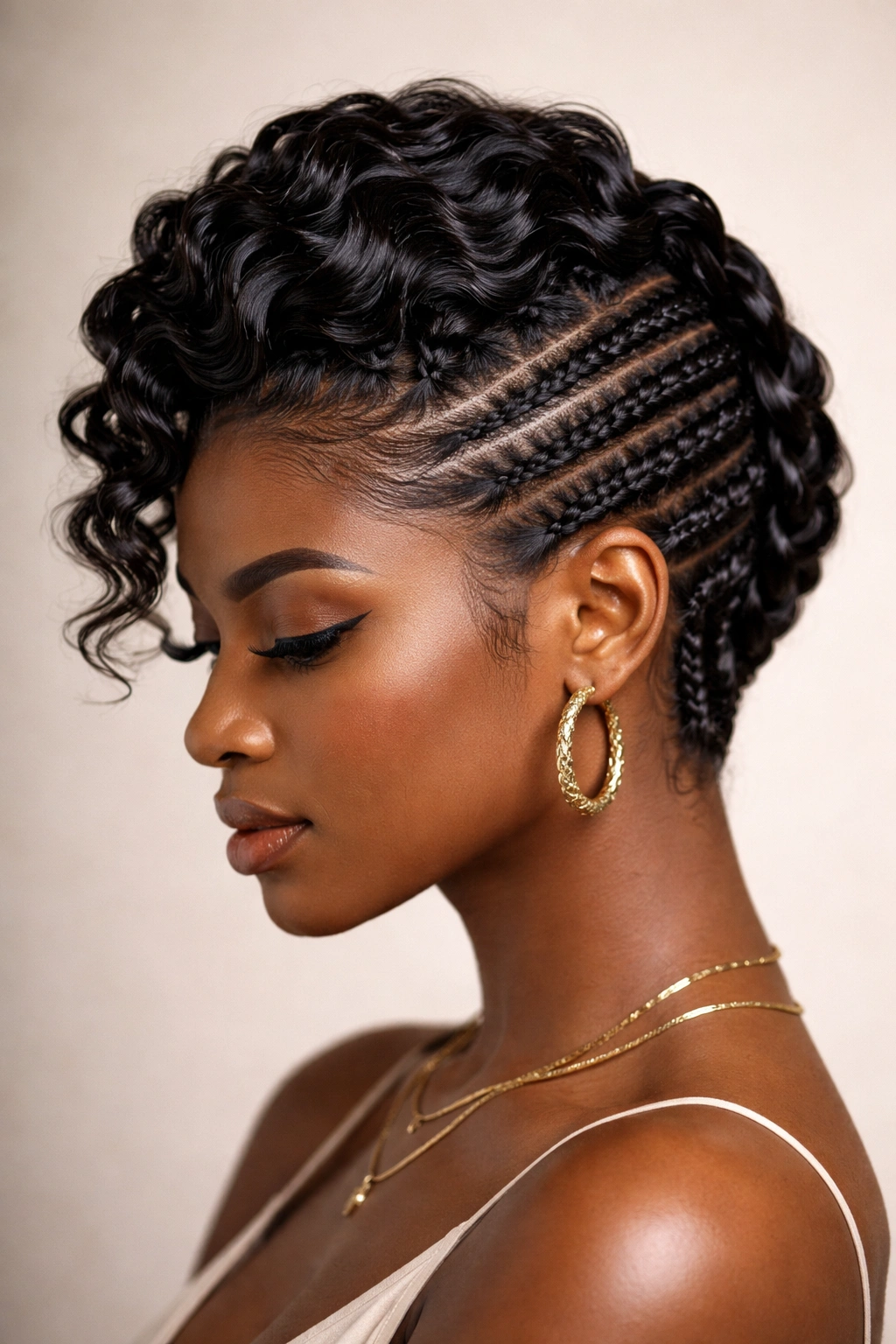
Water waves are a sleek, sculpted style created by brushing the hair in specific directional patterns and using setting products to lock the wave pattern in place. When combined with an Igbo base of intricate braids, this style becomes a stunning contrast between precision and natural texture. The braided base keeps hair protected while the waves on top showcase artistic styling and technical skill.
Creating Believable, Long-Lasting Waves
True water waves aren’t just about brushing—they require understanding how hair naturally falls, how light reflects off the wave pattern, and how to use products strategically to lock the pattern without creating stiffness. The best water waves look effortless and natural despite being meticulously created. The Igbo braided base provides a secure foundation that allows the waves to stay in place even through sleeping and daily activity.
Maintenance for Wave Definition
- Sleep with a satin bonnet or on a satin pillowcase to prevent disruption of the wave pattern
- Use a light hairspray or wave control product to refresh the waves daily if needed
- Avoid washing for at least 3-4 days after styling to allow the pattern to set completely
- When you do wash, use a gentle shampoo and avoid heavy scrubbing on the wave areas
- Refresh by lightly wetting the hair and brushing in the original wave direction
Pro tip: For deeper, more defined waves, sleep on a silk pillowcase or in a wave cap designed to reinforce the pattern throughout the night.
12. Igbo Loc-Ups with Wrapped Crown Detail
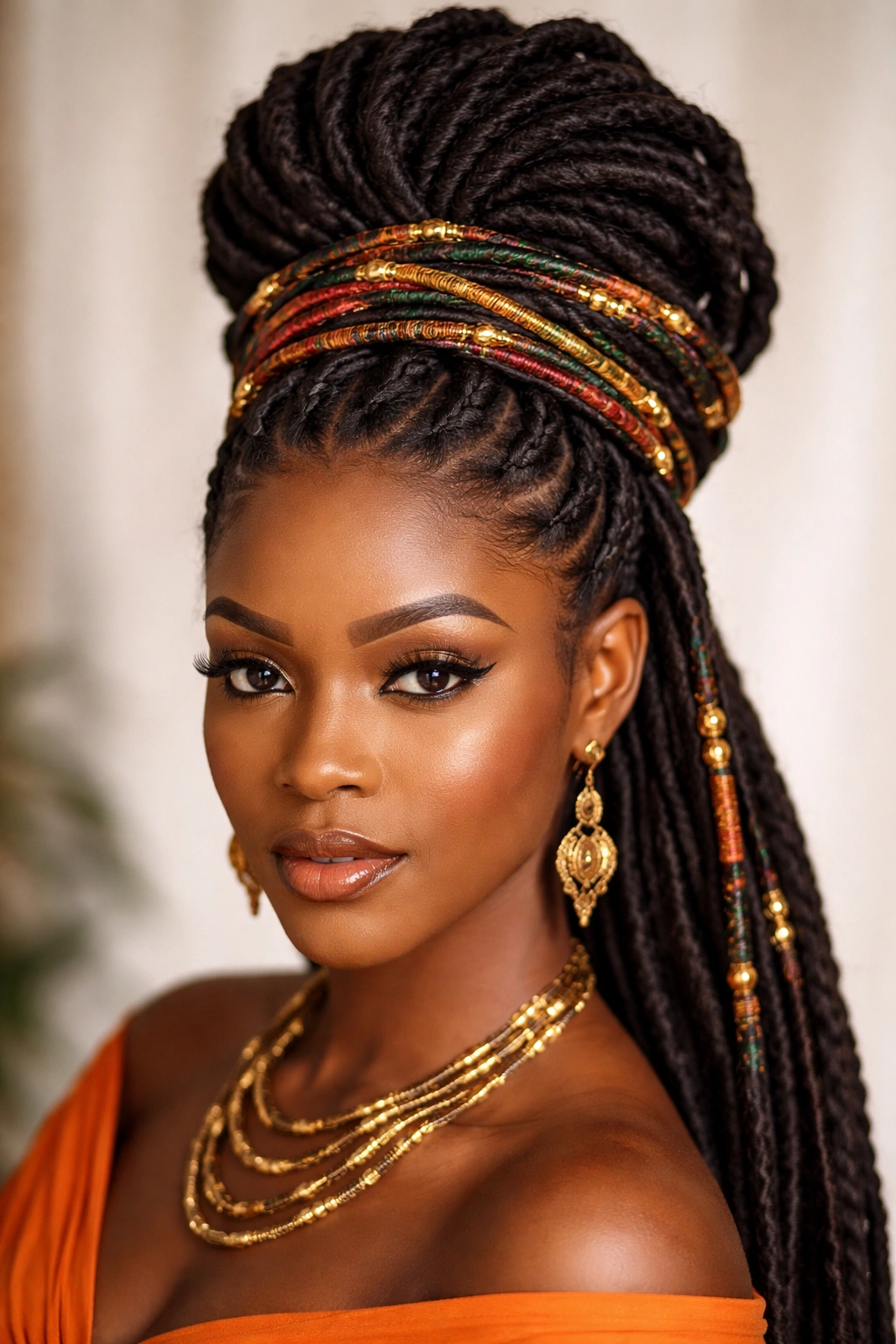
Loc-ups involve gathering existing locs or natural hair into updos while wrapping sections with thread, yarn, or ribbon to create visual interest and hold the style in place. The Igbo version often features a wrapped crown—where the hair gathered at the top of the head is wrapped intricately with colorful thread or metallic accents—creating a style that’s equal parts protective and celebratory. This style works beautifully for people with established locs or for natural hair temporarily styled into a loc-like texture.
Why Wrapping Adds Visual Impact
Wrapping creates lines and definition while adding color, texture, and dimension that transforms a simple updo into something intentional and artful. The contrast between the texture of the locs and the smoothness of the wrapping creates visual interest. Colored thread or metallic wraps add pops of color that can coordinate with jewelry, clothing, or mood.
Creating and Styling the Updo
- Gather your locs or twisted hair into a high or side ponytail at the crown
- Divide the gathered hair into 3-5 sections
- Wrap each section tightly with thread or yarn, securing the ends with knots or a dab of edge control
- Arrange the wrapped sections into a bun, coil, or sculptural shape
- Pin everything securely so the style maintains its shape throughout the day
- This style is excellent for special occasions or everyday wear with excellent longevity
Pro tip: Use thread in contrasting colors for bold visual impact, or match your thread to your outfit or jewelry for a coordinated, polished aesthetic.
13. Igbo Cornrows with Beaded Endings
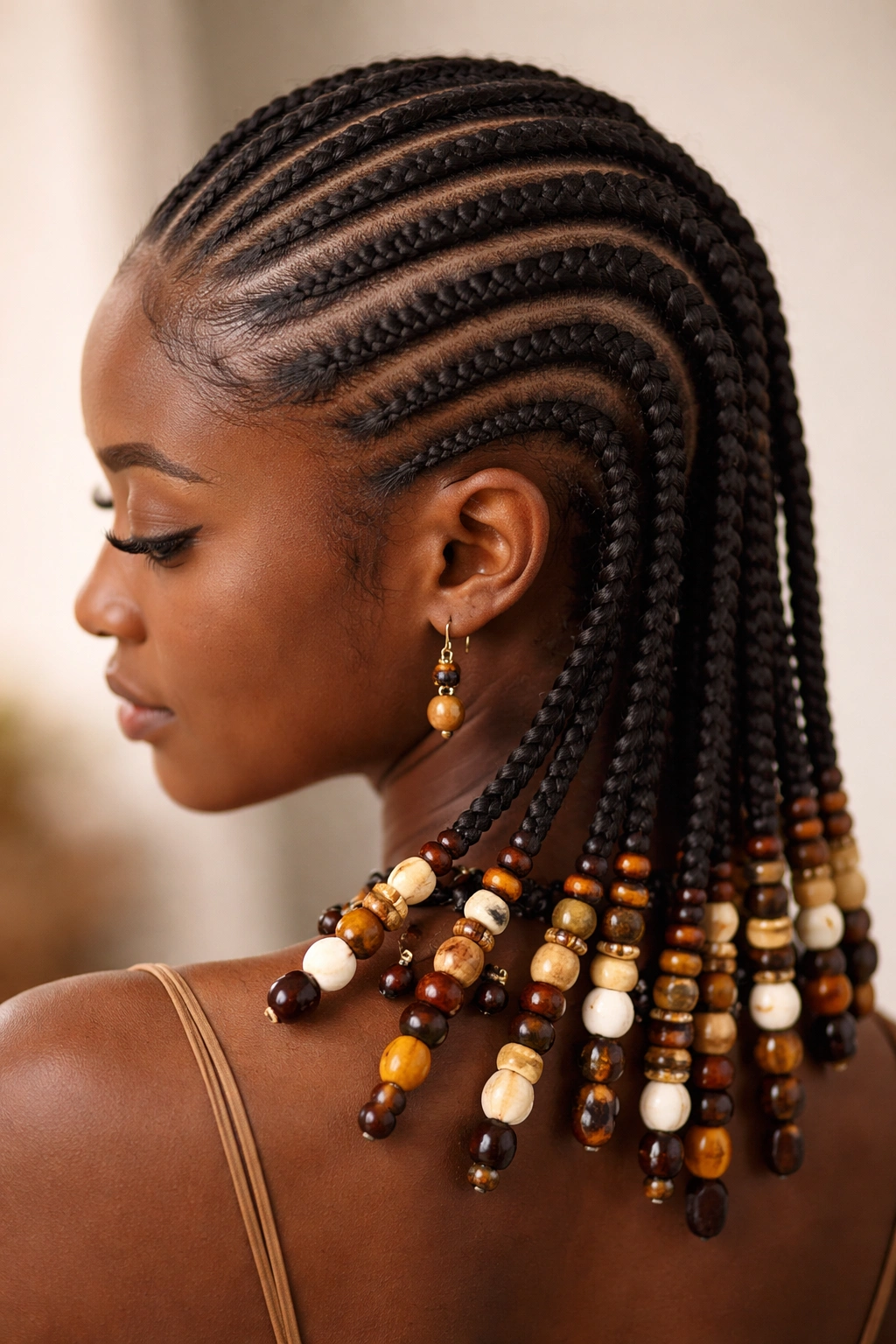
Cornrows represent one of the most classic and versatile protective styles, and the Igbo version often incorporates beads at the ends for added visual interest and a celebratory touch. The braids follow the natural curves of the scalp, and instead of leaving the ends loose, beads are threaded onto the braid ends, adding weight, movement, and undeniable style. This combination of precision braiding with decorative embellishment is quintessentially Igbo.
Choosing and Placing Beads Intentionally
Beads can be selected to match, contrast with, or complement your skin tone, clothing, and personal style. Larger beads at the ends create bold visual impact, while smaller beads create a more delicate, intricate effect. The placement of beads—all matching, in a pattern, or in a gradient—affects the overall visual impact of the style.
Installation and Care
- Cornrows are created using the traditional three-strand braiding technique following the contours of the scalp
- Thread beads onto the braid as you reach the end or after braiding is complete
- Secure beads with thread wraps or by creating a loop at the end of the braid
- Cornrows typically last 4-6 weeks depending on how they’re installed and maintained
- Wash your scalp gently without pulling or tugging on the braids
- Sleep with a satin bonnet to maintain bead placement and reduce frizz
Pro tip: Mix bead sizes and materials—combine larger statement beads with smaller accent beads, or mix metallic beads with natural stone for visual complexity.
14. Igbo Faux Locs with Highlight Weaving
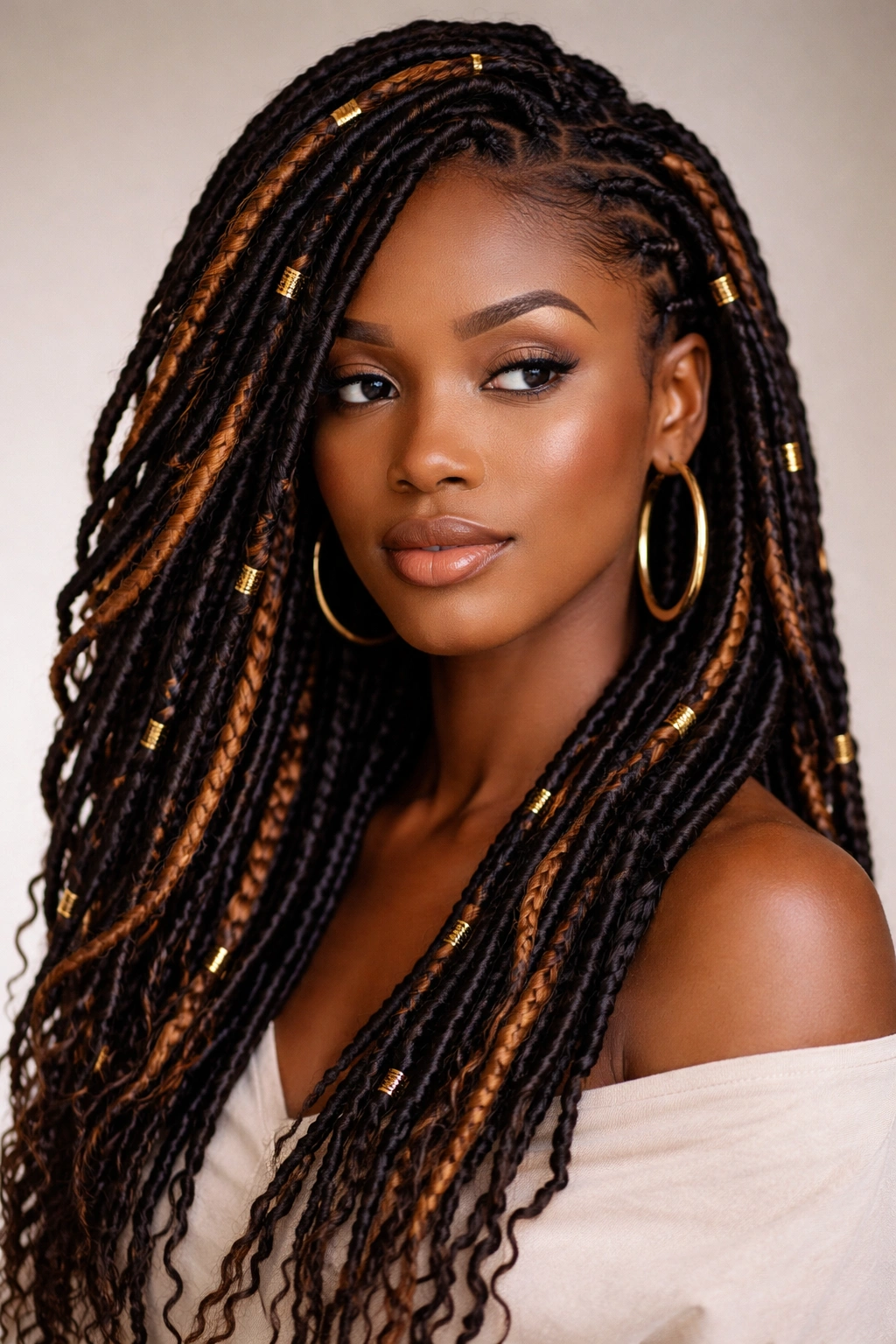
Faux locs created with the highlight weaving technique involve wrapping hair and extensions around each other to create the appearance of locs while remaining completely removable and protective of your natural hair. The Igbo version often incorporates a second color woven through the primary color, creating visual interest and dimension. This style offers the protective benefits of locs with the flexibility of a temporary style that can be taken down whenever you’re ready.
The Highlight Weaving Technique
Highlight weaving involves using two colors of hair extensions and weaving them around each other to create faux locs with built-in color variation. This technique creates more visual interest than single-color locs and celebrates the artistry and creativity of the stylist. The interweaving of colors creates an almost braided appearance within each individual loc.
Creating and Maintaining Faux Locs
- Section your natural hair into areas where you want each faux loc
- Use the wrapping and interweaving technique with two colors of extension hair
- Create each loc by coiling the wrapped hair around itself
- Style into various updos or wear partially down for different looks
- The style typically lasts 6-8 weeks with proper care
- Wash gently every 7-10 days, focusing on the scalp
- Sleep with a satin bonnet to maintain the integrity of the locs
Pro tip: These locs can be reinstalled multiple times if you store them properly—keep them in a mesh bag in a cool, dry place, and they’ll be ready for your next install.
Final Thoughts
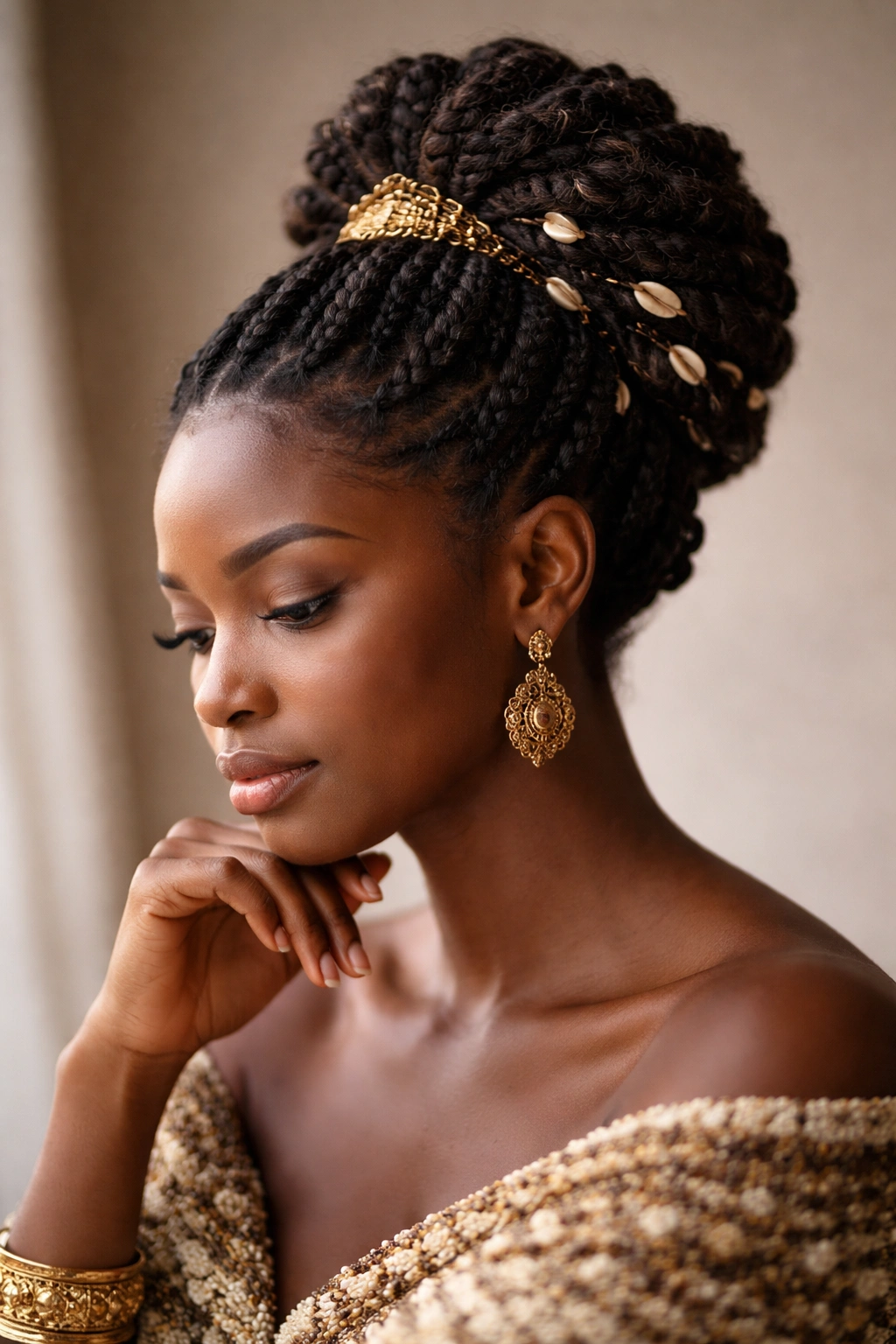
Igbo hairstyles represent far more than just a way to style your natural hair—they’re a celebration of artistry, culture, heritage, and the incredible versatility of Black hair. Each of these fourteen styles offers its own unique combination of protection, beauty, and personal expression, whether you’re drawn to the geometric precision of triangular sections, the sculptural boldness of puffball buns, or the dynamic movement of spiral twists.
The beauty of these styles is that many of them can be adapted and personalized to match your hair type, face shape, lifestyle, and personal aesthetic. What works beautifully for someone else might inspire a completely different look when you put your own creative spin on it. Finding a stylist who understands Igbo techniques and natural hair care is invaluable—they’ll not only execute these styles with precision but can also guide you in choosing styles that work specifically for your hair and features.
Whether you’re wearing one of these styles for a special occasion, to celebrate your cultural heritage, or simply because you want your natural hair to feel and look its absolute best, these Igbo-inspired styles deliver impact while keeping your hair healthy and protected.