



If you’re looking to refresh your look with movement, dimension, and texture that actually works with your natural hair rather than against it, wavy layered haircuts are one of the smartest moves you can make. These styles are specifically designed to enhance curl patterns, reduce bulk, and create visual interest at every angle—whether you’re wearing your hair down with natural waves, blow-dried straight, or styled with heatless methods. The right layered cut makes all the difference between a hairstyle that feels like a daily battle and one that looks effortlessly polished with minimal effort.
The key to finding a wavy layered haircut that actually works lies in understanding how layers interact with your unique curl pattern, hair density, and texture. A cut that’s too choppy can create frizz and make hair look thinner; a cut that’s not layered enough can feel heavy and weigh down your waves. The best styles balance strategic removal of bulk with enough length to maintain shape, plus built-in movement that transforms your natural texture into a signature look. Whether you prefer dramatic, short layers, subtle longer layers, or something in between, the styles below demonstrate exactly how layering works for Black hair and what to ask your stylist to achieve each one.
Beyond the cut itself, these hairstyles are incredibly versatile. You can wear them with your natural waves, blow out to a straighter silhouette, create defined finger waves, or even style with braids and twists for completely different looks from the same cut. That versatility is one of the biggest advantages—you’re investing in a foundation that adapts to however you want to style your hair on any given day.
1. The Textured Shag with Long Layers
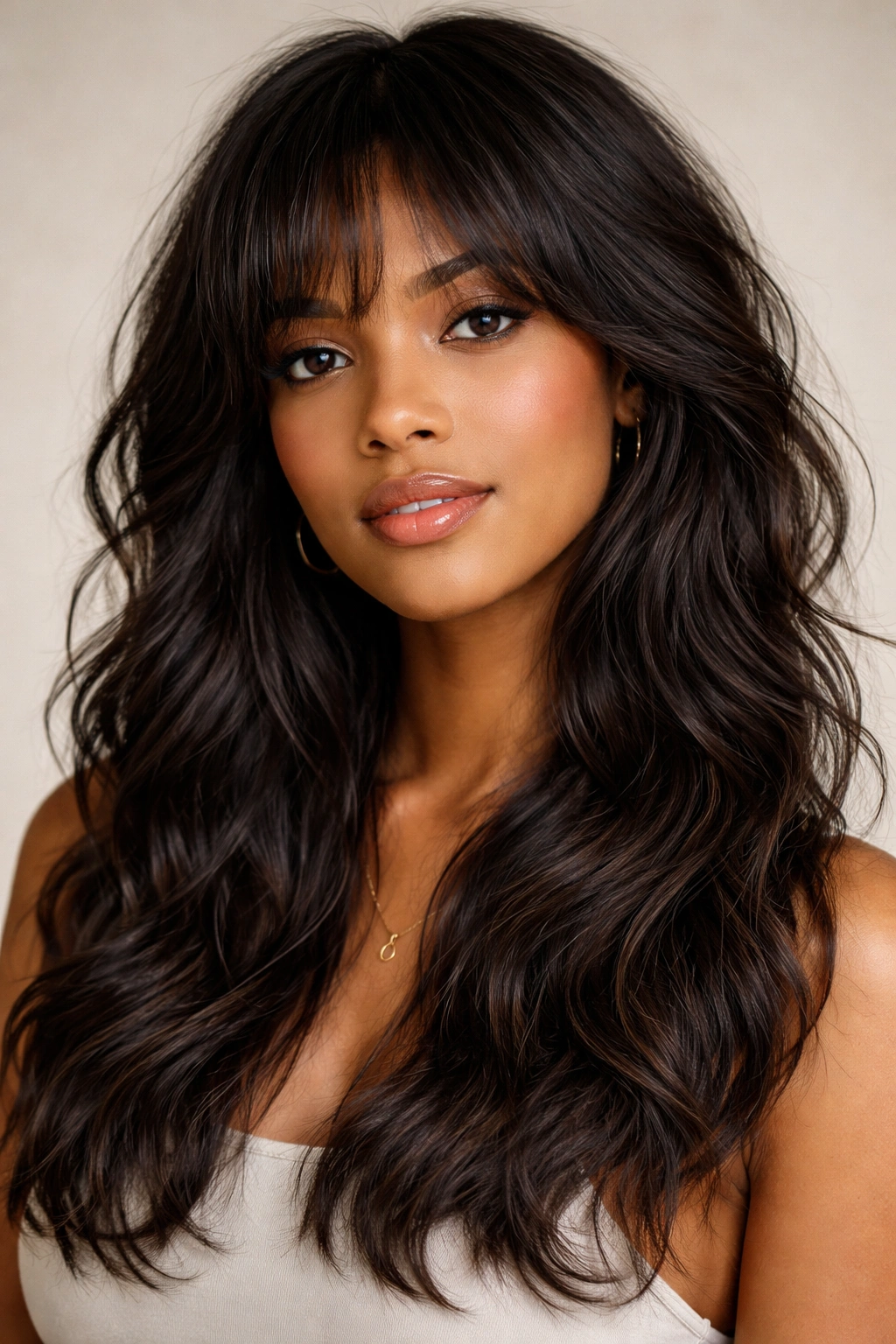
A textured shag is all about embracing movement with longer, feathered layers throughout that create volume where you want it without sacrificing length. This cut works beautifully on wavy hair because the layers encourage your natural curl pattern to shimmy and bounce, creating an almost effortless undone vibe that reads as intentionally cool rather than carelessly tousled.
Why This Cut Suits Wavy Hair
The genius of a shag cut is that it removes weight gradually rather than dramatically. Your stylist will create longer, softer layers that start around mid-length and stack slightly more densely toward the crown for lift. This approach prevents the dreaded “triangle head” effect that sometimes happens with heavily layered cuts on curly and wavy hair, because the underneath still has enough density to support the longer pieces on top.
How to Ask Your Stylist for This Look
- Longer layers (ask for layers starting around shoulder length or lower for maximum volume without choppiness)
- Softer, feathered edges that blend rather than stark choppy lines
- Added texture and movement focused on the crown and face-framing sections
- Layers that graze and encourage your natural wave pattern rather than fight it
- Consider asking for slightly more texture in the back if you want a mullet-adjacent vibe, or keep it more even if you prefer a rounder shape
Pro tip: This cut looks incredible with a mousse-based styling routine. Apply mousse to damp roots, scrunch as it dries, and your layers will create dimension without you having to do much at all.
2. The Wolf Cut with Defined Edges
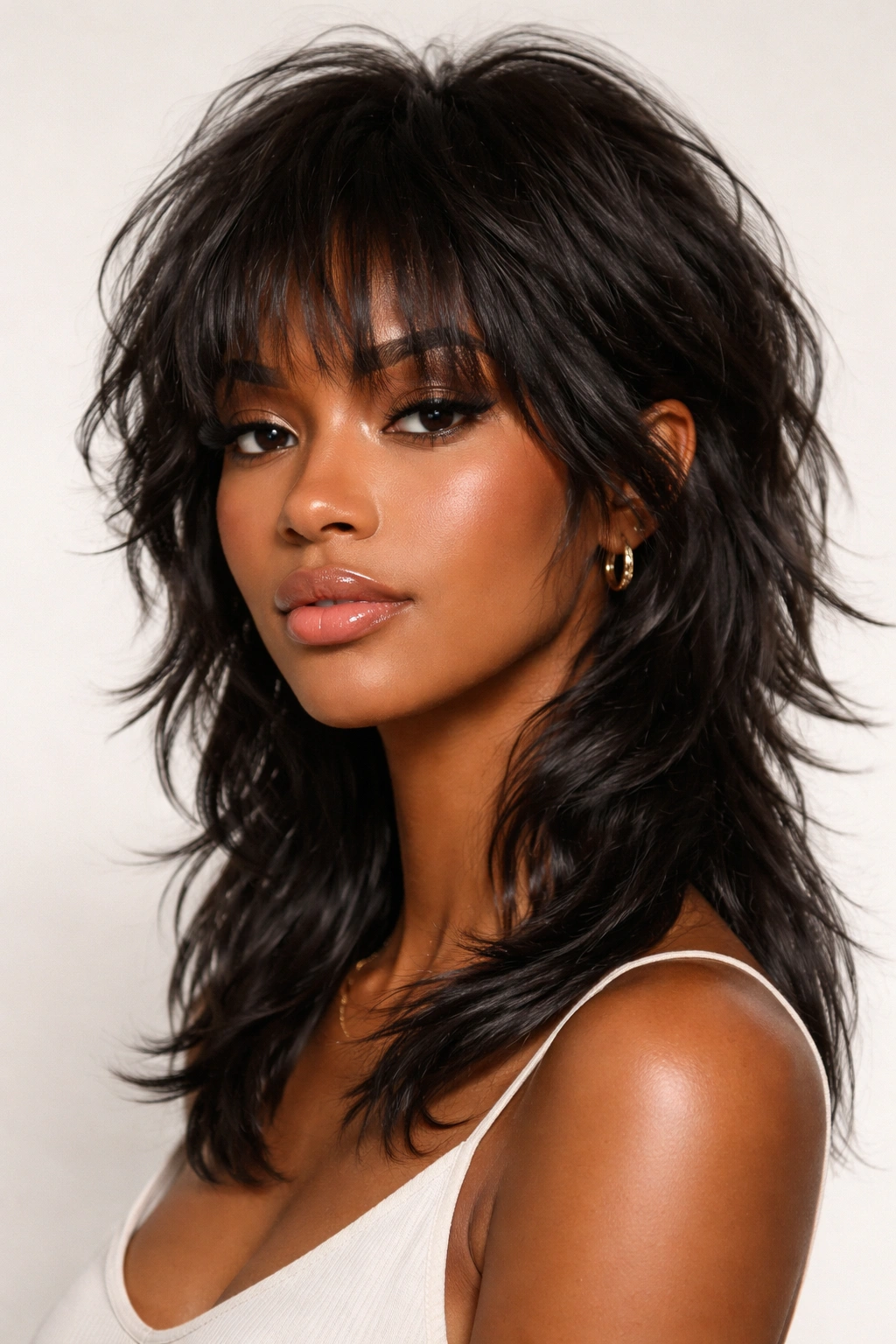
A wolf cut is where a shag meets a mullet with an attitude—it’s got that intentionally undone texture on top with some structure in the back. For wavy hair, the layers on top create gorgeous movement while the slightly longer back sections give you options for different styling approaches depending on your mood.
What Makes This Cut Special
This style became popular because it’s genuinely flattering and fun without being trendy in a way that feels disposable. The defined edges (especially if you ask your stylist to add sharp lines at the perimeter) create visual contrast that makes the movement on top feel even more pronounced. You get the practical texture of a shag with just enough structure that the whole thing feels intentional rather than accidental.
Styling Flexibility
- Wear it wavy and tousled for that effortless movement
- Blow-dry smooth for a sleeker take on the same cut
- Braid or twist sections of the top for a completely different vibe
- Pin up the back layers for an even shorter look without cutting
- The structure in the back means you can create defined waves or curls that actually hold their shape
Worth knowing: Ask your stylist to keep the back slightly thicker if you plan to wear it straight often—thinner layers in back can look stringy when blow-dried. If you’re mostly wearing your waves natural, ask for more taper in the back so it doesn’t feel too blocky.
3. The Blunt Layered Bob with Movement
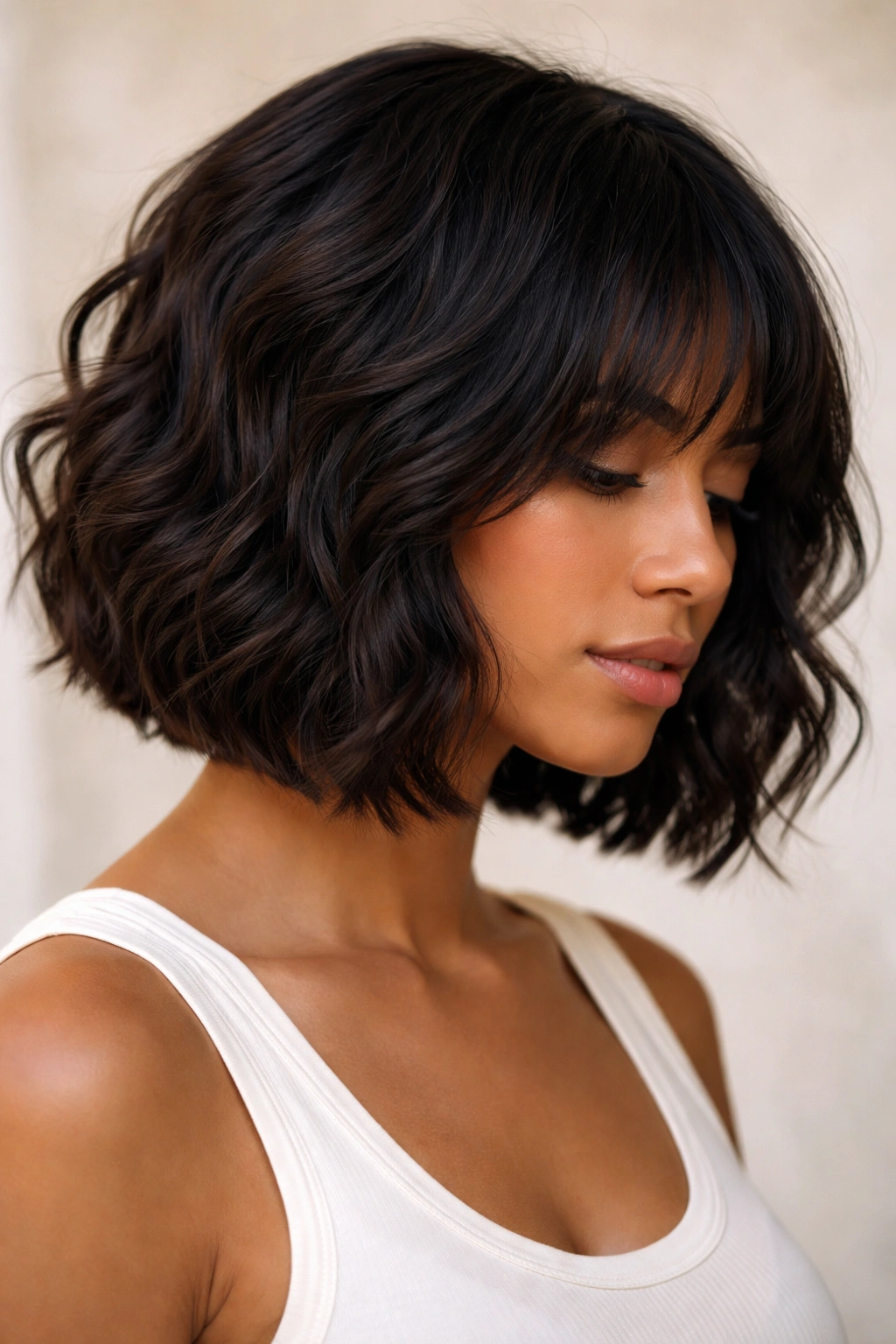
A bob with layers is a completely different animal than a standard blunt bob, especially on wavy hair. The layers create breakage in the line that allows your waves to breathe and move, transforming what could be a heavy, stiff style into something with real personality and bounce. This cut sits anywhere from jaw-length to a few inches past your shoulders, with strategic layers that work with your curl pattern.
The Architecture of This Cut
Your stylist creates longer layers through the mid-lengths and underneath, while keeping the perimeter relatively close to blunt so you maintain clean edges. The layers underneath allow your waves to move upward and outward rather than getting smooshed down by their own weight. This is why it’s so important to communicate with your stylist about where your natural waves want to go—they should layer with that tendency, not against it.
Daily Wear and Maintenance
- Works beautifully with a lightweight gel or cream applied to damp hair and air-dried
- Takes incredibly well to blow-drying if you want a sleeker look
- Requires trims every 4-6 weeks to maintain the shape and blunt edge
- Layers prevent the “mushroom effect” where all the weight sits on top
- You can wear it tucked behind one ear, both ears, or completely down for different impacts
Insider note: The shorter the bob, the more precise the styling needs to be—longer layered bobs are more forgiving. If you like the idea of a bob but prefer low-maintenance styling, ask for one that hits closer to shoulder length rather than at the chin.
4. The Curtain-Framed Layers with Volume
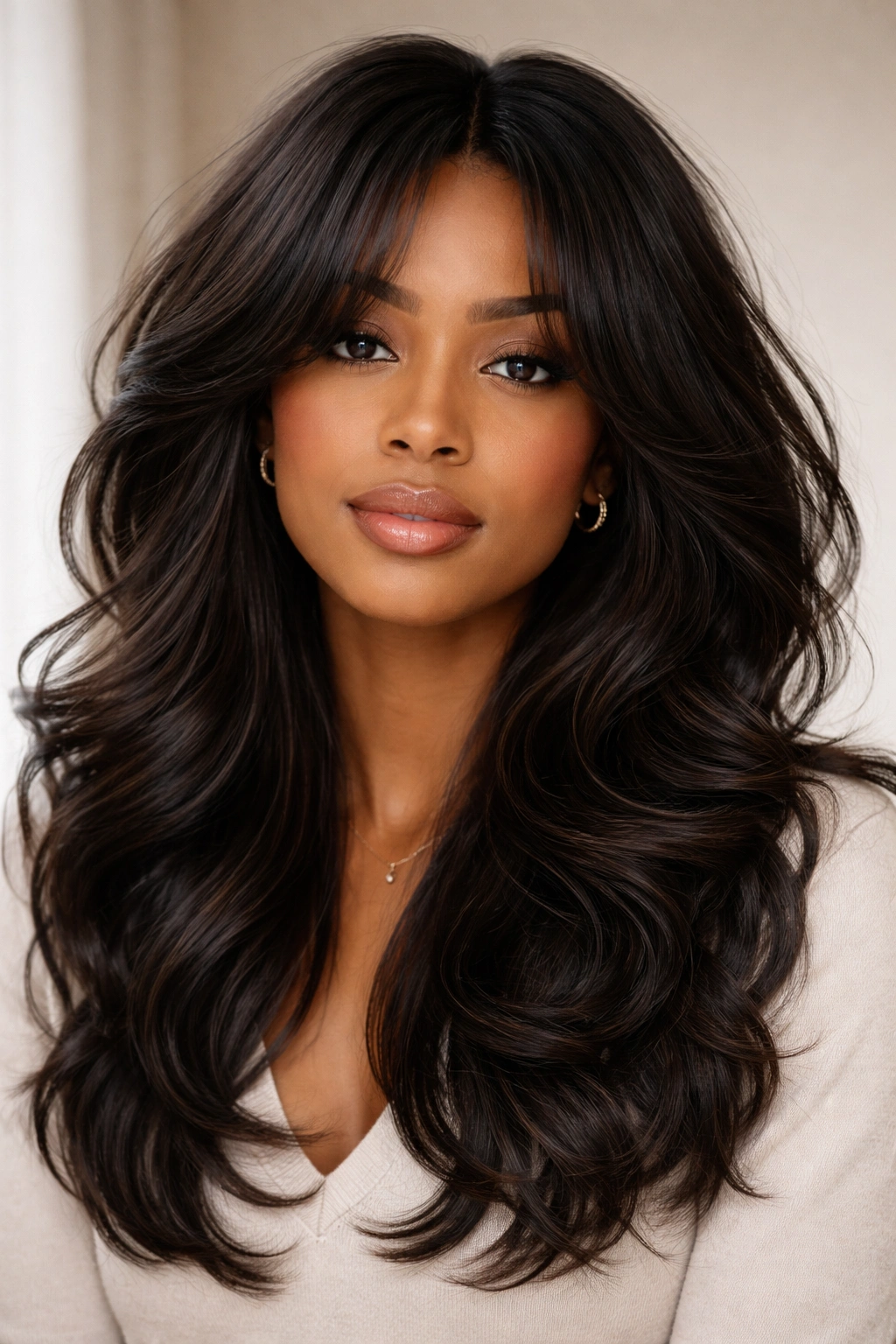
Curtain layers are face-framing pieces that create a parting naturally through the middle of your hair, with longer layers throughout that encourage your waves to curve and frame your face beautifully. This style became a major comeback because it genuinely flatters most face shapes and works with virtually any wave pattern. On Black hair, the dimension that curtain framing creates is especially striking.
How the Framing Works
Your stylist cuts shorter, face-framing layers on both sides that start around cheekbone or chin length, then blends them into longer layers that extend through the back and underneath. The magic is that the shorter pieces create movement right at face level, while the longer underneath layers prevent the whole style from collapsing into your face when you’re going about your day. You get the visual interest of shorter pieces without losing length.
Styling This Cut
- Air-dry with a curl cream and the pieces naturally fall around your face
- Blow-dry and use a round brush to curve the face-framing layers away from your face
- Use a curling iron to create more defined waves if you want pronounced movement
- The underneath layers are long enough that you can still pull your hair back into a ponytail or bun while keeping the face-framing pieces down
- Add clips or barrettes to the face-framing section for an elevated look without changing the cut
Real talk: This cut requires a stylist who actually understands how to work with wavy and curly hair textures. If they try to make the face-framing pieces too thin or choppy, they can frizz and look straggly. Ask them to create movement and texture rather than extreme choppiness.
5. The Feathered Shoulder-Length Layers
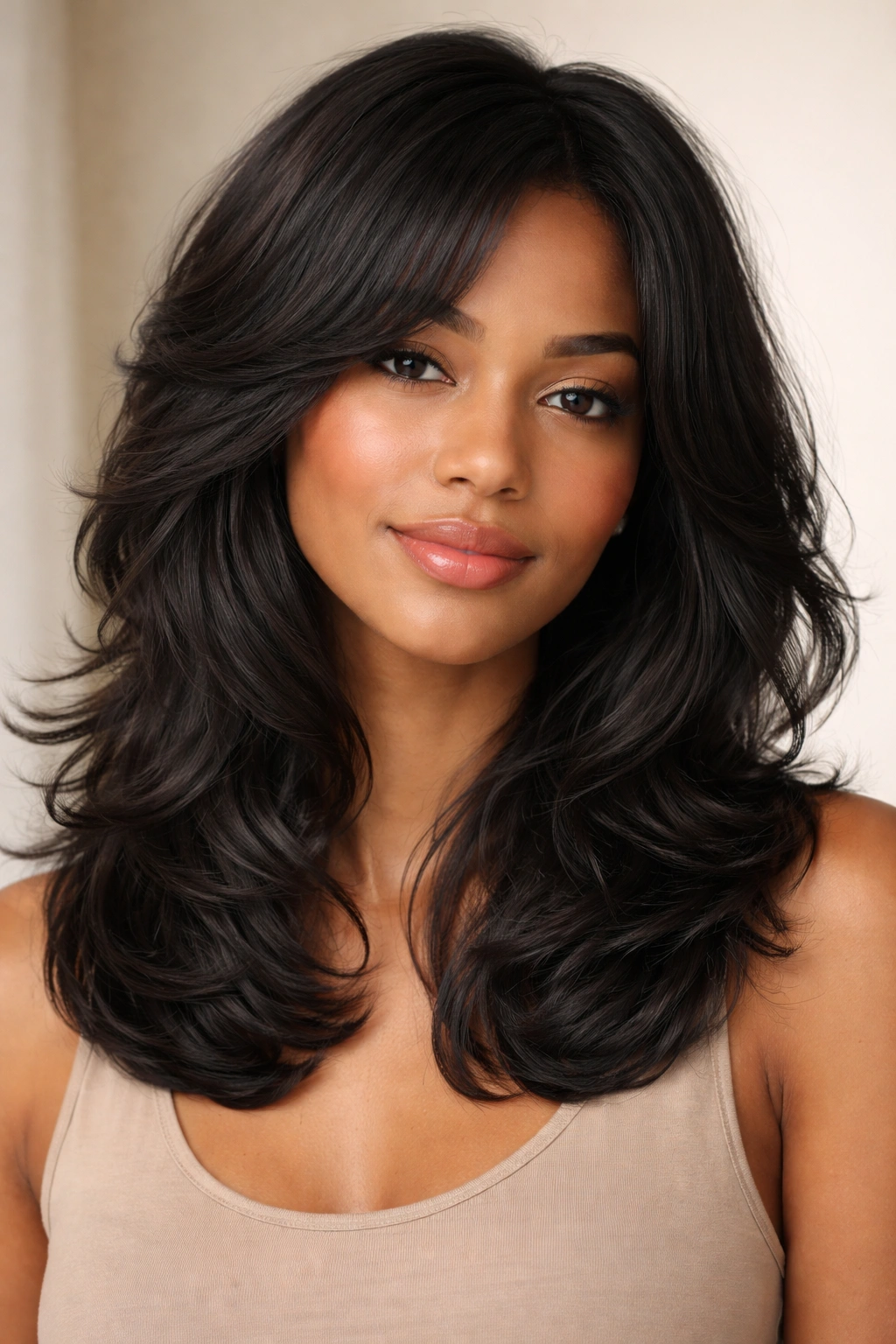
Feathering means your stylist creates soft, tapered layers throughout your hair that blend seamlessly into each other—there’s no one obvious chop line, just a gradual progression from shorter to longer. At shoulder length, this creates an incredibly flattering shape with movement that flows naturally. This style is especially gorgeous on people with medium to loose wave patterns because the movement looks intentional and effortless.
Why Feathering is Different From Regular Layers
A feathered cut uses specific sectioning and angling techniques so that each layer sits smoothly over the one beneath it, creating texture without that “choppy and uneven” feeling you sometimes get with aggressive layering. The pieces blend in a way that looks soft and intentional. Your stylist is creating a shape where every section supports the section above it, so nothing looks like it’s sticking out awkwardly.
Maintenance and Styling
- Requires trims every 5-7 weeks to maintain the feathered shape and soft edges
- Works beautifully with a leave-in conditioner and scrunching motion as your hair dries
- Can be styled with just air-drying or with a blow-dryer and your fingers for extra texture
- Feathered ends are less likely to split because they’re tapered rather than blunt
- The graduated length makes this cut work whether your hair is up or down
Styling consideration: Feathered layers look best when your hair has some moisture and definition. If you wear your hair extremely straight and sleek most days, some of the feathering effect gets lost because the layers don’t have space to breathe. This cut is ideal if you enjoy styling your waves and definition.
6. The Choppy Short Layers with Texture
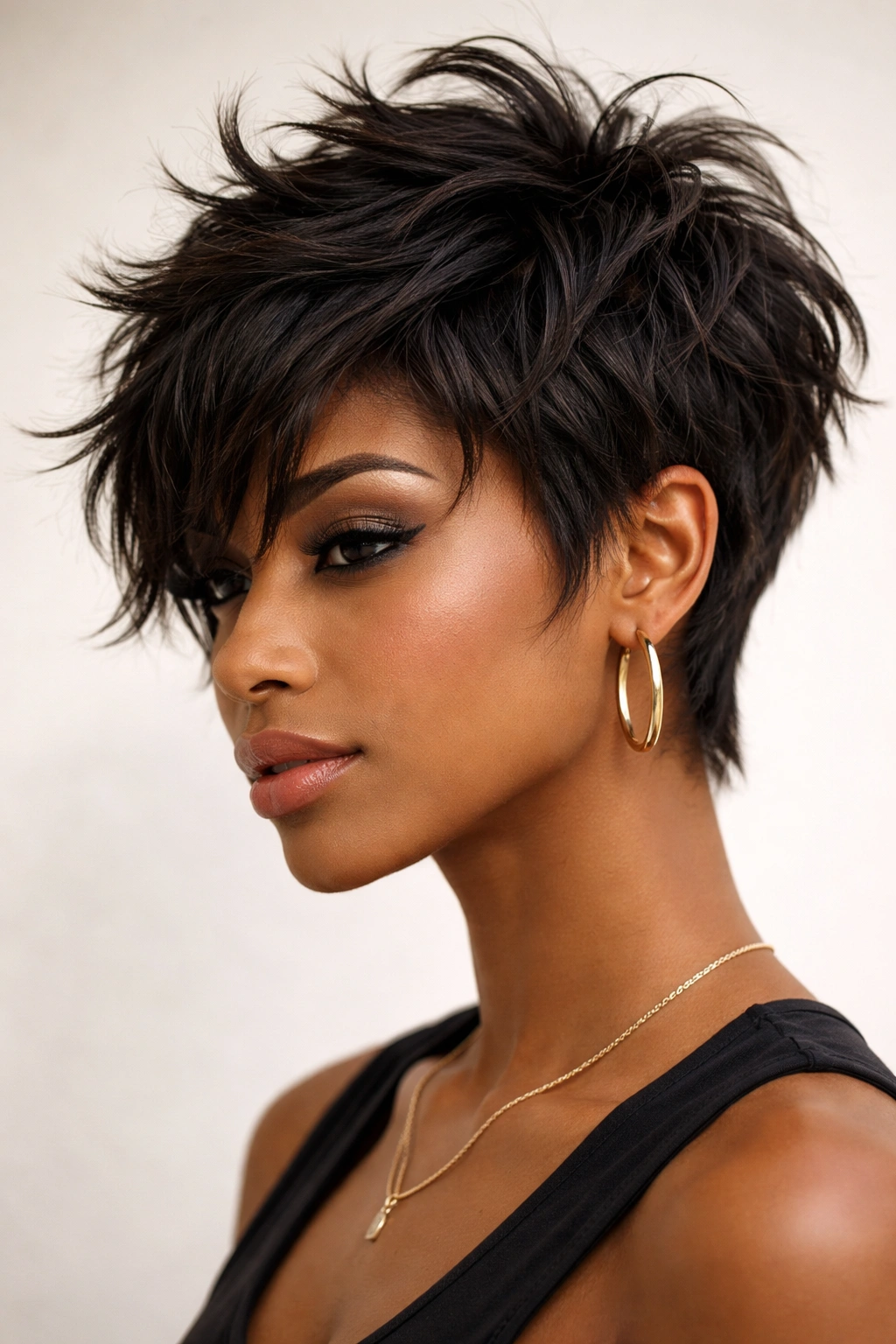
For people who want real movement and textured drama, choppy short layers delivered intentionally are where it’s at. This cut removes significant bulk and creates a spiky, textured effect that photographs beautifully and gives off confident, edgy energy. The layers are noticeably distinct from each other rather than blending, which is the point—you’re going for visible texture and movement.
The Visual Impact
Short choppy layers create height at the crown, movement around the face, and a silhouette that feels modern and sharp. On Black hair, this cut can look absolutely stunning because the natural texture of your hair combines with the geometric precision of the layers to create something genuinely striking. This isn’t a subtle style—it’s meant to be noticed and it works best when you actually want that visual impact.
Styling Requirements
- Works best with some curl or wave definition, so you need to style rather than just air-dry straight
- Can be achieved with a mousse-based routine, gel application, or even a curling iron for defined waves
- Requires regular trims (every 3-4 weeks) because short choppy layers lose their shape relatively quickly
- Looks incredible with edge control products to define specific sections
- You can create multiple looks—sleek and defined one day, tousled and textured the next
Fair warning: This cut demands more daily styling engagement than longer layered styles. If you prefer wash-and-go hairstyling, a shorter choppy cut might be frustrating because you need to actually style it to look intentional rather than just messy.
7. The Long Layers with a Heavy Base
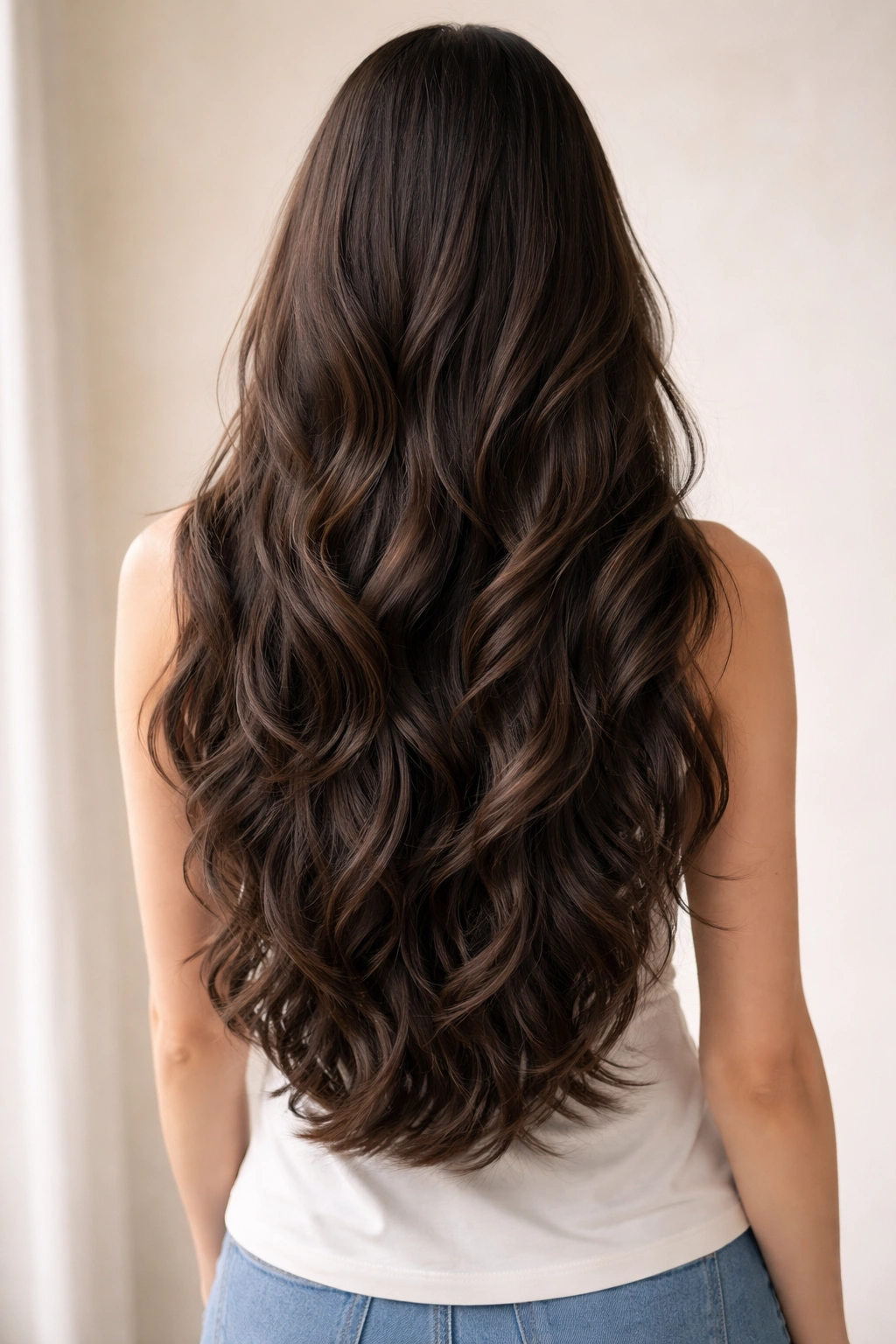
This style keeps length throughout your hair while adding layers that start further down (often mid-back or lower), creating movement where you want it without sacrificing the ability to wear your hair long. The heavy base—meaning the shorter layers and interior sections are thicker and denser—prevents the “wispy and thin” effect that can happen when you layer heavily from the roots all the way down.
Why the Heavy Base Matters
A heavy base is essential for people with fine or medium hair density who want length. By keeping the underneath and roots fuller while only layering the mid-lengths and ends, you get movement and texture without sacrificing the visual thickness of your hair. This prevents the style from looking skinny or sparse, while still giving you all the benefits of layers.
Who This Works Best For
- People who love long hair but want more shape and movement
- Those with medium to fine hair who want layers without a wispy appearance
- Anyone who wears their hair up in styles like buns or ponytails frequently (the heavy base looks great up)
- People who want flexibility—wear it down with movement, or wear it up with structure
- Those who prefer longer styling options and don’t want to commit to shorter styles
Styling tip: With a heavy base, your layers won’t be visible when your hair is completely dry and compressed. You’ll see the real movement and shape when you’ve added moisture, product, and let your waves settle. This means you should style your hair damp or with a curl cream for the best appearance.
8. The Face-Framing Lob With Textured Ends
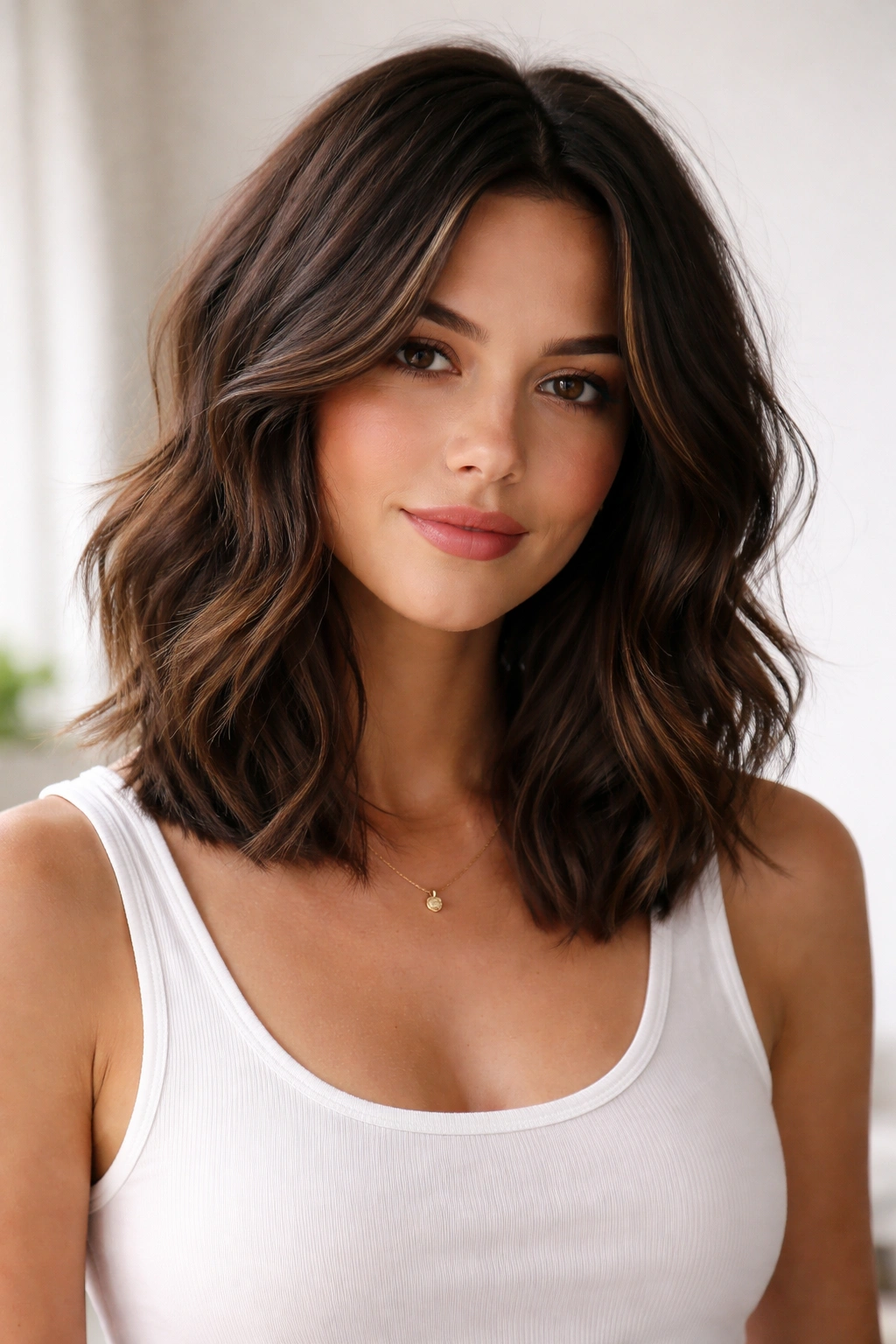
A lob (long bob) that hits right around collarbone or just past is a perfect length for wavy hair—it’s long enough to create an elegant silhouette but short enough that layers create real movement without excessive weight. Add strategic face-framing pieces and textured, choppy ends, and you’ve got a style that’s flattering, modern, and incredibly versatile.
Why Lob Length Is Magic for Waves
A lob sits right in that sweet spot where the natural movement of waves shows beautifully without looking like you didn’t put in effort. Longer than a shoulder-length bob but shorter than true long hair, it photographs well, can be worn up or down, and the layers create enough texture that your natural wave pattern becomes a feature rather than something to fight against.
Textured End Techniques
- Ask your stylist to use point-cutting or razor techniques to create choppy, textured ends rather than blunt ones
- These choppy ends catch light beautifully and add dimension that makes your waves look more defined
- Textured ends are also more forgiving for daily styling since imperfect waves look intentional rather than messy
- The choppiness encourages your waves to separate and flow rather than clumping together
Consider: If you plan to wear this style straight regularly, ask your stylist for slightly blunter ends so they don’t look too wispy when blow-dried smooth. If you’re mostly wearing your waves, textured and choppy is your friend.
9. The Asymmetrical Layered Cut With Side Shave
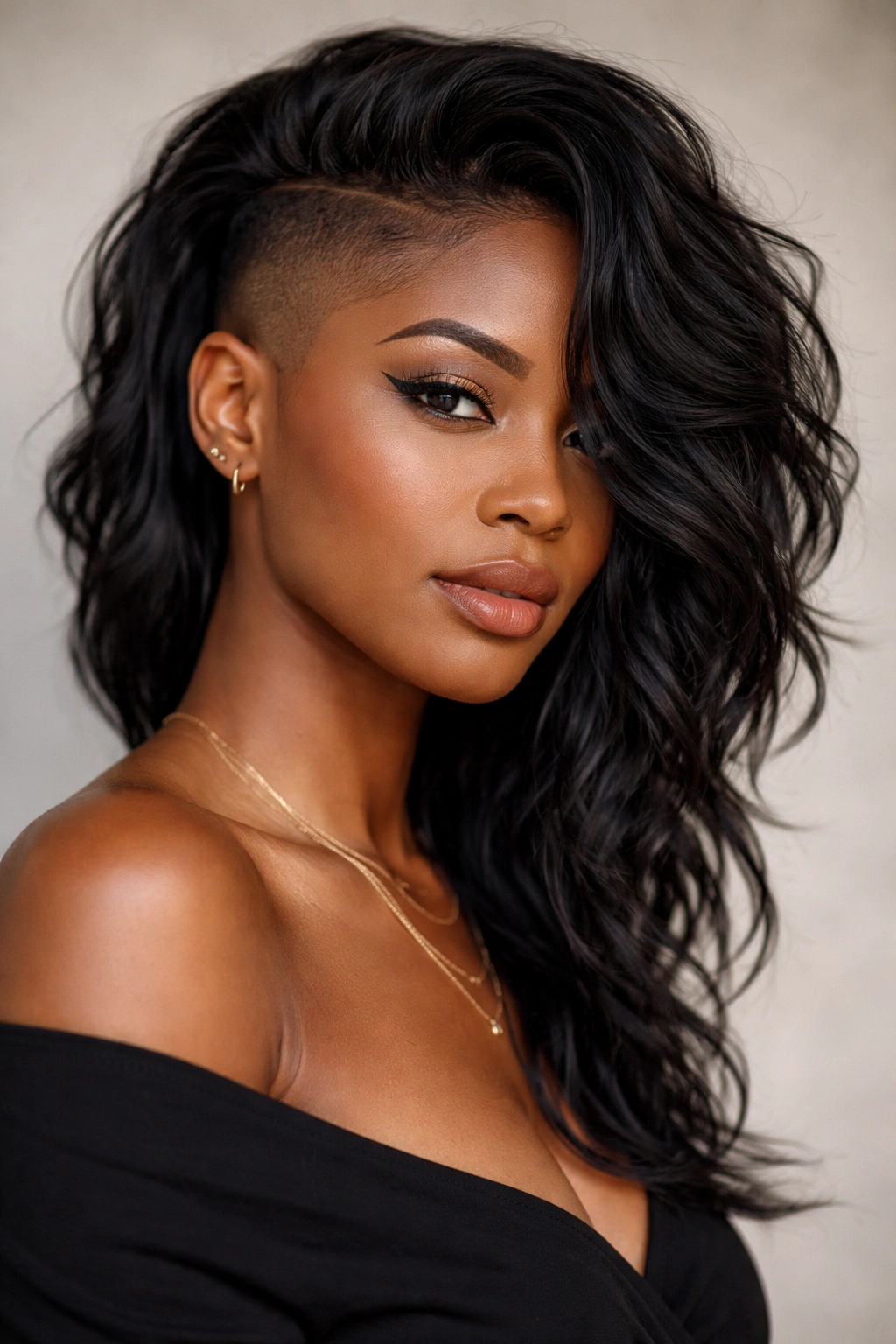
For the bold statement approach, an asymmetrical cut with one side shorter or partially shaved creates serious visual drama. Pair this with textured, wavy layers on the longer side and you’ve got a cut that’s undeniably striking. This style works beautifully on Black hair because of how the undercut or shaved section showcases scalp and skin tone while the longer wavy side provides balance and softness.
The Design and Balance
The asymmetrical approach means one side (usually around ear-level or shorter) is significantly shorter than the other (which might hit shoulder length or longer). The sides are deliberately unequal rather than just unevenly styled. Often the shorter side has an undercut or fade, while the longer side gets layers and texture. This creates a look that’s fashion-forward without being cartoonish.
Styling Versatility
- Wear the longer side down and over for a dramatic asymmetrical effect
- Pin or clip the longer side back for a completely different vibe
- Style the longer wavy side with defined curls while keeping the shorter side sleek and polished
- The asymmetry means you can create movement that naturally falls toward one side of your face
- Works with multiple styling approaches—wavy, straight, braided sections, or even twisted detail
Real consideration: This cut requires confidence because it’s designed to be noticed. If you prefer a more neutral appearance, it might feel like too much of a statement. But if you like bold style choices and want your hair to reflect your personality, this cut delivers.
10. The Blended Layered Pixie to Longer Hybrid
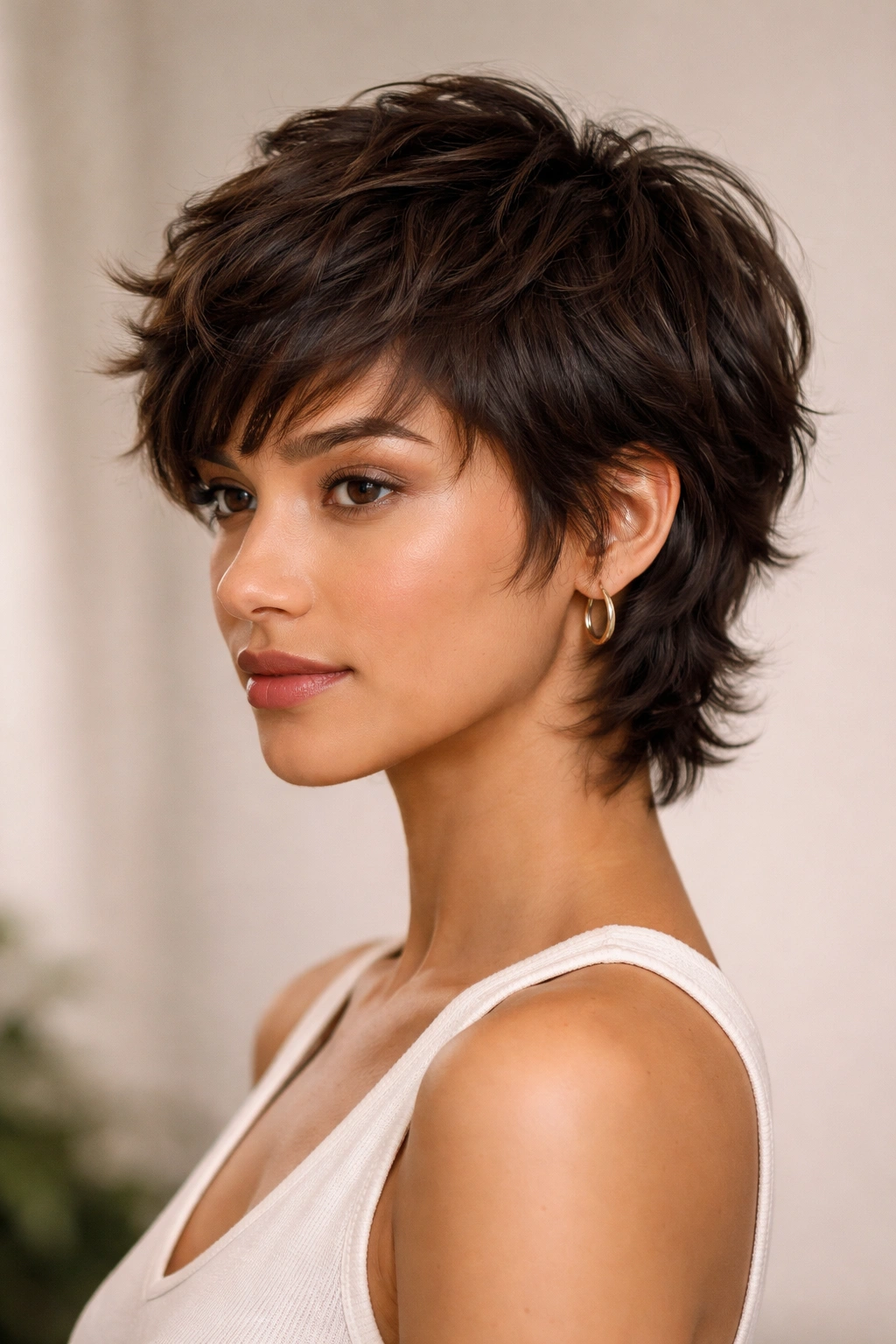
Sometimes called a “shaggy pixie” or extended pixie, this style takes the structure of a pixie cut and extends it with longer layers throughout, creating height and texture on top while keeping the sides slightly shorter. For wavy hair, this creates a look that’s chic and modern without being as severe as a true pixie while still offering the practical benefits of shorter styling.
Who This Cut Suits
- People who want a short, modern style but aren’t ready for a true pixie
- Those who like the idea of visible texture and movement but need something that’s easy to style
- Anyone who prefers the look of short hair but wants enough length to play with styling options
- People with strong facial features who can carry a slightly edgier, more exposed silhouette
- Those who want a style that looks intentionally fashion-forward rather than just “short”
Texture and Styling
- The layers on top create movement that prevents the style from looking flat or helmet-like
- You can create texture with mousse, let it air-dry wavy, or blow-dry and finger-rake for volume
- The slightly longer pieces can be styled back, to the side, or left to frame your face
- Requires trims every 4-5 weeks to maintain the shape and texture
- Works beautifully with edge control products to define specific sections and create visual interest
Practical note: This hybrid approach requires a stylist comfortable working with textured hair and creating intentional texture rather than just “cutting short.” Make sure you’re seeing examples of styles they’ve actually created before committing.
11. The Razor-Cut Textured Layers Throughout
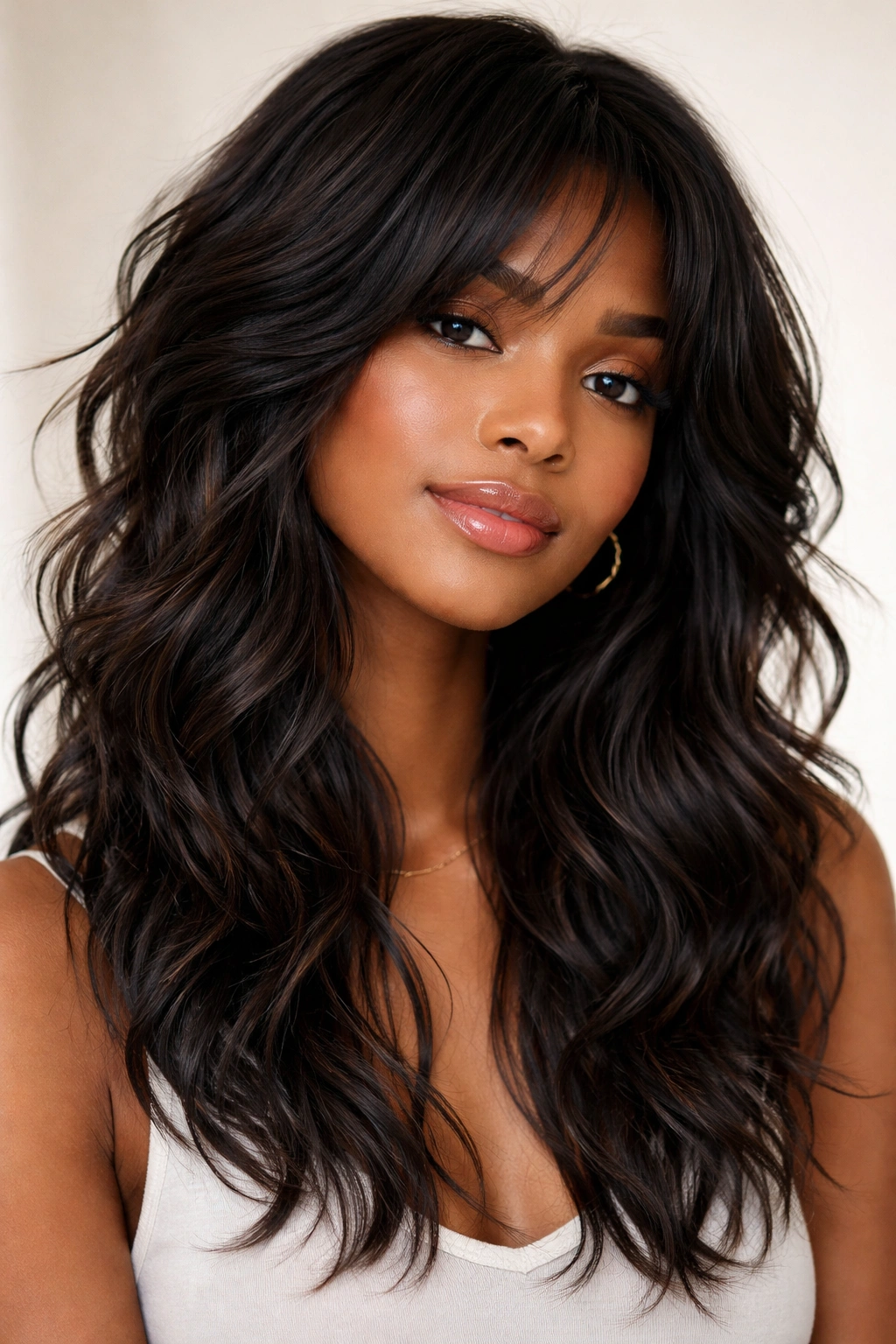
The ultimate texture play, a razor-cut style uses razoring techniques (instead of or in combination with scissors) throughout your hair to create movement at every level. Razor-cutting is especially popular on curly and wavy hair because it creates separation between curl clumps and encourages each curl or wave to define itself. This results in a style where texture is the whole point—every layer is designed to enhance your natural wave pattern.
How Razor-Cutting Differs From Scissor-Cutting
When your stylist uses a razor instead of scissors, it creates tapered, feathered ends on every layer rather than blunt edges. These tapered ends weigh less, move more freely, and blend together more seamlessly. For wavy hair, this means the waves can separate and flow rather than sticking together in clumps. It’s a technique that works with your texture rather than trying to create a standard geometric shape.
The Styling Opportunity
- Every movement in your hair is amplified because the layers are designed for separation
- Works beautifully with curl-defining products that enhance your natural wave pattern
- You get movement and dimension even with minimal styling effort
- The separation between layers means frizz is less noticeable because it looks like intentional texture
- Can be worn in multiple styles depending on how you apply product and dry your hair
Important caveat: Not all stylists are skilled with razor-cutting textured hair, and a bad razor cut can create more frizz and undefined waves. This is a technique that requires real expertise. Before committing, ask to see examples of razor-cut styles your stylist has created on similar hair textures to yours.
Final Thoughts
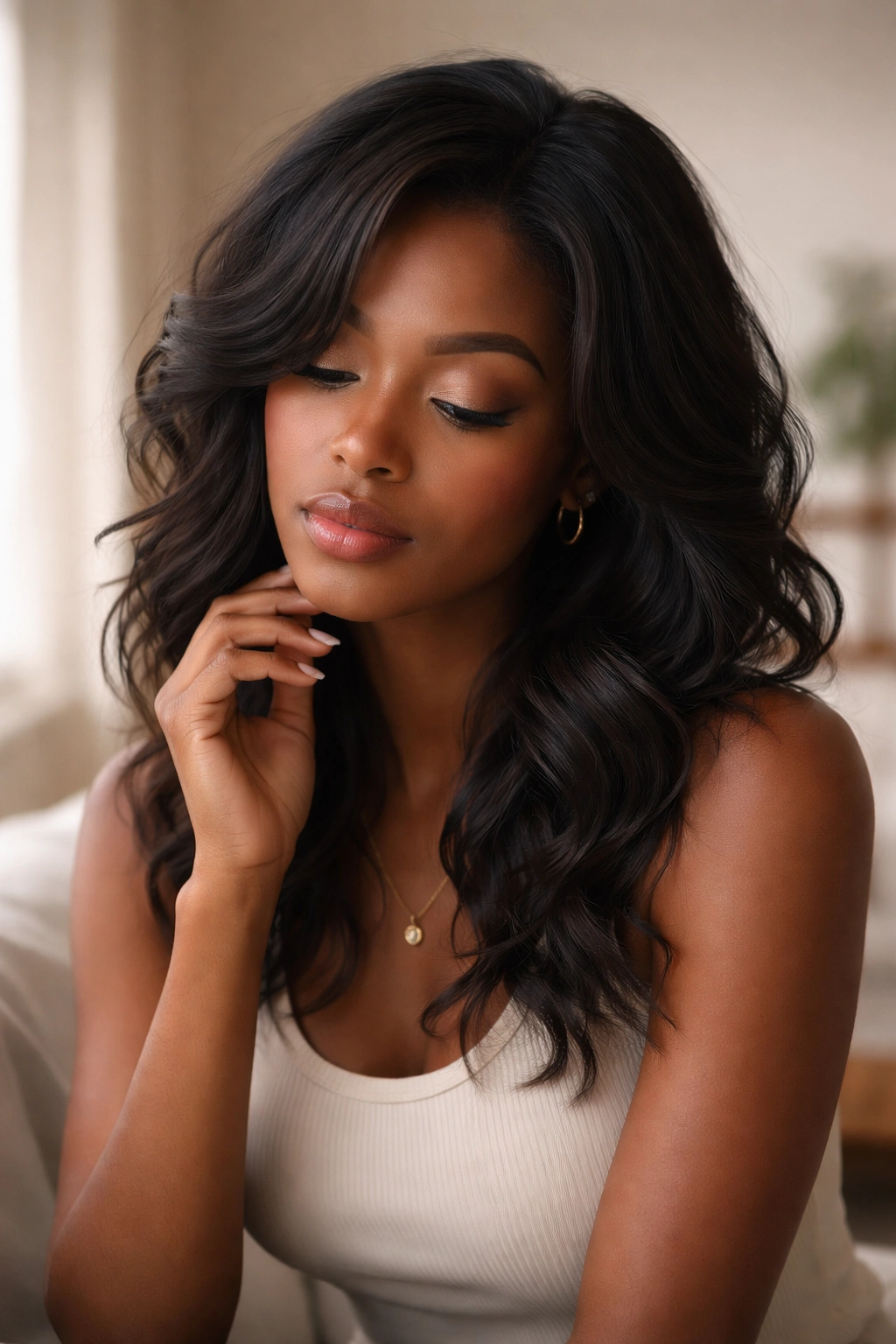
Finding the right wavy layered haircut comes down to understanding your specific wave pattern, hair density, and how much daily styling you actually want to do. A shag works beautifully if you want effortless movement, while choppy short layers deliver drama and require more intentional styling. A lob with face-framing pieces gives you elegant versatility, and an asymmetrical cut makes a confident statement.
The most important step is communicating clearly with your stylist about your natural texture and how your waves actually move—not how you wish they moved or what you see in pictures of other people. The cut that looks incredible on someone else might not work the same way for you, and that’s completely okay. What matters is finding a style that enhances your unique texture and fits into your real life, not one that requires you to fight your hair every single day.
Once you’ve got the right cut, maintenance becomes easier. Trims every 5-7 weeks keep layers sharp and prevent them from growing out into a shapeless mess. A good curl cream, gel, or mousse applied to damp hair is usually all the styling product you need. And remember—your natural waves are genuinely an asset, not something to apologize for or hide. The right layered cut makes them work for you instead of against you, and that’s when your hair really starts to shine.
