



There’s something almost magical about a wavy bob on a beach day—the way it catches the salt air, how the texture works with natural movement instead of against it, and the fact that you can roll out of bed with slightly damp hair and actually look intentionally styled. A short wavy bob gives you that effortlessly undone beachy vibe without requiring two hours of styling, and it photographs like a dream against ocean backdrops and sunset light. The real secret that stylists won’t tell you is that wavy bobs are actually easier to maintain than sleeker styles because texture hides imperfection—every strand doesn’t have to be perfectly placed. Whether you’re planning a beach vacation, live near the coast, or just want that perpetual summer-ready aesthetic year-round, the right wavy bob can transform how you feel about your hair.
The challenge isn’t finding a short wavy bob—it’s finding the one that actually works with your face shape, hair texture, and the amount of styling effort you’re willing to invest. A cut that looks incredible on someone with naturally thick waves might require daily heat styling if you have finer hair. A length that flatters a round face might overwhelm a heart-shaped one. That’s why understanding the different styles, variations, and the specific qualities that make each one work is crucial before you sit down in the salon chair.
1. The Textured Shag Bob
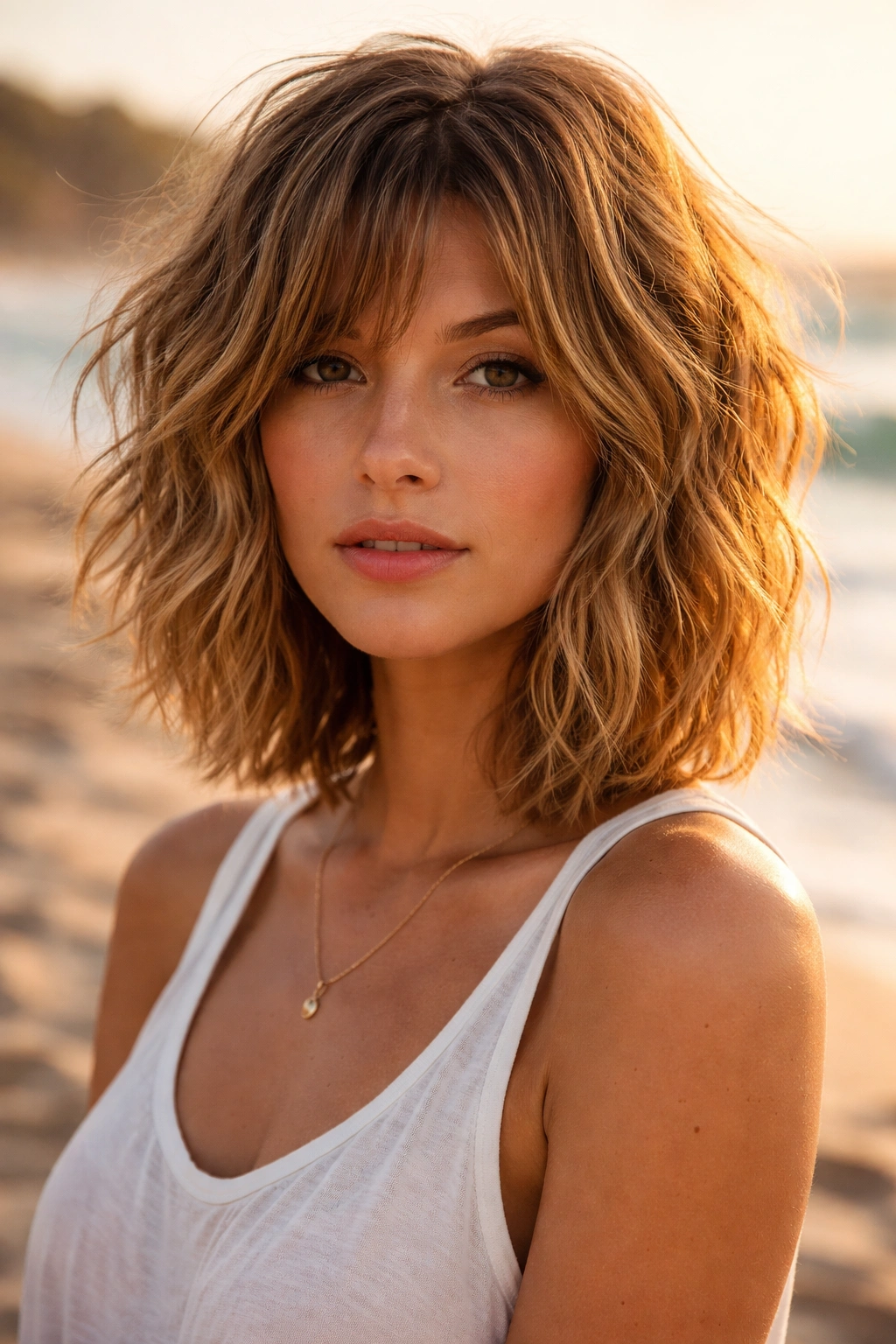
The textured shag bob is basically the rebellious older sibling of the classic bob—it’s got all the confidence and none of the rigidity. This cut features layers throughout that create movement and dimension, with shorter pieces at the crown that add volume and longer pieces that frame the face. The beauty of a shag bob for beach days is that it thrives on texture; the more movement your hair has, the better it looks. You can literally air-dry this cut and it falls into place naturally, making it perfect for someone who doesn’t want to fuss with styling.
Why It Works for Beach Hair
The shag’s layered structure means that even if your curls or waves aren’t perfectly uniform, they actually look intentional and chic. Salt water and humidity, which would destroy a blunt bob, actually enhance a shag by adding volume and emphasizing the layers. This cut suits most face shapes because the varied lengths allow you to customize where pieces frame your features—shorter layers around the face for someone who wants to soften a square jawline, longer pieces for someone who prefers more coverage.
How to Style It for Maximum Impact
- Air-dry with a sea salt spray for that effortless beach texture
- Use a diffuser on your blow dryer if you want more defined waves
- Apply a light texturizing cream or wax to individual pieces for dimension
- Tousle with your fingers rather than a brush to keep the shaggy movement alive
- Refresh between wash days with a dry shampoo at the roots for lift
Pro tip: Ask your stylist to cut the layers while your hair is dry if you have wavy or curly hair—this way they can see exactly how each layer will fall and create the perfect amount of movement for your specific texture.
2. The Choppy Pixie Bob
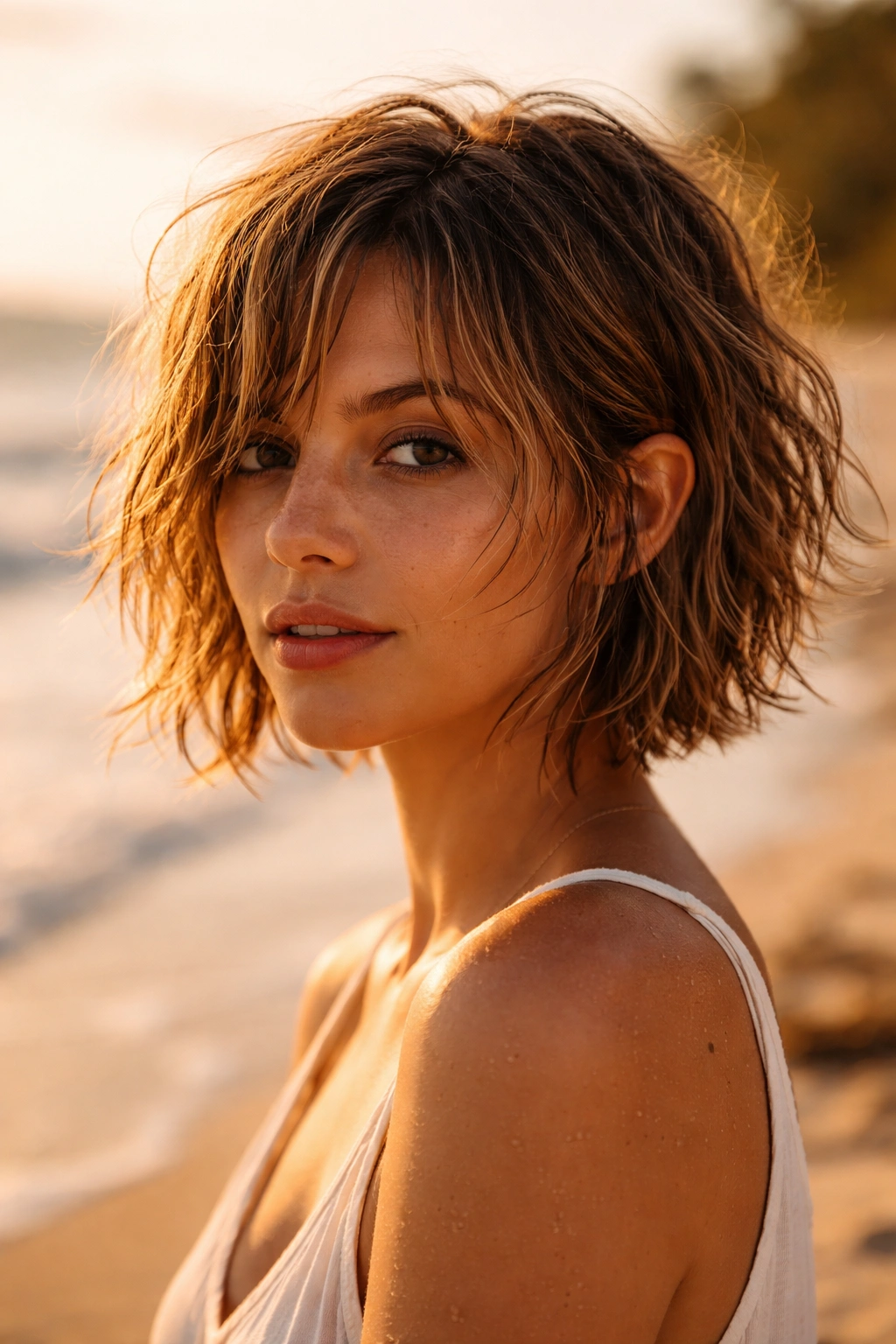
A choppy pixie bob sits right at that sweet spot between a pixie and a bob, usually landing just below the ears with plenty of choppy layers and textured ends. This cut is fearless—it says you’re not trying to blend in, and it has serious character. For beach days, this works beautifully because the short length means no tangles from salt water, and the choppy texture looks intentional even when your hair is windblown or damp.
The Face Shape Factor
This cut absolutely sings on people with defined facial features—it puts your face front and center, so you want a bone structure or features you love highlighting. It works particularly well for oval, square, and heart-shaped faces. If you have a round face, the choppy layers can actually help by drawing the eye vertically rather than across the width of your face, which is why the length of the longer pieces and how they’re positioned matters.
Styling and Maintenance Reality
- Embrace the tousled, piecey aesthetic—this cut isn’t about sleekness
- Use a texturizing spray or cream to separate and define the choppy layers
- A quick blow-dry with a round brush can add shape, but air-drying often looks better
- Visit your stylist every 4-6 weeks to maintain the choppiness; this cut shows grow-out faster than longer bobs
Worth knowing: This cut requires some styling intention to look its best. If you’re hoping for a fully wash-and-go style, the choppy pixie bob might frustrate you. But if you enjoy playing with your hair texture, it’s endlessly fun.
3. The Blunt Wavy Bob with Bangs
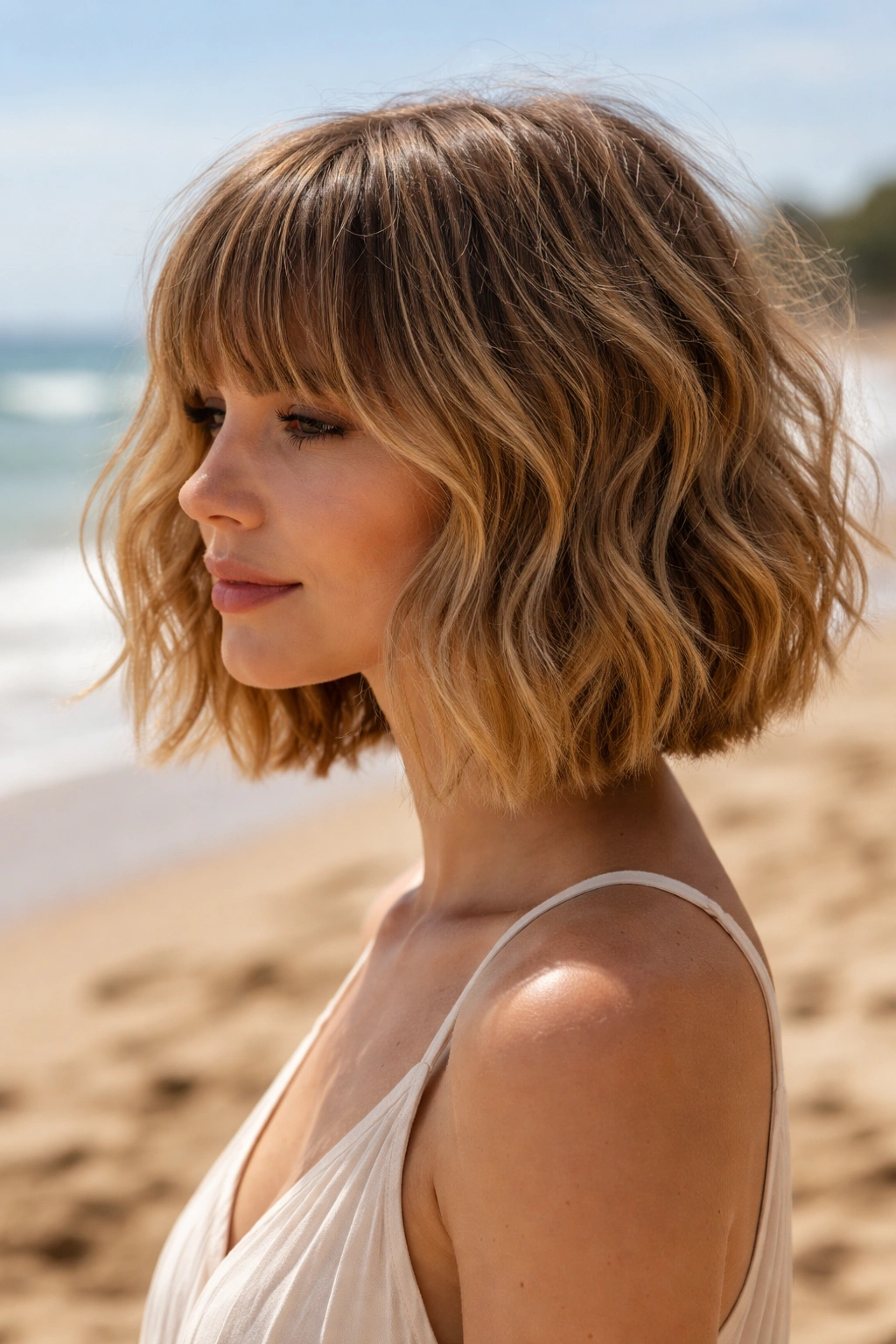
There’s power in bluntness—a straight-across hem hits differently than a tapered one, and when you add waves to that blunt edge, you get this sophisticated tension between structure and movement. Adding bangs amplifies this effect. The bangs can be blunt and heavy, wispy and textured, or something in between, but they add an instant youthful element that’s perfect for someone who wants their wavy bob to feel fresh and fashion-forward.
Choosing Your Bangs
Blunt bangs suit longer face shapes and people who want to break up their forehead. Wispy bangs work on more face shapes and feel less dramatic. Textured or choppy bangs split the difference—structured but not severe. For beach days specifically, textured bangs are often the move because they don’t look limp or sad when they’re damp the way blunt bangs can.
The Maintenance Consideration
- Bangs require trims every 2-3 weeks to maintain their shape and proportion
- During beach trips, bangs can get salt-stiffened and odd-looking, so travel with a lightweight texturizing spray
- If you’re not ready to commit to bangs long-term, consult with your stylist about whether you can grow them out gracefully into the rest of your bob
Quick fact: A blunt wavy bob with bangs photographs exceptionally well because the structured cut combined with movement creates visual interest from every angle—which is why this style shows up constantly on fashion and lifestyle content creators.
4. The Textured Lob with Waves
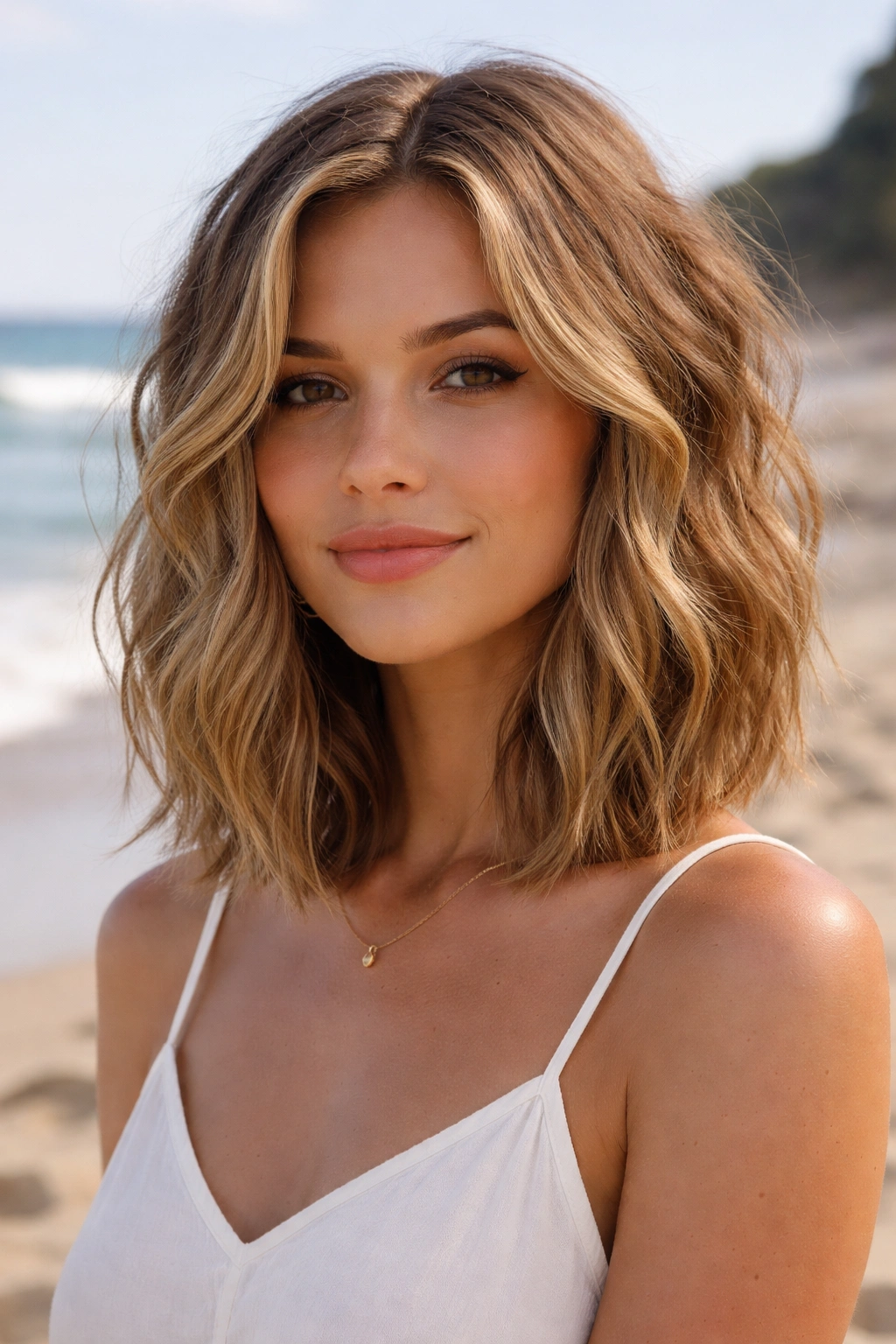
A lob—that’s a long bob—is just long enough to tie back but short enough to feel free and easy. When you textured this length with waves, you get maximum versatility: you can wear it down on beach days for full impact, pull it back when you’re actually in the water or heat, or let it air-dry into whatever shapes feel right. The textured lob is the Swiss Army knife of summer haircuts.
Length and Face Shape Matching
A textured lob works beautifully on almost every face shape because you’re not commitment to one extreme—it’s not ultra-short, but it’s not long either. For round faces, longer layers and pieces that frame the face elongate your proportions. For long faces, shorter layers at the crown and slightly blunt ends balance your length. For square faces, pieces that fall around your jawline soften your angles.
Wave Pattern Options
- Loose, open waves for an effortless beach vibe
- Tighter waves or curls for more defined texture
- Piece-y waves where individual strands have their own direction
- Uniform waves throughout for a more polished look
Insider note: The textured lob is genuinely the easiest wave length to maintain because it’s long enough that wave pattern imperfection doesn’t show, but short enough that you’re not managing massive amounts of hair or dealing with serious tangles from salt water.
5. The Modern Shag with Face-Framing Layers
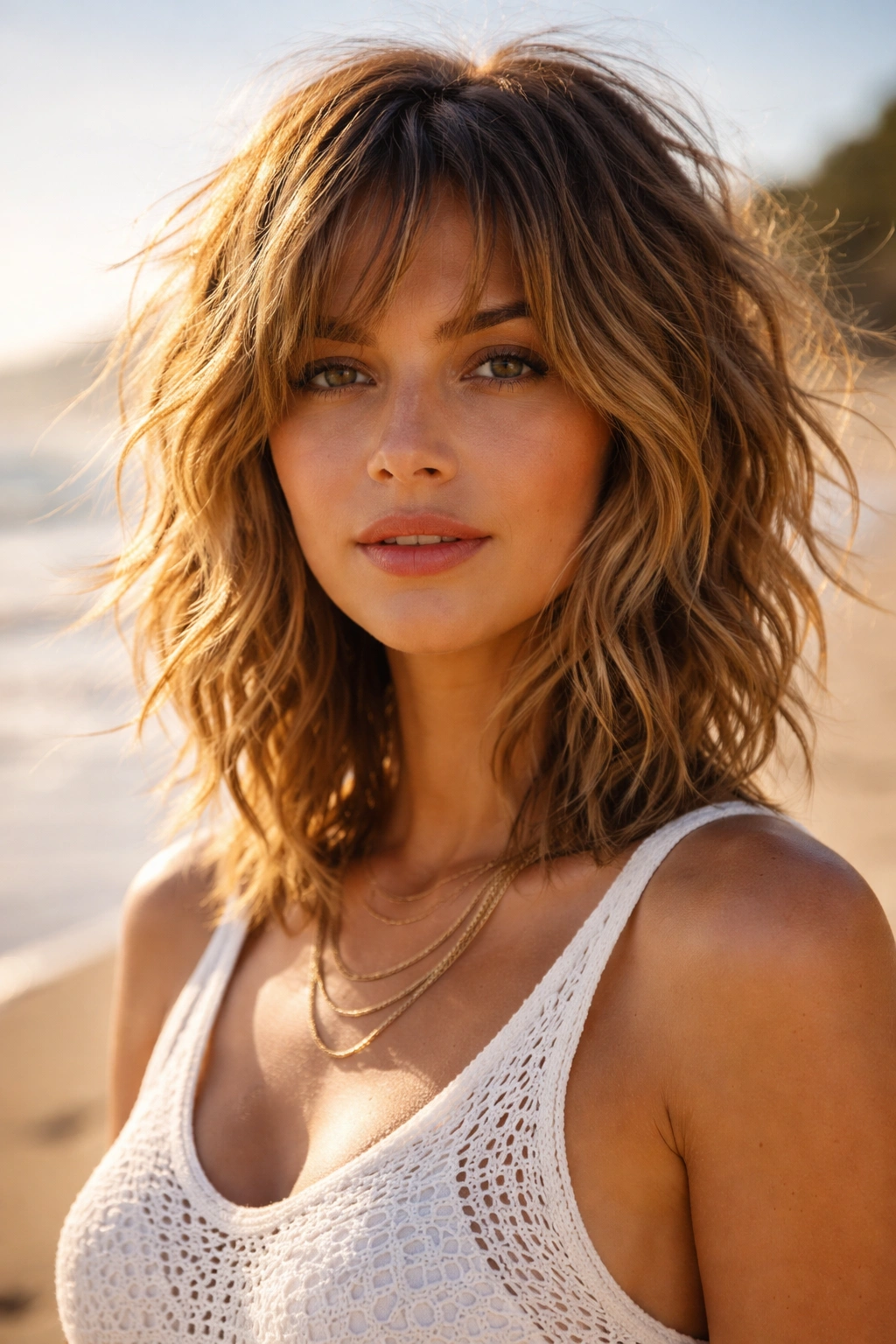
This is the shag for people who want that ’70s-inspired cool factor but with a more modern, intentional approach. Instead of uniform layers throughout, this cut concentrates shorter layers around the crown and face, creating a frame that draws attention to your features. The result feels current rather than costumey, and it’s incredibly flattering for beach days because the face-framing pieces give you dimension without requiring perfect styling.
Why Face-Framing Matters
Layers positioned specifically around your face can instantly lift your features, create the illusion of a more sculpted jawline, or soften angles depending on how they’re cut. For beach days, this matters because wind and waves will mess with your hair—but if the framing pieces are cut well, they’ll still look intentional even when they’re windblown.
The Texture Building
- Ask your stylist to cut your layers while your hair is dry so they can see your natural wave pattern
- Specify whether you want the layers to create separation between strands or density that keeps strands grouped together
- Request longer pieces underneath for anchoring, even if the top layers are quite short
Pro tip: This cut pairs beautifully with a side part, which you can shift depending on your mood or how the waves are falling on any given day.
6. The Sleek Wavy Bob
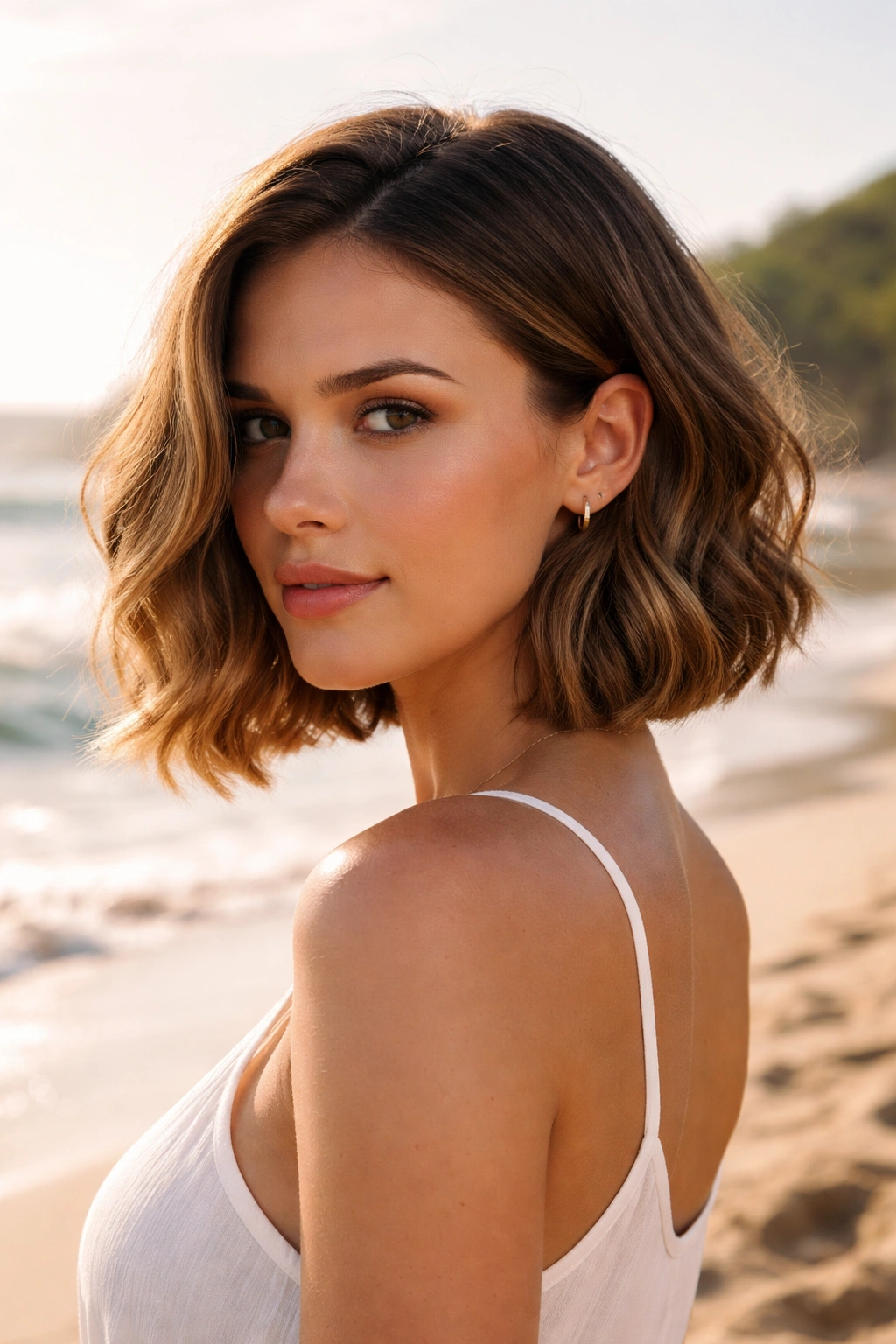
Not every wavy bob needs to be textured chaos—sometimes you want waves that read as deliberate and polished. A sleek wavy bob keeps the hair smoother through the crown and lengths while waves are concentrated or more pronounced through the ends. This gives you a sophisticated look that’s still beachy and relaxed but feels intentional and put-together.
Achieving Sleek with Movement
- Blow-dry with a round brush to create smooth texture through the mid-lengths
- Use a waver or large curling iron on the ends for bouncy, uniform waves
- Apply a smoothing serum or light oil to tame frizz and add shine
- Use a hairspray or light-hold gel to preserve the waves without stiffness
Face Shapes and Lengths
A sleek wavy bob works beautifully on oval and square faces. For round faces, keeping the crown smooth and lifting your waves away from your cheeks creates elongation. For heart-shaped faces, you might want longer pieces to balance your forehead while keeping the crown sleek.
Worth knowing: This style sits between effortless and polished—you’re definitely styling it intentionally, but it doesn’t look like you spent an hour getting ready. For beach days where you want to look elevated rather than sun-baked, this is your cut.
7. The Asymmetrical Wavy Bob
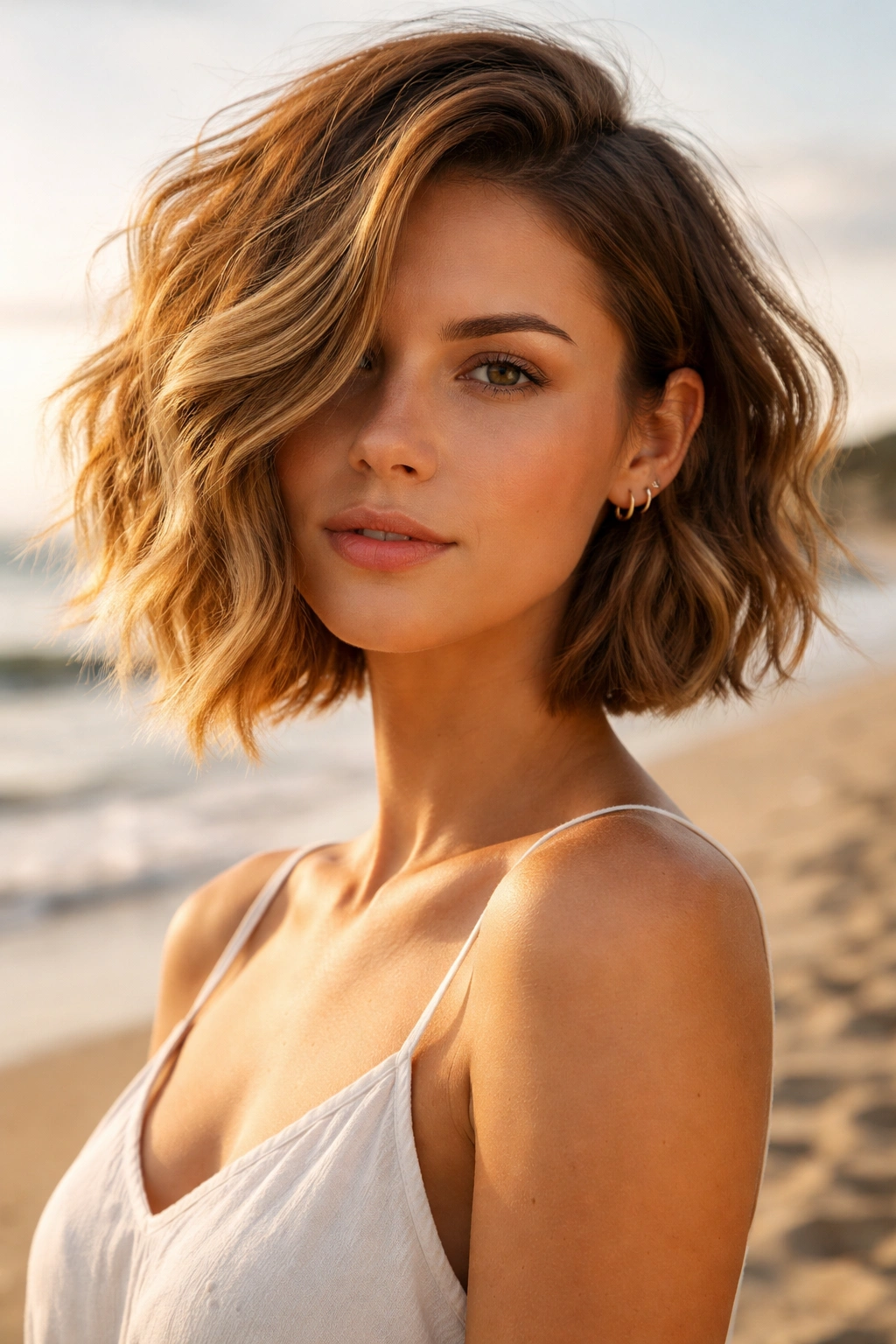
An asymmetrical bob has one side noticeably shorter than the other, usually one side hitting around your cheekbone and the other falling to your shoulder or slightly beyond. Pair this with waves and you get immediate visual interest and movement—the shorter side creates the illusion of lift and lightness, while the longer side keeps the style wearable and gives you styling options.
Working with Asymmetry
This cut requires confidence because it’s visibly not symmetrical—but that’s exactly what makes it feel modern and intentional. It suits people who want their haircut to be a statement piece. Asymmetrical bobs work on most face shapes, but they’re particularly striking on people with strong bone structure who aren’t worried about their cut being noticed.
Styling Your Asymmetrical Waves
- Create waves that follow the line of each side—tighter waves on the shorter side, looser waves on the longer side
- Part your hair off-center to emphasize the asymmetry
- Use side-swept styling to lean into the direction
Real talk: An asymmetrical wavy bob photographs exceptionally well from certain angles and can photograph a bit odd from others. If you’re not okay with some styling and positioning to make your cut look its best in photos, this might not be your style—but if you love the boldness of it, own it completely.
8. The Curly Bob with Defined Waves
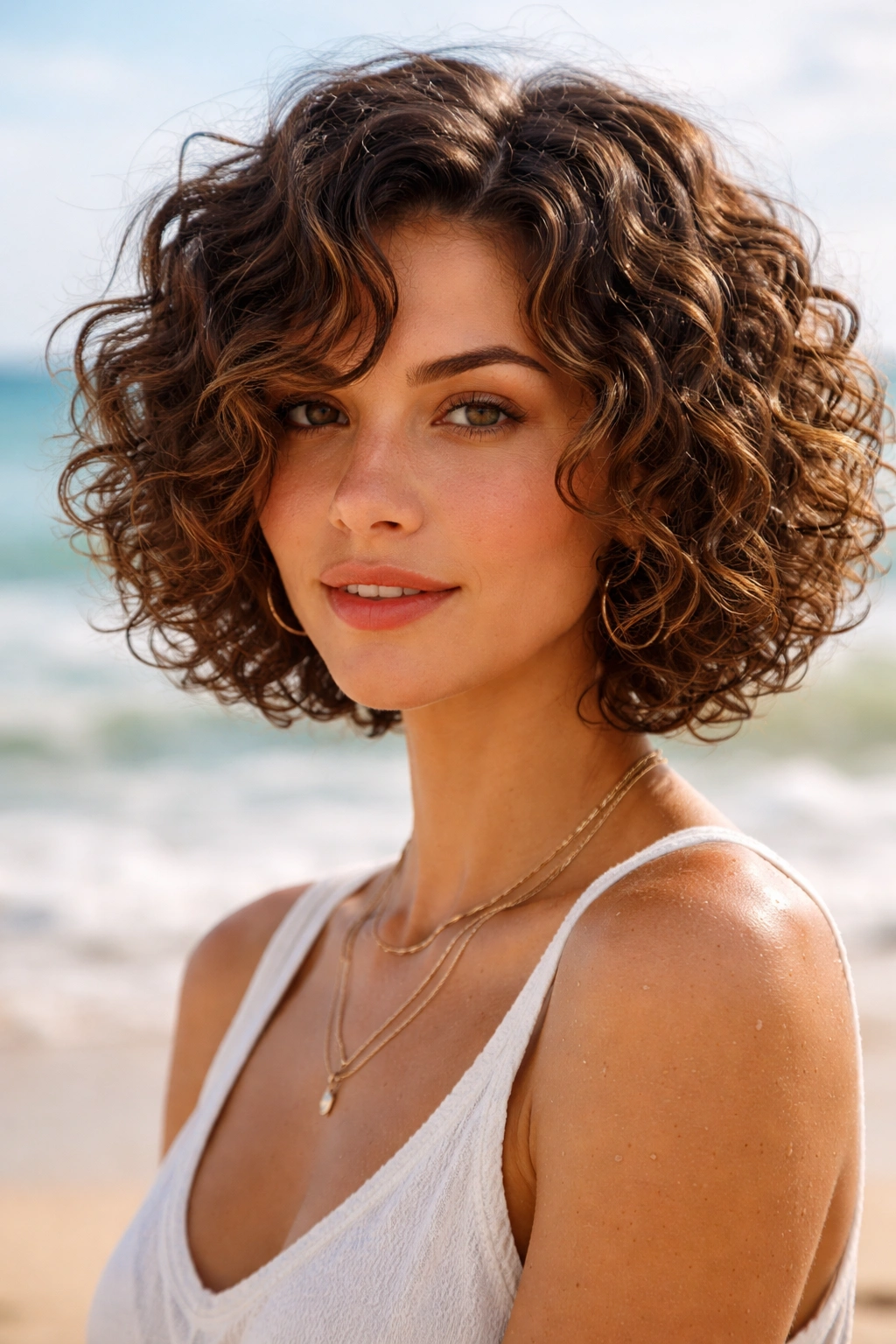
If you have naturally curly or coily hair, a curly bob cut specifically for your curl pattern can be genuinely transformative. Rather than trying to force waves into straight-hair styling methods, a curly bob works with your natural texture to create defined, intentional curls that look bouncy and intentional. For beach days, this is actually ideal because salt water and humidity enhance your natural curl pattern rather than fighting it.
Cutting for Curls
- Find a stylist who specializes in curly hair and understands how to cut dry curls
- Specify the amount of definition you want—tightly coiled curls need different cutting than looser waves
- Request longer layers to prevent your curls from shrinking up too short
- Ask about product recommendations specifically for your curl type
Enhancing Your Natural Curl Pattern
- Use a curl-enhancing cream or gel applied to soaking wet hair
- Plop or microfiber your hair instead of rubbing it with a towel
- Air-dry completely or use a diffuser on low heat
- Let your curls set fully before touching or styling them
Pro tip: Curly-haired people often get the best beach hair days because your natural texture thrives in humidity and salt water—embrace it completely rather than fighting it with products designed for straight hair.
9. The Tousled Beach Waves Bob
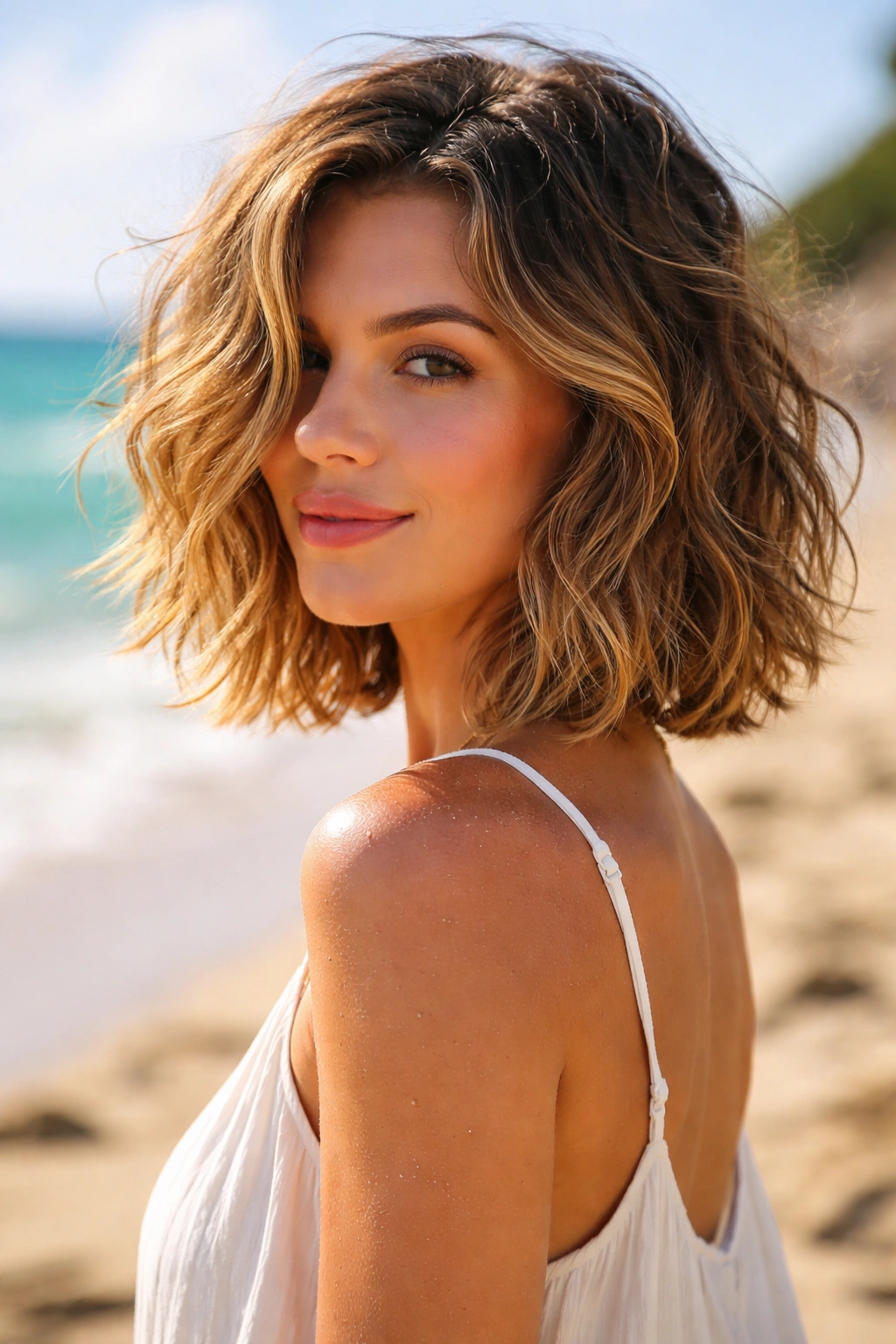
This is the bob that looks like you just stepped out of the ocean (or at least, like you could at any moment). Tousled beach waves are loose, irregular, undone, and absolutely intentional. Every wave is slightly different from the next, creating a lived-in, effortless aesthetic that’s perfect for someone who wants their haircut to signal “I don’t take myself too seriously, but I still look great.”
Creating Tousled Texture
- Use a salt spray or texturizing spray liberally—this creates grip and helps waves hold
- Apply the spray to damp or dry hair, depending on the product
- Use your fingers to scrunch and tousle rather than a brush
- Finish with a light hairspray for hold without crunch
The Styling Reality
This cut looks best when you’re not trying too hard, but it actually requires some effort to create. You’re not rolling out of bed with perfect tousled waves; you’re creating them intentionally. But the payoff is that it always looks vacation-ready.
Worth knowing: Sea salt spray is your best friend with this cut. It’s inexpensive, easy to travel with, and genuinely creates texture that makes waves hold better and look more interesting.
10. The Feathered Wavy Bob
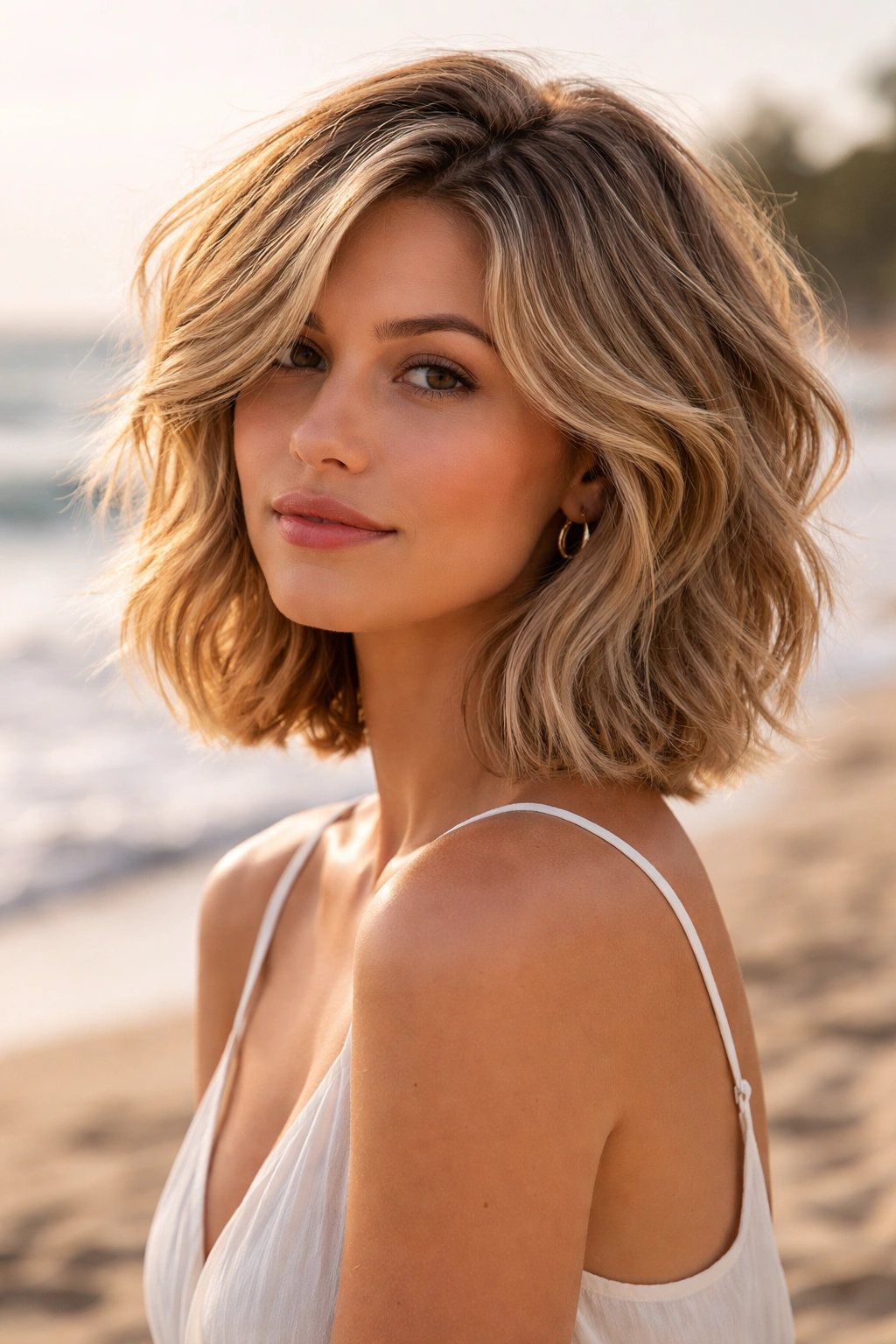
Feathered layers create a very specific aesthetic—they’re softer and less choppy than a standard shag, but they still add movement and dimension. Each layer is cut to curve slightly, creating feather-like texture that flows rather than stands apart. For beach days, feathered waves look romantic and effortless without being as obviously textured as a choppy cut.
The Difference Between Feathered and Shaggy
Feathered layers blend more smoothly into each other, creating a more cohesive shape. Shaggy layers are more distinct and separated. Feathered feels delicate; shaggy feels bold. Both work beautifully for wavy hair, but they create very different vibes.
Working with Feathered Texture
- Blow-dry with a brush to smooth the feathered layers
- Use a light texturizing product rather than a heavy cream
- Create waves that follow the direction of the feathering
- Visit your stylist every 6-8 weeks to maintain the feathered shape
Quick fact: Feathered layers were huge in the ’80s, but modern feathered waves are softer, more subtle, and genuinely beautiful on contemporary styles—it’s not a retro throwback, it’s a timeless technique.
11. The Slicked-Back Wavy Bob with a Low Pony
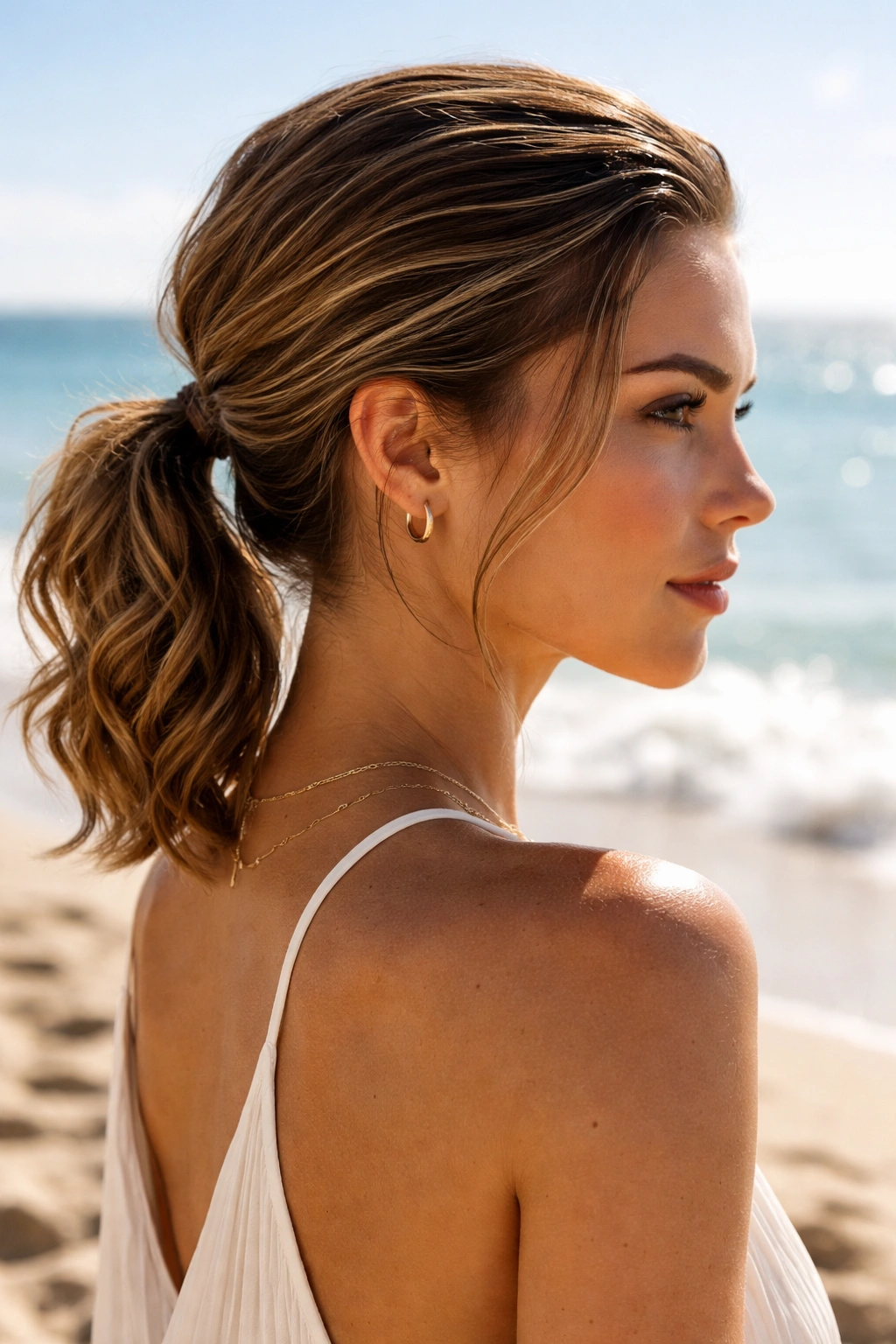
This is technically a styling option as much as a haircut option, but it’s so perfect for beach days that it deserves its own moment. You start with a wavy bob that’s long enough to gather at the back (usually at least a textured lob length), then you slick the crown area back smooth while letting the waves flow down and back. You can clip it, tie it loosely, or just wear it pulled back—it’s infinitely versatile.
Why This Works for Beach Days
When you’re actually swimming or dealing with intense heat and humidity, pulling your hair back keeps it off your face and neck. But slicking it back with waves flowing behind creates a sophisticated, intentional look rather than a frazzled, exhausted look. You look like you’re deliberately styled rather than seeking refuge from your own hair.
Creating the Slicked-Back Effect
- Use a gel or edge control to smooth the crown area
- Brush the back section into a very loose gathering
- Secure with a clip, elastic, or bobby pins depending on the look you want
- Let the waves fall naturally—don’t smooth them
Insider note: This styling trick is literally what fashion models and celebrities do on beach days when they don’t want to look undone but also don’t want to be styling their hair.
12. The Reverse Bob with Waves
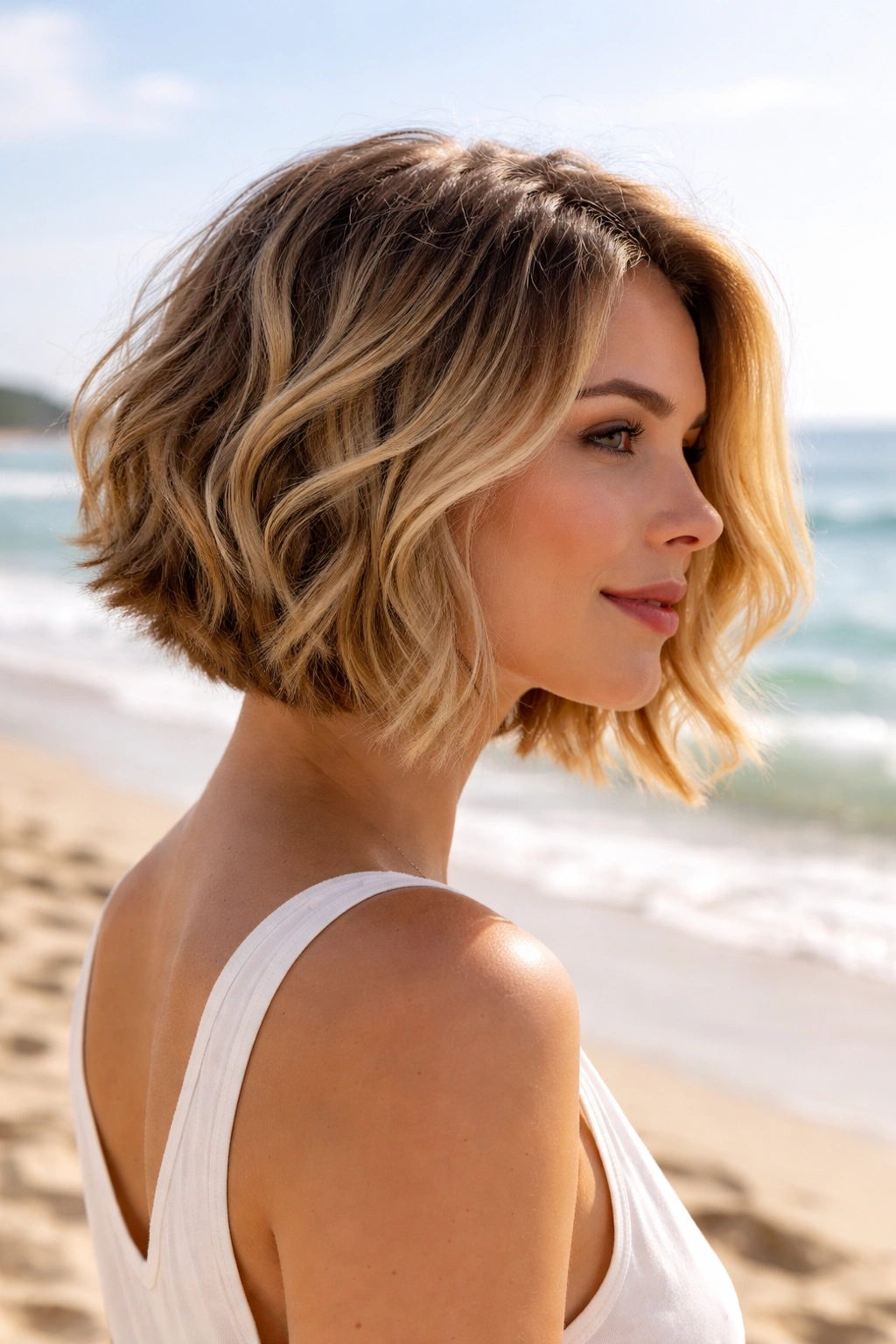
A reverse bob is shorter in the back and longer in the front, which is the opposite of a typical bob where the back is fuller. When you combine this with waves, you get a modern, forward-thinking style that creates amazing movement and frames your face beautifully. The longer front pieces can curve under or away from your face depending on how you style the waves.
Why Reverse Works
A reverse bob is really flattering on people who want to draw attention to their face and jawline. The longer front pieces create a framing effect, and the shorter back keeps it feeling modern and intentional rather than dated. For beach days, the varying lengths mean you get different styling options—you can wear it all one way, or style the front pieces differently than the back.
Face Shapes and Reverse Bobs
Reverse bobs are particularly flattering on round faces (the longer front pieces elongate), but they work on most shapes when cut correctly. The key is making sure the front pieces are proportional to your face length and width.
Pro tip: A reverse bob works particularly well with an off-center or side part because you can lean the longer front pieces in different directions.
13. The Micro Bob with Beach Waves
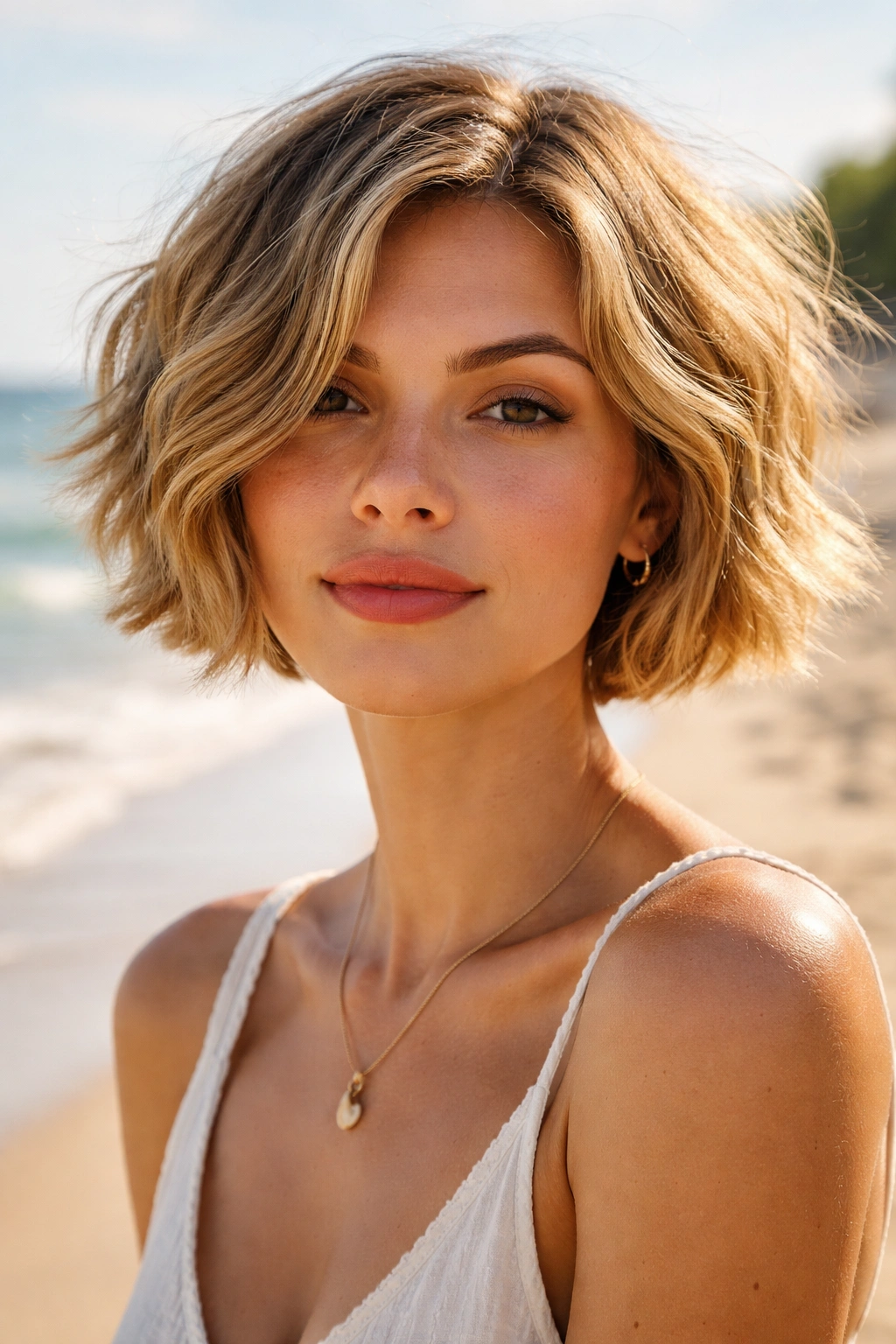
A micro bob is basically a very short, very chic take on the classic bob—usually hitting at or just above the ears. It’s bold, it’s fashion-forward, and it’s absolutely liberating if you’re ready to embrace shorter hair. When you add waves to a micro bob, you get texture and movement that prevents it from looking severe or too edgy.
Who Should Consider a Micro Bob
This cut suits people with strong facial features who aren’t worried about their haircut being a statement. It works beautifully on people with well-shaped heads, defined jawlines, or interesting face shapes. If you’ve ever wanted to try a really short cut but were nervous, adding waves to a micro bob is the move because the texture softens the boldness of the length.
The Freedom Factor
Here’s the honest truth about a micro bob: you get unprecedented freedom from hair maintenance. No long tangles, no dealing with length during beach days, no endless styling options (because your cut automatically creates shape). But you’re also committing to regular trims every 3-4 weeks because even small growth shows dramatically on very short cuts.
Worth knowing: Very short wavy bobs require you to have some styling intention. Even if your hair is naturally wavy, you might need a texturizing product or light styling to make sure the waves are intentional-looking rather than just messy-looking.
14. The Textured Lob with Wispy Layers
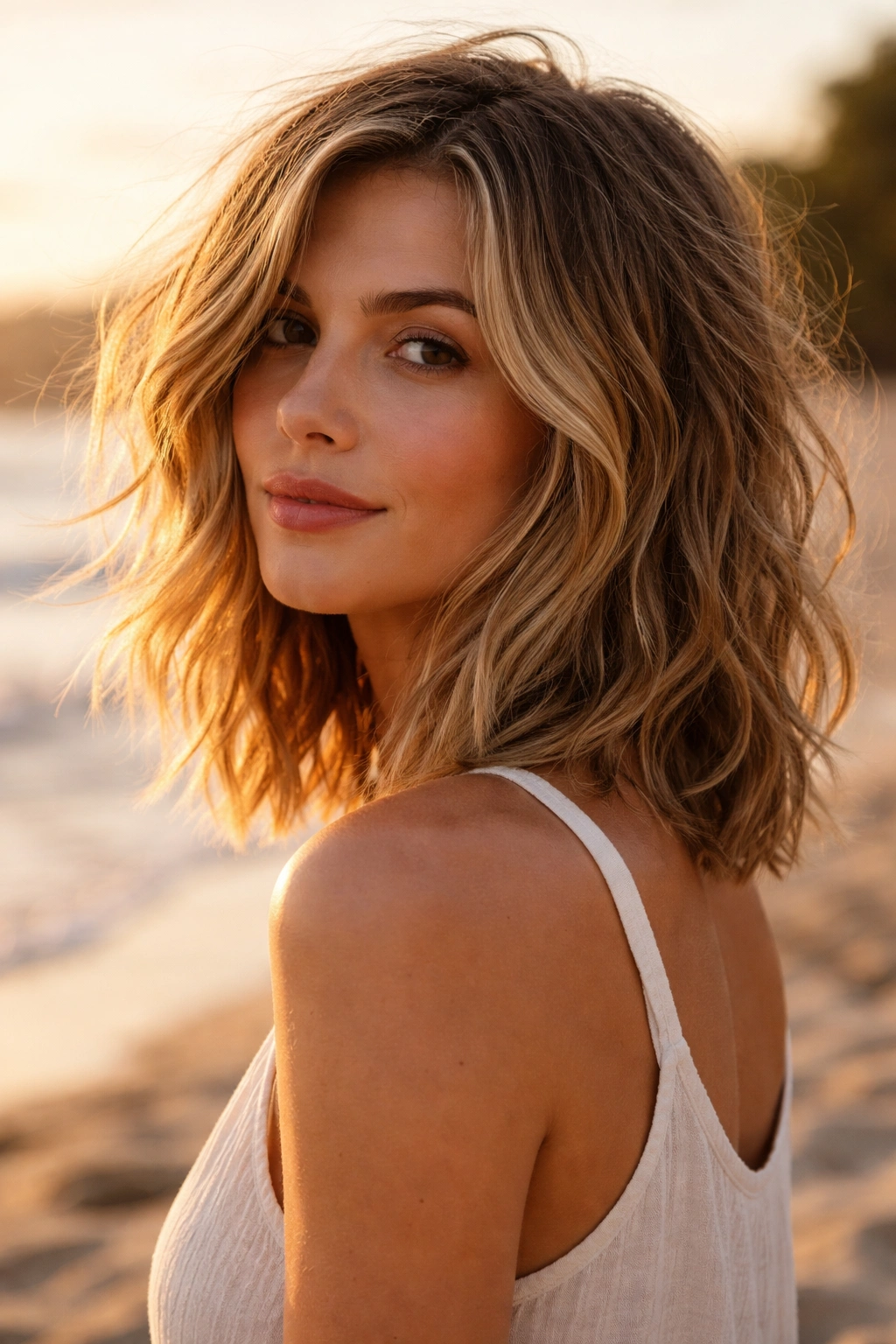
Closing out our collection is a true crowd-pleaser: a textured lob with wispy layers throughout. This cut is long enough to feel like a bob but short enough to be easy, textured enough to handle beach days but not so choppy that it requires constant styling. Wispy layers are shorter pieces that create movement and dimension without the choppiness of a shag or the bluntness of a blunt cut.
Why Wispy Works
Wispy layers are incredibly flattering because they blend smoothly and create softness. They work on almost every face shape and hair type. They’re not so short that they look radical, but they’re present enough to create visible movement and dimension. For beach days, wispy layers catch the light beautifully and look intentional even when your hair is slightly windblown or salt-stiffened.
Styling Your Wispy Layers
- Blow-dry with a round brush for smooth, controlled movement
- Use a waver or curling iron on the ends for defined waves
- Apply a light texturizing spray or product to separate the layers
- Tousle with your fingers for a more undone aesthetic
The Maintenance Balance
Wispy layers need trims every 6-8 weeks to maintain their shape, but they’re not as high-maintenance as a full shag. They blend as they grow out, so you don’t get an obviously grown-out awkward phase—the cut just gets longer and softer.
Final note: If you’re torn between wanting texture and movement but also wanting something wearable and easy, a textured lob with wispy layers is genuinely your answer. It’s the Goldilocks of wavy bobs—not too short, not too long, not too choppy, not too blunt.
Final Thoughts
Choosing a wavy bob for beach days is about matching your cut to three specific things: your hair texture, your face shape, and your honest styling effort level. A textured shag is glorious if you have waves already and love playing with texture, but it might frustrate you if you want something lower-maintenance. A sleek wavy bob photographs beautifully but requires more daily styling intention than an air-dry textured cut.
The best cut is the one that makes you feel confident and beautiful without requiring you to fight your hair every single morning. If you love the beach aesthetic but hate spending an hour styling, go textured and tousled. If you want waves but prefer a polished look, choose a sleek wavy bob or a feathered cut. If you’re ready to make a bold statement, try an asymmetrical or reverse bob.
Before you book your appointment, bring photos of cuts you love—not because you need to copy them exactly, but because they show your stylist what elements appeal to you. Have an honest conversation about your daily routine, your willingness to style, and what “easy” actually means to you. A cut that’s effortless for someone who blow-dries daily might feel high-maintenance for someone who air-dries everything. With the right cut matched to your specific needs, you’ll have gorgeous beach-ready hair that makes you feel like you’re permanently vacation-bound.
