



Finding the right style when you have fine wavy hair can feel like walking a tightrope. Add bangs to the equation, and the challenge doubles—you need something that adds dimension without overwhelming delicate strands, something that plays up your natural texture instead of fighting it, and something that actually looks intentional rather than like your hair is just doing whatever it feels like that day.
The truth is, fine wavy hair is surprisingly versatile with bangs. What works against you—the lack of heavy density, the way waves can flatten easily—actually becomes an asset when you choose the right cut. Lighter, shorter bangs, textured layers, and styles that embrace movement rather than demand control are where fine wavy hair truly shines. The key is finding a cut that works with your hair’s natural tendencies, not against them.
Whether you’re looking to refresh your current style or trying something entirely new, the styles below show exactly what’s possible when bangs meet fine waves. Each one accounts for the real challenges of your hair type—maintaining volume, avoiding the dreaded flat-top look, keeping bangs from turning into a limp mess after a few hours—while emphasizing your hair’s natural texture and movement.
1. Wispy Bangs With Textured Waves
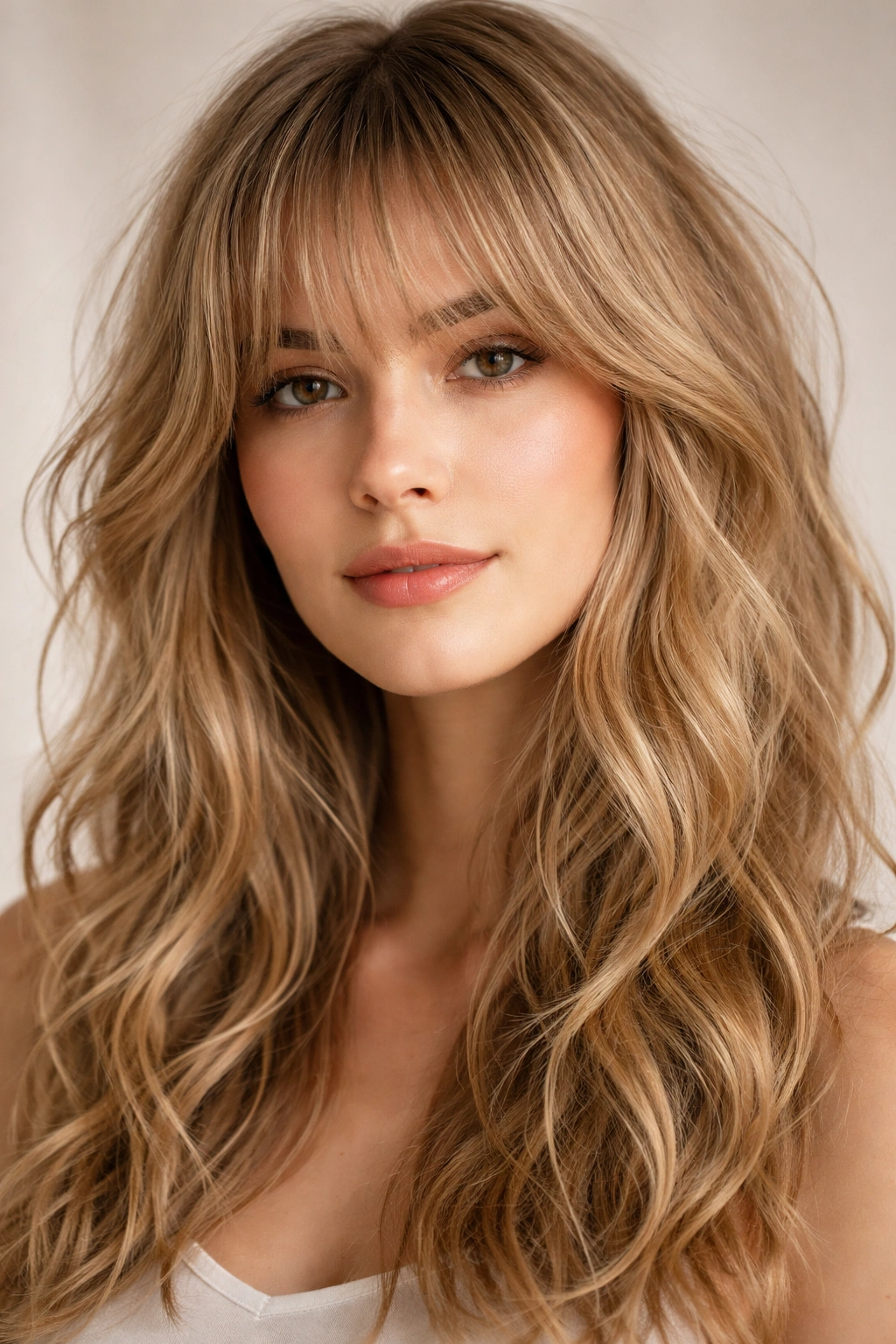
Wispy bangs are the gold standard for fine wavy hair because they’re light, airy, and don’t weigh down your forehead or the rest of your hair. These aren’t blunt or dense—they’re thin, feathered pieces that blend seamlessly into your waves rather than creating a harsh line. The individual strands catch light differently, which creates the illusion of much thicker, fuller hair than you actually have.
Why This Style Works for Fine Waves
Wispy bangs work because they distribute weight across multiple layers rather than concentrating it all in one heavy line. When your hair is fine, concentration of weight is what kills volume and shape. The wispy approach lets air flow through, letting natural waves show through the bangs themselves rather than creating a wall of flat hair across your forehead. You get definition and style without sacrificing the lightweight feeling that makes fine hair feel natural.
How to Get and Maintain This Look
- Ask your stylist to create wispy bangs using point-cutting or razor techniques rather than blunt scissors—this creates soft, feathered edges
- Keep them relatively short (about eyebrow-length or just above) so they feel weightless
- Style with a light texturizing cream or sea salt spray to enhance natural waves
- Blow-dry with fingers or a diffuser to direct wave pattern upward through the bangs
Pro tip: Wispy bangs actually look better slightly undone and a little piece-y. Perfection isn’t the goal here—movement is.
2. Curtain Bangs With Long Wavy Layers
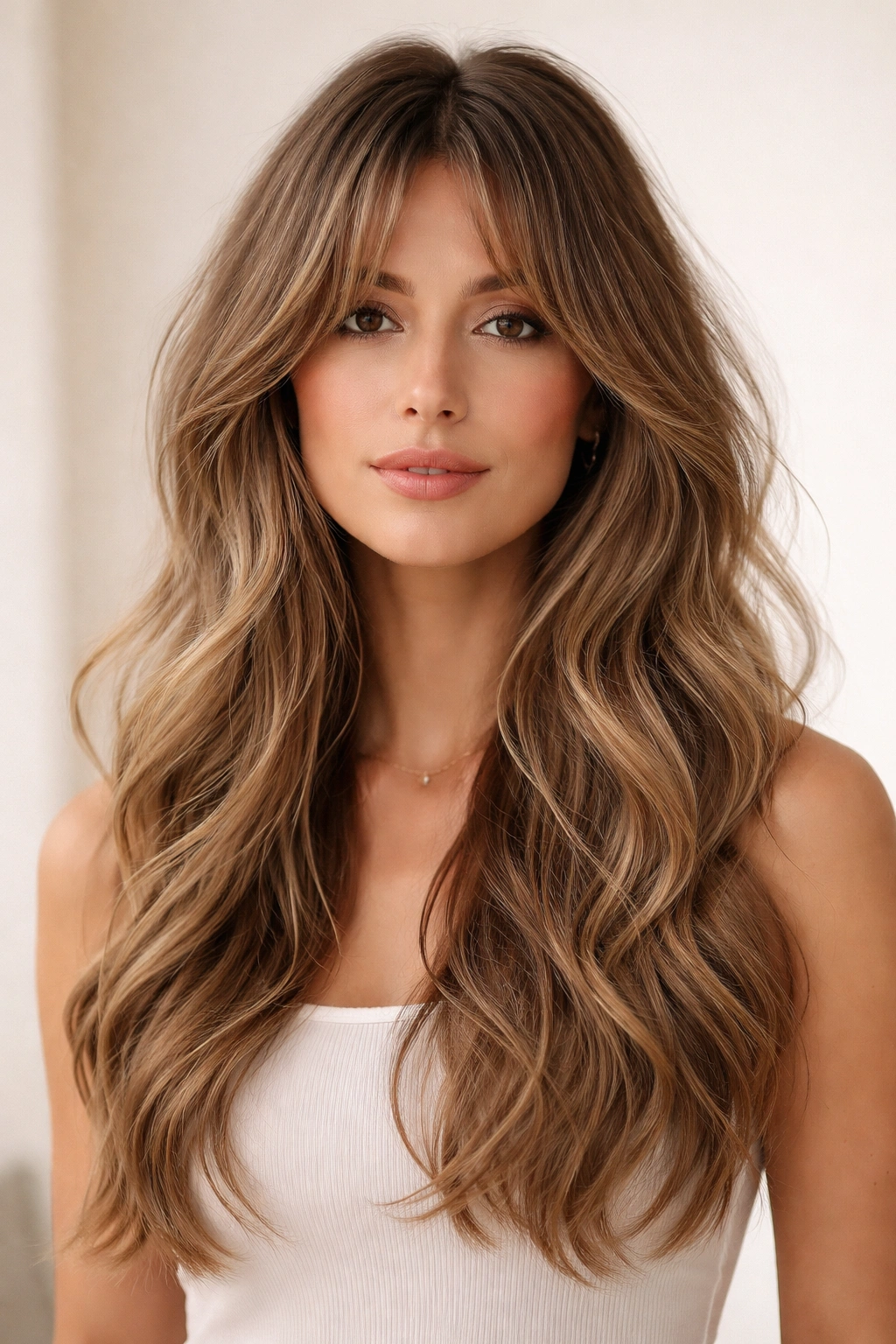
Curtain bangs part down the middle and sweep toward the sides, creating a flattering frame that works beautifully with wavy hair because it follows the natural direction waves want to move anyway. Combined with long layers throughout, this style creates movement without weight, letting your fine waves flow downward and show off their texture.
Why This Style Works for Fine Waves
Curtain bangs don’t fight your hair’s natural wave pattern—they work with it. The parted-down-the-middle design means bangs can follow your natural hair growth and wave direction rather than forcing your hair flat against your forehead. Pairing them with layering throughout the length prevents the bulky, heavy look that longer hair can sometimes create on fine hair.
Key Elements of This Style
- Center part runs from the crown straight down, creating natural symmetry
- Bangs curve gently away from the face rather than falling straight
- Layers throughout the length (especially around the face and ends) prevent bulk
- Longest pieces often reach bra-strap length or longer, depending on your preference
- Works with many lengths—from shoulder-length to very long
Worth knowing: This style actually requires less styling than you’d think. Your natural waves do most of the work; you just need a light curl cream to define what’s already there.
3. Side-Swept Bangs With Loose Curls
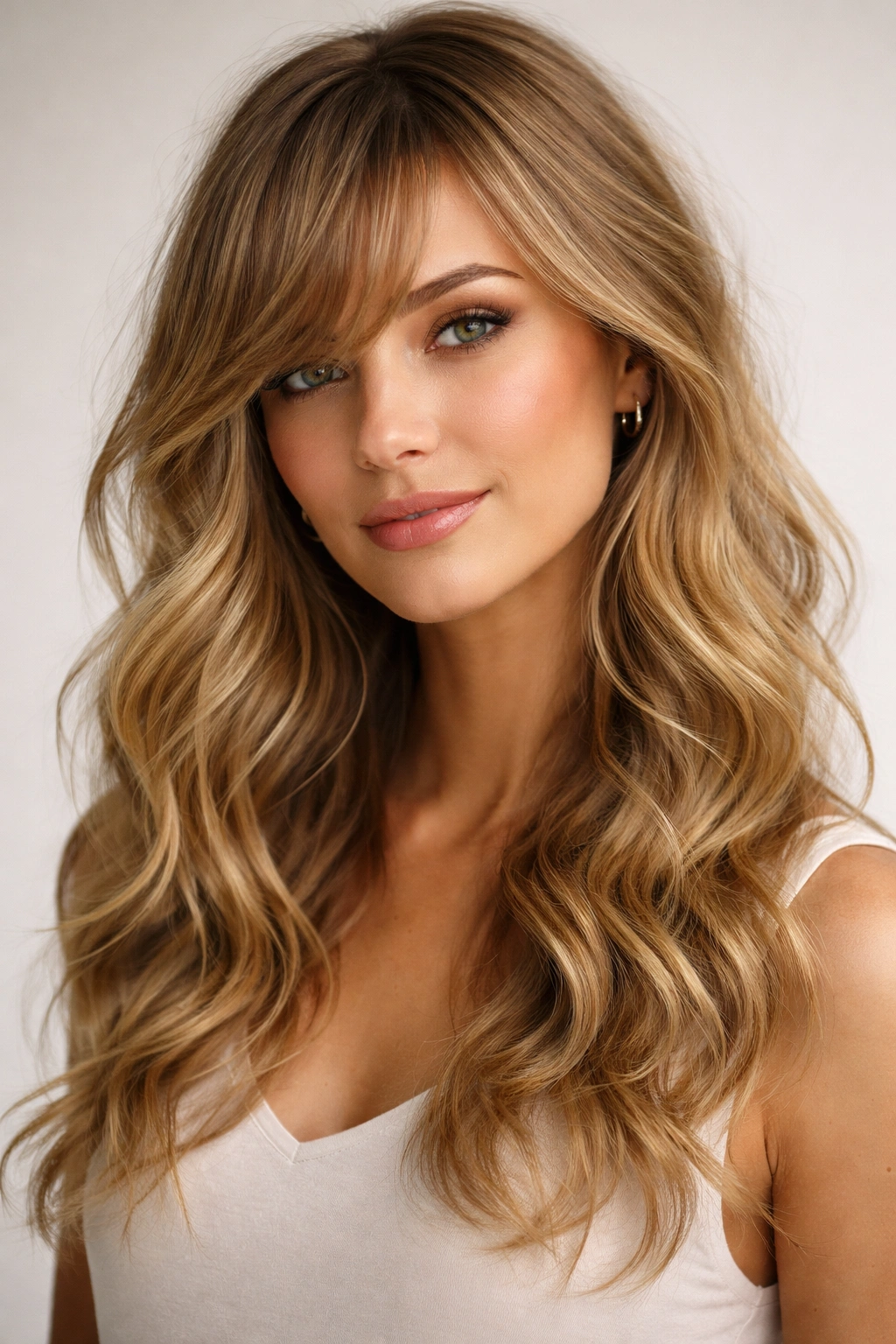
Side-swept bangs angle dramatically across the forehead from one side to the other, creating an asymmetrical look that’s incredibly flattering and modern. With loose curls throughout, the entire style has a romantic, effortless quality that fine wavy hair can absolutely pull off when it’s cut correctly.
Why This Works for Fine Hair
Side-swept bangs require less density than bangs that go straight across because they’re distributed across a wider area. This means even fine hair can handle them without looking thin or see-through. The asymmetry also creates visual interest that draws attention away from areas where your hair might be thinner, and it adds sophistication to a simple wave texture.
Styling and Maintenance Tips
- The sweep should go from longer on one side to shorter on the other (usually longer over one eye)
- Loose curls throughout the rest of the hair complement the movement of the swept bangs
- Use a light curl cream or mousse applied to damp hair before blow-drying
- Consider sleeping in loose braids to enhance waves without heat damage
- The longer side of the bangs can be tucked behind your ear on days when you want a different look
Insider note: Side-swept bangs are forgiving—you don’t have to style them the same way every day, and they look intentional whether they’re perfectly placed or casually swept.
4. Blunt Bangs With Choppy Waves
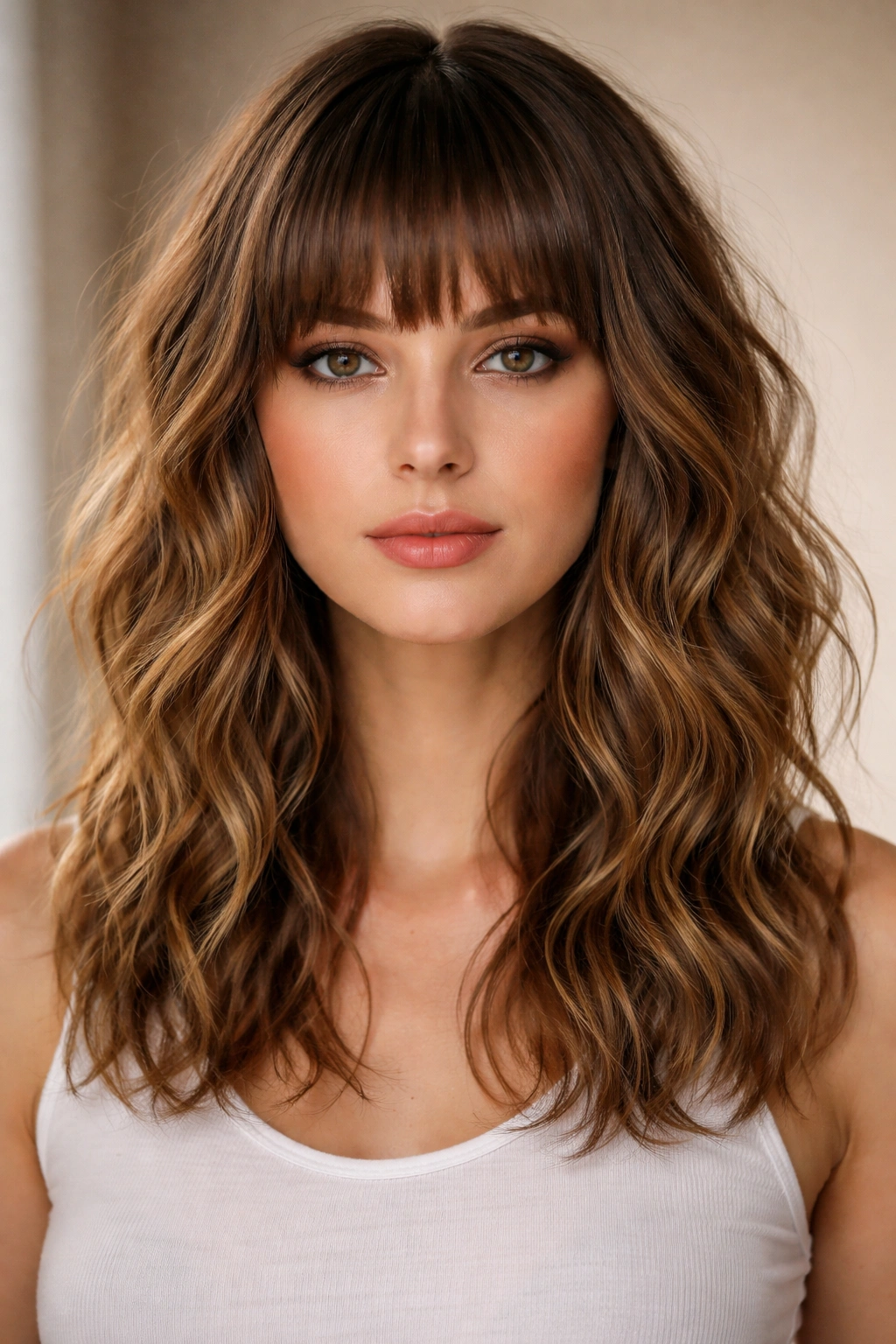
Blunt bangs sit straight across, creating a bold statement that contrasts beautifully with the softness of waves. This style works for fine hair when the bangs are kept relatively short (around eyebrow length) and the rest of the hair has plenty of choppy texture to keep it light and movement-forward rather than heavy and flat.
Why This Style Works for Fine Waves
A blunt bang line looks sharp and intentional, which helps fine hair feel more substantial. Pairing it with choppy, textured waves throughout creates visual weight through layering and texture rather than actual density. The contrast between the structured bang line and the chaotic texture of the waves feels modern and interesting, not one-note or flat.
Making This Work for Your Hair Type
- Keep bangs short enough that they don’t feel heavy—eyebrow length or slightly shorter is ideal
- Ask for choppy, point-cut layers throughout the rest of the hair, not blunt layers
- Blow-dry with a round brush or your fingers to create movement and volume at the roots
- Use a texturizing product to enhance the choppiness and prevent the hair from looking thin
- This style typically works better when refreshed every 4-5 weeks since the blunt line will become choppy and uneven as it grows
Real talk: Blunt bangs require a bit more styling commitment than some other styles. They need texture and movement to prevent looking severe or flat.
5. Feathered Bangs With Shaggy Layers
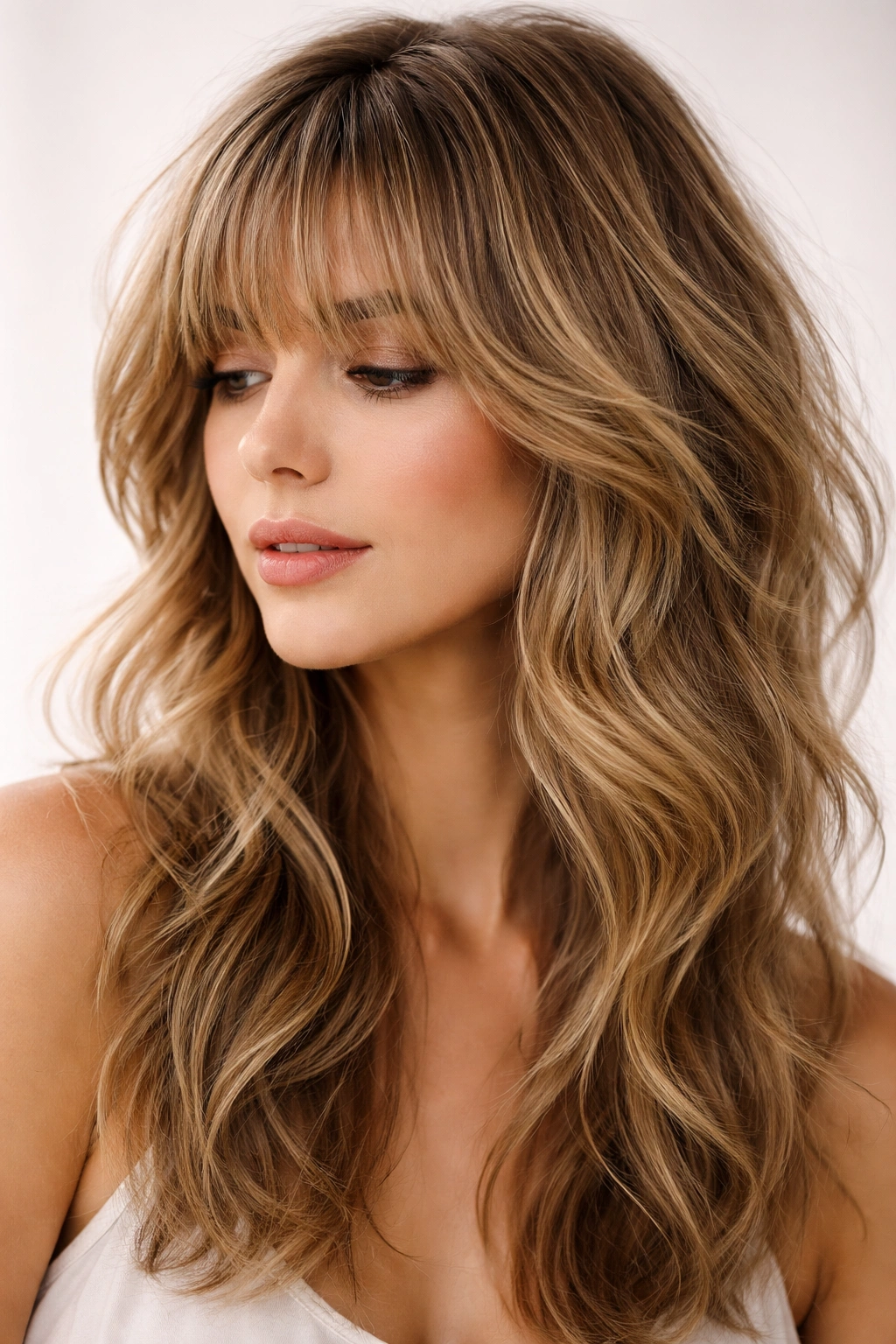
Feathered bangs are tapered at the ends and longer in the middle, creating a feathery texture that blends seamlessly into longer shaggy layers. This is peak fine-hair styling because every component works to create movement and the illusion of fullness through layering and texture rather than density.
Why This Style Flatters Fine Waves
Feathered bangs and shaggy layers were actually created with medium-to-fine hair in mind. The technique distributes hair at different lengths so no single area feels too heavy, and the feathering creates movement within the hair itself. Shaggy layers throughout mean every section of your hair can move independently, creating the appearance of much more volume than you actually have.
Styling This Look
- Feathered bangs work best with a side or slightly off-center part
- Shaggy layers should graduate throughout the length, shorter toward the face and longer at the ends
- Blow-dry with a diffuser or your fingers to encourage wave pattern rather than flattening everything
- Apply texturizing cream to slightly damp hair before blow-drying for maximum movement
- This style actually looks better the second or third day when waves have set in more fully
Worth knowing: Feathered bangs and shaggy layers are surprisingly low-maintenance once your hair is cut correctly. The style practically styles itself.
6. Soft-Angled Bangs With Wispy Face-Framing
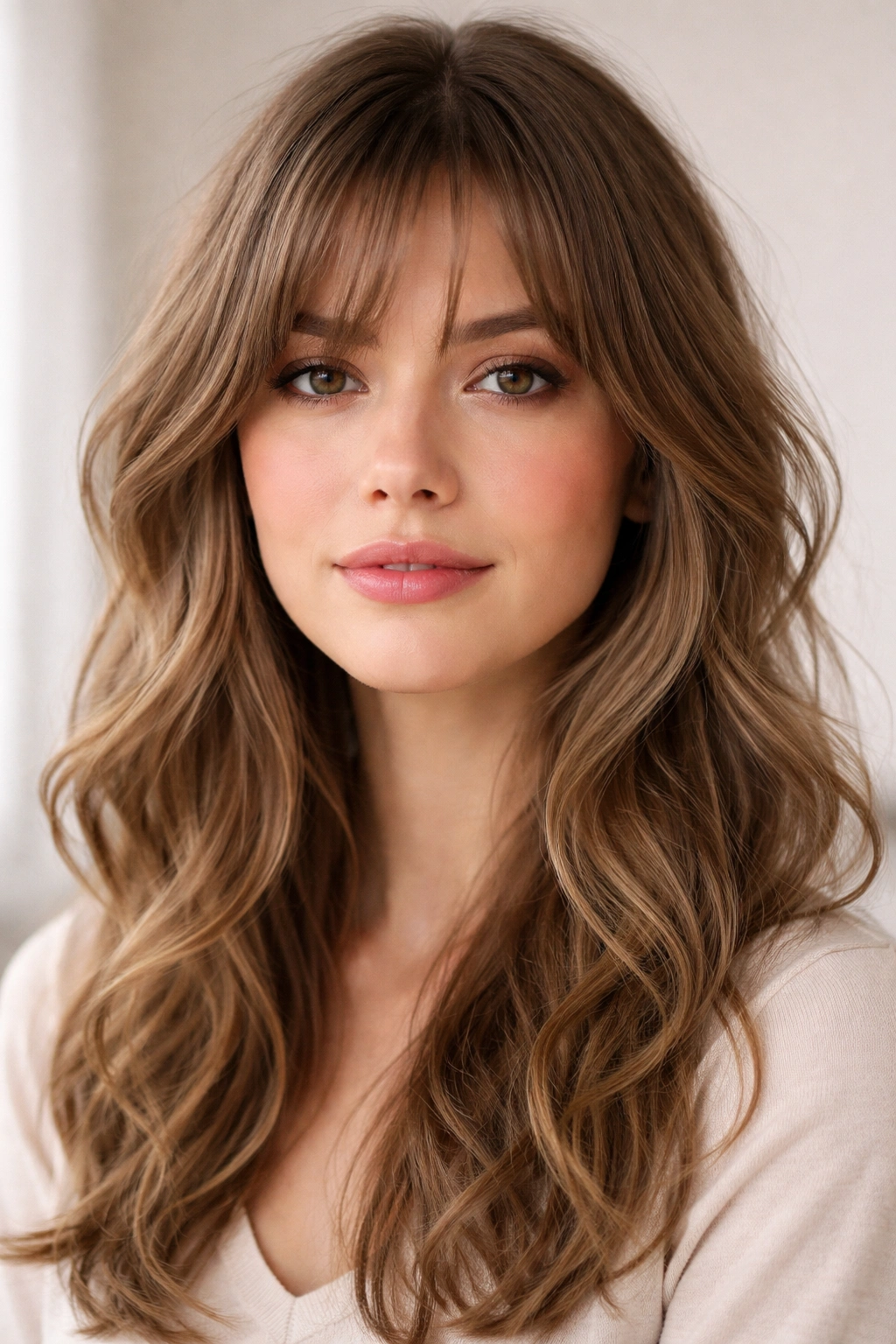
These bangs angle very gently downward from one side to the other (much less dramatic than side-swept), creating a soft frame that’s barely-there in weight. Paired with wispy, face-framing layers throughout, this style is feminine, modern, and extraordinarily forgiving.
Why This Works for Fine Wavy Hair
The softness of the angle and the overall lightness of the cut means you’re working with your hair’s natural tendencies rather than fighting them. There’s nothing here that depends on density or weight to look good—it’s all about shape, movement, and texture. Even on days when your waves are cooperating less than ideal, this style still reads as intentional and put-together.
How to Style and Maintain
- The angle is very subtle—just slightly longer on one side than the other
- Wispy face-framing layers throughout prevent any sections from feeling heavy
- Blow-dry directing hair away from your face to enhance the framing effect
- Use a lightweight styling cream to define waves without adding weight
- This is one of the lowest-maintenance styles on this list—it looks good tousled and undone
Pro tip: This style is incredibly flattering for people who’ve never had bangs before because it feels minimal and optional rather than committed.
7. Micro Bangs With Waves
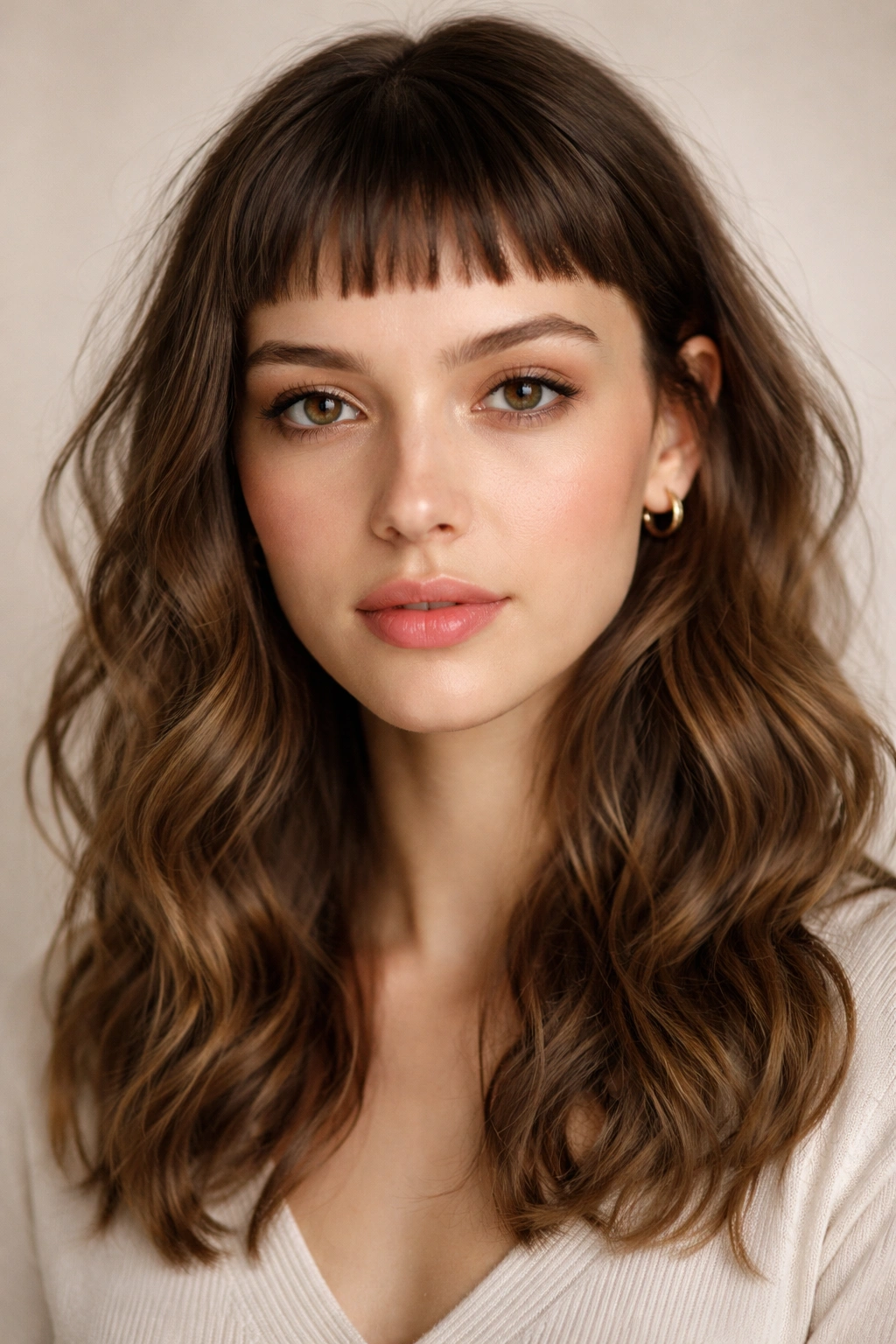
Micro bangs sit very short—anywhere from mid-forehead to halfway between your eyebrows and hairline—creating a trendy, fashion-forward look. With waves throughout the rest of the hair, this style is high-impact and surprisingly wearable, even for fine hair, because the shortness means there’s virtually no weight on your forehead.
Why Fine Hair Can Pull This Off
Micro bangs work for fine hair because they’re so short that weight is completely removed from the equation. You don’t need density to pull off short bangs; you just need the right cut. The shortness actually emphasizes fine, delicate features, which is exactly what makes this look work. Combined with soft waves, the contrast is striking without feeling harsh.
Styling and Confidence Tips
- Micro bangs are extremely short, so they show your natural hairline and forehead shape—make sure you’re comfortable with that
- They work best with waves throughout the rest of your hair; straight hair can make them look too severe
- Blow-dry with your fingers or a diffuser to encourage upward wave movement
- These require trimming every 3-4 weeks as they grow out quickly
- On days when you want a different look, you can sweep them to the side or pin them up
Insider note: Micro bangs are a statement. They’re best paired with confidence and a willingness to show your forehead. But if you commit to them, they look absolutely cool and very current.
8. Choppy Textured Bangs With Layered Waves
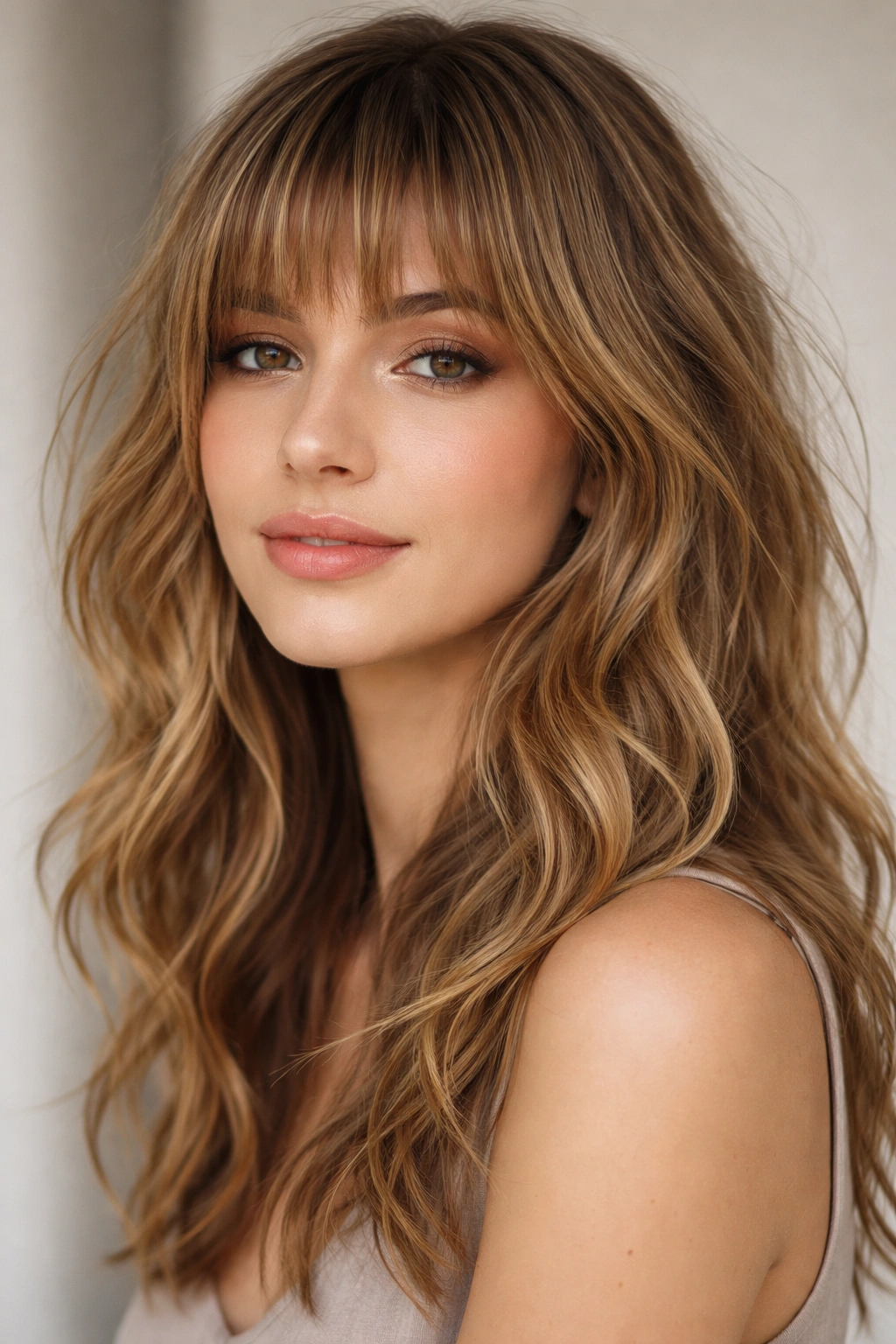
Choppy bangs are cut with visible texture and layers built in from the start, creating a piece-y, undone appearance. With layered waves throughout, this entire style celebrates texture and movement, making it ideal for fine hair that wants to feel interesting and intentional rather than flat.
Why This Style Works
Choppy textured bangs don’t try to create a polished line—they celebrate the fact that individual strands look different. This is perfect for fine hair because it removes the pressure to have density in every spot. You can embrace thinness as intentional texture instead of treating it like a flaw. The layering throughout the rest of the hair reinforces this “good-hair-days” aesthetic.
Making This Style Your Own
- Ask your stylist for choppy layers throughout the bangs using point-cutting or razoring techniques
- Combine with choppy layers in the rest of the hair, especially around the face and ends
- Style with a texturizing product—sea salt spray or a light texturizing cream
- Blow-dry with your fingers or a diffuser rather than a brush to enhance choppiness
- This style looks better the more you manipulate it while it’s drying; avoid perfectly smooth blow-drying
Real talk: If you love the undone, “I didn’t try too hard” aesthetic, this is your style. It looks intentionally messy, which is exactly what fine hair needs.
9. Layered Shaggy Bangs With Textured Length
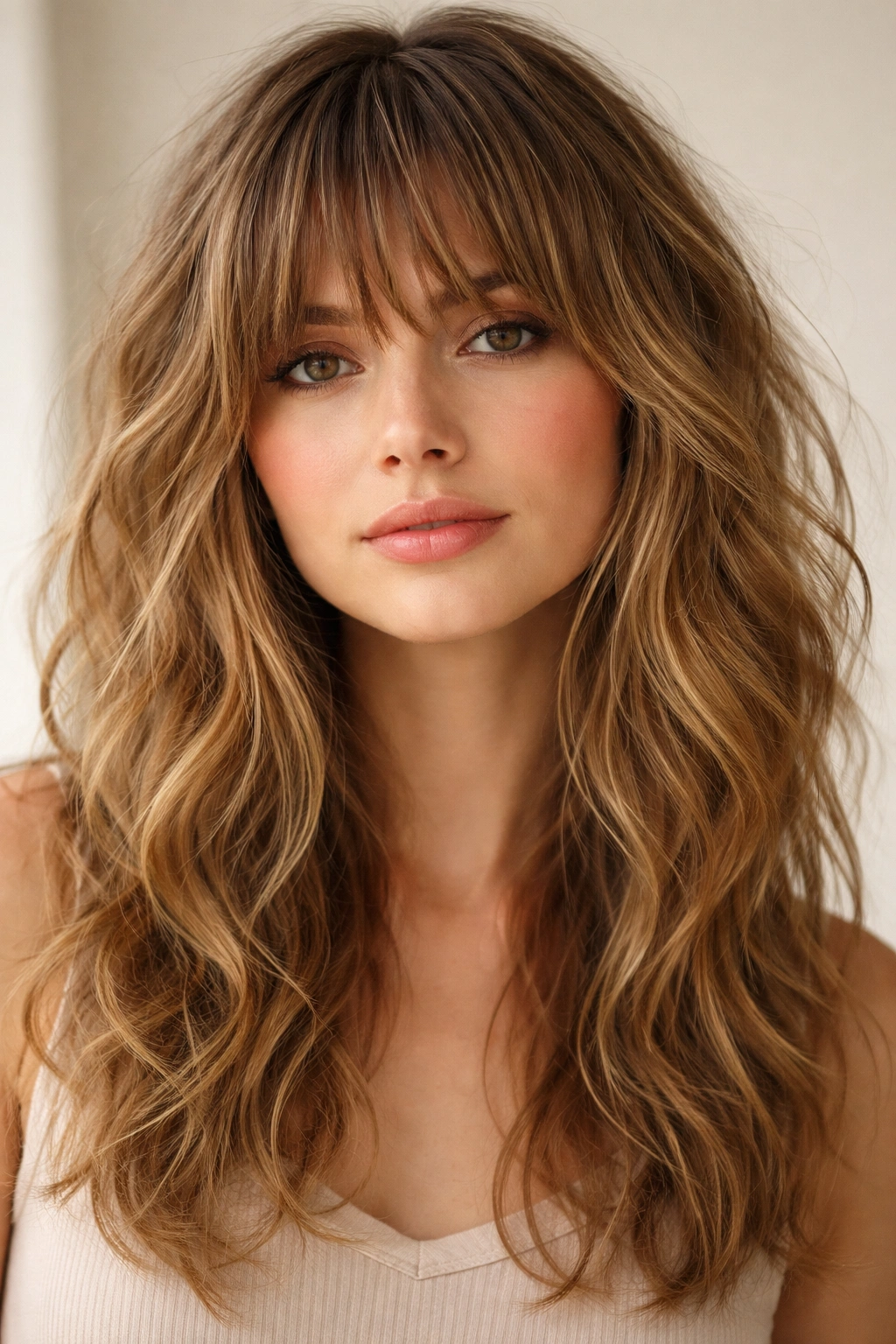
True shaggy bangs are shorter, layered, and textured from the very start, creating a distinctly ’70s-inspired look that’s fashionable and surprisingly wearable. Combined with shaggy layers throughout the length, this style has movement and personality that fine hair can showcase beautifully.
Why This Look Works for Fine Waves
Shaggy bangs are all about layering and texture, which means they work beautifully for fine hair. Each layer is individually visible, creating the illusion of much more volume and texture than a single-density cut would suggest. The style celebrates movement and has an inherent “lived-in” quality that doesn’t require perfection to look good.
Styling Your Shag
- Shaggy bangs should have multiple layers visible when you look straight on, not a single blunt or feathered line
- Pair with textured, shaggy layers throughout the entire length
- Blow-dry with a diffuser or your fingers to enhance the layered, separated look
- Use a texturizing product to emphasize individual strands
- This style can look cool either smooth and wavy or tousled and piece-y; both work
Worth knowing: Shaggy styles require more frequent trims (every 4-6 weeks) because the layered texture can become overgrown and look sloppy rather than intentional.
10. Asymmetrical Bangs With Uneven Layers
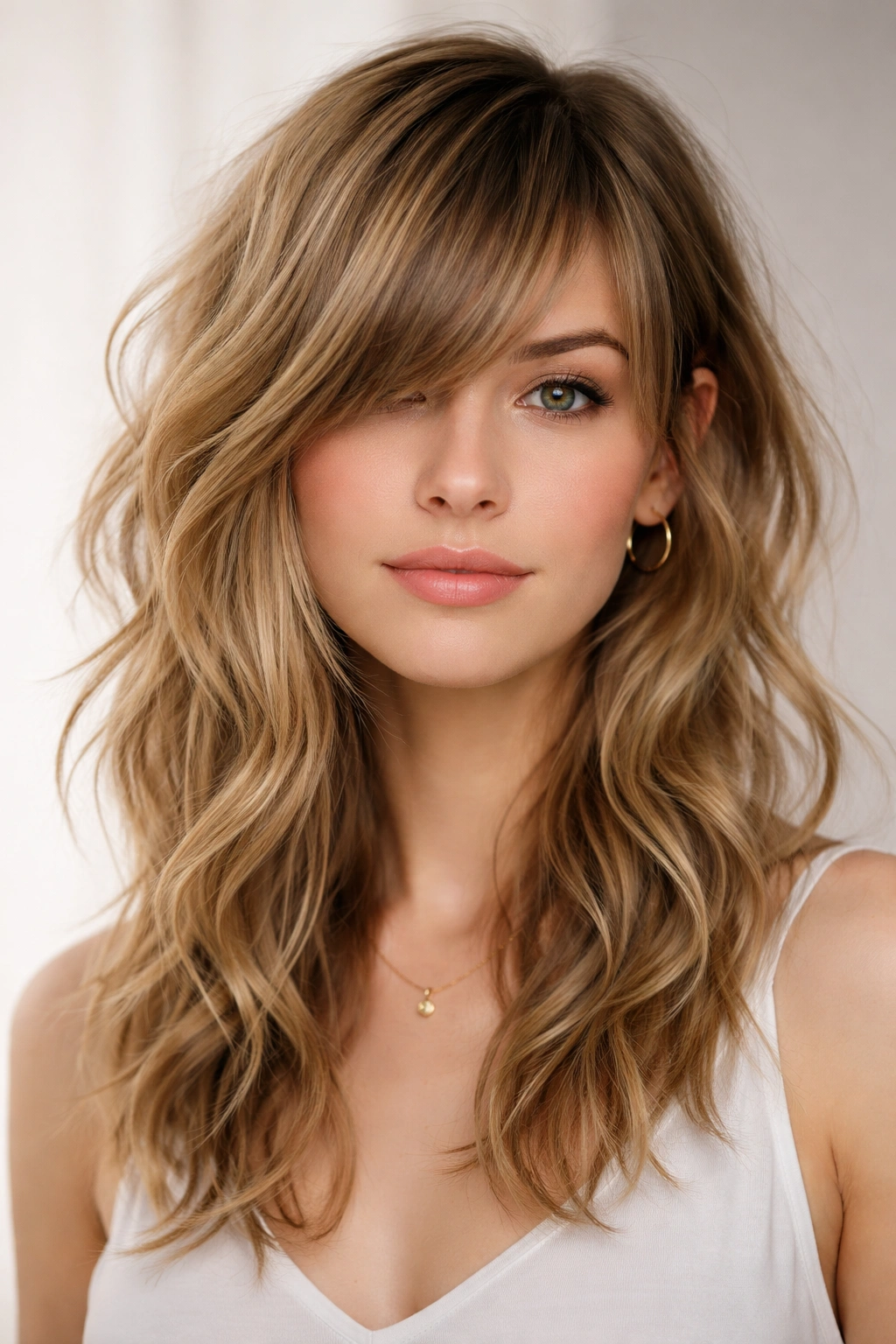
Asymmetrical bangs are dramatically different lengths on each side—one side significantly longer than the other—creating a bold, artistic look. Combined with uneven, graduated layers throughout, this is a style for people who want their fine hair to feel distinctive and memorable.
Why This Works for Fine Hair
Asymmetry creates visual interest and draws attention to shape and texture rather than density. When your hair doesn’t have much volume to work with, smart cutting that emphasizes shape becomes even more important. The uneven layering means some parts of your hair will have more density visually (because of how the layers overlap), while other parts remain light and movement-forward.
Wearing Asymmetrical Bangs Confidently
- One side of the bangs sits significantly longer than the other (sometimes one side reaches cheekbone while the other reaches eyebrow)
- Uneven layers throughout mean no two sections of hair are the same length
- This requires a stylist who’s confident with fashion cuts; not all stylists excel at asymmetrical work
- Blow-dry directing the longer side of bangs away from your face
- Styling flexibility is a bonus—you can wear the bangs different ways depending on your mood
Pro tip: Asymmetrical styles are incredibly forgiving on bad hair days because the intentional unevenness means nothing has to match or line up perfectly.
11. Curved Bangs With Soft Waves
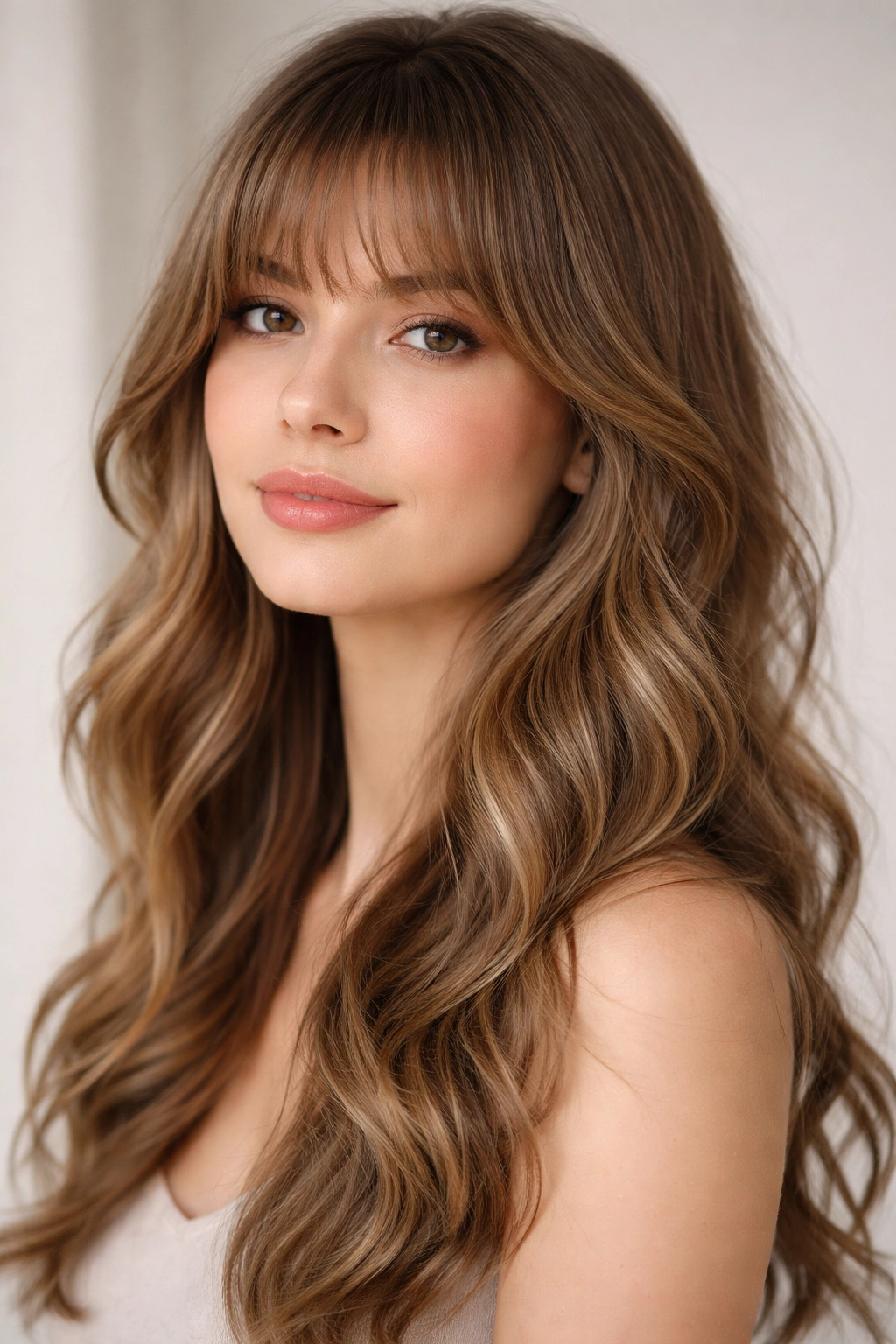
Curved bangs follow the natural curve of your head and hairline, gently sweeping upward at the sides rather than sitting completely straight across. This style flatters the face beautifully and works wonderfully with soft waves throughout because the curve complements wave movement naturally.
Why This Style Suits Fine Hair
The curved shape means the bangs aren’t creating a harsh line that emphasizes thinness; instead, they’re creating a soft frame. The curve happens to be exactly where fine hair’s natural wave pattern wants to go, which means you’re working with your hair’s tendency rather than against it. This is a style that looks better because your hair is fine and wavy.
How to Cut and Style Curved Bangs
- The curve should echo the natural curve of your head—your stylist can use your hairline as a guide
- Sides of the bangs curve upward slightly rather than pointing down
- Combine with soft, flowing waves rather than tight curls or straight hair
- Blow-dry with your fingers directing the curve upward at the sides
- This style actually requires less manipulation than many other bang styles
Insider note: Curved bangs are deceptively flattering because they frame your face while feeling light and optional.
12. Fluffy Bangs With Layered Waves and Roots
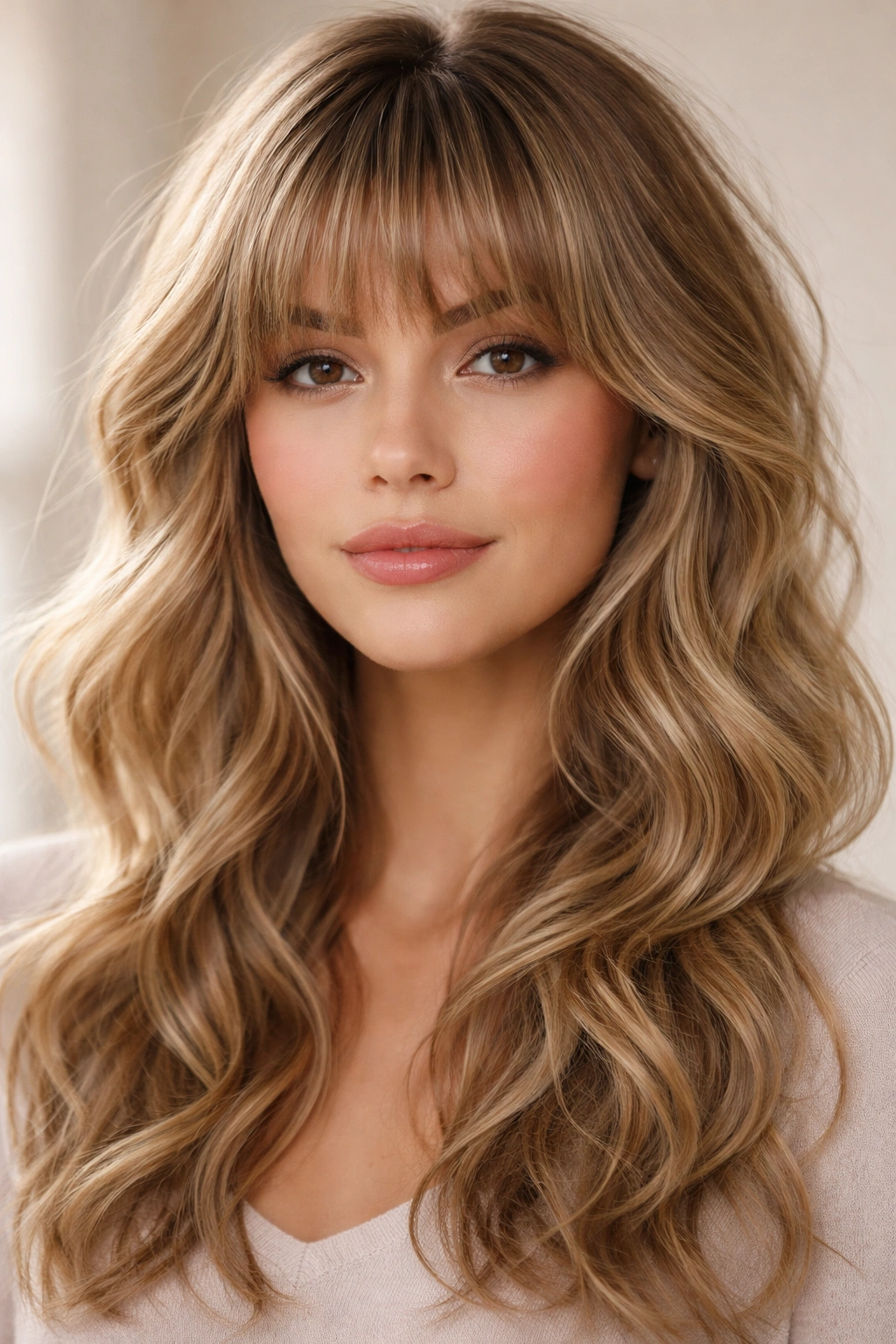
Fluffy bangs are fuller and slightly shorter, creating a rounded, buoyant shape that adds dimension to fine hair. The fluffiness comes from blow-drying technique and product choice rather than actual density, making this style an excellent option for fine hair that wants to feel voluminous.
Why This Works for Fine Wavy Hair
“Fluffy” is partly cut and partly styling choice. When a cut is layered and textured properly, blow-drying technique can create genuine fluffiness even with fine hair. Combining fluffy bangs with layered waves throughout means every section of your hair has movement and visible texture, creating volume through visual effect rather than through density. Emphasizing root lift adds even more to this effect.
Creating and Maintaining Fluffiness
- Bangs should be cut with choppy layers to allow for texture and movement
- Blow-dry with a round brush or your fingers, directing hair upward at the roots and throughout
- Use a volumizing mousse or texturizing cream to encourage separation and fluffiness
- A light hairspray helps set the fluffiness throughout the day
- This style benefits from a strong blow-dry routine; air-drying won’t create the same effect
Real talk: Fluffy bangs require more daily styling effort than some other styles, but they create a very polished, intentional look.
13. Tapered Bangs With Long Wavy Layers
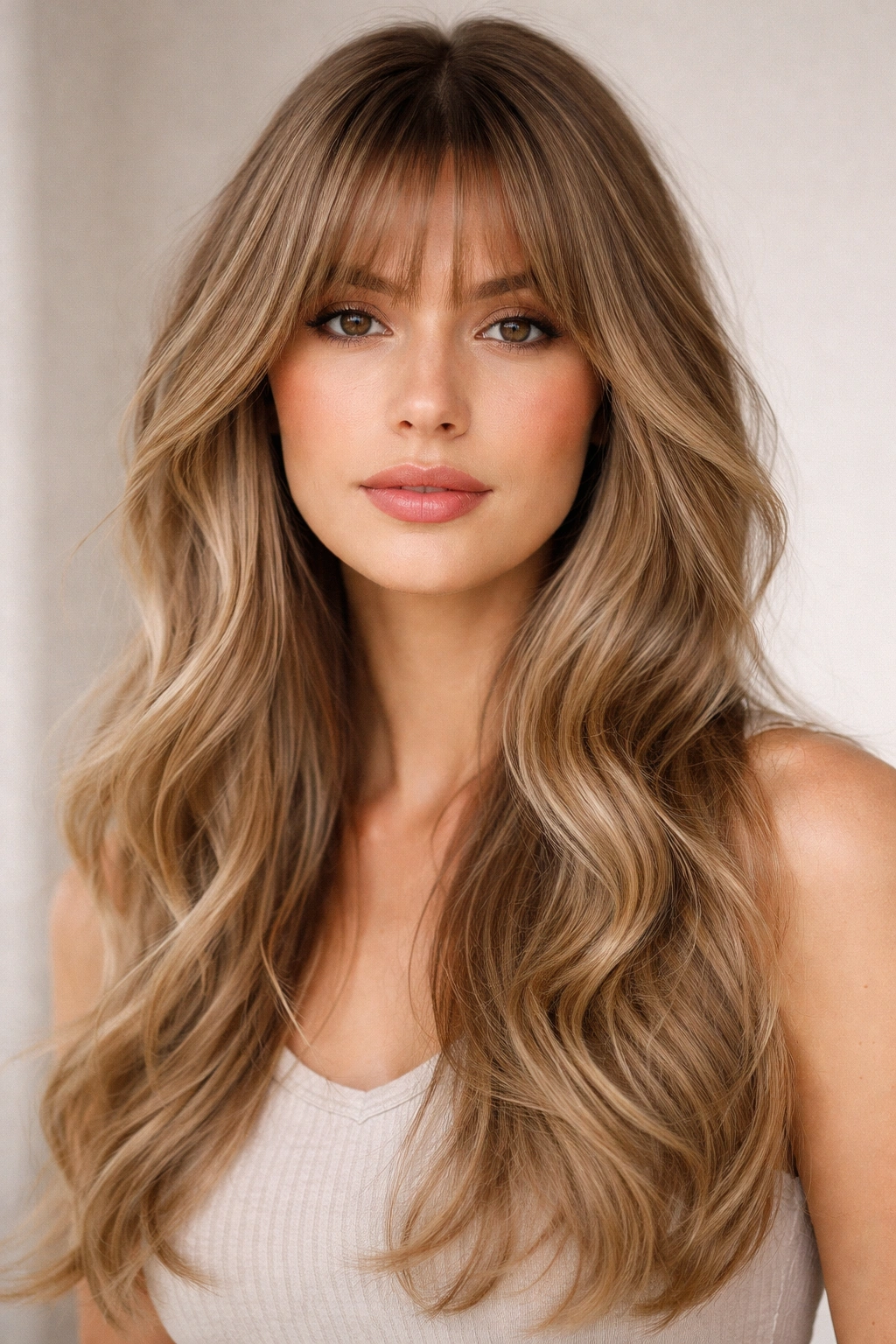
Tapered bangs are longer in the middle and gradually get shorter toward the sides, creating a tapered or wedge shape. This is different from feathered (which is more feathery and less structured) and different from layered shaggy (which is more obviously textured). Tapered bangs create a soft frame with subtle structure.
Why This Style Flatters Fine Hair
The taper shape is flattering because it avoids the heaviness of blunt bangs while maintaining more structure than feathered bangs. For fine hair, this sweet spot is ideal—you get definition without weight. The gradual taper also means there’s less visible scalp or thinness since the tapered edges blend seamlessly into longer layers.
Styling Tapered Bangs
- The taper should be subtle and gradual, not an abrupt change in length
- Works beautifully with long, flowing waves that can move and show off the taper shape
- Blow-dry with your fingers directing waves downward and away from your face
- Use a light curl cream to enhance natural waves
- This style looks good slightly undone; perfect smoothness isn’t necessary
Worth knowing: Tapered bangs are one of the most universally flattering bang styles because they’re not too bold and not too subtle.
14. Voluminous Bangs With Tight Waves
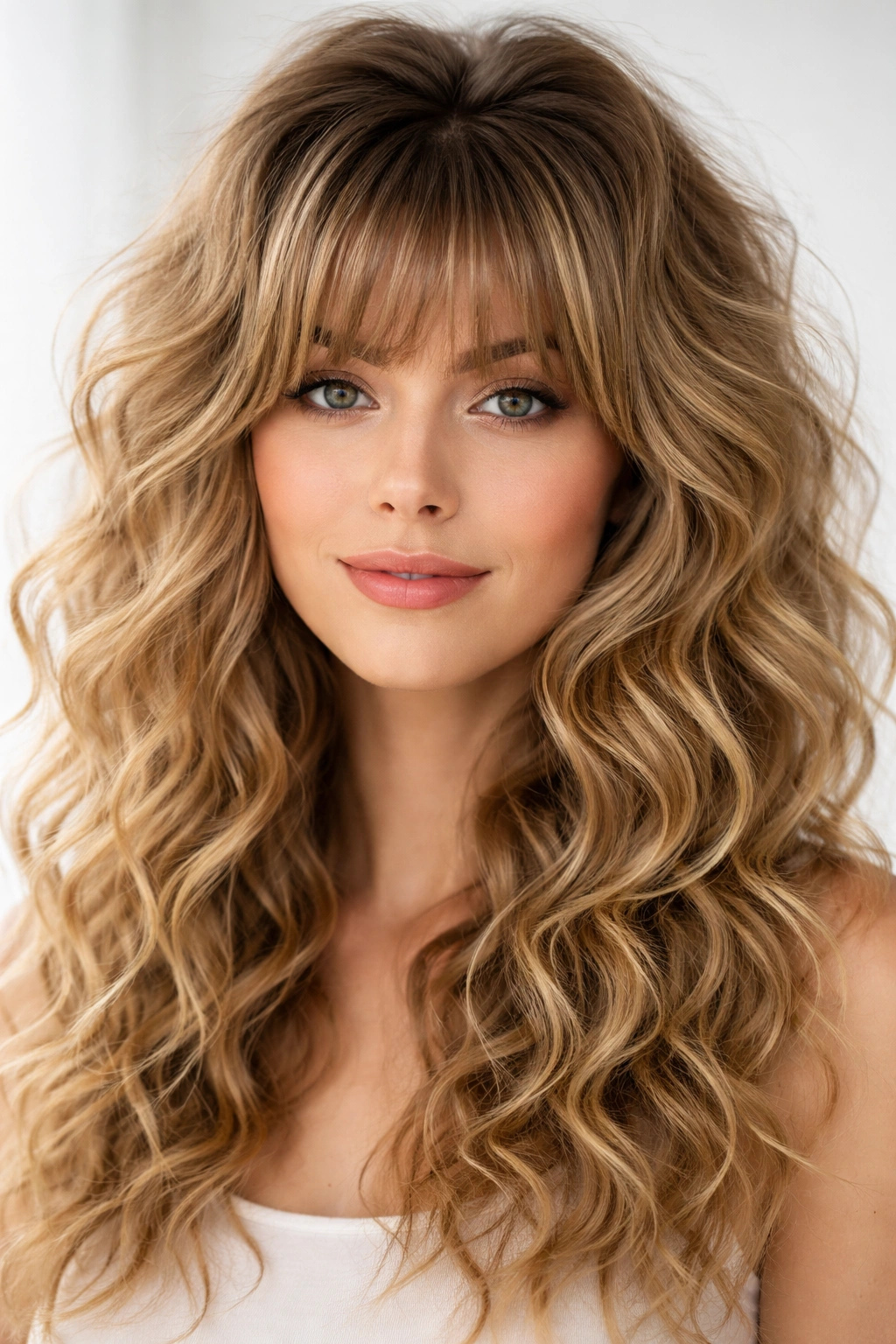
Voluminous bangs sit higher on the head and are blow-dried with maximum lift and texture, creating height right at the hairline. Combined with tighter, more structured waves throughout (think bouncy curls rather than loose waves), this style creates genuinely impressive volume even for fine hair.
Why This Works for Fine Hair
Volume is mostly about air and movement, not actual hair density. By blow-drying bangs upward with lots of texture and pairing them with structured waves throughout, you create a silhouette that reads as very full. Fine hair can absolutely achieve this through the right cut and styling technique, even if the actual density is moderate.
Achieving Maximum Volume
- Bangs should be cut with layers and choppy texture throughout
- Blow-dry with your head tilted downward, directing all hair and bangs upward with a round brush or blow-dryer nozzle
- Use a volumizing mousse before blow-drying to add texture throughout
- Consider a light texturizing spray or dry shampoo even on freshly washed days for extra grip
- Curl your hair while it’s still slightly damp using a curling iron or hot rollers, then cool-set the curls
- This is a higher-maintenance style that requires blow-drying and curling at least every other day
Pro tip: Volumizing mousse is your best friend with this style. Apply it to damp roots before blow-drying for dramatically more volume throughout the day.
15. Tousled Bangs With Undone Waves
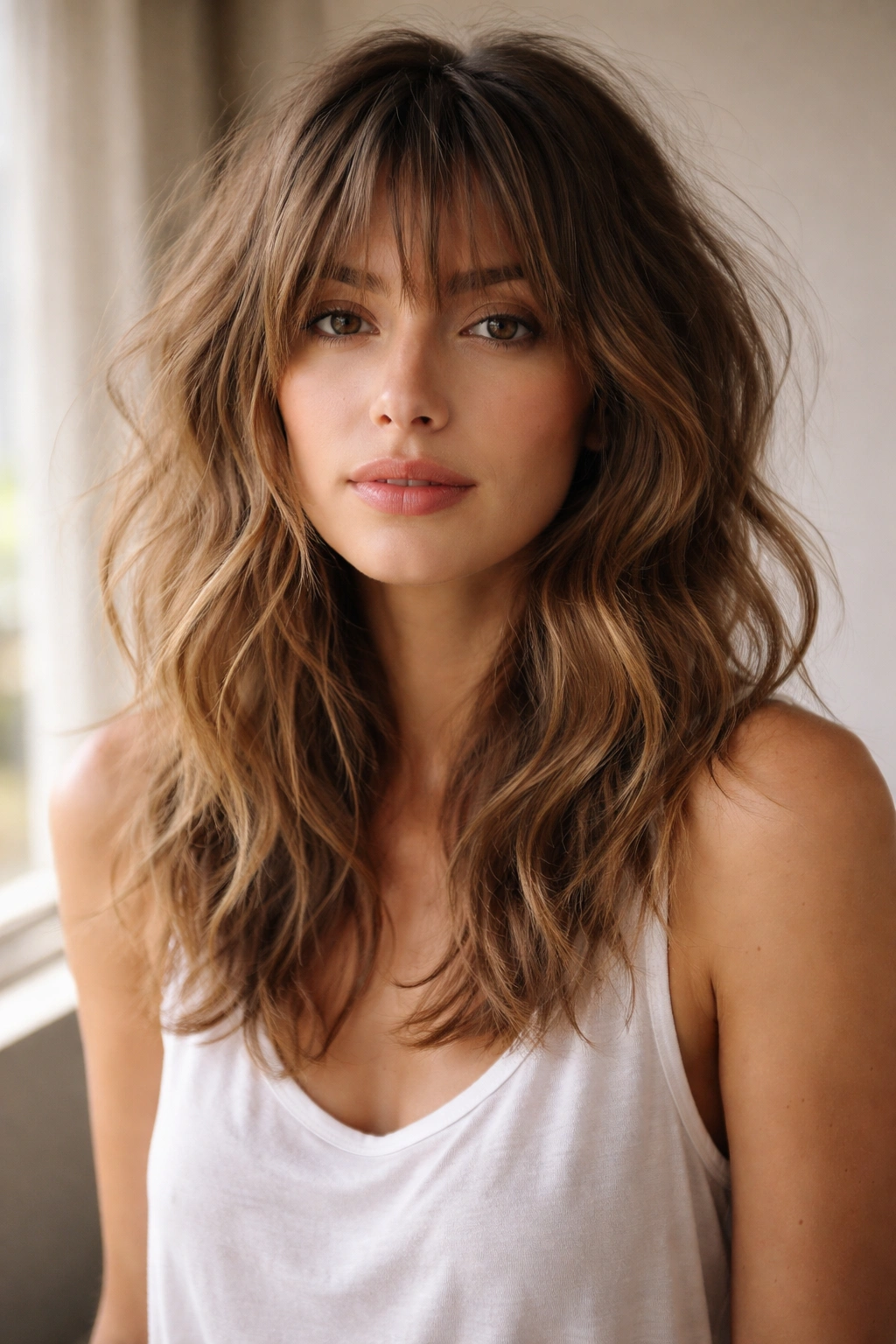
Tousled bangs are intentionally undone and piece-y, with visible texture and slightly irregular ends. Combined with undone, tousled waves throughout, this style celebrates the “just-woke-up” aesthetic in the best possible way, and it’s especially suited to fine hair that wants to feel natural and effortless.
Why This Aesthetic Works for Fine Hair
Tousled and undone doesn’t mean unkempt—it means intentionally celebrating texture and movement. For fine hair, this removes the pressure to look perfectly sleek or densely full. Instead, you’re leaning into the natural movement of fine, wavy strands and making that the entire point. This is genuinely liberating if you’re someone whose hair doesn’t want to be smooth and polished anyway.
Styling the Tousled Look
- Your stylist should cut bangs and layers in a way that looks good tousled, not just when blow-dried smooth
- Sleep with slightly damp hair braided loosely or piled on top of your head to encourage waves
- In the morning, apply a light texturizing spray or sea salt spray and shake hair out
- Finger-comb rather than brush to enhance separation and texture
- Avoid smooth blow-drying; instead, use a diffuser or just air-dry with your fingers arranging pieces
- This style actually looks better the second or third day when waves are more set
Insider note: If you’re the type of person who wakes up with decent waves and messy hair that you then try to make perfect, this style is finally an excuse to embrace what your hair naturally wants to do.
16. Long Bangs With Soft Waves and Face-Framing
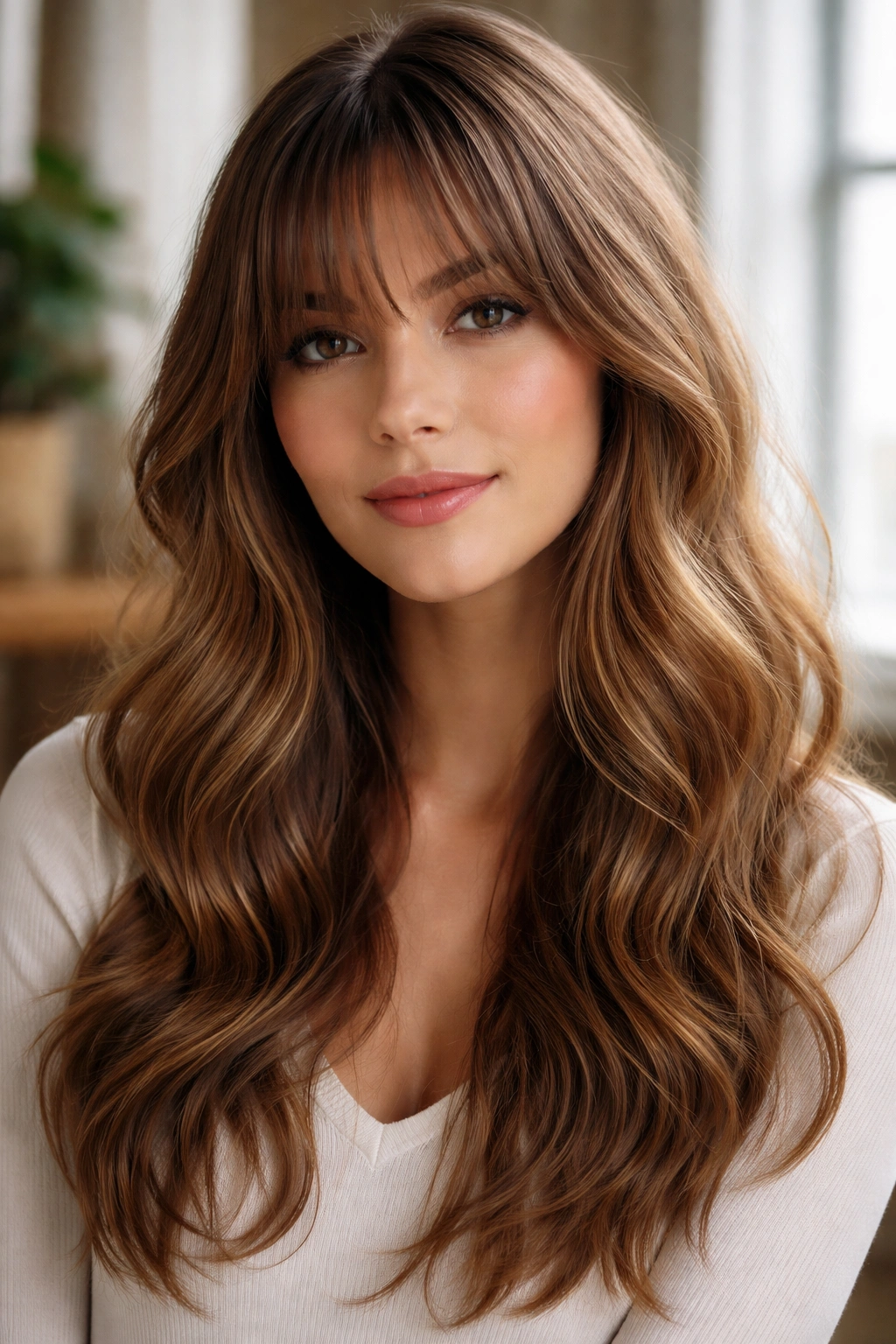
Long bangs sit around nose-length or slightly longer, creating a face-framing effect without fully covering your forehead. This style works beautifully with soft, romantic waves throughout and is surprisingly versatile—you can wear bangs down for a fuller look or tuck them behind your ear for a different vibe entirely.
Why This Style Suits Fine Hair
Long bangs have less visual impact on fine hair than shorter styles because the weight is distributed over a longer length. You don’t get the “flat forehead” look that sometimes happens with short bangs on fine hair. Instead, you get gentle framing that’s forgiving and flattering. The length means these bangs integrate more seamlessly into your overall waves.
Wearing Long Bangs
- Long bangs typically reach somewhere between your cheekbones and nose
- They work beautifully with soft, wavy hair throughout—think loose waves rather than tight curls
- You can wear them down to frame your face or tuck them to the side with a clip or behind your ears
- Blow-dry with your fingers directing waves away from your face
- These bangs look great slightly wavy or even partially curled—you have styling flexibility
- They require less frequent trimming than shorter bangs since they don’t drastically change appearance as they grow
Pro tip: Long bangs are the most versatile option if you’re trying bangs for the first time because you can experiment with them before committing to a shorter length.
17. Blunt Micro Bangs With Choppy Layers
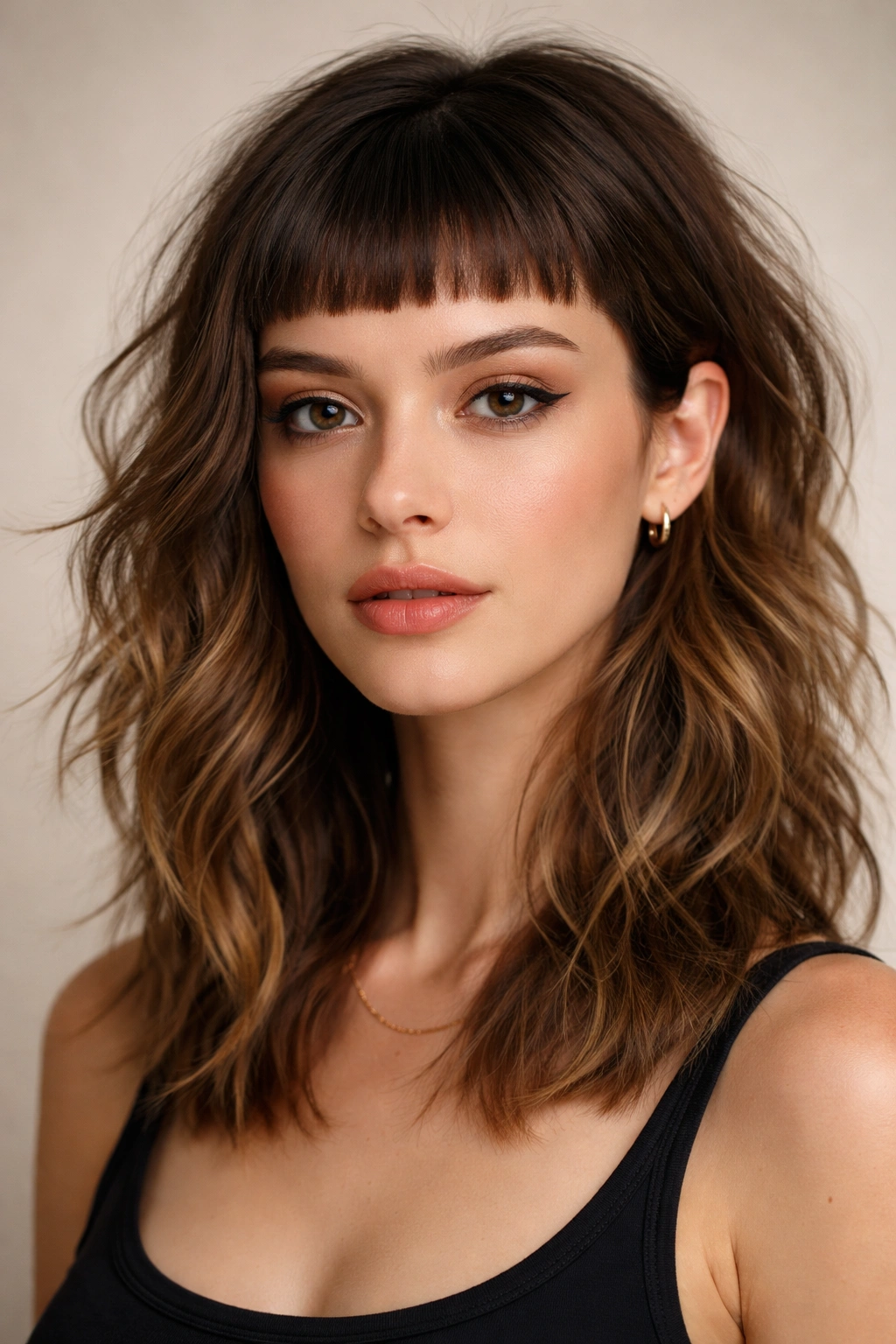
Blunt micro bangs combine the shortness of micro bangs with the clean line of blunt bangs, creating a very fashion-forward statement. When paired with choppy layers throughout, this creates a modern, edgy look that actually works well for fine hair because of all the texture and layering involved.
Why This Works Despite Fine Hair
Blunt micro bangs are short enough that weight is never an issue. The blunt line looks intentional and sharp, which prevents the style from looking wimpy or thin. Pairing with choppy layers means the rest of your hair has lots of texture and movement that complements the boldness of the bang line. The overall effect is sophisticated and editorial without being inaccessible.
Maintaining This Bold Look
- Blunt micro bangs need trimming every 3-4 weeks to maintain the clean line
- Pair with choppy, textured layers throughout the length
- Blow-dry with your fingers or a diffuser to enhance choppiness
- Use texturizing products to emphasize the choppy nature of the cut
- This style pairs well with edgier overall styling—it has attitude and requires confidence
- On days when you want a softer look, you can brush bangs back or pin them up
Real talk: This is not a subtle style. It’s for people who want their haircut to be noticed and remembered.
18. Wispy Layered Bangs With Romantic Waves
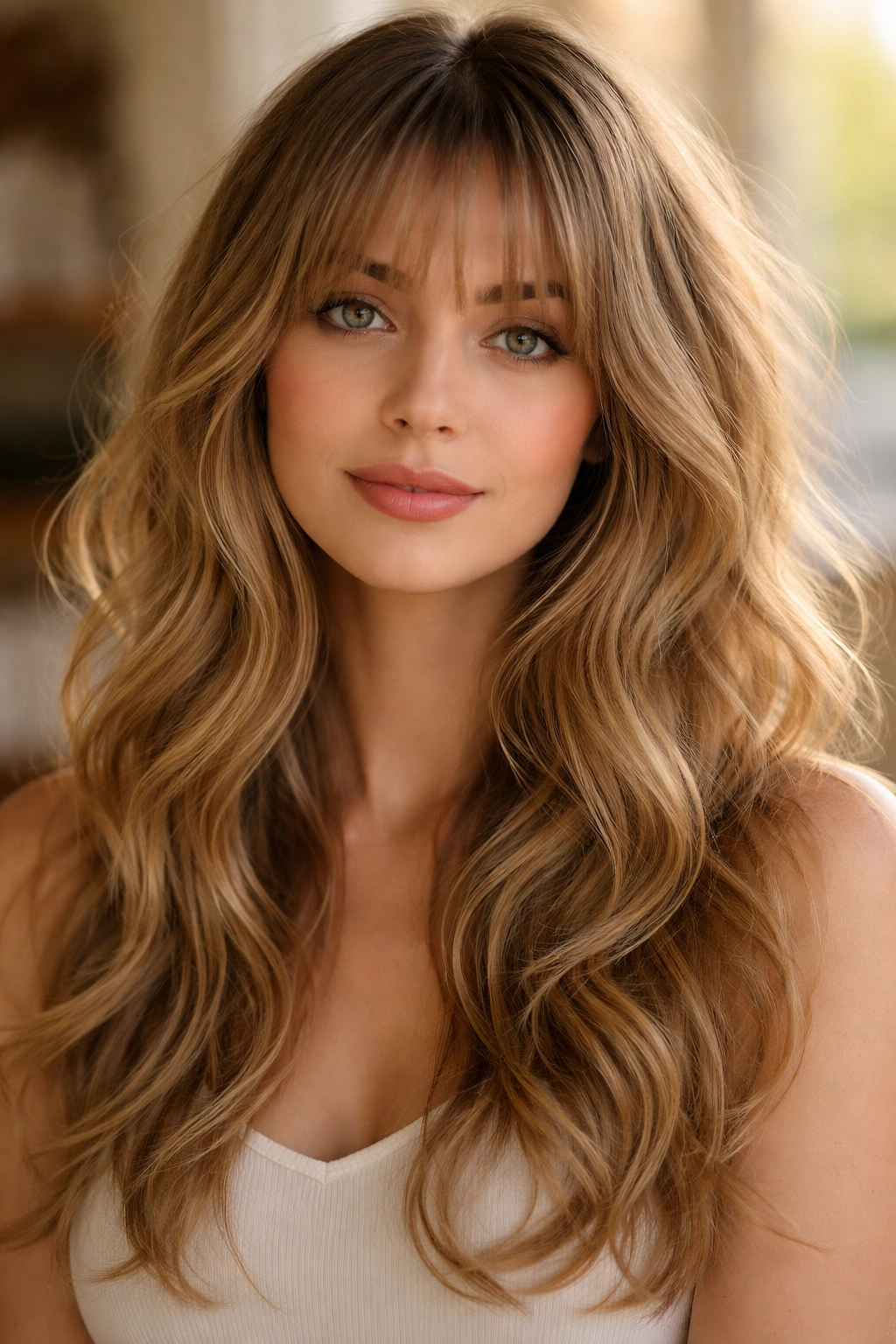
Wispy layered bangs have multiple layers of short pieces, creating an incredibly light, feathery appearance that seems to float around your face. Combined with romantic, loose waves throughout, this is the epitome of soft, feminine styling that nevertheless works beautifully for fine hair because of all the texture involved.
Why This Style Suits Fine Wavy Hair
Wispy layered bangs distribute visual weight across multiple strands and multiple layers, so no single area feels heavy or flat. The wispy quality celebrates fine, delicate strands rather than trying to hide or minimize them. Romantic waves throughout the rest of the hair complete this soft aesthetic while maintaining movement and texture that prevents a flat, boring appearance.
Styling Your Romantic Waves
- Bangs should have multiple visible layers creating a feathery, floating appearance
- Waves throughout should be loose and romantic rather than tight
- Blow-dry with a diffuser or your fingers, encouraging waves to form naturally
- Use a curl cream or wave-enhancing product applied to slightly damp hair before blow-drying
- Sleep in loose waves or braids to enhance texture without heat
- This style pairs well with softer overall aesthetics—think romantic, bohemian, or vintage vibes
Worth knowing: This is one of the most low-maintenance and forgiving styles on this list. The wispiness and layers mean nothing has to be perfect.
19. Face-Framing Bangs With Movement Throughout
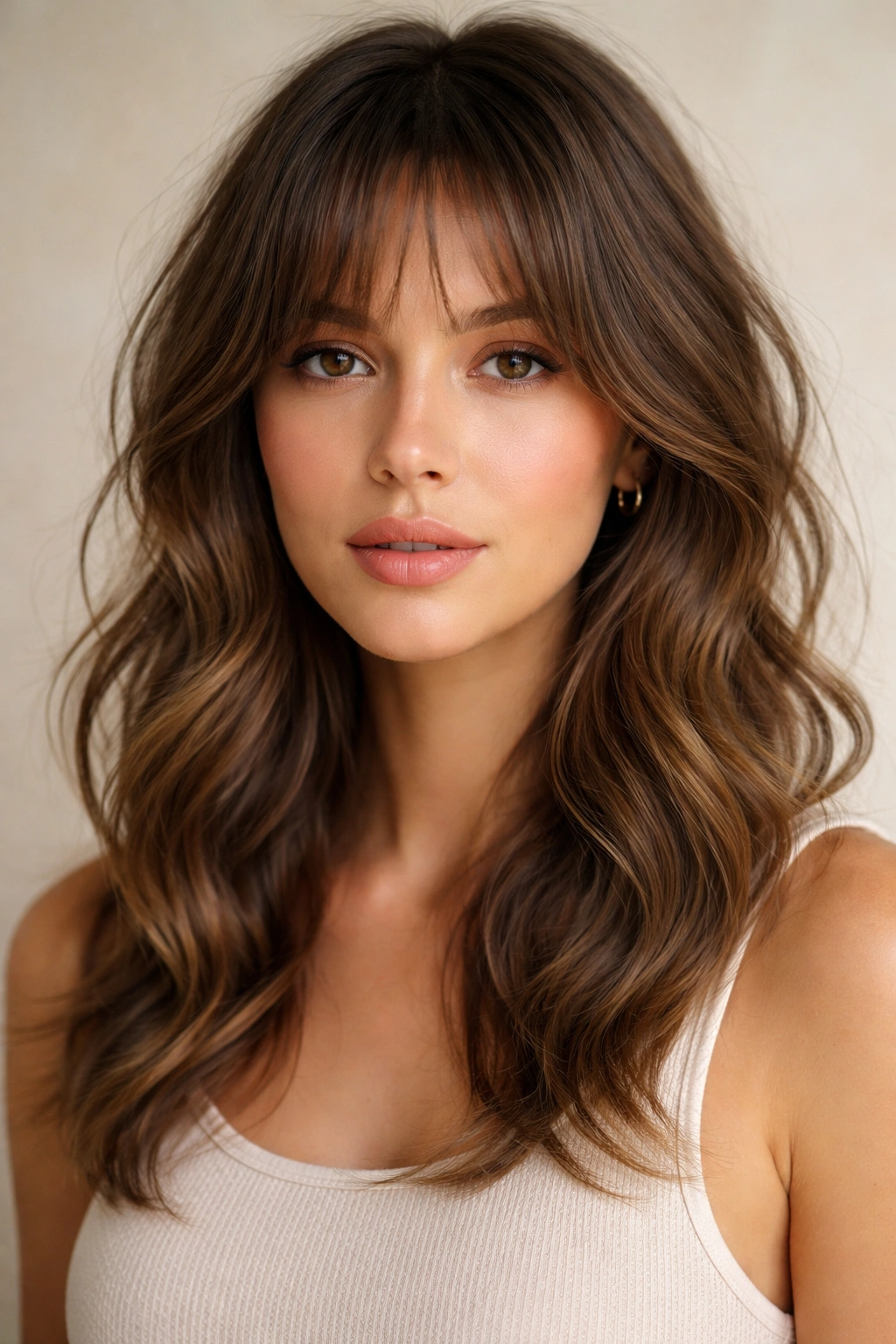
Face-framing bangs are cut to frame the contours of your face, typically longer at the cheekbones and shorter in the center, creating gentle movement toward your face. This is different from feathered (which is more about softness throughout) and different from bangs that sit straight across—it’s specifically designed to complement your face shape.
Why This Cut Flatters Fine Hair
Face-framing is about shape and structure, which is exactly what fine hair needs when it doesn’t have density to work with. The smart cutting that emphasizes cheekbones and face shape creates visual interest that prevents thinness from being noticeable. Pairing with wavy hair throughout means movement complements the framing, creating a cohesive, intentional look.
Customizing Face-Framing for Your Shape
- Your stylist should consider your face shape when cutting how the bangs frame your face
- Typically, bangs are slightly longer at the apples of your cheeks and shorter in the center
- Works beautifully with waves or curls that move away from your face
- Blow-dry with your fingers directing the framing pieces away from your face
- This style is very flattering for most face shapes because it’s customized to yours specifically
Insider note: Face-framing should be done by a stylist who understands face shapes and cut theory. This isn’t a “do-it-yourself” or “any stylist can do it well” situation.
20. Shaggy Choppy Bangs With Textured Layers and Roots

Shaggy choppy bangs are textured, layered, and piece-y from the start, combining the best of shaggy and choppy approaches. When paired with textured layers throughout and an emphasis on root lift and volume, this creates a maximally interesting, movement-forward style that celebrates fine, wavy hair’s natural texture.
Why This Is an Ideal Fine-Hair Style
This is the ultimate fine-hair style because it removes the expectation of density anywhere. Instead, it’s entirely about texture, layering, and movement. Every component celebrates the fact that fine hair can move and flow beautifully. The emphasis on choppy texture means thinness is intentional and fashionable, not a flaw. Root lift means even when hair lies flat, it’s supposed to look that way.
Maximizing This Style
- Bangs and layers throughout should be choppy, textured, and intentionally piece-y
- Use a texturizing product throughout to enhance choppiness
- Blow-dry with your head tilted downward and your fingers scrunching hair for maximum texture and root lift
- Sleep in loose waves to enhance texture and movement overnight
- This style actually improves as it gets a day or two of texture set into it
- Embrace the undone, textured aesthetic—this isn’t a sleek, polished style
Pro tip: If you want to make this style feel intentional and cool rather than messy and unkempt, commit to the texture fully. Use texturizing products, emphasize the choppiness when styling, and own the fact that every strand doesn’t match perfectly.
Final Thoughts
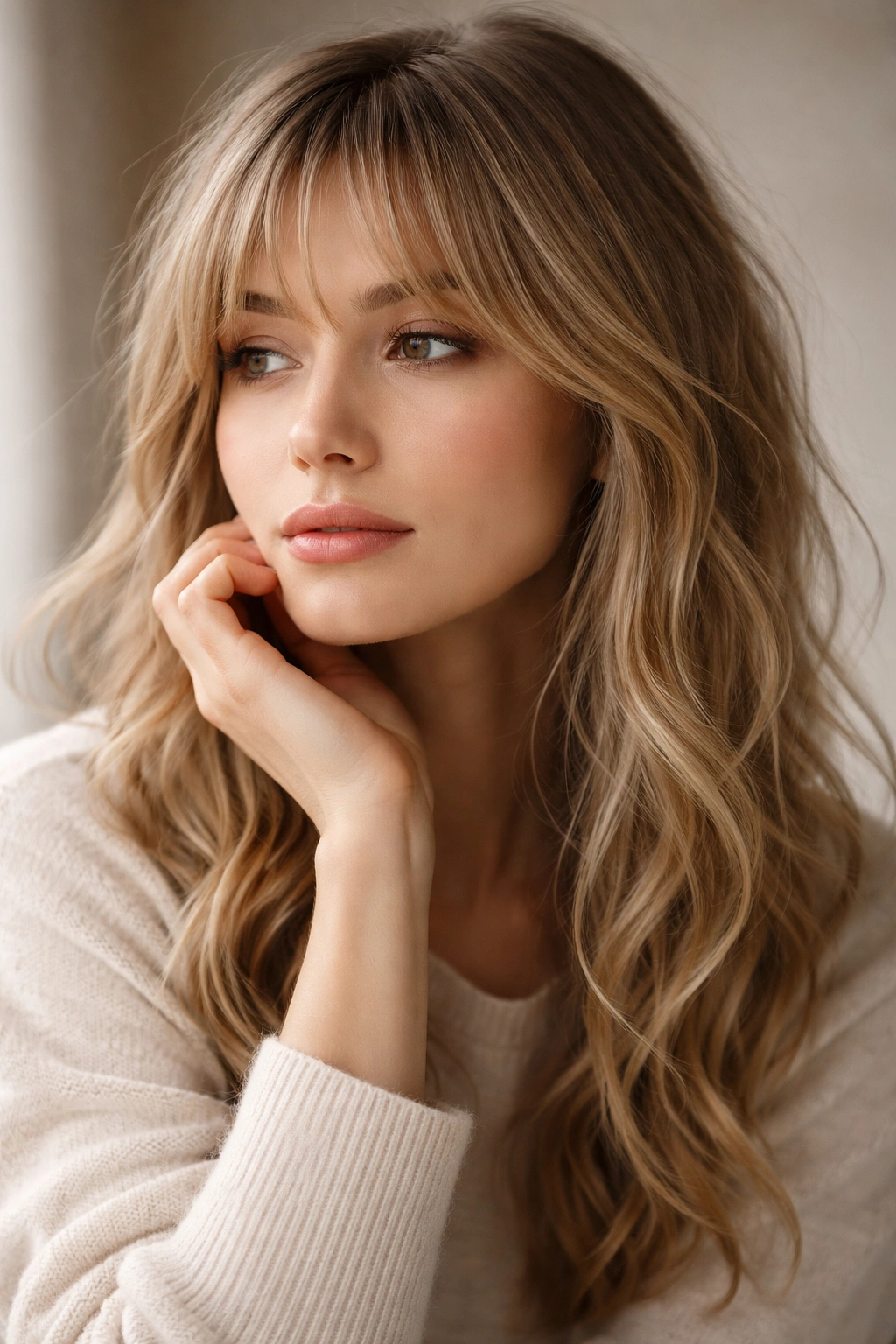
Bangs and fine wavy hair aren’t a mismatch—they’re actually perfect for each other when you choose the right style. The key is prioritizing lightness, layering, and movement over density and weight. Whether you go wispy and romantic, bold and choppy, or somewhere in between, your fine waves are the feature, not the obstacle.
The most important step is finding a stylist who truly understands fine hair and how to cut it well. Show them photos of the styles that inspire you, but more importantly, talk about your hair’s specific texture, how it naturally waves, and what your styling routine realistically looks like. A great cut works with your hair’s natural tendencies rather than requiring you to fight against them every single day.
Bangs are a commitment, but they’re also incredibly changeable. If you choose a style and discover it’s not quite right, most of these styles can transition into another as your hair grows. Fine wavy hair is forgiving that way—it moves and changes beautifully, making reinvention easy whenever you’re ready for something new.
