



There’s something undeniably chic about a wavy French bob. It sits right at that perfect intersection of effortlessly undone and intentionally styled—the kind of haircut that looks like you didn’t try too hard, even though you absolutely did. The beauty of a French bob lies in its versatility. Whether your hair naturally falls into waves or you’re creating them with heat tools and the right technique, a wavy French bob works for nearly every face shape, hair texture, and personal style.
The French bob has made a serious comeback over the past several years, and the wavy variation is where the magic happens. Where a sleek, straight French bob reads polished and minimal, a wavy version adds movement, texture, and personality. It’s romantic without being precious, modern without being severe. The chin-length cut is forgiving, the layers work with your natural hair texture instead of against it, and the waves add dimension that makes thin hair look fuller and thick hair look less blunt.
If you’re considering a wavy French bob but feel overwhelmed by the endless variations, you’re in the right place. Not all French bobs are created equal, and finding the right version for your hair type, face shape, and lifestyle makes the difference between a haircut you love and one that frustrates you every morning. Let’s break down ten distinct wavy French bob styles so you can pinpoint exactly which one deserves a spot at the top of your salon consultation board.
1. The Classic Shoulder-Grazing Wavy Bob
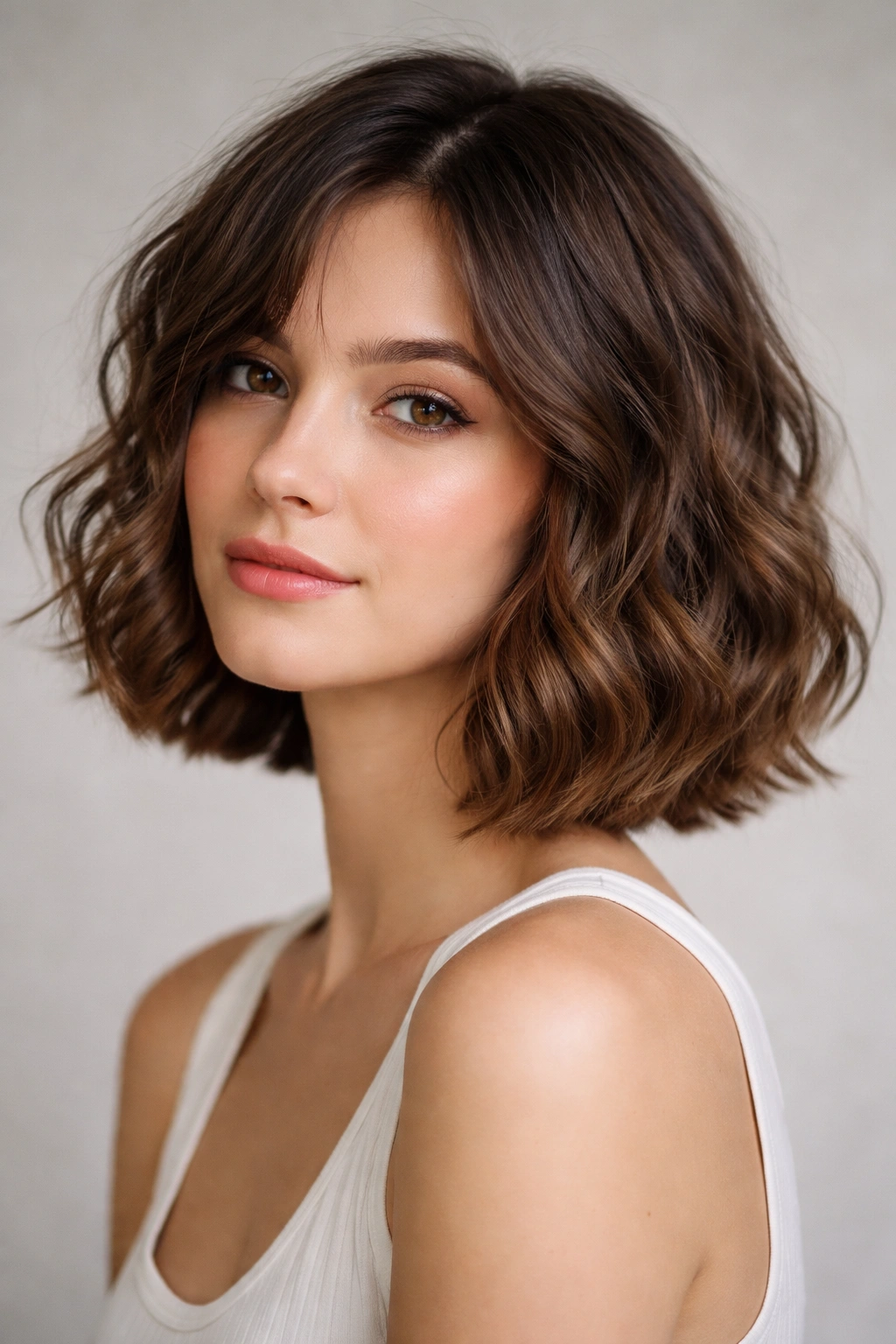
This is the French bob in its truest form—chin-length or just slightly longer, with gentle waves that start at the roots or mid-shaft. The waves aren’t tight curls; they’re soft, undulating bends that give movement without fullness. This version sits right at your shoulders or just barely grazes them, creating a flattering frame around the face.
Why This Cut Works for Everyone
The shoulder-grazing length is magical because it’s long enough to feel feminine and work with multiple styling options, but short enough to feel modern and manageable. The gentle waves add texture that camouflages a less-than-perfect blow-dry, which means on low-effort mornings, you can still look polished. This length suits most face shapes because the placement of the cut at the shoulders creates natural balance.
How to Style and Maintain It
- Use a 1.25-inch barrel curling iron, curling sections away from the face
- Apply a sea salt spray before curling for better texture grip and longer-lasting waves
- Blow-dry with a paddle brush using medium heat for a smoother base
- Refresh waves on day two or three with a dry shampoo and light misting of water
- Schedule trims every 6-8 weeks to keep the shape sharp and prevent ends from looking scraggly
Real talk: This length requires the least amount of daily styling of any French bob variation, making it perfect if you want a stylish cut without a complicated routine.
2. The Textured Shag French Bob
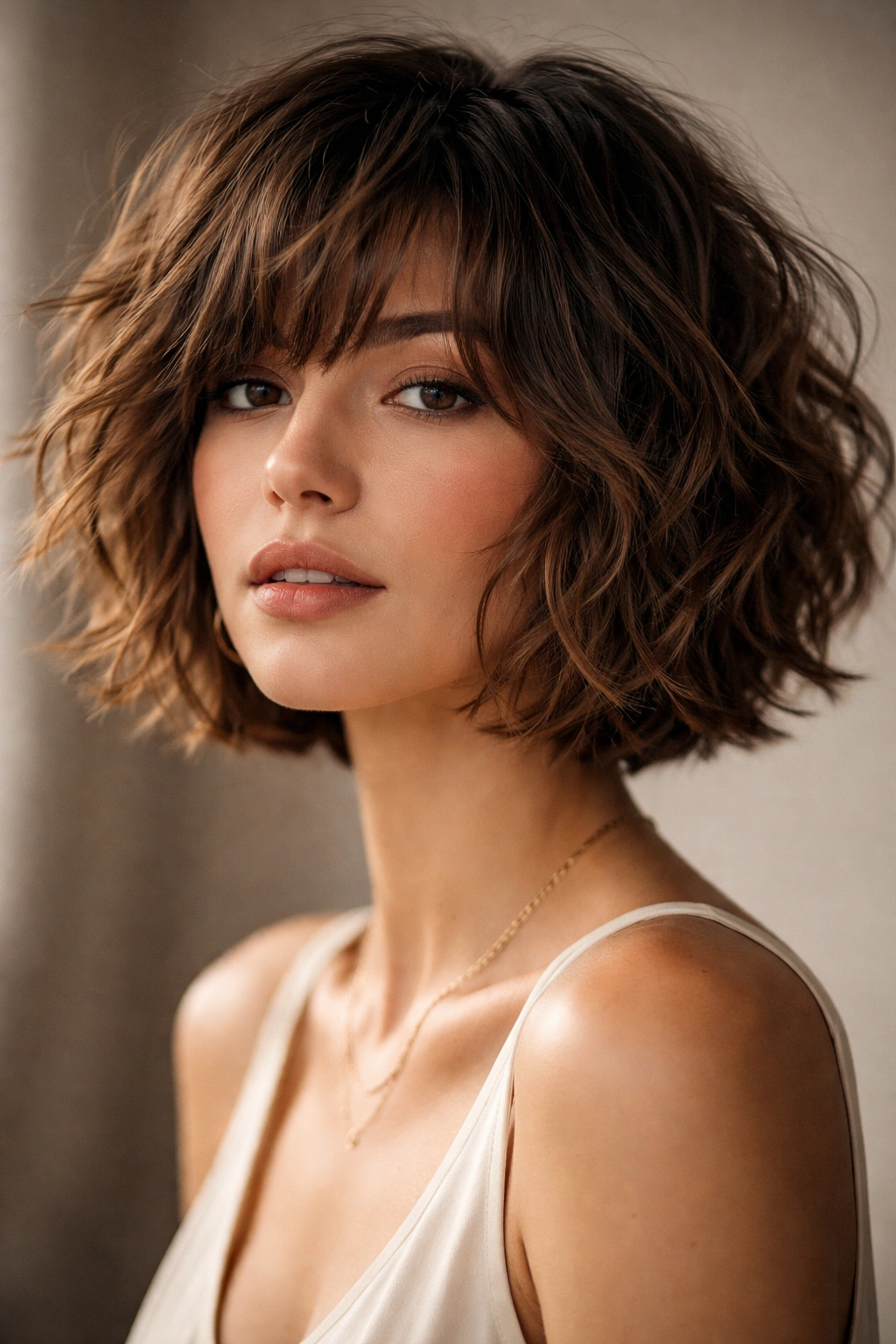
Think French bob meets shag haircut. This version has shorter, more choppy layers throughout, creating maximum texture and movement. The layers start higher on the head, so you get volume at the crown and lots of piece-y texture that catches light beautifully. It’s wilder and more rock-and-roll than a classic French bob.
What Makes a Shag French Bob Different
The key difference here is the aggressive layering. Instead of smooth, blended layers, a shag French bob has distinct, choppy sections that create visual and textural interest. The shorter layers on top build volume, while the slightly longer pieces underneath create movement. When you move, the hair moves with you—it feels alive.
Who Should Get This Cut
- People with naturally wavy or curly hair who want to lean into their texture
- Those with fine or thin hair who want the illusion of fuller volume
- Anyone with an edgier personal style who finds traditional French bobs too polished
- People willing to style their hair most days (this cut needs a little love to look intentional rather than messy)
Pro tip: The shag French bob looks best with some texture product—mousse, texturizing spray, or a light wax—applied while hair is damp and then blow-dried in the direction you want the layers to fall.
3. The Face-Framing Shorter Wavy Bob
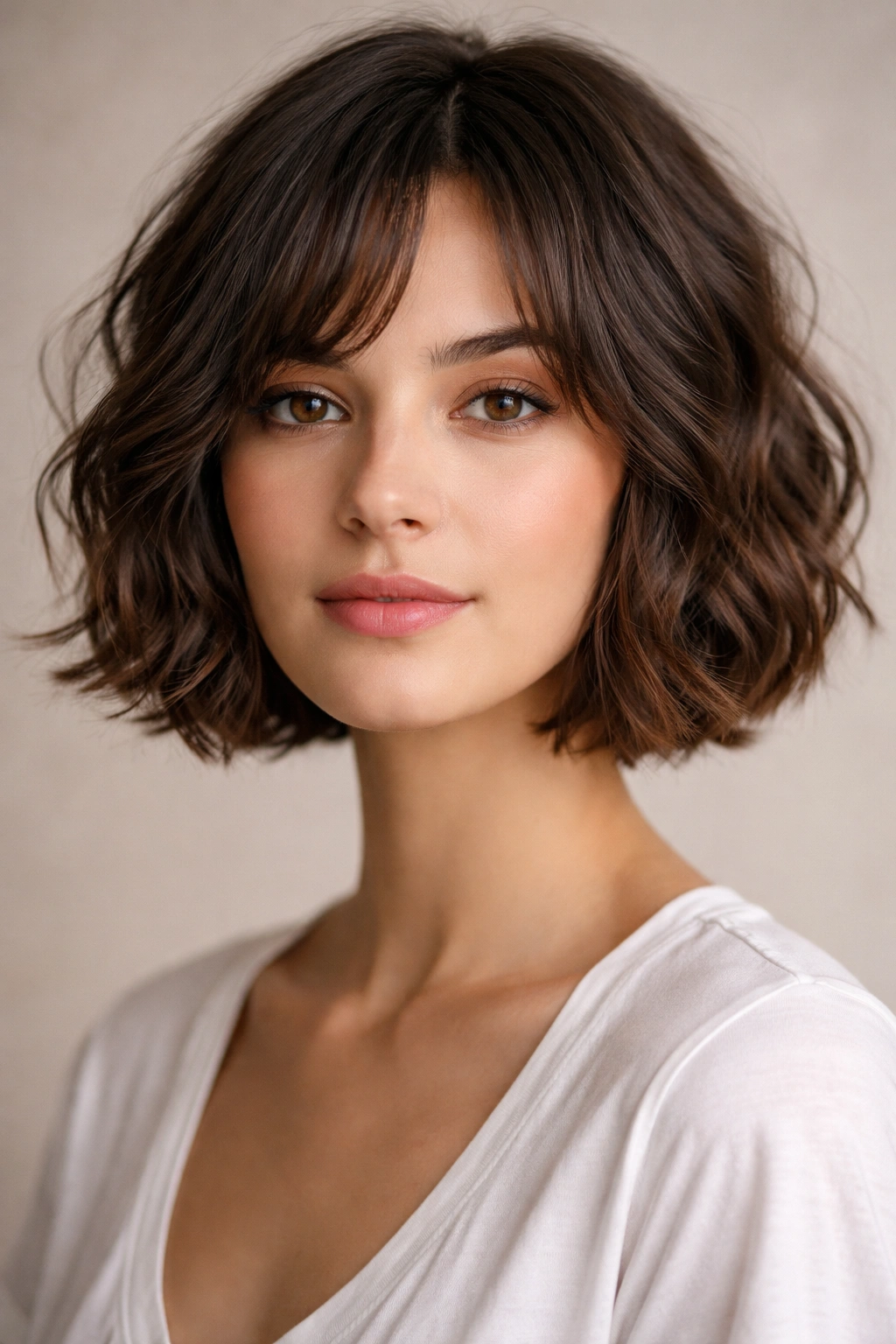
This variation keeps the general French bob shape but pulls the front layers much shorter, creating pronounced face-framing pieces that fall about an inch or two below the chin. The back stays longer, sometimes grazing mid-neck. This creates an almost asymmetrical effect that’s deeply flattering and adds serious visual interest.
Why Shorter Framing Pieces Make a Difference
Shorter face-framing pieces draw attention to your eyes and cheekbones. They create the illusion of more defined features, which is why this cut is especially flattering if you have a rounder face or want to emphasize your bone structure. The longer back keeps the cut from feeling too choppy, and the contrast between the short and longer pieces adds movement and sophistication.
Perfect for These Face Shapes
- Round faces: The shorter pieces and longer back create length visually
- Square faces: Softening the jawline with shorter, wavy pieces reduces angularity
- Heart-shaped faces: Adds fullness at the jaw where needed
- Oblong faces: The horizontal line at the jaw created by the back length adds width
Keep the shorter pieces slightly longer than a true pixie—you want them to move and wave, not stand straight up. If they’re too short, you’ll have to style them frequently to keep them falling softly around your face.
4. The Blunt-Ended Wavy Bob
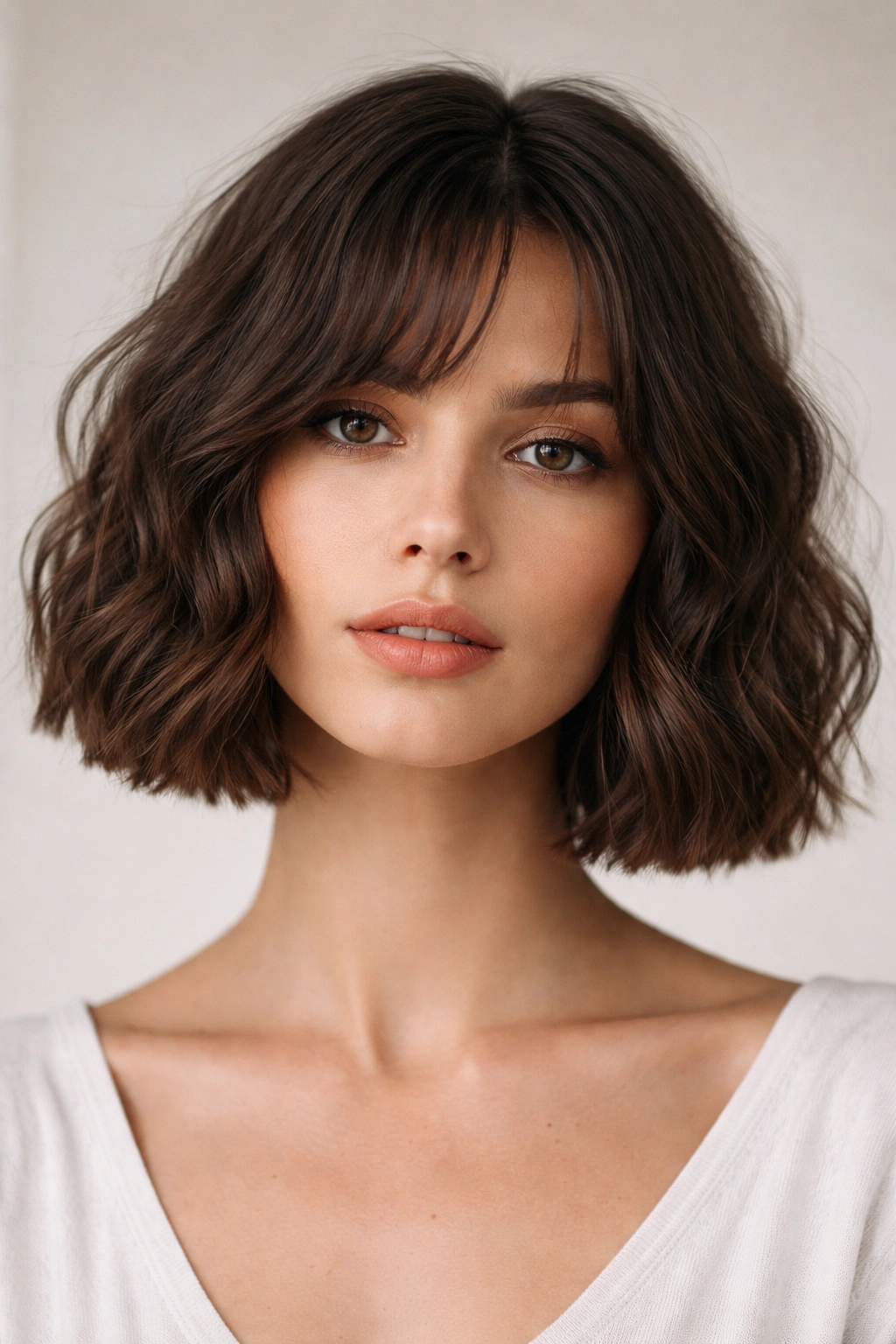
Instead of tapering or layering the ends, a blunt-ended wavy French bob cuts straight across. The ends are deliberately blunt, creating a clean line even though the hair is wavy. This creates visual weight and definition—your ends aren’t feathering away; they’re making a statement. When you style waves into blunt ends, you get serious dimension.
The Visual Impact of Blunt Ends
Blunt ends make the cut feel more intentional and modern. They also make the waves more dramatic because the heavier ends have more substance to work with. When you curl or wave blunt ends, you get that perfect bend where the hair naturally creases. Tapered ends, by contrast, fade into the wave more subtly.
Styling Blunt-Ended Waves
- Blow-dry straight first for a smooth, polished base
- Use a 1.25 or 1.5-inch curling iron depending on how defined you want the waves
- Curl upward for volume or inward for a more romantic effect
- Tousle slightly with your fingers while the curl is cooling for a relaxed look
- A light hairspray keeps the shape without stiffness
The trade-off with blunt ends is that they require more frequent trims—every 5-6 weeks is ideal. Because there’s no layering to hide imperfections, blunt ends can look stringy or damaged faster than tapered ones.
5. The Textured, Piece-y French Bob
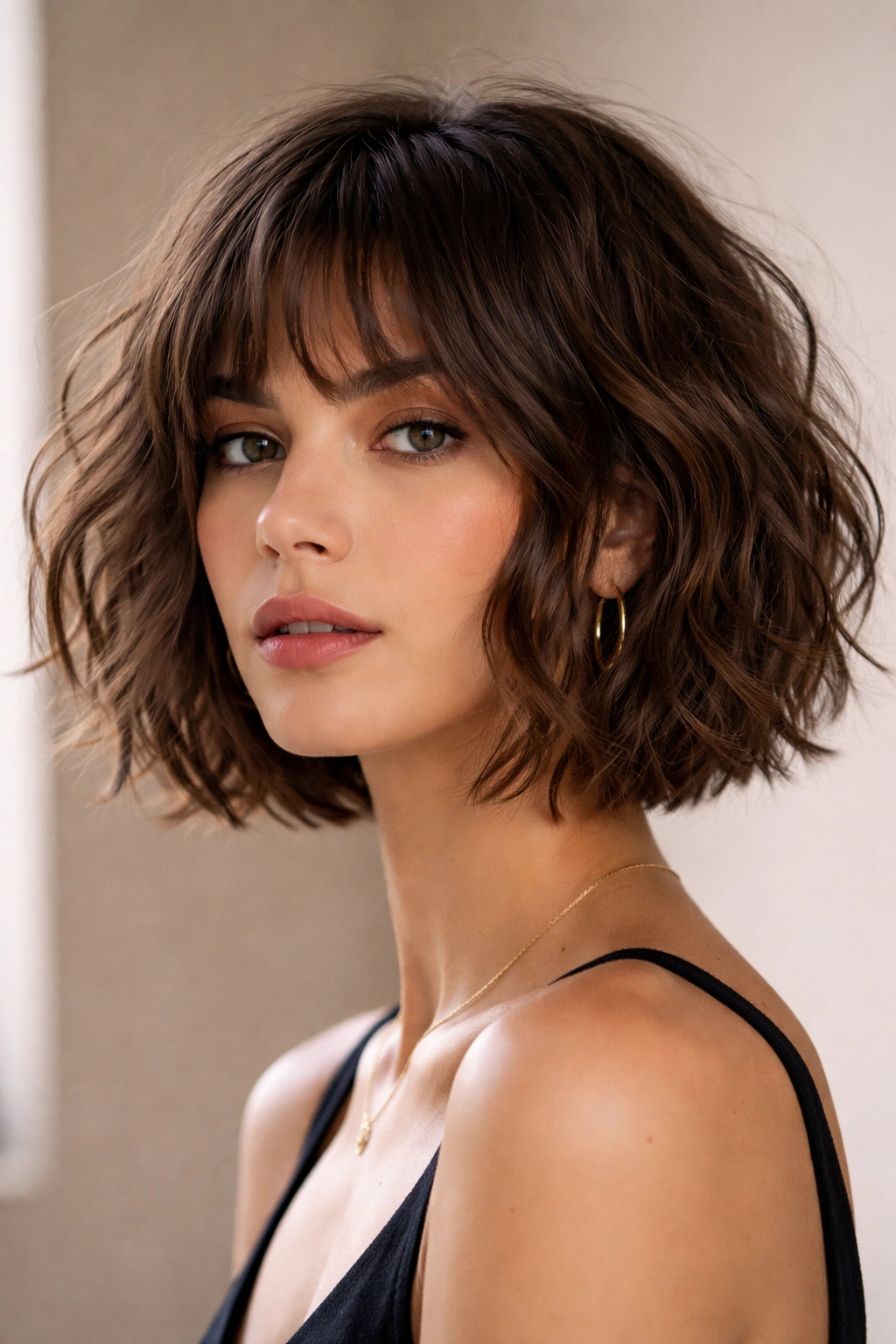
This version takes the idea of texture to the extreme. Instead of smooth waves, you’re working with deliberate, separated, piece-y texture throughout. It’s like every section of hair is its own distinct entity. This is achieved through careful layering, specific styling techniques, and usually a texturizing product.
How to Create Piece-y Texture
The cut itself has more layers than a classic French bob, but they’re placed strategically to create visual separation. When you style it, you’re not trying to blend everything together. Instead, you’re using a texturizing paste, dry shampoo, or texturizing spray on damp hair and then blow-drying with your fingers through the hair, pulling sections apart as you dry them.
The Best Products for This Look
- Sea salt spray applied to damp hair before blow-drying
- Dry texturizing spray used after styling to enhance piece-y sections
- Light texture paste or texture clay worked through damp hair
- Dry shampoo as both a texturizer and volume booster
- Light hold hairspray that doesn’t weigh down the pieces
This is the highest-maintenance French bob in terms of styling, but it’s also the most forgiving of imperfect technique. The piece-y texture hides a multitude of styling sins.
6. The Soft, Romantic Wavy Bob
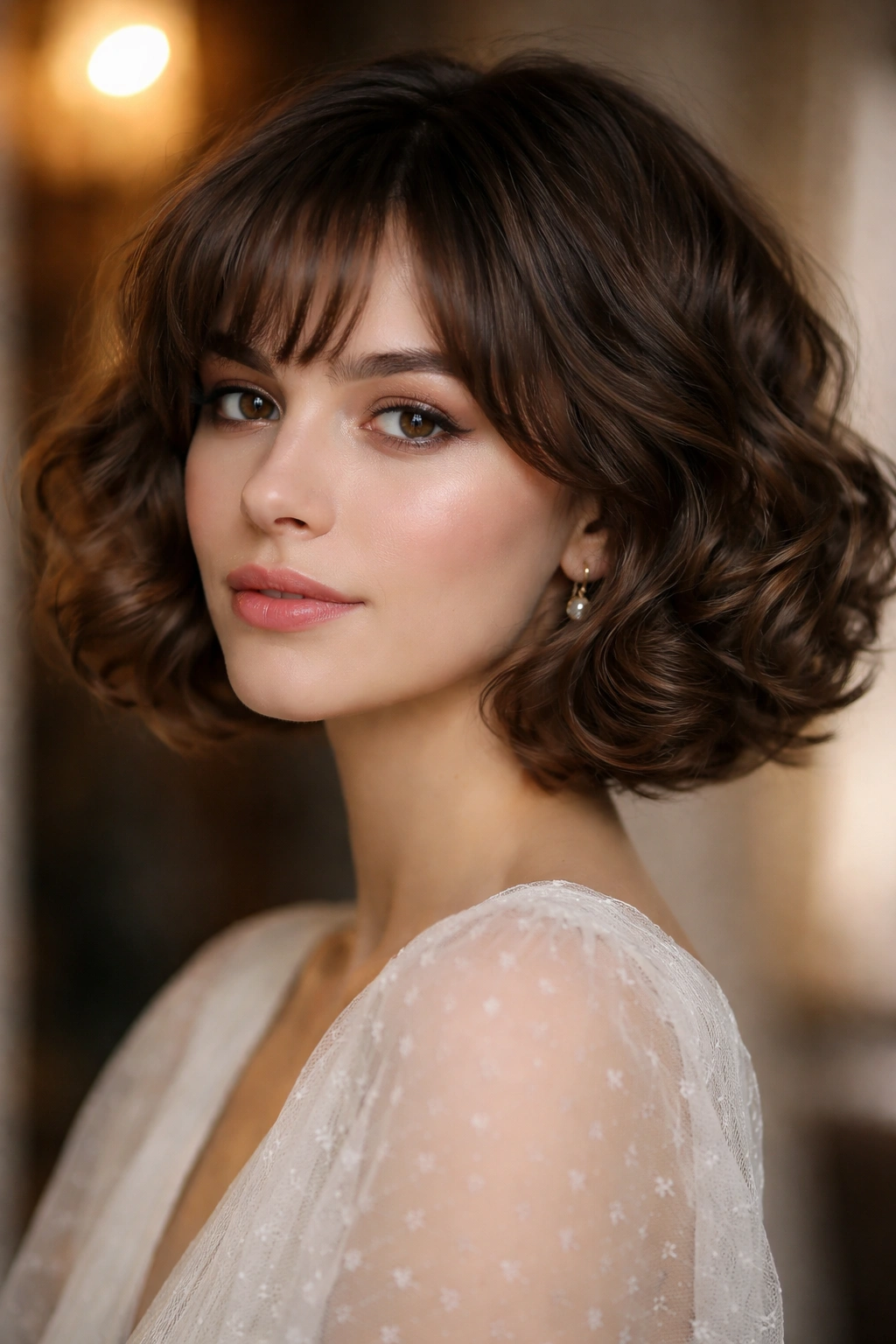
If you prefer a softer aesthetic, this variation is your answer. The waves are gentle and romantic—more like vintage waves than modern texture. The layering is minimal and blended, creating a cohesive shape rather than separated pieces. It has an almost Old Hollywood feel, even though the length is modern.
Creating Soft, Romantic Waves
This cut relies heavily on styling technique. The waves need to be created with heat, using a larger barrel (1.5 to 2 inches) and taking thicker sections. You’re creating full-head waves, not just pieces of texture. The effect is polished, intentional, and feminine without being frilly.
Who Loves This Version
- People who prefer a more romantic or vintage-inspired aesthetic
- Those with naturally straight hair who don’t mind spending time with heat tools
- Anyone wanting a polished, put-together look rather than effortlessly undone
- People attending events where you want your hair to feel special (weddings, date nights)
The downside is that soft waves don’t hold as long as textured piece-y waves. You’ll likely need to refresh or restyle every day or two. The upside is that it looks absolutely stunning when freshly styled.
7. The Disconnected Wavy Layers French Bob
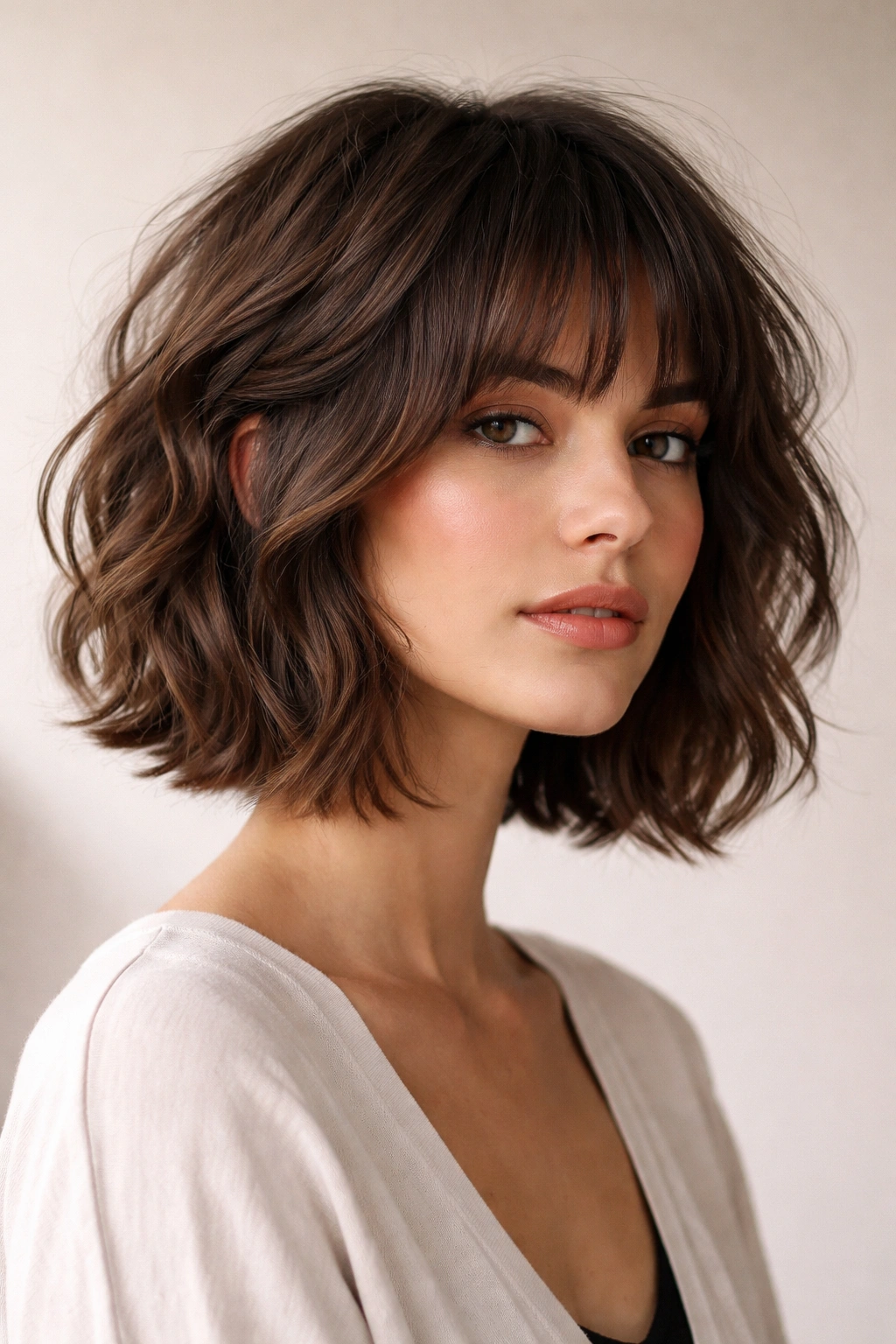
This is a French bob where the layers are genuinely disconnected—they don’t blend into each other. The shorter layers on top sit completely separate from the longer ones underneath, creating visual interest and movement. It’s similar to a shag but more refined and intentional-looking.
Understanding Disconnected Layers
When a stylist cuts disconnected layers, they’re not feathering or blending. They’re creating actual separation between different lengths. This means there are distinct shorter pieces on top and distinct longer pieces underneath. When you move, you see the contrast between these layers.
Styling Disconnected Layers
- Blow-dry with products that emphasize texture (mousse, texturizing spray)
- Use a curling iron on the shorter top layers to create definition
- The longer underneath layers can have looser waves
- This cut actually looks better a day or two after styling, when the layers have fallen and separated more naturally
- Dry shampoo is your friend for adding grip and texture between washes
This cut is especially flattering on people with thick hair who want to reduce bulk while keeping volume. The disconnected layers remove weight without making the cut feel wispy.
8. The Asymmetrical Wavy French Bob
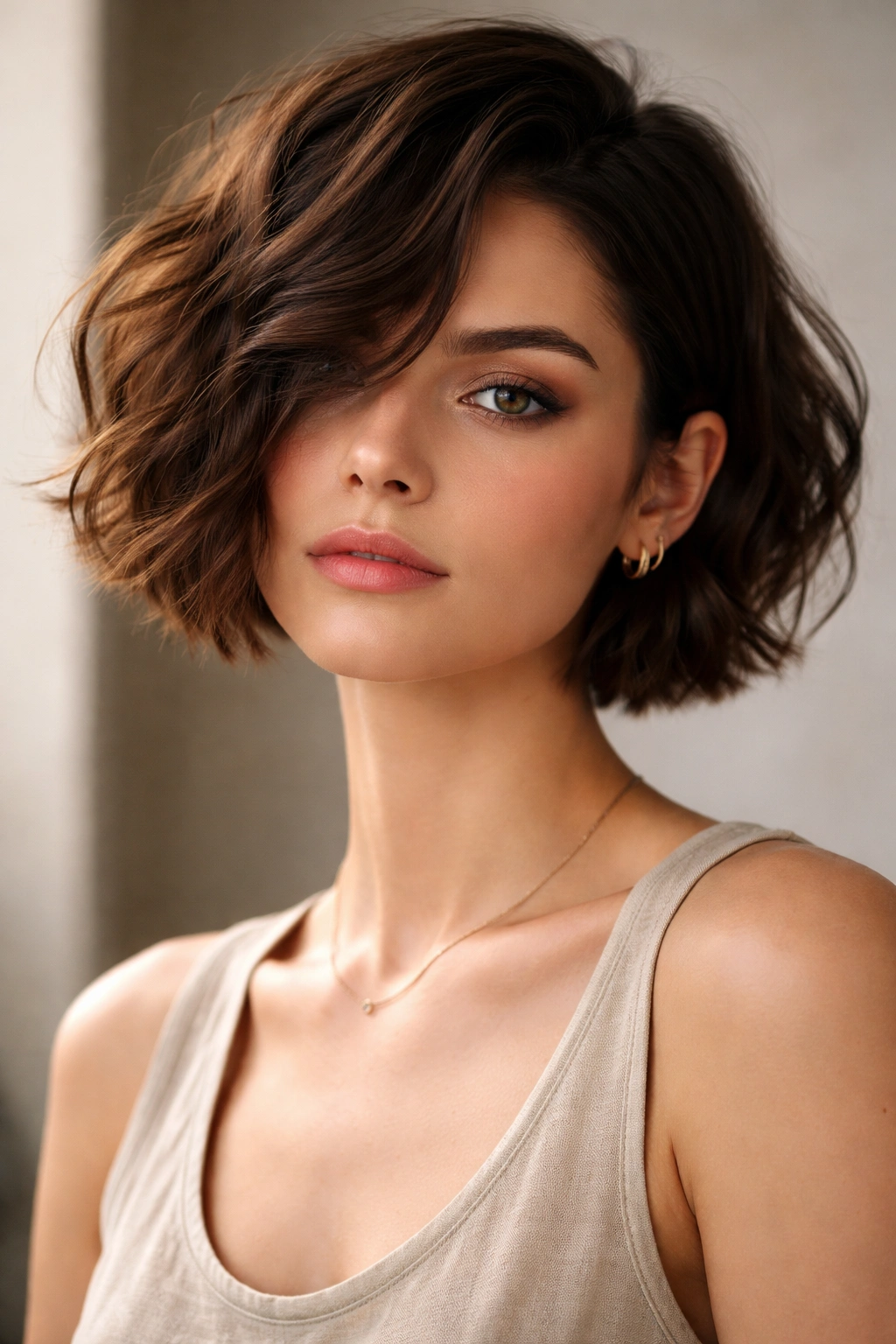
One side is noticeably longer or shorter than the other, creating deliberate asymmetry. This could mean one side frames the face much shorter while the other falls closer to shoulder-length, or one side has more layers than the other. Asymmetrical bobs feel edgy and modern.
The Psychology of Asymmetry
An asymmetrical cut immediately reads as intentional and fashion-forward. It shows you’re not following the rules, which appeals to people with a bolder personal style. Asymmetrical cuts are also incredibly flattering on certain face shapes because you can customize which side gets the shorter pieces based on your features.
Customizing Asymmetry for Your Face
- If one side of your face is wider, cut the shorter pieces on that side
- If you have a crooked smile or asymmetrical features you want to balance, the longer side should be opposite your concern area
- Consider which side of your hair looks better—some people’s hair naturally falls better on one side
- Asymmetrical cuts need regular trims because one side will look overgrown faster
This cut requires styling intention. You can’t just blow-dry and go. You’re actively styling to show off the asymmetry, which most people love because it makes them feel intentional about their appearance.
9. The Curly-Haired Wavy French Bob
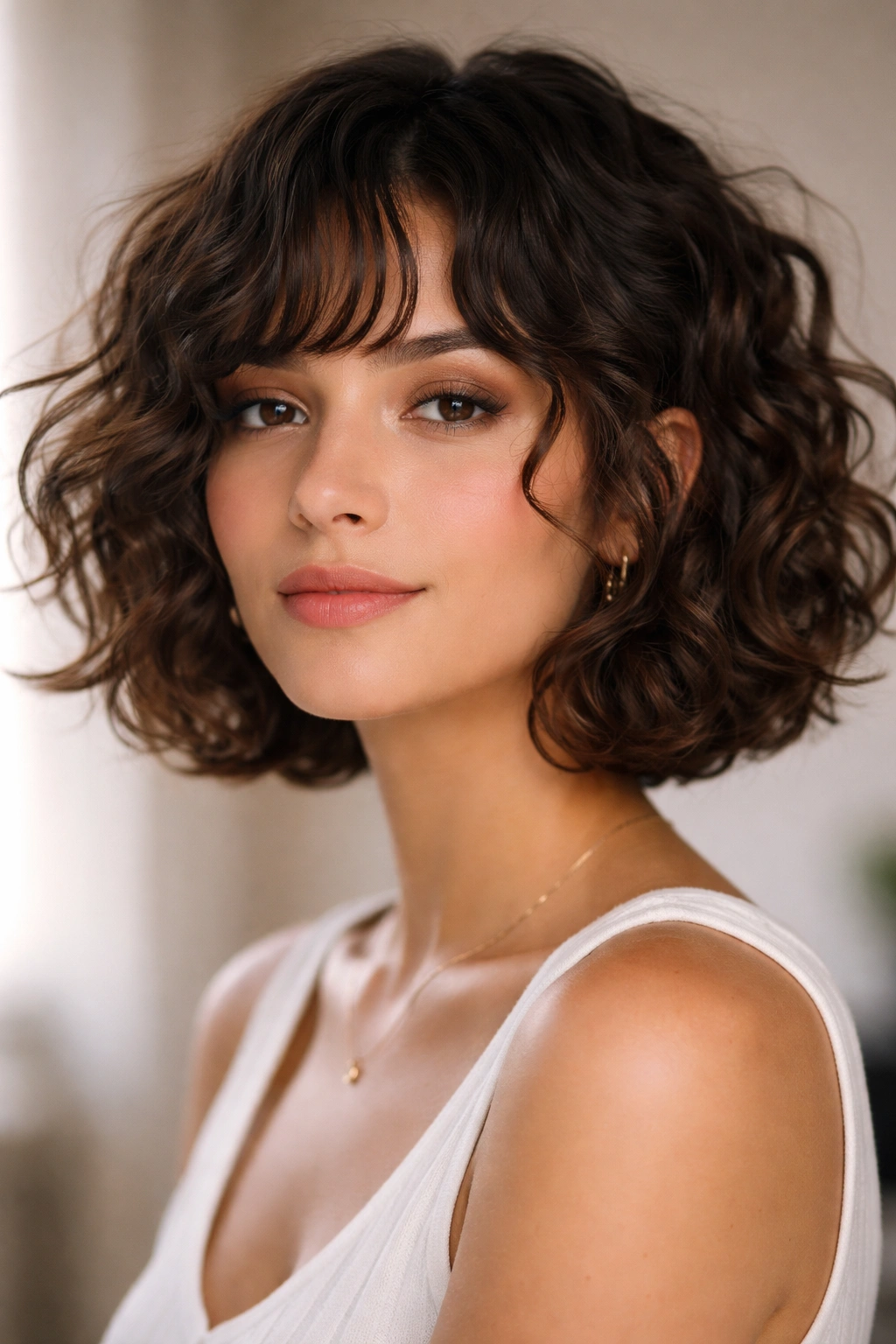
If you have naturally curly or very wavy hair, a French bob tailored to your curl pattern is different from cuts designed for straight hair. This version has layers that work with your curl pattern instead of fighting it. The cut is longer to give your curls room to breathe, and the layering is strategic so you don’t lose shape.
Cutting for Natural Curl Patterns
A stylist experienced with curly hair will cut your bob dry or on stretched hair, not soaking wet. This is because curls shrink dramatically when they dry, and a cut that looks perfect on wet hair can look way too short when dry. The layers are placed to enhance your natural curl pattern, not override it.
Styling Naturally Curly Hair
- Use the Praying Hands method: apply products between your palms and press them through sections of hair
- Avoid brushing curls when dry—use a wide-tooth comb on wet hair instead
- Curl-defining creams and gels keep the wave pattern defined without frizz
- Plopping (wrapping hair in a towel) while it dries helps curls dry uniformly
- A diffuser attachment on your blow-dryer enhances curls without disrupting them
The advantage of a French bob on curly hair is that you can often air-dry it. The disadvantage is that you need a stylist who truly understands your hair type, or you might end up with a cut that doesn’t work with your natural pattern.
10. The Tousled, Lived-In Wavy Bob
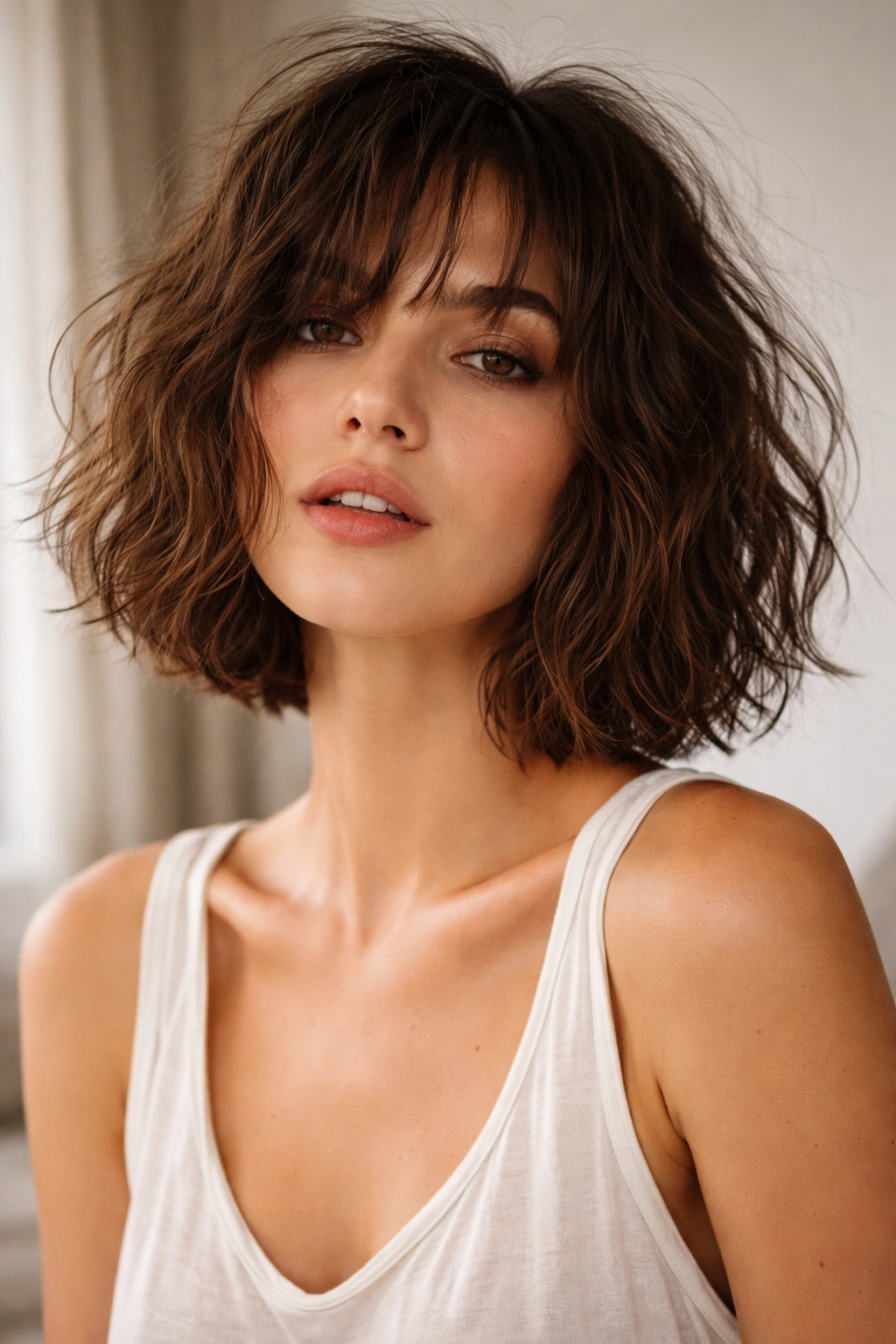
This final version is all about that I didn’t try energy—even though you absolutely did. The waves are intentionally undone, messy, and organic-looking. There’s no polish here; it’s pure texture and movement. It’s styled to look like bedhead, but the kind of bedhead that’s actually gorgeous.
Achieving the Tousled Look
The cut has layers and texture, but the styling is where the magic happens. You’re using texturizing products, scrunching rather than smoothing, and leaving hair slightly damp. The goal is to look like you literally just woke up and shook your head. This requires the right products and some practice with technique.
Making It Work Without Looking Actually Messy
- Start with a texturizing mousse applied to damp roots
- Blow-dry with your fingers through the hair, creating random texture
- Apply sea salt spray and scrunch upward while your hair is still slightly damp
- Don’t brush or comb—use your fingers to separate sections
- A light hairspray keeps it in place without flattening the texture
- The sweet spot is day-two or day-three hair, when natural oils have added grip
This cut is perfect if you love the aesthetic of effortlessness and want a haircut that doesn’t demand precision styling. It’s also excellent if you’re not great with heat tools because you’re intentionally creating an undone effect rather than perfect waves.
Final Thoughts

Choosing the right wavy French bob comes down to understanding your hair type, your styling commitment level, and what aesthetic speaks to you. A classic shoulder-grazing wavy bob requires minimal maintenance and suits almost everyone. A shag French bob works beautifully if you have texture-prone hair and want maximum volume. A blunt-ended version is perfect if you prefer clean, intentional lines. A tousled, lived-in bob is ideal if you want maximum style with minimum effort on styling days.
The most important thing is communicating clearly with your stylist. Bring reference photos showing the exact length, layer placement, and wave pattern you’re after. Discuss your daily styling routine honestly—if you have 5 minutes in the morning, don’t get a cut that needs 20 minutes of blow-drying. Talk about your hair type and how it naturally behaves. The best French bob is one that works with your hair and your life, not against it. Once you’ve found your perfect variation, a good trim every 6-8 weeks will keep it looking fresh and intentional for months to come.
