



Thick wavy hair is a blessing and a challenge in equal measure. You’ve got natural texture and volume that most people spend hours trying to create, but you also know that not every hairstyle works with your hair’s natural patterns. Add bangs to the equation, and suddenly you’re navigating questions about weight, framing, maintenance, and whether the style will actually cooperate with your waves on humid days.
The good news? Bangs and thick, wavy hair can absolutely be a stunning combination—if you choose a style that works with your texture instead of against it. Medium-length haircuts sit in that perfect sweet spot: short enough to feel fresh and intentional, long enough to accommodate your hair’s natural volume without looking wispy or needing constant styling effort. When you pair a medium length with the right bang style, you create a look that’s flattering, manageable, and genuinely compatible with how your hair actually behaves.
This guide walks you through 10 medium hairstyles specifically designed to flatter thick, wavy hair while giving you distinct bang options. Each style is built on understanding how waves move, where weight falls, and which cutting techniques prevent that awkward frizz-prone phase when bangs grow out. Whether you’re drawn to choppy texture, smooth waves, or something in between, you’ll find a style here that speaks to you—and more importantly, one that your hair will actually thank you for.
1. Shaggy Layers with Wispy Bangs
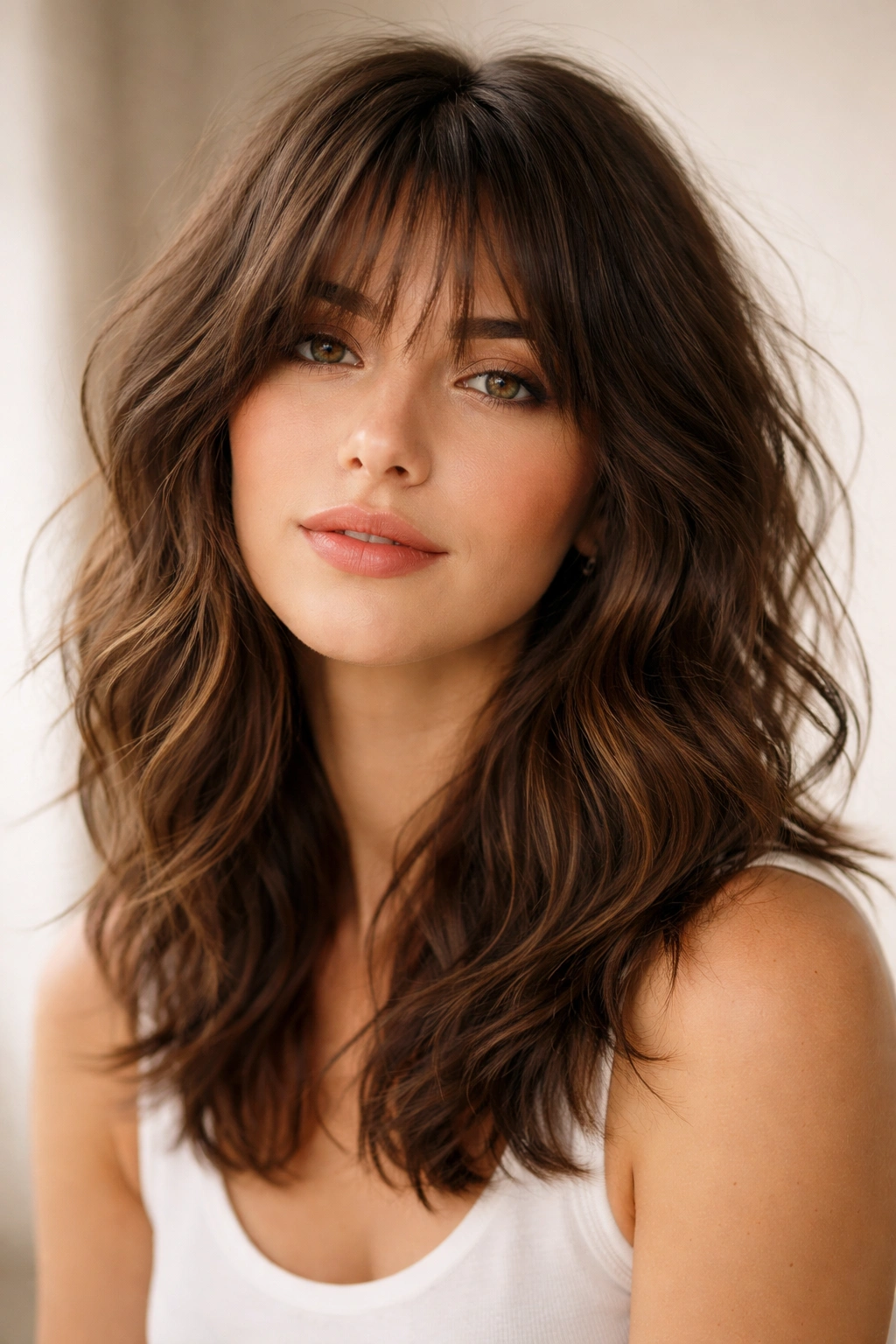
Shaggy layering is the best friend of thick wavy hair because the technique removes bulk without sacrificing length. Medium-length shag layers, typically hitting around shoulder-blade length, create a relaxed, textured silhouette that celebrates your natural waves rather than fighting them. Pair this with wispy bangs that graze your eyebrows, and you’ve got a style that feels effortlessly cool while actually being surprisingly low-maintenance.
Why This Works for Thick, Wavy Hair
Shaggy layers work brilliantly because each layer moves independently with your waves instead of creating one heavy block of hair. The wispy bangs are the perfect partner because they’re lighter than full-coverage bangs—they won’t fight your natural wave pattern as the hair grows. The shorter pieces throughout the cut blend seamlessly with slightly longer underneath layers, which means your hair looks intentionally textured rather than like you’re growing out an awkward cut.
How to Style and Maintain It
- Layers should be cut at varying lengths, with the shortest pieces around your face being 2-3 inches shorter than your longest pieces
- Bangs need point-cutting or razor-cutting rather than blunt scissors to maintain that wispy, lightweight texture
- Styling requires only air-drying with a bit of product to enhance your natural wave—no blow-dryer needed unless you want extra volume
- Maintenance trims every 6-8 weeks keep the layers defined and prevent the whole style from becoming one chunky length again
- A texturizing spray or salt spray enhances the shag texture on day two and beyond
Pro tip: Ask your stylist to cut the longest layers slightly shorter than you’d normally wear them. With thick hair, you can usually go 2 inches shorter than your target length because the volume makes it read longer than it actually is.
2. Shoulder-Length Waves with Curtain Bangs
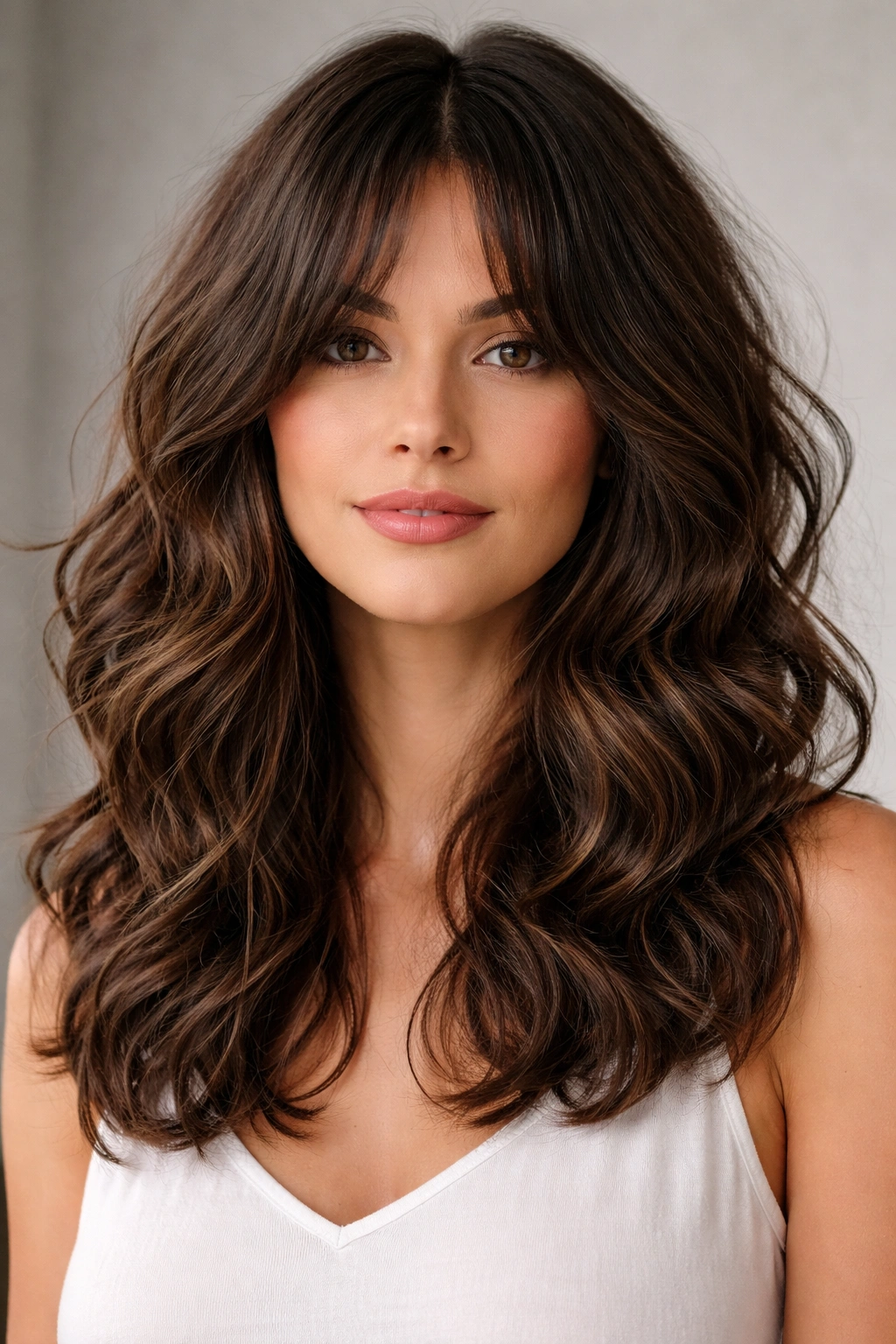
Curtain bangs have made an undeniable comeback, and for good reason—they work beautifully with thick wavy hair. These bangs part down the middle and sweep outward toward your temples, which means they frame your face rather than covering it entirely. At shoulder length, this style creates a flattering silhouette that doesn’t read too trendy or too casual; it’s got staying power and genuine versatility.
Why Curtain Bangs Are Ideal for Thick Hair
Curtain bangs distribute the weight of thick hair across two sections rather than concentrating it down the center of your forehead, so they never feel heavy or create that awkward bulky-at-the-temples look. The side-swept shape means as they grow out, they blend naturally into your longer layers instead of creating an obvious grow-out phase. Your waves naturally want to move and separate, and curtain bangs respect that movement—they enhance it.
Styling and Care Tips
- The part is typically placed at your natural center part or slightly off-center, wherever your hair naturally divides
- Blow-dry with your waves flowing naturally, using a round brush if you want extra volume at the crown
- Let curtain bangs air-dry for the most natural, texture-friendly result—they’ll find their wave pattern without fighting you
- Every 4-6 weeks, have your stylist lightly trim the bangs to maintain that face-framing length (usually between your eyebrows and upper eyelid)
- Use a lightweight, wave-defining cream on damp hair to enhance your natural texture without weighing the bangs down
Worth knowing: Curtain bangs tend to look best when cut on slightly damp or dry hair so your stylist can see how your natural wave sits rather than cutting straight hair that will immediately spring up into waves.
3. Blunt Bob with Heavy Bangs
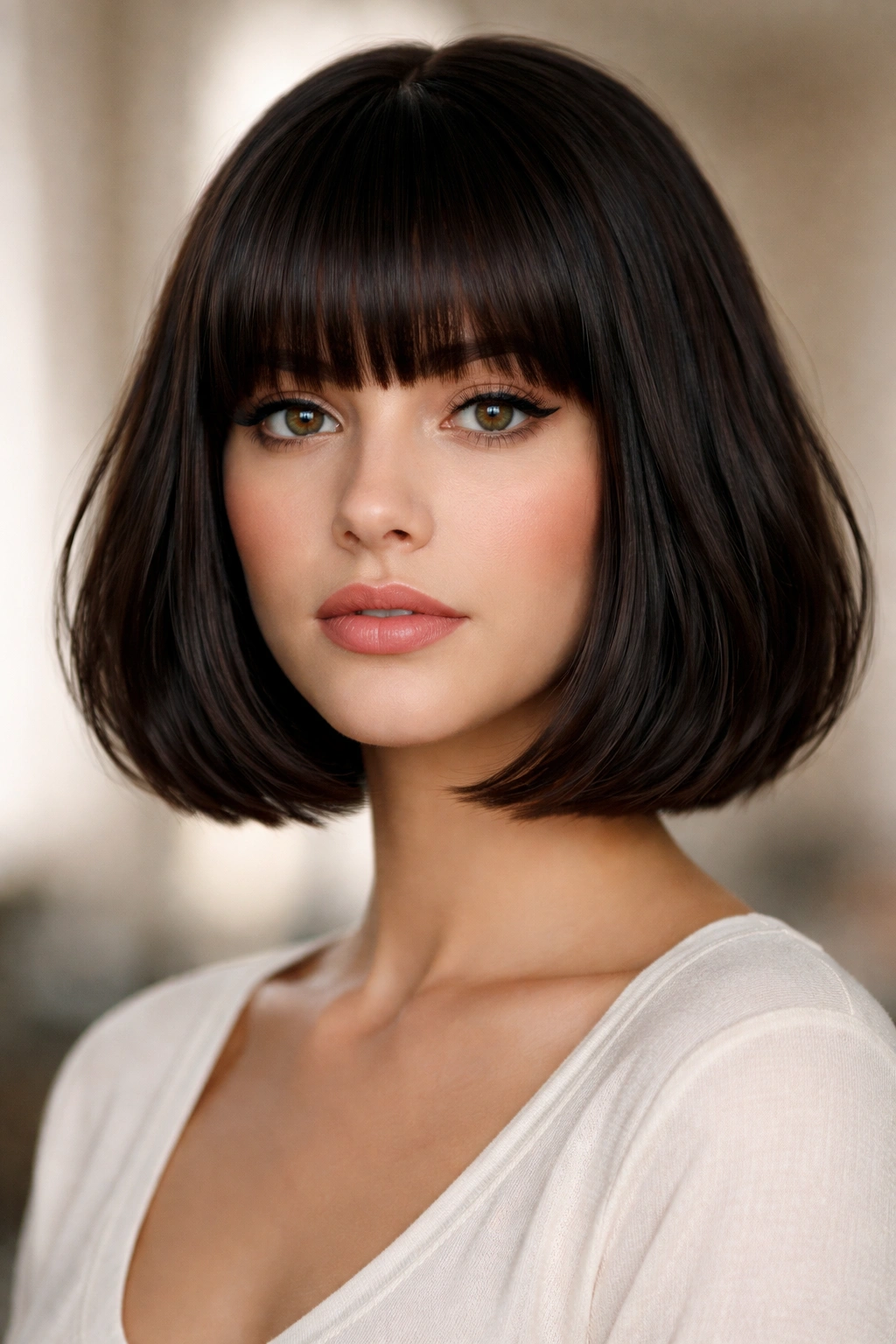
If you want a statement look, a blunt bob with heavy bangs delivers impact. This style sits right at chin-length or slightly longer, with bangs that reach your upper eyelid and are cut straight across. On thick wavy hair, the key is getting layers subtly cut into the back so the style doesn’t become one heavy, unmovable block, even though it looks blunt from the front.
The Texture and Weight Strategy
Heavy bangs on thick hair can work if the rest of the cut is balanced correctly. The blunt lines in front create structure, but invisible layers underneath and at the back prevent the style from becoming too dense. Your stylist should thin the hair underneath with point-cutting or thinning shears, creating movement without destroying the blunt aesthetic. The weight concentration in the bang area is actually an advantage with thick hair—it keeps the bangs from looking wispy or separating too much.
Styling and Management
- This style benefits from intentional styling—blow-dry your bangs straight down and your waves into soft curves rather than letting everything air-dry
- Use a paddle brush or comb through damp hair to smooth the bangs before blow-drying to prevent frizz at the roots
- A smoothing serum or lightweight anti-frizz spray on your bangs keeps them sleek without making them look wet
- Refresh your bangs daily if you’re going for that clean, blunt look; they show dust and texture faster than other bang styles
- Trims every 3-4 weeks maintain that sharp line—longer than that and the blunt edge softens
Real talk: Blunt bangs require more maintenance commitment than other styles. If you’re not willing to blow-dry them and maintain them frequently, this might not be your style. But if you love the dramatic look, the effort is worth it.
4. Face-Framing Layers with Feathered Bangs
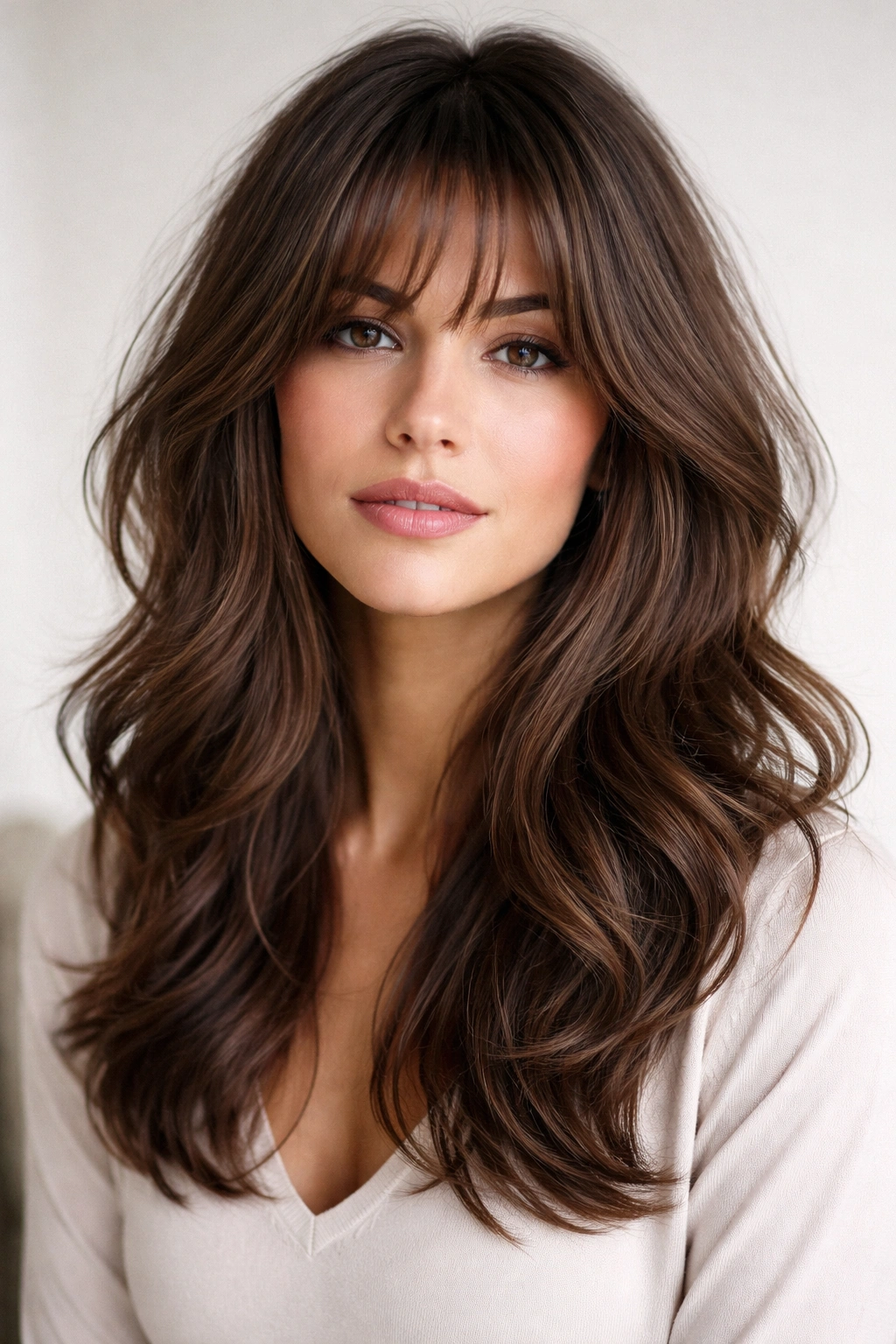
This style combines two complementary techniques—layering for movement and feathered bangs for softness. Feathered bangs are cut so each layer of hair is progressively shorter from top to bottom, creating a wispy, light effect even though there’s plenty of density. Paired with face-framing layers throughout the rest of your hair at medium length, this is a style that looks intentional and polished without feeling high-maintenance.
Why Feathered Bangs Complement Thick Waves
Feathered bangs are perhaps the most forgiving bang style for thick wavy hair because the layers mean each piece can find its own wave pattern without fighting the overall shape. Even on humid days or if you don’t style them perfectly, they don’t look dramatically wrong—they just look slightly more textured. The feathering also means they blend beautifully with face-framing layers, creating one cohesive, flow-forward shape around your face.
The Styling Routine
- Air-dry or blow-dry with your waves, using fingers rather than a brush for a softer, more textured look
- Apply a wave-defining cream or mousse to damp hair to enhance your natural texture and keep layers separated and defined
- These bangs look best when slightly tousled rather than perfectly smooth—the texture is the point
- Trim every 6-8 weeks to maintain the layered, feathered effect as the hair grows
- Use a texture spray to add grip and separation to the individual layers, especially if your waves are loose
Pro tip: Feathered bangs look especially beautiful when styled with some movement and not obsessed over. Embrace the texture; that’s where the style’s beauty lives.
5. Textured Lob with Side-Swept Bangs
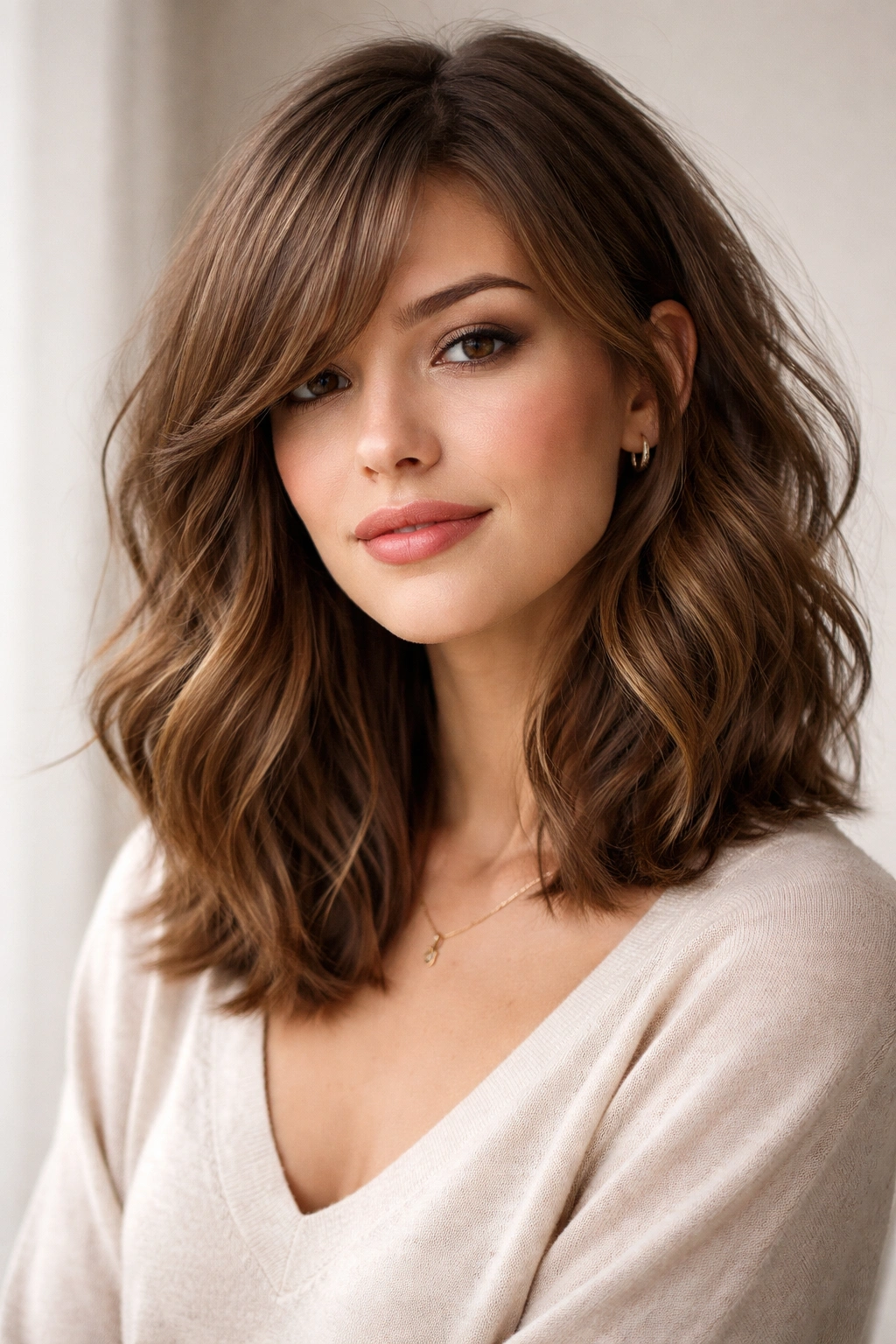
A lob (long bob) typically falls between your chin and shoulders—longer than a traditional bob but shorter than keeping your hair fully long. At medium length, a textured lob gives you the best of both worlds: enough length to gather into a ponytail or tuck behind your ears on bad days, but short enough to show off your waves’ natural texture. Side-swept bangs that curve gently across your forehead add sophistication without the commitment of full coverage.
Building Texture Into a Lob
The key to making a lob work on thick wavy hair is layering that creates movement rather than fluff. Choppy layers throughout, with slightly longer pieces in front and shorter pieces at the back, create a shape that enhances your waves’ natural direction. Side-swept bangs—typically longer on one side (around cheekbone length) and shorter on the other (around eyebrow length)—add visual interest and frame your face asymmetrically.
Styling for Movement and Shape
- Apply product to damp hair before blow-drying or air-drying to enhance the texture
- If blow-drying, flip your head upside down at the roots for volume, then dry the rest with your head upright to smooth the surface layer
- Side-swept bangs can be tucked behind your ear or allowed to fall across your face depending on your preference and the occasion
- This style works beautifully with half-up styles, side ponytails, or pulled-back looks since side bangs don’t require the bangs to sit perfectly centered
- Maintenance trims every 6-8 weeks keep the layers defined
Worth knowing: Side-swept bangs grow out more gracefully than blunt or straight-across styles because they naturally blend into your longer hair as they get longer.
6. Choppy Layers with Blunt Bangs
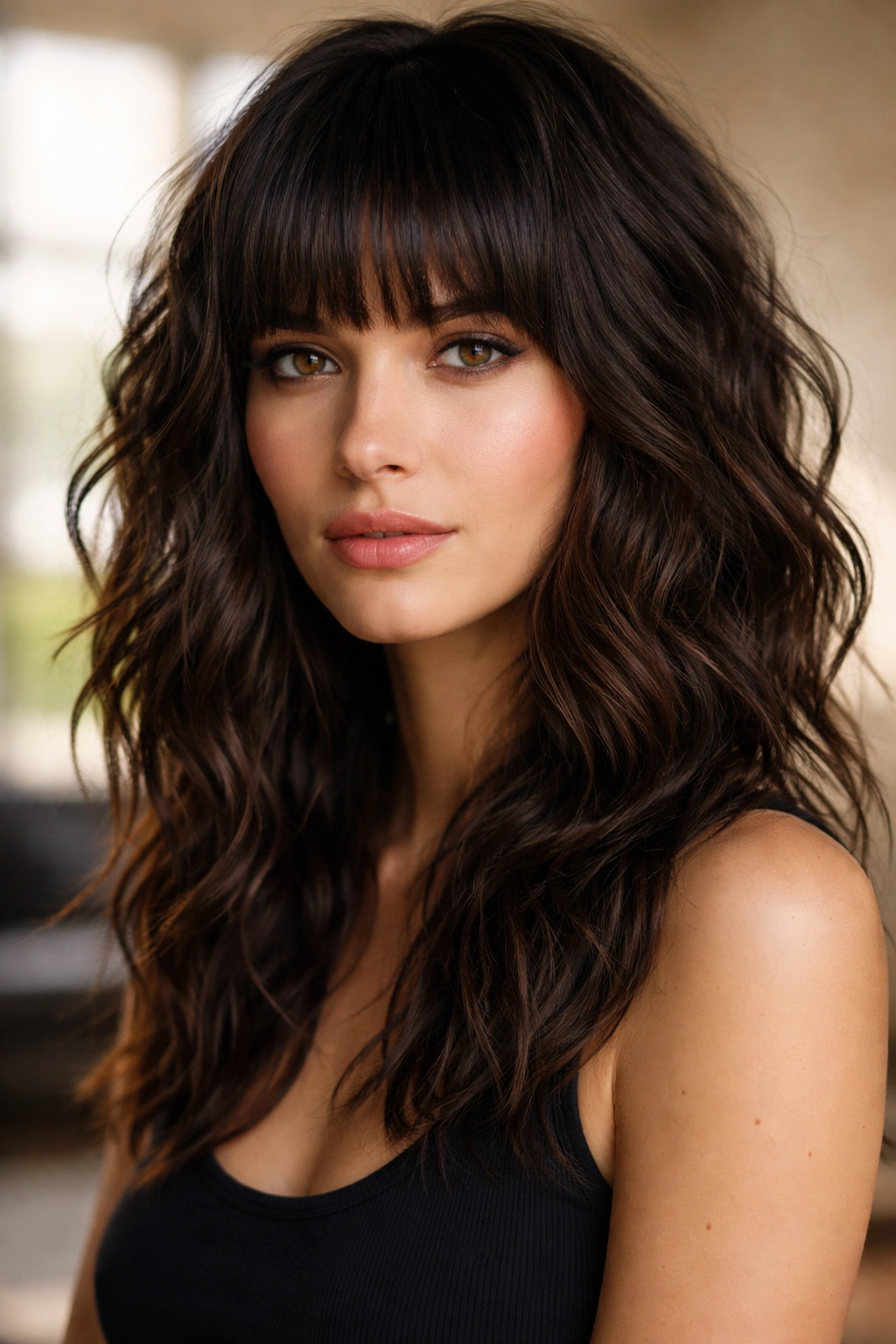
Choppy, razor-cut layers create maximum texture and movement—essential when you’re working with thick hair that can otherwise feel heavy or solid. Combined with blunt bangs that hit at eyebrow length, this style has rock-and-roll attitude. The choppiness prevents the overall look from feeling too formal or put-together; instead, it reads as intentionally cool and effortlessly textured.
The Razor-Cutting Technique
Choppy layers are cut with a razor rather than scissors, which creates softer edges and more distinct separation between layers. On thick wavy hair, razor-cutting is a game-changer because it creates texture without thinning out your density too much. The blunt bangs stay blunt because they’re cut with scissors, creating that defined line, while everything else has that choppy, textured quality. This contrast between the blunt bangs and choppy layers is part of what makes the style work.
Maintenance and Styling
- These bangs need regular trimming every 3-4 weeks since the blunt line softens as they grow
- Blow-dry or air-dry your waves with a texturizing product to emphasize the choppiness and layers
- This style looks best when it’s slightly undone—perfect styling can actually work against it
- Refresh your texture on second-day hair with a dry shampoo or sea salt spray for extra grip and separation
- Ask your stylist to slightly thin the bangs with point-cutting so they don’t feel too heavy even though they’re blunt
Pro tip: Choppy layers photograph beautifully from the side because the layering is most visible in profile. If you love this style, you’ll want to style your hair to show it off.
7. Beachy Waves with Soft Wispy Bangs
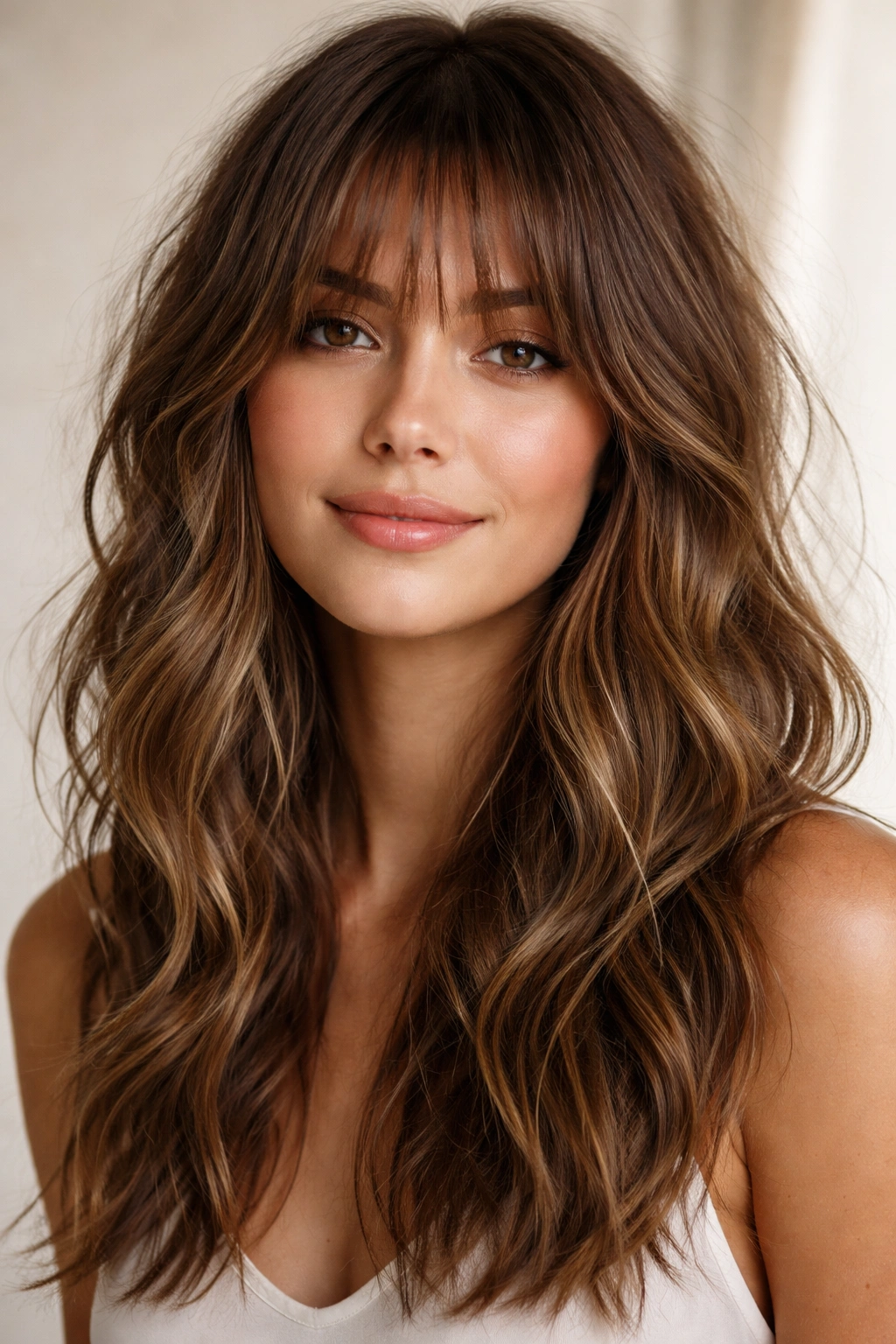
This style embraces the relaxed, effortless aesthetic of beachy waves without requiring you to actually live near the beach. Medium-length hair cut with layers throughout creates a shape that already wants to wave and texture. Soft, wispy bangs that barely graze your eyebrows complete the undone, summery vibe—even if you’re wearing this style in the middle of winter.
Creating That Beachy Texture
Beachy waves on thick hair don’t require as much product or styling effort as fine hair does. Your waves are already trying to happen; the cut just needs to encourage them in a flattering direction. Layers should be throughout the entire head, with slightly longer pieces in front that frame your face and shorter, textured pieces at the back creating volume at the crown. The overall shape is one of relaxed movement rather than defined, structured waves.
The Maintenance Reality
- Air-drying is genuinely the best option here—the more you manipulate thick wavy hair, the more potential for frizz
- Apply a wave-defining cream, curl cream, or lightweight mousse to damp hair and let gravity do the work
- These bangs are the lowest-maintenance bang option—they don’t require blunt lines to be maintained, and they look good slightly messed up
- Trim every 7-8 weeks as the wispy bangs grow out
- Use a lightweight dry shampoo or texturizing spray if your waves get too smooth and need refresh on day two or three
Real talk: This style requires you to embrace your natural texture and let go of perfectionism. If you’re someone who likes every hair in place, this isn’t your style. But if you like the undone, confident look of natural waves, this is remarkably low-maintenance.
8. Sleek Waves with Straight-Across Bangs
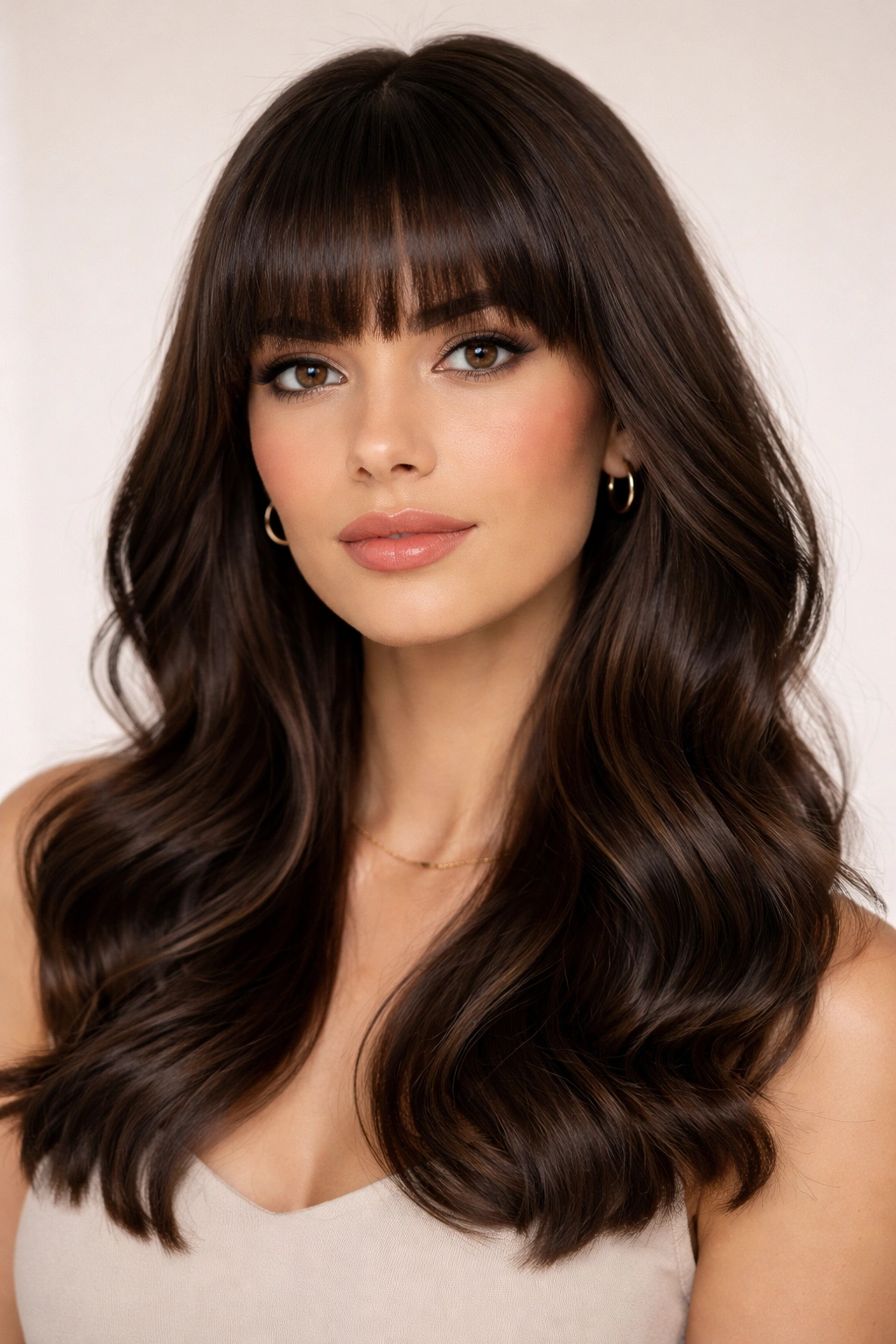
For a more polished, intentional aesthetic, sleek waves paired with straight-across bangs create a striking, controlled look. Sleek doesn’t mean flat; it means smooth on the surface with defined waves running through the length. Straight-across bangs at eyebrow length create a bold frame without the heavy, bulky feeling of a blunt bob, because the rest of your hair has texture and movement.
Achieving Sleek Waves on Thick Hair
Sleek waves require blow-drying with intention. Start with a smoothing product on damp hair, then blow-dry with a round brush to smooth the surface while preserving the wave pattern. The technique is essentially creating a wave with a round brush rather than letting waves form naturally. Straight-across bangs need to be blow-dried smooth with a paddle brush, which keeps them looking intentional and sophisticated rather than accidentally blunt.
Styling and Upkeep
- This is the most styling-intensive style on this list—expect to blow-dry on most days if you want the sleek effect
- A smoothing serum or anti-frizz spray is essential for controlling frizz on the surface while maintaining defined waves underneath
- Straight-across bangs show growth quickly and require trims every 3-4 weeks to maintain that sharp line
- This style is exceptionally versatile for formal occasions, professional settings, or anywhere you want to look polished and intentional
- Sleep styling: pineapple bun or bonnet to preserve waves overnight so you don’t have to fully restyle
Worth knowing: This style looks most sophisticated when your bangs are cut slightly thicker than you might expect. Thin bangs can look wispy or weak; thicker bangs create the bold frame that complements sleek waves.
9. Tousled Waves with Asymmetrical Bangs
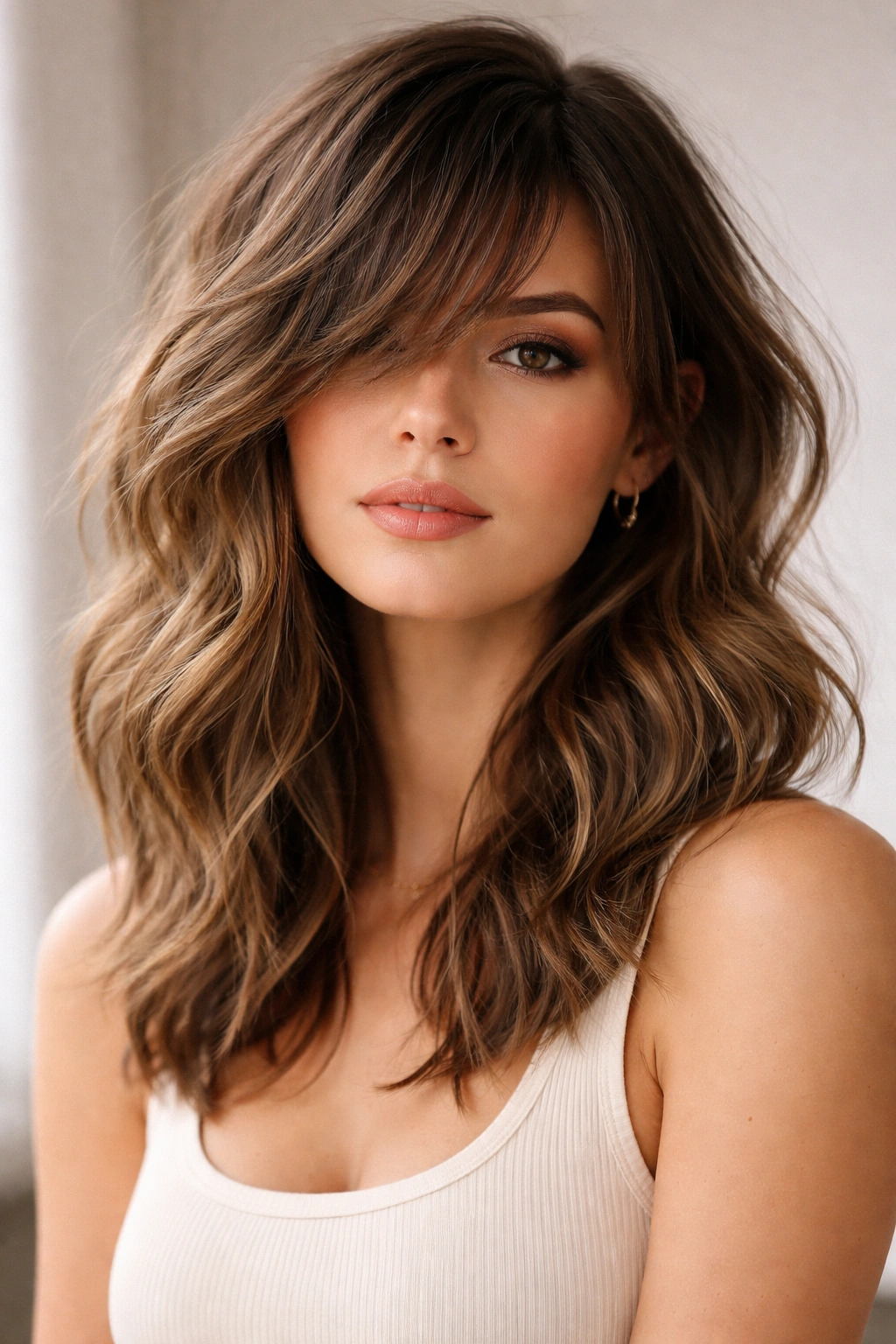
Asymmetrical bangs (one side noticeably shorter than the other) add visual intrigue without requiring the commitment of blunt bangs or the soft fade of feathered styles. Combined with tousled waves throughout your medium-length hair, this style walks the line between effortless and intentional. The asymmetry makes the style feel modern and fashion-forward, while tousled waves keep it grounded and wearable.
Creating Asymmetrical Movement
Asymmetrical bangs typically have one side hitting around the eyebrow and the other falling closer to cheekbone or jaw length. The longer side can be tucked behind your ear, clipped back, or allowed to sweep across your face depending on your mood. This flexibility is particularly valuable for thick wavy hair because you’re not locked into one specific styling format—you can literally change how you wear the bangs throughout the week.
Styling Possibilities
- Tousled waves look best with some product definition—apply a wave cream or curl cream to damp hair
- You can blow-dry with movement or air-dry with a towel-plopping method to encourage texture without frizz
- The longer side of asymmetrical bangs can be styled behind your ear using a barrette or clip, or left to fall naturally
- Refresh tousled waves on day two with a dry shampoo or sea salt spray for texture and grip
- Trim every 6-8 weeks, being careful to maintain the intentional length difference between the two sides
Pro tip: This style is particularly flattering if you want to emphasize one side of your face or if you have a strong side profile you love showing off.
10. Wolf Cut with Choppy Bangs
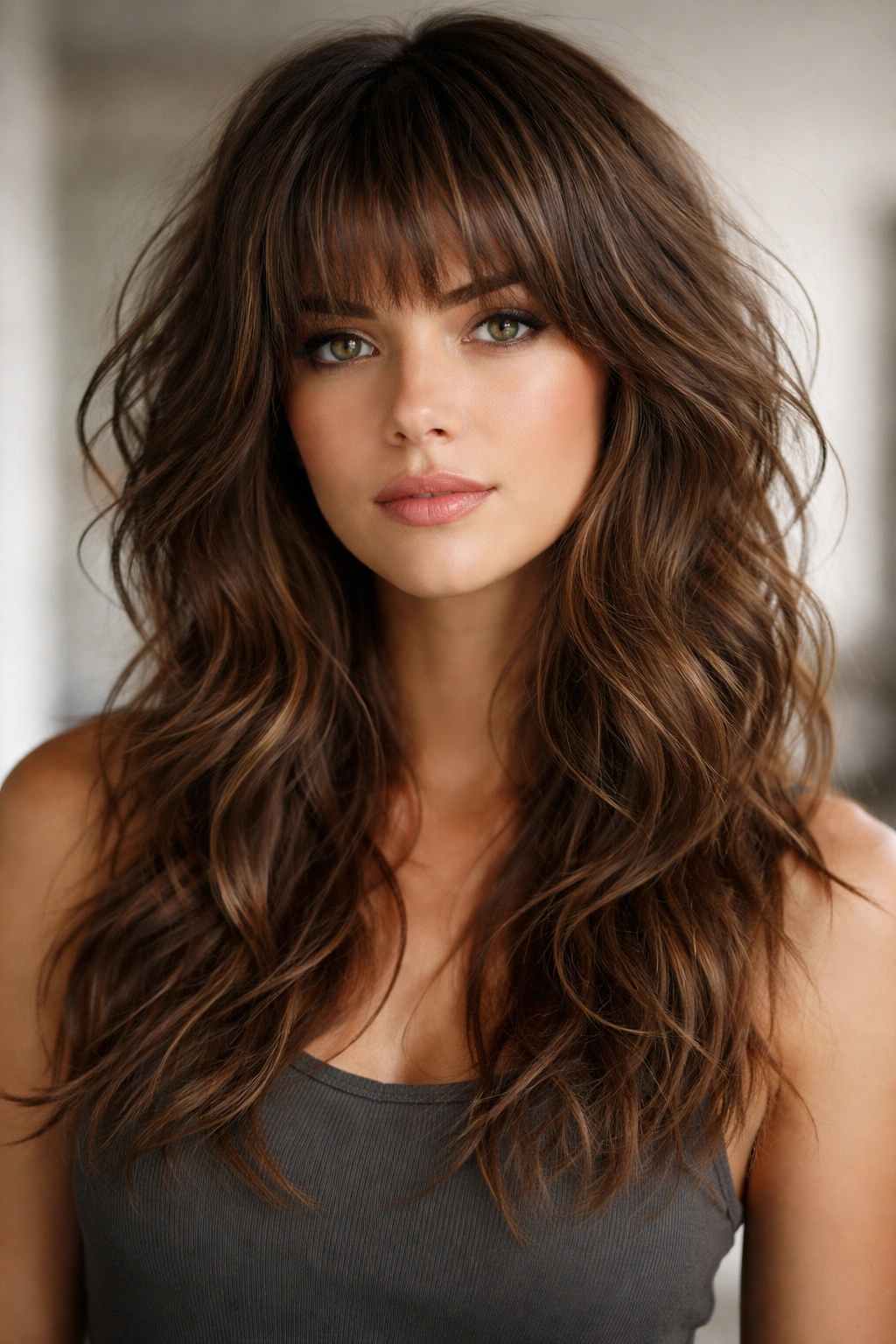
The wolf cut is a modern cut that combines the volume of a shag with the sleekness of a sharp bob. It’s essentially the most textured, layered style on this list, with choppy bangs that match the texture throughout the rest of your hair. For thick wavy hair, a wolf cut is almost a perfect match—it creates maximum movement, celebrates texture, and works beautifully with your hair’s natural patterns.
Understanding the Wolf Cut Structure
A wolf cut has short, layered, choppy pieces throughout, especially around the crown for volume, with longer underneath layers and longer pieces in front. Choppy bangs are cut to match the texture—they’re not blunt, they’re aggressively layered so they separate and move independently. The overall effect is rock-and-roll energy, but the reality is that this cut works with thick wavy hair rather than against it, making it surprisingly wearable and relatively low-maintenance.
Styling and Texture Enhancement
- Apply texturizing product to damp hair before blow-drying or air-drying
- Blow-dry with your fingers rather than a brush to enhance the choppy, textured effect
- This style literally looks better when it’s slightly messy and undone—perfect styling can actually work against it
- The choppy bangs don’t require a blunt line, so they grow out without becoming obviously too long
- Maintenance trims every 8 weeks keep the choppiness defined; longer than that and everything starts blending together
Real talk: The wolf cut has undeniable attitude, and it suits people who want to make a bold style statement. If you’ve always played it safe with your hair, the wolf cut is not the time to start. But if you’re ready for something daring and textured, this is your cut.
Final Thoughts
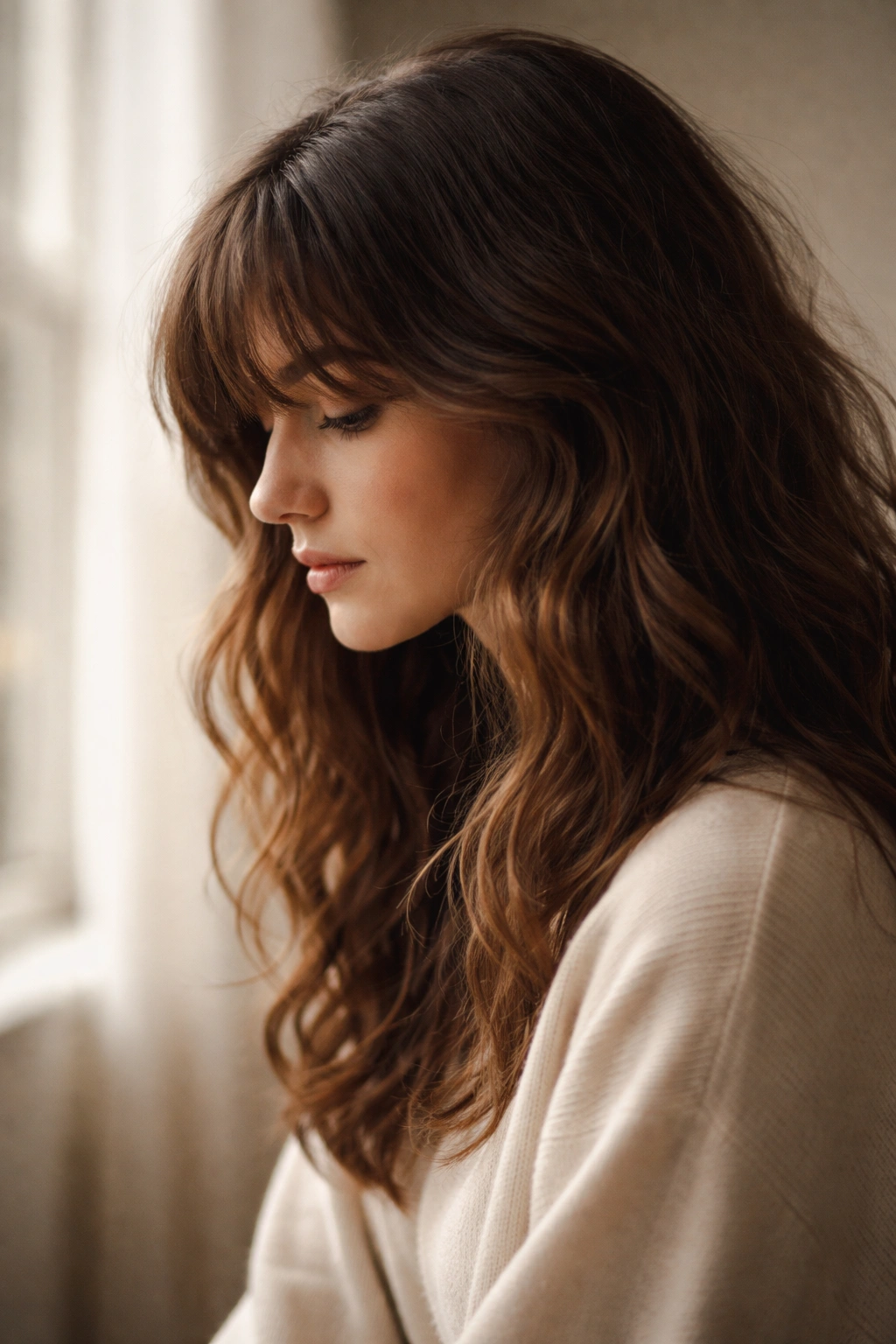
Thick wavy hair is genuinely an advantage when it comes to styling with bangs. Your texture creates natural dimension and movement that finer hair types have to work hard to achieve. The key is choosing a style that works with your hair’s personality rather than fighting it—which is exactly what all 10 of these styles do.
The range here is intentional. Some styles (like the blunt bob or sleek waves) require more styling commitment and regular maintenance for that polished look. Others (like the beachy waves or wolf cut) actually look better when you embrace the undone aesthetic and skip the blow-dryer. You might find yourself drawn to one in particular, or you might want to rotate through a few depending on your mood and season.
Before committing to any style, bring pictures to your consultation and have a detailed conversation with your stylist about your daily styling routine. Be honest about whether you’re willing to blow-dry regularly or if you prefer air-drying. Talk about how your hair behaves on humid days and what texture patterns are most prominent in your waves. When your stylist understands both your aesthetic vision and your actual lifestyle, they can cut a style you’ll genuinely love wearing, not just love looking at in the inspiration photos.
