



Wavy layered haircuts have a magic that straight cuts simply can’t replicate—they create movement, dimension, and a softness that flatters almost every face shape. When you add brown to the equation, something special happens. Brown isn’t a single, flat color; it’s a foundation that ranges from pale honey to deep espresso, with countless warm and cool undertones running through it. Layered waves in brown tones have this incredible ability to feel both effortlessly casual and intentionally polished, depending on how you style them. The layers catch light differently at each depth, making brunette colors appear richer and more dynamic than they might otherwise.
What makes wavy layered cuts in brown so compelling is their versatility. Whether you’re going for a lived-in, undone aesthetic or you want structured, defined waves, the right brown shade paired with expert layering can achieve it all. Brown hair also has a forgiving quality—it hides grow-out better than lighter colors, requires less frequent root touch-ups, and works as a canvas for subtle highlights or dimensional ribbons of color that add depth without overwhelming your look.
The key to pulling off any wavy layered cut is understanding that the cut itself does half the work, but your styling routine does the other half. You need the right products, the right tools, and honestly, a bit of patience to develop the technique. But once you nail it, you’ve got a haircut that works whether you’ve spent thirty minutes styling or you just air-dried it while rushing out the door. Let’s explore ten stunning variations that prove brown, waves, and layers are a combination worth considering.
1. Honey Brown Beachy Waves
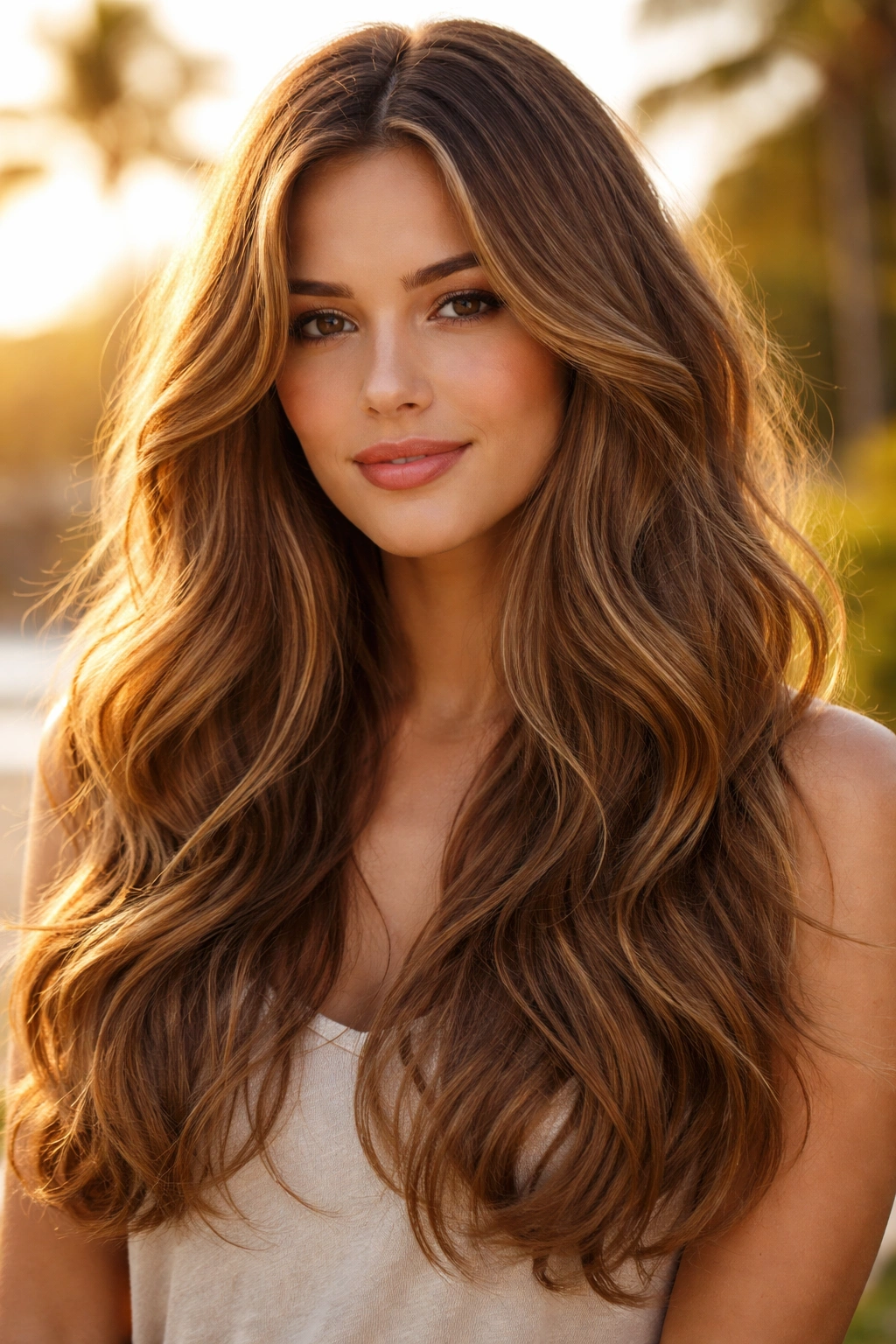
Honey brown is that warm, sun-kissed shade that suggests you’ve spent time in the sun even if you haven’t—and when it’s cut into soft, flowing waves with strategic layering, it becomes an instant mood-lifter. This style works particularly well with longer lengths, typically falling between shoulder-length and mid-back, where the weight of the hair naturally encourages wave formation. The layers are subtle and blended rather than choppy, creating a cascading effect that makes hair look fuller and more voluminous.
Why This Cut Works So Well
Honey brown has this innate brightness that seems to add dimension without needing extensive highlighting. The warmth in the tone interacts beautifully with beachy waves—the color almost glows when the waves catch light. Layers in this style are cut to encourage movement without sacrificing length, so you get the best of both worlds: a fuller feel at the ends and motion throughout the cut.
Styling and Maintenance Tips
- Use a salt spray or texturizing spray on damp hair to enhance natural wave texture
- Blow-dry with a diffuser attachment on low to medium heat to encourage soft, relaxed waves
- Apply a lightweight leave-in conditioner to keep ends soft and prevent frizz
- Sleep in loose braids to maintain waves overnight without heat damage
- Plan for root touch-ups every 8-10 weeks to keep the honey tone fresh and vibrant
This cut suits oval, heart, and oblong face shapes beautifully. The length and movement balance wider foreheads, and the softer layering is more forgiving than blunt cuts for those concerned about emphasizing jawlines.
2. Dark Chocolate Layers with Choppy Ends
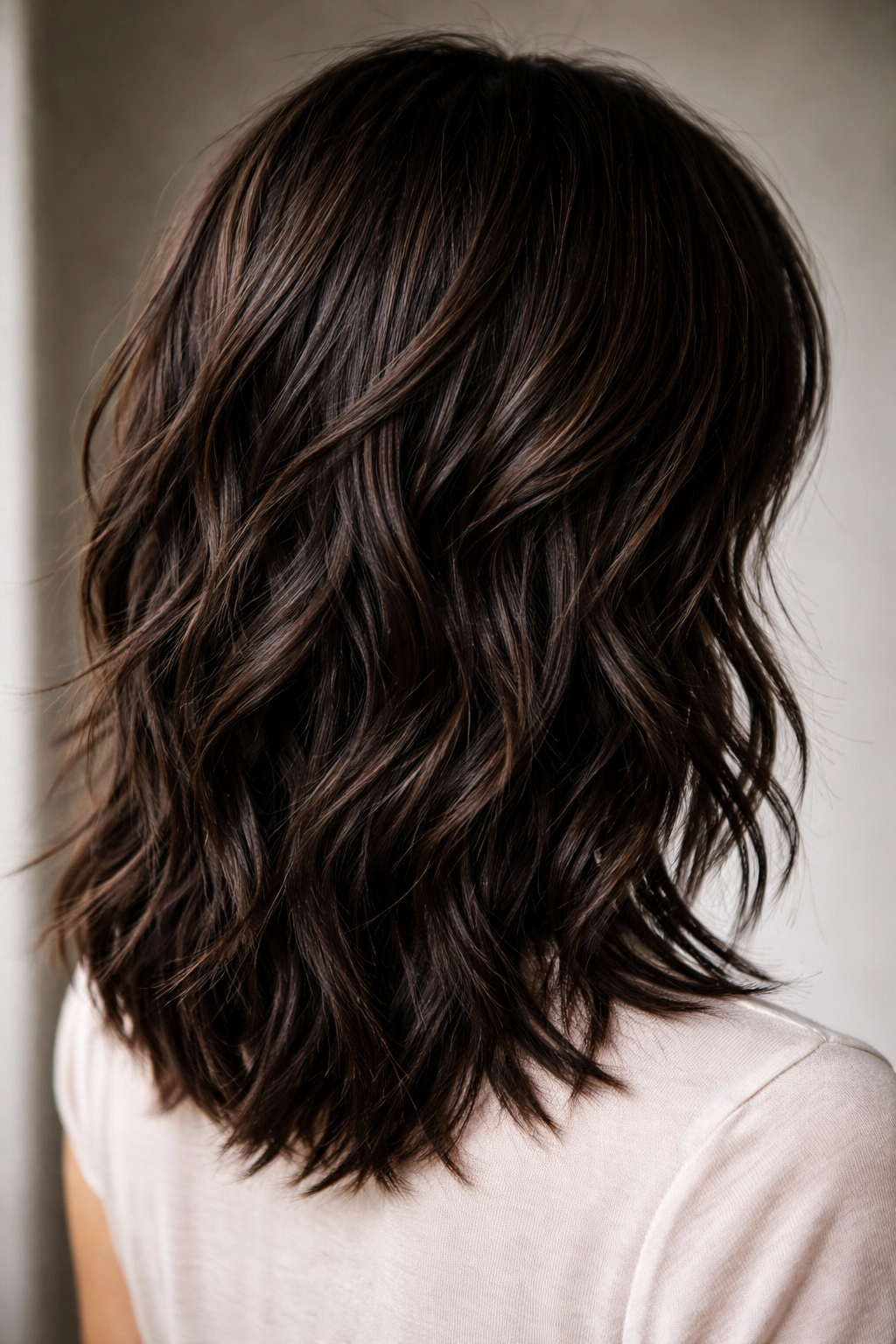
If you want a haircut with serious personality and movement, dark chocolate with choppy layers is your answer. This style goes shorter than the beachy wave look—typically around shoulder-length or slightly longer—and the choppy, textured layers are deliberately visible and distinct. The result is a cut that feels modern, slightly edgy, and undeniably cool. Dark chocolate brown provides the perfect backdrop because it makes the choppy texture pop without making the cut feel harsh.
What Makes the Choppy Texture Work
Choppy layers create separation and definition that beachy waves don’t offer. Each layer is individually textured, which means the cut has built-in dimension even when you haven’t styled it. Dark chocolate brown is deep enough that it doesn’t look sparse or see-through at the ends, but it’s warm enough that it doesn’t read as severe. The combination creates an interesting visual tension—edgy but not aggressive.
Styling and Maintenance Tips
- Dry your hair with a blow dryer and round brush to smooth the layers slightly, then use a curling iron to piece out individual sections
- Apply texturizing cream or pomade to the ends and work it through with your fingers for that choppy, separated look
- Embrace some undone texture; this cut actually looks better when it’s not perfectly smooth
- Get trims every 4-6 weeks to maintain the choppy shape—this cut loses its definition quickly as it grows
- Use dry shampoo between washes to add grit and make styling easier
This cut works especially well for those with thicker hair or naturally wavy texture. It also suits angular face shapes because the choppy layers soften strong features, and the shorter length doesn’t overwhelm petite frames.
3. Caramel-Ribboned Waves
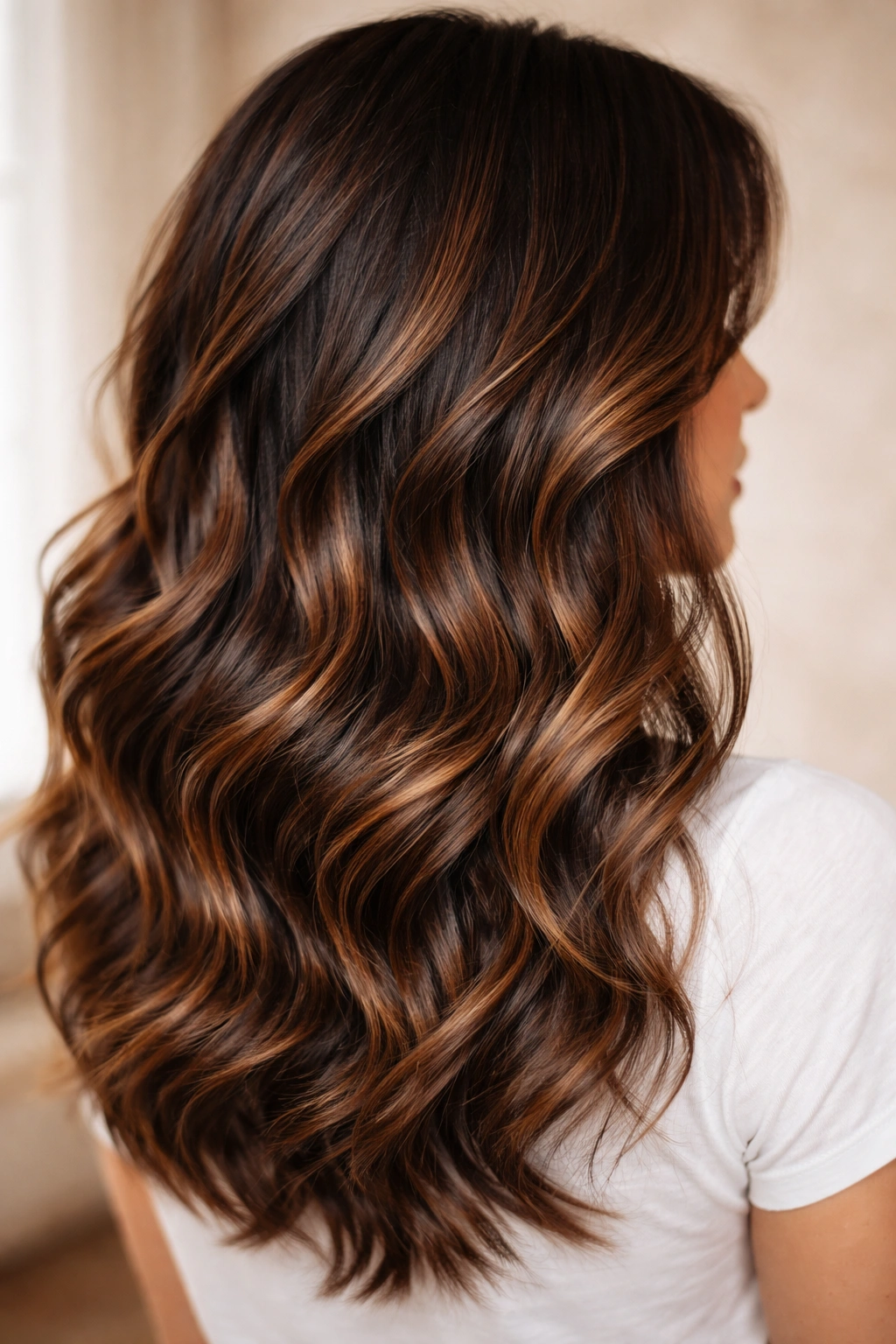
Caramel ribboning is a dimensional coloring technique where lighter, warmer tones are painted or ballyaged through the mid-lengths and ends of darker brown hair. When combined with wavy layers, this technique creates an almost three-dimensional effect—the waves showcase the color variation as they move, and the lighter ribbons seem to dance through your hair. This style is typically medium-length with flowing layers that work with the color dimension rather than against it.
The Color and Cut Partnership
The magic of caramel ribboning with wavy layers is that the color becomes part of the texture story. As waves form and your hair moves, the lighter caramel tones appear and disappear, creating visual movement that’s separate from the physical movement of your hair. The darker brown base keeps the look cohesive and wearable, while the caramel adds sophistication and interest.
Styling and Maintenance Tips
- Invest in a curling iron or wand; this style shows off wave texture beautifully when intentionally styled
- Use a heat protectant spray before any heat styling
- Apply a color-safe serum to the ends to keep the caramel tones looking bright
- Schedule root touch-ups every 6-8 weeks and caramel refreshes every 10-12 weeks
- Consider purple or blue-toning shampoo once a week if your caramel starts looking too brassy
This style flatters most face shapes, but it’s particularly stunning on those with longer, narrower faces where the dimension adds width and interest. The lighter ribbons draw attention upward, making it a great choice if you want to highlight cheekbones.
4. Espresso Brown Shag Cut
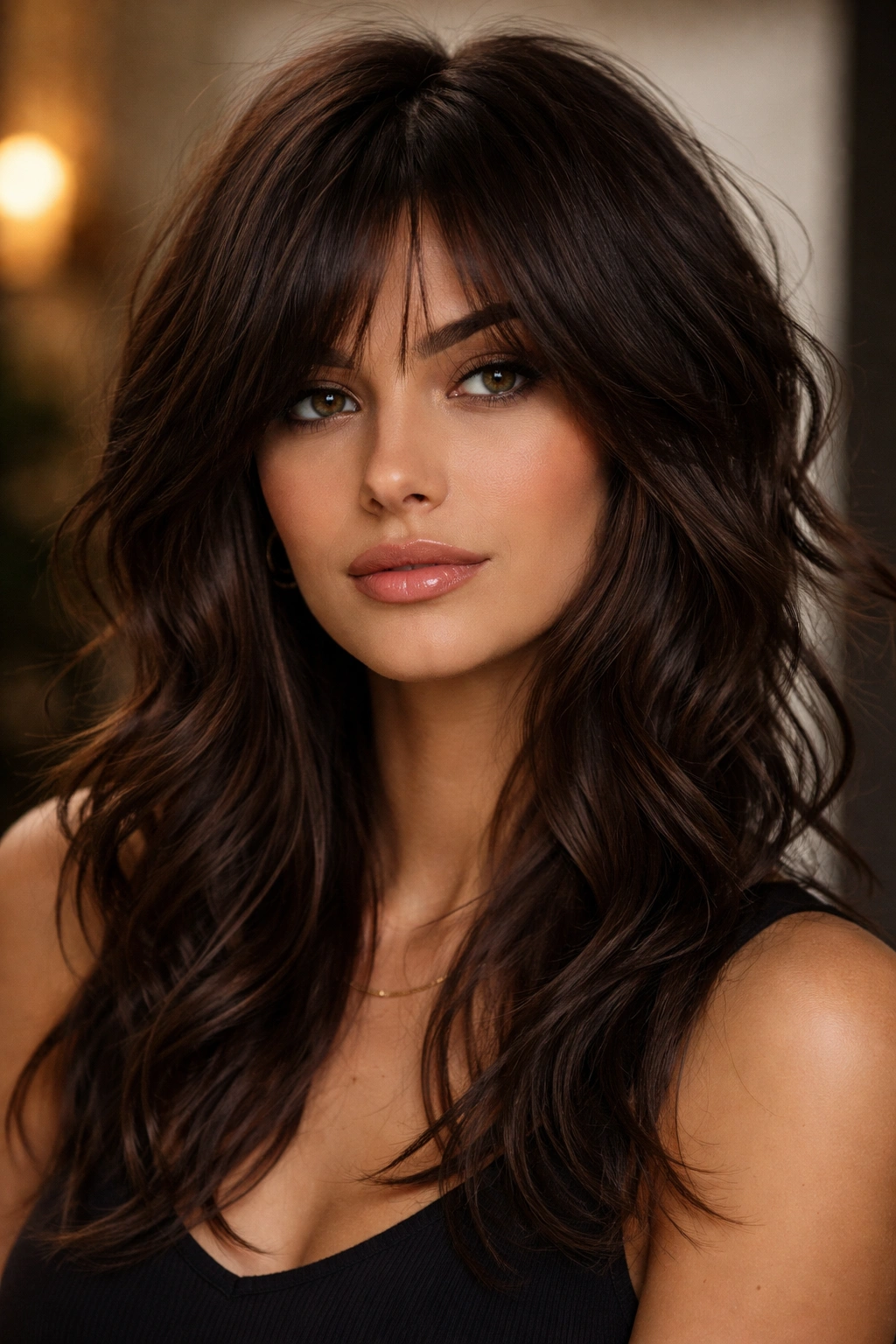
The shag is back, and in espresso brown, it’s refined rather than dated. A modern shag combines shorter, textured layers at the crown with longer pieces in front, creating movement and volume where you want it most. Espresso brown—that deep, almost-black shade with brown undertones—makes a shag cut feel sophisticated rather than grunge-inspired. The layers in a shag are more pronounced and uneven than in other styles, but that’s the point.
Why the Shag Commands Attention
A shag cut works because it plays with proportion and creates instant texture. The shorter layers at the crown add lift, while the longer front pieces frame the face and create a flattering silhouette. In espresso brown, the depth of color means every layer is visible and dimensional. This cut is best for those who embrace undone styling and don’t mind a bit of texture in their hair.
Styling and Maintenance Tips
- Work with your natural texture; if you have waves, lean into them rather than fighting them
- Use texturizing spray or sea salt spray on damp hair before blow-drying
- Blow-dry with fingers or a diffuser to encourage layers to separate and move independently
- Consider a lightweight mousse at the roots for added volume and hold
- Trim every 6-8 weeks to maintain the layered shape; shags lose their structure faster than other cuts
- Embrace bedhead texture; this cut is designed for a slightly undone look
A shag works wonderfully for those with fine hair who want volume, and for those with thick, wavy hair who want to use their natural texture as a styling tool. It suits round and square face shapes particularly well because the longer front pieces and layered texture create vertical lines that lengthen the face.
5. Auburn-Tinted Wavy Lob
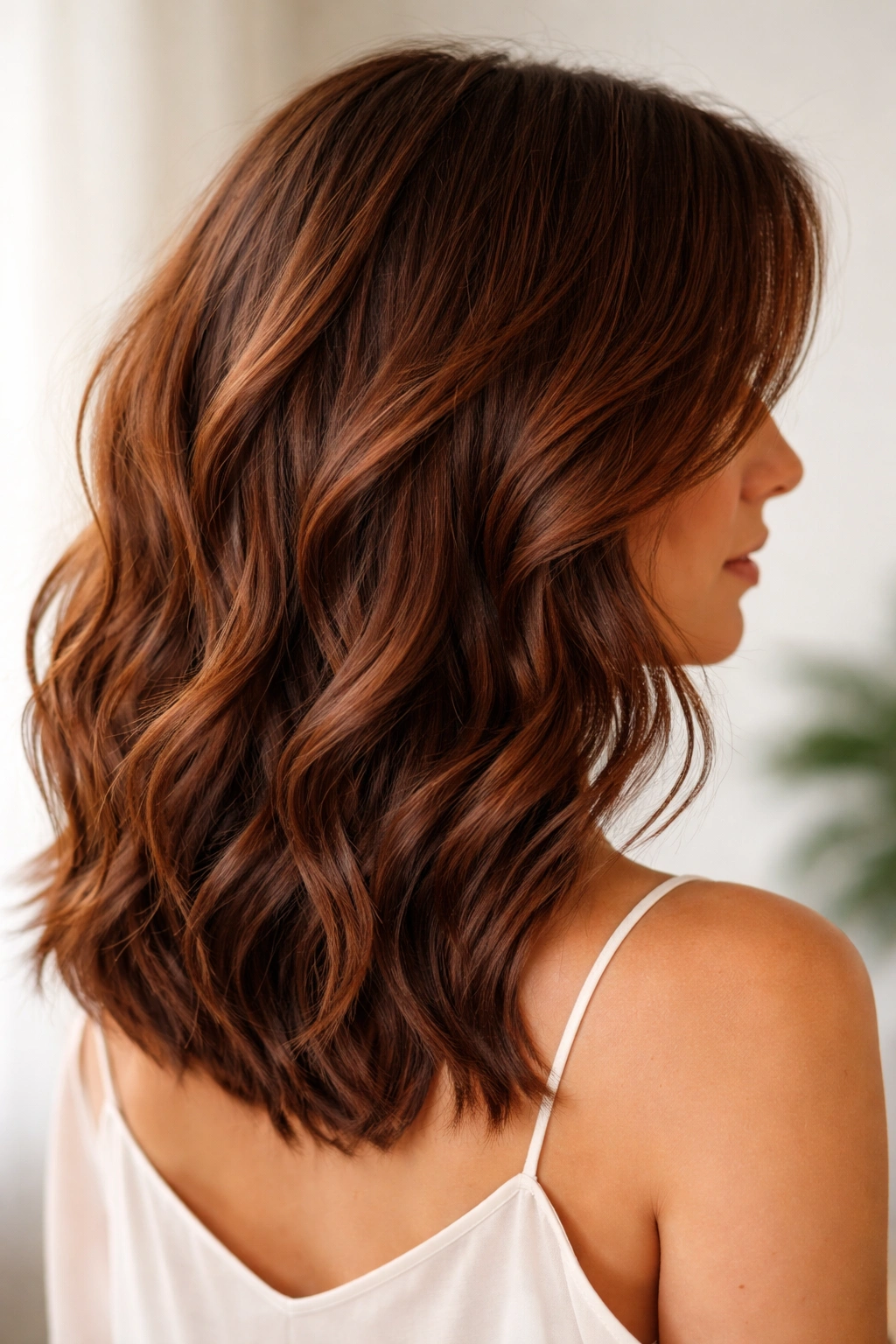
A lob (long bob) that falls somewhere between shoulder-length and mid-back, tinted with auburn undertones, bridges the gap between a serious bob and long, flowing hair. Auburn is that reddish-brown tone that’s warm and energetic without being quite red. Layered subtly throughout, an auburn lob has movement and texture without sacrificing the polished, intentional feel of a structured cut. This style is incredibly wearable because it works both up and down, styled straight or wavy.
The Lob’s Particular Advantage
A lob’s length is generous enough that you can experiment with different styling—wear it wavy and undone, blow it out straight for a sleeker look, or half-up for an elegant style. Auburn tones add warmth and vibrancy that can make skin appear fresher and more glowing. The layers in a lob are usually longer and less choppy than in shorter styles, maintaining the overall cohesion of the cut while still providing movement and dimension.
Styling and Maintenance Tips
- Style with a large barrel curling iron or wand for loose, romantic waves
- Use a texturizing spray or sea salt spray to enhance wave texture and add grip for styling
- Try blow-drying with a rounded brush to smooth layers while maintaining softness
- Apply an anti-frizz serum to ends, especially important for longer lengths
- Schedule trims every 8-10 weeks to maintain the layered shape
- Auburn tones can fade in sunlight, so use UV-protective hair products during warmer months
An auburn lob is particularly flattering for those with longer face shapes because the length and waves add width, and for anyone with olive or golden undertones in their skin, as auburn brown creates a natural, harmonious pairing.
6. Warm Chestnut Textured Layers
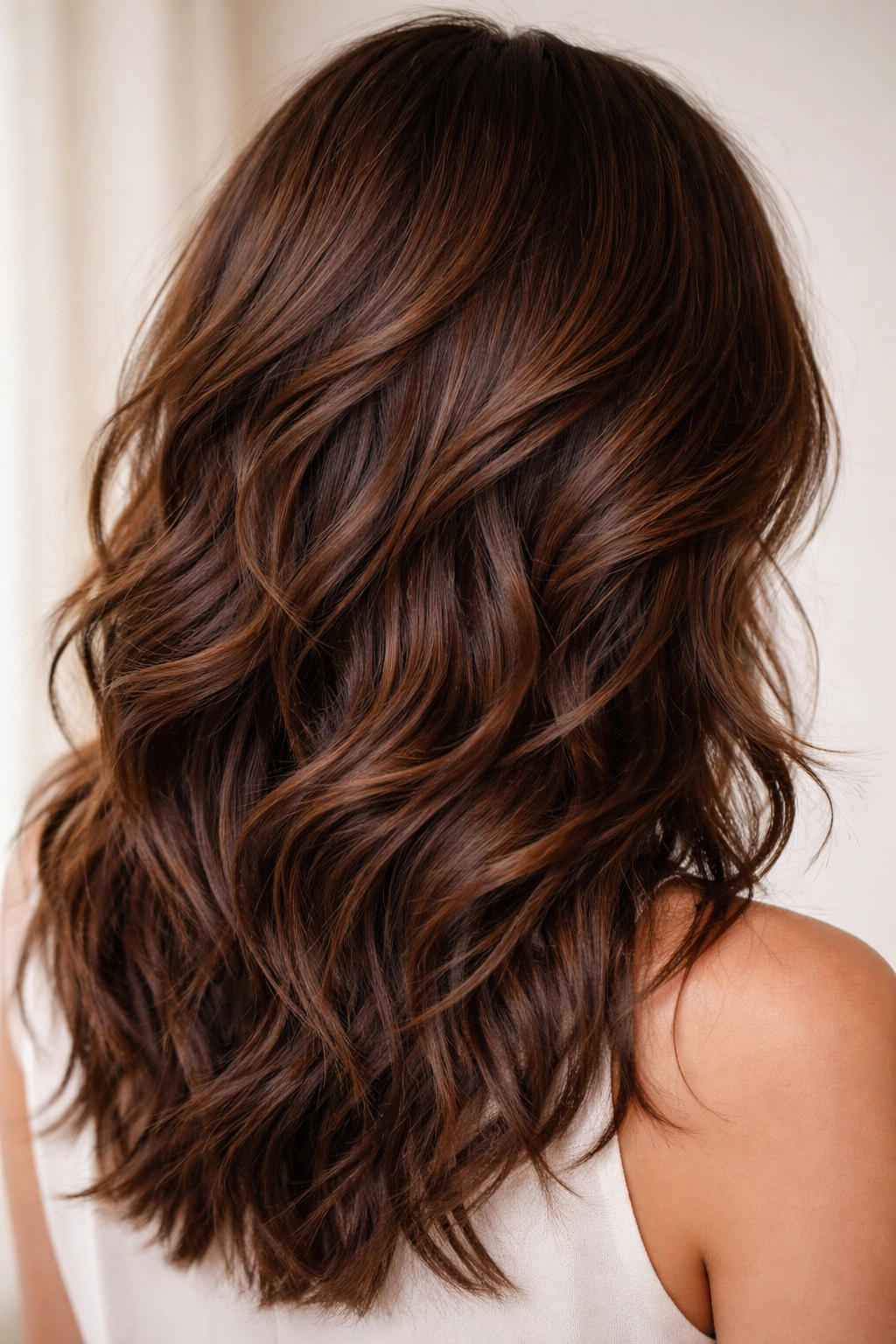
Warm chestnut brown is rich, approachable, and immediately flattering—it’s a shade that seems to work with almost every skin tone. When cut into intentionally textured layers throughout, chestnut brown creates a cut that looks intentional and polished, with visible texture that suggests you’ve styled it but doesn’t demand perfect execution. This style typically sits around shoulder-length, where the weight encourages waves while the shorter length keeps everything manageable.
The Texture as a Design Element
In this style, texture isn’t an accident—it’s the point. The layers are cut at different lengths and angles to create surface texture even when hair is freshly washed and unstyled. Warm chestnut brown shows texture beautifully because the warm undertones interact with light differently at each layer, creating dimension and depth naturally. The result is a cut that looks good on day one and actually improves as waves and texture develop over subsequent days.
Styling and Maintenance Tips
- Apply a texturizing mousse or cream to damp hair for enhanced texture
- Use a diffuser attachment on your blow dryer to dry without smoothing out layers
- Scrunch hair gently while drying to encourage wave formation
- On second or third day hair, use dry shampoo to add grip and enhance texture
- Sleep in braids or a pineapple style to maintain waves and texture overnight
- Trim every 6-8 weeks to keep the layered shape crisp and defined
This cut is ideal for those with naturally wavy or curly texture who want to work with their hair rather than against it. It’s also wonderful for anyone seeking a low-maintenance style that looks styled without requiring heat tools every time you wash your hair.
7. Dusty Brown Tousled Waves
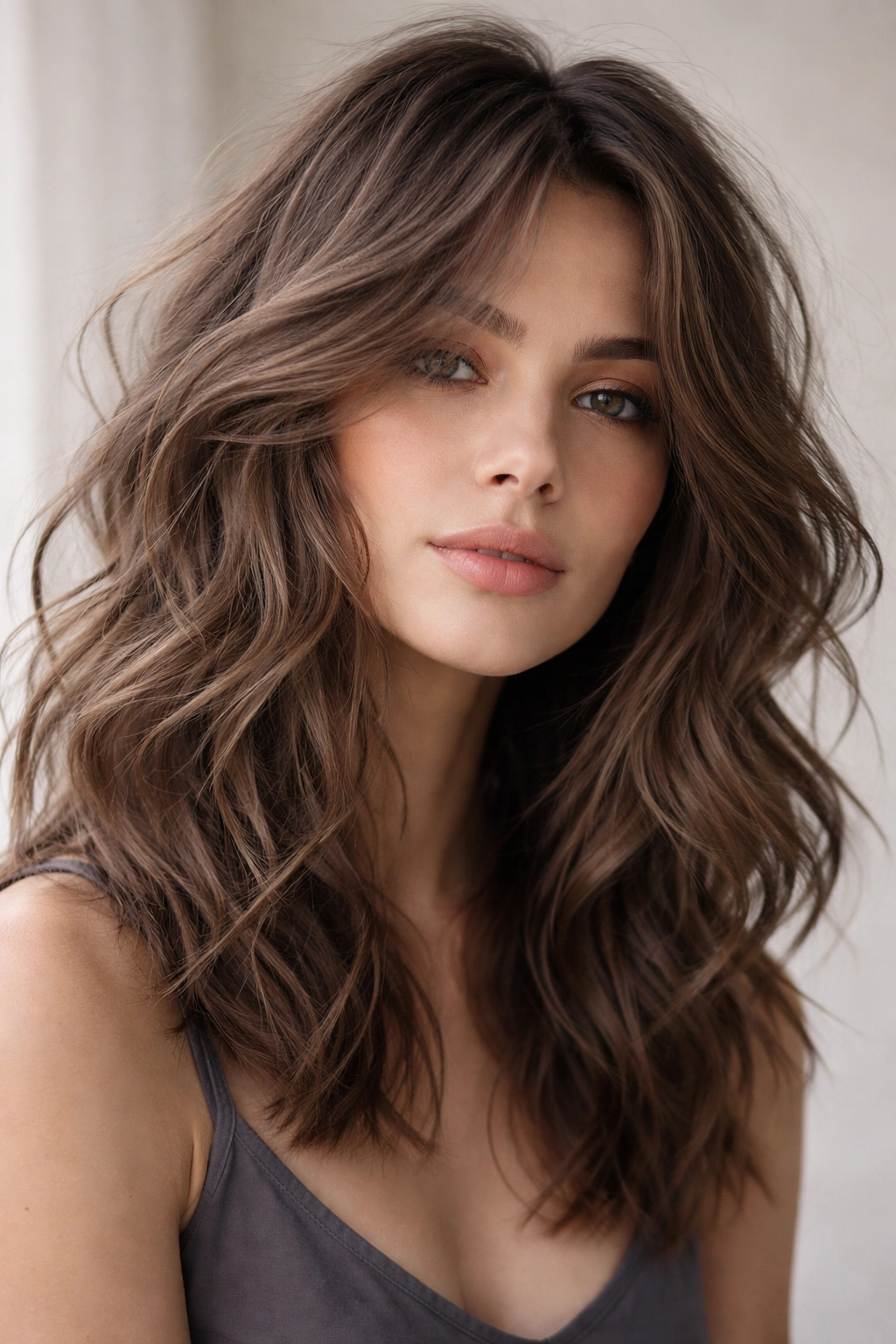
Dusty brown—also called mouse brown or greige brown—is a more muted, cool-toned brown that sits somewhere between brown and gray. It’s trendy and unexpected, and when layered for tousled waves, it creates a sophisticated, editorial look. Tousled implies deliberate undone-ness, which is key to this style’s appeal. The layers are cut to encourage movement and separation, and the dusty tone means the style reads as intentional and fashion-forward rather than accidental.
Why Dusty Tones Stand Out
Dusty brown is cooler than warm browns, which means it photographs beautifully and photographs particularly well in natural light. It doesn’t have the warmth of honey or caramel, so it feels more modern and slightly edgy. The muted undertone prevents the color from appearing flat or washed out, and the cooler tone means that even subtle wave texture reads as dimensional and interesting against the hair.
Styling and Maintenance Tips
- Use a texturizing spray or dry shampoo to create tousled texture and separation
- Style with a curling iron, wrapping sections loosely around the barrel and releasing gently
- Apply a light hair oil to ends to prevent frizz while maintaining texture
- Dusty brown can appear brassy if it fades; use purple-toning shampoo every 10-14 days
- Tousled waves show grow-out texture beautifully, so you can extend time between cuts to 10-12 weeks
- Sleep on a silk pillowcase to reduce frizz and maintain wave definition
This style suits those who want to make a statement with their hair but prefer subtlety in execution. It works especially well for cool undertones in skin, and it’s flattering for those seeking a modern, slightly unconventional look that still reads as polished.
8. Mocha Dimensional Waves
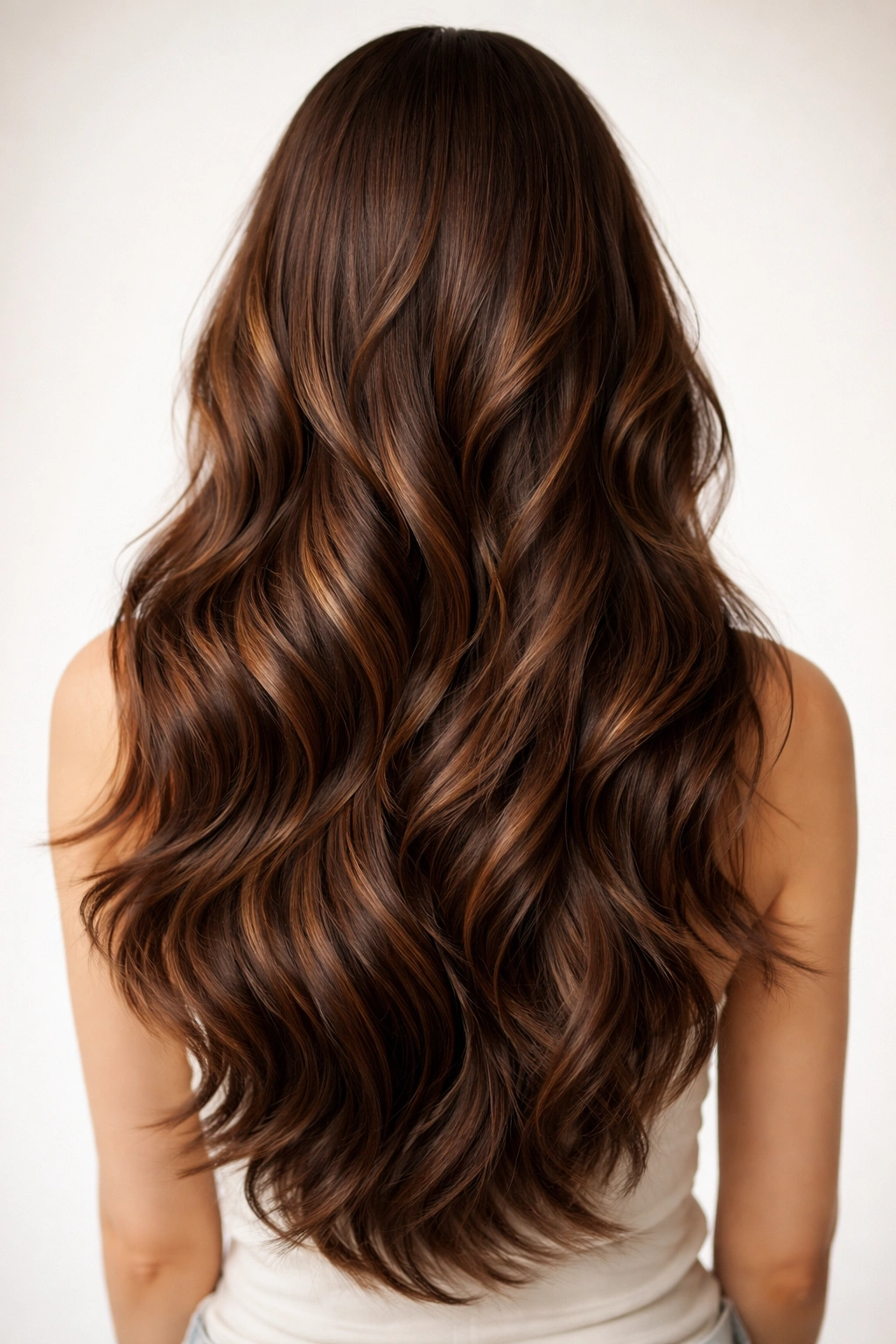
Mocha brown is that creamy, slightly cool-toned shade that’s softer than espresso but richer than caramel. When cut with strategically placed dimensional layers—sometimes created through color placement, sometimes through cut technique alone—mocha creates a multidimensional effect that makes hair appear fuller and more interesting. The waves in this style are typically loose and flowing, mid-back length, with layers that work subtly to create movement without overwhelming the overall shape.
The Dimensional Approach
With mocha, dimensionality can come from color, from cut, or from both. Some stylists create subtle highlights or lowlights within the mocha tone; others rely on the cut technique to create shadow and light through layering. Either way, the goal is a cut that looks rich and complex, like your brown hair contains multitudes. Mocha’s slightly cool undertone means that shadows and dimension read as sophisticated rather than choppy.
Styling and Maintenance Tips
- Blow-dry with a round brush for smoothness, then use a curling iron to add loose waves
- Apply a light mousse to roots before blow-drying to create volume
- Use a shine serum or gloss spray to enhance dimension and make colors appear richer
- Mocha tones can shift if your base color is dimensional; schedule color appointments every 6-8 weeks
- Embrace second-day waves; they often show dimension better than freshly-styled hair
- Use a microfiber towel or t-shirt to dry hair gently and prevent frizz
This style is particularly flattering for those with warm or neutral undertones, as mocha brown works as a bridge between warm and cool. It’s also wonderful for anyone seeking a low-commitment dimensional look that doesn’t require extensive highlighting or coloring.
9. Mahogany-Toned Choppy Layers
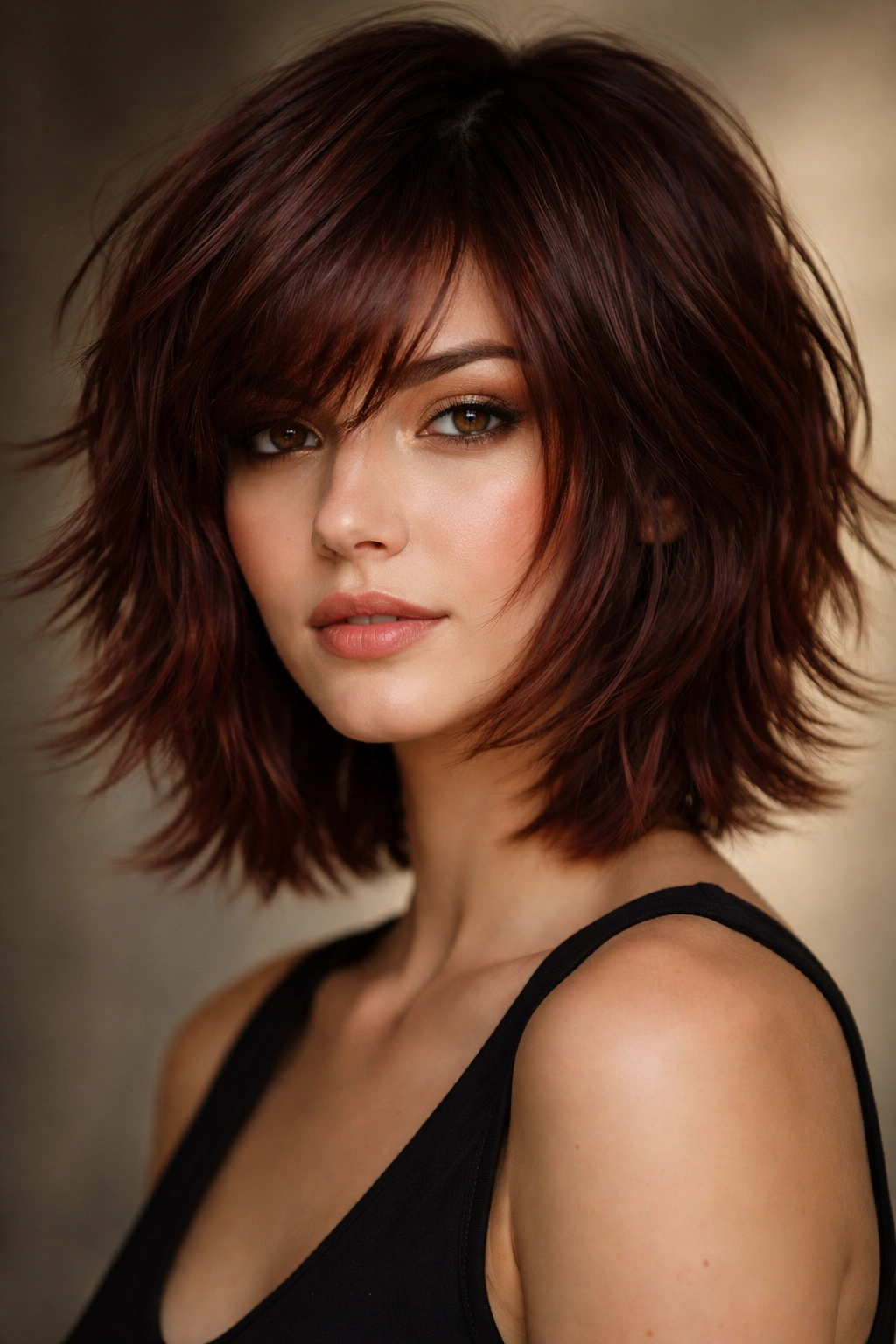
Mahogany brown—reddish, warm, and rich—makes a dramatic statement, and when cut into choppy layers, it becomes even more striking. This style is shorter, typically around chin-length or slightly longer, with distinct, visible choppy layers throughout. The mahogany tone in choppy layers creates visual interest and movement that reads as fashion-forward and intentional. This isn’t a subtle cut; it’s a statement piece that works for those ready to commit to a bold look.
The Drama of Mahogany and Choppy Texture
Mahogany is a bold color choice, and pairing it with choppy layers amplifies that boldness. The reddish undertones become more visible as light hits the choppy layers, creating a dynamic, almost multidimensional effect. The shorter length and choppy texture make this a high-style option that photographs beautifully and turns heads. It’s a cut for those who use their hair as a form of self-expression.
Styling and Maintenance Tips
- Use a lightweight styling cream or pomade to define and separate choppy layers
- Blow-dry with your fingers or a diffuser, scrunching gently to enhance texture
- Consider curling sections lightly with a thin curling iron for added definition
- Mahogany tones can shift to orange if not maintained; use color-safe, sulfate-free products
- Plan for color touch-ups every 4-6 weeks to keep mahogany looking rich and true
- Trim every 4-6 weeks to maintain choppy definition; this cut loses its shape quickly
- Embrace slightly tousled texture; this cut looks best when it’s not perfectly smooth
This style suits those with confident personal style and those willing to maintain it. It’s flattering for oval and heart-shaped faces, and it works especially well for those with warm skin undertones that complement the reddish mahogany tones.
10. Creamy Brown Face-Framing Waves
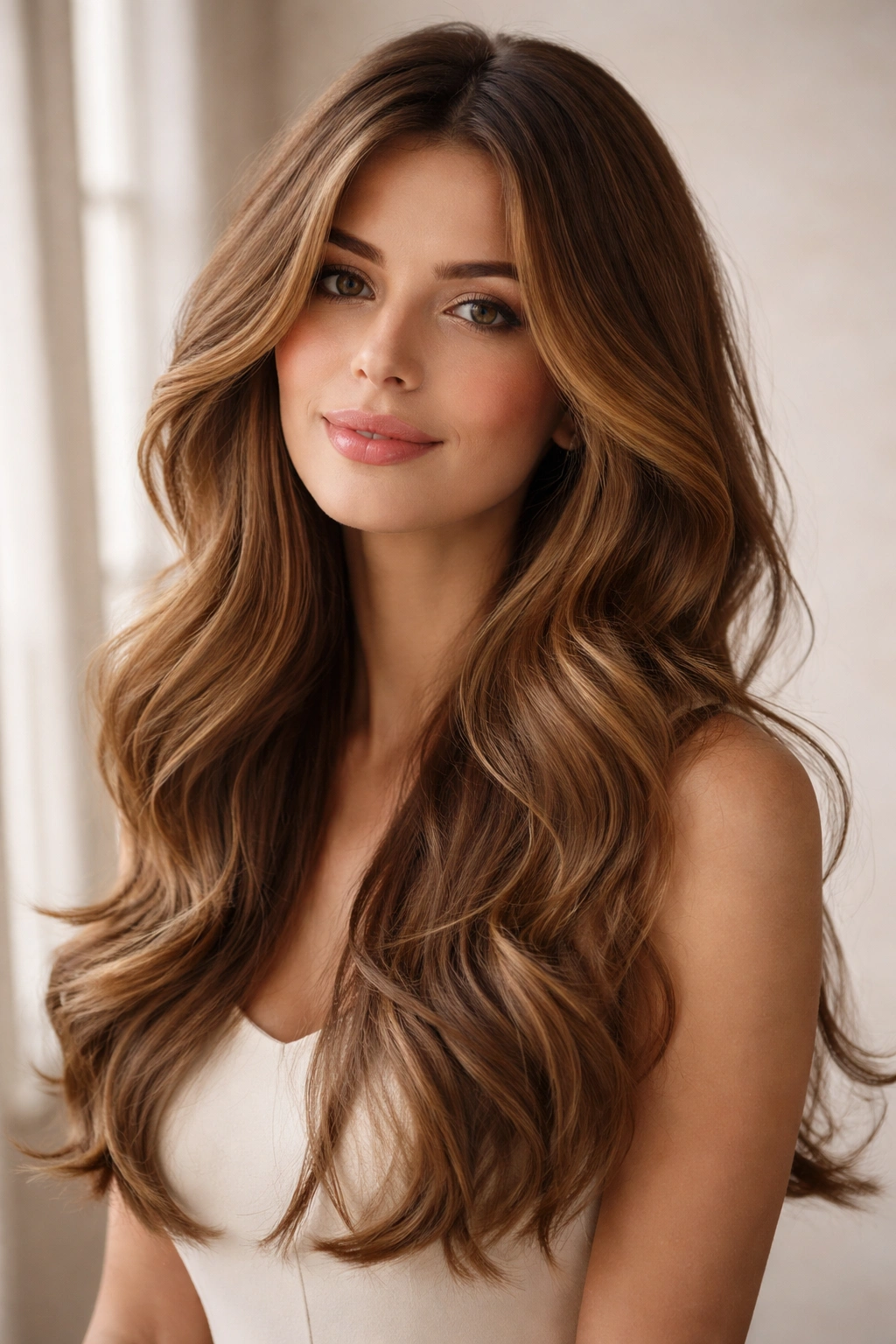
Creamy brown is soft, approachable, and almost universally flattering. It’s that warm, pale-to-medium brown that feels like a natural base. Cut with strategic face-framing layers that are intentionally longer in front and gradually shorter toward the back, this style prioritizes flattery. The waves are loose and romantic rather than tight or defined, and the face-framing layers work with the waves to create a soft, open frame for the face.
Why Face-Framing Is Universally Flattering
Face-framing layers work because they draw attention upward and create a visual opening around the face. Combined with soft waves and a creamy, neutral brown tone, the result is a style that feels effortlessly pretty and intentional without being high-maintenance. This cut works for nearly every face shape because the customizable length of the face-framing pieces means your stylist can adjust placement to suit your specific features.
Styling and Maintenance Tips
- Style with a large barrel curling iron, focusing on face-framing pieces to ensure they wave away from the face
- Use a volumizing mousse at the roots to enhance waves and add lift
- Apply a lightweight leave-in conditioner to keep waves soft and prevent frizz
- Blow-dry with a round brush for a polished look, or use a diffuser for a more textured approach
- Sleep in loose braids or a bun to maintain waves without heat damage
- Trim every 8 weeks to maintain the face-framing shape and prevent wispy ends from becoming too thin
- Creamy brown is forgiving with grow-out; root touch-ups only needed every 8-10 weeks
This style is perhaps the most versatile of all; it flatters every face shape, works with most skin tones, and suits both casual and dressy occasions. The face-framing element means it’s particularly flattering for those with wider jawlines or prominent foreheads, as the longer pieces direct attention upward.
Final Thoughts
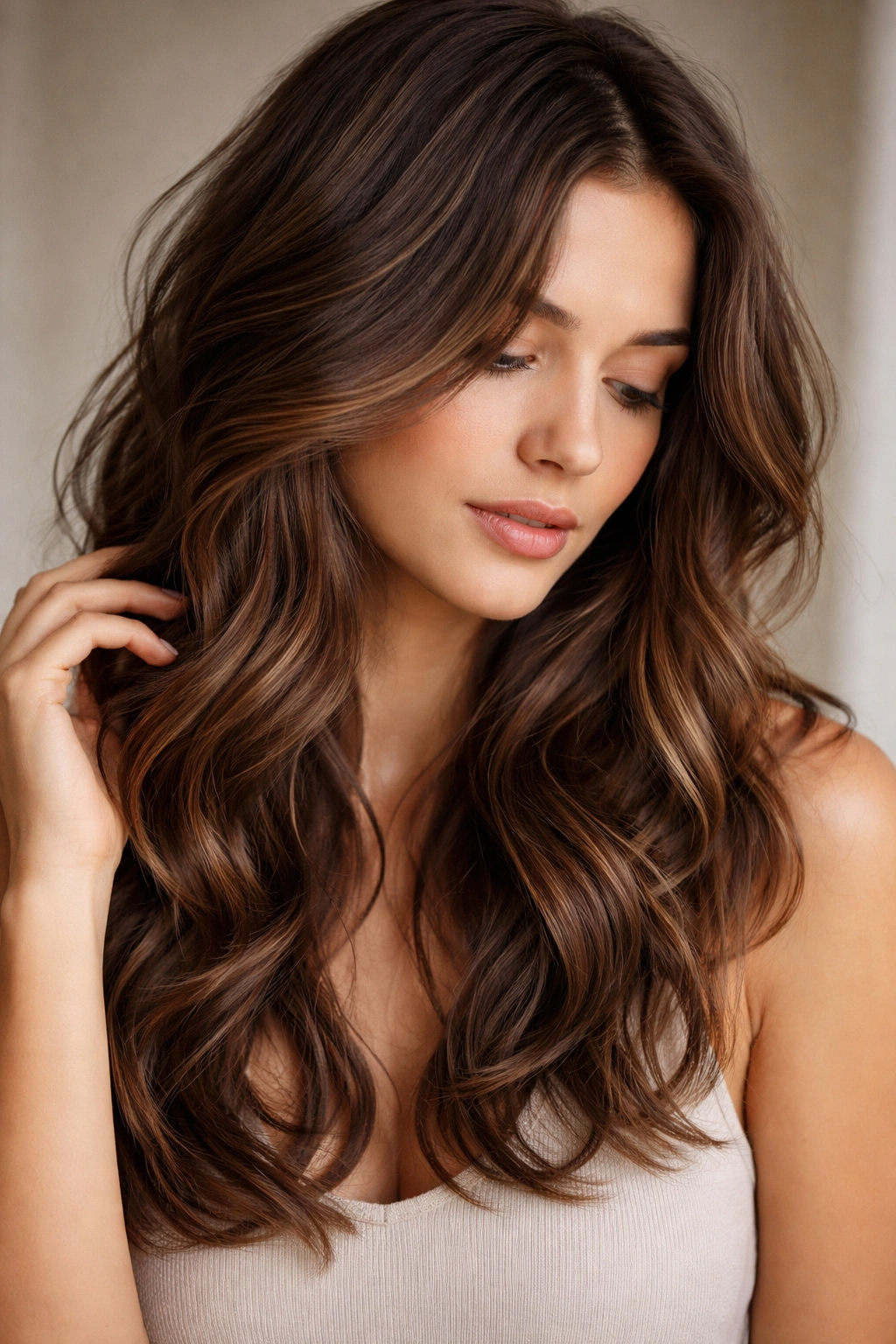
Choosing between these wavy layered cuts in brown comes down to understanding what works with your lifestyle, your natural hair texture, and what level of styling you’re willing to commit to. Some of these cuts—the shag, the textured layers, the beachy waves—work beautifully with your natural texture and minimal styling. Others—the mocha dimensional, the caramel-ribboned, the mahogany choppy—benefit from intentional styling and may require more frequent maintenance and trims.
The brown color family is your secret weapon here. Brown doesn’t require the platinum-blonde precision of lighter shades, it works with most skin tones, and it genuinely makes wavy texture look better. The layers are what make it work; they’re what create movement, reduce bulk, and transform a simple cut into something stylish. When you combine the right brown shade with expert layering and waves, you get a haircut that works whether you’re styling it carefully or letting it air-dry. That’s the real magic—a cut that’s forgiving enough for real life, but beautiful enough for your best days.
