



Shoulder-length hair is the perfect canvas for experimenting with texture, and when you pair it with side bangs, you unlock a style range that works for nearly every face shape and hair type. Side bangs have a unique magic—they softly frame the face, draw attention to your cheekbones, and add dimension without requiring an extreme cut. For wavy hair specifically, this combination is incredibly forgiving because waves naturally create movement and visual interest that makes side bangs look intentional and polished, whether you’re aiming for beachy, sophisticated, or undone.
The challenge most people face isn’t whether side bangs will work with wavy hair—they absolutely do—but rather finding a style that actually suits their specific wave pattern, face shape, and daily styling commitment. A cut that looks gorgeous on someone with loose, uniform waves might not translate the same way for someone with tighter texture or face-framing layers. That’s why understanding the nuances of each style matters far more than just picking whichever photo appeals to you most.
What makes shoulder-length hair with side bangs so versatile is the length itself. You’re long enough to sweep your hair into a ponytail or clip when you need a break from styling, yet short enough that your waves dry faster and hold shape throughout the day without becoming a heavy, droopy mess. Add side bangs to this equation, and you’ve created a style that works equally well for a casual Tuesday or a date night on Saturday.
1. Tousled Waves with Swept Side Bangs
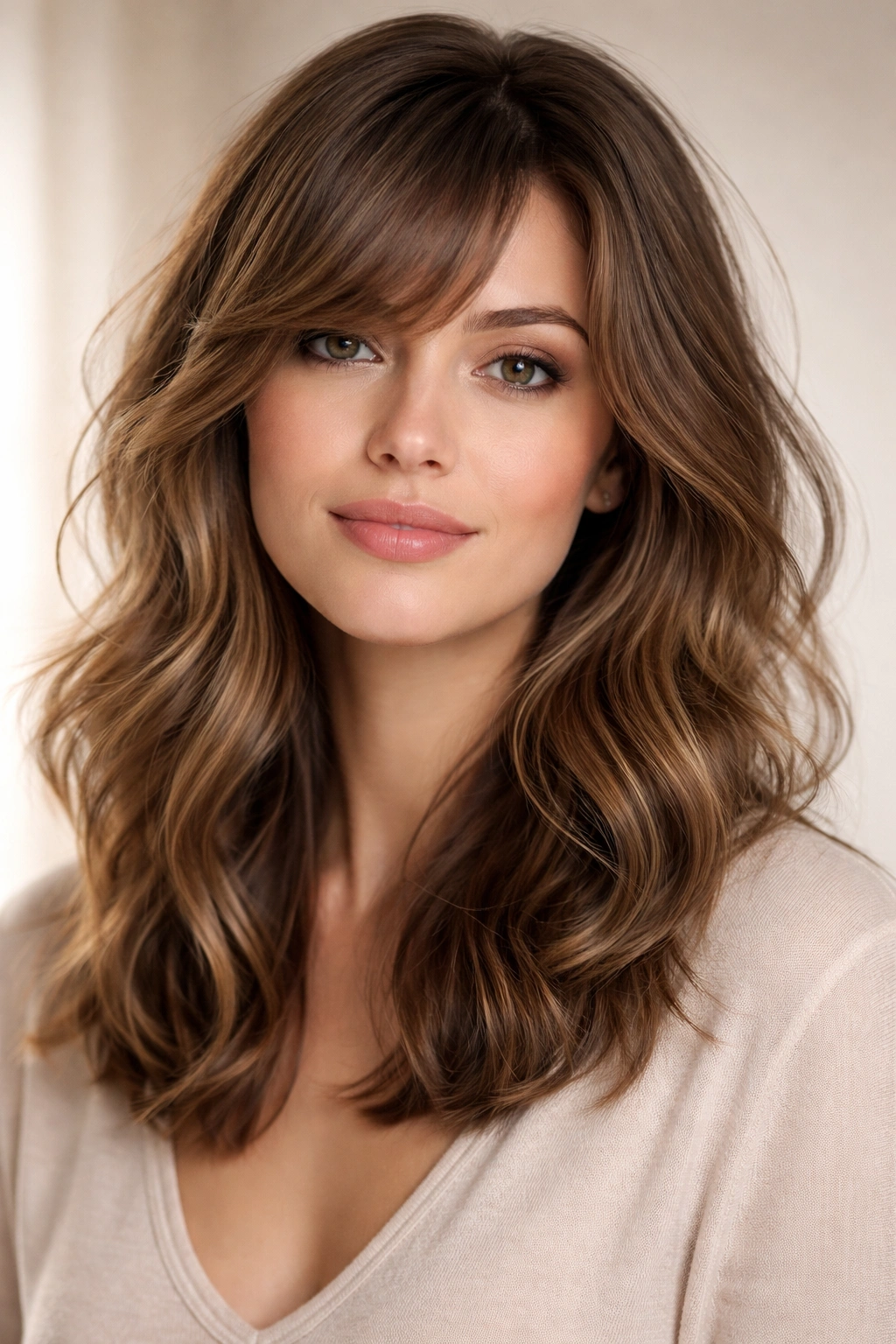
This is the ultimate “I woke up like this” style, and it’s far more achievable with a good cut than most people realize. The cut features softly layered sides that blend seamlessly into the shoulder-length ends, with side bangs that are longer on the outer edge (extending to your cheekbone) and gradually swept back into the main hair. The intentional tousled quality comes from the way the layers interact with your natural wave pattern, creating undone texture that feels effortless but actually requires strategic scissor work.
Why It Works for Wavy Hair
Tousled waves actually look better with natural texture than they do on straight hair—your waves do half the work for you. This style thrives on movement, so having inherent wave or curl gives the cut immediate dimension and bounce. The side bangs break up the width of the face without creating a blunt line, which is why they work so well when swept across rather than cut straight.
How to Style It
- Apply a lightweight wave-enhancing mousse to damp roots for lift and definition
- Use a diffuser on your blow dryer on low-medium heat, scrunching as you dry to encourage natural waves to form
- Once dry, gently tousle with your fingers and a small amount of texturizing spray for hold without crunchiness
- Tuck side bangs behind your ear occasionally to vary the look throughout the day
- Refresh second-day waves with a texture spray and re-scrunch for instant volume
Pro tip: This style looks intentionally messier on day two or three when your waves have had time to settle and your hair product has created more grip—lean into that, don’t fight it.
2. Textured Shag with Side-Swept Fringe
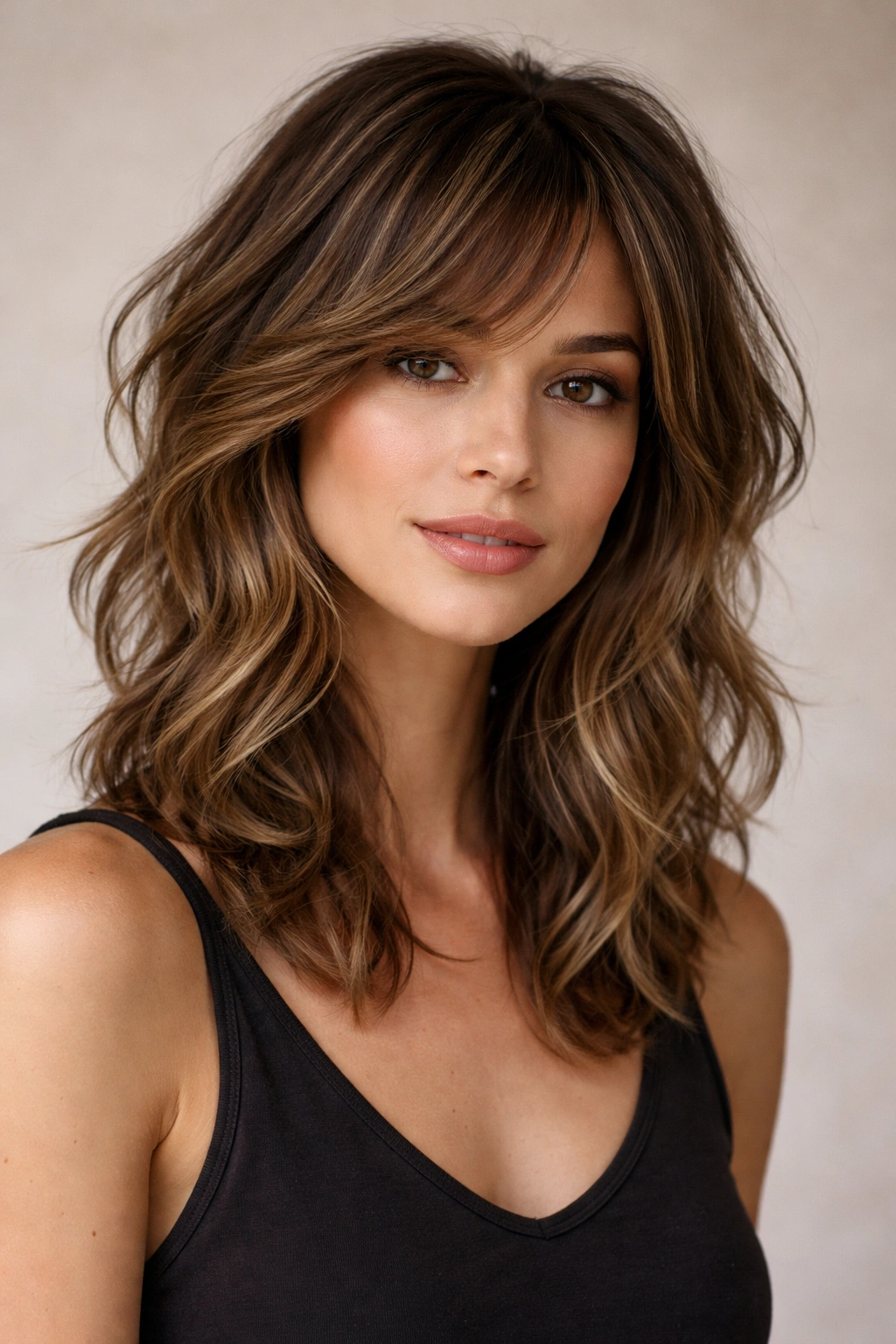
The modern shag is having a major moment, and for good reason—it’s incredibly flattering on wavy hair and gives you authentic 70s-inspired texture without looking costume-y. This version pairs a shaggy, choppy cut with layers throughout that range from shoulder length on top to slightly shorter underneath, creating natural lift and movement. The side-swept fringe extends from around your temple area and gets incorporated into the overall layer pattern rather than sitting as a separate piece of hair.
Why It Works for Wavy Hair
Shags are designed for movement, and wave pattern is the ultimate movement tool. The choppy layers mean your hair never looks flat or heavy, which is crucial for shoulder-length hair that could otherwise feel blunt. The side-swept fringe works especially well here because the surrounding layers support it and keep it from falling flat against your face.
How to Style It
- Work a strong-hold curl cream or gel through damp hair, scrunching upward to encourage wave formation
- Blow dry with a diffuser, aiming to dry about 70 percent of the way before letting the rest air dry for natural texture
- Use a texturizing spray or dry shampoo at the roots for additional grip and volume
- Occasionally flip your head upside down and scrunch through the shag to reactivate waves
- The side fringe needs a light touch—don’t try to straighten or overmanage it; let it follow the natural shag pattern
Worth knowing: Shags require more frequent trims than straight cuts because the layers can look scraggly when they start to grow out. Plan on a trim every 6-8 weeks if you want to maintain the intentional choppy look.
3. Effortless Beach Waves with Soft Bangs
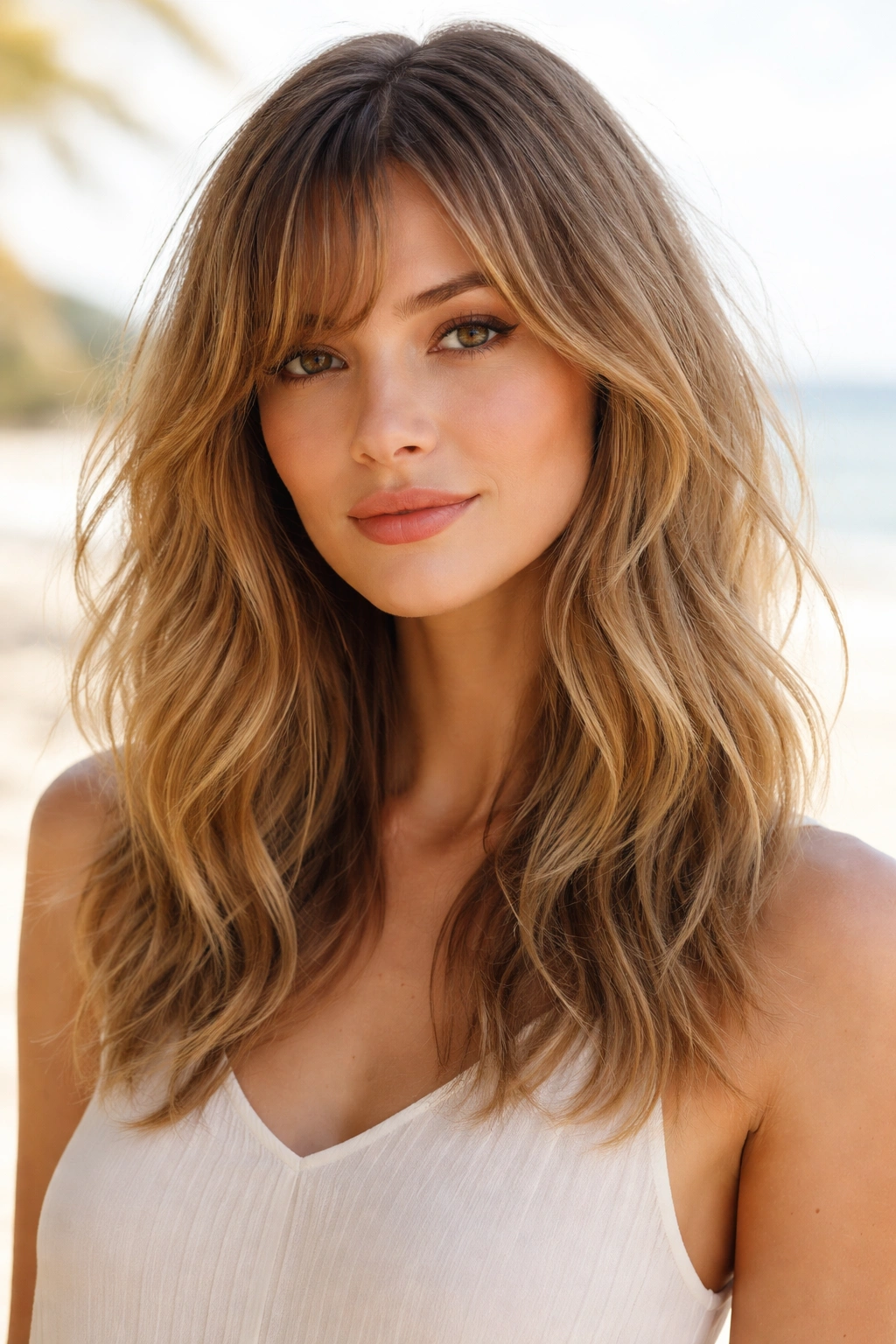
This style captures that fresh-from-vacation hair feeling and pairs perfectly with side bangs for a softer, more romantic take than the tousled version. The cut is shoulder-length with subtle, graduated layers that blend throughout rather than creating distinct choppy sections. The side bangs are cut longer—often extending to your jawline or just past—and are shaped with a slight curve that makes them feel like a natural extension of your waves rather than a separate bang piece.
Why It Works for Wavy Hair
Beach waves inherently have a soft, undone quality, which is why they pair so beautifully with longer side bangs. The waves create texture and dimension that makes the bangs look naturally placed rather than like a styling choice. This style also works well across different wave types—from loose, beachy waves to tighter, more defined texture.
How to Style It
- Apply a sea salt spray or curl-enhancing cream to damp hair for that effortless beach texture
- Blow dry gently with your fingers running through to encourage wave formation, or mostly air dry for the most natural result
- Once dry, use a 1.5-inch curling iron loosely on random sections, focusing on the pieces around your face and the side bangs
- Flip upside down and tousle gently to break apart the waves and create that undone feel
- Finish with a light hairspray that provides hold without making hair stiff or crunchy
Pro tip: This style actually looks best when your hair is slightly damp or when you’ve misted it with water, so it’s perfect if you live in a humid climate where your waves naturally activate.
4. Choppy Layers with Angled Side Bangs
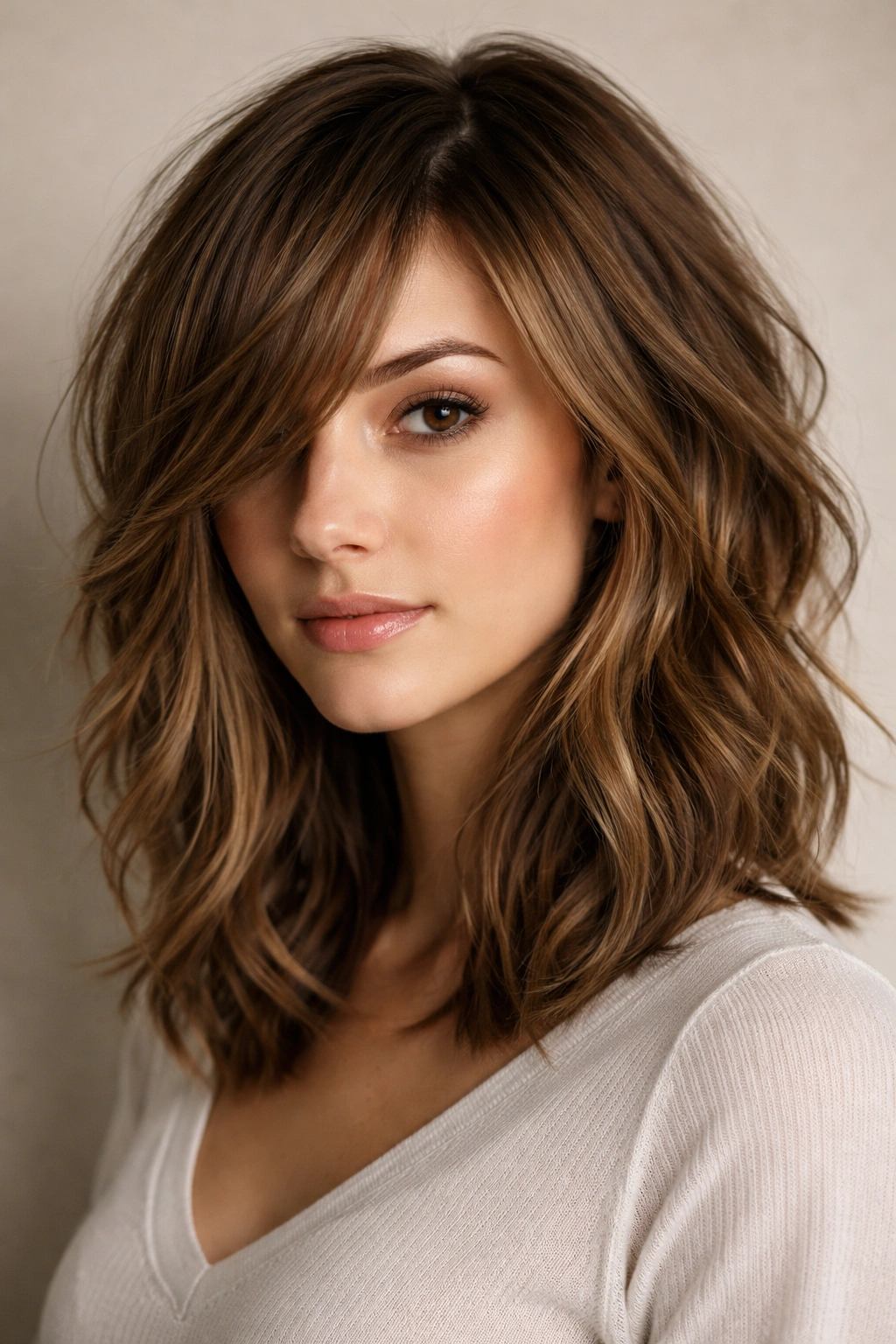
For those who want a more structured, modern take on wavy hair with side bangs, choppy layers offer sharp definition while still working with your natural texture. This cut features distinct, shorter layers throughout that create volume and movement, with side bangs that are cut at an angle—shorter near your inner eye and progressively longer as they sweep back toward your ear. The angularity of the bangs echoes the choppy layers throughout, creating visual cohesion.
Why It Works for Wavy Hair
Choppy layers break up any potential heaviness and automatically create texture that reads as intentional styling even when you’re doing minimal work. The angled side bangs work with the layer pattern to frame the face dynamically, and the shorter, choppier pieces catch light in a way that makes waves look more dimensional. This style works especially well if you have a rounder face because the angles help create the illusion of a more sculpted face shape.
How to Style It
- Start with a lightweight volumizing mousse applied to damp roots
- Blow dry on medium heat with a round brush, lifting at the roots and directing the side bangs slightly back
- Once fully dry, use a small-barrel curling iron to add soft waves to sections, focusing on the ends
- Tousle gently to separate the layers and create choppy texture
- The angled bangs should frame your face naturally—you can tuck them behind your ear when you want a different look
Worth knowing: This style requires more regular trims (every 4-6 weeks) because the choppy layers can look unrefined as they grow out. However, each trim actually helps refine the cut and improve how it works with your waves.
5. Romantic Loose Waves with Long Side Bangs
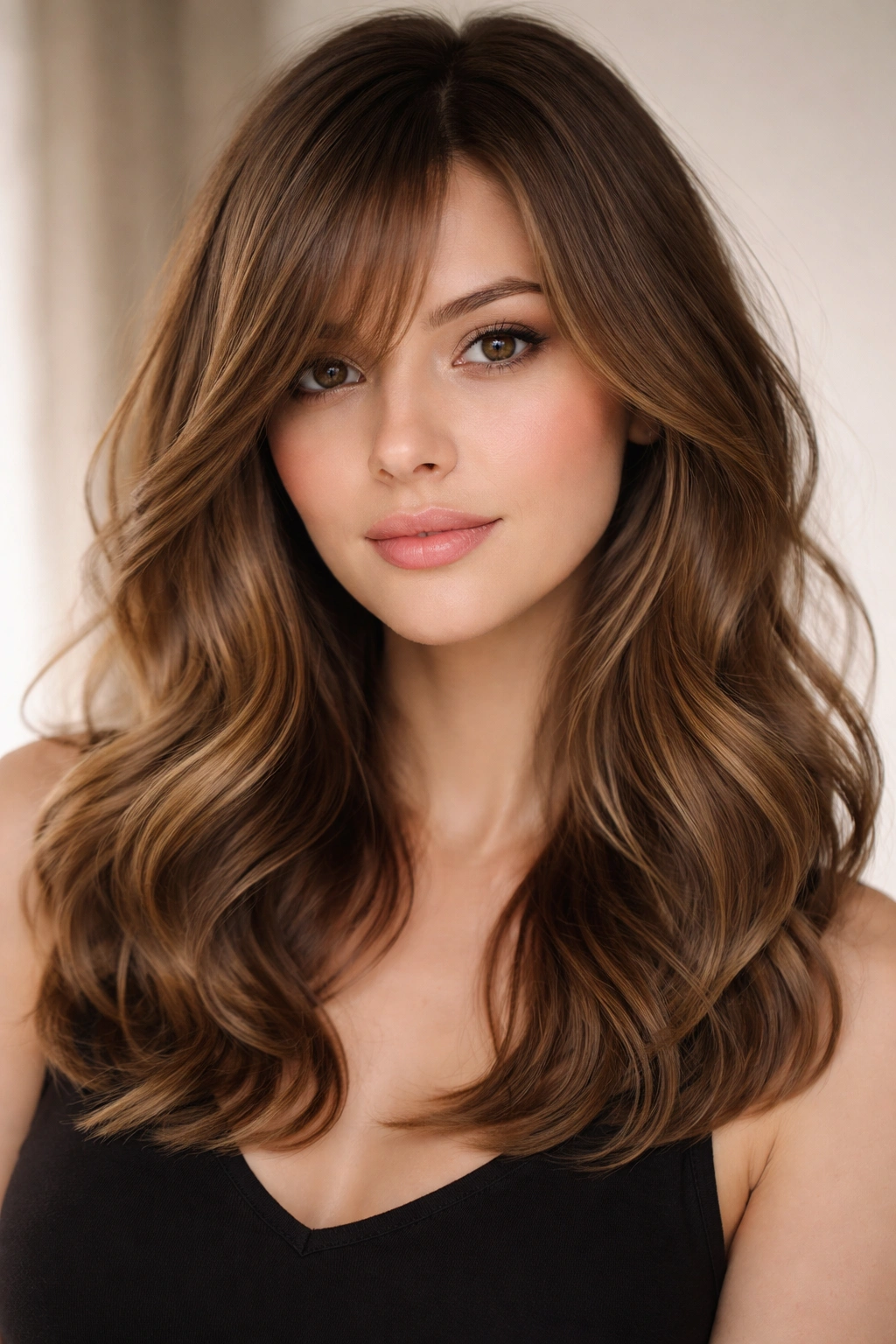
If you prefer softer, more romantic styling, this option features shoulder-length hair with long, cascading side bangs that nearly reach your chin. The overall cut is kept relatively straight and blunt at the ends, allowing your natural wave pattern to create gentle movement without relying on layers for texture. The side bangs are thicker and fuller than in some other styles, extending all the way across from one side of your face to the other, creating a soft curtain effect.
Why It Works for Wavy Hair
Long, fuller side bangs create a gentle frame that’s incredibly flattering on wavy hair, and the waves you naturally have provide just enough texture that the longer bangs don’t look limp or flat. This style works beautifully if your waves are on the looser side—tighter curls might make fuller bangs feel overwhelming. The romance comes from the way waves and long bangs interact to create soft movement around the face.
How to Style It
- Apply a hydrating wave cream or curl enhancer to damp hair
- Blow dry with a diffuser on low heat, or mostly air dry for the softest waves
- Once dry, use a large-barrel curling iron to create loose waves throughout
- Gently tousle to separate the curls and create a more romantic, undone wave pattern
- The long side bangs naturally frame the face and usually don’t require much styling beyond the general wave creation
Pro tip: This style benefits from silk or satin pillowcases and hair care products that enhance waves, as the longer bangs and single-length ends can feel a bit delicate compared to more heavily layered options.
6. Modern Wavy Bob with Side Bangs
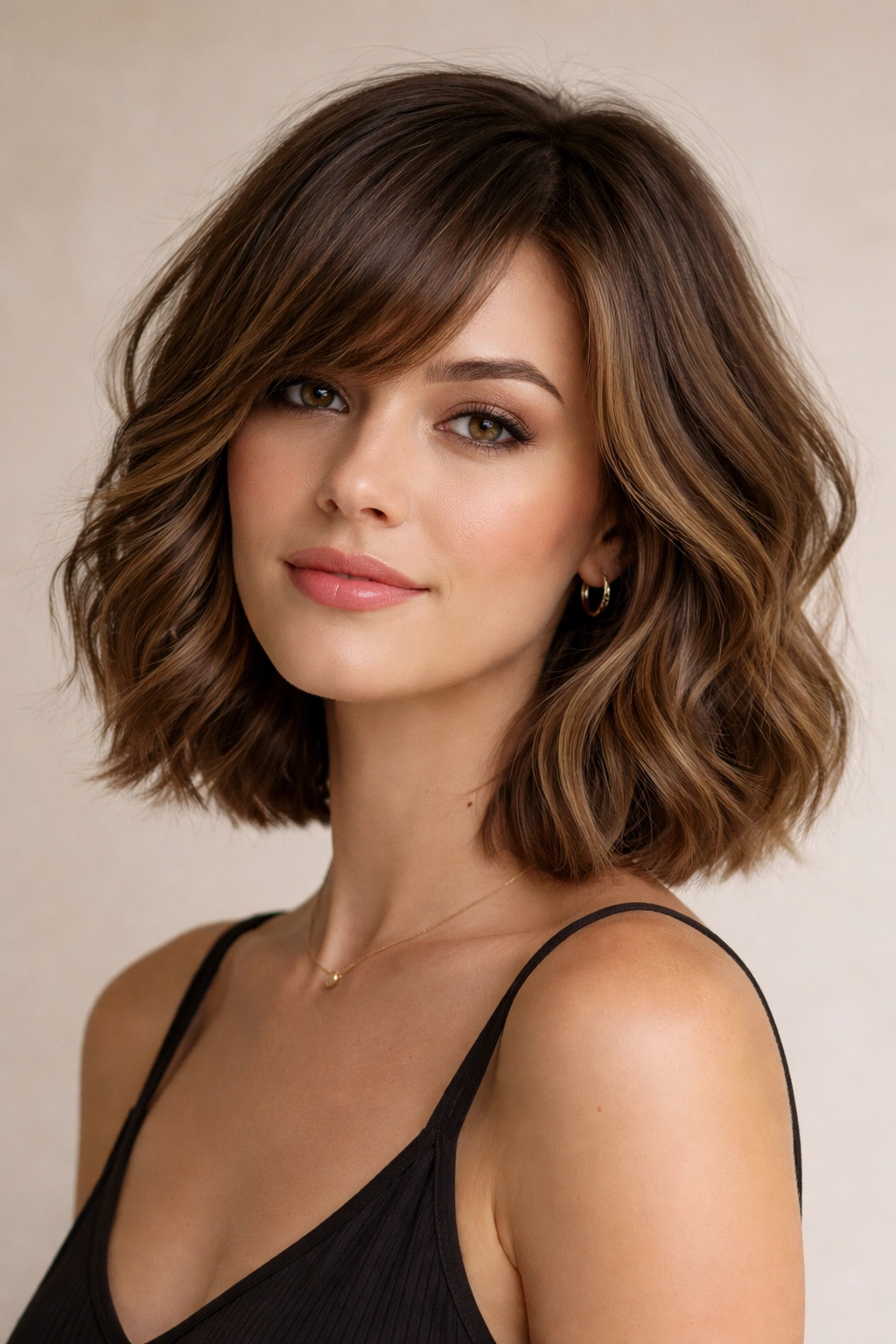
A shoulder-length bob with side bangs is essentially a lob (long bob), and when cut to work with wavy hair, it’s incredibly chic and easy to maintain. This style features a blunt or slightly curved hem at shoulder length, with subtle interior layers that create movement without reading as choppy. The side bangs are cut as part of the overall bang shape—slightly angled and blending smoothly into the rest of the hair rather than sitting as a separate piece.
Why It Works for Wavy Hair
Bobs with waves have a naturally polished quality because the line of the cut provides structure while the waves add softness and movement. This style is more formal than some of the other options but still reads as effortless. It works exceptionally well if you have medium to thick hair because waves can sometimes make thinner hair look wispy at the ends, and the structure of a bob prevents that.
How to Style It
- Apply a lightweight smoothing cream or anti-frizz serum to damp hair
- Blow dry with a round brush, creating a slight inward bend at the ends to enhance the bob shape
- The side bangs should be dried with your brush directing them slightly back and away from your face
- Once dry, you can leave as is for a more polished look, or add soft waves with a curling iron for more texture
- This style works beautifully either smooth or tousled, giving you daily styling flexibility
Worth knowing: Modern bobs sit best when they’re cut with a specific angle and shape in mind—this isn’t a style where you can just trim the ends straight and expect the shape to hold. Work with a stylist who has experience with bobs on wavy hair.
7. Undone Waves with Wispy Side-Swept Bangs
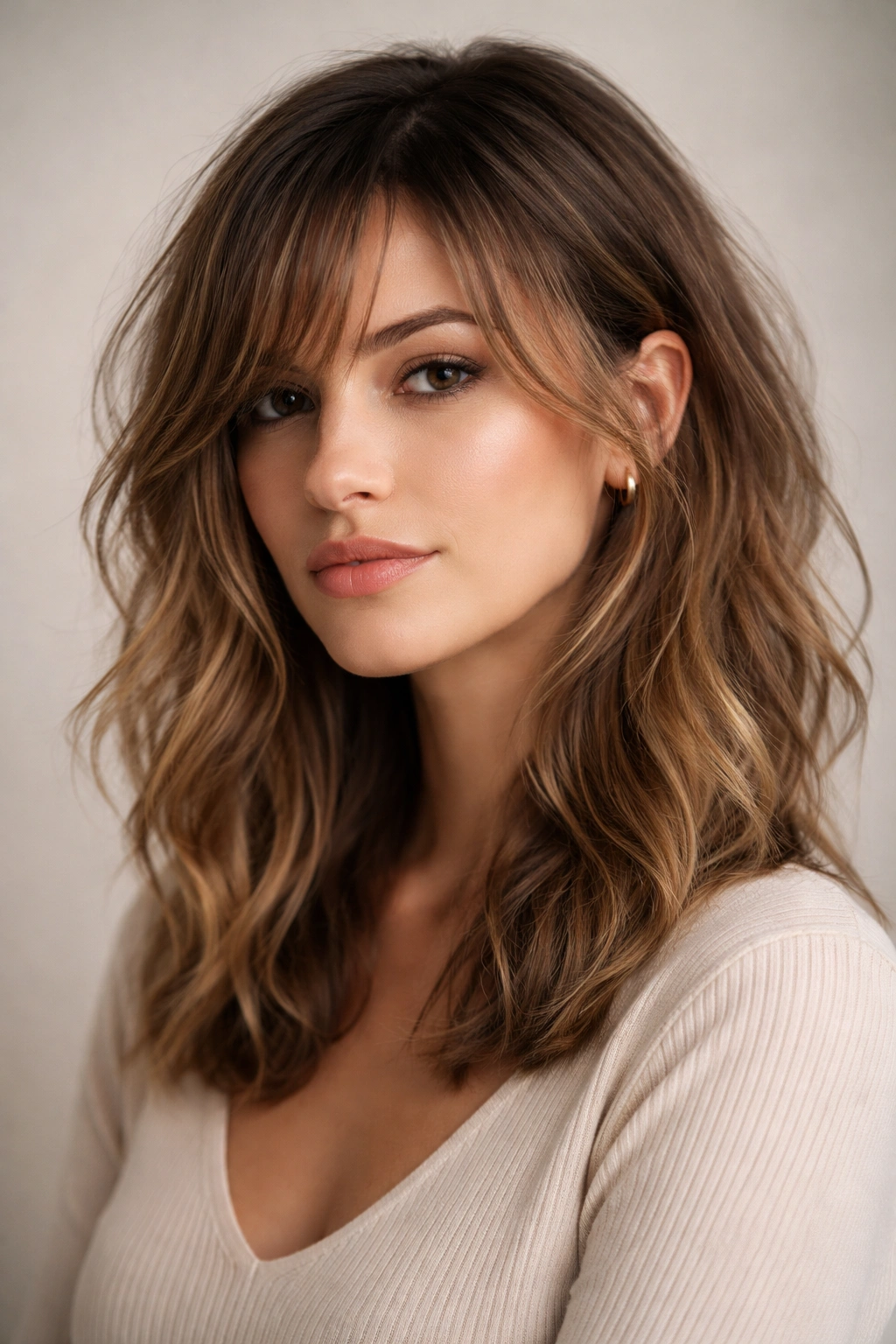
This style is all about appearing completely effortless while actually having just enough structure to look intentional. Shoulder-length hair with subtle layers and wispy side-swept bangs creates a lived-in aesthetic that feels modern and relaxed. The bangs are kept lighter and thinner than in other styles, almost like baby bangs that feather into the rest of your hair, and they’re swept across with enough length that they barely graze your cheekbone.
Why It Works for Wavy Hair
Wispy bangs work beautifully with waves because they’re so delicate that they read as a natural part of your wave pattern rather than a separate styling element. The undone vibe is enhanced by the fact that you’re not creating uniform waves but rather letting your natural texture shine through. This is genuinely the lowest-maintenance option if you have naturally wavy hair and don’t want to spend much time styling.
How to Style It
- Apply a light texture spray or mousse to damp hair for definition
- Air dry or use a diffuser on low heat, letting your natural waves do the work
- Once dry, gently scrunch with your hands and a texturizing spray for separation
- The wispy bangs fall naturally into place and rarely need styling attention
- On second or third day hair, you can refresh with a light mist of water and another scrunch
Pro tip: The beauty of this style is that it actually looks better when you do less to it—resist the urge to blow dry straight or overly style. Embrace the undone quality.
8. Volumetric Waves with Structured Side Bangs
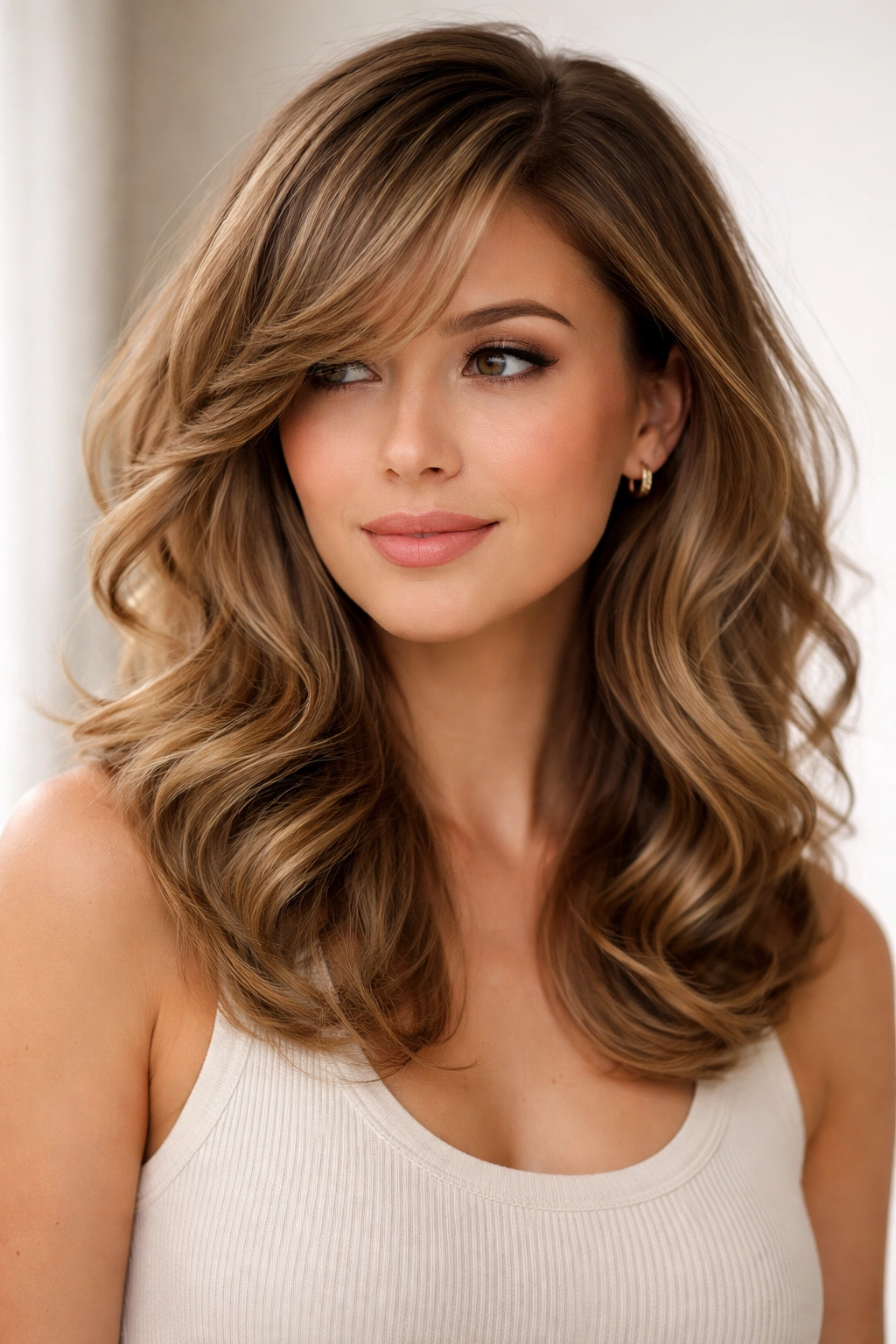
For those who want maximum volume and dimension, this style features shoulder-length hair with full, bouncy waves throughout and side bangs that are cut with defined structure and movement. The layers are strategically placed to create volume at the crown and throughout the length, and the side bangs are shaped to complement the overall volumetric effect. The bangs follow a specific angle and line rather than looking soft and casual, giving the style a polished, intentional quality.
Why It Works for Wavy Hair
This style is all about amplifying what wavy hair naturally does—create texture and movement. The structured bangs prevent the overall look from feeling too soft or romantic, creating visual balance. If you have finer hair or hair that tends to look flat, this cut works exceptionally well because the layers are designed specifically to catch light and create dimension.
How to Style It
- Apply a volumizing mousse or root-lifting spray to damp hair at the roots
- Blow dry on medium-high heat with a round brush, focusing on creating height at the crown and directing waves outward
- Use a medium-barrel curling iron to create defined waves throughout, curling away from the face
- The side bangs should be directed back and shaped with your styling tools to maintain their structured appearance
- Finish with a medium-hold hairspray to keep everything in place throughout the day
Worth knowing: This style requires consistent styling to look its best—it’s not one you can air dry and expect to look polished. However, once you understand the technique, styling takes about 15-20 minutes.
9. Tousled Curtain Waves with Center-Parted Side Bangs
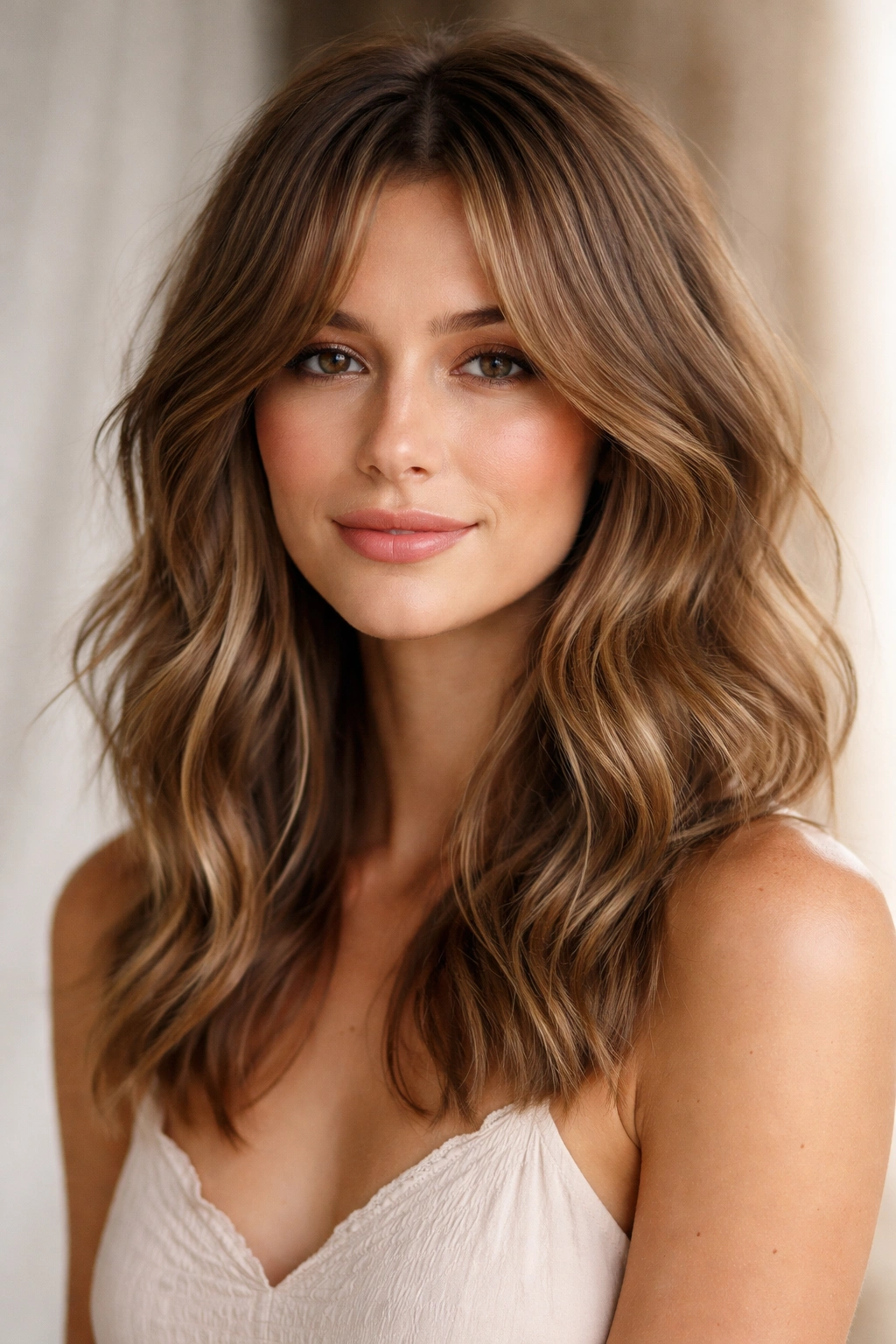
Curtain bangs have experienced a resurgence, and when adapted to side-swept styling, they create a unique hybrid look that’s incredibly flattering. This style features shoulder-length hair with soft, tousled waves throughout and side-swept bangs that begin at the center and curve to frame both sides of the face. Rather than being a harsh center part, the bangs are subtly styled to create the illusion of a central starting point while still sweeping across.
Why It Works for Wavy Hair
The tousled quality means your waves are front and center as the styling focus, and the adapted curtain bangs provide framing without the severity of traditional curtain bangs. This style works well if you want something that reads as interesting and intentional without being overly trendy. The waves prevent the bangs from looking too structured, creating a soft, romantic quality overall.
How to Style It
- Apply a curl-enhancing cream to damp hair, distributing evenly
- Blow dry with a diffuser on low-medium heat, scrunching occasionally to enhance waves
- Once dry, use a medium-barrel curling iron to create tousled waves, working through all sections
- Flip upside down and tousle gently to break apart the waves and create undone texture
- The side bangs naturally fall to frame the face and work with the overall wave pattern
Pro tip: This style is more forgiving with second-day hair because the tousled quality means slight greasiness and flatten sections actually add to the aesthetic.
10. Dimensional Waves with Feathered Side Bangs
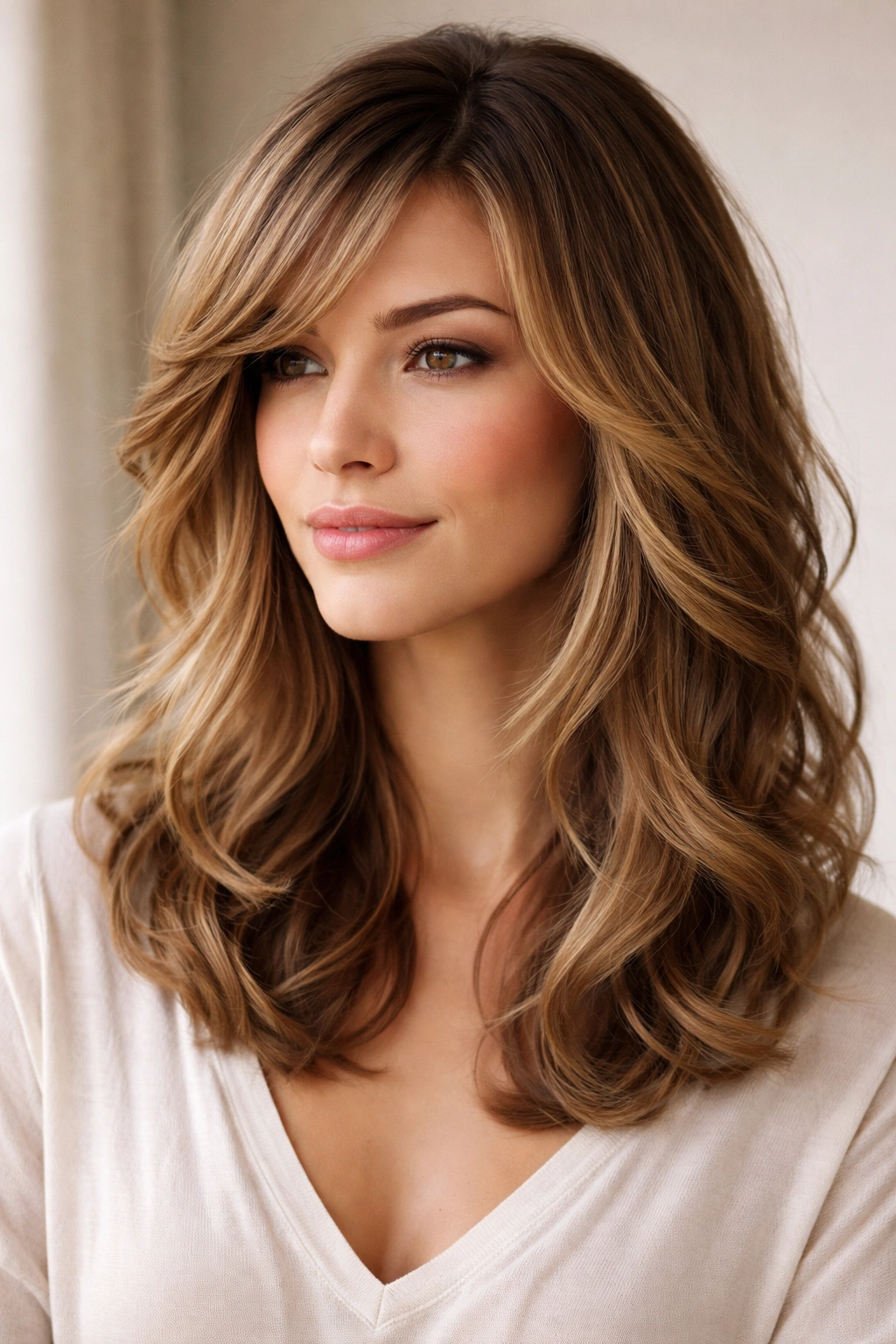
For the final style, think dimensional waves with feathered side bangs—a modern approach that combines multiple textures and techniques for a sophisticated result. This cut features shoulder-length hair with layers of varying lengths throughout, creating a feathered effect where shorter pieces frame the face and longer pieces create flow. The side bangs are feathered, meaning they have a tapered, textured quality that softens the line and blends seamlessly with surrounding layers.
Why It Works for Wavy Hair
Feathered bangs and feathered layers work together to create a cohesive, textured style that’s incredibly flattering on wavy hair. The multiple layers and varying lengths mean you have options for how much volume you want—you can scrunch for more texture or smooth slightly for a more refined look. This style works on most face shapes because the feathering is so versatile and forgiving.
How to Style It
- Apply a texture spray or light mousse to damp hair
- Blow dry on medium heat with your fingers running through to encourage wave and feather separation
- Use a small to medium-barrel curling iron on random sections to enhance waves and definition
- Tousle gently to separate the layers and create feathered texture throughout
- The side bangs blend naturally into the surrounding layers and rarely need specific styling
Worth knowing: This style requires someone skilled with point cutting and texturizing techniques—not all stylists are comfortable creating feathered layers. Bring reference photos to your consultation to ensure you’re on the same page.
Final Thoughts
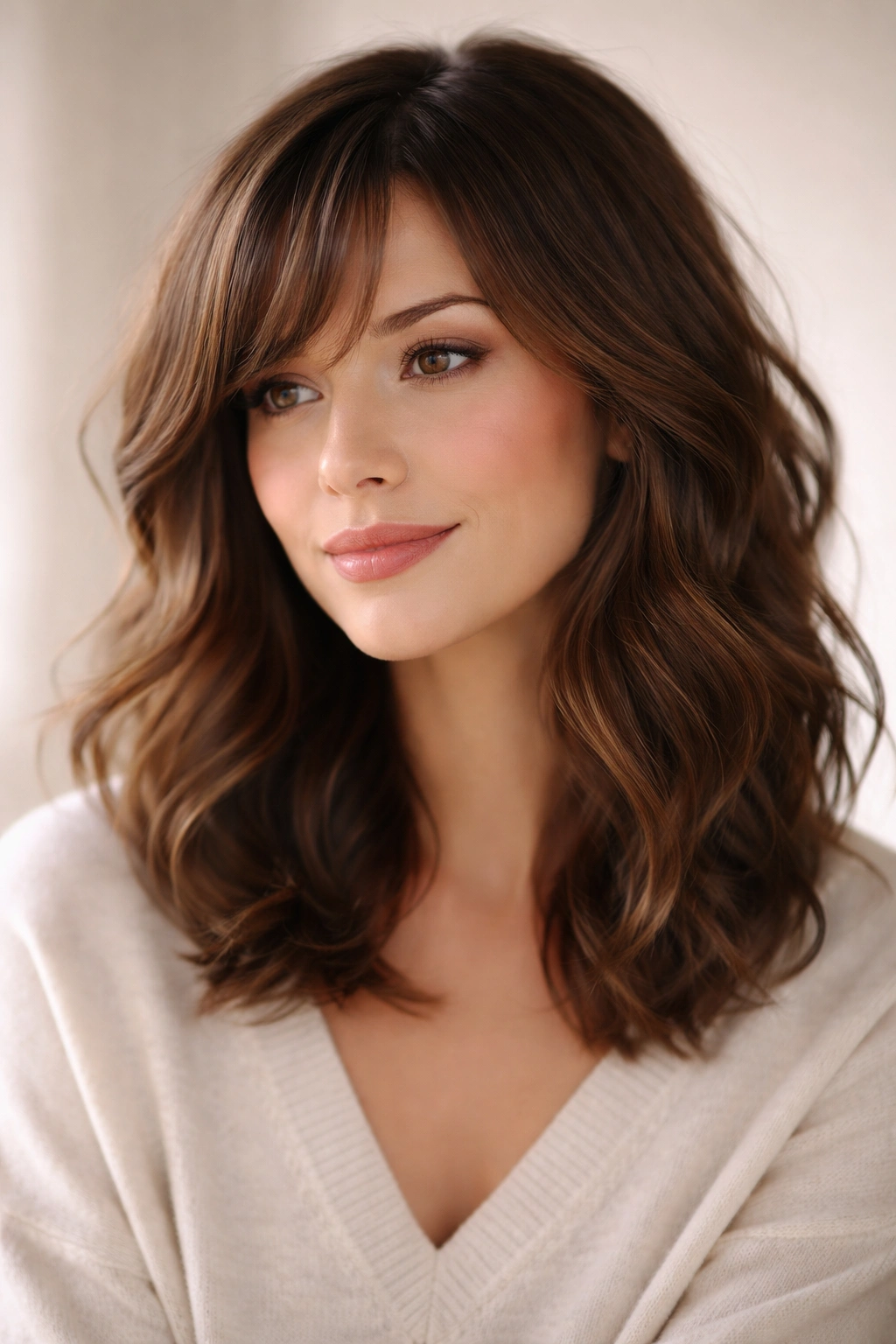
The beauty of shoulder-length hair with side bangs is that the combination works across so many different styling approaches, from ultra-polished to completely undone. Your specific choice should align not just with what you think looks good, but with how much time you’re willing to spend styling each day and whether your natural wave pattern aligns with the styling demands of the cut.
Side bangs have a way of softening your face and drawing attention to your best features, and when you layer that on top of shoulder-length hair’s inherent versatility, you get a style that’s genuinely easy to wear in multiple ways. Some days you’ll blow dry and style intentionally, and other days you’ll let your natural waves take over—and both versions will look intentional rather than like you simply didn’t bother.
The most important step isn’t picking a specific style from this list—it’s having a thorough consultation with a stylist who understands your hair texture, face shape, lifestyle, and what you actually want to achieve. Bring photos, be specific about your daily styling commitment, and ask questions about how the cut will look as your hair grows out. The perfect shoulder-length style with side bangs is out there; it’s just a matter of finding the right cut for your unique hair and needs.
