



Fulani braids have become one of the most sought-after protective styles, and when you combine them with straight hair sew-ins, you unlock a completely different dimension of versatility, fullness, and styling possibilities. The traditional Fulani braid—characterized by its signature cornrow pattern, often featuring gold cuffs and a center part—takes on a sleeker, more contemporary edge when paired with the smoothness and length of straight-textured hair extensions. What makes this combination particularly appealing is that it bridges cultural authenticity with modern aesthetics, creating styles that are both deeply rooted in tradition and undeniably current.
The beauty of Fulani braids with straight sew-ins lies in their flexibility. You’re not locked into one look for the entire duration of the protective style. The straight texture of the extensions creates natural, polished lines that catch light beautifully, while the structured braiding pattern gives you that artistic, intentional appearance that says you’ve invested real thought into your look. Unlike curly or kinky-textured sew-ins, straight extensions blend seamlessly with braiding work, creating clean transitions and almost sculptural hairstyles.
Whether you’re looking to protect your natural hair while experimenting with length and volume, or you simply want to rock a style that turns heads, understanding the variations available to you makes all the difference. Each style offers its own unique installation process, maintenance requirements, and styling potential—and what works perfectly for one person might need tweaking for another based on hair texture, scalp sensitivity, desired longevity, and personal aesthetic preferences.
Let’s explore eight distinct approaches to Fulani braids with straight hair sew-ins, each with its own character, installation considerations, and maintenance tips that will help you choose the style that fits your needs and vision.
1. Classic Fulani with Straight Sew-In Length
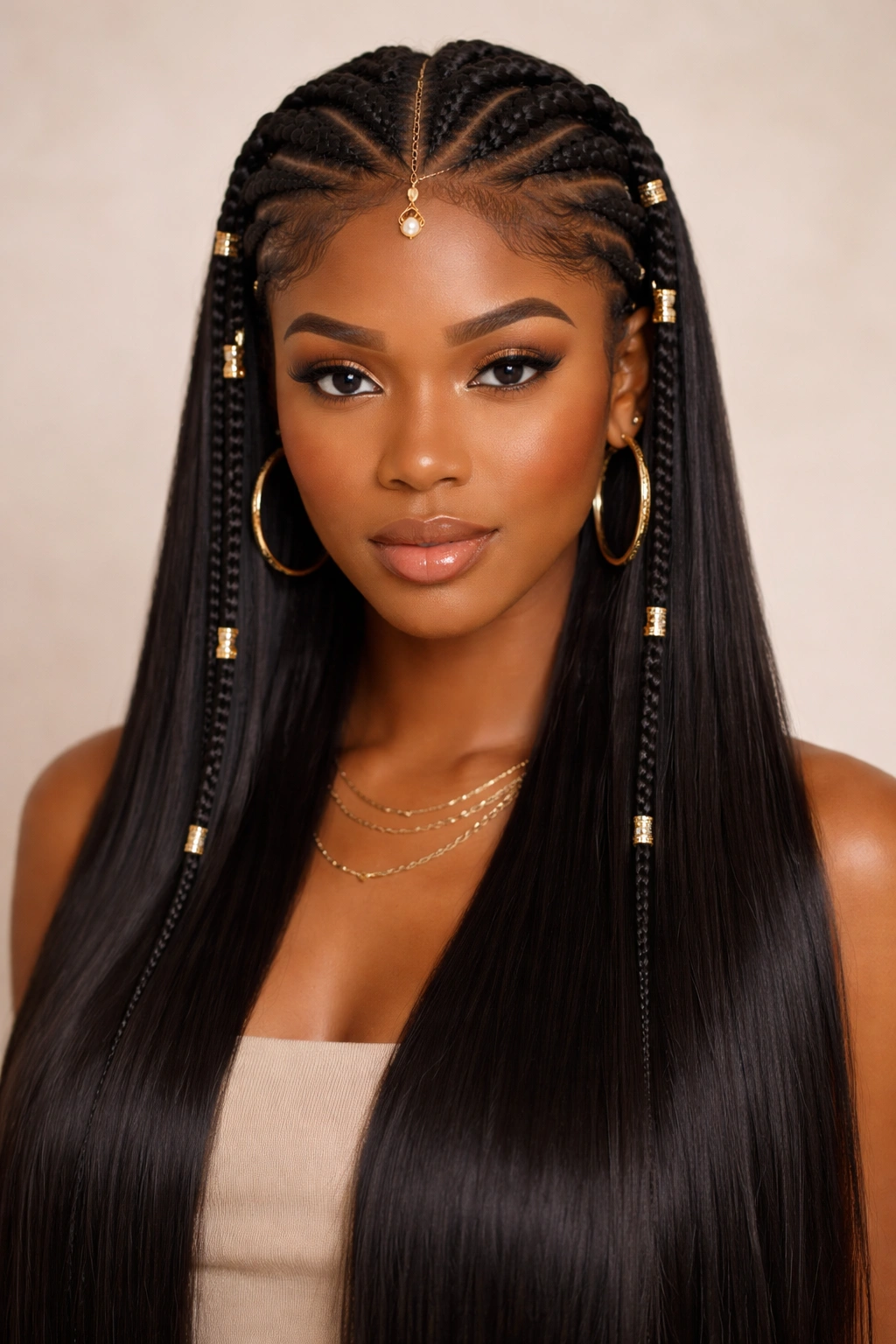
The classic approach stays true to the original Fulani braid aesthetic while adding the polished effect of straight hair extensions. This style features traditional cornrows that begin at the hairline and travel horizontally across the head, typically anchored with gold cuffs or beads at specific points. The straight sew-in extensions add dramatic length and create a sophisticated silhouette—the kind of style you can dress up or down depending on your accessories and attitude.
What Makes It Stand Out
This variation maintains the recognizable Fulani identity while giving you substantial length that straight extensions provide so effectively. The cornrow pattern is visible and intentional, never hidden or apologetic. Gold cuffs catch light as you move, adding dimension and drawing attention to the careful braiding work. The straight texture means your braids stay crisp and defined throughout the entire wear time, without the frizz or fluffing that can happen with other extension types.
Key Installation Details
- Begin with a clean, moisturized scalp and detangle all natural hair thoroughly before braiding
- Section your hair into 4-6 main zones, depending on scalp size and desired fullness
- Use high-quality straight hair extensions—ideally 18-22 inches in length for dramatic impact
- Braid tightly enough for longevity (the style should last 4-6 weeks) but never so tight that you feel constant pulling
- Secure ends with small rubber bands or by tucking them underneath for a polished finish
Pro Tip
Add your gold cuffs strategically—spacing them evenly actually breaks up the line of the braids visually, making them appear more intentional and less monotonous. A single cuff every three braids is often more striking than clustering them all together.
2. Feed-In Fulani with Graduated Length
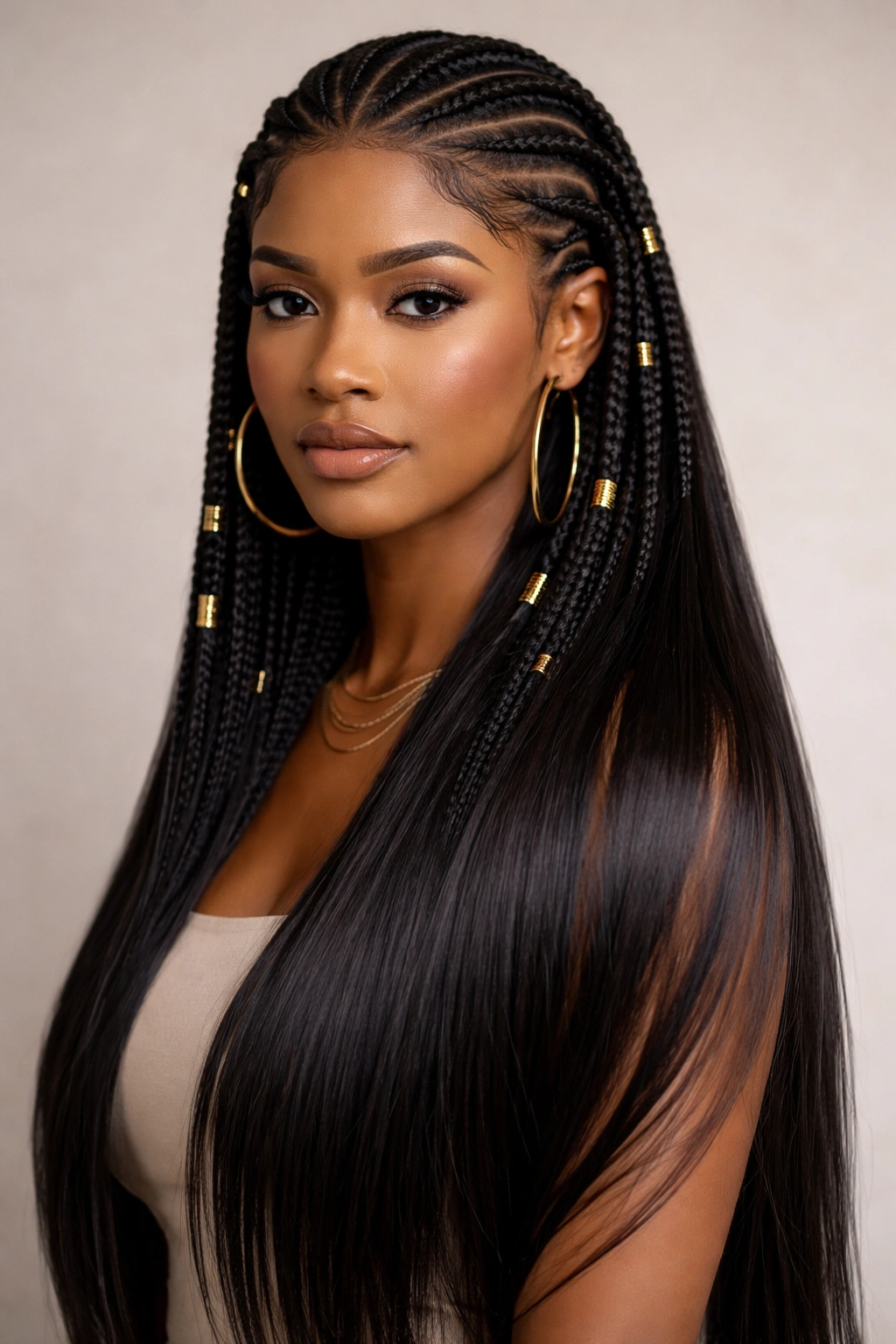
Feed-in braiding changes the entire game by allowing you to gradually introduce hair extensions as you braid, rather than adding them all at once at the scalp. With straight sew-in hair, this creates an almost seamless blend between your natural hair and the extensions, with extensions appearing fuller and more voluminous as they extend down the length. This technique is particularly flattering for those whose natural hair texture differs significantly from the straight extensions.
How the Technique Works Differently
Feed-in Fulani requires slightly more time and precision during installation—you’re essentially threading new hair into the braid incrementally as you move along the braid path. This graduated introduction means the braid thickness increases naturally rather than looking abruptly bulkier where the extensions begin. The visual effect is more refined and considerably less stressful on your natural hair at the roots, since the tension is distributed more evenly throughout the braid.
Benefits and Considerations
- Creates less tension at the scalp, reducing the risk of traction alopecia over time
- Produces a more blended appearance where natural hair meets extensions
- Requires more braiding skill and typically takes longer to install (often 5-8 hours depending on fullness desired)
- Provides a more contemporary, less uniform look compared to traditional sectioned Fulani
- Works beautifully with gold cuffs placed at strategic gradient points
Installation Timeline
Expect to spend considerable time on this style—it’s not a quick Saturday afternoon project. Plan for 6-8 hours minimum for a full head of feed-in Fulani braids with straight extensions, especially if you’re adding multiple colors or textures.
3. Two-Tone Fulani with Straight Hair Contrasts
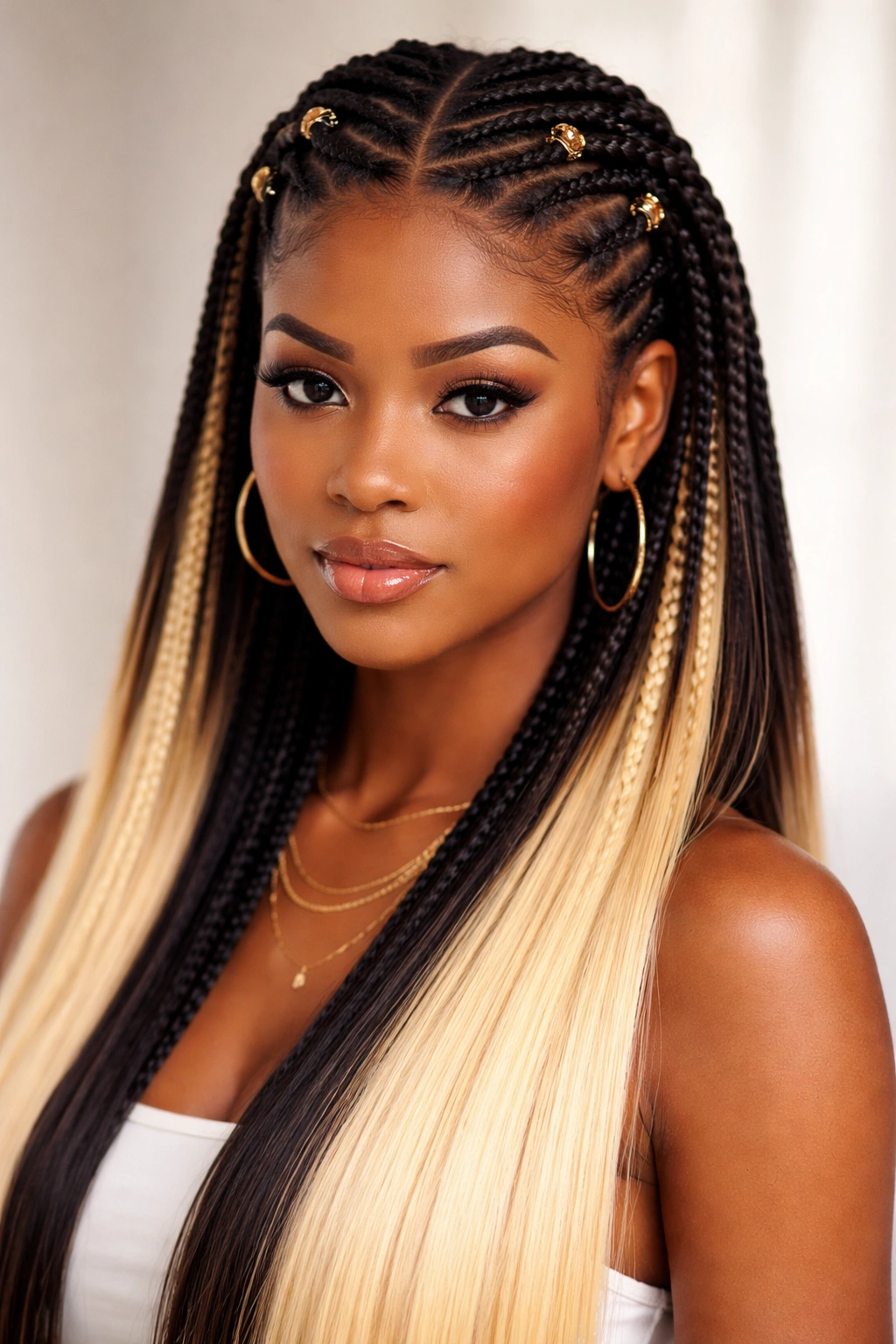
Color blocking through braiding takes on stunning visual impact when you combine your natural hair with contrasting-colored straight extensions. This might mean pairing black natural hair with blonde extensions, or deeper tones with honey-blonde or even pastel shades. The straight texture of the extensions makes color transitions crisp and intentional rather than blended, which is exactly what makes this approach so visually striking.
Color Combination Strategies
- Blonde extensions with dark natural hair creates maximum contrast and a bold aesthetic
- Honey-blonde or caramel extensions with medium brown natural hair offers softer sophistication
- Auburn or red-toned extensions add warmth and dimension without being shocking
- Pastels (pink, lavender, blue) can be introduced in select braids for artistic, fashion-forward styling
- Ombre or gradient approaches (darker at roots, lighter at ends) create depth and movement
Maintenance for Colored Extensions
- Colored extensions fade faster than natural shades—protect them with UV-blocking hair products
- Wash with sulfate-free, color-safe shampoo to preserve vibrancy
- Use cool water for rinses to seal the hair cuticle and enhance shine
- Avoid chlorine, saltwater, and excessive sun exposure without protective products
- Colored straight extensions may need to be replaced before the entire style if color fades unevenly
Styling With Color-Blocked Braids
These styles photograph beautifully, which makes them perfect for special occasions or photo-worthy moments. The color contrast means your braids appear more dimensional and sculptural, and they photograph more dramatically than monochromatic styles. Consider angling your face toward natural light to let the color depth show through.
4. Fulani Braids With Straight Closure Extension
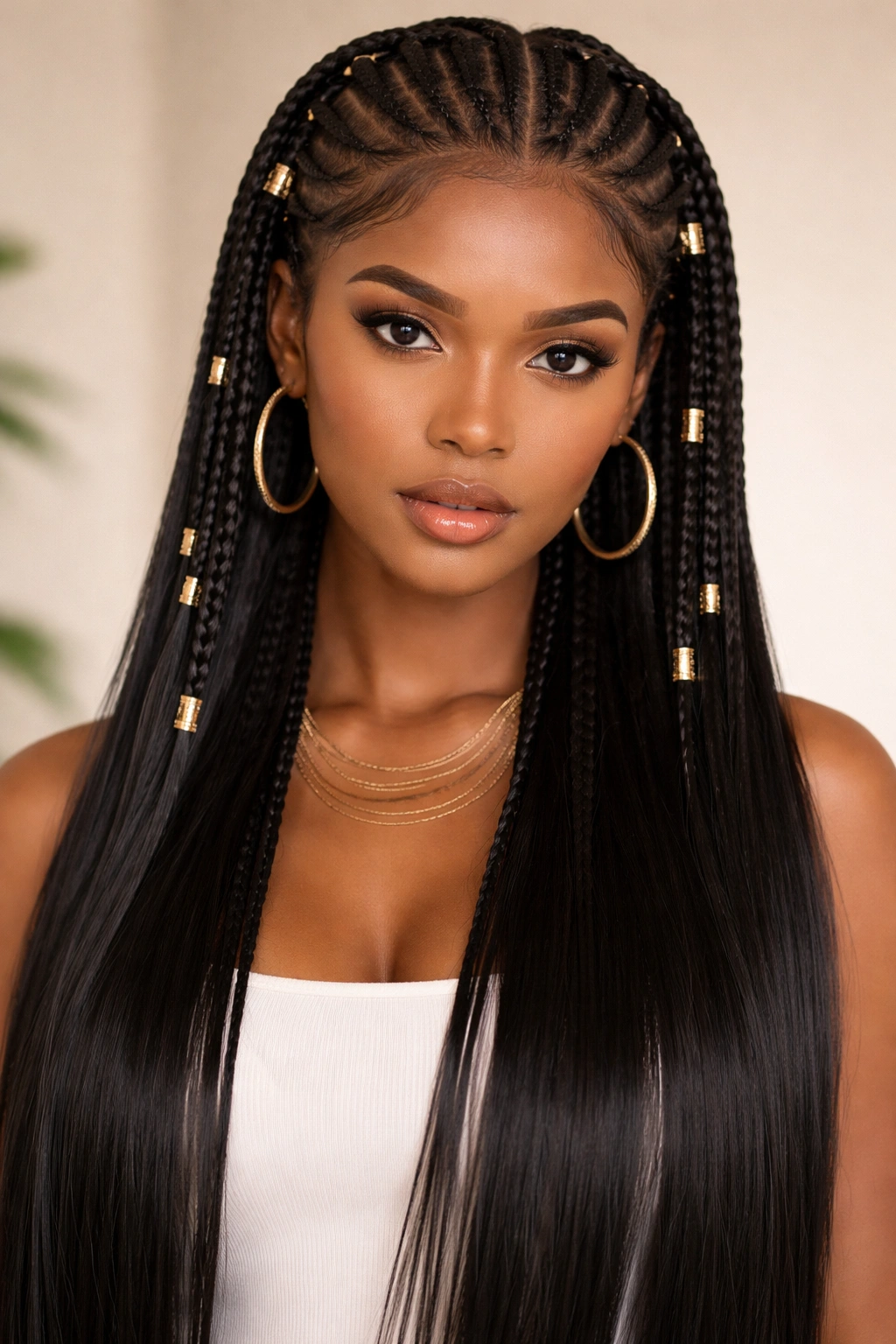
A closure—a piece of hair lace or silk with multiple braids pre-braided into it—can replace your natural braids at the hairline, creating an incredibly seamless, polished appearance across the front. Combined with straight sew-in extensions throughout the rest of your braids, this approach gives you maximum styling flexibility at your hairline while maintaining the Fulani aesthetic across your crown and back.
Why Closures Change Everything
A braided closure eliminates the need to braid out your natural hairline, which means reduced tension and handling in your most fragile area. It also allows you to wear your style in many different ways—you can tuck the braids up, pull them back into high styles, or leave them loose and flowing. The closure creates a finished, intentional look at the front that feels more polished than traditional exposed braiding.
Closure Installation Process
- Prepare your hairline by securing it down with edge control or gel before placing the closure
- Install the closure using either braiding (stitch braids through the lace) or glue depending on the closure construction
- Braid your Fulani pattern around the closure, blending your natural braids with the closure braids seamlessly
- Ensure the closure sits flat against your head without bumps or visible lace
- The closure typically lasts the duration of the entire braid style, making touch-ups unnecessary
Styling Advantages
With a closure, you can style your Fulani braids into elegant high buns, sleek ponytails, or intricate updo arrangements that wouldn’t be possible (or would be too tension-heavy) with exposed natural hairline braids. This versatility means one protective style can serve multiple occasions.
5. Fulani With Straight Braided Wrap-Around Details
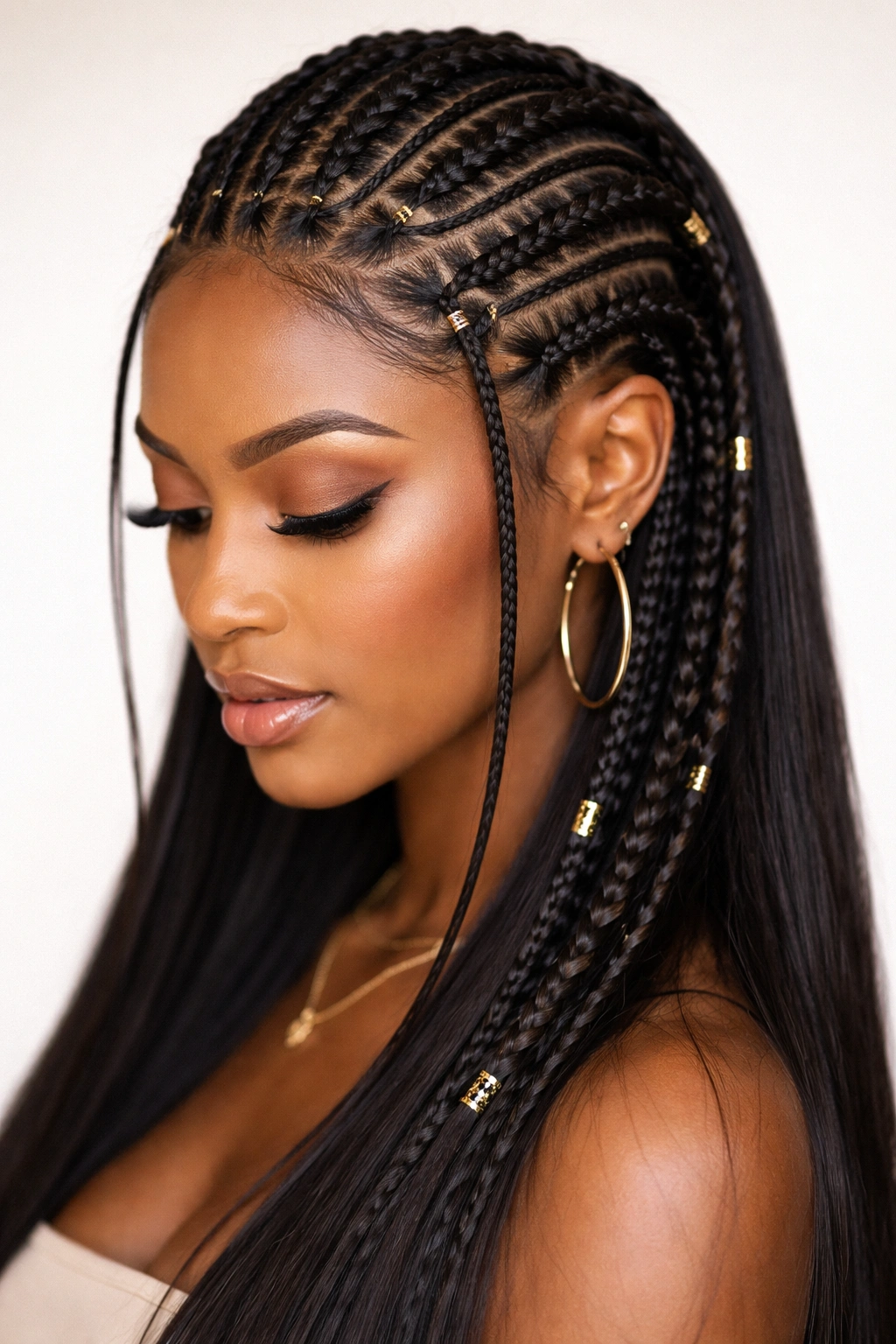
This variation incorporates decorative wrap-arounds—thinner, decorative braids that weave through or wrap around your main Fulani braids without significantly adding bulk. Using thin straight extensions for these wraps creates an intricate, detailed appearance that reads as intentional and artistic. The wraps can include your natural hair, extensions, embroidery thread, or even decorative wire for a truly statement-making style.
Creating Texture Through Wraps
Thin braid wraps that spiral or weave around thicker Fulani braids create visual movement and interest that keeps the eye engaged. Instead of simple, straight braids, your style suddenly has dimension, texture, and an almost sculptural quality. This is particularly striking with contrasting colors in the wrap-arounds—think thin gold or silver thread wrapped around dark braids.
Wrap-Around Variations
- Simple thread wraps for minimalist elegance
- Thin braid wraps using contrasting extension colors
- Metallic or holographic thread for futuristic flair
- Beaded wraps that incorporate small decorative beads throughout
- Combination wraps mixing thread and thin braids for layered texture
Maintenance Considerations
Wrap-arounds add complexity to your maintenance routine. If wraps include thread or embellishments, you’ll need to be gentle when cleansing to avoid snagging or loosening the decorative elements. Wraps may loosen more quickly than plain braids, potentially requiring periodic re-tightening to maintain the polished appearance.
Visual Impact and Longevity
These styles photograph exceptionally well and create an undeniably luxe appearance. However, the added complexity means slightly shorter wear time—typically 4-5 weeks maximum before wrap-arounds begin looking noticeably loose. Plan for re-installation or major touch-ups if you want to wear this style for extended periods.
6. Side-Swept Fulani With Straight Extensions
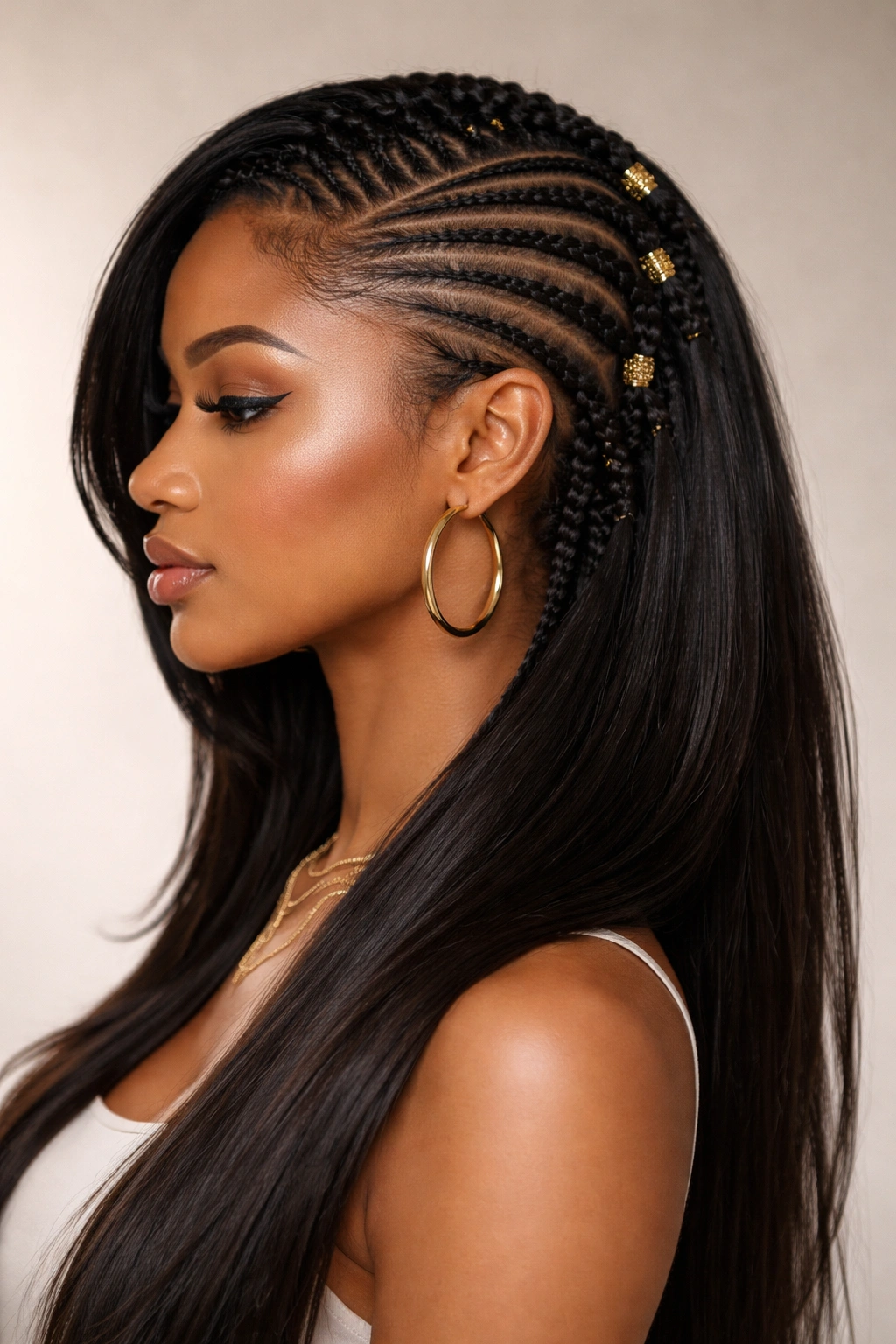
Rather than the traditional center-parted Fulani pattern, a side-swept variation channels braids to one side of the head, creating an asymmetrical, modern aesthetic. The braids typically begin at the lower back of the head and sweep diagonally upward toward the opposite temple, creating a dramatic directional flow. Straight extensions emphasize this movement, making the braids appear to follow a clear architectural line.
Creating the Side-Swept Pattern
- Part your hair at an angle from temple to nape, rather than center-to-back
- Begin braiding from the lower back area, feeding braids diagonally upward
- Allow braids to accumulate on the swept side, creating a fuller appearance on that half
- Finish with braids that taper and wrap around toward the opposite ear
- The result is a style that frames one side of your face while creating volume on the swept side
Styling the Swept Side
The side where braids accumulate naturally lends itself to embellishment—this is where you’d place your statement gold cuffs, incorporate colored extensions, or add wrap-around details. The opposite side, being less braided, appears sleeker and more refined. This asymmetrical approach is particularly flattering for round or square face shapes, as it creates visual balance through contrast.
Updo Potential
Side-swept Fulani translates beautifully into updos because all your braids are already traveling in one cohesive direction. Gathering them into a high side bun or pony creates a sophisticated, intentional-looking style that works for both casual and formal occasions. The straight extensions hold shape exceptionally well in these updos, maintaining definition throughout the day.
7. Fulani Braids With Straight Curly-Tip Extensions
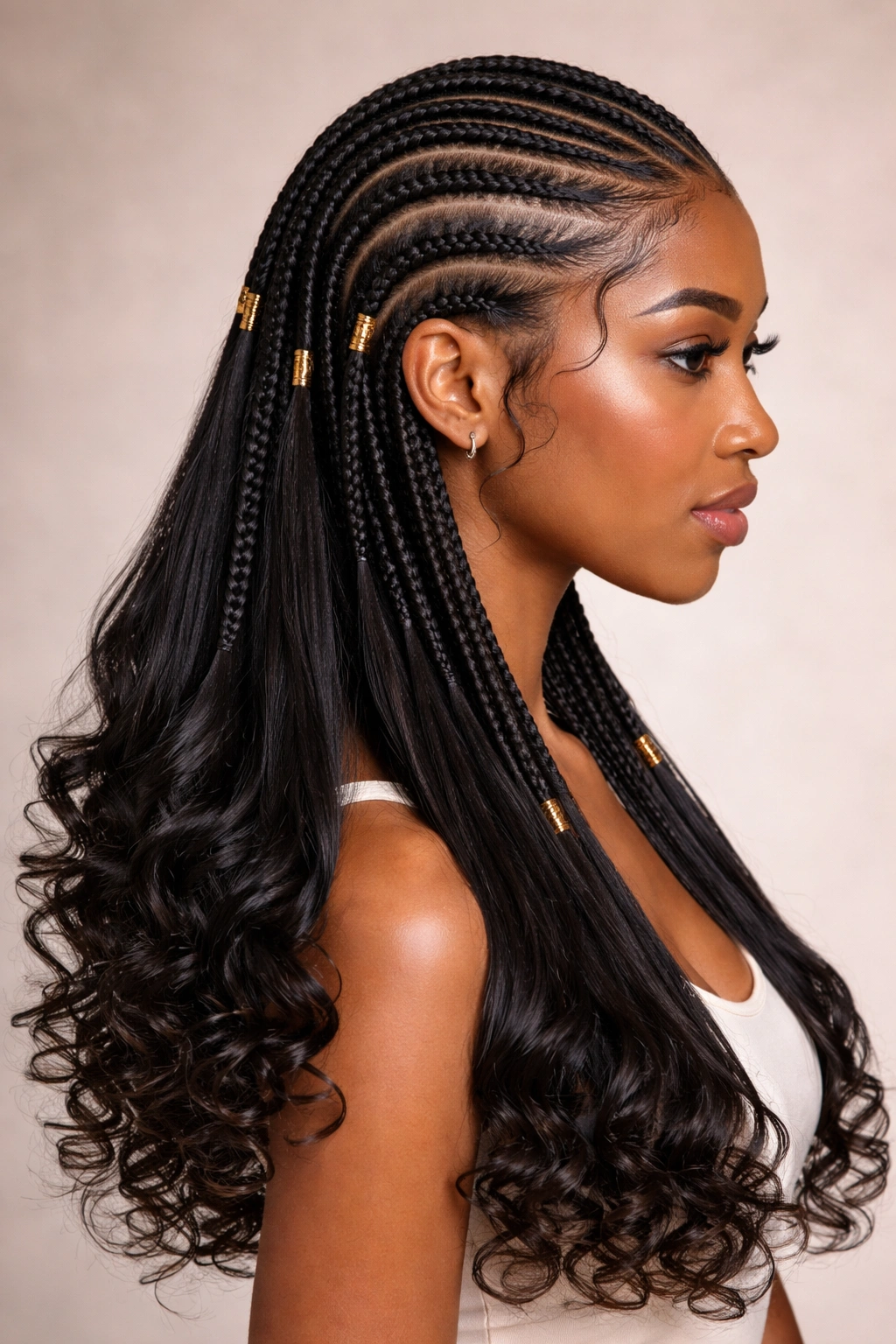
Adding extensions that are straight through most of their length but feature a curly, wavy, or spiral-textured tip creates an eye-catching contrast and adds movement to an otherwise structured braid style. The braided portion maintains crisp lines while the curly or wavy ends bounce and move with your natural motion. This approach offers the best of both worlds: the polished, intentional look of braids with the softness and dimension of curls.
Texture Combinations That Work
- Straight braids with tight spiral curls at the tips for maximum contrast
- Straight braids with loose waves for a softer, more romantic effect
- Ombre approach: straight through mid-length, transitioning to curls at the ends
- Color gradient combined with texture change (straight dark at top, curly blonde at bottom)
- Metallic-tipped straight extensions that curl naturally when exposed to air
Installation Considerations
Curly-tip extensions come pre-textured from the supplier, so you’re not creating the curl yourself—you’re simply braiding with pre-textured hair. This actually simplifies installation because you don’t need to manipulate the texture. However, these extensions are often more delicate in their curled sections, requiring slightly gentler handling during braiding and daily care.
Maintenance for Mixed Textures
The straight portion responds to moisture like typical straight extensions, but the curly tips require hydration and definition maintenance. Use a curl-enhancing cream or gel on the curly tips weekly to refresh texture and prevent frizz. The contrast between straight and curly means each portion needs slightly different care products and routines.
Styling Versatility
These styles are incredibly photogenic because the movement at the tips creates visual interest and dimension that photographs beautifully. The curly tips also add volume perception—braids with curly tips appear fuller than braids that remain straight throughout their entire length. This creates a more luxe, high-impact appearance without requiring additional extensions.
8. Fulani With Straight Cascading Extensions
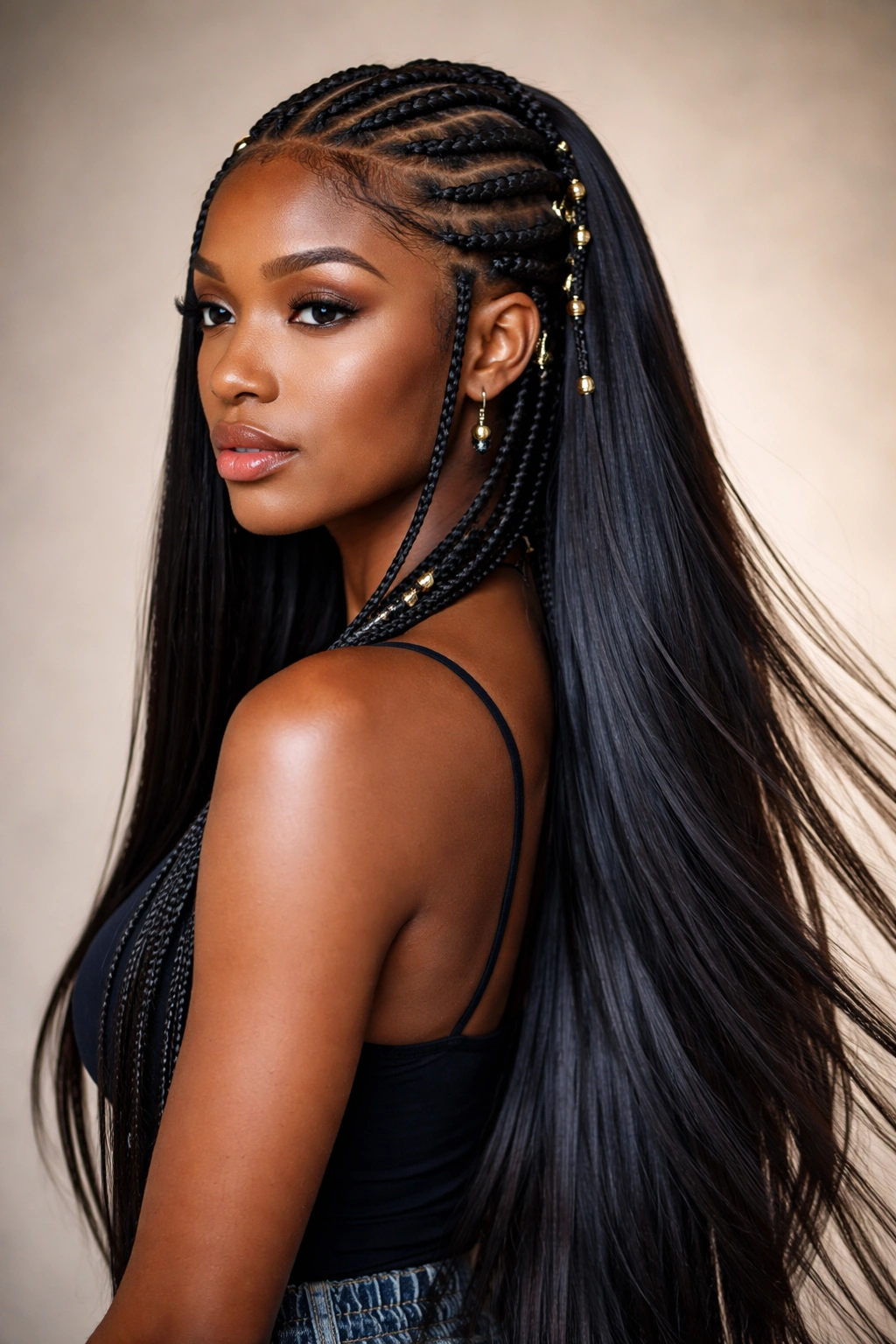
For a dramatic, fashion-forward approach, consider installing straight extensions that don’t follow the typical cornrow pattern but instead cascade freely from braided anchor points. The Fulani braids form structured anchor patterns—perhaps horizontal sections or diagonal lines—but extensions flow loosely from braided sections rather than being braided entirely. This creates movement, drama, and an almost ethereal quality.
The Cascading Technique
Rather than braiding extensions entirely into cornrows, you braid small sections at the scalp or specific points, then allow longer extensions to flow freely from those anchor braids. This might mean braiding a horizontal line across the crown, then allowing extensions to cascade down the back. Or it could mean multiple small braided sections spaced across the head with free-flowing extensions emanating from each.
Visual Drama and Movement
This approach creates maximum movement and flow because the extensions aren’t constrained by braiding. They move with your motion, creating a constantly evolving silhouette. The style photographs beautifully from multiple angles because the movement and cascade effect changes depending on how you’re positioned. This is the choice if you want drama, visual interest, and that “ready for a photoshoot” aesthetic.
Installation and Longevity
Cascading styles require secure anchoring braids that can support the weight of longer extensions without slipping or loosening. Installation takes considerable time because you need to ensure each anchor braid is tight enough to hold without tension-related damage. These styles typically last 4-5 weeks depending on how active you are—the loose extensions tend to loosen faster than fully braided styles.
Maintenance and Daily Styling
The loose extensions require daily or near-daily refreshing to maintain that polished cascade appearance. You’ll likely need to style the cascading sections each morning to ensure they’re lying smoothly and arranged attractively. Sleeping in a braid or protective wrap helps preserve the style overnight, but expect to spend styling time each day if you want that magazine-ready appearance.
Final Thoughts
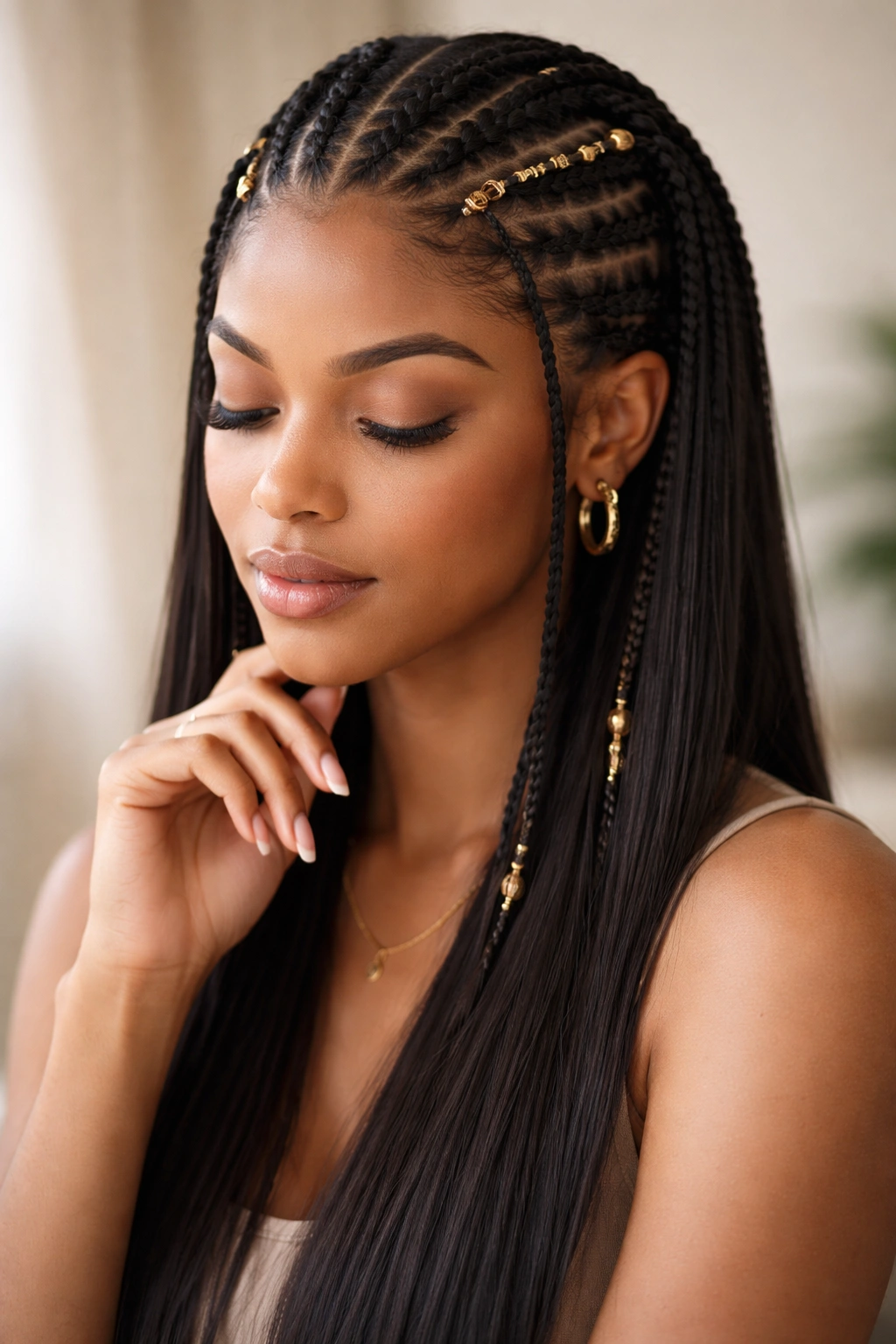
Fulani braids with straight hair sew-ins offer remarkable versatility because the straight texture remains crisp and polished throughout the wear period while the structured braiding pattern creates artistic, intentional-looking styles. Your choice among these eight approaches should be guided by several practical considerations: how much installation time you can dedicate, how long you want the style to last before needing touch-ups or reinstallation, how much daily styling time you’re willing to invest, and what kind of aesthetic speaks to you.
The classic approach works beautifully if you want low-maintenance longevity and recognizable Fulani identity. Feed-in techniques suit you if scalp health is a priority and you want seamless blending. Two-tone color blocking makes sense if you love visual impact and don’t mind more frequent color-fading maintenance. Closures give you styling versatility that pure braids can’t match. Wrap-arounds provide artistic detail for those who see their hair as wearable art. Side-swept variations offer modern asymmetry. Curly-tip extensions combine structure with movement. Cascading styles deliver maximum drama for special occasions.
The straight extension texture is your secret weapon here—it maintains definition far longer than curly or kinky textures, photographs beautifully, and creates that luxury aesthetic that signals intentionality and care. Whatever style you choose, ensure your stylist has experience with both Fulani braiding patterns and straight sew-in extensions, because combining the two requires technical skill in both areas. Your protective style should protect your natural hair while making you feel absolutely confident and beautiful.
