



Igbo hairstyles carry centuries of cultural heritage, artistic expression, and social significance that extends far beyond mere aesthetics. These intricate braided and twisted designs have been passed down through generations, each pattern telling a story about identity, status, and celebration within Igbo communities. What makes Igbo hairstyles particularly special is their versatility — they work beautifully with any hair length, but short hair offers its own unique advantages that showcase the artistry and geometry of these traditional designs with striking clarity.
Short hair is actually ideal for showcasing Igbo hairstyles. The reduced weight creates sharper definition in braiding patterns, allowing viewers to appreciate every twist, turn, and decorative element. Plus, styles tend to last longer and require less maintenance when your hair is shorter, making them more practical for daily wear while maintaining that polished, intentional appearance. Whether you’re drawn to traditional aesthetics, cultural pride, or simply stunning protective styling, there’s an Igbo hairstyle perfectly suited to your short hair.
The beauty of these styles lies in how they balance tradition with individual creativity. From simple braided patterns to elaborate geometric designs embellished with beads and threading, Igbo hairstyles can be adapted to match your personal style, face shape, and lifestyle. Many of these styles also function as protective styling, keeping your natural hair tucked away while you style and strengthen it. Let’s explore ten gorgeous Igbo hairstyle options that work exceptionally well for girls rocking shorter lengths.
1. Ghana Braids (Banana Braids)
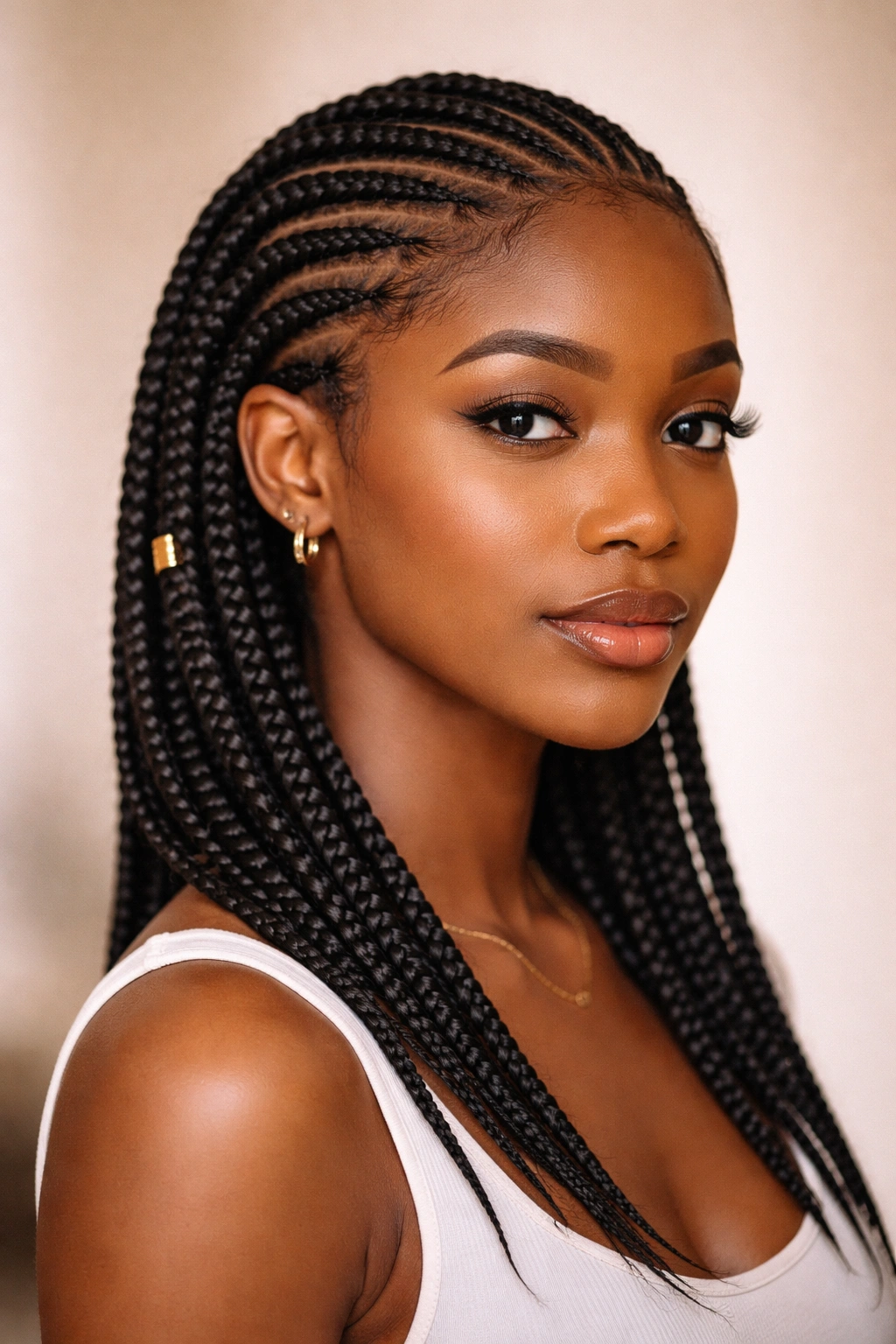
Ghana braids are perhaps one of the most iconic and recognizable Igbo-inspired styles, featuring long, sleek braids that curve away from the scalp in a gentle banana-like arc. This style works remarkably well on short hair because the curves create an elegant frame around your face, and the reduced length means the braids maintain their shape and bounce much longer than they would in longer hair. The subtle arc creates visual interest and movement while keeping everything close to your scalp, which is perfect if you’re working with limited length.
How to Achieve Ghana Braids
To create Ghana braids, you’ll typically use a three-strand braiding technique that’s slightly elevated and curved away from the scalp. Start at the hairline and braid in a smooth, upward motion, gradually shifting the braid outward as you move toward the back of your head. Most practitioners use lightweight extensions or thread to achieve the length and fullness of professional-looking Ghana braids. The braids should be snug enough to hold their shape but not so tight that they cause tension or discomfort on your scalp — if you feel any pulling or tenderness, speak up immediately and ask your stylist to loosen them.
Styling and Maintenance
Ghana braids on short hair typically last between two to three weeks, making them a practical protective style. You’ll want to keep your scalp moisturized throughout the wear period by applying lightweight oils or scalp treatments two to three times per week. Wrap your braids in a silk or satin scarf before bed to prevent frizzing and extend their lifespan. When you’re ready to remove them, gently unravel each braid slowly rather than ripping them out, and follow up with a deep conditioning treatment to restore moisture to your hair.
Pro tip: Ask your stylist to vary the thickness of your braids — thicker braids throughout look bold and striking, while mixing thick and thin braids creates sophisticated visual texture and appears less heavy on shorter hair.
2. Cornrows with Threading
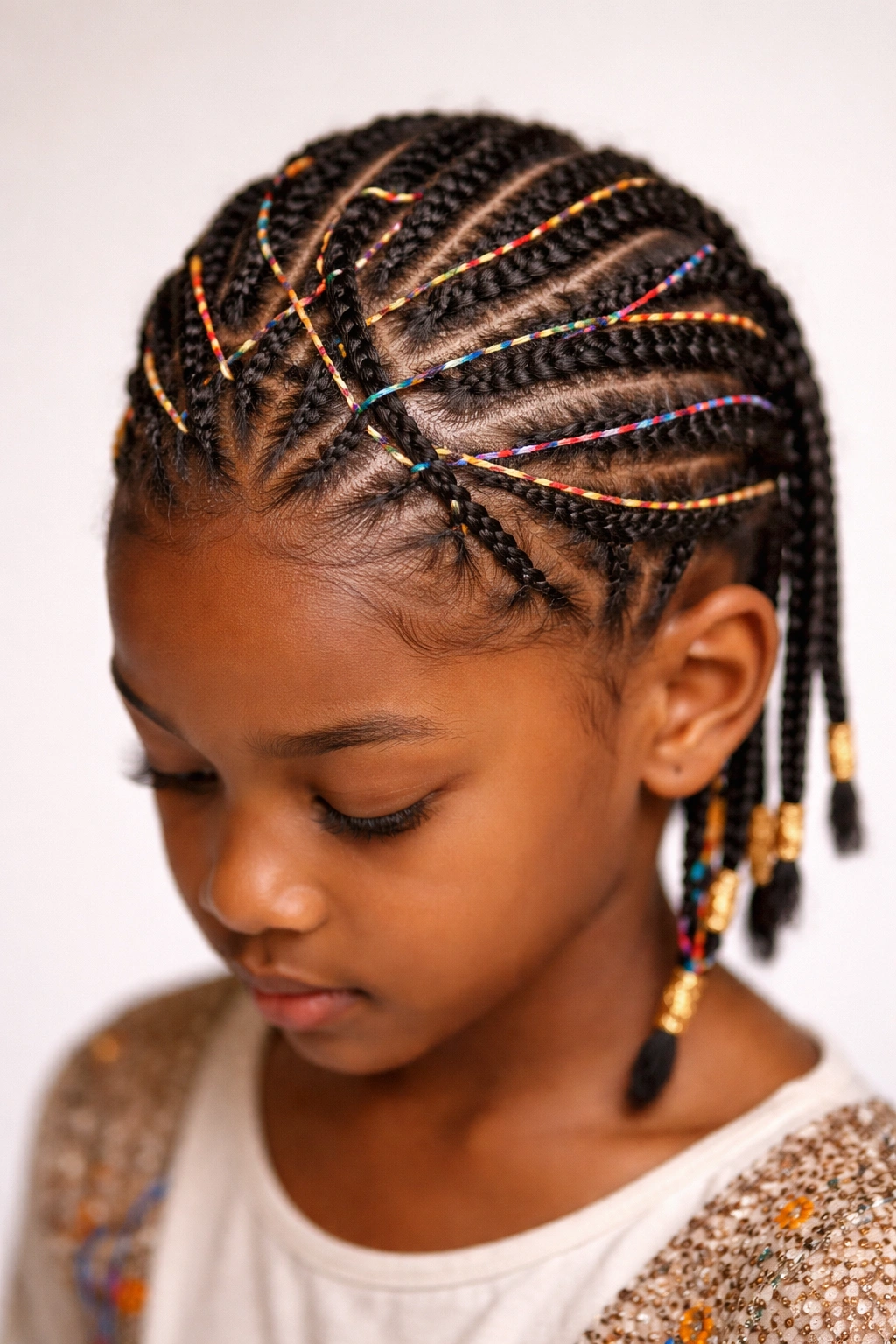
Cornrows represent one of the most fundamental and versatile Igbo hairstyling techniques, and when combined with threading in contrasting colors, they transform into a truly stunning style. Threading adds dimension, visual interest, and a pop of color that makes cornrows feel fresh and contemporary while honoring traditional roots. On short hair, cornrows with threading create defined geometric patterns that would be harder to appreciate with longer lengths, and the color thread adds personality without requiring permanent dye.
Understanding the Threading Technique
Threading involves wrapping lightweight yarn, thread, or synthetic hair around your natural braids as they’re being created, adding visual contrast and sometimes additional length. The thread can be matched to your braids for a subtle ombré effect, or chosen in a contrasting color for bold geometric impact. Common threading colors include vibrant yellows, reds, silvers, golds, and whites, though virtually any color works depending on your preference and skin tone. The threading sits on top of the braid, creating a textured, dimensional appearance that photographs beautifully and catches light as you move.
Styling Options and Variations
Cornrows with threading can be styled countless ways on short hair: geometric patterns radiating from a center part, horizontal rows across the back, diagonal lines for movement, or curved patterns that follow your head shape. You can incorporate a mix of braided and unbraided sections, create smaller or larger cornrows depending on the look you want, or add multiple colors of thread for maximum visual impact. The style typically lasts three to four weeks with proper care, and because the thread is temporary, you can change colors or remove the threading without removing the braids underneath.
Worth knowing: Start with lighter-colored thread if you’re concerned about color transfer or staining — some vibrant threads can deposit color onto your scalp, particularly in heat or humidity. Test a small section first if you’re using a new brand of thread.
3. Box Braids with Beads
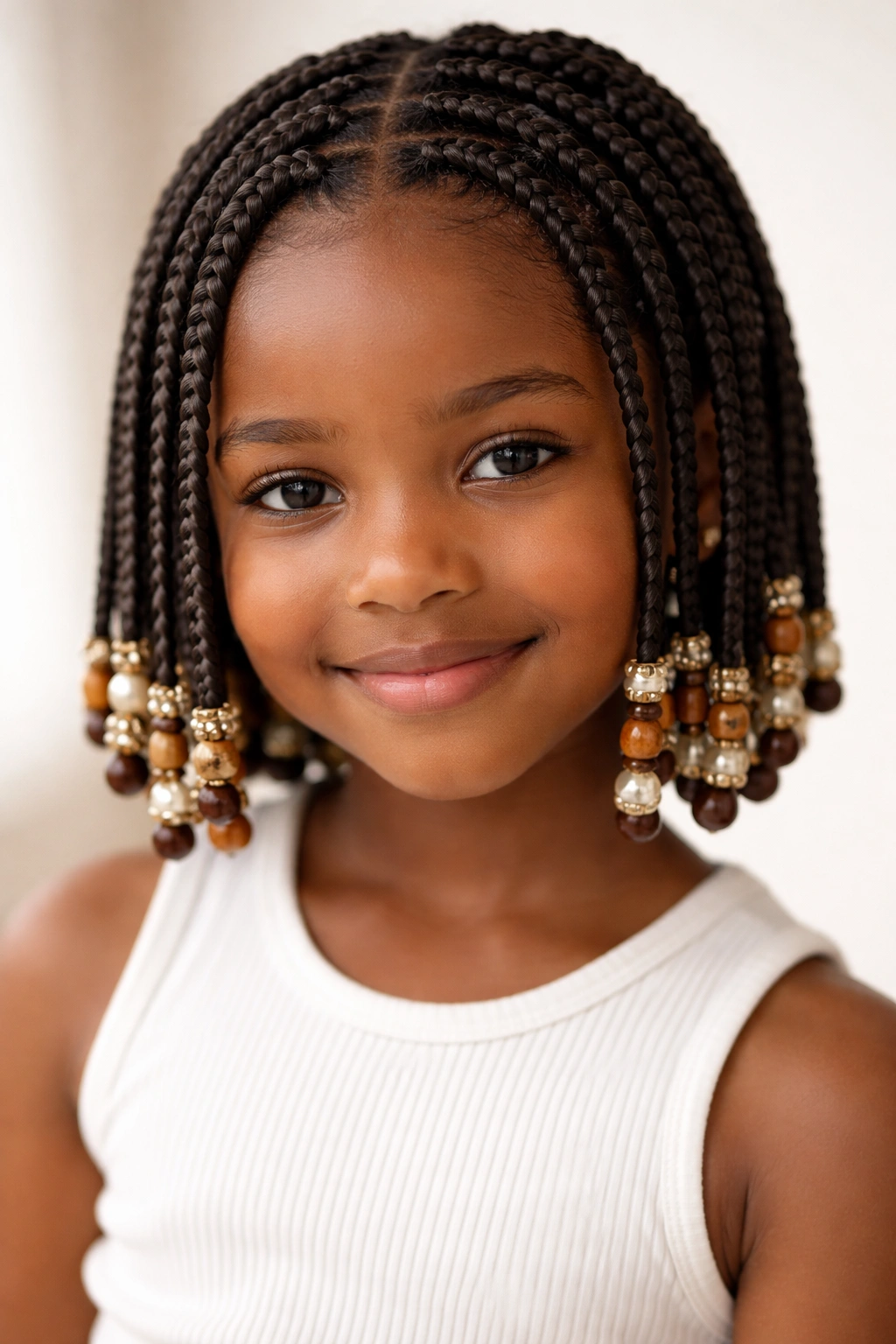
Box braids represent a structured, geometric approach to braiding where each braid is contained within its own “box” section on the scalp, creating a clean, organized appearance. When you add beads — traditional brass beads, cowrie shells, gold cuffs, or decorative acrylic beads — you elevate the style into something truly ceremonial and celebratory. On short hair, the beads become focal points rather than scattered embellishments, creating a polished, intentional aesthetic that works beautifully for special occasions or everyday wear.
Creating Box Braids on Short Hair
Box braids start with clearly defined, usually square sections across your scalp, which your stylist then braids downward using extensions for added length and fullness. On short natural hair, this creates a style that’s manageable and comfortable while still providing the protective benefits and aesthetic appeal of box braids. The smaller sections you create, the finer and more delicate the overall look — larger sections create a bolder appearance. Most people wear box braids for four to six weeks depending on how well they’re maintained and how quickly their natural hair grows.
Bead Placement and Selection
Beads can be placed strategically at the ends of braids, clustered around your face, scattered throughout for visual interest, or concentrated toward one side for asymmetrical impact. Traditional brass or wooden beads offer cultural authenticity and weight that helps braids hang beautifully, while decorative beads allow for personalization and creativity. Gold-toned beads generally complement warm skin tones, while silver or cool-toned metals work beautifully on cooler undertones. Don’t be afraid to mix bead types and sizes — varying them creates visual richness and prevents the style from feeling too uniform or flat.
Real talk: Beads add weight to your braids, which can actually help them last longer and look neater because they keep individual braids from frizzing outward. However, ensure the beads aren’t so heavy that they create tension on your scalp or cause discomfort.
4. Fulani Braids (Braids with Center Part)
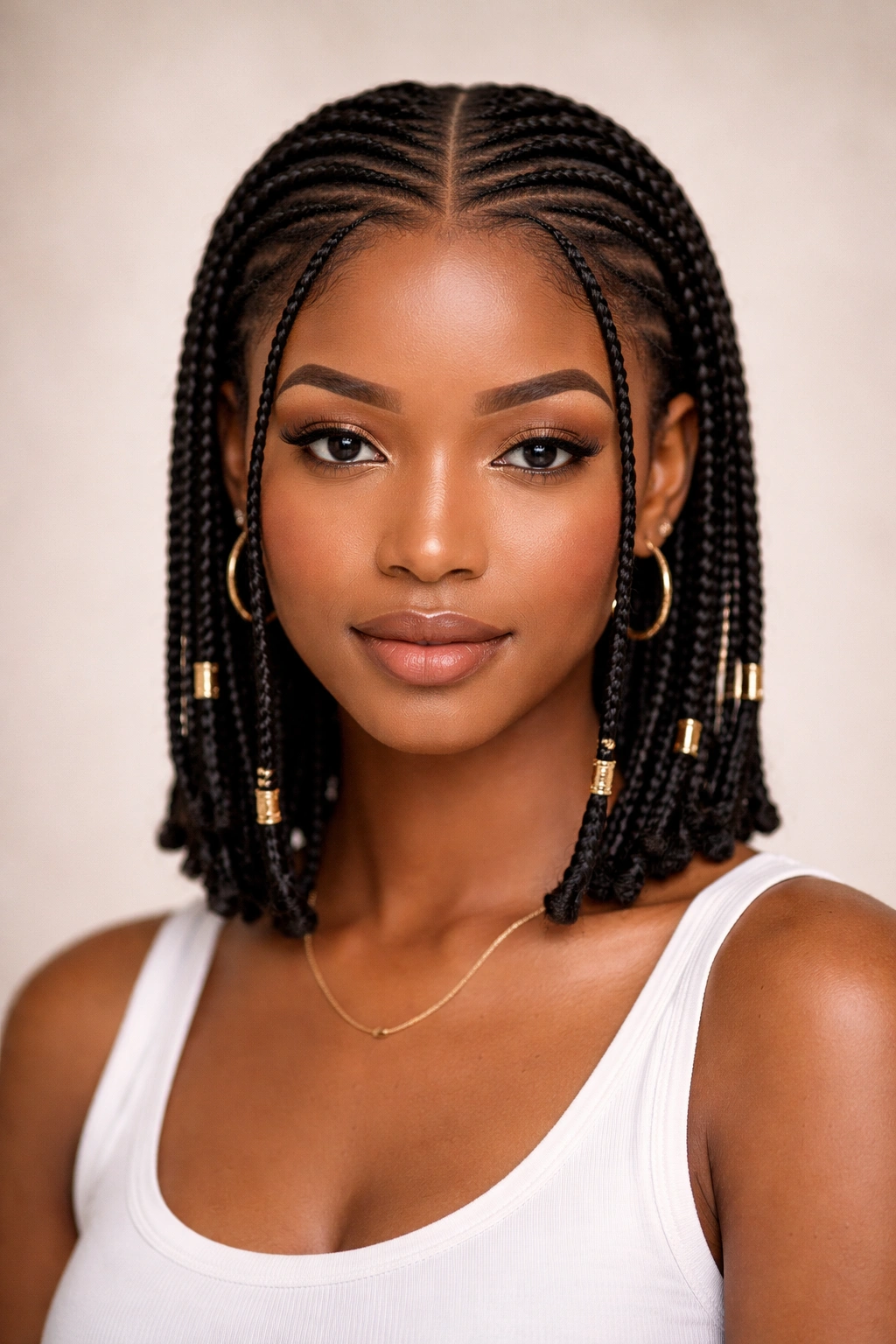
Fulani braids showcase a distinct aesthetic centered around a clean, defined center part with intricate braiding that frames your face and features. This style actually comes from the Fulani people but has been embraced across many African cultures, including Igbo traditions, for its sophisticated elegance and visual impact. On short hair, the center-parted braids create perfect symmetry and balance, drawing attention to your face while keeping everything structured and intentional.
Achieving the Perfect Center Part
Start with a precisely defined center part that runs from your hairline straight back to your nape — this is the foundation of the entire style’s success. On either side of the part, you’ll braid closer to the scalp in curved or straight lines, depending on the specific variation you prefer. Some versions feature braids that curve around your ears, while others include decorative thread, beads, or even small gold cuffs woven into the braids. The key is precision — a slightly crooked center part will make the entire style look unbalanced, so take your time getting this right or work with a skilled stylist who understands the geometry involved.
Face-Framing Variations
Fulani braids can be customized to flatter your specific face shape and personal style. If you have a longer face, braids that curve outward and create width around your cheekbones will create better proportion. For rounder faces, straighter braids create a lengthening effect. You can add decorative elements like small gold cuffs, beads, or wrapped thread specifically at the braids that frame your face to draw attention and add dimension. Many people also incorporate their natural hair front and center, allowing some strands to remain unbraided for a softer, more romantic feel.
Insider note: Fulani braids look absolutely stunning with gold accessories and jewelry because the warm tones complement the style’s elegance. If you wear gold regularly, this becomes your signature style.
5. Twisted Buns and Knots
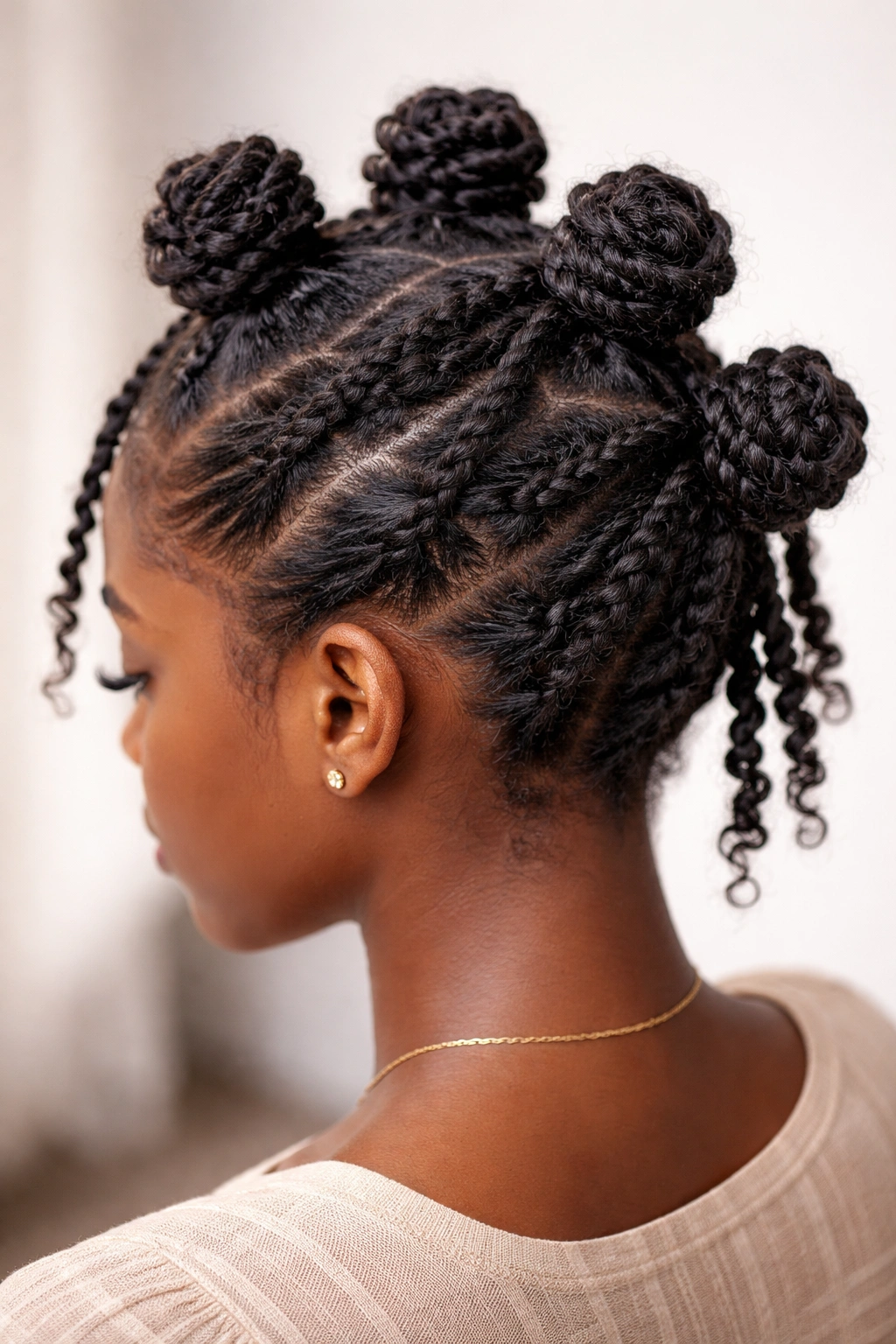
Twisted styles represent a different approach from braiding, creating texture through the twisting motion rather than the interlocking of three strands. Twisted buns and knots are particularly flattering on short hair because they create volume and dimension without requiring extensions, and they can be dressed up for formal occasions or worn casually throughout the week. The natural texture of twists catches light differently than braids, creating a completely different visual effect while still honoring Igbo styling traditions.
Techniques for Creating Twists
Two-strand twists are created by dividing a section of hair into two strands and twisting them around each other toward your scalp — sounds simple, but creating uniform, polished twists requires practice and precision. You can create small delicate twists that cover most of your head, larger statement twists for bold impact, or a combination of sizes for visual interest. Some stylists incorporate threading into twists just as they do with braids, adding color and dimension. On short hair, twists create a textured, dimensional style that can be styled into buns, pinned up, or left to cascade down, depending on your preference.
Styling Twisted Buns
Gather several twists and roll them into a knot or bun formation at the crown, nape, or side of your head — this transforms twists into an elegant updo suitable for work, dates, or special events. Twisted buns worn high on the crown create a playful, youthful appearance, while buns at the nape feel more formal and polished. You can pin them to sit flat against your head or puff them out for volume and drama. Adding beads, gold cuffs, or wrapped thread to twists before wrapping them into buns creates even more visual interest and sophistication.
Pro tip: Twisted styles last slightly longer than their braided counterparts, typically maintaining their shape for three to four weeks, making them economical as well as beautiful.
6. Knotless Braids (Protective Twist on Traditional Style)
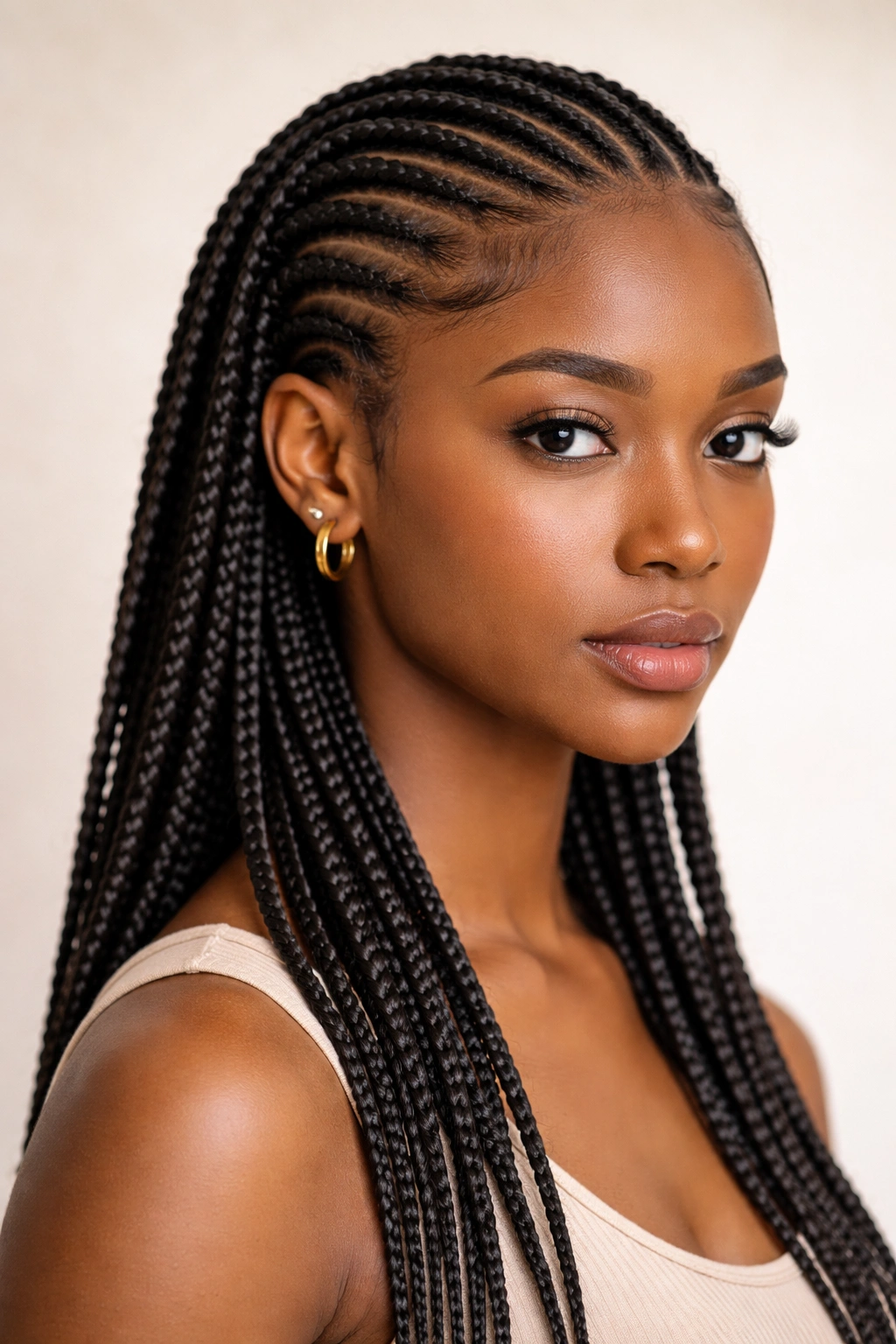
Knotless braids offer all the aesthetic appeal of traditional braids while being gentler on your edges and scalp — they’re created by feeding extensions into sections of your hair rather than starting with a tight knot at the root. This recent evolution of traditional protective styling has become increasingly popular because it provides the polished appearance of box braids with reduced tension and less risk of hair loss from traction alopecia. On short hair, knotless braids create a seamless appearance where the braid seems to flow naturally from your scalp.
Why Knotless Braids Matter for Short Hair
Because knotless braids don’t have that tight knot at the base, they put less pressure on your hairline and delicate areas around your ears and temples. For people with short hair or anyone concerned about hair loss and scalp health, this makes a significant difference over time. The braids also lie flatter against your scalp initially, creating a more finished appearance immediately after installation. As your hair grows or the style settles over the first few days, it looks even more like natural hair growth, which many people prefer.
Customizing Knotless Braids
You can customize knotless braids just as much as traditional braids — play with braid size, incorporate threading, add beads, or create specific patterns across your scalp. The primary difference is simply how they’re constructed at the root, which means all the styling possibilities remain the same. Many people find that knotless braids are more comfortable overnight because they don’t dig into your scalp the way traditional braids with tight knots sometimes do. They also tend to look neat and polished longer since they start without that tight tension that can eventually loosen.
Worth knowing: Knotless braids typically cost slightly more than traditional braids because they require more meticulous construction, but many people feel the comfort and longevity advantages justify the extra investment.
7. Zig-Zag Patterns and Geometric Designs
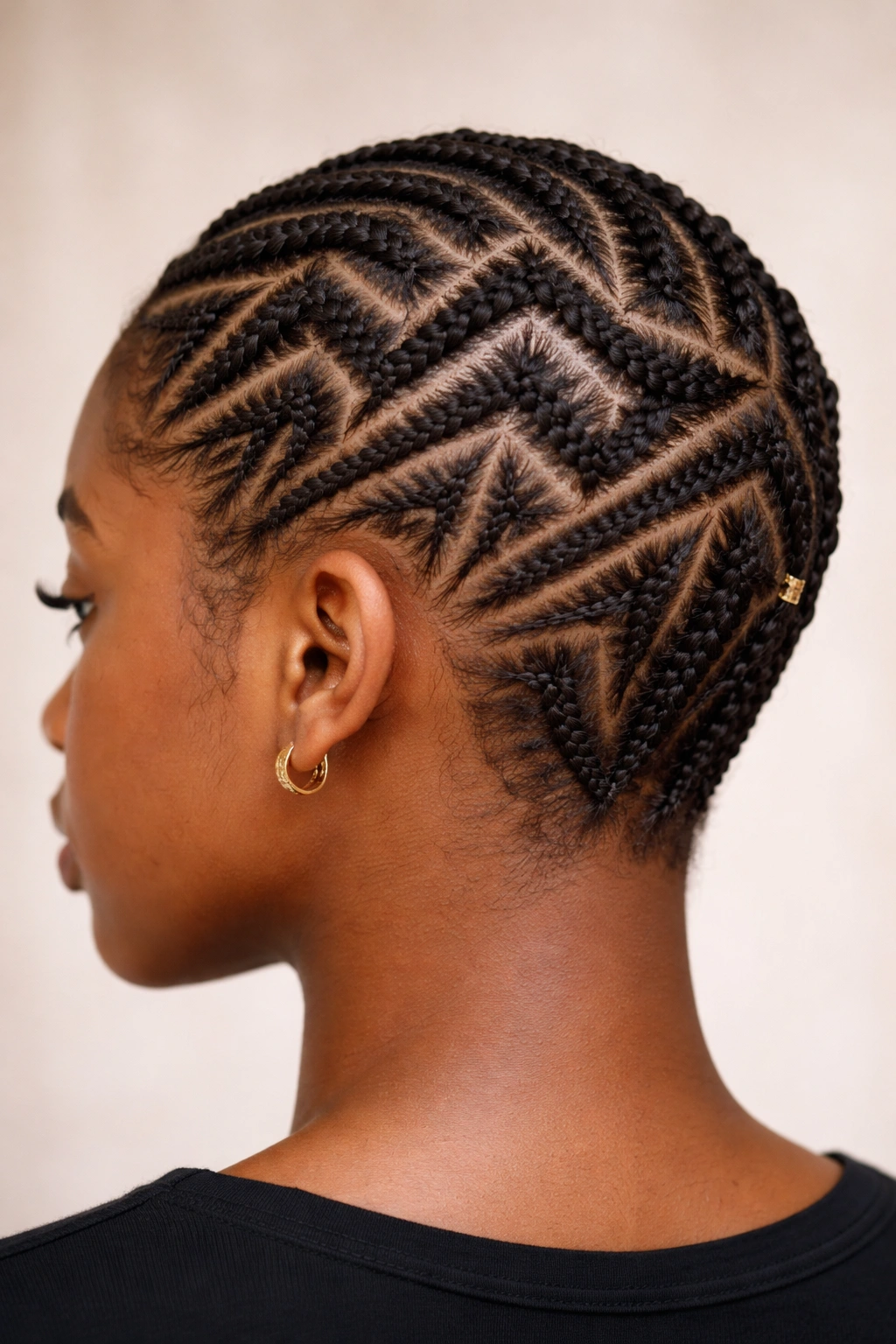
Moving beyond individual braid styles, zig-zag patterns and geometric designs showcase your scalp as a canvas for artistic braiding that traces specific shapes and lines across your head. These styles involve creating cornrows or braids that follow geometric paths — zigzags, diamonds, triangles, or other angular patterns — rather than the traditional straight or slightly curved lines. On short hair, these patterns become absolutely striking because viewers can see the entire design at once without it being obscured by length.
Planning Your Geometric Design
Before your stylist begins braiding, you’ll want to have a clear picture of what design you want to create. Sketch it out, show reference photos, or discuss the general concept with your stylist so you’re both on the same page. The most flattering geometric patterns tend to complement your face shape — angular patterns work beautifully on round faces, while softer curves or wider patterns can balance angular features. The size and complexity of your design should also match your head size and hair texture; too many tiny intricate patterns on someone with a larger head might get visually lost, while too few large patterns on a smaller head might overwhelm.
Styling and Occasion Considerations
Geometric braided designs work for virtually any occasion depending on how you style them. Leave them down for a casual look, pin sections up and away from your face for a more polished appearance, or gather multiple braids into a sculptural bun for serious impact. These styles photograph beautifully, making them perfect for special events, celebrations, or when you want to showcase your cultural pride and styling creativity. The same design can look completely different depending on whether you’re wearing it down or styled up, giving you two looks from one protective style.
Real talk: Geometric braiding requires a truly skilled stylist — this isn’t a style to book with someone you haven’t worked with before or who primarily does basic braiding. Look for artists who showcase geometric work in their portfolio.
8. Two-Strand Twists with Natural Definition
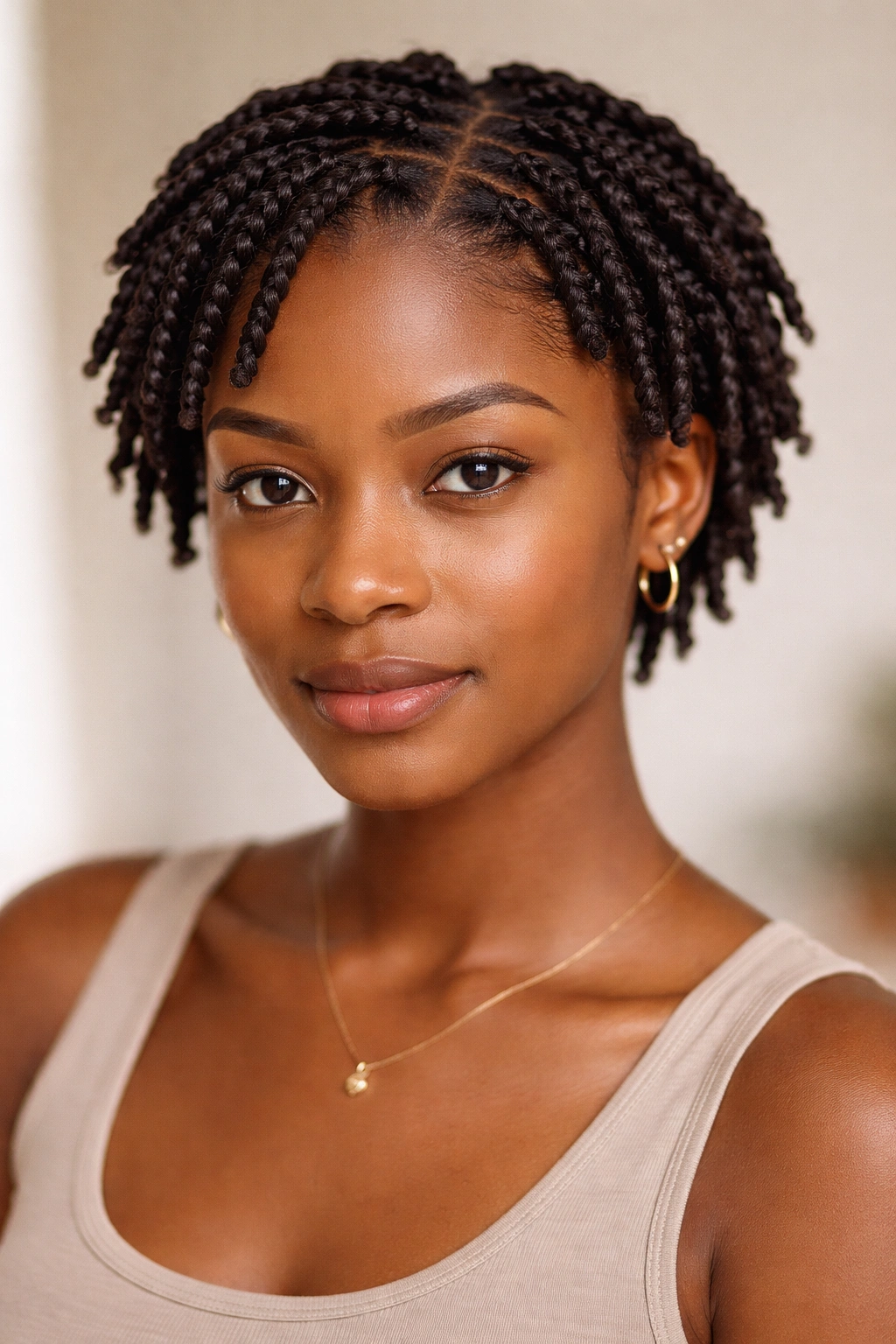
Two-strand twists represent a slightly different protective styling approach than braids, creating a textured, organic appearance that many people find incredibly beautiful and easier to maintain. Unlike braids that require thread or extensions, two-strand twists can be created entirely with your natural hair, making them more accessible and less time-intensive to install. On short hair, natural twists have remarkable personality and movement, and they actually showcase your natural hair texture rather than obscuring it under extensions.
Creating Defined Two-Strand Twists
Two-strand twists start by sectioning your hair into small, medium, or large sections depending on the look you want, then dividing each section into two strands and twisting them around each other from your roots to your ends. The key to gorgeous defined twists is twisting tightly enough that they hold their shape but not so tightly that you create tension. Your natural hair texture plays a huge role — coilier hair naturally holds twists longer, while straighter textures may require more frequent re-twisting. On short hair, this becomes less of an issue because the twists maintain their shape more easily regardless of texture.
Longevity and Maintenance
Two-strand twists typically last one to two weeks on short hair before they begin to frizz or lose their definition, which is actually shorter than braids but still a respectable protective style duration. You can refresh them by re-twisting just the roots when they start to grow out, rather than removing and redoing the entire style. Wrap them in a silk scarf at night to preserve their shape and prevent frizzing. Avoid washing while wearing twists, but you can lightly mist them with water and refresher spray if needed.
Pro tip: On short hair, create your twists on damp hair and allow them to dry completely before styling them — this gives them better hold and helps them last longer throughout the wear period.
9. Cornrows with Shaved or Faded Sides
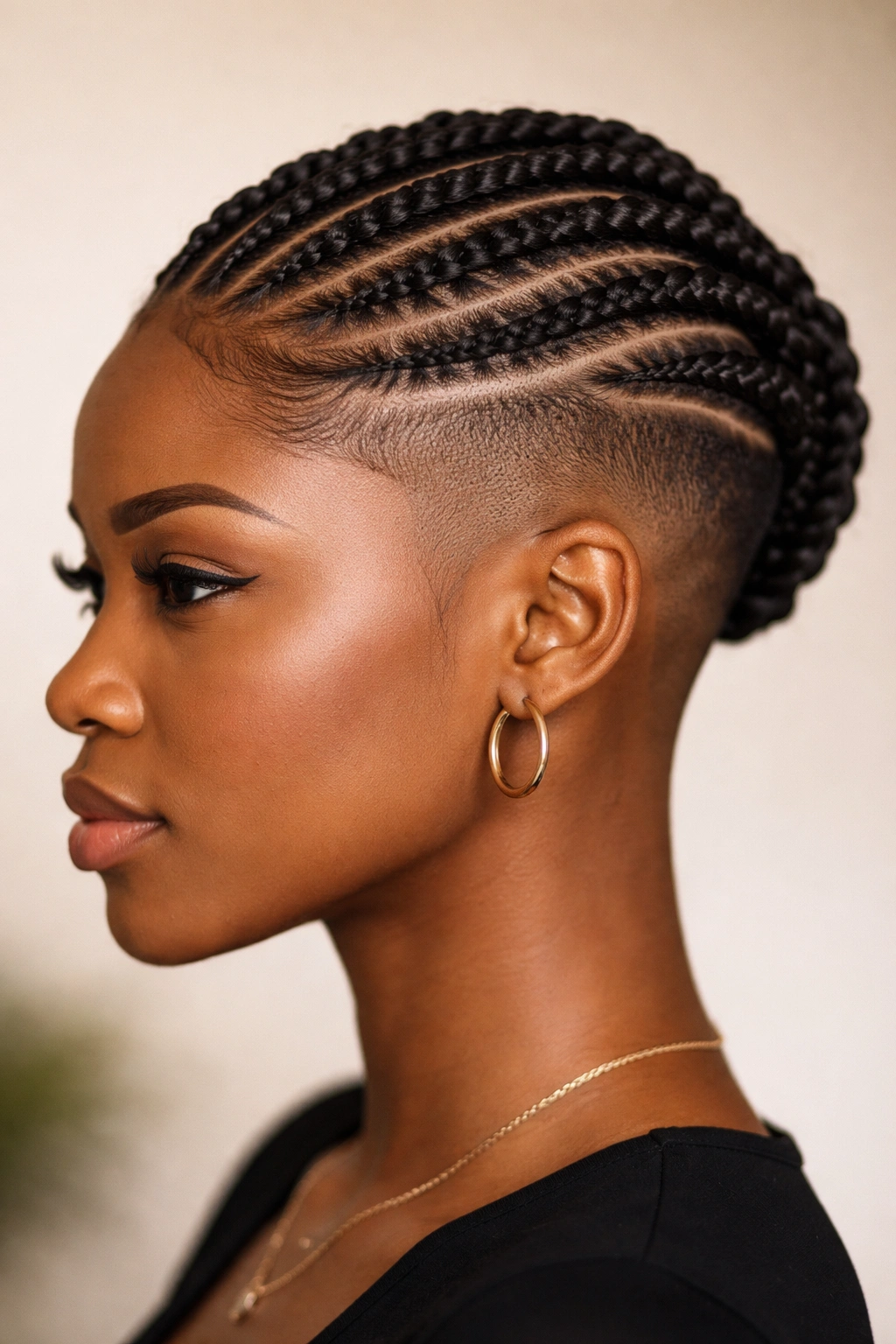
This style combines traditional cornrows on top with shaved or faded sides, creating bold contrast and modern edge while honoring traditional Igbo styling. The closely cropped or shaved sides emphasize the cornrows as the focal point and showcase your face, cheekbones, and bone structure in a way that longer hair obscures. This style works beautifully on virtually all face shapes when executed well, and it offers a level of coolness and confidence that turns heads.
Creating the Fade and Cornrow Combination
This style requires two separate skill sets — cornrow artistry on top and precise fade or shaving on the sides. Ideally, you’ll work with a stylist or barber who can execute both seamlessly. The cornrows can be simple or elaborate; many people create geometric patterns, incorporate threading, or add beads to the cornrowed portion. The fade or shaved section should be precisely executed with clean lines where it meets the cornrowed section — this creates visual impact and makes the entire look feel intentional and polished rather than like two mismatched styles.
Confidence and Expression
This style requires commitment and confidence because it’s bold and impossible to miss. It works beautifully as a statement of cultural pride, artistic expression, or personal style — there’s no hiding behind it. The maintenance requirements are relatively low compared to other protective styles; the cornrows last three to four weeks, and the faded sides will grow out gradually, giving you the option to refresh the fade every two to three weeks or allow it to grow out and transition to a different style. This versatility makes it a practical choice even though it’s an undeniably bold statement.
Worth knowing: Make sure you genuinely love this look before committing, because it will take several weeks for the sides to grow back significantly. That said, if you’re someone who loves bold looks and doesn’t fear standing out, this style will make you feel absolutely powerful.
10. Feed-In Braids with Color Blocking
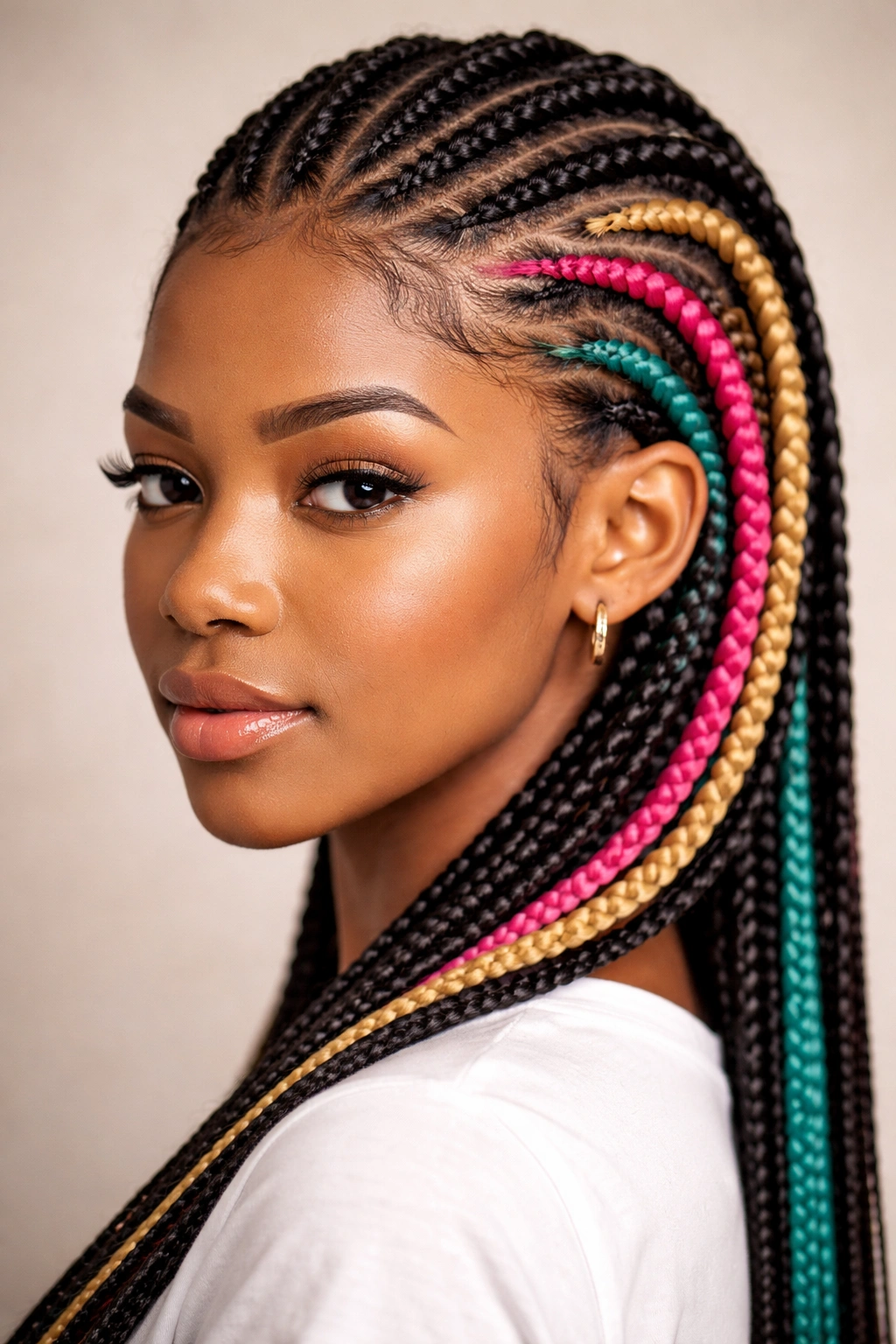
Feed-in braids represent a technique where extensions are gradually added into your natural hair as the braid is created, resulting in a seamless blend between your hair and the extensions with no visible knot at the root. When you combine this technique with color blocking — using contrasting colors of extensions in distinct sections — you create a modern, artistic style that feels both traditional and contemporary.
Understanding Color Blocking in Braids
Color blocking involves using one color of extensions for several braids, then switching to a completely different color for the next section, creating distinct blocks of color across your head rather than a gradual transition. This could mean golden blonde braids across the front, burgundy braids in the middle, and black braids in the back — or any color combination that speaks to you. On short hair, these color blocks become incredibly striking because there’s less distance for the eye to travel, making the color contrast immediately apparent and visually exciting.
Installation and Longevity
Feed-in braids take longer to install than traditional braids because each braid must be carefully constructed with the extensions fed in gradually, but the result is worth the extra time. These braids typically last four to six weeks and maintain their neat appearance longer than braids with visible knots. The lack of tension at the roots makes them comfortable for extended wear, and they’re gentle on your hairline and edges.
Styling with Color Blocking
With color blocking, your styling options include wearing the braids down to display the color contrast, pinning up sections in specific colors for interest, or creating an updo that mixes the different colored braids. The color blocking itself becomes part of your styling statement — you can emphasize certain colors by how you arrange your braids when you style them. This approach to protective styling celebrates both your natural hair and your creativity, making it feel personally meaningful rather than purely functional.
Real talk: High-quality colored extensions cost more than basic black extensions, but they hold their color better and look more vibrant throughout the wear period. This is one area where investing in quality truly makes a visible difference.
Key Takeaways
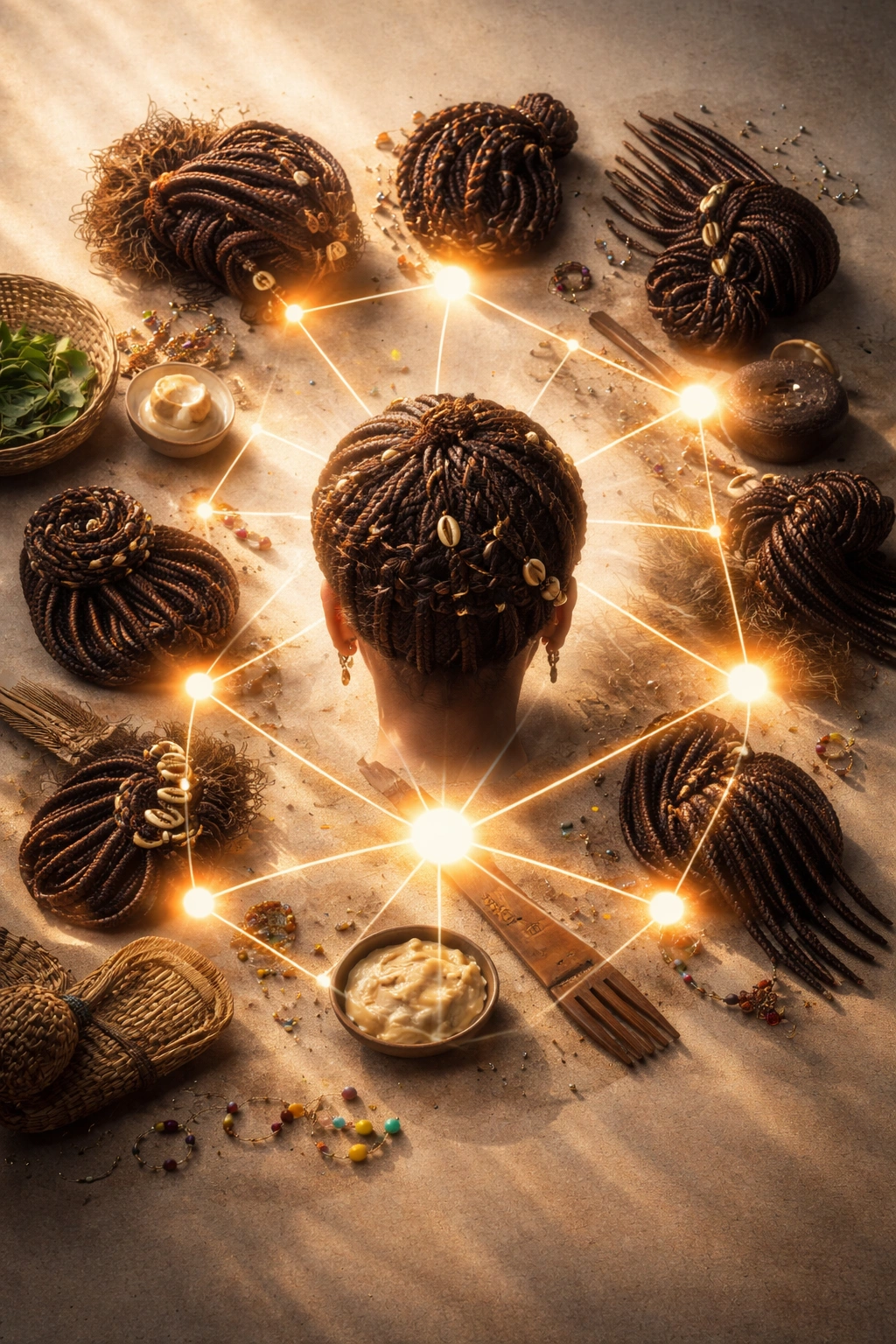
Igbo hairstyles offer incredible versatility, cultural richness, and stunning visual impact — and short hair is actually an ideal canvas for showcasing the artistry and detail these styles require. Whether you’re drawn to the geometric precision of cornrows and feed-in braids, the elegant flow of Fulani styles, or the bold statement of faded sides and color blocking, there’s an option that will make you feel confident and connected to your heritage.
The key to finding your perfect style lies in considering your lifestyle, commitment level, face shape, and personal aesthetic preferences. Some styles require minimal maintenance and can be worn casually, while others feel more ceremonial and special-occasion appropriate. Many can be adapted and customized infinitely, so don’t hesitate to bring reference photos, discuss variations, and collaborate with your stylist to create something uniquely yours.
Beyond the visual beauty, protective styles serve a crucial function in hair health — they give your natural hair a break from daily manipulation and environmental stressors while you style and strengthen it. Combine any of these Igbo hairstyles with consistent scalp care, proper maintenance throughout the wear period, and deep conditioning treatments after removal, and you’ll find your hair thriving. Short hair doesn’t limit your styling possibilities — it amplifies them, making every braid, twist, thread, and bead visible and celebrated.
