



Article: 8 Igbo Hairstyles for Women With Short Hair
Short hair doesn’t limit your options when it comes to celebrating Igbo culture and heritage through your hairstyle. In fact, some of the most striking and culturally significant Igbo hairstyles are perfectly suited to shorter lengths, allowing for bold geometric patterns, intricate beadwork, and clean, sophisticated lines that frame the face beautifully. Whether you’re exploring your roots, attending a cultural celebration, or simply wanting to honor the rich aesthetic traditions of Igbo people, short hair provides an excellent canvas for these stunning looks.
The Igbo people of southeastern Nigeria have a centuries-long tradition of elaborate and meaningful hairstyling. These aren’t just aesthetic choices — they’re expressions of identity, status, age, and cultural pride. Traditional Igbo hairstyles often incorporate intentional patterns, strategic parting, and decorative elements like beads, coral, and threads that tell a story about the wearer. What makes short-hair versions of these styles particularly appealing is their practicality combined with their visual impact. You get the cultural authenticity and visual drama without the extended length requirements or extensive daily maintenance some longer styles demand.
Short hair works beautifully with Igbo styling traditions because the styles rely on pattern, structure, and ornamentation rather than pure volume. The precision of cornrows shows up even more clearly on a shorter canvas, geometric patterns become architectural and striking, and beaded sections catch light with particular brilliance. Whether you’re wearing these styles for a wedding, a naming ceremony, a family gathering, or simply as everyday wear that honors your heritage, there’s a short-hair Igbo hairstyle that delivers both authenticity and wearability.
1. Igbo Cornrow Patterns With Beaded Ends
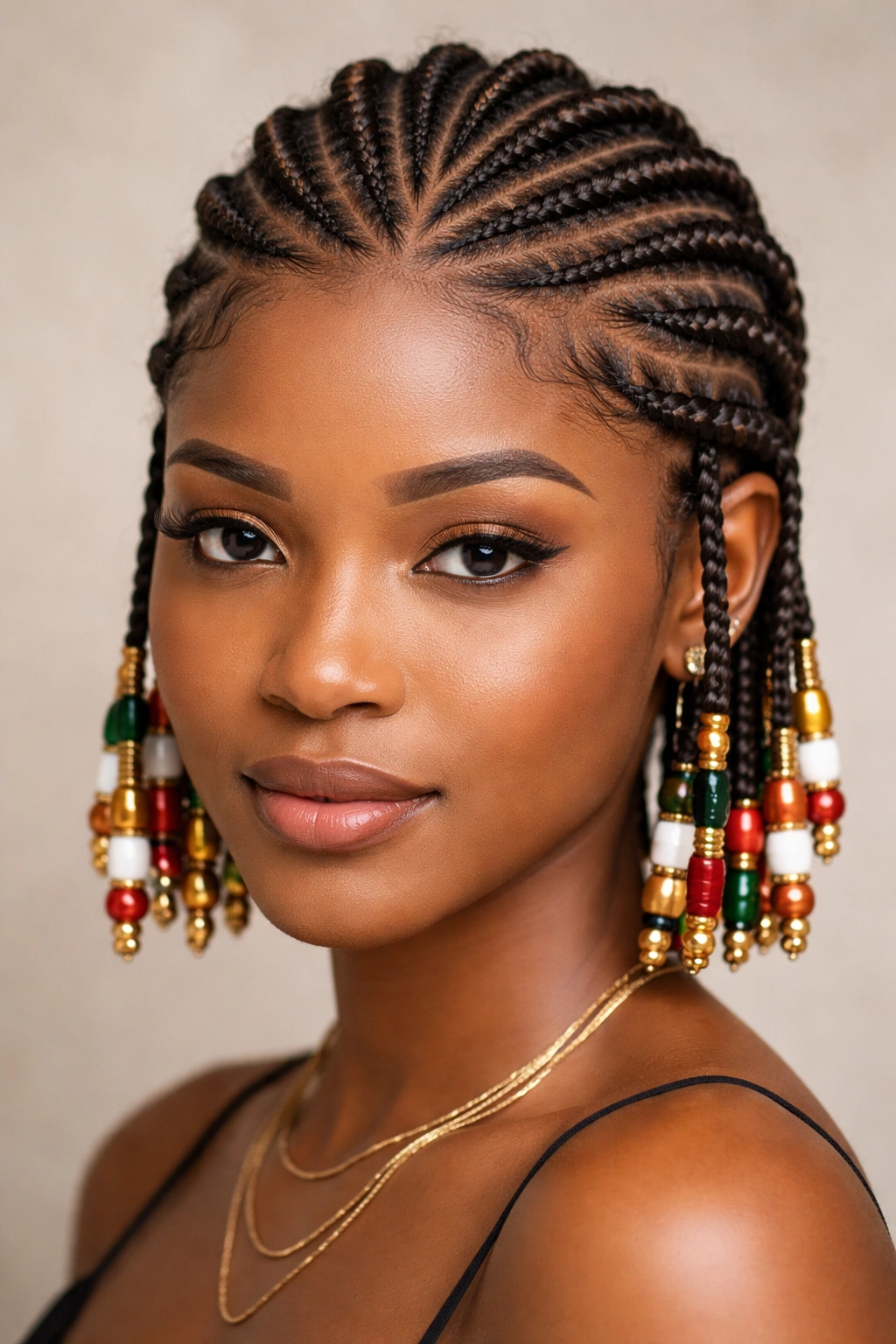
Cornrows are foundational to Igbo hairstyling, and on short hair, they transform into bold, sculptural designs that frame the face with precision. Traditional Igbo cornrow patterns often follow geometric lines that radiate from a center point or create symmetrical designs across the scalp. When working with shorter length, these patterns become even more pronounced and visually striking because there’s less hair volume to soften the lines. The beads — typically glass, wooden, or coral — are sewn onto the ends of individual cornrow sections, creating pops of color and movement that make the style feel celebratory and intentional.
What Makes This Style Authentically Igbo
The specific patterns used in Igbo cornrows often carry cultural meaning. Rather than following loose, flowing lines, Igbo cornrow designs tend toward geometric precision with deliberate sections that might include radial patterns starting from the center of the head, parallel lines running in specific directions, or symmetrical designs that showcase the stylist’s skill. The beading is never random — it’s strategic placement that adds weight and definition to the cornrow ends. The colors chosen for beads often correspond to personal preference, occasion, or cultural significance, with particular color combinations favored for celebrations versus everyday wear.
How to Style It
- Sectioning: The hair is parted into clean, precise lines using a rat-tail comb, creating the geometric pattern before braiding begins. Each section needs to be even in width for the pattern to read clearly.
- Braid technique: Three-strand cornrows are braided tightly close to the scalp, with tension kept consistent so the braids sit flat and emphasize the geometric pattern underneath.
- Bead application: Beads are threaded onto the cornrow ends after braiding is complete, typically using thread or string to secure them. Some styles incorporate beads throughout the braids, not just at the ends.
- Color options: Gold, burgundy, forest green, red, white, and natural wood tones work beautifully on shorter hair, creating high contrast that makes the style pop.
Pro tip: On short hair, plan for 6-10 distinct cornrow sections rather than many thin ones — fewer sections mean bolder patterns that read clearly, and they’re easier to maintain throughout the wear period.
2. Twisted Knots With Geometric Parting
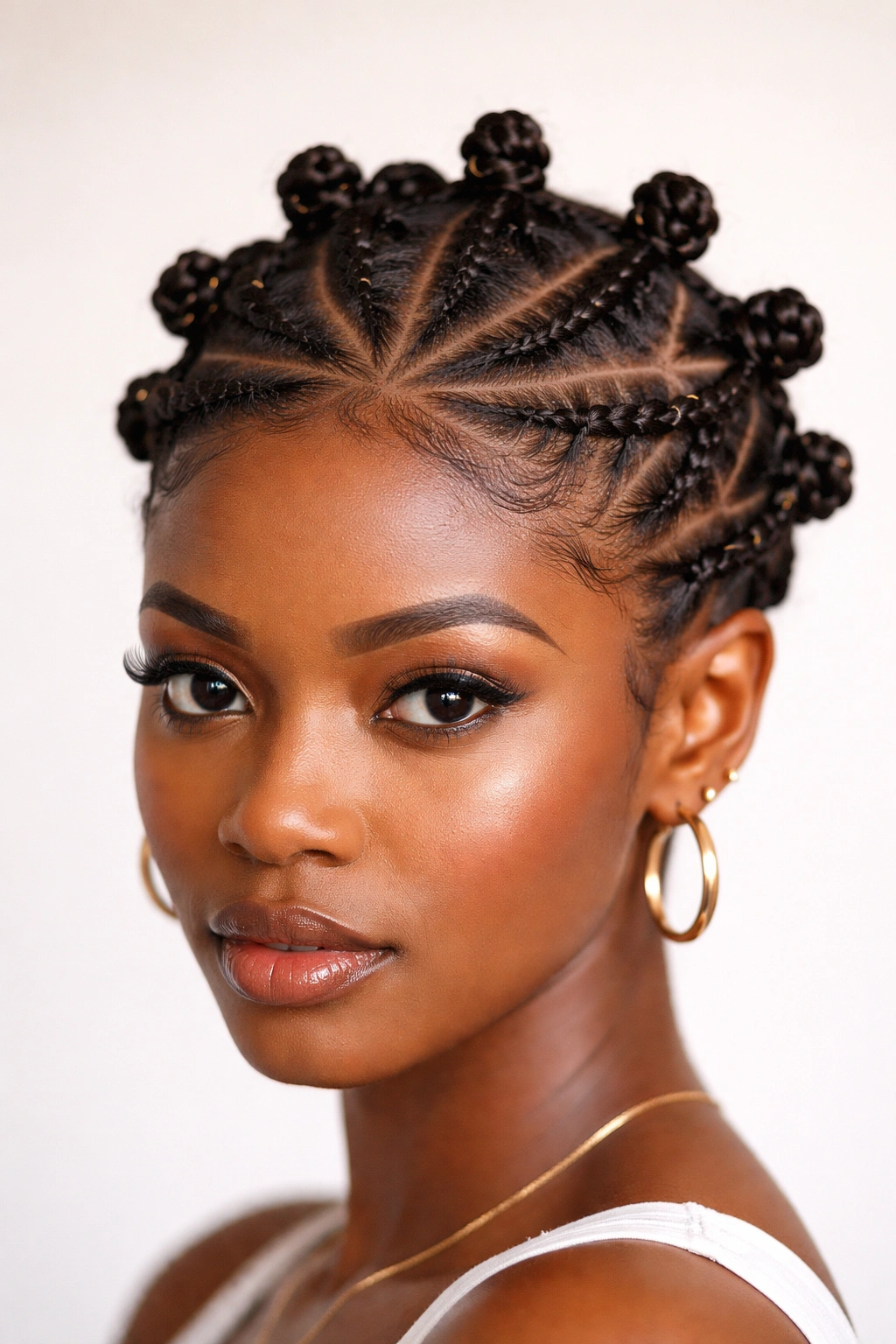
Twisted knots, sometimes called rope twists or flat twists, are a fundamental Igbo protective style that works exceptionally well on short hair. Instead of braiding, the hair is twisted in pairs and pinned close to the scalp in geometric patterns — often radiating from the center, arranged in rows, or creating symmetrical corner patterns. This creates a distinctly different texture and look from cornrows while maintaining that same geometric precision that characterizes Igbo hairstyling. Short hair shows off the clean, sculptural quality of twisted knots, and the style tends to hold beautifully for extended periods.
Why This Style Suits Short Hair Best
Twisted knots on short hair create dimensional surface interest that makes the style feel more elaborate than it actually is. Because there’s less hair length to work with, the focus shifts entirely to the pattern and the texture created by the twists themselves. The knots sit very close to the scalp on shorter lengths, creating an almost architectural appearance. The parting patterns can be incredibly intricate — think of designs with multiple focal points, geometric sections that create visual movement, or radial patterns that draw the eye toward the face. These patterns remain visible and crisp on short hair in a way they might not on longer styles.
Key Styling Elements
- Parting tools: A fine-tooth comb and rat-tail comb are essential for creating the precise, clean partings that define this style.
- Twist tightness: Twists are pulled consistently tight and close to the scalp so they hold their shape and emphasize the geometric pattern.
- Securing method: Once twisted, knots are typically secured with bobby pins that match your hair color, or by wrapping the twisted ends with thread or thin string.
- Styling options: Twisted knots can be left as textured ends or smoothed out for a sleeker finish. Some variations include twisting hair completely through, while others stop at the scalp for a more minimal look.
- Adornment: Beads, metal cuffs, or colored thread woven through the twists add visual interest and cultural richness to the design.
Worth knowing: Twisted knots hold beautifully on short hair, often remaining intact through multiple days of wear without needing daily maintenance or refreshing.
3. Shuku With Shorter Proportions
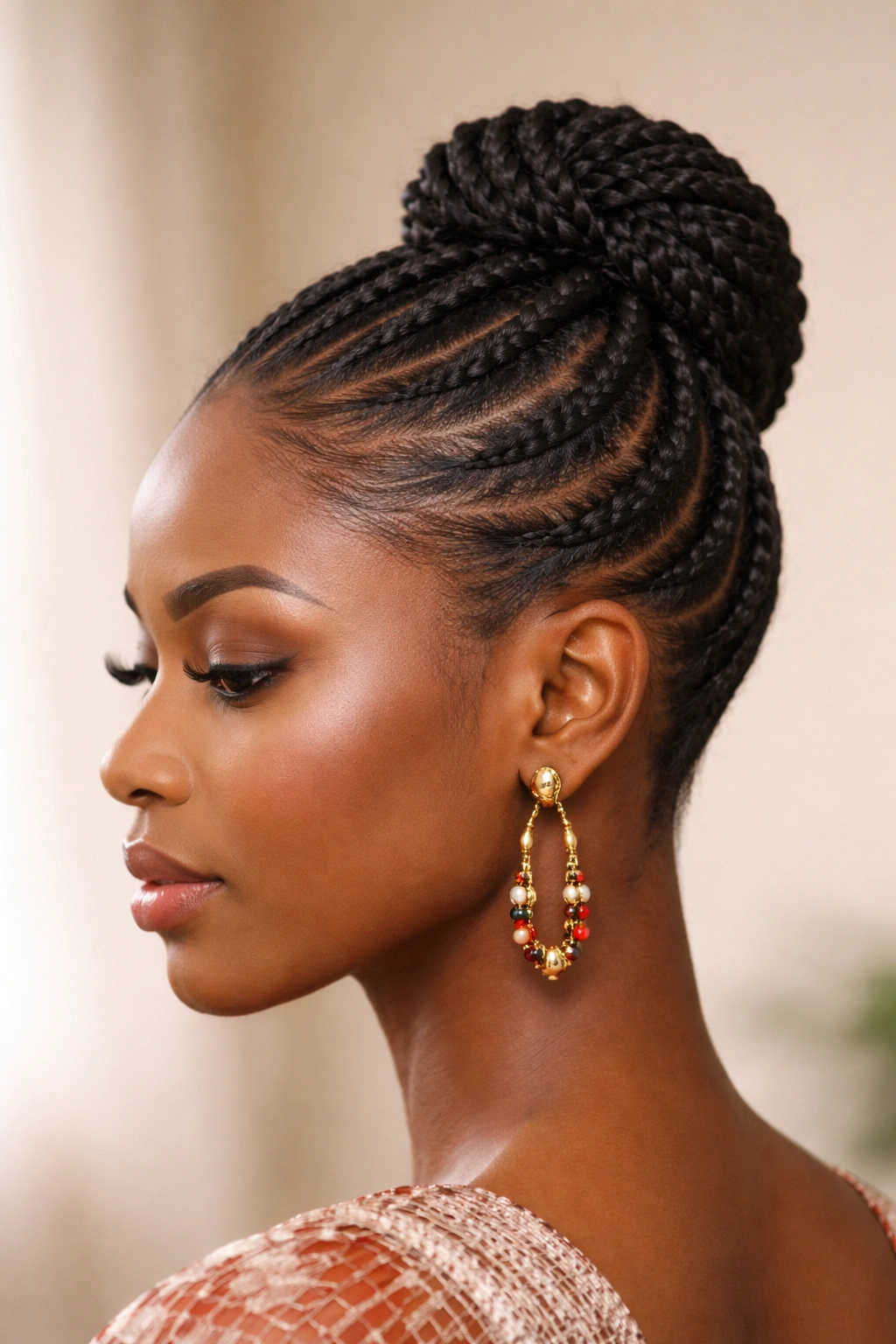
Shuku is a classic Igbo style that traditionally features hair swept to the top and sides of the head with a clean, often decorated crown. Traditional shuku can be tall and elaborate, but on short hair, it transforms into a more compact, manageable version that maintains all the cultural authenticity while being eminently practical. The shorter shuku sits closer to the head, emphasizes facial features, and can be adapted with various textures and decorative elements. This style was historically worn for special occasions and ceremonies, signaling elegance and cultural pride.
The Traditional Igbo Shuku Aesthetic
Authentic shuku isn’t just about height — it’s about creating a clear distinction between the sides and the crown. The sides are often smoothed sleekly, either braided tightly or left smooth, while the crown area features texture that can include extensions, natural hair puffed up for volume, twisted sections, or wrapped arrangements. On short hair, this contrast becomes even more striking because the sides can be tapered or very close to the head, creating sharp definition. The crown might feature a geometric arrangement of twists, braids, or wrapped hair, often adorned with beads, gold jewelry, or traditional ornaments that speak to the wearer’s background or the occasion.
Creating the Short-Hair Version
- Side treatment: Hair on the sides can be smoothed with gel into waves, braided in tight cornrows, twisted in flat twists, or left in a natural tapered texture for contemporary appeal.
- Crown building: Shorter natural hair can be textured and smoothed upward using pomade and styling products, while some versions incorporate thin braids or twists that create structure for the crown.
- Extension options: Some shuku styles on shorter hair incorporate clip-in extensions, braiding hair, or weaving hair solely in the crown area to create volume without styling the entire head.
- Adornment: Beaded combs, gold pins, traditional coral accessories, or fabric wraps coordinated to match special occasion clothing elevate the shuku from everyday to ceremonial.
Quick fact: Shuku was traditionally associated with married women and women of higher status in Igbo culture, making it a style choice that carries cultural significance beyond the aesthetic.
4. Box Braids on Short Hair With Intentional Parting
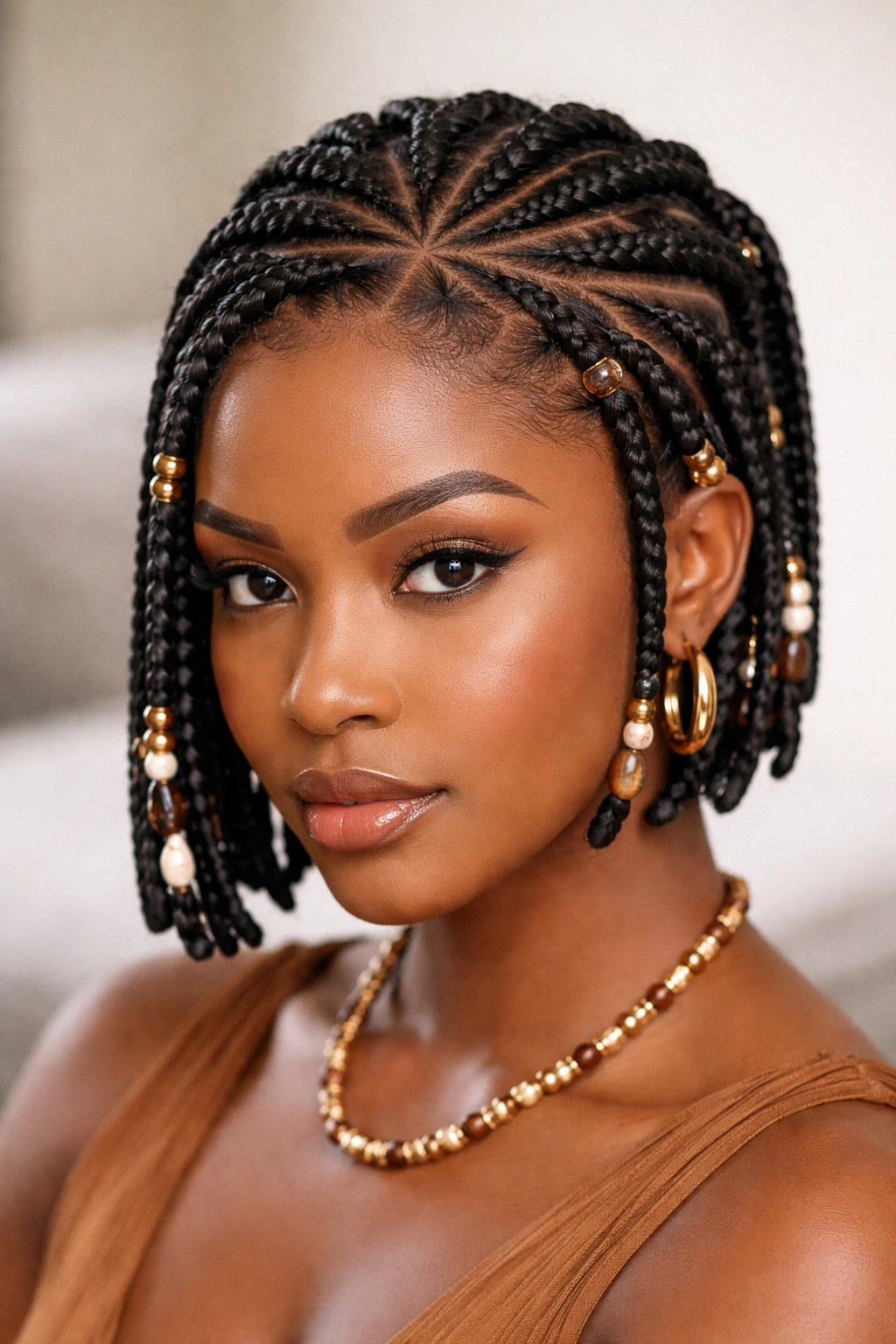
Box braids are protective styles that work beautifully on short hair when styled with intentional Igbo-inspired parting patterns. Rather than random placement, these braids are sectioned following geometric designs — radiating patterns, symmetrical sections from the center, or carefully planned rows that create visual rhythm. On short hair, box braids stay incredibly close to the head, emphasizing the parting pattern and creating an almost jewelry-like appearance. The braids themselves can be left plain, embellished with beads, or wrapped with colored thread in patterns that echo traditional Igbo aesthetic choices.
Making Box Braids Distinctly Igbo
The difference between generic box braids and Igbo-inspired box braids lies in intention and pattern. Rather than braids placed randomly throughout the head, Igbo styling uses mathematical precision. You might see a center part with braids radiating outward, circular patterns that create a focal point on the crown, or symmetrical sections from the temples backward. The beading and adornment is strategic too — not scattered randomly but placed according to a design principle. Some interpretations incorporate single braids with multiple colors of beads, while others use uniform bead placement across all braids or incorporate beads only at specific sections of the head.
Application for Shorter Lengths
- Braid size: Smaller, more numerous box braids show off the parting pattern more clearly than fewer, larger braids on short hair.
- Parting technique: Use a rattail comb and fine-tooth comb to create the intended pattern before you begin braiding. Mark out the sections clearly.
- Extensions: Very short natural hair may require braiding hair added at the roots to create braids with enough substance. The extension color can match your hair or contrast intentionally.
- Bead application: Thread beads onto each braid individually after completion, or add them as you braid by threading beads down the length of the extension hair before braiding it in.
- Styling duration: Box braids on short hair hold beautifully for 4-8 weeks depending on how tightly they’re braided and how well you maintain them.
Insider note: On short hair, box braids benefit from a silk or satin bonneted sleep routine — this prevents frizz and keeps the braids looking fresh throughout their wear period.
5. Clustered Twists With Sculptural Styling
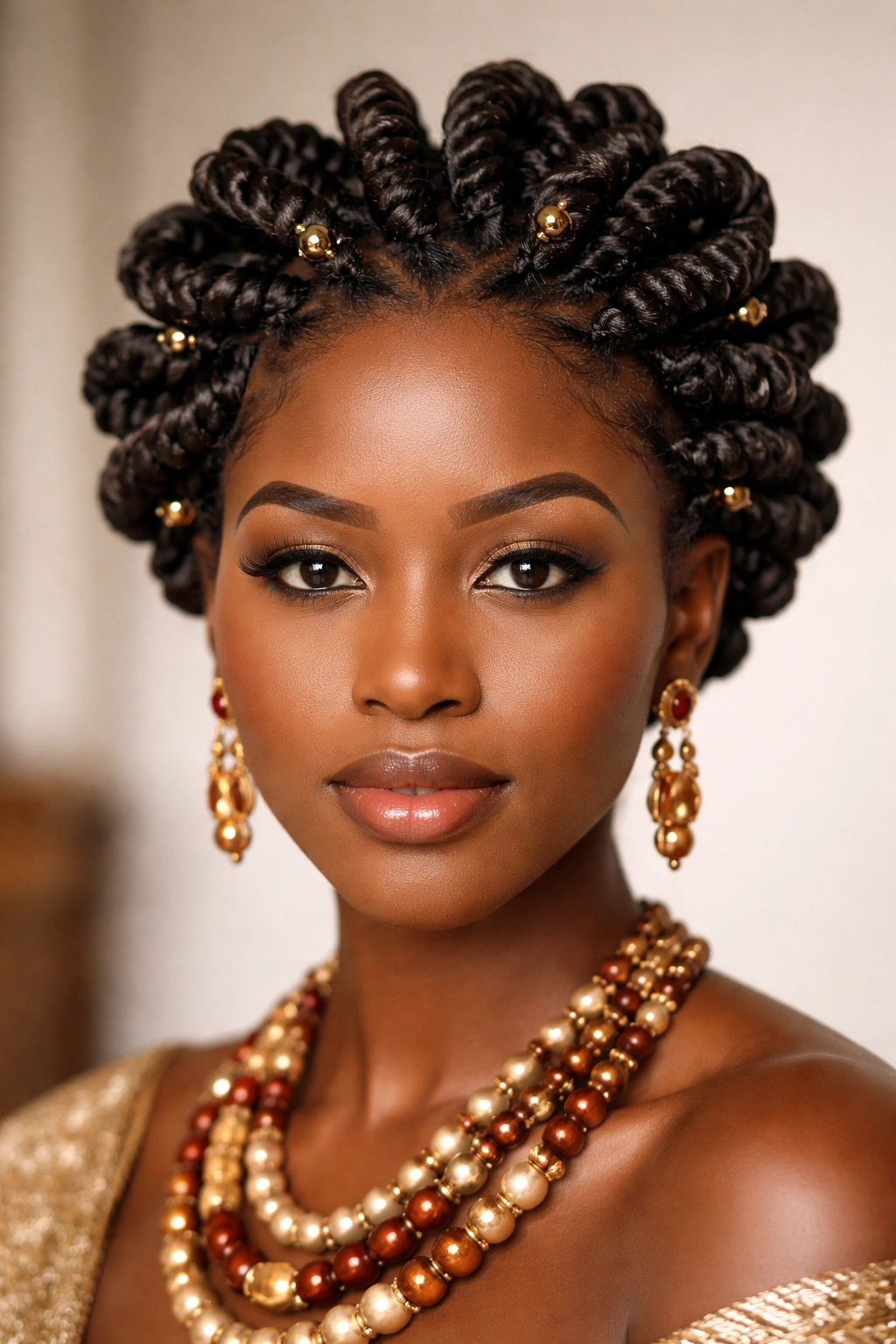
Clustered twists are similar to twisted knots but create a different visual effect by grouping multiple twists together in distinct sections. Rather than individual knots distributed across the head, clustered twists bunch two, three, or more twists together and then are pinned or rolled into small barrel shapes or left as grouped textured sections. This creates a dimensional, almost three-dimensional appearance on short hair. The clusters can be arranged in intentional patterns — surrounding the face, creating rows, or building from center to sides — and the texture variation makes the style visually compelling from every angle.
The Visual Appeal of Clustering
When you group multiple twists together on short hair, they create pockets of shadow and highlight that make the hairstyle read as more elaborate than it actually is. The scalp shows in specific places where sections are separated, allowing for parting pattern visibility and a sculpted appearance. Clustered twists also hold incredibly well on short hair and are relatively easy to maintain — you’re not managing dozens of individual sections but rather several larger groupings. The style photographs beautifully because the texture catches light, the dimensional nature creates visual interest, and the precision of the clustering demonstrates technical skill and intentionality.
Styling the Clustered Twist Look
- Sectioning: Divide hair into larger sections (6-12 depending on hair density) and within each section, create multiple twists.
- Grouping strategy: Two to four twists per cluster work well; too many becomes unwieldy, while too few doesn’t create the visual impact.
- Securing: Twist clusters can be pinned flat against the scalp, rolled into barrel shapes and pinned, or left as textured sections depending on your preference.
- Texture variation: Some clusters might be tighter twists while others are looser, creating visual rhythm. Or keep all clusters uniform for a more organized aesthetic.
- Adornment options: Beads threaded throughout the twists, metal rings around the base of each cluster, or wrapped thread around the groups add layers of visual interest.
What to know: Clustered twists are particularly beautiful on very short hair (under 3 inches of natural hair) because the structure they create adds visual dimension that compensates for length.
6. Wrapped Sections With Geometric Design
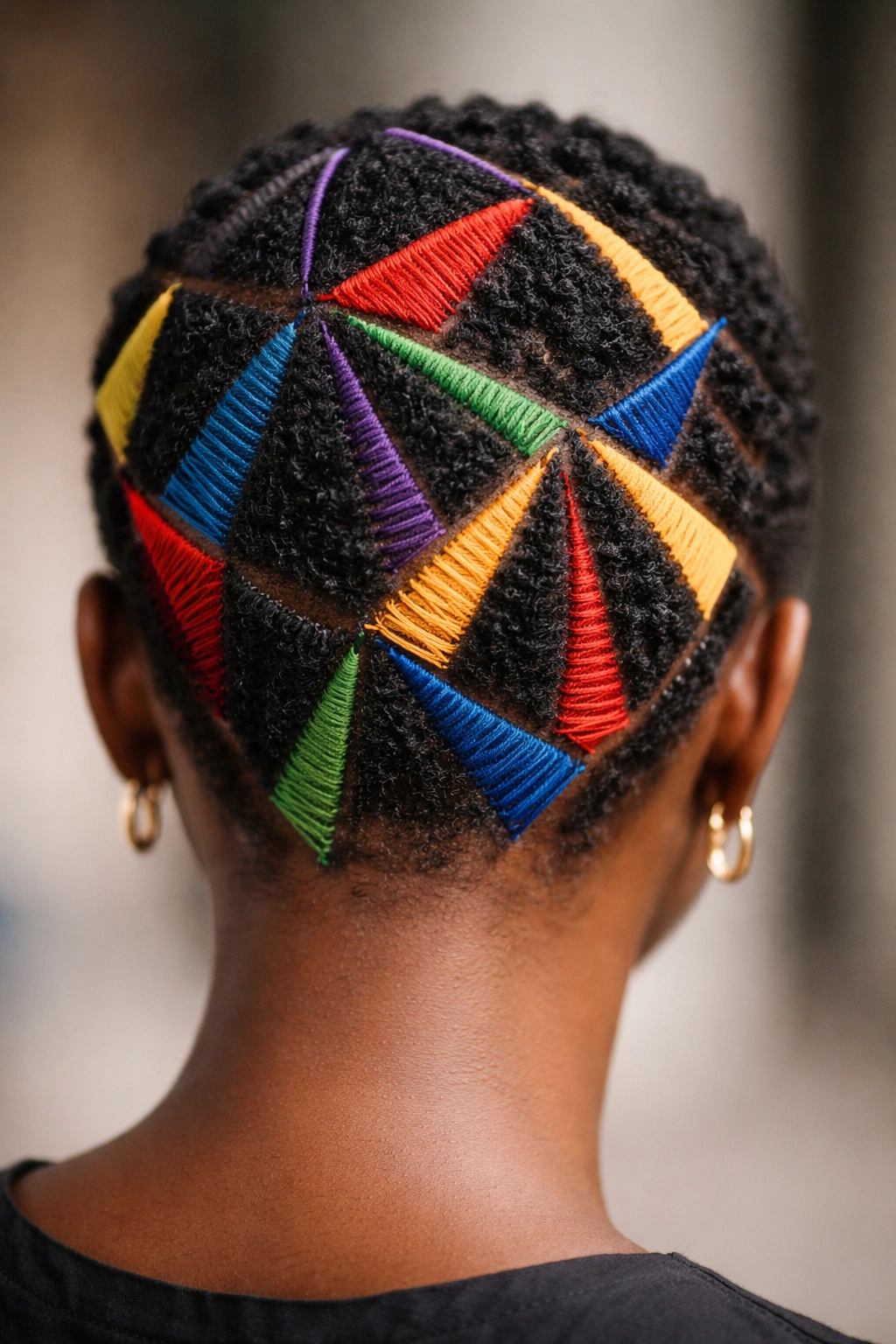
Wrapped sections, also called hair wrapping or thread wrapping, involve sectioning short hair and wrapping each section tightly with colored thread, string, or fabric strips. This ancient technique is deeply rooted in Igbo tradition and creates incredibly striking visual effects on short hair. The sections can be wrapped entirely from root to tip, partially wrapped, or wrapped in patterns that create color-blocking effects. Because short hair is involved, the wrapping is highly visible and becomes the primary decorative element. Different color combinations, wrapping widths, and section thicknesses create limitless variation within this traditional style.
The Cultural Significance of Hair Wrapping
Hair wrapping is one of the oldest forms of hair adornment in Igbo culture and across West Africa more broadly. It’s a technique that requires no extensions, no chemicals, and no heat, making it incredibly versatile and accessible. The colors chosen often correspond to cultural significance, personal expression, or the occasion. Traditional combinations might include earth tones (rust, ochre, bronze) combined with white or cream, or jewel tones (deep green, burgundy, indigo) paired with gold accents. On short hair, wrapping becomes incredibly pronounced because every wrapped section is visible; there’s no longer hair to hide or soften the effect.
How to Create This Style
- Parting: Divide short hair into sections of even size using a comb. Sections can be small and numerous for an intricate look or larger for a bolder statement.
- Wrapping material: Use embroidery thread, thin yarn, fabric strips, raffia, or traditional wrapping thread in colors that coordinate with your skin tone, clothing, or cultural preferences.
- Wrapping technique: Start at the roots and wrap tightly and smoothly down the length of each section. The wrapping should be snug enough to stay put but not so tight that it causes tension headaches.
- Securing: Knot the thread at the end of each section or tuck the end under the wrapped layers to secure it.
- Maintenance: Wrapped sections last for several weeks and require minimal daily styling. You can re-wet them if needed and let them air dry.
Pro tip: Color-blocking — using dramatically different thread colors on different sections — creates a striking effect on short hair that reads from a distance and photographs beautifully.
7. Faux Hawk With Braided or Twisted Crown
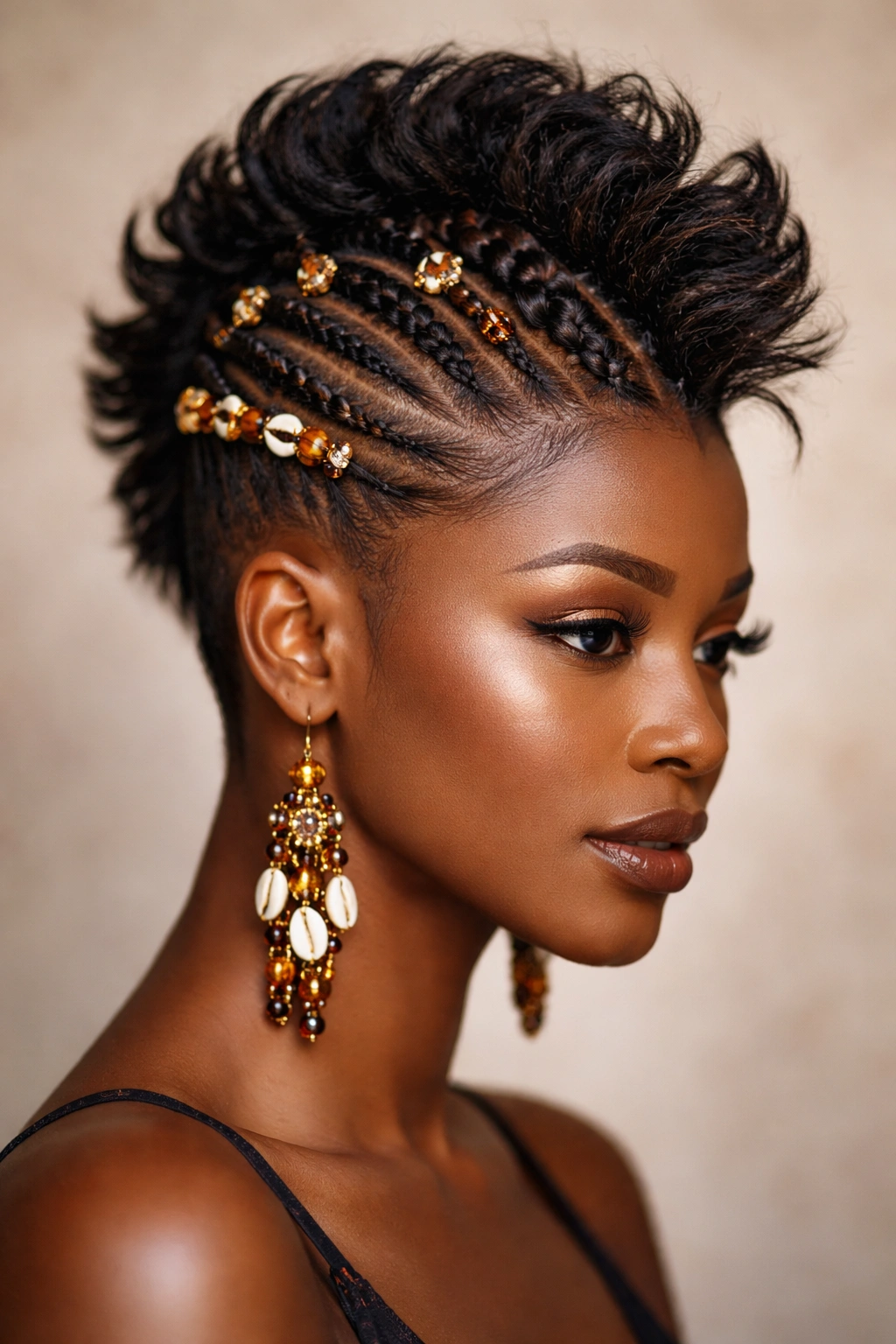
The faux hawk is a contemporary style that can be executed with distinctly Igbo elements through intentional braiding or twisting patterns along the crown. The sides of the head are kept sleek, braided tightly, or shaved close, while the center section features texture — typically braids, twists, or puffed natural hair — that creates height and visual interest. This style beautifully marries modern short-hair aesthetic with traditional styling techniques. The braided or twisted crown section can incorporate beads, colored thread, or traditional ornaments, making it culturally intentional rather than purely contemporary.
Making the Faux Hawk Feel Authentically Rooted
A faux hawk becomes Igbo-inspired when you apply traditional techniques and intentions to the crown section. Rather than a simple textured mohawk, the crown might feature geometric braiding patterns, intentionally placed beads, or wrapped sections that echo traditional aesthetic. The precision and intentionality matter — this isn’t just about styling for visual impact but about making deliberate cultural choices in how the crown is executed. You might see a center braid flanked by geometric twists, a crown of wrapped sections in coordinated colors, or intricate cornrows that follow a design principle rather than random placement.
Executing the Style on Short Hair
- Side treatment: Sides can be faded, shaved, cornrowed very tightly, or smoothed and gelled for maximum contrast with the textured crown.
- Crown structure: Build the crown with braids (single-strand, three-strand, or fishtail braids create different effects), twists, or rolled sections of natural hair secured with pins and pomade.
- Height technique: Braiding extensions into the crown section creates more volume and height than working with natural hair alone.
- Adornment: Beads placed at intervals along the crown braids, metal cuffs around twist sections, or a decorative comb placed in the crown elevate the style for special occasions.
- Styling products: A strong-hold pomade keeps the sides sleek and defines the edge between sides and crown. Water-based products work best for everyday wear.
Quick fact: The faux hawk’s precision requirements make it an excellent choice for short hair; there’s no excess length to hide styling imperfections or asymmetry.
8. Natural Textured Short Hair With Beaded Embellishments
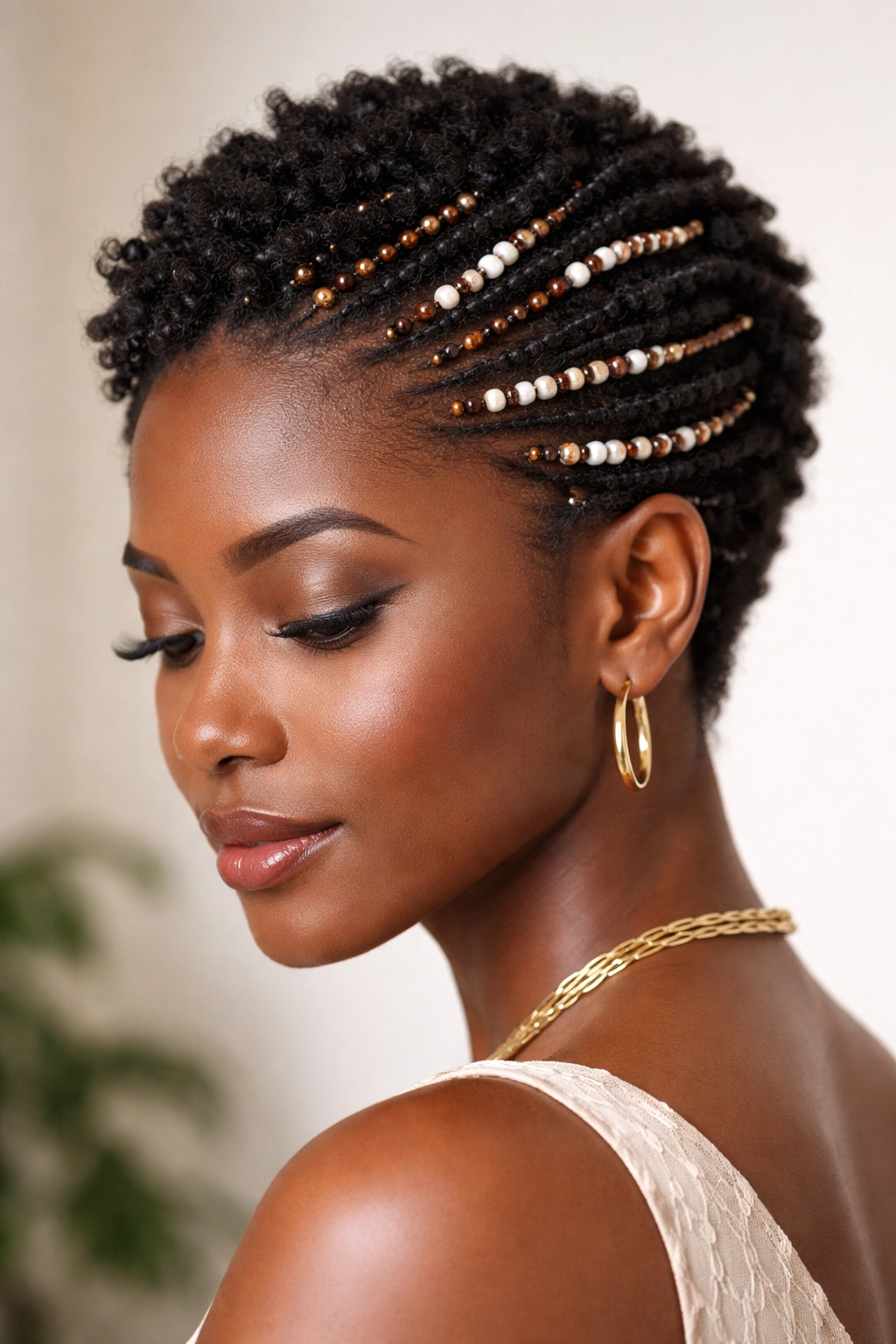
Sometimes the most striking Igbo hairstyle on short hair is the simplest: natural textured hair left to showcase its inherent beauty, with strategic beaded embellishments that add cultural intentionality and visual interest. Rather than altering the hair’s texture through braiding or twisting, this approach celebrates short natural hair’s coil or curl pattern while incorporating traditional elements. Beads are placed throughout the hair in intentional patterns, woven onto individual strands or coils, or clustered in specific areas. This style honors natural hair while demonstrating the richness of Igbo aesthetic traditions.
Celebrating Natural Texture With Cultural Intention
Natural short hair with beads isn’t a minimalist approach — it’s a deliberate style choice that emphasizes texture, pattern, and cultural adornment. The beads create visual interest, catch light, and move with the natural coils or curls of the hair. Placement matters tremendously: beads might be concentrated around the crown, distributed throughout creating a speckled effect, clustered at the temples, or placed in intentional patterns that create visual rhythm. The key is that the placement feels intentional and the beads read as meaningful adornment rather than random decoration. Different bead styles create different effects: small delicate beads feel elegant and refined, while larger wooden or metal beads create bolder statements.
Styling and Application
- Hair preparation: Start with clean, moisturized natural hair. Short natural hair should be conditioned regularly to maintain softness and prevent breakage when adding beads.
- Bead selection: Choose beads with holes large enough to thread hair through (typically wooden, glass, ceramic, or metal beads). Avoid beads with sharp edges that could catch or break hair.
- Placement strategy: Use a fine-tooth comb or rat-tail comb to separate individual coils or curls and thread beads onto specific strands, or section off a bead-carrying section and distribute beads throughout.
- Threading method: Thread beads onto each selected strand using a beading needle or by twisting hair tightly enough to push the bead directly onto the strand.
- Securing: Knot the base and tip of beaded strands, or use thread to wrap around the base of each bead to keep it in place.
- Maintenance: Beaded natural hair requires regular moisturizing and can be refreshed with retwisting or re-parting as needed over several weeks.
Worth knowing: This style beautifully showcases natural hair texture while honoring cultural traditions, making it an excellent choice for someone wanting to celebrate both their natural hair journey and their heritage.
Final Thoughts
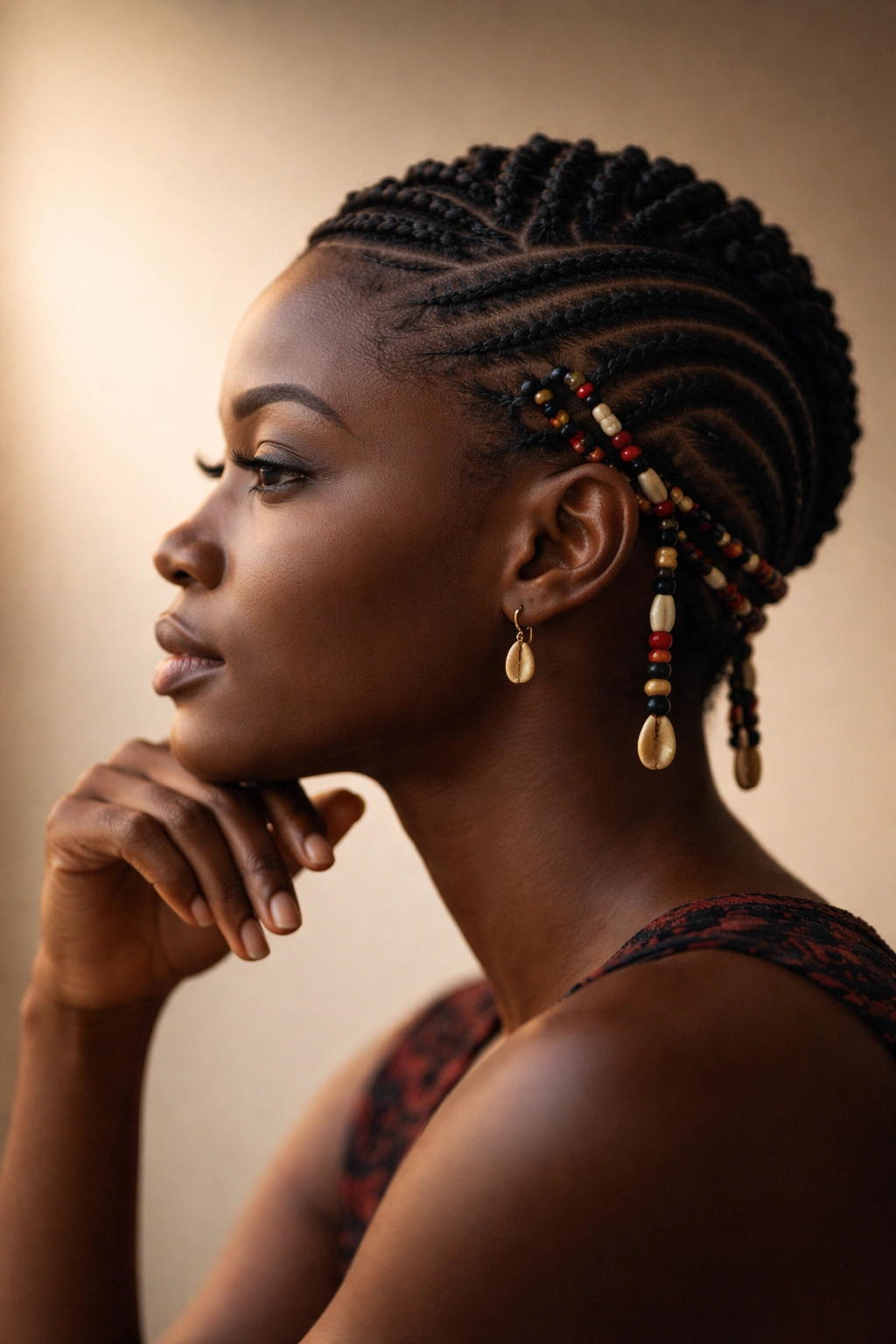
Igbo hairstyles for short hair prove that length is never a limitation when it comes to cultural expression, aesthetics, and personal style. Whether you choose the geometric precision of cornrows, the sculptural elegance of twisted knots, the timelessly sophisticated shuku, the protective versatility of box braids with intentional patterning, the dimensional texture of clustered twists, the striking impact of wrapped sections, the contemporary-traditional fusion of a braided faux hawk, or the natural beauty enhanced by beaded embellishments, you’re celebrating a rich heritage of styling excellence.
The beauty of these styles on short hair is their practicality combined with their visual impact. You get styles that are easier to maintain than longer alternatives, that dry faster, that travel more easily, and that still deliver the cultural authenticity and visual presence that make Igbo hairstyling distinctive. Short hair isn’t a barrier to exploring these traditions — it’s actually a canvas where the precision, intention, and technical skill behind each style become even more visible and appreciated.
Beyond the aesthetic, wearing these hairstyles is an act of cultural affirmation and pride. Whether this is how you honor your own Igbo heritage or how you show respect for and appreciation of Igbo culture, these styles represent centuries of tradition, meaning, and artistic excellence. The next time you’re considering a new look for your short hair, consider one of these beautiful options — you’re not just getting a hairstyle, you’re embracing an entire cultural tradition of beauty and meaning.
